
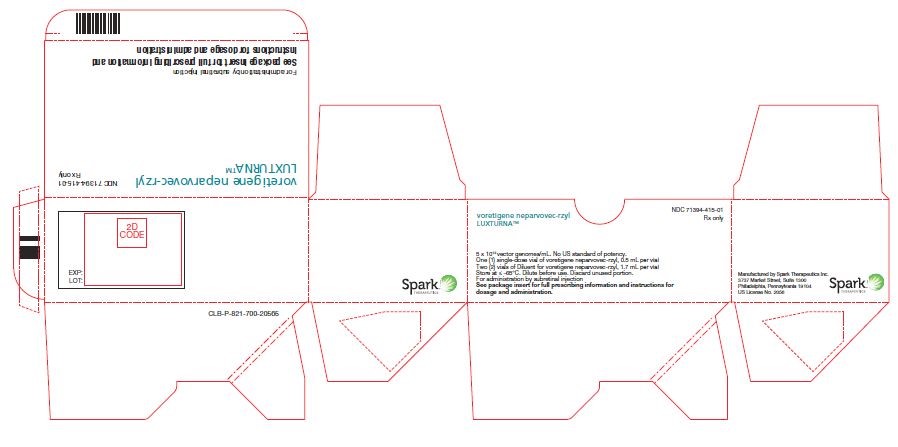
LUXTURNA voretigene neparvovec-rzyl Kit
🆔 Identity & classification
Where does this data come from?
🏷️ RxNorm drug class
This medicine belongs to the Adeno-associated Virus Vector class.
Where does this data come from?
🏭 Manufacturer & labeler
Where does this data come from?
🩺 Clinical
Patient education
Supplement & herbal interactions
Where does this data come from?
Ask a licensed pharmacist directly — free, answered by our team.
🧪 Inactive Ingredients / Excipients
Inactive ingredients, also called excipients, are components of the drug product other than the active ingredient. They may include fillers, dyes, coatings, preservatives, flavors, or other formulation ingredients.
Where does this data come from?
IACT rows and label-wide narrative are kept separate; availability and product-level specificity depend on the submitted label.Inactive ingredient FAQ
Are inactive ingredients the same for every manufacturer?
Why might an inactive ingredient be missing?
Can inactive ingredients matter?
💲 Pricing
A drug doesn't have one price. Each row is a different public payment system, and none is what you'd pay at the counter — that depends on your insurance. The ⓘ on each row explains what it measures.
| Price system | Per each | Per package |
|---|---|---|
| Retail pharmacies payNADAC · weekly | Not in the retail survey — common for institutional, discontinued, or low-volume packs. | |
| Medicaid paysCMS SDUD · 12 mo | No recent Medicaid claims on file for this NDC — rare and low-volume NDCs are suppressed in the public data. | |
| Medicare drug plans payPart D · quarterly | No Part D plan price is available for this NDC in our data. | |
Where does this data come from?
🔁 Therapeutic equivalents
| Product | Labeler | Pack | NADAC/unit | TE | Status | Price vs. this |
|---|---|---|---|---|---|---|
| Luxturnathis 71394-0415-01 | Spark | 1 kit | — | — | FDA listed | — |
Where does this data come from?
⏳ Availability & biosimilar status
Biologics have no small-molecule generics; biosimilar competition is tracked in the FDA Purple Book.
Why the date isn’t exact: Biosimilar timing can change because patents may be challenged, settled, licensed, added or removed, and litigation can move the real date earlier or later.
🛈 What do these terms mean?
- Biologic patent
- A patent the reference product’s maker has publicly listed. A biosimilar generally can’t launch until these expire — unless they’re invalidated or resolved in a settlement.
- Reference-product exclusivity
- A flat 12 years of FDA market protection from the biologic’s first licensure (the BPCIA). No biosimilar can be licensed before it ends, regardless of patents.
- Interchangeable exclusivity
- The first interchangeable biosimilar can earn a period as the only interchangeable version (pharmacists can substitute it without the prescriber).
- Earliest biosimilar (LOE)
- The latest of all the dates above — the soonest a biosimilar can realistically reach the market. Litigation and settlements can move it earlier.
Biologics have no small-molecule “generics” — competition comes from FDA-licensed biosimilars, tracked in the FDA Purple Book.
| Code | What it grants | Expires |
|---|---|---|
| RefProduct | Reference-product exclusivity (12-year, BPCIA) — no biosimilar can be licensed before this date | Dec 19, 2029 |
Is there a biosimilar for LUXTURNA VIAL?
Why do different websites show different biosimilar dates?
Can a biosimilar launch before the last patent expires?
What does “current Purple Book estimate” mean?
What does “FDA listed” mean?
What does a patent or protection date mean here?
Where does this data come from?
📦 Packaging — all sizes for this product
| Package NDC | Description | Marketing start | Status |
|---|---|---|---|
| 71394-0415-01 You're viewing this | 1 KIT in 1 CARTON (71394-415-01) * 1 INJECTION, SUSPENSION in 1 VIAL, PLASTIC (71394-065-01) * 1 INJECTION, SOLUTION in 1 VIAL, PLASTIC (71394-716-01) | 2017-12-19 | Active |
🧭 About this NDC listing & data coverage
Kit / multi-component package
This NDC identifies a kit — a package containing more than one component. Structured data (pricing, ingredients, equivalents) is often reported per component rather than for the kit NDC itself, which can make this page look thinner than the components' own pages.
What data is (and isn’t) available for this NDC — tap to expand
| NDC identity (package / product / labeler codes) | ✓ Available |
| Labeler | ✓ Available |
| Product & package description | ✓ Available |
| Marketing category & status | ✓ Available |
| Active ingredient / dosage form / route | ✓ Available |
| FDA label (SPL via DailyMed) | ✓ Available |
| Package photos | ✓ Available |
| Inactive ingredients (structured) | — Not published for this NDC The labeler did not submit a structured excipient list, or no SPL is available. |
| NADAC pharmacy acquisition price (CMS) | — Not published for this NDC CMS publishes NADAC only for NDCs reported in its retail-pharmacy survey. |
| Orange Book / therapeutic-equivalence data | ✓ Available |
| HCPCS J-code billing crosswalk | — Not published for this NDC Most self-administered / retail products have no J-code — that is normal. |
| Medicaid utilization (CMS SDUD) | — Not published for this NDC CMS reports utilization only for NDCs with Medicaid claims above its privacy threshold. |
Questions about this listing
Why is there no price listed?
Is the NDC printed on the package the same as the 11-digit billing NDC?
What do the three segments of this NDC mean?
Is this package still being marketed?
Who lists this product with the FDA?
Do I need a prescription for this product?
Where does this data come from?
📄 Full prescribing information FDA SPL
🎯 Indications and Usage ▾
1 INDICATIONS AND USAGE LUXTURNA (voretigene neparvovec-rzyl) is an adeno-associated virus vector-based gene therapy indicated for the treatment of patients with confirmed biallelic RPE65 mutation-associated retinal dystrophy. Patients must have viable retinal cells as determined by the treating physician(s). LUXTURNA is an adeno-associated virus vector-based gene therapy indicated for the treatment of patients with confirmed biallelic RPE65 mutation-associated retinal dystrophy.
Patients must have viable retinal cells as determined by the treating physician(s). ( 1 )
⏱️ Dosage and Administration ▾
2 DOSAGE AND ADMINISTRATION For subretinal injection only. The recommended dose of LUXTURNA for each eye is 1.5 x 10 11 vector genomes (vg), administered by subretinal injection in a total volume of 0.3 mL. (2.1 ) Perform subretinal administration of LUXTURNA to each eye on separate days within a close interval, but no fewer than 6 days apart.
( 2.1 ) Recommend systemic oral corticosteroids equivalent to prednisone at 1 mg/kg/day (maximum of 40 mg/day) for a total of 7 days (starting 3 days before administration of LUXTURNA to each eye), and followed by a tapering dose during the next 10 days. ( 2.1 ) For subretinal injection only.
2.1Dose The recommended dose of LUXTURNA for each eye is 1.5 x 10 11 vector genomes (vg), administered by subretinal injection in a total volume of 0.3 mL. Perform subretinal administration of LUXTURNA to each eye on separate days within a close interval, but no fewer than 6 days apart. Recommend systemic oral corticosteroids equivalent to prednisone at 1 mg/kg/day (maximum of 40 mg/day) for a total of 7 days (starting 3 days before administration of LUXTURNA to the first eye), and followed by tapering the dose during the following 10 days.
The same corticosteroid dosing regimen applies for the administration of LUXTURNA to the second eye. If the corticosteroid taper following LUXTURNA administration to the first eye is not complete three days prior to the planned LUXTURNA administration to the second eye, then the corticosteroid regimen for the second eye replaces the taper for the first eye.
2.2Preparation Prepare LUXTURNA within 4 hours of administration using sterile technique under aseptic conditions in a Class II vertical laminar flow biological safety cabinet (BSC). Below is the list of items required for dilution and administration syringe preparation: One single-dose vial of LUXTURNA Two vials of Diluent One 3-mL sterile syringe One 20G 1-inch sterile needle Three 1-mL sterile syringes Three 27G ½-inch sterile needles Two sterile syringe caps One 10-mL sterile empty glass vial One sterile utility drape One sterile plastic bag Two sterile labels for administration syringes One sterile plain label One sterile skin marker Dilution of LUXTURNA Thaw one single-dose vial of LUXTURNA and two vials of Diluent at room temperature.
Mix the contents of the thawed Diluent vials by gently inverting them approximately 5 times. Inspect the Diluent vials. If particulates, cloudiness, or discoloration are visible, do not use the vial(s); new vial(s) of Diluent should be used.
Obtain a 3-mL sterile syringe, a 20G 1-inch sterile needle, and a 10-mL sterile empty glass vial. Using the 3-mL syringe with 20G 1-inch needle, transfer 2.7 mL of Diluent to the 10-mL glass vial. Dispose of the needle and syringe in an appropriate container.
Mix the contents of the thawed LUXTURNA single-dose vial by gently inverting approximately 5 times. Inspect the LUXTURNA single-dose vial. If particulates, cloudiness, or discoloration are visible, do not use the vial; a new single-dose vial of LUXTURNA should be used.
Draw 0.3 mL of LUXTURNA into a 1-mL sterile syringe with a 27G ½-inch sterile needle. (Figure 1) Figure 1. Syringe with 0.3 mL LUXTURNA 9.
Transfer 0.3 mL of LUXTURNA to the glass vial containing 2.7 mL of Diluent from Step 5. Gently invert the 10-mL glass vial approximately 5 times to mix the contents. 10.
Using the sterile plain label and sterile skin marker, label the 10-mL glass vial containing the diluted LUXTURNA as follows: "Diluted LUXTURNA". 11. Remove all items from the BSC except the glass vial labeled 'Diluted LUXTURNA' and the sterile skin marker.
12. Re-sanitize the BSC prior to the next steps and place the glass vial and the sterile marker to the left side in the BSC. Preparation of LUXTURNA for Injection To keep the syringes sterile, two operators are required for transfer of the contents of the 10-mL glass vial labeled 'Diluted LUXTURNA' into each of two sterile 1-mL syringes.
13. Place a sterile…
💊 Dosage Forms and Strengths ▾
3 DOSAGE FORMS AND STRENGTHS LUXTURNA is a suspension for subretinal injection, supplied in a 0.5-mL extractable volume in a 2-mL single-dose vial; the supplied concentration (5 x 10 12 vg/mL) requires a 1:10 dilution prior to administration. The Diluent is supplied in two single-use 2 mL vials. LUXTURNA is a suspension for subretinal injection, supplied in a 0.5 mL extractable volume in a single-dose 2 mL vial for a single administration in one eye.
The supplied concentration (5 x 10 12 vg/mL) requires a 1:10 dilution prior to administration. The Diluent is supplied in two single-use 2-mL vials. ( 3 )
⛔ Contraindications ▾
4 CONTRAINDICATIONS None. None.
⚠️ Warnings and Cautions ▾
5 WARNINGS AND PRECAUTIONS Endophthalmitis: Use proper aseptic injection technique and monitor for signs and symptoms of infection. ( 5.1 ) Permanent decline in visual acuity: Monitor for visual disturbances. ( 5.2 ) Retinal abnormalities: Monitor for macular abnormalities, retinal tears or breaks and chorioretinal atrophy.
Do not inject in the immediate vicinity of the fovea. ( 5.3 ) Increased intraocular pressure: Monitor and manage intraocular pressure elevations. ( 5.4 ) Expansion of intraocular air bubbles: Air travel and/or scuba diving is not recommended until any intraocular air bubbles have been absorbed.
( 5.5 ) Cataract: Subretinal injection of LUXTURNA may result in cataract formation or increase in the rate of cataract progression. ( 5.6 )
5.1Endophthalmitis Endophthalmitis may occur following any intraocular surgical procedure or injection. Use proper aseptic injection technique when administering LUXTURNA. Following the injection, monitor patients to permit early treatment of any infection. Advise patients to report any signs or symptoms of infection or inflammation without delay.
5.2Permanent Decline in Visual Acuity Permanent decline in visual acuity may occur following subretinal injection of LUXTURNA. Monitor patients for visual disturbances.
5.3Retinal Abnormalities Retinal abnormalities may occur during or following the subretinal injection of LUXTURNA, including macular holes, foveal thinning, loss of foveal function, foveal dehiscence, chorioretinal atrophy, and retinal hemorrhage. Monitor and manage these retinal abnormalities appropriately. Do not administer LUXTURNA in the immediate vicinity of the fovea [ see Dosage and Administration ( 2.3 ) ].
Retinal abnormalities may occur during or following vitrectomy including retinal tears, epiretinal membrane, or retinal detachment. Monitor patients during and following the injection to permit early treatment of these retinal abnormalities. Advise patients to report any signs or symptoms of retinal tears and/or detachment without delay.
5.4Increased Intraocular Pressure Increased intraocular pressure may occur after subretinal injection of LUXTURNA. Monitor and manage intraocular pressure appropriately.
5.5Expansion of Intraocular Air Bubbles Instruct patients to avoid air travel, travel to high elevations or scuba diving until the air bubble formed following administration of LUXTURNA has completely dissipated from the eye. It may take one week or more following injection for the air bubble to dissipate. A change in altitude while the air bubble is still present can result in irreversible vision loss.
Verify the dissipation of the air bubble through ophthalmic examination.
5.6Cataract Subretinal injection of LUXTURNA, especially vitrectomy surgery, is associated with an increased incidence of cataract development and/or progression.
🤒 Adverse Reactions ▾
6 ADVERSE REACTIONS The most common adverse reactions (incidence ≥ 5%) were conjunctival hyperemia, cataract, increased intraocular pressure, retinal tear, dellen (thinning of the corneal stroma), macular hole, subretinal deposits, eye inflammation, eye irritation, eye pain, and maculopathy (wrinkling on the surface of the macula). The most common adverse reactions (incidence ≥ 5%) in the clinical trials were conjunctival hyperemia, cataract, increased intraocular pressure, retinal tear, dellen (thinning of the corneal stroma), macular hole, subretinal deposits, eye inflammation, eye irritation, eye pain, and maculopathy (wrinkling on the surface of the macula).
( 6 ) To report SUSPECTED ADVERSE REACTIONS, contact Spark Therapeutics, Inc. at 1-855-SPARKTX, or FDA at 1-800-FDA-1088 or www.fda.gov/medwatch.
6.1Clinical Trials Experience Because clinical trials are conducted under widely varying conditions, adverse reaction rates observed in the clinical trials of a drug cannot be directly compared to rates in the clinical trials of other products and may not reflect the rates observed in practice. The safety data described in this section reflect exposure to LUXTURNA in two clinical trials consisting of 41 subjects (81 eyes) with confirmed biallelic RPE65 mutation-associated retinal dystrophy. Forty of the 41 subjects received sequential subretinal injections of LUXTURNA to each eye.
One subject received LUXTURNA in only one eye. Seventy-two of the 81 eyes were exposed to the recommended dose of LUXTURNA at 1.5 x 10 11 vg; 9 eyes were exposed to lower doses of LUXTURNA. Study 1 (n=12) was an open-label, dose-exploration safety study.
Study 2 (n=29) was an open-label, randomized, controlled study for both efficacy and safety [ see Clinical Studies ( 14 ) ]. The average age of the 41 subjects was 17 years, ranging from 4 to 44 years. Of the 41 subjects, 25 (61%) were pediatric subjects under 18 years of age, and 23 (56%) were females.
Twenty-seven (27/41, 66%) subjects had ocular adverse reactions that involved 46 injected eyes (46/81, 57%). Adverse reactions among all subjects in Studies 1 and 2 are described in Table 1. Adverse reactions may have been related to voretigene neparvovec-rzyl, the subretinal injection procedure, the concomitant use of corticosteroids, or a combination of these procedures and products.
Table 1. Ocular Adverse Reactions Following Treatment with LUXTURNA (N=41) Adverse Reactions Subjects n=41 Treated Eyes n=81 Any ocular adverse reaction 27 (66%) 46 (57%) Conjunctival hyperemia 9 (22%) 9 (11%) Cataract 8 (20%) 15 (19%) Increased intraocular pressure 6 (15%) 8 (10%) Retinal tear 4 (10%) 4 (5%) Dellen (thinning of the corneal stroma) 3 (7%) 3 (4%) Macular hole 3 (7%) 3 (4%) Subretinal deposits* 3 (7%) 3 (4%) Eye inflammation 2 (5%) 4 (5%) Eye irritation 2 (5%) 2 (2%) Eye pain 2 (5%) 2 (2%) Maculopathy (wrinkling on the surface of the macula) 2 (5%) 3 (4%) Foveal thinning and loss of foveal function 1 (2%) 2 (2%) Endophthalmitis 1 (2%) 1 (1%) Foveal dehiscence (separation of the retinal layers in the center of the macula) 1 (2%) 1 (1%) Retinal hemorrhage 1 (2%) 1 (1%) *Transient appearance of asymptomatic subretinal precipitates inferior to the retinal injection site 1-6 days after injection Immunogenicity At all doses of LUXTURNA evaluated in Studies 1 and 2, immune reactions and extra-ocular exposure were mild.
In Study 1 (n=12), the interval between the subretinal injections into the two eyes ranged from 1.7 to 4.6 years. In Study 2, the interval between the subretinal injections into the two eyes ranged from 7 to 14 days. No subject had a clinically significant cytotoxic T-cell response to either AAV2 or RPE65.
Subjects received systemic corticosteroids before and after subretinal injection of LUXTURNA to each eye. The corticosteroids may have decreased the potential immune reaction to either vector capsid (adeno-associated virus serotype 2 [AAV2] vector) or transgene product (retinoid isomerohydrola…
👥 Use in Specific Populations ▾
8 USE IN SPECIFIC POPULATIONS Pediatric use: Use in infants under 12 months of age is not recommended because of potential dilution or loss of LUXTURNA after administration due to the active retinal cell proliferation occurring in this age group. ( 8.4 )
8.1Pregnancy Risk Summary Adequate and well-controlled studies with LUXTURNA have not been conducted in pregnant women. Animal reproductive studies have not been conducted with LUXTURNA. In the U.S. general population, the estimated background risk of major birth defects and miscarriage in clinically recognized pregnancies is 2-4% and 15-20%, respectively.
8.2Lactation Risk Summary There is no information regarding the presence of LUXTURNA in human milk, the effects on the breastfed infant, or the effects on milk production. The developmental and health benefits of breastfeeding should be considered along with the mother's clinical need for LUXTURNA and any potential adverse effects on the breastfed infant from LUXTURNA.
8.3Females and Males of Reproductive Potential No nonclinical or clinical studies were performed to evaluate the effect of LUXTURNA on fertility.
8.4Pediatric Use Treatment with LUXTURNA is not recommended for patients younger than 12 months of age, because the retinal cells are still undergoing cell proliferation, and LUXTURNA would potentially be diluted or lost during cell proliferation. The safety and efficacy of LUXTURNA have been established in pediatric patients. Use of LUXTURNA is supported by Study 1 and Study 2 [ see Clinical Studies ( 14 ) ] that included 25 pediatric patients with biallelic RPE65 mutation-associated retinal dystrophy in the following age groups: 21 children (age 4 years to less than 12 years) and 4 adolescents (age 12 years to less than 17 years).
There were no significant differences in safety between the different age subgroups.
8.5Geriatric Use The safety and effectiveness of LUXTURNA have not been established in geriatric patients. Clinical studies of LUXTURNA for this indication did not include patients age 65 years and over.
🤰 Pregnancy ▾
8.1Pregnancy Risk Summary Adequate and well-controlled studies with LUXTURNA have not been conducted in pregnant women. Animal reproductive studies have not been conducted with LUXTURNA. In the U.S. general population, the estimated background risk of major birth defects and miscarriage in clinically recognized pregnancies is 2-4% and 15-20%, respectively.
🧒 Pediatric Use ▾
8.4Pediatric Use Treatment with LUXTURNA is not recommended for patients younger than 12 months of age, because the retinal cells are still undergoing cell proliferation, and LUXTURNA would potentially be diluted or lost during cell proliferation. The safety and efficacy of LUXTURNA have been established in pediatric patients. Use of LUXTURNA is supported by Study 1 and Study 2 [ see Clinical Studies ( 14 ) ] that included 25 pediatric patients with biallelic RPE65 mutation-associated retinal dystrophy in the following age groups: 21 children (age 4 years to less than 12 years) and 4 adolescents (age 12 years to less than 17 years).
There were no significant differences in safety between the different age subgroups.
🧓 Geriatric Use ▾
8.5Geriatric Use The safety and effectiveness of LUXTURNA have not been established in geriatric patients. Clinical studies of LUXTURNA for this indication did not include patients age 65 years and over.
🧬 Clinical Pharmacology ▾
12 CLINICAL PHARMACOLOGY
12.1Mechanism of Action LUXTURNA is designed to deliver a normal copy of the gene encoding the human retinoid isomerohydrolase RPE65 (RPE65) to cells of the retina in persons with reduced or absent levels of biologically active RPE65. The RPE65 is produced in the retinal pigment epithelial (RPE) cells and converts all- trans -retinol to 11- cis -retinol, which subsequently forms the chromophore, 11- cis -retinal, during the visual (retinoid) cycle. The visual cycle is critical in phototransduction, which refers to the biological conversion of a photon of light into an electrical signal in the retina.
Mutations in the RPE65 gene lead to reduced or absent levels of retinoid isomerohydrolase RPE65 activity, blocking the visual cycle and resulting in impairment of vision.
12.2Pharmacodynamics Injection of LUXTURNA into the subretinal space results in transduction of some retinal pigment epithelial cells with a cDNA encoding normal human RPE65 protein, thus providing the potential to restore the visual cycle.
12.3Pharmacokinetics Biodistribution (within the body) and Vector Shedding (excretion/secretion) LUXTURNA vector DNA levels in various tissues and secretions were determined using a quantitative polymerase chain reaction (qPCR) assay. Nonclinical data Biodistribution of LUXTURNA was evaluated at three months following subretinal administration in non-human primates. The highest levels of vector DNA sequences were detected in intraocular fluids (anterior chamber fluid and vitreous) of vector-injected eyes.
Low levels of vector DNA sequences were detected in the optic nerve of the vector-injected eye, optic chiasm, spleen and liver, and sporadically in the lymph nodes. Vector DNA sequences were not detected in the gonads. Clinical data LUXTURNA vector shedding and biodistribution were investigated in a study measuring LUXTURNA DNA in tears from both eyes, and from serum, and whole blood of subjects in Study 2.
In summary, LUXTURNA vector was shed transiently and at low levels in tears from the injected eye in 45% of the subjects in Study 2, and occasionally (7%) from the uninjected eye until Day 3 post-injection. In 29 subjects who received bilateral administrations, LUXTURNA vector DNA was present in tear samples of 13 subjects (45%). Peak levels of vector DNA were detected in the tear samples on Day 1 post-injection, after which no vector DNA was detected in a majority of the subjects (8 of 13).
Three subjects (10%) had vector DNA in tear samples until Day 3 post-injection, and two subjects (7%) had vector DNA in tear samples for around two weeks post-injection. In another two subjects (7%), vector DNA was detected in tear samples from the uninjected (or previously injected) eye until Day 3 post-injection. Vector DNA was detected in serum in 3/29 (10%) subjects, including two with vector DNA in tear samples up to Day 3 following each injection.
Specific Populations No pharmacokinetic studies with LUXTURNA have been conducted. Drug Interaction Studies No interaction studies have been performed with LUXTURNA.
🧬 Mechanism of Action ▾
12.1Mechanism of Action LUXTURNA is designed to deliver a normal copy of the gene encoding the human retinoid isomerohydrolase RPE65 (RPE65) to cells of the retina in persons with reduced or absent levels of biologically active RPE65. The RPE65 is produced in the retinal pigment epithelial (RPE) cells and converts all- trans -retinol to 11- cis -retinol, which subsequently forms the chromophore, 11- cis -retinal, during the visual (retinoid) cycle. The visual cycle is critical in phototransduction, which refers to the biological conversion of a photon of light into an electrical signal in the retina.
Mutations in the RPE65 gene lead to reduced or absent levels of retinoid isomerohydrolase RPE65 activity, blocking the visual cycle and resulting in impairment of vision.
📦 How Supplied / Storage and Handling ▾
16 HOW SUPPLIED/STORAGE AND HANDLING Each carton of LUXTURNA (NDC 71394 – 415-01) contains one single-dose vial of the LUXTURNA (NDC 71394 – 065-01, 0.5 mL extractable volume) and two vials of Diluent (NDC 71394 – 716-01, 1.7 mL extractable volume in each vial). LUXTURNA contains 5 x 10 12 vector genomes (vg) per mL and requires a 1:10 dilution prior to administration. Store LUXTURNA and Diluent frozen at ≤ -65 °C.
Following thaw of the vials, store at room temperature. Store diluted LUXTURNA at room temperature [See Dosage and Administration 2.2 ]. LUXTURNA is an adeno-associated virus vector-based gene therapy.
Follow universal biohazard precautions for handling.
📋 Description ▾
11 DESCRIPTION LUXTURNA (voretigene neparvovec-rzyl) is a suspension of an adeno-associated virus vector-based gene therapy for subretinal injection. LUXTURNA is a live, non-replicating adeno-associated virus serotype 2 which has been genetically modified to express the human RPE65 gene. LUXTURNA is derived from naturally occurring adeno-associated virus using recombinant DNA techniques.
Each single-dose vial of LUXTURNA contains 5 x 10 12 vector genomes (vg) per mL, and the excipients 180 mM sodium chloride, 10 mM sodium phosphate, and 0.001% Poloxamer 188 (pH 7.3), in a 0.5-mL extractable volume. LUXTURNA requires a 1:10 dilution prior to administration. After dilution, each dose of LUXTURNA consists of 1.5 x 10 11 vg in a deliverable volume of 0.3 mL.
The Diluent, supplied in 1.7 mL extractable volume per vial in two 2-mL vials, is composed of sterile water containing 180 mM sodium chloride, 10 mM sodium phosphate, and 0.001% Poloxamer 188 (pH 7.3). LUXTURNA may also contain residual components of HEK293 cells including DNA and protein and trace quantities of fetal bovine serum. The product contains no preservative.
💬 Information for Patients ▾
17 PATIENT COUNSELING INFORMATION Advise patients and/or their caregivers of the following risks: Endophthalmitis and other eye infections Serious infection can occur inside of the eye and may lead to blindness. In such cases, there is an urgent need for management without delay. Advise patients to call their healthcare provider if they experience new floaters, eye pain, or any change in vision.
Permanent decline in visual acuity Permanent decline in visual acuity may occur following subretinal injection of LUXTURNA. Advise patients to contact their healthcare provider if they experience any change in vision. Retinal abnormalities Treatment with LUXTURNA may cause some defects in the retina such as a small tear or a hole in the area or vicinity of the injection.
Treatment may cause thinning of the central retina, loss of retinal cells and the choroid (layer of blood vessels that line the back of the eye), or bleeding in the retina. Advise patients to follow up with their healthcare provider on a regular basis and report any symptoms such as decreased vision, blurred vision, flashes of light, or floaters in their vision without delay. Increased intraocular pressure Treatment with LUXTURNA may cause transient or persistent increase in intraocular pressure.
If untreated, such increases in intraocular pressure may cause blindness. Advise patients to follow-up with their healthcare provider to detect and treat any increase in intraocular pressure. Expansion of intraocular air bubbles Advise patients to avoid air travel, travel to high elevations, or scuba diving until the air bubble formed following administration of LUXTURNA has completely dissipated from the eye.
A change in altitude while the air bubble is still present may cause irreversible damage. Cataract Advise patients that following treatment with LUXTURNA, they may develop a new cataract, or any existing cataract may get worse. Shedding of LUXTURNA Transient and low level shedding of LUXTURNA may occur in patient tears.
Advise patients and/or their caregivers on proper handling of waste material generated from dressing, tears, and nasal secretion, which may include storage of waste material in sealed bags prior to disposal. These handling precautions should be followed for up to 7 days following LUXTURNA administration. Manufactured by: Spark Therapeutics, Inc.
3737 Market Street Philadelphia, PA 19104 US License #2056