
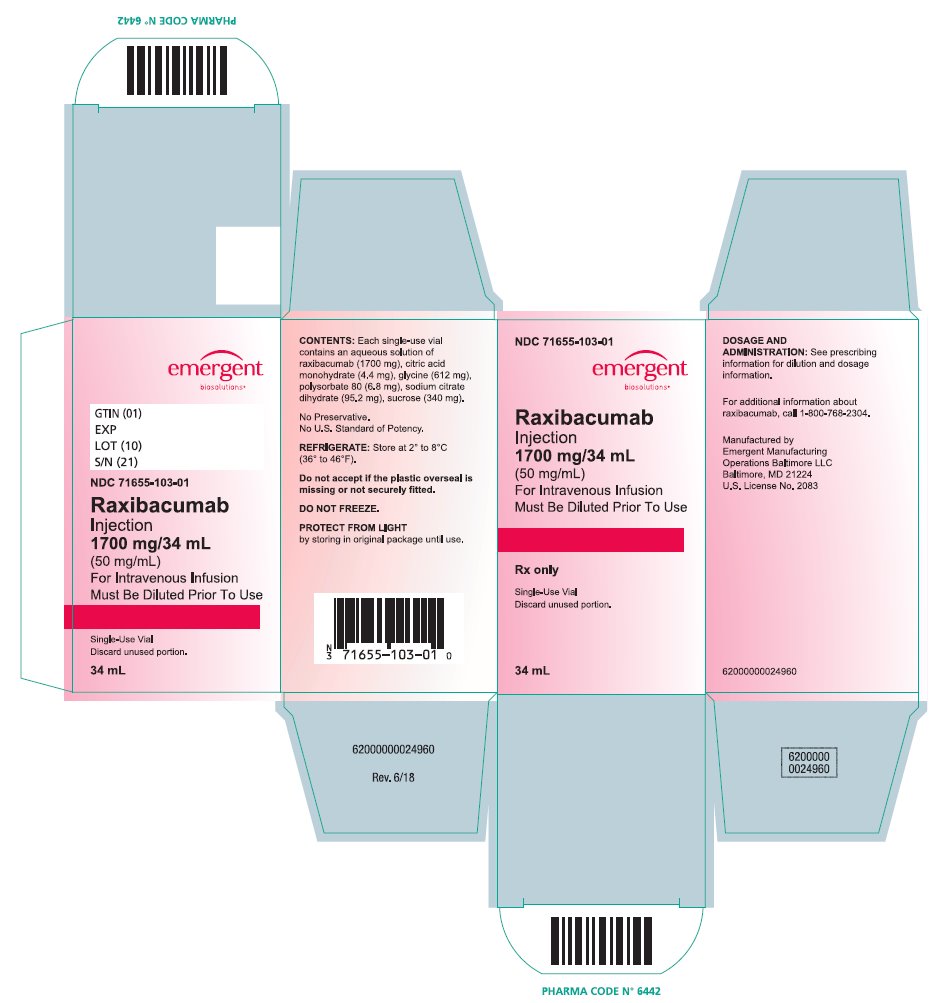
Raxibacumab 50 mg/mL Injection — NDC 71655-103-01 (Billing 71655-0103-01)
This is a package of Raxibacumab 50 mg/mL Injection from Emergent BioDefense Operations Lansing, marketed since Dec 2012 and currently FDA-listed. It is this product's only package size.
NDC database record
One package, one record: these facts belong to NDC 71655-103-01 alone.
- Record
- FDA NDC Directory package listing · Human prescription drug
- Code segments
- 71655 labeler · 103 product · 01 package
- Package marketed since
- Dec 14, 2012
- Sample package
- No — commercial package
- Listing certified through
- Dec 31, 2027
- Barcode (UPC-A, from the NDC)
- 3 7165510301 0
- FDA record last changed
- Oct 8, 2026
Identity & classification
Regulatory identifiers FDA, NLM and CMS codes for this package
Drug-database identifiers Medi-Span GPI and First Databank GCN / HICL / AHFS classification
- GSN (GCN sequence number): 082473
- GCN: 49907
- HICL (First Databank): 047472
- AHFS class code: 80:04.00.00
Where does this data come from?
- FDA openFDA NDC Directory · synced Oct 8, 2026
- FDA label on DailyMed · label index refreshed Oct 8, 2026
- RxNorm (NLM RxNav) · catalog refreshed Oct 8, 2026
- Medi-Span GPI (licensed)
- First Databank (licensed) · refreshed Oct 8, 2026
Clinical
- It treats inhalational anthrax, which is anthrax from breathing in the bacteria, and is always used with antibacterial drugs. It can also be used to prevent inhalational anthrax wh...
- It is given once as an IV infusion that takes a little over two hours. You'll get diphenhydramine beforehand to lower the chance of a reaction. Your care team handles all of it.
- Some people get rash, itching, arm or leg pain, sleepiness, headache or soreness and redness where the needle goes in. These were the most commonly reported effects in healthy volu...
- A serious allergic reaction is the main risk. Tell your nurse right away if you have hives, chest or throat tightness, lip or throat swelling, trouble breathing or feel faint. You'...
Patient education
Supplement & herbal interactions
Where does this data come from?
- MedlinePlus (NLM) · refreshed Oct 8, 2026
- FDA label on DailyMed · label index refreshed Oct 8, 2026
Ask a licensed pharmacist directly — free, answered by our team.
Pricing
A drug doesn't have one price. Each row is a different public payment system, and none is what you'd pay at the counter — that depends on your insurance. The ⓘ on each row explains what it measures.
| Price system | Per each | Per package |
|---|---|---|
| Retail pharmacies payNADAC · weekly | Not in the retail survey — common for institutional, discontinued, or low-volume packs. | |
| Medicaid paysCMS SDUD · 12 mo | No recent Medicaid claims on file for this NDC — rare and low-volume NDCs are suppressed in the public data. | |
| Medicare drug plans payPart D · quarterly | No Part D plan price is available for this NDC in our data. | |
Where does this data come from?
- CMS NADAC weekly file
- CMS ASP pricing files · refreshed Sep 20, 2026
- CMS Medicaid State Drug Utilization Data · refreshed Oct 9, 2026
- CMS Part D plan pricing files · refreshed Sep 24, 2026
- VA National Acquisition Center price file
Packaging — all sizes for this product
| Package NDC | Description | Marketing start | Marketing end | Status |
|---|---|---|---|---|
| 71655-0103-01 You're viewing this Main listing | 1 VIAL, SINGLE-USE in 1 CARTON / 34 mL in 1 VIAL, SINGLE-USE | 2012-12-14 | — | Active |
Therapeutic equivalents
| Product | Labeler | Pack | NADAC/unit | TE | Status | Price vs. this |
|---|---|---|---|---|---|---|
| Raxibacumab 50 mg/mLthis 71655-0103-01 | Emergent | 1 vial | — | — | FDA listed | — |
Where does this data come from?
- FDA openFDA NDC Directory · synced Oct 8, 2026
- FDA Purple Book · refreshed Oct 5, 2026
- CMS NADAC weekly file
Availability & biosimilar status
Biologics have no small-molecule generics; biosimilar competition is tracked in the FDA Purple Book.
Why the date isn’t exact: Biosimilar timing can change because patents may be challenged, settled, licensed, added or removed, and litigation can move the real date earlier or later.
🛈 What do these terms mean?
- Biologic patent
- A patent the reference product’s maker has publicly listed. A biosimilar generally can’t launch until these expire — unless they’re invalidated or resolved in a settlement.
- Reference-product exclusivity
- A flat 12 years of FDA market protection from the biologic’s first licensure (the BPCIA). No biosimilar can be licensed before it ends, regardless of patents.
- Interchangeable exclusivity
- The first interchangeable biosimilar can earn a period as the only interchangeable version (pharmacists can substitute it without the prescriber).
- Earliest biosimilar (LOE)
- The latest of all the dates above — the soonest a biosimilar can realistically reach the market. Litigation and settlements can move it earlier.
Biologics have no small-molecule “generics” — competition comes from FDA-licensed biosimilars, tracked in the FDA Purple Book.
| Code | What it grants | Expires |
|---|---|---|
| RefProduct | Reference-product exclusivity (12-year, BPCIA) — no biosimilar can be licensed before this date | Dec 14, 2024 |
Is there a biosimilar for RAXIBACUMAB VIAL (STOCKPILE)?
Why do different websites show different biosimilar dates?
Can a biosimilar launch before the last patent expires?
What does “current Purple Book estimate” mean?
What does “FDA listed” mean?
What does a patent or protection date mean here?
Where does this data come from?
- FDA Purple Book · refreshed Oct 5, 2026
Inactive Ingredients / Excipients
Inactive ingredients, also called excipients, are components of the drug product other than the active ingredient. They may include fillers, dyes, coatings, preservatives, flavors, or other formulation ingredients.
🧪 Avoiding an ingredient? See Raxibacumab inactive ingredients by manufacturer: every current product's list side by side, so you can ask your pharmacy for the version that does not list it.
Where does this data come from?
IACT rows and label-wide narrative are kept separate; availability and product-level specificity depend on the submitted label.- FDA label on DailyMed · label index refreshed Oct 8, 2026
- FDA openFDA NDC Directory · synced Oct 8, 2026
Inactive ingredient FAQ
Are inactive ingredients the same for every manufacturer?
Why might an inactive ingredient be missing?
Can inactive ingredients matter?
Manufacturer & labeler
More NDCs from Emergent BioDefense Operations Lansing labeler code 71655
Where does this data come from?
- FDA openFDA NDC Directory · synced Oct 8, 2026
- Drugs@FDA
Full prescribing information FDA SPL
🚨 Boxed Warning ▾
WARNING: HYPERSENSITIVITY and ANAPHYLAXIS • Hypersensitivity reactions, including anaphylaxis, have been reported during or after the administration of raxibacumab by intravenous infusion [see Warnings and Precautions ( 5.1 )] . • Administer raxibacumab by intravenous infusion in monitored settings where appropriate equipment, medication (including epinephrine) and personnel trained in the management of hypersensitivity, anaphylaxis, and shock are available [see Warnings and Precautions ( 2.3 , 5.1 )] . WARNING: HYPERSENSITIVITY and ANAPHYLAXIS See full prescribing information for complete boxed warning • Hypersensitivity reactions, including anaphylaxis, have been reported during or after the administration of raxibacumab by intravenous infusion ( 5.1 ). • Administer raxibacumab by intravenous infusion in monitored settings where appropriate equipment, medication (including epinephrine) and personnel trained in the management of hypersensitivity, anaphylaxis, and shock are available ( 2.3 , 5.1 ).
🎯 Indications and Usage ▾
1 INDICATIONS AND USAGE Raxibacumab is indicated for the treatment of adult and pediatric patients with inhalational anthrax due to Bacillus anthracis in combination with appropriate antibacterial drugs, and for prophylaxis of inhalational anthrax when alternative therapies are not available or are not appropriate. ( 1.1 ) Limitations of Use: • The effectiveness of raxibacumab is based solely on efficacy studies in animal models of inhalational anthrax. ( 1.2 , 14.1 ) • There have been no studies of raxibacumab in the pediatric population.
Dosing in pediatric patients was derived using an extrapolation approach. ( 1.2 , 8.4 ) • Raxibacumab does not cross the blood-brain barrier and does not prevent or treat meningitis. Raxibacumab should be used in combination with appropriate antibacterial drugs.
( 1.2 )
1.1Inhalational Anthrax Raxibacumab is indicated for the treatment of adult and pediatric patients with inhalational anthrax due to Bacillus anthracis in combination with appropriate antibacterial drugs. Raxibacumab is also indicated for prophylaxis of inhalational anthrax when alternative therapies are not available or are not appropriate.
1.2Limitations of Use The effectiveness of raxibacumab is based solely on efficacy studies in animal models of inhalational anthrax. It is not ethical or feasible to conduct controlled clinical trials with intentional exposure of humans to anthrax [see Clinical Studies ( 14.1 )] . Safety and pharmacokinetics (PK) of raxibacumab have been studied in adult healthy volunteers.
There have been no trials of safety or PK of raxibacumab in the pediatric population. An extrapolation approach was used to derive dosing regimens that are predicted to provide pediatric patients with exposure comparable to the observed exposure in adults [see Use in Specific Populations ( 8.4 )] . Raxibacumab binds to the protective antigen (PA) of B. anthracis ; it does not have direct antibacterial activity.
Raxibacumab does not cross the blood-brain barrier and does not prevent or treat meningitis. Raxibacumab should be used in combination with appropriate antibacterial drugs.
⏱️ Dosage and Administration ▾
2 DOSAGE AND ADMINISTRATION • Premedicate with diphenhydramine. ( 2.1 , 2.2 , 5.1 ) • Dilute and administer as an intravenous infusion over 2 hours and 15 minutes. ( 2.3 ) • - Adults: 40 mg/kg raxibacumab. ( 2.1 ) • - Pediatrics greater than 40 kg: 40 mg/kg raxibacumab. ( 2.2 ) • - Pediatrics greater than 10 kg to 40 kg: 60 mg/kg raxibacumab. ( 2.2 ) • - Pediatrics 10 kg or less: 80 mg/kg raxibacumab. ( 2.2 )
2.1Dose and Schedule for Adults Administer raxibacumab as a single dose of 40 mg/kg intravenously over 2 hours and 15 minutes after dilution in 0.9% Sodium Chloride Injection, USP (normal saline) to a final volume of 250 mL. Administer 25 to 50 mg diphenhydramine within 1 hour prior to the raxibacumab infusion to reduce the risk of occurrence and/or the severity of an infusion reaction. Diphenhydramine route of administration (oral or intravenous) should be based on the temporal proximity to the start of the raxibacumab infusion [see Warnings and Precautions ( 5.1 ) , Adverse Reactions ( 6.1 )] .
2.2Dose and Schedule for Pediatric Patients The recommended dose for pediatric patients is based on weight as shown in Table 1 . Table 1. Recommended Pediatric Dose Pediatric Body Weight Pediatric Dose Greater than 40 kg 40 mg/kg Greater than 10 kg to 40 kg 60 mg/kg 10 kg or less 80 mg/kg Premedicate with diphenhydramine within 1 hour prior to the raxibacumab infusion to reduce the risk of occurrence and/or the severity of an infusion reaction.
Diphenhydramine route of administration (oral or intravenous) should be based on the temporal proximity to the start of the raxibacumab infusion. Infuse raxibacumab over 2 hours and 15 minutes. No pediatric patients were studied during the development of raxibacumab.
The dosing recommendations in Table 1 are derived from simulations designed to match the observed adult exposure to raxibacumab at a 40 mg/kg dose [see Use in Specific Populations ( 8.4 )] .
2.3Preparation and Administration of Raxibacumab The recommended dose of raxibacumab is weight-based, given as an intravenous infusion after dilution in a compatible solution to a final volume of 250 mL in adults or to a volume indicated based on the child’s weight ( Table 2 ). Dilute raxibacumab using one of the following compatible solutions: • 0.9% Sodium Chloride Injection, USP • 0.45% Sodium Chloride Injection, USP Keep vials in their cartons prior to preparation of an infusion solution to protect raxibacumab from light.
Raxibacumab vials contain no preservative. Table 2. Raxibacumab Dose, Diluents, Infusion Volumes, and Rates by Body Weight a For patients requiring maximal fluid restriction, dilution factors can be adjusted at the discretion of the physician to a maximal concentration of 32 mg/mL.
Preparation Administration Body Weight Dose Total Infusion Volume a Type of Diluent Infusion Rate Infusion Rate First 20 Minutes Remaining Infusion Adults 40 mg/kg 250 mL 0.9% Sodium Chloride Injection 15 mL/hour 125 mL/hour Pediatric Patients (Younger than 18 Years) Less than 1 kg 80 mg/kg 7 mL 0.45% Sodium Chloride Injection or 0.9% Sodium Chloride Injection 0.5 mL/hour 3.5 mL/hour 1 kg to less than 2 kg 15 mL 1 mL/hour 7 mL/hour 2 kg to less than 3 kg 20 mL 1.2 mL/hour 10 mL/hour 3 kg to less than 5 kg 25 mL 1.5 mL/hour 12 mL/hour 5 kg to 10 kg 40 mL 3 mL/hour 20 mL/hour Greater than 10 kg to less than 15 kg 60 mg/kg 50 mL 0.9% Sodium Chloride Injection 6 mL/hour 25 mL/hour 15 kg to less than 30 kg 100 mL 6 mL/hour 50 mL/hour 30 kg to 40 kg 125 mL 15 mL/hour 62.5 mL/hour Greater than 40 kg 40 mg/kg 150 mL 15 mL/hour 75 mL/hour Preparation Follow the steps below to prepare the raxibacumab intravenous infusion solution.
1. Calculate the milligrams of raxibacumab injection by multiplying the recommended mg/kg dose in Table 2 by patient weight in kilograms. 2.
Calculate the required volume in milliliters of raxibacumab injection needed for the dose by dividing the calculated dose in milligrams (Step 1) by the concentration, 50 mg/mL. Each… [Excerpted — this section continues on DailyMed.]
💊 Dosage Forms and Strengths ▾
3 DOSAGE FORMS AND STRENGTHS Injection: 1,700 mg/34 mL (50 mg/mL) solution in a single-use vial. Injection: 1,700 mg/34 mL (50 mg/mL) solution in a single-use vial. ( 3 )
⛔ Contraindications ▾
4 CONTRAINDICATIONS None. None. ( 4 )
⚠️ Warnings and Cautions ▾
5 WARNINGS AND PRECAUTIONS Hypersensitivity and Anaphylaxis: ( Boxed Warning , 2.1 , 2.3 , 5.1 , 6.1 )
5.1Hypersensitivity and Anaphylaxis Hypersensitivity reactions including rash, urticaria, pruritus, chills, chest and throat tightness, lip and throat swelling, and hypotension were reported in 27 (4.5%) of 606 healthy subjects during or after the administration of raxibacumab in clinical trials. Two subjects experienced anaphylaxis during the raxibacumab infusion [see Adverse Reactions ( 6.1 )] . Some subjects with hypersensitivity or anaphylaxis required interruption or discontinuation of the raxibacumab infusion as well as additional appropriate treatment that included steroids, diphenhydramine, H2 blockers, and/or intravenous fluids [see Adverse Reactions ( 6.1 )] .
Due to the risk of anaphylaxis, administer raxibacumab injection in monitored settings where appropriate equipment, medication (including epinephrine) and personnel trained to manage hypersensitivity, anaphylaxis, and shock are available. Monitor patients closely during the infusion and for a period of time after administration. If hypersensitivity reactions or anaphylaxis occur, interrupt or stop the raxibacumab infusion immediately and treat appropriately.
Premedicate with diphenhydramine within 1 hour prior to administering raxibacumab to reduce the risk of occurrence and/or severity of a hypersensitivity reaction [see Dosage and Administration ( 2.1 ), Adverse Reactions ( 6.1 )] . Diphenhydramine premedication does not prevent anaphylaxis and may mask or delay the onset of symptoms of hypersensitivity.
🤒 Adverse Reactions ▾
6 ADVERSE REACTIONS Common adverse reactions in healthy adult subjects (≥1.5%) were injection site reaction, erythema and pain, headache, rash, pain in extremity, pruritus, and somnolence. ( 6.1 ) To report SUSPECTED ADVERSE REACTIONS, contact Emergent BioSolutions at 1-800-768-2304 or FDA at 1-800-FDA-1088 or www.fda.gov/medwatch .
6.1Clinical Trials Experience Because clinical trials are conducted under widely varying conditions, adverse reaction rates observed in the clinical trials of a drug cannot be directly compared with rates in the clinical trials of another drug and may not reflect the rates observed in practice. The safety of raxibacumab has been studied only in healthy volunteers. It has not been studied in patients with inhalational anthrax.
In the three pre-licensure clinical trials (Trials 1, 2, and 3), the safety of raxibacumab was evaluated in 326 healthy subjects treated with a dose of 40 mg/kg in 3 clinical trials: a drug interaction trial with ciprofloxacin (Trial 1), a repeat-dose trial of 20 subjects with the second raxibacumab dose administered ≥4 months after the first dose (Trial 2), and a placebo-controlled trial evaluating single doses with a subset of subjects receiving 2 raxibacumab doses 14 days apart (Trial 3). Raxibacumab was administered to 86 healthy subjects in Trial 1.
In Trial 3, 240 healthy subjects received raxibacumab (217 received 1 dose and 23 received 2 doses) and 80 subjects received placebo. The overall safety of raxibacumab was evaluated as an integrated summary of these 3 clinical trials. Of 326 raxibacumab subjects, 283 received single doses, 23 received 2 doses 14 days apart, and 20 received 2 doses more than 4 months apart.
The subjects were aged 18 to 88 years, 53% female, 74% white, 17% black/African American, 6% Asian, and 15% Hispanic. Trial 4 was a post-marketing trial in healthy subjects designed to evaluate the effect of a single 40 mg/kg infusion of raxibacumab on the immunogenicity of a concurrently administered 3-dose subcutaneous (SC) regimen of Anthrax Vaccine Adsorbed (AVA) [N=286] compared with an AVA-alone regimen [N=286]. In the combination arm, the first dose of AVA was administered immediately following the raxibacumab infusion (Day 1), while the second and third doses were administered on Days 15 and 29.
The mean age of subjects was 36 years in both arms, 52% of subjects in the AVA arm and 50% in the AVA + raxibacumab arm were female, 75% and 77% in the two arms, respectively, were white, while 21% and 20%, respectively, were African American. Adverse Reactions Leading to Discontinuation or Interruption of Raxibacumab Infusion Four subjects (1.2%) in Trials 1, 2 and 3 had their infusion of raxibacumab discontinued for hypersensitivity and anaphylaxis: 2 subjects (neither of whom received diphenhydramine premedication) discontinued due to urticaria (mild), and 1 subject each discontinued for clonus (mild) and dyspnea (moderate).
In Trial 4, six (2.1%) subjects required discontinuation of the raxibacumab infusion and 3 (1.0%) subjects required infusion interruption due to hypersensitivity or anaphylaxis [see Warnings and Precautions ( 5.1 )] . Most Frequently Reported Adverse Reactions Trials 1, 2, and -3 In Trials 1, 2, and 3, the most frequently reported adverse reactions were rash, pain in extremity, pruritus, and somnolence ( Table 3 ). Table 3.
Adverse Reactions Reported in ≥1.5% of Healthy Adult Subjects Exposed to Raxibacumab 40 mg/kg Intravenously in Trials 1, 2, and 3 Adverse Reaction Placebo N = 80 (%) Single-Dose Raxibacumab N = 283 (%) Double-Dose Raxibacumab ≥4 Months Apart N = 20 (%) Double-Dose Raxibacumab 2 Weeks Apart N = 23 (%) Total Raxibacumab Subjects N = 326 (%) Rash/Rash erythematous/Rash papular 1 (1.3) 9 (3.2) 0 0 9 (2.8) Pain in extremity 1 (1.3) 7 (2.5) 0 0 7 (2.1) Pruritus 0 7 (2.5) 0 0 7 (2.1) Somnolence 0 4 (1.4) 0 1 (4.3) 5 (1.5) Rashes For all subjects exposed to raxibacumab in Trials 1, 2, and 3, the rate of rash was 2.8% (9/32… [Excerpted — this section continues on DailyMed.]
🔄 Drug Interactions ▾
7 DRUG INTERACTIONS
7.1Ciprofloxacin Co-administration of 40 mg/kg raxibacumab intravenously with intravenous or oral ciprofloxacin in human subjects did not alter the PK of either ciprofloxacin or raxibacumab [see Clinical Pharmacology ( 12.3 )] .
7.2Anthrax Vaccine Adsorbed (AVA) Co-administration of 40 mg/kg raxibacumab intravenously (Day 1) with a SC AVA regimen (Days 1, 15, and 29) did not affect the immunogenicity of AVA [see Clinical Pharmacology ( 12.3 )] .
👥 Use in Specific Populations ▾
8 USE IN SPECIFIC POPULATIONS Pediatric Use: Safety and effectiveness have not been studied in the pediatric population. ( 8.4 )
8.1Pregnancy Risk Summary There are no data on the use of raxibacumab in pregnant women to inform on drug-associated risk. In pregnant rabbits, intravenous administration of raxibacumab was not associated with teratogenicity or other adverse developmental outcomes at 3 times the human maximum plasma concentrations at the maximum recommended adult dose (see Data) . All pregnancies have a background risk of birth defect, loss, or other adverse outcomes.
In the U.S. general population, the estimated background rate of major birth defects is 2% to 4% and of miscarriage is 15% to 20% of clinically recognized pregnancies. Clinical Considerations Disease-Associated Maternal and/or Embryo/Fetal Risk: Limited data in the form of case reports of anthrax infection in pregnant women indicate that maternal infection is associated with a high risk of maternal, fetal, and neonatal deaths, particularly in the absence of treatment. Data Animal Data: A study was conducted in pregnant, healthy New Zealand White rabbits administered intravenous raxibacumab at dose levels of 40 or 120 mg/kg on Gestation Days 7 and 14.
No teratogenicity or other adverse developmental outcomes were observed in pregnant rabbits at 3 times the human maximum plasma concentrations at the maximum recommended adult dose of 40 mg/kg. Maternal toxicity was observed at both doses (reduced body weight gain late in gestation, but no difference in mean total weight gain).
8.2Lactation Risk Summary There is no information available on the presence of raxibacumab in human milk, the effects on the breastfed child, or the effects on milk production. Maternal IgG is known to be present in human milk. Therefore, the developmental and health benefits of breastfeeding should be considered along with the mother’s clinical need for raxibacumab and any potential adverse effects on the breastfed child from raxibacumab or from the underlying maternal condition.
8.4Pediatric Use As in adults, the effectiveness of raxibacumab in pediatric patients is based solely on efficacy studies in animal models of inhalational anthrax. As exposure of healthy children to raxibacumab is not ethical, an extrapolation approach was used to derive dosing regimens that are predicted to provide pediatric patients with exposure comparable to the observed exposure in adults receiving 40 mg/kg. The dose for pediatric patients is based on weight [see Dosage and Administration ( 2.2 )] .
Safety or PK of raxibacumab have not been studied in the pediatric population.
8.5Geriatric Use Clinical trials of raxibacumab did not include sufficient numbers of subjects aged 65 years and older to determine whether they respond differently from younger subjects. Of the total number of subjects in clinical trials of raxibacumab, 6.4% (21/326) were 65 years and older, while 1.5% (5/326) were 75 years and older. However, no alteration of dosing is needed for patients aged 65 years and older [see Clinical Pharmacology ( 12.3 )] .
🤰 Pregnancy ▾
8.1Pregnancy Risk Summary There are no data on the use of raxibacumab in pregnant women to inform on drug-associated risk. In pregnant rabbits, intravenous administration of raxibacumab was not associated with teratogenicity or other adverse developmental outcomes at 3 times the human maximum plasma concentrations at the maximum recommended adult dose (see Data) . All pregnancies have a background risk of birth defect, loss, or other adverse outcomes.
In the U.S. general population, the estimated background rate of major birth defects is 2% to 4% and of miscarriage is 15% to 20% of clinically recognized pregnancies. Clinical Considerations Disease-Associated Maternal and/or Embryo/Fetal Risk: Limited data in the form of case reports of anthrax infection in pregnant women indicate that maternal infection is associated with a high risk of maternal, fetal, and neonatal deaths, particularly in the absence of treatment. Data Animal Data: A study was conducted in pregnant, healthy New Zealand White rabbits administered intravenous raxibacumab at dose levels of 40 or 120 mg/kg on Gestation Days 7 and 14.
No teratogenicity or other adverse developmental outcomes were observed in pregnant rabbits at 3 times the human maximum plasma concentrations at the maximum recommended adult dose of 40 mg/kg. Maternal toxicity was observed at both doses (reduced body weight gain late in gestation, but no difference in mean total weight gain).
🧒 Pediatric Use ▾
8.4Pediatric Use As in adults, the effectiveness of raxibacumab in pediatric patients is based solely on efficacy studies in animal models of inhalational anthrax. As exposure of healthy children to raxibacumab is not ethical, an extrapolation approach was used to derive dosing regimens that are predicted to provide pediatric patients with exposure comparable to the observed exposure in adults receiving 40 mg/kg. The dose for pediatric patients is based on weight [see Dosage and Administration ( 2.2 )] .
Safety or PK of raxibacumab have not been studied in the pediatric population.
🧓 Geriatric Use ▾
8.5Geriatric Use Clinical trials of raxibacumab did not include sufficient numbers of subjects aged 65 years and older to determine whether they respond differently from younger subjects. Of the total number of subjects in clinical trials of raxibacumab, 6.4% (21/326) were 65 years and older, while 1.5% (5/326) were 75 years and older. However, no alteration of dosing is needed for patients aged 65 years and older [see Clinical Pharmacology ( 12.3 )] .
🆘 Overdosage ▾
10 OVERDOSAGE There is no clinical experience with overdosage of raxibacumab. In case of overdosage, monitor patients for any signs or symptoms of adverse effects.
🧬 Clinical Pharmacology ▾
12 CLINICAL PHARMACOLOGY
12.1Mechanism of Action Raxibacumab is a monoclonal antibody that binds the protective antigen of B. anthracis [see Microbiology ( 12.4 )] .
12.3Pharmacokinetics The PK of raxibacumab is linear over the dose range of 1 to 40 mg/kg following single intravenous dosing in humans; raxibacumab was not tested at doses higher than 40 mg/kg in humans. Following single intravenous administration of raxibacumab 40 mg/kg in healthy male and female human subjects, the mean C max and AUC inf were 1,020.3 ± 140.6 mcg/mL and 15,845.8 ± 4,333.5 mcg•day/mL, respectively. Mean raxibacumab steady-state volume of distribution was greater than plasma volume, suggesting some tissue distribution.
Clearance values were much smaller than the glomerular filtration rate indicating that there is virtually no renal clearance of raxibacumab. Because the effectiveness of raxibacumab cannot be tested in humans, a comparison of raxibacumab exposures achieved in healthy human subjects to those observed in animal models of inhalational anthrax in therapeutic efficacy studies is necessary to support the dosage regimen of 40 mg/kg intravenously as a single dose for the treatment of inhalational anthrax in humans. Humans achieve similar or greater systemic exposure (C max and AUC inf ) to raxibacumab following a single 40 mg/kg intravenous dose compared with New Zealand White rabbits and cynomolgus macaques receiving the same dosage regimen.
Effects of Gender, Age, and Race Raxibacumab PK was evaluated via a population PK analysis using serum samples from 322 healthy subjects who received a single 40 mg/kg intravenous dose across 3 clinical trials. Based on this analysis, gender (female versus male), race (non-white versus white), or age (elderly versus young) had no meaningful effects on the PK parameters for raxibacumab. Raxibacumab PK has not been evaluated in children [see Dosage and Administration ( 2.2 ), Use in Specific Populations ( 8.4 )] .
Repeat Dosing Although raxibacumab is intended for single-dose administration, the PK of raxibacumab following a second administration of 40 mg/kg given intravenously 14 days after the first 40 mg/kg intravenous dose was assessed in 23 healthy subjects (Trial 3). The mean raxibacumab concentration at 28 days after the second dose was approximately twice the mean raxibacumab concentration at 14 days following the first dose. In the human trial assessing the immunogenicity of raxibacumab (Trial 2), 20 healthy subjects who had initially received a single dose of raxibacumab 40 mg/kg intravenously received a second 40 mg/kg intravenous dose at ≥4 months following their first dose.
No statistically significant differences in mean estimates of AUC inf , CL, or half-life of raxibacumab between the 2 doses administered ≥4 months apart were observed. The mean C max following the second dose was 15% lower than the C max following the first dose. Ciprofloxacin Interaction Trial In an open-label trial evaluating the effect of raxibacumab on ciprofloxacin PK in healthy adult male and female subjects (Trial 1), the administration of 40 mg/kg raxibacumab intravenously following ciprofloxacin intravenous infusion or ciprofloxacin oral tablet ingestion did not alter the PK of ciprofloxacin administered orally and/or intravenously.
Likewise, ciprofloxacin did not alter the PK of raxibacumab [see Drug Interactions ( 7.1 )] . Co-Administration with AVA Trial The effect of a single 40 mg/kg infusion of raxibacumab on the immunogenicity of a three-dose regimen of AVA administered (SC) was assessed in an open-label randomized trial in healthy adult male and female subjects (Trial 4). The trial included two treatment arms.
In the combination arm, the first dose of AVA was administered immediately following the raxibacumab infusion (Day 1), while the second and third doses were administered on Days 15 and 29. In the AVA-alone arm, these SC AVA doses were administered on Days 1, 15 and 29. Overall immune response to A… [Excerpted — this section continues on DailyMed.]
🧬 Mechanism of Action ▾
12.1Mechanism of Action Raxibacumab is a monoclonal antibody that binds the protective antigen of B. anthracis [see Microbiology ( 12.4 )] .
📦 How Supplied / Storage and Handling ▾
16 HOW SUPPLIED/STORAGE AND HANDLING Raxibacumab is a sterile, preservative-free, clear to opalescent, colorless to pale yellow solution supplied in single-use vials containing 1,700 mg/34 mL (50 mg/mL) raxibacumab and is available in the following packaging configuration: Single Unit Carton: Contains one single-use vial of raxibacumab 1,700 mg/34 mL (NDC 71655-103-01). Raxibacumab must be refrigerated at 2°C to 8°C (36°F to 46°F). DO NOT FREEZE.
Protect the vial from exposure to light, prior to use. Brief exposure to light, as with normal use, is acceptable. Store vial in original carton until time of use.
📋 Description ▾
11 DESCRIPTION Raxibacumab is a human IgG1λ monoclonal antibody that binds the PA component of B. anthracis toxin. Raxibacumab has a molecular weight of approximately 146 kilodaltons. Raxibacumab is produced by recombinant DNA technology in a murine cell expression system.
Raxibacumab is supplied as a sterile, preservative-free, clear to opalescent, colorless to pale yellow liquid formulation in single-use vials for intravenous infusion. Each vial contains 1,700 mg/34 mL (50 mg/mL) raxibacumab in citric acid (0.13 mg/mL), glycine (18 mg/mL), polysorbate 80 [0.2 mg/mL (w/v)], sodium citrate (2.8 mg/mL), sucrose (10 mg/mL), and Water for Injection, with a pH of 6.5.
💬 Information for Patients ▾
17 PATIENT COUNSELING INFORMATION Advise the patient to read the FDA-approved patient labeling (Patient Information). Efficacy Based on Animal Models Inform patients that the efficacy of raxibacumab is based solely on efficacy studies demonstrating a survival benefit in animals and that the effectiveness of raxibacumab has not been tested in humans with anthrax. The safety of raxibacumab has been tested in healthy adults, but no safety data are available in children or pregnant women.
Limited data are available in geriatric patients [see Use in Specific Populations ( 8.5 )] . Hypersensitivity Reactions and Anaphylaxis Inform patients that hypersensitivity reactions, including anaphylaxis, have occurred with the administration of raxibacumab. Inform patients of the signs and symptoms of hypersensitivity and anaphylaxis and instruct patients to seek immediate medical care if they experience such symptoms during or following administration of raxibacumab.
Prophylactic administration of diphenhydramine is recommended within 1 hour prior to administering raxibacumab to reduce the risk of occurrence and/or the severity of hypersensitivity reactions [see Warnings and Precautions ( 5.1 )] . Manufactured by Emergent Manufacturing Operations Baltimore LLC Baltimore, MD 21224 U.S. License No.
2083 Emergent BioSolutions Inc. Any and all Emergent BioSolutions Inc. brand, product, service and feature names, logos and slogans are trademarks or registered trademarks of Emergent BioSolutions Inc. or its subsidiaries in the United States or other countries. All rights reserved.
🧬 Pharmacokinetics ▾
12.3Pharmacokinetics The PK of raxibacumab is linear over the dose range of 1 to 40 mg/kg following single intravenous dosing in humans; raxibacumab was not tested at doses higher than 40 mg/kg in humans. Following single intravenous administration of raxibacumab 40 mg/kg in healthy male and female human subjects, the mean C max and AUC inf were 1,020.3 ± 140.6 mcg/mL and 15,845.8 ± 4,333.5 mcg•day/mL, respectively. Mean raxibacumab steady-state volume of distribution was greater than plasma volume, suggesting some tissue distribution.
Clearance values were much smaller than the glomerular filtration rate indicating that there is virtually no renal clearance of raxibacumab. Because the effectiveness of raxibacumab cannot be tested in humans, a comparison of raxibacumab exposures achieved in healthy human subjects to those observed in animal models of inhalational anthrax in therapeutic efficacy studies is necessary to support the dosage regimen of 40 mg/kg intravenously as a single dose for the treatment of inhalational anthrax in humans. Humans achieve similar or greater systemic exposure (C max and AUC inf ) to raxibacumab following a single 40 mg/kg intravenous dose compared with New Zealand White rabbits and cynomolgus macaques receiving the same dosage regimen.
Effects of Gender, Age, and Race Raxibacumab PK was evaluated via a population PK analysis using serum samples from 322 healthy subjects who received a single 40 mg/kg intravenous dose across 3 clinical trials. Based on this analysis, gender (female versus male), race (non-white versus white), or age (elderly versus young) had no meaningful effects on the PK parameters for raxibacumab. Raxibacumab PK has not been evaluated in children [see Dosage and Administration ( 2.2 ), Use in Specific Populations ( 8.4 )] .
Repeat Dosing Although raxibacumab is intended for single-dose administration, the PK of raxibacumab following a second administration of 40 mg/kg given intravenously 14 days after the first 40 mg/kg intravenous dose was assessed in 23 healthy subjects (Trial 3). The mean raxibacumab concentration at 28 days after the second dose was approximately twice the mean raxibacumab concentration at 14 days following the first dose. In the human trial assessing the immunogenicity of raxibacumab (Trial 2), 20 healthy subjects who had initially received a single dose of raxibacumab 40 mg/kg intravenously received a second 40 mg/kg intravenous dose at ≥4 months following their first dose.
No statistically significant differences in mean estimates of AUC inf , CL, or half-life of raxibacumab between the 2 doses administered ≥4 months apart were observed. The mean C max following the second dose was 15% lower than the C max following the first dose. Ciprofloxacin Interaction Trial In an open-label trial evaluating the effect of raxibacumab on ciprofloxacin PK in healthy adult male and female subjects (Trial 1), the administration of 40 mg/kg raxibacumab intravenously following ciprofloxacin intravenous infusion or ciprofloxacin oral tablet ingestion did not alter the PK of ciprofloxacin administered orally and/or intravenously.
Likewise, ciprofloxacin did not alter the PK of raxibacumab [see Drug Interactions ( 7.1 )] . Co-Administration with AVA Trial The effect of a single 40 mg/kg infusion of raxibacumab on the immunogenicity of a three-dose regimen of AVA administered (SC) was assessed in an open-label randomized trial in healthy adult male and female subjects (Trial 4). The trial included two treatment arms.
In the combination arm, the first dose of AVA was administered immediately following the raxibacumab infusion (Day 1), while the second and third doses were administered on Days 15 and 29. In the AVA-alone arm, these SC AVA doses were administered on Days 1, 15 and 29. Overall immune response to AVA in the combination arm was found to be similar to the AVA-alone arm.
🔬 Clinical Studies ▾
14 CLINICAL STUDIES Because it is not feasible or ethical to conduct controlled clinical trials in humans with inhalational anthrax, the effectiveness of raxibacumab for therapeutic treatment of inhalational anthrax is based on efficacy studies in rabbits and monkeys. Raxibacumab effectiveness has not been studied in humans. Because the animal efficacy studies are conducted under widely varying conditions, the survival rates observed in the animal studies cannot be directly compared between studies and may not reflect the rates observed in clinical practice.
The efficacy of raxibacumab for treatment of inhalational anthrax was studied in a monkey model (Study 2) and a rabbit model (Studies 3 and 4) of inhalational anthrax disease. These 3 studies tested raxibacumab efficacy compared with placebo. Another study in a rabbit model (Study 1) evaluated the efficacy of raxibacumab in combination with an antibacterial drug relative to the antibacterial drug alone.
Studies were randomized and blinded. The animals were challenged with aerosolized B. anthracis spores (Ames strain) at 200 x LD 50 to achieve 100% mortality if untreated. In rabbit Study 1, treatment was delayed until 84 hours after spore challenge.
In monkey Study 2, study treatment commenced at the time of a positive serum electrochemiluminescence (ECL) assay for B. anthracis PA. The mean time between spore challenge and initiation of study treatment was 42 hours. In rabbit Studies 3 and 4, sustained elevation of body temperature above baseline for 2 hours or a positive result on serum ECL assay for PA served as the trigger for initiation of study treatment.
The mean time between spore challenge and initiation of study treatment was 28 hours post-exposure. Efficacy in all therapeutic studies in animals was determined based on survival at the end of the study. Most study animals (88% to 100%) were bacteremic and had a positive ECL assay for PA prior to treatment in all 4 studies.
14.1Treatment of Inhalational Anthrax in Combination with Antibacterial Drug The efficacy of raxibacumab administered with levofloxacin as treatment of animals with systemic anthrax disease (84 hours after spore challenge) was evaluated in New Zealand White rabbits (Study 1). The dose of levofloxacin was chosen to yield a comparable exposure to that achieved by the recommended doses in humans. Levofloxacin and raxibacumab PK in this study were unaffected by product co-administration.
Forty-two percent of challenged animals survived to treatment. Treatment with antibacterial drug plus raxibacumab resulted in 82% survival compared with 65% survival in rabbits treated with antibacterial drug alone, P = 0.0874 ( Table 5 ). Table 5.
Survival Rates in NZW Rabbits in Combination Therapy Study, All-Treated Animals a Survival assessed 28 days after last dose of levofloxacin. b P value based on a two-sided likelihood ratio chi-square test. c 95% confidence interval based on normal approximation. Treatment Group NZW Rabbits (35 days) a Study 1 Number (%) Survivors P Value b 95% CI c Levofloxacin versus Levofloxacin + Raxibacumab Levofloxacin alone 24/37 (65%) - - Levofloxacin + Raxibacumab 40 mg/kg intravenous single dose 32/39 (82%) 0.0874 (-2.4, 36.7)
14.2Post-Exposure Prophylaxis/Early Treatment of Inhalational Anthrax Monkey Study 2 and rabbit Studies 3 and 4 evaluated treatment with raxibacumab alone at an earlier time point after exposure than rabbit Study 1. Treatment with raxibacumab alone resulted in a statistically significant dose-dependent improvement in survival relative to placebo when administered at the time of initial manifestations of anthrax disease in the rabbit and monkey infection models ( Table 6 ). Raxibacumab at 40 mg/kg intravenous single dose was superior to placebo in the rabbit and monkey studies in the all-treated and the bacteremic animal analysis populations.
All surviving animals developed toxin-neutralizing antibodies. Table 6. Survival Rates in Animals Treated with Raxiba… [Excerpted — this section continues on DailyMed.]
🧪 Nonclinical Toxicology ▾
13 NONCLINICAL TOXICOLOGY
13.1Carcinogenesis, Mutagenesis, Impairment of Fertility Carcinogenicity, genotoxicity, and fertility studies have not been conducted with raxibacumab.
13.2Animal Toxicology Healthy cynomolgus macaques administered 3 intravenous doses or 3 SC doses of 40 mg/kg raxibacumab once every 12 days, or a single intramuscular dose (40 mg/kg) of raxibacumab, showed no adverse effects, including no effects up to 120 days post-dosing. Studies with raxibacumab in rabbit, cynomolgus macaque, and human donor tissues showed no cross reactivity with brain. Anthrax-infected rabbits and monkeys administered an intravenous injection of raxibacumab (40 mg/kg) at time of PA toxemia reproducibly showed greater severity of central nervous system (CNS) lesions (bacteria, inflammation, hemorrhage, and necrosis) in non-surviving animals compared with dead placebo-control animals, with no difference in mean time to death from spore challenge.
The raxibacumab monoclonal antibody appears unable to penetrate the CNS until compromise of the blood-brain barrier (BBB) during the later stages of anthrax infection. The most severe brain lesions in rabbits were associated with bacteria and raxibacumab tissue binding in a similar pattern as endogenous IgG antibody that leaked across the compromised BBB. No dose/exposure-response relationship for brain histopathology was identified.
Surviving rabbits and monkeys at the end of the 28-day studies showed no microscopic evidence of CNS lesions. CNS toxicity was not observed in healthy monkeys administered raxibacumab (40 mg/kg) or in GLP combination treatment studies with antibacterials in rabbits (levofloxacin) or in monkeys (ciprofloxacin) at any time.
📄 Carcinogenesis, Mutagenesis, Impairment of Fertility ▾
13.1Carcinogenesis, Mutagenesis, Impairment of Fertility Carcinogenicity, genotoxicity, and fertility studies have not been conducted with raxibacumab.
📄 Patient Package Insert ▾
PATIENT INFORMATION RAXIBACUMAB (rack-see-BACK-u-mab) Injection, for intravenous use What is the most important information I should know about RAXIBACUMAB? RAXIBACUMAB can cause serious side effects, including: • Serious allergic reactions. Tell your healthcare provider right away if you have any of the following symptoms while receiving RAXIBACUMAB or after receiving RAXIBACUMAB: • rash • hives • itching • chills • chest tightness or shortness of breath • throat tightness or trouble breathing • swelling of the lips, throat, or tongue • feeling dizzy or lightheaded What is RAXIBACUMAB? • RAXIBACUMAB is a prescription medicine used along with antibiotic medicines to treat people with inhalational anthrax.
RAXIBACUMAB can also be used to prevent inhalational anthrax disease when there are no other treatment options. • The effectiveness of RAXIBACUMAB has been studied only in animals with inhalational anthrax. There have been no studies in people who have inhalational anthrax. • The safety of RAXIBACUMAB was studied in healthy adults. There have been no studies of RAXIBACUMAB in pediatric patients. • RAXIBACUMAB is not used for prevention or treatment of anthrax meningitis.
Before you receive RAXIBACUMAB, tell your healthcare provider about all of your medical conditions, including if you are: • allergic to any of the ingredients in RAXIBACUMAB. See the end of this leaflet for a list of the ingredients in RAXIBACUMAB. • allergic to diphenhydramine (BENADRYL). • pregnant or planning to become pregnant. It is not known if RAXIBACUMAB will harm your unborn baby. • breastfeeding or plan to breastfeed.
It is not known if RAXIBACUMAB passes into your breast milk. You and your healthcare provider should decide if you will receive RAXIBACUMAB or breastfeed. Tell your healthcare provider about all the medicines you take, including prescription and over-the-counter medicines, vitamins, and herbal supplements.
How will I receive RAXIBACUMAB? • You will be given 1 dose of RAXIBACUMAB by a healthcare provider through a vein (intravenous infusion). It takes about 2 hours and 15 minutes to give you the full dose of medicine. • Your healthcare provider should give you a medicine called diphenhydramine (BENADRYL) before you receive RAXIBACUMAB to help reduce your chances of developing an allergic reaction from RAXIBACUMAB. BENADRYL may be given to you to take by mouth or through a vein. • BENADRYL may make you sleepy, and you should use caution if you will be driving or operating equipment.
What are the possible side effects of RAXIBACUMAB? RAXIBACUMAB can cause serious side effects, including: • See “ What is the most important information I should know about RAXIBACUMAB? ” The most common side effects of RAXIBACUMAB include: • rash • pain in your arms or legs • itchiness • sleepiness • injection site reactions, including redness and pain • headache Tell your healthcare provider if you have any side effect that bothers you or that does not go away. These are not all the possible side effects of RAXIBACUMAB.
For more information, ask your healthcare provider. Call your doctor for medical advice about side effects. You may report side effects to FDA at 1-800-FDA-1088.
For more information go to dailymed.nlm.nih.gov. General information about the safe and effective use of RAXIBACUMAB. Medicines are sometimes prescribed for purposes other than those listed in a patient information leaflet.
This patient information leaflet summarizes the most important information about RAXIBACUMAB. If you would like more information, talk to your healthcare provider. You can ask your pharmacist or healthcare provider for information about RAXIBACUMAB that is written for health professionals.
What are the ingredients in RAXIBACUMAB? Active ingredient: raxibacumab Inactive ingredients: citric acid, glycine, polysorbate 80, sodium citrate, sucrose, Water for Injection. Manufactured by Emergent Manufacturing Operations Baltimore LLC Baltimore, MD 21224 U.S.
License No.… [Excerpted — this section continues on DailyMed.]
📄 Recent Major Changes ▾
Boxed Warning Warnings and Precaution, Hypersensitivity and Anaphylaxis ( 5.1 ) 5/2021 5/2021
📄 Package Label / Principal Display Panel ▾
PRINCIPAL DISPLAY PANEL NDC 71655-103-01 EMERGENT ® Raxibacumab Injection 1700 mg/34 mL (50 mg/mL) For Intravenous Infusion Must be Diluted Prior To Use Rx only Single-Use Vial Discard unused portion. 34 mL Raxibacumab Injection 1700 mg/34 mL (50 mg/mL) Carton Label
PRINCIPAL DISPLAY PANEL NDC 71655-103-01 Raxibacumab Injection 1700 mg/34 mL (50 mg/mL) For Intravenous Infusion Must be Diluted Prior To Use Single-Use Vial Discard unused portion. 34 mL Rx only EMERGENT ® See prescribing information for dilution and dosage information. REFRIGERATE: Store at 2° to 8°C (36° to 46°F).
Do Not Freeze. Protect From Light by storing in original package until use. Manufactured by Emergent Manufacturing Operations Baltimore LLC Baltimore, MD 21224 U.S.
License No. 2083 Raxibacumab 35 mL Vial Label
About this NDC listing & data coverage
What data is (and isn’t) available for this NDC — tap to expand
| NDC identity (package / product / labeler codes) | ✓ Available |
| Labeler | ✓ Available |
| Product & package description | ✓ Available |
| Marketing category & status | ✓ Available |
| Active ingredient / dosage form / route | ✓ Available |
| FDA label (SPL via DailyMed) | ✓ Available |
| Package photos | ✓ Available |
| Inactive ingredients (structured) | — Not published for this NDC The labeler did not submit a structured excipient list, or no SPL is available. |
| NADAC pharmacy acquisition price (CMS) | — Not published for this NDC CMS publishes NADAC only for NDCs reported in its retail-pharmacy survey. |
| Orange Book / therapeutic-equivalence data | ✓ Available |
| HCPCS J-code billing crosswalk | — Not published for this NDC Most self-administered / retail products have no J-code — that is normal. |
| Medicaid utilization (CMS SDUD) | — Not published for this NDC CMS reports utilization only for NDCs with Medicaid claims above its privacy threshold. |