
Zevalin ibritumomab tiuxetan Kit — NDC 72893-007-04 (Billing 72893-0007-04)
This is a package of Zevalin ibritumomab tiuxetan Kit from Acrotech Biopharma Inc, marketed since Feb 2002 and currently FDA-listed. It is this product's only package size.
NDC database record
One package, one record: these facts belong to NDC 72893-007-04 alone.
- Record
- FDA NDC Directory package listing · Human prescription drug
- Code segments
- 72893 labeler · 007 product · 04 package
- Package marketed since
- Feb 19, 2002
- Sample package
- No — commercial package
- Listing certified through
- Dec 31, 2026
- Barcode (UPC-A, from the NDC)
- 3 7289300704 7
- FDA record last changed
- Jul 24, 2026
Identity & classification
Regulatory identifiers FDA, NLM and CMS codes for this package
Drug-database identifiers Medi-Span GPI and First Databank GCN / HICL / AHFS classification
- GSN (GCN sequence number): 051201
- GCN: 18373
- GPI-14 (Medi-Span): 21358035406420
- HICL (First Databank): 024430
- AHFS class code: 10:00.00.00
Where does this data come from?
- FDA openFDA NDC Directory · synced Oct 1, 2026
- FDA label on DailyMed · label index refreshed Oct 6, 2026
- RxNorm (NLM RxNav) · catalog refreshed Oct 1, 2026
- Medi-Span GPI (licensed)
- First Databank (licensed) · refreshed Oct 1, 2026
Clinical
Patient education
Supplement & herbal interactions
Where does this data come from?
- MedlinePlus (NLM) · refreshed Oct 1, 2026
- FDA label on DailyMed · label index refreshed Oct 6, 2026
Ask a licensed pharmacist directly — free, answered by our team.
Pricing
A drug doesn't have one price. Each row is a different public payment system, and none is what you'd pay at the counter — that depends on your insurance. The ⓘ on each row explains what it measures.
| Price system | Per each | Per package |
|---|---|---|
| Retail pharmacies payNADAC · weekly | Not in the retail survey — common for institutional, discontinued, or low-volume packs. | |
| Medicaid paysCMS SDUD · 12 mo | No recent Medicaid claims on file for this NDC — rare and low-volume NDCs are suppressed in the public data. | |
| Medicare drug plans payPart D · quarterly | No Part D plan price is available for this NDC in our data. | |
Where does this data come from?
- CMS NADAC weekly file
- CMS ASP pricing files · refreshed Sep 20, 2026
- CMS Medicaid State Drug Utilization Data · refreshed Oct 7, 2026
- CMS Part D plan pricing files · refreshed Sep 24, 2026
- VA National Acquisition Center price file
Packaging — all sizes for this product
| Package NDC | Description | Marketing start | Marketing end | Status |
|---|---|---|---|---|
| 72893-0007-04 You're viewing this Main listing | 1 KIT in 1 CARTON * 10 mL in 1 VIAL * 2 mL in 1 VIAL * 2 mL in 1 VIAL | 2002-02-19 | — | Active |
Therapeutic equivalents
| Product | Labeler | Pack | NADAC/unit | TE | Status | Price vs. this |
|---|---|---|---|---|---|---|
| Zevalinthis 72893-0007-04 | Acrotech | 1 kit | — | — | FDA listed | — |
Where does this data come from?
- FDA openFDA NDC Directory · synced Oct 1, 2026
- FDA Purple Book · refreshed Oct 5, 2026
- CMS NADAC weekly file
Availability & biosimilar status
Biologics have no small-molecule generics; biosimilar competition is tracked in the FDA Purple Book.
Where does this data come from?
- FDA Purple Book · refreshed Oct 5, 2026
Inactive Ingredients / Excipients
Inactive ingredients, also called excipients, are components of the drug product other than the active ingredient. They may include fillers, dyes, coatings, preservatives, flavors, or other formulation ingredients.
Where does this data come from?
IACT rows and label-wide narrative are kept separate; availability and product-level specificity depend on the submitted label.- FDA label on DailyMed · label index refreshed Oct 6, 2026
- FDA openFDA NDC Directory · synced Oct 1, 2026
Inactive ingredient FAQ
Are inactive ingredients the same for every manufacturer?
Why might an inactive ingredient be missing?
Can inactive ingredients matter?
Manufacturer & labeler
More NDCs from Acrotech Biopharma Inc labeler code 72893
- EVOMELA Melphalan 50 mg/10mL Injection, Powder, Lyophilized, For Solution NDC 72893-001-01
- Beleodaq Belinostat 500 mg/10mL Injection, Powder, Lyophilized, For Solution NDC 72893-002-01
- Folotyn pralatrexate 20 mg/mL Injection NDC 72893-003-01
- KHAPZORY levoleucovorin 175 mg/3.5mL Injection, Powder, Lyophilized, For Solution NDC 72893-004-01
- Folotyn pralatrexate 40 mg/2mL Injection NDC 72893-005-01
- RYZNEUTA efbemalenograstim alfa-vuxw 20 mg/mL Injection NDC 72893-016-02
- ADQUEY Difamilast 10 mg/g Ointment NDC 72893-017-07
Where does this data come from?
- FDA openFDA NDC Directory · synced Oct 1, 2026
- Drugs@FDA
Full prescribing information FDA SPL
🚨 Boxed Warning ▾
WARNING: SERIOUS INFUSION REACTIONS, PROLONGED AND SEVERE CYTOPENIAS, and SEVERE CUTANEOUS AND MUCOCUTANEOUS REACTIONS Serious Infusion Reactions: Deaths have occurred within 24 hours of rituximab infusion, an essential component of the Zevalin therapeutic regimen. These fatalities were associated with hypoxia, pulmonary infiltrates, acute respiratory distress syndrome, myocardial infarction, ventricular fibrillation, or cardiogenic shock. Most (80%) fatalities occurred with the first rituximab infusion [ see Warnings and Precautions ( 5.1 ) and Adverse Reactions ( 6.1 ) ] .
Discontinue rituximab and Y-90 Zevalin infusions in patients who develop severe infusion reactions. Prolonged and Severe Cytopenias: Y-90 Zevalin administration results in severe and prolonged cytopenias in most patients. Do not administer Y-90 Zevalin to patients with ≥ 25% lymphoma marrow involvement and/or impaired bone marrow reserve [ see Warnings and Precautions ( 5.2 ) and Adverse Reactions ( 6.1 ) ].
Severe Cutaneous and Mucocutaneous Reactions: Severe cutaneous and mucocutaneous reactions, some fatal, can occur with the Zevalin therapeutic regimen. Discontinue rituximab and Y-90 Zevalin infusions in patients experiencing severe cutaneous or mucocutaneous reactions [ see Warnings and Precautions ( 5.3 ) and Adverse Reactions ( 6.2 ) ]. Dosing: The dose of Y-90 Zevalin should not exceed 32 mCi (1184 MBq) [ see Dosage and Administration ( 2.2 ) ].
WARNING: SERIOUS INFUSION REACTIONS, PROLONGED AND SEVERE CYTOPENIAS, and SEVERE CUTANEOUS AND MUCOCUTANEOUS REACTIONS See full prescribing information for complete boxed warning Serious Infusion Reactions, some fatal, may occur within 24 hours of rituximab infusion. ( 5.1 ) Prolonged and Severe Cytopenias occur in most patients. ( 5.2 ) Severe Cutaneous and Mucocutaneous Reactions, some fatal, reported with Zevalin therapeutic regimen.
( 5.3 , 6.2 ) Do not exceed 32 mCi (1184 MBq) of Y-90 Zevalin. ( 2.2 )
🎯 Indications and Usage ▾
1 INDICATIONS AND USAGE Zevalin is a CD20-directed radiotherapeutic antibody administered as part of the Zevalin therapeutic regimen indicated for the treatment of adult patients with: relapsed or refractory, low-grade or follicular B-cell non-Hodgkin's lymphoma (NHL) ( 1.1 ). previously untreated follicular NHL who achieve a partial or complete response to first-line chemotherapy ( 1.2 ).
1.1Relapsed or Refractory, Low-grade or Follicular NHL Zevalin is indicated for the treatment of adult patients with relapsed or refractory, low-grade or follicular B-cell non-Hodgkin's lymphoma (NHL).
1.2Previously Untreated Follicular NHL Zevalin is indicated for the treatment of previously untreated follicular NHL in adult patients who achieve a partial or complete response to first-line chemotherapy.
⏱️ Dosage and Administration ▾
2 DOSAGE AND ADMINISTRATION Day 1 : Administer rituximab 250 mg/m 2 intravenous infusion. ( 2.2 ) Day 7, 8, or 9 : Administer rituximab 250 mg/m 2 intravenous infusion. ( 2.2 ) If platelets at least 150,000/mm 3 : Within 4 hours after rituximab infusion, administer 0.4 mCi/kg (14.8 MBq per kg) Y-90 Zevalin intravenous infusion.
If platelets 100,000 to 149,000/mm 3 in relapsed or refractory patients: Within 4 hours after rituximab infusion, administer 0.3 mCi/kg (11.1 MBq per kg) Y-90 Zevalin intravenous infusion.
2.1Recommended Dosing Schedule Administer the Zevalin therapeutic regimen as outlined below. Initiate the Zevalin therapeutic regimen following recovery of platelet counts to 150,000/mm 3 or more at least 6 weeks, but no more than 12 weeks, following the last dose of first-line chemotherapy. Only administer rituximab/Zevalin in facilities where immediate access to resuscitative measures is available. Overview of Dosing Schedule Zevalin Dosing Schedule
2.2Zevalin Therapeutic Regimen Dosage and Administration Day 1: Premedicate with acetaminophen 650 mg orally and diphenhydramine 50 mg orally prior to rituximab infusion. Administer rituximab 250 mg/m 2 intravenously at an initial rate of 50 mg/hr. In the absence of infusion reactions, escalate the infusion rate in 50 mg/hr increments every 30 minutes to a maximum of 400 mg/hr.
Do not mix or dilute rituximab with other drugs. Immediately stop the rituximab infusion for serious infusion reactions and discontinue the Zevalin therapeutic regimen [ see Boxed Warning and Warnings and Precautions ( 5.1 ) ]. Temporarily slow or interrupt the rituximab infusion for less severe infusion reactions.
If symptoms improve, continue the infusion at one-half the previous rate. Day 7, 8 or 9: Premedicate with acetaminophen 650 mg orally and diphenhydramine 50 mg orally prior to rituximab infusion. Administer rituximab 250 mg/m 2 intravenously at an initial rate of 100 mg/hr.
Increase rate by 100 mg/hr increments at 30 minute intervals, to a maximum of 400 mg/hr, as tolerated. If infusion reactions occurred during rituximab infusion on Day 1 of treatment, administer rituximab at an initial rate of 50 mg/hr and escalate the infusion rate in 50 mg/hr increments every 30 minutes to a maximum of 400 mg/hr. Administer Y-90 Zevalin injection through a free flowing intravenous line within 4 hours following completion of rituximab infusion.
Use a 0.22 micron low-protein-binding in-line filter between the syringe and the infusion port. After infusion, flush the line with at least 10 mL of normal saline. If platelet count at least 150,000/mm 3 , administer Y-90 Zevalin over 10 minutes as an intravenous infusion at a dose of Y-90 0.4 mCi per kg (14.8 MBq per kg) actual body weight.
If platelet count 100,000 to 149,000/mm 3 , in relapsed or refractory patients, administer Y-90 Zevalin over 10 minutes as an intravenous infusion at a dose of Y-90 0.3 mCi per kg (11.1 MBq per kg) actual body weight. Do not administer more than 32 mCi (1184 MBq) Y-90 Zevalin dose regardless of the patient’s body weight. Monitor patients closely for evidence of extravasation during the infusion of Y-90 Zevalin.
Immediately stop infusion and restart in another limb if any signs or symptoms of extravasation occur [ see Warnings and Precautions ( 5.5 ) ].
2.3Directions for Preparation of Radiolabeled Y-90 Zevalin Doses A clearly-labeled kit is required for preparation of Yttrium-90 (Y-90) Zevalin. Follow the detailed instructions for the preparation of radiolabeled Zevalin [ see Dosage and Administration ( 2.4 ) ]. Required materials not supplied in the kit: Yttrium-90 Chloride Sterile Solution Three sterile 1 mL plastic syringes One sterile 3 mL plastic syringe Two sterile 10 mL plastic syringes with 18-20 G needles ITLC silica gel strips 0.9% Sodium Chloride aqueous solution for the chromatography solvent Developing chamber for chromatography Suitable radioactivity counting apparatus Filter, 0.22 micrometer, low-protein… [Excerpted — this section continues on DailyMed.]
💊 Dosage Forms and Strengths ▾
3 DOSAGE FORMS AND STRENGTHS Injection: 3.2 mg ibritumomab tiuxetan per 2 mL as a clear, colorless solution, that may contain translucent particles, in a single-dose vial. Injection: 3.2 mg per 2 mL in a single-dose vial. ( 3 )
⛔ Contraindications ▾
4 CONTRAINDICATIONS None. None.
⚠️ Warnings and Cautions ▾
5 WARNINGS AND PRECAUTIONS Serious Infusion Reactions: Immediately discontinue rituximab and Y-90 Zevalin. ( 5.1 , 6.1 ) Prolonged and Severe Cytopenias: Do not administer Zevalin to patients with ≥ 25% lymphoma marrow involvement or impaired bone marrow reserve. ( 5.2 , 6.1 ) Severe Cutaneous and Mucocutaneous Reactions: Discontinue rituximab and Zevalin infusions if patients develop severe cutaneous or mucocutaneous reactions.
( 5.3 , 6.2 ) Development of Leukemia and Myelodysplastic Syndrome: Monitor patients for hematological toxicity including secondary malignancies. ( 5.4 , 6.1 ) Extravasation: Monitor for extravasation and terminate infusion if it occurs. Resume infusion in another limb.
( 5.5 , 6.2 ) Immunization: Do not administer live viral vaccines to patients who recently received Zevalin. ( 5.6 ) Embryo-fetal Toxicity: May cause fetal harm. Advise patients of potential risk to a fetus and to use effective contraception.
( 5.8 , 8.1 , 8.3 )
5.1Serious Infusion Reactions Rituximab, alone or as a component of the Zevalin therapeutic regimen, can cause severe, including fatal, infusion reactions. These reactions typically occur during the first rituximab infusion with time to onset of 30 to 120 minutes. Signs and symptoms of severe infusion reactions may include urticaria, hypotension, angioedema, hypoxia, bronchospasm, pulmonary infiltrates, acute respiratory distress syndrome, myocardial infarction, ventricular fibrillation, and cardiogenic shock.
Temporarily slow or interrupt the rituximab infusion for less severe infusion reactions. Immediately discontinue rituximab and Y-90 Zevalin administration for severe infusion reactions. Only administer rituximab/Zevalin in facilities where immediate access to resuscitative measures is available [ see Boxed Warning and Dosage and Administration ( 2.2 ) ].
See also prescribing information for rituximab.
5.2Prolonged and Severe Cytopenias Cytopenias with delayed onset and prolonged duration, some complicated by hemorrhage and severe infection, are the most common severe adverse reactions of the Zevalin therapeutic regimen. When used according to recommended doses, the incidences of severe thrombocytopenia and neutropenia are greater in patients with mild baseline thrombocytopenia (≥ 100,000 but ≤ 149,000/mm 3 ) compared to those with normal pretreatment platelet counts. Severe cytopenias persisting more than 12 weeks following administration can occur.
Monitor complete blood counts (CBC) and platelet counts following the Zevalin therapeutic regimen weekly until levels recover or as clinically indicated [ see Boxed Warning and Adverse Reactions ( 6.1 ) ]. Do not administer the Zevalin therapeutic regimen to patients with ≥ 25% lymphoma marrow involvement and/or impaired bone marrow reserve. Monitor patients for cytopenias and their complications (e.g., febrile neutropenia, hemorrhage) for up to 3 months after use of the Zevalin therapeutic regimen.
Avoid using drugs which interfere with platelet function or coagulation following the Zevalin therapeutic regimen.
5.3Severe Cutaneous and Mucocutaneous Reactions Erythema multiforme, Stevens-Johnson syndrome, toxic epidermal necrolysis, bullous dermatitis, and exfoliative dermatitis, some fatal, were reported in post-marketing experience. The time to onset of these reactions was variable, ranging from a few days to 4 months after administration of the Zevalin therapeutic regimen. Discontinue the Zevalin therapeutic regimen in patients experiencing a severe cutaneous or mucocutaneous reaction [ see Boxed Warning and Adverse Reactions ( 6.2 ) ].
5.4Risk of Developing Myelodysplastic Syndrome, Leukemia, and Other Malignancies The radiation dose resulting from therapeutic exposure to Y-90 radiolabeled Zevalin may result in secondary malignancies. Myelodysplastic syndrome (MDS) and/or acute myelogenous leukemia (AML) were reported in 5.2% (11/211) of patients with relapsed or refractory NHL enrolled in clinical studies and 1.5% (8/5… [Excerpted — this section continues on DailyMed.]
🤒 Adverse Reactions ▾
6 ADVERSE REACTIONS The following serious adverse reactions are discussed in greater detail in other sections of the label: Serious Infusion Reactions [ see Boxed Warning and Warnings and Precautions ( 5.1 ) ] . Prolonged and Severe Cytopenias [ see Boxed Warning and Warnings and Precautions ( 5.2 ) ]. Severe Cutaneous and Mucocutaneous Reactions [ see Boxed Warning and Warnings and Precautions ( 5.3 ) ].
Leukemia and Myelodysplastic Syndrome [ see Warnings and Precautions ( 5.4 ) ]. Common adverse reactions ( > 10%) in clinical trials were: cytopenias, fatigue, nasopharyngitis, nausea, abdominal pain, asthenia, cough, diarrhea, and pyrexia. ( 6 ) To report SUSPECTED ADVERSE REACTIONS, contact Acrotech Biopharma Inc. at 1-866-298-8433 or FDA at 1-800-FDA-1088 or www.fda.gov/medwatch
6.1Clinical Trials Experience Because clinical trials are conducted under widely varying conditions, adverse reaction rates observed in the clinical trials of a drug cannot be directly compared to rates in the clinical trials of another drug and may not reflect the rates observed in practice. The reported safety data reflects exposure to Zevalin in 349 patients with relapsed or refractory, low-grade, follicular or transformed NHL across 5 trials (4 single arm and 1 randomized) and in 206 patients with previously untreated follicular NHL in a randomized trial (FIT study) who received any portion of the Zevalin therapeutic regimen.
The safety data reflect exposure to Zevalin in 270 patients with relapsed or refractory NHL with platelet counts ≥150,000/ mm 3 who received 0.4 mCi/kg (14.8 MBq/kg) of Y-90 Zevalin (Group 1 in Table 4 ), 65 patients with relapsed or refractory NHL with platelet counts of ≥ 100,000 but ≤ 149,000 /mm 3 who received 0.3 mCi/kg (11.1 MBq/kg) of Y-90 Zevalin (Group 2 in Table 4 ), and 204 patients with previously untreated NHL with platelet counts ≥150,000/ mm 3 who received 0.4 mCi/kg (14.8 MBq/kg) of Y-90 Zevalin; all patients received a single course of Zevalin.
The most common adverse reactions of Zevalin are cytopenias, fatigue, nasopharyngitis, nausea, abdominal pain, asthenia, cough, diarrhea, and pyrexia. The most serious adverse reactions of Zevalin are prolonged and severe cytopenias (thrombocytopenia, anemia, lymphopenia, neutropenia) and secondary malignancies. Because the Zevalin therapeutic regimen includes the use of rituximab, see prescribing information for rituximab.
Table 2 displays selected adverse reaction incidence rates in patients who received any portion of the Zevalin therapeutic regimen (n=206) or no further therapy (n=203) following first-line chemotherapy (FIT study). Table 2. Per-Patient Incidence (%) of Selected Between-group difference of ≥5% Adverse Reactions Occurring in ≥ 5% of Patients with Previously Untreated Follicular NHL Treated with the Zevalin Therapeutic Regimen Zevalin (n=206) Observation (n=203) All Grades NCI CTCAE version
2.0Grade 3-4 All Grades Grade 3-4 % % % % Gastrointestinal Disorders Abdominal pain 17 2 13 <1 Diarrhea 11 0 3 0 Nausea 18 0 2 0 Body as a Whole Asthenia 15 1 8 <1 Fatigue 33 1 9 0 Influenza-like illness 8 0 3 0 Pyrexia 10 3 4 0 Musculoskeletal Myalgia 9 0 3 0 Metabolism Anorexia 8 0 2 0 Respiratory, Thoracic & Media Cough 11 <1 5 0 Pharyngolaryngeal pain 7 0 2 0 Epistaxis 5 2 <1 0 Nervous System Dizziness 7 0 2 0 Vascular Hypertension 7 3 2 <1 Skin & Subcutaneous Night sweats 8 0 2 0 Petechiae 8 2 0 0 Pruritus 7 0 1 0 Rash 7 0 <1 0 Infections & Infestations Bronchitis 8 0 3 0 Nasopharyngitis 19 0 10 0 Rhinitis 8 0 2 0 Sinusitis 7 <1 <1 0 Urinary tract infection 7 <1 3 0 Blood and Lymphatic System Thrombocytopenia 62 51 1 0 Neutropenia 45 41 3 2 Anemia 22 5 4 0 Leukopenia 43 36 4 1 Lymphopenia 26 18 9 5 Table 3 shows hematologic toxicities in 349 Zevalin-treated patients with relapsed or refractory, low-grade, follicular or transformed B-cell NHL.
Grade 2-4 hematologic toxicity occurred in 86% of Zevalin-treated patients. Table 3. Per-Patient Incidence (%) of… [Excerpted — this section continues on DailyMed.]
🔄 Drug Interactions ▾
7 DRUG INTERACTIONS Patients receiving medications that interfere with platelet function or coagulation should have more frequent laboratory monitoring for thrombocytopenia. No formal drug interaction studies have been performed with Zevalin. Monitor patients receiving medications that interfere with platelet function or coagulation more frequently for thrombocytopenia. ( 7 )
👥 Use in Specific Populations ▾
8 USE IN SPECIFIC POPULATIONS Lactation: Advise women not to breastfeed. ( 8.2 )
8.1Pregnancy Risk Summary Based on its radioactivity, Y-90 Zevalin may cause fetal harm when administered to a pregnant woman [see Clinical Pharmacology ( 12.1 )] . Immunoglobulins are known to cross the placenta. There are no available data on Zevalin use in pregnant women to inform a drug-associated risk of major birth defects and miscarriage.
Advise women of childbearing potential to use adequate contraception for a minimum of twelve months. Inform women who become pregnant while receiving Zevalin of the potential fetal risks. The estimated background risk of major birth defects and miscarriage for the indicated populations are unknown.
All pregnancies have a background risk of birth defect, loss, or other adverse outcomes. However, the background risk in the U.S. general population of major birth defects is 2-4% and of miscarriage is 15-20% of clinically recognized pregnancies.
8.2Lactation Risk Summary There are no data on the presence of Zevalin or its metabolites in human milk, the effects of Zevalin on the breastfed child, or its effects on milk production. Because human IgG is excreted in human milk, it is expected that Zevalin would be present in human milk. Due to the potential for serious adverse reactions in a breastfeeding child from Zevalin, advise lactating women to avoid breastfeeding during treatment with the Zevalin therapeutic regimen and for 6 months after the last dose.
8.3Females and Males of Reproductive Potential Zevalin may cause fetal harm when administered to a pregnant woman [see Use in Specific Populations ( 8.1 )] . Pregnancy Testing Conduct pregnancy testing in females of reproductive potential prior to treatment with Zevalin. Contraception Females Based on its radioactivity, Y-90 Zevalin may cause fetal harm.
Advise females of reproductive potential to use effective contraceptive methods during treatment and for 12 months after the last dose of the Zevalin therapeutic regimen [see Clinical Pharmacology ( 12.1 )] . Males Based on its radioactivity, Y-90 Zevalin may cause fetal harm. Advise males with female partners of reproductive potential to use effective contraceptive methods during treatment and for 12 months after the final dose of the Zevalin therapeutic regimen [see Clinical Pharmacology ( 12.1 )].
Infertility Based on its radioactivity, there is a potential risk that the Zevalin therapeutic regimen could cause toxic effects on the male and female gonads [see Clinical Pharmacology ( 12.1 ) and Nonclinical Toxicology ( 13.1 )] .
8.4Pediatric Use The safety and effectiveness of Zevalin have not been established in pediatric patients.
8.5Geriatric Use Of 349 patients with relapsed/refractory NHL treated with the Zevalin therapeutic regimen in clinical studies, 38% (132 patients) were age 65 years and over, while 12% (41 patients) were age 75 years and over. Of 414 patients enrolled in the FIT study (Zevalin following first-line chemotherapy) 206 patients received Zevalin. Of these patients 14% (29 patients) were 65 years and over, while 2% (4 patients) were 75 years and older.
No overall differences in safety or effectiveness were observed between these subjects and younger subjects, but greater sensitivity of some older individuals cannot be ruled out.
🤰 Pregnancy ▾
8.1Pregnancy Risk Summary Based on its radioactivity, Y-90 Zevalin may cause fetal harm when administered to a pregnant woman [see Clinical Pharmacology ( 12.1 )] . Immunoglobulins are known to cross the placenta. There are no available data on Zevalin use in pregnant women to inform a drug-associated risk of major birth defects and miscarriage.
Advise women of childbearing potential to use adequate contraception for a minimum of twelve months. Inform women who become pregnant while receiving Zevalin of the potential fetal risks. The estimated background risk of major birth defects and miscarriage for the indicated populations are unknown.
All pregnancies have a background risk of birth defect, loss, or other adverse outcomes. However, the background risk in the U.S. general population of major birth defects is 2-4% and of miscarriage is 15-20% of clinically recognized pregnancies.
🧒 Pediatric Use ▾
8.4Pediatric Use The safety and effectiveness of Zevalin have not been established in pediatric patients.
🧓 Geriatric Use ▾
8.5Geriatric Use Of 349 patients with relapsed/refractory NHL treated with the Zevalin therapeutic regimen in clinical studies, 38% (132 patients) were age 65 years and over, while 12% (41 patients) were age 75 years and over. Of 414 patients enrolled in the FIT study (Zevalin following first-line chemotherapy) 206 patients received Zevalin. Of these patients 14% (29 patients) were 65 years and over, while 2% (4 patients) were 75 years and older.
No overall differences in safety or effectiveness were observed between these subjects and younger subjects, but greater sensitivity of some older individuals cannot be ruled out.
🆘 Overdosage ▾
10 OVERDOSAGE Severe cytopenias which may require stem cell support have occurred at doses higher than the recommended maximum total dose of 32 mCi (1184 MBq).
🧬 Clinical Pharmacology ▾
12 CLINICAL PHARMACOLOGY
12.1Mechanism of Action Ibritumomab tiuxetan binds specifically to the CD20 antigen (human B-lymphocyte-restricted differentiation antigen, Bp35). The apparent affinity (K D ) of ibritumomab tiuxetan for the CD20 antigen ranges between approximately 14 to 18 nM. The CD20 antigen is expressed on pre-B and mature B lymphocytes and on > 90% of B-cell non-Hodgkin’s lymphomas (NHL).
The CD20 antigen is not shed from the cell surface and does not internalize upon antibody binding. The chelate tiuxetan, which tightly binds Y-90, is covalently linked to ibritumomab. The beta emission from Y-90 induces cellular damage by the formation of free radicals in the target and neighboring cells.
Ibritumomab tiuxetan binding was observed in vitro on lymphoid cells of the bone marrow, lymph node, thymus, red and white pulp of the spleen, and lymphoid follicles of the tonsil, as well as lymphoid nodules of other organs such as the large and small intestines.
12.2Pharmacodynamics In clinical studies, administration of the Zevalin therapeutic regimen resulted in sustained depletion of circulating B cells. At four weeks, the median number of circulating B cells was zero (range, 0-1084/mm 3 ). B-cell recovery began at approximately 12 weeks following treatment, and the median level of B cells was within the normal range (32 to 341/mm 3 ) by 9 months after treatment.
Median serum levels of IgG and IgA remained within the normal range throughout the period of B-cell depletion. Median IgM serum levels dropped below normal (median 49 mg/dL, range 13-3990 mg/dL) after treatment and recovered to normal values by 6-months post therapy.
12.3Pharmacokinetics Pharmacokinetic and biodistribution studies were performed using In-111 Zevalin (5 mCi [185 MBq] In-111, 1.6 mg ibritumomab tiuxetan). In an early study designed to assess the need for pre-administration of unlabeled antibody, only 18% of known sites of disease were imaged when In-111 Zevalin was administered without unlabeled ibritumomab. When preceded by unlabeled ibritumomab (1.0 mg/kg or 2.5 mg/kg), In-111 Zevalin detected 56% and 92% of known disease sites, respectively.
These studies were conducted with a Zevalin therapeutic regimen that included unlabeled ibritumomab. In pharmacokinetic studies of patients receiving the Zevalin therapeutic regimen, the mean effective half-life for Y-90 activity in blood was 30 hours, and the mean area under the fraction of injected activity (FIA) vs. time curve in blood was 39 hours. Over 7 days, a median of 7.2% of the injected activity was excreted in urine.
🧬 Mechanism of Action ▾
12.1Mechanism of Action Ibritumomab tiuxetan binds specifically to the CD20 antigen (human B-lymphocyte-restricted differentiation antigen, Bp35). The apparent affinity (K D ) of ibritumomab tiuxetan for the CD20 antigen ranges between approximately 14 to 18 nM. The CD20 antigen is expressed on pre-B and mature B lymphocytes and on > 90% of B-cell non-Hodgkin’s lymphomas (NHL).
The CD20 antigen is not shed from the cell surface and does not internalize upon antibody binding. The chelate tiuxetan, which tightly binds Y-90, is covalently linked to ibritumomab. The beta emission from Y-90 induces cellular damage by the formation of free radicals in the target and neighboring cells.
Ibritumomab tiuxetan binding was observed in vitro on lymphoid cells of the bone marrow, lymph node, thymus, red and white pulp of the spleen, and lymphoid follicles of the tonsil, as well as lymphoid nodules of other organs such as the large and small intestines.
📦 How Supplied / Storage and Handling ▾
16 HOW SUPPLIED/STORAGE AND HANDLING A kit is used for preparing Y-90 radiolabeled Zevalin (NDC 72893-007-04). The contents of all vials are sterile, pyrogen-free, contain no preservatives, and are not radioactive. The kit contains four identification labels and the following four vials: One (1) Zevalin vial containing 3.2 mg ibritumomab tiuxetan in 2 mL 0.9% Sodium Chloride as a clear, colorless solution.
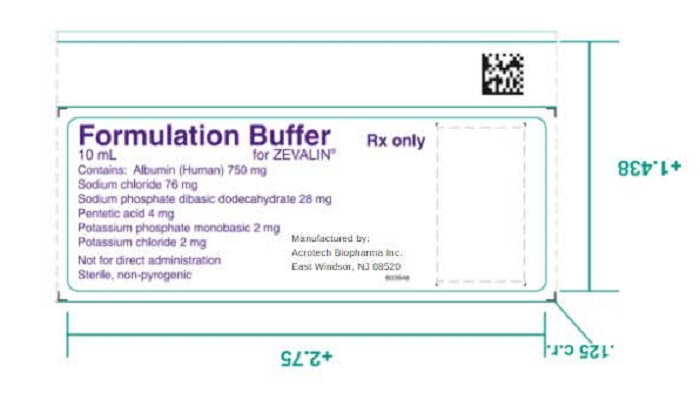
One (1) 50 mM Sodium Acetate Vial containing 13.6 mg Sodium Acetate trihydrate in 2 mL Water for Injection, USP as a clear, colorless solution. One (1) Formulation Buffer Vial containing 750 mg Albumin (Human), 76 mg Sodium Chloride, 28 mg Sodium Phosphate Dibasic Dodecahydrate, 4 mg Pentetic Acid, 2 mg Potassium Phosphate Monobasic and 2 mg Potassium Chloride in 10 mL Water for Injection, pH 7.1 as a clear yellow to amber colored solution. One (1) empty Reaction Vial.
Yttrium-90 Chloride Sterile Solution is shipped directly from the supplier upon placement of an order for the Y-90 Zevalin kit. Rituximab must be ordered separately. Storage Store the kit at 2-8°C (36-46°F).
Do not freeze.
📋 Description ▾
11 DESCRIPTION Zevalin (ibritumomab tiuxetan) is the immunoconjugate resulting from a stable thiourea covalent bond between the monoclonal antibody ibritumomab and the linker-chelator tiuxetan [N-[2-bis(carboxymethyl) amino]-3-(p-isothiocyanatophenyl)-propyl]-[N-[2-bis(carboxymethyl)amino]-2- (methyl)-ethyl]glycine. This linker-chelator provides a high affinity, conformationally restricted chelation site for Yttrium-90. The approximate molecular weight of ibritumomab tiuxetan is 148 kD.
The antibody moiety of Zevalin is ibritumomab, a murine IgG 1 kappa monoclonal antibody directed against the CD20 antigen. Ibritumomab tiuxetan is a clear, colorless, sterile, pyrogen-free, preservative-free solution that may contain translucent particles. Each single-use vial includes 3.2 mg of ibritumomab tiuxetan in 2 mL of 0.9% Sodium Chloride.
Physical/Radiochemical Characteristics of Y-90 Yttrium-90 decays by emission of beta particles, with a physical half-life of 64.1 hours (2.67 days). The product of radioactive decay is non-radioactive Zirconium-90. The range of beta particles in soft tissue ( χ 90) is 5 mm.
Radiation emission data for Y-90 are summarized in Table 5 . Table 5. Principal Y-90 Radiation Emission Data Radiation Mean % per Disintegration Mean Energy (keV) Beta minus 100 750-935 External Radiation The exposure rate for 1 mCi (37 MBq) of Y-90 is 8.3 x 10 -3 C/kg/hr (32 R/hr) at the mouth of an open Y-90 vial.
To allow correction for physical decay of Y-90, the fractions that remain at selected intervals before and after the time of calibration are shown in Table 6 . Table 6. Physical Decay Chart: Y-90 Half-life
2.67Days (64.1 Hours) Calibration Time (Hrs.) Fraction Remaining Calibration Time (Hrs.) Fraction Remaining -36 1.48 0 1.00 -24 1.30 1 0.99 -12 1.14 2 0.98 -8 1.09 3 0.97 -7 1.08 4 0.96 -6 1.07 5 0.95 -5 1.06 6 0.94 -4 1.04 7 0.93 -3 1.03 8 0.92 -2 1.02 12 0.88 -1 1.01 24 0.77 0 1.00 36 0.68
💬 Information for Patients ▾
17 PATIENT COUNSELING INFORMATION Advise patients: To contact a healthcare professional for severe signs and symptoms of infusion reactions. To take premedications as prescribed [see Dosage and Administration ( 2.2 ) and Warnings and Precautions ( 5.1 )] . To report any signs or symptoms of cytopenias (bleeding, easy bruising, petechiae or purpura, pallor, weakness or fatigue) [see Warnings and Precautions ( 5.2 )] .
To avoid medications that interfere with platelet function, except as directed by a healthcare professional [see Warnings and Precautions ( 5.2 )] . To seek prompt medical evaluation for diffuse rash, bullae, or desquamation of the skin or oral mucosa [see Warnings and Precautions ( 5.3 )] . To immediately report symptoms of infection (e.g. pyrexia) [see Adverse Reactions ( 6.2 )] .
That immunization with live viral vaccines is not recommended for 12 months following the Zevalin therapeutic regimen [see Warnings and Precautions ( 5.6 )] . To use effective contraceptive methods during treatment and for a minimum of 12 months following Zevalin therapy [see Warnings and Precautions ( 5.8 )] , Use in Specific Populations ( 8.1 , 8.3 ) and Nonclinical Toxicology ( 13.1 )] . To discontinue breastfeeding during and for 6 months after the last dose of Zevalin treatment [see Use In Specific Populations ( 8.2 )] .
Zevalin ® (ibritumomab tiuxetan) Manufactured by: Acrotech Biopharma Inc. East Windsor, NJ 08520 U.S. License No.2159 Zevalin ® is a registered trademark of Acrotech Biopharma Inc and its subsidiaries.
Protected by U.S. Patent Nos. 5,736,137, 5,776,456, 5,843,439, 6,207,858, 6,399,061, 6,682,734, 6,994,840, 7,229,620, 7,381,560, 7,422,739 and other patents and patents pending.
🧬 Pharmacokinetics ▾
12.3Pharmacokinetics Pharmacokinetic and biodistribution studies were performed using In-111 Zevalin (5 mCi [185 MBq] In-111, 1.6 mg ibritumomab tiuxetan). In an early study designed to assess the need for pre-administration of unlabeled antibody, only 18% of known sites of disease were imaged when In-111 Zevalin was administered without unlabeled ibritumomab. When preceded by unlabeled ibritumomab (1.0 mg/kg or 2.5 mg/kg), In-111 Zevalin detected 56% and 92% of known disease sites, respectively.
These studies were conducted with a Zevalin therapeutic regimen that included unlabeled ibritumomab. In pharmacokinetic studies of patients receiving the Zevalin therapeutic regimen, the mean effective half-life for Y-90 activity in blood was 30 hours, and the mean area under the fraction of injected activity (FIA) vs. time curve in blood was 39 hours. Over 7 days, a median of 7.2% of the injected activity was excreted in urine.
🧬 Pharmacodynamics ▾
12.2Pharmacodynamics In clinical studies, administration of the Zevalin therapeutic regimen resulted in sustained depletion of circulating B cells. At four weeks, the median number of circulating B cells was zero (range, 0-1084/mm 3 ). B-cell recovery began at approximately 12 weeks following treatment, and the median level of B cells was within the normal range (32 to 341/mm 3 ) by 9 months after treatment.
Median serum levels of IgG and IgA remained within the normal range throughout the period of B-cell depletion. Median IgM serum levels dropped below normal (median 49 mg/dL, range 13-3990 mg/dL) after treatment and recovered to normal values by 6-months post therapy.
🔬 Clinical Studies ▾
14 CLINICAL STUDIES
14.1Relapsed or Refractory, Low-grade or Follicular Lymphoma A study to evaluate the efficacy and safety of Zevalin (referred to as Study 106-06) was a single arm study of 54 patients with relapsed follicular lymphoma, who were refractory to rituximab treatment. Patients had a World Health Organization (WHO) Performance Status (PS) 0-2, <25% bone marrow involvement by NHL, no prior bone marrow transplantation, and acceptable hematologic, renal, and hepatic function. Refractoriness to rituximab was defined as failure to achieve a complete or partial response or time-to-disease-progression (TTP) of < 6 months.
The main efficacy outcome measure of the study was the overall response rate (ORR) using the International Workshop Response Criteria (IWRC). Other efficacy outcome measures included time-to-disease-progression (TTP) and duration of response (DR). Table 7 summarizes efficacy data from Study 106-06.
Another study to evaluate the efficacy and safety of Zevalin (referred to as Study 106-04) was a randomized (1:1), open-label, multicenter study comparing the Zevalin therapeutic regimen with rituximab. The trial was conducted in 130 patients with relapsed or refractory low-grade or follicular non-Hodgkin's lymphoma (NHL); no patient had received prior rituximab. Patients had histologically confirmed NHL requiring therapy, a WHO PS 0-2, <25% bone marrow involvement by NHL, no prior bone marrow transplantation, and acceptable hematologic function.
Sixty-four patients received the Zevalin therapeutic regimen, and 66 patients received rituximab given as an IV infusion at 375 mg per m 2 weekly times 4 doses. The main efficacy outcome measure of the study was ORR using the IWRC. The ORR was significantly higher for patients receiving the Zevalin therapeutic regimen (83% vs.
55%, p<0.001). Time-to-disease-progression was not significantly different between study arms. Table 7 summarizes efficacy data from Study 106-04.
Table 7 . Summary of Efficacy Data IWRC: International Workshop Response Criteria Study 106-06 Study 106-04 Zevalin Therapeutic regimen N = 54 Zevalin Therapeutic regimen N = 64 Rituximab N = 66 Overall Response Rate (%) 74 83 55 Complete Response Rate CRu and CR: Unconfirmed and confirm complete response (%) 15 38 18 Median DR Estimated with observed range Duration of response: interval from the onset of response to disease progression (Months) [Range “+” indicates an ongoing response ] 6.4 [0.5-49.9+] 14.3 [1.8-47.6+] 11.5 [1.2-49.7+] Median TTP Time to Disease Progression: interval from the first infusion to disease progression (Months) [Range ] 6.8 [1.1-50.9+] 12.1 [2.1-49.0+] 10.1 [0.7-51.3+] A single-arm study to evaluate the efficacy and safety of Zevalin (referred to as Study 106-05) was conducted in 30 patients, of whom 27 had relapsed or refractory low-grade, follicular NHL and a platelet count 100,000 to 149,000/mm 3 .
Patients with ≥ 25% lymphomatous marrow involvement, prior myeloablative therapy with stem cell support, prior external beam radiation to > 25% of active marrow or neutrophil count <1,500/mm 3 were ineligible for Study 106-05. All patients received Y-90 Zevalin [0.3 mCi per kg (11.1 MBq per kg)]. Objective, durable clinical responses were observed [89% ORR (95% CI: 70-97%) with a median duration of response of 11.6 months (range: 1.0-42.4+ months)].
14.2Follicular, B-Cell NHL Upon Completion of First-Line Chemotherapy The FIT (First-line Indolent Trial) study (NCT00185393) was a multi-center, randomized, open-label study conducted in patients with follicular NHL with a partial (PR) or complete response (CR/CRu) upon completion of first-line chemotherapy. Randomization was stratified by center and response to first-line therapy (CR or PR). Key eligibility criteria were <25% bone marrow involvement, no prior external beam radiation or myeloablative therapy, and recovery of platelets to normal levels.
Patients were randomized to receive Zevalin (n=208) or no further therapy (… [Excerpted — this section continues on DailyMed.]
🧪 Nonclinical Toxicology ▾
13 NONCLINICAL TOXICOLOGY
13.1Carcinogenesis, Mutagenesis, Impairment of Fertility Carcinogenicity and mutogenicity studies have not been conducted. However, radiation is a potential carcinogen and mutagen. No animal studies have been performed to determine the effects of Zevalin on fertility in males or females.
In clinical studies, the Zevalin therapeutic regimen results in a significant radiation dose to the testes: the radiation dose to the ovaries has not been established [ see Dosage and Administration ( 2.5 )]. There is a potential risk that the Zevalin therapeutic regimen could cause toxic effects on the male and female gonads. Effective contraceptive methods should be used during treatment and for up to 12 months following the Zevalin therapeutic regimen.
13.2Animal Toxicology and/or Pharmacology Animal reproductive toxicology studies of the Zevalin therapeutic regimen have not been conducted. Because the Zevalin therapeutic regimen includes the use of rituximab, also see prescribing information for rituximab.
📄 Carcinogenesis, Mutagenesis, Impairment of Fertility ▾
13.1Carcinogenesis, Mutagenesis, Impairment of Fertility Carcinogenicity and mutogenicity studies have not been conducted. However, radiation is a potential carcinogen and mutagen. No animal studies have been performed to determine the effects of Zevalin on fertility in males or females.
In clinical studies, the Zevalin therapeutic regimen results in a significant radiation dose to the testes: the radiation dose to the ovaries has not been established [ see Dosage and Administration ( 2.5 )]. There is a potential risk that the Zevalin therapeutic regimen could cause toxic effects on the male and female gonads. Effective contraceptive methods should be used during treatment and for up to 12 months following the Zevalin therapeutic regimen.
📄 Package Label / Principal Display Panel ▾
18. PRINCIPAL DISPLAY PANEL image-04 image-05 image-06 image-07 image-08 image-09
About this NDC listing & data coverage
Kit / multi-component package
This NDC identifies a kit — a package containing more than one component. Structured data (pricing, ingredients, equivalents) is often reported per component rather than for the kit NDC itself, which can make this page look thinner than the components' own pages.
What data is (and isn’t) available for this NDC — tap to expand
| NDC identity (package / product / labeler codes) | ✓ Available |
| Labeler | ✓ Available |
| Product & package description | ✓ Available |
| Marketing category & status | ✓ Available |
| Active ingredient / dosage form / route | ✓ Available |
| FDA label (SPL via DailyMed) | ✓ Available |
| Package photos | ✓ Available |
| Inactive ingredients (structured) | — Not published for this NDC The labeler did not submit a structured excipient list, or no SPL is available. |
| NADAC pharmacy acquisition price (CMS) | — Not published for this NDC CMS publishes NADAC only for NDCs reported in its retail-pharmacy survey. |
| Orange Book / therapeutic-equivalence data | — Not published for this NDC Applies only to products approved under an NDA/ANDA; many listings are out of scope. |
| HCPCS J-code billing crosswalk | — Not published for this NDC Most self-administered / retail products have no J-code — that is normal. |
| Medicaid utilization (CMS SDUD) | — Not published for this NDC CMS reports utilization only for NDCs with Medicaid claims above its privacy threshold. |