
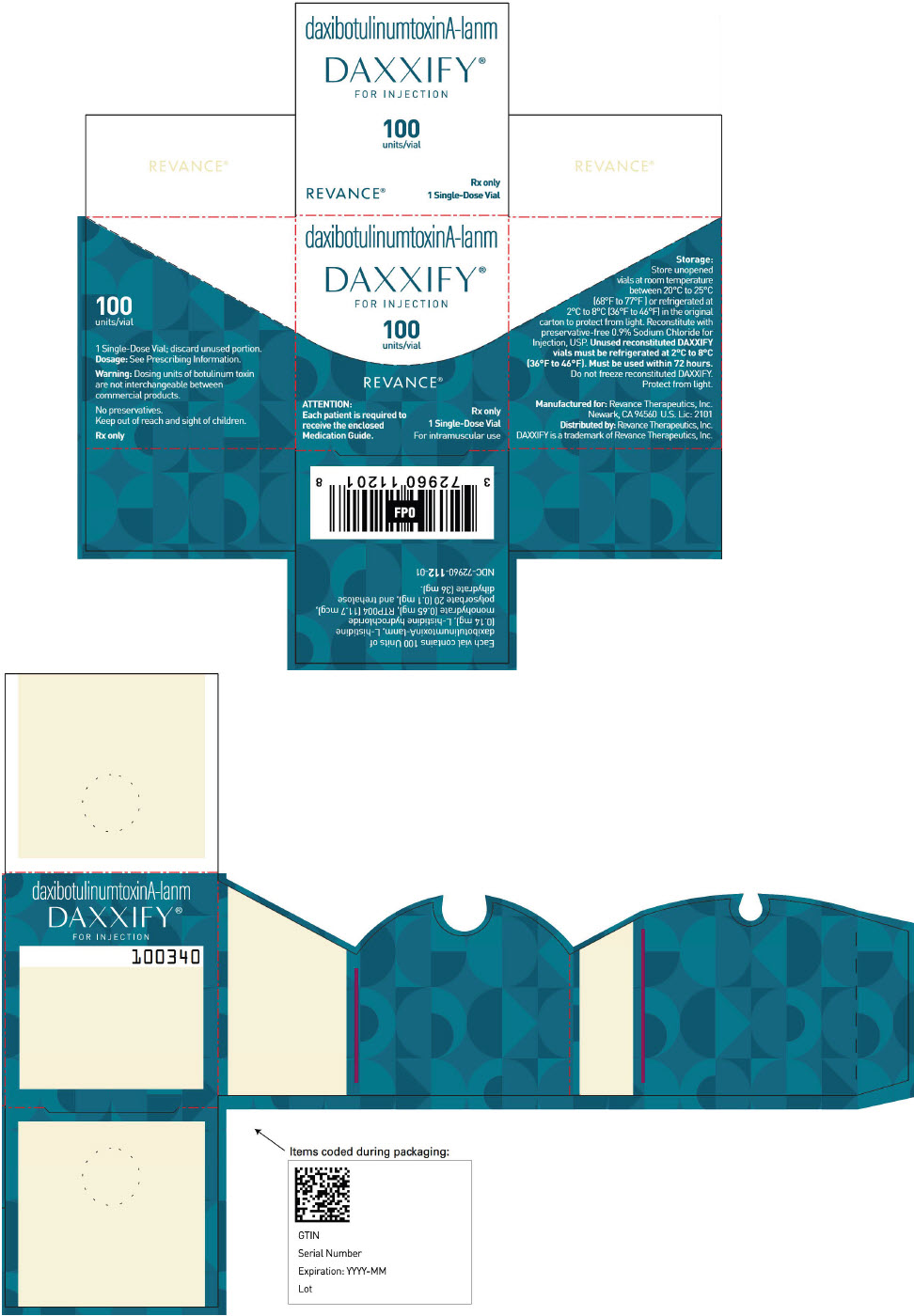
DAXXIFY botulinum toxin type A 100 U/1.2mL Injection, Powder, Lyophilized, For Solution, 1 vial
🆔 Identity & classification
Where does this data come from?
🏷️ RxNorm drug class
This medicine belongs to the Acetylcholine Release Inhibitor class.
Where does this data come from?
🏭 Manufacturer & labeler
Where does this data come from?
🩺 Clinical
- Botox (onabotulinumtoxinA) has a long list of medical uses that go well beyond cosmetics. It's FDA-approved to treat overactive bladder, prevent chronic migraines, reduce muscle st...
- I thought Botox was just for wrinkles — what else is it actually used for?
- The effects typically last several months — the exact duration depends on what you're being treated for. For most conditions, re-injection is done no sooner than every 3 months, an...
- How long do the effects of Botox last, and how often will I need injections?
Patient education
Supplement & herbal interactions
Where does this data come from?
Ask a licensed pharmacist directly — free, answered by our team.
🧪 Inactive Ingredients / Excipients
Inactive ingredients, also called excipients, are components of the drug product other than the active ingredient. They may include fillers, dyes, coatings, preservatives, flavors, or other formulation ingredients.
💡 Tap an ingredient (hover on desktop) to see what it is and why it’s used.
-
0.14 mg / 1.2 mL
UNII 4QD397987E
An amino acid used as a buffer and stabilizer in medications. It helps maintain the pH balance and protects the active drug from breaking down during storage and use.
-
0.1 mg / 1.2 mL
UNII 7T1F30V5YH
A synthetic emulsifier derived from sorbitol and oleic acid. It helps mix oil and water-based ingredients together and keeps them from separating in liquid formulations.
-
36 mg / 1.2 mL
UNII 7YIN7J07X4
A natural sugar derived from plants and microorganisms. It acts as a filler to give the medication bulk and stability, and helps preserve the active ingredient during storage and manufacturing.
3 inactive ingredients listed in the exact product block matched to this NDC.
Where does this data come from?
ingredient classCode="IACT" elements from the exact product block matched by this NDC. Label-section narrative from DailyMed / the openFDA label index is shown separately when available.Inactive ingredient FAQ
Are inactive ingredients the same for every manufacturer?
Why might an inactive ingredient be missing?
Can inactive ingredients matter?
💲 Pricing
A drug doesn't have one price. Each row is a different public payment system, and none is what you'd pay at the counter — that depends on your insurance. The ⓘ on each row explains what it measures.
| Price system | Per mL | Per package |
|---|---|---|
| Retail pharmacies payNADAC · weekly | Not in the retail survey — common for institutional, discontinued, or low-volume packs. | |
| Medicaid paysCMS SDUD · 12 mo | No recent Medicaid claims on file for this NDC — rare and low-volume NDCs are suppressed in the public data. | |
| Medicare drug plans payPart D · quarterly | No Part D plan price is available for this NDC in our data. | |
Where does this data come from?
🔁 Therapeutic equivalents
| Product | Labeler | Pack | NADAC/unit | TE | Status | Price vs. this |
|---|---|---|---|---|---|---|
| Daxxify 100 U/1.2mLthis 72960-0112-02 | Revance | 1 vial | — | — | FDA listed | — |
Where does this data come from?
⏳ Availability & biosimilar status
Biologics have no small-molecule generics; biosimilar competition is tracked in the FDA Purple Book.
Why the date isn’t exact: Biosimilar timing can change because patents may be challenged, settled, licensed, added or removed, and litigation can move the real date earlier or later.
🛈 What do these terms mean?
- Biologic patent
- A patent the reference product’s maker has publicly listed. A biosimilar generally can’t launch until these expire — unless they’re invalidated or resolved in a settlement.
- Reference-product exclusivity
- A flat 12 years of FDA market protection from the biologic’s first licensure (the BPCIA). No biosimilar can be licensed before it ends, regardless of patents.
- Interchangeable exclusivity
- The first interchangeable biosimilar can earn a period as the only interchangeable version (pharmacists can substitute it without the prescriber).
- Earliest biosimilar (LOE)
- The latest of all the dates above — the soonest a biosimilar can realistically reach the market. Litigation and settlements can move it earlier.
Biologics have no small-molecule “generics” — competition comes from FDA-licensed biosimilars, tracked in the FDA Purple Book.
| Code | What it grants | Expires |
|---|---|---|
| RefProduct | Reference-product exclusivity (12-year, BPCIA) — no biosimilar can be licensed before this date | Sep 7, 2034 |
Is there a biosimilar for DAXXIFY 100 UNIT VIAL?
Why do different websites show different biosimilar dates?
Can a biosimilar launch before the last patent expires?
What does “current Purple Book estimate” mean?
What does “FDA listed” mean?
What does a patent or protection date mean here?
Where does this data come from?
📊 Medicare Part D spend CMS · PART D · 2026 (Q1)
🔬 Reported adverse events (FAERS)
Top reported reactions
Age at onset
Reporter sex
Serious outcomes
Where does this data come from?
📦 Packaging — all sizes for this product
| Package NDC | Description | Marketing start | Status |
|---|---|---|---|
| 72960-0112-01 | 1 VIAL, SINGLE-USE in 1 CARTON (72960-112-01) / 1.2 mL in 1 VIAL, SINGLE-USE | 2022-09-20 | Active |
| 72960-0112-02 You're viewing this | 1 VIAL, SINGLE-USE in 1 CARTON (72960-112-02) / 1.2 mL in 1 VIAL, SINGLE-USE | 2022-09-20 | Active |
Pack size FAQ
What quantity is in NDC 72960-0112-02?
What is the difference between NDC 72960-0112-02 and NDC 72960-0112-01?
What NDC number is used to bill for this package of DAXXIFY botulinum toxin type A 100 U/1.2mL Injection, Powder, Lyophilized, For Solution?
🧭 About this NDC listing & data coverage
What data is (and isn’t) available for this NDC — tap to expand
| NDC identity (package / product / labeler codes) | ✓ Available |
| Labeler | ✓ Available |
| Product & package description | ✓ Available |
| Marketing category & status | ✓ Available |
| Active ingredient / dosage form / route | ✓ Available |
| FDA label (SPL via DailyMed) | ✓ Available |
| Package photos | ✓ Available |
| Inactive ingredients (structured) | ✓ Available |
| NADAC pharmacy acquisition price (CMS) | — Not published for this NDC CMS publishes NADAC only for NDCs reported in its retail-pharmacy survey. |
| Orange Book / therapeutic-equivalence data | ✓ Available |
| HCPCS J-code billing crosswalk | — Not published for this NDC Most self-administered / retail products have no J-code — that is normal. |
| Medicaid utilization (CMS SDUD) | — Not published for this NDC CMS reports utilization only for NDCs with Medicaid claims above its privacy threshold. |
Questions about this listing
Why is there no price listed?
Is the NDC printed on the package the same as the 11-digit billing NDC?
What do the three segments of this NDC mean?
Is this package still being marketed?
Does this product come in other package sizes?
Who lists this product with the FDA?
Do I need a prescription for this product?
Where does this data come from?
📄 Full prescribing information FDA SPL
🚨 Boxed Warning ▾
WARNING: DISTANT SPREAD OF TOXIN EFFECT The effects of all botulinum toxin products, including DAXXIFY, may spread from the area of injection to produce symptoms consistent with botulinum toxin effects. These symptoms have been reported hours to weeks after injection. Swallowing and breathing difficulties can be life-threatening, and there have been reports of death.
The risk of symptoms is probably greatest in children treated for spasticity, an unapproved use for DAXXIFY, but symptoms can also occur in adults, particularly in those patients who have an underlying condition that would predispose them to these symptoms [see Warnings and Precautions (5.1) ]. WARNING: DISTANT SPREAD OF TOXIN EFFECT See full prescribing information for complete boxed warning. The effects of DAXXIFY and all botulinum toxin products may spread from the area of injection to produce symptoms consistent with botulinum toxin effects.
These symptoms have been reported hours to weeks after injection. Swallowing and breathing difficulties can be life-threatening, and there have been reports of death. The risk of symptoms is probably greatest in children treated for spasticity, an unapproved use for DAXXIFY, but symptoms can also occur in adults, particularly in those patients who have an underlying condition that would predispose them to these symptoms.
( 5.1 )
🎯 Indications and Usage ▾
1 INDICATIONS AND USAGE DAXXIFY is an acetylcholine release inhibitor and neuromuscular-blocking agent indicated for: Temporary improvement in the appearance of moderate to severe glabellar lines associated with corrugator and/ or procerus muscle activity in adult patients. ( 1.1 ) The treatment of cervical dystonia in adult patients. ( 1.2 )
1.1Glabellar Lines DAXXIFY is indicated for the temporary improvement in the appearance of moderate to severe glabellar lines associated with corrugator and/or procerus muscle activity in adult patients.
1.2Cervical Dystonia DAXXIFY is indicated for the treatment of cervical dystonia in adult patients.
⏱️ Dosage and Administration ▾
2 DOSAGE AND ADMINISTRATION Glabellar Lines : the recommended dose is 0.1 mL (8 Units) by intramuscular injection into each of five sites, for a total dose of 40 Units. ( 2.2 ) Cervical Dystonia : the recommended dose is 125 Units to 250 Units given intramuscularly as a divided dose among affected muscles. ( 2.3 )
2.1Important Administration Instructions The potency units of DAXXIFY for injection are specific to the preparation and test method utilized. They are not interchangeable with other preparations of botulinum toxin products, and, therefore, units of biological activity of DAXXIFY cannot be compared to, or converted into, units of any other botulinum toxin products assessed with any other specific test method [see Warnings and Precautions (5.2) and Description (11) ]. The safe and effective use of DAXXIFY depends upon proper storage of the product, selection of the correct dose, and proper reconstitution and administration techniques.
DAXXIFY should be administered no more frequently than every three months for any indication. Consideration of the cumulative dose is necessary when treating adult patients with DAXXIFY. Physicians should be aware of whether patients are receiving treatment with other botulinum toxin products for other indications.
Reconstituted DAXXIFY is intended for intramuscular injection only. After reconstitution, only use each DAXXIFY vial for only one injection session and for only one patient. Discard any remaining solution in vial immediately after administration.
Reconstitution instructions are provided specifically for the 50 Unit and the 100 Unit vials (Table 1; Table 2).
2.2Recommended Dosage and Administration for Glabellar Lines Recommended Dosage for Glabellar Lines The total recommended dose is 40 Units per treatment session divided into five equal intramuscular injections of 8 Units each (two injections in each corrugator muscle and one injection in the procerus muscle). Administration for Glabellar Lines Glabellar lines arise from the contraction of the corrugator and procerus muscles. These can be identified by palpation of the glabellar muscle mass while having the patient frown maximally.
Contraction of the corrugator muscles compresses the skin, creating a vertical line or lines surrounded by ridges of tensed muscle. Because the exact location, size, and activity of the muscles can vary markedly among individuals, physicians administering DAXXIFY must understand the relevant anatomy of the area involved and any alterations to the anatomy due to prior surgical procedures and diseases [see Warnings and Precautions (5.3) ] . After assessment, the location of the corrugator muscle injection sites may need to be adjusted based on individual facial anatomy and the pattern of muscle contraction.
The upper eyelid margin position should be carefully examined for separation or weakness of the levator palpebrae superioris muscle. Evaluate the range of upper eyelid excursion while manually immobilizing the frontalis to assess degree of levator function and frontalis compensation. In order to reduce the complication of ptosis, the following steps should be taken: Avoid injection near the levator palpebrae superioris, particularly in patients with larger brow depressor complexes.
Ensure the injected volume/dose is accurate and administer in a steady, controlled manner. Do not inject DAXXIFY less than 1 centimeter above the superior orbital rim. To inject DAXXIFY, clean the exposed portion of the stopper with an alcohol swab and aseptically withdraw at least 0.5 mL of the reconstituted solution from the vial into a sterile syringe.
Replace the needle used to withdraw the product with a 30- to 33-gauge sterile needle for injection. Expel any air bubbles prior to administration. Advance the needle through the skin into the underlying muscle while applying finger pressure on the superior medial orbital rim.
Inject a dose of 8 Units (0.1 mL) into each of the 5 injection sites: 2 injections into med…
💊 Dosage Forms and Strengths ▾
3 DOSAGE FORMS AND STRENGTHS For injection: 50 Units or 100 Units of white to off-white lyophilized powder in single-dose vial for reconstitution with sterile preservative-free 0.9% Sodium Chloride Injection, USP. For injection: 50 Units or 100 Units sterile lyophilized powder in a single-dose vial. ( 3 )
⛔ Contraindications ▾
4 CONTRAINDICATIONS DAXXIFY is contraindicated in: patients with known hypersensitivity to any botulinum toxin preparation, DAXXIFY, or any of the components in the DAXXIFY formulation [see Warnings and Precautions (5.4) ]. the presence of infection at the proposed injection sites. Known hypersensitivity to any botulinum toxin preparation, DAXXIFY, or any of the components in the DAXXIFY formulation. ( 4 ) Infection at the injection sites. ( 4 )
⚠️ Warnings and Cautions ▾
5 WARNINGS AND PRECAUTIONS The potency units of DAXXIFY are not interchangeable with other preparations of other botulinum toxin products. ( 5.2 , 11) Spread of toxin effects, swallowing and breathing difficulties can lead to death. Seek immediate medical attention if respiratory, speech, or swallowing difficulties occur.
( 5.1 ) Adverse event reports have been received involving the cardiovascular system with botulinum toxin products, some with fatal outcomes. Use caution when administering to patients with pre-existing cardiovascular disease. ( 5.5 ) Concomitant neuromuscular disorder may exacerbate clinical effects of treatment.
( 5.6 ) Use with caution in patients with compromised respiratory function or dysphagia. ( 5.7 ) Potential serious adverse reactions after administration of DAXXIFY for unapproved use. ( 5.3 )
5.1Spread of Toxin Effect Postmarketing safety data from other approved botulinum toxins suggest that botulinum toxin effects may be observed beyond the site of local injection. The symptoms are consistent with the mechanism of action of botulinum toxin and may include asthenia, generalized muscle weakness, diplopia, blurred vision, ptosis, dysphagia, dysphonia, dysarthria, urinary incontinence, and breathing difficulties. These symptoms have been reported hours to weeks after injection.
Swallowing and breathing difficulties can be life-threatening, and there have been reports of death related to the spread of toxin effects. The risk of symptoms is greatest in children treated for spasticity, an unapproved use for DAXXIFY, but symptoms can occur in adults treated for spasticity and other conditions, and particularly in those patients who have underlying conditions that would predispose them to these symptoms. In unapproved uses, including upper limb spasticity in children, and approved indications, symptoms consistent with spread of toxin effect have been reported at doses comparable to, or lower than, the maximum recommended total dose.
Patients or caregivers should be advised to seek immediate medical care if swallowing, speech, or respiratory difficulties occur.
5.2Lack of Interchangeability between Botulinum Toxin Products The potency units of DAXXIFY are specific to the preparation and assay method utilized. They are not interchangeable with other preparations of botulinum toxin products; therefore, units of biological activity of DAXXIFY cannot be compared to or converted to units of any other botulinum toxin products assessed with any other specific assay method [see Description (11) ] .
5.3Serious Adverse Reactions with Unapproved Use Serious adverse reactions, including excessive weakness, dysphagia, and aspiration pneumonia, with some adverse reactions associated with fatal outcomes, have been reported in patients who received botulinum toxin injections for unapproved uses. In these cases, the adverse reactions may have resulted from the administration of botulinum toxin products to the site of injection and/or adjacent structures. In some cases, patients had pre-existing dysphagia or other significant disabilities.
There is insufficient information to identify factors associated with an increased risk for adverse reactions associated with the unapproved uses of botulinum toxin products.
5.4Hypersensitivity Reactions Serious and/or immediate hypersensitivity reactions have been reported for botulinum toxin products. These reactions include anaphylaxis, serum sickness, urticaria, soft tissue edema, and dyspnea. If such a reaction occurs, discontinue further injection of DAXXIFY and immediately institute appropriate medical therapy.
The use of DAXXIFY in patients with a known hypersensitivity to any botulinum toxin preparation, DAXXIFY, or any of its formulation components could lead to a life-threatening allergic reaction [see Contraindications (4) ].
5.5Cardiovascular System Adverse Reactions There have been reports following administration of botulinum toxins of adverse events involving the car…
🤒 Adverse Reactions ▾
6 ADVERSE REACTIONS The following clinically significant adverse reactions are discussed in greater detail in other sections of the labeling: Spread of Toxin Effect [see Warnings and Precautions (5.1) ] Hypersensitivity Reactions [see Warnings and Precautions (5.4) ] Cardiovascular System Adverse Reactions [see Warnings and Precautions (5.5) ] Increased Neuromuscular Compromise in Patients with Pre-Existing Neuromuscular Disorders [see Warnings and Precautions (5.6) ] Dysphagia and Breathing Difficulties [see Warnings and Precautions (5.7) ] Ophthalmic Adverse Reactions in Patients Treated for Glabellar Lines [see Warnings and Precautions (5.9) ] The most commonly observed adverse reactions are: Glabellar Lines (≥1%): headache (6%), eyelid ptosis (2%), and facial paresis (1%).
( 6.1 ) Cervical Dystonia (≥5%): headache (9%), injection site pain (8%), injection site erythema (5%), muscular weakness (5%), and upper respiratory tract infection (5%). ( 6.1 ) To report SUSPECTED ADVERSE REACTIONS, contact Revance Therapeutics, Inc. at 1-877-373-8669 or FDA at 1-800-FDA-1088 or www.fda.gov/medwatch.
6.1Clinical Trial Experience Because clinical trials are conducted under widely varying conditions, adverse reaction rates observed in the clinical trials of a drug cannot be directly compared to rates in the clinical trials of another drug and may not reflect the rates observed in practice. The most common side effects from treatment with DAXXIFY usually occur within one to two weeks after injection and, while generally transient, may have a duration of several weeks or months. Glabellar Lines In the two randomized, placebo-controlled, Phase 3 clinical trials that assess the use of DAXXIFY for the temporary improvement in the appearance of moderate to severe glabellar lines, GL-1 and GL-2, 406 subjects received a single-dose treatment of 40 Units DAXXIFY, and 203 subjects received placebo.
The most frequent adverse reactions are presented in Table 3. TABLE 3: Most Common Adverse Reactions ≥1% and More Frequent than Placebo in Pooled Double- Blind, Placebo-Controlled Trials for Glabellar Lines Adverse Reaction DAXXIFY N=406 n (%) Placebo N=203 n (%) Headache 26 (6%) 4 (2%) Eyelid ptosis 9 (2%) 0 (0%) Facial paresis Facial paresis, including facial asymmetry. 5 (1%) 0 (0%) Injection site reactions were reported in 6% of subjects treated with DAXXIFY and in 6% of subjects treated with placebo (these reactions included injection site pain, injection site erythema, injection site oedema, injection site bruising, injection site hematoma, injection site papule, and injection site pruritus).
In an 84-week, open-label, repeat-dose safety study in glabellar lines, 2691 subjects were treated with 40 Units of DAXXIFY. Of these, 2380 subjects received one treatment with DAXXIFY, 882 received two treatments with DAXXIFY, and 568 subjects received three treatments with DAXXIFY. Adverse reactions were reported in 535 of the 2691 subjects (20%).
The adverse reaction profile was similar to that reported in single-dose trials. Injection site reactions were the most common adverse reactions, reported in 9% of subjects [including injection site pain (4%), injection site erythema (3%), injection site oedema (3%), injection site bruising (1%), injection site papule (<1%), and injection site pruritus (<1%)], followed by headache (5%), edema (2%), erythema (2%), and eyelid ptosis in 1% of subjects. The incidence of these adverse reactions did not increase with multiple re- treatments.
Cervical Dystonia In the randomized, placebo-controlled, Phase 3 clinical trial to assess the use of DAXXIFY for the treatment of cervical dystonia, 255 patients received a dose of DAXXIFY (n=125 for 125 Units and n=130 for 250 Units), and 46 patients received placebo. Table 4 lists adverse reactions that occurred in ≥2% of patients treated with DAXXIFY and more frequently than placebo. TABLE 4: Most Common Adverse Reactions ≥2% and More Frequent than Placebo in the Phase 3 Double…
🔄 Drug Interactions ▾
7 DRUG INTERACTIONS No formal drug interaction studies have been conducted with DAXXIFY. However, the potential for certain drugs to potentiate the effects of DAXXIFY warrants consideration given the potential risks involved and should be used with caution. Aminoglycosides or other agents interfering with neuromuscular transmission Anticholinergic drugs Botulinum neurotoxin products Muscle relaxants Aminoglycoside antibiotics, anticholinergic agents, or any other agents that interfere with neuromuscular transmission may potentiate the effect of DAXXIFY; co-administer only with caution and close observation.
( 7 )
👥 Use in Specific Populations ▾
8 USE IN SPECIFIC POPULATIONS
8.1Pregnancy Risk Summary There are no available data on DAXXIFY use in pregnant women to evaluate for a drug-associated risk of major birth defects, miscarriage, or adverse maternal or fetal outcomes. In animal reproduction studies, intramuscular administration of DAXXIFY during pregnancy resulted in adverse effects on fetal growth (decreased fetal body weight and skeletal ossification) at maternally toxic doses approximately equivalent to 40 times the maximum recommended human dose (MRHD) ( see Data ). The background risk of major birth defects and miscarriage for the indicated population is unknown.
In the U.S. general population, the estimated background risk of major birth defects and miscarriages in clinically recognized pregnancies is 2-4% and 15-20%, respectively. Data Animal Data Embryofetal development studies were conducted in rats and rabbits with DAXXIFY. For comparison of animal to human doses based on a body weight comparison, the MRHD is set at 40 Units/subject (0.67 Units/kg for an average 60 kg subject).
Intramuscular administration of DAXXIFY (3, 10, or 30 Units/kg) to pregnant rats four times during the period of organogenesis (on gestation days 7, 10, 13, and 16) caused decreased fetal body weight and decreased fetal skeletal ossification at the highest dose, which was associated with maternal toxicity. No embryofetal developmental toxicity was noted at doses up to 10 Units/kg, which is 15 times the MRHD. Intramuscular administration of DAXXIFY (0.02, 0.1, 0.48, or
2.4Units/kg/day) to pregnant rabbits during the period of organogenesis (total of 13 doses) resulted in maternal lethality at
2.4 Units/kg/day and significant decreased maternal body weight at
0.48Units/kg/day. No embryofetal developmental toxicity was noted at doses up to
0.48Units/kg/day, which is approximately equivalent to the MRHD.
8.2Lactation Risk Summary There are no data on the presence of DAXXIFY in human or animal milk, the effects on the breastfed infant, or the effects on milk production. The developmental and health benefits of breastfeeding should be considered, along with the mother's clinical need for DAXXIFY and any potential adverse effects on the breastfed infant from DAXXIFY or from the underlying maternal condition.
8.4Pediatric Use Safety and effectiveness of DAXXIFY in patients less than 18 years of age have not been established.
8.5Geriatric Use Glabellar Lines Among the 406 subjects treated with DAXXIFY in the placebo-controlled clinical trials, 36 subjects were 65 years or older. There was no increase in the incidence of treatment-related adverse events in patients over 65 years treated with DAXXIFY. Clinical studies of DAXXIFY did not include sufficient numbers of subjects aged 65 and older to determine whether they responded differently from younger subjects [see Clinical Studies (14) ].
Cervical Dystonia Among the 255 patients treated with DAXXIFY in the placebo-controlled clinical trial, 83 patients were 65 years or older. There was no increase in the incidence of treatment-related adverse events in patients over 65 years treated with DAXXIFY. Clinical studies of DAXXIFY did not include sufficient numbers of patients aged 65 and older to determine whether they responded differently from younger patients [see Clinical Studies (14) ].
🤰 Pregnancy ▾
8.1Pregnancy Risk Summary There are no available data on DAXXIFY use in pregnant women to evaluate for a drug-associated risk of major birth defects, miscarriage, or adverse maternal or fetal outcomes. In animal reproduction studies, intramuscular administration of DAXXIFY during pregnancy resulted in adverse effects on fetal growth (decreased fetal body weight and skeletal ossification) at maternally toxic doses approximately equivalent to 40 times the maximum recommended human dose (MRHD) ( see Data ). The background risk of major birth defects and miscarriage for the indicated population is unknown.
In the U.S. general population, the estimated background risk of major birth defects and miscarriages in clinically recognized pregnancies is 2-4% and 15-20%, respectively. Data Animal Data Embryofetal development studies were conducted in rats and rabbits with DAXXIFY. For comparison of animal to human doses based on a body weight comparison, the MRHD is set at 40 Units/subject (0.67 Units/kg for an average 60 kg subject).
Intramuscular administration of DAXXIFY (3, 10, or 30 Units/kg) to pregnant rats four times during the period of organogenesis (on gestation days 7, 10, 13, and 16) caused decreased fetal body weight and decreased fetal skeletal ossification at the highest dose, which was associated with maternal toxicity. No embryofetal developmental toxicity was noted at doses up to 10 Units/kg, which is 15 times the MRHD. Intramuscular administration of DAXXIFY (0.02, 0.1, 0.48, or
2.4Units/kg/day) to pregnant rabbits during the period of organogenesis (total of 13 doses) resulted in maternal lethality at
2.4 Units/kg/day and significant decreased maternal body weight at
0.48Units/kg/day. No embryofetal developmental toxicity was noted at doses up to
0.48Units/kg/day, which is approximately equivalent to the MRHD.
🧒 Pediatric Use ▾
8.4Pediatric Use Safety and effectiveness of DAXXIFY in patients less than 18 years of age have not been established.
🧓 Geriatric Use ▾
8.5Geriatric Use Glabellar Lines Among the 406 subjects treated with DAXXIFY in the placebo-controlled clinical trials, 36 subjects were 65 years or older. There was no increase in the incidence of treatment-related adverse events in patients over 65 years treated with DAXXIFY. Clinical studies of DAXXIFY did not include sufficient numbers of subjects aged 65 and older to determine whether they responded differently from younger subjects [see Clinical Studies (14) ].
Cervical Dystonia Among the 255 patients treated with DAXXIFY in the placebo-controlled clinical trial, 83 patients were 65 years or older. There was no increase in the incidence of treatment-related adverse events in patients over 65 years treated with DAXXIFY. Clinical studies of DAXXIFY did not include sufficient numbers of patients aged 65 and older to determine whether they responded differently from younger patients [see Clinical Studies (14) ].
🆘 Overdosage ▾
10 OVERDOSAGE Excessive doses of DAXXIFY may be expected to produce neuromuscular weakness with a variety of symptoms. Respiratory support may be required where excessive doses cause paralysis of the respiratory muscles. In the event of overdose, the patient should be medically monitored for symptoms or excessive muscle weakness or muscle paralysis [see Warnings and Precautions (5.1) , (5.7) ] .
Symptomatic treatment may be necessary. Symptoms of overdose are not likely to be present immediately following injection. Should accidental injection or oral ingestion occur, the person should be medically supervised for several weeks for signs and symptoms of excessive muscle weakness or paralysis.
In the event of overdose, antitoxin raised against botulinum toxin is available from the Centers for Disease Control and Prevention (CDC) in Atlanta, GA. However, the antitoxin will not reverse any botulinum toxin-induced effects already apparent by the time of antitoxin administration. In the event of suspected or actual cases of botulinum toxin poisoning, please contact your local or state Health Department to process a request for antitoxin through the CDC.
If you do not receive a response within 30 minutes, please contact the CDC directly at 1-770-488-7100.
🧬 Clinical Pharmacology ▾
12 CLINICAL PHARMACOLOGY
12.1Mechanism of Action DAXXIFY blocks neuromuscular transmission at the neuromuscular junction by inhibiting the release of acetylcholine. This inhibition occurs as the neurotoxin cleaves SNAP-25, a protein necessary for the successful docking and release of acetylcholine vesicles within nerve endings. Recovery of neurotransmission occurs gradually as the neuromuscular junction recovers from SNAP-25 cleavage and as new nerve endings are formed.
12.2Pharmacodynamics No formal pharmacodynamics studies have been conducted with DAXXIFY.
12.3Pharmacokinetics Using currently available analytical technology, it is not possible to detect DAXXIFY in the peripheral blood following intramuscular injection at the recommended dose.
12.6Immunogenicity The observed incidence of anti-drug antibodies is highly dependent on the sensitivity and specificity of the assay. Differences in assay methods preclude meaningful comparisons of the incidence of anti-drug antibodies in the studies described below with the incidence of anti-drug antibodies in other studies, including those of DAXXIFY. Glabellar Lines In the 2786 subjects receiving up to 3 treatments throughout 120 weeks with DAXXIFY in the Phase 3 studies, the incidence of anti-DAXXIFY antibody formation was 0.8% to daxibotulinumtoxinA-lanm and 1.2% to RTP004, the 35 amino acid peptide excipient.
No subjects developed neutralizing antibodies to DAXXIFY. Cervical Dystonia In the 382 subjects receiving up to 5 treatments throughout 88 weeks with DAXXIFY in the Phase 3 studies, the incidence of anti-DAXXIFY antibody formation was 1.8% to daxibotulinumtoxinA-lanm and 2.4% to RTP004, the 35 amino acid peptide excipient. Two patients who had been previously treated with botulinum toxin tested positive for neutralizing antibodies.
Because of the low occurrence of anti-drug antibodies, the effect of these antibodies on the PK, PD, safety, and/or effectiveness of DAXXIFY products is unknown.
🧬 Mechanism of Action ▾
12.1Mechanism of Action DAXXIFY blocks neuromuscular transmission at the neuromuscular junction by inhibiting the release of acetylcholine. This inhibition occurs as the neurotoxin cleaves SNAP-25, a protein necessary for the successful docking and release of acetylcholine vesicles within nerve endings. Recovery of neurotransmission occurs gradually as the neuromuscular junction recovers from SNAP-25 cleavage and as new nerve endings are formed.
📦 How Supplied / Storage and Handling ▾
16 HOW SUPPLIED/STORAGE AND HANDLING How Supplied DAXXIFY (daxibotulinumtoxinA-lanm) for injection is a sterile lyophilized powder supplied in a single-dose vial in the following sizes: Carton containing one 50 Units/Vial NDC 72960-111-01 Carton containing one 100 Units/Vial NDC 72960-112-01 Storage and Handling Unopened DAXXIFY vials should be stored at room temperature 20°C to 25°C (68°F to 77°F) or refrigerated at 2°C to 8° C (36°F to 46°F) in the original carton to protect from light.
📦 Storage and Handling ▾
Storage and Handling Unopened DAXXIFY vials should be stored at room temperature 20°C to 25°C (68°F to 77°F) or refrigerated at 2°C to 8° C (36°F to 46°F) in the original carton to protect from light.
📋 Description ▾
11 DESCRIPTION DaxibotulinumtoxinA-lanm is an acetylcholine release inhibitor and neuromuscular blocking agent. DaxibotulinumtoxinA-lanm is a 150 kDa botulinum toxin without accessory proteins purified from the bacterium Clostridium botulinum type A. DAXXIFY (daxibotulinumtoxinA-lanm) for injection is supplied as a sterile, preservative-free, white to off- white lyophilized powder in a single-dose vial for intramuscular use after reconstitution.
DAXXIFY is formulated with a 35 amino acid peptide excipient (RTP004) that prevents surface adsorption and promotes thermal stability of DAXXIFY. Each vial contains 50 Units or 100 Units of daxibotulinumtoxinA-lanm, L- histidine (0.14 mg), L-histidine HCl monohydrate (0.65 mg), polysorbate 20 (0.1 mg), RTP004 peptide (11.7 mcg), and trehalose dihydrate (36 mg).
💬 Information for Patients ▾
17 PATIENT COUNSELING INFORMATION Advise the patient to read the FDA-approved patient labeling (Medication Guide). Swallowing, Speaking, or Breathing Difficulties, or other Unusual Symptoms Advise patients or caregivers to seek immediate medical care if swallowing, speech, or respiratory disorders arise or existing symptoms worsen [see Warnings and Precautions (5.1) (5.7) ]. Ability to Operate Machinery or Vehicles Advise patients if they develop any unusual symptoms such as loss of strength, muscle weakness, blurred vision, or drooping eyelids, they should avoid driving a car or engaging in other potentially hazardous activities [see Warnings and Precautions (5.1) ].
Ophthalmic Adverse Reactions Inform patients that DAXXIFY injection may cause eye dryness. Advise patients to report symptoms of eye dryness (e.g., eye pain, eye irritation, photosensitivity, or changes in vision) to their doctor [ see Warnings and Precautions (5.9) ].
💬 Medication Guide ▾
MEDICATION GUIDE DAXXIFY ® (dax'-i-fye) daxibotulinumtoxinA-lanm for injection, for intramuscular use This Medication Guide has been approved by the U.S. Food and Drug Administration. Revised: 11/2023 What is the most important information I should know about DAXXIFY?
DAXXIFY may cause serious side effects that can be life-threatening. Call your healthcare provider or get medical help right away if you have any of these problems after treatment with DAXXIFY: Problems swallowing, speaking, or breathing. These problems can happen hours, days, or weeks after an injection of DAXXIFY if the muscles that you use to breathe and swallow become weak after the injection.
Death can happen as a complication if you have severe problems with swallowing or breathing after treatment with DAXXIFY. People with certain breathing problems may need to use muscles in their neck to help them breathe. These people may be at greater risk for serious breathing problems with DAXXIFY.
Swallowing problems may last for several months. People who cannot swallow well may need a feeding tube to receive food and water. If swallowing problems are severe, food or liquids may go into your lungs.
People who already have swallowing or breathing problems before receiving DAXXIFY have the highest risk of getting these problems. Spread of toxin effects . In some cases, the effect of botulinum toxin may affect areas of the body away from the injection site and cause symptoms of a serious condition called botulism.
The symptoms of botulism include: loss of strength and muscle weakness all over the body blurred vision and drooping eyelids trouble saying words clearly trouble breathing double vision hoarseness or change or loss of voice loss of bladder control trouble swallowing These symptoms can happen hours, days, or weeks after you receive an injection of DAXXIFY. These problems could make it unsafe for you to drive a car or do other dangerous activities. See " What should I avoid while receiving DAXXIFY? " What is DAXXIFY?
DAXXIFY is a prescription medicine for adults that is injected into muscles and used: to temporarily improve the look of moderate to severe frown lines between the eyebrows (glabellar lines) to treat cervical dystonia (CD) It is not known if DAXXIFY is safe and effective in children less than 18 years of age. Do not receive DAXXIFY if you: are allergic to DAXXIFY or to any of the ingredients in DAXXIFY. See the end of this Medication Guide for a complete list of ingredients in DAXXIFY. have had an allergic reaction to any other botulinum toxin product such as rimabotulinumtoxinB (MYOBLOC), onabotulinumtoxinA (BOTOX, BOTOX COSMETIC), abobotulinumtoxinA (DYSPORT), incobotulinumtoxinA (XEOMIN), or prabotulinumtoxinA-xvfs (JEUVEAU). have a skin infection at the planned injection site.
Before receiving DAXXIFY, tell your healthcare provider about all of your medical conditions, including if you: have a disease that affects your muscles and nerves (such as amyotrophic lateral sclerosis [ALS or Lou Gehrig's disease], myasthenia gravis, or Lambert-Eaton syndrome). See " What is the most important information I should know about DAXXIFY? " have had any side effect from any other botulinum toxin in the past. have or have had a breathing problem, such as asthma or emphysema. have or have had swallowing problems. have or have had heart problems. have or have had bleeding problems. have weakness of your forehead muscles, such as trouble raising your eyebrows. have drooping eyelids. plan to have surgery. have had surgery on your face. have had dry eye problems with the use of botulinum toxin products in the past. are pregnant or plan to become pregnant.
It is not known if DAXXIFY can harm your unborn baby. are breastfeeding or plan to breastfeed. It is not known if DAXXIFY passes into your breast milk. Talk to your healthcare provider about the best way to feed your baby during treatment with DAXXIFY.
Tell your healthcare provider about all the medicines you tak…