
PROCYSBI Cysteamine bitartrate 300 mg Granule, Delayed Release — NDC 75987-145-13 (Billing 75987-0145-13)
This is a package of PROCYSBI Cysteamine bitartrate 300 mg Granule, Delayed Release from Horizon Therapeutics USA, Inc., marketed since Feb 2020 and currently FDA-listed. It is the main listing for this product, which comes in 2 package sizes.
NDC database record
One package, one record: these facts belong to NDC 75987-145-13 alone.
- Record
- FDA NDC Directory package listing · Human prescription drug
- Code segments
- 75987 labeler · 145 product · 13 package
- Package marketed since
- Feb 14, 2020
- Sample package
- No — commercial package
- Listing certified through
- Dec 31, 2027
- Barcode (UPC-A, from the NDC)
- 3 7598714513 7
- Medicaid fills, this package
- 90 prescriptions in the last four reported quarters
- FDA record last changed
- Jul 24, 2026
Identity & classification
Regulatory identifiers FDA, NLM and CMS codes for this package
Drug-database identifiers Medi-Span GPI and First Databank GCN / HICL / AHFS classification
- GSN (GCN sequence number): 080756
- GCN: 47724
- GPI-14 (Medi-Span): 56400030103040
- HICL (First Databank): 009274
- AHFS class code: 92:92.00.00
- RxCUI (RxNorm): 1421467
Where does this data come from?
- FDA openFDA NDC Directory · synced Oct 8, 2026
- FDA label on DailyMed · label index refreshed Oct 6, 2026
- RxNorm (NLM RxNav) · catalog refreshed Oct 1, 2026
- Medi-Span GPI (licensed)
- First Databank (licensed) · refreshed Oct 8, 2026
RxNorm drug class
This medicine belongs to the Cystine Depleting Agent class.
Where does this data come from?
- RxClass (NLM) · catalog refreshed Oct 1, 2026
Clinical
- Cystinosis is a rare inherited disease where your cells can't move a substance called cystine out of their internal compartments called lysosomes. Cystine builds up, forms crystals...
- What exactly is cystinosis and why do I need this medication?
- Both Procysbi and Cystagon contain cysteamine and treat nephropathic cystinosis, but they're not interchangeable. Cystagon is an immediate-release capsule taken four times a day, e...
- How is Procysbi different from Cystagon — are they the same thing?
Patient education
Supplement & herbal interactions
Some supplements/herbs that may interact with Cysteamine Bitartrate — tap one for details:
Where does this data come from?
- MedlinePlus (NLM) · refreshed Oct 1, 2026
- FDA label on DailyMed · label index refreshed Oct 6, 2026
Ask a licensed pharmacist directly — free, answered by our team.
Pricing
A drug doesn't have one price. Each row is a different public payment system, and none is what you'd pay at the counter — that depends on your insurance. The ⓘ on each row explains what it measures.
| Price system | Per g | Per package |
|---|---|---|
| Retail pharmacies payNADAC · weekly | Not in the retail survey — common for institutional, discontinued, or low-volume packs. | |
| Medicaid paysCMS SDUD · 12 mo | $482.38 | — |
| Medicare drug plans payPart D · Q2 2026 | $472.54 | — |
Where does this data come from?
- CMS NADAC weekly file
- CMS ASP pricing files · refreshed Sep 20, 2026
- CMS Medicaid State Drug Utilization Data · through Q4 2025
- CMS Part D plan pricing files · refreshed Sep 24, 2026
- VA National Acquisition Center price file
Packaging — all sizes for this product
| Package NDC | Description | Marketing start | Marketing end | Status |
|---|---|---|---|---|
| 75987-0145-13 You're viewing this Main listing | 60 PACKET in 1 CARTON / 1 GRANULE, DELAYED RELEASE in 1 PACKET | 2020-02-14 | — | Active |
| 75987-0145-14 75987-145-14 | 120 PACKET in 1 CARTON / 1 GRANULE, DELAYED RELEASE in 1 PACKET | 2020-02-14 | — | Active |
Pack size FAQ
What quantity is in this package?
What NDC number is used to bill for this package of PROCYSBI Cysteamine bitartrate 300 mg Granule, Delayed Release?
Therapeutic equivalents
| Product | Labeler | Pack | NADAC/unit | TE | Status | Price vs. this |
|---|---|---|---|---|---|---|
| Procysbi 300 mgthis 75987-0145-13 | Horizon | 1 granule | — | — | FDA listed | — |
Where does this data come from?
- FDA openFDA NDC Directory · synced Oct 8, 2026
- FDA Orange Book · refreshed Oct 3, 2026
- CMS NADAC weekly file
Availability & generic status
We did not find an FDA-approved generic match for this exact strength, form and route. Patent/protection dates below may affect future generic timing.
Why the date isn’t exact: Generic timing can change because patents may be challenged, settled, licensed, added, removed, or worked around with a narrower label — and FDA approval does not always mean a pharmacy can get the generic today.
🛈 What do these terms mean?
- Patent
- Legal protection listed in the Orange Book that may delay generic approval or launch. Issued by the U.S. Patent & Trademark Office.
- Substance patent
- Covers the active drug molecule itself — the hardest to design around. A generic generally can’t launch until it expires.
- Formulation (product) patent
- Covers a specific formulation or dosage form. A generic can sometimes work around it with a different formulation.
- Method-of-use patent
- A patent covering one specific approved use of the drug — not necessarily the whole molecule. A generic can sometimes launch with a “skinny label” that carves out the protected use and keeps the others.
- Skinny label
- A generic label that omits a still-patented use when the FDA allows it — letting a generic reach the market for the unprotected uses.
- Exclusivity
- FDA-granted marketing protection, separate from patents — e.g. 5-yr new chemical entity, 7-yr orphan drug, or a +6-month pediatric extension.
- Paragraph IV
- A generic applicant’s formal challenge to a listed patent. It can potentially lead to earlier generic entry, but often involves litigation or a settlement.
- RLD / RS
- Reference Listed Drug — the brand product the FDA uses as the reference for generic applications. Reference Standard — the product the FDA expects generics to compare against in bioequivalence testing.
- TE / AB rating
- FDA therapeutic-equivalence rating. An AB rating generally means the FDA considers a generic therapeutically equivalent to — and substitutable for — the brand.
- LOE (loss of exclusivity)
- The latest patent or exclusivity currently listed — the loss-of-exclusivity / latest-listed-protection date shown on this page. Paragraph-IV challenges and settlements can move the real date earlier; FDA approval and a manufacturer’s decision to market can move it later.
Built from the FDA Orange Book. The bars above are scaled to each protection’s expiry; the red LOE marker is the last one to lapse.
| Patent | Type | Use code | Expires |
|---|---|---|---|
| US 8026284 ↗ | Method of use | U-1399 | Sep 22, 2027 |
| US 9198882 ↗ | Method of use | U-1399 | Jan 26, 2027 |
| US 9192590 ↗ | Method of use | U-1399 | Jan 26, 2027 |
| US 9192590 ↗ | Method of use | U-1399 | Jan 26, 2027 |
| US 8026284 ↗ | Method of use | U-1399 | Sep 22, 2027 |
| US 9198882 ↗ | Method of use | U-1399 | Jan 26, 2027 |
| US 9925156 ↗ | Method of use | U-1399 | Jan 26, 2027 |
| US 10143665 ↗ | Method of use | U-1399 | Aug 16, 2036 |
| US 10328037 ↗ | Method of use | U-1399 | Aug 16, 2036 |
| US 9925157 ↗ | Method of use | U-1399 | Jan 26, 2027 |
| US 9925158 ↗ | Method of use | U-1399 | Jan 26, 2027 |
| US 10548859 ↗ | Method of use | U-1399 | Aug 16, 2036 |
| US 9925157 ↗ | Method of use | U-1399 | Jan 26, 2027 |
| US 9925158 ↗ | Method of use | U-1399 | Jan 26, 2027 |
| US 10548859 ↗ | Method of use | U-1399 | Aug 16, 2036 |
| US 9925156 ↗ | Method of use | U-1399 | Jan 26, 2027 |
| US 10143665 ↗ | Method of use | U-1399 | Aug 16, 2036 |
| US 10328037 ↗ | Method of use | U-1399 | Aug 16, 2036 |
| US 10905662 ↗ | Method of use | U-1399 | Aug 16, 2036 |
| US 10905662 ↗ | Method of use | U-1399 | Aug 16, 2036 |
| US 9173851 ↗ | Drug product | — | Jun 17, 2034 |
| US 9233077 ↗ | Drug product | — | Jun 17, 2034 |
| US 9173851 ↗ | Drug product | — | Jun 17, 2034 |
| US 9233077 ↗ | Drug product | — | Jun 17, 2034 |
| US 10905662*PED ↗ | Drug product | — | Feb 16, 2037 |
| US 10905662*PED ↗ | Drug product | — | Feb 16, 2037 |
| US 8026284*PED ↗ | Drug product | — | Mar 22, 2028 |
| US 9198882*PED ↗ | Drug product | — | Jul 26, 2027 |
| US 9192590*PED ↗ | Drug product | — | Jul 26, 2027 |
| US 9173851*PED ↗ | Drug product | — | Dec 17, 2034 |
| US 9192590*PED ↗ | Drug product | — | Jul 26, 2027 |
| US 9173851*PED ↗ | Drug product | — | Dec 17, 2034 |
| US 8026284*PED ↗ | Drug product | — | Mar 22, 2028 |
| US 9198882*PED ↗ | Drug product | — | Jul 26, 2027 |
| US 9925156*PED ↗ | Drug product | — | Jul 26, 2027 |
| US 10143665*PED ↗ | Drug product | — | Feb 16, 2037 |
| US 10328037*PED ↗ | Drug product | — | Feb 16, 2037 |
| US 9233077*PED ↗ | Drug product | — | Dec 17, 2034 |
| US 9925157*PED ↗ | Drug product | — | Jul 26, 2027 |
| US 9925158*PED ↗ | Drug product | — | Jul 26, 2027 |
| US 10548859*PED ↗ | Drug product | — | Feb 16, 2037 |
| US 9925157*PED ↗ | Drug product | — | Jul 26, 2027 |
| US 9925158*PED ↗ | Drug product | — | Jul 26, 2027 |
| US 10548859*PED ↗ | Drug product | — | Feb 16, 2037 |
| US 9925156*PED ↗ | Drug product | — | Jul 26, 2027 |
| US 10143665*PED ↗ | Drug product | — | Feb 16, 2037 |
| US 10328037*PED ↗ | Drug product | — | Feb 16, 2037 |
| US 9233077*PED ↗ | Drug product | — | Dec 17, 2034 |
Is there a generic version of PROCYSBI DR 300 MG GRANULE PKT?
The FDA approved a generic — why can’t I get it at my pharmacy yet?
Why do different websites show different generic release dates?
What does “FDA listed” mean?
What does a patent or protection date mean here?
What does “current Orange Book estimate” mean?
Can a generic come out before the last patent expires?
Can a generic come out after the listed dates?
What is the difference between patents and exclusivity?
Why are there multiple patent dates?
Where does this data come from?
- FDA Orange Book · refreshed Oct 3, 2026
What it looks like
Where does this data come from?
- FDA label on DailyMed · label index refreshed Oct 6, 2026
Inactive Ingredients / Excipients
Inactive ingredients, also called excipients, are components of the drug product other than the active ingredient. They may include fillers, dyes, coatings, preservatives, flavors, or other formulation ingredients.
🧪 Avoiding an ingredient? See Cysteamine inactive ingredients by manufacturer: every current product's list side by side, so you can ask your pharmacy for the version that does not list it.
Where does this data come from?
IACT rows and label-wide narrative are kept separate; availability and product-level specificity depend on the submitted label.- FDA label on DailyMed · label index refreshed Oct 6, 2026
- FDA openFDA NDC Directory · synced Oct 8, 2026
Inactive ingredient FAQ
Are inactive ingredients the same for every manufacturer?
Why might an inactive ingredient be missing?
Can inactive ingredients matter?
Manufacturer & labeler
More NDCs from Horizon Therapeutics USA, Inc. labeler code 75987
- Krystexxa pegloticase 8 mg/mL Injection, Solution NDC 75987-080-10
- PROCYSBI Cysteamine bitartrate 25 mg Capsule, Delayed Release Pellets NDC 75987-100-04
- PROCYSBI Cysteamine bitartrate 75 mg Capsule, Delayed Release Pellets NDC 75987-101-08
- ACTIMMUNE Interferon gamma-1b 100 ug/.5mL Injection, Solution NDC 75987-111-11
- Tepezza teprotumumab 500 mg Injection, Powder, Lyophilized, For Solution NDC 75987-130-15
- PROCYSBI Cysteamine bitartrate 75 mg Granule, Delayed Release NDC 75987-140-13
- UPLIZNA Inebilizumab 10 mg/mL Injection NDC 75987-150-03
Where does this data come from?
- FDA openFDA NDC Directory · synced Oct 8, 2026
- Drugs@FDA
Full prescribing information FDA SPL
🎯 Indications and Usage ▾
1 INDICATIONS AND USAGE PROCYSBI is indicated for the treatment of nephropathic cystinosis in adults and pediatric patients 1 year of age and older. PROCYSBI is a cystine-depleting agent indicated for the treatment of nephropathic cystinosis in adults and pediatric patients 1 year of age and older. ( 1 )
⏱️ Dosage and Administration ▾
2 DOSAGE AND ADMINISTRATION Recommended Dosage in Cysteamine-Naïve Patients See full prescribing information for weight-based dosing tables for the starting and maintenance dosage. ( 2.2 ) For initial intolerance, temporarily discontinue and then re-start PROCYSBI at a lower dosage and gradually increase to the maintenance dosage. ( 2.2 ) Switching from Immediate-release Cysteamine to PROCYSBI Start with a total daily dose of PROCYSBI equal to the previous total daily dose of immediate-release cysteamine bitartrate.
( 2.3 ) Dose Titration Adjust dose to achieve a therapeutic target white blood cell (WBC) cystine concentration. ( 2.4 , 2.5 ) If a dose adjustment is required, increase the dosage by 10%. The maximum dosage is 1.95 grams/m 2 per day.
( 2.4 ) If adverse reactions occur, decrease the dosage. Some patients may be unable to achieve their therapeutic target. ( 2.4 ) Preparation and Administration ( 2.6 ) Capsules : Swallow whole; do not crush or chew capsules or capsule contents.
Take the capsules with fruit juice (except grapefruit juice) or water. Oral Granules: Do not crush or chew the granules. Sprinkle and mix the granules in applesauce, berry jelly or fruit juice (except grapefruit juice).
For patients who cannot swallow the capsules or with gastrostomy tubes, see the full prescribing information on how to prepare and administer the capsules and oral granules. Administer PROCYSBI at least 1 hour before or 1 hour after medications containing bicarbonate or carbonate. Do not eat for at least 2 hours before and for at least 30 minutes after taking PROCYSBI.
If unable to take PROCYSBI without eating, take with food but limit the amount of food to approximately 4 ounces (½ cup) 1 hour before through 1 hour after administration. Avoid high fat food close to dosing. Avoid drinking alcohol while taking PROCYSBI.
2.1Important Dosing Instructions Initiate cysteamine treatment immediately after diagnosis of nephropathic cystinosis. Cysteamine-naïve Patients: Start PROCYSBI at a fraction of the maintenance dosage. Patients 1 year to less than 6 years : Gradually increase the dosage, allowing a minimum of 2 weeks between adjustments [see Dosage and Administration (2.2) ] .
Patients 6 years of age and older : Gradually increase the dosage over 4 to 6 weeks until the maintenance dosage is achieved. Patients switching from immediate-release cysteamine: Start the total daily dosage of PROCYSBI at a dosage equal to the previous total daily dosage of immediate-release cysteamine [see Dosage and Administration (2.3) ] . If adverse reactions occur, decrease the PROCYSBI dosage.
After the maintenance dosage of PROCYSBI is achieved: The dosage may need to be further increased to achieve a therapeutic target WBC cystine concentration. The maximum dosage of PROCYSBI is 1.95 grams/m 2 of body surface area per day [see Dosage and Administration (2.4 , 2.5) ] . Round dose calculations to the nearest incremental dosage that can be administered using the available strengths of PROCYSBI delayed-release capsules or packets of oral granules.
Only use whole capsules or entire contents of the packets.
2.2Starting and Maintenance Dosing in Cysteamine-Naïve Patients Start treatment with a dosage equal to ⅙ to ¼ of the maintenance dosage. The maintenance dosage after initial dose escalation is 1.3 g/m 2 of body surface area per day divided into two doses given every 12 hours. Table 1 shows the recommended starting and maintenance dosages of PROCYSBI, converted from body-surface area to body weight.
Patients 1 year to less than 6 years : Increase the dosage in 10% increments to the maintenance dosage, while monitoring WBC cystine concentrations. Allow a minimum of 2 weeks between dosage adjustments [see Dosage and Administration (2.4 , 2.5) ] . If a patient achieves the therapeutic target WBC cystine concentration at a dosage below the recommended weight-based maintenance dosage, then stop dosage escalation and use the dosage as the patient's mainte… [Excerpted — this section continues on DailyMed.]
💊 Dosage Forms and Strengths ▾
3 DOSAGE FORMS AND STRENGTHS PROCYSBI delayed-release capsules: 25 mg cysteamine: the capsules have a light blue opaque cap imprinted with "PRO" in white ink and a light blue opaque body imprinted with "25 mg" in white ink. 75 mg cysteamine: the capsules have a dark blue opaque cap imprinted with "PRO" in white ink and a light blue opaque body imprinted with "75 mg" in white ink. PROCYSBI delayed-release oral granules: 75 mg cysteamine: white to off-white granules in single-use packets 300 mg cysteamine: white to off-white granules in single-use packets Delayed-release capsules: 25 mg and 75 mg cysteamine ( 3 ) Delayed-release oral granules: 75 mg and 300 mg cysteamine in single-use packets ( 3 )
⛔ Contraindications ▾
4 CONTRAINDICATIONS The use of PROCYSBI is contraindicated in patients with a serious hypersensitivity reaction, including anaphylaxis, to penicillamine or cysteamine. Hypersensitivity to penicillamine or cysteamine ( 4 )
⚠️ Warnings and Cautions ▾
5 WARNINGS AND PRECAUTIONS Ehlers-Danlos-like Syndrome: Reduce dosage if skin and bone lesions occur. ( 5.1 ) Skin Rash: Discontinue if severe skin rash such as erythema multiforme bullosa or toxic epidermal necrolysis occurs. ( 5.2 ) Gastrointestinal (GI) Ulcers and Bleeding: Monitor for GI symptoms and consider decreasing the dose if severe symptoms occur.
( 5.3 ) Fibrosing Colonopathy: Evaluate patients with severe, persistent, and/or worsening abdominal symptoms for fibrosing colonopathy. If the diagnosis is confirmed, permanently discontinue PROCYSBI and switch to immediate-release cysteamine bitartrate capsules ( 5.4 ) Central Nervous System (CNS) Symptoms: Monitor for CNS symptoms; interrupt or reduce the dose for severe symptoms or those that persist or progress ( 5.5 ). Leukopenia and/or Elevated Alkaline Phosphatase Levels: Monitor white blood cell count and alkaline phosphatase levels; decrease or discontinue the dose until values revert to normal.
( 5.6 ) Benign Intracranial Hypertension: Monitor for signs and symptoms; interrupt or reduce the dose for signs/symptoms that persist, or discontinue if diagnosis is confirmed. ( 5.7 )
5.1Ehlers-Danlos-like Syndrome Skin and bone lesions that resemble clinical findings for Ehlers-Danlos-like syndrome have been reported in patients treated with high doses of immediate-release cysteamine bitartrate or other cysteamine salts. These include molluscoid pseudotumors (purplish hemorrhagic lesions), skin striae, bone lesions (including osteopenia, compression fractures, scoliosis and genu valgum), leg pain, and joint hyperextension. One patient on immediate-release cysteamine bitartrate with serious skin lesions subsequently died of acute cerebral ischemia with marked vasculopathy.
Monitor patients for development of skin or bone lesions and interrupt PROCYSBI dosing if patients develop these lesions. PROCYSBI may be restarted at a lower dose under close supervision, then slowly increase to the appropriate therapeutic dose [see Dosage and Administration (2.1 , 2.4) ] .
5.2Skin Rash Severe skin rashes such as erythema multiforme bullosa or toxic epidermal necrolysis have been reported in patients receiving immediate-release cysteamine bitartrate. If severe skin rashes develop, permanently discontinue use of PROCYSBI [see Contraindications (4) ] .
5.3Gastrointestinal Ulcers and Bleeding Gastrointestinal (GI) ulceration and bleeding have been reported in patients receiving immediate-release cysteamine bitartrate. GI tract symptoms including nausea, vomiting, anorexia and abdominal pain, sometimes severe, have been associated with cysteamine. If severe GI tract symptoms develop, consider decreasing the dose of PROCYSBI [see Dosage and Administration (2.1 , 2.4) ] .
5.4Fibrosing Colonopathy Fibrosing colonopathy, including colonic stricture formation, has been reported with postmarketing use of PROCYSBI in pediatric and young adult patients with nephropathic cystinosis. Some of these patients had been treated with PROCYSBI for prolonged periods of time. Reported symptoms include: abdominal pain, vomiting, bloody or persistent diarrhea, and fecal incontinence.
Evaluate patients with severe, persistent, and/or worsening abdominal symptoms for fibrosing colonopathy. If the diagnosis is confirmed, permanently discontinue PROCYSBI and switch to immediate-release cysteamine bitartrate capsules. An association between methacrylic acid-ethyl acrylate copolymer (an inactive ingredient in PROCYSBI) and fibrosing colonopathy cannot be ruled out.
5.5Central Nervous System Symptoms Central Nervous System (CNS) symptoms such as seizures, lethargy, somnolence, depression, and encephalopathy have been associated with immediate-release cysteamine. Neurological complications have also been described in some patients with cystinosis who have not been treated with cysteamine. Carefully evaluate and monitor patients who develop CNS symptoms.
Interrupt medication or adjust the dose as necessary for p… [Excerpted — this section continues on DailyMed.]
🤒 Adverse Reactions ▾
6 ADVERSE REACTIONS The following adverse reactions are also discussed in other sections of the labeling: Ehlers-Danlos-like Syndrome [see Warnings and Precautions (5.1) ] Skin Rash [see Warnings and Precautions (5.2) ] Gastrointestinal (GI) Ulcers and Bleeding [see Warnings and Precautions (5.3) ] Fibrosing Colonopathy [see Warnings and Precautions (5.4) ] Central Nervous System Symptoms [see Warnings and Precautions (5.5) ] Leukopenia and/or Elevated Phosphatase Levels [see Warnings and Precautions (5.6) ] Benign Intracranial Hypertension [see Warnings and Precautions (5.7) ] Most common adverse reactions in: Patients 6 years of age and older previously treated with cysteamine (≥5%) are: vomiting, nausea, abdominal pain, breath odor, diarrhea, skin odor, fatigue, rash, and headache.
( 6.1 ) Patients 1 year to less than 6 years naïve to cysteamine treatment (>10%) are: vomiting, gastroenteritis/viral gastroenteritis, diarrhea, breath odor, nausea, electrolyte imbalance and headache. ( 6.1 ) To report SUSPECTED ADVERSE REACTIONS, contact Amgen Inc. at 1 800 77 AMGEN (1 800 772 6436) or FDA at 1-800-FDA-1088 or www.fda.gov/medwatch .
6.1Clinical Trials Experience Because clinical trials are conducted under widely varying conditions, adverse reaction rates observed in the clinical trials of a drug cannot be directly compared with rates in the clinical trials of another drug and may not reflect the rates observed in clinical practice. The data described below reflect exposure to cysteamine in 345 patients with nephropathic cystinosis (246 patients receiving immediate-release cysteamine as cysteamine hydrochloride or phosphocysteamine, and 80 patients receiving PROCYSBI) in open-label clinical trials.
Clinical Trials Experience with PROCYSBI in Patients Switched from Immediate-Release Cysteamine Bitartrate Sixty-two patients with nephropathic cystinosis (38 males and 24 females) received PROCYSBI in two clinical trials at doses ranging from 0.29 grams/m 2 per day to 2.19 grams/m 2 per day [see Clinical Studies (14.2) ]. All patients were switched from immediate-release cysteamine to PROCYSBI. Forty-three patients, ages 6 to 26 years old, received PROCYSBI in an 8-week, open-label, randomized, cross-over trial comparing PROCYSBI to immediate-release cysteamine bitartrate.
Forty of 43 patients continued PROCYSBI treatment in an open-label extension trial (36 patients were treated with PROCYSBI for longer than 2 years, and 20 patients were treated for longer than 5 years). An additional 19 patients (6 renal transplanted patients and 13 patients aged 2 to 6 years) were enrolled directly into this trial (12 patients were treated with PROCYSBI for longer than 2 years, and 9 patients were treated for longer than 5 years). In the open-label, randomized, cross-over trial, a higher incidence of adverse reactions was reported in patients during the PROCYSBI treatment period compared with the immediate-release cysteamine bitartrate treatment period (see Table 2 ).
Other significant adverse reactions reported during clinical trials included hypersensitivity reactions, including anaphylaxis. Table 2: Adverse Reactions in ≥5% of Patients with Nephropathic Cystinosis in a Randomized, Cross-Over Trial Adverse Reaction Immediate-Release Cysteamine PROCYSBI (n = 41) % (n = 43) % Vomiting/emesis 12 19 Nausea 7 16 Abdominal pain/discomfort 0 14 Headache 0 9 Dizziness 0 5 Anorexia/loss of appetite 5 2 In the open-label extension trial (N=59), the most commonly reported adverse reactions (>15%) were vomiting, headache, diarrhea, nausea, conjunctivitis, influenza, gastroenteritis, nasopharyngitis, abdominal pain, dehydration, ear infection, upper respiratory tract infection, fatigue, arthralgia, cough, and pain in extremity.
Clinical Trials Experience with PROCYSBI in Cysteamine-Naïve Patients Seventeen cysteamine-naïve patients (fifteen patients between the ages of 1 and 5 years, one 9-year old and one 22-year old) received PROCYSBI in an open-label cl… [Excerpted — this section continues on DailyMed.]
🔄 Drug Interactions ▾
7 DRUG INTERACTIONS
7.1Drugs that Increase Gastric pH Drugs that increase the gastric pH (e.g., medications containing bicarbonate or carbonate) may alter the pharmacokinetics of cysteamine due to the premature release of cysteamine from PROCYSBI and increase WBC cystine concentration. Concomitant administration of 20 mg omeprazole did not affect the pharmacokinetics of cysteamine when PROCYSBI was administered with 240 mL of orange juice or with 240 mL of water [see Clinical Pharmacology (12.3) ]. Monitor WBC cystine concentration when drugs that increase the gastric pH are concomitantly used [see Dosage and Administration (2.5) ].
7.2Use with Alcohol Consumption of alcohol with PROCYSBI may increase the rate of cysteamine release and/or adversely alter the pharmacokinetic properties, as well as the effectiveness and safety of PROCYSBI. Therefore, do not consume alcoholic beverages during treatment with PROCYSBI [see Dosage and Administration (2.6) ].
7.3Other Medications Used for the Management of Fanconi Syndrome PROCYSBI can be administered with other electrolyte and mineral replacements necessary for management of Fanconi syndrome, as well as vitamin D and thyroid hormone.
👥 Use in Specific Populations ▾
8 USE IN SPECIFIC POPULATIONS Lactation: Breastfeeding is not recommended. ( 8.2 )
8.1Pregnancy Risk Summary There are no available data on PROCYSBI use in pregnant women to inform any drug-associated risks for birth defects or miscarriage [see Data ] . Cysteamine (administered as cysteamine bitartrate) was teratogenic and fetotoxic in rats at doses less than the recommended human maintenance dose. The background risk of major birth defects and miscarriage for the indicated population is unknown.
In the U.S. general population, the estimated background risk of major birth defects and miscarriage in clinically recognized pregnancies is 2 to 4% and 15 to 20%, respectively. Advise pregnant women of the potential risk to a fetus. Data Animal Data Embryo-fetal development studies were conducted in rats using oral administration of cysteamine bitartrate, with a dose range of 37.5 to 150 mg/kg per day of cysteamine equivalent (about 0.2 to 0.7 times the recommended human maintenance dose based on body surface area).
Cysteamine bitartrate was fetotoxic and produced adverse developmental effects. Observed teratogenic findings were cleft palate, kyphosis, heart ventricular septal defects, microcephaly and exencephaly.
8.2Lactation Risk Summary There is no information on the presence of cysteamine in human milk, the effects on the breast-fed infant, or the effects on milk production. Cysteamine is present in the milk of lactating rats [see Data ]. Because of the potential for serious adverse reactions in breastfed infants from cysteamine, breastfeeding is not recommended.
Data A decrease in survival occurred in neonatal rats nursed by mothers receiving cysteamine [see Nonclinical Toxicology (13) ] .
8.4Pediatric Use The safety and effectiveness of PROCYSBI have been established in pediatric patients 1 year of age and older for the treatment of nephropathic cystinosis. Use of PROCYSBI is supported by evidence from patients switched to PROCYSBI from immediate-release cysteamine bitartrate in two trials: an open-label, randomized, cross-over trial in adults and pediatric patients aged 6 years and older (n=43) and an open-label extension trial in pediatric patients aged 2 years and older (n=59). Another open-label trial was conducted in cysteamine naïve pediatric patients 1 year to less than 6 years of age (n=15) [see Clinical Trials (14.2) ] .
The safety profile in pediatric patients was similar to adults. In patients less than 6 years of age, vomiting occurred in 12/15 cysteamine treatment naïve patients compared to 11/13 patients switched from immediate-release cysteamine to PROCYSBI. The safety and effectiveness of PROCYSBI have not been established in patients less than 1 year of age.
8.5Geriatric Use No studies with PROCYSBI have been conducted in geriatric patients.
🤰 Pregnancy ▾
8.1Pregnancy Risk Summary There are no available data on PROCYSBI use in pregnant women to inform any drug-associated risks for birth defects or miscarriage [see Data ] . Cysteamine (administered as cysteamine bitartrate) was teratogenic and fetotoxic in rats at doses less than the recommended human maintenance dose. The background risk of major birth defects and miscarriage for the indicated population is unknown.
In the U.S. general population, the estimated background risk of major birth defects and miscarriage in clinically recognized pregnancies is 2 to 4% and 15 to 20%, respectively. Advise pregnant women of the potential risk to a fetus. Data Animal Data Embryo-fetal development studies were conducted in rats using oral administration of cysteamine bitartrate, with a dose range of 37.5 to 150 mg/kg per day of cysteamine equivalent (about 0.2 to 0.7 times the recommended human maintenance dose based on body surface area).
Cysteamine bitartrate was fetotoxic and produced adverse developmental effects. Observed teratogenic findings were cleft palate, kyphosis, heart ventricular septal defects, microcephaly and exencephaly.
🧒 Pediatric Use ▾
8.4Pediatric Use The safety and effectiveness of PROCYSBI have been established in pediatric patients 1 year of age and older for the treatment of nephropathic cystinosis. Use of PROCYSBI is supported by evidence from patients switched to PROCYSBI from immediate-release cysteamine bitartrate in two trials: an open-label, randomized, cross-over trial in adults and pediatric patients aged 6 years and older (n=43) and an open-label extension trial in pediatric patients aged 2 years and older (n=59). Another open-label trial was conducted in cysteamine naïve pediatric patients 1 year to less than 6 years of age (n=15) [see Clinical Trials (14.2) ] .
The safety profile in pediatric patients was similar to adults. In patients less than 6 years of age, vomiting occurred in 12/15 cysteamine treatment naïve patients compared to 11/13 patients switched from immediate-release cysteamine to PROCYSBI. The safety and effectiveness of PROCYSBI have not been established in patients less than 1 year of age.
🧓 Geriatric Use ▾
8.5Geriatric Use No studies with PROCYSBI have been conducted in geriatric patients.
🆘 Overdosage ▾
10 OVERDOSAGE One case of overdosing with PROCYSBI has been reported. A 16-year-old male patient suffered nausea and vomiting after he mistakenly took a second dose of PROCYSBI 30 minutes after his usual dose. Two cases of overdosing with immediate-release cysteamine bitartrate have been reported in two patients.
In the first case, the patient immediately vomited after ingesting an unknown dose and did not develop any symptoms. The second case involved an accidental ingestion of a 200 to 250 mg/kg dose by a healthy 13-month-old child. Vomiting and dehydration were experienced.
The child was hospitalized and fluids were administered. The patient fully recovered from the overdosing. Should overdosing occur, the respiratory and cardiovascular systems should be supported appropriately.
No specific antidote is known. Hemodialysis may be considered since cysteamine is poorly bound to plasma proteins.
🧬 Clinical Pharmacology ▾
12 CLINICAL PHARMACOLOGY
12.1Mechanism of Action Cysteamine is an aminothiol that participates within lysosomes in a thiol-disulfide interchange reaction converting cystine into cysteine and cysteine-cysteamine mixed disulfide, both of which can exit the lysosome in patients with cystinosis.
12.2Pharmacodynamics Normal individuals and persons heterozygous for cystinosis have WBC cystine concentrations of less than 0.2 and usually below 1 nmol ½ cystine/mg protein, respectively, when measured using the mixed leukocyte assay. Untreated patients with nephropathic cystinosis have elevations of WBC cystine concentration above 2 nmol ½ cystine/mg protein. After the administration of a single dose of PROCYSBI, peak concentrations of cysteamine were observed at 3 hours post-dose.
The nadir of WBC cystine closely followed the peak concentrations at 3.5 hours post-dose, and returned to baseline WBC concentrations at 12 hours-post dose. The cystine concentration in WBC lysate was measured with LC/MS/MS and total protein content in human WBC lysate was measured using the bicinchoninic acid (BCA) assay. A correction factor was applied to the total protein content for the difference in results from the Lowry method.
The cystine concentration in nmol ½ cystine/mg protein was calculated by multiplying nmol cystine/mg protein by 2 [see Dosage and Administration (2.5) ].
12.3Pharmacokinetics The pharmacokinetics of cysteamine with administration of PROCYSBI were evaluated in 43 patients age ranged from 6 to 26 years (mean age 12 years) with cystinosis and with an estimated glomerular filtration rate of greater than 30 mL/minutes/1.73 m2. Table 4 shows the mean pharmacokinetic parameters for PROCYSBI and immediate-release cysteamine bitartrate at steady state. The mean (± SD) dose for PROCYSBI was 656 ± 144 mg/m2 (given every 12 hours) and for immediate-release cysteamine bitartrate was 404 ± 88 mg/m2 (given every 6 hours).
Table 4: Pharmacokinetic parameters for cysteamine at steady state* after administration of PROCYSBI or immediate-release cysteamine bitartrate Immediate-release cysteamine bitartrate given every 6 hours PROCYSBI given every 12 hours C max (mg/L) 2.7 ± 1.4 3.6 ±
1.8AUC 0-6h (min*mg/L) 351 ± 153 NA AUC 0-12h (min*mg/L) NA 726 ± 339 AUC inf (min*mg/L) 380 ± 157 785 ± 358 T max (min) 73 ± 31 188 ± 88 t½ (min) 90 ± 24 253 ± 403 CL/F (L/min) 1.4 ± 0.8 1.2 ±
0.8Vd/F (L) 198 ± 159 382 ± 404 Absorption The pharmacokinetics of cysteamine with administration of PROCYSBI are consistent with a delayed-release formulation; the mean T max for cysteamine was 188 minutes with PROCYSBI compared with 73 minutes for immediate-release cysteamine bitartrate. The mean plasma cysteamine peak and AUC were similar when a single PROCYSBI dose of 600 mg was administered with 240 mL orange juice or with 240 mL water. The systemic exposure to cysteamine was similar when PROCYSBI was administered with orange juice as a whole capsule and sprinkled in applesauce in the fasted state.
In a food effect study conducted in healthy subjects (n=20), administration of a meal 30 minutes following PROCYSBI administration (intact capsules) decreased C max by 34% and AUC 0-t by 32% compared to administration of a meal 2 hours post-dose [see Dosage and Administration (2.6) ] . Distribution Cysteamine was moderately bound to human plasma proteins, predominantly to albumin, with mean protein binding of about 52%. Plasma protein binding was independent of concentration over the concentration range achieved clinically with the recommended doses.
The volume of distribution (Vd/F) was 382 L for PROCYSBI compared with 198 L for immediate-release cysteamine bitartrate. Elimination After each dose of PROCYSBI the cysteamine concentration in the blood continues to decline for approximately 30 minutes and the WBC cystine concentration increases accordingly . The apparent clearance (Cl/F) of cysteamine was similar between PROCYSBI (1.2 ±
0.8L/min) and immediate-release cystea… [Excerpted — this section continues on DailyMed.]
🧬 Mechanism of Action ▾
12.1Mechanism of Action Cysteamine is an aminothiol that participates within lysosomes in a thiol-disulfide interchange reaction converting cystine into cysteine and cysteine-cysteamine mixed disulfide, both of which can exit the lysosome in patients with cystinosis.
📦 How Supplied / Storage and Handling ▾
16 HOW SUPPLIED/STORAGE AND HANDLING How Supplied PROCYSBI (cysteamine bitartrate) delayed-release capsules 25 mg cysteamine : A hard gelatin capsule with light blue opaque cap imprinted with "PRO" in white ink and light blue opaque body imprinted with "25 mg" in white ink, supplied as bottle of 60 capsules (NDC 75987-100-04). Each bottle contains one desiccant canister and one oxygen absorber canister. 75 mg cysteamine : A hard gelatin capsule with dark blue opaque cap imprinted with "PRO" in white ink and light blue opaque body imprinted with "75 mg" in white ink, supplied as bottle of 250 capsules (NDC 75987-101-08).
Each bottle contains one desiccant canister and two oxygen absorber canisters. PROCYSBI (cysteamine bitartrate) delayed-release oral granules 75 mg cysteamine: Single-use packets containing white to off-white granules, supplied as 60 packets in a carton (NDC 75987-140-13). 75 mg cysteamine: Single-use packets containing white to off-white granules, supplied as 120 packets in a carton (NDC 75987-140-14).
300 mg cysteamine: Single-use packets containing white to off-white granules, supplied as 60 packets in a carton (NDC 75987-145-13). 300 mg cysteamine: Single-use packets containing white to off-white granules, supplied as 120 packets in a carton (NDC 75987-145-14). Storage and Handling Prior to dispensing, store PROCYSBI delayed-release capsules and PROCYSBI delayed-release oral granules in a refrigerator, 2°C to 8°C (36°F to 46°F).
Dispense PROCYSBI delayed-release capules and PROCYSBI delayed-release oral granules with a 4 month discard date. Dispense in original packaging. Do not subdivide or repackage.
Do not remove desiccant or oxygen absorber(s) from the bottle of PROCYSBI delayed-release capsules. Keep bottles tightly closed in a dry place. Protect from light and moisture.
Instructions for the Patient Store PROCYSBI delayed-release capsules and PROCYSBI delayed-relase oral granules at room temperature, 20°C to 25°C (68°F to 77°F) in the original packaging. Do not subdivide or repackage. Protect from light and moisture.
Do not store PROCYSBI delayed-release oral granules in opened packets.
📦 Storage and Handling ▾
Storage and Handling Prior to dispensing, store PROCYSBI delayed-release capsules and PROCYSBI delayed-release oral granules in a refrigerator, 2°C to 8°C (36°F to 46°F). Dispense PROCYSBI delayed-release capules and PROCYSBI delayed-release oral granules with a 4 month discard date. Dispense in original packaging.
Do not subdivide or repackage. Do not remove desiccant or oxygen absorber(s) from the bottle of PROCYSBI delayed-release capsules. Keep bottles tightly closed in a dry place.
Protect from light and moisture.
📋 Description ▾
11 DESCRIPTION PROCYSBI, for oral administration, is a cystine-depleting agent that lowers the cystine content of cells in patients with nephropathic cystinosis, an inherited defect of lysosomal transport. PROCYSBI contains the bitartrate salt of cysteamine. The chemical name for cysteamine bitartrate is ethanethiol, 2-amino, (2 R ,3 R )-2,3-dihydroxybutanedioate (1:1) (salt).
Cysteamine bitartrate is a highly water soluble white powder with a molecular weight of 227.24 and the molecular formula C 2 H 7 NS ∙ C 4 H 6 O 6 . It has the following chemical structure: Each PROCYSBI delayed-release capsule contains either 25 mg cysteamine (equivalent to 74 mg cysteamine bitartrate) or 75 mg cysteamine (equivalent to 221 mg cysteamine bitartrate). Each packet of PROCYSBI delayed-release oral granules contains either 75 mg cysteamine (equivalent to 221 mg cysteamine bitartrate) or 300 mg cysteamine (equivalent to 884 mg cysteamine bitartrate).
PROCYSBI delayed release granules contain the following inactive ingredients: Eudragit ® L 30 D-55 (methacrylic acid-ethyl acrylate copolymer), hypromellose, microcrystalline cellulose, purified water, sodium lauryl sulfate, talc, and triethyl citrate. Additionally the capsule shell contains the following inactive ingredients: gelatin, ink (blue and white), and titanium dioxide. Chemical Structure
💬 Information for Patients ▾
17 PATIENT COUNSELING INFORMATION Advise the patient to read the FDA-approved patient labeling (Patient Information and Instructions for Use) Ehlers-Danlos-like Syndrome Advise patients and caregivers that PROCYSBI may cause abnormalities of the skin, bones, and joints. Advise patients to report any skin changes or problems with their bones or joints to their physician [see Warnings and Precautions (5.1) ] . Skin Rash Advise patients and caregivers to contact their physician immediately if they experience a skin rash [see Warnings and Precautions (5.2) ] .
Gastrointestinal Ulcers and Bleeding Advise patients and caregivers that PROCYSBI may cause ulcers and bleeding. Advise patients to contact their physician immediately if they experience stomach pain, nausea, vomiting, loss of appetite, or are vomiting blood [see Warnings and Precautions (5.3) ] . Fibrosing Colonopathy Advise patients and caregivers that fibrosing colonopathy has been reported with PROCYSBI.
Advise patients to contact their physician immediately if they experience severe, persistent and/or worsening stomach pain, vomiting, bloody or persistent diarrhea, or inability to control bowel movements [see Warnings and Precautions (5.4) ] . Central Nervous System Symptoms Advise patients and caregivers that PROCYSBI may impair their ability to perform tasks such as driving or operating machinery. Advise patients to contact their physician immediately if they experience seizures, lethargy, somnolence, depression, and encephalopathy [see Warnings and Precautions (5.5) ] .
Benign Intracranial Hypertension Advise patients and caregivers that PROCYSBI may cause benign intracranial hypertension. Advise patients to contact their physician immediately if they experience headache, tinnitus, dizziness, nausea, double vision, blurry vision, loss of vision, or eye pain [see Warnings and Precautions (5.7) ] . Use by Pregnant Women Advise patients and to contact their physician immediately if they suspect they may be pregnant.
Discuss with the patient the individual risks and benefits of continuing PROCYSBI during pregnancy [see Use in Specific Populations (8.1) ] . Breastfeeding Advise patients that breastfeeding is not recommended while taking PROCYSBI [see Use in Specific Populations (8.2) ] . Laboratory Monitoring Discuss with the patient and caregivers the importance of required laboratory testing to determine the correct dose of PROCYSBI [see Dosage and Administration (2.5) ] .
Administration Advise patients and caregivers to follow the instruction below for taking PROCYSBI. Capsules: Swallow PROCYSBI capsules whole. Do not crush or chew capsules or capsule contents.
Take PROCYSBI capsules with fruit juice (except grapefruit juice) or water. For patients who cannot swallow the capsules, the capsules can be opened and the capsule contents sprinkled on and mixed in applesauce, berry jelly or fruit juice (except grapefruit juice) and administered orally. For patients with a gastrostomy tube, follow the instructions in the Instructions for Use.
Oral Granules: Do not crush or chew the granules. Sprinkle and mix intact granules from on applesauce, berry jelly or fruit juice (except grapefruit juice) and administer orally. For patients with a gastrostomy tube, follow the instruction in the Instructions for Use Administer PROCYSBI at least 1 hour before or 1 hour after medications containing bicarbonate or carbonate.
Do not eat for at least 2 hours before and for at least 30 minutes after taking PROCYSBI. If unable to take PROCYSBI without eating, take with food but limit the amount of food to approximately 4 ounces (½ cup) 1 hour before through 1 hour after administration. Avoid high fat food close to dosing of PROCYSBI .
Avoid drinking alcohol while taking PROCYSBI. Take PROCYSBI consistently and to not miss doses. If a dose is missed, take the dose as soon as possible up to 8 hours after the scheduled time.
However, if a dose is missed and the next scheduled dose is due in less t… [Excerpted — this section continues on DailyMed.]
🧬 Pharmacokinetics ▾
12.3Pharmacokinetics The pharmacokinetics of cysteamine with administration of PROCYSBI were evaluated in 43 patients age ranged from 6 to 26 years (mean age 12 years) with cystinosis and with an estimated glomerular filtration rate of greater than 30 mL/minutes/1.73 m2. Table 4 shows the mean pharmacokinetic parameters for PROCYSBI and immediate-release cysteamine bitartrate at steady state. The mean (± SD) dose for PROCYSBI was 656 ± 144 mg/m2 (given every 12 hours) and for immediate-release cysteamine bitartrate was 404 ± 88 mg/m2 (given every 6 hours).
Table 4: Pharmacokinetic parameters for cysteamine at steady state* after administration of PROCYSBI or immediate-release cysteamine bitartrate Immediate-release cysteamine bitartrate given every 6 hours PROCYSBI given every 12 hours C max (mg/L) 2.7 ± 1.4 3.6 ±
1.8AUC 0-6h (min*mg/L) 351 ± 153 NA AUC 0-12h (min*mg/L) NA 726 ± 339 AUC inf (min*mg/L) 380 ± 157 785 ± 358 T max (min) 73 ± 31 188 ± 88 t½ (min) 90 ± 24 253 ± 403 CL/F (L/min) 1.4 ± 0.8 1.2 ±
0.8Vd/F (L) 198 ± 159 382 ± 404 Absorption The pharmacokinetics of cysteamine with administration of PROCYSBI are consistent with a delayed-release formulation; the mean T max for cysteamine was 188 minutes with PROCYSBI compared with 73 minutes for immediate-release cysteamine bitartrate. The mean plasma cysteamine peak and AUC were similar when a single PROCYSBI dose of 600 mg was administered with 240 mL orange juice or with 240 mL water. The systemic exposure to cysteamine was similar when PROCYSBI was administered with orange juice as a whole capsule and sprinkled in applesauce in the fasted state.
In a food effect study conducted in healthy subjects (n=20), administration of a meal 30 minutes following PROCYSBI administration (intact capsules) decreased C max by 34% and AUC 0-t by 32% compared to administration of a meal 2 hours post-dose [see Dosage and Administration (2.6) ] . Distribution Cysteamine was moderately bound to human plasma proteins, predominantly to albumin, with mean protein binding of about 52%. Plasma protein binding was independent of concentration over the concentration range achieved clinically with the recommended doses.
The volume of distribution (Vd/F) was 382 L for PROCYSBI compared with 198 L for immediate-release cysteamine bitartrate. Elimination After each dose of PROCYSBI the cysteamine concentration in the blood continues to decline for approximately 30 minutes and the WBC cystine concentration increases accordingly . The apparent clearance (Cl/F) of cysteamine was similar between PROCYSBI (1.2 ±
0.8L/min) and immediate-release cysteamine bitartrate (1.4 ±
0.8L/min). The half-life was 253 minutes for PROCYSBI and 90 minutes for immediate-release cysteamine bitartrate. Specific Populations Pediatric patients 1 year to less than 6 years of age The pharmacokinetics of cysteamine with administration of PROCYSBI at steady state were evaluated in 11 cysteamine treatment naïve patients between the ages of 1 and 5 years of age with nephropathic cystinosis.
A mean (± SD) C max of 1.26 ± 0.86 mg/L was reached at an average T max of 199 ± 138 minutes and the mean (± SD) dose was 242 ± 93 mg/m 2 . The mean exposure was calculated to be 206 ± 113 minutes*mg/L (AUC last ) and 231 ± 123 minutes*mg/L (AUC inf ). The mean CL ss /F was estimated to be 0.69 ±
0.37L/minutes with an average half-life (t ½ ) of 270 ± 56 minutes. Overall, the pharmacokinetics in patients between the ages of 1 and 5 years of age is comparable with those in older children and adults. Patients with Renal Impairment The pharmacokinetics of cysteamine with administration of a single oral dose of 600 mg PROCYSBI were evaluated in non-cystinosis subjects with renal impairment and healthy subjects with normal renal function (eGFR >90 mL/min/1.73m 2 ) matched for age, body mass index and sex.
The mean AUC inf and mean C max for cysteamine were 8%, and 3% lower, respectively, in subjects with mild renal impairment (eGFR 60 to 89 mL/… [Excerpted — this section continues on DailyMed.]
🧬 Pharmacodynamics ▾
12.2Pharmacodynamics Normal individuals and persons heterozygous for cystinosis have WBC cystine concentrations of less than 0.2 and usually below 1 nmol ½ cystine/mg protein, respectively, when measured using the mixed leukocyte assay. Untreated patients with nephropathic cystinosis have elevations of WBC cystine concentration above 2 nmol ½ cystine/mg protein. After the administration of a single dose of PROCYSBI, peak concentrations of cysteamine were observed at 3 hours post-dose.
The nadir of WBC cystine closely followed the peak concentrations at 3.5 hours post-dose, and returned to baseline WBC concentrations at 12 hours-post dose. The cystine concentration in WBC lysate was measured with LC/MS/MS and total protein content in human WBC lysate was measured using the bicinchoninic acid (BCA) assay. A correction factor was applied to the total protein content for the difference in results from the Lowry method.
The cystine concentration in nmol ½ cystine/mg protein was calculated by multiplying nmol cystine/mg protein by 2 [see Dosage and Administration (2.5) ].
🔬 Clinical Studies ▾
14 CLINICAL STUDIES
14.1Clinical Trials with Immediate-Release Cysteamine Efficacy of immediate-release cysteamine bitartrate was demonstrated in open-label clinical trials of cysteamine hydrochloride and phosphocysteamine. An open-label clinical trial of cysteamine hydrochloride was conducted in 94 pediatric patients (mainly from the United States) with nephropathic cystinosis. Patients were treated with increasing doses of cysteamine hydrochloride (mean dose 54 mg/kg per day) to attain WBC cystine concentrations of less than 2 nmol ½ cystine/mg protein 5 to 6 hours post-dose.
The clinical outcomes were compared with a historical control group of 17 pediatric patients who had been in the placebo group of a randomized placebo-controlled trial of ascorbic acid. Cysteamine-treated patients had been diagnosed at a mean age of 22 months and had a mean age of 46 months old at study entry; placebo patients had been diagnosed at about 29 months and had a mean age of about 52 months old at trial entry. The principal measures of effectiveness were serum creatinine and calculated creatinine clearance and growth (height).
The average median WBC cystine concentration during treatment was 1.7 ± 0.2 nmol ½ cystine/mg protein. There were 70 cysteamine-treated patients with a baseline serum creatinine of less than 2 mg/dL who were followed for at least 1 year, and 17 placebo patients. Twelve of the 94 cysteamine-treated patients required early dialysis or renal transplant.
Median follow-up of cysteamine patients was over 32 months, and 20% were followed more than 5 years. Median follow-up of the placebo group was 20 months; only 1 patient was followed more than 24 months. Glomerular function among cysteamine-treated patients was maintained over time.
Placebo-treated patients experienced a gradual rise in serum creatinine. Renal tubular function was not affected by treatment. Calculated creatinine clearances were evaluated for two groups of pediatric patients, one with poor WBC cystine depletion (defined as median WBC cystine concentrations greater than 3 nmol ½ cystine/mg protein or WBC cystine concentrations not measured at least 2 times per year) and one with good WBC cystine depletion.
The final mean creatinine clearance of the good depletion group was 20.8 mL/min/1.73 m 2 greater than the mean for the poor-depletion group. Height-for-age measurements of treated patients were compared with height-for-age measurements of 143 patients initially screened for inclusion in the trial. Patients on treatment maintained growth (i.e., did not show increasing growth failure compared with normal scales) although growth velocity did not increase enough to allow patients to catch up to age norms for height.
In another open-label clinical trial, 46 patients who had completed the clinical trial of cysteamine hydrochloride (averaging 6.5 years of treatment) and 93 treatment naïve patients were treated with either cysteamine hydrochloride or phosphocysteamine (patient's choice). Patients had cystinosis diagnosed by elevated WBC cystine (mean 3.63 nmol ½ cystine/mg). Newly enrolled patients and the 46 continuing patients were required to have serum creatinine less than 3 mg/dL and 4 mg/dL, respectively.
Patients were randomized to doses of 1.3 or 1.95 grams/m 2 per day and stratified according to whether the serum creatinine was above 1.2 mg/dL or not. Doses could be raised if WBC cystine concentrations were approximately 2 nmol ½ cystine/mg protein and lowered due to intolerance. The mean age of the newly enrolled patients was about 49 months for the cysteamine group and about 34 months for the phosphocysteamine group.
The mean age of the patients in the long-term follow-up group was about 9 years. Mean doses were 1.27 grams/m 2 per day and 1.87 grams/m 2 per day in the two groups and WBC cystine concentrations averaged 1.72 ± 1.65 nmol ½ cystine/mg protein and 1.86 ± 0.92 nmol ½ cystine/mg protein in the 1.3 grams/m 2 per day and 1.95 grams/m 2 per day in… [Excerpted — this section continues on DailyMed.]
🧪 Nonclinical Toxicology ▾
13 NONCLINICAL TOXICOLOGY
13.1Carcinogenesis, Mutagenesis, Impairment of Fertility Cysteamine has not been tested for its carcinogenic potential in long-term animal studies. PROCYSBI was not mutagenic in the Ames test. It produced a negative response in an in-vitro sister chromatid exchange assay in human lymphocytes, but a positive response in a similar assay in hamster ovarian cells.
Repeat breeding reproduction studies were conducted in male and female rats. Cysteamine was found to have no effect on fertility and reproductive performance at an oral dose of 75 mg/kg per day (450 mg/m 2 per day, 0.4 times the recommended human dose based on body surface area). At an oral dose of 375 mg/kg per day (2250 mg/m 2 per day, 1.7 times the recommended human maintenance dose based on body surface area), it reduced the fertility of the adult rats and the survival of their offspring.
📄 Carcinogenesis, Mutagenesis, Impairment of Fertility ▾
13.1Carcinogenesis, Mutagenesis, Impairment of Fertility Cysteamine has not been tested for its carcinogenic potential in long-term animal studies. PROCYSBI was not mutagenic in the Ames test. It produced a negative response in an in-vitro sister chromatid exchange assay in human lymphocytes, but a positive response in a similar assay in hamster ovarian cells.
Repeat breeding reproduction studies were conducted in male and female rats. Cysteamine was found to have no effect on fertility and reproductive performance at an oral dose of 75 mg/kg per day (450 mg/m 2 per day, 0.4 times the recommended human dose based on body surface area). At an oral dose of 375 mg/kg per day (2250 mg/m 2 per day, 1.7 times the recommended human maintenance dose based on body surface area), it reduced the fertility of the adult rats and the survival of their offspring.
📄 Patient Package Insert ▾
PATIENT INFORMATION PROCYSBI ® (Pro-CIS-bee) (cysteamine bitartrate) delayed-release capsules and delayed-release oral granules This Patient Information has been approved by the U.S. Food and Drug Administration. Revised: 12/2024 What is PROCYSBI?
PROCYSBI is a prescription medicine used to treat nephropathic cystinosis in adults and children 1 year of age and older. It is not known if PROCYSBI is safe and effective in children under 1 year of age. Do not take PROCYSBI if you are allergic to penicillamine or cysteamine.
Before taking PROCYSBI, tell your doctor about all of your medical conditions, including if you : drink alcohol. have a skin rash or bone problems. have or have had stomach or bowel (intestinal) problems including ulcers or bleeding. have a history of seizures, lack of energy, unusual sleepiness, depression, or changes in your ability to think clearly. have liver or blood problems. are pregnant or plan to become pregnant. It is not known if PROCYSBI will harm your unborn baby. Tell your doctor right away if you think that you are pregnant.
Talk with your doctor about the benefits and risks of taking PROCYSBI during pregnancy. are breastfeeding or plan to breastfeed. You should not breastfeed during treatment with PROCYSBI. Talk with your doctor about the best way to feed your baby if you take PROCYSBI.
Tell your doctor about all the medicines you take, including prescription and over-the-counter medicines, vitamins, and herbal supplements. Know the medicines you take. Keep a list of them to show your doctor and pharmacist when you get a new medicine.
How should I take PROCYSBI? Read the " Instructions for Use " that comes with PROCYSBI for information about the right way to prepare and take PROCYSBI. Take PROCYSBI exactly as your doctor tells you to.
Your doctor may start you on a low dose of PROCYSBI and slowly increase your dose to help avoid side effects, especially if you have not taken a medicine that contains cysteamine bitartrate before. Do not change your dose of PROCYSBI unless your doctor tells you to. PROCYSBI is taken 2 times each day, every 12 hours.
Take PROCYSBI the same way each time, either without eating or with a small amount of food, as follows: If you take PROCYSBI without eating, do not eat for at least 2 hours before taking PROCYSBI and at least 30 minutes after taking PROCYSBI. If you are not able to take PROCYSBI without eating, you can eat a small amount of food (½ cup) within 1 hour before you take PROCYSBI through 1 hour after you take it. Avoid eating foods that are high in fat close to the time that you will take a dose of PROCYSBI.
Talk to your doctor or pharmacist if you have questions about how to take PROCYSBI. PROCYSBI is available as capsules in a bottle and oral granules in packets . Capsules : Swallow PROCYSBI capsules whole.
Do not crush or chew capsules or capsule contents. Take the PROCYSBI capsule whole with fruit juice (except for grapefruit juice) or water. If PROSCYBI capsules cannot be swallowed whole, the capsule may be opened and the contents sprinkled on and mixed in applesauce, berry jelly or fruit juice (except grapefruit juice) and taken by mouth.
Read the " Instructions for Use " if you have a gastrostomy tube (G-tube). Granules : Sprinkle and mix PROCYSBI oral granules on applesauce, berry jelly or fruit juice (except grapefruit juice) and take by mouth. Do not crush or chew oral granules.
Read the " Instructions for Use " if you have a gastrostomy tube (G-tube). Take PROCYSBI at least 1 hour before or 1 hour after you take medicines that contain bicarbonate or carbonate. If you miss a dose, take it as soon as possible, up to 8 hours after the scheduled time of the missed dose.
If it is less than 4 hours of the time the next dose is due, skip the missed dose. Take the next dose at your regularly scheduled time. Do not take 2 doses at one time to make up for a missed dose.
If you take too much PROCYSBI, call your doctor or go to the nearest hospital emergency… [Excerpted — this section continues on DailyMed.]
📖 Instructions for Use ▾
Instructions for Use PROCYSBI ® (Pro-CIS-bee) (cysteamine bitartrate) delayed-release capsules and delayed-release oral granules PROCYSBI is available as : Capsules in bottles (see " Taking PROCYSBI Capsules ") Oral granules in packets (see " Taking PROCYSBI Oral Granules ") Your doctor will tell you the number of capsules or packets of oral granules you need to take for each dose. If you have any questions, talk to your doctor. Taking PROCYSBI capsules PROCYSBI capsules should be swallowed whole with fruit juice (except grapefruit juice) or water.
If you cannot swallow the capsule whole, you can open each capsule and take the capsule contents with certain foods and juices, or the capsule contents can be given through a gastrostomy tube (G-tube). Opening PROCYSBI capsules: Do not pinch the PROCYSBI capsule in the center. Do not crush or chew the PROCYSBI capsule.
Use both hands to open the PROCYSBI capsule. Hold each end of the PROCYSBI capsule with your thumb and index (pointer) fingers and gently twist the two ends in opposite directions to open. Taking PROCYSBI with applesauce or berry jelly: Do not take PROCYSBI with any food other than applesauce or berry jelly.
Step 1 : Place about ½ cup (4 ounces) of applesauce or berry jelly into a clean container. If needed, use a smaller amount you can finish in one feeding. Do not use any other food.
Step 2: Open the PROCYSBI capsule. See " Opening PROCYSBI capsules " above. You may need to use more than 1 PROCYSBI capsule for the dose prescribed by your doctor.
Step 3: Sprinkle the granules that are inside the capsule onto the applesauce or berry jelly. Step 4: Mix the granules with the applesauce or berry jelly. Do not crush the granules.
Step 5: Swallow the applesauce or berry jelly and granules mixture within 30 minutes after preparing. Do not chew the granules. Do not save the applesauce or berry jelly and granules for later use.
Taking PROCYSBI with fruit juice: Do not take PROCYSBI with grapefruit juice. Step 1: Pour about ½ cup (4 ounces) of fruit juice into a clean cup. Step 2: Open the PROCYSBI capsule.
See " Opening PROCYSBI capsules " above. You may need to use more than 1 PROCYSBI capsule for the dose prescribed by your doctor. Step 3: Sprinkle all the granules that are inside the capsule into ½ cup (4 ounces) of fruit juice.
Step 4: Stir gently until mixed. Do not crush the granules. Step 5: Drink all of the fruit juice and granules mixture within 30 minutes of mixing.
Do not chew the granules. Do not save the fruit juice or water and granules mixture for later use. Giving PROCYSBI through a gastrostomy tube (G-tube): It is best to use a straight (bolus) feeding tube.
For people who have a gastrostomy tube (G-tube) that is size 14 French or larger, PROCYSBI may be given as follows: Use only strained applesauce with no chunks when giving PROCYSBI through a gastrostomy tube (G-tube). Step 1: Flush the gastrostomy tube button with 5 mL of water to clear the button. Step 2: Place about ½ cup (4 ounces) of applesauce into a clean container.
Children who weigh 55 pounds (25 kilograms) or less can take PROCYSBI with at least 1/8 cup (1 ounce) of applesauce. Step 3: Open the PROCYSBI capsule. See " Opening PROCYSBI capsules " above.
You may need to use more than 1 PROCYSBI capsule for the dose prescribed by your doctor. Step 4: Sprinkle the granules that are inside the capsule on the applesauce. Gently mix the granules with the applesauce.
Do not crush the granules. Step 5: Place the tip of a catheter tip syringe at the bottom of the container of applesauce and granules mixture. For an adult dose, draw up about 40 mL of the mixture.
When giving to a child, draw up at least 10 mL of the mixture for doses of 1 or 2 capsules. Step 6: Place the tip of the catheter tip syringe into the feeding tube that will be connected to the gastrostomy tube. Fill the feeding tube with the applesauce and granules mixture.
Step 7: Hold the feeding tube in a horizontal (straight across) position.… [Excerpted — this section continues on DailyMed.]
📄 Recent Major Changes ▾
Warnings and Precautions, Fibrosing Colonopathy ( 5.4 ) 02/2022
📄 Package Label / Principal Display Panel ▾
PRINCIPAL DISPLAY PANEL - 25 mg Capsule Bottle Label NDC # 75987-100-04 Dispense only in original packaging 25 mg PROCYSBI ® (cysteamine bitartrate) delayed-release capsules 60 capsules Rx Only Horizon Therapeutics USA, Inc. Deerfield, IL 60015 © 2025 Amgen Inc. All rights reserved. Country of origin: Italy Discard after: AMGEN PRINCIPAL DISPLAY PANEL - 25 mg Capsule Bottle Label
PRINCIPAL DISPLAY PANEL - 75 mg Capsule Bottle Label NDC # 75987-101-08 Dispense only in original packaging 75 mg PROCYSBI ® (cysteamine bitartrate) delayed-release capsules Rx Only 250 capsules Horizon Therapeutics USA, Inc. Deerfield, IL 60015 © 2025 Amgen Inc. All rights reserved. Country of origin: Italy PRINCIPAL DISPLAY PANEL - 75 mg Capsule Bottle Label
PRINCIPAL DISPLAY PANEL - 75 mg Granule Packet Carton NDC: 75987-140-13 PROCYSBI ® (cysteamine bitartrate) delayed-release oral granules 75 mg Dispense only in original packaging Contains 60 packets Rx Only PRINCIPAL DISPLAY PANEL - 75 mg Granule Packet Carton
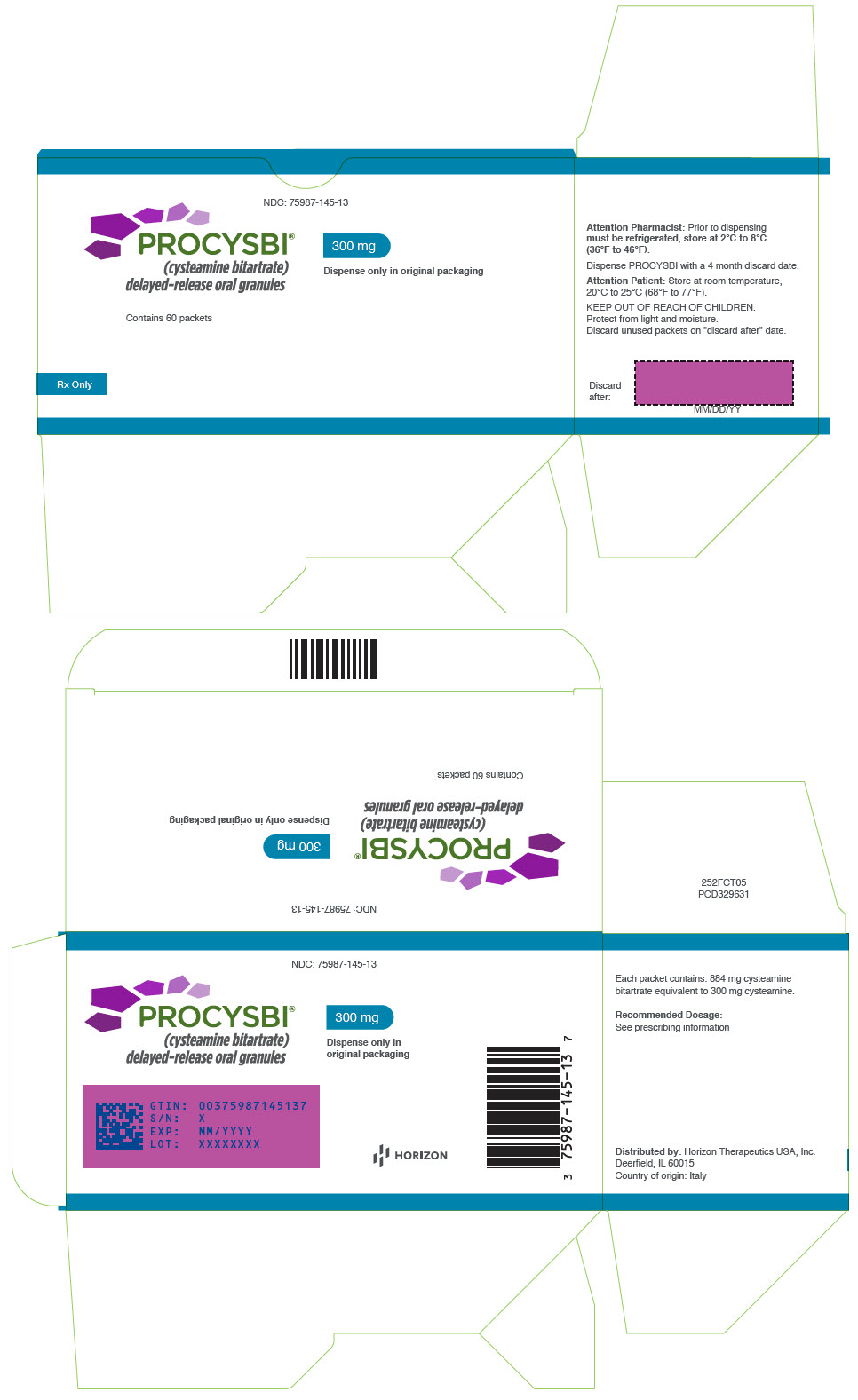
PRINCIPAL DISPLAY PANEL - 300 mg Granule Packet Carton NDC: 75987-145-13 PROCYSBI ® (cysteamine bitartrate) delayed-release oral granules 300 mg Dispense only in original packaging Contains 60 packets Rx Only PRINCIPAL DISPLAY PANEL - 300 mg Granule Packet Carton
Medicaid utilization & spend
Medicaid utilization by pack size
Medicare Part D spend CMS · PART D · 2026 (Q1)
Reported adverse events (FAERS)
Top reported reactions
Age at onset
Reporter sex
Serious outcomes
Where does this data come from?
About this NDC listing & data coverage
What data is (and isn’t) available for this NDC — tap to expand
| NDC identity (package / product / labeler codes) | ✓ Available |
| Labeler | ✓ Available |
| Product & package description | ✓ Available |
| Marketing category & status | ✓ Available |
| Active ingredient / dosage form / route | ✓ Available |
| FDA label (SPL via DailyMed) | ✓ Available |
| Package photos | ✓ Available |
| Inactive ingredients (structured) | — Not published for this NDC The labeler did not submit a structured excipient list, or no SPL is available. |
| NADAC pharmacy acquisition price (CMS) | — Not published for this NDC CMS publishes NADAC only for NDCs reported in its retail-pharmacy survey. |
| Orange Book / therapeutic-equivalence data | ✓ Available |
| HCPCS J-code billing crosswalk | — Not published for this NDC Most self-administered / retail products have no J-code — that is normal. |
| Medicaid utilization (CMS SDUD) | ✓ Available |