
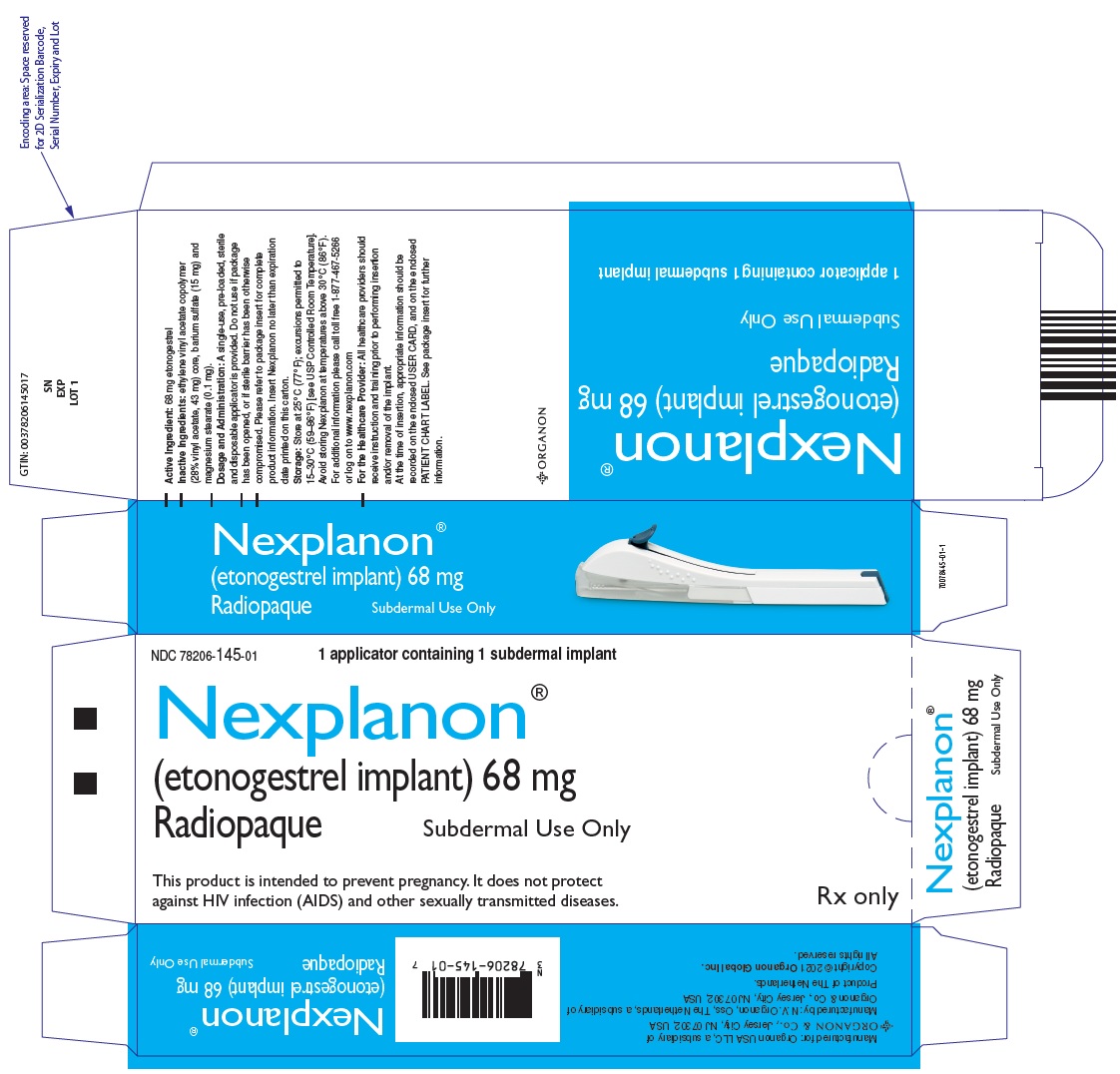
Nexplanon etonogestrel 68 mg Implant, 1 implant — NDC 78206-145-01 (Billing 78206-0145-01)
This is a package of 1 implant of Nexplanon etonogestrel 68 mg Implant from Organon LLC, marketed since Jun 2021 and currently FDA-listed. It is this product's only package size.
NDC database record
One package, one record: these facts belong to NDC 78206-145-01 alone.
- Record
- FDA NDC Directory package listing · Human prescription drug
- Code segments
- 78206 labeler · 145 product · 01 package
- Package marketed since
- Jun 1, 2021
- Sample package
- No — commercial package
- Listing certified through
- Dec 31, 2027
- Billing quantity
- 1 EA per package
- Barcode (UPC-A, from the NDC)
- 3 7820614501 7
- Medicaid fills, this package
- 136,117 prescriptions in the last four reported quarters
- FDA record last changed
- Jul 24, 2026
Identity & classification
Regulatory identifiers FDA, NLM and CMS codes for this package
Drug-database identifiers Medi-Span GPI and First Databank GCN / HICL / AHFS classification
- GSN (GCN sequence number): 043963
- GCN: 51148
- GPI-14 (Medi-Span): 25300005002320
- HICL (First Databank): 020735
- AHFS class code: 68:12.00.00
- RxCUI (RxNorm): 389221
Where does this data come from?
- FDA openFDA NDC Directory · synced Oct 8, 2026
- FDA label on DailyMed · label index refreshed Oct 8, 2026
- RxNorm (NLM RxNav) · catalog refreshed Oct 1, 2026
- Medi-Span GPI (licensed)
- First Databank (licensed) · refreshed Oct 8, 2026
RxNorm drug class
This medicine belongs to the Progestin class.
Where does this data come from?
- RxClass (NLM) · catalog refreshed Oct 1, 2026
Clinical
Patient education
Supplement & herbal interactions
Some supplements/herbs that may interact with Etonogestrel — tap one for details:
Etonogestrel may be associated with lower levels of 2 nutrients — worth a chat with your pharmacist, not a cause for alarm.
Where does this data come from?
- MedlinePlus (NLM) · refreshed Oct 8, 2026
- FDA label on DailyMed · label index refreshed Oct 8, 2026
Ask a licensed pharmacist directly — free, answered by our team.
Pricing
A drug doesn't have one price. Each row is a different public payment system, and none is what you'd pay at the counter — that depends on your insurance. The ⓘ on each row explains what it measures.
| Price system | Per each | Per package |
|---|---|---|
| Retail pharmacies payNADAC · weekly | Not in the retail survey — common for institutional, discontinued, or low-volume packs. | |
| Medicaid paysCMS SDUD · 12 mo | $1,177.41 | $1,177.41 / 1 implant |
| Medicare drug plans payPart D · Q2 2026 | $1,279.85 | $1,279.85 / 1 implant |
Where does this data come from?
- CMS NADAC weekly file
- CMS ASP pricing files · refreshed Sep 20, 2026
- CMS Medicaid State Drug Utilization Data · through Q1 2026
- CMS Part D plan pricing files · refreshed Sep 24, 2026
- VA National Acquisition Center price file
Packaging — all sizes for this product
| Package NDC | Description | Marketing start | Marketing end | Status |
|---|---|---|---|---|
| 78206-0145-01 You're viewing this Main listing | 1 BLISTER PACK in 1 CARTON / 1 IMPLANT in 1 BLISTER PACK | 2021-06-01 | — | Active |
Therapeutic equivalents
| Product | Labeler | Pack | NADAC/unit | TE | Status | Price vs. this |
|---|---|---|---|---|---|---|
| Nexplanon 68 mgthis 78206-0145-01 | Organon | 1 implant | — | — | FDA listed | — |
Where does this data come from?
- FDA openFDA NDC Directory · synced Oct 8, 2026
- FDA Orange Book · refreshed Oct 3, 2026
- CMS NADAC weekly file
Availability & generic status
We did not find an FDA-approved generic match for this exact strength, form and route. Patent/protection dates below may affect future generic timing.
Why the date isn’t exact: Generic timing can change because patents may be challenged, settled, licensed, added, removed, or worked around with a narrower label — and FDA approval does not always mean a pharmacy can get the generic today.
🛈 What do these terms mean?
- Patent
- Legal protection listed in the Orange Book that may delay generic approval or launch. Issued by the U.S. Patent & Trademark Office.
- Substance patent
- Covers the active drug molecule itself — the hardest to design around. A generic generally can’t launch until it expires.
- Formulation (product) patent
- Covers a specific formulation or dosage form. A generic can sometimes work around it with a different formulation.
- Method-of-use patent
- A patent covering one specific approved use of the drug — not necessarily the whole molecule. A generic can sometimes launch with a “skinny label” that carves out the protected use and keeps the others.
- Skinny label
- A generic label that omits a still-patented use when the FDA allows it — letting a generic reach the market for the unprotected uses.
- Exclusivity
- FDA-granted marketing protection, separate from patents — e.g. 5-yr new chemical entity, 7-yr orphan drug, or a +6-month pediatric extension.
- Paragraph IV
- A generic applicant’s formal challenge to a listed patent. It can potentially lead to earlier generic entry, but often involves litigation or a settlement.
- RLD / RS
- Reference Listed Drug — the brand product the FDA uses as the reference for generic applications. Reference Standard — the product the FDA expects generics to compare against in bioequivalence testing.
- TE / AB rating
- FDA therapeutic-equivalence rating. An AB rating generally means the FDA considers a generic therapeutically equivalent to — and substitutable for — the brand.
- LOE (loss of exclusivity)
- The latest patent or exclusivity currently listed — the loss-of-exclusivity / latest-listed-protection date shown on this page. Paragraph-IV challenges and settlements can move the real date earlier; FDA approval and a manufacturer’s decision to market can move it later.
Built from the FDA Orange Book. The bars above are scaled to each protection’s expiry; the red LOE marker is the last one to lapse.
| Patent | Type | Use code | Expires |
|---|---|---|---|
| US 9757552 ↗ | Method of use | U-1 | Jul 28, 2030 |
| US 9757552 ↗ | Method of use | U-1 | Jul 28, 2030 |
| US 10821277 ↗ | Drug product | — | May 31, 2027 |
| US 8888745 ↗ | Drug product | — | Aug 28, 2026 |
| US 8722037 ↗ | Drug product | — | Sep 28, 2027 |
| Code | What it grants | Expires |
|---|---|---|
| D-199 | Other change requiring clinical data (3-year) | Jan 16, 2029 |
Is there a generic version of NEXPLANON 68 MG IMPLANT?
The FDA approved a generic — why can’t I get it at my pharmacy yet?
Why do different websites show different generic release dates?
What does “FDA listed” mean?
What does a patent or protection date mean here?
What does “current Orange Book estimate” mean?
Can a generic come out before the last patent expires?
Can a generic come out after the listed dates?
What is the difference between patents and exclusivity?
Why are there multiple patent dates?
Where does this data come from?
- FDA Orange Book · refreshed Oct 3, 2026
What it looks like
Where does this data come from?
- FDA label on DailyMed · label index refreshed Oct 8, 2026
Inactive Ingredients / Excipients
Inactive ingredients, also called excipients, are components of the drug product other than the active ingredient. They may include fillers, dyes, coatings, preservatives, flavors, or other formulation ingredients.
💡 Tap an ingredient (hover on desktop) to see what it is and why it’s used.
-
15 mg
UNII 25BB7EKE2E
Barium sulfate is a white powder mineral compound used as a filler and opacifying agent in tablets and capsules. It adds bulk to the medicine and may be included in formulations for imaging purposes.
-
43 mg
UNII 8ILA5X28VS
A synthetic plastic material made from ethylene and vinyl acetate monomers. It functions as a binder to hold ingredients together and as a film-former to create coatings on tablets or capsules.
-
0.1 mg
UNII 70097M6I30
Magnesium stearate is a salt made from magnesium and stearic acid, a fatty substance. It's used in tablets and capsules as a lubricant and glidant to help ingredients flow smoothly during manufacturing and prevent sticking.
3 inactive ingredients listed in the exact product block matched to this NDC.
Where does this data come from?
ingredient classCode="IACT" elements from the exact product block matched by this NDC. Label-section narrative from DailyMed / the openFDA label index is shown separately when available.- FDA label on DailyMed · label index refreshed Oct 8, 2026
- FDA openFDA NDC Directory · synced Oct 8, 2026
Inactive ingredient FAQ
Are inactive ingredients the same for every manufacturer?
Why might an inactive ingredient be missing?
Can inactive ingredients matter?
Manufacturer & labeler
More NDCs from Organon LLC labeler code 78206
- Ganirelix Acetate 250 ug/.5mL Injection, Solution NDC 78206-138-01
- Hyzaar losartan potassium and hydrochlorothiazide 50 mg; 12.5 mg Tablet, Film Coated NDC 78206-139-01
- Hyzaar losartan potassium and hydrochlorothiazide 100 mg; 12.5 mg Tablet, Film Coated NDC 78206-140-01
- Hyzaar losartan potassium and hydrochlorothiazide 100 mg; 25 mg Tablet, Film Coated NDC 78206-141-01
- Maxalt rizatriptan benzoate 10 mg Tablet NDC 78206-142-01
- Maxalt-Mlt rizatriptan benzoate 10 mg Tablet, Orally Disintegrating NDC 78206-143-01
- NuvaRing etonogestrel and ethinyl estradiol .12 mg/d; .015 mg/d Insert, Extended Release NDC 78206-146-03
- Ontruzant trastuzumab 150 mg Injection, Powder, Lyophilized, For Solution NDC 78206-147-01
- Ontruzant Kit NDC 78206-148-01
- Pregnyl CHORIOGONADOTROPIN ALFA Kit NDC 78206-150-01
- Propecia finasteride 1 mg Tablet, Film Coated NDC 78206-152-01
- Proscar Finasteride 5 mg Tablet, Film Coated NDC 78206-153-01
Where does this data come from?
- FDA openFDA NDC Directory · synced Oct 8, 2026
- Drugs@FDA
Full prescribing information FDA SPL
🚨 Boxed Warning ▾
WARNING: RISK OF COMPLICATIONS DUE TO IMPROPER INSERTION and REMOVAL Improper insertion of NEXPLANON increases the risk of complications [see Warnings and Precautions (5.1) ] . Proper training prior to first use of NEXPLANON can minimize the risk of improper NEXPLANON insertion [see Warnings and Precautions (5.1) ] . Because of the risk of complications due to improper insertion and removal NEXPLANON is available only through a restricted program under a Risk Evaluation and Mitigation Strategy (REMS) called the NEXPLANON REMS [see Warnings and Precautions (5.2) ] .
WARNING: RISK OF COMPLICATIONS DUE TO IMPROPER INSERTION and REMOVAL Improper insertion of NEXPLANON increases the risk of complications [see Warnings and Precautions (5.1) ] . Proper training prior to first use of NEXPLANON can minimize the risk of improper NEXPLANON insertion [see Warnings and Precautions (5.1) ] . NEXPLANON is available only through a restricted program under a Risk Evaluation and Mitigation Strategy (REMS) called the NEXPLANON REMS [see Warnings and Precautions (5.2) ] .
🎯 Indications and Usage ▾
1 INDICATIONS AND USAGE NEXPLANON ® is indicated for prevention of pregnancy in women of reproductive potential for up to 5 years. NEXPLANON is a progestin indicated for prevention of pregnancy in women of reproductive potential for up to 5 years. ( 1 )
⏱️ Dosage and Administration ▾
2 DOSAGE AND ADMINISTRATION The efficacy of NEXPLANON does not depend on daily, weekly, or monthly administration. All healthcare professionals should receive instruction and training prior to performing insertion and/or removal of NEXPLANON. A single NEXPLANON implant is inserted subdermally just under the skin at the inner side of the non-dominant upper arm.
The insertion site is overlying the triceps muscle about 8-10 cm (3-4 inches) from the medial epicondyle of the humerus and 3-5 cm (1.25-2 inches) posterior to (below) the sulcus (groove) between the biceps and triceps muscles. This location is intended to avoid the large blood vessels and nerves lying within and surrounding the sulcus (see Figures 2a , 2b and 2c ). Inserting an implant more deeply than subdermally (a deep insertion) may preclude palpation and localization, making removal difficult or impossible [see Dosage and Administration (2.3) and Warnings and Precautions (5.1) ] .
NEXPLANON must be inserted by the expiration date stated on the packaging. NEXPLANON is a long-acting (up to 5 years), reversible, hormonal contraceptive method. The implant must be removed by the end of the fifth year and may be replaced by a new implant at the time of removal, if continued contraceptive protection is desired.
Insert one NEXPLANON subdermally just under the skin at the inner side of the non-dominant upper arm. NEXPLANON must be removed no later than by the end of the fifth year. ( 2 )
2.1Initiating Contraception with NEXPLANON IMPORTANT: Rule out pregnancy before inserting the implant. Timing of insertion depends on the woman's recent contraceptive history, as follows: • No preceding hormonal contraceptive use in the past month NEXPLANON should be inserted between Day 1 (first day of menstrual bleeding) and Day 5 of the menstrual cycle, even if the woman is still bleeding. If inserted as recommended, back-up contraception is not necessary.
If deviating from the recommended timing of insertion, the woman should be advised to use a barrier method until 7 days after insertion. If intercourse has already occurred, pregnancy should be excluded. • Switching contraceptive method to NEXPLANON Combination hormonal contraceptives: NEXPLANON should preferably be inserted on the day after the last active tablet of the previous combined oral contraceptive or on the day of removal of the vaginal ring or transdermal patch. At the latest, NEXPLANON should be inserted on the day following the usual tablet-free, ring-free, patch-free or placebo tablet interval of the previous combined hormonal contraceptive.
If inserted as recommended, back-up contraception is not necessary. If deviating from the recommended timing of insertion, the woman should be advised to use a barrier method until 7 days after insertion. If intercourse has already occurred, pregnancy should be excluded.
Progestin-only contraceptives: There are several types of progestin-only methods. NEXPLANON should be inserted as follows: Injectable Contraceptives: Insert NEXPLANON on the day the next injection is due. Minipill: A woman may switch to NEXPLANON on any day of the month.
NEXPLANON should be inserted within 24 hours after taking the last tablet. Contraceptive implant or intrauterine system (IUS): Insert NEXPLANON on the same day the previous contraceptive implant or IUS is removed. If inserted as recommended, back-up contraception is not necessary.
If deviating from the recommended timing of insertion, the woman should be advised to use a barrier method until 7 days after insertion. If intercourse has already occurred, pregnancy should be excluded. • Following abortion or miscarriage First Trimester: NEXPLANON should be inserted within 5 days following a first trimester abortion or miscarriage. Second Trimester: Insert NEXPLANON between 21 to 28 days following second trimester abortion or miscarriage.
If inserted as recommended, back-up contraception is not necessary. If deviating from the recommended timing of insert… [Excerpted — this section continues on DailyMed.]
💊 Dosage Forms and Strengths ▾
3 DOSAGE FORMS AND STRENGTHS Single, white/off-white, soft, radiopaque, flexible, ethylene vinyl acetate (EVA) copolymer implant, 4 cm in length and 2 mm in diameter containing 68 mg etonogestrel, 15 mg of barium sulfate, and 0.1 mg of magnesium stearate. NEXPLANON consists of a single, radiopaque, rod-shaped implant, containing 68 mg etonogestrel, pre-loaded in the needle of a disposable applicator. ( 3 )
⛔ Contraindications ▾
4 CONTRAINDICATIONS NEXPLANON should not be used in women who have Known or suspected pregnancy Current or past history of thrombosis or thromboembolic disorders Liver tumors, benign or malignant, or active liver disease Undiagnosed abnormal uterine bleeding Known or suspected breast cancer, personal history of breast cancer, or other progestin-sensitive cancer, now or in the past Allergic reaction to any of the components of NEXPLANON [see Adverse Reactions (6) ] Known or suspected pregnancy. ( 4 ) Current or past history of thrombosis or thromboembolic disorders.
( 4 , 5.5 ) Liver tumors, benign or malignant, or active liver disease. ( 4 , 5.8 ) Undiagnosed abnormal uterine bleeding. ( 4 , 5.3 ) Known or suspected breast cancer, personal history of breast cancer, or other progestin-sensitive cancer, now or in the past.
( 4 , 5.7 ) Allergic reaction to any of the components of NEXPLANON. ( 4 , 6 )
⚠️ Warnings and Cautions ▾
5 WARNINGS AND PRECAUTIONS The following information is based on experience with the etonogestrel implants (IMPLANON and/or NEXPLANON), other progestin-only contraceptives, or experience with combination (estrogen plus progestin) oral contraceptives. Insertion and removal complications: Pain, paresthesia, bleeding, hematoma, scarring, infection, or migration to vasculature, including pulmonary vessels, may occur. Symptoms associated with implants in pulmonary vessels include chest pain, dyspnea, cough, or hemoptysis.
Surgical interventions may be necessary to remove implants. ( 5.1 ) Menstrual bleeding pattern: Counsel women regarding changes in bleeding frequency, intensity, or duration. ( 5.3 ) Ectopic pregnancies: Be alert to the possibility of an ectopic pregnancy in women using NEXPLANON who become pregnant or complain of lower abdominal pain.
( 5.4 ) Thrombotic and other vascular events: The NEXPLANON implant should be removed in the event of a thrombosis. ( 5.5 ) Liver disease: Remove the NEXPLANON implant if jaundice occurs. ( 5.8 ) Elevated blood pressure: The NEXPLANON implant should be removed if blood pressure rises significantly and becomes uncontrolled.
( 5.10 ) Carbohydrate and lipid metabolic effects: Monitor prediabetic and diabetic women using NEXPLANON. ( 5.12 )
5.1Risk of Complications Due to Improper Insertion and Removal Complications of Insertion and Removal NEXPLANON should be inserted subdermally so that it will be palpable after insertion, and this should be confirmed by palpation immediately after insertion. Failure to insert NEXPLANON properly may go unnoticed unless it is palpated immediately after insertion. Undetected failure to insert the implant may lead to an unintended pregnancy.
Complications related to insertion and removal procedures may occur, e.g., pain, paresthesia, bleeding, hematoma, scarring, or infection. If NEXPLANON is inserted deeply (intramuscular or intrafascial), neural or vascular injury may occur. To help reduce the risk of neural or vascular injury, NEXPLANON should be inserted subdermally just under the skin at the inner side of the non-dominant upper arm overlying the triceps muscle, about 8-10 cm (3-4 inches) from the medial epicondyle of the humerus, and 3-5 cm (1.25-2 inches) posterior to (below) the sulcus (groove) between the biceps and triceps muscles.
This location is intended to avoid the large nerves and blood vessels lying within and surrounding the sulcus. Deep insertions of NEXPLANON have been associated with paresthesia (due to neural injury), migration of the implant (due to intramuscular or fascial insertion), and intravascular insertion. If infection develops at the insertion site, start suitable treatment.
If the infection persists, the implant should be removed. Incomplete insertions or infections may lead to expulsion. Reports of implant migration within the arm may have been related to deep insertion.
Postmarketing reports of implants located within the vessels of the arm and the pulmonary artery also may have been related to deep insertions or intravascular insertions. Some cases of implants found within the pulmonary artery were associated with chest pain and/or respiratory disorders (such as dyspnea, cough, or hemoptysis); others were asymptomatic. In cases where the implant has migrated to the pulmonary artery, endovascular or surgical procedures may be needed for removal.
Implant removal may be difficult or impossible if the implant is not inserted correctly, is inserted too deeply, not palpable, encased in fibrous tissue, or has migrated. If at any time the implant cannot be palpated, it should be localized, and removal is recommended. When an implant is removed, it is important to remove it in its entirety [see Dosage and Administration (2.3) ] .
Exploratory surgery without knowledge of the exact location of the implant is strongly discouraged. Removal of deeply inserted implants should be conducted with caution in order to prevent injury to de… [Excerpted — this section continues on DailyMed.]
🤒 Adverse Reactions ▾
6 ADVERSE REACTIONS The following adverse reactions reported with the use of hormonal contraception are discussed elsewhere in the labeling: Changes in Menstrual Bleeding Patterns [see Warnings and Precautions (5.3) ] Ectopic Pregnancies [see Warnings and Precautions (5.4) ] Thrombotic and Other Vascular Events [see Warnings and Precautions (5.5) ] Liver Disease [see Warnings and Precautions (5.8) ] Most common (≥10%) adverse reactions reported in clinical trials were change in menstrual bleeding pattern, headache, vaginitis, weight increase, acne, breast pain, abdominal pain, and pharyngitis.
( 6.1 ) To report SUSPECTED ADVERSE REACTIONS, contact Organon USA LLC, a subsidiary of Organon & Co., at 1-844-674-3200 or FDA at 1-800-FDA-1088 or www.fda.gov/medwatch.
6.1Clinical Trials Experience Adverse reaction rates observed in the clinical trials of a drug cannot be directly compared to rates in the clinical trials of another drug and may not reflect the rates observed in practice, because clinical trials are conducted under widely varying conditions. In clinical trials of three years duration involving 942 women who were evaluated for safety, change in menstrual bleeding patterns (irregular menses) was the most common adverse reaction causing discontinuation of use of the non-radiopaque etonogestrel implant (IMPLANON) (11.1% of women).
Adverse reactions that resulted in a rate of discontinuation of ≥1% are shown in Table 3 . Table 3: Adverse Reactions Leading to Discontinuation of Treatment in 1% or More of Subjects in 3-Year Clinical Trials of the Non-Radiopaque Etonogestrel Implant (IMPLANON) Adverse Reactions All Studies N = 942 Bleeding Irregularities Includes "frequent", "heavy", "prolonged", "spotting", and other patterns of bleeding irregularity. 11.1% Emotional Lability Among US subjects (N=330), 6.1% experienced emotional lability that led to discontinuation.
2.3% Weight Increase 2.3% Headache 1.6% Acne 1.3% Depression Among US subjects (N=330), 2.4% experienced depression that led to discontinuation. 1.0% Other adverse reactions that were reported by at least 5% of subjects in the non-radiopaque etonogestrel implant clinical trials are listed in Table 4 . Table 4: Common Adverse Reactions Reported by ≥5% of Subjects in 3-Year Clinical Trials with the Non-Radiopaque Etonogestrel Implant (IMPLANON) Adverse Reactions All Studies N = 942 Headache 24.9% Vaginitis 14.5% Weight increase 13.7% Acne 13.5% Breast pain 12.8% Abdominal pain 10.9% Pharyngitis 10.5% Leukorrhea 9.6% Influenza-like symptoms 7.6% Dizziness 7.2% Dysmenorrhea 7.2% Back pain 6.8% Emotional lability 6.5% Nausea 6.4% Pain 5.6% Nervousness 5.6% Depression 5.5% Hypersensitivity 5.4% Insertion site pain 5.2% In a clinical trial of NEXPLANON, in which investigators were asked to examine the implant site after insertion, implant site reactions were reported in 8.6% of women.
Erythema was the most frequent implant site complication, reported during or shortly after insertion, occurring in 3.3% of subjects. Additionally, hematoma (3.0%), bruising (2.0%), pain (1.0%), and swelling (0.7%) were reported. In a separate clinical trial to assess contraceptive efficacy and safety of NEXPLANON beyond 3 years, up to 5 years, where a total of 498 women were evaluated for safety, a similar adverse reaction profile was observed as in Years 1 through 3.The most frequently reported adverse reaction >5% related to NEXPLANON was intermenstrual bleeding (5.4%), Changes in menstrual bleeding patterns were the most frequently reported adverse reaction leading to discontinuation occurring in 4.0% of participants.
6.2Postmarketing Experience Adverse Reactions and Events from Postmarketing Study Nexplanon Observational Risk Assessment Study (NORA) A postmarketing prospective active surveillance study was conducted among 7,364 patients in the United States to characterize the frequency of insertion-, localization-, and removal-related events. Implant Insertion Insertion difficulty or… [Excerpted — this section continues on DailyMed.]
🔄 Drug Interactions ▾
7 DRUG INTERACTIONS Consult the labeling of concurrently-used drugs to obtain further information about interactions with hormonal contraceptives or the potential for enzyme alterations. Drugs or herbal products that induce certain enzymes, such as CYP3A4, may decrease the effectiveness of progestin hormonal contraceptives or increase breakthrough bleeding. ( 7.1 )
7.1Effects of Other Drugs on Hormonal Contraceptives Substances decreasing the plasma concentrations of hormonal contraceptives (HCs) and potentially diminishing the efficacy of HCs: Drugs or herbal products that induce certain enzymes, including cytochrome P450 3A4 (CYP3A4), may decrease the plasma concentrations of HCs and potentially diminish the effectiveness of HCs or increase breakthrough bleeding. Some drugs or herbal products that may decrease the effectiveness of HCs include efavirenz, phenytoin, barbiturates, carbamazepine, bosentan, felbamate, griseofulvin, oxcarbazepine, rifampicin, topiramate, rifabutin, rufinamide, aprepitant, and products containing St.
John's wort. Interactions between HCs and other drugs may lead to breakthrough bleeding and/or contraceptive failure. Counsel women to use an alternative non-hormonal method of contraception or a back-up method when enzyme inducers are used with HCs, and to continue back-up non-hormonal contraception for 28 days after discontinuing the enzyme inducer to ensure contraceptive reliability.
Substances increasing the plasma concentrations of HCs: Co-administration of certain HCs and strong or moderate CYP3A4 inhibitors such as itraconazole, voriconazole, fluconazole, grapefruit juice, or ketoconazole may increase the serum concentrations of progestins, including etonogestrel. Human Immunodeficiency Virus (HIV) protease inhibitors and non-nucleoside reverse transcriptase inhibitors: Significant changes (increase or decrease) in the plasma concentrations of progestin have been noted in cases of co-administration with HIV protease inhibitors (decrease [e.g., nelfinavir] or increase [e.g., indinavir, ritonavir and ritonavir-boosted protease inhibitors]) or with non-nucleoside reverse transcriptase inhibitors (decrease [e.g., nevirapine, efavirenz] or increase [e.g., etravirine]).
These changes may be clinically relevant in some cases. Consult the prescribing information of anti-viral and anti-retroviral concomitant medications to identify potential interactions.
7.2Effects of Hormonal Contraceptives on Other Drugs Hormonal contraceptives may affect the metabolism of other drugs. Consequently, plasma concentrations may either increase (for example, cyclosporine) or decrease (for example, lamotrigine). Consult the labeling of all concurrently-used drugs to obtain further information about interactions with hormonal contraceptives or the potential for enzyme alterations.
👥 Use in Specific Populations ▾
8 USE IN SPECIFIC POPULATIONS Pregnancy: Discontinue if maintaining a pregnancy. ( 8.1 )
8.1Pregnancy Risk Summary NEXPLANON is contraindicated during pregnancy because there is no need for pregnancy prevention in a woman who is already pregnant [see Contraindications (4) ] . Epidemiologic studies and meta-analyses have not shown an increased risk of genital or non-genital birth defects (including cardiac anomalies and limb-reduction defects) following maternal exposure to low dose CHCs prior to conception or during early pregnancy. No adverse development outcomes were observed in pregnant rats and rabbits with the administration of etonogestrel during organogenesis at doses of 315 or 781 times the anticipated human dose (60 µg/day) (see Data ) .
NEXPLANON should be removed if maintaining a pregnancy. Data Animal Data Teratology studies have been performed in rats and rabbits using oral administration up to 315 and 781 times the human etonogestrel dose (based upon body surface) and revealed no evidence of fetal harm due to etonogestrel exposure.
8.2Lactation Risk Summary Small amounts of contraceptive steroids and/or metabolites, including etonogestrel are present in human milk. No significant adverse effects have been observed in the production or quality of breast milk, or on the physical and psychomotor development of breastfed infants (see Data ) . Hormonal contraceptives, including etonogestrel, can reduce milk production in breastfeeding mothers.
This is less likely to occur once breastfeeding is well-established; however, it can occur at any time in some women. When possible, advise the nursing mother about both hormonal and non-hormonal contraceptive options, as steroids may not be the initial choice for these patients. The developmental and health benefits of breastfeeding should be considered along with the mother's clinical need for NEXPLANON and any potential adverse effects on the breastfed child from NEXPLANON or from the underlying maternal condition.
Data The amount of etonogestrel contained within breast milk was measured in 38 lactating women who began using IMPLANON during the fourth to eighth week postpartum. The study evaluated Implanon versus another contraceptive, was not randomized and data were considered observational and exploratory; therefore, comparisons could not be made. Based on the findings of this study, during the first months after insertion of IMPLANON, when maternal blood levels of etonogestrel are highest, about 100 ng of etonogestrel may be ingested by the child per day based on an average daily milk ingestion of 658 mL.
Based on daily milk ingestion of 150 mL/kg, the mean daily infant etonogestrel dose one month after insertion of IMPLANON is about 2.2% of the weight-adjusted maternal daily dose, or about 0.2% of the estimated absolute maternal daily dose. Adverse reactions were not observed in breastfed infants exposed to etonogestrel through breast milk. No adverse effects on the production or quality of breast milk were detected.
8.4Pediatric Use The safety and effectiveness of NEXPLANON have been established in women of reproductive potential. Safety and effectiveness of NEXPLANON are expected to be the same in postpubertal adolescents as in adult women. NEXPLANON is not indicated before menarche.
8.5Geriatric Use This product has not been studied in women over 65 years of age and is not indicated in this population.
8.6Hepatic Impairment No studies were conducted to evaluate the effect of hepatic disease on the disposition of NEXPLANON. The use of NEXPLANON in women with active liver disease is contraindicated [see Contraindications (4) ] .
🤰 Pregnancy ▾
8.1Pregnancy Risk Summary NEXPLANON is contraindicated during pregnancy because there is no need for pregnancy prevention in a woman who is already pregnant [see Contraindications (4) ] . Epidemiologic studies and meta-analyses have not shown an increased risk of genital or non-genital birth defects (including cardiac anomalies and limb-reduction defects) following maternal exposure to low dose CHCs prior to conception or during early pregnancy. No adverse development outcomes were observed in pregnant rats and rabbits with the administration of etonogestrel during organogenesis at doses of 315 or 781 times the anticipated human dose (60 µg/day) (see Data ) .
NEXPLANON should be removed if maintaining a pregnancy. Data Animal Data Teratology studies have been performed in rats and rabbits using oral administration up to 315 and 781 times the human etonogestrel dose (based upon body surface) and revealed no evidence of fetal harm due to etonogestrel exposure.
🧒 Pediatric Use ▾
8.4Pediatric Use The safety and effectiveness of NEXPLANON have been established in women of reproductive potential. Safety and effectiveness of NEXPLANON are expected to be the same in postpubertal adolescents as in adult women. NEXPLANON is not indicated before menarche.
🧓 Geriatric Use ▾
8.5Geriatric Use This product has not been studied in women over 65 years of age and is not indicated in this population.
🆘 Overdosage ▾
10 OVERDOSAGE Overdosage may result if more than one implant is inserted. In case of suspected overdose, the implant should be removed.
🧬 Clinical Pharmacology ▾
12 CLINICAL PHARMACOLOGY
12.1Mechanism of Action The contraceptive effect of NEXPLANON is achieved by suppression of ovulation, increased viscosity of the cervical mucus, and alterations in the endometrium.
12.2Pharmacodynamics Exposure-response relationships of NEXPLANON are unknown.
12.3Pharmacokinetics Absorption After subdermal insertion of the etonogestrel implant, etonogestrel is released into the circulation and is approximately 100% bioavailable. Maximum serum concentrations were reached within the first two weeks after insertion and gradually decreased over time. Table 8 shows mean (± standard deviation) serum concentrations of etonogestrel after insertion of NEXPLANON.
Table 8: Etonogestrel serum concentrations after NEXPLANON insertion Etonogestrel serum concentrations [pg/mL] Mean (±standard deviation) Time after insertion Study 34528 NEXPLANON use duration: 3 years. Study MK-8415-060 Subjects had used NEXPLANON for 3 years (± 2 weeks) at time of study enrollment. NA = not available 2 weeks 1200 (± 604) NA 1 year 202 (± 55) NA 2 years 164 (± 58) NA 3 years 138 (± 43) 143 (± 74) 4 years NA 123 (± 45) 5 years NA 111 (± 51) Distribution The apparent volume of distribution averages about 201 L.
Etonogestrel is approximately 32% bound to sex hormone binding globulin (SHBG) and 66% bound to albumin in blood. Metabolism In vitro data shows that etonogestrel is metabolized in liver microsomes by the cytochrome P450 3A4 isoenzyme. The biological activity of etonogestrel metabolites is unknown.
Excretion The elimination half-life of etonogestrel is approximately 25 hours. Excretion of etonogestrel and its metabolites, either as free steroid or as conjugates, is mainly in urine and to a lesser extent in feces. After removal of the implant, etonogestrel concentrations decreased below sensitivity of the assay by one week.
Specific Population Women with Obesity Pharmacokinetics of etonogestrel was evaluated in a clinical trial during the use of NEXPLANON from years 3 to 5. The median (range) body mass index (BMI) of 215 study treatment completers was 27.9 (17.4 to 63.9) kg/m 2 at baseline. Among the completers, 86 had a BMI ≥30 kg/m 2 and 23 had a BMI ≥40 kg/m 2 .
Mean etonogestrel serum concentrations were relatively lower in subjects with a BMI ≥30 kg/m 2 compared with those with a BMI <30 kg/m 2 ; the ratio of mean etonogestrel serum concentrations ranged from 0.76-0.88 during the use of NEXPLANON from years 3 to 5. There is a substantial overlap in etonogestrel serum concentration ranges between the two BMI categories ≥30 kg/m 2 versus <30 kg/m 2 (49.7-455 pg/mL versus 33-363 pg/mL, respectively, at 5 years).
🧬 Mechanism of Action ▾
12.1Mechanism of Action The contraceptive effect of NEXPLANON is achieved by suppression of ovulation, increased viscosity of the cervical mucus, and alterations in the endometrium.
📦 How Supplied / Storage and Handling ▾
16 HOW SUPPLIED/STORAGE AND HANDLING
16.1How Supplied NEXPLANON is supplied as follows: NDC 78206-145-01 One NEXPLANON package consists of a single implant containing 68 mg etonogestrel, 15 mg of barium sulfate and 0.1 mg of magnesium stearate that is 4 cm in length and 2 mm in diameter, which is pre-loaded in the needle of a disposable applicator. The sterile applicator containing the implant is packed in a blister pack.
16.2Storage and Handling Store NEXPLANON at 20ºC to 25ºC (68ºF to 77ºF); excursions permitted between 15ºC to 30ºC (59ºF to 86ºF) [see USP Controlled Room Temperature]. Avoid storing NEXPLANON at temperatures above 30ºC (86ºF).
📦 Storage and Handling ▾
16.2Storage and Handling Store NEXPLANON at 20ºC to 25ºC (68ºF to 77ºF); excursions permitted between 15ºC to 30ºC (59ºF to 86ºF) [see USP Controlled Room Temperature]. Avoid storing NEXPLANON at temperatures above 30ºC (86ºF).
📋 Description ▾
11 DESCRIPTION NEXPLANON is a radiopaque, progestin-only, soft, flexible implant preloaded in a sterile, disposable applicator for subdermal use. The implant is white/off-white, non-biodegradable and 4 cm in length with a diameter of 2 mm (see Figure 19 ). Each implant consists of an ethylene vinyl acetate (EVA) copolymer (28% vinyl acetate, 43 mg) core, containing 68 mg of the synthetic progestin etonogestrel, barium sulfate (15 mg), radiopaque ingredient), and magnesium stearate (0.1 mg), surrounded by an EVA copolymer skin.
Once inserted subdermally, the release rate is 60-75 mcg/day in week 5-6 and decreases to approximately 40-50 mcg/day at the end of the first year, and then to approximately 15-20 mcg/day at the end of the fifth year. NEXPLANON is a progestin-only contraceptive and does not contain estrogen. NEXPLANON is not made with natural rubber latex.
Figure 19 (Not to scale) Etonogestrel [13-Ethyl-17-hydroxy-11-methylene-18,19-dinor-17α-pregn-4-en-20-yn-3-one], structurally derived from 19-nortestosterone, is the synthetic biologically active metabolite of the synthetic progestin desogestrel. It has a molecular weight of 324.46 and the following structural formula ( Figure 20 ). Figure 20 Figure 19 Figure 20
💬 Information for Patients ▾
17 PATIENT COUNSELING INFORMATION Advise the patient to read the FDA-approved patient labeling ( Patient Information ). Advise women about the insertion and removal procedure of the NEXPLANON implant. Provide the woman with a copy of the Patient Labeling and ensure that she understands the information in the Patient Labeling before insertion and removal.
Advise women to contact their healthcare professional immediately if, at any time, they are unable to palpate the implant. Advise women that NEXPLANON does not protect against HIV infection (AIDS) or other sexually transmitted diseases. Advise women that the use of NEXPLANON may be associated with changes in their normal menstrual bleeding patterns so that they know what to expect.
MRI Safety Information: NEXPLANON is MR safe.
🧬 Pharmacokinetics ▾
12.3Pharmacokinetics Absorption After subdermal insertion of the etonogestrel implant, etonogestrel is released into the circulation and is approximately 100% bioavailable. Maximum serum concentrations were reached within the first two weeks after insertion and gradually decreased over time. Table 8 shows mean (± standard deviation) serum concentrations of etonogestrel after insertion of NEXPLANON.
Table 8: Etonogestrel serum concentrations after NEXPLANON insertion Etonogestrel serum concentrations [pg/mL] Mean (±standard deviation) Time after insertion Study 34528 NEXPLANON use duration: 3 years. Study MK-8415-060 Subjects had used NEXPLANON for 3 years (± 2 weeks) at time of study enrollment. NA = not available 2 weeks 1200 (± 604) NA 1 year 202 (± 55) NA 2 years 164 (± 58) NA 3 years 138 (± 43) 143 (± 74) 4 years NA 123 (± 45) 5 years NA 111 (± 51) Distribution The apparent volume of distribution averages about 201 L.
Etonogestrel is approximately 32% bound to sex hormone binding globulin (SHBG) and 66% bound to albumin in blood. Metabolism In vitro data shows that etonogestrel is metabolized in liver microsomes by the cytochrome P450 3A4 isoenzyme. The biological activity of etonogestrel metabolites is unknown.
Excretion The elimination half-life of etonogestrel is approximately 25 hours. Excretion of etonogestrel and its metabolites, either as free steroid or as conjugates, is mainly in urine and to a lesser extent in feces. After removal of the implant, etonogestrel concentrations decreased below sensitivity of the assay by one week.
Specific Population Women with Obesity Pharmacokinetics of etonogestrel was evaluated in a clinical trial during the use of NEXPLANON from years 3 to 5. The median (range) body mass index (BMI) of 215 study treatment completers was 27.9 (17.4 to 63.9) kg/m 2 at baseline. Among the completers, 86 had a BMI ≥30 kg/m 2 and 23 had a BMI ≥40 kg/m 2 .
Mean etonogestrel serum concentrations were relatively lower in subjects with a BMI ≥30 kg/m 2 compared with those with a BMI <30 kg/m 2 ; the ratio of mean etonogestrel serum concentrations ranged from 0.76-0.88 during the use of NEXPLANON from years 3 to 5. There is a substantial overlap in etonogestrel serum concentration ranges between the two BMI categories ≥30 kg/m 2 versus <30 kg/m 2 (49.7-455 pg/mL versus 33-363 pg/mL, respectively, at 5 years).
🧬 Pharmacodynamics ▾
12.2Pharmacodynamics Exposure-response relationships of NEXPLANON are unknown.
🔬 Clinical Studies ▾
14 CLINICAL STUDIES
14.1Pregnancy In clinical trials of up to 3 years duration that involved 923 subjects, 18-40 years of age at entry, and 1756 women-years of use with the non-radiopaque etonogestrel implant (IMPLANON), the total exposures expressed as 28-day cycle equivalents by study year were: Year 1: 10,866 cycles Year 2: 8,581 cycles Year 3: 3,442 cycles The clinical trials excluded women who: Weighed more than 130% of their ideal body weight Were chronically taking medications that induce liver enzymes In the subgroup of women, 18-35 years of age at entry, 6 pregnancies during 20,648 cycles of use were reported.
Two pregnancies occurred in each of Years 1, 2, and 3. Each conception was likely to have occurred shortly before or within 2 weeks after removal of the non-radiopaque etonogestrel implant. With these 6 pregnancies, the cumulative Pearl Index (PI) was 0.38 pregnancies per 100 women-years of use.
The contraceptive efficacy of NEXPLANON during use from 3 to 5 years was evaluated in a multicenter, single-arm, open-label study (NCT04626596) conducted in the United States. The trial enrolled women 18 to 35 years of age who had been using NEXPLANON for 36 months (±2 weeks) from the date of insertion at the time of enrollment. A total of 399 women were evaluated, having a mean age of 27 years.
Participants were 74.2% White, 16.8% Black/African American, 3.8% Asian, 1.3% American Indian or Alaska Native, 0.5% Native Hawaiian or Other Pacific Islander, and 3.5% multiple or missing races. The mean BMI was 29.4 kg/m 2 (range: 17.2-64.3 kg/m 2 ) and the mean weight was 78.7 kg (range: 40.8-180.8 kg). One hundred fifty-two participants (38.1%) had a BMI ≥30 kg/m 2 , including 40 participants (10.0%) with BMI ≥40 kg/m 2 .
The total exposures expressed as 28-day cycle equivalents by study year were: Year 4: 4478 cycles Year 5: 3274 cycles No pregnancies were reported in years 4 and 5, with a PI of 0.0 (95% CI- 0.00, 0.69) pregnancies per 100 women-years of use.
14.2Return to Ovulation In clinical trials with the non-radiopaque etonogestrel implant (IMPLANON), the etonogestrel levels in blood decreased below sensitivity of the assay by one week after removal of the implant. In addition, pregnancies were observed to occur as early as 7 to 14 days after removal. Therefore, a woman should re-start contraception immediately after removal of the implant if continued contraceptive protection is desired.
14.3Implant Insertion and Removal Characteristics Out of 301 insertions of the NEXPLANON implant in a clinical trial, the mean insertion time (from the removal of the protection cap of the applicator until retraction of the needle from the arm) was 27.9 ± 29.3 seconds. After insertion, 300 out of 301 (99.7%) NEXPLANON implants were palpable that were placed by trained providers. The single, non-palpable implant was not inserted according to the instructions.
🧪 Nonclinical Toxicology ▾
13 NONCLINICAL TOXICOLOGY
13.1Carcinogenesis, Mutagenesis, Impairment of Fertility In a 24-month carcinogenicity study in male and female rats with subdermal implants releasing 10 and 20 mcg etonogestrel per day (equal to approximately 1.8-3.6 times the systemic steady state exposure in women using NEXPLANON), no drug-related carcinogenic potential was observed. Etonogestrel was not genotoxic in the in vitro Ames/Salmonella reverse mutation assay, the chromosomal aberration assay in Chinese hamster ovary cells or the in vivo mouse micronucleus test.
Fertility in female rats returned after withdrawal from treatment.
📄 Carcinogenesis, Mutagenesis, Impairment of Fertility ▾
13.1Carcinogenesis, Mutagenesis, Impairment of Fertility In a 24-month carcinogenicity study in male and female rats with subdermal implants releasing 10 and 20 mcg etonogestrel per day (equal to approximately 1.8-3.6 times the systemic steady state exposure in women using NEXPLANON), no drug-related carcinogenic potential was observed. Etonogestrel was not genotoxic in the in vitro Ames/Salmonella reverse mutation assay, the chromosomal aberration assay in Chinese hamster ovary cells or the in vivo mouse micronucleus test.
Fertility in female rats returned after withdrawal from treatment.
📄 Patient Package Insert ▾
FDA-Approved Patient Labeling NEXPLANON ® (etonogestrel implant) Radiopaque Subdermal Use Only NEXPLANON ® does not protect against HIV infection (the virus that causes AIDS) or other sexually transmitted diseases. Read this Patient Information leaflet carefully before you decide if NEXPLANON is right for you. This information does not take the place of talking with your healthcare professional.
If you have any questions about NEXPLANON, ask your healthcare professional. What is NEXPLANON? NEXPLANON is a hormone-releasing birth control implant for prevention of pregnancy for up to 5 years.
The implant is a flexible plastic rod about the size of a matchstick that contains a progestin hormone called etonogestrel. It contains a small amount of barium sulfate (15 mg), so that the implant can be seen by X-ray, an ethylene vinyl acetate (EVA) copolymer (28% vinyl acetate, 43 mg) core, and magnesium stearate (0.1 mg). Your healthcare professional will insert the implant just under the skin of the inner side of your upper arm.
You can use a single NEXPLANON implant for up to 5 years. NEXPLANON does not contain estrogen. What if I need birth control for more than 5 years?
The NEXPLANON implant must be removed by the end of 5 years. Your healthcare professional can insert a new implant under your skin after taking out the old one if you choose to continue using NEXPLANON for birth control. What if I change my mind about birth control and want to stop using NEXPLANON before 5 years?
Your healthcare professional can remove the implant at any time. You may become pregnant as early as the first week after removal of the implant. If you do not want to get pregnant after your healthcare professional removes the NEXPLANON implant, you should start another birth control method right away.
How does NEXPLANON work? NEXPLANON prevents pregnancy in several ways. The most important way is by stopping the release of an egg from your ovary.
NEXPLANON also thickens the mucus in your cervix and this change may keep sperm from reaching the egg. NEXPLANON also changes the lining of your uterus. How well does NEXPLANON work?
When the NEXPLANON implant is placed correctly, your chance of getting pregnant is very low (less than 1 pregnancy per 100 women who use NEXPLANON for 1 year). The following chart shows the chance of getting pregnant for women who use different methods of birth control. Each box on the chart contains a list of birth control methods that are similar in effectiveness.
The most effective methods are at the top of the chart. The box on the bottom of the chart shows the chance of getting pregnant for women who do not use birth control and are trying to get pregnant. Who should not use NEXPLANON?
Do not use NEXPLANON if you have any of the following conditions: Are pregnant or think you may be pregnant Have, or have had, blood clots, such as blood clots in your legs (deep vein thrombosis), lungs (pulmonary embolism), eyes (total or partial blindness), heart (heart attack), or brain (stroke) Liver disease or a liver tumor Unexplained vaginal bleeding Breast cancer or any other cancer that is sensitive to progestin (a female hormone), now or in the past An allergy to anything in NEXPLANON Tell your healthcare professional if you have or have had any of the conditions listed above.
Your healthcare professional can suggest a different method of birth control. In addition, talk to your healthcare professional about using NEXPLANON if you have any of the following conditions: Diabetes High cholesterol or triglycerides Headaches Gallbladder or kidney problems A history of depressed mood High blood pressure An allergy to numbing medicines (anesthetics) or medicines used to clean your skin (antiseptics). These medicines will be used when the implant is placed into or removed from your arm.
Interaction with Other Medicines Tell your healthcare professional about all the medicines you take, including prescription and over-the-counter medicines, vitamin… [Excerpted — this section continues on DailyMed.]
📄 Recent Major Changes ▾
Indications and Usage ( 1 ) 01/2026 Dosage and Administration ( 2 ) 01/2026 Warnings and Precautions ( 5.1 , 5.2 ) 01/2026
📄 Package Label / Principal Display Panel ▾
PRINCIPAL DISPLAY PANEL - 68 mg Implant Blister Pack Carton NDC 78206-145-01 1 applicator containing 1 subdermal implant NEXPLANON ® (etonogestrel implant) 68 mg Radiopaque Subdermal Use Only This product is intended to prevent pregnancy. It does not protect against HIV infection (AIDS) and other sexually transmitted diseases. Rx only PRINCIPAL DISPLAY PANEL - 68 mg Implant Blister Pack Carton
Medicaid utilization & spend
Medicare Part D spend CMS · PART D · 2026 (Q1)
Reported adverse events (FAERS)
Top reported reactions
Age at onset
Reporter sex
Serious outcomes
Where does this data come from?
About this NDC listing & data coverage
What data is (and isn’t) available for this NDC — tap to expand
| NDC identity (package / product / labeler codes) | ✓ Available |
| Labeler | ✓ Available |
| Product & package description | ✓ Available |
| Marketing category & status | ✓ Available |
| Active ingredient / dosage form / route | ✓ Available |
| FDA label (SPL via DailyMed) | ✓ Available |
| Package photos | ✓ Available |
| Inactive ingredients (structured) | ✓ Available |
| NADAC pharmacy acquisition price (CMS) | — Not published for this NDC CMS publishes NADAC only for NDCs reported in its retail-pharmacy survey. |
| Orange Book / therapeutic-equivalence data | ✓ Available |
| HCPCS J-code billing crosswalk | — Not published for this NDC Most self-administered / retail products have no J-code — that is normal. |
| Medicaid utilization (CMS SDUD) | ✓ Available |