
Ficin Drug Interactions, Uses, Effectiveness, Safety & More
What is this page for?
First and foremost: how Ficin interacts with medications. The heart of this page is the interaction list — every drug Ficin is known to interact with, and how serious each one is.
But these pages have grown well beyond that into a full monograph — what Ficin is, what people use it for and how strong the evidence is, its safety and side effects, and answers to the questions we’re asked most — written and reviewed by the clinical staff at HelloPharmacist. It’s educational information from our licensed clinical databases, not medical advice, and we don’t sell or endorse products. Our editorial policy
Check Ficin against your medication
Add one medicationDrugs that interact with Ficin
0 medications have a known interaction with Ficin, graded by severity. Select any drug for the full evidence-based detail.
We don’t currently list any known drug interactions for Ficin. This doesn’t guarantee none exist — always confirm with your pharmacist before combining supplements with your medications.
What Severity, Likelihood & Evidence Mean
Severity — How Serious It Can Be
- Major. Clinically significant; generally best avoided, or used only under direct professional supervision.
- Moderate. May need monitoring, a dose adjustment, or separating the times you take each one.
- Minor. Generally not clinically significant, but still worth noting and mentioning to your pharmacist.
- No known interaction. Checked against our sources with nothing documented — not the same as proven safety.
Likelihood — How Well It’s Documented
- Likely. Well-controlled human studies have demonstrated the likely existence of this interaction
- Probable. Interaction has not been documented in well-controlled studies, however, the interaction has been demonstrated in some small human studies or in controlled animal studies in conjunction with multiple case reports.
- Possible. Interaction has been documented in animal or in lab research, or the interaction has been documented in humans but is limited to case reports or conflicting clinical research exists
- Unlikely. Interaction has been demonstrated in animal or in lab research but has been shown not to occur in humans.
Where This Data Comes From
- Interaction records are evidence-graded and sourced from the Natural Medicines database (TRC Healthcare), the same reference used by pharmacists and hospitals.
- Each drug listed above links to the full report for that exact Ficin combination — clinical detail, likelihood, evidence level, and citations.
- Content is reviewed by licensed HelloPharmacist pharmacists — see our data sources and editorial standards.
Ficin: Uses, Safety & Side Effects
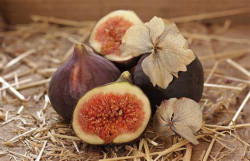
Ficin is a protein-digesting enzyme from the latex of the tropical fig tree Ficus insipida. It has a long history of traditional use for intestinal worms and is studied in labs for breaking down proteins and bacterial biofilms, but solid human evidence for any health use is limited. The crude latex can be irritating and is not well-studied for safety, so talk with a pharmacist or doctor before using it.
- Scientific name
- Ficus insipida
- Family
- Moraceae
- Part used
- Latex (milky sap) from the trunk; purified enzyme extracted from the latex
- Common forms
- Crude latex, purified enzyme preparations (powders), and as an ingredient in some research or industrial products
- Intestinal worms (helminth infections)
- Digestive aid (protein digestion)
- Anti-inflammatory uses
- Wound and skin applications (traditional)
- As a meat tenderizer and food preservative
Popular and traditional uses — not proof it works. See “Uses & effectiveness” below for the evidence.
Human safety data are limited, and the crude latex can irritate skin and the digestive tract.
When crude ficin (latex) is used orally or topically. Serious adverse effects, including vomiting, seizures, and coma, have been reported in non-pregn...
Read the full pregnancy detailWhen crude ficin (latex) is used orally or topically. Serious adverse effects, including vomiting, seizures, and coma, have been reported in non-pregn...
Read the full breastfeeding detailPregnancy & breastfeeding ratings are from Natural Medicines (Therapeutic Research Center). Safety guidance is general; always confirm with your pharmacist or doctor for your situation.
Overview
Ficin is an enzyme found in the milky latex (sap) of certain fig trees, most notably Ficus insipida, a tree that grows in tropical parts of Central and South America. The tree is known by many local names, including Oje, Doctor Oje, Leche de Oje, and Amate.
People have traditionally collected the white latex from the tree and used it as a folk remedy, especially for intestinal worms. Ficin also has practical uses outside of medicine: like the related enzymes papain (from papaya) and bromelain (from pineapple), it can break down proteins, so it has been used to tenderize meat and as part of food preservation.
Ficin comes in two general forms. The crude latex is the raw sap, sometimes mixed with acetic acid and a preservative to keep it from clumping. Purified ficin is a cleaner enzyme preparation used mainly in laboratory and research settings.
How it works
Ficin is a type of enzyme called a cysteine (sulfhydryl) protease. In plain terms, it acts like molecular scissors that cut proteins and related molecules into smaller pieces. This is why it can tenderize meat and digest proteins.
For intestinal worms, the idea is that the enzyme may damage the protective outer layer of the parasite. For bacteria, lab studies suggest ficin can break apart the proteins that hold a biofilm together, which may make germs easier for the immune system or antibiotics to reach.
It is important to know that most of these mechanisms come from test-tube and animal studies. How well they translate to real benefits and safe use in people is still unclear.
Does Ficin work?
How to read these evidence grades
Natural Medicines’ 7-point scale. We show each rating’s label word-for-word.
For Ficin, current evidence isn’t strong enough to rate any specific use. The conditions it has been studied for are listed below.
Also studied for 1 condition — evidence insufficient to rate
Insufficient Reliable Evidence To Rate Ocular floaters
A moderate-sized clinical study in patients with symptomatic ocular floaters shows that taking oral mixed fruit enzyme capsules containing ficin 95 mg, bromelain 190 mg, and papain 95 mg once, twice, or three times daily for 3 months leads to 55%, 63%, and 70%, respectively, of floaters completely disappearing when compared with control. Additionally, in patients with vitreous hemorrhage-induced symptomatic ocular floaters, taking the mixed fruit enzyme capsules 3 times daily for 3 months reduces floaters by 18%, 25%, and 56% respectively, improves visual acuity, and reduces intraocular blood by 56% when compared with placebo. It is unclear if these effects are due to ficin, other ingredients, or the combination.
Source & disclaimer. Effectiveness ratings and evidence summaries are provided by Natural Medicines (Therapeutic Research Center) and shown as licensed. Where Natural Medicines hasn’t rated a use, HelloPharmacist’s pharmacists may add their own reviewed rating and evidence (each such entry is labeled). This is educational information, not medical advice — talk with your pharmacist or doctor before starting, stopping, or changing a supplement.
Safety & precautions
There is not much reliable human safety information about Ficin, especially the crude latex. Because it is a strong protein-digesting enzyme, the raw sap can be irritating to skin, eyes, and the lining of the mouth and stomach. People sometimes report burning or stomach upset after taking the latex as a worm remedy.
People with allergies to figs, latex, or related plants should be especially careful, since enzyme preparations from these sources can trigger allergic reactions.
Pregnancy and breastfeeding: There is not enough safety data, and Ficin's traditional use as a worm-clearing remedy raises concern. To be safe, women who are pregnant or breastfeeding should avoid it.
Because of the limited safety information, it is best to talk with a pharmacist or doctor before using Ficin in any form.
Side effects
Reported and expected side effects mostly come from the crude latex's irritating, protein-digesting nature. These can include:
- Mouth, throat, or stomach irritation or burning
- Nausea, stomach upset, or diarrhea
- Skin or eye irritation on contact
- Allergic reactions, especially in people sensitive to figs or latex
Serious allergic reactions are rare but possible. If you notice swelling, trouble breathing, hives, or other signs of a severe reaction, stop using it and seek medical help right away.
Ficin: Reported Adverse Effects
Documented safety reports on Ficin from the evidence-graded Natural Medicines (TRC Healthcare) database, shown word-for-word from the licensed record.
Orally, taking large amounts of crude ficin (latex) can cause nausea, vomiting, psychomotor excitation, coma, seizures, diarrhea, headache, abdominal discomfort, somnolence, mydriasis, cerebral edema, and even death.
Topically, crude ficin (latex) is corrosive to skin and can cause bleeding with prolonged contact. Ficin can also cause contact allergies.
- Leung AY, Foster S. Encyclopedia of Common Natural Ingredients Used in Food, Drugs and Cosmetics. 2nd ed. New York, NY: John Wiley & Sons, 1996.
- Hansson A, Zelada JC, Noriega HP. Reevaluation of risks with the use of Ficus insipida latex as a traditional anthelmintic remedy in the Amazon. J Ethnopharmacol 2005;98(3):251-7.
Allergic rhinitis (hay fever) Immunologic
Topically, crude ficin (latex) can cause contact allergies.
- Leung AY, Foster S. Encyclopedia of Common Natural Ingredients Used in Food, Drugs and Cosmetics. 2nd ed. New York, NY: John Wiley & Sons, 1996.
Allergic rhinitis (hay fever) Dermatologic
Topically, crude ficin (latex) is corrosive to skin and can cause bleeding with prolonged contact. Ficin can also cause contact allergies.
- Leung AY, Foster S. Encyclopedia of Common Natural Ingredients Used in Food, Drugs and Cosmetics. 2nd ed. New York, NY: John Wiley & Sons, 1996.
Cluster headache Neurologic/CNS
Orally, taking large amounts of crude ficin (latex) can cause psychomotor excitation, coma, seizures, headache, somnolence, cerebral edema, and even death. In a retrospective chart review, 94% of children and 85% of adults admitted to a hospital in Peru after taking a traditional crude ficin (latex) preparation had CNS-related adverse effects, the most common being psychomotor excitation, coma, and seizures. Doses at or greater than 0.5 cm3/kg caused these effects in children, while doses at or greater than 1.5 cm3/kg caused these effects in adults. One case of cerebral edema leading to death has been reported in a child taking an unknown dose of ficin.
Diarrhea Gastrointestinal
Orally, taking large amounts of crude ficin (latex) can cause nausea, vomiting, diarrhea, and abdominal discomfort. In a retrospective chart review, 63% of children and 69% of adults admitted to a hospital in Peru after taking a traditional crude ficin (latex) preparation had gastrointestinal adverse effects, the most common being nausea and vomiting. Doses at or greater than 0.5 cm3/kg caused these effects in children, while doses at or greater than 1.5 cm3/kg caused these effects in adults.
- Leung AY, Foster S. Encyclopedia of Common Natural Ingredients Used in Food, Drugs and Cosmetics. 2nd ed. New York, NY: John Wiley & Sons, 1996.
- Hansson A, Zelada JC, Noriega HP. Reevaluation of risks with the use of Ficus insipida latex as a traditional anthelmintic remedy in the Amazon. J Ethnopharmacol 2005;98(3):251-7.
Adverse-effects data: Natural Medicines, Therapeutic Research Center
Dosing
There is no established standard dose for Ficin. Traditional preparations of the latex vary widely, and there is no agreed-upon safe and effective amount for any health use.
If you are considering a commercial product that contains ficin, follow the directions on the label and do not exceed them. Because the crude latex can be irritating and safety data are limited, it is wise to check with a pharmacist or doctor before taking it, and to avoid making homemade preparations from raw tree sap.
Ficin & Pregnancy
Ficin & Breastfeeding
© 2026 Therapeutic Research Center
Pregnancy & lactation ratings: Natural Medicines, Therapeutic Research Center
References & further reading
The 3 references that drive our Ficin monograph and interaction data, from the evidence-graded Natural Medicines (TRC Healthcare) database. Citations with a link open the study on PubMed or the publisher’s site.
- Leung AY, Foster S. Encyclopedia of Common Natural Ingredients Used in Food, Drugs and Cosmetics. 2nd ed. New York, NY: John Wiley & Sons, 1996.
- Hansson A, Zelada JC, Noriega HP. Reevaluation of risks with the use of Ficus insipida latex as a traditional anthelmintic remedy in the Amazon. J Ethnopharmacol 2005;98(3):251-7. PubMed
- Ma JW, Hung JL, Takeuchi M, Shieh PC, Horng CT. A New Pharmacological Vitreolysis through the Supplement of Mixed Fruit Enzymes for Patients with Ocular Floaters or Vitreous Hemorrhage-Induced Floaters. J Clin Med 2022;11(22):6710. PubMed
This information is for education only and is not a substitute for professional medical advice. Always check with your pharmacist or doctor before starting, stopping, or combining supplements and medications.
Parts of this content are provided by the Therapeutic Research Center, LLC.
DISCLAIMER: Currently this does not check for drug-drug interactions. This is not an all-inclusive comprehensive list of potential interactions and is for informational purposes only. Not all interactions are known or well-reported in the scientific literature, and new interactions are continually being reported. Input is needed from a qualified healthcare provider including a pharmacist before starting any therapy. Application of clinical judgment is necessary.
© 2021 Therapeutic Research Center, LLC
Brands that make products with Ficin
2 brands in our database make a supplement containing Ficin.
Supplement products with Ficin
4 products in our database contain Ficin. Open any to see its full ingredient list and every drug interaction we check.
Ficin: Common Questions
What is Ficin used for, and does it work?
Does Ficin interact with prescription medications?
How are Ficin interactions rated?
Is it safe to take Ficin with my medications?
Where does this Ficin interaction information come from?
What is Ficin used for?
Is Ficin safe to take?
Can I take Ficin if I'm pregnant or breastfeeding?
How is Ficin different from papain or bromelain?
Written and reviewed by the HelloPharmacist editorial staff. Our editorial policy
Products that contain Ficin
A rotating sample of real supplements in our database that list Ficin — open any to see its full ingredients and every drug interaction we check.
Have a question about Ficin?
Our pharmacists answer your medication & supplement questions — free.