
Vitamin K Ingredients & Drug Interactions
by Thorne
What is this page for?
First and foremost: checking Vitamin K against your medications. The heart of this page is the interaction checker and the full interaction report — how this product’s ingredients may interact with prescription and over-the-counter medicines you may be taking.
Around that, we add a pharmacist’s high-level view of the product as a whole — what’s inside, the evidence for its stated use, how transparent the label is, and what safety data exists — so you can see the full picture in one place. It’s educational information from our licensed clinical databases and the clinical staff at HelloPharmacist — not medical advice — and we don’t sell or endorse products. Our editorial policy
Vitamin K is a dietary supplement by Thorne with 1 active ingredient. Its ingredients are commonly taken for supporting normal blood clotting, bone health, heart and vascular health.Based on those ingredients, 2 medications have a known interaction with it, the most serious rated major. The ingredients most likely to interact are Vitamin K. Use the checker below to test your specific medication, or read the full HelloPharmacist Interaction Report.
Check Your Meds Against Vitamin K by Thorne
Ask about any prescription or over-the-counter medication and we check it for interactions with Vitamin K by Thorne — and tell you which ingredient is responsible.
AI summaries are generated from our interaction database for education only — always confirm with your pharmacist. How we use AI
Ask the Pharmacist
A licensed pharmacist will answer your question by email — free, usually within 24 hours.
Got it — thank you!
A licensed pharmacist will answer within 24 hours. Keep an eye on your email (worth checking spam, just in case).
HelloPharmacist Scorecard of Vitamin K by Thorne
Our pharmacy team’s full take, with four database checks built into the cards below — a summary of what is known, not a grade of the product itself.
What’s inside
Full disclosure
This product contains 2 active ingredients: Vitamin K1 and Menaquinone-4 (a form of Vitamin K2). Both are forms of vitamin K, a fat-soluble nutrient that plays a role in blood clotting and bone health.
The capsule also contains a few inactive ingredients—microcrystalline cellulose (a filler), hypromellose and silicon dioxide (for capsule structure), and vitamin E.
Does it work?
Strong evidence
Vitamin K is effective for treating vitamin K deficiency and related clotting disorders—including hypoprothrombinemia (low levels of clotting factors) and hemorrhagic disease. It's also rated effective for managing warfarin anticoagulation when vitamin K levels are low.
For osteoporosis, the evidence is less certain; vitamin K is rated possibly effective, meaning the science is still developing in this area.
How safe is it?
Well-documented data
Taken by mouth, vitamin K is generally well tolerated in healthy people at the amounts found in food and typical supplements. The most common mild side effects are nausea, diarrhea, stomach upset, and abdominal pain.
Serious adverse effects are rare; they have been reported mainly with intravenous dosing in special populations like premature infants. The data shows vitamin K is likely safe in pregnancy and while breastfeeding.
That said, if you're taking supplements (rather than just eating vitamin K-rich foods), check with your doctor first, especially if you have any medical conditions.
Meds to double-check
Major interaction found
If you take warfarin (Coumadin), a blood thinner, double-check with your pharmacist or doctor before using this product. Vitamin K can reduce warfarin's effectiveness and increase your clot risk.
This is a Major interaction.
The bottom line
Scorecard at a glanceFully disclosed formula with clinical evidence supporting its stated purpose. Major medication interactions have been identified, and safety information is well characterized.
Vitamin K is useful if you have a documented vitamin K deficiency or a clotting disorder, or if your doctor prescribes it. If you take warfarin, do not start this supplement without medical guidance—your anticoagulation could be compromised.
Talk to your pharmacist or doctor before adding it, particularly if you're on any medications.
Educational only — not medical advice; always confirm with your pharmacist. Our editorial policy · How we use AI
Assessment coverage: 2 of 2 active ingredients matched to our full ingredient reviews (monographs). Based on the product label dated May 21, 2025.
This Scorecard evaluates available label information, ingredient evidence, and known medication-safety considerations. It does not independently verify product identity, purity, potency, contamination, or manufacturing quality. How these ratings are computed
General information
Key facts about Vitamin K, straight from the product label.
| Brand | Thorne |
|---|---|
| Barcode (UPC) | 693749006619 |
| Net contents | 60 Capsule(s) |
| Market status | On market |
| Date entered into DSLD | May 21, 2025 |
| DSLD ID | 328817 |
| Product type | Vitamin |
| Supplement form | Capsule |
| Dietary claims / uses | Nutrient, All Other, Structure/Function |
| Intended target group(s) | Adult (18 - 50 Years), Gluten Free |
Everything in this section is reproduced from the manufacturer’s own product label — it’s the label speaking, not HelloPharmacist. We show it so you can see exactly what the maker states; we don’t verify or endorse those statements.
Supplement Facts
The label details for Vitamin K by Thorne, sourced from the NIH Dietary Supplement Label Database.
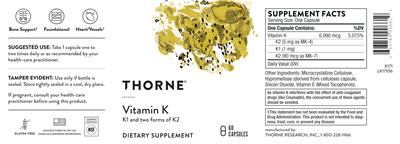
Supplement Facts
| Ingredient | Amount | % DV |
|---|---|---|
| Vitamin K | 6090 mcg | 5075% |
| Vitamin K2 | 0 NP | -- |
| Vitamin K1 | 1 mg | -- |
| Menaquinone-4 | 5 mg | -- |
Other ingredients: Microcrystalline Cellulose, Hypromellose, Silicon Dioxide, Vitamin E
Tap any ingredient to jump to its full detail below.
These statements are the manufacturer’s wording, reproduced from the product label — the label is saying it, not HelloPharmacist. We don’t verify or endorse them.
Formulation
Bone support Foundational Heart/Vessels
Gluten free
Suggested/Recommended/Usage/Directions
Suggested use: Take 1 capsule one to two times daily or as recommended by your health-care practitioner.
Precautions
Tamper evident: Use only if bottle is sealed.
If pregnant, consult your health-care practitioner before using this product.
As vitamin K interferes with the effect of anti-coagulant drugs (like Coumadin), the concurrent use of these agents should be avoided.
Storage
Store tightly sealed in a cool, dry place.
Seals/Symbols
Manufactured in the USA using US & imported ingredients NSF Contents Certified
Formula
Vitamin K K1 and two forms of K2
FDA Statement of Identity
Dietary Supplement
FDA Disclaimer Statement
This statement has not been evaluated by the Food and Drug Administration. This product is not intended to diagnose, treat, cure, or prevent any disease.
Is this label outdated? Report a formula or label change and our pharmacy team will review it.
Vitamin K by Thorne label
The label scan from the NIH Dietary Supplement Label Database. Tap to enlarge.
Label images are published by the NIH Dietary Supplement Label Database for the version of this product on file. Always read your actual product label.
View the full label (PDF)The Ingredients in Vitamin K by Thorne
This is the 1 active ingredient this product is made of. Select it to open its full monograph.
Serving size1 Capsule(s) Dosage formCapsule Servings per container60 Amounts shown are per serving.
Vitamin K
Interacts with2 drugs
Vitamin K is an essential nutrient your body needs for normal blood clotting and to support healthy bones. Most people get enough from food, but suppl...
Vitamin K monograph & interactions- › Vitamin K2
- › Vitamin K1
Other (inactive) ingredients: Microcrystalline Cellulose, Hypromellose, Silicon Dioxide, Vitamin E. These complete the product’s ingredient list but are not active constituents.
Vitamin K by Thorne Drug Interactions
HelloPharmacist Interaction Report
Vitamin K by Thorne contains two active forms of vitamin K, and they do interact with one major medication class.
Both Vitamin K1 and Menaquinone-4 can work against warfarin (Coumadin), a blood thinner (anticoagulant). Vitamin K antagonizes warfarin's effects—meaning it can reduce how well the drug prevents clots.
If you take warfarin and start a vitamin K supplement, or if your dietary vitamin K intake changes significantly, this can make your anticoagulation less effective.
Read the full breakdown — every affected drug type, severity by severity
Although dietary amounts of vitamin K are fine, supplements are a different story. If you're on warfarin, don't start this product without talking to your doctor or pharmacist first.
Your warfarin dose may need adjustment, or you may need to avoid the supplement altogether depending on your clinical situation. Altogether, these interactions span 2 individual medications.
Check your own medications below · Editorial policy · How we use AI
Want to check YOUR meds against Vitamin K?
Ask about interactions with your drugs in plain English — “Can I take it with lisinopril?” — and we find you the answer in seconds, ingredient by ingredient.
Go to the checkerIngredients driving the most interactions
Individual Drug Interactions
The ingredients in Vitamin K interact with 2 drugs. Click any drug to see the details.
1 of the 1 ingredient in Vitamin K interact with drugs. Each result below shows which ingredient is responsible. Vitamin K
WarfarinWarfarin
How Warfarin interacts with Vitamin K — through 1 ingredient. Tap an ingredient for the detail:
Menaquinone-4Warfarin (coumadin) Major
Interaction Summary
Vitamin K can antagonize and reverse the therapeutic effects of warfarin.
Read the full Menaquinone-4 + Warfarin interactionWarfarin SodiumCoumadin, Panwarfin, Sofarin
How Warfarin Sodium interacts with Vitamin K — through 1 ingredient. Tap an ingredient for the detail:
Menaquinone-4Warfarin (coumadin) Major
Interaction Summary
Vitamin K can antagonize and reverse the therapeutic effects of warfarin.
Read the full Menaquinone-4 + Warfarin Sodium interactionEach ingredient & the kinds of drugs it affects
For each ingredient in Vitamin K with known interactions, here are the types of medications it can affect. Open any type for the detail — or search your exact drug in the checker above.
Vitamin K
Warfarin (Coumadin)
Vitamin K can antagonize and reverse the therapeutic effects of warfarin.
Vitamin K antagonizes the effects of warfarin. Excessive vitamin K intake, either from supplements or from changes in the diet, can reduce the anticoagulant effect of warfarin.
Brand information
Manufacturer and brand details for Vitamin K, from the product label.
Vitamin K by Thorne: Common Questions
Does Vitamin K by Thorne interact with any medications?
How can one product interact with so many drugs?
Where does this information come from?
Can I take Vitamin K if I'm on warfarin?
What are the main side effects of vitamin K supplements?
Is vitamin K safe during pregnancy and breastfeeding?
Does vitamin K help with osteoporosis?
What's the difference between Vitamin K1 and the K2 (Menaquinone-4) in this product?
Written and reviewed by the HelloPharmacist editorial staff. Our editorial policy
Not sure if Vitamin K is safe with your meds?
Our pharmacists answer your medication & supplement questions — free.
Label information is sourced from the NIH Dietary Supplement Label Database and reflects the product version on file; always read your actual product label. This page is for education only and is not a substitute for professional medical advice. Confirm with your pharmacist or doctor before combining supplements and medications.
The Full Monographs Behind Vitamin K’s Ingredients
Every ingredient we hold a full HelloPharmacist monograph for — uses, evidence, safety, and the complete interaction list.
Sources & How We Checked
Vitamin K's label data comes from the NIH Dietary Supplement Label Database; the ingredient interaction data is from the Natural Medicines database, reviewed by our pharmacists.
- NIH Dietary Supplement Label Database (DSLD) — The official product label on file for this supplement.
- Natural Medicines (Therapeutic Research Center) — Evidence-graded clinical reference behind the ingredient interaction data.
Content is written and reviewed by licensed HelloPharmacist pharmacists. See our data sources and editorial standards for how this information is built and checked.
The 11 references behind this product’s interaction data
Every citation that drives the interaction findings for this product’s ingredients, from the evidence-graded Natural Medicines (TRC Healthcare) database. Open an ingredient to browse its citations — links open the study on PubMed or the publisher’s site.
Vitamin K 11 references
- McEvoy GK, ed. AHFS Drug Information. Bethesda, MD: American Society of Health-System Pharmacists, 1998.
- Food and Nutrition Board, Institute of Medicine. Dietary Reference Intakes for Vitamin A, Vitamin K, Arsenic, Boron, Chromium, Copper, Iodine, Iron, Manganese, Molybdenum, Nickel, Silicon, Vanadium, and Zinc. Washington, DC: National Academy Press, 2002.
- Crowther MA, Ageno W, Garcia D, et al. Oral vitamin K versus placebo to correct excessive anticoagulation in patients receiving warfarin: a randomized trial. Ann Intern Med. 2009;150(5):293-300. PubMed
- Dietary vitamin K guidance: an effective strategy for stable control of oral anticoagulation? Nutr Rev. 2010;68(3):178-81. PubMed
- Kim JS, Nafziger AN, Gaedigk A, et al. Effects of oral vitamin K on S- and R-warfarin pharmacokinetics and pharmacodynamics: enhanced safety of warfarin as a CYP2C9 probe. J Clin Pharmacol. 2001 Jul;41(7):715-22. PubMed
- Riegert-Johnson, D. L. and Volcheck, G. W. The incidence of anaphylaxis following intravenous phytonadione (vitamin K1): a 5-year retrospective review. Ann.Allergy Asthma Immunol. 2002;89(4):400-406. PubMed
- Dezee, K. J., Shimeall, W. T., Douglas, K. M., Shumway, N. M., and O'malley, P. G. Treatment of excessive anticoagulation with phytonadione (vitamin K): a meta-analysis. Arch.Intern.Med. 2-27-2006;166(4):391-397. DOI
- Dentali, F., Ageno, W., and Crowther, M. Treatment of coumarin-associated coagulopathy: a systematic review and proposed treatment algorithms. J.Thromb.Haemost. 2006;4(9):1853-1863. PubMed
- Caluwé R, Vandecasteele S, Van Vlem B, Vermeer C, De Vriese AS. Vitamin K2 supplementation in haemodialysis patients: a randomized dose-finding study. Nephrol Dial Transplant. 2014;29(7):1385-90.
- Huang ZB, Wan SL, Lu YJ, Ning L, Liu C, Fan SW. Does vitamin K2 play a role in the prevention and treatment of osteoporosis for postmenopausal women: a meta-analysis of randomized controlled trials. Osteoporos Int. 2015;26(3):1175-86. PubMed
- Hunnali CR, Devi U, Kitchanan S, Sethuraman G. Three Different Regimens for Vitamin K Birth Prophylaxis in Infants Born Preterm: A Randomized Clinical Trial. J Pediatr 2023;255:98-104. PubMed
Parts of this content are provided by the Therapeutic Research Center, LLC.
DISCLAIMER: Currently this does not check for drug-drug interactions. This is not an all-inclusive comprehensive list of potential interactions and is for informational purposes only. Not all interactions are known or well-reported in the scientific literature, and new interactions are continually being reported. Input is needed from a qualified healthcare provider including a pharmacist before starting any therapy. Application of clinical judgment is necessary.
© 2021 Therapeutic Research Center, LLC