
Amino Peptide Ingredients & Drug Interactions
by NOW Sports
What is this page for?
First and foremost: checking Amino Peptide against your medications. The heart of this page is the interaction checker and the full interaction report — how this product’s ingredients may interact with prescription and over-the-counter medicines you may be taking.
Around that, we add a pharmacist’s high-level view of the product as a whole — what’s inside, the evidence for its stated use, how transparent the label is, and what safety data exists — so you can see the full picture in one place. It’s educational information from our licensed clinical databases and the clinical staff at HelloPharmacist — not medical advice — and we don’t sell or endorse products. Our editorial policy
Amino Peptide is a dietary supplement by NOW Sports with 2 active ingredients. Its ingredients are commonly taken for muscle building and recovery, slow-release protein before sleep, meal replacement and weight management.We don’t currently list a known drug interaction for its mapped ingredients — but that doesn’t guarantee none exist, so always confirm with your pharmacist.
HelloPharmacist Scorecard of Amino Peptide by NOW Sports
Our pharmacy team’s full take, with four database checks built into the cards below — a summary of what is known, not a grade of the product itself.
What’s inside
Full disclosure
Amino Peptide contains one active ingredient: PeptoPro® Casein Hydrolysate, a broken-down form of milk protein designed to be absorbed quickly. The capsule also contains inactive ingredients — cellulose, gelatin, stearic acid, silica, and magnesium stearate — which are fillers and binders that hold the supplement together.
Does it work?
Not established
The evidence for casein hydrolysate is mixed and limited. For infant development, the data suggests it's probably not effective.
For athletic performance, COPD, diabetes, and high cholesterol (hyperlipidemia), we don't have enough reliable evidence to know whether it works. If you're considering it for one of these reasons, talk with your doctor or pharmacist about whether the science supports it for your specific goal.
How safe is it?
Well-documented data
Casein protein is generally well tolerated in healthy adults and infants who can digest dairy without problems. In clinical trials, side effects like diarrhea, constipation, vomiting, and slow stomach emptying didn't happen more often than placebo.
Allergic reaction to casein is rare but possible — symptoms include skin reactions, breathing trouble, stomach distress, and in severe cases, anaphylaxis. Because this is a concentrated protein supplement (not just food), talk with your doctor before you start, especially if you have a milk allergy or a sensitive stomach.
Data on pregnancy and breastfeeding safety for this supplement isn't on file — ask your doctor or pharmacist for personalized advice if you're pregnant or nursing.
Meds to double-check
No known interactions
No interactions are documented in our data for the ingredients we could check. Still, run your exact medications through the checker on this page — casein is a dairy protein, and individual sensitivity or allergy could be relevant.
The bottom line
Scorecard at a glanceFully disclosed formula with no established evidence rating for its marketed use. No medication interactions are currently documented, and safety information is well characterized.
Amino Peptide is a casein-based protein supplement for people who tolerate dairy well and want a quick-absorbing protein source. If you have a milk allergy, digestive issues, or take medications, check with your pharmacist first.
Anyone pregnant or breastfeeding should talk with their doctor before using it.
Educational only — not medical advice; always confirm with your pharmacist. Our editorial policy · How we use AI
Assessment coverage: 1 of 1 active ingredient matched to our full ingredient reviews (monographs). Based on the product label dated Oct 25, 2012.
This Scorecard evaluates available label information, ingredient evidence, and known medication-safety considerations. It does not independently verify product identity, purity, potency, contamination, or manufacturing quality. How these ratings are computed
General information
Key facts about Amino Peptide, straight from the product label.
| Brand | NOW Sports |
|---|---|
| Barcode (UPC) | 733739000194 |
| Net contents | 300 Capsule(s) |
| Market status | On market |
| Date entered into DSLD | Oct 25, 2012 |
| DSLD ID | 12973 |
| Product type | Amino Acid/protein |
| Supplement form | Capsule |
| Dietary claims / uses | All Other, Structure/Function |
| Intended target group(s) | Adult (18 - 50 Years), Gluten Free, Sugar Free |
Everything in this section is reproduced from the manufacturer’s own product label — it’s the label speaking, not HelloPharmacist. We show it so you can see exactly what the maker states; we don’t verify or endorse those statements.
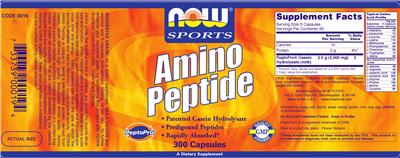
Supplement Facts
The label details for Amino Peptide by NOW Sports, sourced from the NIH Dietary Supplement Label Database.
Supplement Facts
| Ingredient | Amount | % DV |
|---|---|---|
| Calories | 10 {Calories} | -- |
| Protein | 2 g | 4% |
| PeptoPro(R) Casein Hydrolysate | 2 g | -- |
Other ingredients: Cellulose, Gelatin, Stearic Acid, Silica, Magnesium Stearate
Tap any ingredient to jump to its full detail below.
These statements are the manufacturer’s wording, reproduced from the product label — the label is saying it, not HelloPharmacist. We don’t verify or endorse them.
Suggested/Recommended/Usage/Directions
SUGGESTED USAGE: As a dietary supplement, take 5 capsules pre-workout and 5 capsules post-workout, totaling 10 per day. To further enhance your nutritional goals, try combining this product with NOW(R) Branched Chain Amino Acids, Creatine and Ribose.
General Statements
Amino acids, the building blocks of proteins, are crucial for muscle structure and function. When intact proteins are consumed, these amino acids first need to be liberated by gastro-intestinal digestion - and this costs precious time and energy. Intact proteins can slow the rate at which the stomach empties and lead to discomfort during physical activity.
Amino Peptide's patent-protected enzymatic process generates tiny protein fragments, known as peptides, that are readily absorbed by the intestine. Because they are rapidly absorbed into the bloodstream without requiring further digestion, these small peptides are available to fuel the muscles during intense exercise.
ACTUAL SIZE
• Patented Casein Hydrolysate • Predigested Peptides • Rapidly Absorbed
Made in the U.S.A.
Please Recycle.
Typical Amino Acid Profile Essential Amino Acids mg per5 Capsule Serving L-Histidine 42 L-Isoleucine 72 L-Leucine 150 L-Lysine 116 L-Methionine 48 L-Phenylalanine 80 L-Threonine 58 L-Tryptophan 14 L-Valine 96 Non-Essential Amino Acids L-Alanine 46 L-Arginine 48 L-Aspartic Acid 108 L-Glutamic Acid 356 L-Glycine 28 L-Proline 166 L-Serine 80 L-Tyrosine 86
General
CODE 0019 V1
FDA Statement of Identity
A Dietary Supplement
Formulation
Contains no sugar, salt, starch, yeast, wheat, gluten, corn, soy, egg, shellfish or preservatives.
Precautions
Do Not Eat Freshness Packet. Keep in Bottle.
Brand IP Statement(s)
PeptoPro(R) is a registered trademark of DSM.
NOW(R) Amino Peptide is unique in being a pre-digested protein, derived from casein, which delivers high quality, bioavailable amino acids.
Storage
Store in a cool, dry place.
Seals/Symbols
PeptoPro(R)
GMP QUALITY ASSURED
FDA Disclaimer Statement
These statements have not been evaluated by the FDA. This product is not intended to diagnose, treat, cure or prevent any disease.
Is this label outdated? Report a formula or label change and our pharmacy team will review it.
Amino Peptide by NOW Sports label
The label scan from the NIH Dietary Supplement Label Database. Tap to enlarge.
Label images are published by the NIH Dietary Supplement Label Database for the version of this product on file. Always read your actual product label.
View the full label (PDF)The Ingredients in Amino Peptide by NOW Sports
These are the 2 active ingredients this product is made of. Select any to open its full monograph.
Serving size5 Capsule(s) Dosage formCapsule Servings per container60 Amounts shown are per serving.
Most supplement products combine several ingredients, and a medication can interact with the product through any one of them. Each ingredient below shows whether it has known drug interactions.
Protein
PeptoPro(R) Casein Hydrolysate
No knowninteractions
Casein is a slow-digesting protein from milk that supplies all the essential amino acids and is popular for muscle recovery, especially overnight. It...
PeptoPro(R) Casein Hydrolysate monograph & interactionsOther (inactive) ingredients: Cellulose, Gelatin, Stearic Acid, Silica, Magnesium Stearate. These complete the product’s ingredient list but are not active constituents.
Amino Peptide by NOW Sports Drug Interactions
We don’t currently list any known drug interactions for the mapped ingredients in Amino Peptide. This doesn’t guarantee none exist — always confirm with your pharmacist before combining a supplement with your medications.
Brand information
Manufacturer and brand details for Amino Peptide, from the product label.
NOW Sports
See all NOW Sports products- Name
- NOW FOODS
- Street Address
- 395 S. Glen Ellyn Rd.
- City
- Bloomingdale
- State
- IL
- ZipCode
- 60108
- Web Address
- www.nowfoods.com
Amino Peptide by NOW Sports: Common Questions
Does Amino Peptide by NOW Sports interact with any medications?
How can one product interact with so many drugs?
Where does this information come from?
Does casein hydrolysate have any documented interactions with medications?
What are the common side effects?
Can I take this if I have a milk allergy?
Is this supplement good for athletic performance?
Can I take this while pregnant or breastfeeding?
Should I talk to my doctor before starting this?
Written and reviewed by the HelloPharmacist editorial staff. Our editorial policy
Not sure if Amino Peptide is safe with your meds?
Our pharmacists answer your medication & supplement questions — free.
Label information is sourced from the NIH Dietary Supplement Label Database and reflects the product version on file; always read your actual product label. This page is for education only and is not a substitute for professional medical advice. Confirm with your pharmacist or doctor before combining supplements and medications.
The Full Monographs Behind Amino Peptide’s Ingredients
Every ingredient we hold a full HelloPharmacist monograph for — uses, evidence, safety, and the complete interaction list.
Sources & How We Checked
Amino Peptide's label data comes from the NIH Dietary Supplement Label Database; the ingredient interaction data is from the Natural Medicines database, reviewed by our pharmacists.
- NIH Dietary Supplement Label Database (DSLD) — The official product label on file for this supplement.
- Natural Medicines (Therapeutic Research Center) — Evidence-graded clinical reference behind the ingredient interaction data.
Content is written and reviewed by licensed HelloPharmacist pharmacists. See our data sources and editorial standards for how this information is built and checked.
The 60 references behind this product’s interaction data
Every citation that drives the interaction findings for this product’s ingredients, from the evidence-graded Natural Medicines (TRC Healthcare) database. Open an ingredient to browse its citations — links open the study on PubMed or the publisher’s site.
Casein Protein 60 references
- Marchesini G, Dioguardi FS, Bianchi GP, et al. Long-term oral branched-chain amino acid treatment in chronic hepatic encephalopathy. A randomized double-blind casein-controlled trial. The Italian Multicenter Study Group. J Hepatol 1990;11:92-101. PubMed
- Potter SM, Baum JA, Teng H, et al. Soy protein and isoflavones: their effects on blood lipids and bone density in postmenopausal women. Am J Clin Nutr 1998;68:1375S-9S. PubMed
- Nilausen K, Meinertz H. Variable lipemic response to dietary soy protein in healthy, normolipemic men. Am J Clin Nutr 1998;68:1380S-4S. PubMed
- Teixeira SR, Potter SM, Weigel R, et al. Effects of feeding 4 levels of soy protein for 3 and 6 wk on blood lipids and apolipoproteins in moderately hypercholesterolemic men. Am J Clin Nutr 2000;71:1077-84. PubMed
- Tonstad S, Smerud K, Hoie L. A comparison of the effects of 2 doses of soy protein or casein on serum lipids, serum lipoproteins, and plasma total homocysteine in hypercholesterolemic subjects. Am J Clin Nutr 2002;76:78-84. PubMed
- Teede HJ, Dalais FS, Kotsopoulos D, et al. Dietary soy has both beneficial and potentially adverse cardiovascular effects: a placebo-controlled study in men and postmenopausal women. J Clin Endocrinol Metab 2001;86:3053-60. DOI
- Nilausen, K. and Meinertz, H. Lipoprotein(a) and dietary proteins: casein lowers lipoprotein(a) concentrations as compared with soy protein. Am.J.Clin.Nutr. 1999;69(3):419-425. PubMed
- Meinertz, H., Nilausen, K., and Hilden, J. Alcohol-extracted, but not intact, dietary soy protein lowers lipoprotein(a) markedly. Arterioscler.Thromb.Vasc.Biol. 2-1-2002;22(2):312-316. PubMed
- Dalais, F. S., Ebeling, P. R., Kotsopoulos, D., McGrath, B. P., and Teede, H. J. The effects of soy protein containing isoflavones on lipids and indices of bone resorption in postmenopausal women. Clin Endocrinol.(Oxf) 2003;58(6):704-709. PubMed
- Cuevas, A. M., Irribarra, V. L., Castillo, O. A., Yanez, M. D., and Germain, A. M. Isolated soy protein improves endothelial function in postmenopausal hypercholesterolemic women. Eur.J Clin.Nutr. 2003;57(8):889-894. PubMed
- Hermansen, K., Hansen, B., Jacobsen, R., Clausen, P., Dalgaard, M., Dinesen, B., Holst, J. J., Pedersen, E., and Astrup, A. Effects of soy supplementation on blood lipids and arterial function in hypercholesterolaemic subjects. Eur.J Clin.Nutr. 2005;59(7 PubMed
- Meinertz, H., Nilausen, K., and Faergeman, O. Soy protein and casein in cholesterol-enriched diets: effects on plasma lipoproteins in normolipidemic subjects. Am J Clin Nutr 1989;50(4):786-793. PubMed
- van Raaij, J. M., Katan, M. B., Hautvast, J. G., and Hermus, R. J. Effects of casein versus soy protein diets on serum cholesterol and lipoproteins in young healthy volunteers. Am J Clin Nutr 1981;34(7):1261-1271. PubMed
- van Raaij, J. M., Katan, M. B., West, C. E., and Hautvast, J. G. Influence of diets containing casein, soy isolate, and soy concentrate on serum cholesterol and lipoproteins in middle-aged volunteers. Am J Clin Nutr 1982;35(5):925-934. PubMed
- Gooderham, M. H., Adlercreutz, H., Ojala, S. T., Wahala, K., and Holub, B. J. A soy protein isolate rich in genistein and daidzein and its effects on plasma isoflavone concentrations, platelet aggregation, blood lipids and fatty acid composition of plasm
- Baum, J. A., Teng, H., Erdman, J. W., Jr., Weigel, R. M., Klein, B. P., Persky, V. W., Freels, S., Surya, P., Bakhit, R. M., Ramos, E., Shay, N. F., and Potter, S. M. Long-term intake of soy protein improves blood lipid profiles and increases mononuclear
- Willoughby, D. S., Stout, J. R., and Wilborn, C. D. Effects of resistance training and protein plus amino acid supplementation on muscle anabolism, mass, and strength. Amino.Acids 2007;32(4):467-477. PubMed
- Claessens, M., van Baak, M. A., Monsheimer, S., and Saris, W. H. The effect of a low-fat, high-protein or high-carbohydrate ad libitum diet on weight loss maintenance and metabolic risk factors. Int J Obes.(Lond) 2009;33(3):296-304. PubMed
- Hoffman, J. R., Ratamess, N. A., Tranchina, C. P., Rashti, S. L., Kang, J., and Faigenbaum, A. D. Effect of a proprietary protein supplement on recovery indices following resistance exercise in strength/power athletes. Amino.Acids 2010;38(3):771-778. PubMed
- Pal, S. and Ellis, V. The chronic effects of whey proteins on blood pressure, vascular function, and inflammatory markers in overweight individuals. Obesity.(Silver.Spring) 2010;18(7):1354-1359. PubMed
- Pal, S., Ellis, V., and Dhaliwal, S. Effects of whey protein isolate on body composition, lipids, insulin and glucose in overweight and obese individuals. Br J Nutr 2010;104(5):716-723. PubMed
- Laviolette, L., Lands, L. C., Dauletbaev, N., Saey, D., Milot, J., Provencher, S., LeBlanc, P., and Maltais, F. Combined effect of dietary supplementation with pressurized whey and exercise training in chronic obstructive pulmonary disease: a randomized,
- Brun, A. C., Stordal, K., Johannesdottir, G. B., Bentsen, B. S., and Medhus, A. W. The effect of protein composition in liquid meals on gastric emptying rate in children with cerebral palsy. Clin.Nutr 2012;31(1):108-112. PubMed
- Savage, K., Kritas, S., Schwarzer, A., Davidson, G., and Omari, T. Whey- vs casein-based enteral formula and gastrointestinal function in children with cerebral palsy. JPEN J Parenter.Enteral Nutr 2012;36(1 Suppl):118S-123S. PubMed
- Lorenzen, J., Frederiksen, R., Hoppe, C., Hvid, R., and Astrup, A. The effect of milk proteins on appetite regulation and diet-induced thermogenesis. Eur.J Clin.Nutr 2012;66(5):622-627. PubMed
- Khoshoo, V., Zembo, M., King, A., Dhar, M., Reifen, R., and Pencharz, P. Incidence of gastroesophageal reflux with whey- and casein-based formulas in infants and in children with severe neurological impairment. J Pediatr Gastroenterol.Nutr 1996;22(1):48- DOI
- Cepero, M. Influence of ingesting casein protein and whey carbohydrate beverages on recovery and performance of an endurance cycling test. Journal of Human Sport & Exercise 2010;5(2):158.
- Tarnopolsky MA, Parise G, Yardley NJ, et al. Creatine-dextrose and protein-dextrose induce similar strength gains during training. Med Sci Sports Exerc 2001;33(12):2044-52. PubMed
- Ormsbee MJ, Mandler WK, Thomas DD, et al. The effects of six weeks of supplementation with multi-ingredient performance supplements and resistance training on anabolic hormones, body composition, strength, and power in resistance-trained men. J Int Soc Sp PubMed
- Wilborn CD, Taylor LW, Outlaw J, et al. The effects of pre- and post-exercise whey vs. casein protein consumption on body composition and performance measures in collegiate female athletes. J Sports Sci Med 2013;12(1):74-9. DOI
- Hoffman JR, Ratamess NA, Tranchina CP, et al. Effect of protein-supplement timing on strength, power, and body-composition changes in resistance-trained men. Int J Sport Nutr Exerc Metab 2009;19(2):172-85. PubMed
- Engelen MP, Rutten EP, De Castro CL, et al. Casein protein results in higher prandial and exercise induced whole body protein anabolism than whey protein in chronic obstructive pulmonary disease. Metabolism 2012;61(9):1289-300. PubMed
- Kearns PJ, Young H, Garcia G, et al. Accelerated improvement of alcoholic liver disease with enteral nutrition. Gastroenterology 1992;102(1):200-5. PubMed
- Hirsch S, Bunout D, de la Maza P, et al. Controlled trial on nutrition supplementation in outpatients with symptomatic alcoholic cirrhosis. JPEN Parenter Enteral Nutr 1993;17(2):119-24. PubMed
- Boulhosa RS, Oliveira LP, Jesus RP, et al. The impact of nutritional supplementation on quality of life in patients infected with hepatitis C virus. J Hum Nutr Diet 2013;26 Suppl 1:7-15.
- Bendtsen LQ, Lorenzen JK, Gomes S, et al. Effects of hydrolysed casein, intact casein and intact whey protein on energy expenditure and appetite regulation: a randomised, controlled, cross-over stuy. Br J Nutr 2014;112(8):1412-22.
- Wang MF, Yamamoto S, Chung HM, et al. Antihypercholesterolemic effect of undigested fraction of soybean protein in young female volunteers. J Nutr Sci Vitaminol (Tokyo) 1995;41(2):187-95. PubMed
- Shige H, Ishikawa T, Higashi K, et al. Effects of soy protein isolate (SPI) and casein on the postprandial lipemia in normolipidemic men. J Nutr Sci Vitaminol (Tokyo) 1998;44(1):113-27. PubMed
- Manders RJ, Hansen D, Zorenc AH, et al. Protein co-ingestion strongly increases postprandial insulin secretion in type 2 diabetes patients. J Med Food 2014;17(7):758-63. PubMed
- Jenkins DJ, Srichaikul K, Wong JM, et al. Supplemental barley protein and casein similarly affect serum lipids in hypercholesterolemic women and men. J Nutr 2010;140(9):1633-7. PubMed
- Figueroa A, Wong A, Kinsey A, et al. Effects of milk proteins and combined exercise training on aortic hemodynamics and arterial stiffness in young obese women with high blood pressure. Am J Hypertens 2014;27(3):338-44. PubMed
- Weisse K, Brandsch C, Zernsdorf B, et al. Lupin protein compared to casein lowers the LDL cholesterol:HDL cholesterol-ratio of hypercholesterolemic adults. Eur J Nutr 2010;49(2):65-71.
- Marsset-Baglieri A, Fromentin G, Airinei G, et al. Milk protein fractions moderately extend the duration of satiety compared with carbohydrates independently of their digestive kinetics in overweight subjects. Br J Nutr 2014;112(4):557-64. PubMed
- Pal S, Radavelli-Bagatini S, Hagger M, Ellis V. Comparative effects of whey and casein proteins on satiety in overweight and obese individuals: a randomized controlled trail. Eur J Clin Nutr 2014;68(9):980-6.
- Anderson JW, Fuller J, Patterson K, et al. Soy compared to casein meal replacement shakes with energy-restricted diets for obese women: randomized controlled trial. Metabolism 2007;56(2):280-8. PubMed
- Geerts BF, van Dongen MG, Flameling B, et al. Hydrolyzed casein decreases posprandial glucose concentrations in T2DM patients irrespective of leucine content. J Diet Suppl 2011;8(3):280-92.
- Docena GH, Fernandez R, Chirdo FG, Fossati CA. Identification of casein as the major allergenic and antigenic protein of cow's milk. Allergy 1996;51(6):412-6. PubMed
- Wal JM. Bovine milk allergenicity. Ann Allergy Asthma Immunol 2004;93(5 Suppl 3):S2-11. PubMed
- Lam HY, van Hoffen E, Michelsen A, et al. Cow's milk allergy in adults is rare but severe: Both casein and whey proteins are involved. Clin Exp Allergy 2008;38(6):995-1002. PubMed
- Viall C, Porcelli K, Teran JC, et al. A double-blind clinical trial comparing the gastrointestinal side effects of two enteral feeding formulas. JPEN J Parenter Enteral Nutr 1990;14(3):265-9. PubMed
- Lollo PC, Amaya-Farfan J, de Carvalho-Silva LB. Physiological and physical effects of different milk protein supplements in elite soccer players. J Hum Kinet 2011;30:49-57. PubMed
- Taitz LS, Scholey E. Are babies more satisfied by casein based formulas? Arch Dis Child 1989;64(4):619-21. PubMed
- Rajah R, Pettifor JM, Noormohamed M, et al. The effect of feeding four different formulae on stool weights in prolonged dehydrating infantile gastroenteritis. J Pediatr Gastroenterol Nutr 1988;7(2):203-7. DOI
- Cooper PA, Rothberg AD, Davies VA, Argent AC. Comparative growth and biochemical response of very low birthweight infants fed own mother's milk, a premature infant formula, or one of two standard formulas. J Pediatr Gastroenterol Nutr 1985;4(5):786-94. DOI
- Gunn TR, Stunzer D. A comparative trial of casein or whey-predominant formulae in healthy infants. N Z Med J 1986;99(813):843-6.
- Harrison GG, Graver EJ, Vargas M, et al. Growth and adiposity of term infants fed whey-predominant or casein-predominant formulas or human milk. J Pediatr Gastroenterol Nutr 1987;6(5):739-47. DOI
- Kashyap S, Okamoto E, Kanaya S, et al. Protein quality in feeding low birth weight infants: a comparison of whey-predominant versus casein-predominant formulas. Pediatrics 1987;79(5):748-55. DOI
- Bernbaum JC, Sasanow SR, Churella HR, Daft A. Growth and metabolic response of premature infants fed whey- or casein-dominant formulas after hospital discharge. J Pediatr 1989;115(4):652-6. PubMed
- Fok TF, So LY, Lee NN, et al. Late metabolic acidosis and poor weight gain in moderately pre-term babies fed with a casein-predominant formula: a continuing need for caution. Ann Trop Paediatr 1989;9(4):243-7. PubMed
- Ormsbee MJ, Saracino PG, Morrissey MC, Donaldson J, Rentería LI, McKune AJ. Pre-sleep protein supplementation after an acute bout of evening resistance exercise does not improve next day performance or recovery in resistance trained men. J Int Soc Sports PubMed
Parts of this content are provided by the Therapeutic Research Center, LLC.
DISCLAIMER: Currently this does not check for drug-drug interactions. This is not an all-inclusive comprehensive list of potential interactions and is for informational purposes only. Not all interactions are known or well-reported in the scientific literature, and new interactions are continually being reported. Input is needed from a qualified healthcare provider including a pharmacist before starting any therapy. Application of clinical judgment is necessary.
© 2021 Therapeutic Research Center, LLC