
Anabolic Dreams Tropical Berry Ingredients & Drug Interactions
What is this page for?
First and foremost: checking Anabolic Dreams Tropical Berry against your medications. The heart of this page is the interaction checker and the full interaction report — how this product’s ingredients may interact with prescription and over-the-counter medicines you may be taking.
Around that, we add a pharmacist’s high-level view of the product as a whole — what’s inside, the evidence for its stated use, how transparent the label is, and what safety data exists — so you can see the full picture in one place. It’s educational information from our licensed clinical databases and the clinical staff at HelloPharmacist — not medical advice — and we don’t sell or endorse products. Our editorial policy
Anabolic Dreams Tropical Berry is a dietary supplement by Nutracore Nutrition with 16 active ingredients. Its ingredients are commonly taken for constipation, diarrhea, high cholesterol.Based on those ingredients, 2,161 medications have a known interaction with it, the most serious rated major. The ingredients most likely to interact are Dietary Fiber, L-Theanine, GABA. Use the checker below to test your specific medication, or read the full HelloPharmacist Interaction Report.
Check Your Meds Against Anabolic Dreams Tropical Berry by Nutracore Nutrition
Ask about any prescription or over-the-counter medication and we check it for interactions with Anabolic Dreams Tropical Berry by Nutracore Nutrition — and tell you which ingredient is responsible.
AI summaries are generated from our interaction database for education only — always confirm with your pharmacist. How we use AI
Ask the Pharmacist
A licensed pharmacist will answer your question by email — free, usually within 24 hours.
Got it — thank you!
A licensed pharmacist will answer within 24 hours. Keep an eye on your email (worth checking spam, just in case).
HelloPharmacist Scorecard of Anabolic Dreams Tropical Berry by Nutracore Nutrition
Our pharmacy team’s full take, with four database checks built into the cards below — a summary of what is known, not a grade of the product itself.
What’s inside
Low disclosure
This powder contains 13 ingredients. The active components include amino acids (L-glutamine, L-tyrosine, L-phenylalanine, L-theanine, L-taurine, and choline), a neurotransmitter support compound (GABA), an herbal extract (mucuna pruriens, which naturally contains levodopa), a mineral (magnesium in chelated form), sodium, and two other compounds—phenibut and HICA—that we have limited data on.
One ingredient, Anabolic Dreams Complex, is a blend container, and another, Amino +, could not be checked. The inactive ingredients are citric acid, maltodextrin, glucose polymers, natural and artificial flavors, sucralose, and talc.
Does it work?
Not established
The evidence for this product's ingredients is mixed and incomplete. L-glutamine is effective for sickle cell disease and possibly effective for HIV/AIDS-related wasting, postoperative recovery, and critical illness.
Sodium is likely effective for cystic fibrosis and possibly effective for amphotericin B nephrotoxicity. L-tyrosine is effective for phenylketonuria (PKU) and possibly effective for cognitive function and memory.
L-phenylalanine is possibly effective for vitiligo but possibly ineffective for ADHD. L-theanine and GABA both have insufficient evidence to rate for most uses, though theanine is possibly effective for cognitive function.
Taurine is possibly effective for hepatitis and congestive heart failure but possibly ineffective for obesity. Choline, magnesium, phenibut, and mucuna pruriens lack sufficient evidence for the conditions they're marketed to support.
The overall effectiveness of this product as a whole is not established in our data.
How safe is it?
Well-documented data
Most of the individual ingredients are generally well tolerated in typical doses, but there are important cautions. L-glutamine is generally well tolerated in healthy adults but should be used only under medical supervision in people with kidney or liver disease; common side effects include bloating, constipation, diarrhea, gas, and nausea.
L-tyrosine is generally well tolerated; reported side effects include fatigue, headache, heartburn, and nausea. L-phenylalanine is well tolerated at food amounts but carries safety concerns—it should be avoided during pregnancy and breastfeeding.
L-theanine, GABA, and taurine are generally well tolerated short-term, but long-term safety is not well studied; taurine may cause constipation, diarrhea, or indigestion. Magnesium is generally safe at recommended amounts; gastrointestinal upset (diarrhea, nausea) is most common.
Choline is well tolerated at normal amounts but causes fishy body odor and GI upset at high doses above 3.5 grams daily. Phenibut (4-amino-3-phenylbutyric acid) carries a high risk of dependence, dangerous withdrawal symptoms (including seizures and hallucinations), and overdose—the product facts indicate it is not approved as a supplement or drug in the U.S. and is generally regarded as unsafe.
Sodium should be used cautiously; high intakes are linked to high blood pressure and heart strain.
Meds to double-check
Major interaction found
Major severity: L-phenylalanine and mucuna pruriens (levodopa-containing extract) with levodopa/carbidopa and related Parkinson's drugs; mucuna pruriens with methyldopa and non-selective MAOIs. Moderate severity: magnesium with levodopa/carbidopa; sodium with blood pressure drugs, corticosteroids, lithium, and didanosine; L-phenylalanine with non-selective MAOIs and baclofen; L-tyrosine with levodopa and thyroid hormones; L-glutamine with anticonvulsants; L-theanine, GABA, and taurine with blood pressure medications; phenibut with CNS depressants and pregabalin; magnesium with muscle relaxants, potassium-sparing diuretics, calcium channel blockers, antacids, sulfonylureas, quinolone antibiotics, and bisphosphonates.
Minor severity: choline with atropine; theanine and GABA with CNS depressants and serotonergic drugs. Use the medication checker on this page with your exact drug names and doses.
The bottom line
Scorecard at a glanceFormula with limited ingredient disclosure with no established evidence rating for its marketed use. Major medication interactions have been identified, and safety information is well characterized.
This product combines several amino acids and micronutrients that may support muscle recovery and cognitive function, but the overall effectiveness is not well established. The major concern is its ingredient list: several components (especially L-phenylalanine and phenibut) interact significantly with common medications, and phenibut itself carries serious safety and dependence risks.
If you take any prescription medications—particularly for Parkinson's disease, blood pressure, mood, seizures, or muscle control—talk to your pharmacist or doctor before using this product. Even if you're medication-free, the long-term safety of several ingredients is not well studied.
Educational only — not medical advice; always confirm with your pharmacist. Our editorial policy · How we use AI
Assessment coverage: 12 of 14 active ingredients matched to our full ingredient reviews (monographs). Based on the product label dated Mar 25, 2014.
This Scorecard evaluates available label information, ingredient evidence, and known medication-safety considerations. It does not independently verify product identity, purity, potency, contamination, or manufacturing quality. How these ratings are computed
General information
Key facts about Anabolic Dreams Tropical Berry, straight from the product label.
| Brand | Nutracore Nutrition |
|---|---|
| Barcode (UPC) | 852263820570 |
| Net contents | 375 Gram(s) |
| Market status | Off market |
| Date entered into DSLD | Mar 25, 2014 |
| DSLD ID | 31662 |
| Product type | Other Combinations |
| Supplement form | Powder |
| Dietary claims / uses | All Other |
| Intended target group(s) | Adult (18 - 50 Years) |
Everything in this section is reproduced from the manufacturer’s own product label — it’s the label speaking, not HelloPharmacist. We show it so you can see exactly what the maker states; we don’t verify or endorse those statements.
Supplement Facts
The label details for Anabolic Dreams Tropical Berry by Nutracore Nutrition, sourced from the NIH Dietary Supplement Label Database.
Supplement Facts
| Ingredient | Amount | % DV |
|---|---|---|
| Calories | 20 {Calories} | -- |
| Total Carbohydrates | 2 Gram(s) | 10% |
| L-Glutamine | 0 NP | -- |
| Sugar | 1 Gram(s) | -- |
| Calories from Fat | 0 {Calories} | -- |
| Total Fat | 0 Not Present | -- |
| Dietary Fiber | 0 Not Present | -- |
| Protein | 0 Gram(s) | -- |
| Saturated Fat | 0 Not Present | -- |
| Sodium | 0 Not Present | -- |
| Cholesterol | 0 Not Present | -- |
| L-Tyrosine | 0 NP | -- |
| L-Phenylalanine | 0 NP | -- |
| L-Theanine | 0 NP | -- |
| GABA | 0 NP | -- |
| L-Taurine | 0 NP | -- |
| Choline | 0 NP | -- |
| Anabolic Dreams Complex | 12.5 Gram(s) | -- |
| Amino + | 0 NP | -- |
| 4-amino-3-Phenylbutyric Acid | 0 NP | -- |
| Mucuna Pruiens Extract | 0 NP | -- |
| TRAACS Magnesium Glycyl Glutamine Chelate | 0 NP | -- |
| HICA | 0 NP | -- |
Other ingredients: Citric Acid, Maltodextrin, Glucose Polymers, Natural and Artificial flavors, Sucralose, Talc
Tap any ingredient to jump to its full detail below.
These statements are the manufacturer’s wording, reproduced from the product label — the label is saying it, not HelloPharmacist. We don’t verify or endorse them.
General Statements
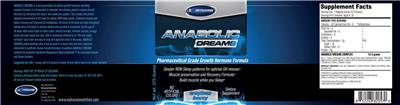
ANABOLIC DREAMS is the next-generation all natural growth hormone secreting anabolic formula. It is formulated to stimulate the pituitary gland to release Growth Hormone by mimicking the body's own endocrine system. This creates the perfect anabolic environment in the body for deeper REM sleep cycles, enhances muscle and tissue recovery and improved fat metabolism. GH levels in the body are high throughout adolescence, but begin to sharply decline once growth is completed. By the age of 30 low HGH levels begin to effect mood, muscle function, immune function, energy levels and can even cause hair loss. HGH is commonly referred to as "anti-aging hormone" and the only way to truly turn back the clock in the body. ANABOLIC DREAMS patent-pending ratio of amino acids is much safer and less expensive alternative to synthetic Human Growth Hormone.
Pharmaceutical Grade Growth Hormone Formula Deeper REM Sleep patterns for optimal GH release Muscle preservation and Recovery Formula Build muscle while you Sleep
Suggested/Recommended/Usage/Directions
Suggested Use: Mix 1 scoop with 4-6 ounces of water 30 min before bed on an empty stomach.
Precautions
Warnings: KEEP OUT OF REACH OF CHILDREN.
Consult a physician before using this product.
Do not use if tamper-evident seal is broken.
Formulation
NO ARTIFICIAL COLORS
FDA Statement of Identity
Dietary Supplement
Brand IP Statement(s)
TRAACS(R) is a registered trademark of Albion Laboratories Inc. Magnesium Glycl Glutamine is covered by U.S. Patent 5,888,533 and patents pending. Chelate is covered by U.S. Patent 5,888,153 and patents pending.
In Addition ANABOLIC DREAMS contain the patented ingredient Magnesium Glycyl Glutamine(TM) for increased muscle and tissue recovery.
Storage
Store in a cool, dry place 15(0)-30(0)C (59(0)-86(0)F).
Seals/Symbols
NUTRACORE NUTRITION
Is this label outdated? Report a formula or label change and our pharmacy team will review it.
Anabolic Dreams Tropical Berry by Nutracore Nutrition label
The label scan from the NIH Dietary Supplement Label Database. Tap to enlarge.
Label images are published by the NIH Dietary Supplement Label Database for the version of this product on file. Always read your actual product label.
View the full label (PDF)The Ingredients in Anabolic Dreams Tropical Berry by Nutracore Nutrition
These are the 16 active ingredients this product is made of. Select any to open its full monograph.
Serving size12.5 Gram(s) Dosage formPowder Servings per container30 Amounts shown are per serving.
Most supplement products combine several ingredients, and a medication can interact with the product through any one of them. Each ingredient below shows whether it has known drug interactions.
Sugar
Dietary Fiber
Interacts with2,025 drugs
Black psyllium is a soluble-fiber supplement made from the seeds of a Plantago plant, used mostly to ease constipation and support digestive health. I...
Dietary Fiber monograph & interactionsProtein
Sodium
Interacts with205 drugs
Sodium is an essential mineral and electrolyte your body needs to balance fluids, support nerves, and help muscles work. Most people in modern diets g...
Sodium monograph & interactionsAnabolic Dreams Complex
- › L-Glutamine
- › L-Tyrosine
- › L-Phenylalanine
- › L-Theanine
- › GABA
- › L-Taurine
- › Choline
- › Amino +
- › 4-amino-3-Phenylbutyric Acid
- › Mucuna Pruiens Extract
- › TRAACS Magnesium Glycyl Glutamine Chelate
- › HICA
Other (inactive) ingredients: Citric Acid, Maltodextrin, Glucose Polymers, Natural and Artificial flavors, Sucralose, Talc. These complete the product’s ingredient list but are not active constituents.
Anabolic Dreams Tropical Berry by Nutracore Nutrition Drug Interactions
HelloPharmacist Interaction Report
Anabolic Dreams Tropical Berry by Nutracore Nutrition contains 13 ingredients, several of which interact with medications.
The most serious interaction involves L-phenylalanine and levodopa (a Parkinson's drug): phenylalanine competes with levodopa for transport into the brain, which can worsen tremor, rigidity, and motor fluctuations—a Major severity concern.
Read the full breakdown — every affected drug type, severity by severity
Other Major interactions to watch for: mucuna pruriens extract (which contains levodopa itself) with methyldopa, non-selective MAOIs, and levodopa; and magnesium with levodopa/carbidopa. Moderate interactions span a wide range of drug types.
L-phenylalanine also moderately interacts with baclofen (muscle relaxer) and non-selective MAOIs (a hypertensive crisis risk). L-glutamine theoretically opposes anticonvulsants.
Sodium interacts moderately with blood pressure drugs, corticosteroids, lithium, didanosine, sodium phosphates, tolvaptan, and other sodium-containing medicines. L-tyrosine moderately interacts with levodopa and thyroid hormones.
L-theanine, GABA, and taurine each moderately interact with blood pressure medications; taurine also affects lithium. Magnesium moderately affects skeletal muscle relaxants, potassium-sparing diuretics, calcium channel blockers, antacids, sulfonylureas, quinolone antibiotics, and bisphosphonates.
Phenibut (4-amino-3-phenylbutyric acid) moderately interacts with CNS depressants and pregabalin. Choline has a minor interaction with atropine; theanine, GABA have minor interactions with CNS depressants and serotonergic drugs.
Altogether, these interactions span 989 individual medications.
We could not check two ingredients: Amino + and HICA. Before you start this product, run your complete medication list through the checker below—especially if you take levodopa, blood pressure drugs, CNS depressants, or lithium.
Check your own medications below · Editorial policy · How we use AI
Want to check YOUR meds against Anabolic Dreams Tropical Berry?
Ask about interactions with your drugs in plain English — “Can I take it with lisinopril?” — and we find you the answer in seconds, ingredient by ingredient.
Go to the checkerIngredients driving the most interactions
Individual Drug Interactions
The ingredients in Anabolic Dreams Tropical Berry interact with 2,161 drugs. Click any drug to see the details.
12 of the 16 ingredients in Anabolic Dreams Tropical Berry interact with drugs. Each result below shows which ingredient is responsible. Dietary Fiber L-Theanine GABA TRAACS Magnesium Glycyl Glutamine Chelate 4-amino-3-Phenylbutyric Acid Sodium Mucuna Pruiens Extract L-Taurine L-Glutamine L-Tyrosine L-Phenylalanine Choline
AmphetamineAdensys XR-ODT, Adzenys ER, Dyanavel XR, Mydayis
How Amphetamine interacts with Anabolic Dreams Tropical Berry — through 3 ingredients. Tap an ingredient for the detail:
Mucuna Pruiens ExtractMonoamine Oxidase Inhibitors (maois) Major
Interaction Summary
Theoretically, concomitant use of cowhage and non-selective MAOIs might increase the risk of hypertensive crisis.
Read the full Mucuna Pruiens Extract + Amphetamine interactionL-phenylalanineMonoamine Oxidase Inhibitors (maois) Moderate
Interaction Summary
Theoretically, concomitant use of L-phenylalanine and non-selective MAOIs might increase the risk of hypertensive crisis.
Read the full L-phenylalanine + Amphetamine interactionDietary FiberOral Drugs Minor
Interaction Summary
Theoretically, psyllium might increase, decrease, or have no effect on the absorption of oral drugs.
Read the full Dietary Fiber + Amphetamine interactionBenserazide, LevodopaMadopar, Prolopa
How Benserazide, Levodopa interacts with Anabolic Dreams Tropical Berry — through 5 ingredients. Tap an ingredient for the detail:
L-phenylalanineLevodopa Major
Interaction Summary
Phenylalanine, especially in high doses, can reduce the effectiveness of levodopa.
Read the full L-phenylalanine + Benserazide, Levodopa interactionTraacs Magnesium Glycyl Glutamine ChelateLevodopa/carbidopa (sinemet) Major
Interaction Summary
Magnesium can reduce the bioavailability of levodopa/carbidopa.
Read the full Traacs Magnesium Glycyl Glutamine Chelate + Benserazide, Levodopa interactionMucuna Pruiens ExtractLevodopa Major
Interaction Summary
Concomitant use can increase the risk of levodopa-related adverse effects.
Read the full Mucuna Pruiens Extract + Benserazide, Levodopa interactionL-tyrosineLevodopa Moderate
Interaction Summary
Theoretically, tyrosine might decrease the effectiveness of levodopa.
Read the full L-tyrosine + Benserazide, Levodopa interactionDietary FiberOral Drugs Minor
Interaction Summary
Theoretically, psyllium might increase, decrease, or have no effect on the absorption of oral drugs.
Read the full Dietary Fiber + Benserazide, Levodopa interactionCarbidopaLodosyn
How Carbidopa interacts with Anabolic Dreams Tropical Berry — through 2 ingredients. Tap an ingredient for the detail:
Traacs Magnesium Glycyl Glutamine ChelateLevodopa/carbidopa (sinemet) Major
Interaction Summary
Magnesium can reduce the bioavailability of levodopa/carbidopa.
Read the full Traacs Magnesium Glycyl Glutamine Chelate + Carbidopa interactionDietary FiberOral Drugs Minor
Interaction Summary
Theoretically, psyllium might increase, decrease, or have no effect on the absorption of oral drugs.
Read the full Dietary Fiber + Carbidopa interactionCarbidopa, LevodopaDhivy, Rytary, Sinemet, Sinemet CR
How Carbidopa, Levodopa interacts with Anabolic Dreams Tropical Berry — through 5 ingredients. Tap an ingredient for the detail:
Traacs Magnesium Glycyl Glutamine ChelateLevodopa/carbidopa (sinemet) Major
Interaction Summary
Magnesium can reduce the bioavailability of levodopa/carbidopa.
Read the full Traacs Magnesium Glycyl Glutamine Chelate + Carbidopa, Levodopa interactionL-phenylalanineLevodopa Major
Interaction Summary
Phenylalanine, especially in high doses, can reduce the effectiveness of levodopa.
Read the full L-phenylalanine + Carbidopa, Levodopa interactionMucuna Pruiens ExtractLevodopa Major
Interaction Summary
Concomitant use can increase the risk of levodopa-related adverse effects.
Read the full Mucuna Pruiens Extract + Carbidopa, Levodopa interactionL-tyrosineLevodopa Moderate
Interaction Summary
Theoretically, tyrosine might decrease the effectiveness of levodopa.
Read the full L-tyrosine + Carbidopa, Levodopa interactionDietary FiberOral Drugs Minor
Interaction Summary
Theoretically, psyllium might increase, decrease, or have no effect on the absorption of oral drugs.
Read the full Dietary Fiber + Carbidopa, Levodopa interactionCarbidopa, Levodopa, EntacaponeStalevo
How Carbidopa, Levodopa, Entacapone interacts with Anabolic Dreams Tropical Berry — through 5 ingredients. Tap an ingredient for the detail:
Mucuna Pruiens ExtractLevodopa Major
Interaction Summary
Concomitant use can increase the risk of levodopa-related adverse effects.
Read the full Mucuna Pruiens Extract + Carbidopa, Levodopa, Entacapone interactionL-phenylalanineLevodopa Major
Interaction Summary
Phenylalanine, especially in high doses, can reduce the effectiveness of levodopa.
Read the full L-phenylalanine + Carbidopa, Levodopa, Entacapone interactionTraacs Magnesium Glycyl Glutamine ChelateLevodopa/carbidopa (sinemet) Major
Interaction Summary
Magnesium can reduce the bioavailability of levodopa/carbidopa.
Read the full Traacs Magnesium Glycyl Glutamine Chelate + Carbidopa, Levodopa, Entacapone interactionL-tyrosineLevodopa Moderate
Interaction Summary
Theoretically, tyrosine might decrease the effectiveness of levodopa.
Read the full L-tyrosine + Carbidopa, Levodopa, Entacapone interactionDietary FiberOral Drugs Minor
Interaction Summary
Theoretically, psyllium might increase, decrease, or have no effect on the absorption of oral drugs.
Read the full Dietary Fiber + Carbidopa, Levodopa, Entacapone interactionChlorothiazide, MethyldopaAldochlor, Aldoclor 150, Aldoclor 250
How Chlorothiazide, Methyldopa interacts with Anabolic Dreams Tropical Berry — through 6 ingredients. Tap an ingredient for the detail:
Mucuna Pruiens ExtractMethyldopa (aldomet) Major
Interaction Summary
Theoretically, concomitant use of cowhage and methyldopa might increase the risk of hypotension.
Read the full Mucuna Pruiens Extract + Chlorothiazide, Methyldopa interactionSodiumAntihypertensive Drugs Moderate
Interaction Summary
Theoretically, a high intake of dietary sodium might reduce the effectiveness of antihypertensive drugs.
Read the full Sodium + Chlorothiazide, Methyldopa interactionL-theanineAntihypertensive Drugs Moderate
Interaction Summary
Theanine might lower blood pressure, potentiating the effects of antihypertensive drugs.
Read the full L-theanine + Chlorothiazide, Methyldopa interactionGabaAntihypertensive Drugs Moderate
Interaction Summary
Theoretically, taking GABA with antihypertensive drugs might increase the risk of hypotension.
Read the full Gaba + Chlorothiazide, Methyldopa interactionL-taurineAntihypertensive Drugs Moderate
Interaction Summary
Theoretically, taurine might increase the risk of hypotension when taken with antihypertensive drugs.
Read the full L-taurine + Chlorothiazide, Methyldopa interactionDietary FiberOral Drugs Minor
Interaction Summary
Theoretically, psyllium might increase, decrease, or have no effect on the absorption of oral drugs.
Read the full Dietary Fiber + Chlorothiazide, Methyldopa interactionHydrochlorothiazide, MethyldopaAldoril 15, Aldoril 25, Aldoril D30, Methazide
How Hydrochlorothiazide, Methyldopa interacts with Anabolic Dreams Tropical Berry — through 6 ingredients. Tap an ingredient for the detail:
Mucuna Pruiens ExtractMethyldopa (aldomet) Major
Interaction Summary
Theoretically, concomitant use of cowhage and methyldopa might increase the risk of hypotension.
Read the full Mucuna Pruiens Extract + Hydrochlorothiazide, Methyldopa interactionL-theanineAntihypertensive Drugs Moderate
Interaction Summary
Theanine might lower blood pressure, potentiating the effects of antihypertensive drugs.
Read the full L-theanine + Hydrochlorothiazide, Methyldopa interactionSodiumAntihypertensive Drugs Moderate
Interaction Summary
Theoretically, a high intake of dietary sodium might reduce the effectiveness of antihypertensive drugs.
Read the full Sodium + Hydrochlorothiazide, Methyldopa interactionL-taurineAntihypertensive Drugs Moderate
Interaction Summary
Theoretically, taurine might increase the risk of hypotension when taken with antihypertensive drugs.
Read the full L-taurine + Hydrochlorothiazide, Methyldopa interactionGabaAntihypertensive Drugs Moderate
Interaction Summary
Theoretically, taking GABA with antihypertensive drugs might increase the risk of hypotension.
Read the full Gaba + Hydrochlorothiazide, Methyldopa interactionDietary FiberOral Drugs Minor
Interaction Summary
Theoretically, psyllium might increase, decrease, or have no effect on the absorption of oral drugs.
Read the full Dietary Fiber + Hydrochlorothiazide, Methyldopa interactionIsocarboxazidMarplan
How Isocarboxazid interacts with Anabolic Dreams Tropical Berry — through 4 ingredients. Tap an ingredient for the detail:
Mucuna Pruiens ExtractMonoamine Oxidase Inhibitors (maois) Major
Interaction Summary
Theoretically, concomitant use of cowhage and non-selective MAOIs might increase the risk of hypertensive crisis.
Read the full Mucuna Pruiens Extract + Isocarboxazid interactionL-phenylalanineMonoamine Oxidase Inhibitors (maois) Moderate
Interaction Summary
Theoretically, concomitant use of L-phenylalanine and non-selective MAOIs might increase the risk of hypertensive crisis.
Read the full L-phenylalanine + Isocarboxazid interactionL-theanineSerotonergic Drugs Minor
Interaction Summary
Clinical studies regarding the effects of L-theanine on serotonin levels are conflicting.
Read the full L-theanine + Isocarboxazid interactionDietary FiberOral Drugs Minor
Interaction Summary
Theoretically, psyllium might increase, decrease, or have no effect on the absorption of oral drugs.
Read the full Dietary Fiber + Isocarboxazid interactionLevodopaInbrija, Larodopa
How Levodopa interacts with Anabolic Dreams Tropical Berry — through 5 ingredients. Tap an ingredient for the detail:
Mucuna Pruiens ExtractLevodopa Major
Interaction Summary
Concomitant use can increase the risk of levodopa-related adverse effects.
Read the full Mucuna Pruiens Extract + Levodopa interactionL-phenylalanineLevodopa Major
Interaction Summary
Phenylalanine, especially in high doses, can reduce the effectiveness of levodopa.
Read the full L-phenylalanine + Levodopa interactionTraacs Magnesium Glycyl Glutamine ChelateLevodopa/carbidopa (sinemet) Major
Interaction Summary
Magnesium can reduce the bioavailability of levodopa/carbidopa.
Read the full Traacs Magnesium Glycyl Glutamine Chelate + Levodopa interactionL-tyrosineLevodopa Moderate
Interaction Summary
Theoretically, tyrosine might decrease the effectiveness of levodopa.
Read the full L-tyrosine + Levodopa interactionDietary FiberOral Drugs Minor
Interaction Summary
Theoretically, psyllium might increase, decrease, or have no effect on the absorption of oral drugs.
Read the full Dietary Fiber + Levodopa interactionLevodopa, CarbidopaDuodopa
How Levodopa, Carbidopa interacts with Anabolic Dreams Tropical Berry — through 4 ingredients. Tap an ingredient for the detail:
Traacs Magnesium Glycyl Glutamine ChelateLevodopa/carbidopa (sinemet) Major
Interaction Summary
Magnesium can reduce the bioavailability of levodopa/carbidopa.
Read the full Traacs Magnesium Glycyl Glutamine Chelate + Levodopa, Carbidopa interactionL-phenylalanineLevodopa Major
Interaction Summary
Phenylalanine, especially in high doses, can reduce the effectiveness of levodopa.
Read the full L-phenylalanine + Levodopa, Carbidopa interactionMucuna Pruiens ExtractLevodopa Major
Interaction Summary
Concomitant use can increase the risk of levodopa-related adverse effects.
Read the full Mucuna Pruiens Extract + Levodopa, Carbidopa interactionL-tyrosineLevodopa Moderate
Interaction Summary
Theoretically, tyrosine might decrease the effectiveness of levodopa.
Read the full L-tyrosine + Levodopa, Carbidopa interactionMethyldopaAldomet, Methyldopa
How Methyldopa interacts with Anabolic Dreams Tropical Berry — through 6 ingredients. Tap an ingredient for the detail:
Mucuna Pruiens ExtractMethyldopa (aldomet) Major
Interaction Summary
Theoretically, concomitant use of cowhage and methyldopa might increase the risk of hypotension.
Read the full Mucuna Pruiens Extract + Methyldopa interactionGabaAntihypertensive Drugs Moderate
Interaction Summary
Theoretically, taking GABA with antihypertensive drugs might increase the risk of hypotension.
Read the full Gaba + Methyldopa interactionSodiumAntihypertensive Drugs Moderate
Interaction Summary
Theoretically, a high intake of dietary sodium might reduce the effectiveness of antihypertensive drugs.
Read the full Sodium + Methyldopa interactionL-taurineAntihypertensive Drugs Moderate
Interaction Summary
Theoretically, taurine might increase the risk of hypotension when taken with antihypertensive drugs.
Read the full L-taurine + Methyldopa interactionL-theanineAntihypertensive Drugs Moderate
Interaction Summary
Theanine might lower blood pressure, potentiating the effects of antihypertensive drugs.
Read the full L-theanine + Methyldopa interactionDietary FiberOral Drugs Minor
Interaction Summary
Theoretically, psyllium might increase, decrease, or have no effect on the absorption of oral drugs.
Read the full Dietary Fiber + Methyldopa interactionMoclobemideManerix, Moclobemide
How Moclobemide interacts with Anabolic Dreams Tropical Berry — through 3 ingredients. Tap an ingredient for the detail:
Mucuna Pruiens ExtractMonoamine Oxidase Inhibitors (maois) Major
Interaction Summary
Theoretically, concomitant use of cowhage and non-selective MAOIs might increase the risk of hypertensive crisis.
Read the full Mucuna Pruiens Extract + Moclobemide interactionL-phenylalanineMonoamine Oxidase Inhibitors (maois) Moderate
Interaction Summary
Theoretically, concomitant use of L-phenylalanine and non-selective MAOIs might increase the risk of hypertensive crisis.
Read the full L-phenylalanine + Moclobemide interactionDietary FiberOral Drugs Minor
Interaction Summary
Theoretically, psyllium might increase, decrease, or have no effect on the absorption of oral drugs.
Read the full Dietary Fiber + Moclobemide interactionOzanimod HydrochlorideZeposia
How Ozanimod Hydrochloride interacts with Anabolic Dreams Tropical Berry — through 3 ingredients. Tap an ingredient for the detail:
Mucuna Pruiens ExtractMonoamine Oxidase Inhibitors (maois) Major
Interaction Summary
Theoretically, concomitant use of cowhage and non-selective MAOIs might increase the risk of hypertensive crisis.
Read the full Mucuna Pruiens Extract + Ozanimod Hydrochloride interactionL-phenylalanineMonoamine Oxidase Inhibitors (maois) Moderate
Interaction Summary
Theoretically, concomitant use of L-phenylalanine and non-selective MAOIs might increase the risk of hypertensive crisis.
Read the full L-phenylalanine + Ozanimod Hydrochloride interactionDietary FiberOral Drugs Minor
Interaction Summary
Theoretically, psyllium might increase, decrease, or have no effect on the absorption of oral drugs.
Read the full Dietary Fiber + Ozanimod Hydrochloride interactionPhenelzine SulfateNardil
How Phenelzine Sulfate interacts with Anabolic Dreams Tropical Berry — through 6 ingredients. Tap an ingredient for the detail:
Mucuna Pruiens ExtractMonoamine Oxidase Inhibitors (maois) Major
Interaction Summary
Theoretically, concomitant use of cowhage and non-selective MAOIs might increase the risk of hypertensive crisis.
Read the full Mucuna Pruiens Extract + Phenelzine Sulfate interactionL-phenylalanineMonoamine Oxidase Inhibitors (maois) Moderate
Interaction Summary
Theoretically, concomitant use of L-phenylalanine and non-selective MAOIs might increase the risk of hypertensive crisis.
Read the full L-phenylalanine + Phenelzine Sulfate interaction4-amino-3-phenylbutyric AcidCns Depressants Moderate
Interaction Summary
Theoretically, phenibut might increase the risk of sedation and respiratory depression when taken with CNS depressants.
Read the full 4-amino-3-phenylbutyric Acid + Phenelzine Sulfate interactionDietary FiberOral Drugs Minor
Interaction Summary
Theoretically, psyllium might increase, decrease, or have no effect on the absorption of oral drugs.
Read the full Dietary Fiber + Phenelzine Sulfate interactionGabaCns Depressants Minor
Interaction Summary
Theoretically, GABA might have additive sedative effects when used in conjunction with CNS depressants.
Read the full Gaba + Phenelzine Sulfate interactionL-theanineCns Depressants, Serotonergic Drugs Minor
Interaction Summary
Theoretically, theanine might have additive sedative effects when used in conjunction with CNS depressants.
Read the full L-theanine + Phenelzine Sulfate interactionRasagilineAzilect
How Rasagiline interacts with Anabolic Dreams Tropical Berry — through 4 ingredients. Tap an ingredient for the detail:
Mucuna Pruiens ExtractMonoamine Oxidase Inhibitors (maois) Major
Interaction Summary
Theoretically, concomitant use of cowhage and non-selective MAOIs might increase the risk of hypertensive crisis.
Read the full Mucuna Pruiens Extract + Rasagiline interactionL-phenylalanineMonoamine Oxidase Inhibitors (maois) Moderate
Interaction Summary
Theoretically, concomitant use of L-phenylalanine and non-selective MAOIs might increase the risk of hypertensive crisis.
Read the full L-phenylalanine + Rasagiline interactionDietary FiberOral Drugs Minor
Interaction Summary
Theoretically, psyllium might increase, decrease, or have no effect on the absorption of oral drugs.
Read the full Dietary Fiber + Rasagiline interactionL-theanineSerotonergic Drugs Minor
Interaction Summary
Clinical studies regarding the effects of L-theanine on serotonin levels are conflicting.
Read the full L-theanine + Rasagiline interactionSafinamide MesylateXadago
How Safinamide Mesylate interacts with Anabolic Dreams Tropical Berry — through 4 ingredients. Tap an ingredient for the detail:
Mucuna Pruiens ExtractMonoamine Oxidase Inhibitors (maois) Major
Interaction Summary
Theoretically, concomitant use of cowhage and non-selective MAOIs might increase the risk of hypertensive crisis.
Read the full Mucuna Pruiens Extract + Safinamide Mesylate interactionL-phenylalanineMonoamine Oxidase Inhibitors (maois) Moderate
Interaction Summary
Theoretically, concomitant use of L-phenylalanine and non-selective MAOIs might increase the risk of hypertensive crisis.
Read the full L-phenylalanine + Safinamide Mesylate interactionL-theanineSerotonergic Drugs Minor
Interaction Summary
Clinical studies regarding the effects of L-theanine on serotonin levels are conflicting.
Read the full L-theanine + Safinamide Mesylate interactionDietary FiberOral Drugs Minor
Interaction Summary
Theoretically, psyllium might increase, decrease, or have no effect on the absorption of oral drugs.
Read the full Dietary Fiber + Safinamide Mesylate interactionSelegilineCarbex, Eldepryl, Emsam, Zelapar
How Selegiline interacts with Anabolic Dreams Tropical Berry — through 4 ingredients. Tap an ingredient for the detail:
Mucuna Pruiens ExtractMonoamine Oxidase Inhibitors (maois) Major
Interaction Summary
Theoretically, concomitant use of cowhage and non-selective MAOIs might increase the risk of hypertensive crisis.
Read the full Mucuna Pruiens Extract + Selegiline interactionL-phenylalanineMonoamine Oxidase Inhibitors (maois) Moderate
Interaction Summary
Theoretically, concomitant use of L-phenylalanine and non-selective MAOIs might increase the risk of hypertensive crisis.
Read the full L-phenylalanine + Selegiline interactionL-theanineSerotonergic Drugs Minor
Interaction Summary
Clinical studies regarding the effects of L-theanine on serotonin levels are conflicting.
Read the full L-theanine + Selegiline interactionDietary FiberOral Drugs Minor
Interaction Summary
Theoretically, psyllium might increase, decrease, or have no effect on the absorption of oral drugs.
Read the full Dietary Fiber + Selegiline interactionTranylcypromineParnate
How Tranylcypromine interacts with Anabolic Dreams Tropical Berry — through 4 ingredients. Tap an ingredient for the detail:
Mucuna Pruiens ExtractMonoamine Oxidase Inhibitors (maois) Major
Interaction Summary
Theoretically, concomitant use of cowhage and non-selective MAOIs might increase the risk of hypertensive crisis.
Read the full Mucuna Pruiens Extract + Tranylcypromine interactionL-phenylalanineMonoamine Oxidase Inhibitors (maois) Moderate
Interaction Summary
Theoretically, concomitant use of L-phenylalanine and non-selective MAOIs might increase the risk of hypertensive crisis.
Read the full L-phenylalanine + Tranylcypromine interactionDietary FiberOral Drugs Minor
Interaction Summary
Theoretically, psyllium might increase, decrease, or have no effect on the absorption of oral drugs.
Read the full Dietary Fiber + Tranylcypromine interactionL-theanineSerotonergic Drugs Minor
Interaction Summary
Clinical studies regarding the effects of L-theanine on serotonin levels are conflicting.
Read the full L-theanine + Tranylcypromine interactionAcarboseGlucobay, Prandase, Precose
How Acarbose interacts with Anabolic Dreams Tropical Berry — through 2 ingredients. Tap an ingredient for the detail:
Mucuna Pruiens ExtractAntidiabetes Drugs Moderate
Interaction Summary
Theoretically, concomitant use of cowhage and antidiabetes drugs might increase the risk of hypoglycemia.
Read the full Mucuna Pruiens Extract + Acarbose interactionDietary FiberOral Drugs Minor
Interaction Summary
Theoretically, psyllium might increase, decrease, or have no effect on the absorption of oral drugs.
Read the full Dietary Fiber + Acarbose interactionAcebutololRhotral, Sectral
How Acebutolol interacts with Anabolic Dreams Tropical Berry — through 5 ingredients. Tap an ingredient for the detail:
GabaAntihypertensive Drugs Moderate
Interaction Summary
Theoretically, taking GABA with antihypertensive drugs might increase the risk of hypotension.
Read the full Gaba + Acebutolol interactionL-taurineAntihypertensive Drugs Moderate
Interaction Summary
Theoretically, taurine might increase the risk of hypotension when taken with antihypertensive drugs.
Read the full L-taurine + Acebutolol interactionSodiumAntihypertensive Drugs Moderate
Interaction Summary
Theoretically, a high intake of dietary sodium might reduce the effectiveness of antihypertensive drugs.
Read the full Sodium + Acebutolol interactionL-theanineAntihypertensive Drugs Moderate
Interaction Summary
Theanine might lower blood pressure, potentiating the effects of antihypertensive drugs.
Read the full L-theanine + Acebutolol interactionDietary FiberOral Drugs Minor
Interaction Summary
Theoretically, psyllium might increase, decrease, or have no effect on the absorption of oral drugs.
Read the full Dietary Fiber + Acebutolol interactionAcepromazineAtravet
How Acepromazine interacts with Anabolic Dreams Tropical Berry — through 5 ingredients. Tap an ingredient for the detail:
4-amino-3-phenylbutyric AcidCns Depressants Moderate
Interaction Summary
Theoretically, phenibut might increase the risk of sedation and respiratory depression when taken with CNS depressants.
Read the full 4-amino-3-phenylbutyric Acid + Acepromazine interactionMucuna Pruiens ExtractAntipsychotic Drugs Moderate
Interaction Summary
Theoretically, use of cowhage might decrease the clinical effects of antipsychotic drugs.
Read the full Mucuna Pruiens Extract + Acepromazine interactionDietary FiberOral Drugs Minor
Interaction Summary
Theoretically, psyllium might increase, decrease, or have no effect on the absorption of oral drugs.
Read the full Dietary Fiber + Acepromazine interactionL-theanineCns Depressants Minor
Interaction Summary
Theoretically, theanine might have additive sedative effects when used in conjunction with CNS depressants.
Read the full L-theanine + Acepromazine interactionGabaCns Depressants Minor
Interaction Summary
Theoretically, GABA might have additive sedative effects when used in conjunction with CNS depressants.
Read the full Gaba + Acepromazine interactionAcetaminophen, Butalbital, Caffeine, CodeineEsgic with Codeine, Fioricet w/ Codeine
How Acetaminophen, Butalbital, Caffeine, Codeine interacts with Anabolic Dreams Tropical Berry — through 4 ingredients. Tap an ingredient for the detail:
4-amino-3-phenylbutyric AcidCns Depressants Moderate
Interaction Summary
Theoretically, phenibut might increase the risk of sedation and respiratory depression when taken with CNS depressants.
Read the full 4-amino-3-phenylbutyric Acid + Acetaminophen, Butalbital, Caffeine, Codeine interactionDietary FiberOral Drugs Minor
Interaction Summary
Theoretically, psyllium might increase, decrease, or have no effect on the absorption of oral drugs.
Read the full Dietary Fiber + Acetaminophen, Butalbital, Caffeine, Codeine interactionGabaCns Depressants Minor
Interaction Summary
Theoretically, GABA might have additive sedative effects when used in conjunction with CNS depressants.
Read the full Gaba + Acetaminophen, Butalbital, Caffeine, Codeine interactionL-theanineCns Depressants Minor
Interaction Summary
Theoretically, theanine might have additive sedative effects when used in conjunction with CNS depressants.
Read the full L-theanine + Acetaminophen, Butalbital, Caffeine, Codeine interactionAcetaminophen, Butalbital, CodeineBancap w/ Codeine
How Acetaminophen, Butalbital, Codeine interacts with Anabolic Dreams Tropical Berry — through 4 ingredients. Tap an ingredient for the detail:
4-amino-3-phenylbutyric AcidCns Depressants Moderate
Interaction Summary
Theoretically, phenibut might increase the risk of sedation and respiratory depression when taken with CNS depressants.
Read the full 4-amino-3-phenylbutyric Acid + Acetaminophen, Butalbital, Codeine interactionL-theanineCns Depressants Minor
Interaction Summary
Theoretically, theanine might have additive sedative effects when used in conjunction with CNS depressants.
Read the full L-theanine + Acetaminophen, Butalbital, Codeine interactionDietary FiberOral Drugs Minor
Interaction Summary
Theoretically, psyllium might increase, decrease, or have no effect on the absorption of oral drugs.
Read the full Dietary Fiber + Acetaminophen, Butalbital, Codeine interactionGabaCns Depressants Minor
Interaction Summary
Theoretically, GABA might have additive sedative effects when used in conjunction with CNS depressants.
Read the full Gaba + Acetaminophen, Butalbital, Codeine interactionAcetaminophen, Butalbital, Codeine PhosphatePhrenilin #3
How Acetaminophen, Butalbital, Codeine Phosphate interacts with Anabolic Dreams Tropical Berry — through 4 ingredients. Tap an ingredient for the detail:
4-amino-3-phenylbutyric AcidCns Depressants Moderate
Interaction Summary
Theoretically, phenibut might increase the risk of sedation and respiratory depression when taken with CNS depressants.
Read the full 4-amino-3-phenylbutyric Acid + Acetaminophen, Butalbital, Codeine Phosphate interactionGabaCns Depressants Minor
Interaction Summary
Theoretically, GABA might have additive sedative effects when used in conjunction with CNS depressants.
Read the full Gaba + Acetaminophen, Butalbital, Codeine Phosphate interactionL-theanineCns Depressants Minor
Interaction Summary
Theoretically, theanine might have additive sedative effects when used in conjunction with CNS depressants.
Read the full L-theanine + Acetaminophen, Butalbital, Codeine Phosphate interactionDietary FiberOral Drugs Minor
Interaction Summary
Theoretically, psyllium might increase, decrease, or have no effect on the absorption of oral drugs.
Read the full Dietary Fiber + Acetaminophen, Butalbital, Codeine Phosphate interactionAcetaminophen, Caffeine, Chlorpheniramine, Hydrocodone, PhenylephrineHycomine Compound
How Acetaminophen, Caffeine, Chlorpheniramine, Hydrocodone, Phenylephrine interacts with Anabolic Dreams Tropical Berry — through 4 ingredients. Tap an ingredient for the detail:
4-amino-3-phenylbutyric AcidCns Depressants Moderate
Interaction Summary
Theoretically, phenibut might increase the risk of sedation and respiratory depression when taken with CNS depressants.
Read the full 4-amino-3-phenylbutyric Acid + Acetaminophen, Caffeine, Chlorpheniramine, Hydrocodone, Phenylephrine interactionDietary FiberOral Drugs Minor
Interaction Summary
Theoretically, psyllium might increase, decrease, or have no effect on the absorption of oral drugs.
Read the full Dietary Fiber + Acetaminophen, Caffeine, Chlorpheniramine, Hydrocodone, Phenylephrine interactionGabaCns Depressants Minor
Interaction Summary
Theoretically, GABA might have additive sedative effects when used in conjunction with CNS depressants.
Read the full Gaba + Acetaminophen, Caffeine, Chlorpheniramine, Hydrocodone, Phenylephrine interactionL-theanineCns Depressants Minor
Interaction Summary
Theoretically, theanine might have additive sedative effects when used in conjunction with CNS depressants.
Read the full L-theanine + Acetaminophen, Caffeine, Chlorpheniramine, Hydrocodone, Phenylephrine interactionAcetaminophen, Caffeine, CodeineGesic C15, Gesic C30, Gesic C8, Lenoltec 1, Lenoltec 2, Lenoltec 3 +1 more
How Acetaminophen, Caffeine, Codeine interacts with Anabolic Dreams Tropical Berry — through 4 ingredients. Tap an ingredient for the detail:
4-amino-3-phenylbutyric AcidCns Depressants Moderate
Interaction Summary
Theoretically, phenibut might increase the risk of sedation and respiratory depression when taken with CNS depressants.
Read the full 4-amino-3-phenylbutyric Acid + Acetaminophen, Caffeine, Codeine interactionL-theanineCns Depressants Minor
Interaction Summary
Theoretically, theanine might have additive sedative effects when used in conjunction with CNS depressants.
Read the full L-theanine + Acetaminophen, Caffeine, Codeine interactionDietary FiberOral Drugs Minor
Interaction Summary
Theoretically, psyllium might increase, decrease, or have no effect on the absorption of oral drugs.
Read the full Dietary Fiber + Acetaminophen, Caffeine, Codeine interactionGabaCns Depressants Minor
Interaction Summary
Theoretically, GABA might have additive sedative effects when used in conjunction with CNS depressants.
Read the full Gaba + Acetaminophen, Caffeine, Codeine interactionAcetaminophen, Caffeine, Codeine, SalicylamideCodalan No.1, Codalan No.2, Codalan No.3
How Acetaminophen, Caffeine, Codeine, Salicylamide interacts with Anabolic Dreams Tropical Berry — through 4 ingredients. Tap an ingredient for the detail:
4-amino-3-phenylbutyric AcidCns Depressants Moderate
Interaction Summary
Theoretically, phenibut might increase the risk of sedation and respiratory depression when taken with CNS depressants.
Read the full 4-amino-3-phenylbutyric Acid + Acetaminophen, Caffeine, Codeine, Salicylamide interactionGabaCns Depressants Minor
Interaction Summary
Theoretically, GABA might have additive sedative effects when used in conjunction with CNS depressants.
Read the full Gaba + Acetaminophen, Caffeine, Codeine, Salicylamide interactionL-theanineCns Depressants Minor
Interaction Summary
Theoretically, theanine might have additive sedative effects when used in conjunction with CNS depressants.
Read the full L-theanine + Acetaminophen, Caffeine, Codeine, Salicylamide interactionDietary FiberOral Drugs Minor
Interaction Summary
Theoretically, psyllium might increase, decrease, or have no effect on the absorption of oral drugs.
Read the full Dietary Fiber + Acetaminophen, Caffeine, Codeine, Salicylamide interactionAcetaminophen, Caffeine, DihydrocodeineDHC Plus, Panlor DC, Panlor SS
How Acetaminophen, Caffeine, Dihydrocodeine interacts with Anabolic Dreams Tropical Berry — through 4 ingredients. Tap an ingredient for the detail:
4-amino-3-phenylbutyric AcidCns Depressants Moderate
Interaction Summary
Theoretically, phenibut might increase the risk of sedation and respiratory depression when taken with CNS depressants.
Read the full 4-amino-3-phenylbutyric Acid + Acetaminophen, Caffeine, Dihydrocodeine interactionDietary FiberOral Drugs Minor
Interaction Summary
Theoretically, psyllium might increase, decrease, or have no effect on the absorption of oral drugs.
Read the full Dietary Fiber + Acetaminophen, Caffeine, Dihydrocodeine interactionGabaCns Depressants Minor
Interaction Summary
Theoretically, GABA might have additive sedative effects when used in conjunction with CNS depressants.
Read the full Gaba + Acetaminophen, Caffeine, Dihydrocodeine interactionL-theanineCns Depressants Minor
Interaction Summary
Theoretically, theanine might have additive sedative effects when used in conjunction with CNS depressants.
Read the full L-theanine + Acetaminophen, Caffeine, Dihydrocodeine interactionAcetaminophen, Chlorpheniramine, Codeine, PhenylephrineColrex
How Acetaminophen, Chlorpheniramine, Codeine, Phenylephrine interacts with Anabolic Dreams Tropical Berry — through 4 ingredients. Tap an ingredient for the detail:
4-amino-3-phenylbutyric AcidCns Depressants Moderate
Interaction Summary
Theoretically, phenibut might increase the risk of sedation and respiratory depression when taken with CNS depressants.
Read the full 4-amino-3-phenylbutyric Acid + Acetaminophen, Chlorpheniramine, Codeine, Phenylephrine interactionL-theanineSerotonergic Drugs, Cns Depressants Minor
Interaction Summary
Clinical studies regarding the effects of L-theanine on serotonin levels are conflicting.
Read the full L-theanine + Acetaminophen, Chlorpheniramine, Codeine, Phenylephrine interactionDietary FiberOral Drugs Minor
Interaction Summary
Theoretically, psyllium might increase, decrease, or have no effect on the absorption of oral drugs.
Read the full Dietary Fiber + Acetaminophen, Chlorpheniramine, Codeine, Phenylephrine interactionGabaCns Depressants Minor
Interaction Summary
Theoretically, GABA might have additive sedative effects when used in conjunction with CNS depressants.
Read the full Gaba + Acetaminophen, Chlorpheniramine, Codeine, Phenylephrine interactionAcetaminophen, Chlorpheniramine, Phenylpropanolamine, OpiumHista-Derfule
How Acetaminophen, Chlorpheniramine, Phenylpropanolamine, Opium interacts with Anabolic Dreams Tropical Berry — through 4 ingredients. Tap an ingredient for the detail:
4-amino-3-phenylbutyric AcidCns Depressants Moderate
Interaction Summary
Theoretically, phenibut might increase the risk of sedation and respiratory depression when taken with CNS depressants.
Read the full 4-amino-3-phenylbutyric Acid + Acetaminophen, Chlorpheniramine, Phenylpropanolamine, Opium interactionL-theanineSerotonergic Drugs, Cns Depressants Minor
Interaction Summary
Clinical studies regarding the effects of L-theanine on serotonin levels are conflicting.
Read the full L-theanine + Acetaminophen, Chlorpheniramine, Phenylpropanolamine, Opium interactionGabaCns Depressants Minor
Interaction Summary
Theoretically, GABA might have additive sedative effects when used in conjunction with CNS depressants.
Read the full Gaba + Acetaminophen, Chlorpheniramine, Phenylpropanolamine, Opium interactionDietary FiberOral Drugs Minor
Interaction Summary
Theoretically, psyllium might increase, decrease, or have no effect on the absorption of oral drugs.
Read the full Dietary Fiber + Acetaminophen, Chlorpheniramine, Phenylpropanolamine, Opium interactionEach ingredient & the kinds of drugs it affects
For each ingredient in Anabolic Dreams Tropical Berry with known interactions, here are the types of medications they can affect. Open any type for the detail — or search your exact drug in the checker above.
Dietary Fiber
Carbamazepine (Tegretol)
Theoretically, black psyllium might reduce the effects of carbamazepine and increase the risk for convulsions.
Theoretically, black psyllium might reduce carbamazepine absorption. A preliminary study using blond psyllium reported decreased carbamazepine bioavailability due to binding of the drug to psyllium, as well as reduction of available fluid in the gut for dissolution of the drug. This interaction may also occur with black psyllium.
Lithium
Theoretically, taking black psyllium at the same time as lithium might reduce lithium absorption.
The fiber in black psyllium might reduce lithium absorption and plasma levels. Some case reports describe a reduction in plasma lithium levels with concomitant administration of blond psyllium. This was reversed when psyllium was stopped. This interaction may also occur with black psyllium.
Metformin (Glucophage)
Theoretically, black psyllium might increase the therapeutic and adverse effects of metformin.
Animal research shows that concurrent consumption of blond psyllium with metformin slows and increases the absorption of metformin. This interaction may also occur with black psyllium. To avoid changes in absorption, take psyllium 30-60 minutes after metformin.
Olanzapine (Zyprexa)
Theoretically, taking black psyllium at the same time as olanzapine might reduce olanzapine absorption.
The fiber in black psyllium might decrease the absorption of olanzapine. A single case report describes a reduction in the effectiveness of olanzapine when it was concomitantly administered with an unspecified type of psyllium 3 grams orally twice daily. This effect was reversed when psyllium was stopped.
Digoxin (Lanoxin)
Theoretically, taking black psyllium at the same time as digoxin might reduce digoxin absorption and decrease digoxin levels.
Psyllium might bind digoxin in the gut. However, some clinical evidence suggests that psyllium does not impact digoxin absorption.
Ethinyl Estradiol
Theoretically, taking black psyllium at the same time as ethinyl estradiol might alter levels of estradiol.
Concurrent use of blond psyllium with ethinyl estradiol results in a slight increase in the extent of ethinyl estradiol absorption and a slower rate of absorption. This is unlikely to be clinically significant.
Oral Drugs
Theoretically, psyllium might increase, decrease, or have no effect on the absorption of oral drugs.
Psyllium seems to have variable effects on drug absorption. To avoid changes in absorption, take psyllium 30-60 minutes after oral medications. Animal research shows that blond psyllium delays and increases the absorption of metformin and ethinyl estradiol. Case reports and animal research suggest that blond psyllium might reduce absorption of lithium, digoxin, olanzapine, and carbamazepine. Finally, some pharmacokinetic studies show that psyllium does not affect the absorption of levothyroxine or warfarin. Although many of these studies evaluated blond psyllium, the fiber content in black psyllium may have similar effects.
L-Theanine
Antihypertensive Drugs
Theanine might lower blood pressure, potentiating the effects of antihypertensive drugs.
Animal research shows that theanine can lower blood pressure in spontaneously hypertensive animals. Theoretically, concomitant use of theanine and antihypertensive drugs might potentiate the antihypertensive activity.
Cns Depressants
Theoretically, theanine might have additive sedative effects when used in conjunction with CNS depressants. However, it is unclear if this concern is clinically relevant.
Theoretically, theanine may compete with glutamate and/or increase plasma gamma-aminobutyric acid (GABA) levels, which could cause CNS depression. In one clinical study, some subjects taking oral theanine reported drowsiness.
Serotonergic Drugs
Clinical studies regarding the effects of L-theanine on serotonin levels are conflicting. Some studies suggest it can increase serotonin levels in the brain while others report that it may decrease them. Nevertheless, there have been no reports of l-theanine being a causative agent in serotonergic-related side effects or serotonin syndrome.
GABA
Antihypertensive Drugs
Theoretically, taking GABA with antihypertensive drugs might increase the risk of hypotension.
Some clinical research shows that GABA can decrease blood pressure in patients with hypertension.
Cns Depressants
Theoretically, GABA might have additive sedative effects when used in conjunction with CNS depressants. However, it is unclear if this concern is clinically relevant.
Endogenous GABA has well-established relaxant effects and GABA(A) receptors have an established physiological role in sleep. However, the effects of GABA supplements are unclear, as it is unknown whether exogenous GABA crosses the blood-brain barrier. Although there have been limited reports of drowsiness or tiredness with GABA supplements, these effects have not been widely reported in clinical studies. Additionally, intravenous GABA 0.1-1 mg/kg has been shown to induce anxiety in a dose-dependent manner.
TRAACS Magnesium Glycyl Glutamine Chelate
Levodopa/Carbidopa (Sinemet)
Magnesium can reduce the bioavailability of levodopa/carbidopa.
Clinical research in healthy volunteers shows that taking magnesium oxide 1000 mg with levodopa 100 mg/carbidopa 10 mg reduces the area under the curve (AUC) of levodopa by 35% and of carbidopa by 81%. In vitro and animal research shows that magnesium produces an alkaline environment in the digestive tract, which might lead to degradation and reduced bioavailability of levodopa/carbidopa.
Aminoglycoside Antibiotics
Concomitant use of aminoglycoside antibiotics and magnesium can increase the risk for neuromuscular weakness.
Both aminoglycosides and magnesium reduce presynaptic acetylcholine release, which can lead to neuromuscular blockade and possible paralysis. This is most likely to occur with high doses of magnesium given intravenously.
Antacids
Use of acid reducers may reduce the laxative effect of magnesium oxide.
A retrospective analysis shows that, in the presence of H2 receptor antagonists (H2RAs) or proton pump inhibitors (PPIs), a higher dose of magnesium oxide is needed for a laxative effect. This may also occur with antacids. Under acidic conditions, magnesium oxide is converted to magnesium chloride and then to magnesium bicarbonate, which has an osmotic laxative effect. By reducing acidity, antacids may reduce the conversion of magnesium oxide to the active bicarbonate salt.
Bictegravir/Emtricitabine/Tenofovir Alafenamide (Biktarvy)
Magnesium might decrease levels of bictegravir/emtricitabine/tenofovir alafenamide by reducing its absorption.
Advise patients that bictegravir/emtricitabine/tenofovir alafenamide should be taken at least 2 hours before or 6 hours after magnesium containing products.
Bisphosphonates
Magnesium can decrease absorption of bisphosphonates.
Cations, including magnesium, can decrease bisphosphonate absorption. Advise patients to separate doses of magnesium and these drugs by at least 2 hours.
Calcium Channel Blockers
Magnesium can have additive effects with calcium channel blockers, although evidence is conflicting.
Magnesium inhibits calcium entry into smooth muscle cells and may therefore have additive effects with calcium channel blockers. Severe hypotension and neuromuscular blockades may occur when nifedipine is used with intravenous magnesium, although some contradictory evidence suggests that concurrent use of magnesium with nifedipine does not increase the risk of neuromuscular weakness. High doses of magnesium could theoretically have additive effects with other calcium channel blockers.
Digoxin
Magnesium salts may reduce absorption of digoxin.
Clinical evidence suggests that treatment with oral magnesium hydroxide or magnesium trisilicate reduces absorption of digoxin from the intestines. This may reduce the blood levels of digoxin and decrease its therapeutic effects.
Potassium-Sparing Diuretics
Potassium-sparing diuretics decrease excretion of magnesium, possibly increasing magnesium levels.
Potassium-sparing diuretics also have magnesium-sparing properties, which can counteract the magnesium losses associated with loop and thiazide diuretics. Theoretically, increased magnesium levels could result from concomitant use of potassium-sparing diuretics and magnesium supplements.
Quinolone Antibiotics
Magnesium decreases absorption of quinolones.
Magnesium can form insoluble complexes with quinolones and decrease their absorption. Advise patients to take these drugs at least 2 hours before, or 4 to 6 hours after, magnesium supplements.
Skeletal Muscle Relaxants
Parenteral magnesium alters the pharmacokinetics of skeletal muscle relaxants, increasing their effects and accelerating the onset of effect.
Parenteral magnesium shortens the time to onset of skeletal muscle relaxants by about 1 minute and prolongs the duration of action by about 2 minutes. Magnesium potentiates the effects of skeletal muscle relaxants by decreasing calcium-mediated release of acetylcholine from presynaptic nerve terminals, reducing postsynaptic sensitivity to acetylcholine, and having a direct effect on the membrane potential of myocytes. Magnesium also has vasodilatory actions and increases cardiac output, allowing a greater amount of muscle relaxant to reach the motor end plate. A clinical study found that low-dose rocuronium (0.45 mg/kg), when given after administration of magnesium 30 mg/kg over 10 minutes, has an accelerated onset of effect, which matches the onset of effect seen with a full-dose rocuronium regimen (0.6 mg/kg). In another clinical study, onset times for rocuronium doses of 0.3, 0.6, and 1.2 mg/kg were 86, 76, and 50 seconds, respectively, when given alone, but were reduced to 66, 44, and 38 seconds, respectively, when the doses were given after a 15-minute infusion of magnesium sulfate 60 mg/kg. Giving intraoperative intravenous magnesium sulfate, 50 mg/kg loading dose followed by 15 mg/kg/hour, reduces the onset time of rocuronium, enhances its clinical effects, reduces the dose of intraoperative opiates, and prolongs the spontaneous recovery time. It does not affect the activity of subsequently administered neostigmine.
Sulfonylureas
Magnesium increases the systemic absorption of sulfonylureas, increasing their effects and side effects.
Clinical research shows that administration of magnesium hydroxide with glyburide increases glyburide absorption, increases maximal insulin response by 35-fold, and increases the risk of hypoglycemia, when compared with glyburide alone. A similar interaction occurs between magnesium hydroxide and glipizide. The mechanism of this effect appears to be related to the elevation of gastrointestinal pH by magnesium-based antacids, increasing solubility and enhancing absorption of sulfonylureas.
Tetracycline Antibiotics
Magnesium decreases absorption of tetracyclines.
Magnesium can form insoluble complexes with tetracyclines in the gut and decrease their absorption and antibacterial activity. Advise patients to take these drugs 1 hour before or 2 hours after magnesium supplements.
Anticoagulant/Antiplatelet Drugs
Theoretically, magnesium may have antiplatelet effects, but the evidence is conflicting.
In vitro evidence shows that magnesium sulfate inhibits platelet aggregation, even at low concentrations. Some preliminary clinical evidence shows that infusion of magnesium sulfate increases bleeding time by 48% and reduces platelet activity. However, other clinical research shows that magnesium does not affect platelet aggregation, although inhibition of platelet-dependent thrombosis can occur.
Gabapentin (Neurontin)
Gabapentin absorption can be decreased by magnesium.
Clinical research shows that giving magnesium oxide orally along with gabapentin decreases the maximum plasma concentration of gabapentin by 33%, time to maximum concentration by 36%, and area under the curve by 43%. Advise patients to take gabapentin at least 2 hours before, or 4 to 6 hours after, magnesium supplements.
Sevelamer (Renagel, Renvela)
Sevelamer may increase serum magnesium levels.
In patients on hemodialysis, sevelamer use was associated with a 0.28 mg/dL increase in serum magnesium. The mechanism of this interaction remains unclear.
4-amino-3-Phenylbutyric Acid
Cns Depressants
Theoretically, phenibut might increase the risk of sedation and respiratory depression when taken with CNS depressants.
Phenibut has been associated with sedation and respiratory depression in several case reports, especially when taken at high doses.
Pregabalin (Lyrica)
Theoretically, phenibut might increase the risk for additive adverse effects, including sedation, when taken with pregabalin.
Phenibut is structurally related to pregabalin, and both chemicals act at GABA receptors in the brain. In a case report, a patient who had experienced tolerance to the effects of pregabalin for treatment of chronic neuropathic pain experienced a reduction in tolerance when phenibut was taken concurrently.
Sodium
Antihypertensive Drugs
Theoretically, a high intake of dietary sodium might reduce the effectiveness of antihypertensive drugs.
High intake of dietary sodium can increase systolic and diastolic blood pressure. Also, high intake of sodium may necessitate increased use of antihypertensive medications to achieve blood pressure control in some patients, such as those with chronic kidney disease.
Corticosteroids
Concomitant use of mineralocorticoids and some glucocorticoids with sodium supplements might increase the risk of hypernatremia.
Mineralocorticoids and some glucocorticoids (corticosteroids) cause sodium retention. This effect is dose-related and depends on mineralocorticoid potency. It is most common with hydrocortisone, cortisone, and fludrocortisone, followed by prednisone and prednisolone.
Didanosine (Videx)
Concomitant use of didanosine with additional sodium from dietary or supplemental sources may increase the risk of hypernatremia.
Didanosine formulations contain a significant amount of sodium.
Lithium
Altering dietary intake of sodium might alter the levels and clinical effects of lithium.
High sodium intake can reduce plasma concentrations of lithium by increasing lithium excretion. Reducing sodium intake can significantly increase plasma concentrations of lithium and cause lithium toxicity in patients being treated with lithium carbonate. Stabilizing sodium intake is shown to reduce the percentage of patients with lithium level fluctuations above 0.8 mEq/L. Patients taking lithium should avoid significant alterations in their dietary intake of sodium.
Sodium Phosphates
Theoretically, concomitant use of sodium phosphate with sodium supplements might increase the risk of hypernatremia.
Use of high doses (> 45 mL in 24 hours) of sodium phosphate, such as those used for bowel cleansing before surgery, can lead to serious electrolyte disturbances, including hypernatremia. The risk of hypernatremia is highest in the elderly and people with other risk factors for electrolyte disturbances.
Sodium-Containing Drugs
Concomitant use of sodium-containing drugs with additional sodium from dietary or supplemental sources may increase the risk of hypernatremia and long-term sodium-related complications.
The Chronic Disease Risk Reduction (CDRR) intake level of 2.3 grams of sodium daily indicates the intake at which it is believed that chronic disease risk increases for the apparently healthy population. Some medications contain high quantities of sodium. When used in conjunction with sodium supplements or high-sodium diets, the CDRR may be exceeded. Additionally, concomitant use may increase the risk for hypernatremia; this risk is highest in the elderly and people with other risk factors for electrolyte disturbances.
Tolvaptan (Samsca)
Theoretically, concomitant use of tolvaptan with sodium might increase the risk of hypernatremia.
Tolvaptan is a vasopressin receptor 2 antagonist that is used to increase sodium levels in patients with hyponatremia. Patients taking tolvaptan should use caution with the use of sodium salts such as sodium chloride.
Mucuna Pruiens Extract
Levodopa
Concomitant use can increase the risk of levodopa-related adverse effects.
Cowhage contains levodopa. Some cowhage products have been standardized to contain 75-400 mg of levodopa per dose.
Methyldopa (Aldomet)
Theoretically, concomitant use of cowhage and methyldopa might increase the risk of hypotension.
Cowhage contains levodopa. Use of levodopa with methyldopa might cause additive hypotension. In addition, methyldopa may inhibit peripheral decarboxylation of levodopa and increase levodopa levels in the central nervous system; avoid using.
Monoamine Oxidase Inhibitors (Maois)
Theoretically, concomitant use of cowhage and non-selective MAOIs might increase the risk of hypertensive crisis.
Cowhage contains levodopa. Use of levodopa with non-selective MAOIs might cause hypertensive crisis. However, this interaction has not been reported with MAO-B selective inhibitors such as selegiline.
Anesthesia
Theoretically, concomitant use of cowhage and anesthesia might increase the risk of arrhythmias.
Cowhage contains levodopa. Use of levodopa with cyclopropane or halogenated hydrocarbon anesthesia has led to arrhythmias. Other anesthetics have not been implicated. Use other anesthetics in patients taking cowhage or tell patients to stop taking cowhage at least 2 weeks before surgery.
Antidiabetes Drugs
Theoretically, concomitant use of cowhage and antidiabetes drugs might increase the risk of hypoglycemia.
Animal research shows that cowhage might have hypoglycemic effects.
Antipsychotic Drugs
Theoretically, use of cowhage might decrease the clinical effects of antipsychotic drugs.
Cowhage contains levodopa. Use of levodopa might counteract the antidopaminergic effects of antipsychotic medications.
Guanethidine (Ismelin)
Theoretically, concomitant use of cowhage and guanethidine might increase the risk of hypotension.
Cowhage contains levodopa. Use of levodopa with guanethidine might cause additive hypotension; avoid using.
Tricyclic Antidepressants (Tcas)
Theoretically, use of TCAs might reduce the levels and clinical effects of cowhage.
Cowhage contains levodopa. Use of TCAs might reduce the absorption of levodopa. Some case reports describe patients that developed hypertension and dyskinesia when taking both levodopa and TCAs.
L-Taurine
Antihypertensive Drugs
Theoretically, taurine might increase the risk of hypotension when taken with antihypertensive drugs.
Some clinical evidence suggests that taurine can reduce both systolic and diastolic blood pressure.
Lithium
Theoretically, taurine might reduce excretion and increase plasma levels of lithium.
Taurine is thought to have diuretic properties, which might reduce the excretion of lithium.
L-Glutamine
Anticonvulsants
Theoretically, glutamine might antagonize the effects of anticonvulsant medications.
Glutamine is metabolized to the excitatory neurotransmitter glutamate. Glutamate might have antagonistic effects with anticonvulsant drugs. However, this interaction has not yet been reported in humans.
L-Tyrosine
Levodopa
Theoretically, tyrosine might decrease the effectiveness of levodopa.
Tyrosine and levodopa compete for absorption in the proximal duodenum by the large neutral amino acid (LNAA) transport system. Advise patients to separate doses of tyrosine and levodopa by at least 2 hours.
Thyroid Hormone
Theoretically, tyrosine might have additive effects with thyroid hormone medications.
Tyrosine is a precursor to thyroxine and might increase levels of thyroid hormones.
L-Phenylalanine
Levodopa
Phenylalanine, especially in high doses, can reduce the effectiveness of levodopa.
Phenylalanine competes with levodopa for carrier-mediated transport into the brain. The resulting reduction in levels of levodopa in the brain can exacerbate tremor, rigidity, and the "on-off" phenomenon in patients with Parkinson disease.
Baclofen
Concomitant intake of phenylalanine may reduce the intestinal absorption of baclofen.
Phenylalanine and baclofen share the same intestinal carrier for absorption; phenylalanine competitively inhibits the absorption of baclofen, reducing its plasma levels.
Monoamine Oxidase Inhibitors (Maois)
Theoretically, concomitant use of L-phenylalanine and non-selective MAOIs might increase the risk of hypertensive crisis.
L-phenylalanine is metabolized to tyrosine. Some evidence suggests that L-phenylalanine, given with the non-selective MAOI pargyline, might prevent the elimination of tyramine, increasing the risk of hypertensive crisis. However, this was not reported in a small number of patients when using L-phenylalanine with the partially selective MAO-B inhibitor, selegiline.
Choline
Atropine
Theoretically, choline might decrease the effects of atropine in the brain.
Animal research shows that administering choline one hour before administering atropine can attenuate atropine-induced decreases in brain levels of acetylcholine. Theoretically, concomitant use of choline and atropine may decrease the effects of atropine.
Brand information
Manufacturer and brand details for Anabolic Dreams Tropical Berry, from the product label.
Nutracore Nutrition
See all Nutracore Nutrition products- Name
- Nutracore Nutrition
- Street Address
- 53 East Merrick Road, Suite 190
- City
- Freeport
- State
- NY
- ZipCode
- 11520
- Phone Number
- 1 (866) 966-9006
- Web Address
- www.nutracorenutrition.com
Anabolic Dreams Tropical Berry by Nutracore Nutrition: Common Questions
Does Anabolic Dreams Tropical Berry by Nutracore Nutrition interact with any medications?
How can one product interact with so many drugs?
Where does this information come from?
Does this powder have any fillers?
Is it safe to take while pregnant?
Is it safe while breastfeeding?
What does L-phenylalanine do?
What is mucuna pruriens extract?
Why does the product have sodium in it?
Written and reviewed by the HelloPharmacist editorial staff. Our editorial policy
Not sure if Anabolic Dreams Tropical Berry is safe with your meds?
Our pharmacists answer your medication & supplement questions — free.
Label information is sourced from the NIH Dietary Supplement Label Database and reflects the product version on file; always read your actual product label. This page is for education only and is not a substitute for professional medical advice. Confirm with your pharmacist or doctor before combining supplements and medications.
The Full Monographs Behind Anabolic Dreams Tropical Berry’s Ingredients
Every ingredient we hold a full HelloPharmacist monograph for — uses, evidence, safety, and the complete interaction list.
Black Psyllium
Interacts with 2,025 drugsBlack psyllium is a soluble-fiber supplement made from the seeds of a Plantago plant, used mostly to ease constipation and support digestive health. It is best known and most studied for rel...
Read the full Black Psyllium monograph → Herb & supplement monographSodium
Interacts with 205 drugsSodium is an essential mineral and electrolyte your body needs to balance fluids, support nerves, and help muscles work. Most people in modern diets get more than enough—often too much—from...
Read the full Sodium monograph → Herb & supplement monographGlutamine
Interacts with 50 drugsGlutamine is the most abundant amino acid in the body and is usually made in your muscles. A prescription form is FDA-approved to help reduce sickle cell disease complications, but for most...
Read the full Glutamine monograph → Herb & supplement monographTyrosine
Interacts with 21 drugsL-tyrosine is an amino acid your body uses to make brain chemicals like dopamine and norepinephrine. Some studies suggest it may help mental performance during short-term stress, sleep loss,...
Read the full Tyrosine monograph → Herb & supplement monographPhenylalanine
Interacts with 16 drugsPhenylalanine is an essential amino acid the body uses to make brain chemicals like dopamine and norepinephrine. Some people take it for mood, vitiligo, or pain, but the evidence is mostly l...
Read the full Phenylalanine monograph → Herb & supplement monographTheanine
Interacts with 565 drugsTheanine (usually L-theanine) is an amino acid found naturally in tea leaves that many people take to feel calmer and less stressed without strong drowsiness. Early research suggests it may...
Read the full Theanine monograph → Herb & supplement monographGamma-aminobutyric Acid (gaba)
Interacts with 419 drugsGABA is a calming chemical messenger (neurotransmitter) that your body makes on its own, and it is sold as a supplement for stress, anxiety, and sleep. The science behind oral GABA supplemen...
Read the full Gamma-aminobutyric Acid (gaba) monograph → Herb & supplement monographTaurine
Interacts with 173 drugsTaurine is an amino acid your body makes naturally and that you also get from animal foods. It is widely used in energy drinks and sports supplements, and short-term use appears generally sa...
Read the full Taurine monograph → Herb & supplement monographCholine
Interacts with 16 drugsCholine is an essential nutrient your body needs for liver function, brain health, and nerve signaling, and many people get enough from foods like eggs, meat, and fish. Supplements may help...
Read the full Choline monograph → Herb & supplement monographPhenibut
Interacts with 248 drugsPhenibut is a synthetic, lab-made central nervous system depressant—not a natural herb—that some people use for anxiety and sleep, but it carries a serious risk of tolerance, dependence, and...
Read the full Phenibut monograph → Herb & supplement monographCowhage
Interacts with 193 drugsCowhage (Mucuna pruriens) is a tropical legume best known as a natural source of L-dopa, the compound the body turns into dopamine. It is most studied for Parkinson's disease symptoms and ma...
Read the full Cowhage monograph → Herb & supplement monographMagnesium
Interacts with 295 drugsMagnesium is an essential mineral your body needs for muscles, nerves, blood pressure, and many other functions, and supplements are useful for preventing or correcting deficiency. Some othe...
Read the full Magnesium monograph →Sources & How We Checked
Anabolic Dreams Tropical Berry's label data comes from the NIH Dietary Supplement Label Database; the ingredient interaction data is from the Natural Medicines database, reviewed by our pharmacists.
- NIH Dietary Supplement Label Database (DSLD) — The official product label on file for this supplement.
- Natural Medicines (Therapeutic Research Center) — Evidence-graded clinical reference behind the ingredient interaction data.
Content is written and reviewed by licensed HelloPharmacist pharmacists. See our data sources and editorial standards for how this information is built and checked.
The 264 references behind this product’s interaction data
Every citation that drives the interaction findings for this product’s ingredients, from the evidence-graded Natural Medicines (TRC Healthcare) database. Open an ingredient to browse its citations — links open the study on PubMed or the publisher’s site.
Glutamine 11 references
- Miller AL. Therapeutic considerations of L-glutamine: a review of the literature. Altern Med Rev 1999;4:239-48..
- Bozzetti F, Biganzoli L, Gavazzi C, et al. Glutamine supplementation in cancer patients receiving chemotherapy: a double-blind randomized study. Nutrition 1997;13:748-51.. PubMed
- Mebane AH. L-Glutamine and mania. Am J Psychiatry 984;141:1302-3.
- Meldrum BS. Glutamate as a neurotransmitter in the brain: review of physiology and pathology. J Nutr 2000;130:1007S-15S.. PubMed
- Garlick PJ. Assessment of the safety of glutamine and other amino acids. J Nutr 2001;131:2556S-61S.. PubMed
- Chapman AG. Glutamate and epilepsy. J Nutr 2000;130:1043S-5S.. PubMed
- Ziegler TR. Glutamine supplementation in cancer patients receiving bone marrow transplantation and high dose chemotherapy. J Nutr 2001;131:2578S-84S.. PubMed
- Laviano A, Molfino A, Lacaria MT, Canelli A, De Leo S, Preziosa I, Rossi Fanelli F. Glutamine supplementation favors weight loss in nondieting obese female patients. A pilot study. Eur J Clin Nutr. 2014 Nov;68(11):1264-6. PubMed
- Endari (l-glutamine) [package insert]. Torrance, CA: Emmaus Medical,Inc; 2017.
- Niihara Y, Miller ST, Kanter J, et al. A Phase 3 Trial of l-Glutamine in Sickle Cell Disease. N Engl J Med 2018;379(3):226-35. doi: 10.1056/NEJMoa1715971.
- Ogden HB, Child RB, Fallowfield JL, et al. Gastrointestinal Tolerance of Low, Medium and High Dose Acute Oral l-Glutamine Supplementation in Healthy Adults: A Pilot Study. Nutrients. 2020;12(10):2953. PubMed
Black Psyllium 18 references
- McGuffin M, Hobbs C, Upton R, Goldberg A, eds. American Herbal Products Association's Botanical Safety Handbook. Boca Raton, FL: CRC Press, LLC 1997.
- Gruenwald J, Brendler T, Jaenicke C. PDR for Herbal Medicines. 1st ed. Montvale, NJ: Medical Economics Company, Inc., 1998.
- Covington TR, et al. Handbook of Nonprescription Drugs. 11th ed. Washington, DC: American Pharmaceutical Association, 1996.
- Etman M. Effect of a bulk forming laxative on the bioavailablility of carbamazepine in man. Drug Dev Ind Pharm 1995;21:1901-6.
- Perlman BB. Interaction between lithium salts and ispaghula husk. Lancet 1990;335:416.
- Vaswani SK, Hamilton RG, Valentine MD, Adkinson NF. Psyllium laxative-induced anaphylaxis, asthma, and rhinitis. Allergy 1996;51:266-8. PubMed
- Lantner RR, Espiritu BR, Zumerchik P, Tobin MC. Anaphylaxis following ingestion of a psyllium-containing cereal. JAMA 1990;264:2534-6. DOI
- Kaplan MJ. Anaphylactic reaction to "Heartwise." N Engl J Med 1990;323:1072-3. DOI
- Nordstrom M, Melander A, Robertsson E, Steen B. Influence of wheat bran and of a bulk-forming ispaghula cathartic on the bioavailability of digoxin in geriatric in-patients. Drug Nutr Interact 1987;5:67-9..
- Robinson DS, Benjamin DM, McCormack JJ. Interaction of warfarin and nonsystemic gastrointestinal drugs. Clin Pharmacol Ther 1971;12:491-5. PubMed
- Garcia JJ, Fernandez N, Diez MJ, et al. Influence of two dietary fibers in the oral bioavailability and other pharmacokinetic parameters of ethinyloestradiol. Contraception 2000;62:253-7. PubMed
- Fernandez N, Lopez C, Díez R, et al. Drug interactions with the dietary fiber Plantago ovata husk. Expert Opin Drug Metab Toxicol 2012;8(11):1377-86.
- Semen plantaginis in: WHO Monographs on Selected Medicinal Plants, volume 1. World Health Organization, Geneva, 1999. Available at http://apps.who.int/medicinedocs/en/d/Js2200e/. Accessed November 26, 1026.
- Code of Federal Regulations, Title 21 (21CFR 101.17). Food labeling warning, notice, and safe handling statements. Available at www.ecfr.gov/cgi-bin/text-idx?SID=20f647d3b74161501f46564b915b4048&mc=true&node=se21.2.101_117&rgn=div8. Accessed December 3, 2
- Code of Federal Regulations, Title 21 (21CFR 201.319). Specific labeling requirements - water-soluble gums, hydrophilic gums, and hydrophilic mucilloids. Available at www.accessdata.fda.gov/scripts/cdrh/cfdocs/cfcfr/CFRSearch.cfm?fr=201.319. Accessed Dece
- Diez R, Garcia JJ, Diez MJ, Sierra M, Sahagun AM, Fernandez N. Influence of Plantago ovata husk (dietary fiber) on the bioavailability and other pharmacokinetic parameters of metformin in diabetic rabbits. BMC Complement Altern Med. 2017 Jun 7;17(1):298. PubMed
- Chiu AC, Sherman SI. Effects of pharmacological fiber supplements on levothyroxine absorption. Thyroid. 1998;8(8):667-71. PubMed
- Merrick C, Madden CA, Capurso NA. A Case of Blunted Orally Disintegrating Olanzapine Effect Due to Coadministered Psyllium. J Clin Psychiatry 2021;82(2):20cr13633. PubMed
Sodium 38 references
- Garabedian-Ruffalo SM, Ruffalo RL. Drug and nutrient interactions. Am Fam Physician 1986;33:165-74.
- Food and Drug Administration Science Background: Safety of Sodium Phosphates Oral Solution. September 17, 2001. Available at: http://www.fda.gov/cder/drug/safety/sodiumphospate.htm
- Coton T, Mallaret C, Coilliot C, Carre D, Guisset M. Severe acute ulcerated gastritis induced by salt. Presse Med 2009;38(3):499-500. PubMed
- Frings-Meuthen P, Buehlmeier J, Baecker N, et al. High sodium chloride intake exacerbates immobilization-induced bone resorption and protein losses. J Appl Physiol 2011;111(2):537-542. PubMed
- Frings-Meuthen P, Baecker N, Heer M. Low-grade metabolic acidosis may be the cause of sodium chloride-induced exaggerated bone resorption. J Bone Miner Res 2008;23(4):517-524. PubMed
- Alam S, Johnson AG. A meta-analysis of randomised controlled trials (RCT) among healthy normotensive and essential hypertensive elderly patients to determine the effect of high salt (NaCl) diet of blood pressure. J Hum Hypertens 1999;13(6):367-74.
- Boudville N, Ward S, Benaroia M, House AA. Increased sodium intake correlates with greater use of antihypertensive agents by subjects with chronic kidney disease. Am J Hypertens 2005;18(10):1300-5. PubMed
- Bennett WM. Drug interactions and consequences of sodium restriction. Am J Clin Nutr 1997;65(2 Suppl):678S-681S. PubMed
- Okusa MD, Crystal LJ. Clinical manifestations and management of acute lithium intoxication. Am J Med 1994;97(4):383-9. PubMed
- Food and Nutrition Board, Institute of Medicine. Dietary reference intakes for water, potassium, sodium, chloride, and sulfate. Washington, DC: National Academy Press, 2005. Available at: http://www.nap.edu/openbook.php?record_id=10925. DOI
- D'Elia L, Rossi G, Ippolito R, Cappuccio FP, Strazzullo P. Habitual salt intake and risk of gastric cancer: a meta-analysis of prospective studies. Clin Nutr 2012;31(4):489-98. PubMed
- Goldsmith SR. Hyponatremia in heart failure: time for a trial. J Card Fail 2013;19(6):398-400. PubMed
- Willocks L, Brettle R, Keen J, Valentine C, Pinching AJ. Formulations of didanosine (ddI) and salt overload. Lancet 1992;339(8786):190.
- Chen L, Zhang Z, Chen W, Whelton PK, Appel LJ. Lower Sodium Intake and Risk of Headaches: Results From the Trial of Nonpharmacologic Interventions in the Elderly. Am J Public Health. 2016;106(7):1270-5. PubMed
- Cook NR, Appel LJ, Whelton PK. Lower levels of sodium intake and reduced cardiovascular risk. Circulation. 2014;129(9):981-9. PubMed
- Cook NR, Appel LJ, Whelton PK. Sodium Intake and All-Cause Mortality Over 20 Years in the Trials of Hypertension Prevention. J Am Coll Cardiol. 2016;68(15):1609-1617. PubMed
- Mente A, O'Donnell M, Rangarajan S, et al. Associations of urinary sodium excretion with cardiovascular events in individuals with and without hypertension: a pooled analysis of data from four studies. Lancet. 2016;388(10043):465-75. PubMed
- Moosavian SP, Haghighatdoost F, Surkan PJ, Azadbakht L. Salt and obesity: a systematic review and meta-analysis of observational studies. Int J Food Sci Nutr. 2017;68(3):265-277. PubMed
- O'Donnell M, Mente A, Rangarajan S, et al. Urinary sodium and potassium excretion, mortality, and cardiovascular events. N Engl J Med. 2014;371(7):612-23. DOI
- Poggio R, Gutierrez L, Matta MG, Elorriaga N, Irazola V, Rubinstein A. Daily sodium consumption and CVD mortality in the general population: systematic review and meta-analysis of prospective studies. Public Health Nutr. 2015;18(4):695-704. PubMed
- Stallings VA, Harrison M, Oria M; Committee to Review the Dietary Reference Intakes for Sodium and Potassium, Food and Nutrition Board, Health and Medicine Division, National Academies of Sciences, Engineering, and Medicine. Washington (DC): National Acad
- Mahtani KR, Heneghan C, Onakpoya I, et al. Reduced Salt Intake for Heart Failure: A Systematic Review. JAMA Intern Med. 2018 Dec 1;178(12):1693-1700. PubMed
- Yancy CW. Sodium Restriction in Heart Failure: Too Much Uncertainty-Do the Trials. JAMA Intern Med. 2018 Dec 1;178(12):1700-1701. PubMed
- He FJ, Campbell NRC, Ma Y, MacGregor GA, Cogswell ME, Cook NR. Errors in estimating usual sodium intake by the Kawasaki formula alter its relationship with mortality: implications for public health. Int J Epidemiol. 2018;47(6):1784-1795. PubMed
- Murthy K, Ondrey GJ, Malkani N, et al. THE EFFECTS OF HYPONATREMIA ON BONE DENSITY AND FRACTURES: A SYSTEMATIC REVIEW AND META-ANALYSIS. Endocr Pract. 2019;25(4):366-378. PubMed
- Messerli FH, Hofstetter L, Syrogiannouli L, et al. Sodium intake, life expectancy, and all-cause mortality. Eur Heart J 2021;42(21):2103-2112. PubMed
- Graudal NA, Hubeck-Graudal T, Jurgens G. Effects of low sodium diet versus high sodium diet on blood pressure, renin, aldosterone, catecholamines, cholesterol, and triglyceride. Cochrane Database Syst Rev 2020;12(12):CD004022. PubMed
- Giatti S, Santos RB, Aielo AN, et al. Association of sodium with obstructive sleep apnea. The ELSA-Brasil study. Ann Am Thorac Soc 2021;18(3):502-510. PubMed
- Nan X, Lu H, Wu J, et al. The interactive association between sodium intake, alcohol consumption and hypertension among elderly in northern China: a cross-sectional study. BMC Geriatr 2021;21(1):135. PubMed
- Kyozuka H, Fukusda T, Murata T, et al. Impact of preconception sodium intake on hypertensive disorders of pregnancy: The Japan Environment and Children's study. Pregnancy Hypertens 2021;23:66-72. PubMed
- Zhao L, Ogden CL, Yang Q, et al. Association of usual sodium intake with obesity among US children and adolescents, NHANES 2009-2016. Obesity (Silver Spring) 2021;29(3):587-594. PubMed
- Ma Y, He FJ, Sun Q, et al. 24-Hour urinary sodium and potassium excretion and cardiovascular risk. N Engl J Med 2022;386(3):252-263. PubMed
- Liu J, Yang X, Zhang P, et al. Association of urinary sodium excretion and left ventricular hypertrophy in people with type 2 diabetes mellitus: A cross-sectional study. Front Endocrinol (Lausanne) 2021;12:728493. PubMed
- Filippini T, Malavolti M, Whelton PK, Vinceti M. Sodium intake and risk of hypertension: A systematic review and dose-response meta-analysis of observational cohort studies. Curr Hypertens Rep 2022;24(5):133-144. PubMed
- Wang DD, Li Y, Nguyen XT, et al. Dietary sodium and potassium intake and risk of non-fatal cardiovascular diseases: The million veteran program. Nutrients 2022;14(5):1121. PubMed
- Kwak JH, Park CH, Eun CS, et al. The associations of dietary intake of high sodium and low zinc with gastric cancer mortality: A prospective cohort study in Korea. Nutr Cancer 2022;74(10):3501-3508. PubMed
- George S, Maiti R, Mishra BR, Jena M, Mohapatra D. Effect of regulated add-on sodium chloride intake on stabilization of serum lithium concentration in bipolar disorder: A randomized controlled trial. Bipolar Disord 2023;25(1):66-75. PubMed
- Zhou TL, Schütten MTJ, Kroon AA, et al. Urinary Sodium Excretion and Salt Intake Are Not Associated With Blood Pressure Variability in a White General Population. J Am Heart Assoc 2023;12(1):e026578. PubMed
Tyrosine 4 references
- Meyer JS, Welch KM, Deshmukh VD, et al. Neurotransmitter precursor amino acids in the treatment of multi-infarct dementia and Alzheimer's disease. J Amer Geriat Soc 1977;25:289-98.
- DiPiro JT, Talbert RL, Yee GC, et al; eds. Pharmacotherapy: A pathophysiologic approach. 4th ed. Stamford, CT: Appleton & Lange, 1999.
- Wood DR, Reimherr FW, Wender PH. Amino acid precursors for the treatment of attention deficit disorder, residual type. Psychopharmacol Bull 1985;21:146-9.
- van Spronsen FJ, van Rijn M, Bekhof J. Phenylketonuria: tyrosine supplementation in phenylalanine-restricted diets. Am J Clin Nutr 2001;73:153-7. PubMed
Phenylalanine 23 references
- Rouse B, Azen C, Koch R, et al. Maternal phenylketonuria collaborative Study (MPKUCS) offspring: facial anomalies, malformations, and early neurological sequelae. Am J Med Genet 1997;69:89-95. DOI
- Sturtevant FM. Use of aspartame in pregnancy. Int J Fertil 1985;30:85-7.
- Silkaitis RP, Mosnaim AD. Pathways linking L-phenylalanine and 2-phenylethylamine with p-tyramine in rabbit brain. Brain Res 1976;114:105-15.
- Lehmann WD, Theobald N, Fischer R, Heinrich HC. Stereospecificity of phenylalanine plasma kinetics and hydroxylation in man following oral application of a stable isotope-labelled pseudo-racemic mixture of L- and D-phenylalanine. Clin Chim Acta 1983;128 PubMed
- Mosnik DM, Spring B, Rogers K, Baruah S. Tardive dyskinesia exacerbated after ingestion of phenylalanine by schizophrenic patients. Neuropsychopharmacology 1997;16:136-46. PubMed
- Siddiqui AH, Stolk LM, Bhaggoe R, et al. L-phenylalanine and UVA irradiation in the treatment of vitiligo. Dermatology 1994;88:215-8. PubMed
- Birkmayer W, Riederer P, Linauer W, Knoll J. L-deprenyl plus L-phenylalanine in the treatment of depression. J Neural Transm 1984;59:81-7. PubMed
- Nutt JG, Woodward WR, Hammerstad JP, et al. The "on-off" phenomenon in Parkinson's disease. Relation to levodopa absorption and transport. N Engl J Med 1984;310:483-8. PubMed
- Baruzzi A, Contin M, Riva R, et al. Influence of meal ingestion time on pharmacokinetics of orally administered levodopa in parkinsonian patients. Clin Neuropharmacol 1987;10:527-37. PubMed
- Juncos JL, Fabbrini G, Mouradian MM, et al. Dietary influences on the antiparkinsonian response to levodopa. Arch Neurol 1987;44:1003-5. PubMed
- Eriksson T, Granerus AK, Linde A, et al. "On-off" phenomenon in Parkinson's disease: relationship between dopa and other large neutral amino acids in plasma. Neurology 1988;38:1245-8. PubMed
- Baker GB, Bornstein RA, Rouget AC, et al. Phenylethylaminergic mechanisms in attention-deficit disorder. Biol Psychiatry 1991;29:15-22.. PubMed
- Wood DR, Reimherr FW, Wender PH. Treatment of attention deficit disorder with DL-phenylalanine. Psychiatry Res 1985;16:21-6.. PubMed
- Food and Nutrition Board, Institute of Medicine. Dietary Reference Intakes for Energy, Carbohydrate, Fiber, Fat, Fatty Acids, Cholesterol, Protein, and Amino Acids (Macronutrients). Washington, DC: National Academy Press, 2002. Available at: http://www.n
- Cederbaum S. Phenylketonuria: an update. Curr Opin Pediatr 2002;14:702-6. PubMed
- Cejudo-Ferragud, E., Nacher, A., Polache, A., Cercos-Fortea, T., Merino, M., and Casabo, V. G. Evidence of competitive inhibition for the intestinal absorption of baclofen by phenylalanine. Int J of Pharm (Amsterdam) 1996;132:63-69. DOI
- Fischer, E., Heller, B., Nachon, M., and Spatz, H. Therapy of depression by phenylalanine. Preliminary note. Arzneimittelforschung. 1975;25(1):132.
- Beckmann, H., Strauss, M. A., and Ludolph, E. Dl-phenylalanine in depressed patients: an open study. J.Neural Transm. 1977;41(2-3):123-134. PubMed
- Sabelli, H. C., Fawcett, J., Gusovsky, F., Javaid, J. I., Wynn, P., Edwards, J., Jeffriess, H., and Kravitz, H. Clinical studies on the phenylethylamine hypothesis of affective disorder: urine and blood phenylacetic acid and phenylalanine dietary supplem
- Cotzias, G. C., Van Woert, M. H., and Schiffer, L. M. Aromatic amino acids and modification of parkinsonism. N Engl.J Med 2-16-1967;276(7):374-379. PubMed
- Kravitz, H. M., Sabelli, H. C., and Fawcett, J. Dietary supplements of phenylalanine and other amino acid precursors of brain neuroamines in the treatment of depressive disorders. J Am Osteopath.Assoc 1984;84(1 Suppl):119-123. DOI
- Mann, J., Peselow, E. D., Snyderman, S., and Gershon, S. D-phenylalanine in endogenous depression. Am.J.Psychiatry 1980;137(12):1611-1612. PubMed
- Katoulis AC, Alevizou A, Bozi E, et al. A randomized, double-blind, vehicle-controlled study of a preparation containing undecylenoyl phenylalanine 2% in the treatment of solar lentigines. Clin Exp Dermatol 2010;35(5):473-6. PubMed
Theanine 6 references
- Yokogoshi H, Kobayashi M. Hypotensive effect of gamma-glutamylethylamide in spontaneously hypertensive rats. Life Sci 1998;62:1065-8.
- Haskell, C. F., Kennedy, D. O., Milne, A. L., Wesnes, K. A., and Scholey, A. B. The effects of L-theanine, caffeine and their combination on cognition and mood. Biol.Psychol. 2008;77(2):113-122. PubMed
- Yokogoshi, H., Kato, Y., Sagesaka, Y. M., Takihara-Matsuura, T., Kakuda, T., and Takeuchi, N. Reduction effect of theanine on blood pressure and brain 5-hydroxyindoles in spontaneously hypertensive rats. Biosci.Biotechnol.Biochem. 1995;59(4):615-618. PubMed
- Lyon MR, Kapoor MP, Juneja LR. The effects of L-theanine (Suntheanine®) on objective sleep quality in boys with attention deficit hyperactivity disorder (ADHD): a randomized, double-blind, placebo-controlled clinical trial. Altern Med Rev. 2011;16(4):348-
- Hidese S, Ota M, Wakabayashi C, et al. Effects of chronic l-theanine administration in patients with major depressive disorder: an open-label study. Acta Neuropsychiatr 2017;29(2):72-9.
- Tsuchiya T, Honda H, Oikawa M, et al. Oral administration of the amino acids cystine and theanine attenuates the adverse events of S-1 adjuvant chemotherapy in gastrointestinal cancer patients. Int J Clin Oncol 2016;21(6):1085-90. PubMed
Gamma-aminobutyric Acid (gaba) 12 references
- Cavagnini F, Invitti C, Pinto M, et al. Effect of acute and repeated administration of gamma aminobutyric acid (GABA) on growth hormone and prolactin secretion in man. Acta Endocrinol (Copenh) 1980;93:149-54.
- Nurnberger JI Jr, Berrettini WH, Simmons-Alling S, et al. Intravenous GABA administration is anxiogenic in man. Psychiatry Res 1986;19:113-7. PubMed
- Gershman RN, Vasilenko MA, Iliushina GG, et al. [Gammalon in the rehabilitation in infantile cerebral palsy]. Pediatr.Akus.Ginekol. 1977;(6):26-7.
- Loeb C, Benassi E, Bo, GP, et al. Preliminary evaluation of the effect of GABA and phosphatidylserine in epileptic patients. Epilepsy Res. 1987;1:209-12 . PubMed
- Inoue K, Shirai T, Ochiai H, et al. Blood-pressure-lowering effect of a novel fermented milk containing gamma-aminobutyric acid (GABA) in mild hypertensives. Eur J Clin Nutr 2003;57:490-95.
- ELLIOTT, K. A. and JASPER, H. H. Gammaaminobutyric acid. Physiol Rev. 1959;39(2):383-406.
- Winsky-Sommerer, R. Role of GABAA receptors in the physiology and pharmacology of sleep. Eur.J.Neurosci. 2009;29(9):1779-1794.
- Meldrum, B. S. GABAergic mechanisms in the pathogenesis and treatment of epilepsy. Br.J.Clin.Pharmacol. 1989;27 Suppl 1:3S-11S. PubMed
- Loeb, C., Marinari, U. M., Benassi, E., Besio, G., Cottalasso, D., Cupello, A., Maffini, M., Mainardi, P., Pronzato, M. A., and Scotto, P. A. Phosphatidylserine increases in vivo the synaptosomal uptake of exogenous GABA in rats. Exp.Neurol. 1988;99(2):4 PubMed
- Melis, G. B., Paoletti, A. M., Mais, V., and Fioretti, P. Interference of dopamine infusion on gamma-amino butyric acid (GABA)-stimulated prolactin increase. J.Endocrinol.Invest 1980;3(4):445-448.
- Boonstra E, de Kleijn R, Colzato LS, Alkemade A, Forstmann BU, Nieuwenhuis S. Neurotransmitters as food supplements: the effects of GABA on brain and behavior. Front Psychol. 2015 Oct 6;6:1520. doi: 10.3389/fpsyg.2015.01520. eCollection 2015. PubMed
- de Bie TH, Witkamp RF, Balvers MG, Jongsma MA. Effects of ?-aminobutyric acid supplementation on glucose control in adults with prediabetes: A double-blind, randomized, placebo-controlled trial. Am J Clin Nutr 2023;118(3):708-719. PubMed
See these in context on the Gamma-aminobutyric Acid (gaba) monograph →
Taurine 21 references
- Ahmad S, Robertson HT, Golper TA, et al. Multicenter trial of L-carnitine in maintenance hemodialysis patients. II. Clinical and biochemical effects. Kidney Int 1990;38:912-8. PubMed
- Machado-Vieira R, Viale CI, Kapczinski F. Mania associated with an energy drink: the possible role of caffeine, taurine, and inositol. Can J Psychiatry 2001;46:454-5. PubMed
- Obermann M, Schorn CF, Mummel P, et al. Taurine induced toxic encephalopathy? Clin Neurol Neurosurg 2006;108:812-3. PubMed
- Bichler, A., Swenson, A., and Harris, M. A. A combination of caffeine and taurine has no effect on short term memory but induces changes in heart rate and mean arterial blood pressure. Amino Acids 2006;31(4):471-476. PubMed
- Iyadurai, S. J. and Chung, S. S. New-onset seizures in adults: possible association with consumption of popular energy drinks. Epilepsy Behav 2007;10(3):504-508. PubMed
- Berger, A. J. and Alford, K. Cardiac arrest in a young man following excess consumption of caffeinated "energy drinks". Med J Aust. 1-5-2009;190(1):41-43. PubMed
- Worthley, M. I., Prabhu, A., De, Sciscio P., Schultz, C., Sanders, P., and Willoughby, S. R. Detrimental effects of energy drink consumption on platelet and endothelial function. Am J Med 2010;123(2):184-187. PubMed
- Morchon, Simon D. and Perez Castrillon, J. L. [Hypoglycemia by intake of taurine]. Rev.Clin Esp. 2010;210(1):49.
- Livshits, Z., Hoffman, R. S., Hymes, K. B., and Nelson, L. S. If vitamins could kill: massive hemolysis following naturopathic vitamin infusion. J Med Toxicol. 2011;7(3):224-226. PubMed
- Schoffl, I., Kothmann, J. F., Schoffl, V., Rupprecht, H. D., and Rupprecht, T. "Vodka energy": too much for the adolescent nephron? Pediatrics 2011;128(1):e227-e231. PubMed
- Calabro, R. S., Italiano, D., Gervasi, G., and Bramanti, P. Single tonic-clonic seizure after energy drink abuse. Epilepsy Behav 2012;23(3):384-385. PubMed
- Fujita, T., Ando, K., Noda, H., Ito, Y., and Sato, Y. Effects of increased adrenomedullary activity and taurine in young patients with borderline hypertension. Circulation 1987;75(3):525-532. PubMed
- Darling, P. B., Lepage, G., Leroy, C., Masson, P., and Roy, C. C. Effect of taurine supplements on fat absorption in cystic fibrosis. Pediatr Res 1985;19(6):578-582. PubMed
- Fukuyama, Y. and Ochiai, Y. Therapeutic trial by taurine for intractable childhood epilepsies. Brain Dev. 1982;4(1):63-69. PubMed
- Franconi, F., Bennardini, F., Mattana, A., Miceli, M., Ciuti, M., Mian, M., Gironi, A., Anichini, R., and Seghieri, G. Plasma and platelet taurine are reduced in subjects with insulin-dependent diabetes mellitus: effects of taurine supplementation. Am.J. DOI
- Stohs SJ, Miller M. A case study involving allergic reactions to sulfur-containing compounds including, sulfite, taurine, acesulfame potassium and sulfonamides. Food Chem Toxicol. 2014 Jan;63:240-3. PubMed
- Sun Q, Wang B, Li Y, Sun F, et al. Taurine supplementation lowers blood pressure and improves vascular function in prehypertension: randomized, double-blind, placebo-controlled study. Hypertension 2016 Mar;67(3):541-9. PubMed
- Jang ES, Hwang SH, Kim JW, Jeong SH. Effectiveness of 4-week oral taurine treatment for muscle cramps in patients with liver cirrhosis: a single-arm pilot study. Yonsei Med J 2021;62(1):21-8. PubMed
- Guan L, Miao P. The effects of taurine supplementation on obesity, blood pressure and lipid profile: A meta-analysis of randomized controlled trials. Eur J Pharmacol 2020;885:173533. PubMed
- Higgins JP, Liras GN, Liras IN, et al. Energy Drink Effects on Hemodynamics and Endothelial Function in Young Adults. Cardiology. 2021;146(2):258-262. PubMed
- Pallangyo P, Bhalia SV, Komba M, et al. Acute Myocardial Infarction Following the Consumption of Energy Drink in a 28-Year-Old Male: A Case Report. J Investig Med High Impact Case Rep. 2023 Jan-Dec;11:23247096231168811. PubMed
Choline 14 references
- Yates AA, Schlicker SA, Suitor CW. Dietary reference intakes: The new basis for recommendations for calcium and related nutrients, B vitamins, and choline. J Am Diet Assoc 1998;98:699-706. PubMed
- Cho E, Willett WC, Colditz GA, et al. Dietary choline and betaine and the risk of distal colorectal adenoma in women. J Natl Cancer Inst 2007;99:1224-31. PubMed
- Schmidt, C., Abicht, A., Krampfl, K., Voss, W., Stucka, R., Mildner, G., Petrova, S., Schara, U., Mortier, W., Bufler, J., Huebner, A., and Lochmuller, H. Congenital myasthenic syndrome due to a novel missense mutation in the gene encoding choline acetyl
- Tamminga, C., Smith, R. C., Chang, S., Haraszti, J. S., and Davis, J. M. Depression associated with oral choline. Lancet 10-23-1976;2(7991):905. PubMed
- Wood, J. L. and Allison, R. G. Effects of consumption of choline and lecithin on neurological and cardiovascular systems. Fed.Proc. 1982;41(14):3015-3021.
- Growdon, J. H. and Gelenberg, A. J. Choline and lecithin administration to patients with tardive dyskinesia. Trans.Am.Neurol.Assoc. 1978;103:95-99.
- Smith, C. M., Swash, M., Exton-Smith, A. N., Phillips, M. J., Overstall, P. W., Piper, M. E., and Bailey, M. R. Choline therapy in Alzheimer's disease. Lancet 8-5-1978;2(8084):318. PubMed
- Morrison, L. M. and W. F. Gonzales. Choline in coronary atherosclerosis. Amer.Heart J. 1950;39:729.
- Christie, J. G. Blackburn 1. M. Glen A. I. M. Zeisel S. Shering A. & Yates C. M. Effects of choline and lecithin on CSF choline levels and on cognitive functioning in patients with presenile dementia of the Alzheimer type. Nutrition and the brain 1979;5
- Sidhu N, Davies S, Nadarajah A, et al. Oral choline supplementation for postoperative pain. Br J Anaesth 2013;111(2):249-55. PubMed
- Wozniak JR, Fuglestad AJ, Eckerle JK, et al. Choline supplementation in children with fetal alcohol spectrum disorders has high feasibility and tolerability. Nutr Res. 2013;33(11):897-904. PubMed
- Wozniak JR, Fuglestad AJ, Eckerle JK, et al. Choline supplementation in children with fetal alcohol disorders: a randomized, double-blind, placebo-controlled trial. Am J Clin Nutr. 2015;102(5): 1113-25.
- Ross RG, Hunter SK, McCarthy L, et al. Perinatal choline effects on neonatal pathophysiology related to later schizophrenia risk. Am J Psychiatry. 2013;170(3):290-8. PubMed
- Food and Nutrition Board, Institute of Medicine. Choline. Dietary Reference Intakes: Thiamin, Riboflavin, Niacin, Vitamin B-6, Vitamin B-12, Pantothenic Acid, Biotin, and Choline. Washington D.C.: National Academy Press; 1998:390-422.
Phenibut 23 references
- Downes MA, Berling IL, Mostafa A, Grice J, Roberts MS, Isbister GK. Acute behavioural disturbance associated with phenibut purchased via an internet supplier. Clin Toxicol (Phila). 2015;53(7):636-8. PubMed
- Samokhvalov AV, Paton-Gay CL, Balchand K, Rehm J. Phenibut dependence. BMJ Case Rep. 2013 Feb 6;2013. Pii: bcr2012008381.
- O'Connell CW, Schneir AB, Hwang JQ, Cantrell FL. Phenibut, the appearance of another potentially dangerous product in the United States. Am J Med. 2014 Aug;127(8):e3-4. PubMed
- Brunner E, Levy R. Case report of physiologic phenibut dependence treated with a phenobarbital taper in a patient being treated with buprenorphine. J Addict Med. 2017 May/Jun;11(3):239-40. PubMed
- Sankary S, Canino P, Jackson J. Phenibut overdose. AM J Emerg Med. 2017 Mar;35(3):516.e1-516.e2.
- Owen DR, Wood DM, Archer JR, Dargan PI. Phenibut (4-amino-3-phenyl-butyric acid): Availability, prevalence of use, desired effects, and acute toxicity. Drug Alcohol Rev. 2016 Sep;35(5):591-6. PubMed
- Magsalin RM, Khan AY. Withdrawal symptoms after internet purchase of phenibut (beta-phenyl-gamma-aminobutyric acid HCl). J Clin Psychopharmacol. 2010 Oct;30(5):648-9.
- Rod W, Kudryk A, Brunetti L, Sun N, Nguyen M. Phenibut withdrawal management in the setting of concomitant kratom and alcohol dependence. Critical Care Med 2018;46(1):451.
- Li W, Madhira B. Phenibut (beta-phenyl-gamma-aminobutyric acid) psychosis. Am J Therapeut 2017;24(5):e639-640.
- Joshi Y, Friend S, Jimenez B, Steiger L. Dissociative intoxication and prolonged withdrawal associated with phenibut: a case report. J Clin Psychopharmacol 2017;37(4):478-80. PubMed
- Zheng KH, Khan A, Espiridion ED. Phenibut addiction in a patient with substance use disorder. Cureus. 2019;11(7):e5230. PubMed
- Hardman MI, Sprung J, Weingarten TN. Acute phenibut withdrawal: A comprehensive literature review and illustrative case report. Bosn J Basic Med Sci. 2019;19(2):125-129. PubMed
- Ahuja T, Mgbako O, Katzman C, Grossman A. Phenibut (β-Phenyl-γ-aminobutyric Acid) dependence and management of withdrawal: Emerging nootropics of abuse. Case Rep Psychiatry. 2018;2018:9864285.
- Isoardi KZ, Kulawickrama S, Isbister GK. Severe phenibut poisoning: An adolescent case cluster. J Paediatr Child Health. 2020;56(2):330-331. PubMed
- McCabe DJ, Bangh SA, Arens AM, Cole JB. Phenibut exposures and clinical effects reported to a regional poison center. Am J Emerg Med. 2019;37(11):2066-2071. PubMed
- Graves JM, Dilley J, Kubsad S, Liebelt E. Notes from the field: phenibut exposures reported to poison centers - United States, 2009-2019. MMWR Morb Mortal Wkly Rep 2020;69(35):1227-8. PubMed
- Tamarelli C, Hosanagar A. Phenibut use in a patient prescribed gabapentinoids (letter). Pain Med 2020; Aug 4:pnaa205. doi: 10.1093/pm/pnaa205. PubMed
- Esposito CM, Mandolini GM, Delvecchio G, Fiorentini A, Brambilla P. Psychomotor agitation non-responsive to treatment: a case report of phenibut withdrawal syndrome. Front Psychiatry 2021;12:688147. PubMed
- Acosta E, Munguti C. Acute Psychosis Associated with Phenibut Ingestion. Kans J Med 2021;14:308-309. PubMed
- VanDreese B, Holland A, Murray A. Chronic Phenibut Use: Symptoms, Severe Withdrawal, and Recovery. WMJ 2022;121(1):E1-E4.
- Martin R, Buffenstein I, Cho D, Kiyokawa M. Toxidrome of an Easily Obtainable Nootropic: A Case Report of Phenibut Intoxication and Withdrawal Delirium. J Clin Psychopharmacol 2023. PubMed
- Morris M, Espinosa J, Lucerna A, Lahr R. A case of phenibut withdrawal and treatment with baclofen. World J Emerg Med 2023;14(4):338-340. PubMed
- DiFiore E, Pittman J. A Case of Phenibut Withdrawal Management and Detoxification Using Baclofen in the Outpatient Setting. Case Rep Psychiatry 2024;2024:8824770. PubMed
Cowhage 12 references
- McEvoy GK, ed. AHFS Drug Information. Bethesda, MD: American Society of Health-System Pharmacists, 1998.
- Gruenwald J, Brendler T, Jaenicke C. PDR for Herbal Medicines. 1st ed. Montvale, NJ: Medical Economics Company, Inc., 1998.
- Anon. Epidemiological notes and reports: Mucuna pruriens-associated pruritus--New Jersey. MMWR Morb Mortal Wkly Rep 1985;34:732-3.
- HP-200 in Parkinson's Disease study group. An alternative medicine treatment for Parkinson's disease: Results of a multicenter clinical trial. J Alt Comp Med 1995;1:249-55. DOI
- Infante ME, Perez AM, Simao MR, et al. Outbreak of acute toxic psychosis attributed to Mucuna pruriens. Lancet 1990;336:1129. PubMed
- Vaidya AB, Rajagopalan TG, Mankodi NA, et al. Treatment of Parkinson's disease with the cowhage plant-Mucuna pruriens Bak. Neurol India 1978;26:171-6.
- Vadivel V, Janardhanan K. Nutritional and anti-nutritional composition of velvet bean: an under-utilized food legume in south India. Int J Food Sci Nutr 2000;51:279-87. PubMed
- Akhtar MS, Qureshi AQ, Iqbal J. Antidiabetic evaluation of Mucuna pruriens, Linn seeds. J Pak Med Assoc 1990;40:147-50.
- Prakash, D., Niranjan, A., and Tewari, S. K. Some nutritional properties of the seeds of three Mucuna species. Int.J.Food Sci.Nutr. 2001;52(1):79-82.
- Vadivel, V. and Janardhanan, K. Nutritional and antinutritional characteristics of seven South Indian wild legumes. Plant Foods Hum.Nutr 2005;60(2):69-75. PubMed
- Creapure (Creatine Monohydrate). Toxicological Datasheet. Degussa BioActives. Available at: https://www.fda.gov/ohrms/DOCKETS/.../95s-0316-rpt0154-54-Ref-50-vol112.pdf.
- Pulikkalpura H, Kurup R, Mathew PJ, Baby S. Levodopa in Mucuna pruriens and its degradation. Sci Rep 2015;5:11078. PubMed
Magnesium 82 references
- Rodin SM, Johnson BF. Pharmacokinetic interactions with digoxin. Clin Pharmacokinet 1988;15:227-44.
- Covington TR, et al. Handbook of Nonprescription Drugs. 11th ed. Washington, DC: American Pharmaceutical Association, 1996.
- Dahle LO, Berg G, Hammar M, et al. The effect of oral magnesium substitution on pregnancy-induced leg cramps. Am J Obstet Gynecol 1995;173:175-80. PubMed
- Hansten PD, Horn JR. Drug Interactions Analysis and Management. Vancouver, WA: Applied Therapeutics Inc., 1997 and updates.
- Peikert A, Wilimzig C, Kohne-Volland R. Prophylaxis of migraine with oral magnesium: results from a prospective, multi-center, placebo-controlled and double-blind randomized study. Cephalalgia 1996;16:257-63. PubMed
- Food and Nutrition Board, Institute of Medicine. Dietary Reference Intakes for Calcium, Phosphorus, Magnesium, Vitamin D, and Fluoride. Washington, DC: National Academy Press, 1999. Available at: http://books.nap.edu/books/0309063507/html/index.html.
- Birrer RB, Shallash AJ, Totten V. Hypermagnesemia-induced fatality following epsom salt gargles. J Emerg Med 2002;22:185-8. PubMed
- Ryan MP. Diuretics and potassium/magnesium depletion. Directions for treatment. Am J Med 1987;82:38-47.. PubMed
- Hollifield JW. Magnesium depletion, diuretics, and arrhythmias. Am J Med 1987;82:30-7.. PubMed
- Heidenreich O. Mode of action of conventional and potassium-sparing diuretics--aspects with relevance to Mg-sparing effects. Magnesium 1984;3:248-56..
- Pfaffenrath V, Wessely P, Meyer C, et al. Magnesium in the prophylaxis of migraine--a double-blind placebo-controlled study. Cephalalgia 1996;16:436-40.. PubMed
- Wang F, Van Den Eeden SK, Ackerson LM, et al. Oral magnesium oxide prophylaxis of frequent migrainous headache in children: a randomized, double-blind, placebo-controlled trial. Headache 2003;43:601-10.. PubMed
- Sompolinsky D, Samra Z. Influence of magnesium and manganese on some biological and physical properties of tetracycline. J Bacteriol 1972;110:468-76.. PubMed
- Jeyabalan A, Caritis SN. Pharmacologic inhibition of preterm labor. Clin Obstet Gynecol 2002;45:99-113. PubMed
- Mittendorf R, Dambrosia J, Pryde PG, et al. Association between the use of antenatal magnesium sulfate in preterm labor and adverse health outcomes in infants. Am J Obstet Gynecol 2002;186:1111-8.. PubMed
- Witlin AG, Sibai BM. Magnesium sulfate therapy in preeclampsia and eclampsia. Obstet Gynecol 1998;92:883-9.. DOI
- Crowther CA, Hiller JE, Doyle LW. Magnesium sulphate for preventing preterm birth in threatened preterm labour. Cochrane Database Syst Rev 2002;4:CD001060. . PubMed
- Davey MJ, Teubner D. A randomized controlled trial of magnesium sulfate, in addition to usual care, for rate control in atrial fibrillation. Ann Emerg Med 2005;45:347-53.. PubMed
- L'Hommedieu CS, Nicholas D, Armes DA, et al. Potentiation of magnesium sulfate--induced neuromuscular weakness by gentamicin, tobramycin, and amikacin. J Pediatr 1983;102:629-31..
- Dunn CJ, Goa KL. Risedronate: a review of its pharmacological properties and clinical use in resorptive bone disease. Drugs 2001;61:685-712..
- Kass L, Weekes J, Carpenter L. Effect of magnesium supplementation on blood pressure: a meta-analysis. Eur J Clin Nutr 2012;66:411-8. PubMed
- Koontz SL, Friedman SA, Schwartz ML. Symptomatic hypocalcemia after tocolytic therapy with magnesium sulfate and nifedipine. Am J Obstet Gynecol. 2004;190(6):1773-6. PubMed
- Snyder SW, Cardwell MS. Neuromuscular blockade with magnesium sulfate and nifedipine. Am J Obstet Gynecol. 1989;161(1):35-6. PubMed
- Waisman GD, Mayorga LM, Cámera MI, et al. Magnesium plus nifedipine: potentiation of hypotensive effect in preeclampsia? Am J Obstet Gynecol. 1988;159(2):308-9. PubMed
- Brown DD, Juhl RP. Decreased bioavailability of digoxin due to antacids and kaolin-pectin. N Engl J Med. 1976;295(19):1034-7. PubMed
- Allen MD, Greenblatt DJ, Harmatz JS, et al. Effect of magnesium--aluminum hydroxide and kaolin--pectin on absorption of digoxin from tablets and capsules. J Clin Pharmacol. 1981;21(1):26-30. PubMed
- Ravn HB, Vissinger H, Kristensen SD, et al. Magnesium inhibits platelet activity--an in vitro study. Thromb Haemost. 1996;76(1):88-93. DOI
- Ravn HB, Kristensen SD, Vissinger H, et al. Magnesium inhibits human platelets. Blood Coagul Fibrinolysis. 1996;7(2):241-4. PubMed
- Ravn HB, Vissinger H, Kristensen SD, et al. Magnesium inhibits platelet activity--an infusion study in healthy volunteers. Thromb Haemost. 1996;75(6):939-44. DOI
- Neuvonen PJ, Kivistö KT. The effects of magnesium hydroxide on the absorption and efficacy of two glibenclamide preparations. Br J Clin Pharmacol. 1991;32(2):215-20. PubMed
- Kivistö KT, Neuvonen PJ. Enhancement of absorption and effect of glipizide by magnesium hydroxide. Clin Pharmacol Ther. 1991;49(1):39-43. PubMed
- Neuvonen PJ, Kivistö KT. Enhancement of drug absorption by antacids. An unrecognised drug interaction. Clin Pharmacokinet. 1994;27(2):120-8. PubMed
- Shechter, M., Merz, C. N., Paul-Labrador, M., Meisel, S. R., Rude, R. K., Molloy, M. D., Dwyer, J. H., Shah, P. K., and Kaul, S. Beneficial antithrombotic effects of the association of pharmacological oral magnesium therapy with aspirin in coronary heart
- Ganzevoort, J. W., Hoogerwaard, E. M., and van der Post, J. A. [Hypocalcemic delirium due to magnesium sulphate therapy in a pregnant woman with pre-eclampsia]. Ned.Tijdschr.Geneeskd. 8-3-2002;146(31):1453-1456.
- Horner, S. M. Efficacy of intravenous magnesium in acute myocardial infarction in reducing arrhythmias and mortality. Meta-analysis of magnesium in acute myocardial infarction. Circulation 1992;86(3):774-779. PubMed
- Azria, E., Tsatsaris, V., Goffinet, F., Kayem, G., Mignon, A., and Cabrol, D. [Magnesium sulfate in obstetrics: current data]. J Gynecol.Obstet.Biol.Reprod.(Paris) 2004;33(6 Pt 1):510-517.
- Magee, L. A., Miremadi, S., Li, J., Cheng, C., Ensom, M. H., Carleton, B., Cote, A. M., and von Dadelszen, P. Therapy with both magnesium sulfate and nifedipine does not increase the risk of serious magnesium-related maternal side effects in women with p
- Henyan, N. N., Gillespie, E. L., White, C. M., Kluger, J., and Coleman, C. I. Impact of intravenous magnesium on post-cardiothoracic surgery atrial fibrillation and length of hospital stay: a meta-analysis. Ann.Thorac.Surg. 2005;80(6):2402-2406. PubMed
- Li, J., Zhang, Q., Zhang, M., and Egger, M. Intravenous magnesium for acute myocardial infarction. Cochrane.Database.Syst.Rev. 2007;(2):CD002755. PubMed
- Doyle, L. W., Crowther, C. A., Middleton, P., Marret, S., and Rouse, D. Magnesium sulphate for women at risk of preterm birth for neuroprotection of the fetus. Cochrane.Database.Syst.Rev. 2009;(1):CD004661. PubMed
- Han, S., Crowther, C. A., and Moore, V. Magnesium maintenance therapy for preventing preterm birth after threatened preterm labour. Cochrane.Database.Syst.Rev. 2010;(7):CD000940. PubMed
- Duley, L., Gulmezoglu, A. M., Henderson-Smart, D. J., and Chou, D. Magnesium sulphate and other anticonvulsants for women with pre-eclampsia. Cochrane.Database.Syst.Rev. 2010;(11):CD000025. PubMed
- Conde-Agudelo, A., Romero, R., and Kusanovic, J. P. Nifedipine in the management of preterm labor: a systematic review and metaanalysis. Am J Obstet.Gynecol. 2011;204(2):134-20. PubMed
- Wong, G. K., Boet, R., Poon, W. S., Chan, M. T., Gin, T., Ng, S. C., and Zee, B. C. Intravenous magnesium sulphate for aneurysmal subarachnoid hemorrhage: an updated systemic review and meta-analysis. Crit Care 2011;15(1):R52. PubMed
- Magee, L., Sawchuck, D., Synnes, A., and von, Dadelszen P. SOGC Clinical Practice Guideline. Magnesium sulphate for fetal neuroprotection. J Obstet.Gynaecol.Can. 2011;33(5):516-529.
- Doyle, L. W. Antenatal magnesium sulfate and neuroprotection. Curr Opin Pediatr 2012;24(2):154-159. PubMed
- McDonald, S. D., Lutsiv, O., Dzaja, N., and Duley, L. A systematic review of maternal and infant outcomes following magnesium sulfate for pre-eclampsia/eclampsia in real-world use. Int J Gynaecol.Obstet. 2012;118(2):90-96. PubMed
- Gordon, M., Naidoo, K., Akobeng, A. K., and Thomas, A. G. Osmotic and stimulant laxatives for the management of childhood constipation. Cochrane.Database.Syst.Rev. 2012;7:CD009118. PubMed
- Dodd, J. M., Crowther, C. A., and Middleton, P. Oral betamimetics for maintenance therapy after threatened preterm labour. Cochrane.Database.Syst.Rev. 2012;12:CD003927. PubMed
- Wu, X., Wang, C., Zhu, J., Zhang, C., Zhang, Y., and Gao, Y. Meta-analysis of randomized controlled trials on magnesium in addition to beta-blocker for prevention of postoperative atrial arrhythmias after coronary artery bypass grafting. BMC.Cardiovasc.D PubMed
- Thorp, J. M., Jr., Katz, V. L., Campbell, D., and Cefalo, R. C. Hypersensitivity to magnesium sulfate. Am.J.Obstet.Gynecol. 1989;161(4):889-890. PubMed
- Duley L and Gulmezoglu AM. Magnesium sulphate versus lytic cocktail for eclampsia. Cochrane Database of Systematic Reviews 2000;(3) PubMed
- Gibbins KJ, Browning KR, Lopes VV, Anderson BL, Rouse DJ. Evaluation of the clinical use of magnesium sulfate for cerebral palsy prevention. Obstet Gynecol 2013;121(2 Pt 1):235-40. PubMed
- Ji D. Oral magnesium sulfate causes perforation during bowel preparation for fiberoptic colonoscopy in patients with colorectal cancer. J Emerg Med 2012;43(4):716-7. PubMed
- Yagi T, Naito T, Mino Y, Umemura K, Kawakami J. Impact of concomitant antacid administration on gabapentin plasma exposure and oral bioavailability in healthy adult subjects. Drug Metab Pharmacokinet 2012;27(2):248-54. PubMed
- Yamasaki M, Funakoshi S, Matsuda S, Imazu T, Takeda Y, Murakami T, Maeda Y. Interaction of magnesium oxide with gastric acid secretion inhibitors in clinical pharmacotherapy. Eur J Clin Pharmacol 2014;70(8):921-4. PubMed
- Choi ES, Jeong WJ, Ahn SH, Oh AY, Jeon YT, Do SH. Magnesium sulfate accelerates the onset of low-dose rocuronium in patients undergoing laryngeal microsurgery. J Clin Anesth. 2017 Feb;36:102-106. PubMed
- Ikee R, Toyoyama T, Endo T, Tsunoda M, Hashimoto N. Impact of sevelamer hydrochloride on serum magnesium concentrations in hemodialysis patients. Magnes Res. 2016 Apr 1;29(4):184-90. PubMed
- Miller ES, Sakowicz A, Leger E. Lange E, Yee LM. The association between receipt of intrapartum magnesium and postpartum hemorrhage. Am J Obstet Gynecol 2018;218(1 Suppl):S165.
- Rodríguez-Rubio L, Solis Garcia Del Pozo J, Nava E, Jordán J. Interaction between magnesium sulfate and neuromuscular blockers during the perioperative period. A systematic review and meta-analysis. J Clin Anesth. 2016;34:524-34. PubMed
- Brown RS. Magnesium Sulfate: Another Cause of a Solute Diuresis. Am J Kidney Dis. 2017;69(4):550-551. PubMed
- Park H, Qin R, Smith TJ, et al. North Central Cancer Treatment Group N10C2 (Alliance): a double-blind placebo-controlled study of magnesium supplements to reduce menopausal hot flashes. Menopause. 2015;22(6):627-32. PubMed
- Sakanoue M, Sanada J, Kanekura T. Skin eruption elicited by magnesium oxide (Maglax). J Dermatol. 2016;43(2):221-2.
- Iwamuro M, Saito S, Yoshioka M, et al. A Magnesium Oxide Bezoar. Intern Med. 2018;57(21):3087-3091. PubMed
- Vilchez G, Dai J, Kumar K, Mundy D, Kontopoulos E, Sokol RJ. Racial/ethnic disparities in magnesium sulfate neuroprotection: a subgroup analysis of a multicenter randomized controlled trial. J Matern Fetal Neonatal Med. 2018;31(17):2304-2311. PubMed
- Drug Safety Communication: FDA Recommends Against Prolonged Use of Magnesium Sulfate to Stop Pre-term Labor Due to Bone Changes in Exposed Babies. U.S. Food and Drug Administration (FDA), May 30, 2013. https://www.fda.gov/downloads/Drugs/DrugSafety/UCM353
- Committee Opinion: Magnesium Sulfate Use in Obstetrics. The American College of Obstetricians and Gynecologists Committee on Obstetric Practice Society for Maternal-Fetal Medicine, Number 652, January 2016. https://www.acog.org/Clinical-Guidance-and-Publi
- Kashihara Y, Terao Y, Yoda K, et al. Effects of magnesium oxide on pharmacokinetics of L-dopa/carbidopa and assessment of pharmacodynamic changes by a model-based simulation. Eur J Clin Pharmacol. 2019;75(3):351-361. PubMed
- Shepherd E, Salam RA, Manhas D, et al. Antenatal magnesium sulphate and adverse neonatal outcomes: A systematic review and meta-analysis. PLoS Med. 2019;16(12):e1002988. PubMed
- Hong JY, Hong JY, Choi YS, et al. Antenatal magnesium sulfate treatment and risk of necrotizing enterocolitis in preterm infants born at less than 32 weeks of gestation. Sci Rep. 2020;10(1):12826. PubMed
- Schuh S, Sweeney J, Rumantir M, et al. Effect of nebulized magnesium vs placebo added to albuterol on hospitalization among children with refractory acute asthma treated in the emergency department: a randomized clinical trial. JAMA. 2020;324(20):2038-20 PubMed
- Almeida CED, Carvalho LR, Andrade CVC, Nascimento PD Jr, Barros GAM, Modolo NSP. Effects of magnesium sulphate on the onset time of rocuronium at different doses: a randomized clinical trial. Braz J Anesthesiol. 2021;71(5):482-8. PubMed
- Gochi Valdovinos A, Arriaga-Redondo M, Dejuan Bitriá E, Pérez Rodríguez I, Márquez Isidro E, Blanco Bravo D. Prenatal therapy with magnesium sulphate and intestinal obstruction due to meconium in preterm newborns. An Pediatr (Engl Ed). 2022 Feb;96(2):138- PubMed
- Iio K, Kondo E, Shibata E, et al. Long-term tocolysis with magnesium sulfate as a risk factor for low bone mass: a case series. J Med Cases. 2022 Feb;13(2):47-50. PubMed
- Eiraku K, Uozumi Y, Hieda M, Maruyama T, Nomura H. A senile case of heart failure associated with hypermagnesemia induced by magnesium-containing laxative agent. Geriatr Gerontol Int. 2022;22(10):897-899.
- Enayati A, Gin JH, Sajeev JK, et al. Efficacy of intravenous magnesium for the management of non-post operative atrial fibrillation with rapid ventricular response: A systematic review and meta-analysis. J Cardiovasc Electrophysiol 2023;34(5):1286-1295. PubMed
- Su YH, Luo DC, Pang Y. Effects of intraoperative Magnesium sulfate infusion on emergency agitation during general anesthesia in patients undergoing radical mastectomy: a randomized controlled study. BMC Anesthesiol 2023;23(1):326. PubMed
- Han J, Park HY, Shin HJ, Chung SH, Do SH. Effects of magnesium sulphate on neostigmine-induced recovery from moderate neuromuscular blockade with rocuronium: a randomized controlled trial. Magnes Res 2023;36(2):31-39. PubMed
- Lee AT, Cordova JC, Jamplis RP, Pomicter GR. Posterior Reversible Encephalopathy Syndrome and Eclampsia in the Setting of Magnesium Toxicity: A Case Report. A A Pract 2023;17(11):e01726. PubMed
- Darmawan D, Rengganis I, Rumende CM, et al. Effectiveness and Safety of Nebulized Magnesium as Last Line Treatment in Adults with Acute Asthma Attack: A Systematic Review and Meta-Analysis. Acta Med Indones 2024;56(1):3-12.
- Shepherd ES, Goldsmith S, Doyle LW, et al. Magnesium sulphate for women at risk of preterm birth for neuroprotection of the fetus. Cochrane Database Syst Rev 2024;5(5):CD004661. PubMed
- US Food and Drug Administration (FDA). Biktarvy Prescribing Information. October 2024. Available at: https://www.accessdata.fda.gov/drugsatfda_docs/label/2024/210251Orig1s020lbl.pdf. Accessed July 16, 2025.
Parts of this content are provided by the Therapeutic Research Center, LLC.
DISCLAIMER: Currently this does not check for drug-drug interactions. This is not an all-inclusive comprehensive list of potential interactions and is for informational purposes only. Not all interactions are known or well-reported in the scientific literature, and new interactions are continually being reported. Input is needed from a qualified healthcare provider including a pharmacist before starting any therapy. Application of clinical judgment is necessary.
© 2021 Therapeutic Research Center, LLC