
Lipase-HP Plus Ingredients & Drug Interactions
by AST Enzymes
What is this page for?
First and foremost: checking Lipase-HP Plus against your medications. The heart of this page is the interaction checker and the full interaction report — how this product’s ingredients may interact with prescription and over-the-counter medicines you may be taking.
Around that, we add a pharmacist’s high-level view of the product as a whole — what’s inside, the evidence for its stated use, how transparent the label is, and what safety data exists — so you can see the full picture in one place. It’s educational information from our licensed clinical databases and the clinical staff at HelloPharmacist — not medical advice — and we don’t sell or endorse products. Our editorial policy
Lipase-HP Plus is a dietary supplement by AST Enzymes with 5 active ingredients. Its ingredients are commonly taken for digestive support, bloating and gas, fat digestion.Based on those ingredients, 208 medications have a known interaction with it, the most serious rated moderate. The ingredients most likely to interact are Amla. Use the checker below to test your specific medication, or read the full HelloPharmacist Interaction Report.
Check Your Meds Against Lipase-HP Plus by AST Enzymes
Ask about any prescription or over-the-counter medication and we check it for interactions with Lipase-HP Plus by AST Enzymes — and tell you which ingredient is responsible.
AI summaries are generated from our interaction database for education only — always confirm with your pharmacist. How we use AI
Ask the Pharmacist
A licensed pharmacist will answer your question by email — free, usually within 24 hours.
Got it — thank you!
A licensed pharmacist will answer within 24 hours. Keep an eye on your email (worth checking spam, just in case).
HelloPharmacist Scorecard of Lipase-HP Plus by AST Enzymes
Our pharmacy team’s full take, with four database checks built into the cards below — a summary of what is known, not a grade of the product itself.
What’s inside
Low disclosure
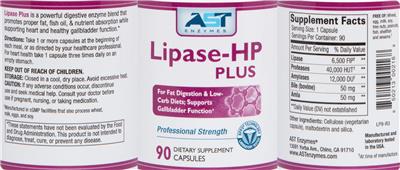
Lipase-HP Plus contains 5 active ingredients: lipase, amla (Indian gooseberry), proteases, amylases, and bovine bile. These are all digestive enzymes and bile components intended to support fat and protein breakdown in your digestive tract.
The product also includes inactive ingredients — cellulose, maltodextrin, and silica — which are fillers and capsule materials.
Does it work?
Not established
The evidence for these ingredients is mixed. Lipase and proteases haven't yet been rated for effectiveness — the research isn't established in our data.
Amla shows more promise: it's rated possibly effective for acid reflux (GERD) and high cholesterol (dyslipidemia). For other uses like low cholesterol overall, hair loss, and digestive upset, the evidence is insufficient to rate.
If you're taking this for digestive support, talk with your pharmacist about what the science actually supports.
How safe is it?
Well-documented data
Lipase is generally well tolerated, though people with serious digestive conditions should use it only under medical guidance. No adverse effects have been reported in adults in typical use, but safety testing hasn't been thorough.
Amla is generally well tolerated as a food, but supplement safety is less studied. A small number of trial participants reported stomach discomfort, fatigue, or muscle pain.
Proteases are generally well tolerated but may occasionally cause digestive upset or allergic reactions — rare occupational exposure to airborne protease has triggered allergic rhinitis or asthma. In pregnancy, lipase has little safety data — use only if your doctor advises it.
Amla should be avoided in pregnancy due to insufficient safety data. Proteases are best avoided in pregnancy unless prescribed.
For breastfeeding, safety data for all three is limited — check with your healthcare provider first.
Meds to double-check
Moderate interaction found
Check your medications before taking Lipase-HP Plus if you're on blood thinners (anticoagulants), antiplatelet drugs (including aspirin), clopidogrel (Plavix), or diabetes medications — amla can increase bleeding risk or lower blood sugar further. No interactions are documented for the other ingredients we could check.
The bottom line
Scorecard at a glanceFormula with limited ingredient disclosure with no established evidence rating for its marketed use. Moderate medication interactions have been identified, and safety information is well characterized.
This product may help with acid reflux and cholesterol if amla's effects hold up for you, but evidence is still incomplete. If you take blood thinners, aspirin, clopidogrel, or diabetes medications, talk to your pharmacist first — amla can interact with these.
Pregnant or breastfeeding people should ask their doctor before starting.
Educational only — not medical advice; always confirm with your pharmacist. Our editorial policy · How we use AI
Assessment coverage: 3 of 5 active ingredients matched to our full ingredient reviews (monographs). Based on the product label dated Sep 25, 2025.
This Scorecard evaluates available label information, ingredient evidence, and known medication-safety considerations. It does not independently verify product identity, purity, potency, contamination, or manufacturing quality. How these ratings are computed
General information
Key facts about Lipase-HP Plus, straight from the product label.
| Brand | AST Enzymes |
|---|---|
| Barcode (UPC) | 850213002168 |
| Net contents | 90 Capsule(s) |
| Market status | On market |
| Date entered into DSLD | Sep 25, 2025 |
| DSLD ID | 338354 |
| Product type | Other Combinations |
| Supplement form | Capsule |
| Dietary claims / uses | All Other, Structure/Function |
| Intended target group(s) | Adult (18 - 50 Years), No Allergies, Dairy Free |
Everything in this section is reproduced from the manufacturer’s own product label — it’s the label speaking, not HelloPharmacist. We show it so you can see exactly what the maker states; we don’t verify or endorse those statements.
Supplement Facts
The label details for Lipase-HP Plus by AST Enzymes, sourced from the NIH Dietary Supplement Label Database.
Supplement Facts
| Ingredient | Amount | % DV |
|---|---|---|
| Lipase | 0 NP | -- |
| Amla | 50 mg | -- |
| Proteases | 0 NP | -- |
| Amylases | 0 NP | -- |
| Bovine Bile | 50 mg | -- |
Other ingredients: Cellulose, Maltodextrin, Silica
Tap any ingredient to jump to its full detail below.
These statements are the manufacturer’s wording, reproduced from the product label — the label is saying it, not HelloPharmacist. We don’t verify or endorse them.
Formula
Lipase Plus is a powerful digestive enzyme blend that promotes proper fat, fish oil, & nutrient absorption while supporting heart and healthy gallbladder function.
Suggested/Recommended/Usage/Directions
Directions: Take 1 or more capsules at the beginning of each meal, or as directed by your healthcare professional. For heart health take 1 capsule three times daily on an empty stomach.
Precautions
Keep out of reach of children.
Caution: If any adverse conditions occur, discontinue use and seek medical help.
Consult your doctor before use if pregnant, nursing, or taking medication.
Free of: Wheat, egg, milk, soy, tree nuts, peanuts, fish, shellfish and sesame. Manufactured in cGMP facilities that also process wheat, milk, eggs, and soy.
Storage
Storage: Closed in a cool, dry place. Avoid excessive heat.
FDA Disclaimer Statement
These statements have not been evaluated by the Food and Drug Administration. This product is not intended to diagnose, treat, cure, or prevent any disease.
Formulation
For fat digestion & low-carb diets; supports gallbladder function Professional strength
Free of: Wheat, egg, milk, soy tree nuts, peanuts, fish, shellfish and sesame.
Manufactured and laboratory tested in the USA.
Seals/Symbols
BPPS Technology Laboratory Tested
FDA Statement of Identity
Dietary Supplement
Is this label outdated? Report a formula or label change and our pharmacy team will review it.
Lipase-HP Plus by AST Enzymes label
The label scan from the NIH Dietary Supplement Label Database. Tap to enlarge.
Label images are published by the NIH Dietary Supplement Label Database for the version of this product on file. Always read your actual product label.
View the full label (PDF)The Ingredients in Lipase-HP Plus by AST Enzymes
These are the 5 active ingredients this product is made of. Select any to open its full monograph.
Serving size1 Capsule(s) Dosage formCapsule Servings per container90 Amounts shown are per serving.
Most supplement products combine several ingredients, and a medication can interact with the product through any one of them. Each ingredient below shows whether it has known drug interactions.
Lipase
No knowninteractions
Lipase is a digestive enzyme that helps your body break down dietary fats. It is well established as part of prescription pancreatic enzyme therapy fo...
Lipase monograph & interactionsAmla
Interacts with208 drugs
Indian gooseberry (amla) is a vitamin C-rich fruit used in Ayurvedic medicine for many purposes, from antioxidant support to cholesterol and digestion...
Amla monograph & interactionsProteases
No knowninteractions
Proteolytic enzymes are proteins that help break down other proteins, and common examples include bromelain (from pineapple), papain (from papaya), tr...
Proteases monograph & interactionsAmylases
Bovine Bile
Other (inactive) ingredients: Cellulose, Maltodextrin, Silica. These complete the product’s ingredient list but are not active constituents.
Lipase-HP Plus by AST Enzymes Drug Interactions
HelloPharmacist Interaction Report
Lipase-HP Plus by AST Enzymes contains several digestive enzymes and bile extract.
One ingredient — amla (Indian gooseberry) — does interact with medications. The most serious concerns are with blood thinners and antiplatelet drugs (including aspirin and clopidogrel).
Amla can reduce platelet clumping and lengthen bleeding time, raising your bleeding risk if you're on these medications.
Read the full breakdown — every affected drug type, severity by severity
Amla also pairs with diabetes medications (Moderate severity). It may lower your blood sugar further, which could bring your glucose too low.
Your diabetes medication dose might need adjusting. Altogether, these interactions span 207 individual medications.
Lipase and proteases have no known interactions documented in our data. We could not check amylases and bovine bile — no monograph data is on file for them.
Before you start this product, run your exact prescriptions through the checker below, especially if you take blood thinners, aspirin, clopidogrel, or diabetes drugs.
Check your own medications below · Editorial policy · How we use AI
Want to check YOUR meds against Lipase-HP Plus?
Ask about interactions with your drugs in plain English — “Can I take it with lisinopril?” — and we find you the answer in seconds, ingredient by ingredient.
Go to the checkerIngredients driving the most interactions
Individual Drug Interactions
The ingredients in Lipase-HP Plus interact with 208 drugs. Click any drug to see the details.
1 of the 5 ingredients in Lipase-HP Plus interact with drugs. Each result below shows which ingredient is responsible. Amla
Aspirin, Caffeine, Codeine PhosphateAnacin w/ Codeine
How Aspirin, Caffeine, Codeine Phosphate interacts with Lipase-HP Plus — through 1 ingredient. Tap an ingredient for the detail:
AmlaAnticoagulant/antiplatelet Drugs, Aspirin Moderate
Interaction Summary
Theoretically, Indian gooseberry may increase the risk of bleeding if used with anticoagulant or antiplatelet drugs; however, research is conflicting.
Read the full Amla + Aspirin, Caffeine, Codeine Phosphate interactionAspirin, Caffeine, Dihydrocodeine BitartrateSynalgos DC
How Aspirin, Caffeine, Dihydrocodeine Bitartrate interacts with Lipase-HP Plus — through 1 ingredient. Tap an ingredient for the detail:
AmlaAnticoagulant/antiplatelet Drugs, Aspirin Moderate
Interaction Summary
Theoretically, Indian gooseberry may increase the risk of bleeding if used with anticoagulant or antiplatelet drugs; however, research is conflicting.
Read the full Amla + Aspirin, Caffeine, Dihydrocodeine Bitartrate interactionAspirin, Caffeine, Dover's PwdAcedoval, Dovacet
How Aspirin, Caffeine, Dover's Pwd interacts with Lipase-HP Plus — through 1 ingredient. Tap an ingredient for the detail:
AmlaAspirin, Anticoagulant/antiplatelet Drugs Moderate
Interaction Summary
Theoretically, Indian gooseberry may increase the risk of bleeding if used with aspirin; however, research is conflicting.
Read the full Amla + Aspirin, Caffeine, Dover's Pwd interactionAspirin, Caffeine, HydrocodoneDamason-P
How Aspirin, Caffeine, Hydrocodone interacts with Lipase-HP Plus — through 1 ingredient. Tap an ingredient for the detail:
AmlaAnticoagulant/antiplatelet Drugs, Aspirin Moderate
Interaction Summary
Theoretically, Indian gooseberry may increase the risk of bleeding if used with anticoagulant or antiplatelet drugs; however, research is conflicting.
Read the full Amla + Aspirin, Caffeine, Hydrocodone interactionAspirin, Caffeine, Isobutylallylbarbituric Acid, PhenacetinLanorinal
How Aspirin, Caffeine, Isobutylallylbarbituric Acid, Phenacetin interacts with Lipase-HP Plus — through 1 ingredient. Tap an ingredient for the detail:
AmlaAspirin, Anticoagulant/antiplatelet Drugs Moderate
Interaction Summary
Theoretically, Indian gooseberry may increase the risk of bleeding if used with aspirin; however, research is conflicting.
Read the full Amla + Aspirin, Caffeine, Isobutylallylbarbituric Acid, Phenacetin interactionAspirin, Caffeine, OrphenadrineInvagesic, Invagesic Forte, Norgesic, Norgesic Forte, Orphengesic, Orphengesic Forte
How Aspirin, Caffeine, Orphenadrine interacts with Lipase-HP Plus — through 1 ingredient. Tap an ingredient for the detail:
AmlaAnticoagulant/antiplatelet Drugs, Aspirin Moderate
Interaction Summary
Theoretically, Indian gooseberry may increase the risk of bleeding if used with anticoagulant or antiplatelet drugs; however, research is conflicting.
Read the full Amla + Aspirin, Caffeine, Orphenadrine interactionAspirin, Caffeine, Phenacetin, PropoxypheneMargesic Comp. 65
How Aspirin, Caffeine, Phenacetin, Propoxyphene interacts with Lipase-HP Plus — through 1 ingredient. Tap an ingredient for the detail:
AmlaAnticoagulant/antiplatelet Drugs, Aspirin Moderate
Interaction Summary
Theoretically, Indian gooseberry may increase the risk of bleeding if used with anticoagulant or antiplatelet drugs; however, research is conflicting.
Read the full Amla + Aspirin, Caffeine, Phenacetin, Propoxyphene interactionAspirin, Calcium Carbonate, Magnesium Carbonate, Magnesium OxideBufferin
How Aspirin, Calcium Carbonate, Magnesium Carbonate, Magnesium Oxide interacts with Lipase-HP Plus — through 1 ingredient. Tap an ingredient for the detail:
AmlaAnticoagulant/antiplatelet Drugs, Aspirin Moderate
Interaction Summary
Theoretically, Indian gooseberry may increase the risk of bleeding if used with anticoagulant or antiplatelet drugs; however, research is conflicting.
Read the full Amla + Aspirin, Calcium Carbonate, Magnesium Carbonate, Magnesium Oxide interactionAspirin, CarisoprodolSoma Compound
How Aspirin, Carisoprodol interacts with Lipase-HP Plus — through 1 ingredient. Tap an ingredient for the detail:
AmlaAnticoagulant/antiplatelet Drugs, Aspirin Moderate
Interaction Summary
Theoretically, Indian gooseberry may increase the risk of bleeding if used with anticoagulant or antiplatelet drugs; however, research is conflicting.
Read the full Amla + Aspirin, Carisoprodol interactionAspirin, Carisoprodol, Codeine PhosphateSoma Compound w/ Codeine
How Aspirin, Carisoprodol, Codeine Phosphate interacts with Lipase-HP Plus — through 1 ingredient. Tap an ingredient for the detail:
AmlaAnticoagulant/antiplatelet Drugs, Aspirin Moderate
Interaction Summary
Theoretically, Indian gooseberry may increase the risk of bleeding if used with anticoagulant or antiplatelet drugs; however, research is conflicting.
Read the full Amla + Aspirin, Carisoprodol, Codeine Phosphate interactionAspirin, Chlorpheniramine, PhenylpropanolamineAlka-Seltzer Plus Cold
How Aspirin, Chlorpheniramine, Phenylpropanolamine interacts with Lipase-HP Plus — through 1 ingredient. Tap an ingredient for the detail:
AmlaAnticoagulant/antiplatelet Drugs, Aspirin Moderate
Interaction Summary
Theoretically, Indian gooseberry may increase the risk of bleeding if used with anticoagulant or antiplatelet drugs; however, research is conflicting.
Read the full Amla + Aspirin, Chlorpheniramine, Phenylpropanolamine interactionAspirin, Citric Acid, Sodium BicarbonateAlka-Seltzer Pain Reliever and Antacid
How Aspirin, Citric Acid, Sodium Bicarbonate interacts with Lipase-HP Plus — through 1 ingredient. Tap an ingredient for the detail:
AmlaAspirin, Anticoagulant/antiplatelet Drugs Moderate
Interaction Summary
Theoretically, Indian gooseberry may increase the risk of bleeding if used with aspirin; however, research is conflicting.
Read the full Amla + Aspirin, Citric Acid, Sodium Bicarbonate interactionAspirin, Codeine PhosphateAspirin w/ Codeine
How Aspirin, Codeine Phosphate interacts with Lipase-HP Plus — through 1 ingredient. Tap an ingredient for the detail:
AmlaAnticoagulant/antiplatelet Drugs, Aspirin Moderate
Interaction Summary
Theoretically, Indian gooseberry may increase the risk of bleeding if used with anticoagulant or antiplatelet drugs; however, research is conflicting.
Read the full Amla + Aspirin, Codeine Phosphate interactionAspirin, Codeine Phosphate, MethocarbamolRobaxisal C
How Aspirin, Codeine Phosphate, Methocarbamol interacts with Lipase-HP Plus — through 1 ingredient. Tap an ingredient for the detail:
AmlaAnticoagulant/antiplatelet Drugs, Aspirin Moderate
Interaction Summary
Theoretically, Indian gooseberry may increase the risk of bleeding if used with anticoagulant or antiplatelet drugs; however, research is conflicting.
Read the full Amla + Aspirin, Codeine Phosphate, Methocarbamol interactionAspirin, Codeine Phosphate, PhenobarbitalPhenaphen
How Aspirin, Codeine Phosphate, Phenobarbital interacts with Lipase-HP Plus — through 1 ingredient. Tap an ingredient for the detail:
AmlaAnticoagulant/antiplatelet Drugs, Aspirin Moderate
Interaction Summary
Theoretically, Indian gooseberry may increase the risk of bleeding if used with anticoagulant or antiplatelet drugs; however, research is conflicting.
Read the full Amla + Aspirin, Codeine Phosphate, Phenobarbital interactionAspirin, Diphenhydramine, PhenylpropanolamineAlka Seltzer Plus Night Time Effervescent
How Aspirin, Diphenhydramine, Phenylpropanolamine interacts with Lipase-HP Plus — through 1 ingredient. Tap an ingredient for the detail:
AmlaAnticoagulant/antiplatelet Drugs, Aspirin Moderate
Interaction Summary
Theoretically, Indian gooseberry may increase the risk of bleeding if used with anticoagulant or antiplatelet drugs; however, research is conflicting.
Read the full Amla + Aspirin, Diphenhydramine, Phenylpropanolamine interactionAspirin, DipyridamoleAggrenox, Asasantin Retard
How Aspirin, Dipyridamole interacts with Lipase-HP Plus — through 1 ingredient. Tap an ingredient for the detail:
AmlaAspirin, Anticoagulant/antiplatelet Drugs Moderate
Interaction Summary
Theoretically, Indian gooseberry may increase the risk of bleeding if used with aspirin; however, research is conflicting.
Read the full Amla + Aspirin, Dipyridamole interactionAspirin, Ethoheptazine, MeprobamateEquagesic
How Aspirin, Ethoheptazine, Meprobamate interacts with Lipase-HP Plus — through 1 ingredient. Tap an ingredient for the detail:
AmlaAnticoagulant/antiplatelet Drugs, Aspirin Moderate
Interaction Summary
Theoretically, Indian gooseberry may increase the risk of bleeding if used with anticoagulant or antiplatelet drugs; however, research is conflicting.
Read the full Amla + Aspirin, Ethoheptazine, Meprobamate interactionAspirin, HydrocodoneAlor 5 500, Lortab ASA
How Aspirin, Hydrocodone interacts with Lipase-HP Plus — through 1 ingredient. Tap an ingredient for the detail:
AmlaAnticoagulant/antiplatelet Drugs, Aspirin Moderate
Interaction Summary
Theoretically, Indian gooseberry may increase the risk of bleeding if used with anticoagulant or antiplatelet drugs; however, research is conflicting.
Read the full Amla + Aspirin, Hydrocodone interactionAspirin, MeprobamateMicrainin
How Aspirin, Meprobamate interacts with Lipase-HP Plus — through 1 ingredient. Tap an ingredient for the detail:
AmlaAnticoagulant/antiplatelet Drugs, Aspirin Moderate
Interaction Summary
Theoretically, Indian gooseberry may increase the risk of bleeding if used with anticoagulant or antiplatelet drugs; however, research is conflicting.
Read the full Amla + Aspirin, Meprobamate interactionAspirin, MethocarbamolRobaxisal
How Aspirin, Methocarbamol interacts with Lipase-HP Plus — through 1 ingredient. Tap an ingredient for the detail:
AmlaAspirin, Anticoagulant/antiplatelet Drugs Moderate
Interaction Summary
Theoretically, Indian gooseberry may increase the risk of bleeding if used with aspirin; however, research is conflicting.
Read the full Amla + Aspirin, Methocarbamol interactionAspirin, OmeprazoleYosprala
How Aspirin, Omeprazole interacts with Lipase-HP Plus — through 1 ingredient. Tap an ingredient for the detail:
AmlaAnticoagulant/antiplatelet Drugs Moderate
Interaction Summary
Theoretically, Indian gooseberry may increase the risk of bleeding if used with anticoagulant or antiplatelet drugs; however, research is conflicting.
Read the full Amla + Aspirin, Omeprazole interactionAspirin, OxycodonePercodan
How Aspirin, Oxycodone interacts with Lipase-HP Plus — through 1 ingredient. Tap an ingredient for the detail:
AmlaAnticoagulant/antiplatelet Drugs, Aspirin Moderate
Interaction Summary
Theoretically, Indian gooseberry may increase the risk of bleeding if used with anticoagulant or antiplatelet drugs; however, research is conflicting.
Read the full Amla + Aspirin, Oxycodone interactionAspirin, PentazocineTalwin Compound
How Aspirin, Pentazocine interacts with Lipase-HP Plus — through 1 ingredient. Tap an ingredient for the detail:
AmlaAspirin, Anticoagulant/antiplatelet Drugs Moderate
Interaction Summary
Theoretically, Indian gooseberry may increase the risk of bleeding if used with aspirin; however, research is conflicting.
Read the full Amla + Aspirin, Pentazocine interactionBetrixabanBevyxxa
How Betrixaban interacts with Lipase-HP Plus — through 1 ingredient. Tap an ingredient for the detail:
AmlaAnticoagulant/antiplatelet Drugs Moderate
Interaction Summary
Theoretically, Indian gooseberry may increase the risk of bleeding if used with anticoagulant or antiplatelet drugs; however, research is conflicting.
Read the full Amla + Betrixaban interactionBivalirudinAngiomax, Angiomax Rtu, Angiox
How Bivalirudin interacts with Lipase-HP Plus — through 1 ingredient. Tap an ingredient for the detail:
AmlaAnticoagulant/antiplatelet Drugs Moderate
Interaction Summary
Theoretically, Indian gooseberry may increase the risk of bleeding if used with anticoagulant or antiplatelet drugs; however, research is conflicting.
Read the full Amla + Bivalirudin interactionBromfenac SodiumBromsite, Prolensa
How Bromfenac Sodium interacts with Lipase-HP Plus — through 1 ingredient. Tap an ingredient for the detail:
AmlaAnticoagulant/antiplatelet Drugs Moderate
Interaction Summary
Theoretically, Indian gooseberry may increase the risk of bleeding if used with anticoagulant or antiplatelet drugs; however, research is conflicting.
Read the full Amla + Bromfenac Sodium interactionCabliviCablivi
How Cablivi interacts with Lipase-HP Plus — through 1 ingredient. Tap an ingredient for the detail:
AmlaAnticoagulant/antiplatelet Drugs Moderate
Interaction Summary
Theoretically, Indian gooseberry may increase the risk of bleeding if used with anticoagulant or antiplatelet drugs; however, research is conflicting.
Read the full Amla + Cablivi interactionCanagliflozinInvokana
How Canagliflozin interacts with Lipase-HP Plus — through 1 ingredient. Tap an ingredient for the detail:
AmlaAntidiabetes Drugs Moderate
Interaction Summary
Taking Indian gooseberry with antidiabetes drugs might increase the risk of hypoglycemia.
Read the full Amla + Canagliflozin interactionCanagliflozin, MetforminInvokamet
How Canagliflozin, Metformin interacts with Lipase-HP Plus — through 1 ingredient. Tap an ingredient for the detail:
AmlaAntidiabetes Drugs Moderate
Interaction Summary
Taking Indian gooseberry with antidiabetes drugs might increase the risk of hypoglycemia.
Read the full Amla + Canagliflozin, Metformin interactionEach ingredient & the kinds of drugs it affects
For each ingredient in Lipase-HP Plus with known interactions, here are the types of medications it can affect. Open any type for the detail — or search your exact drug in the checker above.
Amla
Anticoagulant/Antiplatelet Drugs
Theoretically, Indian gooseberry may increase the risk of bleeding if used with anticoagulant or antiplatelet drugs; however, research is conflicting.
Clinical research shows that taking Indian gooseberry 500 mg as a single dose or twice daily for 10 days reduces platelet aggregation by about 24% to 36%, increases bleeding time by about 3.8-5.9 seconds, and increases clotting time by about 9.8-12.7 seconds when compared to baseline. However, taking Indian gooseberry 500 mg along with clopidogrel 75 mg or ecosprin 75 mg, as a single dose or for 10 days, does not significantly reduce platelet aggregation or increase bleeding time or clotting time when compared with clopidogrel 75 mg or ecosprin 75 mg alone. Until more is known, use caution when taking Indian gooseberry in combination with anticoagulant/antiplatelet drugs.
Antidiabetes Drugs
Taking Indian gooseberry with antidiabetes drugs might increase the risk of hypoglycemia.
Clinical research shows that taking Indian gooseberry fruit or fruit extract alone or in conjunction with antidiabetes medications can lower blood glucose levels. Dose adjustments to diabetes medications might be necessary.
Aspirin
Theoretically, Indian gooseberry may increase the risk of bleeding if used with aspirin; however, research is conflicting.
Clinical research shows that taking Indian gooseberry 500 mg as a single dose or twice daily for 10 days reduces platelet aggregation by about 24% to 36%, increases bleeding time by about 3.8-5.9 seconds, and increases clotting time by about 9.8-12.7 seconds when compared to baseline. However, taking a single dose of Indian gooseberry 500 mg along with ecosprin 75 mg, or taking a combination of Indian gooseberry 500 mg twice daily plus ecosprin 75 mg once daily for 10 days, does not significantly reduce platelet aggregation or increase bleeding time or clotting time when compared with ecosprin 75 mg alone.
Clopidogrel (Plavix)
Theoretically, Indian gooseberry may increase the risk of bleeding if used with clopidogrel; however, research is conflicting.
Clinical research shows that taking Indian gooseberry 500 mg as a single dose or twice daily for 10 days reduces platelet aggregation by about 24% to 36%, increases bleeding time by about 3.8-5.9 seconds, and increases clotting time by about 9.8-12.7 seconds when compared to baseline. However, taking a single dose of Indian gooseberry 500 mg along with clopidogrel 75 mg, or taking a combination of Indian gooseberry 500 mg twice daily plus clopidogrel 75 mg once daily for 10 days, does not significantly reduce platelet aggregation or increase bleeding time or clotting time when compared with clopidogrel 75 mg alone.
Brand information
Manufacturer and brand details for Lipase-HP Plus, from the product label.
AST Enzymes
See all AST Enzymes products- Name
- AST Enzymes
- Street Address
- 13591 Yorba Ave.
- City
- Chino
- State
- CA
- ZipCode
- 91710
- Web Address
- www.ASTenzymes.com
Lipase-HP Plus by AST Enzymes: Common Questions
Does Lipase-HP Plus by AST Enzymes interact with any medications?
How can one product interact with so many drugs?
Where does this information come from?
Is this safe to take if I'm pregnant?
Can I take this while breastfeeding?
What does amla do in this product?
Does this really help with digestion?
What side effects should I watch for?
Will this interact with my aspirin?
Written and reviewed by the HelloPharmacist editorial staff. Our editorial policy
Not sure if Lipase-HP Plus is safe with your meds?
Our pharmacists answer your medication & supplement questions — free.
Label information is sourced from the NIH Dietary Supplement Label Database and reflects the product version on file; always read your actual product label. This page is for education only and is not a substitute for professional medical advice. Confirm with your pharmacist or doctor before combining supplements and medications.
The Full Monographs Behind Lipase-HP Plus’s Ingredients
Every ingredient we hold a full HelloPharmacist monograph for — uses, evidence, safety, and the complete interaction list.
Lipase
Lipase is a digestive enzyme that helps your body break down dietary fats. It is well established as part of prescription pancreatic enzyme therapy for people who cannot make enough of their...
Read the full Lipase monograph → Herb & supplement monographIndian Gooseberry
Interacts with 208 drugsIndian gooseberry (amla) is a vitamin C-rich fruit used in Ayurvedic medicine for many purposes, from antioxidant support to cholesterol and digestion. Early research is promising for some u...
Read the full Indian Gooseberry monograph → Herb & supplement monographProteolytic Enzymes (proteases)
Proteolytic enzymes are proteins that help break down other proteins, and common examples include bromelain (from pineapple), papain (from papaya), trypsin, chymotrypsin, and pancreatin. Peo...
Read the full Proteolytic Enzymes (proteases) monograph →Sources & How We Checked
Lipase-HP Plus's label data comes from the NIH Dietary Supplement Label Database; the ingredient interaction data is from the Natural Medicines database, reviewed by our pharmacists.
- NIH Dietary Supplement Label Database (DSLD) — The official product label on file for this supplement.
- Natural Medicines (Therapeutic Research Center) — Evidence-graded clinical reference behind the ingredient interaction data.
Content is written and reviewed by licensed HelloPharmacist pharmacists. See our data sources and editorial standards for how this information is built and checked.
The 10 references behind this product’s interaction data
Every citation that drives the interaction findings for this product’s ingredients, from the evidence-graded Natural Medicines (TRC Healthcare) database. Open an ingredient to browse its citations — links open the study on PubMed or the publisher’s site.
Lipase 1 reference
- Casper C, Hascoet JM, Ertl T, et al. Recombinant bile salt-stimulated lipase in preterm infant feeding: A randomized phase 3 study. PLoS One. 2016;11(5):e0156071. PubMed
Indian Gooseberry 6 references
- Sabu, M. C. and Kuttan, R. Anti-diabetic activity of medicinal plants and its relationship with their antioxidant property. J Ethnopharmacol. 2002;81(2):155-160. PubMed
- Fatima N, Pingali U, Muralidhar N. Study of pharmacodynamic interaction of Phyllanthus emblica extract with clopidogrel and ecosprin in patients with type II diabetes mellitus. Phytomedicine. 2014;21(5):579-85. PubMed
- Shanmugarajan D, Girish C, Harivenkatesh N, Chanaveerappa B, Prasanna Lakshmi NC. Antihypertensive and pleiotropic effects of Phyllanthus emblica extract as an add-on therapy in patients with essential hypertension-A randomized double-blind placebo-contro
- Akhtar MS, Ramzan A, Ali A, Ahmad M. Effect of amla fruit (Emblica officinalis Gaertn.) on blood glucose and lipid profile of normal subjects and type 2 diabetic patients. Int J Food Sci Nutr. 2011;62(6):609-16.
- Usharani P, Fatima N, Muralidhar N. Effects of Phyllanthus emblica extract on endothelial dysfunction and biomarkers of oxidative stress in patients with type 2 diabetes mellitus: a randomized, double-blind, controlled study. Diabetes Metab Syndr Obes. 20 PubMed
- Majeed M, Mundkur L, Paulose S, Nagabhushanam K. Novel Emblica officinalis extract containing ß-glucogallin vs. metformin: a randomized, open-label, comparative efficacy study in newly diagnosed type 2 diabetes mellitus patients with dyslipidemia. Food Fu
Proteolytic Enzymes (proteases) 3 references
- Weeks JA, Harper RA, Simon RA, Burdick JD. Assessment of sensitization risk of a laundry pre-spotter containing protease. Cutan Ocul Toxicol. 2011;30(4):272-9. PubMed
- Marquès LI, Lara S, Abós T, Bartolomé B. Occupational rhinitis due to pepsin. J Investig Allergol Clin Immunol. 2006;16(2):136-7. DOI
- Cartier A, Malo JL, Pineau L, Dolovich J. Occupational asthma due to pepsin. J Allergy Clin Immunol. 1984;73(5 Pt 1):574-7. PubMed
See these in context on the Proteolytic Enzymes (proteases) monograph →
Parts of this content are provided by the Therapeutic Research Center, LLC.
DISCLAIMER: Currently this does not check for drug-drug interactions. This is not an all-inclusive comprehensive list of potential interactions and is for informational purposes only. Not all interactions are known or well-reported in the scientific literature, and new interactions are continually being reported. Input is needed from a qualified healthcare provider including a pharmacist before starting any therapy. Application of clinical judgment is necessary.
© 2021 Therapeutic Research Center, LLC