
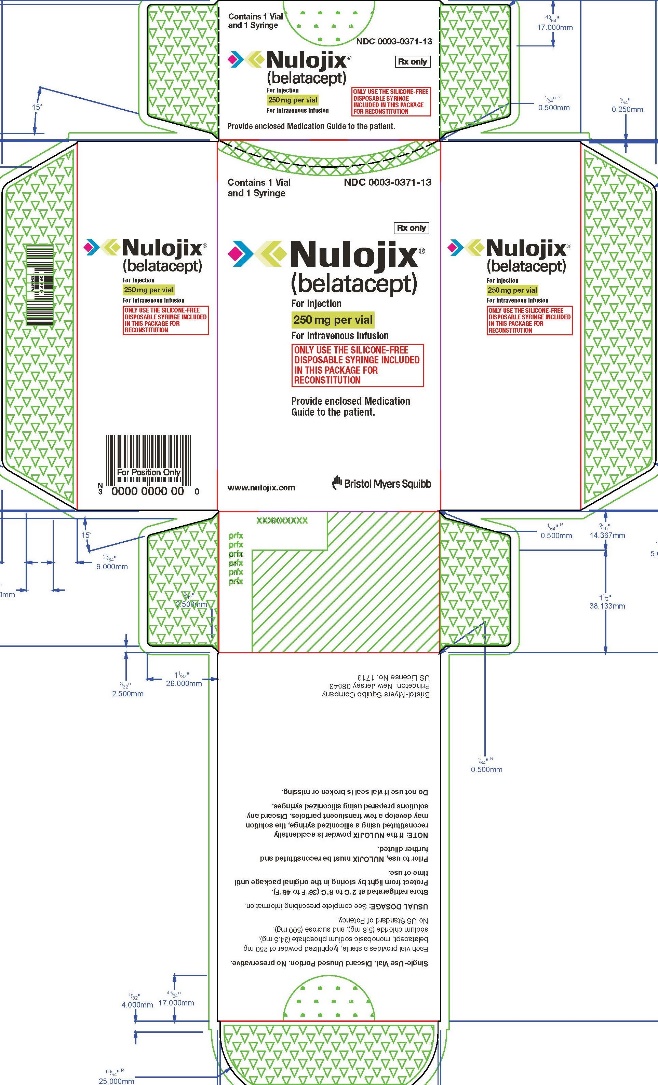
Nulojix Belatacept 250 mg Injection, Powder, Lyophilized, For Solution, 1 vial — NDC 0003-0371-13 (Billing 00003-0371-13)
This is a package of 1 vial of Nulojix Belatacept 250 mg Injection, Powder, Lyophilized, For Solution from E.R. Squibb & Sons, L.L.C., marketed since Jun 2011 and currently FDA-listed. It is this product's only package size.
NDC database record
One package, one record: these facts belong to NDC 0003-0371-13 alone.
- Record
- FDA NDC Directory package listing · Human prescription drug
- Code segments
- 0003 labeler · 0371 product · 13 package
- Package marketed since
- Jun 15, 2011
- Sample package
- No — commercial package
- Listing certified through
- Dec 31, 2026
- Billing quantity
- 1 EA per package
- Barcode (UPC-A, from the NDC)
- 3 0003037113 3
- Medicaid fills, this package
- 10,214 prescriptions in the last four reported quarters
- FDA record last changed
- Jul 24, 2026
Identity & classification
Regulatory identifiers FDA, NLM and CMS codes for this package
Drug-database identifiers Medi-Span GPI and First Databank GCN / HICL / AHFS classification
- GSN (GCN sequence number): 067516
- GCN: 30094
- GPI-14 (Medi-Span): 99408020002120
- HICL (First Databank): 037705
- AHFS class code: 90:28.12.92
- RxCUI (RxNorm): 1112976
Where does this data come from?
- FDA openFDA NDC Directory · synced Oct 1, 2026
- FDA label on DailyMed · label index refreshed Oct 5, 2026
- RxNorm (NLM RxNav) · catalog refreshed Oct 1, 2026
- Medi-Span GPI (licensed)
- First Databank (licensed) · refreshed Oct 1, 2026
RxNorm drug class
This medicine belongs to the Selective T Cell Costimulation Blocker class.
Where does this data come from?
- RxClass (NLM) · catalog refreshed Oct 1, 2026
Clinical
Belatacept injection is used in combination with other medications to prevent rejection (attack of a transplanted organ by the immune system of a person receiving the organ) of kidney transplants. Belatacept injection is in a class of medications called immunosuppressants. It works by decreasing the activity of the immune system to prevent it from attacking the transplanted kidney.
Read the full MedlinePlus article ↗- Epstein-Barr virus, or EBV, is a very common virus that most adults have been exposed to at some point — usually without ever knowing it. Nulojix can raise the risk of a serious co...
- Why do I need to be tested for EBV before I can take this medication?
- No, you won't be giving this to yourself at home. Nulojix is given as an IV infusion directly into a vein, and each session takes about 30 minutes. A nurse or healthcare profession...
- How is this medication given — do I inject it myself at home?
Patient education
Supplement & herbal interactions
Where does this data come from?
- MedlinePlus (NLM) · refreshed Oct 1, 2026
- FDA label on DailyMed · label index refreshed Oct 5, 2026
Ask a licensed pharmacist directly — free, answered by our team.
Pricing
A drug doesn't have one price. Each row is a different public payment system, and none is what you'd pay at the counter — that depends on your insurance. The ⓘ on each row explains what it measures.
| Price system | Per mL | Per package |
|---|---|---|
| Retail pharmacies payNADAC · weekly | Not in the retail survey — common for institutional, discontinued, or low-volume packs. | |
| Medicaid paysCMS SDUD · 12 mo | $799.06 | — |
| Medicare drug plans payPart D · quarterly | No Part D plan price is available for this NDC in our data. | |
| Medicare Part B allowsASP · J0485 | $3.885 / J0485 unit | — |
Where does this data come from?
- CMS NADAC weekly file
- CMS ASP pricing files · refreshed Sep 20, 2026
- CMS Medicaid State Drug Utilization Data · through Q1 2026
- CMS Part D plan pricing files · refreshed Sep 24, 2026
- VA National Acquisition Center price file
Billing & reimbursement
Where does this data come from?
- CMS ASP NDC-HCPCS crosswalk · refreshed Sep 22, 2026
- DMEPDAC NDC-HCPCS crosswalk
- openFDA NSDE billing units · refreshed Sep 7, 2026
Packaging — all sizes for this product
| Package NDC | Description | Marketing start | Marketing end | Status |
|---|---|---|---|---|
| 00003-0371-13 You're viewing this Main listing | 1 VIAL, SINGLE-USE in 1 CARTON / 1 INJECTION, POWDER, LYOPHILIZED, FOR SOLUTION in 1 VIAL, SINGLE-USE | 2011-06-15 | — | Active |
Therapeutic equivalents
| Product | Labeler | Pack | NADAC/unit | TE | Status | Price vs. this |
|---|---|---|---|---|---|---|
| Nulojix 250 mgthis 00003-0371-13 | E.R. | 1 vial | — | — | FDA listed | — |
Where does this data come from?
- FDA openFDA NDC Directory · synced Oct 1, 2026
- FDA Purple Book · refreshed Oct 5, 2026
- CMS NADAC weekly file
Availability & biosimilar status
Biologics have no small-molecule generics; biosimilar competition is tracked in the FDA Purple Book.
Why the date isn’t exact: Biosimilar timing can change because patents may be challenged, settled, licensed, added or removed, and litigation can move the real date earlier or later.
🛈 What do these terms mean?
- Biologic patent
- A patent the reference product’s maker has publicly listed. A biosimilar generally can’t launch until these expire — unless they’re invalidated or resolved in a settlement.
- Reference-product exclusivity
- A flat 12 years of FDA market protection from the biologic’s first licensure (the BPCIA). No biosimilar can be licensed before it ends, regardless of patents.
- Interchangeable exclusivity
- The first interchangeable biosimilar can earn a period as the only interchangeable version (pharmacists can substitute it without the prescriber).
- Earliest biosimilar (LOE)
- The latest of all the dates above — the soonest a biosimilar can realistically reach the market. Litigation and settlements can move it earlier.
Biologics have no small-molecule “generics” — competition comes from FDA-licensed biosimilars, tracked in the FDA Purple Book.
| Code | What it grants | Expires |
|---|---|---|
| RefProduct | Reference-product exclusivity (12-year, BPCIA) — no biosimilar can be licensed before this date | Jun 15, 2023 |
Is there a biosimilar for NULOJIX 250 MG VIAL?
Why do different websites show different biosimilar dates?
Can a biosimilar launch before the last patent expires?
What does “current Purple Book estimate” mean?
What does “FDA listed” mean?
What does a patent or protection date mean here?
Where does this data come from?
- FDA Purple Book · refreshed Oct 5, 2026
Inactive Ingredients / Excipients
Inactive ingredients, also called excipients, are components of the drug product other than the active ingredient. They may include fillers, dyes, coatings, preservatives, flavors, or other formulation ingredients.
💡 Tap an ingredient (hover on desktop) to see what it is and why it’s used.
-
5.8 mg
UNII 451W47IQ8X
Sodium chloride is common table salt. It's used in medicines as a buffer to maintain proper pH, as a filler to add bulk, or to adjust the osmotic balance in liquid formulations.
-
34.5 mg
UNII 593YOG76RN
A salt made from sodium and phosphate that helps regulate acidity and maintain proper pH balance in the medicine. It also acts as a buffer to keep the product stable.
-
500 mg
UNII C151H8M554
A natural sugar derived from sugar cane or sugar beets. It's used as a sweetener, filler, and binder to improve taste, add bulk, and help hold tablet or capsule ingredients together.
3 inactive ingredients listed in the exact product block matched to this NDC.
Where does this data come from?
ingredient classCode="IACT" elements from the exact product block matched by this NDC. Label-section narrative from DailyMed / the openFDA label index is shown separately when available.- FDA label on DailyMed · label index refreshed Oct 5, 2026
- FDA openFDA NDC Directory · synced Oct 1, 2026
Inactive ingredient FAQ
Are inactive ingredients the same for every manufacturer?
Why might an inactive ingredient be missing?
Can inactive ingredients matter?
Manufacturer & labeler
More NDCs from E.R. Squibb & Sons, L.L.C. labeler code 00003
- Cobenfy xanomeline and trospium chloride 50 mg; 20 mg Capsule, Coated Pellets NDC 0003-0050-14
- Cobenfy xanomeline and trospium chloride 125 mg; 30 mg Capsule, Coated Pellets NDC 0003-0125-14
- HALOG Halcinonide 1 mg/mL Solution NDC 0003-0249-15
- KENALOG-40 TRIAMCINOLONE ACETONIDE 40 mg/mL Injection, Suspension NDC 0003-0293-05
- KENALOG-80 TRIAMCINOLONE ACETONIDE 80 mg/mL Injection, Suspension NDC 0003-0315-05
- KENALOG-10 TRIAMCINOLONE ACETONIDE 10 mg/mL Injection, Suspension NDC 0003-0494-20
- Sprycel dasatinib 70 mg Tablet NDC 0003-0524-11
- Sprycel dasatinib 20 mg Tablet NDC 0003-0527-11
- Sprycel dasatinib 50 mg Tablet NDC 0003-0528-11
- Sprycel dasatinib 100 mg Tablet NDC 0003-0852-22
- Sprycel dasatinib 80 mg Tablet NDC 0003-0855-22
Where does this data come from?
- FDA openFDA NDC Directory · synced Oct 1, 2026
- Drugs@FDA
Full prescribing information FDA SPL
🚨 Boxed Warning ▾
WARNING: POST-TRANSPLANT LYMPHOPROLIFERATIVE DISORDER, OTHER MALIGNANCIES, AND SERIOUS INFECTIONS Increased risk for developing post-transplant lymphoproliferative disorder (PTLD), predominantly involving the central nervous system (CNS). Recipients without immunity to Epstein-Barr virus (EBV) are at a particularly increased risk; therefore, use in EBV seropositive patients only. Do not use NULOJIX in transplant recipients who are EBV seronegative or with unknown EBV serostatus [see Contraindications (4) and Warnings and Precautions (5.1) ] .
Only physicians experienced in immunosuppressive therapy and management of kidney transplant patients should prescribe NULOJIX. Patients receiving the drug should be managed in facilities equipped and staffed with adequate laboratory and supportive medical resources. The physician responsible for maintenance therapy should have complete information requisite for the follow-up of the patient [see Warnings and Precautions (5.2) ] .
Increased susceptibility to infection and the possible development of malignancies may result from immunosuppression [see Warnings and Precautions (5.1 , 5.3 , 5.4 , 5.5) ] . Use in liver transplant patients is not recommended due to an increased risk of graft loss and death [see Warnings and Precautions (5.6) ] . WARNING: POST-TRANSPLANT LYMPHOPROLIFERATIVE DISORDER, OTHER MALIGNANCIES, AND SERIOUS INFECTIONS See full prescribing information for complete boxed warning. • Increased risk for developing post-transplant lymphoproliferative disorder (PTLD), predominantly involving the central nervous system (CNS).
Recipients without immunity to Epstein-Barr virus (EBV) are at a particularly increased risk; therefore, use in EBV seropositive patients only. Do not use NULOJIX in transplant recipients who are EBV seronegative or with unknown serostatus. (4 , 5.1) • Only physicians experienced in immunosuppressive therapy and management of kidney transplant patients should prescribe NULOJIX.
(5.2) • Increased susceptibility to infection and the possible development of malignancies may result from immunosuppression. (5.1 , 5.3 , 5.4 , 5.5) • Use in liver transplant patients is not recommended due to an increased risk of graft loss and death. (5.6)
🎯 Indications and Usage ▾
1 INDICATIONS AND USAGE • NULOJIX is a selective T cell costimulation blocker indicated for prophylaxis of organ rejection in adult patients receiving a kidney transplant. (1.1) • Use in combination with basiliximab induction, mycophenolate mofetil, and corticosteroids. (1.1) Limitations of Use : • Use only in patients who are EBV seropositive.
(1.2 , 4 , 5.1) • Use has not been established for the prophylaxis of organ rejection in transplanted organs other than the kidney. (1.2 , 5.6)
1.1Adult Kidney Transplant Recipients NULOJIX ® (belatacept) is indicated for prophylaxis of organ rejection in adult patients receiving a kidney transplant. NULOJIX is to be used in combination with basiliximab induction, mycophenolate mofetil, and corticosteroids.
1.2Limitations of Use Use NULOJIX only in patients who are EBV seropositive [see Contraindications (4) and Warnings and Precautions (5.1) ] . Use of NULOJIX for the prophylaxis of organ rejection in transplanted organs other than kidney has not been established [see Warnings and Precautions (5.6) ] .
⏱️ Dosage and Administration ▾
2 DOSAGE AND ADMINISTRATION • Use of higher than recommended or more frequent dosing is not recommended due to increased risk of serious infections and malignancy. (5.1 , 5.4 , 6.1) • For complete dosing instructions, see full prescribing information. (2.1) Dosing of NULOJIX for Kidney Transplant Recipients (2.1) Dosing for Initial Phase Dose Day 1 (day of transplantation, prior to implantation) and Day 5 (approximately 96 hours after Day 1 dose) 10 mg per kg End of Week 2 and Week 4 after transplantation 10 mg per kg End of Week 8 and Week 12 after transplantation 10 mg per kg Dosing for Maintenance Phase Dose End of Week 16 after transplantation and every 4 weeks (plus or minus 3 days) thereafter 5 mg per kg • For intravenous infusion only; administer over 30 minutes.
(2.1 , 2.2) • Only use the enclosed silicone-free disposable syringe to prepare for administration. (2.2)
2.1Dosage in Adult Kidney Transplant Recipients NULOJIX should be administered in combination with basiliximab induction, mycophenolate mofetil (MMF), and corticosteroids. In clinical trials the median (25 th to 75 th percentile) corticosteroid doses were tapered to approximately 15 mg (10 to 20 mg) per day by the first 6 weeks and remained at approximately 10 mg (5 to 10 mg) per day for the first 6 months post-transplant. Corticosteroid utilization should be consistent with the NULOJIX clinical trial experience [see Warnings and Precautions (5.7) and Clinical Studies (14.1) ] .
Due to an increased risk of post-transplant lymphoproliferative disorder (PTLD) predominantly involving the central nervous system (CNS), progressive multifocal leukoencephalopathy (PML), and serious CNS infections, administration of higher than the recommended doses or more frequent dosing of NULOJIX is not recommended [see Warnings and Precautions (5.1 , 5.4 , 5.5) and Adverse Reactions (6.1) ] . NULOJIX is for intravenous infusion only. Patients do not require premedication prior to administration of NULOJIX.
Dosing instructions are provided in Table 1. • The total infusion dose of NULOJIX should be based on the actual body weight of the patient at the time of transplantation, and should not be modified during the course of therapy, unless there is a change in body weight of greater than 10%. • The prescribed dose of NULOJIX must be evenly divisible by 12.5 mg in order for the dose to be prepared accurately using the reconstituted solution and the silicone-free disposable syringe provided. Evenly divisible increments are 0, 12.5, 25, 37.5, 50, 62.5, 75, 87.5, and 100.
For example: - A patient weighs 64 kg. The dose is 10 mg per kg. - Calculated Dose: 64 kg × 10 mg per kg = 640 mg - The closest doses evenly divisible by 12.5 mg below and above 640 mg are 637.5 mg and 650 mg. - The nearest dose to 640 mg is 637.5 mg. - Therefore, the actual prescribed dose for the patient should be 637.5 mg. Table 1: Dosing a,b of NULOJIX for Kidney Transplant Recipients a [See Clinical Studies (14.1) ] b The dose prescribed for the patient must be evenly divisible by 12.5 mg (see instructions above; eg, evenly divisible increments are 0, 12.5, 25, 37.5, 50, 62.5, 75, 87.5, and 100).
Dosing for Initial Phase Dose Day 1 (day of transplantation, prior to implantation) and Day 5 (approximately 96 hours after Day 1 dose) 10 mg per kg End of Week 2 and Week 4 after transplantation 10 mg per kg End of Week 8 and Week 12 after transplantation 10 mg per kg Dosing for Maintenance Phase Dose End of Week 16 after transplantation and every 4 weeks (plus or minus 3 days) thereafter 5 mg per kg
2.2Preparation and Administration Instructions NULOJIX is for intravenous infusion only. Caution: NULOJIX must be reconstituted/prepared using only the silicone-free disposable syringe provided with each vial. If the silicone-free disposable syringe is dropped or becomes contaminated, use a new silicone-free disposable syringe from inventory.
Preparation for Administration 1. Calculate the number of NULOJIX vials requir… [Excerpted — this section continues on DailyMed.]
💊 Dosage Forms and Strengths ▾
3 DOSAGE FORMS AND STRENGTHS Lyophilized powder for injection: 250 mg per vial. Lyophilized powder for injection: 250 mg per vial (3)
⛔ Contraindications ▾
4 CONTRAINDICATIONS NULOJIX is contraindicated in transplant recipients who are Epstein-Barr virus (EBV) seronegative or with unknown EBV serostatus due to the risk of post-transplant lymphoproliferative disorder (PTLD), predominantly involving the central nervous system (CNS) [see Boxed Warning and Warnings and Precautions (5.1) ] . Patients who are EBV seronegative or with unknown EBV serostatus. (4)
⚠️ Warnings and Cautions ▾
5 WARNINGS AND PRECAUTIONS • Post-Transplant Lymphoproliferative Disorder (PTLD) : increased risk, predominantly involving the CNS; monitor for new or worsening neurological, cognitive, or behavioral signs and symptoms. (Boxed Warning , 4 , 5.1 , 5.6) • Other malignancies : increased risk with all immunosuppressants; appears related to intensity and duration of use. Avoid prolonged exposure to UV light and sunlight.
(5.3) • Progressive Multifocal Leukoencephalopathy (PML) : increased risk; consider in the diagnosis of patients reporting new or worsening neurological, cognitive, or behavioral signs and symptoms. Recommended doses of immunosuppressants should not be exceeded. (5.4) • Other serious infections : increased risk of bacterial, viral, fungal, and protozoal infections, including opportunistic infections and tuberculosis.
Some infections were fatal. Polyoma virus-associated nephropathy can lead to kidney graft loss; consider reduction in immunosuppression. Evaluate for tuberculosis and initiate treatment for latent infection prior to NULOJIX use.
Cytomegalovirus and pneumocystis prophylaxis are recommended after transplantation. (5.1 , 5.4 , 5.5) • Liver transplant : use is not recommended. (5.6) • Acute Rejection and Graft Loss with Corticosteroid Minimization : corticosteroid utilization should be consistent with the NULOJIX clinical trial experience.
(2.1 , 5.7 , 14.1) • Immunizations : avoid use of live vaccines during treatment. (5.8) • Coadministration with Anti-Thymocyte Globulin: in de novo kidney transplant recipients, especially those with other predisposing risk factors for venous thrombosis of the renal allograft, coadministration (at the same or nearly the same time) with anti-thymocyte globulin may pose a risk for venous thrombosis of the renal allograft. ( 5.9 , 6.2 , 7.3 ) • Risk of Rejection with Conversion From a CNI Based Maintenance Regimen: conversion of maintenance kidney transplant recipients from a CNI based to NULOJIX based maintenance regimen increases the risk of acute rejection.
Conversion of stable kidney transplant recipients from a CNI based maintenance therapy to a belatacept based maintenance therapy is not recommended unless the patient is CNI intolerant. (5.10)
5.1Post-Transplant Lymphoproliferative Disorder NULOJIX-treated patients have an increased risk for developing post-transplant lymphoproliferative disorder (PTLD), predominantly involving the CNS, compared to patients on a cyclosporine-based regimen [see Adverse Reactions (6.1) , Clinical Studies (14.2) ] . As the total burden of immunosuppression is a risk factor for PTLD, higher than the recommended doses or more frequent dosing of NULOJIX and higher than recommended doses of concomitant immunosuppressive agents are not recommended [see Dosage and Administration (2.1) and Warnings and Precautions (5.6) ] .
Physicians should consider PTLD in patients reporting new or worsening neurological, cognitive, or behavioral signs or symptoms. EBV Serostatus The risk of PTLD was higher in EBV seronegative patients compared to EBV seropositive patients. EBV seropositive patients are defined as having evidence of acquired immunity shown by the presence of IgG antibodies to viral capsid antigen (VCA) and EBV nuclear antigen (EBNA).
Epstein-Barr virus serology should be ascertained before starting administration of NULOJIX, and only patients who are EBV seropositive should receive NULOJIX. Transplant recipients who are EBV seronegative, or with unknown serostatus, should not receive NULOJIX [see Boxed Warning and Contraindications (4) ] . Other Risk Factors Other known risk factors for PTLD include cytomegalovirus (CMV) infection and T cell-depleting therapy.
T cell-depleting therapies to treat acute rejection should be used cautiously. CMV prophylaxis is recommended for at least 3 months after transplantation [see Warnings and Precautions (5.5) ] . Patients who are EBV seropositive and CMV seronegative may be at increased risk for PTLD com… [Excerpted — this section continues on DailyMed.]
🤒 Adverse Reactions ▾
6 ADVERSE REACTIONS The most serious adverse reactions reported with NULOJIX are: • PTLD, predominantly CNS PTLD, and other malignancies [see Boxed Warning and Warnings and Precautions (5.1 , 5.3) ] • Serious infections, including JC virus-associated PML and polyoma virus nephropathy [see Warnings and Precautions (5.4 , 5.5 , 5.6) ] Most common adverse reactions (≥20% on NULOJIX treatment) are anemia, diarrhea, urinary tract infection, peripheral edema, constipation, hypertension, pyrexia, graft dysfunction, cough, nausea, vomiting, headache, hypokalemia, hyperkalemia, and leukopenia.
(6.1) To report SUSPECTED ADVERSE REACTIONS, contact Bristol-Myers Squibb at 1-800-721-5072 or FDA at 1-800-FDA-1088 or www.fda.gov/medwatch .
6.1Clinical Studies Experience Because clinical trials are conducted under widely varying conditions, the adverse reaction rates observed cannot be directly compared to rates in other trials and may not reflect the rates observed in clinical practice. The data described below primarily derive from two randomized, active-controlled three-year trials of NULOJIX in de novo kidney transplant patients. In Study 1 and Study 2, NULOJIX was studied at the recommended dose and frequency [see Dosage and Administration (2.1) ] in a total of 401 patients compared to a cyclosporine control regimen in a total of 405 patients.
These two trials also included a total of 403 patients treated with a NULOJIX regimen of higher cumulative dose and more frequent dosing than recommended [see Clinical Studies (14.1) ] . All patients also received basiliximab induction, mycophenolate mofetil, and corticosteroids. Patients were treated and followed for three years.
CNS PTLD, PML, and other CNS infections were more frequently observed in association with a NULOJIX regimen of higher cumulative dose and more frequent dosing compared to the recommended regimen; therefore, administration of higher than the recommended doses and/or more frequent dosing of NULOJIX is not recommended [see Dosage and Administration (2.1) , Clinical Studies (14.2) ] . The average age of patients in Studies 1 and 2 in the NULOJIX recommended dose and cyclosporine control regimens was 49 years, ranging from 18 to 79 years.
Approximately 70% of patients were male; 67% were white, 11% were black, and 22% other races. About 25% of patients were from the United States and 75% from other countries. The most commonly reported adverse reactions occurring in ≥20% of patients treated with the recommended dose and frequency of NULOJIX were anemia, diarrhea, urinary tract infection, peripheral edema, constipation, hypertension, pyrexia, graft dysfunction, cough, nausea, vomiting, headache, hypokalemia, hyperkalemia, and leukopenia.
The proportion of patients who discontinued treatment due to adverse reactions was 13% for the recommended NULOJIX regimen and 19% for the cyclosporine control arm through three years of treatment. The most common adverse reactions leading to discontinuation in NULOJIX-treated patients were cytomegalovirus infection (1.5%) and complications of transplanted kidney (1.5%). Information on selected significant adverse reactions observed during clinical trials is summarized below.
Post-Transplant Lymphoproliferative Disorder Reported cases of post-transplant lymphoproliferative disorder (PTLD) up to 36 months post-transplant were obtained for NULOJIX by pooling both dosage regimens of NULOJIX in Studies 1 and 2 (804 patients) with data from a third study in kidney transplantation (Study 3, 145 patients) which evaluated two NULOJIX dosage regimens similar, but slightly different, from those of Studies 1 and 2 (see Table 2). The total number of NULOJIX patients from these three studies (949) was compared to the pooled cyclosporine control groups from all three studies (476 patients).
Among 401 patients in Studies 1 and 2 treated with the recommended regimen of NULOJIX and the 71 patients in Study 3 treated with a very similar (but non-identical) NULO… [Excerpted — this section continues on DailyMed.]
🔄 Drug Interactions ▾
7 DRUG INTERACTIONS
7.1Mycophenolate Mofetil (MMF) Monitor for a need to adjust concomitant mycophenolate mofetil (MMF) dosage when a patient’s therapy is switched between cyclosporine and NULOJIX, as cyclosporine decreases mycophenolic acid (MPA) exposure by preventing enterohepatic recirculation of MPA while NULOJIX does not [see Clinical Pharmacology (12.3) ] : • A higher MMF dosage may be needed after switching from NULOJIX to cyclosporine, since this may result in lower MPA concentrations and increase the risk of graft rejection. • A lower MMF dosage may be needed after switching from cyclosporine to NULOJIX, since this may result in higher MPA concentrations and increase the risk for adverse reactions related to MPA (review the Full Prescribing Information for MMF).
7.2Cytochrome P450 Substrates No dosage adjustments are needed for drugs metabolized via CYP1A2, CYP2C9, CYP2D6, CYP3A, and CYP2C19 when coadministered with NULOJIX [see Clinical Pharmacology (12.3) ] .
7.3Anti-Thymocyte Globulin Coadministration (at the same or nearly the same time) of anti-thymocyte globulin (or any other cell-depleting induction treatment) and belatacept in de novo kidney transplant recipients, especially those with other predisposing risk factors for venous thrombosis of the renal allograft, may pose a risk for venous thrombosis of the renal allograft [see Warnings and Precautions (5.9) ] .
👥 Use in Specific Populations ▾
8 USE IN SPECIFIC POPULATIONS • Pregnancy : Based on animal data, may cause fetal harm; pregnancy registry available. (8.1) • Lactation : Discontinue drug or nursing, taking into consideration importance of drug to mother. (8.2)
8.1Pregnancy Pregnancy Exposure Registry To monitor maternal-fetal outcomes of pregnant women who have received immunosuppressants including NULOJIX or whose partners have received NULOJIX, healthcare providers are strongly encouraged to register pregnant patients in the Transplant Pregnancy Registry International (TPR) by calling 1-877-955-6877. Risk Summary The data with NULOJIX use in pregnant women are insufficient to inform on drug-associated risk. Belatacept is known to cross the placenta of animals.
Administration of belatacept to pregnant rats and rabbits during the period of organogenesis was not teratogenic at exposures approximately 16 and 19 times greater than that observed at the maximum recommended human dose (MRHD) of 10 mg per kg body weight administered over the first month of treatment, based on area under the concentration-time curve (AUC). In a pre- and postnatal development study in rats, treatment-related infections in dams were associated with increased pup mortality, presumably secondary to deteriorating maternal health, at exposures 3 times higher than that observed at MRHD [see Animal Data ] .
The background risk of major birth defects and miscarriage for the indicated population is unknown; however, in the U.S. general population, the estimated background risk of major birth defects is 2 to 4% and of miscarriage is 15 to 20% of clinically recognized pregnancies. Data Animal Data In embryo-fetal development studies, daily intravenous administration of belatacept to pregnant rats and rabbits throughout the period of organogenesis did not produce adverse fetal effects at doses up to 200 mg per kg and 100 mg per kg, respectively (16 and 19 times the MRHD exposure, based on AUC).
In a pre- and postnatal development study, daily intravenous administration of belatacept to rats from Day 6 of gestation through Day 20 of the lactation period was associated with maternal toxicity (infections) in a small percentage of dams at doses ≥20 mg per kg (3 times the MRHD exposure, based on AUC) resulting in increased pup mortality (up to 100% pup mortality in some dams). In pups that survived, there were no abnormalities or malformations at doses up to 200 mg per kg (19 times the MRHD exposure, based on AUC).
In vitro data indicate that belatacept has lower binding affinity to CD80/CD86 and lower potency in rodents than in humans. Although the rat toxicity studies with belatacept were done at pharmacologically saturating doses, the in vivo difference in potency between rats and humans is unknown. Therefore, the relevance of the rat toxicities to humans and the significance of the magnitude of the relative exposures (rats:humans) are unknown.
Abatacept, a fusion protein that differs from belatacept by two amino acids, binds to the same ligands (CD80/CD86) and blocks T cell costimulation like belatacept, but is more active than belatacept in rodents. Therefore, toxicities identified with abatacept in rodents, including infections and autoimmunity, may be predictive of adverse effects in humans treated with belatacept [see Nonclinical Toxicology (13.2) ] . Autoimmunity was observed in 1 rat offspring exposed to abatacept in utero and/or during lactation and in juvenile rats after treatment with abatacept.
However, the clinical relevance of autoimmunity in rats to patients or a fetus exposed in utero is unknown [see Nonclinical Toxicology (13.2) ] .
8.2Lactation Risk Summary There are no data on the presence of NULOJIX in human milk or the effects of NULOJIX on breastfed infants or human milk production to inform risk of NULOJIX to an infant during lactation. Belatacept is excreted in rat milk after intravenous administration, and it is possible that the drug will be present in human milk. Howeve… [Excerpted — this section continues on DailyMed.]
🤰 Pregnancy ▾
8.1Pregnancy Pregnancy Exposure Registry To monitor maternal-fetal outcomes of pregnant women who have received immunosuppressants including NULOJIX or whose partners have received NULOJIX, healthcare providers are strongly encouraged to register pregnant patients in the Transplant Pregnancy Registry International (TPR) by calling 1-877-955-6877. Risk Summary The data with NULOJIX use in pregnant women are insufficient to inform on drug-associated risk. Belatacept is known to cross the placenta of animals.
Administration of belatacept to pregnant rats and rabbits during the period of organogenesis was not teratogenic at exposures approximately 16 and 19 times greater than that observed at the maximum recommended human dose (MRHD) of 10 mg per kg body weight administered over the first month of treatment, based on area under the concentration-time curve (AUC). In a pre- and postnatal development study in rats, treatment-related infections in dams were associated with increased pup mortality, presumably secondary to deteriorating maternal health, at exposures 3 times higher than that observed at MRHD [see Animal Data ] .
The background risk of major birth defects and miscarriage for the indicated population is unknown; however, in the U.S. general population, the estimated background risk of major birth defects is 2 to 4% and of miscarriage is 15 to 20% of clinically recognized pregnancies. Data Animal Data In embryo-fetal development studies, daily intravenous administration of belatacept to pregnant rats and rabbits throughout the period of organogenesis did not produce adverse fetal effects at doses up to 200 mg per kg and 100 mg per kg, respectively (16 and 19 times the MRHD exposure, based on AUC).
In a pre- and postnatal development study, daily intravenous administration of belatacept to rats from Day 6 of gestation through Day 20 of the lactation period was associated with maternal toxicity (infections) in a small percentage of dams at doses ≥20 mg per kg (3 times the MRHD exposure, based on AUC) resulting in increased pup mortality (up to 100% pup mortality in some dams). In pups that survived, there were no abnormalities or malformations at doses up to 200 mg per kg (19 times the MRHD exposure, based on AUC).
In vitro data indicate that belatacept has lower binding affinity to CD80/CD86 and lower potency in rodents than in humans. Although the rat toxicity studies with belatacept were done at pharmacologically saturating doses, the in vivo difference in potency between rats and humans is unknown. Therefore, the relevance of the rat toxicities to humans and the significance of the magnitude of the relative exposures (rats:humans) are unknown.
Abatacept, a fusion protein that differs from belatacept by two amino acids, binds to the same ligands (CD80/CD86) and blocks T cell costimulation like belatacept, but is more active than belatacept in rodents. Therefore, toxicities identified with abatacept in rodents, including infections and autoimmunity, may be predictive of adverse effects in humans treated with belatacept [see Nonclinical Toxicology (13.2) ] . Autoimmunity was observed in 1 rat offspring exposed to abatacept in utero and/or during lactation and in juvenile rats after treatment with abatacept.
However, the clinical relevance of autoimmunity in rats to patients or a fetus exposed in utero is unknown [see Nonclinical Toxicology (13.2) ] .
🧒 Pediatric Use ▾
8.4Pediatric Use The safety and efficacy of NULOJIX in patients under 18 years of age have not been established. Because T cell development continues into the teenage years, the potential concern for autoimmunity in neonates applies to pediatric use as well [see Use in Specific Populations (8.1) ] .
🧓 Geriatric Use ▾
8.5Geriatric Use Of 401 patients treated with the recommended dosage regimen of NULOJIX, 15% were 65 years of age and older, while 3% were 75 and older. No overall differences in safety or effectiveness were observed between these subjects and younger subjects, but greater sensitivity or less efficacy in older individuals cannot be ruled out.
🆘 Overdosage ▾
10 OVERDOSAGE Single doses up to 20 mg per kg of NULOJIX have been administered to healthy subjects without apparent toxic effect. The administration of NULOJIX of higher cumulative dose and more frequent dosing than recommended in kidney transplant patients resulted in a higher frequency of CNS-related adverse reactions [see Adverse Reactions (6.1) ] . In case of overdosage, it is recommended that the patient be monitored for any signs or symptoms of adverse reactions and appropriate symptomatic treatment instituted.
🧬 Clinical Pharmacology ▾
12 CLINICAL PHARMACOLOGY
12.1Mechanism of Action Belatacept, a selective T cell (lymphocyte) costimulation blocker, binds to CD80 and CD86 on antigen-presenting cells thereby blocking CD28 mediated costimulation of T lymphocytes. In vitro, belatacept inhibits T lymphocyte proliferation and the production of the cytokines interleukin-2, interferon-γ, interleukin-4, and TNF-α. Activated T lymphocytes are the predominant mediators of immunologic rejection.
In non-human primate models of renal transplantation, belatacept monotherapy prolonged graft survival and decreased the production of anti-donor antibodies, compared to vehicle.
12.2Pharmacodynamics Belatacept-mediated costimulation blockade results in the inhibition of cytokine production by T cells required for antigen-specific antibody production by B cells. In clinical trials, greater reductions in mean immunoglobulin (IgG, IgM, and IgA) concentrations were observed from baseline to Month 6 and Month 12 post-transplant in belatacept-treated patients compared to cyclosporine-treated patients. In an exploratory subset analysis, a trend of decreasing IgG concentrations with increasing belatacept trough concentrations was observed at Month 6.
Also in this exploratory subset analysis, belatacept-treated patients with CNS PTLD, CNS infections including PML, other serious infections, and malignancies were observed to have a higher incidence of IgG concentrations below the lower limit of the normal range (<694 mg/dL) at Month 6 than those patients who did not experience these adverse events. This observation was more pronounced with the higher than recommended dose of belatacept. A similar trend was also observed for cyclosporine-treated patients with serious infections and malignancies.
However, it is unclear whether any causal relationship between an IgG concentration below the lower level of normal and these adverse events exists, as the analysis may have been confounded by other factors (eg, age greater than 60 years, receipt of an extended criteria donor kidney, exposure to lymphocyte-depleting agents) which were also associated with IgG below the lower level of normal at Month 6 in these trials.
12.3Pharmacokinetics Table 5 summarizes the pharmacokinetic parameters of belatacept in healthy adult subjects after a single 10 mg per kg intravenous infusion; and in kidney transplant patients after the 10 mg per kg intravenous infusion at Week 12, and after 5 mg per kg intravenous infusion every four weeks at Month 12 post-transplant or later. Table 5: Pharmacokinetic Parameters (Mean±SD [Range]) of Belatacept in Healthy Subjects and Kidney Transplant Patients After 5 and 10 mg per kg Intravenous Infusions Administered Over 30 Minutes Pharmacokinetic Parameter Healthy Subjects (After 10 mg per kg Single Dose) N=15 Kidney Transplant Patients (After 10 mg per kg Multiple Doses) N=10 Kidney Transplant Patients (After 5 mg per kg Multiple Doses) N=14 a AUC=AUC (INF) after single dose and AUC (TAU) after multiple dose, where TAU=4 weeks Peak concentration (C max ) [µg/mL] 300±77 (190-492) 247±68 (161-340) 139±28 (80-176) AUC a [μg•h/mL] 26398±5175 (18964-40684) 22252±7868 (13575-42144) 14090±3860 (7906-20510) Terminal half-life (t 1/2 ) [days] 9.8±2.8 (6.4-15.6) 9.8±3.2 (6.1-15.1) 8.2±2.4 (3.1-11.9) Systemic clearance (CL) [mL/h/kg] 0.39±0.07 (0.25-0.53) 0.49±0.13 (0.23-0.70) 0.51±0.14 (0.33-0.75) Volume of distribution (Vss) [L/kg] 0.09±0.02 (0.07-0.15) 0.11±0.03 (0.067-0.17) 0.12±0.03 (0.09-0.17) In healthy subjects, the pharmacokinetics of belatacept was linear and the exposure to belatacept increased proportionally after a single intravenous infusion dose of 1 to 20 mg per kg.
The pharmacokinetics of belatacept in de novo kidney transplant patients and healthy subjects are comparable. Following the recommended regimen, the mean belatacept serum concentration reached steady-state by Week 8 in the initial phase following transplantation and by Month 6 during the maintenance phase.… [Excerpted — this section continues on DailyMed.]
🧬 Mechanism of Action ▾
12.1Mechanism of Action Belatacept, a selective T cell (lymphocyte) costimulation blocker, binds to CD80 and CD86 on antigen-presenting cells thereby blocking CD28 mediated costimulation of T lymphocytes. In vitro, belatacept inhibits T lymphocyte proliferation and the production of the cytokines interleukin-2, interferon-γ, interleukin-4, and TNF-α. Activated T lymphocytes are the predominant mediators of immunologic rejection.
In non-human primate models of renal transplantation, belatacept monotherapy prolonged graft survival and decreased the production of anti-donor antibodies, compared to vehicle.
📦 How Supplied / Storage and Handling ▾
16 HOW SUPPLIED/STORAGE AND HANDLING NULOJIX ® (belatacept) lyophilized powder for intravenous infusion is supplied as a single-use vial with a silicone-free disposable syringe in the following packaging configuration: Description NDC Number One 250-mg vial One 12 mL Syringe 0003-0371-13
16.1Storage NULOJIX lyophilized powder is stored refrigerated at 2°C to 8°C (36°F to 46°F). Protect NULOJIX from light by storing in the original package until time of use. The reconstituted solution should be transferred from the vial to the infusion bag or bottle immediately.
The NULOJIX infusion must be completed within 24 hours of constitution of the NULOJIX lyophilized powder. If not used immediately, the infusion solution may be stored under refrigeration conditions: 2°C to 8°C (36°F to 46°F) and protected from light for up to 24 hours (a maximum of 4 hours of the total 24 hours can be at room temperature: 20°C to 25°C [68°F to 77°F] and room light) [see Dosage and Administration (2.2) ] .
📦 Storage and Handling ▾
16.1Storage NULOJIX lyophilized powder is stored refrigerated at 2°C to 8°C (36°F to 46°F). Protect NULOJIX from light by storing in the original package until time of use. The reconstituted solution should be transferred from the vial to the infusion bag or bottle immediately.
The NULOJIX infusion must be completed within 24 hours of constitution of the NULOJIX lyophilized powder. If not used immediately, the infusion solution may be stored under refrigeration conditions: 2°C to 8°C (36°F to 46°F) and protected from light for up to 24 hours (a maximum of 4 hours of the total 24 hours can be at room temperature: 20°C to 25°C [68°F to 77°F] and room light) [see Dosage and Administration (2.2) ] .
📋 Description ▾
11 DESCRIPTION NULOJIX ® (belatacept), a selective T cell costimulation blocker, is a soluble fusion protein consisting of the modified extracellular domain of CTLA-4 fused to a portion (hinge-CH2-CH3 domains) of the Fc domain of a human immunoglobulin G1 antibody. Belatacept is produced by recombinant DNA technology in a mammalian cell expression system. Two amino acid substitutions (L104 to E; A29 to Y) were made in the ligand binding region of CTLA-4.
As a result of these modifications, belatacept binds CD80 and CD86 more avidly than abatacept, the parent CTLA4-Immunoglobulin (CTLA4-Ig) molecule from which it is derived. The molecular weight of belatacept is approximately 90 kilodaltons. NULOJIX is supplied as a sterile, white or off-white lyophilized powder for intravenous administration.
Prior to use, the lyophile is reconstituted with a suitable fluid to obtain a clear to slightly opalescent, colorless to pale yellow solution, with a pH in the range of 7.2 to 7.8. Suitable fluids for constitution of the lyophile include SWFI, 0.9% NS, or D5W [see Dosage and Administration (2.2) ] . Each 250 mg single-use vial of NULOJIX also contains: monobasic sodium phosphate (34.5 mg), sodium chloride (5.8 mg), and sucrose (500 mg).
💬 Information for Patients ▾
17 PATIENT COUNSELING INFORMATION Advise the patient to read the FDA-approved patient labeling (Medication Guide). Post-Transplant Lymphoproliferative Disorder The overall risk of PTLD, especially CNS PTLD, was elevated in NULOJIX-treated patients. Instruct patients to immediately report any of the following neurological, cognitive, or behavioral signs and symptoms during and after therapy with NULOJIX [see Boxed Warning and Warnings and Precautions (5.1) ] : • changes in mood or usual behavior • confusion, problems thinking, loss of memory • changes in walking or talking • decreased strength or weakness on one side of the body • changes in vision Other Malignancies Inform patients about the increased risk of malignancies, in addition to PTLD, while taking immunosuppressive therapy, especially skin cancer.
Instruct patients to limit exposure to sunlight and UV light by wearing protective clothing and using a sunscreen with a high protection factor. Instruct patients to look for any signs and symptoms of skin cancer, such as suspicious moles or lesions [see Warnings and Precautions (5.3) ] . Progressive Multifocal Leukoencephalopathy Cases of PML have been reported in NULOJIX-treated patients.
Instruct patients to immediately report any of the following neurological, cognitive, or behavioral signs and symptoms during and after therapy with NULOJIX [see Warnings and Precautions (5.4) ] : • changes in mood or usual behavior • confusion, problems thinking, loss of memory • changes in walking or talking • decreased strength or weakness on one side of the body • changes in vision Other Serious Infections Inform patients about the increased risk of infection while taking immunosuppressive therapy. Instruct patients to adhere to antimicrobial prophylaxis regimens as prescribed.
Tell patients to immediately report any signs and symptoms of infection during therapy with NULOJIX [see Warnings and Precautions (5.5) ] . Immunizations Inform patients that vaccinations may be less effective while they are being treated with NULOJIX. Advise patients that live vaccines should be avoided [see Warnings and Precautions (5.8) ] .
Pregnant Women and Nursing Mothers Inform patients that NULOJIX has not been studied in pregnant women or nursing mothers so the effects of NULOJIX on pregnant women or nursing infants are not known. Instruct patients to tell their healthcare provider if they are pregnant, become pregnant, or are thinking about becoming pregnant [see Use in Specific Populations (8.1) ] . Instruct patients to tell their healthcare provider if they plan to breast-feed their infant [see Use in Specific Populations (8.2) ] .
💬 Medication Guide ▾
MEDICATION GUIDE NULOJIX ® (noo-LOJ-jiks) (belatacept) For Injection, For Intravenous Use Read this Medication Guide before you start receiving NULOJIX and before each treatment. There may be new information. This Medication Guide does not take the place of talking with your doctor about your medical condition or your treatment.
What is the most important information I should know about NULOJIX? NULOJIX increases your risk of serious side effects, including: • Post-transplant lymphoproliferative disorder (PTLD). PTLD is a condition that can happen if certain white blood cells grow out of control after an organ transplant because your immune system is weak.
PTLD can get worse and become a type of cancer. PTLD can lead to death. People treated with NULOJIX have a higher risk of getting PTLD.
If you get PTLD with NULOJIX you are at especially high risk of getting it in your brain. Your risk for PTLD is also higher if you: • have never been exposed to the Epstein-Barr virus (EBV). Your doctor should test you for EBV.
Do not receive NULOJIX unless you are EBV positive (you have been exposed to EBV). • get an infection with a virus called cytomegalovirus (CMV). • receive treatment for transplant rejection that lowers certain white blood cells called T lymphocytes. • Increased risk of getting cancers other than PTLD. People who take medicines that weaken the immune system, including NULOJIX, have a higher risk of getting other cancers, including skin cancer. Talk to your doctor about your risk for cancer.
See " What should I avoid while receiving NULOJIX? " • Progressive multifocal leukoencephalopathy (PML). PML is a rare, serious brain infection caused by JC virus. People with weakened immune systems are at risk for getting PML.
PML can result in death or severe disability. There is no known prevention, treatment, or cure for PML. • Increased risk of getting other serious infections, including tuberculosis (TB) and other infections caused by bacteria, viruses, or fungi. These serious infections may lead to death.
Also, a virus called BK virus can affect how your kidney works and cause your transplanted kidney to fail. Tell your doctor right away if you get any of the following symptoms during treatment with NULOJIX: • change in mood or your usual behavior • confusion or problems thinking or with memory • change in the way you walk or talk • decreased strength or weakness on one side of your body • change in vision • fever, night sweats, or tiredness that does not go away • weight loss • swollen glands • flu, cold symptoms, or cough • stomach-area pain • vomiting or diarrhea • tenderness over your transplanted kidney • change in the amount of urine that you make, blood in your urine, pain or burning on urination • a new skin lesion or bump, or change in size or color of a mole See " What are the possible side effects of NULOJIX? " for more information about side effects.
Liver transplant patients should not receive NULOJIX because of an increased risk of losing the transplanted liver (graft loss) and death. Talk to your doctor if you would like more information about this risk. What is NULOJIX?
NULOJIX is a prescription medicine used in adults to prevent transplant rejection in people who have received a kidney transplant. Transplant rejection happens when the body’s immune system senses that the new transplanted kidney is different or foreign, and attacks it. NULOJIX is used with corticosteroids and certain other medicines to help prevent rejection of your new kidney.
It is not known if NULOJIX is safe and effective in children under 18 years of age. NULOJIX is only used in people who have been exposed to the EBV virus. It is not known if NULOJIX is safe and effective in people who receive an organ transplant other than a kidney transplant.
Who should not receive NULOJIX? Do not receive treatment with NULOJIX if you are EBV negative. Your doctor will do a test to see if you were exposed to EBV in the past.
What should I tell my doct… [Excerpted — this section continues on DailyMed.]
🧬 Pharmacokinetics ▾
12.3Pharmacokinetics Table 5 summarizes the pharmacokinetic parameters of belatacept in healthy adult subjects after a single 10 mg per kg intravenous infusion; and in kidney transplant patients after the 10 mg per kg intravenous infusion at Week 12, and after 5 mg per kg intravenous infusion every four weeks at Month 12 post-transplant or later. Table 5: Pharmacokinetic Parameters (Mean±SD [Range]) of Belatacept in Healthy Subjects and Kidney Transplant Patients After 5 and 10 mg per kg Intravenous Infusions Administered Over 30 Minutes Pharmacokinetic Parameter Healthy Subjects (After 10 mg per kg Single Dose) N=15 Kidney Transplant Patients (After 10 mg per kg Multiple Doses) N=10 Kidney Transplant Patients (After 5 mg per kg Multiple Doses) N=14 a AUC=AUC (INF) after single dose and AUC (TAU) after multiple dose, where TAU=4 weeks Peak concentration (C max ) [µg/mL] 300±77 (190-492) 247±68 (161-340) 139±28 (80-176) AUC a [μg•h/mL] 26398±5175 (18964-40684) 22252±7868 (13575-42144) 14090±3860 (7906-20510) Terminal half-life (t 1/2 ) [days] 9.8±2.8 (6.4-15.6) 9.8±3.2 (6.1-15.1) 8.2±2.4 (3.1-11.9) Systemic clearance (CL) [mL/h/kg] 0.39±0.07 (0.25-0.53) 0.49±0.13 (0.23-0.70) 0.51±0.14 (0.33-0.75) Volume of distribution (Vss) [L/kg] 0.09±0.02 (0.07-0.15) 0.11±0.03 (0.067-0.17) 0.12±0.03 (0.09-0.17) In healthy subjects, the pharmacokinetics of belatacept was linear and the exposure to belatacept increased proportionally after a single intravenous infusion dose of 1 to 20 mg per kg.
The pharmacokinetics of belatacept in de novo kidney transplant patients and healthy subjects are comparable. Following the recommended regimen, the mean belatacept serum concentration reached steady-state by Week 8 in the initial phase following transplantation and by Month 6 during the maintenance phase. Following once monthly intravenous infusion of 10 mg per kg and 5 mg per kg, there was about 20% and 10% systemic accumulation of belatacept in kidney transplant patients, respectively.
Based on population pharmacokinetic analysis of 924 kidney transplant patients up to one year post-transplant, the pharmacokinetics of belatacept were similar at different time periods post-transplant. In clinical trials, trough concentrations of belatacept were consistently maintained from Month 6 up to three years post-transplant. Population pharmacokinetic analyses in kidney transplant patients revealed that there was a trend toward higher clearance of belatacept with increasing body weight.
Age, gender, race, renal function (measured by calculated glomerular filtration rate [GFR]), hepatic function (measured by albumin), diabetes, and concomitant dialysis did not affect the clearance of belatacept. Drug Interactions Mycophenolate Mofetil In a pharmacokinetic substudy of Studies 1 and 2, the plasma concentrations of MPA were measured in 41 patients who received fixed MMF doses of 500 to 1500 mg twice daily with either 5 mg per kg of NULOJIX or cyclosporine. The mean dose-normalized MPA C max and AUC 0-12 were approximately 20% and 40% higher, respectively, with NULOJIX coadministration than with cyclosporine coadministration [see Drug Interactions (7.1) ] .
Cytochrome P450 Substrates The potential of NULOJIX to alter the systemic concentrations of drugs that are CYP450 substrates was investigated in healthy subjects following administration of a cocktail of probe drugs given concomitantly with, and at three days and at seven days following a single intravenous 10 mg per kg dose of NULOJIX. NULOJIX did not alter the pharmacokinetics of drugs that are substrates of CYP1A2 (caffeine), CYP2C9 (losartan), CYP2D6 (dextromethorphan), CYP3A (midazolam), and CYP2C19 (omeprazole) [see Drug Interactions (7.2) ] .
🧬 Pharmacodynamics ▾
12.2Pharmacodynamics Belatacept-mediated costimulation blockade results in the inhibition of cytokine production by T cells required for antigen-specific antibody production by B cells. In clinical trials, greater reductions in mean immunoglobulin (IgG, IgM, and IgA) concentrations were observed from baseline to Month 6 and Month 12 post-transplant in belatacept-treated patients compared to cyclosporine-treated patients. In an exploratory subset analysis, a trend of decreasing IgG concentrations with increasing belatacept trough concentrations was observed at Month 6.
Also in this exploratory subset analysis, belatacept-treated patients with CNS PTLD, CNS infections including PML, other serious infections, and malignancies were observed to have a higher incidence of IgG concentrations below the lower limit of the normal range (<694 mg/dL) at Month 6 than those patients who did not experience these adverse events. This observation was more pronounced with the higher than recommended dose of belatacept. A similar trend was also observed for cyclosporine-treated patients with serious infections and malignancies.
However, it is unclear whether any causal relationship between an IgG concentration below the lower level of normal and these adverse events exists, as the analysis may have been confounded by other factors (eg, age greater than 60 years, receipt of an extended criteria donor kidney, exposure to lymphocyte-depleting agents) which were also associated with IgG below the lower level of normal at Month 6 in these trials.
🔬 Clinical Studies ▾
14 CLINICAL STUDIES
14.1Prevention of Organ Rejection in Kidney Transplant Recipients The efficacy and safety of NULOJIX in de novo kidney transplantation were assessed in two open-label, randomized, multicenter, active-controlled trials (Study 1 and Study 2). These trials evaluated two dose regimens of NULOJIX, the recommended dosage regimen [see Dosage and Administration (2.1) ] and a regimen with higher cumulative doses and more frequent dosing than the recommended dosage regimen, compared to a cyclosporine control regimen. All treatment groups also received basiliximab induction, mycophenolate mofetil (MMF), and corticosteroids.
Treatment Regimen The NULOJIX recommended regimen consisted of a 10 mg per kg dose administered on Day 1 (the day of transplantation, prior to implantation), Day 5 (approximately 96 hours after the Day 1 dose), end of Weeks 2 and 4; then every four weeks through Week 12 after transplantation. Starting at Week 16 after transplantation, NULOJIX was administered at the maintenance dose of 5 mg per kg every four weeks (plus or minus three days). NULOJIX was administered as an intravenous infusion over 30 minutes [see Dosage and Administration (2.1) ] .
Basiliximab 20 mg was administered intravenously on the day of transplantation and four days later. The initial dose of MMF was 1 gram twice daily and was adjusted as needed, based on clinical signs of adverse events or efficacy failure. The protocol-specified dosing of corticosteroids in Studies 1 and 2 at Day 1 was methylprednisolone (as sodium succinate) 500 mg IV on arrival in the operating room, Day 2, methylprednisolone 250 mg IV, and Day 3, prednisone 100 mg orally.
Actual median corticosteroid doses used with the NULOJIX recommended regimen from Week 1 through Month 6 are summarized in the table below (Table 6). Table 6: Actual Corticosteroid a Dosing in Studies 1 and 2 Day of Dosing Median (Q1–Q3) Daily Dose b,c Study 1 Study 2 a Corticosteroid = prednisone or prednisolone. b The protocols allowed for flexibility in determining corticosteroid dose and rapidity of taper after Day 15. It is not possible to distinguish corticosteroid doses used to treat acute rejection versus doses used in a maintenance regimen. c Q1 and Q3 are the 25 th and 75 th percentiles of daily corticosteroid doses, respectively.
Week 1 31.7 mg (26.7-50 mg) 30 mg (26.7-50 mg) Week 2 25 mg (20-30 mg) 25 mg (20-30 mg) Week 4 20 mg (15-20 mg) 20 mg (15-22.5 mg) Week 6 15 mg (10-20 mg) 16.7 mg (12.5-20 mg) Month 6 10 mg (5-10 mg) 10 mg (5-12.5 mg) Study 1 enrolled recipients of living donor and standard criteria deceased donor organs and Study 2 enrolled recipients of extended criteria donor organs. Standard criteria donor organs were defined as organs from a deceased donor with anticipated cold ischemia time of <24 hours and not meeting the definition of extended criteria donor organs.
Extended criteria donors were defined as deceased donors with at least one of the following: (1) donor age ≥60 years; (2) donor age ≥50 years and other donor comorbidities (≥2 of the following: stroke, hypertension, serum creatinine >1.5 mg/dL); (3) donation of organ after cardiac death; or (4) anticipated cold ischemia time of the organ of ≥24 hours. Study 1 excluded recipients undergoing a first transplant whose current Panel Reactive Antibodies (PRA) were ≥50% and recipients undergoing a retransplantation whose current PRA were ≥30%; Study 2 excluded recipients with a current PRA ≥30%.
Both studies excluded recipients with HIV, hepatitis C, or evidence of current hepatitis B infection; recipients with active tuberculosis; and recipients in whom intravenous access was difficult to obtain. Efficacy data are presented for the NULOJIX recommended regimen and cyclosporine regimen in Studies 1 and 2. The NULOJIX regimen with higher cumulative doses and more frequent dosing of belatacept was associated with more efficacy failures.
Higher doses and/or more frequent dosing of NULOJIX are not recommend… [Excerpted — this section continues on DailyMed.]
🧪 Nonclinical Toxicology ▾
13 NONCLINICAL TOXICOLOGY
13.1Carcinogenesis, Mutagenesis, Impairment of Fertility A carcinogenicity study was not conducted with belatacept. However, a murine carcinogenicity study was conducted with abatacept (a more active analog in rodents) to determine the carcinogenic potential of CD28 blockade. Weekly subcutaneous injections of 20, 65, or 200 mg per kg of abatacept were associated with increases in the incidence of malignant lymphomas (all doses) and mammary gland tumors (intermediate- and high-dose in females) at clinically relevant exposures.
The mice in this study were infected with endogenous murine leukemia and mouse mammary tumor viruses which are associated with an increased incidence of lymphomas and mammary gland tumors, respectively, in immunosuppressed mice. Although the precise relevance of these findings to the clinical use of NULOJIX is unknown, cases of PTLD (a premalignant or malignant proliferation of B lymphocytes) were reported in clinical trials. Genotoxicity testing is not required for protein therapeutics; therefore, no genotoxicity studies were conducted with belatacept.
Belatacept had no adverse effects on male or female fertility in rats at doses up to 200 mg per kg daily (25 times the MRHD exposure).
13.2Animal Toxicology and/or Pharmacology Abatacept, a fusion protein that differs from belatacept by two amino acids, binds to the same ligands (CD80/CD86) and blocks T cell costimulation like belatacept, but is more active than belatacept in rodents. Therefore, toxicities identified with abatacept in rodents may be predictive of adverse effects in humans treated with belatacept. Studies in rats exposed to abatacept have shown immune system abnormalities including a low incidence of infections leading to death (observed in juvenile rats and pregnant rats), as well as autoimmunity of the thyroid and pancreas (observed in rats exposed in utero, as juveniles or as adults).
Studies of abatacept in adult mice and monkeys, as well as belatacept in adult monkeys, have not demonstrated similar findings. The increased susceptibility to opportunistic infections observed in juvenile rats is likely associated with the exposure to abatacept before the complete development of memory immune responses. In pregnant rats, the increased susceptibility to opportunistic infections may be due to the inherent lapses in immunity that occur in rats during late pregnancy/lactation.
Infections related to NULOJIX have been observed in human clinical trials [see Warnings and Precautions (5.5) ] . Administration of abatacept to rats was associated with a significant decrease in T regulatory cells (up to 90%). Deficiency of T regulatory cells in humans has been associated with autoimmunity.
The occurrence of autoimmune events across the core clinical trials was infrequent. However, the possibility that patients administered NULOJIX could develop autoimmunity (or that fetuses exposed to NULOJIX in utero could develop autoimmunity) cannot be excluded. In a 6-month toxicity study with belatacept in cynomolgus monkeys administered weekly doses up to 50 mg per kg (6 times the MRHD exposure) and in a 1-year toxicity study with abatacept in adult cynomolgus monkeys administered weekly doses up to 50 mg per kg, no significant drug-related toxicities were observed.
Reversible pharmacological effects consisted of minimal transient decreases in serum IgG and minimal to severe lymphoid depletion of germinal centers in the spleen and/or lymph nodes. Following 5 doses (10 mg per kg or 50 mg per kg, once a week for five weeks) of systemic administration, belatacept was not detected in brain tissue of normal healthy cynomolgus monkeys. The number of cells expressing major histocompatibility complex (MHC) class-II antigens (potential marker of immune cell activation) in the brain were increased in monkeys administered belatacept compared to vehicle control.
However, distribution of some other cells expressing CD68, CD20, CD80, and CD86, typic… [Excerpted — this section continues on DailyMed.]
📄 Carcinogenesis, Mutagenesis, Impairment of Fertility ▾
13.1Carcinogenesis, Mutagenesis, Impairment of Fertility A carcinogenicity study was not conducted with belatacept. However, a murine carcinogenicity study was conducted with abatacept (a more active analog in rodents) to determine the carcinogenic potential of CD28 blockade. Weekly subcutaneous injections of 20, 65, or 200 mg per kg of abatacept were associated with increases in the incidence of malignant lymphomas (all doses) and mammary gland tumors (intermediate- and high-dose in females) at clinically relevant exposures.
The mice in this study were infected with endogenous murine leukemia and mouse mammary tumor viruses which are associated with an increased incidence of lymphomas and mammary gland tumors, respectively, in immunosuppressed mice. Although the precise relevance of these findings to the clinical use of NULOJIX is unknown, cases of PTLD (a premalignant or malignant proliferation of B lymphocytes) were reported in clinical trials. Genotoxicity testing is not required for protein therapeutics; therefore, no genotoxicity studies were conducted with belatacept.
Belatacept had no adverse effects on male or female fertility in rats at doses up to 200 mg per kg daily (25 times the MRHD exposure).
📄 Recent Major Changes ▾
Warnings and Precautions ( 5.10 ) 07/2021
📄 Package Label / Principal Display Panel ▾
NULOJIX 250 mg per vial Representative Packaging See How Supplied section for a complete list of available packages of NULOJIX. Contains 1 Vial and 1 Syringe NDC 0003-0371-13 Nulojix ® (belatacept) Rx only For Injection For Intravenous Infusion 250 mg per vial ONLY USE THE SILICONE-FREE DISPOSABLE SYRINGE INCLUDED IN THIS PACKAGE FOR RECONSTITUTION Provide enclosed Medication Guide to the patient. 1-888-NULOJIX www.nulojix.com Bristol Myers Squibb Nulojix 250 mg per vial Carton
Medicaid utilization & spend
Medicare Part D spend CMS · PART D · 2026 (Q1)
About this NDC listing & data coverage
What data is (and isn’t) available for this NDC — tap to expand
| NDC identity (package / product / labeler codes) | ✓ Available |
| Labeler | ✓ Available |
| Product & package description | ✓ Available |
| Marketing category & status | ✓ Available |
| Active ingredient / dosage form / route | ✓ Available |
| FDA label (SPL via DailyMed) | ✓ Available |
| Package photos | ✓ Available |
| Inactive ingredients (structured) | ✓ Available |
| NADAC pharmacy acquisition price (CMS) | — Not published for this NDC CMS publishes NADAC only for NDCs reported in its retail-pharmacy survey. |
| Orange Book / therapeutic-equivalence data | ✓ Available |
| HCPCS J-code billing crosswalk | ✓ Available |
| Medicaid utilization (CMS SDUD) | ✓ Available |