
Sotyktu deucravacitinib 6 mg Tablet, Film Coated, 30-count — NDC 0003-0895-91 (Billing 00003-0895-91)
This is a package of 30 tablets of Sotyktu deucravacitinib 6 mg Tablet, Film Coated from E.R. Squibb & Sons, L.L.C., marketed since Sep 2022 and currently FDA-listed.
NDC database record
One package, one record: these facts belong to NDC 0003-0895-91 alone.
- Record
- FDA NDC Directory package listing · Human prescription drug
- Code segments
- 0003 labeler · 0895 product · 91 package
- Package marketed since
- Sep 9, 2022
- Sample package
- Yes — professional sample, not for sale
- Listing certified through
- Dec 31, 2027
- Billing quantity
- 30 EA per package
- Barcode (UPC-A, from the NDC)
- 3 0003089591 2
- FDA record last changed
- Jul 24, 2026
Identity & classification
Regulatory identifiers FDA, NLM and CMS codes for this package
Drug-database identifiers Medi-Span GPI and First Databank GCN / HICL / AHFS classification
- GSN (GCN sequence number): 083817
- GCN: 52879
- GPI-14 (Medi-Span): 90250524000320
- HICL (First Databank): 048292
- AHFS class code: 84:06.16.00
- RxCUI (RxNorm): 2612092
Where does this data come from?
- FDA openFDA NDC Directory · synced Oct 1, 2026
- FDA label on DailyMed · label index refreshed Oct 5, 2026
- RxNorm (NLM RxNav) · catalog refreshed Oct 1, 2026
- Medi-Span GPI (licensed)
- First Databank (licensed) · refreshed Oct 1, 2026
RxNorm drug class
This medicine belongs to the Tyrosine Kinase 2 Inhibitor class.
Where does this data come from?
- RxClass (NLM) · catalog refreshed Oct 1, 2026
Clinical
Deucravacitinib is used to treat plaque psoriasis (a condition in which red, scaly patches form on some areas of the body) and psoriatic arthritis (condition that causes joint pain and swelling and scales on the skin). Deucravacitinib is in a class of medications called kinase inhibitors. It works by decreasing the activity of the immune system.
Read the full MedlinePlus article ↗- Sotyktu works by quieting down a specific part of the immune system — an enzyme called TYK2 — that drives the inflammation behind psoriatic skin flares and joint pain. For moderate...
- What exactly is Sotyktu supposed to do for my psoriasis or psoriatic arthritis?
- Yes — a couple of important things. Your doctor needs to test you for tuberculosis (TB) before you start, because Sotyktu can reactivate a latent (hidden, inactive) TB infection. Y...
- Do I have to do anything before I can start taking Sotyktu?
Patient education
Supplement & herbal interactions
Some supplements/herbs that may interact with Deucravacitinib — tap one for details:
Where does this data come from?
- MedlinePlus (NLM) · refreshed Oct 1, 2026
- FDA label on DailyMed · label index refreshed Oct 5, 2026
Ask a licensed pharmacist directly — free, answered by our team.
Pricing
A drug doesn't have one price. Each row is a different public payment system, and none is what you'd pay at the counter — that depends on your insurance. The ⓘ on each row explains what it measures.
| Price system | Per each | Per package |
|---|---|---|
| Retail pharmacies payNADAC · weekly | Not in the retail survey — common for institutional, discontinued, or low-volume packs. | |
| Medicaid paysCMS SDUD · 12 mo | No recent Medicaid claims on file for this NDC — rare and low-volume NDCs are suppressed in the public data. | |
| Medicare drug plans payPart D · Q2 2026 | $237.87 | $7,136.18 / 30 tablets |
Where does this data come from?
- CMS NADAC weekly file
- CMS ASP pricing files · refreshed Sep 20, 2026
- CMS Medicaid State Drug Utilization Data · refreshed Oct 5, 2026
- CMS Part D plan pricing files · refreshed Sep 24, 2026
- VA National Acquisition Center price file
Packaging — all sizes for this product
| Package NDC | Description | Marketing start | Marketing end | Status |
|---|---|---|---|---|
| 00003-0895-11 0003-0895-11 Main listing | 30 TABLET, FILM COATED in 1 BOTTLE, PLASTIC | 2022-09-09 | — | Active |
| 00003-0895-91 You're viewing this | 30 TABLET, FILM COATED in 1 BLISTER PACK Sample | 2022-09-09 | — | Active |
This pack shows little to no recent Medicaid volume — the 30 tablets pack carries most fills. See all packs ↓
Pack size FAQ
What quantity is in this package?
How does this package differ from NDC 00003-0895-11?
What NDC number is used to bill for this package of Sotyktu deucravacitinib 6 mg Tablet, Film Coated?
Therapeutic equivalents
| Product | Labeler | Pack | NADAC/unit | TE | Status | Price vs. this |
|---|---|---|---|---|---|---|
| Sotyktu 6 mgthis 00003-0895-91 | E.R. | 30 tablets | — | — | FDA listed | — |
Where does this data come from?
- FDA openFDA NDC Directory · synced Oct 1, 2026
- FDA Orange Book · refreshed Oct 3, 2026
- CMS NADAC weekly file
Availability & generic status
We did not find an FDA-approved generic match for this exact strength, form and route. Patent/protection dates below may affect future generic timing.
Why the date isn’t exact: Generic timing can change because patents may be challenged, settled, licensed, added, removed, or worked around with a narrower label — and FDA approval does not always mean a pharmacy can get the generic today.
🛈 What do these terms mean?
- Patent
- Legal protection listed in the Orange Book that may delay generic approval or launch. Issued by the U.S. Patent & Trademark Office.
- Substance patent
- Covers the active drug molecule itself — the hardest to design around. A generic generally can’t launch until it expires.
- Formulation (product) patent
- Covers a specific formulation or dosage form. A generic can sometimes work around it with a different formulation.
- Method-of-use patent
- A patent covering one specific approved use of the drug — not necessarily the whole molecule. A generic can sometimes launch with a “skinny label” that carves out the protected use and keeps the others.
- Skinny label
- A generic label that omits a still-patented use when the FDA allows it — letting a generic reach the market for the unprotected uses.
- Exclusivity
- FDA-granted marketing protection, separate from patents — e.g. 5-yr new chemical entity, 7-yr orphan drug, or a +6-month pediatric extension.
- Paragraph IV
- A generic applicant’s formal challenge to a listed patent. It can potentially lead to earlier generic entry, but often involves litigation or a settlement.
- RLD / RS
- Reference Listed Drug — the brand product the FDA uses as the reference for generic applications. Reference Standard — the product the FDA expects generics to compare against in bioequivalence testing.
- TE / AB rating
- FDA therapeutic-equivalence rating. An AB rating generally means the FDA considers a generic therapeutically equivalent to — and substitutable for — the brand.
- LOE (loss of exclusivity)
- The latest patent or exclusivity currently listed — the loss-of-exclusivity / latest-listed-protection date shown on this page. Paragraph-IV challenges and settlements can move the real date earlier; FDA approval and a manufacturer’s decision to market can move it later.
Built from the FDA Orange Book. The bars above are scaled to each protection’s expiry; the red LOE marker is the last one to lapse.
| Patent | Type | Use code | Expires |
|---|---|---|---|
| US 12521390 ↗ | Method of use | U-3434 | Feb 11, 2043 |
| US 12521390 ↗ | Method of use | U-4451 | Feb 11, 2043 |
| US RE47929 ↗ | Drug substance | U-4452 | Nov 7, 2033 |
| US 11021475 ↗ | Method of use | U-3434 | Nov 7, 2033 |
| US RE47929 ↗ | Drug substance | U-3434 | Nov 7, 2033 |
| US 10000480 ↗ | Drug substance | — | Nov 7, 2033 |
| Code | What it grants | Expires |
|---|---|---|
| I-986 | New indication (3-year) | Mar 6, 2029 |
| NCE | New Chemical Entity (5-year) | Sep 9, 2027 |
Is there a generic version of SOTYKTU 6 MG TABLET?
The FDA approved a generic — why can’t I get it at my pharmacy yet?
Why do different websites show different generic release dates?
What does “FDA listed” mean?
What does a patent or protection date mean here?
What does “current Orange Book estimate” mean?
Can a generic come out before the last patent expires?
Can a generic come out after the listed dates?
What is the difference between patents and exclusivity?
Why are there multiple patent dates?
Where does this data come from?
- FDA Orange Book · refreshed Oct 3, 2026
What it looks like
Where does this data come from?
- FDA label on DailyMed · label index refreshed Oct 5, 2026
Inactive Ingredients / Excipients
Inactive ingredients, also called excipients, are components of the drug product other than the active ingredient. They may include fillers, dyes, coatings, preservatives, flavors, or other formulation ingredients.
💡 Tap an ingredient (hover on desktop) to see what it is and why it’s used.
-
UNII 3SY5LH9PMK
Anhydrous lactose is a milk sugar with no water content. It acts as a filler and binder in tablets and capsules, adding bulk and helping ingredients stick together.
-
UNII M28OL1HH48
Croscarmellose sodium is a plant-based substance derived from cellulose. It acts as a disintegrant, helping tablets and capsules break down quickly in the digestive system so the medicine can be absorbed.
-
UNII 1K09F3G675
Ferric oxide red is an inorganic iron compound used as a colorant in medicines. It gives tablets, capsules, or other dosage forms a red or reddish tint for identification and appearance.
-
UNII EX438O2MRT
Ferric oxide yellow is a naturally occurring iron compound used as a colorant in medications. It gives tablets, capsules, and other forms a yellow or golden hue for identification and appearance.
-
UNII 6N003M473W
Hypromellose acetate succinate is a modified cellulose polymer that dissolves in the small intestine. It's used as a coating material to protect the medicine from stomach acid and control where and when the drug is released in the digestive tract.
-
UNII 70097M6I30
Magnesium stearate is a salt made from magnesium and stearic acid, a fatty substance. It's used in tablets and capsules as a lubricant and glidant to help ingredients flow smoothly during manufacturing and prevent sticking.
-
UNII OP1R32D61U
Microcrystalline cellulose is a purified form of cellulose, a natural fiber from plant sources. It acts as a binder and filler in tablets and capsules, helping hold ingredients together and give the medicine its shape and size.
-
UNII 3WJQ0SDW1A
Polyethylene glycol is a synthetic liquid or solid polymer used in medicines as a solvent, lubricant, and humectant. It helps dissolve active ingredients, reduces friction during manufacturing, and retains moisture in the final product.
-
UNII 532B59J990
Polyvinyl alcohol is a synthetic polymer made from plant-derived materials. It's used as a binder to hold ingredients together, a film-former in coatings, and a thickener in liquid formulations.
-
UNII ETJ7Z6XBU4
Silicon dioxide is a naturally occurring mineral used as a glidant and anti-caking agent. It helps powder ingredients flow smoothly and prevents clumping during manufacturing and storage.
-
UNII 7SEV7J4R1U
A powder made from a naturally occurring mineral. In medicines, talc works as a glidant and anti-caking agent, helping tablets and capsules flow smoothly during manufacturing and preventing clumping.
-
UNII 15FIX9V2JP
Titanium dioxide is a bright white mineral powder commonly used as a colorant and opacifying agent. It makes pills and tablets white or lighter in color and helps make coatings non-transparent.
12 inactive ingredients listed in the exact product block matched to this NDC.
Where does this data come from?
ingredient classCode="IACT" elements from the exact product block matched by this NDC. Label-section narrative from DailyMed / the openFDA label index is shown separately when available.- FDA label on DailyMed · label index refreshed Oct 5, 2026
- FDA openFDA NDC Directory · synced Oct 1, 2026
Inactive ingredient FAQ
Are inactive ingredients the same for every manufacturer?
Why might an inactive ingredient be missing?
Can inactive ingredients matter?
Manufacturer & labeler
More NDCs from E.R. Squibb & Sons, L.L.C. labeler code 00003
- Sprycel dasatinib 50 mg Tablet NDC 0003-0528-11
- Sprycel dasatinib 100 mg Tablet NDC 0003-0852-22
- Sprycel dasatinib 80 mg Tablet NDC 0003-0855-22
- Sprycel dasatinib 140 mg Tablet NDC 0003-0857-22
- Eliquis apixaban 2.5 mg Tablet, Film Coated NDC 0003-0893-21
- Eliquis apixaban 5 mg Tablet, Film Coated NDC 0003-0894-21
- Eliquis Sprinkle apixaban .15 mg Capsule NDC 0003-0898-28
- Eliquis apixaban .5 mg Tablet, For Suspension NDC 0003-1028-12
- Cobenfy xanomeline and trospium chloride 20 mg; 100 mg Capsule, Coated Pellets NDC 0003-1100-14
- Baraclude entecavir .5 mg Tablet, Film Coated NDC 0003-1611-12
- Baraclude entecavir 1 mg Tablet, Film Coated NDC 0003-1612-12
- BARACLUDE entecavir .05 mg/mL Solution NDC 0003-1614-12
Where does this data come from?
- FDA openFDA NDC Directory · synced Oct 1, 2026
- Drugs@FDA
Full prescribing information FDA SPL
🎯 Indications and Usage ▾
1 INDICATIONS AND USAGE SOTYKTU is a tyrosine kinase 2 (TYK2) inhibitor indicated for: • the treatment of moderate-to-severe plaque psoriasis in adults who are candidates for systemic therapy or phototherapy. ( 1.1 ) Limitations of Use : Not recommended for use in combination with other potent immunosuppressants. • the treatment of active psoriatic arthritis in adults. ( 1.2 )
1.1Plaque Psoriasis SOTYKTU is indicated for the treatment of moderate-to-severe plaque psoriasis in adults who are candidates for systemic therapy or phototherapy. Limitations of Use : SOTYKTU is not recommended for use in combination with other potent immunosuppressants.
1.2Psoriatic Arthritis SOTYKTU is indicated for the treatment of active psoriatic arthritis in adults.
⏱️ Dosage and Administration ▾
2 DOSAGE AND ADMINISTRATION • For recommended evaluation prior to SOTYKTU initiation, see Full Prescribing Information. (2.1) • Recommended dosage is 6 mg orally once daily, with or without food. (2.2)
2.1Recommended Evaluations and Immunizations Prior to Treatment Initiation Evaluate patients for active and latent tuberculosis (TB) infection prior to initiating treatment with SOTYKTU. Do not administer SOTYKTU to patients with active TB. Start treatment for latent TB prior to initiation of SOTYKTU use [see Warnings and Precautions (5.3) ]. Complete all immunizations according to current immunization guidelines [see Warnings and Precautions (5.7) ] .
2.2Recommended Dosage The recommended dosage of SOTYKTU is 6 mg taken orally once daily, with or without food. Do not crush, cut, or chew the tablets.
2.3Recommended Dosage in Patients with Hepatic Impairment SOTYKTU is not recommended in patients with severe hepatic impairment (Child-Pugh C) [see Use in Specific Populations (8.7) and Clinical Pharmacology (12.3) ]. No dosage adjustment is recommended for patients with mild (Child-Pugh A) or moderate (Child-Pugh B) hepatic impairment.
💊 Dosage Forms and Strengths ▾
3 DOSAGE FORMS AND STRENGTHS Tablets: 6 mg of deucravacitinib, pink, round, biconvex, marked with “BMS 895” and “6 mg” on one side with no content on the other side. Tablets: 6 mg (3)
⛔ Contraindications ▾
4 CONTRAINDICATIONS SOTYKTU is contraindicated in patients with a history of hypersensitivity reaction to deucravacitinib or to any of the excipients in SOTYKTU [see Warnings and Precautions (5.1) ] . History of hypersensitivity reaction to deucravacitinib or any of the excipients in SOTYKTU. ( 4 , 5.1 )
⚠️ Warnings and Cautions ▾
5 WARNINGS AND PRECAUTIONS • Hypersensitivity Reactions: Hypersensitivity reactions, such as angioedema, have been reported. Discontinue if a clinically significant hypersensitivity reaction occurs. (5.1) • Infections: SOTYKTU may increase the risk of infection.
Avoid use in patients with active or serious infection. If a serious infection develops, discontinue SOTYKTU until the infection resolves. (5.2) • Tuberculosis: Evaluate for latent or active TB prior to initiating treatment with SOTYKTU.
(5.3) • Malignancy: Malignancies including lymphomas were observed in clinical trials with SOTYKTU. Consider the benefits and risks prior to initiating or continuing SOTYKTU in patients with a malignancy. (5.4) • Rhabdomyolysis and Elevated CPK: Discontinue SOTYKTU if markedly elevated CPK levels occur or myopathy is diagnosed or suspected .
(5.5) • Laboratory Abnormalities: Periodically evaluate serum triglycerides. Evaluate liver enzymes at baseline and during SOTYKTU treatment in patients with known or suspected liver disease. (5.6) • Immunizations: Avoid use of SOTYKTU with live vaccines.
(5.7) • Potential Risks Related to JAK Inhibition: It is not known whether TYK2 inhibition may be associated with the observed or potential adverse reactions of JAK inhibition. Higher rates of all-cause mortality, including sudden cardiovascular death, major adverse cardiovascular events, overall thrombosis, deep venous thrombosis, pulmonary embolism, and malignancies (excluding non-melanoma skin cancer) were observed in patients treated with a JAK inhibitor compared to those treated with TNF blockers in patients with rheumatoid arthritis (RA).
SOTYKTU is not approved for use in RA. Hypoglycemia, including severe hypoglycemia, has been reported following initiation of JAK inhibitors in patients with diabetes. Advise diabetic patients to notify their healthcare provider(s) if they develop signs or symptoms of hypoglycemia.
(5.8)
5.1Hypersensitivity Reactions Hypersensitivity reactions, such as angioedema, have been reported in subjects receiving SOTYKTU. If a clinically significant hypersensitivity reaction occurs, institute appropriate therapy and discontinue SOTYKTU [see Contraindications (4) ].
5.2Infections SOTYKTU may increase the risk of infections. Serious infections have been reported in subjects who received SOTYKTU. The most common serious infections reported with SOTYKTU included pneumonia and COVID-19 [see Adverse Reactions (6.1) ] .
Avoid use of SOTYKTU in patients with an active or serious infection. Consider the risks and benefits of SOTYKTU prior to initiating treatment in patients: • with chronic or recurrent infection • who have been exposed to tuberculosis • with a history of a serious or an opportunistic infection • with underlying conditions that may predispose them to infection. Closely monitor patients for the development of signs and symptoms of infection during and after treatment with SOTYKTU.
Patients who develops a new infection during treatment with SOTYKTU should undergo prompt and complete diagnostic testing, have appropriate antimicrobial therapy be initiated, and be closely monitored. Interrupt SOTYKTU if a serious infection occurs. Do not resume SOTYKTU until the infection resolves or is adequately treated.
Viral Reactivation Herpes virus reactivation (e.g., herpes zoster, herpes simplex) was reported in clinical trials with SOTYKTU [see Adverse Reactions (6.1) ] . In the 16‑week placebo-controlled period of Trials PSO-1 and PSO-2, herpes simplex infections were reported in 17 subjects (6.8 per 100 patient‑years) treated with SOTYKTU, and 1 subject (0.8 per 100 patient-years) treated with placebo. Multidermatomal herpes zoster was reported in an immunocompetent subject who received SOTYKTU.
The clinical implications of SOTYKTU on viral hepatitis reactivation are unknown. Subjects with positive screening tests for hepatitis B or C, or chronic hepatitis B, or untreated hepatitis C were excluded from clinical trials… [Excerpted — this section continues on DailyMed.]
🤒 Adverse Reactions ▾
6 ADVERSE REACTIONS The following adverse reactions are discussed in greater detail in other sections of labeling: • Infections [see Warnings and Precautions (5.2) ] • Malignancy including Lymphomas [see Warnings and Precautions (5.4) ] • Elevated CPK [see Warnings and Precautions (5.5) ] • Laboratory Abnormalities [see Warnings and Precautions (5.6) ] Most common adverse reactions (≥ 1%) are: upper respiratory infections, blood creatine phosphokinase increased, herpes simplex, mouth ulcers, folliculitis, and acne. (6.1) To report SUSPECTED ADVERSE REACTIONS, contact Bristol-Myers Squibb at 1-800-721-5072 or FDA at 1-800-FDA-1088 or www.fda.gov/medwatch.
6.1Clinical Trials Experience Because clinical trials are conducted under widely varying conditions, adverse reaction rates observed in the clinical trials of a drug cannot be directly compared to rates in the clinical trials of another drug and may not reflect the rates observed in practice. Plaque Psoriasis Clinical Trials The safety of SOTYKTU was evaluated in two placebo- and active-controlled trials (Trial PSO-1 and Trial PSO-2) and an open-label extension trial in which subjects who completed Trial PSO-1 or Trial PSO-2 could enroll [see Clinical Studies (14.1) ].
In these clinical trials, a total of 1,519 subjects with moderate-to-severe plaque psoriasis who were candidates for systemic therapy or phototherapy received SOTYKTU 6 mg orally once daily. Of these, 1,141 subjects were exposed to SOTYKTU for at least one year. In Trials PSO-1 and PSO-2, 1,681 subjects were randomized to receive SOTYKTU 6 mg once daily (840 subjects), placebo (419 subjects), or apremilast 30 mg twice daily (422 subjects).
All subjects randomized to placebo switched to SOTYKTU at Week 16. All other subjects remained in their original treatment group until Week 24, at which point subjects could have continued on the same treatment or be switched to SOTYKTU or placebo. The mean age of subjects was 47 years.
The majority of subjects were White (87%) and male (67%). In the 16-week placebo-controlled period of the pooled clinical trials (Trials PSO-1 and PSO-2), discontinuation of therapy due to adverse reactions in subjects who received SOTYKTU was 2.4%, compared to 3.8% for placebo. Table 1 summarizes the adverse reactions that occurred in at least 1% of subjects in the SOTYKTU group and at a higher rate than the placebo group during the 16-week controlled period.
Table 1: Adverse Reactions that Occurred in ≥ 1% of Subjects with Plaque Psoriasis in the SOTYKTU Group and More Frequently than in the Placebo Group in Trials PSO-1 and PSO-2 through Week 16 a Includes upper respiratory tract infection (viral, bacterial, and unspecified), nasopharyngitis, pharyngitis (including viral, streptococcal, and unspecified), sinusitis (includes acute, viral, bacterial), rhinitis, rhinotracheitis, tracheitis, laryngitis, and tonsillitis (including bacterial, streptococcal) b Includes oral herpes, genital herpes, herpes simplex, and herpes virus infection c Includes mouth ulceration, aphthous ulcer, tongue ulceration, and stomatitis d Includes acne, acne cystic, and dermatitis acneiform Adverse Reaction SOTYKTU 6 mg once daily Placebo N=840 n (%) N=419 n (%) Upper respiratory infections a 161 (19.2) 62 (14.8) Blood creatine phosphokinase increased 23 (2.7) 5 (1.2) Herpes simplex b 17 (2) 1 (0.2) Mouth ulcers c 16 (1.9) 0 (0.0) Folliculitis 14 (1.7) 0 (0.0) Acne d 12 (1.4) 1 (0.2) Adverse reactions that occurred in < 1% of subjects in the SOTYKTU group were herpes zoster.
Specific Adverse Reactions Exposure adjusted incidence rates are reported for all the adverse reactions presented below. Infections In the 16-week placebo-controlled period, infections occurred in 29% of subjects in the SOTYKTU group (116 events per 100 patient-years) compared to 22% of subjects in the placebo group (83.7 events per 100 patient-years). The majority of infections were non-serious and mild to moderate in severity and did not lead t… [Excerpted — this section continues on DailyMed.]
👥 Use in Specific Populations ▾
8 USE IN SPECIFIC POPULATIONS SOTYKTU is not recommended in patients with severe hepatic impairment (Child-Pugh C). (2.3)
8.1Pregnancy Risk Summary Available data from case reports on SOTYKTU use during pregnancy are insufficient to evaluate a drug-associated risk of major birth defects, miscarriage, or adverse maternal or fetal outcomes. In animal reproduction studies, no effects on embryo-fetal development were observed with oral administration of deucravacitinib to rats and rabbits during organogenesis at doses that were at least 72 times the maximum recommended human dose (MRHD) of 6 mg once daily (see Data ) . All pregnancies have a background risk of birth defect, loss, or other adverse outcomes.
The background risk of major birth defects and miscarriage for the indicated population is unknown. In the U.S. general population, the estimated background risk of major birth defects and miscarriage in clinically recognized pregnancies is 2% to 4% and 15% to 20%, respectively. Report pregnancies to the Bristol-Myers Squibb Company’s Adverse Event reporting line at 1-800-721-5072.
Data Animal data Deucravacitinib was administered orally during the period of organogenesis at doses of 5, 15, or 75 mg/kg/day in rats and 1, 3, or 10 mg/kg/day in rabbits. Deucravacitinib was not associated with embryo-fetal lethality or fetal malformations in either species. These doses resulted in maternal exposures (AUC) that were 211 times (rat) or 72 times (rabbit) the exposure at the MRHD.
In a pre- and post-natal development study in rats, deucravacitinib was administered orally from gestation day 6 through lactation day 20, at doses of 5, 15, or 50 mg/kg/day. At 50 mg/kg/day, F1 offspring had reduced body weight gains during the pre-weaning period. After weaning, body weights of affected F1 offspring gradually normalized to control levels.
No maternal effects were observed at 50 mg/kg/day (87 times the MRHD based on AUC comparison). No deucravacitinib-related effects on postnatal developmental, neurobehavioral, or reproductive performance of offspring were noted at doses up to 15 mg/kg/day (15 times the MRHD based on AUC comparison).
8.2Lactation Risk Summary There are no data on the presence of deucravacitinib in human milk, the effects on the breastfed infant, or the effects on milk production. Deucravacitinib is present in rat milk. When a drug is present in animal milk, it is likely that the drug will be present in human milk (see Data ).
The developmental and health benefits of breastfeeding should be considered along with the mother’s clinical need for SOTYKTU and any potential adverse effects on the breastfed infant from SOTYKTU or from the underlying maternal condition. Data Animal Data A single oral dose of 5 mg/kg radiolabeled deucravacitinib was administered to lactating (post-partum days 8 to 12) rats. Deucravacitinib and/or its metabolites were present in the milk of lactating rats.
8.4Pediatric Use The safety and effectiveness of SOTYKTU in pediatric patients have not been established.
8.5Geriatric Use Plaque Psoriasis In clinical trials of SOTYKTU in adults with moderate to severe plaque psoriasis, of the 1,519 subjects, 152 (10%) subjects were 65 years or older and 21 (1.4%) subjects were 75 years or older. During the Week 0-16 period of the clinical trials 80 subjects ≥ 65 years old, including 12 subjects ≥ 75 years old, who received SOTYKTU without switching treatment arms, had a higher incidence of overall serious adverse reactions, including serious infections, and discontinuations due to adverse reactions compared with younger adult subjects.
No overall differences in effectiveness of SOTYKTU have been observed between patients 65 years of age and older and younger adult patients. Psoriatic Arthritis In clinical trials of SOTYKTU in adults with active psoriatric arthritis, of the 1312 subjects treated with SOTYKTU, 171 (13%) patients were 65 years or older and 22 (1.7%) subjects were 75 years or older. No overall diff… [Excerpted — this section continues on DailyMed.]
🤰 Pregnancy ▾
8.1Pregnancy Risk Summary Available data from case reports on SOTYKTU use during pregnancy are insufficient to evaluate a drug-associated risk of major birth defects, miscarriage, or adverse maternal or fetal outcomes. In animal reproduction studies, no effects on embryo-fetal development were observed with oral administration of deucravacitinib to rats and rabbits during organogenesis at doses that were at least 72 times the maximum recommended human dose (MRHD) of 6 mg once daily (see Data ) . All pregnancies have a background risk of birth defect, loss, or other adverse outcomes.
The background risk of major birth defects and miscarriage for the indicated population is unknown. In the U.S. general population, the estimated background risk of major birth defects and miscarriage in clinically recognized pregnancies is 2% to 4% and 15% to 20%, respectively. Report pregnancies to the Bristol-Myers Squibb Company’s Adverse Event reporting line at 1-800-721-5072.
Data Animal data Deucravacitinib was administered orally during the period of organogenesis at doses of 5, 15, or 75 mg/kg/day in rats and 1, 3, or 10 mg/kg/day in rabbits. Deucravacitinib was not associated with embryo-fetal lethality or fetal malformations in either species. These doses resulted in maternal exposures (AUC) that were 211 times (rat) or 72 times (rabbit) the exposure at the MRHD.
In a pre- and post-natal development study in rats, deucravacitinib was administered orally from gestation day 6 through lactation day 20, at doses of 5, 15, or 50 mg/kg/day. At 50 mg/kg/day, F1 offspring had reduced body weight gains during the pre-weaning period. After weaning, body weights of affected F1 offspring gradually normalized to control levels.
No maternal effects were observed at 50 mg/kg/day (87 times the MRHD based on AUC comparison). No deucravacitinib-related effects on postnatal developmental, neurobehavioral, or reproductive performance of offspring were noted at doses up to 15 mg/kg/day (15 times the MRHD based on AUC comparison).
🧒 Pediatric Use ▾
8.4Pediatric Use The safety and effectiveness of SOTYKTU in pediatric patients have not been established.
🧓 Geriatric Use ▾
8.5Geriatric Use Plaque Psoriasis In clinical trials of SOTYKTU in adults with moderate to severe plaque psoriasis, of the 1,519 subjects, 152 (10%) subjects were 65 years or older and 21 (1.4%) subjects were 75 years or older. During the Week 0-16 period of the clinical trials 80 subjects ≥ 65 years old, including 12 subjects ≥ 75 years old, who received SOTYKTU without switching treatment arms, had a higher incidence of overall serious adverse reactions, including serious infections, and discontinuations due to adverse reactions compared with younger adult subjects.
No overall differences in effectiveness of SOTYKTU have been observed between patients 65 years of age and older and younger adult patients. Psoriatic Arthritis In clinical trials of SOTYKTU in adults with active psoriatric arthritis, of the 1312 subjects treated with SOTYKTU, 171 (13%) patients were 65 years or older and 22 (1.7%) subjects were 75 years or older. No overall differences safety or effectiveness of SOTYKTU or exposure of deucravacitinib were observed between subjects 65 years of age and older and younger adult subjects.
🆘 Overdosage ▾
10 OVERDOSAGE There is no experience regarding human overdosage with SOTYKTU. In case of an overdose, consider contacting the Poison Help line (1-800-222-1222) for additional overdosage management recommendations. The extent of deucravacitinib elimination by hemodialysis was small (5.4% of dose per dialysis treatment), and thus, hemodialysis for treatment of overdose with SOTYKTU is limited.
🧬 Clinical Pharmacology ▾
12 CLINICAL PHARMACOLOGY
12.1Mechanism of Action Deucravacitinib is an inhibitor of tyrosine kinase 2 (TYK2). TYK2 is a member of the Janus kinase (JAK) family. Deucravacitinib binds to the regulatory domain of TYK2, stabilizing an inhibitory interaction between the regulatory and the catalytic domains of the enzyme.
This results in allosteric inhibition of receptor-mediated activation of TYK2 and its downstream activation of Signal Transducers and Activators of Transcription (STATs) as shown in cell-based assays. JAK kinases, including TYK2, function as pairs of homo- or heterodimers in the JAK-STAT pathways. TYK2 pairs with JAK1 to mediate multiple cytokine pathways and also pairs with JAK2 to transmit signals as shown in cell-based assays.
The precise mechanism linking inhibition of TYK2 enzyme to treatment of moderate-to-severe plaque psoriasis or active psoriatric arthritis is not currently known.
12.2Pharmacodynamics In patients with moderate to severe plaque psoriasis, deucravacitinib reduced psoriasis-associated gene expression in psoriatic skin in a dose dependent manner, including reductions in IL-23-pathway and type I IFN pathway regulated genes. In patients with moderate to severe plaque psoriasis and active psoriatic arthritis, deucravacitinib reduced circulating IL-17A, IL-19 and beta-defensin following 16 weeks of once daily treatment. In patients with active psoriatic arthritis, reduction in biomarkers including C-reactive protein (CRP), matrix metalloproteinase-3 (MMP3), matrix metalloproteinase-1 (MMP1), type I collagen degradation product (C1M) and TNF-alpha was also observed.
The relationship between these pharmacodynamic markers and the mechanism(s) by which deucravacitinib exerts its clinical effects is unknown. Cardiac Electrophysiology At a dose 6 times the maximum recommended dose (6mg once daily), clinically significant QTc interval prolongation was not observed.
12.3Pharmacokinetics Following oral administration, deucravacitinib plasma C max and AUC increased proportionally over a dose range from 3 mg to 36 mg (0.5 to 6 times the approved recommended dosage) in healthy subjects. The accumulation of deucravacitinib was <1.4-fold following once daily dosing in healthy subjects. The pharmacokinetics of deucravacitinib and its active metabolite, BMT‑153261, were comparable between healthy subjects and subjects with plaque psoriasis.
The steady state C max and AUC 24 of deucravacitinib following administration of 6 mg once daily were 45 ng/mL and 473 ng·hr/mL respectively, in subjects with plaque psoriasis, and 53 ng/mL and 598 ng·hr/mL respectively, in subjects with psoriasis arthritis. The steady state C max and AUC 24 of the active deucravacitinib metabolite, BMT-153261, following administration of 6 mg once daily were 5 ng/mL and 95 ng·hr/mL respectively, in subjects with plaque psoriasis subjects and 19 ng/mL and 209 ng·hr/mL respectively, in subjects with psoriasis arthritis subjects.
Absorption The absolute oral bioavailability of deucravacitinib was 99% and the median T max ranged from 2 to 3 hours in healthy subjects. Food Effect No clinically significant differences in the pharmacokinetics of deucravacitinib were observed following administration of a high-fat, high-calorie meal (951 kcal in total, with approximate distribution of 52% fat, 33% carbohydrate and 15% protein). C max and AUC of deucravacitinib when administered with food were decreased by approximately 24% and 11%, respectively, and T max was prolonged by 1 hour.
C max and AUC of BMT-153261 when administered with food were decreased by approximately 23% and 10%, respectively, and T max was prolonged by 2 hours. Distribution The volume of distribution of deucravacitinib at steady state is 140 L. Protein binding of deucravacitinib was 82 to 90% and the blood-to-plasma concentration ratio was 1.26.
Elimination The terminal half-life of deucravacitinib was 10 hours. The renal clearance of deucravacitinib ranged from 27 to 54 mL/minut… [Excerpted — this section continues on DailyMed.]
🧬 Mechanism of Action ▾
12.1Mechanism of Action Deucravacitinib is an inhibitor of tyrosine kinase 2 (TYK2). TYK2 is a member of the Janus kinase (JAK) family. Deucravacitinib binds to the regulatory domain of TYK2, stabilizing an inhibitory interaction between the regulatory and the catalytic domains of the enzyme.
This results in allosteric inhibition of receptor-mediated activation of TYK2 and its downstream activation of Signal Transducers and Activators of Transcription (STATs) as shown in cell-based assays. JAK kinases, including TYK2, function as pairs of homo- or heterodimers in the JAK-STAT pathways. TYK2 pairs with JAK1 to mediate multiple cytokine pathways and also pairs with JAK2 to transmit signals as shown in cell-based assays.
The precise mechanism linking inhibition of TYK2 enzyme to treatment of moderate-to-severe plaque psoriasis or active psoriatric arthritis is not currently known.
📦 How Supplied / Storage and Handling ▾
16 HOW SUPPLIED/STORAGE AND HANDLING How Supplied SOTYKTU™ (deucravacitinib) tablets are available as listed in the table below: Tablet Strength Tablet Color/Shape Tablet Markings Package Size NDC Code 6 mg Pink, round, biconvex, film-coated tablet Marked with “BMS 895” and “6 mg” on one side Bottles of 30 with child-resistant closure 0003-0895-11 Storage and Handling Store SOTYKTU tablets at 20°C to 25°C (68°F to 77°F); excursions permitted between 15°C and 30°C (59°F and 86°F) [see USP Controlled Room Temperature].
📋 Description ▾
11 DESCRIPTION Deucravacitinib is a tyrosine kinase 2 (TYK2) inhibitor and is described chemically as: 6-(cyclopropanecarbonylamido)-4-[2-methoxy-3-(1-methyl-1,2,4-triazol-3-yl)anilino]-N-(trideuteriomethyl)pyridazine-3-carboxamide. The molecular formula is C 20 H 19 D 3 N 8 O 3 and the molecular weight of the free base is 425.47. Deucravacitinib has the structural formula: Deucravacitinib is a white to yellow powder.
The solubility of deucravacitinib is pH dependent. Solubility decreases with increasing pH. SOTYKTU (deucravacitinib) tablets are supplied in 6 mg strength for oral administration.
Each tablet contains deucravacitinib as the active ingredient and the following inactive ingredients: anhydrous lactose, croscarmellose sodium, hypromellose acetate succinate, magnesium stearate, microcrystalline cellulose, and silicon dioxide. In addition, the film coating Opadry ® II Pink contains the following inactive ingredients: iron oxide red, iron oxide yellow, polyethylene glycol, polyvinyl alcohol, talc, and titanium dioxide. chem-structure
💬 Information for Patients ▾
17 PATIENT COUNSELING INFORMATION Advise patients to read the FDA-approved patient labeling (Medication Guide) before starting SOTYKTU therapy and each time the prescription is renewed, as there may be new information they need to know. Hypersensitivity Reactions Advise patients to discontinue SOTYKTU and seek immediate medical attention if they experience any symptoms of serious hypersensitivity reactions [see Warnings and Precautions (5.1) ]. Infections Inform patients that SOTYKTU may lower the ability of their immune system to fight infections and to contact their healthcare provider immediately if they develop any signs or symptoms of infection [see Warnings and Precautions (5.2) ] .
Inform patients that herpes infections, including serious infections, may occur with use of SOTYKTU [see Warnings and Precautions (5.2) ] . Malignancies including Lymphomas Inform patients that SOTYKTU may increase their risk of developing malignancies including lymphomas. Instruct patients to inform their healthcare provider if they have ever had any type of cancer [see Warnings and Precautions (5.4) ] .
Rhabdomyolysis Inform patients that SOTYKTU may increase their risk of developing rhabdomyolysis. Instruct patients to immediately inform their healthcare provider if they develop unexplained muscle pain, tenderness or weakness, particularly if accompanied by malaise or fever [see Warnings and Precautions (5.5) ]. Laboratory Abnormalities Inform patients that SOTYKTU may affect certain lab tests, and that blood tests may be required before and during SOTYKTU treatment [see Warnings and Precautions (5.6) ] .
Immunizations Advise patients that vaccination with live vaccines is not recommended during SOTYKTU treatment. Drugs that interact with the immune system may increase the risk of infection following administration of live vaccines. Instruct patients to inform the healthcare practitioner that they are taking SOTYKTU prior to a potential vaccination [see Warnings and Precautions (5.7) ] .
Potential Risks Related to JAK Inhibition Hypoglycemia, including severe hypoglycemia, has been reported in patients with diabetes after starting JAK inhibitors. Advise diabetic patients to notify their healthcare provider(s) if they develop signs or symptoms of hypoglycemia [see Warnings and Precautions (5.8) ]. Pregnancy Advise patients to report their pregnancy to Bristol-Myers Squibb Company at 1-800-721-5072 [see Use in Specific Populations (8.1 )].
💬 Medication Guide ▾
MEDICATION GUIDE SOTYKTU™ (soh-tik-too) (deucravacitinib) tablets What is the most important information I should know about SOTYKTU? SOTYKTU may cause serious side effects, including: • Serious allergic reactions. Stop taking SOTYKTU and get emergency medical help right away if you develop any of the following symptoms of a serious allergic reaction: o feel faint o swelling of your face, eyelids, lips, mouth, tongue, or throat o trouble breathing or throat tightness o chest tightness o skin rash, hives • Infections.
SOTYKTU is a medicine that affects your immune system. SOTYKTU can lower the ability of your immune system to fight infections and can increase your risk of infections. Some people have had serious infections while taking SOTYKTU, such as infections of the lungs, including pneumonia and tuberculosis (TB), and COVID-19. o Your healthcare provider should check you for infections and TB before starting treatment with SOTYKTU. o Your healthcare provider may treat you for TB before you begin treatment with SOTYKTU if you have a history of TB or have active TB. o Your healthcare provider should watch you closely for signs and symptoms of TB during treatment with SOTYKTU. o If you get a serious infection, your healthcare provider may tell you to stop taking SOTYKTU until your infection is controlled.
SOTYKTU should not be used in people with an active, serious infection, including localized infections. You should not start taking SOTYKTU if you have any kind of infection unless your healthcare provider tells you it is okay. You may be at a higher risk of developing shingles (herpes zoster).
Before starting SOTYKTU, tell your healthcare provider if you: o are being treated for an infection o have had an infection that does not go away or keeps coming back o have TB or have been in close contact with someone with TB o have or have had hepatitis B or C o think you have an infection or have symptoms of an infection such as: ▪ fever, sweats, or chills ▪ muscle aches ▪ weight loss ▪ cough ▪ shortness of breath ▪ blood in your phlegm (mucus) ▪ warm, red, or painful skin or sores on your body different from your psoriasis ▪ diarrhea or stomach pain ▪ burning when you urinate or urinating more often than normal ▪ feeling very tired After you start taking SOTYKTU, call your healthcare provider right away if you have an infection or have symptoms of an infection.
SOTYKTU can make you more likely to get infections or make any infections you have worse. • Cancer. Certain kinds of cancer including lymphoma have been reported in people taking SOTYKTU. o Tell your healthcare provider if you have ever had any type of cancer. • Muscle problems (rhabdomyolysis). SOTYKTU can cause muscle problems that can be severe.
Treatment with SOTYKTU may increase the level of an enzyme in your blood called creatine phosphokinase (CPK) and can be a sign of muscle damage. Increased CPK is common in people taking SOTYKTU. Your healthcare provider may tell you to stop taking SOTYKTU if the amount of CPK in your blood gets too high or if you have signs and symptoms of severe muscle problems.
Tell your healthcare provider right away if you have any of these signs or symptoms of severe muscle problems: o unexplained muscle pain, tenderness, or weakness o feeling very tired o fever o dark-colored urine See “What are the possible side effects of SOTYKTU?” for more information about side effects. What is SOTYKTU? SOTYKTU is a prescription medicine used to treat: • adults with moderate to severe plaque psoriasis who may benefit from taking injections or pills (systemic therapy) or treatment using ultraviolet or UV light (phototherapy) • adults with active psoriatic arthritis.
It is not known if SOTYKTU is safe and effective in children under 18 years of age. Do not take SOTYKTU if you are allergic to deucravacitinib or any of the ingredients in SOTYKTU. See the end of this Medication Guide for a complete list of ingredients in SOTYKTU.
Before taking SOTYKTU, tell… [Excerpted — this section continues on DailyMed.]
🧬 Pharmacokinetics ▾
12.3Pharmacokinetics Following oral administration, deucravacitinib plasma C max and AUC increased proportionally over a dose range from 3 mg to 36 mg (0.5 to 6 times the approved recommended dosage) in healthy subjects. The accumulation of deucravacitinib was <1.4-fold following once daily dosing in healthy subjects. The pharmacokinetics of deucravacitinib and its active metabolite, BMT‑153261, were comparable between healthy subjects and subjects with plaque psoriasis.
The steady state C max and AUC 24 of deucravacitinib following administration of 6 mg once daily were 45 ng/mL and 473 ng·hr/mL respectively, in subjects with plaque psoriasis, and 53 ng/mL and 598 ng·hr/mL respectively, in subjects with psoriasis arthritis. The steady state C max and AUC 24 of the active deucravacitinib metabolite, BMT-153261, following administration of 6 mg once daily were 5 ng/mL and 95 ng·hr/mL respectively, in subjects with plaque psoriasis subjects and 19 ng/mL and 209 ng·hr/mL respectively, in subjects with psoriasis arthritis subjects.
Absorption The absolute oral bioavailability of deucravacitinib was 99% and the median T max ranged from 2 to 3 hours in healthy subjects. Food Effect No clinically significant differences in the pharmacokinetics of deucravacitinib were observed following administration of a high-fat, high-calorie meal (951 kcal in total, with approximate distribution of 52% fat, 33% carbohydrate and 15% protein). C max and AUC of deucravacitinib when administered with food were decreased by approximately 24% and 11%, respectively, and T max was prolonged by 1 hour.
C max and AUC of BMT-153261 when administered with food were decreased by approximately 23% and 10%, respectively, and T max was prolonged by 2 hours. Distribution The volume of distribution of deucravacitinib at steady state is 140 L. Protein binding of deucravacitinib was 82 to 90% and the blood-to-plasma concentration ratio was 1.26.
Elimination The terminal half-life of deucravacitinib was 10 hours. The renal clearance of deucravacitinib ranged from 27 to 54 mL/minute. Metabolism Deucravacitinib is metabolized by cytochrome P-450 (CYP) 1A2 to form major metabolite BMT-153261.
Deucravacitinib is also metabolized by CYP2B6, CYP2D6, carboxylesterase (CES) 2, and uridine glucuronyl transferase (UGT) 1A9. The active deucravacitinib metabolite, BMT-153261, has comparable potency to the parent drug, but the circulating exposure of BMT-153261 accounts for approximately 20% of the systemic exposure of the total drug-related components. Excretion After a single dose of radiolabeled deucravacitinib, approximately 13% and 26% of the dose was recovered as unchanged in urine and feces, respectively.
Approximately 6% and 12% of the dose was detected as BMT-153261 in urine and feces, respectively. Specific Populations Patients with Renal Impairment Deucravacitinib C max was 14% lower and 6% higher in patients with mild (eGFR ≥60 to <90 mL/min/1.73m 2 ) and moderate (eGFR ≥30 to <60 mL/min/1.73m 2 ) renal impairment, compared to subjects with normal renal function (eGFR ≥ 90 mL/min/1.73m 2 ); no change in C max was observed in patients with severe (eGFR <30 mL/min/1.73m 2 ) renal impairment, and end-stage renal disease (ESRD) (eGFR <15 mL/min/1.73m 2 ) on dialysis.
Deucravacitinib AUC inf was unchanged in patients with mild renal impairment but higher by 39%, 28% and 34% in patients with moderate, severe and ESRD on dialysis, respectively, compared to subjects with normal renal function. BMT-153261 C max was 11% lower, 8% lower, 28% higher and 9% higher in patients with mild, moderate, severe renal impairment and ESRD on dialysis, respectively, compared to subjects with normal renal function. BMT-153261 AUC inf was 2% lower, 24% higher, 81% higher and 27% higher in patients with mild, moderate, severe renal impairment and ESRD on dialysis, respectively, compared to subjects with normal renal function.
Dialysis did not substantially clear deucravacitinib from systemic ci… [Excerpted — this section continues on DailyMed.]
🧬 Pharmacodynamics ▾
12.2Pharmacodynamics In patients with moderate to severe plaque psoriasis, deucravacitinib reduced psoriasis-associated gene expression in psoriatic skin in a dose dependent manner, including reductions in IL-23-pathway and type I IFN pathway regulated genes. In patients with moderate to severe plaque psoriasis and active psoriatic arthritis, deucravacitinib reduced circulating IL-17A, IL-19 and beta-defensin following 16 weeks of once daily treatment. In patients with active psoriatic arthritis, reduction in biomarkers including C-reactive protein (CRP), matrix metalloproteinase-3 (MMP3), matrix metalloproteinase-1 (MMP1), type I collagen degradation product (C1M) and TNF-alpha was also observed.
The relationship between these pharmacodynamic markers and the mechanism(s) by which deucravacitinib exerts its clinical effects is unknown. Cardiac Electrophysiology At a dose 6 times the maximum recommended dose (6mg once daily), clinically significant QTc interval prolongation was not observed.
🔬 Clinical Studies ▾
14 CLINICAL STUDIES
14.1Plaque Psoriasis The efficacy and safety of SOTYKTU were assessed in two multicenter, randomized, double-blind, placebo- and active-controlled clinical trials, Trial PSO-1 (NCT03624127) and Trial PSO-2 (NCT03611751) which enrolled subjects 18 years of age and older with moderate-to-severe plaque psoriasis who were eligible for systemic therapy or phototherapy. Subjects had a body surface area (BSA) involvement of ≥ 10%, a Psoriasis Area and Severity Index (PASI) score ≥ 12, and a static Physician’s Global Assessment (sPGA) ≥ 3 (moderate or severe).
In Trials PSO-1 and PSO-2, efficacy was assessed in 1,684 subjects randomized to either SOTYKTU (6 mg orally once daily), placebo, or apremilast (30 mg orally twice daily). Endpoints Both trials assessed responses at Week 16 compared to placebo for two co-primary endpoints: • proportion of subjects who achieved a sPGA score of 0 (clear) or 1 (almost clear) with at least a 2-grade improvement from baseline; • the proportion of subjects who achieved at least a 75% improvement in PASI scores from baseline (PASI 75). Other comparisons between SOTYKTU and placebo that were secondary endpoints at Week 16: • the proportion of subjects who achieved PASI 90, PASI 100, sPGA 0, scalp severity PGA (ss-PGA) score of 0 (clear) or 1 (almost clear) with at least 2-grade improvement, and Psoriasis Symptoms and Signs Diary (PSSD) Symptom Score of 0 (symptom-free).
Comparisons between SOTYKTU and apremilast were made for the following secondary endpoints and time points: • at Week 16 and Week 24 (Trials PSO-1 and PSO-2), the proportion of subjects who achieved PASI 75, PASI 90, and sPGA 0/1 with at least a 2-grade improvement from baseline • at Week 16 (Trials PSO-1 and PSO-2), the proportion of subjects who achieved sPGA 0 and ss-PGA 0/1 with at least a 2-grade improvement from baseline (scalp). Baseline Characteristics In both trials, the mean age was 47 years, the mean weight was 91 kg, 67% of subjects were male, 13% were Hispanic or Latino, 87% were White, 2% were Black, and 10% were Asian.
At baseline, subjects had a median affected BSA of 20% and a median PASI score of 19. The proportion of subjects with sPGA score of 3 (moderate) and 4 (severe) at baseline were 80% and 20%, respectively. Approximately 18% of subjects had a history of psoriatic arthritis.
Across both trials, 40% of subjects had received prior phototherapy, 42% were naive to any systemic therapy (including biologic and/or non-biologic treatment), 41% received prior non-biologic systemic treatment, and 35% had received prior biologic therapy. Results Table 2 presents the efficacy results of SOTYKTU compared to apremilast and placebo in Trial PSO-1. Table 3 presents the efficacy results in Trial PSO-2.
Table 2: Efficacy Results in Adults with Moderate to Severe Plaque Psoriasis (NRI a ) in Trial PSO-1 CI = Confidence interval; PASI = Psoriasis Area and Severity Index; sPGA = Static Physician Global Assessment; ss-PGA = Scalp Specific Physician’s Global Assessment a NRI = Non-Responder Imputation b Adjusted difference in proportions is the weighted average of the treatment differences across region, body weight and prior biologic use with the Cochran-Mantel-Haenszel weights. c Co-primary endpoints comparing SOTYKTU to placebo d Includes only subjects with baseline ss-PGA score of ≥ 3 Endpoint SOTYKTU (N=330) n (%) Placebo (N=166) n (%) Apremilast (N=168) n (%) Difference, % (95% CI) b Difference from Placebo Difference from Apremilast sPGA response of 0/1 (clear or almost clear) Week 16 c 178 (54) 12 (7) 54 (32) 47 (40, 53) 22 (13, 30) Week 24 194 (59) - 52 (31) - 27 (19, 36) sPGA response of 0 Week 16 58 (18) 1 (1) 8 (5) 17 (13, 21) 13 (8, 18) PASI 75 response Week 16 c 193 (58) 21 (13) 59 (35) 46 (39, 53) 23 (14, 32) Week 24 228 (69) - 64 (38) - 31 (22, 40) PASI 90 response Week 16 118 (36) 7 (4) 33 (20) 32 (26, 38) 16 (8, 24) Week 24 140 (42) - 37 (22) - 20 (12, 28) PASI 100 response Week 16 47 (14) 1 (1)… [Excerpted — this section continues on DailyMed.]
🧪 Nonclinical Toxicology ▾
13 NONCLINICAL TOXICOLOGY
13.1Carcinogenesis, Mutagenesis, Impairment of Fertility The carcinogenic potential of deucravacitinib was assessed in 2-year rat and 6-month rasH2 transgenic mouse studies. No evidence of tumorigenicity was observed in male or female rats that received deucravacitinib at oral doses up to 15 mg/kg/day (41 times the MRHD based on AUC comparison). No evidence of tumorigenicity was observed in male or female Tg.rasH2 mice that received deucravacitinib at oral doses up to 60 mg/kg/day.
Deucravacitinib was not mutagenic in a bacterial mutagenicity assay (Ames test) or clastogenic in an in vitro chromosomal aberration assay (cultured Chinese hamster ovary cells) or in an in vivo rat peripheral blood micronucleus assay. In male rats, deucravacitinib had no effects on reproductive parameters (mating, fertility, and sperm morphology) or early embryonic development of their offspring at oral doses up to 50 mg/kg/day (178 times the MRHD based on AUC comparison). In female rats, deucravacitinib had no effects on mating, fertility, or early embryonic parameters at oral doses up to 50 mg/kg/day (136 times the MRHD based on AUC comparison).
📄 Carcinogenesis, Mutagenesis, Impairment of Fertility ▾
13.1Carcinogenesis, Mutagenesis, Impairment of Fertility The carcinogenic potential of deucravacitinib was assessed in 2-year rat and 6-month rasH2 transgenic mouse studies. No evidence of tumorigenicity was observed in male or female rats that received deucravacitinib at oral doses up to 15 mg/kg/day (41 times the MRHD based on AUC comparison). No evidence of tumorigenicity was observed in male or female Tg.rasH2 mice that received deucravacitinib at oral doses up to 60 mg/kg/day.
Deucravacitinib was not mutagenic in a bacterial mutagenicity assay (Ames test) or clastogenic in an in vitro chromosomal aberration assay (cultured Chinese hamster ovary cells) or in an in vivo rat peripheral blood micronucleus assay. In male rats, deucravacitinib had no effects on reproductive parameters (mating, fertility, and sperm morphology) or early embryonic development of their offspring at oral doses up to 50 mg/kg/day (178 times the MRHD based on AUC comparison). In female rats, deucravacitinib had no effects on mating, fertility, or early embryonic parameters at oral doses up to 50 mg/kg/day (136 times the MRHD based on AUC comparison).
📄 Recent Major Changes ▾
Warnings and Precautions ( 5.8 ) 06/2026
📄 Package Label / Principal Display Panel ▾
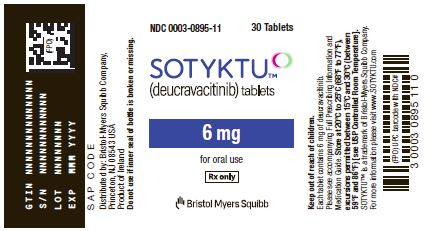
PACKAGE/LABEL PRINCIPAL DISPLAY PANEL NDC 0003-0895-11 30 Tablets SOTYKTU TM (deucravacitinib) tablets 6 mg Rx only Bristol Myers Squibb deucravacitinib-principal-display-panel-label.jpg
Medicaid utilization by pack size
Medicare Part D spend CMS · PART D · 2026 (Q1)
Reported adverse events (FAERS)
Top reported reactions
Age at onset
Reporter sex
Serious outcomes
Where does this data come from?
About this NDC listing & data coverage
What data is (and isn’t) available for this NDC — tap to expand
| NDC identity (package / product / labeler codes) | ✓ Available |
| Labeler | ✓ Available |
| Product & package description | ✓ Available |
| Marketing category & status | ✓ Available |
| Active ingredient / dosage form / route | ✓ Available |
| FDA label (SPL via DailyMed) | ✓ Available |
| Package photos | ✓ Available |
| Inactive ingredients (structured) | ✓ Available |
| NADAC pharmacy acquisition price (CMS) | — Not published for this NDC CMS publishes NADAC only for NDCs reported in its retail-pharmacy survey. |
| Orange Book / therapeutic-equivalence data | ✓ Available |
| HCPCS J-code billing crosswalk | — Not published for this NDC Most self-administered / retail products have no J-code — that is normal. |
| Medicaid utilization (CMS SDUD) | — Not published for this NDC CMS reports utilization only for NDCs with Medicaid claims above its privacy threshold. |