
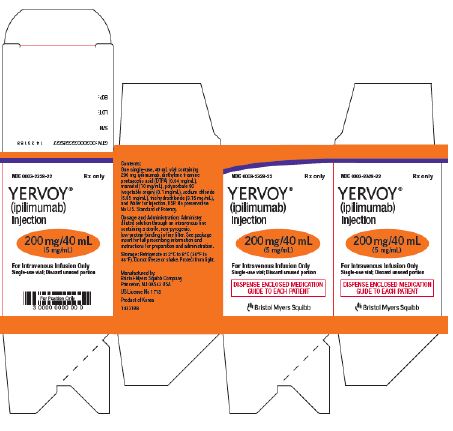
YERVOY ipilimumab 5 mg/mL Injection — NDC 0003-2328-22 (Billing 00003-2328-22)
This is a package of YERVOY ipilimumab 5 mg/mL Injection from E.R. Squibb & Sons, L.L.C., marketed since Mar 2011 and currently FDA-listed. It is this product's only package size.
NDC database record
One package, one record: these facts belong to NDC 0003-2328-22 alone.
- Record
- FDA NDC Directory package listing · Human prescription drug
- Code segments
- 0003 labeler · 2328 product · 22 package
- Package marketed since
- Mar 25, 2011
- Sample package
- No — commercial package
- Listing certified through
- Dec 31, 2027
- Barcode (UPC-A, from the NDC)
- 3 0003232822 7
- Medicaid fills, this package
- 150 prescriptions in the last four reported quarters
- FDA record last changed
- Sep 10, 2026
Identity & classification
Regulatory identifiers FDA, NLM and CMS codes for this package
Drug-database identifiers Medi-Span GPI and First Databank GCN / HICL / AHFS classification
- GSN (GCN sequence number): 067200
- GCN: 29689
- HICL (First Databank): 037503
- AHFS class code: 10:00.00.00
- RxCUI (RxNorm): 1657005
Where does this data come from?
- FDA openFDA NDC Directory · synced Oct 1, 2026
- FDA label on DailyMed · label index refreshed Oct 5, 2026
- RxNorm (NLM RxNav) · catalog refreshed Oct 1, 2026
- Medi-Span GPI (licensed)
- First Databank (licensed) · refreshed Oct 1, 2026
RxNorm drug class
This medicine belongs to the CTLA-4-directed Blocking Antibody class.
Where does this data come from?
- RxClass (NLM) · catalog refreshed Oct 1, 2026
Clinical
Ipilimumab injection is used alone or in combination with nivolumab (Opdivo) to treat certain types of melanoma (a type of skin cancer) that that has spread to other parts of the body or cannot be treated with surgery. It is also used alone to prevent melanoma from returning after surgery. Ipilimumab injection is also used in combination with nivolumab to treat certain types of renal cell cancer (a type of cancer that begins in the cells of the kidneys), colorectal cancer (cancer that begins in the large intestine), hepatocellular cancer (a type of liver cancer), esophageal cancer (cancer of t...
Read the full MedlinePlus article ↗- Yervoy treats melanoma and, together with nivolumab, several other cancers including kidney, colorectal, liver, lung, mesothelioma and esophageal cancer. Your oncologist chooses it...
- It is given as an IV infusion by your care team, about 30 minutes per dose. Schedules vary, such as every 3 or 6 weeks, and you may get nivolumab the same day.
- Tiredness, diarrhea, rash, itching, nausea and headache are common. Let your team know about them so they can help manage symptoms.
- Call for severe or lasting diarrhea, yellow skin or eyes, a severe or blistering rash, trouble breathing, new cough, bad headaches or vision changes. Immune reactions can start at...
Patient education
Supplement & herbal interactions
Where does this data come from?
- MedlinePlus (NLM) · refreshed Oct 1, 2026
- FDA label on DailyMed · label index refreshed Oct 5, 2026
Ask a licensed pharmacist directly — free, answered by our team.
Pricing
A drug doesn't have one price. Each row is a different public payment system, and none is what you'd pay at the counter — that depends on your insurance. The ⓘ on each row explains what it measures.
| Price system | Per each | Per package |
|---|---|---|
| Retail pharmacies payNADAC · weekly | Not in the retail survey — common for institutional, discontinued, or low-volume packs. | |
| Medicaid paysCMS SDUD · 12 mo | $912.10 | $912.10 / 1 vial |
| Medicare drug plans payPart D · quarterly | No Part D plan price is available for this NDC in our data. | |
| Medicare Part B allowsASP · J9228 | $190.432 / J9228 unit | — |
Where does this data come from?
- CMS NADAC weekly file
- CMS ASP pricing files · refreshed Sep 20, 2026
- CMS Medicaid State Drug Utilization Data · through Q1 2026
- CMS Part D plan pricing files · refreshed Sep 24, 2026
- VA National Acquisition Center price file
Billing & reimbursement
Where does this data come from?
- CMS ASP NDC-HCPCS crosswalk · refreshed Sep 22, 2026
- DMEPDAC NDC-HCPCS crosswalk
- openFDA NSDE billing units · refreshed Sep 7, 2026
Packaging — all sizes for this product
| Package NDC | Description | Marketing start | Marketing end | Status |
|---|---|---|---|---|
| 00003-2328-22 You're viewing this Main listing | 1 VIAL, SINGLE-USE in 1 CARTON / 40 mL in 1 VIAL, SINGLE-USE | 2011-03-25 | — | Active |
Therapeutic equivalents
| Product | Labeler | Pack | NADAC/unit | TE | Status | Price vs. this |
|---|---|---|---|---|---|---|
| Yervoy 5 mg/mLthis 00003-2328-22 | E.R. | 1 vial | — | — | FDA listed | — |
| Yervoy 5 mg/mL 00003-2327-11 | E.R. | 1 vial | — | — | FDA listed | — |
Where does this data come from?
- FDA openFDA NDC Directory · synced Oct 1, 2026
- FDA Purple Book · refreshed Oct 5, 2026
- CMS NADAC weekly file
Availability & biosimilar status
Biologics have no small-molecule generics; biosimilar competition is tracked in the FDA Purple Book.
Why the date isn’t exact: Biosimilar timing can change because patents may be challenged, settled, licensed, added or removed, and litigation can move the real date earlier or later.
🛈 What do these terms mean?
- Biologic patent
- A patent the reference product’s maker has publicly listed. A biosimilar generally can’t launch until these expire — unless they’re invalidated or resolved in a settlement.
- Reference-product exclusivity
- A flat 12 years of FDA market protection from the biologic’s first licensure (the BPCIA). No biosimilar can be licensed before it ends, regardless of patents.
- Interchangeable exclusivity
- The first interchangeable biosimilar can earn a period as the only interchangeable version (pharmacists can substitute it without the prescriber).
- Earliest biosimilar (LOE)
- The latest of all the dates above — the soonest a biosimilar can realistically reach the market. Litigation and settlements can move it earlier.
Biologics have no small-molecule “generics” — competition comes from FDA-licensed biosimilars, tracked in the FDA Purple Book.
| Code | What it grants | Expires |
|---|---|---|
| RefProduct | Reference-product exclusivity (12-year, BPCIA) — no biosimilar can be licensed before this date | Mar 25, 2023 |
Is there a biosimilar for YERVOY 200 MG/40 ML VIAL?
Why do different websites show different biosimilar dates?
Can a biosimilar launch before the last patent expires?
What does “current Purple Book estimate” mean?
What does “FDA listed” mean?
What does a patent or protection date mean here?
Where does this data come from?
- FDA Purple Book · refreshed Oct 5, 2026
Inactive Ingredients / Excipients
Inactive ingredients, also called excipients, are components of the drug product other than the active ingredient. They may include fillers, dyes, coatings, preservatives, flavors, or other formulation ingredients.
🧪 Avoiding an ingredient? See Ipilimumab Injection inactive ingredients by manufacturer: every current product's list side by side, so you can ask your pharmacy for the version that does not list it.
💡 Tap an ingredient (hover on desktop) to see what it is and why it’s used.
-
10 mg / 1 mL
UNII 3OWL53L36A
A natural sugar alcohol derived from seaweed or synthesized in the lab. It's used as a filler to add bulk, a sweetener in sugar-free formulas, and a disintegrant to help tablets break apart in the stomach.
-
0.04 mg / 1 mL
UNII 7A314HQM0I
Pentetic acid is a chelating agent, a chemical that binds to metals. It's used in some medicines to prevent metal ions from interfering with drug stability or effectiveness.
-
0.1 mg / 1 mL
UNII 6OZP39ZG8H
Polysorbate 80 is a synthetic emulsifier derived from sorbitol and oleic acid. It helps mix oil and water-based ingredients together in medications and improves how the product disperses in the body.
-
5.85 mg / 1 mL
UNII 451W47IQ8X
Sodium chloride is common table salt. It's used in medicines as a buffer to maintain proper pH, as a filler to add bulk, or to adjust the osmotic balance in liquid formulations.
-
3.15 mg / 1 mL
UNII 383V75M34E
A salt form of tromethamine, an organic base compound. It functions as a buffer to help maintain the medicine's pH level and improve stability during storage.
-
UNII 059QF0KO0R
Water is a liquid solvent that dissolves and mixes ingredients together in liquid medicines, syrups, and injections. It helps distribute the active drug evenly throughout the product.
6 inactive ingredients listed in the exact product block matched to this NDC.
Where does this data come from?
ingredient classCode="IACT" elements from the exact product block matched by this NDC. Label-section narrative from DailyMed / the openFDA label index is shown separately when available.- FDA label on DailyMed · label index refreshed Oct 5, 2026
- FDA openFDA NDC Directory · synced Oct 1, 2026
Inactive ingredient FAQ
Are inactive ingredients the same for every manufacturer?
Why might an inactive ingredient be missing?
Can inactive ingredients matter?
Manufacturer & labeler
More NDCs from E.R. Squibb & Sons, L.L.C. labeler code 00003
- Baraclude entecavir 1 mg Tablet, Film Coated NDC 0003-1612-12
- BARACLUDE entecavir .05 mg/mL Solution NDC 0003-1614-12
- ORENCIA abatacept 250 mg/15mL Injection, Powder, Lyophilized, For Solution NDC 0003-2187-10
- ORENCIA abatacept 125 mg/mL Injection, Solution NDC 0003-2188-11
- Empliciti elotuzumab 300 mg Injection, Powder, Lyophilized, For Solution NDC 0003-2291-11
- YERVOY ipilimumab 5 mg/mL Injection NDC 0003-2327-11
- Azactam Aztreonam 1 g Injection, Powder, For Solution NDC 0003-2560-16
- Azactam Aztreonam 2 g Injection, Powder, For Solution NDC 0003-2570-16
- ORENCIA abatacept 50 mg/.4mL Injection, Solution NDC 0003-2814-11
- ORENCIA abatacept 87.5 mg/.7mL Injection, Solution NDC 0003-2818-11
- OPDIVO QVANTIG nivolumab and hyaluronidase-nvhy 2000 U/mL; 120 mg/mL Injection, Solution NDC 0003-3120-01
- Reyataz Atazanavir 300 mg Capsule, Gelatin Coated NDC 0003-3622-12
Where does this data come from?
- FDA openFDA NDC Directory · synced Oct 1, 2026
- Drugs@FDA
Full prescribing information FDA SPL
🎯 Indications and Usage ▾
1 INDICATIONS AND USAGE YERVOY is a human cytotoxic T-lymphocyte antigen 4 (CTLA-4)-blocking antibody indicated for: Melanoma • Treatment of unresectable or metastatic melanoma in adults and pediatric patients 12 years and older as a single agent or in combination with nivolumab. (1.1) • Adjuvant treatment of adult patients with cutaneous melanoma with pathologic involvement of regional lymph nodes of more than 1 mm who have undergone complete resection, including total lymphadenectomy. (1.2) Renal Cell Carcinoma (RCC) • Treatment of adult patients with intermediate or poor risk advanced renal cell carcinoma, as first-line treatment in combination with nivolumab.
(1.3) Colorectal Cancer • Treatment of adults and pediatric patients 12 years and older with unresectable or metastatic microsatellite instability-high (MSI-H) or mismatch repair deficient (dMMR) colorectal cancer (CRC) as determined by an FDA-authorized test in combination with nivolumab. (1.4) Hepatocellular Carcinoma • adult patients with unresectable or metastatic hepatocellular carcinoma (HCC) as first-line treatment in combination with nivolumab. ( 1.5 ) • in combination with nivolumab in adult patients with unresectable or metastatic HCC who have been previously treated with sorafenib.
(1.5) Non-Small Cell Lung Cancer (NSCLC) • Treatment of adult patients with metastatic non-small cell lung cancer expressing PD-L1 (≥1%) as determined by an FDA-authorized test, with no EGFR or ALK genomic tumor aberrations, as first-line treatment in combination with nivolumab. (1.6) • Treatment of adult patients with metastatic or recurrent non-small cell lung cancer with no EGFR or ALK genomic tumor aberrations as first-line treatment, in combination with nivolumab and 2 cycles of platinum-doublet chemotherapy. (1.6) Malignant Pleural Mesothelioma • Treatment of adult patients with unresectable malignant pleural mesothelioma, as first-line treatment in combination with nivolumab.
(1.7) Esophageal Cancer • Treatment of adult patients with unresectable advanced or metastatic esophageal squamous cell carcinoma, as first line treatment in combination with nivolumab whose tumors express PD-L1 (≥1). (1.8)
1.1Unresectable or Metastatic Melanoma YERVOY, as a single agent or in combination with nivolumab, is indicated for the treatment of unresectable or metastatic melanoma in adult and pediatric patients 12 years and older.
1.2Adjuvant Treatment of Melanoma YERVOY is indicated for the adjuvant treatment of adult patients with cutaneous melanoma with pathologic involvement of regional lymph nodes of more than 1 mm who have undergone complete resection, including total lymphadenectomy.
1.3Advanced Renal Cell Carcinoma YERVOY, in combination with nivolumab, is indicated for the first-line treatment of adult patients with intermediate or poor risk advanced renal cell carcinoma (RCC).
1.4Microsatellite Instability-High or Mismatch Repair Deficient Metastatic Colorectal Cancer • YERVOY, in combination with nivolumab, is indicated for the treatment of adult and pediatric patients 12 years and older with unresectable or metastatic microsatellite instability-high (MSI-H) or mismatch repair deficient (dMMR) colorectal cancer (CRC) as determined by an FDA-authorized test .
1.5Hepatocellular Carcinoma • YERVOY, in combination with nivolumab, is indicated for the first-line treatment of adult patients with unresectable or metastatic hepatocellular carcinoma (HCC). • YERVOY, in combination with nivolumab, is indicated for the treatment of adult patients with unresectable or metastatic HCC who have been previously treated with sorafenib.
1.6Metastatic Non-Small Cell Lung Cancer YERVOY, in combination with nivolumab, is indicated for the first-line treatment of adult patients with metastatic non-small cell lung cancer (NSCLC) whose tumors express PD-L1 (≥1%) as determined by an FDA-authorized test [see Dosage and Administration (2.1) ] , with no EGFR or ALK genomic tumor aberrations. YERVOY, in… [Excerpted — this section continues on DailyMed.]
⏱️ Dosage and Administration ▾
2 DOSAGE AND ADMINISTRATION • Administer by intravenous infusion after dilution based upon recommended infusion rate for each indication. (2) • Unresectable or Metastatic Melanoma : ∘ YERVOY 3 mg/kg every 3 weeks for a maximum of 4 doses. (2.2) ∘ YERVOY 3 mg/kg immediately following nivolumab 1 mg/kg on the same day, every 3 weeks for 4 doses.
After completing 4 doses of the combination, administer nivolumab as a single agent as recommended in the Full Prescribing Information for nivolumab. (2.2) • Adjuvant Treatment of Melanoma : YERVOY 3 mg/kg every 3 weeks for 4 doses, followed by 3 mg/kg every 12 weeks for up to 4 additional doses. (2.2) • Advanced Renal Cell Carcinoma : YERVOY 1 mg/kg immediately following nivolumab 3 mg/kg on the same day, every 3 weeks for 4 doses.
After completing 4 doses of the combination, administer nivolumab as a single agent as recommended in Full Prescribing Information for nivolumab. (2.2) • Treatment of microsatellite instability-high (MSI-H) or mismatch repair deficient (dMMR) colorectal cancer in combination with nivolumab : ∘ Adult and pediatric patients weighing 40 kg or greater: YERVOY 1 mg/kg immediately following nivolumab 240 mg on the same day every 3 weeks for a maximum of 4 doses. After completing the combination, administer nivolumab as a single agent as recommended in Full Prescribing Information for nivolumab.
(2.2) ∘ Pediatric patients weighing less than 40 kg: YERVOY 1 mg/kg immediately following nivolumab 3 mg/kg on the same day every 3 weeks for a maximum of 4 doses. After completing the combination, administer nivolumab as a single agent as recommended in Full Prescribing Information for nivolumab. ( 2.2 ) • Hepatocellular Carcinoma : YERVOY 3 mg/kg intravenously over 30 minutes immediately following nivolumab 1 mg/kg intravenously over 30 minutes on the same day, every 3 weeks for up to 4 doses.
After completing up to 4 doses of the combination, administer nivolumab as a single agent as recommended in Full Prescribing Information for nivolumab. (2.2) • Metastatic non-small cell lung cancer : ∘ YERVOY 1 mg/kg every 6 weeks with nivolumab 360 mg every 3 weeks. (2.2) ∘ YERVOY 1 mg/kg every 6 weeks with nivolumab 360 mg every 3 weeks and 2 cycles of platinum-doublet chemotherapy.
(2.2) • Malignant pleural mesothelioma : YERVOY 1 mg/kg every 6 weeks with nivolumab 360 mg every 3 weeks. (2.2) • Esophageal squamous cell carcinoma: YERVOY 1 mg/kg every 6 weeks with nivolumab 3 mg/kg every 2 weeks or 360 mg every 3 weeks. (2.2) • See full Prescribing Information for preparation and administration instructions and dosage modifications for adverse reactions.
2.1Patient Selection Information on FDA-authorized tests for patient selection is available at: https://www.fda.gov/CompanionDiagnostics Non-Small Cell Lung Cancer • Select patients with metastatic NSCLC for treatment with YERVOY in combination with nivolumab based on PD-L1 expression [see Clinical Studies (14.6) ] . Microsatellite Instability-High or Mismatch Repair Deficient Metastatic Colorectal Cancer • Select patients with metastatic colorectal cancer for treatment with YERVOY in combination with nivolumab based on the presence of MSI-H or dMMR status in tumor specimens [see Clinical Studies (14.4) ] .
Esophageal Cancer • Select patients with unresectable or advanced or metastatic ESCC for treatment with YERVOY in combination with nivolumab based on PD-L1 expression [see Clinical Studies (14.8) ] . ∘ An FDA-authorized companion diagnostic for the detection of PD-L1 expression in patients with advanced or metastatic ESCC is not available.
2.2Recommended Dosage The recommended dosages of YERVOY as a single agent are presented in Table 1. Administer YERVOY as a 30-minute intravenous infusion [see Preparation and Administration (2.4) ] . Table 1: Recommended Dosages for YERVOY as a Single Agent Indication Recommended YERVOY Dosage Duration of Therapy Unresectable or metastatic melanoma 3 mg/kg every 3 weeks Maximum of 4 doses Ad… [Excerpted — this section continues on DailyMed.]
💊 Dosage Forms and Strengths ▾
3 DOSAGE FORMS AND STRENGTHS Injection: 50 mg/10 mL (5 mg/mL) and 200 mg/40 mL (5 mg/mL) as a clear to slightly opalescent, colorless to pale-yellow solution in a single-dose vial. • Injection: 50 mg/10 mL (5 mg/mL) and 200 mg/40 mL (5 mg/mL) in a single-dose vial. (3)
⛔ Contraindications ▾
4 CONTRAINDICATIONS None. • None. (4)
⚠️ Warnings and Cautions ▾
5 WARNINGS AND PRECAUTIONS • Severe and Fatal Immune-Mediated Adverse Reactions : Immune-mediated adverse reactions (IMAR) can occur in any organ system or tissue, including the following: immune-mediated colitis, immune-mediated hepatitis, immune-mediated dermatologic adverse reactions, immune-mediated endocrinopathies, immune-mediated pneumonitis, and immune-mediated nephritis with renal dysfunction, and can occur at any time during treatment or after discontinuation. Monitor for symptoms and signs that may be clinical manifestations of IMAR.
Evaluate clinical chemistries including liver enzymes, creatinine, adrenocorticotropic hormone level and thyroid function including at baseline and before each dose. In general, withhold YERVOY for severe (grade 3) and permanently discontinue for life-threatening (grade 4) immune-mediated adverse reactions. See Full Prescribing Information for additional dosage modifications.
( 2.3 , 5.1 ) • Infusion-Related Reactions : Discontinue for severe and life-threatening infusion-related reactions. Interrupt or slow the rate of infusion in patients with mild or moderate infusion-related reactions. ( 2.3 , 5.2 ) • Complications of allogeneic HSCT : Fatal and other serious complications can occur in patients who receive allogeneic HSCT before or after being treated with YERVOY.
(5.3) • Embryo-Fetal Toxicity : Can cause fetal harm. Advise of potential risk to a fetus and use of effective contraception. ( 5.4 , 8.1 , 8.3 )
5.1Severe and Fatal Immune-Mediated Adverse Reactions YERVOY is a fully human monoclonal antibody that blocks T-cell inhibitory signals induced by the CTLA-4 pathway, thereby removing inhibition of the immune response with the potential for induction of immune-mediated adverse reactions. Immune-mediated adverse reactions listed herein may not be inclusive of all possible severe and fatal immune-mediated reactions. Immune-mediated adverse reactions, which may be severe or fatal, can occur in any organ system or tissue.
Immune-mediated adverse reactions can occur at any time after starting YERVOY. While immune-mediated adverse reactions usually manifest during treatment, immune-mediated adverse reactions can also manifest after discontinuation of YERVOY. Early identification and management are essential to ensure safe use of YERVOY.
Monitor for signs and symptoms that may be clinical manifestations of underlying immune-mediated adverse reactions. Evaluate clinical chemistries including liver enzymes, creatinine, adrenocorticotropic hormone (ACTH) level, and thyroid function at baseline and before each dose. Institute medical management promptly, including specialty consultation as appropriate.
Withhold or permanently discontinue YERVOY depending on severity [see Dosage and Administration (2.3) ]. In general, if YERVOY requires interruption or discontinuation, administer systemic corticosteroid therapy (1 to 2 mg/kg/day prednisone or equivalent) until improvement to Grade 1 or less. Upon improvement to Grade 1 or less, initiate corticosteroid taper and continue to taper over at least 1 month.
Consider administration of other systemic immunosuppressants in patients whose immune-mediated adverse reactions are not controlled with corticosteroid therapy. Immune-Mediated Colitis YERVOY can cause immune-mediated colitis, which may be fatal. Cytomegalovirus (CMV) infection/reactivation has been reported in patients with corticosteroid-refractory immune-mediated colitis.
In cases of corticosteroid-refractory colitis, consider repeating infectious workup to exclude alternative etiologies. YERVOY 3 mg/kg as a Single Agent Immune-mediated colitis occurred in 12% (62/511) of patients who received YERVOY 3 mg/kg as a single agent, including Grade 3-5 (7%) and Grade 2 (5%). Colitis led to permanent discontinuation of YERVOY in 4.3% and withholding of at least one dose of YERVOY in 0.2% of patients.
Systemic corticosteroids were required in 74% (46/62) of patients with immune-mediated colitis. Fi… [Excerpted — this section continues on DailyMed.]
🤒 Adverse Reactions ▾
6 ADVERSE REACTIONS The following clinically significant adverse reactions are described elsewhere in the labeling: • Severe and fatal immune-mediated adverse reactions [see Warnings and Precautions (5.1) ] . • Infusion-related reactions [see Warnings and Precautions (5.2) ] . Most common adverse reactions (≥20%) with YERVOY as a single agent are fatigue, diarrhea, pruritus, rash, nausea, and headache. (6.1) Most common adverse reactions (≥20%) with YERVOY in combination with nivolumab are fatigue, diarrhea, rash, pruritus, nausea, musculoskeletal pain, pyrexia, cough, decreased appetite, vomiting, abdominal pain, dyspnea, upper respiratory tract infection, arthralgia, headache, hypothyroidism, constipation, decreased weight, and dizziness.
(6.1) Most common adverse reactions (≥20%) with YERVOY in combination with nivolumab and platinum-doublet chemotherapy are fatigue, musculoskeletal pain, nausea, diarrhea, rash, decreased appetite, constipation, and pruritus. (6.1) To report SUSPECTED ADVERSE REACTIONS, contact Bristol-Myers Squibb at 1-800-721-5072 or FDA at 1-800-FDA-1088 or www.fda.gov/medwatch .
6.1Clinical Trials Experience Because clinical trials are conducted under widely varying conditions, adverse reaction rates observed in the clinical trials of a drug cannot be directly compared with rates in the clinical trials of another drug and may not reflect the rates observed in clinical practice. The data described in the Warnings and Precautions section reflect exposure to YERVOY 3 mg/kg as a single agent (or in combination with an investigational gp100 peptide vaccine) in 511 patients in Study MDX010-20; YERVOY 1 mg/kg administered with nivolumab 3 mg/kg in 1,362 patients in CHECKMATE-214, CHECKMATE-142, CHECKMATE-227, and CHECKMATE-743; YERVOY 3 mg/kg administered with nivolumab 1 mg/kg in 456 patients enrolled in CHECKMATE-067, CHECKMATE-040, and another randomized trial; and to YERVOY 1 mg/kg, administered in combination with nivolumab and platinum-doublet chemotherapy in CHECKMATE-9LA.
Unresectable or Metastatic Melanoma The safety of YERVOY was evaluated in 643 previously treated patients with unresectable or metastatic melanoma in Study MDX010-20 [see Clinical Studies (14.1) ] . Study MDX010-20 excluded patients with active autoimmune disease or those receiving systemic immunosuppression for organ transplantation. Patients received YERVOY 3 mg/kg by intravenous infusion for 4 doses as a single agent (n=131), YERVOY with an investigational gp100 peptide vaccine (n=380), or gp100 peptide vaccine as a single agent (n=132).
Patients in the trial received a median of 4 doses (range: 1 to 4 doses). The trial population characteristics were: median age 57 years (range: 19 to 90), 59% male, 94% White, and baseline ECOG performance status 0 (56%). YERVOY was discontinued for adverse reactions in 10% of patients.
Table 4 presents adverse reactions from Study MDX010-20. Table 4: Selected Adverse Reactions (≥5%) in Patients Receiving YERVOY with a Difference Between Arms of >5% for All Grades and >1% for Grades 3 to 5 Compared to gp100 Peptide Vaccine in Study MDX010-20 Adverse Reactions YERVOY 3 mg/kg n=131 YERVOY 3 mg/kg and gp100 n=380 gp100 n=132 All Grades (%) Grade 3 to 5 (%) All Grades (%) Grade 3 to 5 (%) All Grades (%) Grade 3 to 5 (%) General and Administration-Site Conditions Fatigue 41 7 34 5 31 3 Gastrointestinal Diarrhea 32 5 37 4 20 1 Colitis 8 5 5 3 2 0 Dermatologic Pruritus 31 0 21 <1 11 0 Rash 29 2 25 2 8 0 Unresectable or Metastatic Melanoma: In Combination with Nivolumab The safety of YERVOY, administered with nivolumab or as a single agent, was evaluated in CHECKMATE-067, a randomized (1:1:1), double-blind trial in 937 patients with previously untreated, unresectable or metastatic melanoma [see Clinical Studies (14.1) ] .
The trial excluded patients with autoimmune disease, a medical condition requiring systemic treatment with corticosteroids (more than 10 mg daily prednisone equivalent) or other immunos… [Excerpted — this section continues on DailyMed.]
👥 Use in Specific Populations ▾
8 USE IN SPECIFIC POPULATIONS • Lactation : Advise not to breastfeed. ( 8.2 )
8.1Pregnancy Risk Summary Based on findings from animal studies and its mechanism of action [see Clinical Pharmacology (12.1) ] , YERVOY can cause fetal harm when administered to a pregnant woman. There is insufficient human data for YERVOY exposure in pregnant women. In animal reproduction studies, administration of ipilimumab to cynomolgus monkeys from the onset of organogenesis through delivery resulted in higher incidences of abortion, stillbirth, premature delivery (with corresponding lower birth weight), and higher incidences of infant mortality in a dose-related manner (see Data ) .
The effects of ipilimumab are likely to be greater during the second and third trimesters of pregnancy. Human IgG1 is known to cross the placental barrier and ipilimumab is an IgG1; therefore, ipilimumab has the potential to be transmitted from the mother to the developing fetus. Advise pregnant women of the potential risk to a fetus.
Report pregnancies to Bristol-Myers Squibb at 1-844-593-7869. In the U.S. general population, the estimated background risk of major birth defects and miscarriage in clinically recognized pregnancies is 2% to 4% and 15% to 20%, respectively. Data Animal Data In a combined study of embryo-fetal and peri-postnatal development, pregnant cynomolgus monkeys received ipilimumab every 3 weeks from the onset of organogenesis in the first trimester through parturition.
No treatment-related adverse effects on reproduction were detected during the first two trimesters of pregnancy. Beginning in the third trimester, administration of ipilimumab at doses resulting in exposures approximately 2.6 to 7.2 times the human exposure at a dose of 3 mg/kg resulted in dose-related increases in abortion, stillbirth, premature delivery (with corresponding lower birth weight), and an increased incidence of infant mortality. In addition, developmental abnormalities were identified in the urogenital system of 2 infant monkeys exposed in utero to 30 mg/kg of ipilimumab (7.2 times the humans exposure based on area under the curve at a dose of 3 mg/kg).
One female infant monkey had unilateral renal agenesis of the left kidney and ureter, and 1 male infant monkey had an imperforate urethra with associated urinary obstruction and subcutaneous scrotal edema. Genetically engineered mice heterozygous for CTLA-4 (CTLA-4+/−), the target for ipilimumab, appeared healthy and gave birth to healthy CTLA-4+/− heterozygous offspring. Mated CTLA-4+/− heterozygous mice also produced offspring deficient in CTLA-4 (homozygous negative, CTLA-4−/−).
The CTLA-4−/− homozygous negative offspring appeared healthy at birth, exhibited signs of multiorgan lymphoproliferative disease by 2 weeks of age, and all died by 3 to 4 weeks of age with massive lymphoproliferation and multiorgan tissue destruction.
8.2Lactation Risk Summary There are no data on the presence of YERVOY in human milk or its effects on the breastfed child or milk production. In monkeys, ipilimumab was present in milk (see Data ) . Because of the potential for serious adverse reactions in breastfed children, advise women not to breastfeed during treatment with YERVOY and for 3 months following the last dose.
Data In monkeys treated at dose levels resulting in exposures 2.6 and 7.2 times higher than those in humans at a 3 mg/kg dose, ipilimumab was present in milk at concentrations of 0.1 mcg/mL and 0.4 mcg/mL, representing a ratio of up to 0.3% of the steady-state serum concentration of the drug.
8.3Females and Males of Reproductive Potential Pregnancy Testing Verify pregnancy status in females of reproductive potential prior to initiating YERVOY [see Use in Specific Populations (8.1) ] . Contraception YERVOY can cause fetal harm when administered to a pregnant woman [see Use in Specific Populations (8.1) ] . Advise females of reproductive potential to use effective contraception during treatment with YERVOY and for 3 mo… [Excerpted — this section continues on DailyMed.]
🤰 Pregnancy ▾
8.1Pregnancy Risk Summary Based on findings from animal studies and its mechanism of action [see Clinical Pharmacology (12.1) ] , YERVOY can cause fetal harm when administered to a pregnant woman. There is insufficient human data for YERVOY exposure in pregnant women. In animal reproduction studies, administration of ipilimumab to cynomolgus monkeys from the onset of organogenesis through delivery resulted in higher incidences of abortion, stillbirth, premature delivery (with corresponding lower birth weight), and higher incidences of infant mortality in a dose-related manner (see Data ) .
The effects of ipilimumab are likely to be greater during the second and third trimesters of pregnancy. Human IgG1 is known to cross the placental barrier and ipilimumab is an IgG1; therefore, ipilimumab has the potential to be transmitted from the mother to the developing fetus. Advise pregnant women of the potential risk to a fetus.
Report pregnancies to Bristol-Myers Squibb at 1-844-593-7869. In the U.S. general population, the estimated background risk of major birth defects and miscarriage in clinically recognized pregnancies is 2% to 4% and 15% to 20%, respectively. Data Animal Data In a combined study of embryo-fetal and peri-postnatal development, pregnant cynomolgus monkeys received ipilimumab every 3 weeks from the onset of organogenesis in the first trimester through parturition.
No treatment-related adverse effects on reproduction were detected during the first two trimesters of pregnancy. Beginning in the third trimester, administration of ipilimumab at doses resulting in exposures approximately 2.6 to 7.2 times the human exposure at a dose of 3 mg/kg resulted in dose-related increases in abortion, stillbirth, premature delivery (with corresponding lower birth weight), and an increased incidence of infant mortality. In addition, developmental abnormalities were identified in the urogenital system of 2 infant monkeys exposed in utero to 30 mg/kg of ipilimumab (7.2 times the humans exposure based on area under the curve at a dose of 3 mg/kg).
One female infant monkey had unilateral renal agenesis of the left kidney and ureter, and 1 male infant monkey had an imperforate urethra with associated urinary obstruction and subcutaneous scrotal edema. Genetically engineered mice heterozygous for CTLA-4 (CTLA-4+/−), the target for ipilimumab, appeared healthy and gave birth to healthy CTLA-4+/− heterozygous offspring. Mated CTLA-4+/− heterozygous mice also produced offspring deficient in CTLA-4 (homozygous negative, CTLA-4−/−).
The CTLA-4−/− homozygous negative offspring appeared healthy at birth, exhibited signs of multiorgan lymphoproliferative disease by 2 weeks of age, and all died by 3 to 4 weeks of age with massive lymphoproliferation and multiorgan tissue destruction.
🧒 Pediatric Use ▾
8.4Pediatric Use The safety and effectiveness of YERVOY have been established in pediatric patients aged 12 years and older for the following indications: as a single agent and in combination with nivolumab for unresectable or metastatic melanoma, in combination with nivolumab for the treatment of MSI-H or dMMR unresectable and metastatic CRC, and in combination with nivolumab for MSI-H or dMMR mCRC that has progressed following treatment with a fluoropyrimidine, oxaliplatin, and irinotecan. Use of YERVOY for these indications is supported by evidence from adequate and well-controlled studies in adults with melanoma or MSI-H or dMMR mCRC and additional pharmacokinetic data in pediatric patients.
Ipilimumab exposures in pediatric patients 12 years and older are comparable to that of adults, and the courses of melanoma and MSI-H or dMMR mCRC are similar in pediatric patients aged 12 years and older to that of adults to allow extrapolation of safety and efficacy [see Adverse Reactions (6.1) , Clinical Pharmacology (12.3) , Clinical Studies (14.4) ] . The safety and effectiveness of YERVOY have not been established in pediatric patients younger than 12 years old with unresectable or metastatic melanoma or MSI-H or dMMR mCRC.
The safety and effectiveness of YERVOY have not been established in pediatric patients for the adjuvant treatment of melanoma or for the treatment of advanced renal cell carcinoma, hepatocellular carcinoma, metastatic non-small cell lung cancer, malignant pleural mesothelioma and esophageal cancer. In a dose-finding trial (NCT01445379), 33 patients aged 2 to 21 years (median 13 years) with relapsed or refractory solid tumors were evaluated including unresectable stage IIIc or stage IV melanoma (12), progressive or refractory sarcomas (17), renal or bladder carcinoma (3), and neuroblastoma (1).
No responses in the patients with non-melanoma solid tumors and no new safety signals were observed in pediatric patients in this study.
🧓 Geriatric Use ▾
8.5Geriatric Use Single Agent Of the 511 patients treated with YERVOY in Study MDX010-20 (unresectable or metastatic melanoma), 28% were 65 years and over. No overall differences in safety or effectiveness were observed between these patients and younger patients. In Combination with Nivolumab Of the 314 patients randomized to YERVOY administered with nivolumab in CHECKMATE-067, 41% were 65 years or older and 11% were 75 years or older.
No overall differences in safety or effectiveness were reported between elderly patients and younger patients. Of the 576 patients randomized to YERVOY 1 mg/kg every 6 weeks with nivolumab 3 mg/kg every 2 weeks in CHECKMATE-227 (NSCLC), 48% were 65 years or older and 10% were 75 years or older. No overall difference in safety was reported between older patients and younger patients; however, there was a higher discontinuation rate due to adverse reactions in patients aged 75 years or older (29%) relative to all patients who received YERVOY with nivolumab (18%).
Of the 396 patients in the primary efficacy population (PD-L1 ≥1%) randomized to YERVOY 1 mg/kg every 6 weeks with nivolumab 3 mg/kg every 2 weeks in CHECKMATE-227, the hazard ratio for overall survival was 0.70 (95% CI: 0.55, 0.89) in the 199 patients younger than 65 years compared to 0.91 (95% CI: 0.72, 1.15) in the 197 patients 65 years or older [see Clinical Studies (14.6) ] . Of the 303 patients randomized to YERVOY 1 mg/kg every 6 weeks in combination with nivolumab 3 mg/kg every 2 weeks in CHECKMATE-743 (malignant pleural mesothelioma), 77% were 65 years old or older and 26% were 75 years or older.
No overall difference in safety was reported between older patients and younger patients; however, there were higher rates of serious adverse reactions and discontinuation rate due to adverse reactions in patients aged 75 years or older (68% and 35%, respectively) relative to all patients who received YERVOY with nivolumab (54% and 28%, respectively). For patients aged 75 years or older who received chemotherapy, the rate of serious adverse reactions was 34% and discontinuation due to adverse reactions was 26% relative to 28% and 19% respectively for all patients.
The hazard ratio for overall survival was 0.76 (95% CI: 0.52, 1.11) in the 71 patients younger than 65 years compared to 0.74 (95% CI: 0.59, 0.93) in the 232 patients 65 years or older randomized to YERVOY in combination with nivolumab. Of the 550 patients randomized to YERVOY 1 mg/kg with nivolumab in CHECKMATE-214 (renal cell carcinoma), 38% were 65 years or older and 8% were 75 years or older. No overall difference in safety was observed between these patients and younger patients.
In geriatric patients with intermediate or poor risk, no overall difference in effectiveness was observed. Of the 354 patients with dMMR or MSI-H metastatic CRC (mCRC) who were randomized to YERVOY in combination with nivolumab, 44% were 65 years or older and 14% were 75 years or older. Of the 353 patients randomized to nivolumab, as a single agent, 45% were 65 years or older and 13% were 75 years or older.
There was a higher incidence of any Grade 3 or 4 adverse reactions (55%) in patients aged 65 years or older receiving YERVOY in combination with nivolumab compared to those younger than 65 receiving the combination (42%). There was a higher incidence of adverse reactions leading to discontinuation in patients aged 65 years or older receiving YERVOY in combination with nivolumab (23%) compared to those younger than 65 receiving the combination (15%). No overall differences in effectiveness were reported between elderly patients and younger patients receiving YERVOY in combination with nivolumab [see Clinical Studies (14.4) ] .
Of the 335 patients with unresectable hepatocellular carcinoma who were randomized to YERVOY in combination with nivolumab, 52% were 65 years or older and 14% were 75 years or older. No overall difference in safety was reported between elderly patients and younger patien… [Excerpted — this section continues on DailyMed.]
🧬 Clinical Pharmacology ▾
12 CLINICAL PHARMACOLOGY
12.1Mechanism of Action CTLA-4 is a negative regulator of T-cell activity. Ipilimumab is a monoclonal antibody that binds to CTLA-4 and blocks the interaction of CTLA-4 with its ligands, CD80/CD86. Blockade of CTLA-4 has been shown to augment T-cell activation and proliferation, including the activation and proliferation of tumor infiltrating T-effector cells.
Inhibition of CTLA-4 signaling can also reduce T-regulatory cell function, which may contribute to a general increase in T-cell responsiveness, including the anti-tumor immune response.
12.3Pharmacokinetics The pharmacokinetics (PK) of ipilimumab was studied in 785 patients with unresectable or metastatic melanoma who received doses of 0.3, 3, or 10 mg/kg once every 3 weeks for 4 doses. The PK of ipilimumab is linear in the dose range of 0.3 mg/kg to 10 mg/kg. Following administration of YERVOY every 3 weeks, the systemic accumulation was 1.5-fold or less.
Steady-state concentrations of ipilimumab were reached by the third dose; the mean minimum concentration (C min ) at steady state was 19.4 mcg/mL at 3 mg/kg and 58.1 mcg/mL at 10 mg/kg every 3 weeks. Elimination The mean (percent coefficient of variation) terminal half-life (t 1/2 ) was 15.4 days (34%) and then mean (percent coefficient of variation) clearance (CL) was 16.8 mL/h (38%). The CL of ipilimumab was unchanged in presence of anti-ipilimumab antibodies.
Specific Populations The CL of ipilimumab increased with increasing body weight supporting the recommended body weight (mg/kg) based dosing. The following factors had no clinically important effect on the CL of ipilimumab: age (range: 23 to 88 years), sex, performance status, renal impairment (glomerular filtration rate ≥15 mL/min/1.73 m 2 ), mild hepatic impairment (total bilirubin [TB] >1 to 1.5 times the upper limit of normal [ULN] or AST > ULN), previous cancer therapy, and baseline lactate dehydrogenase (LDH) levels.
The effect of race was not examined due to limited data available in non-White racial groups. YERVOY has not been studied in patients with moderate (TB >1.5 to 3 times ULN and any AST) or severe (TB >3 times ULN and any AST) hepatic impairment. Pediatric Patients The exposures of ipilimumab in pediatric patients 12 years and older are comparable to those in adult patients at the recommended dosage.
Drug Interaction Studies Ipilimumab with Nivolumab When YERVOY 1 mg/kg was administered with nivolumab 3 mg/kg every 3 weeks, the CL of ipilimumab was unchanged compared to when YERVOY was administered alone. When YERVOY 3 mg/kg every 3 weeks was administered in combination with nivolumab 1 mg/kg every 3 weeks, the CL of ipilimumab was unchanged compared to ipilimumab administered alone and the CL of nivolumab was increased by 29% compared to nivolumab administered alone. When YERVOY 1 mg/kg every 6 weeks was administered in combination with nivolumab 3 mg/kg every 2 weeks, the CL of ipilimumab increased by 30% compared to YERVOY administered alone and the CL of nivolumab was unchanged compared to nivolumab administered alone.
When YERVOY 1 mg/kg every 6 weeks was administered in combination with nivolumab 360 mg every 3 weeks and chemotherapy, the CL of ipilimumab increased by 22% compared to YERVOY administered alone and the CL of nivolumab was unchanged compared to nivolumab administered alone.
12.6Immunogenicity The observed incidence of anti-drug antibodies (ADA) is highly dependent on the sensitivity and specificity of the assay. Differences in assay methods preclude meaningful comparisons of the incidence of ADA in the studies described below with the incidence of ADA in other studies, including those of YERVOY or of other ipilimumab products. Eleven (1.1%) of 1024 evaluable patients with unresectable or metastatic melanoma tested positive for treatment-emergent binding antibodies against ipilimumab in an electrochemiluminescent (ECL) based assay.
This assay had substantial limitations in detecting anti-ipilimumab… [Excerpted — this section continues on DailyMed.]
🧬 Mechanism of Action ▾
12.1Mechanism of Action CTLA-4 is a negative regulator of T-cell activity. Ipilimumab is a monoclonal antibody that binds to CTLA-4 and blocks the interaction of CTLA-4 with its ligands, CD80/CD86. Blockade of CTLA-4 has been shown to augment T-cell activation and proliferation, including the activation and proliferation of tumor infiltrating T-effector cells.
Inhibition of CTLA-4 signaling can also reduce T-regulatory cell function, which may contribute to a general increase in T-cell responsiveness, including the anti-tumor immune response.
📦 How Supplied / Storage and Handling ▾
16 HOW SUPPLIED/STORAGE AND HANDLING YERVOY (ipilimumab) injection is a sterile, preservative-free, clear to slightly opalescent, colorless to pale-yellow solution. YERVOY is available as follows: Carton Contents NDC One 50 mg/10 mL (5 mg/mL), single-dose vial NDC 0003-2327-11 One 200 mg/40 mL (5 mg/mL), single-dose vial NDC 0003-2328-22 Store YERVOY under refrigeration at 2°C to 8°C (36°F to 46°F). Protect YERVOY from light by storing in the original carton until time of use.
Do not freeze or shake.
📋 Description ▾
11 DESCRIPTION Ipilimumab is a human cytotoxic T-lymphocyte antigen 4 (CTLA-4)-blocking antibody. Ipilimumab is a recombinant IgG1 kappa immunoglobulin with an approximate molecular weight of 148 kDa. Ipilimumab is produced in mammalian (Chinese hamster ovary) cell culture.
YERVOY (ipilimumab) injection, for intravenous use is a sterile, preservative-free, clear to slightly opalescent, colorless to pale-yellow solution, which may contain a small amount of visible translucent-to-white, amorphous ipilimumab particulates. It is supplied in single-dose vials of 50 mg/10 mL or 200 mg/40 mL. Each milliliter contains 5 mg of ipilimumab and the following inactive ingredients: diethylene triamine pentaacetic acid (DTPA) (0.04 mg), mannitol (10 mg), polysorbate 80 (vegetable origin) (0.1 mg), sodium chloride (5.85 mg), tris hydrochloride (3.15 mg), and Water for Injection, USP at a pH of 7.
💬 Information for Patients ▾
17 PATIENT COUNSELING INFORMATION Advise the patient to read the FDA-approved patient labeling (Medication Guide). Immune-Mediated Adverse Reactions Advise patients that YERVOY can cause immune-mediated adverse reactions including the following [see Warnings and Precautions (5.1) ] : • Immune-Mediated Diarrhea or Colitis: Advise patients to contact their healthcare provider immediately for signs or symptoms of diarrhea or colitis. • Immune-Mediated Hepatitis: Advise patients to contact their healthcare provider immediately for signs or symptoms of hepatitis. • Immune-Mediated Dermatologic Adverse Reactions: Advise patients to contact their healthcare provider immediately if they develop a new rash. • Immune-Mediated Endocrinopathies: Advise patients to contact their healthcare provider immediately for signs or symptoms of hypophysitis, adrenal insufficiency, hypothyroidism, hyperthyroidism, and diabetes mellitus. • Immune-Mediated Pneumonitis: Advise patients to contact their healthcare provider immediately for any new or worsening symptoms of pneumonitis. • Immune-Mediated Nephritis with Renal Dysfunction: Advise patients to contact their healthcare provider immediately for signs or symptoms of nephritis.
Infusion-Related Reactions • Advise patients who are receiving YERVOY of the potential risk of an infusion-related reaction [see Warnings and Precautions (5.2) ] . Embryo-Fetal Toxicity • Advise pregnant women of the potential risk to a fetus. Advise females of reproductive potential to inform their healthcare provider of a known or suspected pregnancy [see Warnings and Precautions (5.4) , Use in Specific Populations (8.3) ] . • Advise females of reproductive potential to use effective contraception during treatment with YERVOY and for 3 months after the last dose [see Use in Specific Populations (8.3) ] . • Advise patients who may have been exposed to YERVOY during pregnancy to contact Bristol-Myers Squibb at 1-844-593-7869 [see Use in Specific Populations (8.1) ] .
Lactation • Advise women not to breastfeed during treatment with YERVOY and for 3 months after the last dose [see Use in Specific Populations (8.2) ] . Manufactured by: Bristol-Myers Squibb Company Princeton, NJ 08543 USA U.S. License No.
1713 [print code]
💬 Medication Guide ▾
MEDICATION GUIDE YERVOY ® (yur-voi) (ipilimumab) injection Read this Medication Guide before you start receiving YERVOY and before each infusion. There may be new information. If your healthcare provider prescribes YERVOY in combination with nivolumab, also read the Medication Guide that comes with nivolumab.
This Medication Guide does not take the place of talking with your healthcare provider about your medical condition or your treatment. What is the most important information I should know about YERVOY? YERVOY is a medicine that may treat certain cancers by working with your immune system.
YERVOY can cause your immune system to attack normal organs and tissues in any area of your body and can affect the way they work. These problems can sometimes become severe or life-threatening and can lead to death. You may have more than one of these problems at the same time.
These problems may happen anytime during treatment or even after your treatment has ended. Some of these problems may happen more often when YERVOY is used in combination with nivolumab. Call or see your healthcare provider right away if you develop any new or worse signs or symptoms, including: Intestinal problems. • diarrhea (loose stools) or more frequent bowel movements than usual • stools that are black, tarry, sticky, or have blood or mucus • severe stomach-area (abdominal) pain or tenderness Liver problems. • yellowing of your skin or the whites of your eyes • severe nausea or vomiting • pain on the right side of your stomach-area (abdomen) • dark urine (tea colored) • bleeding or bruising more easily than normal Skin problems. • rash • itching • skin blistering or peeling • painful sores in mouth or nose, throat, or genital area Hormone gland problems. • headache that will not go away or unusual headaches • eye sensitivity to light • eye problems • rapid heartbeat • increased sweating • extreme tiredness • weight gain or weight loss • feeling more hungry or thirsty than usual • urinating more often than usual • hair loss • feeling cold • constipation • your voice gets deeper • dizziness or fainting • changes in mood or behavior, such as decreased sex drive, irritability, or forgetfulness Lung problems. • new or worsening cough • shortness of breath • chest pain Kidney problems. • decrease in your amount of urine • blood in your urine • swelling of your ankles • loss of appetite Eye problems. • blurry vision, double vision, or other vision problems • eye pain or redness Problems can also happen in other organs and tissues.
These are not all of the signs and symptoms of immune system problems that can happen with YERVOY. Call or see your healthcare provider right away for any new or worsening signs or symptoms. • Chest pain, irregular heartbeat, shortness of breath or swelling of ankles • Confusion, sleepiness, memory problems, changes in mood or behavior, stiff neck, balance problems, tingling or numbness of the arms or legs • Double vision, blurry vision, sensitivity to light, eye pain, changes in eyesight • Persistent or severe muscle pain or weakness, muscle cramps • Low red blood cells, bruising Getting medical treatment right away may help keep these problems from becoming more serious.
Your healthcare provider will check you for these problems during your treatment with YERVOY. Your healthcare provider may treat you with corticosteroid or hormone replacement medicines. Your healthcare provider may also need to delay or completely stop treatment with YERVOY if you have severe side effects.
What is YERVOY? YERVOY is a prescription medicine used: • to treat a kind of skin cancer called melanoma. o YERVOY may be used alone or in combination with nivolumab in adults and children 12 years of age and older when melanoma has spread or cannot be removed by surgery. o YERVOY may be used alone in adults to help prevent melanoma from coming back after it and lymph nodes that contain cancer have been removed by surgery. • in adults with kidney cancer (renal cell… [Excerpted — this section continues on DailyMed.]
🧬 Pharmacokinetics ▾
12.3Pharmacokinetics The pharmacokinetics (PK) of ipilimumab was studied in 785 patients with unresectable or metastatic melanoma who received doses of 0.3, 3, or 10 mg/kg once every 3 weeks for 4 doses. The PK of ipilimumab is linear in the dose range of 0.3 mg/kg to 10 mg/kg. Following administration of YERVOY every 3 weeks, the systemic accumulation was 1.5-fold or less.
Steady-state concentrations of ipilimumab were reached by the third dose; the mean minimum concentration (C min ) at steady state was 19.4 mcg/mL at 3 mg/kg and 58.1 mcg/mL at 10 mg/kg every 3 weeks. Elimination The mean (percent coefficient of variation) terminal half-life (t 1/2 ) was 15.4 days (34%) and then mean (percent coefficient of variation) clearance (CL) was 16.8 mL/h (38%). The CL of ipilimumab was unchanged in presence of anti-ipilimumab antibodies.
Specific Populations The CL of ipilimumab increased with increasing body weight supporting the recommended body weight (mg/kg) based dosing. The following factors had no clinically important effect on the CL of ipilimumab: age (range: 23 to 88 years), sex, performance status, renal impairment (glomerular filtration rate ≥15 mL/min/1.73 m 2 ), mild hepatic impairment (total bilirubin [TB] >1 to 1.5 times the upper limit of normal [ULN] or AST > ULN), previous cancer therapy, and baseline lactate dehydrogenase (LDH) levels.
The effect of race was not examined due to limited data available in non-White racial groups. YERVOY has not been studied in patients with moderate (TB >1.5 to 3 times ULN and any AST) or severe (TB >3 times ULN and any AST) hepatic impairment. Pediatric Patients The exposures of ipilimumab in pediatric patients 12 years and older are comparable to those in adult patients at the recommended dosage.
Drug Interaction Studies Ipilimumab with Nivolumab When YERVOY 1 mg/kg was administered with nivolumab 3 mg/kg every 3 weeks, the CL of ipilimumab was unchanged compared to when YERVOY was administered alone. When YERVOY 3 mg/kg every 3 weeks was administered in combination with nivolumab 1 mg/kg every 3 weeks, the CL of ipilimumab was unchanged compared to ipilimumab administered alone and the CL of nivolumab was increased by 29% compared to nivolumab administered alone. When YERVOY 1 mg/kg every 6 weeks was administered in combination with nivolumab 3 mg/kg every 2 weeks, the CL of ipilimumab increased by 30% compared to YERVOY administered alone and the CL of nivolumab was unchanged compared to nivolumab administered alone.
When YERVOY 1 mg/kg every 6 weeks was administered in combination with nivolumab 360 mg every 3 weeks and chemotherapy, the CL of ipilimumab increased by 22% compared to YERVOY administered alone and the CL of nivolumab was unchanged compared to nivolumab administered alone.
🔬 Clinical Studies ▾
14 CLINICAL STUDIES
14.1Unresectable or Metastatic Melanoma The efficacy of YERVOY was investigated in a Study MDX010-20, a randomized (3:1:1), double-blind, double-dummy trial (NCT00094653) that included patients with unresectable or metastatic melanoma previously treated with one or more of the following: aldesleukin, dacarbazine, temozolomide, fotemustine, or carboplatin. The trial enrolled only patients with HLA-A2*0201 genotype; this HLA genotype facilitates the immune presentation of the investigational peptide vaccine. The trial excluded patients with active autoimmune disease or those receiving systemic immunosuppression for organ transplantation.
Patients were randomized to YERVOY administered at a dose of 3 mg/kg as an intravenous infusion every 3 weeks for 4 doses with an investigational peptide vaccine with incomplete Freund’s adjuvant - gp100 administered at a dose of 2 mg peptide by deep subcutaneous injection every 3 weeks for 4 doses; gp100 administered at a dose of 2 mg by deep subcutaneous injection every 3 weeks for 4 doses as a single agent with a placebo; or YERVOY administered at a dose of 3 mg/kg by intravenous infusion every 3 weeks for 4 doses with a placebo.
The major efficacy outcome measure was overall survival (OS) in the YERVOY and gp100 arm compared to that in the single-agent gp100 arm. Secondary efficacy outcome measures were OS in the YERVOY and gp100 arm compared to the YERVOY arm, OS in the YERVOY arm compared to the gp100 arm, best overall response rate (BORR) as assessed by the investigator at week 24 between each of the trial arms, and duration of response. Assessment of tumor response was conducted at weeks 12 and 24, and every 3 months thereafter.
Patients with evidence of objective tumor response at 12 or 24 weeks had assessment for confirmation of durability of response at 16 or 28 weeks, respectively. A total of 676 patients were randomized, 403 to YERVOY and gp100 arm, 137 to YERVOY single agent arm and 136 to gp100 single agent arm. Of the randomized patients, 61%, 59%, and 54% in the YERVOY and gp100, YERVOY, and gp100 arms, respectively, were male.
Twenty-nine percent were ≥65 years of age, the median age was 57 years, 71% had M1c stage, 12% had a history of previously treated brain metastasis, 98% had ECOG performance status of 0 and 1, 23% had received aldesleukin, and 38% had elevated LDH level. Sixty-one percent of patients randomized to either YERVOY-containing arm received all 4 planned doses. The median duration of follow-up was 8.9 months.
The efficacy results are shown in Table 25 and Figure 1. Table 25: Efficacy Results for Study MDX010-20 a Not adjusted for multiple comparisons. b Not Reached YERVOY 3 mg/kg n=137 YERVOY 3 mg/kg and gp100 n=403 gp100 n=136 Overall Survival Median in months (95% CI) 10 (8.0, 13.8) 10 (8.5, 11.5) 6 (5.5, 8.7) Hazard ratio (vs. gp100) (95% CI) 0.66 (0.51, 0.87) 0.68 (0.55, 0.85) p-value p=0.0026 a p=0.0004 Hazard ratio (vs. YERVOY) (95% CI) 1.04 (0.83, 1.30) Best Overall Response Rate (BORR) (95% CI) 10.9% (6.3%, 17.4%) 5.7% (3.7%, 8.4%) 1.5% (0.2%, 5.2%) Median duration of response in months NR b
11.5NR b Figure 1: Kaplan-Meier Curves for Overall Survival in Study MDX010-20 Previously Untreated Metastatic Melanoma: In Combination with Nivolumab CHECKMATE-067 (NCT01844505) was a multicenter, randomized (1:1:1), double-blind trial in which 945 patients with previously untreated, unresectable or metastatic melanoma were randomized to one of the following arms: YERVOY and nivolumab, nivolumab, or YERVOY. Patients were required to have completed adjuvant or neoadjuvant treatment at least 6 weeks prior to randomization and have no prior treatment with anti-CTLA-4 antibody and no evidence of active brain metastasis, ocular melanoma, autoimmune disease, or medical conditions requiring systemic immunosuppression.
Patients were randomized to receive: • YERVOY 3 mg/kg with nivolumab 1 mg/kg intravenously every 3 weeks for 4 doses, followed by nivo… [Excerpted — this section continues on DailyMed.]
🧪 Nonclinical Toxicology ▾
13 NONCLINICAL TOXICOLOGY
13.1Carcinogenesis, Mutagenesis, Impairment of Fertility The carcinogenic potential of ipilimumab has not been evaluated in long-term animal studies, and the genotoxic potential of ipilimumab has not been evaluated. Fertility studies have not been performed with ipilimumab.
📄 Carcinogenesis, Mutagenesis, Impairment of Fertility ▾
13.1Carcinogenesis, Mutagenesis, Impairment of Fertility The carcinogenic potential of ipilimumab has not been evaluated in long-term animal studies, and the genotoxic potential of ipilimumab has not been evaluated. Fertility studies have not been performed with ipilimumab.
📄 Recent Major Changes ▾
Indications and Usage ( 1 ) 6/2026 Dosage and Administration (2) 6/2026 Warnings and Precautions (5) 8/2026
📄 Package Label / Principal Display Panel ▾
YERVOY 50 mg/10 mL Representative Packaging See How Supplied section for a complete list of available packages of YERVOY. NDC 0003-2327-11 Rx only YERVOY ® (ipilimumab) Injection 50 mg/10 mL (5 mg/mL) For Intravenous Infusion Only Single-use vial; Discard unused portion DISPENSE ENCLOSED MEDICATION GUIDE TO EACH PATIENT Bristol-Myers Squibb yervoy-50mg-carton-serialized
YERVOY 200 mg/40 mL Representative Packaging NDC 0003-2328-22 Rx only YERVOY ® (ipilimumab) Injection 200 mg/40 mL (5 mg/mL) For Intravenous Infusion Only Single-use vial; Discard unused portion DISPENSE ENCLOSED MEDICATION GUIDE TO EACH PATIENT Bristol-Myers Squibb yervoy-200mg-carton-serialized
Medicaid utilization & spend
Medicare Part D spend CMS · PART D · 2026 (Q1)
About this NDC listing & data coverage
What data is (and isn’t) available for this NDC — tap to expand
| NDC identity (package / product / labeler codes) | ✓ Available |
| Labeler | ✓ Available |
| Product & package description | ✓ Available |
| Marketing category & status | ✓ Available |
| Active ingredient / dosage form / route | ✓ Available |
| FDA label (SPL via DailyMed) | ✓ Available |
| Package photos | ✓ Available |
| Inactive ingredients (structured) | ✓ Available |
| NADAC pharmacy acquisition price (CMS) | — Not published for this NDC CMS publishes NADAC only for NDCs reported in its retail-pharmacy survey. |
| Orange Book / therapeutic-equivalence data | ✓ Available |
| HCPCS J-code billing crosswalk | ✓ Available |
| Medicaid utilization (CMS SDUD) | ✓ Available |