
Belsomra suvorexant 15 mg Tablet, Film Coated, 3-count — NDC 0006-0325-13 (Billing 00006-0325-13)
This is a package of 3 tablets of Belsomra suvorexant 15 mg Tablet, Film Coated from Merck Sharp & Dohme LLC, marketed since Aug 2014 and currently FDA-listed.
NDC database record
One package, one record: these facts belong to NDC 0006-0325-13 alone.
- Record
- FDA NDC Directory package listing · Human prescription drug
- Code segments
- 0006 labeler · 0325 product · 13 package
- Package marketed since
- Aug 29, 2014
- Sample package
- No — commercial package
- Listing certified through
- Dec 31, 2026
- Billing quantity
- 3 EA per package
- Barcode (UPC-A, from the NDC)
- 3 0006032513 7
- FDA record last changed
- Jul 24, 2026
Identity & classification
Regulatory identifiers FDA, NLM and CMS codes for this package
Drug-database identifiers Medi-Span GPI and First Databank GCN / HICL / AHFS classification
- GSN (GCN sequence number): 072692
- GCN: 36969
- GPI-14 (Medi-Span): 60500070000315
- HICL (First Databank): 041333
- AHFS class code: 28:24.40.00
- RxCUI (RxNorm): 1547104
Where does this data come from?
- FDA openFDA NDC Directory · synced Oct 8, 2026
- FDA label on DailyMed · label index refreshed Oct 8, 2026
- RxNorm (NLM RxNav) · catalog refreshed Oct 1, 2026
- Medi-Span GPI (licensed)
- First Databank (licensed) · refreshed Oct 8, 2026
RxNorm drug class
This medicine belongs to the Orexin Receptor Antagonist class.
Where does this data come from?
- RxClass (NLM) · catalog refreshed Oct 1, 2026
Clinical
- Suvorexant, sold as Belsomra, treats insomnia. It helps if you have trouble falling asleep, staying asleep, or both.
- Take it by mouth no more than once a night, within 30 minutes of getting into bed. Make sure you have at least 7 hours left before you need to be up. It may work more slowly if you...
- Be careful. Belsomra can leave you drowsy or less alert the next day, and driving can be impaired even if you feel fine. This is more likely at higher doses, if you take it with al...
- No. Alcohol adds to the sedation and slows your thinking and coordination. Other sedating medicines can do the same, so tell me about everything you take.
Patient education
Supplement & herbal interactions
Some supplements/herbs that may interact with Suvorexant — tap one for details:
Where does this data come from?
- MedlinePlus (NLM) · refreshed Oct 8, 2026
- FDA label on DailyMed · label index refreshed Oct 8, 2026
Ask a licensed pharmacist directly — free, answered by our team.
Pricing
A drug doesn't have one price. Each row is a different public payment system, and none is what you'd pay at the counter — that depends on your insurance. The ⓘ on each row explains what it measures.
| Price system | Per each | Per package |
|---|---|---|
| Retail pharmacies payNADAC · weekly | Not in the retail survey — common for institutional, discontinued, or low-volume packs. | |
| Medicaid paysCMS SDUD · 12 mo | No recent Medicaid claims on file for this NDC — rare and low-volume NDCs are suppressed in the public data. | |
| Medicare drug plans payPart D · Q2 2026 | $15.29 | $45.86 / 3 tablets |
Where does this data come from?
- CMS NADAC weekly file
- CMS ASP pricing files · refreshed Sep 20, 2026
- CMS Medicaid State Drug Utilization Data · refreshed Oct 8, 2026
- CMS Part D plan pricing files · refreshed Sep 24, 2026
- VA National Acquisition Center price file
Packaging — all sizes for this product
| Package NDC | Description | Per unit | Per pack | Marketing start | Marketing end | Status |
|---|---|---|---|---|---|---|
| 00006-0325-13 You're viewing this | 1 BLISTER PACK in 1 CASE / 3 TABLET, FILM COATED in 1 BLISTER PACK | — | — | 2014-08-29 | — | Active |
| 00006-0325-30 0006-0325-30 Main listing | 3 CASE in 1 CARTON / 1 BLISTER PACK in 1 CASE / 10 TABLET, FILM COATED in 1 BLISTER PACK | $15.19 / ea | $455.72 | 2014-08-29 | — | Active |
This pack shows little to no recent Medicaid volume — a different pack size carries most fills. See all packs ↓
Pack size FAQ
What quantity is in this package?
What NDC number is used to bill for this package of Belsomra suvorexant 15 mg Tablet, Film Coated?
Prices are the latest CMS NADAC pharmacy acquisition cost per NDC; per-pack figures are per-unit × pack quantity, shown only when the pack is denominated in the same measure NADAC prices.
Therapeutic equivalents
| Product | Labeler | Pack | NADAC/unit | TE | Status | Price vs. this |
|---|---|---|---|---|---|---|
| Belsomra 15 mgthis 00006-0325-13 | Merck | 3 tablets | — | — | FDA listed | — |
Where does this data come from?
- FDA openFDA NDC Directory · synced Oct 8, 2026
- FDA Orange Book · refreshed Oct 3, 2026
- CMS NADAC weekly file
Availability & generic status
We did not find an FDA-approved generic match for this exact strength, form and route. Patent/protection dates below may affect future generic timing.
Why the date isn’t exact: Generic timing can change because patents may be challenged, settled, licensed, added, removed, or worked around with a narrower label — and FDA approval does not always mean a pharmacy can get the generic today.
🛈 What do these terms mean?
- Patent
- Legal protection listed in the Orange Book that may delay generic approval or launch. Issued by the U.S. Patent & Trademark Office.
- Substance patent
- Covers the active drug molecule itself — the hardest to design around. A generic generally can’t launch until it expires.
- Formulation (product) patent
- Covers a specific formulation or dosage form. A generic can sometimes work around it with a different formulation.
- Method-of-use patent
- A patent covering one specific approved use of the drug — not necessarily the whole molecule. A generic can sometimes launch with a “skinny label” that carves out the protected use and keeps the others.
- Skinny label
- A generic label that omits a still-patented use when the FDA allows it — letting a generic reach the market for the unprotected uses.
- Exclusivity
- FDA-granted marketing protection, separate from patents — e.g. 5-yr new chemical entity, 7-yr orphan drug, or a +6-month pediatric extension.
- Paragraph IV
- A generic applicant’s formal challenge to a listed patent. It can potentially lead to earlier generic entry, but often involves litigation or a settlement.
- RLD / RS
- Reference Listed Drug — the brand product the FDA uses as the reference for generic applications. Reference Standard — the product the FDA expects generics to compare against in bioequivalence testing.
- TE / AB rating
- FDA therapeutic-equivalence rating. An AB rating generally means the FDA considers a generic therapeutically equivalent to — and substitutable for — the brand.
- LOE (loss of exclusivity)
- The latest patent or exclusivity currently listed — the loss-of-exclusivity / latest-listed-protection date shown on this page. Paragraph-IV challenges and settlements can move the real date earlier; FDA approval and a manufacturer’s decision to market can move it later.
Built from the FDA Orange Book. The bars above are scaled to each protection’s expiry; the red LOE marker is the last one to lapse.
| Patent | Type | Use code | Expires |
|---|---|---|---|
| US 7951797 ↗ | Drug substance | U-620 | Nov 20, 2029 |
| US 7951797 ↗ | Drug substance | U-620 | Nov 20, 2029 |
| US 7951797 ↗ | Drug substance | U-620 | Nov 20, 2029 |
| US 7951797 ↗ | Drug substance | U-620 | Nov 20, 2029 |
| US 11980623 ↗ | Drug product | — | May 29, 2033 |
| US 10098892 ↗ | Drug product | — | May 29, 2033 |
| US 11980623 ↗ | Drug product | — | May 29, 2033 |
| US 12599610 ↗ | Drug product | — | May 29, 2033 |
| US 12599610 ↗ | Drug product | — | May 29, 2033 |
| US 11980623 ↗ | Drug product | — | May 29, 2033 |
| US 10098892 ↗ | Drug product | — | May 29, 2033 |
| US 11980623 ↗ | Drug product | — | May 29, 2033 |
| US 10098892 ↗ | Drug product | — | May 29, 2033 |
| US 12599610 ↗ | Drug product | — | May 29, 2033 |
| US 10098892 ↗ | Drug product | — | May 29, 2033 |
| US 12599610 ↗ | Drug product | — | May 29, 2033 |
Is there a generic version of BELSOMRA 15 MG TABLET?
The FDA approved a generic — why can’t I get it at my pharmacy yet?
Why do different websites show different generic release dates?
What does “FDA listed” mean?
What does a patent or protection date mean here?
What does “current Orange Book estimate” mean?
Can a generic come out before the last patent expires?
Can a generic come out after the listed dates?
What is the difference between patents and exclusivity?
Why are there multiple patent dates?
Where does this data come from?
- FDA Orange Book · refreshed Oct 3, 2026
What it looks like
Where does this data come from?
- FDA label on DailyMed · label index refreshed Oct 8, 2026
Inactive Ingredients / Excipients
Inactive ingredients, also called excipients, are components of the drug product other than the active ingredient. They may include fillers, dyes, coatings, preservatives, flavors, or other formulation ingredients.
🧪 Avoiding an ingredient? See Suvorexant inactive ingredients by manufacturer: every current product's list side by side, so you can ask your pharmacy for the version that does not list it.
💡 Tap an ingredient (hover on desktop) to see what it is and why it’s used.
-
UNII D9C330MD8B
Copovidone is a synthetic polymer made by combining two types of plastic-like molecules. It acts as a binder and film-former to help hold tablet ingredients together and improve how the medicine dissolves in your body.
-
UNII M28OL1HH48
Croscarmellose sodium is a plant-based substance derived from cellulose. It acts as a disintegrant, helping tablets and capsules break down quickly in the digestive system so the medicine can be absorbed.
-
UNII 3NXW29V3WO
Hypromellose is a plant-based thickener made from cellulose. It's used in medicines as a binder to hold ingredients together, a coating for tablets, and a thickener for liquids.
-
UNII EWQ57Q8I5X
Lactose monohydrate is a natural sugar derived from milk. It serves as a filler and binder in tablets and capsules, helping create the proper size, texture, and consistency of the medicine.
-
UNII 70097M6I30
Magnesium stearate is a salt made from magnesium and stearic acid, a fatty substance. It's used in tablets and capsules as a lubricant and glidant to help ingredients flow smoothly during manufacturing and prevent sticking.
-
UNII OP1R32D61U
Microcrystalline cellulose is a purified form of cellulose, a natural fiber from plant sources. It acts as a binder and filler in tablets and capsules, helping hold ingredients together and give the medicine its shape and size.
-
UNII 15FIX9V2JP
Titanium dioxide is a bright white mineral powder commonly used as a colorant and opacifying agent. It makes pills and tablets white or lighter in color and helps make coatings non-transparent.
-
UNII XHX3C3X673
Triacetin is a clear, oily liquid made from glycerin and acetic acid. It works as a plasticizer and solvent in medicines, helping soften coatings and improve how liquids mix together in formulations.
8 inactive ingredients listed in the exact product block matched to this NDC.
Where does this data come from?
ingredient classCode="IACT" elements from the exact product block matched by this NDC. Label-section narrative from DailyMed / the openFDA label index is shown separately when available.- FDA label on DailyMed · label index refreshed Oct 8, 2026
- FDA openFDA NDC Directory · synced Oct 8, 2026
Inactive ingredient FAQ
Are inactive ingredients the same for every manufacturer?
Why might an inactive ingredient be missing?
Can inactive ingredients matter?
Manufacturer & labeler
More NDCs from Merck Sharp & Dohme LLC labeler code 00006
- Janumet XR sitagliptin and metformin hydrochloride 100 mg; 1000 mg Tablet, Film Coated, Extended Release NDC 0006-0081-14
- Januvia sitagliptin 50 mg Tablet, Film Coated NDC 0006-0112-28
- IMIPENEM ANHYDROUS, cilastatin, and RELEBACTAM ANHYDROUS 500 mg/100mL; 500 mg/100mL; 250 mg/100mL Injection, Powder, For Solution NDC 0006-0138-01
- Januvia sitagliptin 25 mg Tablet, Film Coated NDC 0006-0221-28
- Isentress Raltegravir 400 mg Tablet, Film Coated NDC 0006-0227-61
- Januvia sitagliptin 100 mg Tablet, Film Coated NDC 0006-0277-02
- Belsomra suvorexant 20 mg Tablet, Film Coated NDC 0006-0335-13
- Emend aprepitant 80 mg Capsule NDC 0006-0461-02
- Isentress Raltegravir 25 mg Tablet, Chewable NDC 0006-0473-61
- Isentress Raltegravir 100 mg Tablet, Chewable NDC 0006-0477-61
- Zolinza vorinostat 100 mg Capsule NDC 0006-0568-40
- Janumet Sitagliptin and Metformin Hydrochloride 50 mg; 500 mg Tablet, Film Coated NDC 0006-0575-03
Where does this data come from?
- FDA openFDA NDC Directory · synced Oct 8, 2026
- Drugs@FDA
Full prescribing information FDA SPL
🎯 Indications and Usage ▾
1 INDICATIONS AND USAGE BELSOMRA ® (suvorexant) is indicated for the treatment of insomnia characterized by difficulties with sleep onset and/or sleep maintenance. BELSOMRA is an orexin receptor antagonist indicated for the treatment of insomnia, characterized by difficulties with sleep onset and/or sleep maintenance ( 1 ).
⏱️ Dosage and Administration ▾
2 DOSAGE AND ADMINISTRATION Use the lowest dose effective for the patient ( 2.1 ). Recommended dose is 10 mg, no more than once per night taken within 30 minutes of going to bed, with at least 7 hours remaining before the planned time of awakening. If the 10 mg dose is well-tolerated but not effective, the dose can be increased, not to exceed 20 mg once daily ( 2.1 , 2.2 ). Time to effect may be delayed if taken with or soon after a meal ( 2.1 ).
2.1Dosing Information Use the lowest dose effective for the patient. For all BELSOMRA doses, take no more than once per night within 30 minutes of going to bed (with at least 7 hours remaining prior to planned awakening). Time to effect of BELSOMRA may be delayed if taken with or soon after a meal [see Clinical Pharmacology (12.3) ].
The recommended dose for BELSOMRA is 10 mg, taken no more than once per night. If the 10 mg dose is well-tolerated but not effective, the dose can be increased. The maximum recommended dose of BELSOMRA is 20 mg taken no more than once per night.
2.2Special Populations Exposure to BELSOMRA is increased in obese compared to non-obese patients, and in women compared to men. Particularly in obese women, the increased risk of exposure-related adverse effects should be considered before increasing the dose [see Clinical Pharmacology (12.3) ] .
2.3Use with CNS Depressants When BELSOMRA is combined with other CNS depressant drugs, dosage reduction of BELSOMRA and/or the other drug(s) may be necessary because of potentially additive effects [see Warnings and Precautions (5.1) ] .
2.4Dosage Adjustments with CYP3A Inhibitors When used with moderate CYP3A inhibitors, the recommended dosage of BELSOMRA is 5 mg taken no more than once per night (the dose generally should not exceed 10 mg). BELSOMRA is not recommended for use with strong CYP3A inhibitors [see Drug Interactions (7.2) ] .
💊 Dosage Forms and Strengths ▾
3 DOSAGE FORMS AND STRENGTHS 5 mg tablets are yellow, round, film-coated tablets with "5" on one side and plain on the other side. 10 mg tablets are green, round, film-coated tablets with "33" on one side and plain on the other side. 15 mg tablets are white, oval, film-coated tablets with the corporate logo on one side and "325" on the other side.
20 mg tablets are white, round, film-coated tablets with the corporate logo and "335" on one side and plain on the other side. Tablets, 5 mg, 10 mg, 15 mg, 20 mg ( 3 ).
⛔ Contraindications ▾
4 CONTRAINDICATIONS BELSOMRA is contraindicated in patients with narcolepsy. BELSOMRA is contraindicated in patients with narcolepsy ( 4 ).
⚠️ Warnings and Cautions ▾
5 WARNINGS AND PRECAUTIONS CNS Depressant Effects and Daytime Impairment: Risk of impaired alertness and motor coordination, including impaired driving; risk increases with dose; caution patients taking 20 mg against next-day driving and other activities requiring complete mental alertness ( 5.1 ). Worsening of Depression/Suicidal Ideation: Worsening of depression or suicidal thinking may occur. Risk increases with dose.
Immediately evaluate any new behavioral changes ( 5.2 ). Complex Sleep Behaviors: Behaviors including sleep-walking, sleep-driving, and engaging in other activities while not fully awake may occur. Discontinue immediately if a complex sleep behavior occurs ( 5.3 ).
Sleep Paralysis, Hypnagogic/Hypnopompic Hallucinations, and Cataplexy-like Symptoms: May occur with the use of BELSOMRA. Risk increases with dose ( 5.4 ). Compromised Respiratory Function: Effect on respiratory function should be considered ( 5.5 , 8.6 ).
Need to Evaluate for Co-morbid Diagnoses: Reevaluate if insomnia persists after 7 to 10 days of treatment ( 5.6 ).
5.1CNS Depressant Effects and Daytime Impairment BELSOMRA is a central nervous system (CNS) depressant that can impair daytime wakefulness even when used as prescribed. Prescribers should monitor for somnolence and CNS depressant effects, but impairment can occur in the absence of symptoms, and may not be reliably detected by ordinary clinical exam (i.e., less than formal testing of daytime wakefulness and/or psychomotor performance). CNS depressant effects may persist in some patients for up to several days after discontinuing BELSOMRA.
BELSOMRA can impair driving skills and may increase the risk of falling asleep while driving. Discontinue or decrease the dose in patients who drive if daytime somnolence develops. In a study of healthy adults, driving ability was impaired in some individuals taking 20 mg BELSOMRA [see Clinical Studies (14.2) ].
Although pharmacodynamic tolerance or adaptation to some adverse depressant effects of BELSOMRA may develop with daily use, patients using the 20 mg dose of BELSOMRA should be cautioned against next-day driving and other activities requiring full mental alertness. Patients taking lower doses of BELSOMRA should also be cautioned about the potential for driving impairment because there is individual variation in sensitivity to BELSOMRA. Co-administration with other CNS depressants (e.g., benzodiazepines, opioids, tricyclic antidepressants, alcohol) increases the risk of CNS depression.
Patients should be advised not to consume alcohol in combination with BELSOMRA because of additive effects [see Drug Interactions (7.1) ] . Dosage adjustments of BELSOMRA and of concomitant CNS depressants may be necessary when administered together because of potentially additive effects. The use of BELSOMRA with other drugs to treat insomnia is not recommended [see Dosage and Administration (2.3) ].
The risk of next-day impairment, including impaired driving, is increased if BELSOMRA is taken with less than a full night of sleep remaining, if a higher than the recommended dose is taken, if co-administered with other CNS depressants, or if co-administered with other drugs that increase blood levels of BELSOMRA. Patients should be cautioned against driving and other activities requiring complete mental alertness if BELSOMRA is taken in these circumstances. Because BELSOMRA can cause drowsiness, patients, particularly the elderly, are at higher risk of falls.
5.2Worsening of Depression/Suicidal Ideation In clinical studies, a dose-dependent increase in suicidal ideation was observed in patients taking BELSOMRA as assessed by questionnaire. Immediately evaluate patients with suicidal ideation or any new behavioral sign or symptom. In primarily depressed patients treated with sedative-hypnotics, worsening of depression, and suicidal thoughts and actions (including completed suicides) have been reported.
Suicidal tendencies may be present in such patients and protect… [Excerpted — this section continues on DailyMed.]
🤒 Adverse Reactions ▾
6 ADVERSE REACTIONS The following serious adverse reactions are discussed in greater detail in other sections: CNS Depressant Effects and Daytime Impairment [see Warnings and Precautions (5.1) ] Worsening of Depression/Suicidal Ideation [see Warnings and Precautions (5.2) ] Complex Sleep Behaviors [see Warnings and Precautions (5.3) ] Sleep Paralysis, Hypnagogic/Hypnopompic Hallucinations, Cataplexy-Like Symptoms [see Warnings and Precautions (5.4) ] Patients with Compromised Respiratory Function [see Warnings and Precautions (5.5) ] The most common adverse reaction (reported in 5% or more of patients treated with BELSOMRA and at least twice the placebo rate) with BELSOMRA was somnolence ( 6.1 ).
To report SUSPECTED ADVERSE REACTIONS, contact Merck Sharp & Dohme LLC at 1-877-888-4231 or FDA at 1-800-FDA-1088 or www.fda.gov/medwatch.
6.1Clinical Trials Experience Because clinical trials are conducted under widely varying conditions, adverse reaction rates observed in the clinical trials of a drug cannot be directly compared to rates in the clinical trials of another drug and may not reflect the rates observed in clinical practice. In 3-month controlled efficacy trials (Study 1 and Study 2), 1263 patients were exposed to BELSOMRA including 493 patients who received BELSOMRA 15 mg or 20 mg (see Table 1 ). In a long-term study, additional patients (n=521) were treated with BELSOMRA at higher than recommended doses, including a total of 160 patients who received BELSOMRA for at least one year.
Table 1: Patient Exposure to BELSOMRA 15 mg or 20 mg in Study 1 and Study 2 Patients Treated BELSOMRA 15 mg BELSOMRA 20 mg For ≥ 1 Day (n) 202 291 Men (n) 69 105 Women (n) 133 186 Mean Age (years) 70 45 For ≥ 3 Months (n) 118 172 The pooled safety data described below (see Table 2 ) reflect the adverse reaction profile during the first 3 months of treatment. Adverse Reactions Resulting in Discontinuation of Treatment The incidence of discontinuation due to adverse reactions for patients treated with 15 mg or 20 mg of BELSOMRA was 3% compared to 5% for placebo.
No individual adverse reaction led to discontinuation at an incidence ≥1%. Most Common Adverse Reactions In clinical trials of patients with insomnia treated with BELSOMRA 15 mg or 20 mg, the most common adverse reaction (reported in 5% or more of patients treated with BELSOMRA and at least twice the placebo rate) was somnolence (BELSOMRA 7%; placebo 3%). Table 2 shows the percentage of patients with adverse reactions during the first three months of treatment, based on the pooled data from 3-month controlled efficacy trials (Study 1 and Study 2).
At doses of 15 or 20 mg, the incidence of somnolence was higher in females (8%) than in males (3%). Of the adverse reactions reported in Table 2, the following occurred in women at an incidence of at least twice that in men: headache, abnormal dreams, dry mouth, cough, and upper respiratory tract infection. The adverse reaction profile in elderly patients was generally consistent with non-elderly patients.
The adverse reactions reported during long-term treatment up to 1 year were generally consistent with those observed during the first 3 months of treatment. Table 2: Percentage of Patients with Adverse Reactions Incidence ≥2% and Greater than Placebo in 3-Month Controlled Efficacy Trials (Study 1 and Study 2) Placebo BELSOMRA (20 mg in non-elderly or 15 mg in elderly patients) n=767 n=493 Gastrointestinal Disorders Diarrhea 1 2 Dry mouth 1 2 Infections and Infestations Upper respiratory tract infection 1 2 Nervous System Disorders Headache 6 7 Somnolence 3 7 Dizziness 2 3 Psychiatric Disorders Abnormal dreams 1 2 Respiratory, Thoracic and Mediastinal Disorders Cough 1 2 Dose Relationship for Adverse Reactions There is evidence of a dose relationship for many of the adverse reactions associated with BELSOMRA use, particularly for certain CNS adverse reactions.
In a placebo-controlled crossover study (Study 3), non-elderly adult patients were… [Excerpted — this section continues on DailyMed.]
🔄 Drug Interactions ▾
7 DRUG INTERACTIONS CYP3A inhibitors: Recommended dose is 5 mg when used with moderate CYP3A inhibitors. Dose can be increased to 10 mg once per night if the 5 mg dose is not effective. Not recommended for use in patients taking strong CYP3A inhibitors ( 2.4 , 7.2 ). Strong CYP3A inducers: Efficacy may be reduced ( 7.2 ). Digoxin: Monitor digoxin concentrations ( 7.3 ).
7.1CNS-Active Agents When BELSOMRA was co-administered with alcohol, additive psychomotor impairment was demonstrated. There was no alteration in the pharmacokinetics of BELSOMRA [see Warnings and Precautions (5.1 , 5.3) and Clinical Pharmacology (12.3) ].
7.2Effects of Other Drugs on BELSOMRA Metabolism by CYP3A is the major elimination pathway for suvorexant. CYP3A Inhibitors Concomitant use of BELSOMRA with strong inhibitors of CYP3A (e.g., ketoconazole, itraconazole, posaconazole, clarithromycin, nefazodone, ritonavir, saquinavir, nelfinavir, indinavir, boceprevir, telaprevir, telithromycin and conivaptan) is not recommended [see Clinical Pharmacology (12.3) ]. The recommended dose of BELSOMRA is 5 mg in subjects receiving moderate CYP3A inhibitors (e.g., amprenavir, aprepitant, atazanavir, ciprofloxacin, diltiazem, erythromycin, fluconazole, fosamprenavir, grapefruit juice, imatinib, verapamil).
The dose generally should not exceed 10 mg in patients receiving moderate CYP3A inhibitors [see Clinical Pharmacology (12.3) ]. CYP3A Inducers Suvorexant exposure can be substantially decreased when co-administered with strong CYP3A inducers (e.g., rifampin, carbamazepine and phenytoin). The efficacy of BELSOMRA may be reduced [see Clinical Pharmacology (12.3) ].
7.3Effects of BELSOMRA on Other Drugs Digoxin Concomitant administration of BELSOMRA with digoxin slightly increased digoxin levels due to inhibition of intestinal P-gp. Digoxin concentrations should be monitored when co-administering BELSOMRA with digoxin [see Clinical Pharmacology (12.3) ].
👥 Use in Specific Populations ▾
8 USE IN SPECIFIC POPULATIONS Patients with severe hepatic impairment: Not recommended ( 8.7 ).
8.1Pregnancy Risk Summary Available data from postmarketing reports with BELSOMRA use in pregnant women are insufficient to establish a drug-associated risk of major birth defects, miscarriage or adverse maternal or fetal outcomes. In animal reproduction studies, oral administration of suvorexant to pregnant rats and rabbits during the period of organogenesis decreased maternal body weight and/or weight gain at doses ≥ 30 and 28 times the maximum recommended human dose (MRHD) of 20 mg based on AUC in the rat and rabbit, respectively.
Suvorexant caused decreased fetal weight at doses ≥ 86 times the MRHD based on AUC in the rat and did not cause significant fetal toxicity at doses up to 28 times the MRHD based on AUC in the rabbit. The no observed adverse effect levels (NOAELs) for fetal toxicity are 25 and 28 times the MRHD based on AUC in the rat and rabbit, respectively. Oral administration of suvorexant to pregnant rats during pregnancy and lactation caused decreased maternal and pup body weight or weight gain at approximately 48 times the MRHD based on AUC.
The NOAEL for development toxicity in the rat is 25 times the MRHD based on AUC (see Data ) . The estimated background risk of major birth defects and miscarriage for the indicated population is unknown. All pregnancies have a background risk of birth defect, loss, or other adverse outcomes.
In the US general population, the estimated background risk of major birth defects and miscarriage in clinically recognized pregnancies is 2 to 4% and 15 to 20%, respectively. Data Animal Data Suvorexant was administered orally to pregnant rats during the period of organogenesis in two separate studies at doses of 30, 150, and 1000 mg/kg/day or 30, 80, and 325 mg/kg/day, which are approximately 3 to 93 times the MRHD based on AUC. Suvorexant decreased maternal weights at doses ≥ 150 mg/kg/day and fetal weights at doses ≥ 325 mg/kg/day.
The NOAEL for both maternal and fetal toxicity is 80 mg/kg/day, which is approximately 25 times the MRHD based on AUC. Suvorexant was administered orally to pregnant rabbits during the period of organogenesis in two separate studies at doses of 40, 100, and 300 mg/kg/day or 50, 150, and 325 mg/kg/day, which are approximately 3 to 70 times the MRHD based on AUC. Suvorexant decreased maternal body weight or weight gain at doses ≥ 150 mg/kg/day.
Suvorexant caused excessive maternal toxicity that led to premature deaths at 325 mg/kg/day, which precluded fetal evaluation. Suvorexant did not cause significant fetal toxicity at doses up to 300 mg/kg/day. The NOAELs for maternal and fetal toxicities are 100 mg/kg/day and 300 mg/kg/day, respectively, which are approximately 10 and 28 times the MRHD based on AUC, respectively.
Suvorexant was administered orally to pregnant rats during pregnancy and lactation at doses of 30, 80, and 200 mg/kg/day, which are approximately 8 to 48 times the MRHD based on AUC. Suvorexant caused maternal toxicity of decreased body weight and weight gain and food consumption at 200 mg/kg/day. At this maternally toxic dose, suvorexant caused decreased weight gain in offspring pups.
The NOAEL for maternal and developmental toxicity is 80 mg/kg/day, which is approximately 25 times the MRHD based on AUC.
8.2Lactation Risk Summary Suvorexant and its metabolite, hydroxy suvorexant, are present in low concentrations in breast milk with a relative infant dose of less than 1% following maternal oral administration (see Data ) . There are no data on the effects of suvorexant on the breastfed infant, or the effects on milk production. The developmental and health benefits of breastfeeding should be considered along with the mother’s clinical need for BELSOMRA and any potential adverse effects on the breastfed infant from BELSOMRA or from the underlying maternal condition.
Data A single dose (20 mg) milk and plasma lactation study was conducted in 12… [Excerpted — this section continues on DailyMed.]
🤰 Pregnancy ▾
8.1Pregnancy Risk Summary Available data from postmarketing reports with BELSOMRA use in pregnant women are insufficient to establish a drug-associated risk of major birth defects, miscarriage or adverse maternal or fetal outcomes. In animal reproduction studies, oral administration of suvorexant to pregnant rats and rabbits during the period of organogenesis decreased maternal body weight and/or weight gain at doses ≥ 30 and 28 times the maximum recommended human dose (MRHD) of 20 mg based on AUC in the rat and rabbit, respectively.
Suvorexant caused decreased fetal weight at doses ≥ 86 times the MRHD based on AUC in the rat and did not cause significant fetal toxicity at doses up to 28 times the MRHD based on AUC in the rabbit. The no observed adverse effect levels (NOAELs) for fetal toxicity are 25 and 28 times the MRHD based on AUC in the rat and rabbit, respectively. Oral administration of suvorexant to pregnant rats during pregnancy and lactation caused decreased maternal and pup body weight or weight gain at approximately 48 times the MRHD based on AUC.
The NOAEL for development toxicity in the rat is 25 times the MRHD based on AUC (see Data ) . The estimated background risk of major birth defects and miscarriage for the indicated population is unknown. All pregnancies have a background risk of birth defect, loss, or other adverse outcomes.
In the US general population, the estimated background risk of major birth defects and miscarriage in clinically recognized pregnancies is 2 to 4% and 15 to 20%, respectively. Data Animal Data Suvorexant was administered orally to pregnant rats during the period of organogenesis in two separate studies at doses of 30, 150, and 1000 mg/kg/day or 30, 80, and 325 mg/kg/day, which are approximately 3 to 93 times the MRHD based on AUC. Suvorexant decreased maternal weights at doses ≥ 150 mg/kg/day and fetal weights at doses ≥ 325 mg/kg/day.
The NOAEL for both maternal and fetal toxicity is 80 mg/kg/day, which is approximately 25 times the MRHD based on AUC. Suvorexant was administered orally to pregnant rabbits during the period of organogenesis in two separate studies at doses of 40, 100, and 300 mg/kg/day or 50, 150, and 325 mg/kg/day, which are approximately 3 to 70 times the MRHD based on AUC. Suvorexant decreased maternal body weight or weight gain at doses ≥ 150 mg/kg/day.
Suvorexant caused excessive maternal toxicity that led to premature deaths at 325 mg/kg/day, which precluded fetal evaluation. Suvorexant did not cause significant fetal toxicity at doses up to 300 mg/kg/day. The NOAELs for maternal and fetal toxicities are 100 mg/kg/day and 300 mg/kg/day, respectively, which are approximately 10 and 28 times the MRHD based on AUC, respectively.
Suvorexant was administered orally to pregnant rats during pregnancy and lactation at doses of 30, 80, and 200 mg/kg/day, which are approximately 8 to 48 times the MRHD based on AUC. Suvorexant caused maternal toxicity of decreased body weight and weight gain and food consumption at 200 mg/kg/day. At this maternally toxic dose, suvorexant caused decreased weight gain in offspring pups.
The NOAEL for maternal and developmental toxicity is 80 mg/kg/day, which is approximately 25 times the MRHD based on AUC.
🧒 Pediatric Use ▾
8.4Pediatric Use Safety and effectiveness in pediatric patients have not been established.
🧓 Geriatric Use ▾
8.5Geriatric Use Of the total number of patients treated with BELSOMRA (n=1784) in controlled clinical safety and efficacy studies, 829 patients were 65 years and over, and 159 patients were 75 years and over. No clinically meaningful differences in safety or effectiveness were observed between these patients and younger patients at the recommended doses [see Clinical Pharmacology (12.3) and Clinical Studies (14) ] . Because BELSOMRA can increase drowsiness, patients, particularly the elderly, are at a higher risk of falls [see Warnings and Precautions (5.1) ] .
🆘 Overdosage ▾
10 OVERDOSAGE There is limited premarketing clinical experience with an overdosage of BELSOMRA. In clinical pharmacology studies, healthy subjects who were administered morning doses of up to 240 mg of suvorexant showed dose-dependent increases in the frequency and duration of somnolence. General symptomatic and supportive measures should be used, along with immediate gastric lavage where appropriate.
Intravenous fluids should be administered as needed. As in all cases of drug overdose, vital signs should be monitored and general supportive measures employed. The value of dialysis in the treatment of overdosage has not been determined.
As suvorexant is highly protein-bound, hemodialysis is not expected to contribute to elimination of suvorexant. As with the management of all overdosage, the possibility of multiple drug ingestion should be considered. Consider contacting a poison control center for up-to-date information on the management of hypnotic drug product overdosage.
🧬 Clinical Pharmacology ▾
12 CLINICAL PHARMACOLOGY
12.1Mechanism of Action The mechanism of action of suvorexant in the treatment of insomnia is presumed to be through antagonism of orexin receptors. The orexin neuropeptide signaling system plays a role in wakefulness. Blocking the binding of wake-promoting neuropeptides orexin A and orexin B to receptors OX1R and OX2R is thought to suppress wake drive.
12.2Pharmacodynamics Suvorexant binds to orexin receptors, OX1R and OX2R (Ki= 0.55 and 0.35 nM, respectively). Antagonism of orexin receptors may also underlie potential adverse effects such as signs of narcolepsy/cataplexy. Genetic mutations in the orexin system in animals result in hereditary narcolepsy; loss of orexin neurons has been reported in humans with narcolepsy.
Evaluation of QTc Interval The effects of suvorexant on the QTc interval were evaluated in a randomized, placebo-, and active-controlled (moxifloxacin 400 mg) crossover study in healthy subjects (n=53). The upper bound of the one-sided 95% confidence interval for the largest placebo-adjusted, baseline-corrected QTc interval was below 10 ms based on analysis of suvorexant doses up to 240 mg, 12 times the maximum recommended dose. BELSOMRA thus does not prolong the QTc interval to any clinically relevant extent.
12.3Pharmacokinetics Suvorexant exposure increases in a less than strictly dose-proportional manner over the range of 10-80 mg because of decreased absorption at higher doses. Suvorexant pharmacokinetics are similar in healthy subjects and patients with insomnia. Absorption Suvorexant peak concentrations occur at a median T max of 2 hours (range 30 minutes to 6 hours) under fasted conditions.
The mean absolute bioavailability of 10 mg is 82%. Effect of Food Ingestion of BELSOMRA with a high-fat meal resulted in no meaningful change in AUC or C max but a delay in T max of approximately 1.5 hours [see Dosage and Administration (2.1) ] . Distribution The mean volume of distribution of suvorexant is approximately 49 liters.
Suvorexant is extensively bound (>99%) to human plasma proteins and does not preferentially distribute into red blood cells. Suvorexant binds to both human serum albumin and α1-acid glycoprotein. Elimination Metabolism Suvorexant is mainly eliminated by metabolism, primarily by CYP3A with a minor contribution from CYP2C19.
The major circulating entities are suvorexant and a hydroxy-suvorexant metabolite. This metabolite is not expected to be pharmacologically active. Excretion The primary route of elimination is through the feces, with approximately 66% of radiolabeled dose recovered in the feces compared to 23% in the urine.
The systemic pharmacokinetics of suvorexant are linear with an accumulation of approximately 1- to 2-fold with once-daily dosing. Steady-state is achieved by 3 days. The mean t 1/2 is approximately 12 hours (95% CI: 12 to 13).
Specific Populations Gender, age, body mass index (BMI), and race were included as factors assessed in the population pharmacokinetic model to evaluate suvorexant pharmacokinetics in healthy subjects and to predict exposures in the patient population. Age and race are not predicted to have any clinically meaningful changes on suvorexant pharmacokinetics; therefore, no dose adjustment is warranted based upon these factors. Suvorexant exposure is higher in females than in males.
In females, the AUC and C max are increased by 17% and 9%, respectively, following administration of BELSOMRA 40 mg. The average concentration of suvorexant 9 hours after dosing is 5% higher for females across the dose range studied (10-40 mg). Dose adjustment of BELSOMRA is generally not needed based on gender only.
Apparent oral clearance of suvorexant is inversely related to body mass index. In obese patients, the AUC and C max are increased by 31% and 17%, respectively. The average concentration of suvorexant approximately 9 hours after a 20 mg dose is 15% higher in obese patients (BMI > 30 kg/m 2 ) relative to those with a normal BMI (BMI… [Excerpted — this section continues on DailyMed.]
🧬 Mechanism of Action ▾
12.1Mechanism of Action The mechanism of action of suvorexant in the treatment of insomnia is presumed to be through antagonism of orexin receptors. The orexin neuropeptide signaling system plays a role in wakefulness. Blocking the binding of wake-promoting neuropeptides orexin A and orexin B to receptors OX1R and OX2R is thought to suppress wake drive.
📦 How Supplied / Storage and Handling ▾
16 HOW SUPPLIED/STORAGE AND HANDLING
16.1How Supplied BELSOMRA tablets, 5 mg, are yellow, round, film-coated tablets, with "5" on one side and plain on the other side. They are supplied as follows: NDC 0006-0005-30 unit-of-use blisters of 30 BELSOMRA tablets, 10 mg, are green, round, film-coated tablets, with "33" on one side and plain on the other side. They are supplied as follows: NDC 0006-0033-30 unit-of-use blisters of 30 BELSOMRA tablets, 15 mg, are white, oval, film-coated tablets with the corporate logo on one side and "325" on the other side.
They are supplied as follows: NDC 0006-0325-30 unit-of-use blisters of 30 BELSOMRA tablets, 20 mg, are white, round, film-coated tablets with the corporate logo and "335" on one side and plain on the other side. They are supplied as follows: NDC 0006-0335-30 unit-of-use blisters of 30
16.2Storage and Handling Store at 20°C to 25°C (68°F to 77°F); excursions permitted to 15°C to 30°C (59°F to 86°F), [see USP Controlled Room Temperature]. Store in the original package until use to protect from light and moisture.
📦 Storage and Handling ▾
16.2Storage and Handling Store at 20°C to 25°C (68°F to 77°F); excursions permitted to 15°C to 30°C (59°F to 86°F), [see USP Controlled Room Temperature]. Store in the original package until use to protect from light and moisture.
📋 Description ▾
11 DESCRIPTION BELSOMRA tablets contain suvorexant, an orexin receptor antagonist. Suvorexant is described chemically as: [(7R)-4-(5-chloro-2-benzoxazolyl) hexahydro-7-methyl-1H-1,4-diazepin-1-yl][5-methyl-2-(2H-1,2,3-triazol-2-yl)phenyl]methanone Its empirical formula is C 23 H 23 ClN 6 O 2 and the molecular weight is 450.92. Its structural formula is: Suvorexant is a white to off-white powder that is insoluble in water.
Each film coated tablet contains 5 mg, 10 mg, 15 mg, or 20 mg of suvorexant and the following inactive ingredients: croscarmellose sodium, lactose monohydrate, magnesium stearate, microcrystalline cellulose, and polyvinylpyrrolidone/vinyl acetate copolymer (copovidone). In addition, the film coating contains the following inactive ingredients: hypromellose, lactose monohydrate, titanium dioxide, and triacetin. The film coating for the 5 mg tablets also contains iron oxide black and iron oxide yellow, and the film coating for the 10 mg tablets also contains FD&C Blue #1/Brilliant Blue FCF Aluminum Lake and iron oxide yellow.
Chemical Structure
💬 Information for Patients ▾
17 PATIENT COUNSELING INFORMATION Advise the patient to read the FDA-approved patient labeling (Medication Guide). CNS Depressant Effects and Next-Day Impairment Tell patients that BELSOMRA has the potential to cause next-day impairment, and that this risk is increased with higher doses or if dosing instructions are not carefully followed. Patients using the 20 mg dose should be cautioned against next-day driving and other activities requiring full mental alertness as this dose is associated with a higher risk of impaired driving.
Patients taking lower doses should also be cautioned about the potential for driving impairment because there is individual variation in sensitivity to BELSOMRA. Patients should not drive or engage in other activities requiring full alertness within 8 hours of dosing of BELSOMRA. Advise patients that increased drowsiness may increase the risk of falls in some patients [see Warnings and Precautions (5.1) ] .
Sleep-Driving and Other Complex Behaviors Instruct patients to inform their families that BELSOMRA has been associated with getting out of bed while not being fully awake, and tell patients and their families to call their healthcare providers if this occurs. Hypnotics, like BELSOMRA, have been associated with "sleep-driving" and other complex behaviors while not being fully awake (preparing and eating food, making phone calls, or having sex). Tell patients and their families to call their healthcare providers if they develop any of these symptoms.
Suicide Tell patients to report any worsening of depression or suicidal thoughts immediately. Alcohol and Other Drugs Ask patients about alcohol consumption, prescription medicines they are taking, and drugs they may be taking without a prescription. Advise patients not to use BELSOMRA if they drank alcohol that evening or before bed.
Tolerance, Abuse, and Dependence Tell patients not to increase the dose of BELSOMRA on their own, and to inform you if they believe the drug "does not work." Administration Instructions Advise patients to take BELSOMRA only when preparing for or getting into bed and only if they can stay in bed for a full night before being active again. Advise patients to report all of their prescription and nonprescription medicines, vitamins and herbal supplements to the prescriber.
💬 Medication Guide ▾
This Medication Guide has been approved by the U.S. Food and Drug Administration. Revised: 3/2025 MEDICATION GUIDE BELSOMRA ® (bell-SOM-rah) suvorexant Tablets C-IV What is the most important information I should know about BELSOMRA?
BELSOMRA may cause serious side effects including: Decreased awareness and alertness. The morning after you take BELSOMRA, your ability to drive safely and think clearly may be decreased. You may also have sleepiness during the day.
Do not take more BELSOMRA than prescribed. Do not take BELSOMRA unless you are able to stay in bed a full night (at least 7 hours) before you must be active again. Take BELSOMRA within 30 minutes of going to bed.
See " What are the possible side effects of BELSOMRA? " for more information about side effects. What is BELSOMRA? BELSOMRA is a prescription medicine for adults who have trouble falling or staying asleep (insomnia).
It is not known if BELSOMRA is safe and effective in children under the age of 18. BELSOMRA is a federally controlled substance (C-IV) because it can be abused or cause dependence. Keep BELSOMRA in a safe place to prevent misuse and abuse.
Selling or giving away BELSOMRA may harm others and is against the law. Tell your doctor if you have ever abused or have been dependent on alcohol, prescription medicines or street drugs. Who should not take BELSOMRA?
Do not take BELSOMRA if you fall asleep often at unexpected times (narcolepsy). What should I tell my doctor before taking BELSOMRA? Before taking BELSOMRA, tell your doctor about all of your medical conditions, including if you: have a history of depression, mental illness, or suicidal thoughts have a history of drug or alcohol abuse or addiction have a history of a sudden onset of muscle weakness (cataplexy) have a history of falling asleep often at unexpected times (narcolepsy) or daytime sleepiness have lung problems or breathing problems have liver problems are pregnant or plan to become pregnant.
It is not known if BELSOMRA can harm your unborn baby. Talk to your healthcare provider about the risk to your unborn baby if you take BELSOMRA during pregnancy. are breastfeeding or plan to breastfeed. BELSOMRA passes into your breast milk.
Talk to your healthcare provider about the best way to feed your baby during treatment with BELSOMRA. Tell your doctor about all the medicines you take, including prescription or over-the-counter medicines, vitamins, or herbal supplements. Medicines can interact with each other, sometimes causing serious side effects.
Do not take BELSOMRA with other medicines that can make you sleepy unless your doctor tells you to. Know the medicines you take. Keep a list of your medicines with you to show your doctor and pharmacist each time you get a new medicine.
How should I take BELSOMRA? Take BELSOMRA exactly as your doctor tells you to take it. Only take BELSOMRA 1 time each night, if needed, within 30 minutes of going to bed.
Only take BELSOMRA when you can get a full night's sleep (at least 7 hours). Do not take BELSOMRA if you drank alcohol that evening or before bed. BELSOMRA may be taken with or without a meal.
However, BELSOMRA may take longer to work if you take it with or right after meals. Call your doctor if your insomnia (sleep problem) worsens or is not better within 7 to 10 days. This may mean that there is another condition causing your sleep problem.
If you take too much BELSOMRA, call your doctor right away or get emergency treatment. What should I avoid while taking BELSOMRA? Do not drink alcohol while taking BELSOMRA.
It can increase your chances of getting serious side effects. Do not drive, operate heavy machinery, do anything dangerous or do other activities that require clear thinking after taking BELSOMRA. You may still feel drowsy the next day after taking BELSOMRA.
Do not drive or do other dangerous activities until you feel fully awake. What are the possible side effects of BELSOMRA? See " What is the most important information I should know abou… [Excerpted — this section continues on DailyMed.]
🧬 Pharmacokinetics ▾
12.3Pharmacokinetics Suvorexant exposure increases in a less than strictly dose-proportional manner over the range of 10-80 mg because of decreased absorption at higher doses. Suvorexant pharmacokinetics are similar in healthy subjects and patients with insomnia. Absorption Suvorexant peak concentrations occur at a median T max of 2 hours (range 30 minutes to 6 hours) under fasted conditions.
The mean absolute bioavailability of 10 mg is 82%. Effect of Food Ingestion of BELSOMRA with a high-fat meal resulted in no meaningful change in AUC or C max but a delay in T max of approximately 1.5 hours [see Dosage and Administration (2.1) ] . Distribution The mean volume of distribution of suvorexant is approximately 49 liters.
Suvorexant is extensively bound (>99%) to human plasma proteins and does not preferentially distribute into red blood cells. Suvorexant binds to both human serum albumin and α1-acid glycoprotein. Elimination Metabolism Suvorexant is mainly eliminated by metabolism, primarily by CYP3A with a minor contribution from CYP2C19.
The major circulating entities are suvorexant and a hydroxy-suvorexant metabolite. This metabolite is not expected to be pharmacologically active. Excretion The primary route of elimination is through the feces, with approximately 66% of radiolabeled dose recovered in the feces compared to 23% in the urine.
The systemic pharmacokinetics of suvorexant are linear with an accumulation of approximately 1- to 2-fold with once-daily dosing. Steady-state is achieved by 3 days. The mean t 1/2 is approximately 12 hours (95% CI: 12 to 13).
Specific Populations Gender, age, body mass index (BMI), and race were included as factors assessed in the population pharmacokinetic model to evaluate suvorexant pharmacokinetics in healthy subjects and to predict exposures in the patient population. Age and race are not predicted to have any clinically meaningful changes on suvorexant pharmacokinetics; therefore, no dose adjustment is warranted based upon these factors. Suvorexant exposure is higher in females than in males.
In females, the AUC and C max are increased by 17% and 9%, respectively, following administration of BELSOMRA 40 mg. The average concentration of suvorexant 9 hours after dosing is 5% higher for females across the dose range studied (10-40 mg). Dose adjustment of BELSOMRA is generally not needed based on gender only.
Apparent oral clearance of suvorexant is inversely related to body mass index. In obese patients, the AUC and C max are increased by 31% and 17%, respectively. The average concentration of suvorexant approximately 9 hours after a 20 mg dose is 15% higher in obese patients (BMI > 30 kg/m 2 ) relative to those with a normal BMI (BMI ≤ 25 kg/m 2 ).
In obese females, the AUC and C max are increased by 46% and 25%, respectively, compared to non-obese females. The higher exposure to suvorexant in obese females should be considered before increasing dose [see Dosage and Administration (2.2) ]. The effects of renal and hepatic impairment on the pharmacokinetics of suvorexant were evaluated in specific pharmacokinetic studies.
Suvorexant exposure after a single dose was similar in patients with moderate hepatic insufficiency (Child-Pugh category 7 to 9) and healthy matched control subjects; however, the suvorexant apparent terminal half-life was increased from approximately 15 hours (range 10 - 22 hours) in healthy subjects to approximately 19 hours (range 11 - 49 hours) in patients with moderate hepatic insufficiency [see Use in Specific Populations (8.7) ] . Suvorexant exposure (expressed as total and unbound concentrations) was similar between patients with severe renal impairment (urinary creatinine clearance ≤30 mL/min/1.73m 2 ) and healthy matched control subjects.
No dose adjustment is required in patients with renal impairment [see Use in Specific Populations (8.8) ]. Drug Interaction Studies CNS-Active Drugs An additive effect on psychomotor performance was observed when a single… [Excerpted — this section continues on DailyMed.]
🧬 Pharmacodynamics ▾
12.2Pharmacodynamics Suvorexant binds to orexin receptors, OX1R and OX2R (Ki= 0.55 and 0.35 nM, respectively). Antagonism of orexin receptors may also underlie potential adverse effects such as signs of narcolepsy/cataplexy. Genetic mutations in the orexin system in animals result in hereditary narcolepsy; loss of orexin neurons has been reported in humans with narcolepsy.
Evaluation of QTc Interval The effects of suvorexant on the QTc interval were evaluated in a randomized, placebo-, and active-controlled (moxifloxacin 400 mg) crossover study in healthy subjects (n=53). The upper bound of the one-sided 95% confidence interval for the largest placebo-adjusted, baseline-corrected QTc interval was below 10 ms based on analysis of suvorexant doses up to 240 mg, 12 times the maximum recommended dose. BELSOMRA thus does not prolong the QTc interval to any clinically relevant extent.
🔬 Clinical Studies ▾
14 CLINICAL STUDIES
14.1Controlled Clinical Studies BELSOMRA was evaluated in three clinical trials in patients with insomnia characterized by difficulties with sleep onset and sleep maintenance. Two similarly designed, 3-month, randomized, double-blind, placebo-controlled, parallel-group studies were conducted (Study 1 and Study 2). In both studies, non-elderly (age 18-64) and elderly (age ≥ 65) patients were randomized separately.
For the studies together, non-elderly adults (mean age 46 years; 465 females, 275 males) were treated with BELSOMRA 20 mg (n=291) or placebo (n=449). Elderly patients (mean age 71 years, 346 females, 174 males) were treated with BELSOMRA 15 mg (n=202) or placebo (n=318). In Study 1 and Study 2, BELSOMRA 15 mg or 20 mg was superior to placebo for sleep latency as assessed both objectively by polysomnography (Table 3) and subjectively by patient-estimated sleep latency (Table 4).
BELSOMRA 15 mg or 20 mg was also superior to placebo for sleep maintenance, as assessed both objectively by polysomnography (Table 5) and subjectively by patient-estimated total sleep time (Table 6). The effects of BELSOMRA at night 1 (objective) and week 1 (subjective) were generally consistent with later time points. The efficacy of BELSOMRA was similar between women and men and, based on limited data, between Caucasians and non-Caucasians.
Twenty seven percent of patients treated with BELSOMRA 15 mg or 20 mg in Study 1 and Study 2 were non-Caucasians. The majority (69%) of the non-Caucasian patients was Asian. Table 3: Polysomnographic Assessment of Time to Sleep Onset in Studies 1 and 2 Mean Baseline and Change from Baseline † After 1 and 3 Months (minutes) Difference † Between BELSOMRA and Placebo (minutes) † Change from baseline and treatment differences based upon estimated means. ‡ 15 mg in elderly and 20 mg in non-elderly patients * p<0.05; **p<0.01; ***p<0.001 Study 1 Placebo (n=290) BELSOMRA 15-20 mg ‡ (n=193) Baseline 66 69 Change from Baseline Month 1 - 23 - 34 - 10*** Month 3 - 27 - 35 - 8** Study 2 Placebo (n=286) BELSOMRA 15-20 mg ‡ (n=145) Baseline 69 65 Change from Baseline Month 1 - 25 - 33 - 8* Month 3 - 29 - 29 0 Table 4: Patient-Estimated Time to Sleep Onset in Studies 1 and 2 Mean Baseline and Change from Baseline † After 1 and 3 Months (minutes) Difference † Between BELSOMRA and Placebo (minutes) † Change from baseline and treatment differences based upon estimated means. ‡ 15 mg in elderly and 20 mg in non-elderly patients * p<0.05; **p<0.01; ***p<0.001 Study 1 Placebo (n=382) BELSOMRA 15-20 mg ‡ (n=251) Baseline 67 64 Change from Baseline Month 1 - 12 - 17 - 5 Month 3 - 17 - 23 - 5* Study 2 Placebo (n=369) BELSOMRA 15-20 mg ‡ (n=231) Baseline 83 86 Change from Baseline Month 1 - 14 - 21 - 7* Month 3 - 21 - 28 - 8* Table 5: Polysomnographic Assessment of Sleep Maintenance (Wake After Sleep Onset) in Studies 1 and 2 Mean Baseline and Change from Baseline † After 1 and 3 Months (minutes) Difference † Between BELSOMRA and Placebo (minutes) † Change from baseline and treatment differences based upon estimated means. ‡ 15 mg in elderly and 20 mg in non-elderly patients * p<0.05; **p<0.01; ***p<0.001 Study 1 Placebo (n=290) BELSOMRA 15-20 mg ‡ (n=193) Baseline 115 120 Change from Baseline Month 1 - 19 - 45 - 26*** Month 3 - 25 - 42 - 17*** Study 2 Placebo (n=286) BELSOMRA 15-20 mg ‡ (n=145) Baseline 118 119 Change from Baseline Month 1 - 23 - 47 - 24*** Month 3 - 25 - 56 - 31*** Table 6: Patient-Estimated Total Sleep Time in Studies 1 and 2 Mean Baseline and Change from Baseline † After 1 and 3 Months (minutes) Difference † Between BELSOMRA and Placebo (minutes) † Change from baseline and treatment differences based upon estimated means. ‡ 15 mg in elderly and 20 mg in non-elderly patients * p<0.05; **p<0.01; ***p<0.001 Study 1 Placebo (n=382) BELSOMRA 15-20 mg ‡ (n=251) Baseline 315 322 Change from Baseline Month 1 23 39 16*** Month 3 41 51 11* Study 2 Placebo (n=369) BELSOMRA 15-20 mg ‡ (n=231) Baseline… [Excerpted — this section continues on DailyMed.]
🔒 Drug Abuse and Dependence ▾
9 DRUG ABUSE AND DEPENDENCE
9.1Controlled Substance BELSOMRA contains suvorexant, a Schedule IV controlled substance.
9.2Abuse Abuse of BELSOMRA poses an increased risk of somnolence, daytime sleepiness, impaired reaction time and impaired driving skills [see Warnings and Precautions (5.1) ] . Patients at risk for abuse may include those with prolonged use of BELSOMRA, those with a history of drug abuse, and those who use BELSOMRA in combination with alcohol or other abused drugs. Drug abuse is the intentional non-therapeutic use of a drug, even once, for its desirable psychological or physiological effects.
Drug addiction is a cluster of behavioral, cognitive, and physiological phenomena that may include a strong desire to take the drug, difficulties in controlling drug use (e.g., continuing drug use despite harmful consequences, giving a higher priority to drug use than to other activities and obligations), and possible tolerance or physical dependence. In an abuse liability study conducted in recreational polydrug users (n=36), suvorexant (40, 80 and 150 mg) produced similar effects as zolpidem (15, 30 mg) on subjective ratings of "drug liking" and other measures of subjective drug effects.
Because individuals with a history of abuse or addiction to alcohol or other drugs may be at increased risk for abuse and addiction to BELSOMRA, follow such patients carefully.
9.3Dependence Physical dependence is a state that develops as a result of physiological adaptation in response to repeated drug use, manifested by withdrawal signs and symptoms after abrupt discontinuation or a significant dose reduction of a drug. In completed clinical trials with BELSOMRA, there was no evidence for physical dependence with the prolonged use of BELSOMRA. There were no reported withdrawal symptoms after discontinuation of BELSOMRA.
🔒 Controlled Substance ▾
9.1Controlled Substance BELSOMRA contains suvorexant, a Schedule IV controlled substance.
🧪 Nonclinical Toxicology ▾
13 NONCLINICAL TOXICOLOGY
13.1Carcinogenesis, Mutagenesis, Impairment of Fertility Carcinogenesis Rats were orally administered suvorexant at doses of 80, 160, and 325 mg/kg/day [males] or 40, 80, and 325 mg/kg/day [females] for 2 years. Suvorexant increased the incidences of thyroid follicular cell adenoma and combined adenoma/carcinoma in females at 325 mg/kg/day, thyroid follicular cell adenoma in males at ≥ 160 mg/kg/day, and hepatocellular adenoma in males at 325 mg/kg/day. These findings were consistent with increased TSH and hepatic enzyme induction, respectively, which are mechanisms believed to be rodent-specific.
Suvorexant did not increase the incidence of tumors in rats at 80 mg/kg/day, which is approximately 7 times the MRHD based on AUC. Suvorexant did not increase the incidence of tumors in Tg.rasH2 mice treated for 26 weeks at oral doses of 25, 50, 200, and 650 mg/kg/day. Mutagenesis Suvorexant was not mutagenic in the in vitro bacterial reverse mutation (Ames) assay or clastogenic in the in vitro mammalian chromosomal aberration assay or in the in vivo mouse and rat bone marrow micronucleus assays.
Impairment of Fertility In two separate studies, suvorexant was orally administered to male and female rats at doses of 80, 160, and 325 mg/kg/day or 100, 300, and 1200 mg/kg/day [males] and 30, 80, and 325 mg/kg/day or 25, 75, and 1200 mg/kg/day [females] prior to and throughout mating and continuing in females to gestation day 7. Increases in pre-implantation loss and resorption and decreases in live fetuses were observed at the highest doses of 325 or 1200 mg/kg/day, when treated males and females were mated with untreated animals.
The NOAELs for fertility are 160 and 80 mg/kg/day in males and females, respectively, which are approximately 20 times the MRHD based on AUC.
13.2Animal Toxicology and/or Pharmacology Suvorexant administered to dogs at oral doses of 5 and 30 mg/kg/day for 4 to 7 days resulted in behaviors characteristic of cataplexy (e.g., transient limb buckling, prone posture) when presented with food enrichment, a stimulus demonstrated to induce cataplexy in dogs with hereditary narcolepsy. In the 2-year carcinogenicity study in rats, an increased incidence of retinal atrophy was observed at all doses. Plasma AUCs at the lowest dose tested were approximately 7 times that in humans at the MRHD.
In subsequent studies of suvorexant in albino and pigmented rats, retinal atrophy was delayed in onset and, after approximately one year of dosing, was of lower incidence and severity in pigmented rats.
📄 Carcinogenesis, Mutagenesis, Impairment of Fertility ▾
13.1Carcinogenesis, Mutagenesis, Impairment of Fertility Carcinogenesis Rats were orally administered suvorexant at doses of 80, 160, and 325 mg/kg/day [males] or 40, 80, and 325 mg/kg/day [females] for 2 years. Suvorexant increased the incidences of thyroid follicular cell adenoma and combined adenoma/carcinoma in females at 325 mg/kg/day, thyroid follicular cell adenoma in males at ≥ 160 mg/kg/day, and hepatocellular adenoma in males at 325 mg/kg/day. These findings were consistent with increased TSH and hepatic enzyme induction, respectively, which are mechanisms believed to be rodent-specific.
Suvorexant did not increase the incidence of tumors in rats at 80 mg/kg/day, which is approximately 7 times the MRHD based on AUC. Suvorexant did not increase the incidence of tumors in Tg.rasH2 mice treated for 26 weeks at oral doses of 25, 50, 200, and 650 mg/kg/day. Mutagenesis Suvorexant was not mutagenic in the in vitro bacterial reverse mutation (Ames) assay or clastogenic in the in vitro mammalian chromosomal aberration assay or in the in vivo mouse and rat bone marrow micronucleus assays.
Impairment of Fertility In two separate studies, suvorexant was orally administered to male and female rats at doses of 80, 160, and 325 mg/kg/day or 100, 300, and 1200 mg/kg/day [males] and 30, 80, and 325 mg/kg/day or 25, 75, and 1200 mg/kg/day [females] prior to and throughout mating and continuing in females to gestation day 7. Increases in pre-implantation loss and resorption and decreases in live fetuses were observed at the highest doses of 325 or 1200 mg/kg/day, when treated males and females were mated with untreated animals.
The NOAELs for fertility are 160 and 80 mg/kg/day in males and females, respectively, which are approximately 20 times the MRHD based on AUC.
📄 Package Label / Principal Display Panel ▾
PRINCIPAL DISPLAY PANEL - 5 mg Tablet Blister Card Case Carton NDC 0006-0005-30 This package contains 30 Tablets in 3 Blister Cards. Each Blister Card contains 10 Tablets. Belsomra ® (suvorexant) tablets CIV 5 mg Dispense the accompanying Medication Guide to each patient.
Each tablet contains 5 mg suvorexant. USUAL DOSAGE: See Package Insert. Store at 20°C to 25°C (68°F to 77°F); excursions permitted to 15°C to 30°C (59°F to 86°F) [see USP Controlled Room Temperature].
Store in the original package until use, to protect from light and moisture. Selling or giving away Belsomra ® may harm others and is against the law. Rx only PRINCIPAL DISPLAY PANEL - 5 mg Tablet Blister Card Case Carton
PRINCIPAL DISPLAY PANEL - 10 mg Tablet Blister Card Case Carton NDC 0006-0033-30 This package contains 30 Tablets in 3 Blister Cards. Each Blister Card contains 10 Tablets. Belsomra ® (suvorexant) tablets CIV 10 mg Dispense the accompanying Medication Guide to each patient.
Each tablet contains 10 mg suvorexant. USUAL DOSAGE: See Package Insert. Store at 20°C to 25°C (68°F to 77°F); excursions permitted to 15°C to 30°C (59°F to 86°F) [see USP Controlled Room Temperature].
Store in the original package until use, to protect from light and moisture. Selling or giving away Belsomra ® may harm others and is against the law. Rx only PRINCIPAL DISPLAY PANEL - 10 mg Tablet Blister Card Case Carton
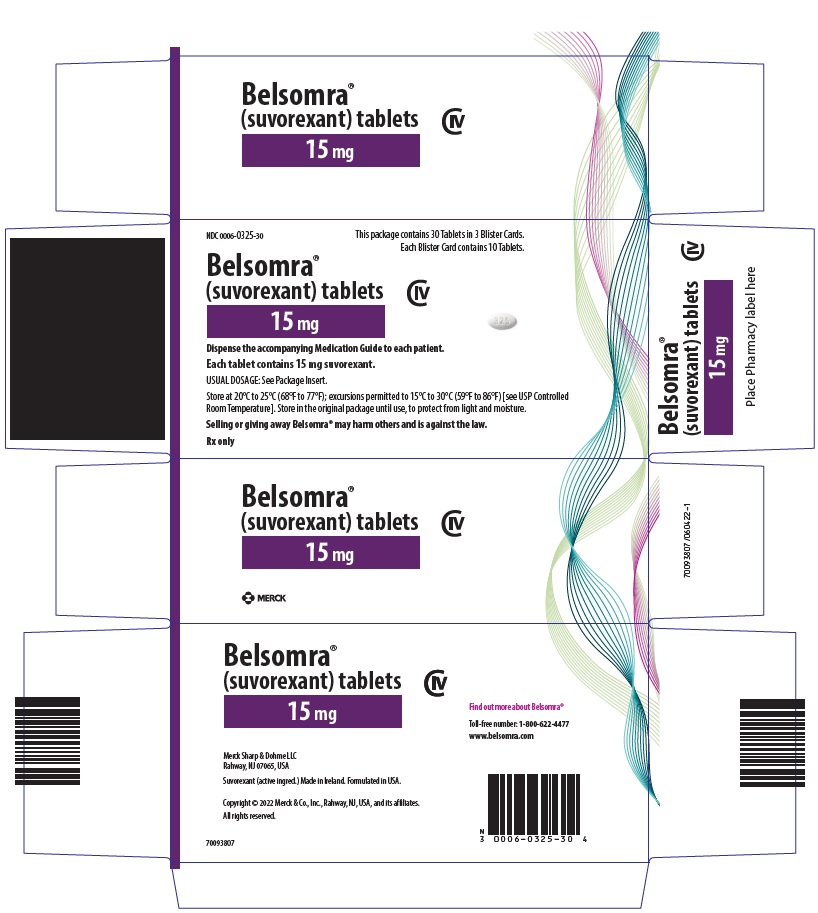
PRINCIPAL DISPLAY PANEL - 15 mg Tablet Blister Card Case Carton NDC 0006-0325-30 This package contains 30 Tablets in 3 Blister Cards. Each Blister Card contains 10 Tablets. Belsomra ® (suvorexant) tablets CIV 15 mg Dispense the accompanying Medication Guide to each patient.
Each tablet contains 15 mg suvorexant. USUAL DOSAGE: See Package Insert. Store at 20°C to 25°C (68°F to 77°F); excursions permitted to 15°C to 30°C (59°F to 86°F) [see USP Controlled Room Temperature].
Store in the original package until use, to protect from light and moisture. Selling or giving away Belsomra ® may harm others and is against the law. Rx only PRINCIPAL DISPLAY PANEL - 15 mg Tablet Blister Card Case Carton
PRINCIPAL DISPLAY PANEL - 20 mg Tablet Blister Card Case Carton NDC 0006-0335-30 This package contains 30 Tablets in 3 Blister Cards. Each Blister Card contains 10 Tablets. Belsomra ® (suvorexant) tablets CIV 20 mg Dispense the accompanying Medication Guide to each patient.
Each tablet contains 20 mg suvorexant. USUAL DOSAGE: See Package Insert. Store at 20°C to 25°C (68°F to 77°F); excursions permitted to 15°C to 30°C (59°F to 86°F) [see USP Controlled Room Temperature].
Store in the original package until use, to protect from light and moisture. Selling or giving away Belsomra ® may harm others and is against the law. Rx only PRINCIPAL DISPLAY PANEL - 20 mg Tablet Blister Card Case Carton
Medicaid utilization by pack size
Medicare Part D spend CMS · PART D · 2026 (Q1)
About this NDC listing & data coverage
What data is (and isn’t) available for this NDC — tap to expand
| NDC identity (package / product / labeler codes) | ✓ Available |
| Labeler | ✓ Available |
| Product & package description | ✓ Available |
| Marketing category & status | ✓ Available |
| Active ingredient / dosage form / route | ✓ Available |
| FDA label (SPL via DailyMed) | ✓ Available |
| Package photos | ✓ Available |
| Inactive ingredients (structured) | ✓ Available |
| NADAC pharmacy acquisition price (CMS) | — Not published for this NDC CMS publishes NADAC only for NDCs reported in its retail-pharmacy survey. |
| Orange Book / therapeutic-equivalence data | ✓ Available |
| HCPCS J-code billing crosswalk | — Not published for this NDC Most self-administered / retail products have no J-code — that is normal. |
| Medicaid utilization (CMS SDUD) | — Not published for this NDC CMS reports utilization only for NDCs with Medicaid claims above its privacy threshold. |