
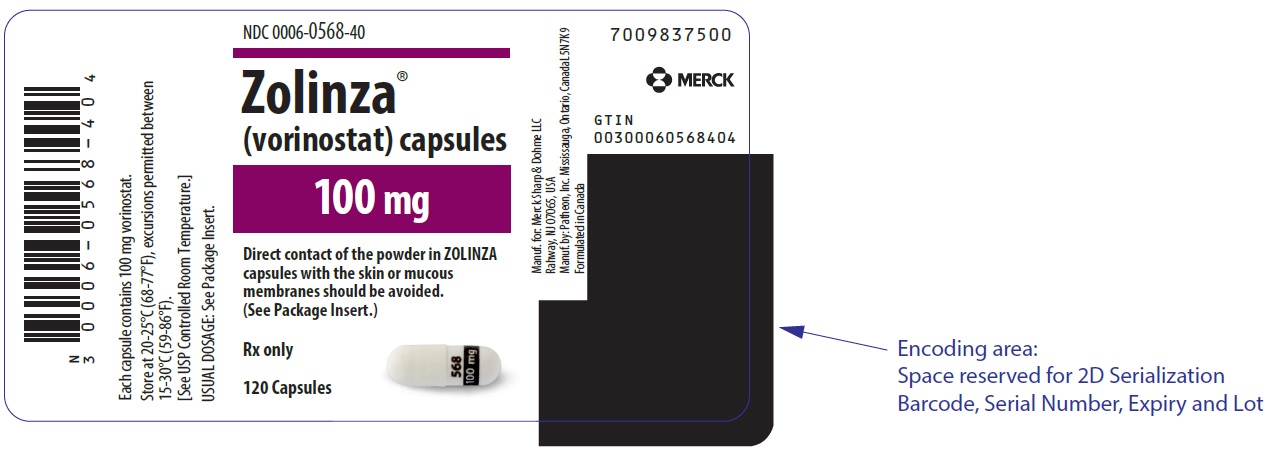
Zolinza vorinostat 100 mg Capsule, 120-count — NDC 0006-0568-40 (Billing 00006-0568-40)
This is a package of 120 capsules of Zolinza vorinostat 100 mg Capsule from Merck Sharp & Dohme LLC, marketed since Oct 2006 and currently FDA-listed. It is this product's only package size.
NDC database record
One package, one record: these facts belong to NDC 0006-0568-40 alone.
- Record
- FDA NDC Directory package listing · Human prescription drug
- Code segments
- 0006 labeler · 0568 product · 40 package
- Package marketed since
- Oct 6, 2006
- Sample package
- No — commercial package
- Listing certified through
- Dec 31, 2026
- Billing quantity
- 120 EA per package
- Barcode (UPC)
- 0300060568404
- FDA record last changed
- Jul 24, 2026
Identity & classification
Regulatory identifiers FDA, NLM and CMS codes for this package
Drug-database identifiers Medi-Span GPI and First Databank GCN / HICL / AHFS classification
- GSN (GCN sequence number): 061557
- GCN: 97345
- GPI-14 (Medi-Span): 21531575000120
- HICL (First Databank): 034070
- AHFS class code: 10:00.00.00
- RxCUI (RxNorm): 668579
Where does this data come from?
- FDA openFDA NDC Directory · synced Oct 1, 2026
- FDA label on DailyMed · label index refreshed Oct 5, 2026
- RxNorm (NLM RxNav) · catalog refreshed Oct 1, 2026
- Medi-Span GPI (licensed)
- First Databank (licensed) · refreshed Oct 1, 2026
RxNorm drug class
This medicine belongs to the Histone Deacetylase Inhibitor class.
Where does this data come from?
- RxClass (NLM) · catalog refreshed Oct 1, 2026
Clinical
Vorinostat is used to treat cutaneous T-cell lymphoma (CTCL, a type of cancer) in people whose disease has not improved, has gotten worse, or has come back after taking other medications. Vorinostat is in a class of medications called histone deacetylase (HDAC) inhibitors. It works by killing or stopping the growth of cancer cells.
Read the full MedlinePlus article ↗- Vorinostat, sold as Zolinza, treats the skin symptoms of cutaneous T-cell lymphoma (CTCL). It's used when the disease is getting worse, won't go away, or has come back after two sy...
- Take your capsule by mouth once a day with food. Swallow it whole and never open or crush it. Follow your prescriber's directions, and they may adjust the dose if side effects come...
- Common ones are diarrhea, tiredness, nausea, taste changes, appetite loss and low platelets. Drink plenty of fluids to avoid dehydration, and tell your care team if stomach symptom...
- Call right away for signs of a blood clot, such as leg swelling or pain, or sudden breathing trouble or chest pain. Also report unusual bleeding or bruising, or vomiting or diarrhe...
Patient education
Supplement & herbal interactions
Where does this data come from?
- MedlinePlus (NLM) · refreshed Oct 1, 2026
- FDA label on DailyMed · label index refreshed Oct 5, 2026
Ask a licensed pharmacist directly — free, answered by our team.
Pricing
A drug doesn't have one price. Each row is a different public payment system, and none is what you'd pay at the counter — that depends on your insurance. The ⓘ on each row explains what it measures.
| Price system | Per each | Per package |
|---|---|---|
| Retail pharmacies payNADAC · weekly | Not in the retail survey — common for institutional, discontinued, or low-volume packs. | |
| Medicaid paysCMS SDUD · 12 mo | No recent Medicaid claims on file for this NDC — rare and low-volume NDCs are suppressed in the public data. | |
| Medicare drug plans payPart D · Q2 2026 | $125.52 | $15,062.45 / 120 capsules |
Where does this data come from?
- CMS NADAC weekly file
- CMS ASP pricing files · refreshed Sep 20, 2026
- CMS Medicaid State Drug Utilization Data · refreshed Oct 5, 2026
- CMS Part D plan pricing files · refreshed Sep 24, 2026
- VA National Acquisition Center price file
Packaging — all sizes for this product
| Package NDC | Description | Marketing start | Marketing end | Status |
|---|---|---|---|---|
| 00006-0568-40 You're viewing this Main listing | 120 CAPSULE in 1 BOTTLE | 2006-10-06 | — | Active |
Therapeutic equivalents
| Product | Labeler | Pack | NADAC/unit | TE | Status | Price vs. this |
|---|---|---|---|---|---|---|
| Zolinza 100 mgthis 00006-0568-40 | Merck | 120 capsules | — | — | FDA listed | — |
Where does this data come from?
- FDA openFDA NDC Directory · synced Oct 1, 2026
- FDA Orange Book · refreshed Oct 3, 2026
- CMS NADAC weekly file
Availability & generic status
We did not find an FDA-approved generic match for this exact strength, form and route. Patent/protection dates below may affect future generic timing.
Why the date isn’t exact: Generic timing can change because patents may be challenged, settled, licensed, added, removed, or worked around with a narrower label — and FDA approval does not always mean a pharmacy can get the generic today.
🛈 What do these terms mean?
- Patent
- Legal protection listed in the Orange Book that may delay generic approval or launch. Issued by the U.S. Patent & Trademark Office.
- Substance patent
- Covers the active drug molecule itself — the hardest to design around. A generic generally can’t launch until it expires.
- Formulation (product) patent
- Covers a specific formulation or dosage form. A generic can sometimes work around it with a different formulation.
- Method-of-use patent
- A patent covering one specific approved use of the drug — not necessarily the whole molecule. A generic can sometimes launch with a “skinny label” that carves out the protected use and keeps the others.
- Skinny label
- A generic label that omits a still-patented use when the FDA allows it — letting a generic reach the market for the unprotected uses.
- Exclusivity
- FDA-granted marketing protection, separate from patents — e.g. 5-yr new chemical entity, 7-yr orphan drug, or a +6-month pediatric extension.
- Paragraph IV
- A generic applicant’s formal challenge to a listed patent. It can potentially lead to earlier generic entry, but often involves litigation or a settlement.
- RLD / RS
- Reference Listed Drug — the brand product the FDA uses as the reference for generic applications. Reference Standard — the product the FDA expects generics to compare against in bioequivalence testing.
- TE / AB rating
- FDA therapeutic-equivalence rating. An AB rating generally means the FDA considers a generic therapeutically equivalent to — and substitutable for — the brand.
- LOE (loss of exclusivity)
- The latest patent or exclusivity currently listed — the loss-of-exclusivity / latest-listed-protection date shown on this page. Paragraph-IV challenges and settlements can move the real date earlier; FDA approval and a manufacturer’s decision to market can move it later.
Built from the FDA Orange Book. The bars above are scaled to each protection’s expiry; the red LOE marker is the last one to lapse.
| Patent | Type | Use code | Expires |
|---|---|---|---|
| US 8450372 ↗ | Method of use | U-892 | Mar 18, 2028 |
| US 7456219 ↗ | Drug substance | — | Mar 11, 2027 |
| US 8093295 ↗ | Drug product | — | May 16, 2026 |
Is there a generic version of ZOLINZA 100 MG CAPSULE?
The FDA approved a generic — why can’t I get it at my pharmacy yet?
Why do different websites show different generic release dates?
What does “FDA listed” mean?
What does a patent or protection date mean here?
What does “current Orange Book estimate” mean?
Can a generic come out before the last patent expires?
Can a generic come out after the listed dates?
What is the difference between patents and exclusivity?
Why are there multiple patent dates?
Where does this data come from?
- FDA Orange Book · refreshed Oct 3, 2026
What it looks like
Where does this data come from?
- FDA label on DailyMed · label index refreshed Oct 5, 2026
Inactive Ingredients / Excipients
Inactive ingredients, also called excipients, are components of the drug product other than the active ingredient. They may include fillers, dyes, coatings, preservatives, flavors, or other formulation ingredients.
🧪 Avoiding an ingredient? See Vorinostat inactive ingredients by manufacturer: every current product's list side by side, so you can ask your pharmacy for the version that does not list it.
Where does this data come from?
IACT rows and label-wide narrative are kept separate; availability and product-level specificity depend on the submitted label.- FDA label on DailyMed · label index refreshed Oct 5, 2026
- FDA openFDA NDC Directory · synced Oct 1, 2026
Inactive ingredient FAQ
Are inactive ingredients the same for every manufacturer?
Why might an inactive ingredient be missing?
Can inactive ingredients matter?
Manufacturer & labeler
More NDCs from Merck Sharp & Dohme LLC labeler code 00006
- Januvia sitagliptin 100 mg Tablet, Film Coated NDC 0006-0277-02
- Belsomra suvorexant 15 mg Tablet, Film Coated NDC 0006-0325-13
- Belsomra suvorexant 20 mg Tablet, Film Coated NDC 0006-0335-13
- Emend aprepitant 80 mg Capsule NDC 0006-0461-02
- Isentress Raltegravir 25 mg Tablet, Chewable NDC 0006-0473-61
- Isentress Raltegravir 100 mg Tablet, Chewable NDC 0006-0477-61
- Janumet Sitagliptin and Metformin Hydrochloride 50 mg; 500 mg Tablet, Film Coated NDC 0006-0575-03
- Janumet Sitagliptin and Metformin Hydrochloride 50 mg; 1000 mg Tablet, Film Coated NDC 0006-0577-03
- ZINPLAVA bezlotoxumab 25 mg/mL Injection, Solution NDC 0006-3025-00
- KEYTRUDA pembrolizumab 25 mg/mL Injection, Solution NDC 0006-3026-02
- EMEND FOSAPREPITANT DIMEGLUMINE 150 mg/5mL Injection, Powder, Lyophilized, For Solution NDC 0006-3061-00
- Emend aprepitant 125 mg Powder, For Suspension NDC 0006-3066-03
Where does this data come from?
- FDA openFDA NDC Directory · synced Oct 1, 2026
- Drugs@FDA
Full prescribing information FDA SPL
🎯 Indications and Usage ▾
1 INDICATIONS AND USAGE ZOLINZA ® is indicated for the treatment of cutaneous manifestations in patients with cutaneous T-cell lymphoma who have progressive, persistent or recurrent disease on or following two systemic therapies. ZOLINZA is a histone deacetylase (HDAC) inhibitor indicated for the treatment of cutaneous manifestations in patients with cutaneous T-cell lymphoma (CTCL) who have progressive, persistent or recurrent disease on or following two systemic therapies. ( 1 )
⏱️ Dosage and Administration ▾
2 DOSAGE AND ADMINISTRATION 400 mg orally once daily with food. ( 2.1 ) If patient is intolerant to therapy, reduce the dose to 300 mg orally once daily with food. If necessary, reduce the dose further to 300 mg once daily with food for 5 consecutive days each week. ( 2.2 , 5 ) Reduce dose in patients with mild or moderate hepatic impairment. ( 2.2 )
2.1Dosing Information The recommended dose is 400 mg orally once daily with food. Treatment may be continued as long as there is no evidence of progressive disease or unacceptable toxicity. ZOLINZA capsules should not be opened or crushed [see How Supplied/Storage and Handling (16) ] .
2.2Dose Modifications For Toxicity If a patient is intolerant to therapy, the dose may be reduced to 300 mg orally once daily with food. The dose may be further reduced to 300 mg once daily with food for 5 consecutive days each week, as necessary. Hepatic Impairment Reduce the starting dose to 300 mg orally once daily with food in patients with mild to moderate hepatic impairment (bilirubin 1 to 3 × ULN or AST greater than ULN).
There is insufficient evidence to recommend a starting dose for patients with severe hepatic impairment (bilirubin greater than 3 × ULN) [see Use in Specific Populations (8.6) and Clinical Pharmacology (12.3) ] .
💊 Dosage Forms and Strengths ▾
3 DOSAGE FORMS AND STRENGTHS Capsules: 100 mg white, opaque, hard gelatin capsules with "568" over "100 mg" printed within radial bar in black ink on the capsule body. Capsules: 100 mg ( 3 )
⛔ Contraindications ▾
4 CONTRAINDICATIONS None. None ( 4 )
⚠️ Warnings and Cautions ▾
5 WARNINGS AND PRECAUTIONS Thromboembolism: Monitor for pertinent signs and symptoms of pulmonary embolism and deep vein thrombosis. ( 5.1 ) Myelosuppression: Thrombocytopenia and anemia may require dose modification or discontinuation. Monitor blood counts every 2 weeks during the first 2 months of therapy and monthly thereafter.
( 2.2 , 5.2 , 6 ) Gastrointestinal Toxicity: Nausea, vomiting and diarrhea; patients may require antiemetics, antidiarrheals, and fluid and electrolyte replacement to prevent dehydration. ( 5.3 , 6 ) Hyperglycemia: Monitor blood glucose every 2 weeks during the first 2 months of therapy and monthly thereafter. ( 5.4 ) Clinical Chemistry Abnormalities: Measure and correct abnormal electrolytes, creatinine, magnesium and calcium at baseline.
Monitor every 2 weeks during the first 2 months of therapy and at least monthly during treatment. ( 5.5 ) Severe Thrombocytopenia with Concomitant Use of other HDAC Inhibitors: Severe thrombocytopenia with gastrointestinal bleeding has been reported with concomitant use of ZOLINZA and other HDAC inhibitors (e.g., valproic acid). Monitor platelet counts more frequently.
( 5.6 , 7.2 ) Embryo-Fetal Toxicity: Fetal harm can occur when administered to a pregnant woman. Women should be apprised of the potential harm to the fetus. ( 5.7 )
5.1Thromboembolism Pulmonary embolism occurred in 5% (4/86) of patients receiving ZOLINZA, and deep vein thrombosis has also been reported. Monitor for signs and symptoms of these events, particularly in patients with a prior history of thromboembolic events [see Adverse Reactions (6) ] .
5.2Myelosuppression Treatment with ZOLINZA can cause dose-related thrombocytopenia and anemia. Monitor blood counts every 2 weeks during the first 2 months of therapy and monthly thereafter. Adjust dosage or discontinue treatment with ZOLINZA as clinically appropriate [see Dosage and Administration (2.2) , Warnings and Precautions (5.6) and Adverse Reactions (6) ].
5.3Gastrointestinal Toxicity Gastrointestinal disturbances, including nausea, vomiting and diarrhea, have been reported [see Adverse Reactions (6) ] and may require the use of antiemetic and antidiarrheal medications. Fluid and electrolytes should be replaced to prevent dehydration [see Adverse Reactions (6.1) ] . Pre-existing nausea, vomiting, and diarrhea should be adequately controlled before beginning therapy with ZOLINZA.
5.4Hyperglycemia Hyperglycemia has been observed in patients receiving ZOLINZA and was severe in 5% (4/86) of patients [see Adverse Reactions (6.1) ] . Monitor serum glucose every 2 weeks during the first 2 months of therapy and monthly thereafter.
5.5Clinical Chemistry Abnormalities Obtain chemistry tests, including serum electrolytes, creatinine, magnesium, and calcium, every 2 weeks during the first 2 months of therapy and monthly thereafter. Correct hypokalemia and hypomagnesemia prior to administration of ZOLINZA. Monitor potassium and magnesium more frequently in symptomatic patients (e.g., patients with nausea, vomiting, diarrhea, fluid imbalance or cardiac symptoms).
5.6Severe Thrombocytopenia when Combined with Other Histone Deacetylase (HDAC) Inhibitors Severe thrombocytopenia leading to gastrointestinal bleeding has been reported with concomitant use of ZOLINZA and other HDAC inhibitors (e.g., valproic acid). Monitor platelet counts more frequently [see Drug Interactions (7.2) ] .
5.7Embryo-Fetal Toxicity Based on findings from animal studies and its mechanism of action, ZOLINZA can cause fetal harm when administered to a pregnant woman. There are insufficient data on ZOLINZA use in pregnant women to inform a drug-associated risk of major birth defects and miscarriage. In animal reproduction studies, vorinostat crossed the placenta and caused adverse developmental outcomes at exposures approximately 0.5 times the human exposure based on AUC 0-24 hours .
Advise females of reproductive potential to use effective contraception during treatment and for at… [Excerpted — this section continues on DailyMed.]
🤒 Adverse Reactions ▾
6 ADVERSE REACTIONS The following serious adverse reactions have been associated with ZOLINZA in clinical trials and are discussed in greater detail in other sections of the label: Thromboembolism [see Warnings and Precautions (5.1) ] Myelosuppression [see Warnings and Precautions (5.2) ] Gastrointestinal Toxicity [see Warnings and Precautions (5.3) ] Hyperglycemia [see Warnings and Precautions (5.4) ] Clinical Chemistry Abnormalities [see Warnings and Precautions (5.5) ] Severe thrombocytopenia when combined with other Histone Deacetylase (HDAC) Inhibitors [see Warnings and Precautions (5.6) ] The most common adverse reactions (incidence ≥20%) are diarrhea, fatigue, nausea, thrombocytopenia, anorexia and dysgeusia.
( 6 ) To report SUSPECTED ADVERSE REACTIONS, contact Merck Sharp & Dohme LLC at 1-877-888-4231 or FDA at 1-800-FDA-1088 or www.fda.gov/medwatch .
6.1Clinical Trials Experience Because clinical trials are conducted under widely varying conditions, adverse reaction rates observed in the clinical trials of a drug cannot be directly compared to rates in the clinical trials of another drug and may not reflect the rates observed in practice. The safety of ZOLINZA was evaluated in 107 CTCL patients in two single arm clinical studies in which 86 patients received 400 mg once daily. The data described below reflect exposure to ZOLINZA 400 mg once daily in the 86 patients for a median number of 97.5 days on therapy (range 2 to 480+ days).
Seventeen (19.8%) patients were exposed beyond 24 weeks and 8 (9.3%) patients were exposed beyond 1 year. The population of CTCL patients studied was 37 to 83 years of age, 47.7% female, 52.3% male, and 81.4% white, 16.3% black, and 1.2% Asian or multi-racial. Common Adverse Reactions The most common drug-related adverse reactions can be classified into 4 symptom complexes: gastrointestinal symptoms (diarrhea, nausea, anorexia, weight decrease, vomiting, constipation), constitutional symptoms (fatigue, chills), hematologic abnormalities (thrombocytopenia, anemia), and taste disorders (dysgeusia, dry mouth).
The most common serious drug-related adverse reactions were pulmonary embolism and anemia. Table 1 summarizes the frequency of CTCL patients with specific adverse reactions, using the National Cancer Institute-Common Terminology Criteria for Adverse Events (NCI-CTCAE, version 3.0). Table 1: Clinical or Laboratory Adverse Reactions Occurring in CTCL Patients (Incidence ≥10% of patients) ZOLINZA 400 mg once daily (N=86) Adverse Reactions All Grades Grades 3-4 n % n % Fatigue 45 52.3 3
3.5Diarrhea 45 52.3 0
0.0Nausea 35 40.7 3
3.5Dysgeusia 24 27.9 0
0.0Thrombocytopenia 22 25.6 5
5.8Anorexia 21 24.4 2
2.3Weight Decreased 18 20.9 1
1.2Muscle Spasms 17 19.8 2
2.3Alopecia 16 18.6 0
0.0Dry Mouth 14 16.3 0
0.0Blood Creatinine Increased 14 16.3 0
0.0Chills 14 16.3 1
1.2Vomiting 13 15.1 1
1.2Constipation 13 15.1 0
0.0Dizziness 13 15.1 1
1.2Anemia 12 14.0 2
2.3Decreased Appetite 12 14.0 1
1.2Peripheral Edema 11 12.8 0
0.0Headache 10 11.6 0
0.0Pruritus 10 11.6 1
1.2Cough 9 10.5 0
0.0Upper Respiratory Infection 9 10.5 0
0.0Pyrexia 9 10.5 1
1.2The frequencies of more severe thrombocytopenia, anemia [see Warnings and Precautions (5.2) ] and fatigue were increased at doses higher than 400 mg once daily of ZOLINZA. Serious Adverse Reactions The most common serious adverse reactions in the 86 CTCL patients in two clinical trials were pulmonary embolism reported in 4.7% (4/86) of patients, squamous cell carcinoma reported in 3.5% (3/86) of patients and anemia reported in 2.3% (2/86) of patients. There were single events of cholecystitis, death (of unknown cause), deep vein thrombosis, enterococcal infection, exfoliative dermatitis, gastrointestinal hemorrhage, infection, lobar pneumonia, myocardial infarction, ischemic stroke, pelviureteric obstruction, sepsis, spinal cord injury, streptococcal bacteremia, syncope, T-cell lymphoma, thrombocytopenia and ureteric obstruction.
Discontin… [Excerpted — this section continues on DailyMed.]
🔄 Drug Interactions ▾
7 DRUG INTERACTIONS Coumarin-derivative anticoagulants: Prolongation of prothrombin time and International Normalized Ratio (INR) have been observed with concomitant use. Monitor INR frequently. ( 7.1 )
7.1Coumarin-Derivative Anticoagulants Prolongation of prothrombin time (PT) and International Normalized Ratio (INR) were observed in patients receiving ZOLINZA concomitantly with coumarin-derivative anticoagulants. Physicians should monitor PT and INR more frequently in patients concurrently administered ZOLINZA and coumarin derivatives.
7.2Other HDAC Inhibitors Severe thrombocytopenia and gastrointestinal bleeding have been reported with concomitant use of ZOLINZA and other HDAC inhibitors (e.g., valproic acid). Monitor platelet count every 2 weeks for the first 2 months [see Warnings and Precautions (5.6) ].
👥 Use in Specific Populations ▾
8 USE IN SPECIFIC POPULATIONS Lactation: Advise women not to breastfeed. ( 8.2 )
8.1Pregnancy Risk Summary Based on its mechanism of action and findings from animal studies, ZOLINZA can cause fetal harm when administered to a pregnant woman [see Clinical Pharmacology (12.1) ] . There are insufficient data on ZOLINZA use in pregnant women to inform a drug-associated risk of major birth defects and miscarriage. In animal reproduction studies, administration of vorinostat to pregnant rats and rabbits during the period of organogenesis caused adverse developmental outcomes at maternal exposures approximately 0.5 times the human exposure based on AUC 0-24 hours (see Data ) .
Advise pregnant women of the potential risk to a fetus. The estimated background risk of major birth defects and miscarriage for the indicated population is unknown. All pregnancies have a background risk of birth defect, loss, or other adverse outcomes.
In the U.S. general population, the estimated background risk of major birth defects and miscarriage in clinically recognized pregnancies is 2-4% and 15-20%, respectively. Data Animal Data Results of animal studies indicate that vorinostat crosses the placenta and is found in fetal plasma at levels up to 50% of maternal concentrations. Doses up to 50 and 150 mg/kg/day were tested in rats and rabbits, respectively (~0.5 times the human exposure based on AUC 0-24 hours ).
Treatment-related developmental effects including decreased mean live fetal weights, incomplete ossifications of the skull, thoracic vertebra, sternebra, and skeletal variations (cervical ribs, supernumerary ribs, vertebral count and sacral arch variations) were seen in rats at the highest dose of vorinostat tested. Reductions in mean live fetal weight and an elevated incidence of incomplete ossification of the metacarpals were seen in rabbits dosed at 150 mg/kg/day. The no observed effect levels (NOELs) for these findings were 15 and 50 mg/kg/day (<0.1 times the human exposure based on AUC) in rats and rabbits, respectively.
A dose-related increase in the incidence of malformations of the gall bladder was noted in all drug treatment groups in rabbits versus the concurrent control.
8.2Lactation Risk Summary There are no data on the presence of ZOLINZA or its metabolites in human milk, the effects on a breastfed child, or the effects on milk production. Because many drugs are excreted in human milk and because of the potential for serious adverse drug reactions in a nursing child, advise lactating women not to breastfeed during treatment with ZOLINZA and for at least 1 week after the last dose.
8.3Females and Males of Reproductive Potential ZOLINZA can cause fetal harm when administered to a pregnant woman [see Warnings and Precautions (5.7) and Use in Specific Populations (8.1) ] . Pregnancy Testing Perform pregnancy testing in females of reproductive potential within 7 days prior to initiating therapy with ZOLINZA. Contraception Females Advise females of reproductive potential to use effective contraception during treatment with ZOLINZA and for at least 6 months after the last dose.
Males Advise males with female partners of reproductive potential to use effective contraception and to avoid fathering a child during treatment with ZOLINZA and for at least 3 months after the last dose. Infertility Based on findings in animals, vorinostat has the potential to affect female fertility [see Nonclinical Toxicology (13.1) ].
8.4Pediatric Use The safety and effectiveness of ZOLINZA in pediatric patients have not been established.
8.5Geriatric Use Clinical studies of ZOLINZA did not include sufficient numbers of subjects aged 65 and over to determine whether they respond differently from younger subjects. Other reported clinical experience has not identified differences in responses between the elderly and younger patients.
8.6Use in Patients with Hepatic Impairment ZOLINZA was studied in 42 patients with non-CTCL cancer and varying degrees of hepa… [Excerpted — this section continues on DailyMed.]
🤰 Pregnancy ▾
8.1Pregnancy Risk Summary Based on its mechanism of action and findings from animal studies, ZOLINZA can cause fetal harm when administered to a pregnant woman [see Clinical Pharmacology (12.1) ] . There are insufficient data on ZOLINZA use in pregnant women to inform a drug-associated risk of major birth defects and miscarriage. In animal reproduction studies, administration of vorinostat to pregnant rats and rabbits during the period of organogenesis caused adverse developmental outcomes at maternal exposures approximately 0.5 times the human exposure based on AUC 0-24 hours (see Data ) .
Advise pregnant women of the potential risk to a fetus. The estimated background risk of major birth defects and miscarriage for the indicated population is unknown. All pregnancies have a background risk of birth defect, loss, or other adverse outcomes.
In the U.S. general population, the estimated background risk of major birth defects and miscarriage in clinically recognized pregnancies is 2-4% and 15-20%, respectively. Data Animal Data Results of animal studies indicate that vorinostat crosses the placenta and is found in fetal plasma at levels up to 50% of maternal concentrations. Doses up to 50 and 150 mg/kg/day were tested in rats and rabbits, respectively (~0.5 times the human exposure based on AUC 0-24 hours ).
Treatment-related developmental effects including decreased mean live fetal weights, incomplete ossifications of the skull, thoracic vertebra, sternebra, and skeletal variations (cervical ribs, supernumerary ribs, vertebral count and sacral arch variations) were seen in rats at the highest dose of vorinostat tested. Reductions in mean live fetal weight and an elevated incidence of incomplete ossification of the metacarpals were seen in rabbits dosed at 150 mg/kg/day. The no observed effect levels (NOELs) for these findings were 15 and 50 mg/kg/day (<0.1 times the human exposure based on AUC) in rats and rabbits, respectively.
A dose-related increase in the incidence of malformations of the gall bladder was noted in all drug treatment groups in rabbits versus the concurrent control.
🧒 Pediatric Use ▾
8.4Pediatric Use The safety and effectiveness of ZOLINZA in pediatric patients have not been established.
🧓 Geriatric Use ▾
8.5Geriatric Use Clinical studies of ZOLINZA did not include sufficient numbers of subjects aged 65 and over to determine whether they respond differently from younger subjects. Other reported clinical experience has not identified differences in responses between the elderly and younger patients.
🆘 Overdosage ▾
10 OVERDOSAGE No specific information is available on the treatment of overdosage of ZOLINZA. In the event of overdose, it is reasonable to employ the usual supportive measures, e.g., remove unabsorbed material from the gastrointestinal tract, employ clinical monitoring, and institute supportive therapy, if required. It is not known if vorinostat is dialyzable.
🧬 Clinical Pharmacology ▾
12 CLINICAL PHARMACOLOGY
12.1Mechanism of Action Vorinostat inhibits the enzymatic activity of histone deacetylases HDAC1, HDAC2 and HDAC3 (Class I) and HDAC6 (Class II) at nanomolar concentrations (IC 50 <86 nM). These enzymes catalyze the removal of acetyl groups from the lysine residues of proteins, including histones and transcription factors. In some cancer cells, there is an overexpression of HDACs, or an aberrant recruitment of HDACs to oncogenic transcription factors causing hypoacetylation of core nucleosomal histones.
Hypoacetylation of histones is associated with a condensed chromatin structure and repression of gene transcription. Inhibition of HDAC activity allows for the accumulation of acetyl groups on the histone lysine residues resulting in an open chromatin structure and transcriptional activation. In vitro , vorinostat causes the accumulation of acetylated histones and induces cell cycle arrest and/or apoptosis of some transformed cells.
The mechanism of the antineoplastic effect of vorinostat has not been fully characterized.
12.2Pharmacodynamics Cardiac Electrophysiology A randomized, partially-blind, placebo-controlled, 2-period crossover study was performed to assess the effects of a single 800-mg dose of vorinostat on the QTc interval in 24 patients with advanced cancer. This study was conducted to assess the impact of vorinostat on ventricular repolarization. The upper bound of the 90% confidence interval of the placebo-adjusted mean QTc interval change-from-baseline was less than 10 msec at every time point through 24 hours.
Based on these study results, administration of a single supratherapeutic 800-mg dose of vorinostat does not appear to prolong the QTc interval in patients with advanced cancer; however the study did not include a positive control to demonstrate assay sensitivity. In the fasted state, oral administration of a single 800-mg dose of vorinostat resulted in a mean AUC and C max and median T max of 8.6±5.7 µM∙hr and 1.7±0.67 µM and 2.1 (0.5-6) hours, respectively. In clinical studies in patients with CTCL, three of 86 CTCL patients exposed to 400 mg once daily had Grade 1 (>450-470 msec) or 2 (>470-500 msec or increase of >60 msec above baseline) clinical adverse reactions of QTc prolongation.
In a retrospective analysis of three Phase 1 and two Phase 2 studies, 116 patients had a baseline and at least one follow-up ECG. Four patients had Grade 2 (>470-500 msec or increase of >60 msec above baseline) and 1 patient had Grade 3 (>500 msec) QTc prolongation. In 49 non-CTCL patients from 3 clinical trials who had complete evaluation of QT interval, 2 had QTc measurements of >500 msec and 1 had a QTc prolongation of >60 msec.
12.3Pharmacokinetics Absorption The pharmacokinetics of vorinostat were evaluated in 23 patients with relapsed or refractory advanced cancer. After oral administration of a single 400-mg dose of vorinostat with a high-fat meal, the mean ± standard deviation area under the curve (AUC) and peak serum concentration (C max ) and the median (range) time to maximum concentration (T max ) were 5.5±1.8 µM∙hr, 1.2±0.62 µM and 4 (2-10) hours, respectively. In the fasted state, oral administration of a single 400-mg dose of vorinostat resulted in a mean AUC and C max and median T max of 4.2±1.9 µM∙hr and 1.2±0.35 µM and 1.5 (0.5-10) hours, respectively.
Therefore, oral administration of vorinostat with a high-fat meal resulted in an increase (33%) in the extent of absorption and a modest decrease in the rate of absorption (T max delayed 2.5 hours) compared to the fasted state. However, these small effects are not expected to be clinically meaningful. In clinical trials of patients with CTCL, vorinostat was taken with food.
At steady state in the fed-state, oral administration of multiple 400-mg doses of vorinostat resulted in a mean AUC and C max and a median T max of 6.0±2.0 µM∙hr, 1.2±0.53 µM and 4 (0.5-14) hours, respectively. Distribution Vorinostat is approximately 71% bo… [Excerpted — this section continues on DailyMed.]
🧬 Mechanism of Action ▾
12.1Mechanism of Action Vorinostat inhibits the enzymatic activity of histone deacetylases HDAC1, HDAC2 and HDAC3 (Class I) and HDAC6 (Class II) at nanomolar concentrations (IC 50 <86 nM). These enzymes catalyze the removal of acetyl groups from the lysine residues of proteins, including histones and transcription factors. In some cancer cells, there is an overexpression of HDACs, or an aberrant recruitment of HDACs to oncogenic transcription factors causing hypoacetylation of core nucleosomal histones.
Hypoacetylation of histones is associated with a condensed chromatin structure and repression of gene transcription. Inhibition of HDAC activity allows for the accumulation of acetyl groups on the histone lysine residues resulting in an open chromatin structure and transcriptional activation. In vitro , vorinostat causes the accumulation of acetylated histones and induces cell cycle arrest and/or apoptosis of some transformed cells.
The mechanism of the antineoplastic effect of vorinostat has not been fully characterized.
📦 How Supplied / Storage and Handling ▾
16 HOW SUPPLIED/STORAGE AND HANDLING ZOLINZA capsules, 100 mg, are white, opaque hard gelatin capsules with "568" over "100 mg" printed within the radial bar in black ink on the capsule body. They are supplied as follows: NDC 0006-0568-40. Each bottle contains 120 capsules.
Storage and Handling Store at 20-25°C (68-77°F), excursions permitted between 15-30°C (59-86°F) [see USP Controlled Room Temperature]. Procedures for proper handling and disposal of anticancer drugs should be considered. Several guidelines on this subject have been published.
1 There is no general agreement that all of the procedures recommended in the guidelines are necessary or appropriate. ZOLINZA (vorinostat) capsules should not be opened or crushed. Direct contact of the powder in ZOLINZA capsules with the skin or mucous membranes should be avoided.
If such contact occurs, wash thoroughly as outlined in the references. Personnel should avoid exposure to crushed and/or broken capsules [see Nonclinical Toxicology (13.1) ].
📦 Storage and Handling ▾
Storage and Handling Store at 20-25°C (68-77°F), excursions permitted between 15-30°C (59-86°F) [see USP Controlled Room Temperature]. Procedures for proper handling and disposal of anticancer drugs should be considered. Several guidelines on this subject have been published.
1 There is no general agreement that all of the procedures recommended in the guidelines are necessary or appropriate. ZOLINZA (vorinostat) capsules should not be opened or crushed. Direct contact of the powder in ZOLINZA capsules with the skin or mucous membranes should be avoided.
If such contact occurs, wash thoroughly as outlined in the references. Personnel should avoid exposure to crushed and/or broken capsules [see Nonclinical Toxicology (13.1) ].
📋 Description ▾
11 DESCRIPTION ZOLINZA contains vorinostat, which is described chemically as N- hydroxy- N'- phenyloctanediamide. The empirical formula is C 14 H 20 N 2 O 3 . The molecular weight is 264.32 and the structural formula is: Vorinostat is a white to light orange powder.
It is very slightly soluble in water, slightly soluble in ethanol, isopropanol and acetone, freely soluble in dimethyl sulfoxide and insoluble in methylene chloride. It has no chiral centers and is non-hygroscopic. The differential scanning calorimetry ranged from 161.7 (endotherm) to 163.9°C.
The pH of saturated water solutions of vorinostat drug substance was 6.6. The pKa of vorinostat was determined to be 9.2. Each 100 mg ZOLINZA capsule for oral administration contains 100 mg vorinostat and the following inactive ingredients: microcrystalline cellulose, sodium croscarmellose and magnesium stearate.
The capsule shell excipients are titanium dioxide, gelatin and sodium lauryl sulfate. Chemical Structure
💬 Information for Patients ▾
17 PATIENT COUNSELING INFORMATION Advise the patient to read the FDA-approved patient labeling (Patient Information). Patients should be instructed to drink at least 2 L/day of fluid to prevent dehydration and should promptly report excessive vomiting or diarrhea to their physician. Patients should be instructed about the signs of deep vein thrombosis and should consult their physician should any evidence of deep vein thrombosis develop.
Patients receiving ZOLINZA should seek immediate medical attention if unusual bleeding occurs. ZOLINZA capsules should not be opened or crushed. Embryo-Fetal Toxicity Advise patients that ZOLINZA can cause fetal harm when administered during pregnancy [see Warnings and Precautions (5.7) and Use in Specific Populations (8.1) ] .
Contraception Advise females of reproductive potential to use effective contraception during treatment with ZOLINZA and for at least 6 months after the last dose. Advise males with female partners of reproductive potential to use effective contraception and to avoid fathering a child during treatment with ZOLINZA and for at least 3 months after the last dose [see Use in Specific Populations (8.3) ] . Lactation Advise lactating women not to breastfeed during treatment with ZOLINZA and for at least 1 week after the last dose [see Use in Specific Populations (8.2) ] .
🧬 Pharmacokinetics ▾
12.3Pharmacokinetics Absorption The pharmacokinetics of vorinostat were evaluated in 23 patients with relapsed or refractory advanced cancer. After oral administration of a single 400-mg dose of vorinostat with a high-fat meal, the mean ± standard deviation area under the curve (AUC) and peak serum concentration (C max ) and the median (range) time to maximum concentration (T max ) were 5.5±1.8 µM∙hr, 1.2±0.62 µM and 4 (2-10) hours, respectively. In the fasted state, oral administration of a single 400-mg dose of vorinostat resulted in a mean AUC and C max and median T max of 4.2±1.9 µM∙hr and 1.2±0.35 µM and 1.5 (0.5-10) hours, respectively.
Therefore, oral administration of vorinostat with a high-fat meal resulted in an increase (33%) in the extent of absorption and a modest decrease in the rate of absorption (T max delayed 2.5 hours) compared to the fasted state. However, these small effects are not expected to be clinically meaningful. In clinical trials of patients with CTCL, vorinostat was taken with food.
At steady state in the fed-state, oral administration of multiple 400-mg doses of vorinostat resulted in a mean AUC and C max and a median T max of 6.0±2.0 µM∙hr, 1.2±0.53 µM and 4 (0.5-14) hours, respectively. Distribution Vorinostat is approximately 71% bound to human plasma proteins over the range of concentrations of 0.5 to 50 µg/mL. Metabolism The major pathways of vorinostat metabolism involve glucuronidation and hydrolysis followed by β-oxidation.
Human serum levels of two metabolites, O -glucuronide of vorinostat and 4-anilino-4-oxobutanoic acid were measured. Both metabolites are pharmacologically inactive. Compared to vorinostat, the mean steady state serum exposures in humans of the O -glucuronide of vorinostat and 4-anilino-4-oxobutanoic acid were 4-fold and 13-fold higher, respectively.
In vitro studies using human liver microsomes indicate negligible biotransformation by cytochromes P450 (CYP). Excretion Vorinostat is eliminated predominantly through metabolism with less than 1% of the dose recovered as unchanged drug in urine, indicating that renal excretion does not play a role in the elimination of vorinostat. The mean urinary recovery of two pharmacologically inactive metabolites at steady state was 16±5.8% of vorinostat dose as the O -glucuronide of vorinostat, and 36±8.6% of vorinostat dose as 4-anilino-4-oxobutanoic acid.
Total urinary recovery of vorinostat and these two metabolites averaged 52±13.3% of vorinostat dose. The mean terminal half-life (t ½ ) was ~2.0 hours for both vorinostat and the O -glucuronide metabolite, while that of the 4-anilino-4-oxobutanoic acid metabolite was 11 hours. Specific Populations Gender, Race & Age Based upon an exploratory analysis of limited data, gender, race and age do not appear to have meaningful effects on the pharmacokinetics of vorinostat.
Pediatric Vorinostat was not evaluated in patients <18 years of age. Hepatic Impairment The single dose pharmacokinetics of a 400 mg ZOLINZA dose was evaluated in patients with non-CTCL cancers with varying degrees of hepatic impairment. The mean AUC of vorinostat in patients with mild (bilirubin > 1 to 1.5 × ULN or AST > ULN but bilirubin ≤ ULN) and moderate (bilirubin 1.5 to ≤ 3 × ULN) hepatic impairment increased by 50% compared to the AUC of vorinostat in patients with normal hepatic function.
The mean vorinostat AUC in patients with severe hepatic impairment (bilirubin > 3 × ULN) increased by 66% compared to the AUC of patients with normal hepatic function. The safety of multiple daily doses of ZOLINZA was also evaluated in patients with non-CTCL cancers with varying degrees of hepatic impairment. The highest dose studied in mild, moderate and severe hepatic impairment was 400, 300 and 200 mg daily respectively.
The incidence of Grade 3 or 4 adverse reactions was similar among the hepatic function groups. The most common Grade 3 or 4 adverse reaction was thrombocytopenia. Reduce the dose in patients with mild to… [Excerpted — this section continues on DailyMed.]
🧬 Pharmacodynamics ▾
12.2Pharmacodynamics Cardiac Electrophysiology A randomized, partially-blind, placebo-controlled, 2-period crossover study was performed to assess the effects of a single 800-mg dose of vorinostat on the QTc interval in 24 patients with advanced cancer. This study was conducted to assess the impact of vorinostat on ventricular repolarization. The upper bound of the 90% confidence interval of the placebo-adjusted mean QTc interval change-from-baseline was less than 10 msec at every time point through 24 hours.
Based on these study results, administration of a single supratherapeutic 800-mg dose of vorinostat does not appear to prolong the QTc interval in patients with advanced cancer; however the study did not include a positive control to demonstrate assay sensitivity. In the fasted state, oral administration of a single 800-mg dose of vorinostat resulted in a mean AUC and C max and median T max of 8.6±5.7 µM∙hr and 1.7±0.67 µM and 2.1 (0.5-6) hours, respectively. In clinical studies in patients with CTCL, three of 86 CTCL patients exposed to 400 mg once daily had Grade 1 (>450-470 msec) or 2 (>470-500 msec or increase of >60 msec above baseline) clinical adverse reactions of QTc prolongation.
In a retrospective analysis of three Phase 1 and two Phase 2 studies, 116 patients had a baseline and at least one follow-up ECG. Four patients had Grade 2 (>470-500 msec or increase of >60 msec above baseline) and 1 patient had Grade 3 (>500 msec) QTc prolongation. In 49 non-CTCL patients from 3 clinical trials who had complete evaluation of QT interval, 2 had QTc measurements of >500 msec and 1 had a QTc prolongation of >60 msec.
🔬 Clinical Studies ▾
14 CLINICAL STUDIES Cutaneous T-cell Lymphoma In two open-label clinical studies, patients with refractory CTCL have been evaluated to determine their response rate to oral ZOLINZA. One study was a single-arm clinical study and the other assessed several dosing regimens. In both studies, patients were treated until disease progression or intolerable toxicity.
Study 1 In an open-label, single-arm, multicenter non-randomized study (NCT00091559), 74 patients with advanced CTCL were treated with ZOLINZA at a dose of 400 mg once daily. The primary endpoint was response rate to oral ZOLINZA in the treatment of skin disease in patients with advanced CTCL (Stage IIB and higher) who had progressive, persistent, or recurrent disease on or following two systemic therapies. Enrolled patients should have received, been intolerant to or not a candidate for bexarotene.
Extent of skin disease was quantitatively assessed by investigators using a modified Severity Weighted Assessment Tool (SWAT). The investigator measured the percentage total body surface area (%TBSA) involvement separately for patches, plaques, and tumors within 12 body regions using the patient's palm as a "ruler". The total %TBSA for each lesion type was multiplied by a severity weighting factor (1=patch, 2=plaque and 4=tumor) and summed to derive the SWAT score.
Efficacy was measured as either a Complete Clinical Response (CCR) defined as no evidence of disease, or Partial Response (PR) defined as a ≥50% decrease in SWAT skin assessment score compared to baseline. Both CCR and PR had to be maintained for at least 4 weeks. Secondary efficacy endpoints included response duration, time to progression, and time to objective response.
The population had been exposed to a median of three prior therapies (range 1 to 12). Table 2 summarizes the demographic and disease characteristics of the Study 1 population. Table 2: Baseline Patient Characteristics (All Patients As Treated) Characteristics Vorinostat (N=74) Age (year) Mean (SD) 61.2 (11.3) Median (Range) 60.0 (39.0, 83.0) Gender, n (%) Male 38 (51.4%) Female 36 (48.6%) CTCL stage, n (%) IB 11 (14.9%) IIA 2 (2.7%) IIB 19 (25.7%) III 22 (29.7%) IVA 16 (21.6%) IVB 4 (5.4%) Racial Origin, n (%) Asian 1 (1.4%) Black 11 (14.9%) Other 1 (1.4%) White 61 (82.4%) Time from Initial CTCL Diagnosis (year) Median (Range) 2.6 (0.0, 27.3) Clinical Characteristics Number of prior systemic treatments, median (range) 3.0 (1.0, 12.0) The overall objective response rate was 29.7% (22/74, 95% CI [19.7 to 41.5%]) in all patients treated with ZOLINZA.
In patients with Stage IIB and higher CTCL, the overall objective response rate was 29.5% (18/61). One patient with Stage IIB CTCL achieved a CCR. Median times to response were 55 and 56 days (range 28 to 171 days), respectively in the overall population and in patients with Stage IIB and higher CTCL.
However, in rare cases it took up to 6 months for patients to achieve an objective response to ZOLINZA. The median response duration was not reached since the majority of responses continued at the time of analysis, but was estimated to exceed 6 months for both the overall population and in patients with Stage IIB and higher CTCL. When end of response was defined as a 50% increase in SWAT score from the nadir, the estimated median response duration was 168 days and the median time to tumor progression was 202 days.
Using a 25% increase in SWAT score from the nadir as criterion for tumor progression, the estimated median time-to-progression was 148 days for the overall population and 169 days in the 61 patients with Stage IIB and higher CTCL. Response to any previous systemic therapy does not appear to be predictive of response to ZOLINZA. Study 2 In an open-label, non-randomized study, ZOLINZA was evaluated to determine the response rate for patients with CTCL who were refractory or intolerant to at least one treatment.
In this study, 33 patients were assigned to one of 3 cohorts: Cohort 1, 400 mg once daily… [Excerpted — this section continues on DailyMed.]
🧪 Nonclinical Toxicology ▾
13 NONCLINICAL TOXICOLOGY
13.1Carcinogenesis, Mutagenesis, Impairment of Fertility Carcinogenicity studies have not been performed with vorinostat. Vorinostat was mutagenic in vitro in the bacterial reverse mutation assays (Ames test), caused chromosomal aberrations in vitro in Chinese hamster ovary (CHO) cells and increased the incidence of micro-nucleated erythrocytes when administered to mice (Mouse Micronucleus Assay). Treatment-related effects on female reproduction were identified in the oral fertility study when females were dosed for 14 days prior to mating through gestational day 7.
Doses of 15, 50 and 150 mg/kg/day to rats resulted in approximate exposures of 0.15, 0.36 and 0.70 times the expected clinical exposure based on AUC. Dose-dependent increases in corpora lutea were noted at ≥15 mg/kg/day, which resulted in increased peri-implantation losses at ≥50 mg/kg/day. At 150 mg/kg/day, there were increases in the incidences of dead fetuses and in resorptions.
No effects on reproductive performance or fertility were observed in male rats dosed (20, 50, 150 mg/kg/day; approximate exposures of 0.15, 0.36 and 0.70 times the expected clinical exposure based on AUC) for 70 days prior to mating with untreated females.
📄 Carcinogenesis, Mutagenesis, Impairment of Fertility ▾
13.1Carcinogenesis, Mutagenesis, Impairment of Fertility Carcinogenicity studies have not been performed with vorinostat. Vorinostat was mutagenic in vitro in the bacterial reverse mutation assays (Ames test), caused chromosomal aberrations in vitro in Chinese hamster ovary (CHO) cells and increased the incidence of micro-nucleated erythrocytes when administered to mice (Mouse Micronucleus Assay). Treatment-related effects on female reproduction were identified in the oral fertility study when females were dosed for 14 days prior to mating through gestational day 7.
Doses of 15, 50 and 150 mg/kg/day to rats resulted in approximate exposures of 0.15, 0.36 and 0.70 times the expected clinical exposure based on AUC. Dose-dependent increases in corpora lutea were noted at ≥15 mg/kg/day, which resulted in increased peri-implantation losses at ≥50 mg/kg/day. At 150 mg/kg/day, there were increases in the incidences of dead fetuses and in resorptions.
No effects on reproductive performance or fertility were observed in male rats dosed (20, 50, 150 mg/kg/day; approximate exposures of 0.15, 0.36 and 0.70 times the expected clinical exposure based on AUC) for 70 days prior to mating with untreated females.
📚 References ▾
15 REFERENCES 1. "OSHA Hazardous Drugs." OSHA. [ http://www.osha.gov/SLTC/hazardousdrugs/index.html ]
📄 Patient Package Insert ▾
Patient Information ZOLINZA ® (zo LINZ ah) (vorinostat) capsules What is ZOLINZA? ZOLINZA is a prescription medicine for a type of cancer called cutaneous T-cell lymphoma (CTCL), which is a blood cell cancer that affects your skin. ZOLINZA is used when your CTCL gets worse, does not go away, or comes back after you have taken other medicines.
What you need to know about ZOLINZA Before you take this medicine, be sure you understand what it is used for and how to take it safely. Keep this information. If you have questions about this medicine, ask your doctor or pharmacist.
Every time you get a refill, look at the Patient Information. There may be new information. It is not known if ZOLINZA is safe and effective in children.
Should I take ZOLINZA? Pregnancy ZOLINZA has not been studied in pregnant women. It can hurt your baby while you are pregnant.
Women of childbearing potential (women who can become pregnant and bear children) should use contraception while taking ZOLINZA and for up to 6 months after the last dose. Please speak with your doctor. Men who have female partners who can become pregnant and bear children, should use contraception while taking ZOLINZA and for up to 3 months after taking the last dose.
Please speak with your doctor. Breastfeeding We do not know if ZOLINZA can pass into breast milk. Women should not breastfeed while using ZOLINZA and for up to 1 week after the last dose.
Please speak with your doctor. Diabetes If you are taking ZOLINZA and have high blood sugar (hyperglycemia) or diabetes, your doctor may need to change your diet or diabetes medicine to help control your blood sugar. Check your blood sugar as often as your doctor tells you to.
If your blood sugar is higher than normal, call your doctor. If you cannot eat or drink like you usually do because you feel sick, vomit, or have diarrhea, call your doctor. If you have any of these conditions, tell your doctor before taking ZOLINZA: a blood clot in your lung (called a Pulmonary Embolus or PE) a blood clot in a vein or blood vessel (called Deep Vein Thrombosis or DVT) high blood sugar (hyperglycemia) or diabetes liver disease nausea, vomiting or diarrhea any allergies Are you taking other medicines?
Tell your doctor about all of the medicines you take, including prescription and over-the-counter medicines, vitamins and herbal supplements. Other medicines can affect the way ZOLINZA works. Your doctor may want to do blood tests more often if you take: valproic acid, a medicine for seizures a blood thinner, like Coumadin ® (warfarin) How do I take ZOLINZA?
Take ZOLINZA exactly as prescribed by your doctor. Your doctor will tell you how many capsules to take, and when to take them. Take with food.
Drink 8 glasses of water every day (at least 8 ounces each). This will help to keep you hydrated, especially if you have nausea, vomiting or diarrhea. Do not chew or break open the capsule.
If you break open or crush a capsule, do not touch the capsule or powder. If the powder gets on your skin or in your eyes, wash your skin or eyes with lots of water right away. Then, call your doctor.
If you cannot swallow the capsule, tell your doctor. You may need a different medicine. What if I forget to take ZOLINZA?
If you miss a dose, take it as soon as you remember. If you do not remember until it is almost time for your next dose, just skip the missed dose and take the next dose at your regular time. Do not take two doses of ZOLINZA at the same time.
If you are not sure what to do, call your doctor. If you take more than your prescribed dose, call your doctor, poison center, or emergency room right away. ZOLINZA may cause serious side effects If you have any of the following signs or symptoms, tell your doctor right away.
Signs of a blood clot in your legs- Deep Vein Thrombosis or DVT Your leg swells up or feels warm Your leg hurts or feels very tender Your leg hurts when you stand or walk Your skin turns red or changes color Signs of a blood clot in your lungs-… [Excerpted — this section continues on DailyMed.]
📄 Package Label / Principal Display Panel ▾
PRINCIPAL DISPLAY PANEL - 100 mg Capsule Bottle Label NDC 0006-0568-40 Zolinza ® (vorinostat) capsules 100 mg Direct contact of the powder in ZOLINZA capsules with the skin or mucous membranes should be avoided. (See Package Insert.) Rx only 120 Capsules PRINCIPAL DISPLAY PANEL - 100 mg Capsule Bottle Label
Medicare Part D spend CMS · PART D · 2026 (Q1)
About this NDC listing & data coverage
What data is (and isn’t) available for this NDC — tap to expand
| NDC identity (package / product / labeler codes) | ✓ Available |
| Labeler | ✓ Available |
| Product & package description | ✓ Available |
| Marketing category & status | ✓ Available |
| Active ingredient / dosage form / route | ✓ Available |
| FDA label (SPL via DailyMed) | ✓ Available |
| Package photos | ✓ Available |
| Inactive ingredients (structured) | — Not published for this NDC The labeler did not submit a structured excipient list, or no SPL is available. |
| NADAC pharmacy acquisition price (CMS) | — Not published for this NDC CMS publishes NADAC only for NDCs reported in its retail-pharmacy survey. |
| Orange Book / therapeutic-equivalence data | ✓ Available |
| HCPCS J-code billing crosswalk | — Not published for this NDC Most self-administered / retail products have no J-code — that is normal. |
| Medicaid utilization (CMS SDUD) | — Not published for this NDC CMS reports utilization only for NDCs with Medicaid claims above its privacy threshold. |