
ZINPLAVA bezlotoxumab 25 mg/mL Injection, Solution — NDC 0006-3025-00 (Billing 00006-3025-00)
This is a package of ZINPLAVA bezlotoxumab 25 mg/mL Injection, Solution from Merck Sharp & Dohme LLC, marketed since Oct 2016 and currently FDA-listed. It is this product's only package size.
NDC database record
One package, one record: these facts belong to NDC 0006-3025-00 alone.
- Record
- FDA NDC Directory package listing · Human prescription drug
- Code segments
- 0006 labeler · 3025 product · 00 package
- Package marketed since
- Oct 21, 2016
- Sample package
- No — commercial package
- Listing certified through
- Dec 31, 2026
- Barcode (UPC-A, from the NDC)
- 3 0006302500 3
- FDA record last changed
- Jul 24, 2026
Identity & classification
Regulatory identifiers FDA, NLM and CMS codes for this package
Drug-database identifiers Medi-Span GPI and First Databank GCN / HICL / AHFS classification
- GSN (GCN sequence number): 076789
- GCN: 42584
- GPI-14 (Medi-Span): 19503015002020
- HICL (First Databank): 043884
- AHFS class code: 80:04.00.00
- RxCUI (RxNorm): 1855052
Where does this data come from?
- FDA openFDA NDC Directory · synced Oct 8, 2026
- FDA label on DailyMed · label index refreshed Oct 8, 2026
- RxNorm (NLM RxNav) · catalog refreshed Oct 1, 2026
- Medi-Span GPI (licensed)
- First Databank (licensed) · refreshed Oct 8, 2026
RxNorm drug class
This medicine belongs to the Antibacterial monoclonal antibodies class.
Where does this data come from?
- RxClass (NLM) · catalog refreshed Oct 1, 2026
Clinical
Bezlotoxumab injection is used to decrease the risk of Clostridium difficile infection (C. difficile or CDI; a type of bacteria that can cause severe or life-threatening diarrhea) from coming back in people who are at high risk for C. difficile infection and who are already taking an antibiotic drug to treat Clostridium difficile. Bezlotoxumab is in a class of medications called monoclonal antibodies. It works by binding to a C. difficile toxin to stop its effects on the body.
Read the full MedlinePlus article ↗- It helps lower the chance that a C. difficile infection comes back. You get it while taking antibiotics for the infection. It does not treat the infection by itself.
- It is given once through an IV over about 60 minutes by a healthcare professional. The dose depends on your weight. You do not need to take it at home.
- The most common are nausea, fever and headache. Some people feel tired, dizzy or short of breath during or just after the infusion. These usually pass within a day.
- Heart failure was reported more often in people with a history of congestive heart failure who received it. Your doctor should use it only if the benefit outweighs the risk. Tell u...
Patient education
Supplement & herbal interactions
Where does this data come from?
- MedlinePlus (NLM) · refreshed Oct 8, 2026
- FDA label on DailyMed · label index refreshed Oct 8, 2026
Ask a licensed pharmacist directly — free, answered by our team.
Pricing
A drug doesn't have one price. Each row is a different public payment system, and none is what you'd pay at the counter — that depends on your insurance. The ⓘ on each row explains what it measures.
| Price system | Per mL | Per package |
|---|---|---|
| Retail pharmacies payNADAC · weekly | Not in the retail survey — common for institutional, discontinued, or low-volume packs. | |
| Medicaid paysCMS SDUD · 12 mo | No recent Medicaid claims on file for this NDC — rare and low-volume NDCs are suppressed in the public data. | |
| Medicare drug plans payPart D · quarterly | No Part D plan price is available for this NDC in our data. | |
Where does this data come from?
- CMS NADAC weekly file
- CMS ASP pricing files · refreshed Sep 20, 2026
- CMS Medicaid State Drug Utilization Data · refreshed Oct 8, 2026
- CMS Part D plan pricing files · refreshed Sep 24, 2026
- VA National Acquisition Center price file
Packaging — all sizes for this product
| Package NDC | Description | Marketing start | Marketing end | Status |
|---|---|---|---|---|
| 00006-3025-00 You're viewing this Main listing | 1 VIAL, SINGLE-DOSE in 1 CARTON / 40 mL in 1 VIAL, SINGLE-DOSE | 2016-10-21 | — | Active |
Therapeutic equivalents
| Product | Labeler | Pack | NADAC/unit | TE | Status | Price vs. this |
|---|---|---|---|---|---|---|
| Zinplava 25 mg/mLthis 00006-3025-00 | Merck | 1 vial | — | — | FDA listed | — |
Where does this data come from?
- FDA openFDA NDC Directory · synced Oct 8, 2026
- FDA Purple Book · refreshed Oct 5, 2026
- CMS NADAC weekly file
Availability & biosimilar status
Biologics have no small-molecule generics; biosimilar competition is tracked in the FDA Purple Book.
Why the date isn’t exact: Biosimilar timing can change because patents may be challenged, settled, licensed, added or removed, and litigation can move the real date earlier or later.
🛈 What do these terms mean?
- Biologic patent
- A patent the reference product’s maker has publicly listed. A biosimilar generally can’t launch until these expire — unless they’re invalidated or resolved in a settlement.
- Reference-product exclusivity
- A flat 12 years of FDA market protection from the biologic’s first licensure (the BPCIA). No biosimilar can be licensed before it ends, regardless of patents.
- Interchangeable exclusivity
- The first interchangeable biosimilar can earn a period as the only interchangeable version (pharmacists can substitute it without the prescriber).
- Earliest biosimilar (LOE)
- The latest of all the dates above — the soonest a biosimilar can realistically reach the market. Litigation and settlements can move it earlier.
Biologics have no small-molecule “generics” — competition comes from FDA-licensed biosimilars, tracked in the FDA Purple Book.
| Code | What it grants | Expires |
|---|---|---|
| RefProduct | Reference-product exclusivity (12-year, BPCIA) — no biosimilar can be licensed before this date | Oct 21, 2028 |
Is there a biosimilar for ZINPLAVA 1,000 MG/40 ML VIAL?
Why do different websites show different biosimilar dates?
Can a biosimilar launch before the last patent expires?
What does “current Purple Book estimate” mean?
What does “FDA listed” mean?
What does a patent or protection date mean here?
Where does this data come from?
- FDA Purple Book · refreshed Oct 5, 2026
What it looks like
Where does this data come from?
- FDA label on DailyMed · label index refreshed Oct 8, 2026
Inactive Ingredients / Excipients
Inactive ingredients, also called excipients, are components of the drug product other than the active ingredient. They may include fillers, dyes, coatings, preservatives, flavors, or other formulation ingredients.
🧪 Avoiding an ingredient? See Bezlotoxumab Injection inactive ingredients by manufacturer: every current product's list side by side, so you can ask your pharmacy for the version that does not list it.
💡 Tap an ingredient (hover on desktop) to see what it is and why it’s used.
-
0.8 mg / 1 mL
UNII 2968PHW8QP
A weak organic acid derived from citrus fruits or made through fermentation. It works as a buffer to control pH, a preservative to extend shelf life, and a flavoring agent in medications.
-
0.0078 mg / 1 mL
UNII 7A314HQM0I
Pentetic acid is a chelating agent, a chemical that binds to metals. It's used in some medicines to prevent metal ions from interfering with drug stability or effectiveness.
-
0.25 mg / 1 mL
UNII 6OZP39ZG8H
Polysorbate 80 is a synthetic emulsifier derived from sorbitol and oleic acid. It helps mix oil and water-based ingredients together in medications and improves how the product disperses in the body.
-
8.77 mg / 1 mL
UNII 451W47IQ8X
Sodium chloride is common table salt. It's used in medicines as a buffer to maintain proper pH, as a filler to add bulk, or to adjust the osmotic balance in liquid formulations.
-
UNII 55X04QC32I
A strong alkaline chemical used to adjust and maintain the pH balance of liquid medicines. It helps keep the medicine stable and ensures it stays effective during storage.
-
4.75 mg / 1 mL
UNII B22547B95K
A salt derived from citric acid that helps maintain the proper acid-base balance in the medicine. It's used as a buffer to keep the product stable and at the right pH level.
-
UNII 059QF0KO0R
Water is a liquid solvent that dissolves and mixes ingredients together in liquid medicines, syrups, and injections. It helps distribute the active drug evenly throughout the product.
7 inactive ingredients listed in the exact product block matched to this NDC.
Where does this data come from?
ingredient classCode="IACT" elements from the exact product block matched by this NDC. Label-section narrative from DailyMed / the openFDA label index is shown separately when available.- FDA label on DailyMed · label index refreshed Oct 8, 2026
- FDA openFDA NDC Directory · synced Oct 8, 2026
Inactive ingredient FAQ
Are inactive ingredients the same for every manufacturer?
Why might an inactive ingredient be missing?
Can inactive ingredients matter?
Manufacturer & labeler
More NDCs from Merck Sharp & Dohme LLC labeler code 00006
- Emend aprepitant 80 mg Capsule NDC 0006-0461-02
- Isentress Raltegravir 25 mg Tablet, Chewable NDC 0006-0473-61
- Isentress Raltegravir 100 mg Tablet, Chewable NDC 0006-0477-61
- Zolinza vorinostat 100 mg Capsule NDC 0006-0568-40
- Janumet Sitagliptin and Metformin Hydrochloride 50 mg; 500 mg Tablet, Film Coated NDC 0006-0575-03
- Janumet Sitagliptin and Metformin Hydrochloride 50 mg; 1000 mg Tablet, Film Coated NDC 0006-0577-03
- KEYTRUDA pembrolizumab 25 mg/mL Injection, Solution NDC 0006-3026-02
- EMEND FOSAPREPITANT DIMEGLUMINE 150 mg/5mL Injection, Powder, Lyophilized, For Solution NDC 0006-3061-00
- Emend aprepitant 125 mg Powder, For Suspension NDC 0006-3066-03
- Pifeltro doravirine 100 mg Tablet, Film Coated NDC 0006-3069-01
- Zepatier elbasvir and grazoprevir 50 mg; 100 mg Tablet, Film Coated NDC 0006-3074-02
- Prevymis Letermovir 240 mg Tablet, Film Coated NDC 0006-3075-02
Where does this data come from?
- FDA openFDA NDC Directory · synced Oct 8, 2026
- Drugs@FDA
Full prescribing information FDA SPL
🎯 Indications and Usage ▾
1 INDICATIONS AND USAGE ZINPLAVA™ is indicated to reduce recurrence of Clostridioides difficile infection (CDI) in adults and pediatric patients 1 year of age and older who are receiving antibacterial drug treatment for CDI and are at a high risk for CDI recurrence. ZINPLAVA is a human monoclonal antibody that binds to Clostridioides difficile toxin B, indicated to reduce recurrence of Clostridioides difficile infection (CDI) in adults and pediatric patients 1 year of age and older who are receiving antibacterial drug treatment for CDI and are at a high risk for CDI recurrence.
( 1 ) Limitation of Use: ZINPLAVA is not indicated for the treatment of CDI. ZINPLAVA is not an antibacterial drug. ZINPLAVA should only be used in conjunction with antibacterial drug treatment of CDI.
( 1 ) Limitation of Use: ZINPLAVA is not indicated for the treatment of CDI. ZINPLAVA is not an antibacterial drug. ZINPLAVA should only be used in conjunction with antibacterial drug treatment of CDI. [See Dosage and Administration (2.1) .]
⏱️ Dosage and Administration ▾
2 DOSAGE AND ADMINISTRATION Administer ZINPLAVA during antibacterial drug treatment for CDI. ( 2.1 ) The recommended dose is a single dose of 10 mg/kg administered as an intravenous infusion over 60 minutes. ( 2.2 ) Dilute prior to intravenous infusion. Administer via a low-protein binding 0.2 micron to 5 micron in-line or add-on filter. See Full Prescribing Information for dilution and administration instructions. ( 2.3 )
2.1Important Administration Instructions Administer ZINPLAVA during antibacterial drug treatment for CDI.
2.2Dosing Recommendations in Adults and Pediatric Patients 1 year of age and older The recommended dose of ZINPLAVA is a single dose of 10 mg/kg administered as an intravenous infusion over 60 minutes. The safety and efficacy of repeat administration of ZINPLAVA in patients with CDI have not been studied.
2.3Preparation and Administration Preparation of Diluted Solution ZINPLAVA must be diluted prior to intravenous infusion. Prepare the diluted solution immediately after removal of the vial(s) from refrigerated storage, or the vial(s) may be stored at room temperature protected from light for up to 24 hours prior to preparation of the diluted solution. Inspect vial contents for discoloration and particulate matter prior to dilution.
ZINPLAVA is a clear to moderately opalescent, colorless to pale yellow solution. Do not use the vial if the solution is discolored or contains visible particles. Do not shake the vial.
Withdraw the required volume from the vial(s) based on the patient's weight (in kg) and transfer into an intravenous bag containing either 0.9% Sodium Chloride Injection, USP or 5% Dextrose Injection, USP to prepare a diluted solution with a final concentration ranging from 1 mg/mL to 10 mg/mL. Mix diluted solution by gentle inversion. Do not shake.
Discard vial(s) and all unused contents. Storage of Diluted Solution The product does not contain preservative. The diluted solution of ZINPLAVA may be stored either at room temperature for up to 16 hours or under refrigeration at 2°C to 8°C (36°F to 46°F) for up to 24 hours.
If refrigerated, allow the intravenous bag to come to room temperature prior to use. These time limits include storage of the infusion solution in the intravenous bag through the duration of infusion. Do not freeze the diluted solution.
Administration Administer the diluted solution as an intravenous infusion over 60 minutes using a sterile, non-pyrogenic, low-protein binding 0.2 micron to 5 micron in-line or add-on filter. The diluted solution can be infused via a central line or peripheral catheter. Do not administer ZINPLAVA as an intravenous push or bolus.
Do not co-administer other drugs simultaneously through the same infusion line.
💊 Dosage Forms and Strengths ▾
3 DOSAGE FORMS AND STRENGTHS Injection: 1,000 mg/40 mL (25 mg/mL) clear to moderately opalescent, colorless to pale yellow solution in a single-dose vial. Injection : 1,000 mg/40 mL (25 mg/mL) solution in a single-dose vial. ( 3 )
⛔ Contraindications ▾
4 CONTRAINDICATIONS None. None ( 4 )
⚠️ Warnings and Cautions ▾
5 WARNINGS AND PRECAUTIONS Heart Failure : Was reported more commonly in ZINPLAVA-treated patients with a history of congestive heart failure (CHF) in Trial 1 and Trial 2. In patients with a history of CHF, ZINPLAVA should be reserved for use when the benefit outweighs the risk. ( 5.1 )
5.1Heart Failure Heart failure was reported more commonly in Trial 1 and Trial 2 in ZINPLAVA-treated patients compared to placebo-treated patients. These adverse reactions occurred primarily in patients with underlying congestive heart failure (CHF). In patients with a history of CHF, 12.7% (15/118) of ZINPLAVA-treated patients and 4.8% (5/104) of placebo-treated patients had the serious adverse reaction of heart failure during the 12-week study period [see Adverse Reactions (6.1) ] .
Additionally, in patients with a history of CHF, there were more deaths in ZINPLAVA-treated patients, 19.5% (23/118) than in placebo-treated patients, 12.5% (13/104) during the 12-week study period. The causes of death varied and included cardiac failure, infections, and respiratory failure. In patients with a history of CHF, ZINPLAVA should be reserved for use when the benefit outweighs the risk.
🤒 Adverse Reactions ▾
6 ADVERSE REACTIONS Adult Patients : The most common adverse reactions (reported in ≥4% of adult patients) included nausea, pyrexia, and headache. ( 6.1 ) Pediatric Patients : The most common adverse reactions (reported in >10% of pediatric patients) were pyrexia and headache ( 6.1 ) To report SUSPECTED ADVERSE REACTIONS, contact Merck Sharp & Dohme LLC at 1-877-888-4231 or FDA at 1-800-FDA-1088 or www.fda.gov/medwatch .
6.1Clinical Trials Experience Because clinical trials are conducted under widely varying conditions, adverse reaction rates observed in the clinical trials of a drug cannot be directly compared to rates in the clinical trials of another drug and may not reflect the rates observed in practice. Clinical Trials Experience in Adults The safety of ZINPLAVA was evaluated in two placebo-controlled Phase 3 trials (Trial 1 n=390 and Trial 2 n=396). Patients received a single 10 mg/kg intravenous infusion of ZINPLAVA and concomitant standard of care (SoC) antibacterial drugs (metronidazole, vancomycin or fidaxomicin) for CDI.
Adverse reactions reported within the first 4 weeks after ZINPLAVA was administered are described for the pooled Phase 3 trial population of 786 patients. The median age of patients receiving ZINPLAVA was 65 years (range 18 to 100), 50% were age 65 years or older, 56% were female, and 83% were white. Serious Adverse Reactions in Adults Serious adverse reactions occurring within 12 weeks following infusion were reported in 29% of ZINPLAVA-treated patients and 33% of placebo-treated patients.
Heart failure was reported as a serious adverse reaction in 2.3% of the ZINPLAVA-treated patients and 1.0% of the placebo-treated patients [see Warnings and Precautions (5.1) ] . One patient discontinued the ZINPLAVA infusion due to ventricular tachyarrhythmia that occurred 30 minutes after the start of the infusion. Mortality rates were 7.1% and 7.6% in ZINPLAVA-treated patients and placebo-treated patients, respectively, during the 12-week follow-up period.
Most Common Adverse Reactions in Adults The most common adverse reactions following treatment with ZINPLAVA (reported in ≥4% of patients within the first 4 weeks of infusion and with a frequency greater than placebo) were nausea, pyrexia, and headache (see Table 1 ). Table 1: Adverse Reactions Reported in ≥4% of ZINPLAVA-Treated Patients with CDI and at a Frequency Greater than Placebo in Trial 1 and Trial 2 All patients as treated population, defined as all randomized patients who received a dose of study medication, by treatment received , Adverse reactions reported within 4 weeks of administration of ZINPLAVA or placebo Adverse Reaction ZINPLAVA with SoC SoC = Standard of Care antibacterial drugs (metronidazole or vancomycin or fidaxomicin) for CDI N=786 % Placebo with SoC N=781 % Gastrointestinal disorders Nausea 7% 5% General disorders and administration site conditions Pyrexia 5% 3% Nervous system disorders Headache 4% 3% Infusion Related Adverse Reactions in Adults Overall, 10% of ZINPLAVA-treated patients experienced one or more infusion specific adverse reactions on the day of, or the day after, the infusion compared to 8% of placebo-treated patients.
Infusion specific adverse reactions reported in ≥0.5% of patients receiving ZINPLAVA and at a frequency greater than placebo were nausea (3%), fatigue (1%), pyrexia (1%), dizziness (1%), headache (2%), dyspnea (1%) and hypertension (1%). Of these patients, 78% and 20% of patients experienced mild and moderate adverse reactions, respectively. These reactions resolved within 24 hours following onset.
Clinical Trial Experience in Pediatric Patients The safety and pharmacokinetics of ZINPLAVA in pediatric patients 1 year of age and older were evaluated in a randomized, double-blind, placebo-controlled, multi-center trial (Trial 3). Enrolled patients had a diagnosis of CDI and received SoC (vancomycin, metronidazole, or fidaxomicin) for the baseline CDI episode. In this trial, 143 patients were randomized… [Excerpted — this section continues on DailyMed.]
🔄 Drug Interactions ▾
7 DRUG INTERACTIONS Since ZINPLAVA is eliminated by catabolism, no metabolic drug-drug interactions are expected [see Clinical Pharmacology (12.3) ] .
👥 Use in Specific Populations ▾
8 USE IN SPECIFIC POPULATIONS
8.1Pregnancy Risk Summary Adequate and well controlled studies with ZINPLAVA have not been conducted in pregnant women. No animal reproductive and developmental studies have been conducted with bezlotoxumab. The background risk of major birth defects and miscarriage for the indicated population is unknown; however, the background risk in the U.S. general population of major birth defects is 2-4% and of miscarriage is 15-20% of clinically recognized pregnancies.
8.2Lactation Risk Summary There is no information regarding the presence of bezlotoxumab in human milk, the effects on the breast-fed infant, or the effects on milk production. The developmental and health benefits of breastfeeding should be considered along with the mother's clinical need for ZINPLAVA and any potential adverse effects on the breastfed child from ZINPLAVA or from the underlying maternal condition.
8.4Pediatric Use The safety and effectiveness of ZINPLAVA to reduce recurrence of CDI have been established in pediatric patients 1 year of age and older. Use of ZINPLAVA in pediatric patients 1 year of age and older is supported by evidence from adequate and well-controlled trials in adults with additional pharmacokinetic and safety data in pediatric patients aged 1 year and older. The adverse reactions and the pharmacokinetics observed in pediatric patients were comparable to that observed in adult patients [see Adverse Reactions (6.1) and Clinical Pharmacology (12.3) ] .
The safety and effectiveness of ZINPLAVA have not been established in pediatric patients younger than 1 year of age.
8.5Geriatric Use Of the 786 patients treated with ZINPLAVA, 50% were 65 years of age and over, and 27% were 75 years of age and over. No overall differences in safety and efficacy were observed between these subjects and younger subjects [see Clinical Studies (14) ] . No dose adjustment is necessary for patients ≥65 years of age [see Clinical Pharmacology (12.3) ] .
🤰 Pregnancy ▾
8.1Pregnancy Risk Summary Adequate and well controlled studies with ZINPLAVA have not been conducted in pregnant women. No animal reproductive and developmental studies have been conducted with bezlotoxumab. The background risk of major birth defects and miscarriage for the indicated population is unknown; however, the background risk in the U.S. general population of major birth defects is 2-4% and of miscarriage is 15-20% of clinically recognized pregnancies.
🧒 Pediatric Use ▾
8.4Pediatric Use The safety and effectiveness of ZINPLAVA to reduce recurrence of CDI have been established in pediatric patients 1 year of age and older. Use of ZINPLAVA in pediatric patients 1 year of age and older is supported by evidence from adequate and well-controlled trials in adults with additional pharmacokinetic and safety data in pediatric patients aged 1 year and older. The adverse reactions and the pharmacokinetics observed in pediatric patients were comparable to that observed in adult patients [see Adverse Reactions (6.1) and Clinical Pharmacology (12.3) ] .
The safety and effectiveness of ZINPLAVA have not been established in pediatric patients younger than 1 year of age.
🧓 Geriatric Use ▾
8.5Geriatric Use Of the 786 patients treated with ZINPLAVA, 50% were 65 years of age and over, and 27% were 75 years of age and over. No overall differences in safety and efficacy were observed between these subjects and younger subjects [see Clinical Studies (14) ] . No dose adjustment is necessary for patients ≥65 years of age [see Clinical Pharmacology (12.3) ] .
🆘 Overdosage ▾
10 OVERDOSAGE There is no clinical experience with overdosage of ZINPLAVA. In case of overdose, patients should be closely monitored for signs or symptoms of adverse reactions, and appropriate symptomatic treatment should be instituted.
🧬 Clinical Pharmacology ▾
12 CLINICAL PHARMACOLOGY
12.1Mechanism of Action ZINPLAVA (bezlotoxumab) is a human monoclonal antibody that binds to C. difficile toxin B and neutralizes its effects [see Microbiology (12.4) ] .
12.3Pharmacokinetics The pharmacokinetics of bezlotoxumab were studied in 1515 adult CDI patients in two Phase 3 trials (Trial 1 and Trial 2). Based on a population PK analysis, the geometric mean (%CV) clearance of bezlotoxumab was 0.317 L/day (41%), with a mean volume of distribution of
7.33L (16%), and elimination half-life (t½) of approximately 19 days (28%). After a single intravenous dose of 10 mg/kg ZINPLAVA, geometric mean AUC 0-INF and C max were 53000 mcg∙h/mL and 185 mcg/mL, respectively, in the adult patients with CDI. The clearance of bezlotoxumab increased with increasing body weight; the resulting exposure differences are adequately addressed by the administration of a weight-based dose.
Bezlotoxumab is eliminated by catabolism. Specific Populations Gender, Race, Ethnicity, and Co-Morbid Conditions The following factors had no clinically meaningful effect on the exposure of bezlotoxumab in adults: gender, race, ethnicity, and presence of co-morbid conditions. Patients with Renal Impairment The effect of renal impairment on the pharmacokinetics of bezlotoxumab was evaluated in adult patients with mild (eGFR 60 to <90 mL/min/1.73 m 2 ), moderate (eGFR 30 to <60 mL/min/1.73 m 2 ), or severe (eGFR 15 to <30 mL/min/1.73 m 2 ) renal impairment, or with end stage renal disease (eGFR <15 mL/min/1.73 m 2 ), as compared to adult patients with normal (eGFR ≥90 mL/min/1.73 m 2 ) renal function.
No clinically meaningful differences in the exposure of bezlotoxumab were found between adult patients with renal impairment and adult patients with normal renal function. Patients with Hepatic Impairment The effect of hepatic impairment on the pharmacokinetics of bezlotoxumab was evaluated in adult patients with hepatic impairment (defined as having two or more of the following: [1] albumin ≤3.1 g/dL; [2] ALT ≥2× ULN; [3] total bilirubin ≥1.3× ULN; or [4] mild, moderate or severe liver disease as reported by the Charlson Co-morbidity Index), as compared to adult patients with normal hepatic function.
No clinically meaningful differences in the exposure of bezlotoxumab were found between adult patients with hepatic impairment and adult patients with normal hepatic function. Geriatric Patients The effect of age on the pharmacokinetics of bezlotoxumab was evaluated in patients ranging from 18 to 100 years of age. No clinically meaningful differences in the exposure of bezlotoxumab were found between patients 65 years and older and patients under 65 years of age.
Pediatric Patients The pharmacokinetics of bezlotoxumab were studied in 90 pediatric patients (1 year to less than 18 years) and after a single intravenous dose of 10 mg/kg ZINPLAVA, geometric mean (%CV) AUC 0-INF and C max were 47,900 (35.9) mcg·h/mL and 139 (32.4) mcg/mL, respectively. There is no clinically meaningful relationship between bezlotoxumab exposure and body weight following weight-based dosing of ZINPLAVA in pediatric patients. Drug Interaction Studies Because bezlotoxumab is eliminated by catabolism, no metabolic drug-drug interactions are expected.
12.4Microbiology Mechanism of Action Bezlotoxumab is a human monoclonal antibody that binds C. difficile toxin B with an equilibrium dissociation constant (K d ) of <1×10 -9 M. Bezlotoxumab inhibits the binding of toxin B and prevents its effects on mammalian cells. Bezlotoxumab does not bind to C. difficile toxin A.
Activity In Vitro Bezlotoxumab binds to an epitope on toxin B that is conserved across reported strains of C. difficile , although amino acid sequence variation within the epitope does occur. In vitro studies in cell-based assays using Vero cells or Caco-2 cells, suggest that bezlotoxumab neutralizes the toxic effects of toxin B.
12.6Immunogenicity The observed incidence of anti-drug antibodies (ADA) is hig… [Excerpted — this section continues on DailyMed.]
🧬 Mechanism of Action ▾
12.1Mechanism of Action ZINPLAVA (bezlotoxumab) is a human monoclonal antibody that binds to C. difficile toxin B and neutralizes its effects [see Microbiology (12.4) ] .
Mechanism of Action Bezlotoxumab is a human monoclonal antibody that binds C. difficile toxin B with an equilibrium dissociation constant (K d ) of <1×10 -9 M. Bezlotoxumab inhibits the binding of toxin B and prevents its effects on mammalian cells. Bezlotoxumab does not bind to C. difficile toxin A.
📦 How Supplied / Storage and Handling ▾
16 HOW SUPPLIED/STORAGE AND HANDLING ZINPLAVA Injection: is a sterile, preservative-free, clear to moderately opalescent, colorless to pale yellow solution and is supplied in the following packaging configuration: Carton (NDC 0006-3025-00) containing one (1) single-dose vial of ZINPLAVA 1,000 mg/40 mL (25 mg/mL). Store in a refrigerator, 2ºC to 8ºC (36ºF to 46ºF) in original carton to protect from light. Do Not Freeze. Do Not Shake.
📦 Storage and Handling ▾
Store in a refrigerator, 2ºC to 8ºC (36ºF to 46ºF) in original carton to protect from light. Do Not Freeze. Do Not Shake.
📋 Description ▾
11 DESCRIPTION Bezlotoxumab is a human monoclonal antibody that binds to C. difficile toxin B and neutralizes its effects. Bezlotoxumab is an IgG 1 immunoglobulin with an approximate molecular weight of 148.2 kDa. ZINPLAVA (bezlotoxumab) Injection is a sterile, preservative-free, clear to moderately opalescent, colorless to pale yellow solution that requires dilution for intravenous infusion.
The product is provided in a 50 mL vial that contains 1000 mg of bezlotoxumab in 40 mL of solution. Each mL of solution contains bezlotoxumab (25 mg), citric acid monohydrate (0.8 mg), diethylenetriaminepentaacetic acid (0.0078 mg), polysorbate 80 (0.25 mg), sodium chloride (8.77 mg), sodium citrate dihydrate (4.75 mg), and Water for Injection, USP. The vial may contain sodium hydroxide to adjust the pH to 6.0.
💬 Information for Patients ▾
17 PATIENT COUNSELING INFORMATION Advise the patient to read the FDA-approved patient labeling (Patient Information). Concurrent Antibacterial Therapy Advise patients, their families, or caregivers that ZINPLAVA does not take the place of their antibacterial treatment for their CDI infection. They must continue their antibacterial treatment as directed [see Indications and Usage (1) and Dosage and Administration (2.1) ] .
🧬 Pharmacokinetics ▾
12.3Pharmacokinetics The pharmacokinetics of bezlotoxumab were studied in 1515 adult CDI patients in two Phase 3 trials (Trial 1 and Trial 2). Based on a population PK analysis, the geometric mean (%CV) clearance of bezlotoxumab was 0.317 L/day (41%), with a mean volume of distribution of
7.33L (16%), and elimination half-life (t½) of approximately 19 days (28%). After a single intravenous dose of 10 mg/kg ZINPLAVA, geometric mean AUC 0-INF and C max were 53000 mcg∙h/mL and 185 mcg/mL, respectively, in the adult patients with CDI. The clearance of bezlotoxumab increased with increasing body weight; the resulting exposure differences are adequately addressed by the administration of a weight-based dose.
Bezlotoxumab is eliminated by catabolism. Specific Populations Gender, Race, Ethnicity, and Co-Morbid Conditions The following factors had no clinically meaningful effect on the exposure of bezlotoxumab in adults: gender, race, ethnicity, and presence of co-morbid conditions. Patients with Renal Impairment The effect of renal impairment on the pharmacokinetics of bezlotoxumab was evaluated in adult patients with mild (eGFR 60 to <90 mL/min/1.73 m 2 ), moderate (eGFR 30 to <60 mL/min/1.73 m 2 ), or severe (eGFR 15 to <30 mL/min/1.73 m 2 ) renal impairment, or with end stage renal disease (eGFR <15 mL/min/1.73 m 2 ), as compared to adult patients with normal (eGFR ≥90 mL/min/1.73 m 2 ) renal function.
No clinically meaningful differences in the exposure of bezlotoxumab were found between adult patients with renal impairment and adult patients with normal renal function. Patients with Hepatic Impairment The effect of hepatic impairment on the pharmacokinetics of bezlotoxumab was evaluated in adult patients with hepatic impairment (defined as having two or more of the following: [1] albumin ≤3.1 g/dL; [2] ALT ≥2× ULN; [3] total bilirubin ≥1.3× ULN; or [4] mild, moderate or severe liver disease as reported by the Charlson Co-morbidity Index), as compared to adult patients with normal hepatic function.
No clinically meaningful differences in the exposure of bezlotoxumab were found between adult patients with hepatic impairment and adult patients with normal hepatic function. Geriatric Patients The effect of age on the pharmacokinetics of bezlotoxumab was evaluated in patients ranging from 18 to 100 years of age. No clinically meaningful differences in the exposure of bezlotoxumab were found between patients 65 years and older and patients under 65 years of age.
Pediatric Patients The pharmacokinetics of bezlotoxumab were studied in 90 pediatric patients (1 year to less than 18 years) and after a single intravenous dose of 10 mg/kg ZINPLAVA, geometric mean (%CV) AUC 0-INF and C max were 47,900 (35.9) mcg·h/mL and 139 (32.4) mcg/mL, respectively. There is no clinically meaningful relationship between bezlotoxumab exposure and body weight following weight-based dosing of ZINPLAVA in pediatric patients. Drug Interaction Studies Because bezlotoxumab is eliminated by catabolism, no metabolic drug-drug interactions are expected.
🔬 Clinical Studies ▾
14 CLINICAL STUDIES Clinical Trials in Adults The safety and efficacy of ZINPLAVA were investigated in two randomized, double-blind, placebo-controlled, multicenter, Phase 3 trials (Trial 1 and Trial 2) in patients receiving Standard of Care antibacterial drugs for treatment of CDI (SoC). Randomization was stratified by SoC (metronidazole, vancomycin, or fidaxomicin) and hospitalization status (inpatient vs. outpatient) at the time of study entry. Enrolled patients were 18 years of age or older and had a confirmed diagnosis of CDI, which was defined as diarrhea (passage of 3 or more loose bowel movements in 24 or fewer hours) and a positive stool test for toxigenic C. difficile from a stool sample collected no more than 7 days before study entry.
Patients were excluded if surgery for CDI was planned, or if they had uncontrolled chronic diarrheal illness. Patients received a 10- to 14-day course of oral SoC and a single infusion of ZINPLAVA or placebo was administered during the course of SoC. Patients on oral vancomycin or oral fidaxomicin could have also received intravenous metronidazole.
Choice of SoC was at the discretion of the health care provider. The day of the infusion of ZINPLAVA or placebo in relation to the start of SoC ranged from the day prior to the start of SoC to 14 days after the start of SoC with the median being day 3 of SoC. In Trial 1, 403 patients were randomized to receive ZINPLAVA and 404 patients were randomized to receive placebo.
In Trial 2, 407 subjects were randomized to receive ZINPLAVA and 399 patients were randomized to receive placebo. The Full Analysis Set (FAS) was a subset of all randomized subjects with exclusions for: (i) not receiving infusion of study medication; (ii) not having a positive local stool test for toxigenic C. difficile ; (iii) not receiving protocol defined standard of care therapy within a 1 day window of the infusion. The baseline characteristics of the 1554 patients randomized to ZINPLAVA or placebo in the FAS were similar across treatment arms and in Trial 1 and Trial 2.
The median age was 65 years, 85% were white, 57% were female, and 68% were inpatients. A similar proportion of patients received oral metronidazole (48%) or oral vancomycin (48%) and 4% of the patients received oral fidaxomicin as their SoC. The following risk factors associated with a high risk of CDI recurrence or CDI-related adverse outcomes were present in the study population: 51% were ≥65 years of age, 39% received one or more systemic antibacterial drugs (during the 12-week follow-up period), 28% had one or more episodes of CDI within the six months prior to the episode under treatment (15% had two or more episodes prior to the episode under treatment), 21% were immunocompromised and 16% presented at study entry with clinically severe CDI (as defined by a Zar score of ≥2 1 ).
A hypervirulent strain (ribotypes 027, 078 or 244) was isolated in 22% of patients who had a positive baseline culture, of which 87% (189 of 217 strains) were ribotype 027. Patients were assessed for clinical cure of the presenting CDI episode, defined as no diarrhea for 2 consecutive days following the completion of a ≤14 day SoC regimen. Patients who achieved clinical cure were then assessed for recurrence of CDI through 12 weeks following administration of the infusion of ZINPLAVA or placebo.
CDI recurrence was defined as the development of a new episode of diarrhea associated with a positive stool test for toxigenic C. difficile following clinical cure of the presenting CDI episode. Sustained clinical response was defined as clinical cure of the presenting CDI episode and no CDI recurrence through 12 weeks after infusion. Table 2 contains the results for Trial 1 and Trial 2.
Table 2: Efficacy Results Through 12 Weeks After Infusion (Trial 1 and Trial 2, Full Analysis Set Full Analysis Set = a subset of all randomized subjects with exclusions for: (i) did not receive infusion of study medication; (ii) did not have a posi… [Excerpted — this section continues on DailyMed.]
🧪 Nonclinical Toxicology ▾
13 NONCLINICAL TOXICOLOGY
13.1Carcinogenesis, Mutagenesis, Impairment of Fertility No studies have been performed to test the potential of bezlotoxumab for carcinogenicity or genotoxicity. Fertility studies have not been conducted with bezlotoxumab.
📄 Carcinogenesis, Mutagenesis, Impairment of Fertility ▾
13.1Carcinogenesis, Mutagenesis, Impairment of Fertility No studies have been performed to test the potential of bezlotoxumab for carcinogenicity or genotoxicity. Fertility studies have not been conducted with bezlotoxumab.
📚 References ▾
15 REFERENCES Zar FA, Bakkanagari SR, Moorthi KM, Davis MB. A comparison of vancomycin and metronidazole for the treatment of Clostridium difficile -associated diarrhea, stratified by disease severity. Clin Infect Dis 2007;45(3):302-7.
📄 Patient Package Insert ▾
This Patient Information has been approved by the U.S. Food and Drug Administration. Issued: 5/2023 Patient Information ZINPLAVA™ (zin-PLAH-va) (bezlotoxumab) injection, for intravenous use What is ZINPLAVA?
ZINPLAVA is a prescription medicine used to help decrease the risk of C-diff ( Clostridioides difficile infection) from coming back in adults and children 1 year of age and older who are taking an antibiotic for C-diff and who have a high risk of C-diff coming back. ZINPLAVA is not used to treat C-diff and is not an antibiotic. ZINPLAVA should only be used along with the antibiotic that you are taking to treat C-diff.
Keep taking your antibiotic for your C-diff as directed by your doctor. It is not known if ZINPLAVA is safe and effective in children under 1 year of age. Before receiving ZINPLAVA, tell your doctor about all of your medical conditions, including if you: have or have had congestive heart failure (CHF). are pregnant or trying to get pregnant.
It is not known if ZINPLAVA will harm your unborn baby. You and your doctor should decide together if you will receive ZINPLAVA. are breastfeeding or plan to breastfeed. It is not known if ZINPLAVA passes into your breast milk.
You and your doctor should decide together if you will receive ZINPLAVA. Tell your doctor about all of the medicines you take, including prescription and over-the-counter medicines, vitamins, and herbal supplements. How will I receive ZINPLAVA?
You will receive ZINPLAVA into your vein through an IV (intravenously). You do not need to do anything to prepare for receiving ZINPLAVA. You will receive ZINPLAVA in 1 dose and it will take about 1 hour.
If you miss your appointment, call your doctor right away to reschedule it. What are the possible side effects of ZINPLAVA? ZINPLAVA may cause serious side effects, including: Heart failure.
Heart failure may happen in people who receive ZINPLAVA and can be serious. People with a history of congestive heart failure (CHF) who received ZINPLAVA had a higher rate of heart failure and death than those who did not receive ZINPLAVA. Common side effects of ZINPLAVA: The most common side effects that may happen on the day of or the day after receiving ZINPLAVA include: nausea headache fever feeling tired shortness of breath feeling dizzy high blood pressure The most common side effects that may happen up to four weeks after receiving ZINPLAVA include: nausea fever headache If you have any side effect that bothers you or does not go away, tell your doctor.
These are not all the possible side effects of ZINPLAVA. For more information, ask your doctor or pharmacist. Call your doctor for medical advice about side effects.
You may report side effects to FDA at 1-800-FDA-1088. General information about the safe and effective use of ZINPLAVA. Medicines are sometimes prescribed for purposes other than those listed in a Patient Information leaflet.
You can ask your pharmacist or doctor for information about ZINPLAVA that is written for health professionals. What are the ingredients in ZINPLAVA? The active ingredient is : bezlotoxumab The inactive ingredients are : citric acid monohydrate, diethylenetriaminepentaacetic acid, polysorbate 80, sodium chloride, sodium citrate dihydrate, and water for injection, USP.
ZINPLAVA may also contain sodium hydroxide. For more information, call the company that makes ZINPLAVA, at 1-800-444-2080, or go to the website – www.ZINPLAVA.com . You can also find the full prescribing information written for health professionals at www.ZINPLAVA.com Manufactured by: Merck Sharp & Dohme LLC Rahway, NJ 07065, USA U.S.
License No. 0002 At: MSD Ireland (Carlow) County Carlow, Ireland For patent information: www.msd.com/research/patent Copyright © 2016-2023 Merck & Co., Inc., Rahway, NJ, USA, and its affiliates All rights reserved. usppi-mk6072-iv-2305r002
📄 Recent Major Changes ▾
Indications and Usage ( 1 ) 5/2023 Dosage and Administration, Dosing Recommendations in Adults and Pediatric Patients 1 year of age and older ( 2.2 ) 5/2023
📄 Package Label / Principal Display Panel ▾
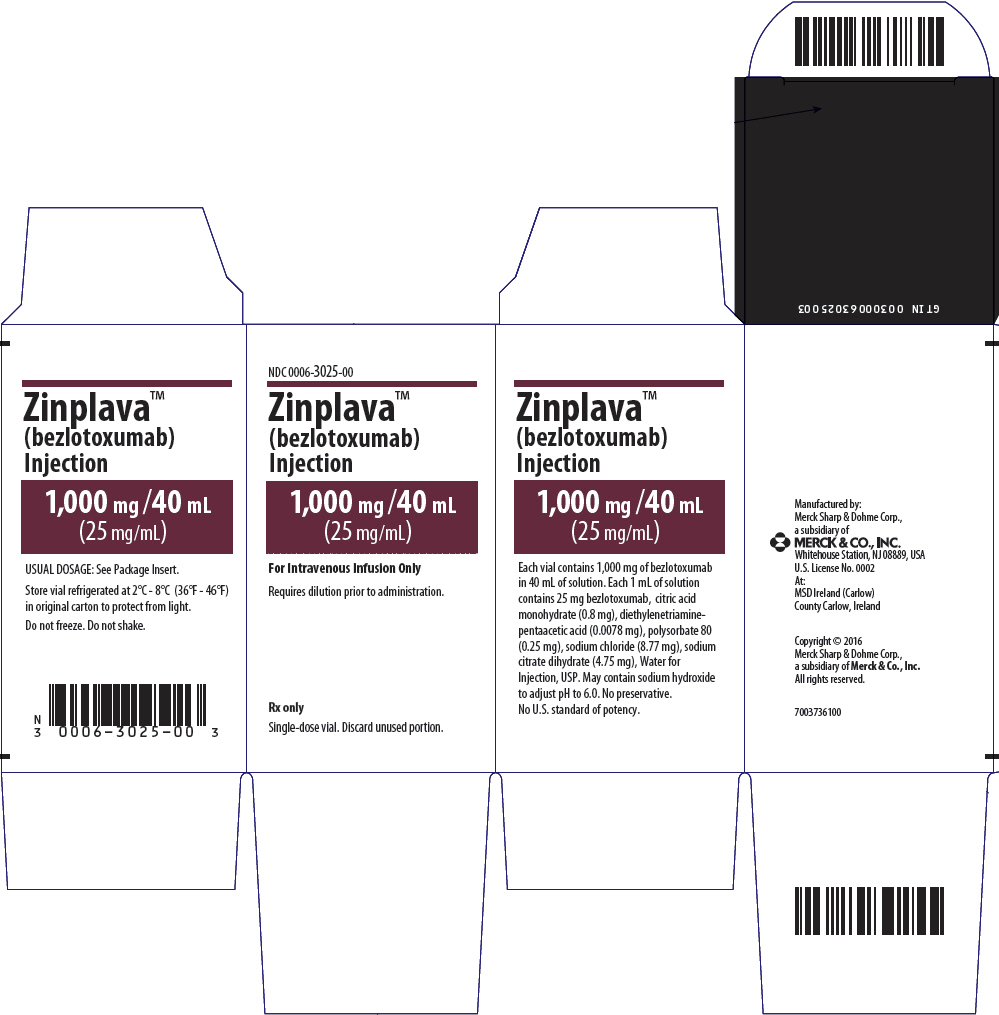
PRINCIPAL DISPLAY PANEL - 1,000 mg/40 mL Vial Carton NDC 0006-3025-00 Zinplava ™ (bezlotoxumab) Injection 1,000 mg / 40 mL (25 mg/mL) For Intravenous Infusion Only Requires dilution prior to administration. Rx only Single-dose vial. Discard unused portion. PRINCIPAL DISPLAY PANEL - 1,000 mg/40 mL Vial Carton
Medicare Part D spend CMS · PART D · 2025 (Q1-Q4)
About this NDC listing & data coverage
What data is (and isn’t) available for this NDC — tap to expand
| NDC identity (package / product / labeler codes) | ✓ Available |
| Labeler | ✓ Available |
| Product & package description | ✓ Available |
| Marketing category & status | ✓ Available |
| Active ingredient / dosage form / route | ✓ Available |
| FDA label (SPL via DailyMed) | ✓ Available |
| Package photos | ✓ Available |
| Inactive ingredients (structured) | ✓ Available |
| NADAC pharmacy acquisition price (CMS) | — Not published for this NDC CMS publishes NADAC only for NDCs reported in its retail-pharmacy survey. |
| Orange Book / therapeutic-equivalence data | ✓ Available |
| HCPCS J-code billing crosswalk | — Not published for this NDC Most self-administered / retail products have no J-code — that is normal. |
| Medicaid utilization (CMS SDUD) | — Not published for this NDC CMS reports utilization only for NDCs with Medicaid claims above its privacy threshold. |