
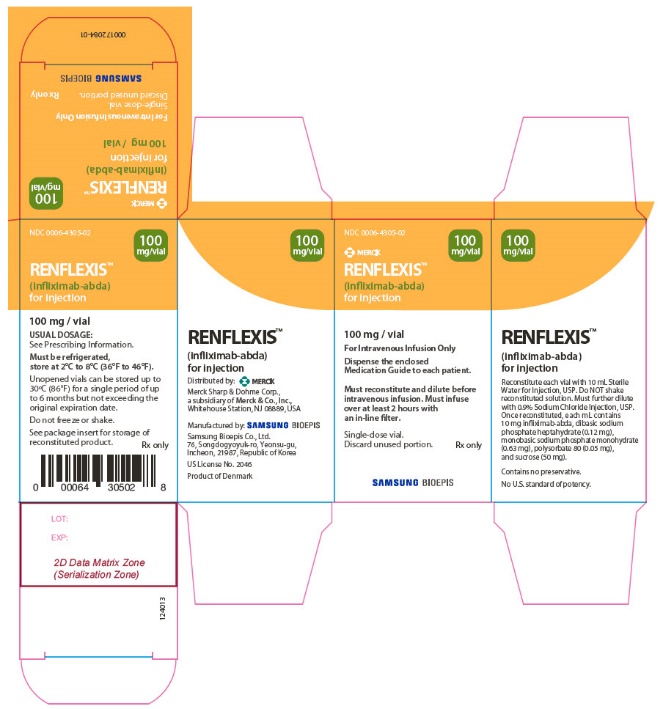
Renflexis infliximab 100 mg Injection, Powder, Lyophilized, For Solution, 1 vial — NDC 0006-4305-02 (Billing 00006-4305-02)
This is a package of 1 vial of Renflexis infliximab 100 mg Injection, Powder, Lyophilized, For Solution from Merck Sharp & Dohme LLC, no longer marketed, no longer in the FDA NDC Directory. It is this product's only package size.
NDC database record
One package, one record: these facts belong to NDC 0006-4305-02 alone.
- Record
- FDA NDC Directory package listing · Human prescription drug
- Code segments
- 0006 labeler · 4305 product · 02 package
- Billing quantity
- 1 EA per package
- Barcode (UPC-A, from the NDC)
- 3 0006430502 9
- FDA record last changed
- Jul 14, 2026
Identity & classification
Regulatory identifiers FDA, NLM and CMS codes for this package
Drug-database identifiers Medi-Span GPI and First Databank GCN / HICL / AHFS classification
- GSN (GCN sequence number): 077588
- GCN: 43638
- HICL (First Databank): 044432
- AHFS class code: 90:24.16.92
Where does this data come from?
- FDA openFDA NDC Directory · synced Oct 8, 2026
- FDA label on DailyMed · label index refreshed Oct 8, 2026
- RxNorm (NLM RxNav) · catalog refreshed Oct 1, 2026
- Medi-Span GPI (licensed)
- First Databank (licensed) · refreshed Oct 8, 2026
Clinical
Infliximab injection products are used to relieve the symptoms of certain autoimmune disorders (conditions in which the immune system attacks healthy parts of the body and causes pain, swelling, and damage) including: rheumatoid arthritis (a condition in which the body attacks its own joints, causing pain, swelling, and loss of function) that is also being treated with methotrexate (Rheumatrex, Trexall), Crohn's disease (a condition in which the body attacks the lining of the digestive tract, causing pain, diarrhea, weight loss, and fever) in adults and children 6 years of age or older that...
Read the full MedlinePlus article ↗- It treats inflammatory conditions including Crohn's disease, ulcerative colitis, rheumatoid arthritis, ankylosing spondylitis, psoriatic arthritis and plaque psoriasis. Which one a...
- You get it as a slow IV infusion lasting at least 2 hours at a medical setting. You'll usually have the first few doses at weeks 0, 2 and 6, then regular doses after that. Your car...
- Common ones are colds and sinus infections, headache, stomach pain and reactions during the infusion such as flushing, rash or shortness of breath. You may get pre-medicines to hel...
- Call right away for fever, chills, a cough that won't go away or other signs of infection. Also call for yellow skin or eyes, new heart failure symptoms, unusual bleeding or bruisi...
Patient education
Supplement & herbal interactions
Where does this data come from?
- MedlinePlus (NLM) · refreshed Oct 8, 2026
- FDA label on DailyMed · label index refreshed Oct 8, 2026
Ask a licensed pharmacist directly — free, answered by our team.
Pricing
A drug doesn't have one price. Each row is a different public payment system, and none is what you'd pay at the counter — that depends on your insurance. The ⓘ on each row explains what it measures.
| Price system | Per mL | Per package |
|---|---|---|
| Retail pharmacies payNADAC · weekly | Not in the retail survey — common for institutional, discontinued, or low-volume packs. | |
| Medicaid paysCMS SDUD · 12 mo | No recent Medicaid claims on file for this NDC — rare and low-volume NDCs are suppressed in the public data. | |
| Medicare drug plans payPart D · quarterly | No Part D plan price is available for this NDC in our data. | |
| Medicare Part B allowsASP · Q5104 | $26.615 / Q5104 unit | — |
Where does this data come from?
- CMS NADAC weekly file
- CMS ASP pricing files · refreshed Sep 20, 2026
- CMS Medicaid State Drug Utilization Data · refreshed Oct 8, 2026
- CMS Part D plan pricing files · refreshed Sep 24, 2026
- VA National Acquisition Center price file
Billing & reimbursement
Where does this data come from?
- CMS ASP NDC-HCPCS crosswalk · refreshed Sep 22, 2026
- DMEPDAC NDC-HCPCS crosswalk
- openFDA NSDE billing units · refreshed Oct 7, 2026
Packaging — all sizes for this product
| Package NDC | Description | Marketing start | Marketing end | Status |
|---|---|---|---|---|
| 00006-4305-02 You're viewing this Main listing | 1 VIAL in 1 CARTON / 1 INJECTION, POWDER, LYOPHILIZED, FOR SOLUTION in 1 VIAL | 2017-07-01 | — | Inactivated by FDA |
Therapeutic equivalents
| Product | Labeler | Pack | NADAC/unit | TE | Status | Price vs. this |
|---|---|---|---|---|---|---|
| Renflexis 100 mg 78206-0162-01 | Organon | 1 vial | — | — | FDA listed | — |
| Renflexis 100 mgthis 00006-4305-02 | Merck | 1 vial | — | — | Discontinued | — |
Where does this data come from?
- FDA openFDA NDC Directory · synced Oct 8, 2026
- FDA Purple Book · refreshed Oct 5, 2026
- CMS NADAC weekly file
Availability & biosimilar status
4 biosimilars are FDA-licensed for this reference biologic — see the list below. (Biologics have no small-molecule generics.)
Why the date isn’t exact: Biosimilar timing can change because patents may be challenged, settled, licensed, added or removed, and litigation can move the real date earlier or later.
🛈 What do these terms mean?
- Biologic patent
- A patent the reference product’s maker has publicly listed. A biosimilar generally can’t launch until these expire — unless they’re invalidated or resolved in a settlement.
- Reference-product exclusivity
- A flat 12 years of FDA market protection from the biologic’s first licensure (the BPCIA). No biosimilar can be licensed before it ends, regardless of patents.
- Interchangeable exclusivity
- The first interchangeable biosimilar can earn a period as the only interchangeable version (pharmacists can substitute it without the prescriber).
- Earliest biosimilar (LOE)
- The latest of all the dates above — the soonest a biosimilar can realistically reach the market. Litigation and settlements can move it earlier.
Biologics have no small-molecule “generics” — competition comes from FDA-licensed biosimilars, tracked in the FDA Purple Book.
| Code | What it grants | Expires |
|---|---|---|
| RefProduct | Reference-product exclusivity (12-year, BPCIA) — no biosimilar can be licensed before this date | Apr 21, 2029 |
Is there a biosimilar for RENFLEXIS 100 MG VIAL?
Why do different websites show different biosimilar dates?
Can a biosimilar launch before the last patent expires?
What does “current Purple Book estimate” mean?
What does “FDA listed” mean?
What does a patent or protection date mean here?
Where does this data come from?
- FDA Purple Book · refreshed Oct 5, 2026
Inactive Ingredients / Excipients
Inactive ingredients, also called excipients, are components of the drug product other than the active ingredient. They may include fillers, dyes, coatings, preservatives, flavors, or other formulation ingredients.
🧪 Avoiding an ingredient? See Infliximab Injection inactive ingredients by manufacturer: every current product's list side by side, so you can ask your pharmacy for the version that does not list it.
💡 Tap an ingredient (hover on desktop) to see what it is and why it’s used.
-
0.5 mg
UNII 6OZP39ZG8H
Polysorbate 80 is a synthetic emulsifier derived from sorbitol and oleic acid. It helps mix oil and water-based ingredients together in medications and improves how the product disperses in the body.
-
1.2 mg
UNII 70WT22SF4B
A mineral salt that acts as a buffer to maintain the pH balance of the medication. It helps stabilize the drug's potency and prevents unwanted chemical changes during storage.
-
6.3 mg
UNII 593YOG76RN
A salt made from sodium and phosphate that helps regulate acidity and maintain proper pH balance in the medicine. It also acts as a buffer to keep the product stable.
-
500 mg
UNII C151H8M554
A natural sugar derived from sugar cane or sugar beets. It's used as a sweetener, filler, and binder to improve taste, add bulk, and help hold tablet or capsule ingredients together.
4 inactive ingredients listed in the exact product block matched to this NDC.
Where does this data come from?
ingredient classCode="IACT" elements from the exact product block matched by this NDC. Label-section narrative from DailyMed / the openFDA label index is shown separately when available.- FDA label on DailyMed · label index refreshed Oct 8, 2026
- FDA openFDA NDC Directory · synced Oct 8, 2026
Inactive ingredient FAQ
Are inactive ingredients the same for every manufacturer?
Why might an inactive ingredient be missing?
Can inactive ingredients matter?
Manufacturer & labeler
More NDCs from Merck Sharp & Dohme LLC labeler code 00006
- GARDASIL Human Papillomavirus Quadrivalent (Types 6, 11, 16, and 18) Vaccine, Recombinant 6 L1 CAPSID PROTEIN ANTIGEN 20 ug/.5mL; 11 L1 CAPSID PROTEIN ANTIGEN 40 ug/.5mL; 16 L1 CAPSID PROTEIN ANTIGEN 40 ug/.5mL; 18 L1 CAPSID PROTEIN ANTIGEN Injection, Suspension NDC 0006-4109-02
- GARDASIL 9 Human Papillomavirus 9-valent Vaccine, Recombinant 6 L1 CAPSID PROTEIN ANTIGEN 30 ug/.5mL; 11 L1 CAPSID PROTEIN ANTIGEN 40 ug/.5mL; 16 L1 CAPSID PROTEIN ANTIGEN 60 ug/.5mL; 18 L1 CAPSID PROTEIN ANTIGEN Injection, Suspension NDC 0006-4119-03
- GARDASIL 9 Human Papillomavirus 9-valent Vaccine, Recombinant 6 L1 CAPSID PROTEIN ANTIGEN 30 ug/.5mL; 11 L1 CAPSID PROTEIN ANTIGEN 40 ug/.5mL; 16 L1 CAPSID PROTEIN ANTIGEN 60 ug/.5mL; 18 L1 CAPSID PROTEIN ANTIGEN Injection, Suspension NDC 0006-4121-02
- ProQuad Measles, Mumps, Rubella and Varicella Virus Vaccine Live 1000 [TCID_50]/.5mL; 20000 [TCID_50]/.5mL; 27/3 LIVE ANTIGEN 1000 [TCID_50]/.5mL Injection, Powder, Lyophilized, For Suspension NDC 0006-4171-00
- STERILE DILUENT Sterile Water .7 mL/.7mL Injection NDC 0006-4175-88
- ERVEBO ZAIRE EBOLAVIRUS (STRAIN KIKWIT-95) ENVELOPE GLYCOPROTEIN 72000000 [PFU]/mL Injection, Solution NDC 0006-4293-02
- STERILE DILUENT Sterile Water .7 mL/.7mL Injection NDC 0006-4309-00
- VAXNEUVANCE Pneumococcal 15-valent Conjugate Vaccine CRM197 Protein adsorbed 30 ug/.5mL; 1 CAPSULAR POLYSACCHARIDE DIPHTHERIA CRM197 PROTEIN CONJUGATE ANTIGEN 2 ug/.5mL; 14 CAPSULAR POLYSACCHARIDE DIPHTHERIA CRM197 PROTEIN CONJUG Injection, Suspension NDC 0006-4329-02
- CAPVAXIVE Pneumococcal 21-valent Conjugate Vaccine 65 ug/.5mL; 10A CAPSULAR POLYSACCHARIDE DIPHTHERIA CRM197 PROTEIN CONJUGATE ANTIGEN 4 ug/.5mL; 11A CAPSULAR POLYSACCHARIDE DIPHTHERIA CRM197 PROTEIN CON Injection, Solution NDC 0006-4347-01
- RotaTeq Rotavirus Vaccine, Live, Oral, Pentavalent 2200000 [iU]/2mL; 2800000 [iU]/2mL; 2200000 [iU]/2mL Solution NDC 0006-4379-02
- M-M-R II measles, mumps, and rubella virus vaccine live 1000 [TCID_50]/.5mL; 12500 [TCID_50]/.5mL; 27/3 LIVE ANTIGEN 1000 [TCID_50]/.5mL Injection, Powder, Lyophilized, For Suspension NDC 0006-4681-00
- VARIVAX Varicella Virus Vaccine Live 1350 [PFU]/.5mL Injection, Powder, Lyophilized, For Suspension NDC 0006-4827-00
Where does this data come from?
- FDA openFDA NDC Directory · synced Oct 8, 2026
- Drugs@FDA
Full prescribing information FDA SPL
🚨 Boxed Warning ▾
WARNING: SERIOUS INFECTIONS and MALIGNANCY WARNING: SERIOUS INFECTIONS and MALIGNANCY See full prescribing information for complete boxed warning. • Increased risk of serious infections leading to hospitalization or death, including tuberculosis (TB), bacterial sepsis, invasive fungal infections (such as histoplasmosis) and infections due to other opportunistic pathogens. • Discontinue RENFLEXIS if a patient develops a serious infection. • Perform test for latent TB; if positive, start treatment for TB prior to starting RENFLEXIS.
Monitor all patients for active TB during treatment, even if initial latent TB test is negative. ( 5.1 ) • Lymphoma and other malignancies, some fatal, have been reported in children and adolescent patients treated with tumor necrosis factor (TNF) blockers, including infliximab products. • Postmarketing cases of fatal hepatosplenic T-cell lymphoma (HSTCL) have been reported in patients treated with TNF blockers including infliximab products. Almost all had received azathioprine or 6- mercaptopurine concomitantly with a TNF-blocker at or prior to diagnosis.
The majority of cases were reported in patients with Crohn's disease or ulcerative colitis, most of whom were adolescent or young adult males. ( 5.2 ) SERIOUS INFECTIONS Patients treated with infliximab products are at increased risk for developing serious infections that may lead to hospitalization or death [see Warnings and Precautions (5.1) and Adverse Reactions (6.1) ] . Most patients who developed these infections were taking concomitant immunosuppressants such as methotrexate or corticosteroids.
RENFLEXIS should be discontinued if a patient develops a serious infection or sepsis. Reported infections include: • Active tuberculosis, including reactivation of latent tuberculosis. Patients with tuberculosis have frequently presented with disseminated or extrapulmonary disease.
Patients should be tested for latent tuberculosis before RENFLEXIS use and during therapy. 1,2 Treatment for latent infection should be initiated prior to RENFLEXIS use. • Invasive fungal infections, including histoplasmosis, coccidioidomycosis, candidiasis, aspergillosis, blastomycosis, and pneumocystosis. Patients with histoplasmosis or other invasive fungal infections may present with disseminated, rather than localized, disease.
Antigen and antibody testing for histoplasmosis may be negative in some patients with active infection. Empiric anti-fungal therapy should be considered in patients at risk for invasive fungal infections who develop severe systemic illness. • Bacterial, viral and other infections due to opportunistic pathogens, including Legionella and Listeria. The risks and benefits of treatment with RENFLEXIS should be carefully considered prior to initiating therapy in patients with chronic or recurrent infection.
Patients should be closely monitored for the development of signs and symptoms of infection during and after treatment with RENFLEXIS, including the possible development of tuberculosis in patients who tested negative for latent tuberculosis infection prior to initiating therapy. MALIGNANCY Lymphoma and other malignancies, some fatal, have been reported in children and adolescent patients treated with TNF blockers, including infliximab products [see Warnings and Precautions (5.2) ] . Postmarketing cases of hepatosplenic T-cell lymphoma (HSTCL), a rare type of T-cell lymphoma, have been reported in patients treated with TNF blockers including infliximab products.
These cases have had a very aggressive disease course and have been fatal. Almost all patients had received treatment with azathioprine or 6-mercaptopurine concomitantly with a TNF-blocker at or prior to diagnosis. The majority of reported cases have occurred in patients with Crohn's disease or ulcerative colitis and most were in adolescent and young adult males.
🎯 Indications and Usage ▾
1 INDICATIONS AND USAGE RENFLEXIS is a tumor necrosis factor (TNF) blocker indicated for: Crohn's Disease: • reducing signs and symptoms and inducing and maintaining clinical remission in adult patients with moderately to severely active disease who have had an inadequate response to conventional therapy. ( 1.1 ) • reducing the number of draining enterocutaneous and rectovaginal fistulas and maintaining fistula closure in adult patients with fistulizing disease. ( 1.1 ) Pediatric Crohn's Disease: • reducing signs and symptoms and inducing and maintaining clinical remission in pediatric patients with moderately to severely active disease who have had an inadequate response to conventional therapy.
( 1.2 ) Ulcerative Colitis: • reducing signs and symptoms, inducing and maintaining clinical remission and mucosal healing, and eliminating corticosteroid use in adult patients with moderately to severely active disease who have had an inadequate response to conventional therapy. ( 1.3 ) Pediatric Ulcerative Colitis: • reducing signs and symptoms and inducing and maintaining clinical remission in pediatric patients with moderately to severely active disease who have had an inadequate response to conventional therapy.
( 1.4 ) Rheumatoid Arthritis in combination with methotrexate: • reducing signs and symptoms, inhibiting the progression of structural damage, and improving physical function in patients with moderately to severely active disease. ( 1.5 ) Ankylosing Spondylitis: • reducing signs and symptoms in patients with active disease. ( 1.6 ) Psoriatic Arthritis: • reducing signs and symptoms of active arthritis, inhibiting the progression of structural damage, and improving physical function.
( 1.7 ) Plaque Psoriasis: • treatment of adult patients with chronic severe (i.e., extensive and/or disabling) plaque psoriasis who are candidates for systemic therapy and when other systemic therapies are medically less appropriate. ( 1.8 )
1.1Crohn's Disease RENFLEXIS is indicated for reducing signs and symptoms and inducing and maintaining clinical remission in adult patients with moderately to severely active Crohn's disease who have had an inadequate response to conventional therapy. RENFLEXIS is indicated for reducing the number of draining enterocutaneous and rectovaginal fistulas and maintaining fistula closure in adult patients with fistulizing Crohn's disease.
1.2Pediatric Crohn's Disease RENFLEXIS is indicated for reducing signs and symptoms and inducing and maintaining clinical remission in pediatric patients 6 years of age and older with moderately to severely active Crohn's disease who have had an inadequate response to conventional therapy.
1.3Ulcerative Colitis RENFLEXIS is indicated for reducing signs and symptoms, inducing and maintaining clinical remission and mucosal healing, and eliminating corticosteroid use in adult patients with moderately to severely active ulcerative colitis who have had an inadequate response to conventional therapy.
1.4Pediatric Ulcerative Colitis RENFLEXIS is indicated for reducing signs and symptoms and inducing and maintaining clinical remission in pediatric patients 6 years of age and older with moderately to severely active ulcerative colitis who have had an inadequate response to conventional therapy.
1.5Rheumatoid Arthritis RENFLEXIS, in combination with methotrexate, is indicated for reducing signs and symptoms, inhibiting the progression of structural damage, and improving physical function in patients with moderately to severely active rheumatoid arthritis.
1.6Ankylosing Spondylitis RENFLEXIS is indicated for reducing signs and symptoms in patients with active ankylosing spondylitis.
1.7Psoriatic Arthritis RENFLEXIS is indicated for reducing signs and symptoms of active arthritis, inhibiting the progression of structural damage, and improving physical function in patients with psoriatic arthritis.
1.8Plaque Psoriasis RENFLEXIS is indicated for the treatment of adult patients with c… [Excerpted — this section continues on DailyMed.]
⏱️ Dosage and Administration ▾
2 DOSAGE AND ADMINISTRATION RENFLEXIS is administered by intravenous infusion over a period of not less than 2 hours. ( 2.11 ) Crohn's Disease: • 5 mg/kg at 0, 2 and 6 weeks, then every 8 weeks. Some adult patients who initially respond to treatment may benefit from increasing the dose to 10 mg/kg if they later lose their response.
( 2.1 ) Pediatric Crohn's Disease: • 5 mg/kg at 0, 2 and 6 weeks, then every 8 weeks. ( 2.2 ) Ulcerative Colitis: • 5 mg/kg at 0, 2 and 6 weeks, then every 8 weeks. ( 2.3 ) Pediatric Ulcerative Colitis: • 5 mg/kg at 0, 2 and 6 weeks, then every 8 weeks.
( 2.4 ) Rheumatoid Arthritis: • In conjunction with methotrexate, 3 mg/kg at 0, 2 and 6 weeks, then every 8 weeks. Some patients may benefit from increasing the dose up to 10 mg/kg or treating as often as every 4 weeks. ( 2.5 ) Ankylosing Spondylitis: • 5 mg/kg at 0, 2 and 6 weeks, then every 6 weeks.
( 2.6 ) Psoriatic Arthritis and Plaque Psoriasis: • 5 mg/kg at 0, 2 and 6 weeks, then every 8 weeks. ( 2.7 ) and ( 2.8 )
2.1Crohn's Disease The recommended dose of RENFLEXIS is 5 mg/kg given as an intravenous induction regimen at 0, 2 and 6 weeks followed by a maintenance regimen of 5 mg/kg every 8 weeks thereafter for the treatment of adults with moderately to severely active Crohn's disease or fistulizing Crohn's disease. For adult patients who respond and then lose their response, consideration may be given to treatment with 10 mg/kg. Patients who do not respond by Week 14 are unlikely to respond with continued dosing and consideration should be given to discontinue RENFLEXIS in these patients.
2.2Pediatric Crohn's Disease The recommended dose of RENFLEXIS for pediatric patients 6 years and older with moderately to severely active Crohn's disease is 5 mg/kg given as an intravenous induction regimen at 0, 2 and 6 weeks followed by a maintenance regimen of 5 mg/kg every 8 weeks.
2.3Ulcerative Colitis The recommended dose of RENFLEXIS is 5 mg/kg given as an intravenous induction regimen at 0, 2 and 6 weeks followed by a maintenance regimen of 5 mg/kg every 8 weeks thereafter for the treatment of adult patients with moderately to severely active ulcerative colitis.
2.4Pediatric Ulcerative Colitis The recommended dose of RENFLEXIS for pediatric patients 6 years and older with moderately to severely active ulcerative colitis is 5 mg/kg given as an intravenous induction regimen at 0, 2 and 6 weeks followed by a maintenance regimen of 5 mg/kg every 8 weeks.
2.5Rheumatoid Arthritis The recommended dose of RENFLEXIS is 3 mg/kg given as an intravenous induction regimen at 0, 2 and 6 weeks followed by a maintenance regimen of 3 mg/kg every 8 weeks thereafter for the treatment of moderately to severely active rheumatoid arthritis. RENFLEXIS should be given in combination with methotrexate. For patients who have an incomplete response, consideration may be given to adjusting the dose up to 10 mg/kg or treating as often as every 4 weeks bearing in mind that risk of serious infections is increased at higher doses [see Adverse Reactions (6.1) ].
2.6Ankylosing Spondylitis The recommended dose of RENFLEXIS is 5 mg/kg given as an intravenous induction regimen at 0, 2 and 6 weeks followed by a maintenance regimen of 5 mg/kg every 6 weeks thereafter for the treatment of active ankylosing spondylitis.
2.7Psoriatic Arthritis The recommended dose of RENFLEXIS is 5 mg/kg given as an intravenous induction regimen at 0, 2 and 6 weeks followed by a maintenance regimen of 5 mg/kg every 8 weeks thereafter for the treatment of psoriatic arthritis. RENFLEXIS can be used with or without methotrexate.
2.8Plaque Psoriasis The recommended dose of RENFLEXIS is 5 mg/kg given as an intravenous induction regimen at 0, 2 and 6 weeks followed by a maintenance regimen of 5 mg/kg every 8 weeks thereafter for the treatment of chronic severe (i.e., extensive and/or disabling) plaque psoriasis.
2.9Monitoring to Assess Safety Prior to initiating RENFLEXIS and periodically during therapy, p… [Excerpted — this section continues on DailyMed.]
💊 Dosage Forms and Strengths ▾
3 DOSAGE FORMS AND STRENGTHS For injection: 100 mg vial: 100 mg lyophilized infliximab-abda in a 20 mL vial for injection, for intravenous use. For injection: 100 mg of lyophilized infliximab-abda in a 20 mL vial for intravenous infusion. ( 3 )
⛔ Contraindications ▾
4 CONTRAINDICATIONS RENFLEXIS at doses > 5 mg/kg should not be administered to patients with moderate to severe heart failure. In a randomized study evaluating infliximab in patients with moderate to severe heart failure (New York Heart Association [NYHA] Functional Class III/IV), infliximab treatment at 10 mg/kg was associated with an increased incidence of death and hospitalization due to worsening heart failure [see Warnings and Precautions (5.5) and Adverse Reactions (6.1) ] . RENFLEXIS should not be re-administered to patients who have experienced a severe hypersensitivity reaction to infliximab products.
Additionally, RENFLEXIS should not be administered to patients with known hypersensitivity to inactive components of the product or to any murine proteins. • RENFLEXIS doses >5 mg/kg in moderate to severe heart failure. ( 4 ) • Previous severe hypersensitivity reaction to infliximab products or known hypersensitivity to inactive components of RENFLEXIS or to any murine proteins. ( 4 )
⚠️ Warnings and Cautions ▾
5 WARNINGS AND PRECAUTIONS • Serious infections – do not give RENFLEXIS during an active infection. If an infection develops, monitor carefully and stop RENFLEXIS if infection becomes serious. ( 5.1 ) • Invasive fungal infections – for patients who develop a systemic illness on RENFLEXIS, consider empiric antifungal therapy for those who reside or travel to regions where mycoses are endemic ( 5.1 ) • Malignancies – the incidence of malignancies, including invasive cervical cancer and lymphoma, was greater in TNF blocker treated patients than in controls.
Due to the risk of HSTCL carefully assess the risk/benefit especially if the patient has Crohn's disease or ulcerative colitis, is male, and is receiving azathioprine or 6-mercaptopurine treatment. ( 5.2 ) • Hepatitis B virus reactivation – test for HBV infection before starting RENFLEXIS. Monitor HBV carriers during and several months after therapy.
If reactivation occurs, stop RENFLEXIS and begin anti-viral therapy. ( 5.3 ) • Hepatotoxicity – severe hepatic reactions, some fatal or necessitating liver transplantation. Stop RENFLEXIS in cases of jaundice and/or marked liver enzyme elevations.
( 5.4 ) • Heart failure – new onset or worsening symptoms may occur. ( 4 , 5.5 ) • Cytopenias – advise patients to seek immediate medical attention if signs and symptoms develop, and consider stopping RENFLEXIS. ( 5.6 ) • Hypersensitivity – serious infusion reactions including anaphylaxis or serum sickness-like reactions may occur.
( 5.7 ) • Cardiovascular and Cerebrovascular Reactions – Cerebrovascular accidents, myocardial infarctions (some fatal), and arrhythmias have been reported during and within 24 hours of initiation of infliximab product infusion. Monitor patients during RENFLEXIS infusion and if serious reaction occurs, discontinue infusion. ( 5.8 ) • Demyelinating disease – exacerbation or new onset may occur.
( 5.9 ) • Lupus-like syndrome – stop RENFLEXIS if syndrome develops. ( 5.14 ) • Live vaccines or therapeutic infectious agents – should not be given with RENFLEXIS. Bring pediatric patients up to date with all vaccinations prior to initiating RENFLEXIS.
At least a six month waiting period following birth is recommended before the administration of live vaccines to infants exposed in utero to infliximab products ( 5.15 )
5.1Serious Infections Patients treated with infliximab products are at increased risk for developing serious infections involving various organ systems and sites that may lead to hospitalization or death. Opportunistic infections due to bacterial, mycobacterial, invasive fungal, viral, or parasitic organisms including aspergillosis, blastomycosis, candidiasis, coccidioidomycosis, cryptococcosis, histoplasmosis, legionellosis, listeriosis, pneumocystosis, salmonellosis and tuberculosis have been reported with TNF-blockers.
Patients have frequently presented with disseminated rather than localized disease. Treatment with RENFLEXIS should not be initiated in patients with an active infection, including clinically important localized infections. Patients greater than 65 years of age, patients with co-morbid conditions and/or patients taking concomitant immunosuppressants such as corticosteroids or methotrexate may be at greater risk of infection.
The risks and benefits of treatment should be considered prior to initiating therapy in patients: • with chronic or recurrent infection; • who have been exposed to tuberculosis; • with a history of an opportunistic infection; • who have resided or traveled in areas of endemic tuberculosis or endemic mycoses, such as histoplasmosis, coccidioidomycosis, or blastomycosis; or • with underlying conditions that may predispose them to infection. Tuberculosis Cases of reactivation of tuberculosis or new tuberculosis infections have been observed in patients receiving infliximab products, including patients who have previously received treatment for latent or active tuberculosis.
Cases of active tuberculosis have also occurr… [Excerpted — this section continues on DailyMed.]
🤒 Adverse Reactions ▾
6 ADVERSE REACTIONS Most common adverse reactions (>10%) – infections (e.g. upper respiratory, sinusitis, and pharyngitis), infusion-related reactions, headache, and abdominal pain. ( 6.1 ) To report SUSPECTED ADVERSE REACTIONS, contact Merck Sharp & Dohme Corp., a subsidiary of Merck & Co., Inc., at 1-877-888-4231 or FDA at 1-800-FDA-1088 or www.fda.gov/medwatch.
6.1Clinical Trials Experience Because clinical trials are conducted under widely varying conditions, adverse reaction rates observed in the clinical trials of a drug cannot be directly compared to rates in the clinical trials of another drug and may not reflect the rates observed in practice. Adverse Reactions in Adults The data described herein reflect exposure to infliximab in 4779 adult patients (1304 patients with rheumatoid arthritis, 1106 patients with Crohn's disease, 202 with ankylosing spondylitis, 293 with psoriatic arthritis, 484 with ulcerative colitis, 1373 with plaque psoriasis, and 17 patients with other conditions), including 2625 patients exposed beyond 30 weeks and 374 exposed beyond 1 year. [For information on adverse reactions in pediatric patients see Adverse Reactions (6.1) .] One of the most-common reasons for discontinuation of treatment was infusion-related reactions (e.g., dyspnea, flushing, headache and rash).
Infusion-related Reactions An infusion reaction was defined in clinical trials as any adverse event occurring during an infusion or within 1 hour after an infusion. In Phase 3 clinical studies, 18% of infliximab-treated patients experienced an infusion reaction compared to 5% of placebo-treated patients. Of infliximab-treated patients who had an infusion reaction during the induction period, 27% experienced an infusion reaction during the maintenance period.
Of patients who did not have an infusion reaction during the induction period, 9% experienced an infusion reaction during the maintenance period. Among all infliximab infusions, 3% were accompanied by nonspecific symptoms such as fever or chills, 1% were accompanied by cardiopulmonary reactions (primarily chest pain, hypotension, hypertension or dyspnea), and <1% were accompanied by pruritus, urticaria, or the combined symptoms of pruritus/urticaria and cardiopulmonary reactions. Serious infusion reactions occurred in <1% of patients and included anaphylaxis, convulsions, erythematous rash and hypotension.
Approximately 3% of patients discontinued infliximab because of infusion reactions, and all patients recovered with treatment and/or discontinuation of the infusion. Infliximab infusions beyond the initial infusion were not associated with a higher incidence of reactions. The infusion reaction rates remained stable in psoriasis through 1 year in psoriasis Study I.
In psoriasis Study II, the rates were variable over time and somewhat higher following the final infusion than after the initial infusion. Across the 3 psoriasis studies, the percent of total infusions resulting in infusion reactions (i.e., an adverse event occurring within 1 hour) was 7% in the 3 mg/kg group, 4% in the 5 mg/kg group, and 1% in the placebo group. Patients who became positive for antibodies to infliximab were more likely (approximately two-to three-fold) to have an infusion reaction than were those who were negative.
Use of concomitant immunosuppressant agents appeared to reduce the frequency of both antibodies to infliximab and infusion reactions [see Adverse Reactions (6.1) and Drug Interactions (7.4) ] . Infusion Reactions following Re-administration In a clinical trial of patients with moderate to severe psoriasis designed to assess the efficacy of long-term maintenance therapy versus re-treatment with an induction regimen of infliximab following disease flare, 4% (8/219) of patients in the re-treatment therapy arm experienced serious infusion reactions versus < 1% (1/222) in the maintenance therapy arm.
Patients enrolled in this trial did not receive any concomitant immunosuppressant therapy. In t… [Excerpted — this section continues on DailyMed.]
🔄 Drug Interactions ▾
7 DRUG INTERACTIONS Use with anakinra or abatacept– increased risk of serious infections ( 7.1 )
7.1Use with Anakinra or Abatacept An increased risk of serious infections was seen in clinical studies of other TNFα-blocking agents used in combination with anakinra or abatacept, with no added clinical benefit. Because of the nature of the adverse reactions seen with these combinations with TNF-blocker therapy, similar toxicities may also result from the combination of anakinra or abatacept with other TNFα-blocking agents. Therefore, the combination of RENFLEXIS and anakinra or abatacept is not recommended [see Warnings and Precautions (5.10 and 5.11) ] .
7.2Use with Tocilizumab The use of tocilizumab in combination with biological DMARDs such as TNF antagonists, including RENFLEXIS, should be avoided because of the possibility of increased immunosuppression and increased risk of infection.
7.3Use with Other Biological Therapeutics The combination of RENFLEXIS with other biological therapeutics used to treat the same conditions as RENFLEXIS is not recommended [see Warnings and Precautions (5.12) ] .
7.4Methotrexate (MTX) and Other Concomitant Medications Specific drug interaction studies, including interactions with MTX, have not been conducted. The majority of patients in rheumatoid arthritis or Crohn's disease clinical studies received one or more concomitant medications. In rheumatoid arthritis, concomitant medications besides MTX were nonsteroidal anti-inflammatory agents (NSAIDs), folic acid, corticosteroids and/or narcotics.
Concomitant Crohn's disease medications were antibiotics, antivirals, corticosteroids, 6-MP/AZA and aminosalicylates. In psoriatic arthritis clinical trials, concomitant medications included MTX in approximately half of the patients as well as NSAIDs, folic acid and corticosteroids. Concomitant MTX use may decrease the incidence of anti-drug antibody production and increase infliximab product concentrations.
7.5Immunosuppressants Patients with Crohn's disease who received immunosuppressants tended to experience fewer infusion reactions compared to patients on no immunosuppressants [see Adverse Reactions (6.1) ] . Serum infliximab concentrations appeared to be unaffected by baseline use of medications for the treatment of Crohn's disease including corticosteroids, antibiotics (metronidazole or ciprofloxacin) and aminosalicylates.
7.6Cytochrome P450 Substrates The formation of CYP450 enzymes may be suppressed by increased levels of cytokines (e.g., TNFα, IL-1, IL-6, IL-10, IFN) during chronic inflammation. Therefore, it is expected that for a molecule that antagonizes cytokine activity, such as infliximab products, the formation of CYP450 enzymes could be normalized. Upon initiation or discontinuation of RENFLEXIS in patients being treated with CYP450 substrates with a narrow therapeutic index, monitoring of the effect (e.g., warfarin) or drug concentration (e.g., cyclosporine or theophylline) is recommended and the individual dose of the drug product may be adjusted as needed.
7.7Live Vaccines/Therapeutic Infectious Agents It is recommended that live vaccines not be given concurrently with RENFLEXIS. It is also recommended that live vaccines not be given to infants after in utero exposure to infliximab products for at least 6 months following birth [see Warnings and Precautions (5.15) ] . It is recommended that therapeutic infectious agents not be given concurrently with RENFLEXIS [see Warnings and Precautions (5.15) ] .
👥 Use in Specific Populations ▾
8 USE IN SPECIFIC POPULATIONS Pediatric Use – Infliximab products have not been studied in children with Crohn's disease or ulcerative colitis <6 years of age. ( 8.4 )
8.1Pregnancy Risk Summary Available data from published literature on the use of infliximab products during pregnancy have not reported a clear association with infliximab products and adverse pregnancy outcomes. Infliximab products cross the placenta and infants exposed in utero should not be administered live vaccines for at least 6 months after birth [see Clinical Considerations ] . In a development study conducted in mice using an analogous antibody, no evidence of maternal toxicity, embryotoxicity or teratogenicity was observed [see Data ] .
All pregnancies have a background risk of birth defect, loss, or other adverse outcomes. The estimated background risk of major birth defects and miscarriage for the indicated populations is unknown. In the U.S. general population, the estimated background risk of major birth defects and miscarriage in clinically recognized pregnancies is 2-4% and 15-20%, respectively.
Clinical Considerations Fetal/Neonatal adverse reactions Infliximab products cross the placenta, and have been detected in the serum of infants up to 6 months following birth. Consequently, these infants may be at increased risk of infection, including disseminated infection which can become fatal. At least a six month waiting period following birth is recommended before the administration of live vaccines (e.g., BCG vaccine or other live vaccines, such as the rotavirus vaccine) to these infants [see Warnings and Precautions (5.15) ] .
Cases of agranulocytosis in infants exposed in utero have also been reported [see Adverse Reactions (6.2) ] . Data Animal Data Because infliximab products do not cross-react with TNFα in species other than humans and chimpanzees, animal reproduction studies have not been conducted with infliximab products. An embryofetal development study was conducted in pregnant mice using an analogous antibody that selectively inhibits the functional activity of mouse TNFα.
This antibody, administered during the period of organogenesis on gestation day 6 and 12 at IV doses up to 40 mg/kg produced no evidence of maternal toxicity, embryotoxicity, or teratogenicity. Doses of 10 to 15 mg/kg in pharmacodynamic animal models with the anti-TNF analogous antibody produced maximal pharmacologic effectiveness.
8.2Lactation Risk Summary Available information is insufficient to inform the amount of infliximab products present in human milk, and the effects on the breastfed infant. There are no data on the effects of infliximab products on milk production. The developmental and health benefits of breastfeeding should be considered along with the mother's clinical need for an infliximab product and any potential adverse effects on the breastfed infant from infliximab products or from the underlying maternal condition.
8.4Pediatric Use The safety and effectiveness of infliximab products have been established in pediatric patients 6 to 17 years of age for induction and maintenance treatment of Crohn's disease or ulcerative colitis. However, infliximab products have not been studied in children with Crohn's disease or ulcerative colitis <6 years of age. Pediatric Crohn's Disease RENFLEXIS is indicated for reducing signs and symptoms and inducing and maintaining clinical remission in pediatric patients with moderately to severely active Crohn's disease who have had an inadequate response to conventional therapy [see Boxed Warnings , Warnings and Precautions (5) , Indications and Usage (1.2) , Dosage and Administration (2.2) , Clinical Studies (14.2) and Adverse Reactions (6.1) ] .
Infliximab has been studied only in combination with conventional immunosuppressive therapy in pediatric Crohn's disease. The longer term (greater than 1 year) safety and effectiveness of infliximab products in pediatric Crohn's disease patients have not been established in… [Excerpted — this section continues on DailyMed.]
🤰 Pregnancy ▾
8.1Pregnancy Risk Summary Available data from published literature on the use of infliximab products during pregnancy have not reported a clear association with infliximab products and adverse pregnancy outcomes. Infliximab products cross the placenta and infants exposed in utero should not be administered live vaccines for at least 6 months after birth [see Clinical Considerations ] . In a development study conducted in mice using an analogous antibody, no evidence of maternal toxicity, embryotoxicity or teratogenicity was observed [see Data ] .
All pregnancies have a background risk of birth defect, loss, or other adverse outcomes. The estimated background risk of major birth defects and miscarriage for the indicated populations is unknown. In the U.S. general population, the estimated background risk of major birth defects and miscarriage in clinically recognized pregnancies is 2-4% and 15-20%, respectively.
Clinical Considerations Fetal/Neonatal adverse reactions Infliximab products cross the placenta, and have been detected in the serum of infants up to 6 months following birth. Consequently, these infants may be at increased risk of infection, including disseminated infection which can become fatal. At least a six month waiting period following birth is recommended before the administration of live vaccines (e.g., BCG vaccine or other live vaccines, such as the rotavirus vaccine) to these infants [see Warnings and Precautions (5.15) ] .
Cases of agranulocytosis in infants exposed in utero have also been reported [see Adverse Reactions (6.2) ] . Data Animal Data Because infliximab products do not cross-react with TNFα in species other than humans and chimpanzees, animal reproduction studies have not been conducted with infliximab products. An embryofetal development study was conducted in pregnant mice using an analogous antibody that selectively inhibits the functional activity of mouse TNFα.
This antibody, administered during the period of organogenesis on gestation day 6 and 12 at IV doses up to 40 mg/kg produced no evidence of maternal toxicity, embryotoxicity, or teratogenicity. Doses of 10 to 15 mg/kg in pharmacodynamic animal models with the anti-TNF analogous antibody produced maximal pharmacologic effectiveness.
🧒 Pediatric Use ▾
8.4Pediatric Use The safety and effectiveness of infliximab products have been established in pediatric patients 6 to 17 years of age for induction and maintenance treatment of Crohn's disease or ulcerative colitis. However, infliximab products have not been studied in children with Crohn's disease or ulcerative colitis <6 years of age. Pediatric Crohn's Disease RENFLEXIS is indicated for reducing signs and symptoms and inducing and maintaining clinical remission in pediatric patients with moderately to severely active Crohn's disease who have had an inadequate response to conventional therapy [see Boxed Warnings , Warnings and Precautions (5) , Indications and Usage (1.2) , Dosage and Administration (2.2) , Clinical Studies (14.2) and Adverse Reactions (6.1) ] .
Infliximab has been studied only in combination with conventional immunosuppressive therapy in pediatric Crohn's disease. The longer term (greater than 1 year) safety and effectiveness of infliximab products in pediatric Crohn's disease patients have not been established in clinical trials. Pediatric Ulcerative Colitis The safety and effectiveness of infliximab products for reducing signs and symptoms and inducing and maintaining clinical remission in pediatric patients aged 6 years and older with moderately to severely active ulcerative colitis who have had an inadequate response to conventional therapy are supported by evidence from adequate and well-controlled studies of infliximab in adults.
Additional safety and pharmacokinetic data were collected in 60 pediatric patients aged 6 years and older [see Clinical Pharmacology (12.3) , Dosage and Administration (2.4) , Adverse Reactions (6.1) , and Clinical Studies (14.4) ] . The effectiveness of infliximabin inducing and maintaining mucosal healing could not be established. Although 41 patients had a Mayo endoscopy subscore of 0 or 1 at the Week 8 endoscopy, the induction phase was open-label and lacked a control group.
Only 9 patients had an optional endoscopy at Week 54. In the pediatric UC trial, approximately half of the patients were on concomitant immunomodulators (AZA, 6-MP, MTX) at study start. Due to the risk of HSTCL, a careful risk-benefit assessment should be made when RENFLEXIS is used in combination with other immunosuppressants.
The longer term (greater than 1 year) safety and effectiveness of infliximab products in pediatric ulcerative colitis patients have not been established in clinical trials. Juvenile Rheumatoid Arthritis (JRA) The safety and efficacy of infliximab in patients with juvenile rheumatoid arthritis (JRA) were evaluated in a multicenter, randomized, placebo-controlled, double-blind study for 14 weeks, followed by a double-blind, all-active treatment extension, for a maximum of 44 weeks. Patients with active JRA between the ages of 4 and 17 years who had been treated with MTX for at least 3 months were enrolled.
Concurrent use of folic acid, oral corticosteroids (≤0.2 mg/kg/day of prednisone or equivalent), NSAIDs, and/or disease modifying antirheumatic drugs (DMARDs) was permitted. Doses of 3 mg/kg infliximab or placebo were administered intravenously at Weeks 0, 2 and 6. Patients randomized to placebo crossed-over to receive 6 mg/kg infliximab at Weeks 14, 16, and 20, and then every 8 weeks through Week 44.
Patients who completed the study continued to receive open-label treatment with infliximab for up to 2 years in a companion extension study. The study failed to establish the efficacy of infliximab in the treatment of JRA. Key observations in the study included a high placebo response rate and a higher rate of immunogenicity than what has been observed in adults.
Additionally, a higher rate of clearance of infliximab was observed than had been observed in adults [see Clinical Pharmacology (12.3) ] . A total of 60 patients with JRA were treated with doses of 3 mg/kg and 57 patients were treated with doses of 6 mg/kg. The proportion of patients with infusion reactions who received 3… [Excerpted — this section continues on DailyMed.]
🧓 Geriatric Use ▾
8.5Geriatric Use In rheumatoid arthritis and plaque psoriasis clinical trials, no overall differences were observed in effectiveness or safety in 181 patients with rheumatoid arthritis and 75 patients with plaque psoriasis, aged 65 or older who received infliximab, compared to younger patients -although the incidence of serious adverse reactions in patients aged 65 or older was higher in both infliximab and control groups compared to younger patients. In Crohn's disease, ulcerative colitis, ankylosing spondylitis and psoriatic arthritis studies, there were insufficient numbers of patients aged 65 and over to determine whether they respond differently from patients aged 18 to 65.
There is a greater incidence of infections in the elderly population in general. The incidence of serious infections in infliximab-treated patients 65 years and older was greater than in those under 65 years of age; therefore caution should be used in treating the elderly [see Adverse Reactions (6.1) ] .
🆘 Overdosage ▾
10 OVERDOSAGE Single doses up to 20 mg/kg of infliximab have been administered without any direct toxic effect. In case of overdosage, it is recommended that the patient be monitored for any signs or symptoms of adverse reactions or effects and appropriate symptomatic treatment instituted immediately.
🧬 Clinical Pharmacology ▾
12 CLINICAL PHARMACOLOGY
12.1Mechanism of Action Infliximab products neutralize the biological activity of TNFα by binding with high affinity to the soluble and transmembrane forms of TNFα and inhibit binding of TNFα with its receptors. Infliximab products do not neutralize TNFβ (lymphotoxin-α), a related cytokine that utilizes the same receptors as TNFα. Biological activities attributed to TNFα include: induction of pro-inflammatory cytokines such as interleukins (IL) 1 and 6, enhancement of leukocyte migration by increasing endothelial layer permeability and expression of adhesion molecules by endothelial cells and leukocytes, activation of neutrophil and eosinophil functional activity, induction of acute phase reactants and other liver proteins, as well as tissue degrading enzymes produced by synoviocytes and/or chondrocytes.
Cells expressing transmembrane TNFα bound by infliximab products can be lysed in vitro or in vivo . Infliximab products inhibit the functional activity of TNFα in a wide variety of in vitro bioassays utilizing human fibroblasts, endothelial cells, neutrophils, B and T-lymphocytes and epithelial cells. The relationship of these biological response markers to the mechanism(s) by which infliximab products exert their clinical effects is unknown.
Anti-TNFα antibodies reduce disease activity in the cotton-top tamarin colitis model, and decrease synovitis and joint erosions in a murine model of collagen-induced arthritis. Infliximab products prevent disease in transgenic mice that develop polyarthritis as a result of constitutive expression of human TNFα, and when administered after disease onset, allow eroded joints to heal.
12.2Pharmacodynamics Elevated concentrations of TNFα have been found in involved tissues and fluids of patients with rheumatoid arthritis, Crohn's disease, ulcerative colitis, ankylosing spondylitis, psoriatic arthritis and plaque psoriasis. In rheumatoid arthritis, treatment with infliximab products reduced infiltration of inflammatory cells into inflamed areas of the joint as well as expression of molecules mediating cellular adhesion [E-selectin, intercellular adhesion molecule-1 (ICAM-1) and vascular cell adhesion molecule-1 (VCAM-1)], chemoattraction [IL-8 and monocyte chemotactic protein (MCP-1)] and tissue degradation [matrix metalloproteinase (MMP) 1 and 3].
In Crohn's disease, treatment with infliximab products reduced infiltration of inflammatory cells and TNFα production in inflamed areas of the intestine, and reduced the proportion of mononuclear cells from the lamina propria able to express TNFα and interferon. After treatment with infliximab products, patients with rheumatoid arthritis or Crohn's disease exhibited decreased levels of serum IL-6 and C-reactive protein (CRP) compared to baseline. Peripheral blood lymphocytes from infliximab product-treated patients showed no significant decrease in number or in proliferative responses to in vitro mitogenic stimulation when compared to cells from untreated patients.
In psoriatic arthritis, treatment with infliximab products resulted in a reduction in the number of T-cells and blood vessels in the synovium and psoriatic skin lesions as well as a reduction of macrophages in the synovium. In plaque psoriasis, treatment with infliximab products may reduce the epidermal thickness and infiltration of inflammatory cells. The relationship between these pharmacodynamic activities and the mechanism(s) by which infliximab products exert their clinical effects is unknown.
12.3Pharmacokinetics In adults, single intravenous (IV) infusions of 3 mg/kg to 20 mg/kg of infliximab showed a linear relationship between the dose administered and the maximum serum concentration. The volume of distribution at steady state was independent of dose and indicated that infliximab was distributed primarily within the vascular compartment. Pharmacokinetic results for single doses of 3 mg/kg to 10 mg/kg in rheumatoid arthritis, 5 mg/kg in Crohn's disease,… [Excerpted — this section continues on DailyMed.]
🧬 Mechanism of Action ▾
12.1Mechanism of Action Infliximab products neutralize the biological activity of TNFα by binding with high affinity to the soluble and transmembrane forms of TNFα and inhibit binding of TNFα with its receptors. Infliximab products do not neutralize TNFβ (lymphotoxin-α), a related cytokine that utilizes the same receptors as TNFα. Biological activities attributed to TNFα include: induction of pro-inflammatory cytokines such as interleukins (IL) 1 and 6, enhancement of leukocyte migration by increasing endothelial layer permeability and expression of adhesion molecules by endothelial cells and leukocytes, activation of neutrophil and eosinophil functional activity, induction of acute phase reactants and other liver proteins, as well as tissue degrading enzymes produced by synoviocytes and/or chondrocytes.
Cells expressing transmembrane TNFα bound by infliximab products can be lysed in vitro or in vivo . Infliximab products inhibit the functional activity of TNFα in a wide variety of in vitro bioassays utilizing human fibroblasts, endothelial cells, neutrophils, B and T-lymphocytes and epithelial cells. The relationship of these biological response markers to the mechanism(s) by which infliximab products exert their clinical effects is unknown.
Anti-TNFα antibodies reduce disease activity in the cotton-top tamarin colitis model, and decrease synovitis and joint erosions in a murine model of collagen-induced arthritis. Infliximab products prevent disease in transgenic mice that develop polyarthritis as a result of constitutive expression of human TNFα, and when administered after disease onset, allow eroded joints to heal.
📦 How Supplied / Storage and Handling ▾
16 HOW SUPPLIED/STORAGE AND HANDLING Each RENFLEXIS (infliximab-abda) for Injection 100 mg vial is individually packaged in a carton. NDC 0006-4305-02 100 mg vial Each single dose vial contains 100 mg of lyophilized infliximab-abda for final reconstitution volume of 10 mL. Storage and Stability Store unopened RENFLEXIS vials in a refrigerator at 2ºC to 8ºC (36ºF to 46ºF).
If needed, unopened RENFLEXIS vials may be stored at room temperatures up to a maximum of 30ºC (86°F) for a single period of up to 6 months but not exceeding the original expiration date. Once removed from the refrigerator, RENFLEXIS cannot be returned to the refrigerator. [For storage conditions of the reconstituted product, see Dosage and Administration (2.11) ].
📦 Storage and Handling ▾
Storage and Stability Store unopened RENFLEXIS vials in a refrigerator at 2ºC to 8ºC (36ºF to 46ºF). If needed, unopened RENFLEXIS vials may be stored at room temperatures up to a maximum of 30ºC (86°F) for a single period of up to 6 months but not exceeding the original expiration date. Once removed from the refrigerator, RENFLEXIS cannot be returned to the refrigerator. [For storage conditions of the reconstituted product, see Dosage and Administration (2.11) ].
📋 Description ▾
11 DESCRIPTION Infliximab-abda, the active ingredient in RENFLEXIS, is a chimeric IgG1κ monoclonal antibody (composed of human constant and murine variable regions) specific for human tumor necrosis factor-alpha (TNFα). It has a molecular weight of approximately 149.1 kilodaltons. Infliximab-abda is produced in a recombinant cell line and is purified by a series of steps that includes measures to inactivate and remove viruses.
RENFLEXIS (infliximab-abda) for Injection is supplied as a sterile, white, lyophilized powder for intravenous infusion. Following reconstitution with 10 mL of Sterile Water for Injection, USP, the resulting pH is approximately 6. Each mL contains 10 mg infliximab-abda, dibasic sodium phosphate heptahydrate (0.12 mg), monobasic sodium phosphate monohydrate (0.63 mg), polysorbate 80 (0.05 mg), and sucrose (50 mg).
No preservatives are present.
💬 Information for Patients ▾
17 PATIENT COUNSELING INFORMATION Advise the patient to read the FDA-approved patient labeling (Medication Guide) Patients or their caregivers should be advised of the potential benefits and risks of RENFLEXIS. Physicians should instruct their patients to read the Medication Guide before starting RENFLEXIS therapy and to reread it each time they receive an infusion. It is important that the patient's overall health be assessed at each treatment visit and that any questions resulting from the patient's or their caregiver's reading of the Medication Guide be discussed.
Immunosuppression Inform patients that RENFLEXIS may lower the ability of their immune system to fight infections. Instruct patients of the importance of contacting their doctors if they develop any symptoms of an infection, including tuberculosis and reactivation of hepatitis B virus infections. Patients should be counseled about the risk of lymphoma and other malignancies while receiving RENFLEXIS.
Other Medical Conditions Advise patients to report any signs of new or worsening medical conditions such as heart disease, neurological disease, or autoimmune disorders. Advise patients to report any symptoms of a cytopenia such as bruising, bleeding or persistent fever.
💬 Medication Guide ▾
MEDICATION GUIDE RENFLEXIS (Ren-FLEK-sis) (infliximab-abda) Lyophilized Concentrate for Injection, for Intravenous Use This Medication Guide has been approved by the U.S. Food and Drug Administration. Revised: February 2021 Read the Medication Guide that comes with RENFLEXIS before you receive the first treatment, and before each time you get a treatment of RENFLEXIS.
This Medication Guide does not take the place of talking with your doctor about your medical condition or treatment. What is the most important information I should know about RENFLEXIS? RENFLEXIS may cause serious side effects, including: 1.
Risk of infection RENFLEXIS is a medicine that affects your immune system. RENFLEXIS can lower the ability of your immune system to fight infections. Serious infections have happened in patients receiving RENFLEXIS.
These infections include tuberculosis (TB) and infections caused by viruses, fungi or bacteria that have spread throughout the body. Some patients have died from these infections. • Your doctor should test you for TB before starting RENFLEXIS. • Your doctor should monitor you closely for signs and symptoms of TB during treatment with RENFLEXIS. Before starting RENFLEXIS, tell your doctor if you: • think you have an infection.
You should not start receiving RENFLEXIS if you have any kind of infection. • are being treated for an infection. • have signs of an infection, such as a fever, cough, flu-like symptoms. • have any open cuts or sores on your body. • get a lot of infections or have infections that keep coming back. • have diabetes or an immune system problem. People with these conditions have a higher chance for infections. • have TB, or have been in close contact with someone with TB. • live or have lived in certain parts of the country (such as the Ohio and Mississippi River valleys) where there is an increased risk for getting certain kinds of fungal infections (histoplasmosis, coccidioidomycosis, or blastomycosis).
These infections may develop or become more severe if you receive RENFLEXIS. If you do not know if you have lived in an area where histoplasmosis, coccidioidomycosis, or blastomycosis is common, ask your doctor. • have or have had hepatitis B. • use the medicines KINERET (anakinra), ORENCIA (abatacept), ACTEMRA (tocilizumab), or other medicines called biologics used to treat the same conditions as RENFLEXIS. After starting RENFLEXIS , if you have an infection, any sign of an infection including a fever, cough, flu-like symptoms, or have open cuts or sores on your body, call your doctor right away.
RENFLEXIS can make you more likely to get infections or make any infection that you have worse. 2. Risk of Cancer • There have been cases of unusual cancers in children and teenage patients using tumor necrosis factor (TNF)-blocker medicines, such as RENFLEXIS. • For children and adults receiving TNF-blocker medicines, including RENFLEXIS, the chances of getting lymphoma or other cancers may increase. • Some people receiving TNF-blockers, including RENFLEXIS, developed a rare type of cancer called hepatosplenic T-cell lymphoma.
This type of cancer often results in death. Most of these people were male teenagers or young men. Also, most people were being treated for Crohn's disease or ulcerative colitis with a TNF-blocker and another medicine called azathioprine or 6-mercaptopurine. • People who have been treated for rheumatoid arthritis, Crohn's disease, ulcerative colitis, ankylosing spondylitis, psoriatic arthritis and plaque psoriasis for a long time may be more likely to develop lymphoma.
This is especially true for people with very active disease. • Some people treated with infliximab products, such as RENFLEXIS, have developed certain kinds of skin cancer. If any changes in the appearance of your skin or growths on your skin occur during or after your treatment with RENFLEXIS, tell your doctor. • Patients with Chronic Obstructive Pulmonary Disease (COPD), a specific type of lung disease, may hav… [Excerpted — this section continues on DailyMed.]
🧬 Pharmacokinetics ▾
12.3Pharmacokinetics In adults, single intravenous (IV) infusions of 3 mg/kg to 20 mg/kg of infliximab showed a linear relationship between the dose administered and the maximum serum concentration. The volume of distribution at steady state was independent of dose and indicated that infliximab was distributed primarily within the vascular compartment. Pharmacokinetic results for single doses of 3 mg/kg to 10 mg/kg in rheumatoid arthritis, 5 mg/kg in Crohn's disease, and 3 mg/kg to 5 mg/kg in plaque psoriasis indicate that the median terminal half-life of infliximab is 7.7 to 9.5 days.
Following an initial dose of infliximab, repeated infusions at 2 and 6 weeks resulted in predictable concentration-time profiles following each treatment. No systemic accumulation of infliximab occurred upon continued repeated treatment with 3 mg/kg or 10 mg/kg at 4-or 8week intervals. Development of antibodies to infliximab increased infliximab clearance.
At 8 weeks after a maintenance dose of 3 to 10 mg/kg of infliximab, median infliximab serum concentrations ranged from approximately 0.5 to 6 mcg/mL; however, infliximab concentrations were not detectable (<0.1 mcg/mL) in patients who became positive for antibodies to infliximab. No major differences in clearance or volume of distribution were observed in patient subgroups defined by age, weight, or gender. It is not known if there are differences in clearance or volume of distribution in patients with marked impairment of hepatic or renal function.
Infliximab pharmacokinetic characteristics (including peak and trough concentrations and terminal half-life) were similar in pediatric (aged 6 to 17 years) and adult patients with Crohn's disease or ulcerative colitis following the administration of 5 mg/kg infliximab. Population pharmacokinetic analysis showed that in children with juvenile rheumatoid arthritis (JRA) with a body weight of up to 35 kg receiving 6 mg/kg infliximab and children with JRA with body weight greater than 35 kg up to adult body weight receiving 3 mg/kg infliximab, the steady state area under the concentration curve (AUCss) was similar to that observed in adults receiving 3 mg/kg of infliximab.
🧬 Pharmacodynamics ▾
12.2Pharmacodynamics Elevated concentrations of TNFα have been found in involved tissues and fluids of patients with rheumatoid arthritis, Crohn's disease, ulcerative colitis, ankylosing spondylitis, psoriatic arthritis and plaque psoriasis. In rheumatoid arthritis, treatment with infliximab products reduced infiltration of inflammatory cells into inflamed areas of the joint as well as expression of molecules mediating cellular adhesion [E-selectin, intercellular adhesion molecule-1 (ICAM-1) and vascular cell adhesion molecule-1 (VCAM-1)], chemoattraction [IL-8 and monocyte chemotactic protein (MCP-1)] and tissue degradation [matrix metalloproteinase (MMP) 1 and 3].
In Crohn's disease, treatment with infliximab products reduced infiltration of inflammatory cells and TNFα production in inflamed areas of the intestine, and reduced the proportion of mononuclear cells from the lamina propria able to express TNFα and interferon. After treatment with infliximab products, patients with rheumatoid arthritis or Crohn's disease exhibited decreased levels of serum IL-6 and C-reactive protein (CRP) compared to baseline. Peripheral blood lymphocytes from infliximab product-treated patients showed no significant decrease in number or in proliferative responses to in vitro mitogenic stimulation when compared to cells from untreated patients.
In psoriatic arthritis, treatment with infliximab products resulted in a reduction in the number of T-cells and blood vessels in the synovium and psoriatic skin lesions as well as a reduction of macrophages in the synovium. In plaque psoriasis, treatment with infliximab products may reduce the epidermal thickness and infiltration of inflammatory cells. The relationship between these pharmacodynamic activities and the mechanism(s) by which infliximab products exert their clinical effects is unknown.
🔬 Clinical Studies ▾
14 CLINICAL STUDIES
14.1Crohn's Disease Active Crohn's Disease The safety and efficacy of single and multiple doses of infliximab were assessed in 2 randomized, double-blind, placebo-controlled clinical studies in 653 patients with moderate to severely active Crohn's disease [Crohn's Disease Activity Index (CDAI) ≥ 220 and ≤ 400] with an inadequate response to prior conventional therapies. Concomitant stable doses of aminosalicylates, corticosteroids and/or immunomodulatory agents were permitted and 92% of patients continued to receive at least one of these medications.
In the single-dose trial of 108 patients, 16% (4/25) of placebo patients achieved a clinical response (decrease in CDAI ≥ 70 points) at Week 4 vs. 81% (22/27) of patients receiving 5 mg/kg infliximab (p < 0.001, two-sided, Fisher's Exact test). Additionally, 4% (1/25) of placebo patients and 48% (13/27) of patients receiving 5 mg/kg infliximab achieved clinical remission (CDAI < 150) at Week 4.
In a multidose trial (ACCENT I [Study Crohn's I]), 545 patients received 5 mg/kg at Week 0 and were then randomized to one of three treatment groups; the placebo maintenance group received placebo at Weeks 2 and 6, and then every 8 weeks; the 5 mg/kg maintenance group received 5 mg/kg at Weeks 2 and 6, and then every 8 weeks; and the 10 mg/kg maintenance group received 5 mg/kg at Weeks 2 and 6, and then 10 mg/kg every 8 weeks. Patients in response at Week 2 were randomized and analyzed separately from those not in response at Week 2.
Corticosteroid taper was permitted after Week 6. At Week 2, 57% (311/545) of patients were in clinical response. At Week 30, a significantly greater proportion of these patients in the 5 mg/kg and 10 mg/kg maintenance groups achieved clinical remission compared to patients in the placebo maintenance group (Table 3).
Additionally, a significantly greater proportion of patients in the 5 mg/kg and 10 mg/kg infliximab maintenance groups were in clinical remission and were able to discontinue corticosteroid use compared to patients in the placebo maintenance group at Week 54 (Table 3). Table 3 Clinical remission and steroid withdrawal Single 5-mg/kg Dose Infliximab at Week 0 Three-Dose Induction Infliximab 5 mg/kg administered at Weeks 0, 2 and 6 Placebo Maintenance Infliximab Maintenance q 8 wks 5 mg/kg 10 mg/kg Week 30 25/102 41/104 48/105 Clinical remission 25% 39% 46% P-value P-values represent pairwise comparisons to placebo 0.022 0.001 Week 54 6/54 14/56 18/53 Patients in remission able to discontinue corticosteroid use Of those receiving corticosteroids at baseline 11% 25% 34% P-value 0.059 0.005 Patients in the infliximab maintenance groups (5 mg/kg and 10 mg/kg) had a longer time to loss of response than patients in the placebo maintenance group (Figure 1).
At Weeks 30 and 54, significant improvement from baseline was seen among the 5 mg/kg and 10 mg/kg infliximab-treated groups compared to the placebo group in the disease-specific inflammatory bowel disease questionnaire (IBDQ), particularly the bowel and systemic components, and in the physical component summary score of the general health-related quality of life questionnaire SF-36. Figure 1 Kaplan-Meier estimate of the proportion of patients who had not lost response through Week 54 In a subset of 78 patients who had mucosal ulceration at baseline and who participated in an endoscopic substudy, 13 of 43 patients in the infliximab maintenance group had endoscopic evidence of mucosal healing compared to 1 of 28 patients in the placebo group at Week 10.
Of the infliximab-treated patients showing mucosal healing at Week 10, 9 of 12 patients also showed mucosal healing at Week 54. Patients who achieved a response and subsequently lost response were eligible to receive infliximab on an episodic basis at a dose that was 5 mg/kg higher than the dose to which they were randomized. The majority of such patients responded to the higher dose.
Among patients who were not in response at Week 2, 5… [Excerpted — this section continues on DailyMed.]
🧪 Nonclinical Toxicology ▾
13 NONCLINICAL TOXICOLOGY
13.1Carcinogenesis, Mutagenesis, Impairment of Fertility The significance of the results of nonclinical studies for human risk is unknown. A repeat dose toxicity study was conducted with mice given cV1q anti-mouse TNFα to evaluate tumorigenicity. CV1q is an analogous antibody that inhibits the function of TNFα in mice.
Animals were assigned to 1 of 3 dose groups: control, 10 mg/kg or 40 mg/kg cV1q given weekly for 6 months. The weekly doses of 10 mg/kg and 40 mg/kg are 2 and 8 times, respectively, the human dose of 5 mg/kg for Crohn's disease. Results indicated that cV1q did not cause tumorigenicity in mice.
No clastogenic or mutagenic effects of infliximab were observed in the in vivo mouse micronucleus test or the Salmonella-Escherichia coli (Ames) assay, respectively. Chromosomal aberrations were not observed in an assay performed using human lymphocytes. It is not known whether infliximab products can impair fertility in humans.
No impairment of fertility was observed in a fertility and general reproduction toxicity study with the analogous mouse antibody used in the 6-month chronic toxicity study.
📄 Carcinogenesis, Mutagenesis, Impairment of Fertility ▾
13.1Carcinogenesis, Mutagenesis, Impairment of Fertility The significance of the results of nonclinical studies for human risk is unknown. A repeat dose toxicity study was conducted with mice given cV1q anti-mouse TNFα to evaluate tumorigenicity. CV1q is an analogous antibody that inhibits the function of TNFα in mice.
Animals were assigned to 1 of 3 dose groups: control, 10 mg/kg or 40 mg/kg cV1q given weekly for 6 months. The weekly doses of 10 mg/kg and 40 mg/kg are 2 and 8 times, respectively, the human dose of 5 mg/kg for Crohn's disease. Results indicated that cV1q did not cause tumorigenicity in mice.
No clastogenic or mutagenic effects of infliximab were observed in the in vivo mouse micronucleus test or the Salmonella-Escherichia coli (Ames) assay, respectively. Chromosomal aberrations were not observed in an assay performed using human lymphocytes. It is not known whether infliximab products can impair fertility in humans.
No impairment of fertility was observed in a fertility and general reproduction toxicity study with the analogous mouse antibody used in the 6-month chronic toxicity study.
📚 References ▾
15 REFERENCES 1. American Thoracic Society, Centers for Disease Control and Prevention. Targeted tuberculin testing and treatment of latent tuberculosis infection.
Am J Respir Crit Care Med 2000;161:S221-S247. 2. See latest Centers for Disease Control guidelines and recommendations for tuberculosis testing in immunocompromised patients.
3. van der Heijde DM, van Leeuwen MA, van Riel PL, et al. Biannual radiographic assessments of hands and feet in a three-year prospective follow-up of patients with early rheumatoid arthritis. Arthritis Rheum.
1992;35(1):26-34. 4. van der Linden S, Valkenburg HA, Cats A. Evaluation of diagnostic criteria for ankylosing spondylitis.
A proposal for modification of the New York criteria. Arthritis Rheum. 1984;27(4):361-368.
5. Schroeder KW, Tremaine WJ, Ilstrup DM. Coated oral 5-aminosalicylic acid therapy for mildly to moderately active ulcerative colitis.
A randomized study. N Engl J Med . 1987;317(26):1625-1629.
6. Turner D, Otley AR, Mack D, et al. Development, validation, and evaluation of a pediatric ulcerative colitis activity index: A prospective multicenter study.
Gastroenterology. 2007;133:423–432.
📄 Package Label / Principal Display Panel ▾
PRINCIPAL DISPLAY PANEL - 100 mg Vial Carton NDC 0006-4305-02 100 mg/vial MERCK RENFLEXIS™ (infliximab-abda) for injection 100 mg / vial For Intravenous Infusion Only Dispense the enclosed Medication Guide to each patient. Must reconstitute and dilute before intravenous infusion. Must infuse over at least 2 hours with an in-line filter. Single-dose vial. Discard unused portion. Rx only SAMSUNG BIOEPIS PRINCIPAL DISPLAY PANEL - 100 mg Vial Carton
Medicare Part D spend CMS · PART D · 2026 (Q1)
About this NDC listing & data coverage
What data is (and isn’t) available for this NDC — tap to expand
| NDC identity (package / product / labeler codes) | ✓ Available |
| Labeler | ✓ Available |
| Product & package description | ✓ Available |
| Marketing category & status | ✓ Available |
| Active ingredient / dosage form / route | ✓ Available |
| FDA label (SPL via DailyMed) | ✓ Available |
| Package photos | ✓ Available |
| Inactive ingredients (structured) | ✓ Available |
| NADAC pharmacy acquisition price (CMS) | — Not published for this NDC CMS publishes NADAC only for NDCs reported in its retail-pharmacy survey. |
| Orange Book / therapeutic-equivalence data | ✓ Available |
| HCPCS J-code billing crosswalk | ✓ Available |
| Medicaid utilization (CMS SDUD) | — Not published for this NDC CMS reports utilization only for NDCs with Medicaid claims above its privacy threshold. |