
Verquvo vericiguat 5 mg Tablet, Film Coated, 14-count — NDC 0006-5029-06 (Billing 00006-5029-06)
This is a package of 14 tablets of Verquvo vericiguat 5 mg Tablet, Film Coated from Merck Sharp & Dohme LLC, marketed since Feb 2021 and currently FDA-listed.
NDC database record
One package, one record: these facts belong to NDC 0006-5029-06 alone.
- Record
- FDA NDC Directory package listing · Human prescription drug
- Code segments
- 0006 labeler · 5029 product · 06 package
- Package marketed since
- Feb 1, 2021
- Sample package
- Yes — professional sample, not for sale
- Listing certified through
- Dec 31, 2027
- Barcode (UPC)
- 0300065029023, 0300065030012, 0300065028026
- FDA record last changed
- Jul 24, 2026
Identity & classification
Regulatory identifiers FDA, NLM and CMS codes for this package
Drug-database identifiers Medi-Span GPI and First Databank GCN / HICL / AHFS classification
- GSN (GCN sequence number): 081859
- GCN: 49096
- GPI-14 (Medi-Span): 40900085000330
- HICL (First Databank): 047075
- AHFS class code: 24:08.10.00
- RxCUI (RxNorm): 2475846
Where does this data come from?
- FDA openFDA NDC Directory · synced Oct 1, 2026
- FDA label on DailyMed · label index refreshed Oct 6, 2026
- RxNorm (NLM RxNav) · catalog refreshed Oct 1, 2026
- Medi-Span GPI (licensed)
- First Databank (licensed) · refreshed Oct 1, 2026
RxNorm drug class
This medicine belongs to the Soluble Guanylate Cyclase Stimulator class.
Where does this data come from?
- RxClass (NLM) · catalog refreshed Oct 1, 2026
Clinical
- Verquvo isn't fixing the underlying cause of your heart failure, but it helps reduce the risk of two serious outcomes: dying from a heart-related cause or ending up back in the hos...
- What is Verquvo actually doing for my heart?
- Yes — this one really matters. Taking Verquvo with food (any meal, not just a big one) significantly increases how much of the drug your body actually absorbs. If you take it on an...
- The two main ones seen in clinical trials are low blood pressure and anemia (a drop in red blood cells). Low blood pressure might make you feel dizzy, lightheaded, or faint — espec...
Patient education
Supplement & herbal interactions
Some supplements/herbs that may interact with Vericiguat — tap one for details:
Where does this data come from?
- MedlinePlus (NLM) · refreshed Oct 1, 2026
- FDA label on DailyMed · label index refreshed Oct 6, 2026
Ask a licensed pharmacist directly — free, answered by our team.
Pricing
A drug doesn't have one price. Each row is a different public payment system, and none is what you'd pay at the counter — that depends on your insurance. The ⓘ on each row explains what it measures.
| Price system | Per each | Per package |
|---|---|---|
| Retail pharmacies payNADAC · weekly | Not in the retail survey — common for institutional, discontinued, or low-volume packs. | |
| Medicaid paysCMS SDUD · 12 mo | No recent Medicaid claims on file for this NDC — rare and low-volume NDCs are suppressed in the public data. | |
| Medicare drug plans payPart D · Q2 2026 | $22.79 | $319.01 / 14 tablets |
Where does this data come from?
- CMS NADAC weekly file
- CMS ASP pricing files · refreshed Sep 20, 2026
- CMS Medicaid State Drug Utilization Data · refreshed Oct 7, 2026
- CMS Part D plan pricing files · refreshed Sep 24, 2026
- VA National Acquisition Center price file
Packaging — all sizes for this product
| Package NDC | Description | Per unit | Per pack | Marketing start | Marketing end | Status |
|---|---|---|---|---|---|---|
| 00006-5029-01 0006-5029-01 | 14 TABLET, FILM COATED in 1 BOTTLE | $22.73 / ea | $318.18 | 2021-02-01 | — | Active |
| 00006-5029-02 0006-5029-02 Main listing | 30 TABLET, FILM COATED in 1 BOTTLE | $22.73 / ea | $681.81 | 2021-02-01 | — | Active |
| 00006-5029-04 0006-5029-04 | 10 BLISTER PACK in 1 CARTON / 10 TABLET, FILM COATED in 1 BLISTER PACK | $22.73 / ea | $2,272.69 | 2021-02-01 | — | Active |
| 00006-5029-05 0006-5029-05 | 14 TABLET, FILM COATED in 1 BOTTLE | — | — | 2021-02-01 | — | Active |
| 00006-5029-06 You're viewing this | 1 BOTTLE in 1 CARTON / 14 TABLET, FILM COATED in 1 BOTTLE Sample | — | — | 2021-02-01 | — | Active |
This pack shows little to no recent Medicaid volume — the 30 tablets pack carries most fills. See all packs ↓
Pack size FAQ
What quantity is in this package?
How does this package differ from NDC 00006-5029-01?
What NDC number is used to bill for this package of Verquvo vericiguat 5 mg Tablet, Film Coated?
Prices are the latest CMS NADAC pharmacy acquisition cost per NDC; per-pack figures are per-unit × pack quantity, shown only when the pack is denominated in the same measure NADAC prices.
Therapeutic equivalents
| Product | Labeler | Pack | NADAC/unit | TE | Status | Price vs. this |
|---|---|---|---|---|---|---|
| Verquvo 5 mgthis 00006-5029-06 | Merck | 14 tablets | — | — | FDA listed | — |
Where does this data come from?
- FDA openFDA NDC Directory · synced Oct 1, 2026
- FDA Orange Book · refreshed Oct 3, 2026
- CMS NADAC weekly file
Availability & generic status
We did not find an FDA-approved generic match for this exact strength, form and route. Patent/protection dates below may affect future generic timing.
Why the date isn’t exact: Generic timing can change because patents may be challenged, settled, licensed, added, removed, or worked around with a narrower label — and FDA approval does not always mean a pharmacy can get the generic today.
🛈 What do these terms mean?
- Patent
- Legal protection listed in the Orange Book that may delay generic approval or launch. Issued by the U.S. Patent & Trademark Office.
- Substance patent
- Covers the active drug molecule itself — the hardest to design around. A generic generally can’t launch until it expires.
- Formulation (product) patent
- Covers a specific formulation or dosage form. A generic can sometimes work around it with a different formulation.
- Method-of-use patent
- A patent covering one specific approved use of the drug — not necessarily the whole molecule. A generic can sometimes launch with a “skinny label” that carves out the protected use and keeps the others.
- Skinny label
- A generic label that omits a still-patented use when the FDA allows it — letting a generic reach the market for the unprotected uses.
- Exclusivity
- FDA-granted marketing protection, separate from patents — e.g. 5-yr new chemical entity, 7-yr orphan drug, or a +6-month pediatric extension.
- Paragraph IV
- A generic applicant’s formal challenge to a listed patent. It can potentially lead to earlier generic entry, but often involves litigation or a settlement.
- RLD / RS
- Reference Listed Drug — the brand product the FDA uses as the reference for generic applications. Reference Standard — the product the FDA expects generics to compare against in bioequivalence testing.
- TE / AB rating
- FDA therapeutic-equivalence rating. An AB rating generally means the FDA considers a generic therapeutically equivalent to — and substitutable for — the brand.
- LOE (loss of exclusivity)
- The latest patent or exclusivity currently listed — the loss-of-exclusivity / latest-listed-protection date shown on this page. Paragraph-IV challenges and settlements can move the real date earlier; FDA approval and a manufacturer’s decision to market can move it later.
Built from the FDA Orange Book. The bars above are scaled to each protection’s expiry; the red LOE marker is the last one to lapse.
| Patent | Type | Use code | Expires |
|---|---|---|---|
| US 9993476 ↗ | Method of use | U-3062 | May 19, 2031 |
| US 8921377 ↗ | Method of use | U-3062 | May 19, 2031 |
| US 9604948 ↗ | Drug substance | U-3062 | Nov 26, 2032 |
| US 8921377 ↗ | Method of use | U-3062 | May 19, 2031 |
| US 9993476 ↗ | Method of use | U-3062 | May 19, 2031 |
| US 9604948 ↗ | Drug substance | U-3062 | Nov 26, 2032 |
| US 9993476 ↗ | Method of use | U-3062 | May 19, 2031 |
| US 8921377 ↗ | Method of use | U-3062 | May 19, 2031 |
| US 9604948 ↗ | Drug substance | U-3062 | Nov 26, 2032 |
| US 11439642 ↗ | Method of use | U-3062 | May 19, 2031 |
| US 11439642 ↗ | Method of use | U-3062 | May 19, 2031 |
| US 11439642 ↗ | Method of use | U-3062 | May 19, 2031 |
| US 10736896 ↗ | Drug substance | — | May 19, 2031 |
| US 10736896 ↗ | Drug substance | — | May 19, 2031 |
| US 10736896 ↗ | Drug substance | — | May 19, 2031 |
| US 8420656 ↗ | Drug substance | — | May 19, 2031 |
| US 8420656 ↗ | Drug substance | — | May 19, 2031 |
| US 8420656 ↗ | Drug substance | — | May 19, 2031 |
| Code | What it grants | Expires |
|---|---|---|
| D-198 | Other change requiring clinical data (3-year) | Jan 21, 2029 |
| NCE | New Chemical Entity (5-year) | Jan 19, 2026 |
| D-198 | Other change requiring clinical data (3-year) | Jan 21, 2029 |
| NCE | New Chemical Entity (5-year) | Jan 19, 2026 |
| D-198 | Other change requiring clinical data (3-year) | Jan 21, 2029 |
| NCE | New Chemical Entity (5-year) | Jan 19, 2026 |
Is there a generic version of VERQUVO 5 MG TABLET?
The FDA approved a generic — why can’t I get it at my pharmacy yet?
Why do different websites show different generic release dates?
What does “FDA listed” mean?
What does a patent or protection date mean here?
What does “current Orange Book estimate” mean?
Can a generic come out before the last patent expires?
Can a generic come out after the listed dates?
What is the difference between patents and exclusivity?
Why are there multiple patent dates?
Where does this data come from?
- FDA Orange Book · refreshed Oct 3, 2026
What it looks like
Where does this data come from?
- FDA label on DailyMed · label index refreshed Oct 6, 2026
Inactive Ingredients / Excipients
Inactive ingredients, also called excipients, are components of the drug product other than the active ingredient. They may include fillers, dyes, coatings, preservatives, flavors, or other formulation ingredients.
🧪 Avoiding an ingredient? See Vericiguat inactive ingredients by manufacturer: every current product's list side by side, so you can ask your pharmacy for the version that does not list it.
💡 Tap an ingredient (hover on desktop) to see what it is and why it’s used.
-
UNII M28OL1HH48
Croscarmellose sodium is a plant-based substance derived from cellulose. It acts as a disintegrant, helping tablets and capsules break down quickly in the digestive system so the medicine can be absorbed.
-
UNII 1K09F3G675
Ferric oxide red is an inorganic iron compound used as a colorant in medicines. It gives tablets, capsules, or other dosage forms a red or reddish tint for identification and appearance.
-
UNII R75537T0T4
Hypromellose 2910 is a plant-derived thickening agent made from cellulose. It serves as a binder that holds tablet ingredients together, a film-coating for pills, and a viscosity controller in liquids.
-
UNII EWQ57Q8I5X
Lactose monohydrate is a natural sugar derived from milk. It serves as a filler and binder in tablets and capsules, helping create the proper size, texture, and consistency of the medicine.
-
UNII 70097M6I30
Magnesium stearate is a salt made from magnesium and stearic acid, a fatty substance. It's used in tablets and capsules as a lubricant and glidant to help ingredients flow smoothly during manufacturing and prevent sticking.
-
UNII OP1R32D61U
Microcrystalline cellulose is a purified form of cellulose, a natural fiber from plant sources. It acts as a binder and filler in tablets and capsules, helping hold ingredients together and give the medicine its shape and size.
-
UNII 368GB5141J
A detergent and foaming agent derived from coconut or palm oil. In medications, it helps break down and mix oil and water-based ingredients, aids in tablet disintegration, and improves how the drug dissolves and spreads in the mouth or digestive system.
-
UNII 7SEV7J4R1U
A powder made from a naturally occurring mineral. In medicines, talc works as a glidant and anti-caking agent, helping tablets and capsules flow smoothly during manufacturing and preventing clumping.
-
UNII 15FIX9V2JP
Titanium dioxide is a bright white mineral powder commonly used as a colorant and opacifying agent. It makes pills and tablets white or lighter in color and helps make coatings non-transparent.
9 inactive ingredients listed in the exact product block matched to this NDC.
Where does this data come from?
ingredient classCode="IACT" elements from the exact product block matched by this NDC. Label-section narrative from DailyMed / the openFDA label index is shown separately when available.- FDA label on DailyMed · label index refreshed Oct 6, 2026
- FDA openFDA NDC Directory · synced Oct 1, 2026
Inactive ingredient FAQ
Are inactive ingredients the same for every manufacturer?
Why might an inactive ingredient be missing?
Can inactive ingredients matter?
Manufacturer & labeler
More NDCs from Merck Sharp & Dohme LLC labeler code 00006
- RECOMBIVAX HB Hepatitis B Vaccine (Recombinant) 40 ug/mL Injection, Suspension NDC 0006-4992-00
- RECOMBIVAX HB Hepatitis B Vaccine (Recombinant) 10 ug/mL Injection, Suspension NDC 0006-4995-00
- PREVYMIS LETERMOVIR 20 mg/mL Injection, Solution NDC 0006-5003-01
- PREVYMIS LETERMOVIR 20 mg/mL Injection, Solution NDC 0006-5004-01
- Delstrigo doravirine, lamivudine, and tenofovir disoproxil fumarate 100 mg; 300 mg; 300 mg Tablet, Film Coated NDC 0006-5007-01
- Verquvo vericiguat 2.5 mg Tablet, Film Coated NDC 0006-5028-01
- Verquvo vericiguat 10 mg Tablet, Film Coated NDC 0006-5030-01
- Lagevrio molnupiravir 200 mg Capsule NDC 0006-5055-06
- ENFLONSIA CLESROVIMAB 150 mg/mL Injection, Solution NDC 0006-5073-01
- KEYTRUDA QLEX pembrolizumab and berahyaluronidase alfa-pmph 2000 U/mL; 165 mg/mL Injection, Solution NDC 0006-5083-01
- Lipfendra 20 mg Tablet, Film Coated NDC 0006-5084-01
- Prevymis Letermovir 120 mg Pellet NDC 0006-5085-01
Where does this data come from?
- FDA openFDA NDC Directory · synced Oct 1, 2026
- Drugs@FDA
Full prescribing information FDA SPL
🚨 Boxed Warning ▾
WARNING: EMBRYO-FETAL TOXICITY Females of reproductive potential: Exclude pregnancy before the start of treatment. To prevent pregnancy, females of reproductive potential must use effective forms of contraception during treatment and for one month after stopping treatment. Do not administer VERQUVO to a pregnant female because it may cause fetal harm [see Dosage and Administration (2.2) , Warnings and Precautions (5.1) , and Use in Specific Populations (8.3) ] .
WARNING: EMBRYO-FETAL TOXICITY See full prescribing information for complete boxed warning. Do not administer VERQUVO to a pregnant female because it may cause fetal harm. ( 4 , 5.1 , 8.1 ) Females of reproductive potential: Exclude pregnancy before the start of treatment.
To prevent pregnancy, females of reproductive potential must use effective forms of contraception during treatment and for one month after stopping treatment. ( 2.2 , 5.1 , 8.3 )
🎯 Indications and Usage ▾
1 INDICATIONS AND USAGE VERQUVO ® is indicated to reduce the risk of cardiovascular death and heart failure (HF) hospitalization following a hospitalization for heart failure or need for outpatient IV diuretics, in adults with symptomatic chronic HF and ejection fraction less than 45% [see Clinical Studies (14) ] . VERQUVO is a soluble guanylate cyclase (sGC) stimulator, indicated to reduce the risk of cardiovascular death and heart failure (HF) hospitalization following a hospitalization for heart failure or need for outpatient IV diuretics, in adults with symptomatic chronic HF and ejection fraction less than 45%.
( 1 )
⏱️ Dosage and Administration ▾
2 DOSAGE AND ADMINISTRATION The recommended starting dose of VERQUVO is 5 mg orally once daily with food. ( 2.1 ) For patients at risk of symptomatic hypotension, the recommended starting dose is 2.5 mg orally once daily with food. ( 2.1 ) Double the dose after approximately every 2 weeks to reach the target maintenance dose of 10 mg once daily, as tolerated by the patient.
( 2.1 ) Tablets may be crushed and mixed with water for patients unable to swallow whole tablets. ( 2.1 )
2.1Recommended Dosage The recommended starting dose of VERQUVO is 5 mg orally once daily with food. For patients at risk of symptomatic hypotension, the recommended starting dose is 2.5 mg orally once daily with food [see Clinical Trials Experience (6.1) ]. Double the dose approximately every 2 weeks to reach the target maintenance dose of 10 mg once daily, as tolerated by the patient.
For patients who are unable to swallow whole tablets, VERQUVO may be crushed and mixed with water immediately before administration [see Clinical Pharmacology (12.3) ] .
2.2Pregnancy Testing in Females of Reproductive Potential Obtain a pregnancy test in females of reproductive potential prior to initiating treatment with VERQUVO [see Warnings and Precautions (5.1) and Use in Specific Populations (8.3) ].
💊 Dosage Forms and Strengths ▾
3 DOSAGE FORMS AND STRENGTHS VERQUVO 2.5 mg (vericiguat 2.5 mg) are round, biconvex, white film-coated tablets debossed with “2.5” on one side and “VC” on the other side. VERQUVO 5 mg (vericiguat 5 mg) are round, biconvex, brown-red film-coated tablets debossed with “5” on one side and “VC” on the other side. VERQUVO 10 mg (vericiguat 10 mg) are round, biconvex, yellow-orange film-coated tablets debossed with “10” on one side and “VC” on the other side.
Tablets: 2.5 mg, 5 mg and 10 mg ( 3 )
⛔ Contraindications ▾
4 CONTRAINDICATIONS VERQUVO is contraindicated in patients with concomitant use of other soluble guanylate cyclase (sGC) stimulators [see Drug Interactions (7.1) ] . VERQUVO is contraindicated in pregnancy [see Warnings and Precautions (5.1) and Use in Specific Populations (8.1) ]. Patients with concomitant use of other soluble guanylate cyclase (sGC) stimulators. ( 4 , 7.1 ) Pregnancy ( 4 )
⚠️ Warnings and Cautions ▾
5 WARNINGS AND PRECAUTIONS
5.1Embryo-Fetal Toxicity Based on data from animal reproduction studies, VERQUVO may cause fetal harm when administered to a pregnant woman. Advise females of reproductive potential of the potential risk to a fetus. Obtain a pregnancy test before the start of treatment.
Advise females of reproductive potential to use effective contraception during treatment with VERQUVO and for at least one month after the final dose [see Dosage and Administration (2.2) and Use in Specific Populations (8.1 , 8.3) ].
🤒 Adverse Reactions ▾
6 ADVERSE REACTIONS Most common adverse reactions reported in ≥5% are hypotension and anemia. ( 6.1 ) To report SUSPECTED ADVERSE REACTIONS, contact Merck Sharp & Dohme LLC at 1-877-888-4231 or FDA at 1-800-FDA-1088 or www.fda.gov/medwatch.
6.1Clinical Trials Experience Because clinical trials are conducted under widely varying conditions, adverse reaction rates observed in the clinical trials of a drug cannot be directly compared to rates in the clinical trials of another drug and may not reflect the rates observed in practice. VERQUVO was evaluated in VICTORIA, which included 2,519 patients treated with VERQUVO (up to 10 mg once daily). The mean duration of VERQUVO exposure was 1 year, and the maximum duration was 2.6 years [see Clinical Studies (14) ] .
Table 1 lists adverse drug reactions occurring more commonly with VERQUVO than placebo and in ≥5% of patients treated with VERQUVO in VICTORIA. Table 1: Adverse Drug Reactions Occurring with VERQUVO in VICTORIA Adverse Drug Reaction VERQUVO % N = 2,519 Placebo % N = 2,515 Hypotension 16 15 Anemia 10 7 VELOCITY The safety and tolerability of VERQUVO 5 mg once daily as a starting dose was evaluated in VELOCITY, a single-arm, open-label, 2-week study in 106 patients with symptomatic chronic heart failure (NYHA class II–IV) and left ventricular ejection fraction < 45%.
Patients were excluded from the study if they experienced symptomatic hypotension within 4 weeks before screening. Treatment initiation with VERQUVO 5 mg once daily in VELOCITY was similarly tolerated as treatment initiation of 2.5 mg once daily in the VICTORIA study.
🔄 Drug Interactions ▾
7 DRUG INTERACTIONS PDE-5 Inhibitors: Concomitant use is not recommended. ( 7.2 )
7.1Other Soluble Guanylate Cyclase Stimulators VERQUVO is contraindicated in patients with concomitant use of other soluble guanylate cyclase (sGC) stimulators [see Contraindications (4) ] .
7.2PDE-5 Inhibitors Concomitant use of VERQUVO with PDE-5 inhibitors is not recommended because of the potential for hypotension [see Clinical Pharmacology (12.2) ] .
👥 Use in Specific Populations ▾
8 USE IN SPECIFIC POPULATIONS Lactation: Breastfeeding is not recommended ( 8.2 )
8.1Pregnancy Pregnancy Surveillance Program There is a Pregnancy Surveillance Program that monitors pregnancy outcomes in women exposed to VERQUVO during pregnancy. Health care providers should report any prenatal exposure to VERQUVO by calling 1-877-888-4231 or at https://pregnancyreporting.verquvo-us.com. Risk Summary Based on data from animal reproduction studies, VERQUVO may cause fetal harm when administered to a pregnant woman and is contraindicated during pregnancy [see Contraindications (4) ] .
There are no available data with VERQUVO use in pregnant women. In animal reproduction studies, oral administration of vericiguat to pregnant rabbits during organogenesis, at ≥4 times the human exposure (total AUC) with the maximum recommended human dose (MRHD) of 10 mg, resulted in malformations of the heart and major vessels, as well as increased number of abortions and resorptions ( see Animal Data ). In a pre/postnatal toxicity study, vericiguat administered orally to rats during gestation through lactation caused maternal toxicity, which resulted in decreased pup body weight gain (≥10 times the MRHD) and increased pup mortality (24 times the MRHD) during the preweaning period (see Animal Data ) .
The estimated background risk of major birth defects and miscarriage for the indicated population is unknown. All pregnancies have a background risk of birth defect, loss, or other adverse outcomes. In the U.S. general population, the estimated background risk of major birth defects and miscarriage in clinically recognized pregnancies is 2-4% and 15-20%, respectively.
Data Animal Data In an embryo-fetal development study in rabbits, vericiguat was administered orally to pregnant rabbits during the period of organogenesis from gestation day (GD) 6 to 20 at doses of 0.75, 2.5 or 7.5 mg/kg/day. An increased incidence of cardiac ventricular septal defect along with truncus arteriosus communis was observed at ≥2.5 mg/kg/day, which is ≥4 times the human exposure at the MRHD. Maternal toxicity (decreased food consumption and body weight loss), which may have resulted in late spontaneous abortions and resorptions was noted at ≥2.5 mg/kg/day (≥4 times the human exposure at the MRHD).
There were no maternal toxicity or abortions/resorptions and no malformations of the heart and major vessels in rabbits at an exposure approximately equivalent to the human exposure at the MRHD. In a prenatal developmental toxicity study in rats, vericiguat was administered orally to pregnant rats during the period of organogenesis from GD 6 to 17 at doses of 5, 15 or 50 mg/kg/day. No developmental toxicity was observed up to the highest dose (36 times the human exposure [total AUC] at the MRHD).
Maternal toxicity (decreased body weight gain and food consumption) was observed at ≥15 mg/kg/day (≥10 times the human exposure at the MRHD). There was no maternal toxicity at 5 mg/kg/day (4 times the human exposure at the MRHD). In a pre-postnatal development study in rats, vericiguat was administered orally at doses of 7.5, 15 or 30 mg/kg/day from GD 6 through lactation day 21.
Maternal toxicity (decreases in food consumption and body weight gain) was observed at all dose levels ≥6 times the human exposure (total AUC) at the MRHD and resulted in decreased pup body weight gain at ≥15 mg/kg/day (≥10 times the human exposure at the MRHD) and pup mortality at 30 mg/kg/day (24 times the MRHD). [ 14 C]-vericiguat was administered orally to pregnant rats at a dose of 3 mg/kg. Vericiguat-related material was transferred across the placenta, with fetal plasma concentrations of approximately 67% maternal concentrations on GD 19.
8.2Lactation Risk Summary There are no data on the presence of vericiguat in human milk, the effects on the breastfed infant, or the effects on milk production. Vericiguat is present in the milk of lactating rats and it is likely that vericiguat or its metabolites are p… [Excerpted — this section continues on DailyMed.]
🤰 Pregnancy ▾
8.1Pregnancy Pregnancy Surveillance Program There is a Pregnancy Surveillance Program that monitors pregnancy outcomes in women exposed to VERQUVO during pregnancy. Health care providers should report any prenatal exposure to VERQUVO by calling 1-877-888-4231 or at https://pregnancyreporting.verquvo-us.com. Risk Summary Based on data from animal reproduction studies, VERQUVO may cause fetal harm when administered to a pregnant woman and is contraindicated during pregnancy [see Contraindications (4) ] .
There are no available data with VERQUVO use in pregnant women. In animal reproduction studies, oral administration of vericiguat to pregnant rabbits during organogenesis, at ≥4 times the human exposure (total AUC) with the maximum recommended human dose (MRHD) of 10 mg, resulted in malformations of the heart and major vessels, as well as increased number of abortions and resorptions ( see Animal Data ). In a pre/postnatal toxicity study, vericiguat administered orally to rats during gestation through lactation caused maternal toxicity, which resulted in decreased pup body weight gain (≥10 times the MRHD) and increased pup mortality (24 times the MRHD) during the preweaning period (see Animal Data ) .
The estimated background risk of major birth defects and miscarriage for the indicated population is unknown. All pregnancies have a background risk of birth defect, loss, or other adverse outcomes. In the U.S. general population, the estimated background risk of major birth defects and miscarriage in clinically recognized pregnancies is 2-4% and 15-20%, respectively.
Data Animal Data In an embryo-fetal development study in rabbits, vericiguat was administered orally to pregnant rabbits during the period of organogenesis from gestation day (GD) 6 to 20 at doses of 0.75, 2.5 or 7.5 mg/kg/day. An increased incidence of cardiac ventricular septal defect along with truncus arteriosus communis was observed at ≥2.5 mg/kg/day, which is ≥4 times the human exposure at the MRHD. Maternal toxicity (decreased food consumption and body weight loss), which may have resulted in late spontaneous abortions and resorptions was noted at ≥2.5 mg/kg/day (≥4 times the human exposure at the MRHD).
There were no maternal toxicity or abortions/resorptions and no malformations of the heart and major vessels in rabbits at an exposure approximately equivalent to the human exposure at the MRHD. In a prenatal developmental toxicity study in rats, vericiguat was administered orally to pregnant rats during the period of organogenesis from GD 6 to 17 at doses of 5, 15 or 50 mg/kg/day. No developmental toxicity was observed up to the highest dose (36 times the human exposure [total AUC] at the MRHD).
Maternal toxicity (decreased body weight gain and food consumption) was observed at ≥15 mg/kg/day (≥10 times the human exposure at the MRHD). There was no maternal toxicity at 5 mg/kg/day (4 times the human exposure at the MRHD). In a pre-postnatal development study in rats, vericiguat was administered orally at doses of 7.5, 15 or 30 mg/kg/day from GD 6 through lactation day 21.
Maternal toxicity (decreases in food consumption and body weight gain) was observed at all dose levels ≥6 times the human exposure (total AUC) at the MRHD and resulted in decreased pup body weight gain at ≥15 mg/kg/day (≥10 times the human exposure at the MRHD) and pup mortality at 30 mg/kg/day (24 times the MRHD). [ 14 C]-vericiguat was administered orally to pregnant rats at a dose of 3 mg/kg. Vericiguat-related material was transferred across the placenta, with fetal plasma concentrations of approximately 67% maternal concentrations on GD 19.
🧒 Pediatric Use ▾
8.4Pediatric Use Safety and effectiveness of VERQUVO have not been established in pediatric patients.
🧓 Geriatric Use ▾
8.5Geriatric Use No dosage adjustment of VERQUVO is required in geriatric patients. In VICTORIA, a total of 1,596 (63%) patients treated with VERQUVO were 65 years and older, and 783 (31%) patients treated with VERQUVO were 75 years and older. No overall differences in safety or efficacy of VERQUVO were observed between patients aged 65 years and older compared to younger patients, but greater sensitivity of some older individuals cannot be ruled out [see Clinical Pharmacology (12.3) and Clinical Studies (14) ] .
🆘 Overdosage ▾
10 OVERDOSAGE Limited data are available with regard to overdosage in human patients treated with VERQUVO. In VICTORIA, doses up to 10 mg have been studied. In a study of patients with preserved ejection fraction heart failure (left ventricular ejection fraction ≥45%), multiple doses of VERQUVO 15 mg have been studied and were generally well tolerated.
In the event of an overdose, hypotension may result. Symptomatic treatment should be provided. VERQUVO is unlikely to be removed by hemodialysis because of high protein binding.
🧬 Clinical Pharmacology ▾
12 CLINICAL PHARMACOLOGY
12.1Mechanism of Action Vericiguat is a stimulator of soluble guanylate cyclase (sGC), an important enzyme in the nitric oxide (NO) signaling pathway. When NO binds to sGC, the enzyme catalyzes the synthesis of intracellular cyclic guanosine monophosphate (cGMP), a second messenger that plays a role in the regulation of vascular tone, cardiac contractility, and cardiac remodeling. Heart failure is associated with impaired synthesis of NO and decreased activity of sGC, which may contribute to myocardial and vascular dysfunction.
By directly stimulating sGC, independently of and synergistically with NO, vericiguat augments levels of intracellular cGMP, leading to smooth muscle relaxation and vasodilation.
12.2Pharmacodynamics The mean reduction in systolic blood pressure was approximately 1 to 2 mm Hg greater in patients who received VERQUVO compared with placebo. VERQUVO demonstrated a dose-dependent reduction in NT-proBNP, a biomarker in heart failure, at 12 weeks compared to placebo when added to standard of care. The estimated reduction from baseline NT-proBNP at week 32 was greater in patients who received VERQUVO compared with placebo [see Clinical Studies (14) ] .
Cardiac Electrophysiology There was no evidence of proarrhythmic risk in an in vitro assessment of vericiguat or its major N-glucuronide metabolite. No inhibition of cardiac ion channels (hERG, hNav1.5, or hKvLQT1/mink) was observed at substantial multiples of their unbound C max values at the recommended target dose of 10 mg. The integrated risk assessment of nonclinical and clinical data supports that administration of vericiguat 10 mg is not associated with clinically meaningful QTc prolongation.
Drug Interaction Studies No clinically significant differences on bleeding time or platelet aggregation were observed when a single dose of vericiguat 15 mg was used concomitantly with 500 mg of aspirin. No clinically significant differences in prothrombin time or the activities of Factors II, VII, and X were observed when multiple doses of VERQUVO 10 mg once daily were used concomitantly with a single dose of warfarin 25 mg. No clinically significant differences on seated blood pressure (BP) were observed when multiple doses of VERQUVO 2.5 mg were used concomitantly with sacubitril/valsartan in healthy subjects.
No clinically significant differences on seated BP were observed when multiple doses of VERQUVO 10 mg were used concomitantly with short- and long-acting nitrates (nitroglycerin spray and isosorbide mononitrate [ISMN] modified release 60 mg) in patients with coronary artery disease. In patients with heart failure, concomitant use with short-acting nitrates was well tolerated, but there is limited experience with long-acting nitrates. Concomitant use of VERQUVO 10 mg with single doses of sildenafil (25, 50, or 100 mg) was associated with additional seated BP reduction of up to 5.4 mm Hg (systolic/diastolic BP, MAP), compared to administration of VERQUVO alone.
There is limited experience with concomitant use of VERQUVO and PDE-5 inhibitors in patients with heart failure.
12.3Pharmacokinetics Vericiguat steady-state mean (coefficient of variation %) C max is 350 mcg/L (29%) and AUC is 6,680 mcg•h/L (33.9%) following administration of VERQUVO 10 mg in patients with heart failure. Vericiguat pharmacokinetics increases in a slightly less than dose-proportional manner. Vericiguat accumulates in plasma up to 155-171% and reaches steady-state after approximately 6 days.
Absorption The absolute bioavailability of vericiguat is 93% when taken with food. Results were comparable when VERQUVO was administered orally as a whole tablet or as a crushed tablet in water. Effect of Food Administration of VERQUVO 10 mg with a high-fat, high-calorie meal increases T max from about 1 hour (fasted) to about 4 hours (fed), reduces PK variability, and increases vericiguat AUC by 44% and C max by 41% compared with administration in the fasted state.
Simila… [Excerpted — this section continues on DailyMed.]
🧬 Mechanism of Action ▾
12.1Mechanism of Action Vericiguat is a stimulator of soluble guanylate cyclase (sGC), an important enzyme in the nitric oxide (NO) signaling pathway. When NO binds to sGC, the enzyme catalyzes the synthesis of intracellular cyclic guanosine monophosphate (cGMP), a second messenger that plays a role in the regulation of vascular tone, cardiac contractility, and cardiac remodeling. Heart failure is associated with impaired synthesis of NO and decreased activity of sGC, which may contribute to myocardial and vascular dysfunction.
By directly stimulating sGC, independently of and synergistically with NO, vericiguat augments levels of intracellular cGMP, leading to smooth muscle relaxation and vasodilation.
📦 How Supplied / Storage and Handling ▾
16 HOW SUPPLIED/STORAGE AND HANDLING
16.1How Supplied VERQUVO (vericiguat) is available as round, film-coated, biconvex tablets in the following configurations: Strength Color Markings (debossed) Obverse/Reverse NDC # 14 Count Bottle 30 Count Bottle 90 Count Bottle Carton/100 10 blister cards of 10 tablets 2.5 mg White "2.5"/"VC" 0006-5028-01 0006-5028-02 - 0006-5028-04 5 mg Brown-Red "5"/"VC" 0006-5029-01 0006-5029-02 - 0006-5029-04 10 mg Yellow-Orange "10"/"VC" - 0006-5030-01 0006-5030-02 0006-5030-04
16.2Storage and Handling Store at 20°C to 25°C (68°F to 77°F); excursions permitted between 15°C to 30°C (between 59°F to 86°F). See USP for Controlled Room Temperature.
16.1How Supplied VERQUVO (vericiguat) is available as round, film-coated, biconvex tablets in the following configurations: Strength Color Markings (debossed) Obverse/Reverse NDC # 14 Count Bottle 30 Count Bottle 90 Count Bottle Carton/100 10 blister cards of 10 tablets 2.5 mg White "2.5"/"VC" 0006-5028-01 0006-5028-02 - 0006-5028-04 5 mg Brown-Red "5"/"VC" 0006-5029-01 0006-5029-02 - 0006-5029-04 10 mg Yellow-Orange "10"/"VC" - 0006-5030-01 0006-5030-02 0006-5030-04
📦 Storage and Handling ▾
16.2Storage and Handling Store at 20°C to 25°C (68°F to 77°F); excursions permitted between 15°C to 30°C (between 59°F to 86°F). See USP for Controlled Room Temperature.
📋 Description ▾
11 DESCRIPTION VERQUVO tablets contains vericiguat, a soluble guanylate cyclase stimulator. The chemical name of vericiguat is methyl {4,6-diamino-2-[5-fluoro-1-(2-fluorobenzyl)-1H-pyrazolo[3,4-b] pyridin-3-yl] pyrimidin-5-yl} carbamate. The molecular formula is C 19 H 16 F 2 N 8 O 2 and the molecular weight is 426.39 g/mol.
The chemical structure is: Vericiguat is a white to yellowish powder that is freely soluble in dimethyl sulfoxide; slightly soluble in acetone; very slightly soluble in ethanol, acetonitrile, methanol, and ethyl acetate; and practically insoluble in 2-propanol. VERQUVO ® is available as film-coated tablets for oral administration, containing 2.5 mg of vericiguat, 5 mg of vericiguat or 10 mg of vericiguat. The tablet inactive ingredients are croscarmellose sodium, hypromellose, lactose monohydrate, magnesium stearate, microcrystalline cellulose, and sodium lauryl sulfate.
The film coating contains hypromellose, talc and titanium dioxide. The film coating for the 5 mg of VERQUVO tablet also contains ferric oxide red. The film coating for the 10 mg of VERQUVO tablet also contains ferric oxide yellow. image description
💬 Information for Patients ▾
17 PATIENT COUNSELING INFORMATION Advise the patient to read the FDA-approved patient labeling ( Medication Guide ). Dosing Instructions If a dose is missed, it should be taken as soon as the patient remembers on the same day of the missed dose. Patients should not take two doses of VERQUVO on the same day.
Embryo-Fetal Toxicity Advise pregnant women and females of reproductive potential of the potential risk to a fetus and to inform their healthcare provider of a known or suspected pregnancy. Advise females of reproductive potential to use effective contraception during treatment with VERQUVO and for one month after the final dose [see Contraindications (4) , Warnings and Precautions (5.1) and Use in Specific Populations (8.1 , 8.3) ]. Pregnancy Advise women who are exposed to VERQUVO during pregnancy to report their pregnancy to their healthcare provider.
Health care providers should report any prenatal exposure to VERQUVO by calling 1-877-888-4231 or at https://pregnancyreporting.verquvo-us.com. [See Use in Specific Populations (8.1) ]. Lactation Advise women not to breastfeed during treatment with VERQUVO [see Use in Specific Populations (8.2) ] .
💬 Medication Guide ▾
This Medication Guide has been approved by the U.S. Food and Drug Administration Revised: 07/2023 MEDICATION GUIDE VERQUVO ® (ver-KYU-voh) (vericiguat) tablets What is the most important information I should know about VERQUVO? VERQUVO may cause birth defects if taken during pregnancy.
Females must not be pregnant when they start taking VERQUVO. Females who are able to get pregnant: Your healthcare provider will do a pregnancy test to make sure that you are not pregnant before you start taking VERQUVO. You must use effective forms of birth control during treatment and for 1 month after you stop treatment with VERQUVO.
Talk to your healthcare provider about forms of birth control that you may use to prevent pregnancy during treatment with VERQUVO. Tell your healthcare provider right away if you become pregnant or think you are pregnant during treatment with VERQUVO. There is a Pregnancy Surveillance Program that monitors pregnancy outcomes in women exposed to VERQUVO during pregnancy.
Patients should report any exposure to VERQUVO during pregnancy by calling 1-877-888-4231 or at https://pregnancyreporting.verquvo-us.com. What is VERQUVO? VERQUVO is a prescription medicine used in adults who are having symptoms of their chronic (long-lasting) heart failure, who have had a recent hospitalization or the need to receive intravenous (IV) medicines and have an ejection fraction (amount of blood pumped with each heartbeat) of less than 45 percent: to reduce the risk of dying and to reduce the need to be hospitalized Heart failure happens when your heart is weak and cannot pump enough blood to your lungs and the rest of your body.
It is not known if VERQUVO is safe and effective in children. Do not take VERQUVO if you: are taking another medicine called a soluble guanylate cyclase stimulator (sGC). Ask your healthcare provider if you are not sure if you are taking an sGC medicine. are pregnant.
See “What is the most important information I should know about VERQUVO?” Before you take VERQUVO, tell your healthcare provider about all your medical conditions, including if you: are breastfeeding or plan to breastfeed. It is not known if VERQUVO passes into your breast milk. Do not breastfeed if you take VERQUVO.
Talk with your healthcare provider about the best way to feed your baby if you take VERQUVO. Tell your healthcare provider about all the medicines you take , including prescription and over-the-counter medicines, vitamins, and herbal supplements. Certain other medicines may affect how VERQUVO works.
How should I take VERQUVO? Take VERQUVO exactly as your healthcare provider tells you to. Take VERQUVO 1 time each day with food.
Swallow VERQUVO tablets whole. If you are not able to swallow the tablet whole, you may crush VERQUVO tablets and mix with water right before taking your dose. Your healthcare provider may change your dose — when you first start taking VERQUVO to find the best dose for you and how well you tolerate VERQUVO.
If you miss a dose, take the missed dose as soon as you remember on the same day of the missed dose. Do not take 2 doses of VERQUVO on the same day to make up for a missed dose. If you take too much VERQUVO, call your healthcare provider or go to the nearest hospital emergency room right away.
What are the possible side effects of VERQUVO? VERQUVO may cause serious side effects, including: See “What is the most important information I should know about VERQUVO?” The most common side effects of VERQUVO include: low blood pressure low red blood cells (anemia) These are not all the possible side effects of VERQUVO. Call your doctor for medical advice about side effects.
You may report side effects to FDA at 1-800-FDA-1088. How should I store VERQUVO? Store VERQUVO at room temperature between 68°F to 77°F (20°C to 25°C).
Keep VERQUVO and all medicines out of the reach of children. General information about the safe and effective use of VERQUVO. Medicines are sometimes prescribed for purposes other than those li… [Excerpted — this section continues on DailyMed.]
🧬 Pharmacokinetics ▾
12.3Pharmacokinetics Vericiguat steady-state mean (coefficient of variation %) C max is 350 mcg/L (29%) and AUC is 6,680 mcg•h/L (33.9%) following administration of VERQUVO 10 mg in patients with heart failure. Vericiguat pharmacokinetics increases in a slightly less than dose-proportional manner. Vericiguat accumulates in plasma up to 155-171% and reaches steady-state after approximately 6 days.
Absorption The absolute bioavailability of vericiguat is 93% when taken with food. Results were comparable when VERQUVO was administered orally as a whole tablet or as a crushed tablet in water. Effect of Food Administration of VERQUVO 10 mg with a high-fat, high-calorie meal increases T max from about 1 hour (fasted) to about 4 hours (fed), reduces PK variability, and increases vericiguat AUC by 44% and C max by 41% compared with administration in the fasted state.
Similar results were obtained when VERQUVO was administered with a low-fat, low-calorie meal when compared to administration with a high-fat, high-calorie meal. Distribution The mean steady-state volume of distribution of vericiguat is approximately 44 L in healthy subjects. Protein binding (primarily to serum albumin) of vericiguat is about 98%.
Elimination The half-life of vericiguat is 30 hours in patients with heart failure. Clearance in healthy subjects is
1.6L/h. Metabolism Vericiguat primarily undergoes glucuronidation by UGT1A9 and to a lesser extent, by UGT1A1 to form an inactive N-glucuronide metabolite. CYP-mediated metabolism is a minor clearance pathway (<5%).
Excretion Following oral administration of radiolabeled vericiguat to healthy subjects, approximately 53% of the dose was excreted in urine (primarily as inactive metabolite) and 45% in feces (primarily as unchanged drug). Specific Populations Renal Impairment In patients with heart failure with mild, moderate, and severe renal impairment not requiring dialysis, the mean exposure (AUC) of vericiguat was increased by 5%, 13%, and 20% respectively, compared to patients with normal renal function. These differences in exposure are not considered clinically relevant.
The pharmacokinetics of vericiguat have not been studied in patients with eGFR <15 mL/min/1.73m 2 at treatment initiation or on dialysis [see Use in Specific Populations (8.6) ] . In a dedicated clinical pharmacology study, otherwise healthy participants with mild, moderate, and severe renal impairment, had 8%, 73%, and 143% respectively, higher mean vericiguat exposure (unbound AUC normalized for body weight) after a single dose compared to healthy controls. The apparent discrepancy of the effect of renal impairment on vericiguat exposure between the dedicated clinical pharmacology study and the analysis in patients with heart failure may be attributed to differences in study design and size.
Hepatic Impairment No clinically relevant increases in exposure (unbound AUC normalized for body weight) were observed for individuals with mild and moderate hepatic impairment (Child Pugh A-B). Mean vericiguat exposures were 21% and 47% higher, respectively, compared to individuals with normal hepatic function. The pharmacokinetics of vericiguat have not been studied in patients with severe hepatic impairment (e.g., Child-Pugh C) [see Use in Specific Populations (8.7) ] .
No clinically significant differences in the pharmacokinetics of vericiguat were observed based on age, sex, race/ethnicity (Black, White, Asian, Hispanic, Latino), body weight, or baseline NT-proBNP. Effects of specific populations on the pharmacokinetics of vericiguat are shown in Figure 1 . Figure 1: Pharmacokinetics of Vericiguat in Specific Populations Drug Interaction Studies Clinical Studies Effects of Other Drugs on the Pharmacokinetics of Vericiguat Vericiguat is less soluble at neutral than at acidic pH.
Pre- and co-treatment with drugs that increase gastric pH, such as proton pump inhibitors or antacids, decrease vericiguat exposure (AUC) by about 30% following fasted admini… [Excerpted — this section continues on DailyMed.]
🧬 Pharmacodynamics ▾
12.2Pharmacodynamics The mean reduction in systolic blood pressure was approximately 1 to 2 mm Hg greater in patients who received VERQUVO compared with placebo. VERQUVO demonstrated a dose-dependent reduction in NT-proBNP, a biomarker in heart failure, at 12 weeks compared to placebo when added to standard of care. The estimated reduction from baseline NT-proBNP at week 32 was greater in patients who received VERQUVO compared with placebo [see Clinical Studies (14) ] .
Cardiac Electrophysiology There was no evidence of proarrhythmic risk in an in vitro assessment of vericiguat or its major N-glucuronide metabolite. No inhibition of cardiac ion channels (hERG, hNav1.5, or hKvLQT1/mink) was observed at substantial multiples of their unbound C max values at the recommended target dose of 10 mg. The integrated risk assessment of nonclinical and clinical data supports that administration of vericiguat 10 mg is not associated with clinically meaningful QTc prolongation.
Drug Interaction Studies No clinically significant differences on bleeding time or platelet aggregation were observed when a single dose of vericiguat 15 mg was used concomitantly with 500 mg of aspirin. No clinically significant differences in prothrombin time or the activities of Factors II, VII, and X were observed when multiple doses of VERQUVO 10 mg once daily were used concomitantly with a single dose of warfarin 25 mg. No clinically significant differences on seated blood pressure (BP) were observed when multiple doses of VERQUVO 2.5 mg were used concomitantly with sacubitril/valsartan in healthy subjects.
No clinically significant differences on seated BP were observed when multiple doses of VERQUVO 10 mg were used concomitantly with short- and long-acting nitrates (nitroglycerin spray and isosorbide mononitrate [ISMN] modified release 60 mg) in patients with coronary artery disease. In patients with heart failure, concomitant use with short-acting nitrates was well tolerated, but there is limited experience with long-acting nitrates. Concomitant use of VERQUVO 10 mg with single doses of sildenafil (25, 50, or 100 mg) was associated with additional seated BP reduction of up to 5.4 mm Hg (systolic/diastolic BP, MAP), compared to administration of VERQUVO alone.
There is limited experience with concomitant use of VERQUVO and PDE-5 inhibitors in patients with heart failure.
🔬 Clinical Studies ▾
14 CLINICAL STUDIES VICTORIA VICTORIA was a randomized, parallel-group, placebo-controlled, double-blind, event-driven, multi-center trial comparing VERQUVO and placebo in 5,050 adult patients with symptomatic chronic heart failure (New York Heart Association [NYHA] class II-IV) and left ventricular ejection fraction (LVEF) less than 45% following a worsening heart failure event. A worsening heart failure event was defined as heart failure hospitalization within 6 months before randomization or use of outpatient IV diuretics for heart failure within 3 months before randomization.
Patients were randomized to receive VERQUVO 10 mg or matching placebo. VERQUVO was initiated at 2.5 mg once daily and increased at approximately 2 week intervals to 5 mg once daily and the target dose of 10 mg once daily, as tolerated. Placebo doses were similarly adjusted.
After approximately 1 year, 90% of patients in both treatment groups were treated with the 10 mg target dose. The primary endpoint was a composite of time to first event of CV death or hospitalization for heart failure. The median follow-up for the primary endpoint was 11 months.
The population was 64% Caucasian, 22% Asian, and 5% Black. The mean age was 67 years and 76% were male. At randomization, 59% of patients were NYHA Class II, 40% were NYHA Class III, and 1% were NYHA Class IV.
The mean left ventricular ejection fraction (EF) was 29%. Approximately half of all patients had an EF <30%, and 14% had an EF between 40% and 45%. The most frequently reported medical history conditions other than heart failure included hypertension (79%), coronary artery disease (58%), hyperlipidemia (57%), diabetes mellitus (47%), atrial fibrillation (45%) and myocardial infarction (42%).
At randomization, the mean eGFR was 62 mL/min/1.73 m 2 ; the majority of patients (88%) had an eGFR >30 mL/min/1.73 m 2 . Sixty-seven percent of the patients were enrolled within 3 months of a HF-hospitalization index event; 17% were enrolled within 3 to 6 months of HF hospitalization, and 16% were enrolled within 3 months of outpatient treatment with IV diuretics for worsening HF. The median NT-proBNP level was 2800 pg/mL at randomization.
At baseline, 93% of patients were on a beta blocker, 73% of patients were on an angiotensin-converting enzyme (ACE) inhibitor or angiotensin II receptor blocker (ARB), 70% of patients were on a mineralocorticoid receptor antagonist (MRA), 15% of patients were on a combination of an angiotensin receptor and neprilysin inhibitor (ARNI), 28% of patients had an implantable cardiac defibrillator, and 15% had a biventricular pacemaker. Ninety-one percent of patients were treated with 2 or more heart failure medications (beta blocker, any renin-angiotensin system [RAS] inhibitor or MRA) and 60% of patients were treated with all 3.
At baseline, 6% of patients were on ivabradine and 3% of patients were on a sodium glucose co-transporter 2 (SGLT2) inhibitor. In VICTORIA, VERQUVO was superior to placebo in reducing the risk of CV death or heart failure hospitalization based on a time-to-event analysis (hazard ratio [HR]: 0.90, 95% confidence interval [CI], 0.82-0.98; p=0.019). Over the course of the study, there was a 4.2% annualized absolute risk reduction (ARR) with VERQUVO compared with placebo.
The treatment effect reflected a reduction in both cardiovascular death and heart failure hospitalization (see Table 2 ). Table 2: Treatment Effect for the Primary Composite Endpoint and the Secondary Endpoints of Cardiovascular Death and Heart Failure Hospitalization VERQUVO N=2,526 Placebo N=2,524 Treatment Comparison n (%) Event rate: % of patients per year Total patients with an event per 100 patient years at risk. n (%) Event rate: % of patients per year Hazard Ratio (95% CI) Hazard ratio (VERQUVO over Placebo) and confidence interval from a Cox proportional hazards model. p-value From the log-rank test.
ARR Absolute risk reduction, calculated as difference (Placebo-VERQUVO) in event rate… [Excerpted — this section continues on DailyMed.]
🧪 Nonclinical Toxicology ▾
13 NONCLINICAL TOXICOLOGY
13.1Carcinogenesis, Mutagenesis, Impairment of Fertility Carcinogenesis Carcinogenicity was evaluated in 2-year studies conducted in CD1 mice and Wistar rats. Vericiguat did not show a carcinogenic effect in mice dosed up to 150 mg/kg/day (males) or up to 250 mg/kg/day (females). These doses were associated with exposures 41 times (males) or 78 (females) times the human exposure (total AUC) at the MRHD of 10 mg/day.
In the carcinogenicity study in rats, no vericiguat-related tumor or hyperplastic findings were observed at doses up to 20 mg/kg/day, at exposures of 16 (males) and 21 times (females) the human exposure at the MRHD. Mutagenesis Vericiguat was not genotoxic in the in vitro microbial mutagenicity (Ames) assay, the in vitro mouse lymphoma assay and the in vivo rat and mouse micronucleus assay. Impairment of Fertility There were no effects on fertility, mating performance or early embryonic development when vericiguat was administered to rats at up to 32 times the human exposure (total AUC) at the MRHD.
13.2Animal Toxicology and/or Pharmacology In growing rats, reversible effects on bone formation were observed, consisting of hypertrophy of growth plate and hyperostosis and remodeling of metaphyseal and diaphyseal bone. These effects were not observed after chronic administration of vericiguat at up to 22X (adult male rats), 25X (adult female rats), and 2.4X (adult dogs) the human exposure (total AUC) at the MRHD [see Use in Specific Populations (8.4) ] .
📄 Carcinogenesis, Mutagenesis, Impairment of Fertility ▾
13.1Carcinogenesis, Mutagenesis, Impairment of Fertility Carcinogenesis Carcinogenicity was evaluated in 2-year studies conducted in CD1 mice and Wistar rats. Vericiguat did not show a carcinogenic effect in mice dosed up to 150 mg/kg/day (males) or up to 250 mg/kg/day (females). These doses were associated with exposures 41 times (males) or 78 (females) times the human exposure (total AUC) at the MRHD of 10 mg/day.
In the carcinogenicity study in rats, no vericiguat-related tumor or hyperplastic findings were observed at doses up to 20 mg/kg/day, at exposures of 16 (males) and 21 times (females) the human exposure at the MRHD. Mutagenesis Vericiguat was not genotoxic in the in vitro microbial mutagenicity (Ames) assay, the in vitro mouse lymphoma assay and the in vivo rat and mouse micronucleus assay. Impairment of Fertility There were no effects on fertility, mating performance or early embryonic development when vericiguat was administered to rats at up to 32 times the human exposure (total AUC) at the MRHD.
📄 Recent Major Changes ▾
Dosage and Administration ( 2.1 ) 01/2026
📄 Package Label / Principal Display Panel ▾
PRINCIPAL DISPLAY PANEL - 2.5 mg Tablet Bottle Label NDC 0006-5028-02 Verquvo ® (vericiguat) tablets 2.5 mg Dispense the accompanying Medication Guide to each patient. Each tablet contains 2.5 mg vericiguat. Rx only 30 Tablets PRINCIPAL DISPLAY PANEL - 2.5 mg Bottle Label
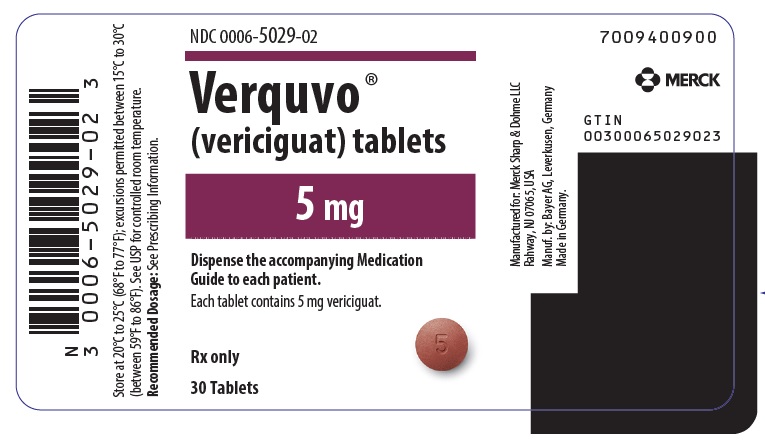
PRINCIPAL DISPLAY PANEL - 5 mg Tablet Bottle Label NDC 0006-5029-02 Verquvo ® (vericiguat) tablets 5 mg Dispense the accompanying Medication Guide to each patient. Each tablet contains 5 mg vericiguat. Rx only 30 Tablets PRINCIPAL DISPLAY PANEL - 5 mg Bottle Label
PRINCIPAL DISPLAY PANEL - 10 mg Tablet Bottle Label NDC 0006-5030-01 Verquvo ® (vericiguat) tablets 10 mg Dispense the accompanying Medication Guide to each patient. Each tablet contains 10 mg vericiguat. Rx only 30 Tablets PRINCIPAL DISPLAY PANEL - 10 mg Bottle Label
Medicaid utilization by pack size
Medicare Part D spend CMS · PART D · 2026 (Q1)
Reported adverse events (FAERS)
Top reported reactions
Age at onset
Reporter sex
Serious outcomes
Where does this data come from?
About this NDC listing & data coverage
What data is (and isn’t) available for this NDC — tap to expand
| NDC identity (package / product / labeler codes) | ✓ Available |
| Labeler | ✓ Available |
| Product & package description | ✓ Available |
| Marketing category & status | ✓ Available |
| Active ingredient / dosage form / route | ✓ Available |
| FDA label (SPL via DailyMed) | ✓ Available |
| Package photos | ✓ Available |
| Inactive ingredients (structured) | ✓ Available |
| NADAC pharmacy acquisition price (CMS) | — Not published for this NDC CMS publishes NADAC only for NDCs reported in its retail-pharmacy survey. |
| Orange Book / therapeutic-equivalence data | ✓ Available |
| HCPCS J-code billing crosswalk | — Not published for this NDC Most self-administered / retail products have no J-code — that is normal. |
| Medicaid utilization (CMS SDUD) | — Not published for this NDC CMS reports utilization only for NDCs with Medicaid claims above its privacy threshold. |