
Lagevrio molnupiravir 200 mg Capsule, 40-count — NDC 0006-5055-07 (Billing 00006-5055-07)
This is a package of 40 capsules of Lagevrio molnupiravir 200 mg Capsule from Merck Sharp & Dohme LLC, no longer marketed (first marketed Dec 2021), no longer in the FDA NDC Directory.
NDC database record
One package, one record: these facts belong to NDC 0006-5055-07 alone.
- Record
- FDA NDC Directory package listing · Human prescription drug
- Code segments
- 0006 labeler · 5055 product · 07 package
- Package marketed since
- Dec 23, 2021
- Sample package
- No — commercial package
- Listing certified through
- Dec 31, 2026
- Billing quantity
- 40 EA per package
- Barcode (UPC)
- 0300065055060
- FDA record last changed
- Jul 24, 2026
Identity & classification
Regulatory identifiers FDA, NLM and CMS codes for this package
Drug-database identifiers Medi-Span GPI and First Databank GCN / HICL / AHFS classification
- GSN (GCN sequence number): 082920
- GCN: 51707
- GPI-14 (Medi-Span): 12700046000120
- HICL (First Databank): 047709
- AHFS class code: 08:18.32.00
- RxCUI (RxNorm): 2587906
Where does this data come from?
- FDA openFDA NDC Directory · synced Oct 1, 2026
- FDA label on DailyMed · label index refreshed Oct 6, 2026
- RxNorm (NLM RxNav) · catalog refreshed Oct 1, 2026
- Medi-Span GPI (licensed)
- First Databank (licensed) · refreshed Oct 1, 2026
RxNorm drug class
This medicine belongs to the Nucleosides and nucleotides excl. reverse transcriptase inhibitors class.
Where does this data come from?
- RxClass (NLM) · catalog refreshed Oct 1, 2026
Clinical
Molnupiravir is used to treat coronavirus disease 2019 (COVID-19 infection) caused by the SARS-CoV-2 virus in adults who have mild to moderate symptoms and are at risk of severe disease that could result in hospitalization or death when other treatments are either not available or cannot be used. Molnupiravir is in a class of medications called antivirals. It works by stopping the virus from spreading in the body..
Read the full MedlinePlus article ↗- Lagevrio is an antiviral pill authorized under emergency use to treat mild-to-moderate COVID-19 in adults who are considered high risk for getting seriously ill — meaning you could...
- What exactly is Lagevrio and why did my doctor prescribe it?
- You take four capsules every 12 hours — so twice a day, roughly morning and evening — for 5 days straight. You can take them with or without food, whichever is easier on your stoma...
- How do I take it, and what happens if I miss a dose?
Patient education
Supplement & herbal interactions
Some supplements/herbs that may interact with Molnupiravir — tap one for details:
Where does this data come from?
- MedlinePlus (NLM) · refreshed Oct 1, 2026
- FDA label on DailyMed · label index refreshed Oct 6, 2026
Ask a licensed pharmacist directly — free, answered by our team.
Pricing
A drug doesn't have one price. Each row is a different public payment system, and none is what you'd pay at the counter — that depends on your insurance. The ⓘ on each row explains what it measures.
| Price system | Per each | Per package |
|---|---|---|
| Retail pharmacies payNADAC · weekly | Not in the retail survey — common for institutional, discontinued, or low-volume packs. | |
| Medicaid paysCMS SDUD · 12 mo | No recent Medicaid claims on file for this NDC — rare and low-volume NDCs are suppressed in the public data. | |
| Medicare drug plans payPart D · Q2 2026 | $26.66 | $1,066.40 / 40 capsules |
Where does this data come from?
- CMS NADAC weekly file
- CMS ASP pricing files · refreshed Sep 20, 2026
- CMS Medicaid State Drug Utilization Data · refreshed Oct 7, 2026
- CMS Part D plan pricing files · refreshed Sep 24, 2026
- VA National Acquisition Center price file
Packaging — all sizes for this product
| Package NDC | Description | Marketing start | Marketing end | Status |
|---|---|---|---|---|
| 00006-5055-06 0006-5055-06 | 40 CAPSULE in 1 BOTTLE, PLASTIC | 2021-12-23 | — | Inactivated by FDA |
| 00006-5055-07 You're viewing this | 40 CAPSULE in 1 BOTTLE, PLASTIC | 2021-12-23 | — | Inactivated by FDA |
| 00006-5055-09 0006-5055-09 Main listing | 40 CAPSULE in 1 BOTTLE, PLASTIC | 2023-02-01 | — | Inactivated by FDA |
This pack shows little to no recent Medicaid volume — the 40 capsules pack carries most fills. See all packs ↓
Pack size FAQ
What quantity is in this package?
How does this package differ from NDC 00006-5055-06?
What NDC number is used to bill for this package of Lagevrio molnupiravir 200 mg Capsule?
Therapeutic equivalents
| Product | Labeler | Pack | NADAC/unit | TE | Status | Price vs. this |
|---|---|---|---|---|---|---|
| Lagevrio 200 mgthis 00006-5055-07 | Merck | 40 capsules | — | — | Discontinued | — |
Where does this data come from?
- FDA openFDA NDC Directory · synced Oct 1, 2026
- FDA Orange Book · refreshed Oct 3, 2026
- CMS NADAC weekly file
Availability & generic status
We did not find an FDA-approved generic match for this exact strength, form and route.
Where does this data come from?
- FDA Orange Book · refreshed Oct 3, 2026
What it looks like
Where does this data come from?
- FDA label on DailyMed · label index refreshed Oct 6, 2026
Inactive Ingredients / Excipients
Inactive ingredients, also called excipients, are components of the drug product other than the active ingredient. They may include fillers, dyes, coatings, preservatives, flavors, or other formulation ingredients.
🧪 Avoiding an ingredient? See Molnupiravir inactive ingredients by manufacturer: every current product's list side by side, so you can ask your pharmacy for the version that does not list it.
Where does this data come from?
IACT rows and label-wide narrative are kept separate; availability and product-level specificity depend on the submitted label.- FDA label on DailyMed · label index refreshed Oct 6, 2026
- FDA openFDA NDC Directory · synced Oct 1, 2026
Inactive ingredient FAQ
Are inactive ingredients the same for every manufacturer?
Why might an inactive ingredient be missing?
Can inactive ingredients matter?
Manufacturer & labeler
More NDCs from Merck Sharp & Dohme LLC labeler code 00006
- PREVYMIS LETERMOVIR 20 mg/mL Injection, Solution NDC 0006-5003-01
- PREVYMIS LETERMOVIR 20 mg/mL Injection, Solution NDC 0006-5004-01
- Delstrigo doravirine, lamivudine, and tenofovir disoproxil fumarate 100 mg; 300 mg; 300 mg Tablet, Film Coated NDC 0006-5007-01
- Verquvo vericiguat 2.5 mg Tablet, Film Coated NDC 0006-5028-01
- Verquvo vericiguat 5 mg Tablet, Film Coated NDC 0006-5029-01
- Verquvo vericiguat 10 mg Tablet, Film Coated NDC 0006-5030-01
- ENFLONSIA CLESROVIMAB 150 mg/mL Injection, Solution NDC 0006-5073-01
- KEYTRUDA QLEX pembrolizumab and berahyaluronidase alfa-pmph 2000 U/mL; 165 mg/mL Injection, Solution NDC 0006-5083-01
- Lipfendra 20 mg Tablet, Film Coated NDC 0006-5084-01
- Prevymis Letermovir 120 mg Pellet NDC 0006-5085-01
- Prevymis Letermovir 20 mg Pellet NDC 0006-5086-01
- Winrevair Sotatercept-Csrk Kit NDC 0006-5087-01
Where does this data come from?
- FDA openFDA NDC Directory · synced Oct 1, 2026
- Drugs@FDA
Full prescribing information FDA SPL
🚨 Boxed Warning ▾
MANDATORY REQUIREMENTS FOR ADMINISTRATION OF LAGEVRIO UNDER EMERGENCY USE AUTHORIZATION In order to mitigate the risks of using this unapproved product under the EUA and to optimize the potential benefit of LAGEVRIO, the following steps are required. Use of LAGEVRIO under this EUA is limited to the following (all requirements must be met): Treatment of adults with mild-to-moderate COVID-19 who are at high risk for progression to severe COVID-19, including hospitalization or death and for whom alternative COVID-19 treatment options approved or authorized by FDA are not accessible or clinically appropriate [see Limitations of Authorized Use (1) ] .
As the prescribing healthcare provider, review the information contained within the “Fact Sheet for Patients and Caregivers” with your patient or caregiver prior to the patient receiving LAGEVRIO. Healthcare providers must provide the patient/caregiver with an electronic or hard copy of the “Fact Sheet for Patients and Caregivers” prior to the patient receiving LAGEVRIO and must document that the patient/caregiver has been given an electronic or hard copy of the “Fact Sheet for Patients and Caregivers”. The prescribing healthcare providers must inform the patient/caregiver that: LAGEVRIO is an unapproved drug that is authorized for use under this Emergency Use Authorization.
Other therapeutics are currently approved for the same use as LAGEVRIO [ see Emergency Use Authorization (1) - Information Regarding Available Alternatives for the EUA Authorized Use ]. There are benefits and risks of taking LAGEVRIO as outlined in the “Fact Sheet for Patients and Caregivers.” There is a pregnancy registry. Females of childbearing potential should use a reliable method of contraception correctly and consistently, as applicable, for the duration of treatment and for 4 days after the last dose of LAGEVRIO.
Males of reproductive potential who are sexually active with females of childbearing potential should use a reliable method of contraception correctly and consistently during treatment and for at least 3 months after the last dose. The prescribing healthcare provider must assess whether a female of childbearing potential is pregnant or not, if clinically indicated [see Warnings and Precautions (5.1) and Use in Specific Populations (8.3) ]. Based on findings from animal reproduction studies, LAGEVRIO may cause fetal harm when administered to pregnant individuals.
If LAGEVRIO is used during pregnancy, prescribing healthcare providers must communicate to the patient the known and potential benefits and the potential risks of LAGEVRIO use during pregnancy, as outlined in the “Fact Sheet for Patients and Caregivers” [see Warnings and Precautions (5.1 , 5.3) , Use in Specific Populations (8.1 , 8.3) and Nonclinical Toxicology (13.1) ]. If the decision is made to use LAGEVRIO during pregnancy, the prescriber must document that the known and potential benefits and the potential risks of LAGEVRIO use during pregnancy, as outlined in the “Fact Sheet for Patients and Caregivers,” were discussed with the patient.
The prescribing healthcare provider must document that a pregnant individual was made aware of the pregnancy registry at https://covid-pr.pregistry.com or 1-800-616-3791. The prescribing healthcare provider and/or the provider’s designee is/are responsible for mandatory reporting of all medication errors and serious adverse events potentially related to LAGEVRIO within 7 calendar days from the healthcare provider’s awareness of the event [see Adverse Reactions (6.4) ]. For information on clinical studies of LAGEVRIO and other therapies for the treatment of COVID-19, see www.clinicaltrials.gov .
⏱️ Dosage and Administration ▾
2 DOSAGE AND ADMINISTRATION
2.1Dosage for Emergency Use of LAGEVRIO in Adult Patients The dosage in adult patients is 800 mg (four 200 mg capsules) taken orally every 12 hours for 5 days, with or without food [see Clinical Pharmacology (12.3) ] . Take LAGEVRIO as soon as possible after a diagnosis of COVID-19 has been made, and within 5 days of symptom onset [see Emergency Use Authorization (1) and Clinical Studies (14) ] . Completion of the full 5-day treatment course and continued isolation in accordance with public health recommendations are important to maximize viral clearance and minimize transmission of SARS-CoV-2 [see Patient Counseling Information (17) ] .
LAGEVRIO is not authorized for use for longer than 5 consecutive days because the safety and efficacy have not been established. If the patient misses a dose of LAGEVRIO within 10 hours of the time it is usually taken, the patient should take it as soon as possible and resume the normal dosing schedule. If the patient misses a dose by more than 10 hours, the patient should not take the missed dose and instead take the next dose at the regularly scheduled time.
The patient should not double the dose to make up for a missed dose. Should a patient require hospitalization after starting treatment with LAGEVRIO, the patient may complete the full 5 day treatment course per the healthcare provider’s discretion.
2.2Dosage Adjustments in Specific Populations No dosage adjustment is recommended based on renal or hepatic impairment or in geriatric patients [see Use in Specific Populations (8.5 , 8.6 , 8.7) ] .
2.3Administration via Nasogastric (NG), Orogastric (OG) and Gastrostomy (G) Tubes that are 12F or Larger or via Gastrojejunostomy (GJ) Tubes that are 14F or Larger Open four (4) capsules and transfer contents into a clean container with a lid. Add 40 mL of water to the container. Put the lid on the container and shake to mix the capsule contents and water thoroughly for 3 minutes.
NOTE : Capsule contents may not dissolve completely. The prepared mixture may have visible undissolved particulates and are acceptable for administration. Flush the tube with 5 mL of water prior to administration.
Using an appropriate syringe, draw up the entire contents from the container and administer immediately through the tube. If using a GJ tube, administer through the gastric port. Do not keep the mixture for future use.
If any portion of the capsule contents are left in the container, add 10 mL of water to the container, mix, and using the same syringe draw up the entire contents of the container and administer through the tube. Repeat as needed until no capsule contents are left in the container or syringe. Flush the tube with 5 mL of water twice (10 mL total) after administration of the mixture.
💊 Dosage Forms and Strengths ▾
3 DOSAGE FORMS AND STRENGTHS Capsules: 200 mg, Swedish Orange opaque size 0 capsules. The capsules have the corporate logo and “82” printed in white ink.
⛔ Contraindications ▾
4 CONTRAINDICATIONS No contraindications have been identified based on the limited available data on the emergency use of LAGEVRIO authorized under this EUA.
⚠️ Warnings and Cautions ▾
5 WARNINGS AND PRECAUTIONS There are limited clinical data available for LAGEVRIO. Serious and unexpected adverse events may occur that have not been previously reported with LAGEVRIO use.
5.1Embryo-Fetal Toxicity Based on findings from animal reproduction studies, LAGEVRIO may cause fetal harm when administered to pregnant individuals. There are no available human data on the use of LAGEVRIO in pregnant individuals to evaluate the risk of major birth defects, miscarriage or adverse maternal or fetal outcomes; therefore, LAGEVRIO is not recommended for use during pregnancy. When considering LAGEVRIO for a pregnant individual, the prescribing healthcare provider must communicate the known and potential benefits and the potential risks of using LAGEVRIO during pregnancy to the pregnant individual.
LAGEVRIO is authorized to be prescribed to a pregnant individual only after the healthcare provider has determined that the benefits would outweigh the risks for that individual patient. If the decision is made to use LAGEVRIO during pregnancy, the prescribing healthcare provider must document that the known and potential benefits and the potential risks of using LAGEVRIO during pregnancy were communicated to the pregnant individual. Advise individuals of childbearing potential of the potential risk to a fetus and to use an effective method of contraception correctly and consistently, as applicable, during treatment with LAGEVRIO and for 4 days after the final dose [see Use in Specific Populations (8.1 , 8.3 and Nonclinical Toxicology (13.1) ] .
Prior to initiating treatment with LAGEVRIO, assess whether an individual of childbearing potential is pregnant or not, if clinically indicated. Pregnancy status does not need to be confirmed in patients who have undergone permanent sterilization, are currently using an intrauterine system or contraceptive implant, or in whom pregnancy is not possible. In all other patients, assess whether the patient is pregnant based on the first day of last menstrual period in individuals who have regular menstrual cycles, is using a reliable method of contraception correctly and consistently or have had a negative pregnancy test.
A pregnancy test is recommended if the individual has irregular menstrual cycles, is unsure of the first day of last menstrual period or is not using effective contraception correctly and consistently [see Box ] .
5.2Hypersensitivity Including Anaphylaxis Hypersensitivity reactions, including anaphylaxis, have been reported with LAGEVRIO. If signs and symptoms of a clinically significant hypersensitivity reaction or anaphylaxis occur, immediately discontinue LAGEVRIO and initiate appropriate medications and/or supportive care.
5.3Bone and Cartilage Toxicity LAGEVRIO is not authorized for use in patients less than 18 years of age because it may affect bone and cartilage growth. Bone and cartilage toxicity was observed in rats after repeated dosing [see Nonclinical Toxicity (13.2) ] . The safety and efficacy of LAGEVRIO have not been established in pediatric patients [see Use in Specific Populations (8.4) ] .
🤒 Adverse Reactions ▾
6 ADVERSE REACTIONS
6.1Adverse Reactions from Clinical Studies The following adverse reactions have been observed in the clinical study of LAGEVRIO that supported the EUA. The adverse reaction rates observed in these clinical trials cannot be directly compared to rates in the clinical trials of another drug and may not reflect the rates observed in practice. Additional adverse events associated with LAGEVRIO may become apparent with more widespread use.
Overall, more than 900 subjects have been exposed to LAGEVRIO 800 mg twice daily in clinical trials. The safety assessment of LAGEVRIO is primarily based on an analysis from subjects followed through Day 29 in the Phase 3 study in non-hospitalized subjects with COVID-19 (MOVe-OUT) [see Clinical Studies (14) ] . The safety of LAGEVRIO was evaluated based on an analysis of a Phase 3 double-blind trial (MOVe-OUT) in which 1,411 non-hospitalized subjects with COVID-19 were randomized and treated with LAGEVRIO (N=710) or placebo (N=701) for up to 5 days.
Adverse events were those reported while subjects were on study intervention or within 14 days of study intervention completion/discontinuation. Discontinuation of study intervention due to an adverse event occurred in 1% of subjects receiving LAGEVRIO and 3% of subjects receiving placebo. Serious adverse events occurred in 7% of subjects receiving LAGEVRIO and 10% receiving placebo; most serious adverse events were COVID-19 related.
Adverse events leading to death occurred in 2 (<1%) subjects receiving LAGEVRIO and 12 (2%) of subjects receiving placebo. The most common adverse reactions in the LAGEVRIO treatment group in MOVe-OUT are presented in Table 1 , all of which were Grade 1 (mild) or Grade 2 (moderate). Table 1: Adverse Reactions Occurring in Greater Than or Equal to 1% of Subjects Receiving LAGEVRIO in MOVe-OUT Frequencies of adverse reactions are based on all adverse events attributed to study intervention by the investigator.
LAGEVRIO N=710 Placebo N=701 Diarrhea 2% 2% Nausea 1% 1% Dizziness 1% 1% Laboratory Abnormalities Selected Grade 3 and 4 laboratory abnormalities in chemistry (alanine aminotransferase, aspartate aminotransferase, creatinine, and lipase) and hematology (hemoglobin, platelets, and leukocytes) parameters all occurred at a rate of less than or equal to 2% and occurred at a similar rate across arms in MOVe-OUT.
6.2Post-Authorization Experience The following adverse reactions have been identified during post-authorization use of LAGEVRIO. Because these reactions are reported voluntarily from a population of uncertain size, it is not always possible to reliably estimate their frequency or establish a causal relationship to drug exposure. Gastrointestinal Disorders vomiting Immune System Disorders hypersensitivity, anaphylaxis, angioedema [see Warnings and Precautions (5.2) ] Skin and Subcutaneous Tissue Disorders erythema, pruritus, rash, urticaria
6.4Required Reporting for Serious Adverse Events and Medication Errors The prescribing healthcare provider and/or the provider’s designee is/are responsible for mandatory reporting of all serious adverse events * and medication errors potentially related to LAGEVRIO within 7 calendar days from the healthcare provider’s awareness of the event, using FDA Form 3500 (for information on how to access this form, see below). The FDA requires that such reports, using FDA Form 3500, include the following: Patient demographics and baseline characteristics (e.g., patient identifier, age or date of birth, gender, weight, ethnicity, and race) A statement " LAGEVRIO use for COVID-19 under Emergency Use Authorization (EUA)” under the “Describe Event, Problem, or Product Use/Medication Error” heading Information about the serious adverse event or medication error (e.g., signs and symptoms, test/laboratory data, complications, timing of drug initiation in relation to the occurrence of the event, duration of the event, treatments required to mitigate the event, evidence of ev… [Excerpted — this section continues on DailyMed.]
🔄 Drug Interactions ▾
7 DRUG INTERACTIONS No drug interactions have been identified based on the limited available data on the emergency use of LAGEVRIO authorized under this EUA. No clinical drug-drug interaction trials of LAGEVRIO with concomitant medications, including other treatments for mild-to-moderate COVID-19, have been conducted [see Clinical Pharmacology (12.3) ].
👥 Use in Specific Populations ▾
8 USE IN SPECIFIC POPULATIONS
8.1Pregnancy Pregnancy Registry There is a pregnancy registry that monitors pregnancy outcomes in individuals exposed to LAGEVRIO during pregnancy. The prescribing healthcare provider must document that a pregnant individual was made aware of the pregnancy registry at https://covid-pr.pregistry.com or 1-800-616-3791. Pregnant individuals exposed to LAGEVRIO or their healthcare providers can also report the exposure by contacting Merck Sharp & Dohme LLC, Rahway, NJ USA at 1-877-888-4231.
Risk Summary Based on animal data, LAGEVRIO may cause fetal harm when administered to pregnant individuals. There are no available human data on the use of LAGEVRIO in pregnant individuals to evaluate the risk of major birth defects, miscarriage or adverse maternal or fetal outcomes; therefore, LAGEVRIO is not recommended during pregnancy [see Box and Warnings and Precautions (5.1) ] . In an animal reproduction study, oral administration of molnupiravir to pregnant rats during the period of organogenesis resulted in embryofetal lethality and teratogenicity at 8 times the human NHC (N4-hydroxycytidine) exposures at the recommended human dose (RHD) and reduced fetal growth at ≥ 3 times the human NHC exposure at the RHD.
Oral administration of molnupiravir to pregnant rabbits during the period of organogenesis resulted in reduced fetal body weights at 18 times the human NHC exposure at the RHD (see Data ). When considering LAGEVRIO for a pregnant individual, the prescribing healthcare provider must communicate the known and potential benefits and the potential risks of using LAGEVRIO during pregnancy to the pregnant individual. LAGEVRIO may only be prescribed to a pregnant individual after the prescribing healthcare provider has determined that the benefits would outweigh the risks for that individual patient.
If the decision is made to use LAGEVRIO during pregnancy, the prescribing healthcare provider must document that the known and potential benefits and potential risks of using LAGEVRIO during pregnancy were communicated to the pregnant individual [see Box ] . There are maternal and fetal risks associated with untreated COVID-19 in pregnancy (see Clinical Considerations ) . The estimated background risk of major birth defects and miscarriage for the indicated population is unknown.
All pregnancies have a background risk of birth defect, loss, or other adverse outcomes. In the U.S. general population, the estimated background risk of major birth defects and miscarriage in clinically recognized pregnancies is 2 to 4% and 15 to 20%, respectively. Clinical Considerations Disease-associated maternal and/or embryo/fetal risk COVID-19 in pregnancy is associated with adverse maternal and fetal outcomes, including preeclampsia, eclampsia, preterm birth, premature rupture of membranes, venous thromboembolic disease, and fetal death.
Data Animal Data In an embryofetal development (EFD) study in rats, molnupiravir was administered orally to pregnant rats at 0, 100, 250, or 500 mg/kg/day from gestation days (GDs) 6 to 17. Molnupiravir was also administered orally to pregnant rats at up to 1,000 mg/kg/day from GDs 6 to 17 in a preliminary EFD study. Developmental toxicities included post-implantation losses, malformations of the eye, kidney, and axial skeleton, and rib variations at 1,000 mg/kg/day (8 times the human NHC exposure at the RHD) and decreased fetal body weights and delayed ossification at ≥500 mg/kg/day (3 times the human NHC exposure at the RHD).
There were no developmental toxicities at ≤250 mg/kg/day (less than the human NHC exposure at the RHD). Maternal toxicities included decreased food consumption and body weight losses, resulting in the early sacrifice of two of sixteen animals at 1,000 mg/kg/day, and decreased body weight gain at 500 mg/kg/day. In an EFD study in rabbits, molnupiravir was administered orally to pregnant rabbits at 0, 125, 400, or 750 mg/kg/day from GDs 7 to 19.
Developmental toxicity was… [Excerpted — this section continues on DailyMed.]
🤰 Pregnancy ▾
8.1Pregnancy Pregnancy Registry There is a pregnancy registry that monitors pregnancy outcomes in individuals exposed to LAGEVRIO during pregnancy. The prescribing healthcare provider must document that a pregnant individual was made aware of the pregnancy registry at https://covid-pr.pregistry.com or 1-800-616-3791. Pregnant individuals exposed to LAGEVRIO or their healthcare providers can also report the exposure by contacting Merck Sharp & Dohme LLC, Rahway, NJ USA at 1-877-888-4231.
Risk Summary Based on animal data, LAGEVRIO may cause fetal harm when administered to pregnant individuals. There are no available human data on the use of LAGEVRIO in pregnant individuals to evaluate the risk of major birth defects, miscarriage or adverse maternal or fetal outcomes; therefore, LAGEVRIO is not recommended during pregnancy [see Box and Warnings and Precautions (5.1) ] . In an animal reproduction study, oral administration of molnupiravir to pregnant rats during the period of organogenesis resulted in embryofetal lethality and teratogenicity at 8 times the human NHC (N4-hydroxycytidine) exposures at the recommended human dose (RHD) and reduced fetal growth at ≥ 3 times the human NHC exposure at the RHD.
Oral administration of molnupiravir to pregnant rabbits during the period of organogenesis resulted in reduced fetal body weights at 18 times the human NHC exposure at the RHD (see Data ). When considering LAGEVRIO for a pregnant individual, the prescribing healthcare provider must communicate the known and potential benefits and the potential risks of using LAGEVRIO during pregnancy to the pregnant individual. LAGEVRIO may only be prescribed to a pregnant individual after the prescribing healthcare provider has determined that the benefits would outweigh the risks for that individual patient.
If the decision is made to use LAGEVRIO during pregnancy, the prescribing healthcare provider must document that the known and potential benefits and potential risks of using LAGEVRIO during pregnancy were communicated to the pregnant individual [see Box ] . There are maternal and fetal risks associated with untreated COVID-19 in pregnancy (see Clinical Considerations ) . The estimated background risk of major birth defects and miscarriage for the indicated population is unknown.
All pregnancies have a background risk of birth defect, loss, or other adverse outcomes. In the U.S. general population, the estimated background risk of major birth defects and miscarriage in clinically recognized pregnancies is 2 to 4% and 15 to 20%, respectively. Clinical Considerations Disease-associated maternal and/or embryo/fetal risk COVID-19 in pregnancy is associated with adverse maternal and fetal outcomes, including preeclampsia, eclampsia, preterm birth, premature rupture of membranes, venous thromboembolic disease, and fetal death.
Data Animal Data In an embryofetal development (EFD) study in rats, molnupiravir was administered orally to pregnant rats at 0, 100, 250, or 500 mg/kg/day from gestation days (GDs) 6 to 17. Molnupiravir was also administered orally to pregnant rats at up to 1,000 mg/kg/day from GDs 6 to 17 in a preliminary EFD study. Developmental toxicities included post-implantation losses, malformations of the eye, kidney, and axial skeleton, and rib variations at 1,000 mg/kg/day (8 times the human NHC exposure at the RHD) and decreased fetal body weights and delayed ossification at ≥500 mg/kg/day (3 times the human NHC exposure at the RHD).
There were no developmental toxicities at ≤250 mg/kg/day (less than the human NHC exposure at the RHD). Maternal toxicities included decreased food consumption and body weight losses, resulting in the early sacrifice of two of sixteen animals at 1,000 mg/kg/day, and decreased body weight gain at 500 mg/kg/day. In an EFD study in rabbits, molnupiravir was administered orally to pregnant rabbits at 0, 125, 400, or 750 mg/kg/day from GDs 7 to 19.
Developmental toxicity was limited to reduced fetal body… [Excerpted — this section continues on DailyMed.]
🧒 Pediatric Use ▾
8.4Pediatric Use LAGEVRIO is not authorized for use in patients less than 18 years of age. Bone and cartilage toxicity were observed in a 3-month, repeat-dose toxicology study in rats. The safety and efficacy of LAGEVRIO have not been established in pediatric patients [see Warnings and Precautions (5.3) and Nonclinical Toxicology (13.2) ] .
🧓 Geriatric Use ▾
8.5Geriatric Use In MOVe-OUT, there was no difference in safety and tolerability between patients ≥65 years of age and younger patients who were treated with LAGEVRIO. No dosage adjustment is recommended based on age. The PK of NHC was similar in geriatric patients compared to younger patients [see Clinical Pharmacology (12.3) ] .
🆘 Overdosage ▾
10 OVERDOSAGE There is no human experience of overdosage with LAGEVRIO. Treatment of overdose with LAGEVRIO should consist of general supportive measures including the monitoring of the clinical status of the patient. Hemodialysis is not expected to result in effective elimination of NHC.
🧬 Clinical Pharmacology ▾
12 CLINICAL PHARMACOLOGY
12.1Mechanism of Action Molnupiravir is a prodrug with antiviral activity against SARS-CoV-2. It is metabolized to the cytidine nucleoside analogue, NHC which distributes into cells where NHC is phosphorylated to form the pharmacologically active ribonucleoside triphosphate (NHC-TP). NHC-TP incorporation (as NHC-monophosphate [NHC-MP]) into SARS-CoV-2 RNA by the viral RNA polymerase (nsp12) results in an accumulation of errors in the viral genome leading to inhibition of replication.
The mechanism of action (known as viral error catastrophe or viral lethal mutagenesis) is supported by biochemical and cell culture data, studies of SARS-CoV-2 infection in animal models, and analyses of SARS-CoV-2 genome sequences in human subjects treated with LAGEVRIO.
12.2Pharmacodynamics The relationship between NHC and intracellular NHC-TP with antiviral efficacy has not been evaluated clinically.
12.3Pharmacokinetics Molnupiravir is a 5´-isobutyrate prodrug of NHC that is hydrolyzed during or after absorption. NHC, the primary circulating analyte, is taken up by cells and anabolized to NHC-TP. NHC is eliminated by metabolism to uridine and/or cytidine through the same pathways involved in endogenous pyrimidine metabolism.
NHC pharmacokinetics are shown in Table 2 . Plasma NHC concentrations in patients (N=5) following administration of molnupiravir via nasogastric or orogastric tube fell within the range of NHC concentrations following oral molnupiravir capsule administration under the same dosing regimen. Table 2: Pharmacokinetics of NHC After Multiple Oral Administration of 800 mg LAGEVRIO Every 12 Hours NHC Geometric Mean (%CV) Values were obtained from a Phase 1 study of healthy subjects, unless otherwise indicated.
Pharmacokinetics in Patients AUC 0-12hr (ng*hr/mL) Values were obtained from population PK analysis. 8260 (41.0) C max (ng/mL) 2330 (36.9) C 12hr (ng/mL) 31.1 (124) Pharmacokinetics in Healthy Subjects AUC 0-12hr (ng*hr/mL) 8330 (17.9) C max (ng/mL) 2970 (16.8) C 12hr (ng/mL) 16.7 (42.8) AUC Accumulation Ratio 1.09 (11.8) Absorption T max (hr) Median [min - max] 1.50 [1.00 – 2.02] Effect of Food 35% reduction in C max , no effect on AUC Distribution Plasma Protein Binding ( in vitro ) 0% Apparent Volume of Distribution (L) 142 Elimination Effective t 1/2 (hr)
3.3 Apparent Clearance (L/hr)
76.9Fraction of dose excreted in urine over the time interval of 0-12 hours 3% (81.6%) Specific Populations Population PK analysis results indicated that age, sex, race, ethnicity, or disease severity do not meaningfully influence the PK of NHC. Pediatric Patients LAGEVRIO has not been studied in pediatric patients. Patients with Renal Impairment Renal clearance is not a meaningful route of elimination for NHC.
In a population PK analysis, mild or moderate renal impairment did not have a meaningful impact on the PK of NHC. The PK of molnupiravir and NHC has not been evaluated in patients with eGFR less than 30 mL/min/1.73m 2 or on dialysis. Patients with Hepatic Impairment The PK of molnupiravir and NHC has not been evaluated in patients with moderate and severe hepatic impairment.
Preclinical data indicate that hepatic elimination is not expected to be a major route of NHC elimination; therefore, hepatic impairment is unlikely to affect NHC exposure. Drug Interaction Studies In vitro study results indicated that molnupiravir and NHC are not substrates of CYP enzymes or human P-gp and BCRP transporters. In vitro study results also indicated that molnupiravir and NHC are not inhibitors of CYP1A2, 2B6, 2C8, 2C9, 2C19, 2D6, and 3A4 or inhibitors of OATP1B1, OATP1B3, OCT1, OCT2, OAT1, OAT3, MATE1, MATE2K, MRP2, MDR1 and BCRP or inducers of CYP1A2, 2B6, and 3A4.
The interaction between molnupiravir with concomitant medications, including other treatments for mild-to-moderate COVID-19, has not been evaluated.
12.4Microbiology Antiviral Activity NHC, the nucleoside analogue metabolite of molnupiravir, was active in ce… [Excerpted — this section continues on DailyMed.]
🧬 Mechanism of Action ▾
12.1Mechanism of Action Molnupiravir is a prodrug with antiviral activity against SARS-CoV-2. It is metabolized to the cytidine nucleoside analogue, NHC which distributes into cells where NHC is phosphorylated to form the pharmacologically active ribonucleoside triphosphate (NHC-TP). NHC-TP incorporation (as NHC-monophosphate [NHC-MP]) into SARS-CoV-2 RNA by the viral RNA polymerase (nsp12) results in an accumulation of errors in the viral genome leading to inhibition of replication.
The mechanism of action (known as viral error catastrophe or viral lethal mutagenesis) is supported by biochemical and cell culture data, studies of SARS-CoV-2 infection in animal models, and analyses of SARS-CoV-2 genome sequences in human subjects treated with LAGEVRIO.
📦 How Supplied / Storage and Handling ▾
16 HOW SUPPLIED/STORAGE AND HANDLING How Supplied LAGEVRIO capsules are supplied as follows: Contents Description How Supplied NDC 200 mg molnupiravir Swedish Orange opaque capsules with corporate logo and “82” printed in white ink 40 count bottles NDC-0006-5055-06 NDC-0006-5055-07 NDC-0006-5055-09 Storage and Handling Store LAGEVRIO capsules at 20° to 25°C (68° to 77°F); excursions permitted between 15° to 30°C (59° to 86°F) [see USP Controlled Room Temperature] .
📦 Storage and Handling ▾
Storage and Handling Store LAGEVRIO capsules at 20° to 25°C (68° to 77°F); excursions permitted between 15° to 30°C (59° to 86°F) [see USP Controlled Room Temperature] .
📋 Description ▾
11 DESCRIPTION LAGEVRIO capsules contain molnupiravir, a nucleoside analogue that inhibits SARS-CoV-2 replication by viral mutagenesis and is the 5´-isobutyrate ester of the ribonucleoside analog N4-hydroxycytidine (NHC). The chemical name for molnupiravir is {(2R,3S,4R,5R)-3,4-Dihydroxy-5-[(4Z)-4-(hydroxyimino)-2-oxo-3,4-dihydropyrimidin-1(2H)-yl]oxolan-2-yl}methyl 2-methylpropanoate. It has an empirical formula of C 13 H 19 N 3 O 7 and its molecular weight is 329.31 g/mol.
Its structural formula is: Molnupiravir is a white to off-white powder that is soluble in water. Each LAGEVRIO capsule, for oral use, contains 200 mg of molnupiravir and the following inactive ingredients: croscarmellose sodium, hydroxypropyl cellulose, magnesium stearate and microcrystalline cellulose and purified water. The capsule shell is made of hypromellose, red iron oxide and titanium dioxide.
The capsule is printed with white ink made of butyl alcohol, dehydrated alcohol, isopropyl alcohol, potassium hydroxide, propylene glycol, purified water, shellac, strong ammonia solution and titanium dioxide. LAGEVRIO structure
🧬 Pharmacokinetics ▾
12.3Pharmacokinetics Molnupiravir is a 5´-isobutyrate prodrug of NHC that is hydrolyzed during or after absorption. NHC, the primary circulating analyte, is taken up by cells and anabolized to NHC-TP. NHC is eliminated by metabolism to uridine and/or cytidine through the same pathways involved in endogenous pyrimidine metabolism.
NHC pharmacokinetics are shown in Table 2 . Plasma NHC concentrations in patients (N=5) following administration of molnupiravir via nasogastric or orogastric tube fell within the range of NHC concentrations following oral molnupiravir capsule administration under the same dosing regimen. Table 2: Pharmacokinetics of NHC After Multiple Oral Administration of 800 mg LAGEVRIO Every 12 Hours NHC Geometric Mean (%CV) Values were obtained from a Phase 1 study of healthy subjects, unless otherwise indicated.
Pharmacokinetics in Patients AUC 0-12hr (ng*hr/mL) Values were obtained from population PK analysis. 8260 (41.0) C max (ng/mL) 2330 (36.9) C 12hr (ng/mL) 31.1 (124) Pharmacokinetics in Healthy Subjects AUC 0-12hr (ng*hr/mL) 8330 (17.9) C max (ng/mL) 2970 (16.8) C 12hr (ng/mL) 16.7 (42.8) AUC Accumulation Ratio 1.09 (11.8) Absorption T max (hr) Median [min - max] 1.50 [1.00 – 2.02] Effect of Food 35% reduction in C max , no effect on AUC Distribution Plasma Protein Binding ( in vitro ) 0% Apparent Volume of Distribution (L) 142 Elimination Effective t 1/2 (hr)
3.3 Apparent Clearance (L/hr)
76.9Fraction of dose excreted in urine over the time interval of 0-12 hours 3% (81.6%) Specific Populations Population PK analysis results indicated that age, sex, race, ethnicity, or disease severity do not meaningfully influence the PK of NHC. Pediatric Patients LAGEVRIO has not been studied in pediatric patients. Patients with Renal Impairment Renal clearance is not a meaningful route of elimination for NHC.
In a population PK analysis, mild or moderate renal impairment did not have a meaningful impact on the PK of NHC. The PK of molnupiravir and NHC has not been evaluated in patients with eGFR less than 30 mL/min/1.73m 2 or on dialysis. Patients with Hepatic Impairment The PK of molnupiravir and NHC has not been evaluated in patients with moderate and severe hepatic impairment.
Preclinical data indicate that hepatic elimination is not expected to be a major route of NHC elimination; therefore, hepatic impairment is unlikely to affect NHC exposure. Drug Interaction Studies In vitro study results indicated that molnupiravir and NHC are not substrates of CYP enzymes or human P-gp and BCRP transporters. In vitro study results also indicated that molnupiravir and NHC are not inhibitors of CYP1A2, 2B6, 2C8, 2C9, 2C19, 2D6, and 3A4 or inhibitors of OATP1B1, OATP1B3, OCT1, OCT2, OAT1, OAT3, MATE1, MATE2K, MRP2, MDR1 and BCRP or inducers of CYP1A2, 2B6, and 3A4.
The interaction between molnupiravir with concomitant medications, including other treatments for mild-to-moderate COVID-19, has not been evaluated.
🧬 Pharmacodynamics ▾
12.2Pharmacodynamics The relationship between NHC and intracellular NHC-TP with antiviral efficacy has not been evaluated clinically.
🔬 Clinical Studies ▾
14 CLINICAL STUDIES Clinical data supporting this EUA are based on data from 1,433 randomized subjects in the Phase 3 MOVe-OUT trial (NCT04575597). MOVe-OUT is a randomized, placebo-controlled, double-blind clinical trial studying LAGEVRIO for the treatment of non-hospitalized patients with mild-to-moderate COVID-19 who are at risk for progressing to severe COVID-19 and/or hospitalization. Eligible subjects were 18 years of age and older and had one or more pre-defined risk factors for disease progression: over 60 years of age, diabetes, obesity (BMI ≥30), chronic kidney disease, serious heart conditions, chronic obstructive pulmonary disease, or active cancer.
The study included symptomatic subjects not vaccinated against SARS-CoV-2 and who had laboratory confirmed SARS-CoV-2 infection and symptom onset within 5 days of randomization. Subjects were randomized 1:1 to receive 800 mg of LAGEVRIO or placebo orally twice daily for 5 days. At baseline, in all randomized subjects, the median age was 43 years (range:18 to 90); 17% of subjects were over 60 years of age and 3% were 75 years of age or older; 49% of subjects were male; 57% were White, 5% Black or African American, 3% Asian, 50% Hispanic or Latino.
The majority of subjects were enrolled from sites in Latin America (46%) and Europe (33%); 12% were enrolled in Africa, 6% were enrolled in North America and 3% were enrolled in Asia. Forty-eight percent of subjects received LAGEVRIO or placebo within 3 days of COVID-19 symptom onset. The most common risk factors were obesity (74%), over 60 years of age (17%), and diabetes (16%).
Among 792 subjects (55% of total randomized population) with available baseline SARS-CoV-2 variant/clade identification results, 58% were infected with Delta (B.1.617.2 and AY lineages), 20% were infected with Mu (B.1.621), 11% were infected with Gamma (P.1), and the remainder were infected with other variants/clades. Overall, baseline demographic and disease characteristics were well balanced between the treatment arms. Table 3 provides the results of the primary endpoint (the percentage of subjects who were hospitalized or died through Day 29 due to any cause).
The efficacy results are based on unvaccinated adults who were 18 years of age and older and had one or more pre-defined risk factors for disease progression: over 60 years of age, diabetes, obesity (BMI ≥30), chronic kidney disease, serious heart conditions, chronic obstructive pulmonary disease, or active cancer. Please refer to Figure 1 for results by certain subgroups. These subgroup analyses are considered exploratory.
Data are not available in certain subgroups of subjects who are at high risk for progression to severe COVID-19 as defined by CDC. Table 3. Efficacy Results in Non-Hospitalized Adults with COVID-19 The determination of primary efficacy was based on a planned interim analysis of 762 subjects.
At the interim analysis, 7.3% of patients who received LAGEVRIO were either hospitalized or died through Day 29 (28/385), compared with 14.1% of placebo-treated patients (53/377). The adjusted risk difference was -6.8% with a 95% CI of (-11.3%, -2.4%) and 2-sided p-value = 0.0024. LAGEVRIO (N=709) n (%) Placebo (N=699) n (%) Adjusted Risk Difference % (95% CI) Adjusted relative risk reduction of LAGEVRIO compared to placebo for all randomized subjects was 30% (95% CI: 1%, 51%).
Analyses are adjusted by the stratification factor of time of COVID-19 symptom onset (≤3 days vs. >3 [4-5] days). All-cause hospitalization ≥24 hours for acute care or death through Day 29 48 (6.8%) 68 (9.7%) -3.0% (-5.9%, -0.1%) All-cause mortality through Day 29 1 (0.1%) 9 (1.3%) Figure 1. Subgroup Efficacy Results in Non-Hospitalized Adults with COVID-19 - All-Randomized Subjects The corresponding confidence interval is based on Miettinen & Nurminen method.
The modified intent-to-treat population is the efficacy analysis population. Baseline serum samples were evaluated with the Roche Elecsys anti-N assay to t… [Excerpted — this section continues on DailyMed.]
🧪 Nonclinical Toxicology ▾
13 NONCLINICAL TOXICOLOGY
13.1Carcinogenesis, Mutagenesis, Impairment of Fertility Carcinogenesis Molnupiravir was not carcinogenic in a 6-month oral carcinogenicity study in RasH2 transgenic (Tg.RasH2) mice at any dose tested (30, 100 or 300 mg/kg/day). Mutagenesis Molnupiravir and NHC were positive in the in vitro bacterial reverse mutation assay (Ames assay) with and without metabolic activation. Molnupiravir was studied in two in vivo rodent mutagenicity models.
The in vivo Pig-a mutagenicity assay gave equivocal results. Molnupiravir was negative in in vivo Big Blue® (cII Locus) transgenic rodent mutagenicity assays in somatic and germ cells. Molnupiravir was negative for induction of chromosomal damage in in vitro micronucleus (with and without metabolic activation) and in vivo rat micronucleus assays.
Based on the totality of the available genotoxicity data and the duration of treatment (5 days), molnupiravir is low risk for genotoxicity. Impairment of Fertility There were no effects on fertility, mating performance or early embryonic development when molnupiravir was administered to female or male rats at NHC exposures approximately 2 and 6 times, respectively, the human NHC exposure at the RHD.
13.2Animal Toxicology and/or Pharmacology Bone and cartilage toxicity changes resulting in impaired transformation of growth cartilage into new bone were observed in the femur and tibia of rats in a 3-month toxicity study at ≥ 500 mg/kg/day (5 times the human NHC exposure at the RHD). There was no bone or cartilage toxicity in a 1-month toxicity study in rats up to 500 mg/kg/day (4 and 8 times the human NHC exposure at the RHD in females and males, respectively), in dogs dosed for 14 days up to 50 mg/kg/day (similar to the human NHC exposure at the RHD), or in a 1-month toxicity study in mice up to 2,000 mg/kg/day (19 times the human NHC exposure at the RHD).
Growth cartilage is not present in mature skeletons, therefore the bone and cartilage findings are not relevant for adult humans but may be relevant for pediatric patients [see Warnings and Precautions (5.3) and Use in Specific Populations (8.4) ] . Reversible, dose-related bone marrow toxicity affecting all hematopoietic cell lines was observed in dogs at ≥17 mg/kg/day (less than the human NHC exposure at the RHD). Mild decreases in peripheral blood cell and platelet counts were seen after 7 days of molnupiravir treatment progressing to more severe hematological changes after 14 days of treatment.
Neither bone marrow nor hematological toxicity was observed in a 1-month toxicity study in mice up to 2,000 mg/kg/day (19 times the human NHC exposure at the RHD) and a 3-month toxicity study in rats up to 1,000 mg/kg/day (9 and 15 times the human NHC exposure at the RHD in females and males, respectively).
📄 Carcinogenesis, Mutagenesis, Impairment of Fertility ▾
13.1Carcinogenesis, Mutagenesis, Impairment of Fertility Carcinogenesis Molnupiravir was not carcinogenic in a 6-month oral carcinogenicity study in RasH2 transgenic (Tg.RasH2) mice at any dose tested (30, 100 or 300 mg/kg/day). Mutagenesis Molnupiravir and NHC were positive in the in vitro bacterial reverse mutation assay (Ames assay) with and without metabolic activation. Molnupiravir was studied in two in vivo rodent mutagenicity models.
The in vivo Pig-a mutagenicity assay gave equivocal results. Molnupiravir was negative in in vivo Big Blue® (cII Locus) transgenic rodent mutagenicity assays in somatic and germ cells. Molnupiravir was negative for induction of chromosomal damage in in vitro micronucleus (with and without metabolic activation) and in vivo rat micronucleus assays.
Based on the totality of the available genotoxicity data and the duration of treatment (5 days), molnupiravir is low risk for genotoxicity. Impairment of Fertility There were no effects on fertility, mating performance or early embryonic development when molnupiravir was administered to female or male rats at NHC exposures approximately 2 and 6 times, respectively, the human NHC exposure at the RHD.
📄 Package Label / Principal Display Panel ▾
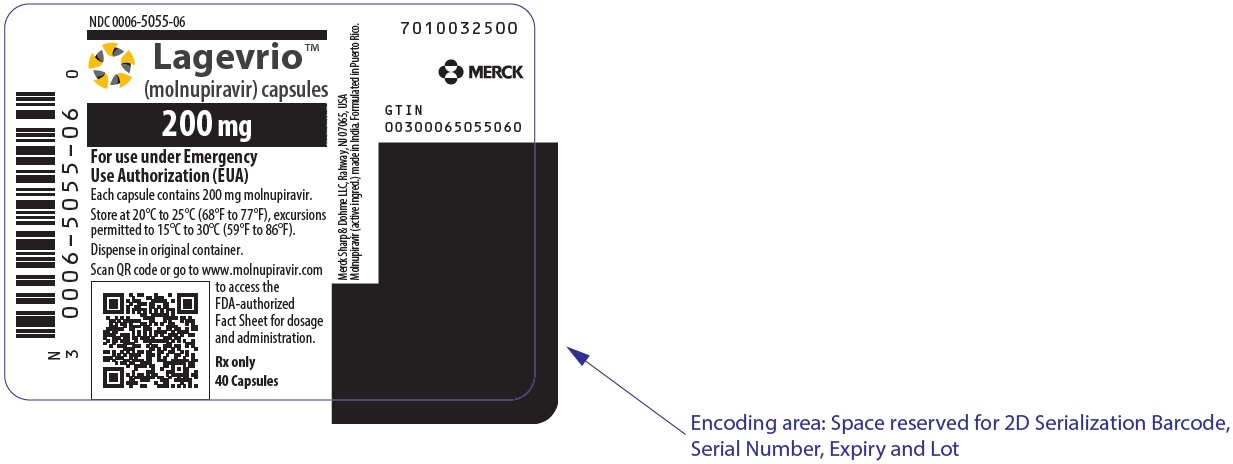
PRINCIPAL DISPLAY PANEL - 200 mg Capsules Bottle Label NDC 0006-5055-06 Lagevrio ™ (molnupiravir) capsules 200 mg For use under Emergency Use Authorization (EUA) Each capsule contains 200 mg molnupiravir. Store at 20°C to 25°C (68°F to 77°F), excursions permitted to 15°C to 30°C (59°F to 86°F). Dispense in original container.
Scan QR code or go to www.molnupiravir.com to access the FDA-authorized Fact Sheet for dosage and administration. Rx only 40 Capsules molnupiravir Bottle Label
Medicaid utilization by pack size
Medicare Part D spend CMS · PART D · 2026 (Q1)
About this NDC listing & data coverage
What data is (and isn’t) available for this NDC — tap to expand
| NDC identity (package / product / labeler codes) | ✓ Available |
| Labeler | ✓ Available |
| Product & package description | ✓ Available |
| Marketing category & status | ✓ Available |
| Active ingredient / dosage form / route | ✓ Available |
| FDA label (SPL via DailyMed) | ✓ Available |
| Package photos | ✓ Available |
| Inactive ingredients (structured) | — Not published for this NDC The labeler did not submit a structured excipient list, or no SPL is available. |
| NADAC pharmacy acquisition price (CMS) | — Not published for this NDC CMS publishes NADAC only for NDCs reported in its retail-pharmacy survey. |
| Orange Book / therapeutic-equivalence data | — Not published for this NDC Applies only to products approved under an NDA/ANDA; many listings are out of scope. |
| HCPCS J-code billing crosswalk | — Not published for this NDC Most self-administered / retail products have no J-code — that is normal. |
| Medicaid utilization (CMS SDUD) | — Not published for this NDC CMS reports utilization only for NDCs with Medicaid claims above its privacy threshold. |