
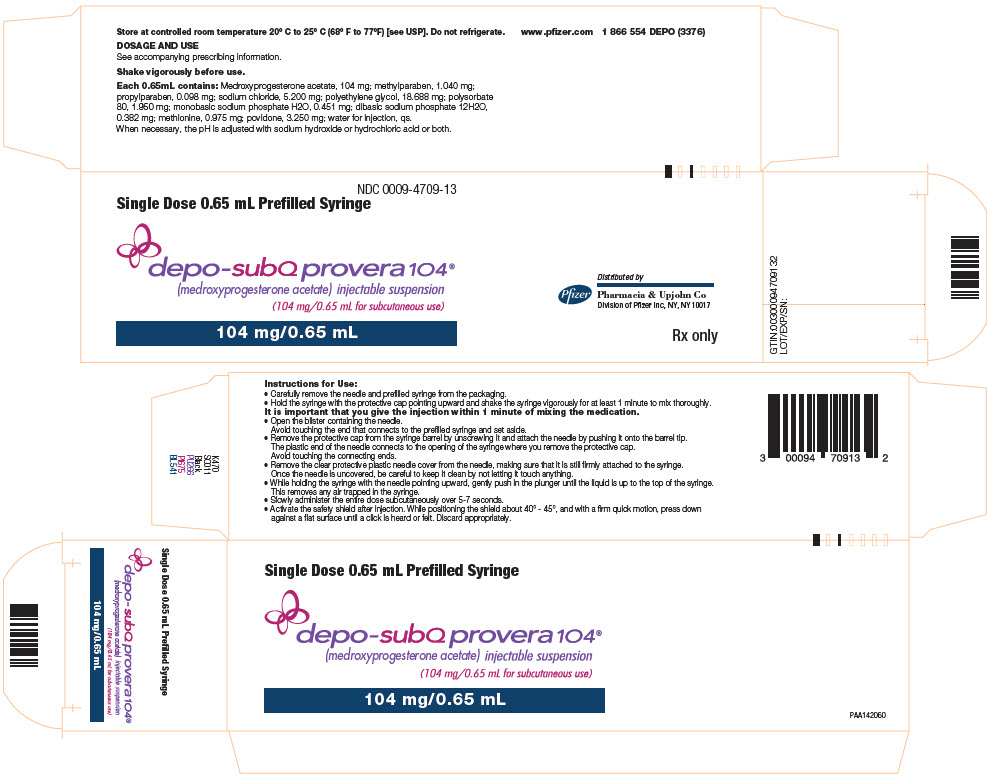
Depo-SubQ Provera medroxyprogesterone acetate 104 mg/.65mL Injection, Suspension, 1 syringe
Other active recalls for Medroxyprogesterone Acetate (different manufacturers) — 1 · tap to view
🆔 Identity & classification
Where does this data come from?
🏷️ RxNorm drug class
This medicine belongs to the Progestin class.
Where does this data come from?
🏭 Manufacturer & labeler
Where does this data come from?
🩺 Clinical
Medroxyprogesterone injection is used to prevent pregnancy and to treat endometriosis (a condition in which the type of tissue that lines the uterus (womb) grows in other areas of the body and causes pain, heavy or irregular menstruation [periods], and other symptoms). Medroxyprogesterone is in a class of medications called progestins. It works to prevent pregnancy by preventing ovulation (the release of eggs from the ovaries). Medroxyprogesterone also thins the lining of the uterus which helps to prevent pregnancy in all women and slows the spread of tissue from the uterus to other parts of t...
Read the full MedlinePlus article ↗- It's mainly used as birth control — one shot provides contraceptive protection for about 3 months. If you're using Depo-SubQ Provera 104 specifically, it also has a second approved...
- What exactly is this injection used for?
- Honestly, irregular bleeding is one of the most common things people notice — especially in the first few months. You might have spotting, lighter periods, heavier periods, or unpr...
- What will happen to my period on this injection?
Patient education
Supplement & herbal interactions
Some supplements/herbs that may interact with Medroxyprogesterone Acetate — tap one for details:
Where does this data come from?
Ask a licensed pharmacist directly — free, answered by our team.
🧪 Inactive Ingredients / Excipients
Inactive ingredients, also called excipients, are components of the drug product other than the active ingredient. They may include fillers, dyes, coatings, preservatives, flavors, or other formulation ingredients.
💡 Tap an ingredient (hover on desktop) to see what it is and why it’s used.
-
UNII QTT17582CB
A strong acid used to adjust and maintain the proper pH level in liquid medicines, ensuring stability and preventing breakdown of active ingredients.
-
0.975 mg / 0.65 mL
UNII AE28F7PNPL
Methionine is an amino acid used as a nutrient supplement and pH buffer in medicines. It helps stabilize the formulation and supports the product's overall composition.
-
1.04 mg / 0.65 mL
UNII A2I8C7HI9T
Methylparaben is a preservative derived from benzoic acid that prevents growth of bacteria, fungi, and mold in medicines. It extends the product's shelf life and maintains safety during storage.
-
18.688 mg / 0.65 mL
UNII 3WJQ0SDW1A
Polyethylene glycol is a synthetic liquid or solid polymer used in medicines as a solvent, lubricant, and humectant. It helps dissolve active ingredients, reduces friction during manufacturing, and retains moisture in the final product.
-
1.95 mg / 0.65 mL
UNII 6OZP39ZG8H
Polysorbate 80 is a synthetic emulsifier derived from sorbitol and oleic acid. It helps mix oil and water-based ingredients together in medications and improves how the product disperses in the body.
-
3.25 mg / 0.65 mL
UNII FZ989GH94E
Povidone is a synthetic polymer made from a plastic-like material. It acts as a binder to hold tablet ingredients together and as a disintegrant to help the tablet break apart in your stomach so the medicine can be absorbed.
-
0.098 mg / 0.65 mL
UNII Z8IX2SC1OH
Propylparaben is a chemical preservative used to prevent bacterial and fungal growth in medicines and personal care products. It helps extend shelf life and maintain product safety during storage.
-
5.2 mg / 0.65 mL
UNII 451W47IQ8X
Sodium chloride is common table salt. It's used in medicines as a buffer to maintain proper pH, as a filler to add bulk, or to adjust the osmotic balance in liquid formulations.
-
UNII 55X04QC32I
A strong alkaline chemical used to adjust and maintain the pH balance of liquid medicines. It helps keep the medicine stable and ensures it stays effective during storage.
-
0.382 mg / 0.65 mL
UNII 22ADO53M6F
A mineral salt derived from phosphoric acid, used as a buffer to maintain the pH balance of the medication and help stabilize the active ingredients.
-
0.451 mg / 0.65 mL
UNII KH7I04HPUU
A salt compound made from sodium and phosphoric acid, used as a buffer to help maintain a stable pH level in the medicine, and sometimes as a binder or filler in tablets and capsules.
-
UNII 059QF0KO0R
Water is a liquid solvent that dissolves and mixes ingredients together in liquid medicines, syrups, and injections. It helps distribute the active drug evenly throughout the product.
12 inactive ingredients listed in the exact product block matched to this NDC.
Where does this data come from?
ingredient classCode="IACT" elements from the exact product block matched by this NDC. Label-section narrative from DailyMed / the openFDA label index is shown separately when available.Inactive ingredient FAQ
Are inactive ingredients the same for every manufacturer?
Why might an inactive ingredient be missing?
Can inactive ingredients matter?
💲 Pricing
A drug doesn't have one price. Each row is a different public payment system, and none is what you'd pay at the counter — that depends on your insurance. The ⓘ on each row explains what it measures.
| Price system | Per mL | Per package |
|---|---|---|
| Retail pharmacies payNADAC · weekly | $77.428 | $50.33 / 0.65 ml |
| Medicaid paysCMS SDUD · 12 mo | $49.21 | $31.98 / 0.65 ml |
| Medicare drug plans payPart D · Q2 2026 | $79.68 | $51.79 / 0.65 ml |
Where does this data come from?
🔁 Therapeutic equivalents
| Product | Labeler | Pack | NADAC/unit | TE | Status | Price vs. this |
|---|---|---|---|---|---|---|
| Depo-SubQ Provera 104 mg/.65mLthis 00009-4709-13 | Pharmacia | 1 syringe | $77.428 | — | Availability likely | — |
Where does this data come from?
⏳ Availability & generic status
We did not find an FDA-approved generic match for this exact strength, form and route.
Where does this data come from?
🗺️ Medicaid utilization & spend
📊 Medicare Part D spend CMS · PART D · 2026 (Q1)
📦 Packaging — all sizes for this product
| Package NDC | Description | Marketing start | Status |
|---|---|---|---|
| 00009-4709-13 You're viewing this | 1 SYRINGE in 1 CARTON (0009-4709-13) / .65 mL in 1 SYRINGE | 2005-05-02 | Active |
📄 Full prescribing information FDA SPL
🚨 Boxed Warning ▾
WARNING: LOSS OF BONE MINERAL DENSITY • Women who use depo-subQ provera 104 may lose significant bone mineral density. Bone loss is greater with increasing duration of use and may not be completely reversible [see Warnings and Precautions (5.1) ] . • It is unknown if use of depo-subQ provera 104 during adolescence or early adulthood, a critical period of bone accretion, will reduce peak bone mass and increase the risk for osteoporotic fracture in later life [see Warnings and Precautions (5.1) ] . • Depo-subQ provera 104 is not recommended as a long-term (i.e., longer than 2 years) birth control method or medical therapy for endometriosis-associated pain unless other options are considered inadequate [see Indications and Usage (1) and Warnings and Precautions (5.1) ] .
WARNING: LOSS OF BONE MINERAL DENSITY See full prescribing information for complete boxed warning . • Women who use depo-subQ provera 104 may lose significant bone mineral density. Bone loss is greater with increasing duration of use and may not be completely reversible. ( 5.1 ) • It is unknown if use of depo-subQ provera 104 during adolescence or early adulthood, a critical period of bone accretion, will reduce peak bone mass and increase the risk for osteoporotic fracture in later life.
( 5.1 ) • Depo-subQ provera 104 is not recommended as a long-term (i.e., longer than 2 years) birth control method or medical therapy for endometriosis-associated pain unless other options are considered inadequate. ( 1 , 5.1 )
🎯 Indications and Usage ▾
1 INDICATIONS AND USAGE Depo-subQ provera 104 is indicated in females of reproductive age for: • Prevention of pregnancy and • Management of endometriosis-associated pain. Depo-subQ provera 104 is a progestin that is indicated in females of reproductive age for: • Prevention of pregnancy. ( 1 ) • Management of endometriosis-associated pain.
( 1 ) Limitations of Use : Use of depo-subQ provera 104 is not recommended as a long-term (i.e., longer than 2 years) birth control method or medical therapy for endometriosis-associated pain unless other options are considered inadequate. ( 1 , 5.1 ) Limitations of Use : The use of depo-subQ provera 104 is not recommended as a long-term (i.e., longer than 2 years) birth control method or medical therapy for endometriosis-associated pain unless other options are considered inadequate [see Dosage and Administration (2.1) and Warnings and Precautions (5.1) ].
⏱️ Dosage and Administration ▾
2 DOSAGE AND ADMINISTRATION • Only for healthcare professional administration. ( 2.1 ) • Prior to first injection, confirm the patient is not pregnant. ( 2.1 ) • Administer 104 mg of depo-subQ provera 104 by subcutaneous injection into the anterior thigh or abdomen, once every 12 to 14 weeks.
( 2.1 ) • See Full Prescribing Information for recommendations on switching from another contraceptive method to depo-subQ provera 104. ( 2.2 ) • See Full Prescribing Information for important preparation and administration instructions. ( 2.3 )
2.1Important Dosage and Administration Instructions Depo-subQ provera 104 is only for subcutaneous administration and is only to be administered by a healthcare professional. Use for longer than 2 years is not recommended (unless other birth control methods or medical therapies for endometriosis-associated pain are considered inadequate) due to the impact of long-term depo-subQ provera 104 treatment on bone mineral density (BMD) [see Warnings and Precautions (5.1) ] . Prior to the first injection confirm that the patient is not pregnant.
For women who are sexually active and who have regular menses, administer the first injection only during the first 5 days of a normal menstrual period. For women who are breast-feeding, administer the first injection during or after the sixth post-partum week. The recommended dosage of depo-subQ provera 104 is 104 mg given subcutaneously every 12 to 14 weeks.
If more than 14 weeks elapse between injections, confirm that the patient is not pregnant before the next injection. Instruct the patient that if they are unable to receive an injection within 12–14 weeks, another contraceptive method should be used until the next depo-subQ provera 104 injection. The dosage does not need to be adjusted for body weight.
Inject the entire contents of the pre-filled syringe using strict aseptic technique into the upper anterior thigh or abdomen, rotating the sites with every injection [see Dosage and Administration (2.3) ] .
2.2Switching from Another Method of Contraception When switching from another contraceptive method to depo-subQ provera 104, administer depo-subQ provera 104 in a manner that ensures continuous contraceptive coverage. Follow the respective recommendations when switching from the contraceptive methods listed below: • Combined hormonal contraceptives : administer the first injection of depo-subQ provera 104 within 7 days after the last day of using the combined hormonal contraceptive method (i.e., within 7 days after taking the last active pill). • An implant : administer the first injection of depo-subQ provera 104 on the day of implant removal. • A contraceptive vaginal ring or transdermal system : administer the first injection of depo-subQ provera 104 on the day the patient would have inserted the next ring or applied the next transdermal system. • An Intrauterine Device (IUD) or Intrauterine System (IUS) : administer the first injection of depo-subQ provera 104 on the day of IUD/IUS removal.
If the IUD/IUS is not removed on the first day of the patient's menstrual cycle, instruct patients to use a non-hormonal back-up method of birth control for the first 7 days after administration of depo-subQ provera 104. • Depot medroxyprogesterone acetate injectable suspension for intramuscular use (DMPA-IM) : inject depo-subQ provera 104 12 to 14 weeks after the last dose of DMPA-IM.
2.3Preparation and Administration Instructions Prior to injection: • Ensure all the components in Figure A are available and that depo-subQ provera 104 is at room temperature . • Shake the pre-filled syringe vigorously prior to injection to ensure appropriate viscosity of the suspension. • Inspect depo-subQ provera 104 visually for particulate matter and discoloration. Figure A. Components in the Package Step 1: Select & Prepare the Injection Area • Select a preferred injection area, i.e., the left or right upper thigh or the abdomen (see shaded areas , Figure B ). • Avoid selection…
💊 Dosage Forms and Strengths ▾
3 DOSAGE FORMS AND STRENGTHS Injectable suspension (104 mg/0.65 mL) in a single-dose pre-filled syringe, packaged with a 26-gauge × 3/8-inch Terumo SurGuard ® needle. Injectable suspension: 104 mg/0.65 mL ( 3 )
⛔ Contraindications ▾
4 CONTRAINDICATIONS The use of depo-subQ provera 104 is contraindicated in the following conditions: • Active thrombophlebitis, or current or history of thromboembolic disorders, or cerebral vascular disease [see Warnings and Precautions (5.2) ] . • Known, suspected, or past malignancy of the breast [see Warnings and Precautions (5.3) ] . • Significant liver disease [see Warnings and Precautions (5.14) ] . • Known hypersensitivity to medroxyprogesterone acetate or any of the ingredients in depo-subQ provera 104 [see Warnings and Precautions (5.6) ] . • Undiagnosed vaginal bleeding [see Warnings and Precautions (5.12) ] . • Active thrombophlebitis, or current or history of thromboembolic disorders, or cerebral vascular disease.
( 4 ) • Known, suspected, or past malignancy of the breast. ( 4 ) • Significant liver disease. ( 4 ) • Known hypersensitivity to medroxyprogesterone acetate or any of the ingredients of depo-subQ provera 104.
( 4 ) • Undiagnosed vaginal bleeding. ( 4 )
⚠️ Warnings and Cautions ▾
5 WARNINGS AND PRECAUTIONS • Thromboembolic disorders: Discontinue depo-subQ provera 104 in patients who develop arterial or venous thrombosis. ( 5.2 ) • Breast cancer risks: Monitor women with a family history of breast cancer or a significant risk of breast cancer carefully. ( 5.3 ) • Meningioma: Discontinue depo-subQ provera 104 if meningioma is diagnosed.
Monitor patients for signs and symptoms of meningioma. ( 5.4 ) • Ectopic pregnancy: Consider ectopic pregnancy if a woman becomes pregnant or complains of severe abdominal pain. ( 5.5 ) • Anaphylaxis: Provide emergency medical treatment.
( 5.6 ) • Injection site reactions (e.g., persistent atrophy, dimpling/indentation, lump/nodule and discoloration) have been reported. ( 5.11 ) • Diabetics may be at greater risk of hyperglycemia. ( 5.13 ) • Jaundice and elevated transaminase: Discontinue depo-subQ provera 104 if jaundice or elevated transaminase levels develop.
( 5.14 )
5.1Loss of Bone Mineral Density Use of depo-subQ provera 104 reduces serum estrogen levels and is associated with significant loss of bone mineral density (BMD). This loss of BMD is of particular concern during adolescence and early adulthood, a critical period of bone accretion. It is unknown if use of depo-subQ provera 104 by younger women will reduce peak bone mass and increase the risk for osteoporotic fracture in later life.
A study to assess the reversibility of loss of BMD in adolescents was conducted with DMPA-IM. After discontinuing DMPA-IM in these adolescents, mean BMD loss at the total hip and femoral neck did not fully recover by 5 years (60 months) post-treatment in the sub-group of adolescents who were treated for more than 2 years [see Clinical Studies (14.4) ] . Similarly, in adults, there was only partial recovery of mean BMD at the total hip, femoral neck, and lumbar spine towards baseline by 2 years post-treatment [see Clinical Studies (14.3) ] .
The use of depo-subQ provera 104 is not recommended as a long-term (i.e., longer than 2 years) birth control method or medical therapy for endometriosis-associated pain unless other options are considered inadequate. BMD should be evaluated when a woman needs to continue to use depo-subQ provera 104 long-term. In adolescents, interpretation of BMD results should take into account patient age and skeletal maturity.
Other birth control methods or therapies for endometriosis-associated pain should be considered in the risk/benefit analysis for the use of depo-subQ provera 104 in women with osteoporosis risk factors. Depo-subQ provera 104 can pose an additional risk in patients with risk factors for osteoporosis (e.g., metabolic bone disease, chronic alcohol and/or tobacco use, anorexia nervosa, strong family history of osteoporosis, or chronic use of drugs that can reduce bone mass such as anticonvulsants or corticosteroids).
5.2Arterial and Venous Thromboembolic Disorders There have been reports of serious arterial and venous thrombotic events in women treated with DMPA-IM. Women with a history of thromboembolic disorders were not studied in clinical trials of depo-subQ provera 104. Although no causal relationship between the use of depo-subQ provera 104 and thrombotic events has been clearly established, patients who develop arterial or venous thrombosis while taking depo-subQ provera 104 should discontinue treatment.
Do not re-administer depo-subQ provera 104 pending examination if there is a sudden onset of a suspected vascular ocular event (e.g., partial or complete loss of vision, proptosis, or diplopia) or migraine. Do not re-administer depo-subQ provera 104 if examination reveals papilledema or retinal vascular lesions.
5.3Cancer Risks Breast Cancer The use of hormonal contraceptives, including depo sub-Q provera 104, is contraindicated in women who have or have had breast cancer because breast cancer may be sensitive to hormones [see Contraindications (4) ] . Women who have a family history of breast cancer or a significant risk of br…
🤒 Adverse Reactions ▾
6 ADVERSE REACTIONS The following important adverse reactions are described in more detail in other sections of the prescribing information: • Loss of bone mineral density [see Warnings and Precautions (5.1) ] • Arterial and venous thromboembolic disorders [see Warnings and Precautions (5.2) ] • Anaphylaxis [see Warnings and Precautions (5.6) ] • Fluid retention [see Warnings and Precautions (5.7) ] • Delayed return of ovulation or fertility [see Warnings and Precautions (5.9) ] • Depression [see Warnings and Precautions (5.10) ] • Injection site reactions [see Warnings and Precautions (5.11) ] • Bleeding irregularities [see Warnings and Precautions (5.12) ] Most common adverse reactions (incidence >5%) are dysfunctional uterine bleeding, headache, increased weight, amenorrhea, and injection site reactions.
( 6.1 ) To report SUSPECTED ADVERSE REACTIONS, contact Pfizer Inc. at 1-800-438-1985 or FDA at 1-800-FDA-1088 or www.fda.gov/medwatch .
6.1Clinical Trials Experience Clinical trials are conducted under widely varying conditions, therefore adverse reaction rates observed in the clinical trials of a drug cannot be directly compared to rates in the clinical trials of another drug and may not reflect the rates observed in practice. The data described below reflect exposure to depo-subQ provera 104 in five clinical trials involving 2325 women including 2043 women who received treatment for contraception (1780 treated up to 1 year and 263 treated for up to 2 years) and 282 women for endometriosis for up to 6 months.
In these pooled trials, 9% of women discontinued treatment due to an adverse reaction and the most common reason for discontinuation was dysfunctional uterine bleeding (3%). Adverse Reactions in the Contraception Adult Studies Table 1 presents frequently reported adverse reactions (>1%) in the contraception pooled studies. In these studies, the most frequently reported adverse reactions (>5%) were dysfunctional uterine bleeding (e.g., irregular, increased, decreased, or spotting), headache, increased weight, amenorrhea, and injection site reactions (e.g., pain/tenderness, nodule/lump, persistent atrophy/indentation/dimpling or lipodystrophy).
The frequency reported is based on the all-causality incidence in the pooled results of the three contraception studies. Closely related "Adverse Reaction" terms were grouped but individual patients reporting two or more grouped events were only counted once. Table 1.
Frequently Reported Adverse Reactions in the Contraception Studies (>1%) Adverse Reaction Frequency Dysfunctional uterine bleeding (irregular, increase, decrease, spotting) 18% Headache 9% Increased weight (see below) 7% Amenorrhea 6% Injection site reactions (such as pain/tenderness, nodule/lump, persistent atrophy/indentation/dimpling, lipodystrophy, discoloration) 6% Vaginitis, including candidiasis and bacterial 5% Abdominal pain 4% Urinary tract infections 4% Acne 4% Depression 3% Decreased libido 3% Nausea 3% Back pain 3% Breast pain/tenderness 2% Fatigue 2% Anxiety 1% Irritability 1% Dizziness 1% Dysfunctional Uterine Bleeding The extent of bleeding and spotting in the three contraception trials is presented in Figure N; data from the endometriosis trials are presented in Figure O [see Warnings and Precautions (5.1) ].
Figure N. Mean Number of Bleeding or Spotting Days in the Subgroup of Women with Bleeding or Spotting Among Women Treated with depo-subQ provera 104 in Contraception Studies N=Number of subjects with bleeding or spotting during indicated month. Figure O.
Mean Number of Bleeding or Spotting Days in the Subgroup of Women with Bleeding or Spotting Among Women Treated with depo-subQ provera 104 in Endometriosis Studies N=Number of subjects with bleeding or spotting during indicated month. Figure N Figure O Weight Gain In three large clinical trials, the mean weight gain in depo-subQ provera 104 treated patients was 3.5 lb (1.6 kg) in the first year of use. Half (50%) of women remained within 4.9 l…
🔄 Drug Interactions ▾
7 DRUG INTERACTIONS Strong CYP3A inhibitors and inducers: Avoid concomitant use. ( 7 )
7.1Effect of Other Drugs on depo-SubQ provera 104 Moderate or Strong CYP3A Inducers Concomitant use with moderate or strong CYP3A inducers may decrease concentrations of medroxyprogesterone acetate which may reduce depo-subQ provera 104 efficacy. This effect is based upon the primary metabolism of medroxyprogesterone acetate by CYP3A and was not confirmed by a clinical study. Avoid coadministration of depo-subQ provera 104 with moderate or strong CYP3A inducers.
Some examples of moderate CYP3A inducers are bosentan, efavirenz, etravirine, and modafinil. Some examples of strong CYP3A inducers are rifampin, carbamazepine, phenytoin, phenobarbital, mitotane, and St. John's wort (the CYP3A4 induction effect of St.
John's wort varies widely and is preparation dependent). These examples are a guide and do not represent a comprehensive list of all possible drugs that may fit these categories. The use of CYP3A inducers may require using a back-up or alternate contraceptive method.
👥 Use in Specific Populations ▾
8 USE IN SPECIFIC POPULATIONS • Pregnancy: Discontinue if pregnancy occurs. ( 8.1 ) • Lactation: Detectable amounts of drug have been identified in the milk of mothers receiving depot-medroxyprogesterone acetate. ( 8.2 ) • Pediatric patients (after menarche): Bone loss is a particular concern. ( 8.4 )
8.1Pregnancy Risk Summary There is no use for contraception in pregnancy; therefore, depo-subQ provera 104 should be discontinued during pregnancy. Epidemiologic studies and meta-analyses have not found an increased risk of genital or non-genital birth defects (including cardiac anomalies and limb-reduction defects) following exposure to progestins before conception or during early pregnancy. All pregnancies have a background risk of birth defect, loss, or other adverse outcomes.
In the U.S. general population, the estimated background risk of major birth defects and miscarriage in clinically recognized pregnancies is 2-4% and 15‑20%, respectively.
8.2Lactation Risk Summary Although medroxyprogesterone acetate is detectable in the milk of mothers receiving DMPA-IM, milk composition, quality, and amount do not appear to be adversely affected. Effects on milk production and lactation initiation/duration remain unclear when administered before 6 weeks after delivery, therefore, in mothers who exclusively breastfeed, initiate depo-subQ provera 104 during or after the sixth post-partum week [see Dosage and Administration (2.1) ] . No adverse effects in breastfed infants would be expected with maternal use of progestins.
Neonates and infants exposed to medroxyprogesterone acetate from breast milk have been studied and no adverse effects have been noted. The developmental and health benefits of breast-feeding should be considered along with the mother’s clinical need for depo-subQ provera 104 and any potential adverse effects on the breastfed child from depo-subQ provera 104 or from the underlying maternal condition.
8.3Females and Males of Reproductive Potential Depo-subQ provera 104 is indicated for the prevention of pregnancy and would therefore be expected to impair female fertility until cessation of treatment. Women may experience a delay in return to ovulation and fertility (conception) following discontinuation of depo-subQ provera 104 [see Warnings and Precautions (5.9) ].
8.4Pediatric Use Depo-subQ provera 104 is indicated for the prevention of pregnancy and management of endometriosis-associated pain in females of reproductive age. Efficacy is expected to be the same for post-menarchal females under the age of 17 as for users 17 years and older. Use of depo-subQ provera 104 is associated with significant loss of bone mineral density (BMD).
This loss of BMD is of particular concern during adolescence, a critical period of bone accretion. It is unknown if use of depo-subQ provera 104 by female adolescents will reduce peak bone mass and increase the risk for osteoporotic fractures in later life. In a study of adolescent females (12–18 years of age) receiving DMPA-IM for contraception, mean BMD 2 years after starting DMPA-IM decreased 1.9% (spine), 4.3% (total hip), and 4.2% (femoral neck).
In those adolescents who used DMPA-IM for more than 2 years, mean BMD at total hip and femoral neck did not return to baseline within 5 years. Depo-subQ provera 104 is not indicated before menarche.
8.5Geriatric Use Depo-subQ provera 104 is not indicated in post-menopausal women.
🤰 Pregnancy ▾
8.1Pregnancy Risk Summary There is no use for contraception in pregnancy; therefore, depo-subQ provera 104 should be discontinued during pregnancy. Epidemiologic studies and meta-analyses have not found an increased risk of genital or non-genital birth defects (including cardiac anomalies and limb-reduction defects) following exposure to progestins before conception or during early pregnancy. All pregnancies have a background risk of birth defect, loss, or other adverse outcomes.
In the U.S. general population, the estimated background risk of major birth defects and miscarriage in clinically recognized pregnancies is 2-4% and 15‑20%, respectively.
🧒 Pediatric Use ▾
8.4Pediatric Use Depo-subQ provera 104 is indicated for the prevention of pregnancy and management of endometriosis-associated pain in females of reproductive age. Efficacy is expected to be the same for post-menarchal females under the age of 17 as for users 17 years and older. Use of depo-subQ provera 104 is associated with significant loss of bone mineral density (BMD).
This loss of BMD is of particular concern during adolescence, a critical period of bone accretion. It is unknown if use of depo-subQ provera 104 by female adolescents will reduce peak bone mass and increase the risk for osteoporotic fractures in later life. In a study of adolescent females (12–18 years of age) receiving DMPA-IM for contraception, mean BMD 2 years after starting DMPA-IM decreased 1.9% (spine), 4.3% (total hip), and 4.2% (femoral neck).
In those adolescents who used DMPA-IM for more than 2 years, mean BMD at total hip and femoral neck did not return to baseline within 5 years. Depo-subQ provera 104 is not indicated before menarche.
🧓 Geriatric Use ▾
8.5Geriatric Use Depo-subQ provera 104 is not indicated in post-menopausal women.
🧬 Clinical Pharmacology ▾
12 CLINICAL PHARMACOLOGY
12.1Mechanism of Action Depo-subQ provera 104 inhibits the secretion of gonadotropins, which primarily prevents follicular maturation and ovulation and causes thickening of cervical mucus. These actions contribute to its contraceptive effect. Suppression of serum estradiol concentrations is likely to be responsible for the therapeutic effect on endometriosis-associated pain.
12.2Pharmacodynamics The following laboratory tests are expected to be affected by progestins including depo-subQ provera 104: • Plasma and urinary steroid levels are decreased (e.g., progesterone, estradiol, pregnanediol, testosterone, cortisol). • Gonadotropin levels are decreased. • Sex-hormone-binding-globulin concentrations are decreased. • Histology specimens may demonstrate changes consistent with progestin effects. The following laboratory tests may be affected by depo-subQ provera 104, however the clinical significance is unknown: • Protein-bound iodine and butanol extractable protein-bound iodine may increase. • T 3 -uptake values may decrease. • Coagulation test values for prothrombin (Factor II), and Factors VII, VIII, IX, and X may increase. • Sulfobromophthalein and other liver function test values may be increased. • The effects of medroxyprogesterone acetate on lipid metabolism are inconsistent.
Both increases and decreases in total cholesterol, triglycerides, low-density lipoprotein (LDL) cholesterol, and high-density lipoprotein (HDL) cholesterol have been observed in studies.
12.3Pharmacokinetics The pharmacokinetic parameters of MPA following a single subcutaneous injection of depo-subQ provera 104 in healthy women (n=42) are shown in Table 2 and Figure P. Table 2. Pharmacokinetic Parameters of MPA after a Single Subcutaneous Injection of depo-subQ provera 104 in Healthy Women C max (ng/mL) T max (day) C 91 (ng/mL) AUC 0–91 (ng∙day/mL) AUC 0–∞ (ng∙day/mL) t½ (day) Abbreviations: C max =peak serum concentration; T max =time when C max is observed; C 91 =serum concentration at 91 days; AUC 0–91 and AUC 0–∞ =area under the concentration-time curve over 91 days or infinity, respectively; t½=terminal half-life.
Mean 1.56 8.8 0.402 66.98 92.84 43 Min 0.53 2.0 0.133 20.63 31.36 16 Max 3.08 80.0 0.733 139.79 162.29 114 Following subcutaneous administration of single depo-subQ provera 104 doses ranging from 50 to 150 mg (0.48 and 1.4 times the recommended dose, respectively), the AUC and C min (Day 91) increased with higher doses, but there was considerable overlap across dose levels. Serum MPA concentrations at Day 91 increased in a dose proportional manner but C max did not appear to increase proportionally with increasing dose.
The AUC data were suggestive of dose linearity. Absorption Following a single subcutaneous injection of depo-subQ provera 104 in healthy women, serum MPA concentrations reached ≥0.2 ng/mL within 24 hours. The mean T max was attained approximately 1 week after injection.
Figure P. Serum Concentration-Time Profile of MPA Mean (SD) after a Single Injection of depo-subQ provera 104 to Healthy Women In a study to assess accumulation and the achievement of steady state following multiple subcutaneous administrations, trough concentrations of MPA were determined after 6, 12, and 24 months, and in a subset of 8 subjects, bi-weekly concentrations were determined within one dosing interval in the second year of administration. The mean (SD) MPA trough concentrations were 0.67 (0.36) ng/mL (n=157), 0.79 (0.36) ng/mL (n=144), and 0.87 (0.33) ng/mL (n=106) at 6, 12, and 24 months, respectively.
Depo-subQ provera 104 was administered subcutaneously into the anterior thigh or the abdomen to evaluate effects of injection site location on the MPA concentration-time profile. MPA trough concentrations (C min ; Day 91) were similar for the two injection site locations. Figure P Distribution Plasma protein binding of MPA averages 86%.
MPA binding occurs primarily to serum albumin. No binding of MPA occurs with s…
🧬 Mechanism of Action ▾
12.1Mechanism of Action Depo-subQ provera 104 inhibits the secretion of gonadotropins, which primarily prevents follicular maturation and ovulation and causes thickening of cervical mucus. These actions contribute to its contraceptive effect. Suppression of serum estradiol concentrations is likely to be responsible for the therapeutic effect on endometriosis-associated pain.
📦 How Supplied / Storage and Handling ▾
16 HOW SUPPLIED/STORAGE AND HANDLING
16.1How Supplied Depo-subQ provera 104 medroxyprogesterone acetate injectable suspension (104 mg/0.65 mL) is available in a single dose, disposable pre-filled syringe and is packaged with a 26-gauge × 3/8-inch Terumo SurGuard ® needle. NDC 0009-4709-13
16.2Storage Store at controlled room temperature 20° C to 25° C (68° F to 77°F) [see USP]. Do not refrigerate.
📦 Storage and Handling ▾
16.2Storage Store at controlled room temperature 20° C to 25° C (68° F to 77°F) [see USP]. Do not refrigerate.
📋 Description ▾
11 DESCRIPTION Depo-subQ provera 104 contains medroxyprogesterone acetate (MPA), a derivative of progesterone, as its active ingredient. MPA is a white to off-white, odorless crystalline powder that is stable in air and that melts between 205°C and 209°C. It is freely soluble in chloroform, soluble in acetone and dioxane, sparingly soluble in alcohol and methanol, slightly soluble in ether, and insoluble in water.
The chemical name for MPA is 17-hydroxy-6α-methylpregn-4-ene-3,20-dione 17-acetate. The structural formula is as follows: Depo-subQ provera 104 for subcutaneous use is available in pre-filled syringes, each containing 0.65 mL (104 mg) of sterile medroxyprogesterone acetate injectable suspension. Each 0.65 mL contains the following inactive ingredients: Methylparaben 1.040 mg Propylparaben 0.098 mg Sodium Chloride 5.200 mg Polyethylene Glycol 18.688 mg Polysorbate 80 1.950 mg Monobasic Sodium Phosphate H 2 O 0.451 mg Dibasic Sodium Phosphate 12H 2 O 0.382 mg Methionine 0.975 mg Povidone 3.250 mg Water for Injection qs When necessary, the pH is adjusted with sodium hydroxide or hydrochloric acid, or both.
Chemical Structure
💬 Information for Patients ▾
17 PATIENT COUNSELING INFORMATION Advise the patient to read the FDA-approved patient labeling (Patient Information) . Loss of Bone Mineral Density Advise the patient that the use of depo-subQ provera 104 decreases BMD [see Warnings and Precautions (5.1) ]. Arterial and Venous Thromboembolic Disorders Advise the patient that serious arterial and venous thrombotic events have been seen in women treated with depot medroxyprogesterone acetate (DMPA) [see Warnings and Precautions (5.2) ].
Anaphylaxis Counsel patients on the importance of seeking urgent medical attention if they experience symptoms of anaphylaxis [see Warnings and Precautions (5.6) ]. Ectopic Pregnancy Advise patients to tell their healthcare professional right away if they become pregnant or experience severe abdominal pain to exclude a diagnosis of ectopic pregnancy [see Warnings and Precautions (5.5) ]. Bleeding Irregularities Advise patients at the beginning of treatment that their menstrual cycle may be disrupted, resulting in irregular and unpredictable bleeding or spotting.
Explain that bleeding and spotting irregularities usually decrease to the point of amenorrhea as treatment with depo-subQ provera 104 continues and does not require other therapy [see Warnings and Precautions (5.12) ]. Delayed Return of Ovulation and Fertility Advise patients that return to ovulation and fertility is likely to be delayed after stopping depo-subQ provera 104 [see Warnings and Precautions (5.9) ]. Risks of Breast Cancer Counsel patients about the possible increased risk of breast cancer in women who use depo-subQ provera 104 [see Warnings and Precautions (5.3) ].
Meningioma Counsel patients with a history of meningioma about the possible risk of worsening meningioma [see Warnings and Precautions (5.4) ]. Depression Counsel patients about the possible risk of depression and mood disorders. Advise patients with a history of depression or who are receiving treatment for depression to be alert to any mood changes or worsening of their depression.
Counsel patients to follow up with their healthcare professional accordingly [see Warnings and Precautions (5.10) ]. Risk of Hyperglycemia in Patients with Diabetes Advise diabetic patients that some patients receiving progestins may exhibit a decrease in glucose tolerance and hyperglycemia [see Warnings and Precautions (5.13) ]. Liver Dysfunction Advise patients to seek medical advice if they experience symptoms of liver problems such as jaundice [see Warnings and Precautions (5.14) ].
Fluid Retention Counsel patients with conditions that may be influenced by fluid retention to inform their healthcare professional if they experience symptoms of fluid retention [see Warnings and Precautions (5.7) ]. Injection Site Reactions Counsel patients that injection site reactions including site dimpling, scarring or discoloration may occur [see Warnings and Precautions (5.11) ]. Sexually Transmitted Infections Counsel patients that depo-subQ provera 104 does not protect against HIV infection (AIDS) and other sexually transmitted infections [see Warnings and Precautions (5.15) ].
Drug Interactions Counsel patients to contact their healthcare professional if they start a medication that is a CYP3A enzyme inducer [see Drug Interactions (7) ]. Advise patients that taking a medication that is a CYP3A enzyme inducer may require using a back-up or alternate contraceptive method.