
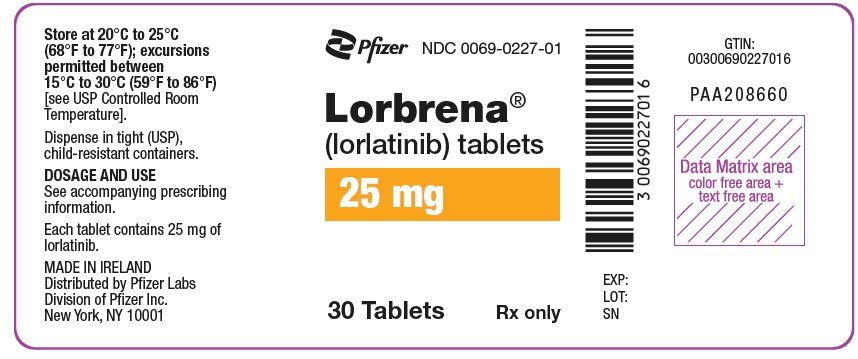
Lorbrena lorlatinib 25 mg Tablet, Film Coated, 30-count — NDC 0069-0227-01 (Billing 00069-0227-01)
This is a package of 30 tablets of Lorbrena lorlatinib 25 mg Tablet, Film Coated from Pfizer Laboratories Div Pfizer Inc, marketed since Nov 2018 and currently FDA-listed. It is the main listing for this product, which comes in 2 package sizes.
NDC database record
One package, one record: these facts belong to NDC 0069-0227-01 alone.
- Record
- FDA NDC Directory package listing · Human prescription drug
- Code segments
- 0069 labeler · 0227 product · 01 package
- Package marketed since
- Nov 19, 2018
- Sample package
- No — commercial package
- Listing certified through
- Dec 31, 2027
- Billing quantity
- 30 EA per package
- Barcode (UPC)
- 0300690231013, 0300690227016
- Medicaid fills, this package
- 336 prescriptions in the last four reported quarters
- FDA record last changed
- Oct 1, 2026
Identity & classification
Regulatory identifiers FDA, NLM and CMS codes for this package
Drug-database identifiers Medi-Span GPI and First Databank GCN / HICL / AHFS classification
- GSN (GCN sequence number): 079228
- GCN: 45687
- GPI-14 (Medi-Span): 21530556000320
- HICL (First Databank): 045448
- AHFS class code: 10:00.00.00
- RxCUI (RxNorm): 2103169
Where does this data come from?
- FDA openFDA NDC Directory · synced Oct 1, 2026
- FDA label on DailyMed · label index refreshed Oct 5, 2026
- RxNorm (NLM RxNav) · catalog refreshed Oct 1, 2026
- Medi-Span GPI (licensed)
- First Databank (licensed) · refreshed Oct 1, 2026
RxNorm drug class
This medicine belongs to the Kinase Inhibitor class.
Where does this data come from?
- RxClass (NLM) · catalog refreshed Oct 1, 2026
Clinical
Lorlatinib is used to treat a certain type of non-small cell lung cancer (NSCLC). Lorlatinib is in a class of medications called kinase inhibitors. It works by blocking the action of the abnormal protein that signals cancer cells to multiply. This helps to stop or slow the spread of cancer cells.
Read the full MedlinePlus article ↗- Lorbrena is a targeted therapy designed specifically for non-small cell lung cancer that has a particular gene change called ALK-positive. That gene acts like a stuck accelerator,...
- What exactly is Lorbrena (lorlatinib) and why was I prescribed it?
- You can take Lorbrena with or without food — it doesn't make a significant difference in how your body absorbs it. What does matter is consistency: pick a time that works for your...
- Can I take Lorbrena with food, and does it matter what time of day I take it?
Patient education
Supplement & herbal interactions
Some supplements/herbs that may interact with Lorlatinib — tap one for details:
Where does this data come from?
- MedlinePlus (NLM) · refreshed Oct 1, 2026
- FDA label on DailyMed · label index refreshed Oct 5, 2026
Ask a licensed pharmacist directly — free, answered by our team.
Pricing
A drug doesn't have one price. Each row is a different public payment system, and none is what you'd pay at the counter — that depends on your insurance. The ⓘ on each row explains what it measures.
| Price system | Per each | Per package |
|---|---|---|
| Retail pharmacies payNADAC · weekly | Not in the retail survey — common for institutional, discontinued, or low-volume packs. | |
| Medicaid paysCMS SDUD · 12 mo | $239.03 | $7,170.95 / 30 tablets |
| Medicare drug plans payPart D · Q2 2026 | $242.90 | $7,286.94 / 30 tablets |
Where does this data come from?
- CMS NADAC weekly file
- CMS ASP pricing files · refreshed Sep 20, 2026
- CMS Medicaid State Drug Utilization Data · through Q1 2026
- CMS Part D plan pricing files · refreshed Sep 24, 2026
- VA National Acquisition Center price file
Packaging — all sizes for this product
| Package NDC | Description | Marketing start | Marketing end | Status |
|---|---|---|---|---|
| 00069-0227-01 You're viewing this Main listing | 30 TABLET, FILM COATED in 1 BOTTLE | 2018-11-19 | — | Active |
| 00069-0227-03 0069-0227-03 | 120 TABLET, FILM COATED in 1 BOTTLE | 2025-01-03 | Mar 31, 2027 | Active |
You're viewing the smallest of 2 pack sizes for this product.
In Medicaid, this is the most-dispensed pack of this product — about 97% of fills over the last four reported quarters. See all packs ↓
Pack size FAQ
What quantity is in this package?
How does this package differ from NDC 00069-0227-03?
What NDC number is used to bill for this package of Lorbrena lorlatinib 25 mg Tablet, Film Coated?
Therapeutic equivalents
| Product | Labeler | Pack | NADAC/unit | TE | Status | Price vs. this |
|---|---|---|---|---|---|---|
| Lorbrena 25 mgthis 00069-0227-01 | Pfizer | 30 tablets | — | — | FDA listed | — |
| Lorbrena 25 mg 63539-0927-01 | U.S. | 30 tablets | — | — | FDA listed | — |
Where does this data come from?
- FDA openFDA NDC Directory · synced Oct 1, 2026
- FDA Orange Book · refreshed Oct 3, 2026
- CMS NADAC weekly file
Availability & generic status
We did not find an FDA-approved generic match for this exact strength, form and route. Patent/protection dates below may affect future generic timing.
Why the date isn’t exact: Generic timing can change because patents may be challenged, settled, licensed, added, removed, or worked around with a narrower label — and FDA approval does not always mean a pharmacy can get the generic today.
🛈 What do these terms mean?
- Patent
- Legal protection listed in the Orange Book that may delay generic approval or launch. Issued by the U.S. Patent & Trademark Office.
- Substance patent
- Covers the active drug molecule itself — the hardest to design around. A generic generally can’t launch until it expires.
- Formulation (product) patent
- Covers a specific formulation or dosage form. A generic can sometimes work around it with a different formulation.
- Method-of-use patent
- A patent covering one specific approved use of the drug — not necessarily the whole molecule. A generic can sometimes launch with a “skinny label” that carves out the protected use and keeps the others.
- Skinny label
- A generic label that omits a still-patented use when the FDA allows it — letting a generic reach the market for the unprotected uses.
- Exclusivity
- FDA-granted marketing protection, separate from patents — e.g. 5-yr new chemical entity, 7-yr orphan drug, or a +6-month pediatric extension.
- Paragraph IV
- A generic applicant’s formal challenge to a listed patent. It can potentially lead to earlier generic entry, but often involves litigation or a settlement.
- RLD / RS
- Reference Listed Drug — the brand product the FDA uses as the reference for generic applications. Reference Standard — the product the FDA expects generics to compare against in bioequivalence testing.
- TE / AB rating
- FDA therapeutic-equivalence rating. An AB rating generally means the FDA considers a generic therapeutically equivalent to — and substitutable for — the brand.
- LOE (loss of exclusivity)
- The latest patent or exclusivity currently listed — the loss-of-exclusivity / latest-listed-protection date shown on this page. Paragraph-IV challenges and settlements can move the real date earlier; FDA approval and a manufacturer’s decision to market can move it later.
Built from the FDA Orange Book. The bars above are scaled to each protection’s expiry; the red LOE marker is the last one to lapse.
| Patent | Type | Use code | Expires |
|---|---|---|---|
| US 10420749 ↗ | Drug substance | U-2633 | Jul 27, 2036 |
| US 10420749 ↗ | Drug substance | U-2633 | Jul 27, 2036 |
| US 10420749 ↗ | Drug substance | U-3096 | Jul 27, 2036 |
| US 10420749 ↗ | Drug substance | U-3096 | Jul 27, 2036 |
| US 11299500 ↗ | Drug substance | — | Oct 4, 2038 |
| US 11020376 ↗ | Drug product | — | Jul 27, 2036 |
| US 8680111 ↗ | Drug substance | — | Mar 5, 2033 |
| US 11020376 ↗ | Drug product | — | Jul 27, 2036 |
| US 11299500 ↗ | Drug substance | — | Oct 4, 2038 |
| US 8680111 ↗ | Drug substance | — | Mar 5, 2033 |
| Code | What it grants | Expires |
|---|---|---|
| ODE-349 | Orphan Drug Exclusivity (7-year) | Mar 3, 2028 |
| ODE-349 | Orphan Drug Exclusivity (7-year) | Mar 3, 2028 |
Is there a generic version of LORBRENA 25 MG TABLET?
The FDA approved a generic — why can’t I get it at my pharmacy yet?
Why do different websites show different generic release dates?
What does “FDA listed” mean?
What does a patent or protection date mean here?
What does “current Orange Book estimate” mean?
Can a generic come out before the last patent expires?
Can a generic come out after the listed dates?
What is the difference between patents and exclusivity?
Why are there multiple patent dates?
Where does this data come from?
- FDA Orange Book · refreshed Oct 3, 2026
What it looks like
Where does this data come from?
- FDA label on DailyMed · label index refreshed Oct 5, 2026
Inactive Ingredients / Excipients
Inactive ingredients, also called excipients, are components of the drug product other than the active ingredient. They may include fillers, dyes, coatings, preservatives, flavors, or other formulation ingredients.
💡 Tap an ingredient (hover on desktop) to see what it is and why it’s used.
-
UNII L11K75P92J
A mineral salt made from calcium and phosphate. It acts as a filler and binder in tablets to add bulk and help hold the medicine together in solid form.
-
UNII 1K09F3G675
Ferric oxide red is an inorganic iron compound used as a colorant in medicines. It gives tablets, capsules, or other dosage forms a red or reddish tint for identification and appearance.
-
UNII XM0M87F357
A dark iron oxide compound that gives medicines their black or dark color. It's used as a colorant in tablets and capsules to help identify the product and make it visually distinctive.
-
UNII 3NXW29V3WO
Hypromellose is a plant-based thickener made from cellulose. It's used in medicines as a binder to hold ingredients together, a coating for tablets, and a thickener for liquids.
-
UNII EWQ57Q8I5X
Lactose monohydrate is a natural sugar derived from milk. It serves as a filler and binder in tablets and capsules, helping create the proper size, texture, and consistency of the medicine.
-
UNII 70097M6I30
Magnesium stearate is a salt made from magnesium and stearic acid, a fatty substance. It's used in tablets and capsules as a lubricant and glidant to help ingredients flow smoothly during manufacturing and prevent sticking.
-
UNII OP1R32D61U
Microcrystalline cellulose is a purified form of cellulose, a natural fiber from plant sources. It acts as a binder and filler in tablets and capsules, helping hold ingredients together and give the medicine its shape and size.
-
UNII 3WJQ0SDW1A
Polyethylene glycol is a synthetic liquid or solid polymer used in medicines as a solvent, lubricant, and humectant. It helps dissolve active ingredients, reduces friction during manufacturing, and retains moisture in the final product.
-
UNII 5856J3G2A2
A starch-based powder made from potatoes and processed with sodium. It acts as a disintegrant, helping the tablet or capsule break apart quickly in the stomach so the medicine can be absorbed.
-
UNII 15FIX9V2JP
Titanium dioxide is a bright white mineral powder commonly used as a colorant and opacifying agent. It makes pills and tablets white or lighter in color and helps make coatings non-transparent.
-
UNII XHX3C3X673
Triacetin is a clear, oily liquid made from glycerin and acetic acid. It works as a plasticizer and solvent in medicines, helping soften coatings and improve how liquids mix together in formulations.
11 inactive ingredients listed in the exact product block matched to this NDC.
Where does this data come from?
ingredient classCode="IACT" elements from the exact product block matched by this NDC. Label-section narrative from DailyMed / the openFDA label index is shown separately when available.- FDA label on DailyMed · label index refreshed Oct 5, 2026
- FDA openFDA NDC Directory · synced Oct 1, 2026
Inactive ingredient FAQ
Are inactive ingredients the same for every manufacturer?
Why might an inactive ingredient be missing?
Can inactive ingredients matter?
Manufacturer & labeler
More NDCs from Pfizer Laboratories Div Pfizer Inc labeler code 00069
- Vizimpro dacomitinib 15 mg Tablet, Film Coated NDC 0069-0197-30
- Fragmin Dalteparin Sodium 7500 [iU]/.3mL Injection NDC 0069-0206-02
- Propofol 10 mg/mL Injection, Emulsion NDC 0069-0209-10
- Fragmin Dalteparin Sodium 10000 [iU]/mL Injection NDC 0069-0217-02
- Fragmin Dalteparin Sodium 12500 [iU]/.5mL Injection NDC 0069-0220-02
- Fragmin Dalteparin Sodium 15000 [iU]/.6mL Injection NDC 0069-0223-02
- Fragmin Dalteparin Sodium 18000 [iU]/.72mL Injection NDC 0069-0228-02
- Lorbrena lorlatinib 100 mg Tablet, Film Coated NDC 0069-0231-01
- Fragmin Dalteparin Sodium 25000 [iU]/mL Injection NDC 0069-0232-01
- Propofol 10 mg/mL Injection, Emulsion NDC 0069-0234-20
- Cibinqo abrocitinib 50 mg Tablet, Film Coated NDC 0069-0235-30
- Ruxience rituximab-pvvr 100 mg/10mL Injection, Solution NDC 0069-0238-01
Where does this data come from?
- FDA openFDA NDC Directory · synced Oct 1, 2026
- Drugs@FDA
Full prescribing information FDA SPL
🎯 Indications and Usage ▾
1 INDICATIONS AND USAGE LORBRENA ® is indicated for the treatment of adult patients with metastatic non-small cell lung cancer (NSCLC) whose tumors are anaplastic lymphoma kinase (ALK)-positive as detected by an FDA-approved test. LORBRENA is a kinase inhibitor indicated for the treatment of adult patients with metastatic non-small cell lung cancer (NSCLC) whose tumors are anaplastic lymphoma kinase (ALK)-positive as detected by an FDA-approved test. ( 1 , 2.1 )
⏱️ Dosage and Administration ▾
2 DOSAGE AND ADMINISTRATION Recommended dosage : 100 mg orally once daily. ( 2.2 ) Severe Hepatic Impairment : 50 mg orally once daily. ( 2.5 , 8.6 , 12.3 ) Renal Impairment : 75 mg orally once daily. ( 2.6 , 8.7 , 12.3 )
2.1Patient Selection Select patients for the treatment of metastatic NSCLC with LORBRENA based on the presence of ALK positivity in tumor specimens [see Indications and Usage (1) and Clinical Studies (14) ] . Information on FDA-approved tests for the detection of ALK rearrangements in NSCLC is available at http://www.fda.gov/CompanionDiagnostics .
2.2Recommended Dosage The recommended dosage of LORBRENA is 100 mg orally once daily, with or without food, until disease progression or unacceptable toxicity [see Clinical Pharmacology (12.3) ] . Swallow tablets whole. Do not chew, crush or split tablets.
Do not ingest if tablets are broken, cracked, or otherwise not intact. Take LORBRENA at the same time each day. If a dose is missed, then take the missed dose unless the next dose is due within 4 hours.
Do not take 2 doses at the same time to make up for a missed dose. Do not take an additional dose if vomiting occurs after LORBRENA but continue with the next scheduled dose.
2.3Dosage Modifications for Adverse Reactions The recommended dose reductions are: • First dose reduction: LORBRENA 75 mg orally once daily • Second dose reduction: LORBRENA 50 mg orally once daily Permanently discontinue LORBRENA in patients who are unable to tolerate 50 mg orally once daily. Dosage modifications for adverse reactions of LORBRENA are provided in Table 1. Table 1 Recommended LORBRENA Dosage Modifications for Adverse Reactions Adverse Reaction Grade based on National Cancer Institute (NCI) Common Terminology Criteria for Adverse Events (CTCAE) version 4.03.
Dosage Modifications Abbreviation: AV=atrioventricular; DBP=diastolic blood pressure; SBP=systolic blood pressure. Central Nervous System Effects [see Warnings and Precautions (5.2) ] Grade 1 Continue at the same dose or withhold the dose until recovery to baseline. Resume LORBRENA at the same dose or at a reduced dose.
Grade 2 OR Grade 3 Withhold dose until Grade 0 or 1. Resume LORBRENA at a reduced dose. Grade 4 Permanently discontinue LORBRENA.
Hyperlipidemia [see Warnings and Precautions (5.3) ] Grade 4 hypercholesterolemia OR Grade 4 hypertriglyceridemia Withhold LORBRENA until recovery of hypercholesterolemia and/or hypertriglyceridemia to less than or equal to Grade 2. Resume LORBRENA at the same dose. If severe hypercholesterolemia and/or hypertriglyceridemia recurs, resume LORBRENA at a reduced dose.
Atrioventricular (AV) Block [see Warnings and Precautions (5.4) ] Second-degree AV block Withhold LORBRENA until PR interval is less than 200 ms. Resume LORBRENA at a reduced dose. First occurrence of complete AV block Withhold LORBRENA until • pacemaker placed OR • PR interval less than 200 ms.
If a pacemaker is placed, resume LORBRENA at the same dose. If no pacemaker is placed, resume LORBRENA at a reduced dose. Recurrent complete AV block Place pacemaker or permanently discontinue LORBRENA.
Interstitial Lung Disease (ILD)/Pneumonitis [see Warnings and Precautions (5.5) ] Any Grade treatment–related ILD/Pneumonitis Permanently discontinue LORBRENA. Hypertension [see Warnings and Precautions (5.6) ] Grade 3 (SBP greater than or equal to 160 mmHg or DBP greater than or equal to 100 mmHg; medical intervention indicated; more than one antihypertensive drug, or more intensive therapy than previously used indicated) Withhold LORBRENA until hypertension has recovered to Grade 1 or less (SBP less than 140 mmHg and DBP less than 90 mmHg), then resume LORBRENA at the same dose.
If Grade 3 hypertension recurs, withhold LORBRENA until recovery to Grade 1 or less, and resume at a reduced dose. If adequate hypertension control cannot be achieved with optimal medical management, permanently discontinue LORBRENA. Grade 4 (life-threatening consequences, urgent intervention indicat… [Excerpted — this section continues on DailyMed.]
💊 Dosage Forms and Strengths ▾
3 DOSAGE FORMS AND STRENGTHS Tablets: • 25 mg: 8 mm round, tan, immediate release, film-coated, debossed with "Pfizer" on one side and "25" and "LLN" on the other side • 100 mg: 8.5 mm × 17 mm oval, lavender, immediate release, film-coated, debossed with "Pfizer" on one side and "LLN 100" on the other side Tablets: 25 mg or 100 mg. ( 3 )
⛔ Contraindications ▾
4 CONTRAINDICATIONS LORBRENA is contraindicated in patients taking strong CYP3A inducers, due to the potential for serious hepatotoxicity [see Warnings and Precautions (5.1) ] . Concomitant use with strong CYP3A inducers. ( 4 )
⚠️ Warnings and Cautions ▾
5 WARNINGS AND PRECAUTIONS • Risk of Serious Hepatotoxicity with Concomitant Use of Strong CYP3A Inducers : Discontinue strong CYP3A inducers for 3 plasma half-lives of the strong CYP3A inducer prior to initiating LORBRENA. ( 2.4 , 5.1 ) • Central Nervous System (CNS) Effects : CNS effects include seizures, psychotic effects and changes in cognitive function, mood (including suicidal ideation), speech, mental status, and sleep. Withhold and resume LORBRENA at same or reduced dose or permanently discontinue LORBRENA based on severity.
( 2.3 , 5.2 ) • Hyperlipidemia : Initiate or increase the dose of lipid-lowering agents. Withhold and resume LORBRENA at same or reduced dose based on severity. ( 2.3 , 5.3 ) • Atrioventricular Block : Withhold and resume LORBRENA at same or reduced dose based on severity.
( 2.3 , 5.4 ) • Interstitial Lung Disease/Pneumonitis : Immediately withhold LORBRENA in patients with suspected ILD/pneumonitis. Permanently discontinue LORBRENA for treatment-related ILD/pneumonitis of any severity. ( 2.3 , 5.5 ) • Hypertension : Monitor blood pressure after 2 weeks and then at least monthly during treatment.
For severe hypertension, withhold LORBRENA, then dose reduce or permanently discontinue. ( 2.3 , 5.6 ) • Hyperglycemia : Assess fasting serum glucose prior to starting LORBRENA and regularly during treatment. If not adequately controlled with optimal medical management, withhold LORBRENA, then consider dose reduction or permanently discontinue, based on severity.
( 2.3 , 5.7 ) • Embryo-Fetal Toxicity : Can cause fetal harm. Advise females of reproductive potential of the potential risk to a fetus. Advise males and females of reproductive potential to use an effective non-hormonal method of contraception.
( 5.8 , 7.2 , 8.1 , 8.3 )
5.1Risk of Serious Hepatotoxicity with Concomitant Use of Strong CYP3A Inducers Severe hepatotoxicity occurred in 10 of 12 healthy subjects receiving a single dose of LORBRENA with multiple daily doses of rifampin, a strong CYP3A inducer. Grade 4 alanine aminotransferase (ALT) or aspartate aminotransferase (AST) elevations occurred in 50% of subjects, Grade 3 ALT or AST elevations occurred in 33% and Grade 2 ALT or AST elevations occurred in 8%. ALT or AST elevations occurred within 3 days and returned to within normal limits after a median of 15 days (7 to 34 days); the median time to recovery was 18 days in subjects with Grade 3 or 4 ALT or AST elevations and 7 days in subjects with Grade 2 ALT or AST elevations [see Drug Interactions (7.1) ] .
LORBRENA is contraindicated in patients taking strong CYP3A inducers. Discontinue strong CYP3A inducers for 3 plasma half-lives of the strong CYP3A inducer prior to initiating LORBRENA [see Contraindications (4) , Drug Interactions (7.1) ] .
5.2Central Nervous System Effects A broad spectrum of central nervous system (CNS) effects can occur in patients receiving LORBRENA. These include seizures, psychotic effects and changes in cognitive function, mood (including suicidal ideation), speech, mental status, and sleep. Overall, CNS effects occurred in 52% of the 476 patients who received 100 mg LORBRENA once daily in clinical trials [see Adverse Reactions (6.1) ] .
Cognitive effects occurred in 28% of the 476 patients; 2.9% of these events were severe (Grade 3 or 4). Mood effects occurred in 21% of patients; 1.7% of these events were severe. Speech effects occurred in 11% of patients; 0.6% of these events were severe.
Psychotic effects occurred in 7% of patients; 0.6% of these events were severe. Mental status changes occurred in 1.3% of patients; 1.1% of these events were severe. Seizures occurred in 1.9% of patients, sometimes in conjunction with other neurologic findings.
Sleep effects occurred in 12% of patients. The median time to first onset of any CNS effect was 1.4 months (1 day to 3.4 years). Overall, 2.1% of patients required permanent discontinuation of LORBRENA for a CNS effect; 10% required temporary discontinuation and 8% re… [Excerpted — this section continues on DailyMed.]
🤒 Adverse Reactions ▾
6 ADVERSE REACTIONS The following adverse reactions are described elsewhere in the labeling: • Risk of Serious Hepatotoxicity with Concomitant Use of Strong CYP3A Inducers [see Warnings and Precautions (5.1) ] • Central Nervous System Effects [see Warnings and Precautions (5.2) ] • Hyperlipidemia [see Warnings and Precautions (5.3) ] • Atrioventricular Block [see Warnings and Precautions (5.4) ] • Interstitial Lung Disease/Pneumonitis [see Warnings and Precautions (5.5) ] • Hypertension [see Warnings and Precautions (5.6) ] • Hyperglycemia [see Warnings and Precautions (5.7) ] Most common (incidence ≥20%) adverse reactions and Grade 3–4 laboratory abnormalities are edema, peripheral neuropathy, weight gain, cognitive effects, fatigue, dyspnea, arthralgia, diarrhea, mood effects, hypercholesterolemia, hypertriglyceridemia, and cough.
( 6.1 ) To report SUSPECTED ADVERSE REACTIONS, contact Pfizer Inc. at 1-800-438-1985 or www.pfizer.com or FDA at 1-800-FDA-1088 or www.fda.gov/medwatch .
6.1Clinical Trials Experience Because clinical trials are conducted under widely varying conditions, adverse reaction rates observed in the clinical trials of a drug cannot be directly compared to rates in the clinical trials of another drug and may not reflect the rates observed in practice. The pooled safety population described in the Warnings and Precautions section reflects exposure to LORBRENA in 476 patients who received 100 mg LORBRENA once daily in Study B7461001 (N=327) and Study B7461006 (N=149). Among 476 patients who received LORBRENA, 75% were exposed for 6 months or longer and 61% were exposed for greater than 1 year.
In this pooled safety population, the most frequent adverse reactions in ≥ 20% of 476 patients who received LORBRENA were edema (56%), peripheral neuropathy (44%), weight gain (31%), cognitive effects (28%), fatigue (27%), dyspnea (27%), arthralgia (24%), diarrhea (23%), mood effects (21%), and cough (21%). The most frequent Grade 3–4 laboratory abnormalities in ≥ 20% of 476 patients who received LORBRENA were hypercholesterolemia (21%) and hypertriglyceridemia (21%). Previously Untreated ALK-Positive Metastatic NSCLC (CROWN Study) The safety of LORBRENA was evaluated in 149 patients with ALK-positive NSCLC in a randomized, open-label, active-controlled trial for the treatment of patients with ALK-positive, locally advanced or metastatic, NSCLC who had not received previous systemic treatment for advanced disease [see Clinical Studies (14) ].
The median duration of exposure to LORBRENA was 16.7 months (4 days to 34.3 months) and 76% received LORBRENA for at least 12 months. Serious adverse reactions occurred in 34% of patients treated with LORBRENA; the most frequently reported serious adverse reactions were pneumonia (4.7%), dyspnea (2.7%), respiratory failure (2.7%), cognitive effects (2.0%), and pyrexia (2.0%). Fatal adverse reactions occurred in 3.4% of patients treated with LORBRENA and included pneumonia (0.7%), respiratory failure (0.7%), cardiac failure acute (0.7%), pulmonary embolism (0.7%), and sudden death (0.7%).
Permanent discontinuation of LORBRENA due to adverse reactions occurred in 6.7% of patients. The most frequent adverse reaction that led to permanent discontinuation of LORBRENA was cognitive effects (1.3%). Adverse reactions leading to dose interruptions occurred in 49% of patients treated with LORBRENA.
The most frequent adverse reactions that led to dose interruptions of LORBRENA were hypertriglyceridemia (7%), edema (5%), pneumonia (4.7%) cognitive effects (4.0%), mood effects (4.0%), and hypercholesterolemia (3.4%). Adverse reactions leading to dose reductions occurred in 21% of patients treated with LORBRENA. The most frequent adverse reactions that led to dose reductions were edema (5%), hypertriglyceridemia (4.0%), and peripheral neuropathy (3.4%).
Tables 2 and 3 summarize most frequent adverse reactions and laboratory abnormalities, respectively, in patients treated with LORBRENA in Stud… [Excerpted — this section continues on DailyMed.]
🔄 Drug Interactions ▾
7 DRUG INTERACTIONS • Strong CYP3A Inducers : Contraindicated. ( 2.4 , 7.1 ) • Moderate CYP3A Inducers : Avoid concomitant use. If concomitant use cannot be avoided, increase the LORBRENA dose.
( 2.4 , 7.1 ) • Strong CYP3A Inhibitors : Avoid concomitant use; reduce LORBRENA dose if concomitant use cannot be avoided. ( 2.4 , 7.1 ) • Fluconazole : Avoid concomitant use; reduce LORBRENA dose if concomitant use cannot be avoided. ( 2.4 , 7.1 ) • Certain CYP3A Substrates : Avoid concomitant use with CYP3A substrates for which minimal concentration changes may lead to serious therapeutic failures.
( 7.2 ) • Certain P-gp Substrates : Avoid concomitant use with P-gp substrates for which minimal concentration changes may lead to serious therapeutic failures. ( 7.2 )
7.1Effect of Other Drugs on LORBRENA Strong CYP3A Inducers LORBRENA is contraindicated in patients taking strong CYP3A inducers [see Contraindication (4) ] . Discontinue strong CYP3A inducers for 3 plasma half-lives of the strong CYP3A inducer prior to initiating LORBRENA [see Dosage and Administration (2.3) ] . Concomitant use of LORBRENA with a strong CYP3A inducer decreased lorlatinib plasma concentrations [see Clinical Pharmacology (12.3) ] , which may decrease the efficacy of LORBRENA.
Severe hepatotoxicity occurred in healthy subjects receiving LORBRENA with rifampin, a strong CYP3A inducer. In 12 healthy subjects receiving a single 100 mg dose of LORBRENA with multiple daily doses of rifampin, Grade 3 or 4 increases in ALT or AST occurred in 83% of subjects and Grade 2 increases in ALT or AST occurred in 8%. A possible mechanism for hepatotoxicity is through activation of the pregnane X receptor (PXR) by LORBRENA and rifampin, which are both PXR agonists.
Moderate CYP3A Inducers Avoid concomitant use of moderate CYP3A inducers with LORBRENA. If concomitant use is unavoidable, increase the LORBRENA dose [see Dosage and Administration (2.4) ] . Concomitant use of LORBRENA with a moderate CYP3A inducer decreased lorlatinib plasma concentrations, which may decrease the efficacy of LORBRENA [see Clinical Pharmacology (12.3) ] .
Strong CYP3A Inhibitors Avoid concomitant use of LORBRENA with a strong CYP3A inhibitor. If concomitant use cannot be avoided, reduce the LORBRENA dosage [see Dosage and Administration (2.4) ] . Concomitant use with a strong CYP3A inhibitor increased lorlatinib plasma concentrations [see Clinical Pharmacology (12.3) ] , which may increase the incidence and severity of adverse reactions of LORBRENA.
Fluconazole Avoid concomitant use of LORBRENA with fluconazole. If concomitant use cannot be avoided, reduce the LORBRENA dosage [see Dosage and Administration (2.4) ] . Concomitant use of LORBRENA with fluconazole may increase lorlatinib plasma concentrations [see Clinical Pharmacology (12.3) ] , which may increase the incidence and severity of adverse reactions of LORBRENA.
7.2Effect of LORBRENA on Other Drugs Certain CYP3A Substrates Avoid concomitant use of LORBRENA with certain CYP3A substrates, for which minimal concentration changes may lead to serious therapeutic failures. If concomitant use is unavoidable, increase the CYP3A substrate dosage in accordance with approved product labeling. LORBRENA is a moderate CYP3A inducer.
Concomitant use of LORBRENA decreases the concentration of CYP3A substrates [see Clinical Pharmacology (12.3) ] , which may reduce the efficacy of these substrates. Certain P-glycoprotein (P-gp) Substrates Avoid concomitant use of LORBRENA with certain P-gp substrates for which minimal concentration changes may lead to serious therapeutic failures. If concomitant use is unavoidable, increase the P-gp substrate dosage in accordance with approved product labeling.
LORBRENA is a moderate P-gp inducer. Concomitant use of LORBRENA decreases the concentration of P-gp substrates [see Clinical Pharmacology (12.3) ] , which may reduce the efficacy of these substrates.
👥 Use in Specific Populations ▾
8 USE IN SPECIFIC POPULATIONS Lactation : Advise not to breastfeed. ( 8.2 )
8.1Pregnancy Risk Summary Based on findings from animal studies and its mechanism of action [see Clinical Pharmacology (12.1) ] , LORBRENA can cause embryo-fetal harm when administered to a pregnant woman. There are no available data on LORBRENA use in pregnant women. Administration of lorlatinib to pregnant rats and rabbits by oral gavage during the period of organogenesis resulted in malformations, increased post-implantation loss, and abortion at maternal exposures that were equal to or less than the human exposure at the recommended dose of 100 mg once daily based on AUC (see Data ) .
Advise a pregnant woman of the potential risk to a fetus. In the U.S. general population, the estimated background risk of major birth defects and miscarriage in clinically recognized pregnancies are 2 to 4% and 15 to 20%, respectively. Data Animal Data Preliminary embryo-fetal development studies investigating the administration of lorlatinib during the period of organogenesis were conducted in rats and rabbits.
In rabbits, lorlatinib administration resulted in abortion and total loss of pregnancy at doses of 15 mg/kg (approximately 3 times the human exposure at the recommended dose of 100 mg) or greater. At a dose of 4 mg/kg (approximately 0.6 times the human exposure at the recommended dose of 100 mg) toxicities included increased post-implantation loss and malformations including rotated limbs, malformed kidneys, domed head, high arched palate, and dilation of the cerebral ventricles. In rats, administration of lorlatinib resulted in total loss of pregnancy at doses of 4 mg/kg (approximately 5 times the human exposure at the recommended dose of 100 mg) or greater.
At a dose of 1 mg/kg (approximately equal to the human exposure at the recommended dose of 100 mg) there was increased post-implantation loss, decreased fetal body weight, and malformations including gastroschisis, rotated limbs, supernumerary digits, and vessel abnormalities.
8.2Lactation Risk Summary There are no data on the presence of lorlatinib or its metabolites in either human or animal milk or its effects on the breastfed infant or on milk production. Because of the potential for serious adverse reactions in breastfed infants, instruct women not to breastfeed during treatment with LORBRENA and for 7 days after the final dose.
8.3Females and Males of Reproductive Potential Pregnancy Testing Verify pregnancy status in females of reproductive potential prior to initiating LORBRENA [see Use in Specific Populations (8.1) ] . Contraception LORBRENA can cause embryo-fetal harm when administered to a pregnant woman [see Use in Specific Populations (8.1) ] . Females Advise female patients of reproductive potential to use effective non-hormonal contraception during treatment with LORBRENA and for at least 6 months after the final dose.
Advise females of reproductive potential to use a non-hormonal method of contraception, because LORBRENA can render hormonal contraceptives ineffective [see Drug Interactions (7.2) ] . Males Based on genotoxicity findings, advise males with female partners of reproductive potential to use effective contraception during treatment with LORBRENA and for at least 3 months after the final dose [see Nonclinical Toxicology (13.1) ] . Infertility Males Based on findings from animal studies, LORBRENA may transiently impair male fertility [see Nonclinical Toxicology (13.1) ] .
8.4Pediatric Use The safety and effectiveness of LORBRENA in pediatric patients have not been established.
8.5Geriatric Use Of the patients in Study B7461001 (N=295) and Study B7461006 (N=149) who received 100 mg LORBRENA orally once daily, 18% and 40% of patients, respectively, were aged 65 years or older. No clinically important differences in safety or efficacy were observed between patients aged 65 years or older and younger patients.
8.6Hepatic Impairment In patients with severe hepatic impairment (Ch… [Excerpted — this section continues on DailyMed.]
🤰 Pregnancy ▾
8.1Pregnancy Risk Summary Based on findings from animal studies and its mechanism of action [see Clinical Pharmacology (12.1) ] , LORBRENA can cause embryo-fetal harm when administered to a pregnant woman. There are no available data on LORBRENA use in pregnant women. Administration of lorlatinib to pregnant rats and rabbits by oral gavage during the period of organogenesis resulted in malformations, increased post-implantation loss, and abortion at maternal exposures that were equal to or less than the human exposure at the recommended dose of 100 mg once daily based on AUC (see Data ) .
Advise a pregnant woman of the potential risk to a fetus. In the U.S. general population, the estimated background risk of major birth defects and miscarriage in clinically recognized pregnancies are 2 to 4% and 15 to 20%, respectively. Data Animal Data Preliminary embryo-fetal development studies investigating the administration of lorlatinib during the period of organogenesis were conducted in rats and rabbits.
In rabbits, lorlatinib administration resulted in abortion and total loss of pregnancy at doses of 15 mg/kg (approximately 3 times the human exposure at the recommended dose of 100 mg) or greater. At a dose of 4 mg/kg (approximately 0.6 times the human exposure at the recommended dose of 100 mg) toxicities included increased post-implantation loss and malformations including rotated limbs, malformed kidneys, domed head, high arched palate, and dilation of the cerebral ventricles. In rats, administration of lorlatinib resulted in total loss of pregnancy at doses of 4 mg/kg (approximately 5 times the human exposure at the recommended dose of 100 mg) or greater.
At a dose of 1 mg/kg (approximately equal to the human exposure at the recommended dose of 100 mg) there was increased post-implantation loss, decreased fetal body weight, and malformations including gastroschisis, rotated limbs, supernumerary digits, and vessel abnormalities.
🧒 Pediatric Use ▾
8.4Pediatric Use The safety and effectiveness of LORBRENA in pediatric patients have not been established.
🧓 Geriatric Use ▾
8.5Geriatric Use Of the patients in Study B7461001 (N=295) and Study B7461006 (N=149) who received 100 mg LORBRENA orally once daily, 18% and 40% of patients, respectively, were aged 65 years or older. No clinically important differences in safety or efficacy were observed between patients aged 65 years or older and younger patients.
🧬 Clinical Pharmacology ▾
12 CLINICAL PHARMACOLOGY
12.1Mechanism of Action Lorlatinib is a kinase inhibitor with in vitro activity against ALK and ROS1 as well as TYK1, FER, FPS, TRKA, TRKB, TRKC, FAK, FAK2, and ACK. Lorlatinib demonstrated in vitro activity against multiple mutant forms of the ALK enzyme, including some mutations detected in tumors at the time of disease progression on crizotinib and other ALK inhibitors. In mice subcutaneously implanted with tumors harboring EML4 fusions with either ALK variant 1 or ALK mutations, including the G1202R and I1171T mutations detected in tumors at the time of disease progression on ALK inhibitors, administration of lorlatinib resulted in antitumor activity.
Lorlatinib also demonstrated anti-tumor activity and prolonged survival in mice implanted intracranially with EML4-ALK-driven tumor cell lines. The overall antitumor activity of lorlatinib in in vivo models was dose-dependent and correlated with inhibition of ALK phosphorylation.
12.2Pharmacodynamics Exposure-response relationships for Grade 3 or 4 hypercholesterolemia and for any Grade 3 or 4 adverse reaction were observed at steady-state exposures achieved at the recommended dosage, with higher probability of the occurrence of adverse reactions with increasing lorlatinib exposure. Cardiac Electrophysiology In 295 patients who received LORBRENA at the recommended dosage of 100 mg once daily and had an ECG measurement in Study B7461001, the maximum mean change from baseline for PR interval was 16.4 ms (2-sided 90% upper confidence interval [CI] 19.4 ms).
Among the 284 patients with PR interval <200 ms at baseline, 14% had PR interval prolongation ≥200 ms after starting LORBRENA. The prolongation of PR interval occurred in a concentration-dependent manner. Atrioventricular block occurred in 1% of patients.
In 275 patients who received LORBRENA at the recommended dosage in the activity-estimating portion of Study B7461001, no large mean increases from baseline in the QTcF interval (i.e., >20 ms) were detected.
12.3Pharmacokinetics At the recommended dosage, the mean (coefficient of variation [CV] %) maximum plasma concentration (C max ) is 577 ng/mL (42%) and the AUC 0-24h is 5,650 ng·h/mL (39%). Steady-state lorlatinib C max increases proportionally and AUC increased slightly less than proportionally over the dose range of 10 mg to 200 mg orally once daily (0.1 to 2 times the recommended dosage). Absorption The median lorlatinib T max is 1.2 hours (0.5 to 4 hours) following a single oral 100 mg dose and 2 hours (0.5 to 23 hours) following 100 mg orally once daily at steady‑state.
The mean absolute bioavailability is 81% (90% CI 76%, 86%). Effect of Food No clinically significant differences in lorlatinib pharmacokinetics were observed following administration of a high fat, high calorie meal (approximately 1000 calories with 150 calories from protein, 250 calories from carbohydrate, and 500 to 600 calories from fat). Distribution Lorlatinib is 66% bound to plasma proteins, in vitro.
The blood-to-plasma ratio is 0.99, in vitro. Elimination The mean plasma half‑life (t ½ ) of lorlatinib was 24 hours (40%) after a single oral 100 mg dose of LORBRENA. The mean oral clearance (CL/F) was 11 L/h (35%) following a single oral 100 mg dose and increased to 18 L/h (39%) at steady‑state, suggesting autoinduction.
Metabolism Lorlatinib is metabolized primarily by CYP3A4 and UGT1A4, with minor contribution from CYP2C8, CYP2C19, CYP3A5, and UGT1A3. In plasma, a benzoic acid metabolite (M8) of lorlatinib resulting from the oxidative cleavage of the amide and aromatic ether bonds of lorlatinib accounted for 21% of the circulating radioactivity. The oxidative cleavage metabolite, M8, is pharmacologically inactive.
Excretion Following a single oral 100 mg dose of radiolabeled lorlatinib, 48% of the radioactivity was recovered in urine (<1% as unchanged) and 41% in feces (about 9% as unchanged). Specific Populations No clinically significant differences in lorlatinib p… [Excerpted — this section continues on DailyMed.]
🧬 Mechanism of Action ▾
12.1Mechanism of Action Lorlatinib is a kinase inhibitor with in vitro activity against ALK and ROS1 as well as TYK1, FER, FPS, TRKA, TRKB, TRKC, FAK, FAK2, and ACK. Lorlatinib demonstrated in vitro activity against multiple mutant forms of the ALK enzyme, including some mutations detected in tumors at the time of disease progression on crizotinib and other ALK inhibitors. In mice subcutaneously implanted with tumors harboring EML4 fusions with either ALK variant 1 or ALK mutations, including the G1202R and I1171T mutations detected in tumors at the time of disease progression on ALK inhibitors, administration of lorlatinib resulted in antitumor activity.
Lorlatinib also demonstrated anti-tumor activity and prolonged survival in mice implanted intracranially with EML4-ALK-driven tumor cell lines. The overall antitumor activity of lorlatinib in in vivo models was dose-dependent and correlated with inhibition of ALK phosphorylation.
📦 How Supplied / Storage and Handling ▾
16 HOW SUPPLIED/STORAGE AND HANDLING Table 11 describes the available strengths and package configurations for LORBRENA: Table 11 LORBRENA Tablets Strength (mg) Package Configuration NDC Description 25 30 tablets bottle with a child-resistant closure 0069-0227-01 8 mm round, tan, immediate release film‑coated tablet, debossed with “Pfizer” on one side and “25” and “LLN” on the other side 25 120 tablets bottle with a child-resistant closure 0069-0227-03 8 mm round, tan, immediate release film‑coated tablet, debossed with “Pfizer” on one side and “25” and “LLN” on the other side 100 30 tablets bottle with a child-resistant closure 0069-0231-01 8.5 mm × 17 mm oval, lavender, immediate release, film‑coated tablet, debossed with “Pfizer” on one side and “LLN 100” on the other side Store at 20°C to 25°C (68°F to 77°F); excursions permitted between 15°C to 30°C (59°F to 86°F) [see USP Controlled Room Temperature].
📦 Storage and Handling ▾
Store at 20°C to 25°C (68°F to 77°F); excursions permitted between 15°C to 30°C (59°F to 86°F) [see USP Controlled Room Temperature].
📋 Description ▾
11 DESCRIPTION LORBRENA (lorlatinib) is a kinase inhibitor for oral administration. The molecular formula is C 21 H 19 FN 6 O 2 (anhydrous form) and the molecular weight is 406.41 Daltons. The chemical name is (10 R )-7-amino-12-fluoro-2,10,16-trimethyl-15-oxo-10,15,16,17-tetrahydro-2 H -4,8-methenopyrazolo[4,3- h ][2,5,11] benzoxadiazacyclotetradecine-3-carbonitrile.
The chemical structure is shown below: Lorlatinib is a white to off-white powder with a pKa of 4.92. The solubility of lorlatinib in aqueous media decreases over the range pH 2.55 to pH 8.02 from 32.38 mg/mL to 0.17 mg/mL. The log of the distribution coefficient (octanol/water) at pH 9 is 2.45.
LORBRENA is supplied as tablets containing 25 mg or 100 mg of lorlatinib with the following inactive ingredients: microcrystalline cellulose, dibasic calcium phosphate anhydrous, sodium starch glycolate, and magnesium stearate. The film-coating contains hydroxypropyl methylcellulose (HPMC) 2910/hypromellose, lactose monohydrate, macrogol/polyethylene glycol (PEG) 3350, triacetin, titanium dioxide, ferrosoferric oxide/black iron oxide, and iron oxide red. Chemical Structure
💬 Information for Patients ▾
17 PATIENT COUNSELING INFORMATION Advise the patient to read the FDA-approved patient labeling (Patient Information). Risk of Serious Hepatotoxicity with Concomitant Use of Strong CYP3A Inducers Inform patients of the potential risk of hepatotoxicity with the concomitant use of strong CYP3A inducers. Advise patients to inform their healthcare providers of all medications they are taking, including prescription medicines, over-the-counter drugs, vitamins, and herbal products (e.g., St.
John's wort) [see Warnings and Precautions (5.1) ] . Central Nervous System (CNS) Effects Advise patients to notify their healthcare provider if they experience new or worsening CNS symptoms [see Warnings and Precautions (5.2) ] . Hyperlipidemia Inform patients that serum cholesterol and triglycerides will be monitored during treatment.
Advise patients that initiation or an increase in the dose of lipid-lowering agents may be required [see Warnings and Precautions (5.3) ] . Atrioventricular (AV) Block Inform patients of the risks of AV block. Advise patients to contact their healthcare provider immediately to report new or worsening cardiac symptoms [see Warnings and Precautions (5.4) ] .
Interstitial Lung Disease (ILD)/Pneumonitis Inform patients of the risks of severe ILD/pneumonitis. Advise patients to contact their healthcare provider immediately to report new or worsening respiratory symptoms [see Warnings and Precautions (5.5) ] . Hypertension Advise patients of the risks of hypertension and to promptly report signs or symptoms of hypertension to their healthcare provider.
Advise patients with hypertension that antihypertension medications may need to be initiated or adjusted during treatment with LORBRENA [see Warnings and Precautions (5.6) ] . Hyperglycemia Inform patients of the risks of new or worsening hyperglycemia and of the need to periodically monitor glucose levels and to promptly report hyperglycemia to their healthcare provider. Advise patients with newly occurring hyperglycemia during treatment with LORBRENA that antihyperglycemic medications may need to be initiated.
Inform patients with diabetes mellitus or glucose intolerance that antihyperglycemic medications may need to be adjusted during treatment with LORBRENA [see Warnings and Precautions (5.7) ] . Embryo-Fetal Toxicity Advise females of reproductive potential of the potential risk to a fetus. Advise females to inform their healthcare provider of a known or suspected pregnancy [see Warnings and Precautions (5.8) , Use in Specific Populations (8.1) ] .
Advise females of reproductive potential to use effective non-hormonal contraception during treatment with LORBRENA and for at least 6 months after the final dose [see Use in Specific Populations (8.3) ] . Advise male patients with female partners of reproductive potential to use effective contraception during treatment with LORBRENA and for at least 3 months after the final dose [see Use in Specific Populations (8.3) , Nonclinical Toxicology (13.1) ] . Lactation Advise women not to breastfeed during treatment with LORBRENA and for 7 days after the final dose [see Use in Specific Populations (8.2) ] .
Infertility Advise males of reproductive potential that LORBRENA may transiently impair fertility [see Use in Specific Populations (8.3) , Nonclinical Toxicology (13.1) ] .
🧬 Pharmacokinetics ▾
12.3Pharmacokinetics At the recommended dosage, the mean (coefficient of variation [CV] %) maximum plasma concentration (C max ) is 577 ng/mL (42%) and the AUC 0-24h is 5,650 ng·h/mL (39%). Steady-state lorlatinib C max increases proportionally and AUC increased slightly less than proportionally over the dose range of 10 mg to 200 mg orally once daily (0.1 to 2 times the recommended dosage). Absorption The median lorlatinib T max is 1.2 hours (0.5 to 4 hours) following a single oral 100 mg dose and 2 hours (0.5 to 23 hours) following 100 mg orally once daily at steady‑state.
The mean absolute bioavailability is 81% (90% CI 76%, 86%). Effect of Food No clinically significant differences in lorlatinib pharmacokinetics were observed following administration of a high fat, high calorie meal (approximately 1000 calories with 150 calories from protein, 250 calories from carbohydrate, and 500 to 600 calories from fat). Distribution Lorlatinib is 66% bound to plasma proteins, in vitro.
The blood-to-plasma ratio is 0.99, in vitro. Elimination The mean plasma half‑life (t ½ ) of lorlatinib was 24 hours (40%) after a single oral 100 mg dose of LORBRENA. The mean oral clearance (CL/F) was 11 L/h (35%) following a single oral 100 mg dose and increased to 18 L/h (39%) at steady‑state, suggesting autoinduction.
Metabolism Lorlatinib is metabolized primarily by CYP3A4 and UGT1A4, with minor contribution from CYP2C8, CYP2C19, CYP3A5, and UGT1A3. In plasma, a benzoic acid metabolite (M8) of lorlatinib resulting from the oxidative cleavage of the amide and aromatic ether bonds of lorlatinib accounted for 21% of the circulating radioactivity. The oxidative cleavage metabolite, M8, is pharmacologically inactive.
Excretion Following a single oral 100 mg dose of radiolabeled lorlatinib, 48% of the radioactivity was recovered in urine (<1% as unchanged) and 41% in feces (about 9% as unchanged). Specific Populations No clinically significant differences in lorlatinib pharmacokinetics were observed based on age (19 to 85 years), sex, race/ethnicity (52% White, 8% Black, 27% Asian), body weight (32-156 kg), CL cr 30 to 89 mL/min (estimated by Cockcroft Gault), mild (total bilirubin ≤ ULN and AST > ULN or total bilirubin > 1 to 1.5 × ULN and any AST) to moderate (Child-Pugh B) hepatic impairment, or metabolizer phenotypes for CYP3A5 and CYP2C19.
Patients with Moderate or Severe Hepatic Impairment Following administration of a single oral 100 mg dose of LORBRENA, lorlatinib AUC increased 1.1-fold in non-cancer subjects with moderate hepatic impairment (Child-Pugh B) and 1.8-fold in non-cancer subjects with severe hepatic impairment (Child-Pugh C). Patients with Renal Impairment Following administration of a single oral 100 mg dose of LORBRENA, lorlatinib AUC increased 1.4-fold in subjects with CL cr 15 to <30 mL/min (estimated by Cockcroft Gault). The pharmacokinetics of lorlatinib have not been studied in patients with end-stage renal disease requiring hemodialysis.
Drug Interaction Studies Clinical Studies and Model-Informed Approaches Strong CYP3A Inducers : Rifampin (a strong CYP3A inducer that also activates PXR) 600 mg once daily for 8 days (Days 1 to 8) coadministered with a single oral 100 mg dose of LORBRENA on Day 8 reduced the mean lorlatinib AUC by 85% and C max by 76%. Grade 2 to 4 increases in ALT or AST occurred within 3 days. Grade 4 ALT or AST elevations occurred in 50%, Grade 3 ALT or AST elevations in 33%, and Grade 2 ALT or AST elevations occurred in 8% of subjects.
ALT and AST returned to within normal limits within 7 to 34 days (median 15 days). Moderate CYP3A Inducers : Modafinil (a moderate CYP3A inducer) decreased lorlatinib AUC by 23% and C max by 22% of a single oral 100 mg dose of LORBRENA. Strong CYP3A Inhibitors : Itraconazole (a strong CYP3A inhibitor) increased lorlatinib AUC 1.4-fold and C max 1.2-fold of a single oral 100 mg dose of LORBRENA.
Fluconazole : Fluconazole is predicted to increase lorlatinib AUC 1.6-fold and… [Excerpted — this section continues on DailyMed.]
🧬 Pharmacodynamics ▾
12.2Pharmacodynamics Exposure-response relationships for Grade 3 or 4 hypercholesterolemia and for any Grade 3 or 4 adverse reaction were observed at steady-state exposures achieved at the recommended dosage, with higher probability of the occurrence of adverse reactions with increasing lorlatinib exposure. Cardiac Electrophysiology In 295 patients who received LORBRENA at the recommended dosage of 100 mg once daily and had an ECG measurement in Study B7461001, the maximum mean change from baseline for PR interval was 16.4 ms (2-sided 90% upper confidence interval [CI] 19.4 ms).
Among the 284 patients with PR interval <200 ms at baseline, 14% had PR interval prolongation ≥200 ms after starting LORBRENA. The prolongation of PR interval occurred in a concentration-dependent manner. Atrioventricular block occurred in 1% of patients.
In 275 patients who received LORBRENA at the recommended dosage in the activity-estimating portion of Study B7461001, no large mean increases from baseline in the QTcF interval (i.e., >20 ms) were detected.
🔬 Clinical Studies ▾
14 CLINICAL STUDIES Previously Untreated ALK-Positive Metastatic NSCLC (CROWN Study) The efficacy of LORBRENA for the treatment of patients with ALK-positive NSCLC who had not received prior systemic therapy for metastatic disease was established in an open-label, randomized, active-controlled, multicenter study (Study B7461006; NCT03052608). Patients were required to have an ECOG performance status of 0–2 and ALK-positive NSCLC as identified by the VENTANA ALK (D5F3) CDx assay. Neurologically stable patients with treated or untreated asymptomatic CNS metastases, including leptomeningeal metastases, were eligible.
Patients were required to have finished radiation therapy, at least 2 weeks (for stereotactic or partial radiation) or 4 weeks (for whole brain irradiation) prior to randomization. Patients with severe acute or chronic psychiatric conditions, including recent (within the past year) or active suicidal ideation or behavior, were excluded. Patients were randomized 1:1 to receive LORBRENA 100 mg orally once daily or crizotinib 250 mg orally twice daily.
Randomization was stratified by ethnic origin (Asian vs. non-Asian) and the presence or absence of CNS metastases at baseline. Treatment on both arms was continued until disease progression or unacceptable toxicity. The major efficacy outcome measure was progression-free survival (PFS) as determined by Blinded Independent Central Review (BICR) according to Response Evaluation Criteria in Solid Tumors (RECIST) version 1.1 (v1.1).
Additional efficacy outcome measures were overall survival (OS) and tumor assessment related data by BICR, including overall response rate (ORR), and duration of response (DOR). In patients with measurable CNS metastases at baseline, additional outcome measures were intracranial overall response rate (IC-ORR) and intracranial duration of response (IC-DOR) by BICR. A total of 296 patients were randomized to LORBRENA (n=149) or crizotinib (n=147).
The demographic characteristics of the overall study population were: median age 59 years (range: 26 to 90 years), age ≥65 years (35%), 59% female, 49% White, 44% Asian, and 0.3% Black. The ECOG performance status at baseline was 0 or 1 in 96% of patients. The majority of patients had adenocarcinoma (95%) and never smoked (59%).
CNS metastases were present in 26% (n=78) of patients: of these, 30 patients had measurable CNS lesions. Efficacy results from Study B7461006 as assessed by BICR are summarized in Table 6 and Figure 1. Results demonstrated a significant improvement in PFS for the LORBRENA arm over the crizotinib arm.
At the data cutoff point OS data was not mature. Table 6 Efficacy Results in Study B7461006 (CROWN) Efficacy Parameter LORBRENA N=149 Crizotinib N=147 Abbreviations: CI=confidence interval; N=number of patients; NE=not estimable; PFS=progression‑free survival. Progression-free survival Number of events, n (%) 41 (28%) 86 (59%) Progressive disease, n (%) 32 (22%) 82 (56%) Death, n (%) 9 (6%) 4 (3%) Median, months (95% CI) Based on the Brookmeyer and Crowley method.
NE (NE, NE) 9.3 (7.6, 11.1) Hazard ratio (95% CI) Hazard ratio based on Cox proportional hazards model. 0.28 (0.19, 0.41) p-value p-value based on 1-sided stratified log-rank test. <0.0001 Overall response rate Overall response rate (95% CI) Using exact method based on binomial distribution. 76% (68, 83) 58% (49, 66) Complete response 3% 0% Partial response 73% 58% Duration of response Number of responders, n 113 85 Median, months (Range) NE (0.9, 31.3) 11 (1.1, 27.5) Response duration ≥6 months, n (%) 101 (89%) 53 (62%) Response duration ≥12 months, n (%) 79 (70%) 23 (27%) Response duration ≥18 months, n (%) 34 (30%) 9 (11%) Figure 1: Kaplan-Meier Plot of Progression-Free Survival by BICR in Study B7461006 (CROWN) The results of prespecified exploratory analyses of intracranial response rate in 30 patients with measurable CNS lesions at baseline as assessed by BICR are summarized in Table 7.
Table 7 Intracranial Response Rat… [Excerpted — this section continues on DailyMed.]
🧪 Nonclinical Toxicology ▾
13 NONCLINICAL TOXICOLOGY
13.1Carcinogenesis, Mutagenesis, Impairment of Fertility Carcinogenicity studies have not been conducted with lorlatinib. Lorlatinib was aneugenic in an in vitro assay in human lymphoblastoid TK6 cells and positive for micronuclei formation in vivo in the bone marrow of rats. Lorlatinib was not mutagenic in an in vitro bacterial reverse mutation (Ames) assay.
Dedicated fertility studies were not conducted with lorlatinib. Findings in male reproductive organs occurred in repeat-dose toxicity studies and included lower testicular, epididymal, and prostate weights; testicular tubular degeneration/atrophy; prostatic atrophy; and/or epididymal inflammation at 15 mg/kg/day and 7 mg/kg/day in rats and dogs, respectively (approximately 8 and 2 times, respectively, the human exposure at the recommended dose of 100 mg based on AUC). The effects on male reproductive organs were reversible.
13.2Animal Toxicology and/or Pharmacology Distended abdomen, skin rash, and increased cholesterol and triglycerides occurred in animals. These findings were accompanied by hyperplasia and dilation of the bile ducts in the liver and acinar atrophy of the pancreas in rats at 15 mg/kg/day and in dogs at 2 mg/kg/day (approximately 8 and 0.5 times, respectively, the human exposure at the recommended dose of 100 mg based on AUC). All effects were reversible within the recovery period.
📄 Carcinogenesis, Mutagenesis, Impairment of Fertility ▾
13.1Carcinogenesis, Mutagenesis, Impairment of Fertility Carcinogenicity studies have not been conducted with lorlatinib. Lorlatinib was aneugenic in an in vitro assay in human lymphoblastoid TK6 cells and positive for micronuclei formation in vivo in the bone marrow of rats. Lorlatinib was not mutagenic in an in vitro bacterial reverse mutation (Ames) assay.
Dedicated fertility studies were not conducted with lorlatinib. Findings in male reproductive organs occurred in repeat-dose toxicity studies and included lower testicular, epididymal, and prostate weights; testicular tubular degeneration/atrophy; prostatic atrophy; and/or epididymal inflammation at 15 mg/kg/day and 7 mg/kg/day in rats and dogs, respectively (approximately 8 and 2 times, respectively, the human exposure at the recommended dose of 100 mg based on AUC). The effects on male reproductive organs were reversible.
📄 Patient Package Insert ▾
PATIENT INFORMATION LORBRENA (lor-BREN-ah) (lorlatinib) tablets This Patient Information has been approved by the U.S. Food and Drug Administration. Revised: January 2026 What is the most important information I should know about LORBRENA?
LORBRENA can cause serious side effects, including: • Liver problems due to interactions with other medicines. Liver problems can be severe. It is important to know what medicines not to take during treatment with LORBRENA.
See “ Tell your healthcare provider about all the medicines you take, including .” • Central nervous system (CNS) effects. CNS effects can be severe. Tell your healthcare provider if you get any new or worsening symptoms of CNS effects, including: o problems with thinking, such as forgetfulness or confusion o changes in mood, such as depression and thoughts about suicide or dying o psychotic effects, such as seeing or hearing things that are not real (hallucinations) o seizures o changes in speech o changes in sleep • Increases in the cholesterol and triglycerides (lipid) levels in your blood.
Most people will get an increase in the lipid levels in their blood during treatment with LORBRENA. o If you get increases in the lipid levels in your blood, your healthcare provider may start you on a new medicine or increase your dose if you are already taking a medicine to lower the lipid levels in your blood. o Your healthcare provider will do blood tests to check the lipid levels in your blood before starting treatment, 1 and 2 months after starting treatment, and during treatment with LORBRENA. • Heart problems.
LORBRENA can cause very slow or abnormal heartbeats. Your healthcare provider will check your heart rhythm (electrocardiogram or EKG) before starting and during treatment with LORBRENA. In some people, these problems are severe, and you may need to get a pacemaker.
Tell your healthcare provider right away if you feel dizzy or faint or have abnormal heartbeats. • Lung problems. LORBRENA can cause severe or life-threatening swelling (inflammation) of the lungs during treatment that can lead to death. Symptoms may be like those from lung cancer.
Tell your healthcare provider right away if you get any new or worsening symptoms of lung problems, including trouble breathing, shortness of breath, cough, or fever. • High blood pressure (hypertension). Your healthcare provider will check your blood pressure before starting treatment, 2 weeks after starting treatment, and then at least every month during treatment with LORBRENA. Your healthcare provider may start or change your blood pressure medicine if you get high blood pressure.
Tell your healthcare provider right away if you get signs or symptoms of high blood pressure, including: headaches, dizziness, blurred vision, chest pain or shortness of breath. • High blood sugar (hyperglycemia). LORBRENA can cause new or worsening increases in your blood sugar levels. Your healthcare provider will do blood tests to check your blood sugar levels before starting and during treatment with LORBRENA.
Your healthcare provider may start or change your blood sugar medicine if you get high blood sugar. Tell your healthcare provider right away if you get any signs and symptoms of high blood sugar, including: o feeling very thirsty o needing to urinate more than usual o feeling very hungry o feeling sick to your stomach o feeling weak or tired o feeling confused If you get serious side effects during treatment, your healthcare provider may change your dose, temporarily stop, or permanently stop treatment with LORBRENA.
See " What are possible side effects of LORBRENA? " for more information about side effects. What is LORBRENA? LORBRENA is a prescription medicine used to treat adults with non-small cell lung cancer (NSCLC): • that is caused by an abnormal anaplastic lymphoma kinase (ALK) gene, and • that has spread to other parts of your body (metastatic).
Your healthcare provider will perform a test to make sure that LORBRENA is right for yo… [Excerpted — this section continues on DailyMed.]
📄 Recent Major Changes ▾
Dosage Modifications for Drug Interactions ( 2.4 ) 1/2026 Recommended Dosage for Severe Hepatic Impairment ( 2.5 ) 1/2026 Recommended Dosage for Renal Impairment ( 2.6 ) 1/2026
📄 Package Label / Principal Display Panel ▾
PRINCIPAL DISPLAY PANEL - 25 mg Tablet Bottle Label Pfizer NDC 0069-0227-01 Lorbrena ® (lorlatinib) tablets 25 mg 30 Tablets Rx only PRINCIPAL DISPLAY PANEL - 25 mg Tablet Bottle Label
PRINCIPAL DISPLAY PANEL - 100 mg Tablet Bottle Label Pfizer NDC 0069-0231-01 Lorbrena ® (lorlatinib) tablets 100 mg 30 Tablets Rx only PRINCIPAL DISPLAY PANEL - 100 mg Tablet Bottle Label
Medicaid utilization & spend
Medicaid utilization by pack size
Medicare Part D spend CMS · PART D · 2026 (Q1)
Reported adverse events (FAERS)
Top reported reactions
Age at onset
Reporter sex
Serious outcomes
Where does this data come from?
About this NDC listing & data coverage
What data is (and isn’t) available for this NDC — tap to expand
| NDC identity (package / product / labeler codes) | ✓ Available |
| Labeler | ✓ Available |
| Product & package description | ✓ Available |
| Marketing category & status | ✓ Available |
| Active ingredient / dosage form / route | ✓ Available |
| FDA label (SPL via DailyMed) | ✓ Available |
| Package photos | ✓ Available |
| Inactive ingredients (structured) | ✓ Available |
| NADAC pharmacy acquisition price (CMS) | — Not published for this NDC CMS publishes NADAC only for NDCs reported in its retail-pharmacy survey. |
| Orange Book / therapeutic-equivalence data | ✓ Available |
| HCPCS J-code billing crosswalk | — Not published for this NDC Most self-administered / retail products have no J-code — that is normal. |
| Medicaid utilization (CMS SDUD) | ✓ Available |