
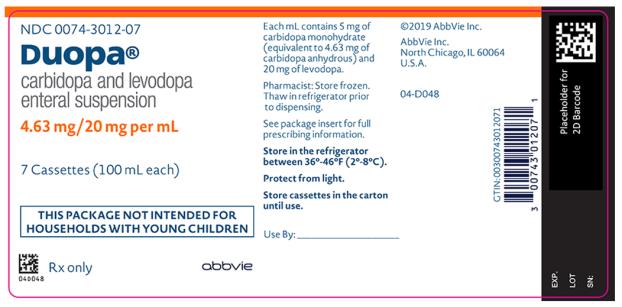
Duopa Carbidopa and Levodopa 20 mg/mL; 4.63 mg/mL Suspension — NDC 0074-3012-07 (Billing 00074-3012-07)
This is a package of Duopa Carbidopa and Levodopa 20 mg/mL; 4.63 mg/mL Suspension from AbbVie Inc., marketed since Jan 2015 and currently FDA-listed. It is this product's only package size.
NDC database record
One package, one record: these facts belong to NDC 0074-3012-07 alone.
- Record
- FDA NDC Directory package listing · Human prescription drug
- Code segments
- 0074 labeler · 3012 product · 07 package
- Package marketed since
- Jan 15, 2015
- Sample package
- No — commercial package
- Listing certified through
- Dec 31, 2027
- Barcode (UPC)
- 0300743012071
- Medicaid fills, this package
- 95 prescriptions in the last four reported quarters
- FDA record last changed
- Aug 27, 2026
Identity & classification
Regulatory identifiers FDA, NLM and CMS codes for this package
Drug-database identifiers Medi-Span GPI and First Databank GCN / HICL / AHFS classification
- GSN (GCN sequence number): 073430
- GCN: 37829
- GPI-14 (Medi-Span): 73209902101820
- HICL (First Databank): 013894
- AHFS class code: 28:36.16.00
- RxCUI (RxNorm): 1599846
Where does this data come from?
- FDA openFDA NDC Directory · synced Oct 8, 2026
- FDA label on DailyMed · label index refreshed Oct 6, 2026
- RxNorm (NLM RxNav) · catalog refreshed Oct 1, 2026
- Medi-Span GPI (licensed)
- First Databank (licensed) · refreshed Oct 8, 2026
RxNorm drug class
This medicine belongs to the Aromatic Amino Acid Decarboxylation Inhibitor class.
Where does this data come from?
- RxClass (NLM) · catalog refreshed Oct 1, 2026
Clinical
Levodopa and carbidopa is used to treat the symptoms of Parkinson's disease and Parkinson's-like symptoms that may develop after encephalitis (swelling of the brain) or injury to the nervous system caused by carbon monoxide poisoning or manganese poisoning. Levodopa is in a class of medications called central nervous system agents. It works by being converted to dopamine in the brain (the natural substance that is low in Parkinson's and causes the symptoms of tremor, stiffness, and slowness of movement). Carbidopa is in a class of medications called decarboxylase inhibitors. It works by preven...
Read the full MedlinePlus article ↗- It treats Parkinson’s disease and related parkinsonism, including parkinsonism after brain inflammation or carbon monoxide or manganese poisoning. Duopa is specifically for motor f...
- Follow your prescription exactly, since your doctor adjusts the dose slowly. Extended-release forms shouldn’t be chewed or crushed. Rytary and Crexont can be taken with or without...
- Nausea, dizziness, headache, vivid dreams, and uncontrolled movements called dyskinesia are common. Tell your doctor if these bother you, because a dose change may help.
- Be careful. Some people fall asleep suddenly with no warning, even after being on it a long time. If that happens, don’t drive or do risky activities, and tell your doctor.
Patient education
Supplement & herbal interactions
Where does this data come from?
- MedlinePlus (NLM) · refreshed Oct 1, 2026
- FDA label on DailyMed · label index refreshed Oct 6, 2026
Ask a licensed pharmacist directly — free, answered by our team.
Pricing
A drug doesn't have one price. Each row is a different public payment system, and none is what you'd pay at the counter — that depends on your insurance. The ⓘ on each row explains what it measures.
| Price system | Per mL | Per package |
|---|---|---|
| Retail pharmacies payNADAC · weekly | Not in the retail survey — common for institutional, discontinued, or low-volume packs. | |
| Medicaid paysCMS SDUD · 12 mo | $217.37 | $152,159.42 / 700 ml |
| Medicare drug plans payPart D · Q2 2026 | $2.34 | $1,634.78 / 700 ml |
| Medicare Part B allowsASP · J7340 | $244.497 / J7340 unit | — |
Where does this data come from?
- CMS NADAC weekly file
- CMS ASP pricing files · refreshed Sep 20, 2026
- CMS Medicaid State Drug Utilization Data · through Q1 2026
- CMS Part D plan pricing files · refreshed Sep 24, 2026
- VA National Acquisition Center price file
Billing & reimbursement
Where does this data come from?
- CMS ASP NDC-HCPCS crosswalk · refreshed Sep 22, 2026
- DMEPDAC NDC-HCPCS crosswalk
- openFDA NSDE billing units · refreshed Oct 7, 2026
Packaging — all sizes for this product
| Package NDC | Description | Marketing start | Marketing end | Status |
|---|---|---|---|---|
| 00074-3012-07 You're viewing this Main listing | 7 CARTRIDGE in 1 CARTON / 100 mL in 1 CARTRIDGE | 2015-01-15 | — | Active |
Therapeutic equivalents
| Product | Labeler | Pack | NADAC/unit | TE | Status | Price vs. this |
|---|---|---|---|---|---|---|
| Duopa 20 mg/mL; 4.63 mg/mLthis 00074-3012-07 | AbbVie | 7 cartridges | — | — | FDA listed | — |
Where does this data come from?
- FDA openFDA NDC Directory · synced Oct 8, 2026
- FDA Orange Book · refreshed Oct 3, 2026
- CMS NADAC weekly file
Availability & generic status
We did not find an FDA-approved generic match for this exact strength, form and route.
Where does this data come from?
- FDA Orange Book · refreshed Oct 3, 2026
Inactive Ingredients / Excipients
Inactive ingredients, also called excipients, are components of the drug product other than the active ingredient. They may include fillers, dyes, coatings, preservatives, flavors, or other formulation ingredients.
🧪 Avoiding an ingredient? See Levodopa and Carbidopa inactive ingredients by manufacturer: every current product's list side by side, so you can ask your pharmacy for the version that does not list it.
💡 Tap an ingredient (hover on desktop) to see what it is and why it’s used.
-
UNII K679OBS311
Carboxymethylcellulose sodium is a plant-derived thickening agent made from cellulose. In medicines, it acts as a binder to hold ingredients together, a disintegrant to help the tablet break apart, or a thickener in liquids.
-
UNII 059QF0KO0R
Water is a liquid solvent that dissolves and mixes ingredients together in liquid medicines, syrups, and injections. It helps distribute the active drug evenly throughout the product.
2 inactive ingredients listed in the exact product block matched to this NDC.
Where does this data come from?
ingredient classCode="IACT" elements from the exact product block matched by this NDC. Label-section narrative from DailyMed / the openFDA label index is shown separately when available.- FDA label on DailyMed · label index refreshed Oct 6, 2026
- FDA openFDA NDC Directory · synced Oct 8, 2026
Inactive ingredient FAQ
Are inactive ingredients the same for every manufacturer?
Why might an inactive ingredient be missing?
Can inactive ingredients matter?
Manufacturer & labeler
More NDCs from AbbVie Inc. labeler code 00074
- Humira Adalimumab Kit NDC 0074-2540-01
- Ibrutinib 420 mg Tablet NDC 0074-2585-99
- Mavyret Glecaprevir and Pibrentasvir 20 mg; 50 mg Pellet NDC 0074-2600-28
- Mavyret Glecaprevir and Pibrentasvir 40 mg; 100 mg Tablet, Film Coated NDC 0074-2625-01
- Ibrutinib 140 mg Capsule NDC 0074-2628-99
- Kaletra Lopinavir and Ritonavir 100 mg; 25 mg Tablet, Film Coated NDC 0074-3008-60
- Gengraf Cyclosporine 25 mg Capsule NDC 0074-3108-32
- Gengraf Cyclosporine 100 mg Capsule NDC 0074-3109-32
- Lupron Depot leuprolide acetate Kit NDC 0074-3346-03
- Norvir Ritonavir 100 mg Powder NDC 0074-3399-30
- Lupron Depot leuprolide acetate Kit NDC 0074-3473-03
- Lupron Depot-PED leuprolide acetate Kit NDC 0074-3575-01
Where does this data come from?
- FDA openFDA NDC Directory · synced Oct 8, 2026
- Drugs@FDA
Full prescribing information FDA SPL
🎯 Indications and Usage ▾
1 INDICATIONS AND USAGE DUOPA ® is indicated for the treatment of motor fluctuations in patients with advanced Parkinson’s disease. DUOPA is a combination of carbidopa (an aromatic amino acid decarboxylation inhibitor) and levodopa (an aromatic amino acid) indicated for the treatment of motor fluctuations in patients with advanced Parkinson’s disease ( 1 )
⏱️ Dosage and Administration ▾
2 DOSAGE AND ADMINISTRATION Evaluate vitamin B6 levels prior to starting treatment with carbidopa/levodopa therapies. ( 2.1 ) The maximum recommended daily dose of DUOPA is 2000 mg of levodopa (i.e., one cassette per day) administered over 16 hours ( 2.2) Prior to initiating DUOPA, convert patients from all forms of levodopa to oral immediate-release carbidopa-levodopa tablets (1:4 ratio) ( 2.3 ) Titrate total daily dose based on clinical response for the patient ( 2.3 ) Administer DUOPA into the jejunum through a percutaneous endoscopic gastrostomy with jejunal tube (PEG-J) with the CADD®-Legacy 1400 portable infusion pump ( 2.4)
2.1Management of Vitamin B6 Levels Evaluate vitamin B6 levels prior to initiating carbidopa/levodopa therapies including DUOPA, periodically during treatment, and as clinically indicated [see Warnings and Precautions ( 5.9 )] . If vitamin B6 levels are low, supplement to sufficient levels per standard of care. Patients may initiate and continue treatment with DUOPA while supplementing vitamin B6.
2. 2 DUOPA Daily Dose DUOPA is administered over a 16-hour infusion period. The daily dose is determined by individualized patient titration and composed of: A Morning Dose A Continuous Dose Extra Doses The maximum recommended daily dose of DUOPA is 2000 mg of the levodopa component (i.e., one cassette per day) administered over 16 hours.
At the end of the daily 16-hour infusion, patients will disconnect the pump from the PEG-J and take their night-time dose of oral immediate-release carbidopa-levodopa tablets. Treatment with DUOPA is initiated in 3 steps [see Dosage and Administration ( 2.3 ) ] : Conversion of patients to oral immediate-release carbidopa-levodopa tablets in preparation for DUOPA treatment. Calculation and administration of the DUOPA starting dose (Morning Dose and Continuous Dose) for Day 1.
Titration of the dose as needed based on individual clinical response and tolerability. Extra Doses DUOPA has an extra dose function that can be used to manage acute “Off” symptoms that are not controlled by the Morning Dose and the Continuous Dose administered over 16 hours. The extra dose function should be set at 1 mL (20 mg of levodopa) when starting DUOPA.
If the amount of the extra dose needs to be adjusted, it is typically done in 0.2 mL increments. The extra dose frequency should be limited to one extra dose every 2 hours. Administration of frequent extra doses may cause or worsen dyskinesias.
Once no further adjustments are required to the DUOPA Morning Dose, Continuous Dose, or Extra Dose, this dosing regimen should be administered daily. Over time, additional changes may be necessary based on the patient’s clinical response and tolerability. 2.
3 Initiation and Titration Instructions Prepare for DUOPA Treatment Prior to initiating DUOPA, convert patients from all other forms of levodopa to oral immediate-release carbidopa-levodopa tablets (1:4 ratio). Patients should remain on a stable dose of their concomitant medications taken for the treatment of Parkinson's disease before initiation of DUOPA infusion. Healthcare providers should ensure patients take their oral Parkinson's disease medications the morning of the PEG-J procedure.
Determine the DUOPA Starting Dose for Day 1 The steps for determining the initial DUOPA daily dosing (Morning Dose and Continuous Dose) for Day 1 are outlined below. Step 1: Calculate and administer the DUOPA Morning Dose for Day 1 a. Determine the total amount of levodopa (in milligrams) in the first dose of oral immediate-release carbidopa-levodopa that was taken by the patient on the previous day. b.
Convert the oral levodopa dose from milligrams to milliliters by multiplying the oral dose by 0.8 and dividing by 20 mg/mL. This calculation will provide the Morning Dose of DUOPA in milliliters. c. Add 3 milliliters to the Morning Dose to fill (prime) the intestinal tube to obtain the Total Morning Dose. d.
The Total Morning Dose is usually administered over 10 to… [Excerpted — this section continues on DailyMed.]
💊 Dosage Forms and Strengths ▾
3 DOSAGE FORMS AND STRENGTHS Enteral suspension: 4.63 mg carbidopa and 20 mg levodopa per mL in a single-use cassette. Each cassette contains approximately 100 mL of suspension. Enteral Suspension: 4.63 mg carbidopa and 20 mg levodopa per mL ( 3 )
⛔ Contraindications ▾
4 CONTRAINDICATIONS DUOPA is contraindicated in patients who are currently taking a nonselective monoamine oxidase (MAO) inhibitor (e.g., phenelzine and tranylcypromine) or have recently (within 2 weeks) taken a nonselective MAO inhibitor. Hypertension can occur if these drugs are used concurrently [see Drug Interactions ( 7.1 and 7.2 )] . DUOPA is contraindicated in patients taking nonselective monoamine oxidase (MAO) inhibitors ( 4 )
⚠️ Warnings and Cautions ▾
5 WARNINGS AND PRECAUTIONS Gastrointestinal procedure-related complications may result in serious outcomes, such as need for surgery or death ( 5.1 ) May cause falling asleep during activities of daily living ( 5.2 ) Monitor patients for orthostatic hypotension, especially after starting DUOPA or increasing the dose ( 5.3 ) Hallucinations/Psychosis/Confusion: May respond to dose reduction in levodopa ( 5.4 ) Impulse Control Disorders: Consider dose reductions or stopping DUOPA ( 5.5 ) Monitor patients for depression and suicidality ( 5.6 ) Avoid sudden discontinuation or rapid dose reduction to reduce the risk of withdrawal-emergent hyperpyrexia and confusion ( 5.7 ) May cause or exacerbate dyskinesia: Consider dose reduction ( 5.8 )
5.1Gastrointestinal and Gastrointestinal Procedure-Related Risks Because DUOPA is administered using a PEG-J or naso-jejunal tube, gastrointestinal complications can occur. These complications include abscess, bezoar, ileus, implant site erosion/ulcer, intestinal hemorrhage, intestinal ischemia, intestinal obstruction, intestinal perforation, intussusception, pancreatitis, peritonitis, pneumonia (including aspiration pneumonia), pneumoperitoneum, post-operative wound infection, and sepsis. These complications may result in serious outcomes, such as the need for surgery or death.
Instruct patients to notify their healthcare provider immediately if they experience abdominal pain, prolonged constipation, nausea, vomiting, fever, or melanotic stool [see Patient Counseling Information ( 17 ) ] .
5.2Falling Asleep During Activities of Daily Living and Somnolence Patients treated with levodopa, a component of DUOPA, have reported falling asleep while engaged in activities of daily living, including the operation of motor vehicles, which sometimes resulted in accidents. Although many of these patients reported somnolence while on levodopa, some perceived that they had no warning signs (sleep attack), such as excessive drowsiness, and believed that they were alert immediately prior to the event. Some of these events have been reported more than one year after initiation of treatment.
Falling asleep while engaged in activities of daily living usually occurs in patients experiencing preexisting somnolence, although patients may not give such a history. For this reason, prescribers should reassess patients for drowsiness or sleepiness in DUOPA-treated patients, especially since some of the events occur well after the start of treatment. Prescribers should be aware that patients may not acknowledge drowsiness or sleepiness until directly questioned about drowsiness or sleepiness during specific activities.
Patients who have already experienced somnolence or an episode of sudden sleep onset should not participate in these activities while taking DUOPA. Before initiating treatment with DUOPA, advise patients about the potential to develop drowsiness and specifically ask about factors that may increase the risk for somnolence with DUOPA such as the use of concomitant sedating medications or the presence of sleep disorders. Consider discontinuing DUOPA in patients who report significant daytime sleepiness or episodes of falling asleep during activities that require active participation (e.g., conversations, eating).
If DUOPA is continued, they should be advised to avoid driving and other potentially dangerous activities that might result in harm if the patient becomes somnolent.
5.3Orthostatic Hypotension DUOPA-treated patients were more likely to experience a decline in orthostatic blood pressure than patients treated with oral immediate-release carbidopa-levodopa in the controlled clinical study. Orthostatic systolic hypotension (≥30 mm Hg decrease) occurred in 73% of DUOPA-treated patients compared to 68% of patients treated with oral immediate-release carbidopa-levodopa in the controlled clinical study. Orthostatic diastolic hypotension (≥20 mm Hg decrease) occurred in 70% of DUOPA-treated patients compared… [Excerpted — this section continues on DailyMed.]
🤒 Adverse Reactions ▾
6 ADVERSE REACTIONS The following serious adverse reactions are discussed below and elsewhere in labeling: Gastrointestinal and Gastrointestinal Procedure-Related Risks [see Warnings and Precautions ( 5.1 ) ] Falling Asleep During Activities of Daily Living and Somnolence [see Warnings and Precautions ( 5.2 ) ] Orthostatic Hypotension [see Warnings and Precautions ( 5.3 ) ] Hallucinations/Psychosis/Confusion [see Warnings and Precautions ( 5.4 ) ] Impulse Control/Compulsive Behaviors [see Warnings and Precautions ( 5.5 ) ] Depression and Suicidality [see Warnings and Precautions ( 5.6 ) ] Withdrawal-Emergent Hyperpyrexia and Confusion [see Warnings and Precautions ( 5.7 ) ] Dyskinesia [see Warnings and Precautions ( 5.8 ) ] Vitamin B6 Deficiency and Seizures [see Warnings and Precautions ( 5.9 )] Neuropathy [see Warnings and Precautions ( 5.10 ) ] Cardiovascular Ischemic Events [see Warnings and Precautions ( 5.11 ) ] Laboratory Test Abnormalities [see Warnings and Precautions ( 5.12)] Glaucoma [see Warnings and Precautions ( 5.13 ) ] Most common adverse reactions for DUOPA (DUOPA incidence at least 7% greater than oral carbidopa-levodopa incidence) were: complication of device insertion, nausea, depression, peripheral edema, hypertension, upper respiratory tract infection, oropharyngeal pain, atelectasis, and incision site erythema.
( 6.1 ) To report SUSPECTED ADVERSE REACTIONS, contact AbbVie Inc. at 1-800-633-9110 or FDA at 1-800-FDA-1088 or www.fda.gov/medwatch.
6.1Clinical Trials Experience Because clinical studies are run under widely varying conditions, the incidence of adverse reactions observed in the clinical trials of a drug cannot be directly compared to rates in the clinical trials of another drug and may not reflect the rates observed in practice. In clinical studies, 416 patients with advanced Parkinson’s disease received DUOPA. 338 patients were treated with DUOPA for more than 1 year, 233 patients were treated with DUOPA for more than 2 years, and 162 patients were treated with DUOPA for more than 3 years.
In a 12-week, active-controlled clinical trial (Study 1), a total of 71 patients with advanced Parkinson’s disease were enrolled and had a PEG-J procedure. Of these, 37 patients received DUOPA and 34 received oral immediate-release carbidopa-levodopa. The most common adverse reactions for DUOPA (incidence at least 7% greater than oral immediate-release carbidopa-levodopa) were: complication of device insertion, nausea, depression, peripheral edema, hypertension, upper respiratory tract infection, oropharyngeal pain, atelectasis, and incision site erythema.
Table 3 lists the incidence of adverse reactions occurring in the DUOPA-treated group (requiring at least 2 patients in this group) in Study 1 when the incidence was numerically greater than that for oral immediate-release carbidopa-levodopa. Table 3. Adverse Reactions in Study 1 for DUOPA in Patients with Advanced Parkinson’s disease Preferred Term DUOPA (n = 37) % Oral immediate-release carbidopa-levodopa a (n = 34) % Complication of device insertion 57 44 Nausea 30 21 Constipation 22 21 Incision site erythema 19 12 Dyskinesia 14 12 Depression 11 3 Post procedural discharge 11 9 Peripheral edema 8 0 Hypertension 8 0 Upper respiratory tract infection 8 0 Oropharyngeal pain 8 0 Atelectasis 8 0 Confusional state 8 3 Anxiety 8 3 Dizziness 8 6 Hiatal hernia 8 6 Postoperative ileus 5 0 Sleep disorder 5 0 Pyrexia 5 0 Excessive granulation tissue 5 0 Rash 5 0 Bacteriuria 5 0 White blood cells urine positive 5 0 Hallucination 5 3 Psychotic disorder 5 3 Diarrhea 5 3 Dyspepsia 5 3 a All patients in the clinical trial regardless of treatment arm received a PEG-J.
Procedure and Device- Related Adverse Reactions The most common adverse reactions associated with complications due to naso-jejunal (NJ) insertion were: oropharyngeal pain, abdominal distention, abdominal pain, abdominal discomfort, pain, throat irritation, gastrointestinal injury, esophageal hemorrhage, a… [Excerpted — this section continues on DailyMed.]
🔄 Drug Interactions ▾
7 DRUG INTERACTIONS Selective MAO-B inhibitors: May cause orthostatic hypotension ( 7.1 ) Antihypertensive drugs: May cause symptomatic postural hypotension. Dosage adjustment of the antihypertensive drug may be needed ( 7.2 ) Dopamine D2 receptor antagonists, isoniazid, iron salts, and high-protein diet may reduce the effectiveness of DUOPA ( 7.3 , 7.4 , 7.5 )
7.1Monoamine Oxidase (MAO) Inhibitors The use of nonselective MAO inhibitors with DUOPA is contraindicated [see Contraindications ( 4 ) ] . Discontinue use of any nonselective MAO inhibitors at least two weeks prior to initiating DUOPA. The use of selective MAO-B inhibitors (e.g., rasagiline and selegiline) with DUOPA may be associated with orthostatic hypotension. Monitor patients who are taking these drugs.
7.2Antihypertensive Drugs The concurrent use of DUOPA with antihypertensive medications can cause symptomatic postural hypotension. A dose reduction of the antihypertensive medication may be needed after starting or increasing the dose of DUOPA.
7.3Dopamine D2 Receptor Antagonists and Isoniazid Dopamine D2 receptor antagonists (e.g., phenothiazines, butyrophenones, risperidone, metoclopramide, papaverine) and isoniazid may reduce the effectiveness of levodopa. Monitor patients for worsening Parkinson’s symptoms.
7.4Iron Salts Iron salts or multi-vitamins containing iron salts can form chelates with levodopa, carbidopa, and can cause a reduction in the bioavailability of DUOPA. If iron salts or multi-vitamins containing iron salts are co-administered with DUOPA, monitor patients for worsening Parkinson’s symptoms.
7.5High-Protein Diet Because levodopa competes with certain amino acids for transport across the gut wall, the absorption of levodopa may be decreased in patients on a high-protein diet. Advise patients that a high-protein diet may reduce the effectiveness of DUOPA.
👥 Use in Specific Populations ▾
8 USE IN SPECIFIC POPULATIONS Pregnancy: Based on animal data, may cause fetal harm ( 8.1 )
8.1Pregnancy Risk Summary There are no adequate data on the developmental risk associated with the use of DUOPA in pregnant women. In animal studies, carbidopa-levodopa has been shown to be developmentally toxic (including teratogenic effects) at clinically relevant doses (see Data) . The estimated background risk of major birth defects and miscarriage in the indicated population is unknown.
In the U.S. general population, the estimated background risk of major birth defects and miscarriage in clinically recognized pregnancies is 2% to 4% and 15% to 20%, respectively. Data Animal Data When administered to pregnant rabbits throughout organogenesis, carbidopa-levodopa caused both visceral and skeletal malformations in fetuses at all doses and ratios of carbidopa-levodopa tested. No teratogenic effects were observed when carbidopa-levodopa was administered to pregnant mice throughout organogenesis.
There was a decrease in the number of live pups delivered by rats receiving carbidopa-levodopa during organogenesis.
8.2Lactation Risk Summary Levodopa has been detected in human milk after administration of carbidopa-levodopa. There are no data on the presence of carbidopa in human milk, the effects of levodopa or carbidopa on the breastfed infant, or the effects on milk production. However, inhibition of lactation may occur because levodopa decreases secretion of prolactin in humans.
Carbidopa is excreted in rat milk. The developmental and health benefits of breastfeeding should be considered along with the mother’s clinical need for DUOPA and any potential adverse effects on the breastfed infant from DUOPA or from the underlying maternal condition.
8.4Pediatric Use Safety and effectiveness in pediatric patients have not been established.
8.5Geriatric Use In the controlled clinical trial, 49% of patients were 65 years and older, and 8% were 75 years and older. In patients 65 years and older, there was an increased risk for elevation of BUN and CPK (above the upper limit of the normal reference range for these laboratory analytes) during treatment with DUOPA compared to the risk for patients less than 65 years.
🤰 Pregnancy ▾
8.1Pregnancy Risk Summary There are no adequate data on the developmental risk associated with the use of DUOPA in pregnant women. In animal studies, carbidopa-levodopa has been shown to be developmentally toxic (including teratogenic effects) at clinically relevant doses (see Data) . The estimated background risk of major birth defects and miscarriage in the indicated population is unknown.
In the U.S. general population, the estimated background risk of major birth defects and miscarriage in clinically recognized pregnancies is 2% to 4% and 15% to 20%, respectively. Data Animal Data When administered to pregnant rabbits throughout organogenesis, carbidopa-levodopa caused both visceral and skeletal malformations in fetuses at all doses and ratios of carbidopa-levodopa tested. No teratogenic effects were observed when carbidopa-levodopa was administered to pregnant mice throughout organogenesis.
There was a decrease in the number of live pups delivered by rats receiving carbidopa-levodopa during organogenesis.
🧒 Pediatric Use ▾
8.4Pediatric Use Safety and effectiveness in pediatric patients have not been established.
🧓 Geriatric Use ▾
8.5Geriatric Use In the controlled clinical trial, 49% of patients were 65 years and older, and 8% were 75 years and older. In patients 65 years and older, there was an increased risk for elevation of BUN and CPK (above the upper limit of the normal reference range for these laboratory analytes) during treatment with DUOPA compared to the risk for patients less than 65 years.
🆘 Overdosage ▾
10 OVERDOSAGE Management of acute overdosage with DUOPA is the same as management of acute overdosage with levodopa. Pyridoxine is not effective in reversing the actions of oral immediate-release carbidopa-levodopa. In the event of an overdosage with DUOPA, the infusion should be stopped and the pump disconnected immediately.
Administer intravenous fluids and maintain an adequate airway. Patients should receive electrocardiographic monitoring for arrhythmias and hypotension.
🧬 Clinical Pharmacology ▾
12 CLINICAL PHARMACOLOGY Figure 1. Plasma Concentrations (mean ± standard deviation) versus Time Profile of Levodopa with DUOPA (levodopa, 1580 ± 403 mg; carbidopa, 366 ± 92 mg) 16-Hour Infusion
12.1Mechanism of Action Carbidopa When levodopa is administered orally, it is rapidly decarboxylated to dopamine in extracerebral tissues so that only a small portion of a given dose is transported unchanged to the central nervous system. Carbidopa inhibits the decarboxylation of peripheral levodopa, making more levodopa available for delivery to the brain. Levodopa Levodopa is the metabolic precursor of dopamine, does cross the blood-brain barrier, and presumably is converted to dopamine in the brain.
This is thought to be the mechanism whereby levodopa treats the symptoms of Parkinson's disease.
12.2Pharmacodynamics Because its decarboxylase inhibiting activity is limited to extracerebral tissues, administration of carbidopa with levodopa makes more levodopa available to the brain. The addition of carbidopa to levodopa reduces the peripheral effects (e.g., nausea and vomiting) due to decarboxylation of levodopa; however, carbidopa does not decrease the adverse reactions due to the central effects of levodopa.
12.3Pharmacokinetics The pharmacokinetics of carbidopa and levodopa with 16-hour intrajejunal infusion of DUOPA was evaluated in 18 patients with advanced Parkinson's disease who had been on DUOPA therapy for 30 days or longer. Patients remained on their individualized DUOPA doses. The plasma concentrations versus time profile for levodopa with DUOPA 16-hour intrajejunal infusion is presented in Figure 1 .
Figure 1. Plasma Concentrations (mean ± standard deviation) versus Time Profile of Levodopa with DUOPA (levodopa, 1580 ± 403 mg; carbidopa, 366 ± 92 mg) 16-Hour Infusion Absorption and Bioavailability Following initiation of the 16-hour intrajejunal infusion of DUOPA, peak plasma levels of levodopa is reached at 2.5 hours. The absorption of levodopa may be decreased in patients on a high-protein diet because levodopa competes with certain amino acids for transport across the gut wall.
The gastric emptying rate does not influence the absorption of DUOPA since it is administered by continuous intestinal infusion. In a cross-study population pharmacokinetic analysis, DUOPA had comparable bioavailability to the oral immediate-release carbidopa-levodopa (25/100 mg) tablets (over-encapsulated tablets). The estimated bioavailability for levodopa from DUOPA relative to oral immediate-release carbidopa-levodopa tablets was 97% (95% confidence interval; 95% to 98%).
In the controlled clinical trial, the intra-subject variability in carbidopa and levodopa plasma concentrations were lower for patients treated with DUOPA (N=33, 25% and 21%, respectively) than in patients treated with oral immediate-release carbidopa-levodopa (25/100 mg) tablets (N=28, 39% and 67%, respectively). Distribution Carbidopa is approximately 36% bound to plasma proteins. Levodopa is approximately 10-30% bound to plasma proteins.
Metabolism and Elimination Carbidopa Carbidopa is metabolized to two main metabolites (α-methyl-3-methoxy-4-hydroxyphenylpropionic acid and α-methyl-3,4-dihydroxyphenylpropionic acid). These 2 metabolites are primarily eliminated in the urine unchanged or as glucuronide conjugates. Unchanged carbidopa accounts for 30% of the total urinary excretion.
The elimination half-life of carbidopa is approximately 2 hours. Levodopa Levodopa is mainly eliminated via metabolism by the aromatic amino acid decarboxylase (AAAD) and the catechol-O-methyl-transferase (COMT) enzymes. Other routes of metabolism are transamination and oxidation.
The decarboxylation of levodopa to dopamine by AAAD is the major enzymatic pathway when no enzyme inhibitor is co-administered. O-methylation of levodopa by COMT forms 3-O-methyldopa. When administered with carbidopa, the elimination half-life of levodopa is approximately 1.5 hours (see Figure 1 ).
Drug Interactio… [Excerpted — this section continues on DailyMed.]
🧬 Mechanism of Action ▾
12.1Mechanism of Action Carbidopa When levodopa is administered orally, it is rapidly decarboxylated to dopamine in extracerebral tissues so that only a small portion of a given dose is transported unchanged to the central nervous system. Carbidopa inhibits the decarboxylation of peripheral levodopa, making more levodopa available for delivery to the brain. Levodopa Levodopa is the metabolic precursor of dopamine, does cross the blood-brain barrier, and presumably is converted to dopamine in the brain.
This is thought to be the mechanism whereby levodopa treats the symptoms of Parkinson's disease.
📦 How Supplied / Storage and Handling ▾
16 HOW SUPPLIED/STORAGE AND HANDLING
16.1How Supplied Single-use cassettes containing 4.63 mg carbidopa (as 5 mg of the monohydrate) and 20 mg levodopa per mL of enteral suspension. Each cassette contains approximately 100 mL of suspension. Carton of 7 DUOPA cassettes: NDC 0074-3012-07
16.2Storage and Handling Store in freezer at -20 o C (-4 o F). Thaw in refrigerator at 2 o C to 8 o C (36 o F to 46 o F) prior to dispensing. Cassettes should be protected from light and kept in the carton prior to use.
Thawing instructions for pharmacies Assign a 15 week “Use By” date based on the time the cartons are put into the refrigerator to thaw. Fully thaw DUOPA in the refrigerator prior to dispensing. In order to ensure controlled thawing of DUOPA, take the cartons containing the seven individual cassettes out of the transport box and separate the cartons from each other.
Thawing may take up to 96 hours when the cartons are taken out of the transport box. Once the product has thawed, the individual cartons may be packed in a closer configuration within the refrigerator.
16.1How Supplied Single-use cassettes containing 4.63 mg carbidopa (as 5 mg of the monohydrate) and 20 mg levodopa per mL of enteral suspension. Each cassette contains approximately 100 mL of suspension. Carton of 7 DUOPA cassettes: NDC 0074-3012-07
📦 Storage and Handling ▾
16.2Storage and Handling Store in freezer at -20 o C (-4 o F). Thaw in refrigerator at 2 o C to 8 o C (36 o F to 46 o F) prior to dispensing. Cassettes should be protected from light and kept in the carton prior to use.
Thawing instructions for pharmacies Assign a 15 week “Use By” date based on the time the cartons are put into the refrigerator to thaw. Fully thaw DUOPA in the refrigerator prior to dispensing. In order to ensure controlled thawing of DUOPA, take the cartons containing the seven individual cassettes out of the transport box and separate the cartons from each other.
Thawing may take up to 96 hours when the cartons are taken out of the transport box. Once the product has thawed, the individual cartons may be packed in a closer configuration within the refrigerator.
📋 Description ▾
11 DESCRIPTION DUOPA is a combination of carbidopa, an inhibitor of aromatic amino acid decarboxylation, and levodopa, an aromatic amino acid. Carbidopa is a white, crystalline compound, slightly soluble in water, with a molecular weight of 244.2. It is designated chemically as (2S)-3-(3,4-dihydroxyphenyl)-2-hydrazino-2-methylpropanoic acid monohydrate.
Its empirical formula is C 10 H 14 N 2 O 4 •H 2 O, and its structural formula is: The content of carbidopa in DUOPA is expressed in terms of anhydrous carbidopa which has a molecular weight of 226.3. The 4.63 mg/mL of anhydrous carbidopa is equivalent to 5.0 mg/mL of carbidopa. Levodopa is a white, crystalline compound, slightly soluble in water, with a molecular weight of 197.2.
It is designated chemically as (2S)-2-Amino-3-(3,4-dihydroxyphenyl) propanoic acid. Its empirical formula is C 9 H 11 NO 4 , and its structural formula is: The inactive ingredients in DUOPA are carmellose sodium and purified water. carbidopa chem structure levodopa chem structure
💬 Information for Patients ▾
17 PATIENT COUNSELING INFORMATION Advise the patient to read the FDA-approved patient labeling ( Medication Guide and Instructions for Use ). Administration Information Ask patients if they have had any previous surgery in the upper part of their abdomen that may lead to difficulty in performing the gastrostomy or jejunostomy [see Dosage and Administration ( 2.4 ) ] . Advise patients that foods that are high in protein may reduce the effectiveness of DUOPA [see Drug Interactions ( 7.5 ) and Clinical Pharmacology ( 12.3 ) ] .
Interruption of DUOPA Infusion If the patient anticipates disconnecting the pump for a short period of time (less than 2 hours such as to swim, shower, or short medical procedure), no supplemental oral medication is needed, but the patient may be advised to take an extra-dose of DUOPA before disconnecting. Instruct the patient to stop the continuous rate, turn off the pump, clamp the cassette tube, disconnect the tubing, and replace the red cap on the cassette tube. The DUOPA cassette can remain attached to the pump until the tubing is reconnected.
Refer the patient to the Patient Instructions for Use for additional information (i.e., changing the DUOPA Cassette: disconnecting Steps 1-5 and reconnecting Steps 10-16). Advise the patient to contact their healthcare provider and to take oral carbidopa-levodopa until the patient is able to resume DUOPA infusion, if the patient will have prolonged interruption of therapy lasting more than 2 hours [see Dosage and Administration ( 2.5 )] . Gastrointestinal and Gastrointestinal Procedure-Related Risks Inform patients of the gastrointestinal procedure-related risks including abscess, bezoar, ileus, implant site erosion/ulcer, intestinal hemorrhage, intestinal ischemia, intestinal obstruction, intestinal perforation, intussusception, pancreatitis, peritonitis, pneumonia (including aspiration pneumonia), pneumoperitoneum, post-operative wound infection and sepsis.
Advise patients of the symptoms of the above listed complications and instruct them to contact their healthcare provider if they experience any of these symptoms [see Warnings and Precautions ( 5.1 ) ] . Falling Asleep during Activities of Daily Living and Somnolence Alert patients to the potential sedating effects caused by DUOPA, including somnolence and the possibility of falling asleep while engaged in activities of daily living. Because somnolence is a common adverse reaction with potentially serious consequences, patients should not drive a car, operate machinery, or engage in other potentially dangerous activities until they have gained sufficient experience with DUOPA to gauge whether or not it affects their mental and/or motor performance adversely.
Advise patients that if increased somnolence or episodes of falling asleep during activities of daily living (e.g., conversations, eating, driving a motor vehicle, etc.) are experienced at any time during treatment, they should not drive or participate in potentially dangerous activities until they have contacted their physician. Advise patients of possible additive effects when patients are taking other sedating medications, alcohol, or other central nervous system depressants (e.g., benzodiazepines, antipsychotics, antidepressants, etc.) in combination with DUOPA or when taking a concomitant medication that increases plasma levels of levodopa [see Warnings and Precautions ( 5.2 ) ] .
Orthostatic Hypotension Advise patients that they may experience syncope and may develop hypotension with or without symptoms such as dizziness, nausea, syncope, and sometimes sweating while taking DUOPA. Accordingly, caution patients against standing rapidly after sitting or lying down, especially if they have been doing so for prolonged periods and especially at the initiation of treatment with DUOPA [see Warnings and Precautions ( 5.3 ) ] . Hallucinations/Psychosis/Confusion Inform patients that they may experience hallucinations (unreal visions, sounds, or sensations)… [Excerpted — this section continues on DailyMed.]
💬 Medication Guide ▾
MEDICATION GUIDE DUOPA (Do-oh-pa) (carbidopa and levodopa) enteral suspension Read this Medication Guide before you start using DUOPA and each time you get a refill. There may be new information. This information does not take the place of talking to your healthcare provider about your medical condition or treatment.
What is the most important information I should know about DUOPA? DUOPA can cause serious side effects, including: Stomach and intestine (gastrointestinal) problems and problems from the procedure you will need to have to receive DUOPA (gastrointestinal procedure-related problems). Some of these problems may require surgery and may lead to death. ○ a blockage of your stomach or intestines (bezoar) ○ stopping movement through intestines (ileus) ○ drainage, redness, swelling, pain, feeling of warmth around the small hole in your stomach wall (stoma) ○ bleeding from stomach ulcers or your intestines ○ inflammation of your pancreas (pancreatitis) ○ infection in your lungs (pneumonia) ○ air or gas in your abdominal cavity ○ skin infection around the intestinal tube, pocket of infection (abscess), infection in your blood (sepsis) or abdominal cavity may occur, after surgery ○ stomach pain, nausea or vomiting Tell your healthcare provider right away if you have any of the following symptoms of stomach and intestine problems and gastrointestinal procedure-related problems: ○ stomach (abdominal) pain ○ constipation that does not go away ○ nausea or vomiting ○ fever ○ blood in your stool or a dark tarry stool (melanotic stool) You will need to have a procedure to make a small hole (called a “stoma”) in your stomach wall to place a gastro-jejunostomy tube (called a PEG-J tube) in an area of your small intestine called the jejunum.
DUOPA is delivered directly to your small intestine through this tube. Your healthcare provider will talk to you about the stoma procedure. Before the stoma procedure, tell your healthcare provider if you have ever had a surgery or problems with your stomach.
Talk to your healthcare provider about what you need to do to care for your stoma. After the procedure, you and your healthcare provider will need to regularly check the stoma for any signs of infection. If your PEG-J tube becomes kinked, knotted, or blocked this may cause you to have worsening of your Parkinson’s symptoms or recurring movement problems (motor fluctuations).
Call your healthcare provider if your Parkinson’s symptoms get worse or you have slow movement while you are treated with DUOPA. What is DUOPA? DUOPA is a prescription medicine used for treatment of advanced Parkinson's disease.
DUOPA contains 2 medicines, carbidopa and levodopa. DUOPA should not be given to children (younger than 18 years). Who should not use DUOPA?
Do not use DUOPA if you: take a medicine called a nonselective Monoamine Oxidase (MAO) Inhibitor (such as phenelzine or tranylcypromine) or have taken a nonselective MAO Inhibitor within the last 14 days. Ask your healthcare provider or pharmacist if you are not sure if you take an MAO Inhibitor. What should I tell my healthcare provider before using DUOPA?
Before you use DUOPA, tell your healthcare provider if you: have or have had stomach ulcers or stomach surgery have low blood pressure (hypotension) or if you feel dizzy or faint, especially when getting up from sitting or lying down have had problems with fainting (syncope) feel sleepy or have fallen asleep suddenly during the day have or have had depression (feelings of hopelessness or sadness) or any mental problems drink alcohol. Alcohol can increase the chance that DUOPA will make you feel sleepy or fall asleep when you should be awake have trouble controlling your muscles (dyskinesia) have low vitamin B6 levels have nerve problems (peripheral neuropathy) have or have had heart problems, an abnormal heart rate or have had a heart attack in the past have or have had high blood pressure (hypertension) have eye problems that cause increased pressure in yo… [Excerpted — this section continues on DailyMed.]
🧬 Pharmacokinetics ▾
12.3Pharmacokinetics The pharmacokinetics of carbidopa and levodopa with 16-hour intrajejunal infusion of DUOPA was evaluated in 18 patients with advanced Parkinson's disease who had been on DUOPA therapy for 30 days or longer. Patients remained on their individualized DUOPA doses. The plasma concentrations versus time profile for levodopa with DUOPA 16-hour intrajejunal infusion is presented in Figure 1 .
Figure 1. Plasma Concentrations (mean ± standard deviation) versus Time Profile of Levodopa with DUOPA (levodopa, 1580 ± 403 mg; carbidopa, 366 ± 92 mg) 16-Hour Infusion Absorption and Bioavailability Following initiation of the 16-hour intrajejunal infusion of DUOPA, peak plasma levels of levodopa is reached at 2.5 hours. The absorption of levodopa may be decreased in patients on a high-protein diet because levodopa competes with certain amino acids for transport across the gut wall.
The gastric emptying rate does not influence the absorption of DUOPA since it is administered by continuous intestinal infusion. In a cross-study population pharmacokinetic analysis, DUOPA had comparable bioavailability to the oral immediate-release carbidopa-levodopa (25/100 mg) tablets (over-encapsulated tablets). The estimated bioavailability for levodopa from DUOPA relative to oral immediate-release carbidopa-levodopa tablets was 97% (95% confidence interval; 95% to 98%).
In the controlled clinical trial, the intra-subject variability in carbidopa and levodopa plasma concentrations were lower for patients treated with DUOPA (N=33, 25% and 21%, respectively) than in patients treated with oral immediate-release carbidopa-levodopa (25/100 mg) tablets (N=28, 39% and 67%, respectively). Distribution Carbidopa is approximately 36% bound to plasma proteins. Levodopa is approximately 10-30% bound to plasma proteins.
Metabolism and Elimination Carbidopa Carbidopa is metabolized to two main metabolites (α-methyl-3-methoxy-4-hydroxyphenylpropionic acid and α-methyl-3,4-dihydroxyphenylpropionic acid). These 2 metabolites are primarily eliminated in the urine unchanged or as glucuronide conjugates. Unchanged carbidopa accounts for 30% of the total urinary excretion.
The elimination half-life of carbidopa is approximately 2 hours. Levodopa Levodopa is mainly eliminated via metabolism by the aromatic amino acid decarboxylase (AAAD) and the catechol-O-methyl-transferase (COMT) enzymes. Other routes of metabolism are transamination and oxidation.
The decarboxylation of levodopa to dopamine by AAAD is the major enzymatic pathway when no enzyme inhibitor is co-administered. O-methylation of levodopa by COMT forms 3-O-methyldopa. When administered with carbidopa, the elimination half-life of levodopa is approximately 1.5 hours (see Figure 1 ).
Drug Interaction Studies COMT Inhibitors Systemic exposure of levodopa is expected to increase in the presence of entacapone.
🧬 Pharmacodynamics ▾
12.2Pharmacodynamics Because its decarboxylase inhibiting activity is limited to extracerebral tissues, administration of carbidopa with levodopa makes more levodopa available to the brain. The addition of carbidopa to levodopa reduces the peripheral effects (e.g., nausea and vomiting) due to decarboxylation of levodopa; however, carbidopa does not decrease the adverse reactions due to the central effects of levodopa.
🔬 Clinical Studies ▾
14 CLINICAL STUDIES The efficacy of DUOPA was established in a randomized, double-blind, double-dummy, active-controlled, parallel group, 12-week study (Study 1) in patients with advanced Parkinson's disease who were levodopa-responsive and had persistent motor fluctuations while on treatment with oral immediate-release carbidopa-levodopa and other Parkinson's disease medications. Patients were eligible for participation in the studies if they were experiencing 3 hours or more of “Off” time on their current Parkinson's disease drug treatment and they demonstrated a clear responsiveness to treatment with levodopa.
Seventy-one (71) patients enrolled in the study and 66 patients completed the treatment (3 patients discontinued treatment because of adverse reactions, 1 patient for lack of effect, and 1 patient for non-compliance). Patients enrolled in this study had a mean age of 64 years and disease duration of 11 years. Most patients (89%) were taking at least one concomitant medication for Parkinson’s disease (e.g., dopaminergic agonist, COMT-inhibitor, MAO-B inhibitor) in addition to oral immediate-release carbidopa-levodopa.
Thirty nine percent of patients were taking two or more of such concomitant medications. Patients were randomized to either DUOPA and placebo capsules or placebo suspension and oral immediate-release carbidopa-levodopa 25/100 mg capsules. Patients in both treatment arms had a PEG-J device placement.
DUOPA or placebo-suspension was infused over 16 hours daily through a PEG-J tube via the CADD ® -Legacy 1400 model ambulatory infusion pump. The mean daily levodopa dose was 1117 mg/day in the DUOPA group and 1351 mg/day in the oral immediate-release carbidopa-levodopa group. The clinical outcome measure in Study 1 was the mean change from baseline to Week 12 in the total daily mean “Off” time, based on a Parkinson's disease diary.
The "Off" time was normalized to a 16-hour awake period, based on a typical person's waking day and the daily infusion duration of 16 hours. The mean score decrease (i.e., improvement) in “Off” time from baseline to Week 12 for DUOPA was significantly greater (p=0.0015) than for oral immediate-release carbidopa-levodopa. Additionally, the mean score increase (i.e., improvement) in “On” time without troublesome dyskinesia from baseline to Week 12 was significantly greater (p=0.0059) for DUOPA than for oral immediate-release carbidopa-levodopa.
The treatment difference (DUOPA – oral immediate release carbidopa-levodopa) for decrease in “Off” time was approximately 1.9 hours and the treatment difference for the increase in “On” time without troublesome dyskinesia was approximately 1.9 hours. Results of Study 1 are shown in Table 4 . Table 4.
Change from Baseline to Week 12 in "Off" Time and in "On" Time Without Troublesome Dyskinesia in Patients with Advanced Parkinson’s Disease Treatment Group Baseline (hours) LS Mean Change from Baseline at Week 12 (hours) "Off" time Oral immediate-release carbidopa-levodopa 6.9 -2.1 DUOPA 6.3 -4.0* "On" time without troublesome dyskinesia Oral immediate-release carbidopa-levodopa 8.0
2.2DUOPA 8.7 4.1* LS Mean Change from Baseline based on Analysis of Covariance (ANCOVA). *=Statistically Significant. Figure 2 shows results over time according to treatment for the efficacy variable (change from baseline in “Off” time) that served as the clinical outcome measure at the end of the trial at 12 weeks. Figure 2. Change in “Off” Time Over 12 Weeks. Figure 2. Change in “Off” Time Over 12 Weeks.
🧪 Nonclinical Toxicology ▾
13 NONCLINICAL TOXICOLOGY
13.1Carcinogenesis, Mutagenesis, Impairment of Fertility Carcinogenesis In rat, oral administration of carbidopa-levodopa for two years resulted in no evidence of carcinogenicity. DUOPA contains hydrazine, a degradation product of carbidopa. In published studies, hydrazine has been demonstrated to be carcinogenic in multiple animal species.
Increases in liver (adenoma, carcinoma) and lung (adenoma, adenocarcinoma) tumors have been reported with oral administration of hydrazine in mouse, rat, and hamster. Mutagenesis Carbidopa was positive in the in vitro Ames test, in the presence and absence of metabolic activation, and the in vitro mouse lymphoma tk assay in the absence of metabolic activation but was negative in the in vivo mouse micronucleus assay. In published studies, hydrazine was reported to be positive in in vitro genotoxicity (Ames, chromosomal aberration in mammalian cells, and mouse lymphoma tk ) assays and in the in vivo mouse micronucleus assay.
Impairment of Fertility In reproduction studies, no effects on fertility were observed in rats receiving carbidopa -levodopa.
📄 Carcinogenesis, Mutagenesis, Impairment of Fertility ▾
13.1Carcinogenesis, Mutagenesis, Impairment of Fertility Carcinogenesis In rat, oral administration of carbidopa-levodopa for two years resulted in no evidence of carcinogenicity. DUOPA contains hydrazine, a degradation product of carbidopa. In published studies, hydrazine has been demonstrated to be carcinogenic in multiple animal species.
Increases in liver (adenoma, carcinoma) and lung (adenoma, adenocarcinoma) tumors have been reported with oral administration of hydrazine in mouse, rat, and hamster. Mutagenesis Carbidopa was positive in the in vitro Ames test, in the presence and absence of metabolic activation, and the in vitro mouse lymphoma tk assay in the absence of metabolic activation but was negative in the in vivo mouse micronucleus assay. In published studies, hydrazine was reported to be positive in in vitro genotoxicity (Ames, chromosomal aberration in mammalian cells, and mouse lymphoma tk ) assays and in the in vivo mouse micronucleus assay.
Impairment of Fertility In reproduction studies, no effects on fertility were observed in rats receiving carbidopa -levodopa.
📖 Instructions for Use ▾
INSTRUCTIONS FOR USE DUOPA (carbidopa and levodopa) enteral suspension These instructions are for use along with any other instructions your healthcare provider gives you. Please read the Medication Guide before you start using DUOPA and each time you get a refill. For questions or problems, call DUOPA support toll free at 1-844-386-4968 .
The CADD-Legacy® 1400 pump is used for delivery of DUOPA through a tube into your stomach attached to the longer straight (green) connector. Enteral nutrition should only be given by the shorter angled connector (white, blue, or violet) (see Figure A and Table. Connector Colors) .
Table. Connector Colors. Y-Connector Size Design Gastric (“g”) Port Color Intestinal (“i”) Port Color 15 FR Original White New Blue Green 20 FR Original White New Violet Note: The original design of the Y-Connector is represented in the Figures throughout this Instructions for Use.
This Instructions for Use provides information for the CADD-Legacy® model 1400 pump only. There are other CADD-Legacy® pump models available. Read the label on the back of the pump to make sure it is a model 1400 pump.
Your healthcare provider prescribed DUOPA for you. Your healthcare provider programs your prescription into the CADD-Legacy® 1400 pump. The CADD-Legacy® 1400 pump is approved for use with DUOPA.
DUOPA is provided as medication inside cassettes that connect to the CADD-Legacy® 1400 pump. The pump delivers DUOPA in 3 ways: Continuous Rate: Steady delivery of DUOPA delivered throughout the day while pump is on Morning Dose: A large dose of DUOPA given each morning Extra Dose: A small dose of DUOPA given as needed during the day You will need the following items to complete these steps: Pump DUOPA cassette Coin, like a quarter Carrying bag Syringe Syringe connector Room temperature water CADD-Legacy®-1400 Pump Display The display shows programming information and messages.
The main screen, which the pump displays most of the time, shows the following: DUOPA Cassette The single-use DUOPA cassette is for use with the CADD-Legacy® 1400 pump. Battery Compartment Two AA batteries fit into the battery compartment. Cassette Latch The cassette latch secures the DUOPA cassette to the pump.
WARNINGS and CAUTIONS Failure to follow the Warnings and Cautions below could cause return of your symptoms, damage to the pump, serious injury, or may lead to death in rare cases. WARNINGS Only use the pump in a manner described in this Instructions for Use, after you have received training by your healthcare provider. To avoid explosion hazard, do not use the pump near flammable explosive gases.
Only use extension sets that are approved for use with DUOPA (See the Full Prescribing Information for DUOPA), pay attention to all warnings and cautions associated with their use. Always have new batteries available for replacement. If power is lost, DUOPA will not be delivered.
If the pump is dropped or hit, the battery door or tabs may break. Do not use the pump if the battery door or tabs are damaged because the batteries will not be correctly secured. This may cause loss of power and DUOPA will not be delivered.
If the pump is dropped or hit, look at the pump for damage. Do not use a pump that is damaged or is not functioning correctly. If a gap is present between the battery door and the pump housing, this means the door is not correctly latched.
If the battery door becomes detached or loose, the batteries will not be correctly secured. This could cause loss of power and DUOPA will not be delivered. Use only DUOPA cassettes for pump accuracy and to make sure the pump works correctly.
Attach the DUOPA cassette correctly. A detached or incorrectly attached DUOPA cassette could cause a problem with getting your DUOPA. CAUTIONS Use only Smiths Medical accessories and replacement parts for the pump as using other brands may adversely affect the operation of the pump.
Do not operate the pump at temperatures below 36°F (2°C) or above 104°F (40°C). Do not sto… [Excerpted — this section continues on DailyMed.]
📄 Recent Major Changes ▾
Dosage and Administration ( 2.1 ) 3/2026 Warnings and Precautions ( 5.9 ) 3/2026
📄 Package Label / Principal Display Panel ▾
NDC 0074-3012-07 Duopa ® carbidopa and levodopa enteral suspension 4.63 mg / 20 mg per mL 7 Cassettes (100 mL each) THIS PACKAGE NOT INTENDED FOR HOUSEHOLDS WITH YOUNG CHILDREN Each mL contains 5 mg of carbidopa monohydrate (equivalent to 4.63 mg of carbidopa anhydrous) and 20 mg of levodopa. Pharmacist: Store frozen. Thaw in refrigerator prior to dispensing.
See package insert for full prescribing information. Store in the refrigerator between 36 ° -46 ° F (2 ° -8 ° C). Protect from light.
Store cassettes in the carton until use. Rx only abbvie NDC 0074-3012-07 Duopa® carbidopa and levodopa enteral suspension 4.63 mg / 20 mg per mL 7 Cassettes (100 mL each) THIS PACKAGE NOT INTENDED FOR HOUSEHOLDS WITH YOUNG CHILDREN Each mL contains 5 mg of carbidopa monohydrate (equivalent to 4.63 mg of carbidopa anhydrous) and 20 mg of levodopa. Pharmacist: Store frozen.
Thaw in refrigerator prior to dispensing. See package insert for full prescribing information. Store in the refrigerator between 36°-46°F (2°-8°C).
Protect from light. Store cassettes in the carton until use. Rx only abbvie
Medicaid utilization & spend
Medicare Part D spend CMS · PART D · 2026 (Q1)
Reported adverse events (FAERS)
Top reported reactions
Reporter sex
Serious outcomes
Where does this data come from?
About this NDC listing & data coverage
What data is (and isn’t) available for this NDC — tap to expand
| NDC identity (package / product / labeler codes) | ✓ Available |
| Labeler | ✓ Available |
| Product & package description | ✓ Available |
| Marketing category & status | ✓ Available |
| Active ingredient / dosage form / route | ✓ Available |
| FDA label (SPL via DailyMed) | ✓ Available |
| Package photos | ✓ Available |
| Inactive ingredients (structured) | ✓ Available |
| NADAC pharmacy acquisition price (CMS) | — Not published for this NDC CMS publishes NADAC only for NDCs reported in its retail-pharmacy survey. |
| Orange Book / therapeutic-equivalence data | — Not published for this NDC Applies only to products approved under an NDA/ANDA; many listings are out of scope. |
| HCPCS J-code billing crosswalk | ✓ Available |
| Medicaid utilization (CMS SDUD) | ✓ Available |