
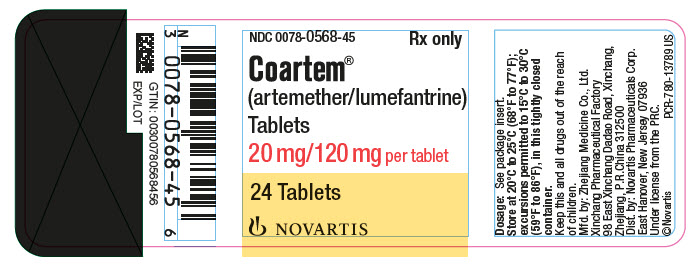
Coartem artemether and lumefantrine 20 mg; 120 mg Tablet, 24-count — NDC 0078-0568-45 (Billing 00078-0568-45)
This is a package of 24 tablets of Coartem artemether and lumefantrine 20 mg; 120 mg Tablet from Novartis Pharmaceuticals Corporation, marketed since Apr 2009 and currently FDA-listed; retail pharmacies pay about $5.36 per tablet (NADAC). It is this product's only package size.
NDC database record
One package, one record: these facts belong to NDC 0078-0568-45 alone.
- Record
- FDA NDC Directory package listing · Human prescription drug
- Code segments
- 0078 labeler · 0568 product · 45 package
- Package marketed since
- Apr 7, 2009
- Sample package
- No — commercial package
- Listing certified through
- Dec 31, 2027
- Billing quantity
- 24 EA per package
- Barcode (UPC-A, from the NDC)
- 3 0078056845 6
- Medicaid fills, this package
- 14 prescriptions in the last four reported quarters
- FDA record last changed
- Jul 24, 2026
Identity & classification
Regulatory identifiers FDA, NLM and CMS codes for this package
Drug-database identifiers Medi-Span GPI and First Databank GCN / HICL / AHFS classification
- GSN (GCN sequence number): 050710
- GCN: 17848
- GPI-14 (Medi-Span): 13990002030320
- HICL (First Databank): 024021
- AHFS class code: 08:30.08.00
- RxCUI (RxNorm): 847731
Where does this data come from?
- FDA openFDA NDC Directory · synced Oct 8, 2026
- FDA label on DailyMed · label index refreshed Oct 8, 2026
- RxNorm (NLM RxNav) · catalog refreshed Oct 1, 2026
- Medi-Span GPI (licensed)
- First Databank (licensed) · refreshed Oct 8, 2026
RxNorm drug class
This medicine belongs to the Antimalarial class.
Where does this data come from?
- RxClass (NLM) · catalog refreshed Oct 1, 2026
Clinical
The combination of artemether and lumefantrine is used to treat certain kinds of malaria infections (a serious infection that is spread by mosquitoes in certain parts of the world and can cause death). Artemether and lumefantrine should not be used to prevent malaria. Artemether and lumefantrine is in a class of medications called antimalarials. It works by killing the organisms that cause malaria.
Read the full MedlinePlus article ↗- It treats acute, uncomplicated malaria caused by Plasmodium falciparum. It is not for severe malaria and won't prevent malaria. Coartem tablets are approved for patients 2 months a...
- Take it by mouth with food, for 6 doses over 3 days. The first two doses are 8 hours apart, then you take one in the morning and one in the evening for 2 days. Follow the tablet co...
- Try to eat as soon as you can tolerate food, since food helps your body absorb the medicine. If you vomit within 1 to 2 hours of a dose, take a repeat dose. If you vomit that one t...
- Headache, dizziness, loss of appetite, weakness, and joint or muscle aches are common. Children often have fever, cough or vomiting. Call right away if you notice allergic reaction...
Patient education
Supplement & herbal interactions
Where does this data come from?
- MedlinePlus (NLM) · refreshed Oct 8, 2026
- FDA label on DailyMed · label index refreshed Oct 8, 2026
Ask a licensed pharmacist directly — free, answered by our team.
Pricing
A drug doesn't have one price. Each row is a different public payment system, and none is what you'd pay at the counter — that depends on your insurance. The ⓘ on each row explains what it measures.
| Price system | Per ea | Per package |
|---|---|---|
| Retail pharmacies payNADAC · weekly | $5.363 | $128.71 / 24 tablets |
| Medicaid paysCMS SDUD · 12 mo | $5.92 | $141.99 / 24 tablets |
| Medicare drug plans payPart D · Q2 2026 | $5.62 | $134.85 / 24 tablets |
Where does this data come from?
- CMS NADAC weekly file · file of Oct 7, 2026
- CMS ASP pricing files · refreshed Sep 20, 2026
- CMS Medicaid State Drug Utilization Data · through Q1 2026
- CMS Part D plan pricing files · refreshed Sep 24, 2026
- VA National Acquisition Center price file
Packaging — all sizes for this product
| Package NDC | Description | Marketing start | Marketing end | Status |
|---|---|---|---|---|
| 00078-0568-45 You're viewing this Main listing | 24 TABLET in 1 BOTTLE | 2009-04-07 | — | Active |
Therapeutic equivalents
| Product | Labeler | Pack | NADAC/unit | TE | Status | Price vs. this |
|---|---|---|---|---|---|---|
| Coartem 20 mg/1; 120 mgthis 00078-0568-45 | Novartis | 24 tablets | $5.363 | — | Availability likely | — |
Where does this data come from?
- FDA openFDA NDC Directory · synced Oct 8, 2026
- FDA Orange Book · refreshed Oct 3, 2026
- CMS NADAC weekly file · file of Oct 7, 2026
Availability & generic status
We did not find an FDA-approved generic match for this exact strength, form and route.
Where does this data come from?
- FDA Orange Book · refreshed Oct 3, 2026
What it looks like
Where does this data come from?
- FDA label on DailyMed · label index refreshed Oct 8, 2026
Inactive Ingredients / Excipients
Inactive ingredients, also called excipients, are components of the drug product other than the active ingredient. They may include fillers, dyes, coatings, preservatives, flavors, or other formulation ingredients.
🧪 Avoiding an ingredient? See Artemether and Lumefantrine inactive ingredients by manufacturer: every current product's list side by side, so you can ask your pharmacy for the version that does not list it.
💡 Tap an ingredient (hover on desktop) to see what it is and why it’s used.
-
UNII OP1R32D61U
Microcrystalline cellulose is a purified form of cellulose, a natural fiber from plant sources. It acts as a binder and filler in tablets and capsules, helping hold ingredients together and give the medicine its shape and size.
-
UNII M28OL1HH48
Croscarmellose sodium is a plant-based substance derived from cellulose. It acts as a disintegrant, helping tablets and capsules break down quickly in the digestive system so the medicine can be absorbed.
-
UNII 3NXW29V3WO
Hypromellose is a plant-based thickener made from cellulose. It's used in medicines as a binder to hold ingredients together, a coating for tablets, and a thickener for liquids.
-
UNII 70097M6I30
Magnesium stearate is a salt made from magnesium and stearic acid, a fatty substance. It's used in tablets and capsules as a lubricant and glidant to help ingredients flow smoothly during manufacturing and prevent sticking.
-
UNII 6OZP39ZG8H
Polysorbate 80 is a synthetic emulsifier derived from sorbitol and oleic acid. It helps mix oil and water-based ingredients together in medications and improves how the product disperses in the body.
-
UNII ETJ7Z6XBU4
Silicon dioxide is a naturally occurring mineral used as a glidant and anti-caking agent. It helps powder ingredients flow smoothly and prevents clumping during manufacturing and storage.
-
UNII 059QF0KO0R
Water is a liquid solvent that dissolves and mixes ingredients together in liquid medicines, syrups, and injections. It helps distribute the active drug evenly throughout the product.
7 inactive ingredients listed in the exact product block matched to this NDC.
Where does this data come from?
ingredient classCode="IACT" elements from the exact product block matched by this NDC. Label-section narrative from DailyMed / the openFDA label index is shown separately when available.- FDA label on DailyMed · label index refreshed Oct 8, 2026
- FDA openFDA NDC Directory · synced Oct 8, 2026
Inactive ingredient FAQ
Are inactive ingredients the same for every manufacturer?
Why might an inactive ingredient be missing?
Can inactive ingredients matter?
Manufacturer & labeler
More NDCs from Novartis Pharmaceuticals Corporation labeler code 00078
- Exforge HCT amlodipine valsartan and hydrochlorothiazide 5 mg; 160 mg; 25 mg Tablet, Film Coated NDC 0078-0560-15
- Exforge HCT amlodipine valsartan and hydrochlorothiazide 10 mg; 160 mg; 12.5 mg Tablet, Film Coated NDC 0078-0561-15
- Exforge HCT amlodipine valsartan and hydrochlorothiazide 10 mg; 160 mg; 25 mg Tablet, Film Coated NDC 0078-0562-15
- Exforge HCT amlodipine valsartan and hydrochlorothiazide 10 mg; 320 mg; 25 mg Tablet, Film Coated NDC 0078-0563-15
- Afinitor everolimus 5 mg Tablet NDC 0078-0566-51
- Afinitor everolimus 10 mg Tablet NDC 0078-0567-51
- Tasigna nilotinib 150 mg Capsule NDC 0078-0592-51
- Afinitor everolimus 2.5 mg Tablet NDC 0078-0594-51
- Gilenya Fingolimod hcl .5 mg Capsule NDC 0078-0607-15
- Focalin XR dexmethylphenidate hydrochloride 25 mg Capsule, Extended Release NDC 0078-0608-05
- Focalin XR dexmethylphenidate hydrochloride 35 mg Capsule, Extended Release NDC 0078-0609-05
- Afinitor everolimus 7.5 mg Tablet NDC 0078-0620-51
Where does this data come from?
- FDA openFDA NDC Directory · synced Oct 8, 2026
- Drugs@FDA
Full prescribing information FDA SPL
🎯 Indications and Usage ▾
1 INDICATIONS AND USAGE Coartem Tablets are indicated for treatment of acute, uncomplicated malaria infections due to Plasmodium falciparum (P. falciparum) in patients 2 months of age and older with a bodyweight of 5 kg and above. Coartem Tablets have been shown to be effective in geographical regions where resistance to chloroquine has been reported [see Clinical Studies (14.1)] . Limitations of Use : Coartem Tablets are not approved for patients with severe or complicated P. falciparum malaria.
Coartem Tablets are not approved for the prevention of malaria. Coartem Tablets are a combination of artemether and lumefantrine, both antimalarials, indicated for treatment of acute, uncomplicated malaria infections due to Plasmodium falciparum (P. falciparum) in patients 2 months of age and older with a bodyweight of 5 kg and above. ( 1 ) Coartem Tablets have been shown to be effective in geographical regions where resistance to chloroquine has been reported.
( 1 ) Limitations of Use: ( 1 ) Coartem Tablets are not approved for patients with severe or complicated P. falciparum malaria . Coartem Tablets are not approved for the prevention of malaria.
⏱️ Dosage and Administration ▾
2 DOSAGE AND ADMINISTRATION Coartem Tablets should be taken with food. ( 2.1 , 5.2 ) Tablets may be crushed and mixed with 1 to 2 teaspoons of water immediately prior to administration to patients, including children. ( 2.1 ) Coartem Tablets should be administered over 3 days for a total of 6 doses: an initial dose, second dose after 8 hours, and then twice-daily (morning and evening) for the following 2 days.
( 2.2 , 2.3 ) The adult dosage for patients with bodyweight of 35 kg and above is 4 tablets per dose for a total of 6 doses. ( 2.2 ) The number of tablets per dose for children is determined by bodyweight, as shown in the chart below. ( 2.3 ) Tablets per dose by bodyweight; total of 6 doses over 3 days 5 to < 15 kg 1 tablet 15 to < 25 kg 2 tablets 25 to < 35 kg 3 tablets 35 kg and over 4 tablets
2.1Administration Instructions Coartem Tablets should be taken with food. Patients with acute malaria are frequently averse to food. Patients should be encouraged to resume normal eating as soon as food can be tolerated since this improves absorption of artemether and lumefantrine.
For patients who are unable to swallow the tablets such as infants and children, Coartem Tablets may be crushed and mixed with a small amount of water (1 to 2 teaspoons) in a clean container for administration immediately prior to use. The container can be rinsed with more water and the contents swallowed by the patient. The crushed tablet preparation should be followed whenever possible by food/drink (e.g., milk, formula, pudding, broth, and porridge).
In the event of vomiting within 1 to 2 hours after administration, a repeat dose should be taken. If the repeat dose is vomited, the patient should be given an alternative antimalarial for treatment.
2.2Dosage in Adult Patients (greater than 16 years of age) A 3-day treatment schedule with a total of 6 doses is recommended for adult patients with a bodyweight of 35 kg and above: Four tablets as a single initial dose, 4 tablets again after 8 hours, and then 4 tablets twice-daily (morning and evening) for the following 2 days (total course of 24 tablets). For patients weighing less than 35 kg, [see Dosage and Administration (2.3)] .
2.3Dosage in Pediatric Patients A 3-day treatment schedule with a total of 6 doses is recommended as below: 5 kg to less than 15 kg bodyweight : One tablet as an initial dose, 1 tablet again after 8 hours, and then 1 tablet twice daily (morning and evening) for the following 2 days (total course of 6 tablets). 15 kg to less than 25 kg bodyweight : Two tablets as an initial dose, 2 tablets again after 8 hours, and then 2 tablets twice daily (morning and evening) for the following 2 days (total course of 12 tablets).
25 kg to less than 35 kg bodyweight : Three tablets as an initial dose, 3 tablets again after 8 hours, and then 3 tablets twice daily (morning and evening) for the following 2 days (total course of 18 tablets). 35 kg bodyweight and above : Four tablets as a single initial dose, 4 tablets again after 8 hours, and then 4 tablets twice daily (morning and evening) for the following 2 days (total course of 24 tablets).
2.4Dosage in Patients With Hepatic or Renal Impairment No specific pharmacokinetic studies have been carried out in patients with hepatic or renal impairment. Most patients with acute malaria present with some degree of related hepatic and/or renal impairment. In clinical studies, the adverse event profile did not differ in patients with mild or moderate hepatic impairment compared to patients with normal hepatic function.
No specific dose adjustments are needed for patients with mild or moderate hepatic impairment. In clinical studies, the adverse event profile did not differ in patients with mild or moderate renal impairment compared to patients with normal renal function. There were few patients with severe renal impairment in clinical studies.
There is no significant renal excretion of lumefantrine, artemether, and dihydroartemisinin (DHA) in healt… [Excerpted — this section continues on DailyMed.]
💊 Dosage Forms and Strengths ▾
3 DOSAGE FORMS AND STRENGTHS Coartem Tablets contain 20 mg of artemether and 120 mg of lumefantrine. Coartem Tablets are supplied as yellow, round, flat tablets with beveled edges and scored on one side. Tablets are imprinted with “N/C” on one side and “CG” on the other side. Tablets are scored and contain 20 mg artemether and 120 mg lumefantrine. ( 3 )
⛔ Contraindications ▾
4 CONTRAINDICATIONS Hypersensitivity Known hypersensitivity to artemether, lumefantrine, or to any of the excipients of Coartem Tablets [see Adverse Reactions (6.2)] . Strong CYP3A4 Inducers Coadministration of strong inducers of CYP3A4 such as rifampin, carbamazepine, phenytoin, and St. John’s wort with Coartem Tablets can result in decreased concentrations of artemether and/or lumefantrine and loss of antimalarial efficacy [see Warnings and Precautions (5.3), Drug Interactions (7.1), and Clinical Pharmacology (12.3)] .
Known hypersensitivity to artemether, lumefantrine, or to any of the excipients. ( 4 ) Coadministration of strong inducers of CYP3A4 such as rifampin, carbamazepine, phenytoin, and St. John’s wort with Coartem Tablets.
( 4 , 7.1 , 12.3 )
⚠️ Warnings and Cautions ▾
5 WARNINGS AND PRECAUTIONS Avoid use in patients with known QT prolongation, those with hypokalemia or hypomagnesemia, and those taking other drugs that prolong the QT interval. ( 5.1 , 12.6 ) Halofantrine and Coartem Tablets should not be administered within one month of each other due to potential additive effects on the QT interval. ( 5.1 , 5.2 , 12.3 ) Antimalarials should not be given concomitantly, unless there is no other treatment option, due to limited safety data.
( 5.2 ) QT prolonging drugs, including quinine and quinidine, should be used cautiously following Coartem Tablets. ( 5.1 , 5.2 , 7.7 , 12.3 ) Substrates, inhibitors, or inducers of CYP3A4, including antiretroviral medications, should be used cautiously with Coartem Tablets, due to a potential loss of efficacy of the concomitant drug or additive QT prolongation. ( 5.3 , 7.2 , 7.3 )
5.1Prolongation of the QT Interval Some antimalarials (e.g., halofantrine, quinine, quinidine) including Coartem Tablets have been associated with prolongation of the QT interval on the electrocardiogram (ECG). Coartem Tablets should be avoided in patients: With congenital prolongation of the QT interval (e.g., long QT syndrome) or any other clinical condition known to prolong the QTc interval such as patients with a history of symptomatic cardiac arrhythmias, with clinically relevant bradycardia or with severe cardiac disease.
With a family history of congenital prolongation of the QT interval or sudden death. With known disturbances of electrolyte balance, e.g., hypokalemia or hypomagnesemia. Receiving other medications that prolong the QT interval, such as Class IA (quinidine, procainamide, disopyramide), or Class III (amiodarone, sotalol) antiarrhythmic agents; antipsychotics (pimozide, ziprasidone); antidepressants; certain antibiotics (macrolide antibiotics, fluoroquinolone antibiotics, imidazole, and triazole antifungal agents) [see Clinical Pharmacology (12.6)] .
Receiving medications that are metabolized by the cytochrome enzyme CYP2D6, which also have cardiac effects (e.g., flecainide, imipramine, amitriptyline, clomipramine) [see Warnings and Precautions (5.4), Drug Interactions (7.6), and Clinical Pharmacology (12.3)] .
5.2Use of QT Prolonging Drugs and Other Antimalarials Halofantrine and Coartem Tablets should not be administered within 1 month of each other due to the long elimination half-life of lumefantrine (3 to 6 days) and potential additive effects on the QT interval [see Warnings and Precautions (5.1) and Clinical Pharmacology (12.3)] . Antimalarials should not be given concomitantly with Coartem Tablets, unless there is no other treatment option, due to limited safety data. Drugs that prolong the QT interval, including antimalarials such as quinine and quinidine, should be used cautiously following Coartem Tablets, due to the long elimination half-life of lumefantrine (3 to 6 days) and the potential for additive effects on the QT interval; ECG monitoring is advised if use of drugs that prolong the QT interval is medically required [see Warnings and Precautions (5.1), Drug Interactions (7.7), and Clinical Pharmacology (12.3)] .
If mefloquine is administered immediately prior to Coartem Tablets, there may be a decreased exposure to lumefantrine, possibly due to a mefloquine-induced decrease in bile production. Therefore, patients should be monitored for decreased efficacy and food consumption should be encouraged while taking Coartem Tablets [see Dosage and Administration (2.1), Drug Interactions (7.4), and Clinical Pharmacology (12.3)] .
5.3Drug Interactions With CYP3A4 When Coartem Tablets are coadministered with substrates of CYP3A4, it may result in decreased concentrations of the substrate and potential loss of substrate efficacy. When Coartem Tablets are coadministered with an inhibitor of CYP3A4, including grapefruit juice, it may result in increased concentrations of artemether and/or lumefantrine and potentiate QT prolongation. When Coartem Tablets… [Excerpted — this section continues on DailyMed.]
🤒 Adverse Reactions ▾
6 ADVERSE REACTIONS The following serious and otherwise important adverse reactions are discussed in greater detail in other sections of labeling: Hypersensitivity Reactions [see Contraindications (4)] Prolongation of the QT Interval [see Warnings and Precautions (5.1)] Use of QT Prolonging Drugs and Other Antimalarials [see Warnings and Precautions (5.2)] Drug Interactions with CYP3A4 [see Warnings and Precautions (5.3)] Drug Interactions with CYP2D6 [see Warnings and Precautions (5.4)] The most common adverse reactions in adults (greater than 30%) are headache, anorexia, dizziness, asthenia, arthralgia, and myalgia.
The most common adverse reactions in children (greater than 12%) are pyrexia, cough, vomiting, anorexia, and headache. ( 6.1 ) To report SUSPECTED ADVERSE REACTIONS, contact Novartis Pharmaceuticals Corporation at 1-888-669-6682 or FDA at 1-800-FDA-1088 or www.fda.gov/medwatch .
6.1Clinical Trials Experience Because clinical trials are conducted under widely varying conditions, adverse reaction rates observed in the clinical trials of a drug cannot be directly compared to rates in the clinical trials of another drug and may not reflect the rate observed in practice. The data described below reflect exposure to a 6-dose regimen of Coartem Tablets in 1979 patients including 647 adults (older than 16 years) and 1332 children (16 years and younger). For the 6-dose regimen, Coartem Tablets was studied in active-controlled (366 patients) and noncontrolled, open-label trials (1613 patients).
The 6-dose Coartem Tablets population was patients with malaria between ages 2 months and 71 years: 67% (1332) were 16 years and younger and 33% (647) were older than 16 years. Males represented 73% and 53% of the adult and pediatric populations, respectively. The majority of adult patients were enrolled in studies in Thailand, while the majority of pediatric patients were enrolled in Africa.
Tables 1 and 2 show the most frequently reported adverse reactions (greater than or equal to 3%) in adults and children respectively who received the 6-dose regimen of Coartem Tablets. Adverse reactions collected in clinical trials included signs and symptoms at baseline, but only treatment emergent adverse events, defined as events that appeared or worsened after the start of treatment, are presented below. In adults, the most frequently reported adverse reactions were headache, anorexia, dizziness, and asthenia.
In children, the adverse reactions were pyrexia, cough, vomiting, anorexia, and headache. Most adverse reactions were mild, did not lead to discontinuation of study medication, and resolved. In limited comparative studies, the adverse reaction profile of Coartem Tablets appeared similar to that of another antimalarial regimen.
Discontinuation of Coartem Tablets due to adverse drug reactions occurred in 1.1% of patients treated with the 6-dose regimen overall: 0.2% (1/647) in adults and 1.6% (21/1332) in children. Table 1: Adverse Reactions Occurring in 3% or More of Adult Patients Treated in Clinical Trials With the 6-dose Regimen of Coartem Tablets *Adult patients defined as greater than 16 years of age. System Organ Class Preferred Term Adults* N = 647 (%) Nervous system disorders Headache 360 (56) Dizziness 253 (39) Metabolism and nutrition disorders Anorexia 260 (40) General disorders and administration site conditions Asthenia 243 (38) Pyrexia 159 (25) Chills 147 (23) Fatigue 111 (17) Malaise 20 (3) Musculoskeletal and connective tissue disorders Arthralgia 219 (34) Myalgia 206 (32) Gastrointestinal disorders Nausea 169 (26) Vomiting 113 (17) Abdominal pain 112 (17) Diarrhea 46 (7) Psychiatric disorders Sleep disorder 144 (22) Insomnia 32 (5) Cardiac disorders Palpitations 115 (18) Hepatobiliary disorders Hepatomegaly 59 (9) Blood and lymphatic system disorders Splenomegaly 57 (9) Anemia 23 (4) Respiratory, thoracic and mediastinal disorders Cough 37 (6) Skin and subcutaneous tissue disorders Pruritus 24 (4) Rash 21 (3) Ear and… [Excerpted — this section continues on DailyMed.]
🔄 Drug Interactions ▾
7 DRUG INTERACTIONS CYP3A4 Inducers: Potential for loss of antimalarial efficacy. ( 4 , 5.3 , 7.1 , 12.3 ) CYP3A4 Inhibitors: Use cautiously due to potential for QT prolongation. ( 5.3 , 7.2 , 12.3 ) Antiretrovirals: Use cautiously due to potential for QT prolongation, loss of antiviral efficacy, or loss of antimalarial efficacy of Coartem Tablets.
( 5.3 , 7.3 , 12.3 ) Mefloquine: If used immediately before treatment, monitor for decreased efficacy of Coartem Tablets and encourage food consumption. ( 2.1 , 7.4 , 12.3 ) Hormonal Contraceptives: Effectiveness may be reduced; use an additional method of birth control. ( 5.3 , 7.5 , 12.3 ) CYP2D6 Substrates: Monitor for adverse reactions and potential QT prolongation.
( 5.1 , 5.4 , 7.6 )
7.1Rifampin Oral administration of rifampin, a strong CYP3A4 inducer, with Coartem Tablets resulted in significant decreases in exposure to artemether, DHA (metabolite of artemether), and lumefantrine by 89%, 85%, and 68%, respectively, when compared to exposure values after Coartem Tablets alone. Concomitant use of strong inducers of CYP3A4 such as rifampin, carbamazepine, phenytoin, and St. John’s wort is contraindicated with Coartem Tablets [see Contraindications (4) and Clinical Pharmacology (12.3)] .
7.2Ketoconazole Concurrent oral administration of ketoconazole, a potent CYP3A4 inhibitor, with a single dose of Coartem Tablets resulted in a moderate increase in exposure to artemether, DHA, and lumefantrine in a study of 15 healthy subjects. No dose adjustment of Coartem Tablets is necessary when administered with ketoconazole or other potent CYP3A4 inhibitors. However, due to the potential for increased concentrations of lumefantrine which could lead to QT prolongation, Coartem Tablets should be used cautiously with drugs that inhibit CYP3A4 [see Warnings and Precautions (5.1, 5.3) and Clinical Pharmacology (12.3)] .
7.3Antiretroviral Drugs Both artemether and lumefantrine are metabolized by CYP3A4. Antiretroviral drugs, such as protease inhibitors and non-nucleoside reverse transcriptase inhibitors, are known to have variable patterns of inhibition, induction or competition for CYP3A4. Therefore, the effects of antiretroviral drugs on the exposure to artemether, DHA, and lumefantrine are also variable [see Clinical Pharmacology (12.3)] .
Coartem Tablets should be used cautiously in patients on antiretroviral drugs because decreased artemether, DHA, and/or lumefantrine concentrations may result in a decrease of antimalarial efficacy of Coartem Tablets, and increased lumefantrine concentrations may cause QT prolongation [see Warnings and Precautions (5.3)] .
7.4Prior Use of Mefloquine Administration of 3 doses of mefloquine followed 12 hours later by a 6-dose regimen of Coartem Tablets in 14 healthy volunteers demonstrated no effect of mefloquine on plasma concentrations of artemether or the artemether/DHA ratio. However, exposure to lumefantrine was reduced, possibly due to lower absorption secondary to a mefloquine-induced decrease in bile production. Patients should be monitored for decreased efficacy and food consumption should be encouraged with administration of Coartem Tablets [see Warnings and Precautions (5.2) and Clinical Pharmacology (12.3)] .
7.5Hormonal Contraceptives In vitro , the metabolism of ethinyl estradiol and levonorgestrel was not induced by artemether, DHA, or lumefantrine. However, artemether has been reported to weakly induce, in humans, the activity of CYP2C19, CYP2B6, and CYP3A4. Therefore, Coartem Tablets may potentially reduce the effectiveness of hormonal contraceptives.
Patients using hormonal contraception should be advised to use an alternative non-hormonal contraceptive method or add a barrier method of contraception during treatment with Coartem [see Warnings and Precautions (5.3), Use in Specific Populations (8.3) and Clinical Pharmacology (12.3)] .
7.6CYP2D6 Substrates Lumefantrine inhibits CYP2D6 in vitro . Administration of Coartem Tablets with dru… [Excerpted — this section continues on DailyMed.]
👥 Use in Specific Populations ▾
8 USE IN SPECIFIC POPULATIONS
8.1Pregnancy Risk Summary Published data from clinical studies and pharmacovigilance data have not established an association with artemether/lumefantrine use during pregnancy and major birth defects, miscarriage, or adverse maternal or fetal outcomes (see Data) . The estimated background risk of major birth defects and miscarriage for the indicated population is unknown. All pregnancies have a background risk of birth defect, loss, or other adverse outcomes.
In the U.S. general population, the estimated background risk of major birth defects and miscarriage in clinically recognized pregnancies is 2% to 4% and 15% to 20%, respectively. Clinical Considerations Disease-Associated Maternal and/or Embryo/Fetal Risk Malaria during and after pregnancy increases the risk for adverse pregnancy and neonatal outcomes, including maternal anemia, severe malaria, spontaneous abortion, stillbirths, preterm delivery, low birth weight, intrauterine growth restriction, congenital malaria, and maternal and neonatal mortality.
Data Human Data While available studies cannot definitively establish the absence of risk, a meta-analysis of observational studies including over 500 artemether-lumefantrine exposed women in their first trimester of pregnancy, data from observational, and open label studies including more than 1200 pregnant women in their second- or third trimester exposed to artemether-lumefantrine compared to other antimalarials, and pharmacovigilance data have not demonstrated an increase in major birth defects, miscarriage, or adverse maternal or fetal outcomes.
Published epidemiologic studies have important methodological limitations which hinder interpretation of data, including inability to control for confounders, such as underlying maternal disease, and maternal use of concomitant medications and missing information on the dose and duration of use. Animal Data Pregnant rats dosed orally during the period of organogenesis [gestational days (GD) 7 through 17] at 50 mg/kg/day artemether-lumefantrine combination (corresponding to 7 mg/kg/day artemether or higher, a dose of less than half the maximum recommended human dose (MRHD) of 1120 mg artemether-lumefantrine per day (based on body surface area (BSA) comparisons), showed increases in fetal loss, early resorptions, and postimplantation loss.
No adverse effects were observed in animals dosed at 25 mg/kg/day artemether-lumefantrine (corresponding to 3.6 mg/kg/day of artemether), about one-third the MRHD (based on BSA comparison). Similarly, oral dosing in pregnant rabbits during organogenesis (GD 7 through GD 19) at 175 mg/kg/day, (corresponding to 25 mg/kg/day artemether) about 3 times the MRHD (based on BSA comparisons) resulted in abortions, preimplantation loss, post implantation loss and decreases in the number of live fetuses. No adverse reproductive effects were detected in rabbits at 105 mg/kg/day artemether-lumefantrine (corresponding to 15 mg/kg/day artemether), about 2 times the MRHD.
Artemether and other artemisinins are associated with maternal toxicity and embryotoxicity and malformations in animals at clinically relevant exposures; however, lumefantrine doses as high as 1000 mg/kg/day, showed no evidence to suggest maternal, embryo- or fetotoxicity or teratogenicity in rats and rabbits. The relevance of the findings from the animal reproductive studies to human risk is unclear.
8.2Lactation Risk Summary There are no data on the presence of artemether or lumefantrine in human milk, the effects on the breastfed infant or the effects on milk production. Artemether and lumefantrine are transferred into rat milk. When a drug is transferred into animal milk, it is likely that the drug will also be transferred into human milk.
The developmental and health benefits of breastfeeding should be considered along with the mother’s clinical need for Coartem and any potential adverse effects on the breastfed infant from Coartem or from the underlying… [Excerpted — this section continues on DailyMed.]
🤰 Pregnancy ▾
8.1Pregnancy Risk Summary Published data from clinical studies and pharmacovigilance data have not established an association with artemether/lumefantrine use during pregnancy and major birth defects, miscarriage, or adverse maternal or fetal outcomes (see Data) . The estimated background risk of major birth defects and miscarriage for the indicated population is unknown. All pregnancies have a background risk of birth defect, loss, or other adverse outcomes.
In the U.S. general population, the estimated background risk of major birth defects and miscarriage in clinically recognized pregnancies is 2% to 4% and 15% to 20%, respectively. Clinical Considerations Disease-Associated Maternal and/or Embryo/Fetal Risk Malaria during and after pregnancy increases the risk for adverse pregnancy and neonatal outcomes, including maternal anemia, severe malaria, spontaneous abortion, stillbirths, preterm delivery, low birth weight, intrauterine growth restriction, congenital malaria, and maternal and neonatal mortality.
Data Human Data While available studies cannot definitively establish the absence of risk, a meta-analysis of observational studies including over 500 artemether-lumefantrine exposed women in their first trimester of pregnancy, data from observational, and open label studies including more than 1200 pregnant women in their second- or third trimester exposed to artemether-lumefantrine compared to other antimalarials, and pharmacovigilance data have not demonstrated an increase in major birth defects, miscarriage, or adverse maternal or fetal outcomes.
Published epidemiologic studies have important methodological limitations which hinder interpretation of data, including inability to control for confounders, such as underlying maternal disease, and maternal use of concomitant medications and missing information on the dose and duration of use. Animal Data Pregnant rats dosed orally during the period of organogenesis [gestational days (GD) 7 through 17] at 50 mg/kg/day artemether-lumefantrine combination (corresponding to 7 mg/kg/day artemether or higher, a dose of less than half the maximum recommended human dose (MRHD) of 1120 mg artemether-lumefantrine per day (based on body surface area (BSA) comparisons), showed increases in fetal loss, early resorptions, and postimplantation loss.
No adverse effects were observed in animals dosed at 25 mg/kg/day artemether-lumefantrine (corresponding to 3.6 mg/kg/day of artemether), about one-third the MRHD (based on BSA comparison). Similarly, oral dosing in pregnant rabbits during organogenesis (GD 7 through GD 19) at 175 mg/kg/day, (corresponding to 25 mg/kg/day artemether) about 3 times the MRHD (based on BSA comparisons) resulted in abortions, preimplantation loss, post implantation loss and decreases in the number of live fetuses. No adverse reproductive effects were detected in rabbits at 105 mg/kg/day artemether-lumefantrine (corresponding to 15 mg/kg/day artemether), about 2 times the MRHD.
Artemether and other artemisinins are associated with maternal toxicity and embryotoxicity and malformations in animals at clinically relevant exposures; however, lumefantrine doses as high as 1000 mg/kg/day, showed no evidence to suggest maternal, embryo- or fetotoxicity or teratogenicity in rats and rabbits. The relevance of the findings from the animal reproductive studies to human risk is unclear.
🧒 Pediatric Use ▾
8.4Pediatric Use The safety and effectiveness of Coartem Tablets have been established in pediatric patients aged 2 months and older with a bodyweight of 5 kg and above for the treatment of acute, uncomplicated malaria [see Clinical Studies (14.1)] . The safety and effectiveness of Coartem Tablets have not been established in pediatric patients younger than 2 months old or who weigh less than 5 kg. Pediatric patients from non-endemic countries were not included in clinical trials.
🧓 Geriatric Use ▾
8.5Geriatric Use Clinical studies of Coartem Tablets did not include sufficient numbers of subjects aged 65 years and over to determine whether they respond differently from younger subjects. In general, the greater frequency of decreased hepatic, renal, or cardiac function, and of concomitant disease or other drug therapy in elderly patients should be considered when prescribing Coartem Tablets.
🆘 Overdosage ▾
10 OVERDOSAGE There is no information on overdoses of Coartem Tablets higher than the doses recommended for treatment. In cases of suspected overdosage, symptomatic and supportive therapy, which would include ECG and blood electrolyte monitoring, should be given as appropriate.
🧬 Clinical Pharmacology ▾
12 CLINICAL PHARMACOLOGY
12.1Mechanism of Action Coartem Tablets, a fixed dose combination of artemether and lumefantrine in the ratio of 1:6, is an antimalarial agent [see Microbiology (12.4)] .
12.3Pharmacokinetics Absorption Following administration of Coartem Tablets to healthy volunteers and patients with malaria, artemether is absorbed with peak plasma concentrations reached about 2 hours after dosing. Absorption of lumefantrine, a highly lipophilic compound, starts after a lag-time of up to 2 hours, with peak plasma concentrations about 6 to 8 hours after administration. The single dose (4 tablets) pharmacokinetic parameters for artemether, DHA, an active antimalarial metabolite of artemether, and lumefantrine in adult Caucasian healthy volunteers are given in Table 3.
Multiple dose data after the 6-dose regimen of Coartem Tablets in adult malaria patients are given in Table 4. Table 3: Single Dose Pharmacokinetic Parametersa for Artemether, Dihydroartemisinin, and Lumefantrine Under-Fed Conditions Abbreviations: DHA, dihydroartemisinin; SD, standard deviation; AUC, area under the curve. a Mean ± SD C max , AUC last , t ½ and Median T max . Study 2102 (n = 50) Study 2104 (n = 48) Artemether C max (ng/mL) 60.0 ± 32.5 83.8 ±
59.7T max (h) 1.50
2.00AUC last (ng·h/mL) 146 ± 72.2 259 ± 150 t ½ (h) 1.6 ± 0.7 2.2 ±
1.9DHA C max (ng/mL) 104 ± 35.3 90.4 ±
48.9T max (h) 1.76
2.00AUC last (ng·h/mL) 284 ± 83.8 285 ± 98.0 t ½ (h) 1.6 ± 0.6 2.2 ±
1.5Lumefantrine C max (µg/mL) 7.38 ± 3.19 9.80 ±
4.20T max (h) 6.01
8.00AUC last (µg·h/mL) 158 ± 70.1 243 ± 117 t ½ (h) 101 ± 35.6 119 ±
51.0Food enhances the absorption of both artemether and lumefantrine. In healthy volunteers, the relative bioavailability of artemether was increased between 2- to 3-fold, and that of lumefantrine 16-fold when Coartem Tablets were taken after a high-fat meal compared under fasted conditions. Patients should be encouraged to take Coartem Tablets with a meal as soon as food can be tolerated [see Dosage and Administration (2.1)] .
Distribution Artemether and lumefantrine are both highly bound to human serum proteins in vitro (95.4% and 99.7%, respectively). Dihydroartemisinin (DHA) is also bound to human serum proteins (47% to 76%). Protein binding to human plasma proteins is linear.
Biotransformation In human liver microsomes and recombinant CYP450 enzymes, the metabolism of artemether was catalyzed predominantly by CYP3A4/5. Dihydroartemisinin (DHA) is an active metabolite of artemether. The metabolism of artemether was also catalyzed to a lesser extent by CYP2B6, CYP2C9 and CYP2C19.
In vitro studies with artemether at therapeutic concentrations revealed no significant inhibition of the metabolic activities of CYP1A2, CYP2A6, CYP2C9, CYP2C19, CYP2D6, CYP2E1, CYP3A4/5, and CYP4A9/11. In vitro studies with artemether, DHA, and lumefantrine at therapeutic concentrations revealed no significant induction of the metabolic activities of CYP1A1, CYP1A2, CYP2B6, CYP2C8, CYP2C9, CYP2C19, CYP3A4, or CYP3A5. During repeated administration of Coartem Tablets, systemic exposure of artemether decreased significantly, while concentrations of DHA increased, although not to a statistically significant degree.
The artemether/DHA area under the curve (AUC) ratio is 1.2 after a single dose and 0.3 after 6 doses given over 3 days. This suggests that there was induction of enzymes responsible for the metabolism of artemether. In human liver microsomes and in recombinant CYP450 enzymes, lumefantrine was metabolized mainly by CYP3A4 to desbutyl-lumefantrine.
The systemic exposure to the metabolite desbutyl-lumefantrine was less than 1% of the exposure to the parent compound. In vitro , lumefantrine significantly inhibits the activity of CYP2D6 at therapeutic plasma concentrations. Caution is recommended when combining Coartem Tablets with substrates, inhibitors, or inducers of CYP3A4, especially antiretroviral drugs and those that prolong the QT interval (e.g., macrolide… [Excerpted — this section continues on DailyMed.]
🧬 Mechanism of Action ▾
12.1Mechanism of Action Coartem Tablets, a fixed dose combination of artemether and lumefantrine in the ratio of 1:6, is an antimalarial agent [see Microbiology (12.4)] .
📦 How Supplied / Storage and Handling ▾
16 HOW SUPPLIED/STORAGE AND HANDLING Coartem (artemether/lumefantrine) Tablets 20 mg/120 mg Tablets - yellow, round flat tablets with beveled edges and scored on one side. Tablets are imprinted with “N/C” on one side and “CG” on the other. Bottle of 24 NDC 0078-0568-45 Store at 20ºC to 25ºC (68ºF to 77ºF); excursions permitted to 15ºC to 30ºC (59ºF to 86ºF) [see USP Controlled Room Temperature] . Dispense in tight container (USP).
📋 Description ▾
11 DESCRIPTION Coartem Tablets contain a fixed combination of 2 antimalarial active ingredients, artemether, an artemisinin derivative, and lumefantrine. Both components are blood schizontocides. The chemical name of artemether is (3 R ,5a S ,6 R ,8a S ,9 R ,10 S ,12 R ,12a R )-10-methoxy-3,6,9-trimethyldecahydro-3,12-epoxypyrano[4,3- j ]-1,2-benzodioxepine.
Artemether is a white, crystalline powder that is freely soluble in acetone, soluble in methanol and ethanol, and practically insoluble in water. It has the empirical formula C 16 H 26 O 5 with a molecular weight of 298.4 g/mol, and the following structural formula: The chemical name of lumefantrine is (1 RS )-2-(dibutylamino)-1-{(9Z)-2,7-dichloro-9-[(4-chlorophenyl)methylene]-9 H -fluorene-4-yl}ethanol. Lumefantrine is a yellow, crystalline powder that is freely soluble in N,N-dimethylformamide, chloroform, and ethyl acetate; soluble in dichloromethane; slightly soluble in ethanol and methanol; and insoluble in water.
It has the empirical formula C 30 H 32 Cl 3 NO with a molecular weight of 528.9 g/mol, and the following structural formula: Coartem Tablets are for oral administration. Each Coartem Tablet contains 20 mg of artemether and 120 mg lumefantrine. The inactive ingredients are colloidal silicon dioxide, croscarmellose sodium, hypromellose, magnesium stearate, microcrystalline cellulose, and polysorbate 80.
Artemether structural formula Lumefantrine structural formula
💬 Information for Patients ▾
17 PATIENT COUNSELING INFORMATION Advise patients to read the FDA-Approved Patient Labeling (Patient Information). Administration Instructions Instruct patients to take Coartem Tablets with food. Patients who do not have an adequate intake of food are at risk for recrudescence of malaria [see Dosage and Administration (2.1)] .
Hypersensitivity Patients with known hypersensitivity to artemether, lumefantrine, or to any of the excipients should not receive Coartem Tablets [see Contraindications (4)] . Prolongation of the QT Interval Instruct patients to inform their physician of any personal or family history of QT prolongation or proarrhythmic conditions such as hypokalemia, bradycardia, or recent myocardial ischemia [see Warnings and Precautions (5.1)] . Instruct patients to inform their physician if they are taking any other medications that prolong the QT interval, such as Class IA (quinidine, procainamide, disopyramide), or Class III (amiodarone, sotalol) antiarrhythmic agents; antipsychotics (pimozide, ziprasidone); antidepressants; certain antibiotics (macrolide antibiotics, fluoroquinolone antibiotics, imidazole, and triazole antifungal agents) [see Warnings and Precautions (5.1)] .
Instruct patients to notify their physicians if they have any symptoms of prolongation of the QT interval, including prolonged heart palpitations or a loss of consciousness [see Warnings and Precautions (5.1)] . Drug Interactions With CYP2D6 Instruct patients to avoid medications that are metabolized by the cytochrome enzyme CYP2D6 while receiving Coartem Tablets since these drugs also have cardiac effects (e.g., flecainide, imipramine, amitriptyline, clomipramine) [see Warnings and Precautions (5.4)] . Contraception Advise patients that use of Coartem may reduce the efficacy of hormonal contraceptives.
Advise patients using hormonal contraceptive to use an alternative non-hormonal contraceptive method or add a barrier method of contraception during treatment with Coartem [see Drug Interactions (7.5) and Use in Specific Populations (8.3)] . Use of QT Prolonging Drugs and Other Antimalarials Halofantrine and Coartem Tablets should not be administered within 1 month of each other due to potential additive effects on the QT interval. Antimalarials should not be given concomitantly with Coartem Tablets, unless there is no other treatment option, due to limited safety data [see Warnings and Precautions (5.2)] .
Sequential Use of Quinine QT prolonging drugs, including quinine and quinidine, should be used cautiously following Coartem Tablets due to the long elimination half-life of lumefantrine and the potential for additive effects on the QT interval. ECG monitoring is advised if use of drugs that prolong the QT interval is medically required [see Drug Interactions (7.7)] . Prior Use of Mefloquine Closely monitor food intake in patients who received mefloquine immediately prior to treatment with Coartem Tablets [see Drug Interactions (7.4)] .
Drug Interactions With CYP3A4 Use Coartem Tablets cautiously in patients receiving other drugs that are substrates, inhibitors or inducers of CYP3A4, including grapefruit juice, especially those that prolong the QT interval or are antiretroviral drugs. Coadministration of strong inducers of CYP3A4 such as rifampin, carbamazepine, phenytoin, and St. John’s wort is contraindicated with Coartem Tablets [see Warnings and Precautions (5.3)] .
Hypersensitivity Reactions Inform patients that Coartem Tablets can cause hypersensitivity reactions. Instruct patients to discontinue the drug at the first sign of a skin rash, hives or other skin reactions, a rapid heartbeat, difficulty in swallowing or breathing, any swelling suggesting angioedema (e.g., swelling of the lips, tongue, face, tightness of the throat, hoarseness), or other symptoms of an allergic reaction [see Contraindications (4)] . T2019-88
🧬 Pharmacokinetics ▾
12.3Pharmacokinetics Absorption Following administration of Coartem Tablets to healthy volunteers and patients with malaria, artemether is absorbed with peak plasma concentrations reached about 2 hours after dosing. Absorption of lumefantrine, a highly lipophilic compound, starts after a lag-time of up to 2 hours, with peak plasma concentrations about 6 to 8 hours after administration. The single dose (4 tablets) pharmacokinetic parameters for artemether, DHA, an active antimalarial metabolite of artemether, and lumefantrine in adult Caucasian healthy volunteers are given in Table 3.
Multiple dose data after the 6-dose regimen of Coartem Tablets in adult malaria patients are given in Table 4. Table 3: Single Dose Pharmacokinetic Parametersa for Artemether, Dihydroartemisinin, and Lumefantrine Under-Fed Conditions Abbreviations: DHA, dihydroartemisinin; SD, standard deviation; AUC, area under the curve. a Mean ± SD C max , AUC last , t ½ and Median T max . Study 2102 (n = 50) Study 2104 (n = 48) Artemether C max (ng/mL) 60.0 ± 32.5 83.8 ±
59.7T max (h) 1.50
2.00AUC last (ng·h/mL) 146 ± 72.2 259 ± 150 t ½ (h) 1.6 ± 0.7 2.2 ±
1.9DHA C max (ng/mL) 104 ± 35.3 90.4 ±
48.9T max (h) 1.76
2.00AUC last (ng·h/mL) 284 ± 83.8 285 ± 98.0 t ½ (h) 1.6 ± 0.6 2.2 ±
1.5Lumefantrine C max (µg/mL) 7.38 ± 3.19 9.80 ±
4.20T max (h) 6.01
8.00AUC last (µg·h/mL) 158 ± 70.1 243 ± 117 t ½ (h) 101 ± 35.6 119 ±
51.0Food enhances the absorption of both artemether and lumefantrine. In healthy volunteers, the relative bioavailability of artemether was increased between 2- to 3-fold, and that of lumefantrine 16-fold when Coartem Tablets were taken after a high-fat meal compared under fasted conditions. Patients should be encouraged to take Coartem Tablets with a meal as soon as food can be tolerated [see Dosage and Administration (2.1)] .
Distribution Artemether and lumefantrine are both highly bound to human serum proteins in vitro (95.4% and 99.7%, respectively). Dihydroartemisinin (DHA) is also bound to human serum proteins (47% to 76%). Protein binding to human plasma proteins is linear.
Biotransformation In human liver microsomes and recombinant CYP450 enzymes, the metabolism of artemether was catalyzed predominantly by CYP3A4/5. Dihydroartemisinin (DHA) is an active metabolite of artemether. The metabolism of artemether was also catalyzed to a lesser extent by CYP2B6, CYP2C9 and CYP2C19.
In vitro studies with artemether at therapeutic concentrations revealed no significant inhibition of the metabolic activities of CYP1A2, CYP2A6, CYP2C9, CYP2C19, CYP2D6, CYP2E1, CYP3A4/5, and CYP4A9/11. In vitro studies with artemether, DHA, and lumefantrine at therapeutic concentrations revealed no significant induction of the metabolic activities of CYP1A1, CYP1A2, CYP2B6, CYP2C8, CYP2C9, CYP2C19, CYP3A4, or CYP3A5. During repeated administration of Coartem Tablets, systemic exposure of artemether decreased significantly, while concentrations of DHA increased, although not to a statistically significant degree.
The artemether/DHA area under the curve (AUC) ratio is 1.2 after a single dose and 0.3 after 6 doses given over 3 days. This suggests that there was induction of enzymes responsible for the metabolism of artemether. In human liver microsomes and in recombinant CYP450 enzymes, lumefantrine was metabolized mainly by CYP3A4 to desbutyl-lumefantrine.
The systemic exposure to the metabolite desbutyl-lumefantrine was less than 1% of the exposure to the parent compound. In vitro , lumefantrine significantly inhibits the activity of CYP2D6 at therapeutic plasma concentrations. Caution is recommended when combining Coartem Tablets with substrates, inhibitors, or inducers of CYP3A4, especially antiretroviral drugs and those that prolong the QT interval (e.g., macrolide antibiotics, pimozide) [see Contraindications (4), Warnings and Precautions (5.1, 5.2, 5.3), and Drug Interactions (7)] .
Coadministration of Coartem Tablets with CYP2D6 substrates may result in i… [Excerpted — this section continues on DailyMed.]
🔬 Clinical Studies ▾
14 CLINICAL STUDIES
14.1Treatment of Acute, Uncomplicated P. falciparum Malaria The efficacy of Coartem Tablets was evaluated for the treatment of acute, uncomplicated malaria caused by P. falciparum in HIV negative patients in 8 clinical studies. Uncomplicated malaria was defined as symptomatic P. falciparum malaria without signs and symptoms of severe malaria or evidence of vital organ dysfunction. Baseline parasite density ranged from 500/mcL to 200,000/mcL (0.01% to 4% parasitemia) in the majority of patients.
Studies were conducted in partially immune and non-immune adults and children (greater than or equal to 5 kg body weight) with uncomplicated malaria in China, Thailand, sub-Saharan Africa, Europe, and South America. Patients who had clinical features of severe malaria, severe cardiac, renal, or hepatic impairment were excluded. The studies include two 4-dose studies assessing the efficacy of the components of the regimen, a study comparing a 4-dose versus a 6-dose regimen, and 5 additional 6-dose regimen studies.
Coartem Tablets were administered at 0, 8, 24, and 48 hours in the 4-dose regimen, and at 0, 8, 24, 36, 48, and 60 hours in the 6-dose regimen. Efficacy endpoints consisted of: 28-day cure rate, defined as clearance of asexual parasites (the erythrocytic stage) within 7 days without recrudescence by Day 28 parasite clearance time (PCT), defined as time from first dose until first total and continued disappearance of asexual parasite which continues for a further 48 hours fever clearance time (FCT), defined as time from first dose until the first time body temperature fell below 37.5°C and remained below 37.5°C for at least a further 48 hours (only for patients with temperature greater than 37.5°C at baseline) The modified intent-to-treat (mITT) population includes all patients with malaria diagnosis confirmation who received at least 1 dose of study drug.
Evaluable patients generally are all patients who had a Day 7 and a Day 28 parasitological assessment or experienced treatment failure by Day 28. Studies 1 and 2: The 2 studies, which assessed the efficacy of Coartem Tablets (4 doses of 4 tablets of 20 mg artemether/120 mg lumefantrine) compared to each component alone, were randomized, double-blind, comparative, single center, conducted in China. The efficacy results (Table 5) support that the combination of artemether and lumefantrine in Coartem Tablets had a significantly higher 28-day cure rate compared to artemether and had a significantly faster PCT and FCT compared to lumefantrine.
Table 5: Clinical Efficacy of Coartem Tablets Versus Components (mITT Population) 1 Study No. Region/patient ages 28-day cure rate 2 n/N (%) patients Median FCT 3 [25 th , 75 th percentile] Median PCT [25 th , 75 th percentile] Study 1 China, ages 13 to 57 years Coartem Tablets 50/51 (98.0) 24 hours [9, 48] 30 hours [24, 36] Artemether 4 24/52 (46.2) 21 hours [12, 30] 30 hours [24, 33] Lumefantrine 5 47/52 (90.4) 60 hours [36, 78] 54 hours [45, 66] Study 2 China, ages 12 to 65 years Coartem Tablets 50/52 (96.2) 21 hours [6, 33] 30 hours [24, 36] Lumefantrine 6 45/51 (88.2) 36 hours [12, 60] 48 hours [42, 60] Abbreviations: FCT, fever clearance time; mITT, modified intent-to-treat; PCT, parasite clearance time.
1 In mITT analysis, patients whose status was uncertain were classified as treatment failures. 2 Efficacy cure rate based on blood smear microscopy. 3 For patients who had a body temperature greater than 37.5°C at baseline only.
4 95% Confidence Interval (Coartem Tablets–artemether) on 28-day cure rate: 37.8%, 66.0%. 5 P-value comparing Coartem Tablets to lumefantrine on PCT and FCT: < 0.001. 6 P-value comparing Coartem Tablets to lumefantrine on PCT: < 0.001 and on FCT: < 0.05.
Results of 4-dose studies conducted in areas with high resistance such as Thailand during 1995-96 showed lower efficacy results than the above studies. Therefore, Study 3 was conducted. Study 3: Study 3 was a randomized, double-blind, 2-cent… [Excerpted — this section continues on DailyMed.]
🧪 Nonclinical Toxicology ▾
13 NONCLINICAL TOXICOLOGY
13.1Carcinogenesis, Mutagenesis, Impairment of Fertility Carcinogenesis Carcinogenicity studies were not conducted. Mutagenesis No evidence of mutagenicity was detected. The artemether-lumefantrine combination was evaluated using the Salmonella and Escherichia /mammalian-microsome mutagenicity test, the gene mutation test with Chinese hamster cells V79, the cytogenetic test on Chinese hamster cells in vitro , and the rat micronucleus test, in vivo .
Impairment of Fertility Pregnancy rates were reduced by about one-half in female rats dosed for 2 to 4 weeks with the artemether-lumefantrine combination at 1000 mg/kg (about 9 times the clinical dose based on BSA comparisons). Male rats dosed for 89 to 93 days showed increases in abnormal sperm (87% abnormal) at 30 mg/kg doses (about one-third the clinical dose). Higher doses (about 9 times the MRHD) resulted in increased testes weights, decreased sperm motility, and 100% abnormal sperm cells.
13.2Animal Toxicology and/or Pharmacology Neonatal rats (7 to 21 days old) were more sensitive to the toxic effects of artemether (a component of Coartem Tablets) than older juvenile rats or adults. Mortality and severe clinical signs were observed in neonatal rats at doses which were well tolerated in pups above 22 days old.
📄 Carcinogenesis, Mutagenesis, Impairment of Fertility ▾
13.1Carcinogenesis, Mutagenesis, Impairment of Fertility Carcinogenesis Carcinogenicity studies were not conducted. Mutagenesis No evidence of mutagenicity was detected. The artemether-lumefantrine combination was evaluated using the Salmonella and Escherichia /mammalian-microsome mutagenicity test, the gene mutation test with Chinese hamster cells V79, the cytogenetic test on Chinese hamster cells in vitro , and the rat micronucleus test, in vivo .
Impairment of Fertility Pregnancy rates were reduced by about one-half in female rats dosed for 2 to 4 weeks with the artemether-lumefantrine combination at 1000 mg/kg (about 9 times the clinical dose based on BSA comparisons). Male rats dosed for 89 to 93 days showed increases in abnormal sperm (87% abnormal) at 30 mg/kg doses (about one-third the clinical dose). Higher doses (about 9 times the MRHD) resulted in increased testes weights, decreased sperm motility, and 100% abnormal sperm cells.
📄 Patient Package Insert ▾
This Patient Information has been approved by the U.S. Food and Drug Administration. Revised: November 2024 Patient Information Coartem ® (co-AR-tem) (artemether and lumefantrine) tablets, for oral use Read this Patient Information leaflet before you start taking Coartem.
There may be new information. This information does not take the place of talking to your healthcare provider about your medical condition or your treatment. What is Coartem?
Coartem is a prescription medicine used to treat uncomplicated malaria caused by the parasite Plasmodium falciparum (P. falciparum) in people 2 months of age and older who weigh at least 11 pounds (5 kg). Coartem is not approved to: Treat severe or complicated P. falciparum malaria Prevent malaria It is not known if Coartem is safe and effective in children who weigh less than 11 pounds (5 kg). Who should not take Coartem?
Do not take Coartem if you: are allergic to artemether, lumefantrine, or any of the ingredients in Coartem. See the end of this Patient Information leaflet for a complete list of ingredients in Coartem. Symptoms of a serious allergic reaction with Coartem can include: rash, hives, fast heartbeat, trouble swallowing or breathing, swelling of lips, tongue, face, tightness of the throat, or trouble speaking.
If you have any of these symptoms of a serious allergic reaction while taking Coartem, stop taking Coartem and get emergency medical help right away. are taking rifampin (medicine used to treat leprosy or tuberculosis), carbamazepine or phenytoin (medicines used to treat epilepsy), or St. John’s wort ( Hypericum perforatum , a medicinal plant or extract of this medicinal plant). What should I tell my healthcare provider before taking Coartem?
Before taking Coartem, tell your healthcare provider about all of your medical conditions, including if you: have heart disease or a family history of heart problems or heart disease. have liver or kidney problems. have recently taken other medicines used to treat malaria. are pregnant or plan to become pregnant. Treatment of malaria is important because it can be a serious disease for a pregnant woman and her unborn baby. are taking hormonal contraceptives (such as birth control pills). Coartem may affect how well hormonal contraceptives work and may cause them to not work as well.
Females who are able to become pregnant should use another effective non-hormonal form of birth control or an additional barrier method of birth control (such as male condoms) during treatment with Coartem. Talk with your healthcare provider if you have questions about birth control methods that may be right for you during this time. are breastfeeding or plan to breastfeed. It is not known if Coartem passes into your breast milk.
Talk to your healthcare provider about the best way to feed your baby while taking Coartem. Tell your healthcare provider about all the medicines you take, including prescription and over-the-counter medicines, vitamins, and herbal supplements. Coartem and other medicines may affect each other causing side effects.
Coartem may affect the way other medicines work and other medicines may affect how Coartem works. Especially tell your healthcare provider if you take: any other medicines to treat or prevent malaria medicines for your heart antipsychotic medicines antidepressants medicines for seizures or trigeminal neuralgia (facial nerve pain) antibiotics (including medicines to treat tuberculosis) antifungal medicines (such as itraconazole, ketoconazole, and fluconazole) medicines to treat HIV-infection hormonal methods of birth control.
See “ What should I tell my healthcare provider before taking Coartem? ” Ask your healthcare provider if you are not sure if your medicine is listed above. Know the medicines you take. Keep a list of your medicines with you and show it to your healthcare provider and pharmacist when you get a new medicine.
How should I take Coartem? Take Coartem exactly as prescribed. If you weigh 77 pounds (35… [Excerpted — this section continues on DailyMed.]
📄 Package Label / Principal Display Panel ▾
PRINCIPAL DISPLAY PANEL NDC 0078-0568-45 Rx only Coartem ® (artemether/lumefantrine) Tablets 20 mg/120 mg per tablet 24 Tablets NOVARTIS Coartem Tablets label