
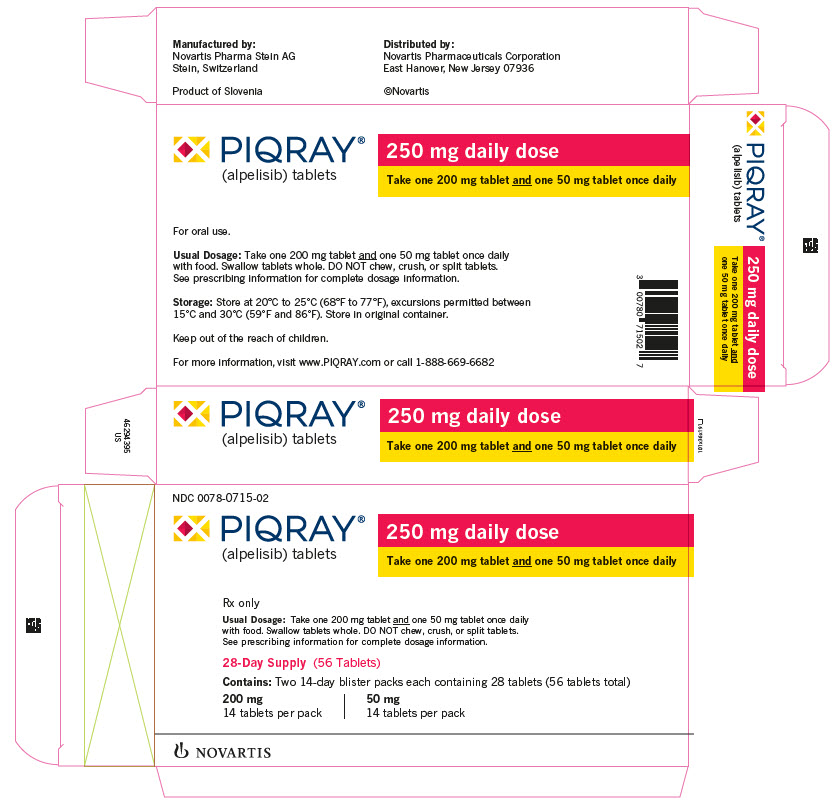
NDC 00078-0715-02: PIQRAY alpelisib Kit
This is a package of PIQRAY alpelisib Kit from Novartis Pharmaceuticals Corporation, first listed with the FDA May 2019 and currently FDA-listed. It is the main listing for this product, which comes in 2 package sizes.
NDC Database Record
One package, one record: these facts belong to NDC 0078-0715-02 alone.
- Record
- FDA NDC Directory package listing · Human prescription drug
- Code segments
- 0078 labeler · 0715 product · 02 package
- Package marketed since
- May 24, 2019
- Sample package
- No — commercial package
- Listing certified through
- Dec 31, 2027
- Barcode (UPC-A, from the NDC)
- 3 0078071502 7
- Medicaid fills, this package
- 45 prescriptions in the last four reported quarters
- FDA record last changed
- Nov 19, 2026
Identity & Classification
Regulatory identifiers FDA, NLM and CMS codes for this package
Drug-database identifiers Medi-Span GPI and First Databank GCN / HICL / AHFS classification
- GSN (GCN sequence number): 079790
- GCN: 46359
- HICL (First Databank): 045761
- AHFS class code: 10:00.00.00
- RxCUI (RxNorm): 2169300
Where does this data come from?
- FDA openFDA NDC Directory · synced Nov 26, 2026
- FDA label on DailyMed · label index refreshed Nov 26, 2026
- RxNorm (NLM RxNav) · catalog refreshed Nov 26, 2026
- Medi-Span GPI (licensed)
- First Databank (licensed) · refreshed Nov 26, 2026
RxNorm Drug Class
This medicine belongs to the Phosphatidylinositol-3-kinase (Pi3K) inhibitors class.
Where does this data come from?
- RxClass (NLM) · catalog refreshed Nov 26, 2026
Clinical
Alpelisib (Piqray) is used in combination with fulvestrant (Faslodex) to treat a certain type of breast cancer that has spread to nearby tissues or other parts of the body in adults whose cancer got worse during or after certain other treatments. Alpelisib (Vijoice) is used to treat adults and children 2 years of age or older who have certain types of PIK3CA Related Overgrowth Spectrum (PROS; a genetic condition that causes overgrowth and abnormalities in certain body tissues). Alpelisib is in a class of medications called kinase inhibitors. It works to treat cancer by blocking the signals th...
Read the full MedlinePlus article ↗- It depends on the brand. Piqray is used with fulvestrant for a specific type of advanced breast cancer (HR-positive, HER2-negative, PIK3CA-mutated). Vijoice is used for severe PIK3...
- Take it with food if it's within 9 hours of your usual time. If it's been longer than that, skip it and take your next dose at the usual time the next day. Don't double up, and don...
- What happens if I miss a dose of alpelisib?
- Take it once a day with food at about the same time each day. Swallow tablets whole and don't chew, crush or split Piqray. If you can't swallow Vijoice tablets, your prescriber or...
Patient education
Drug interactions
Supplement & herbal interactions
Some supplements/herbs that may interact with Alpelisib — tap one for details:
Where does this data come from?
- MedlinePlus (NLM) · refreshed Nov 26, 2026
- FDA label on DailyMed · label index refreshed Nov 26, 2026
Ask a licensed pharmacist directly — free, answered by our team.
Pricing
A drug doesn't have one price. Each row is a different public payment system, and none is what you'd pay at the counter — that depends on your insurance. The ⓘ on each row explains what it measures.
| Price system | Per each | Per package |
|---|---|---|
| Retail pharmacies payNADAC · weekly | Not in the retail survey — common for institutional, discontinued, or low-volume packs. | |
| Medicaid paysCMS SDUD · 12 mo | $14,280.61 | — |
| Medicare drug plans payPart D · Q2 2026 | $355.98 | — |
Where does this data come from?
- CMS NADAC weekly file
- CMS ASP pricing files · refreshed Nov 20, 2026
- CMS Medicaid State Drug Utilization Data · through Q1 2026
- CMS Part D plan pricing files · refreshed Nov 24, 2026
- VA National Acquisition Center price file
Packaging — All Sizes for This Product
| Package NDC | Description | Marketing start | Marketing end | Status |
|---|---|---|---|---|
| 00078-0715-02 You're viewing this Main listing | 2 KIT in 1 CARTON / 1 KIT in 1 KIT * 14 TABLET in 1 BLISTER PACK * 14 TABLET in 1 BLISTER PACK Inner NDC 0078-0715-61 · each kit (1 kit) | 2019-05-24 | — | Active |
| 00078-0715-91 0078-0715-91 | 1 KIT in 1 CARTON / 1 KIT in 1 KIT * 14 TABLET in 1 BLISTER PACK * 14 TABLET in 1 BLISTER PACK Inner NDC 0078-0715-94 · each kit (1 kit) Sample | 2019-05-24 | — | Active |
Pack size FAQ
What quantity is in this package?
What NDC number is used to bill for this package of PIQRAY alpelisib Kit?
Therapeutic Equivalents
| Product | Labeler | Pack | NADAC/unit | TE | Status | Price vs. this |
|---|---|---|---|---|---|---|
| Vijoice 00078-1035-02 | Novartis | 1 kit | — | — | FDA listed | — |
| Piqraythis 00078-0715-02 | Novartis | 14 tablets | — | — | FDA listed | — |
Where does this data come from?
- FDA openFDA NDC Directory · synced Nov 26, 2026
- FDA Orange Book · refreshed Nov 6, 2026
- CMS NADAC weekly file
Availability & Generic Status
We did not find an FDA-approved generic match for this exact strength, form and route. Patent/protection dates below may affect future generic timing.
Why the date isn’t exact: Generic timing can change because patents may be challenged, settled, licensed, added, removed, or worked around with a narrower label — and FDA approval does not always mean a pharmacy can get the generic today.
Our estimate: April 2033 about 6.5 years away
How sure: Probable. More likely than not, but it can still move.
Why then: A patent that protects the brand runs out. After that, approved generics can be sold.
See the full forecast for generic Piqray →What do these terms mean?
- Patent
- Legal protection listed in the Orange Book that may delay generic approval or launch. Issued by the U.S. Patent & Trademark Office.
- Substance patent
- Covers the active drug molecule itself — the hardest to design around. A generic generally can’t launch until it expires.
- Formulation (product) patent
- Covers a specific formulation or dosage form. A generic can sometimes work around it with a different formulation.
- Method-of-use patent
- A patent covering one specific approved use of the drug — not necessarily the whole molecule. A generic can sometimes launch with a “skinny label” that carves out the protected use and keeps the others.
- Skinny label
- A generic label that omits a still-patented use when the FDA allows it — letting a generic reach the market for the unprotected uses.
- Exclusivity
- FDA-granted marketing protection, separate from patents — e.g. 5-yr new chemical entity, 7-yr orphan drug, or a +6-month pediatric extension.
- Paragraph IV
- A generic applicant’s formal challenge to a listed patent. It can potentially lead to earlier generic entry, but often involves litigation or a settlement.
- RLD / RS
- Reference Listed Drug — the brand product the FDA uses as the reference for generic applications. Reference Standard — the product the FDA expects generics to compare against in bioequivalence testing.
- TE / AB rating
- FDA therapeutic-equivalence rating. An AB rating generally means the FDA considers a generic therapeutically equivalent to — and substitutable for — the brand.
- LOE (loss of exclusivity)
- The latest patent or exclusivity currently listed — the loss-of-exclusivity / latest-listed-protection date shown on this page. Paragraph-IV challenges and settlements can move the real date earlier; FDA approval and a manufacturer’s decision to market can move it later.
Built from the FDA Orange Book. The bars above are scaled to each protection’s expiry; the red LOE marker is the last one to lapse.
| Patent | Type | Use code | Expires |
|---|---|---|---|
| US 8227462 ↗ | Drug substance | U-3809 | Apr 29, 2033 |
| US 8227462 ↗ | Drug substance | U-3809 | Apr 29, 2033 |
| US 8227462 ↗ | Drug substance | U-3809 | Apr 29, 2033 |
| US 8476268 ↗ | Drug substance | — | Sep 10, 2029 |
| US 8476268 ↗ | Drug substance | — | Sep 10, 2029 |
| US 8476268 ↗ | Drug substance | — | Sep 10, 2029 |
| Code | What it grants | Expires |
|---|---|---|
| I-937 | New indication (3-year) | Jan 18, 2027 |
| I-937 | New indication (3-year) | Jan 18, 2027 |
| I-937 | New indication (3-year) | Jan 18, 2027 |
Is there a generic version of PIQRAY 250 MG DAILY DOSE PACK?
The FDA approved a generic — why can’t I get it at my pharmacy yet?
Why do different websites show different generic release dates?
What does “FDA listed” mean?
What does a patent or protection date mean here?
What does “current Orange Book estimate” mean?
Can a generic come out before the last patent expires?
Can a generic come out after the listed dates?
What is the difference between patents and exclusivity?
Why are there multiple patent dates?
Where does this data come from?
- FDA Orange Book · refreshed Nov 6, 2026
What It Looks Like
Where does this data come from?
- FDA label on DailyMed · label index refreshed Nov 26, 2026
Inactive Ingredients / Excipients
Inactive ingredients, also called excipients, are components of the drug product other than the active ingredient. They may include fillers, dyes, coatings, preservatives, flavors, or other formulation ingredients.
Avoiding an ingredient? See Alpelisib inactive ingredients by manufacturer: every current product's list side by side, so you can ask your pharmacy for the version that does not list it.
Where does this data come from?
IACT rows and label-wide narrative are kept separate; availability and product-level specificity depend on the submitted label.- FDA label on DailyMed · label index refreshed Nov 26, 2026
- FDA openFDA NDC Directory · synced Nov 26, 2026
Inactive ingredient FAQ
Are inactive ingredients the same for every manufacturer?
Why might an inactive ingredient be missing?
Can inactive ingredients matter?
Manufacturer & Labeler
More NDCs from Novartis Pharmaceuticals Corporation labeler code 00078
- Promacta eltrombopag olamine 25 mg Powder, For Suspension NDC 0078-0697-61
- Rydapt 25 mg Capsule, Liquid Filled NDC 0078-0698-19
- Piqray alpelisib 200 mg Tablet NDC 0078-0701-84
- Piqray alpelisib 150 mg Tablet NDC 0078-0708-02
- Tabrecta capmatinib 150 mg Tablet, Film Coated NDC 0078-0709-56
- Jadenu deferasirox 180 mg Granule NDC 0078-0713-15
- Tabrecta capmatinib 200 mg Tablet, Film Coated NDC 0078-0716-56
- Jadenu deferasirox 360 mg Granule NDC 0078-0720-15
- Jadenu deferasirox 90 mg Granule NDC 0078-0727-15
- Betoptic S betaxolol hydrochloride 2.8 mg/mL Suspension/ Drops NDC 0078-0729-10
- Ilaris canakinumab 150 mg/mL Injection, Solution NDC 0078-0734-61
- Ilevro nepafenac 3 mg/mL Suspension/ Drops NDC 0078-0743-03
Where does this data come from?
- FDA openFDA NDC Directory · synced Nov 26, 2026
- Drugs@FDA
Full Prescribing Information FDA SPL
Indications and Usage
1 INDICATIONS AND USAGE PIQRAY is indicated in combination with fulvestrant for the treatment of adults with hormone receptor (HR)-positive, human epidermal growth factor receptor 2 (HER2)-negative, PIK3CA-mutated, advanced or metastatic breast cancer as detected by an FDA-authorized test following progression on or after an endocrine-based regimen. PIQRAY is a kinase inhibitor indicated in combination with fulvestrant for the treatment of adults with hormone receptor (HR)-positive, human epidermal growth factor receptor 2 (HER2)-negative, PIK3CA-mutated, advanced or metastatic breast cancer as detected by an FDA-authorized test following progression on or after an endocrine-based regimen.
( 1 , 2.1 )
Dosage and Administration
2 DOSAGE AND ADMINISTRATION Recommended Dosage: 300 mg orally once daily with food. ( 2.2 ) For adverse reactions, consider dose interruption, dose reduction, or discontinuation. ( 2.3 )
2.1Patient Selection Select patients for the treatment of HR-positive, HER2-negative advanced or metastatic breast cancer with PIQRAY, based on the presence of one or more PIK3CA mutations in tumor tissue or plasma specimens [see Clinical Studies (14)] . If no mutation is detected in a plasma specimen, test tumor tissue. Information on FDA-authorized tests for the detection of PIK3CA mutations in breast cancer is available at: http://www.fda.gov/CompanionDiagnostics.
2.2Dosage and Administration The recommended dosage of PIQRAY is 300 mg orally once daily with food [see Clinical Pharmacology (12.3)] until disease progression or unacceptable toxicity occurs. Patients should take their dose of PIQRAY at approximately the same time each day. Swallow PIQRAY tablets whole (tablets should not be chewed, crushed or split prior to swallowing).
No tablet should be ingested if it is broken, cracked, or otherwise not intact. If a dose of PIQRAY is missed, it can be taken with food within 9 hours after the time it is usually taken. After more than 9 hours, skip the dose for that day.
The next day, take PIQRAY at the usual time. If the patient vomits after taking a dose, advise the patient not to take an additional dose on that day, and to resume the dosing schedule the next day at the usual time. When given with PIQRAY, the recommended dose of fulvestrant is 500 mg administered on Days 1, 15, and 29, and once monthly thereafter.
Refer to the Prescribing Information for fulvestrant.
2.3Dosage Modifications for Adverse Reactions The recommended dosage modifications for adverse reactions are listed in Table 1. Table 1: PIQRAY Dose Reduction Guidelines for Adverse Reactions 1 1 Only one dose reduction is permitted for pancreatitis. 2 If further dose reduction below 200 mg once daily is required, discontinue PIQRAY.
PIQRAY dose level Dose and schedule Number and strength of tablets Starting dose 300 mg once daily Two 150 mg tablets First-dose reduction 250 mg once daily One 200 mg tablet and one 50 mg tablet Second-dose reduction 200 mg once daily 2 One 200 mg tablet Tables 2, 3, 4, and 5 summarize recommendations for dose interruption, reduction, or discontinuation of PIQRAY in the management of specific adverse reactions. Cutaneous Adverse Reactions If a severe cutaneous adverse reaction (SCAR) is confirmed, permanently discontinue PIQRAY.
Do not reintroduce PIQRAY in patients who have experienced previous SCAR during PIQRAY treatment [see Warnings and Precautions (5.2)] . Table 2: Dosage Modification and Management for Rash and Severe Cutaneous Adverse Reactions (SCARs) 1 Grading according to Common Terminology Criteria for Adverse Events (CTCAE) Version 5.0. 2 For all grades of rash, consider consultation with a dermatologist.
3 Antihistamines administered prior to rash onset may decrease incidence and severity of rash based on the SOLAR-1 trial. [see Warnings and Precautions (5.1, 5.2)] Grade 1,2 Recommendation 3 Grade 1 (< 10% body surface area (BSA) with active skin toxicity) No PIQRAY dose adjustment required. Initiate topical corticosteroid treatment. Consider adding oral antihistamine to manage symptoms.
If active rash is not improved within 28 days of appropriate treatment, add a low dose systemic corticosteroid. If the etiology is SCAR, permanently discontinue PIQRAY. Grade 2 (10%-30% BSA with active skin toxicity) No PIQRAY dose adjustment required.
Initiate or intensify topical corticosteroid and oral antihistamine treatment. Consider low dose systemic corticosteroid treatment. If rash improves to Grade ≤ 1 within 10 days, systemic corticosteroid may be discontinued.
If the etiology is SCAR, permanently discontinue PIQRAY. Grade 3 (e.g., severe rash not responsive to medical management) (> 30% BSA with active skin toxicity) Interrupt PIQRAY. I… [Excerpted — this section continues on DailyMed.]
Dosage Forms and Strengths
3 DOSAGE FORMS AND STRENGTHS Tablets: 50 mg, 150 mg, and 200 mg alpelisib 50 mg: Light pink, unscored, round and curved with beveled edges film-coated tablet, imprinted with “L7” on one side and “NVR” on the other side. 150 mg: Pale red, unscored, ovaloid and curved with beveled edges film-coated tablet, imprinted with “UL7” on one side and “NVR” on the other side. 200 mg: Light red, unscored, ovaloid and curved with beveled edges film-coated tablet, imprinted with “YL7” on one side and “NVR” on the other side.
Tablets: 50 mg, 150 mg, and 200 mg
Contraindications
4 CONTRAINDICATIONS PIQRAY is contraindicated in patients with severe hypersensitivity to it or any of its components [see Warnings and Precautions (5.1)] . Severe hypersensitivity to PIQRAY or to any of its components. ( 4 )
Warnings and Cautions
5 WARNINGS AND PRECAUTIONS Severe Hypersensitivity : Permanently discontinue PIQRAY. Promptly initiate appropriate treatment. ( 5.1 ) Severe Cutaneous Adverse Reactions (SCARs) : PIQRAY can cause SCARs, including Stevens-Johnson syndrome (SJS), erythema multiforme (EM), toxic epidermal necrolysis (TEN), and drug reaction with eosinophilia and systemic symptoms (DRESS).
Interrupt PIQRAY for signs or symptoms of SCARs. Permanently discontinue PIQRAY if SCARs are confirmed. ( 5.2 ) Hyperglycemia : PIQRAY can cause severe hyperglycemia, in some cases associated with hyperglycemic hyperosmolar non-ketotic syndrome (HHNKS) or ketoacidosis.
Before initiating treatment with PIQRAY, test fasting plasma glucose (FPG), HbA1c, and optimize blood glucose. Consider premedication with metformin prior to the initiation of PIQRAY based on patient risk factors for hyperglycemia, gastrointestinal tolerability, and clinical situation. Use of metformin premedication prior to the initiation of PIQRAY decreases the incidence and severity of hyperglycemia, but increases the incidence and severity of nausea, vomiting, and diarrhea adverse reactions.
After initiating treatment, monitor FPG and HbA1c periodically. Initiate or optimize anti-hyperglycemic medications as clinically indicated. Interrupt, reduce dose, or discontinue PIQRAY if severe hyperglycemia occurs.
( 2.3 , 5.3 , 6.1 ) Pneumonitis : PIQRAY can cause severe pneumonitis and interstitial lung disease. Monitor for clinical symptoms or radiological changes. Interrupt or discontinue PIQRAY if severe pneumonitis occurs.
( 2.3 , 5.4 ) Diarrhea or Colitis : PIQRAY causes diarrhea in most patients and may be severe, resulting in dehydration and acute kidney injury. Advise patients to start antidiarrheal treatment, increase oral fluids, and notify their healthcare provider if diarrhea occurs. Colitis has been reported in patients treated with PIQRAY.
Monitor for diarrhea and additional symptoms of colitis, including abdominal pain and mucus or blood in stool. Interrupt, reduce dose, or discontinue PIQRAY if severe diarrhea or colitis occurs. Patients with colitis may require additional treatment, such as enteric-acting and/or systemic steroids.
( 2.3 , 5.5 , 6.2 ) Embryo-Fetal Toxicity : PIQRAY can cause fetal harm. Advise patients of potential risk to a fetus and to use effective contraception. ( 5.6 , 8.1 , 8.3 ) Refer to the Full Prescribing Information of fulvestrant for pregnancy and contraception information.
5.1Severe Hypersensitivity Severe hypersensitivity reactions, including anaphylaxis and anaphylactic shock, can occur in patients treated with PIQRAY. Severe hypersensitivity reactions were manifested by symptoms, including, but not limited to, dyspnea, flushing, rash, fever, or tachycardia. The incidence of Grade 3 and 4 hypersensitivity reactions was 0.7% [see Adverse Reactions (6)] .
Angioedema has been reported in the postmarketing setting in patients treated with PIQRAY [see Adverse Reactions (6.2)] . Advise patients of the signs and symptoms of severe hypersensitivity reactions. Permanently discontinue PIQRAY in the event of severe hypersensitivity.
5.2Severe Cutaneous Adverse Reactions Severe cutaneous adverse reactions (SCARs), including Stevens-Johnson syndrome (SJS), erythema multiforme (EM), toxic epidermal necrolysis (TEN), and drug reaction with eosinophilia and systemic symptoms (DRESS) can occur in patients treated with PIQRAY. In the SOLAR-1 study, SJS and EM were reported in 0.4% and 1.1% of the patients, respectively [see Adverse Reactions (6.1)] . Drug reaction with eosinophilia and systemic symptoms (DRESS) was reported in patients treated with PIQRAY in the postmarketing setting [see Adverse Reactions (6.2)] .
If signs or symptoms of SCARs occur, interrupt PIQRAY until the etiology of the reaction has been determined. Consultation with a dermatologist is recommended. If a SCAR is confirmed, permanently discontinue PIQRAY.
Do not reintroduce PIQRAY in patients who… [Excerpted — this section continues on DailyMed.]
Adverse Reactions
6 ADVERSE REACTIONS The following adverse reactions are discussed in greater detail in other sections of the labeling: Severe Hypersensitivity [see Warnings and Precautions (5.1)] Severe Cutaneous Adverse Reactions [see Warnings and Precautions (5.2)] Hyperglycemia [see Warnings and Precautions (5.3)] Pneumonitis [see Warnings and Precautions (5.4)] Diarrhea or Colitis [see Warnings and Precautions (5.5)] Most common adverse reactions, including laboratory abnormalities (all Grades, incidence ≥ 20%) were increased glucose, increased creatinine, diarrhea, rash, decreased lymphocyte count, increased gamma-glutamyl transferase (GGT), nausea, increased alanine aminotransferase (ALT), fatigue, decreased hemoglobin, increased lipase, decreased appetite, stomatitis, vomiting, decreased weight, decreased calcium, decreased glucose, prolonged activated partial thromboplastin time (aPTT), and alopecia.
( 6.1 ) To report SUSPECTED ADVERSE REACTIONS, contact Novartis Pharmaceuticals Corporation at 1-888-669-6682 or FDA at 1-800-FDA-1088 or www.fda.gov/medwatch .
6.1Clinical Trial Experience Because clinical trials are conducted under widely varying conditions, adverse reaction rates observed in the clinical trials of a drug cannot be directly compared to rates in the clinical trials of another drug and may not reflect the rates observed in practice. The safety of PIQRAY was evaluated in a randomized, double-blind, placebo-controlled trial (SOLAR-1) in 571 patients with HR-positive, HER2-negative, advanced or metastatic breast cancer enrolled into two cohorts, with or without a PIK3CA mutation [see Clinical Studies (14)] .
Patients received either PIQRAY 300 mg plus fulvestrant (n = 284) or placebo plus fulvestrant (n = 287). Fulvestrant 500 mg was administered intramuscularly on Cycle 1, Day 1 and 15, and then at Day 1 of each 28-day cycle during treatment phase. Two patients (0.7%) died while on treatment with PIQRAY plus fulvestrant due to causes other than the underlying malignancy.
Causes of death included one cardio-respiratory arrest and one second primary malignancy. Neither was suspected to be related to study treatment. Serious adverse reactions occurred in 35% of patients receiving PIQRAY plus fulvestrant.
Serious adverse reactions in > 2% of patients receiving PIQRAY plus fulvestrant included hyperglycemia (10%), rash (3.5%), diarrhea (2.8%), acute kidney injury (2.5%), abdominal pain (2.1%), and anemia (2.1%). Osteonecrosis of the jaw (ONJ) was reported in 4.2% of patients (12/284) in the PIQRAY plus fulvestrant arm compared to 1.4% of patients (4/287) in the placebo arm. All patients experiencing ONJ had prior or concomitant bisphosphonates or RANK-ligand inhibitor administration.
Among patients receiving PIQRAY plus fulvestrant, 4.6% permanently discontinued both PIQRAY and fulvestrant and 21% permanently discontinued PIQRAY alone, due to adverse reactions. The most frequent adverse reactions leading to treatment discontinuation of PIQRAY in > 2% patients receiving PIQRAY plus fulvestrant were hyperglycemia (6%), rash (4.2%), diarrhea (2.8%), and fatigue (2.5%). Dose reductions due to adverse reactions occurred in 55% of patients receiving PIQRAY plus fulvestrant.
The most frequent adverse reactions leading to dose reduction in > 2% patients receiving PIQRAY plus fulvestrant were hyperglycemia (29%), rash (9%), diarrhea (6%), stomatitis (3.5%), and mucosal inflammation (2.1%). The most common adverse reactions, including laboratory abnormalities (all grades, incidence ≥ 20%) were increased glucose, increased creatinine, diarrhea, rash, decreased lymphocyte count, increased gamma-glutamyl transferase (GGT), nausea, increased alanine aminotransferase (ALT), fatigue, decreased hemoglobin, increased lipase, decreased appetite, stomatitis, vomiting, decreased weight, decreased calcium, decreased glucose, prolonged activated partial thromboplastin time (aPTT), and alopecia.
Adverse reactions and laboratory abnormalities are liste… [Excerpted — this section continues on DailyMed.]
Drug Interactions
7 DRUG INTERACTIONS Strong CYP3A Inducers : Avoid coadministration. Consider an alternative concomitant drug with no or minimal potential to induce CYP3A. ( 7.1 ) BCRP Inhibitors : Avoid coadministration. If unable to use alternative drugs, closely monitor for increased adverse reactions. ( 7.1 )
7.1Effect of Other Drugs on PIQRAY Strong CYP3A Inducer Avoid coadministration of strong CYP3A inducers with PIQRAY and consider an alternative concomitant drug with no or minimal potential to induce CYP3A. Alpelisib is a CYP3A substrate [see Clinical Pharmacology (12.3)] . Coadministration with a strong CYP3A inducer decreases alpelisib concentration [see Clinical Pharmacology (12.3)] , which may reduce alpelisib effectiveness.
BCRP Inhibitors Avoid coadministration of BCRP inhibitors with PIQRAY. If cannot avoid coadministration, monitor for increased adverse reactions. Alpelisib is a BCRP substrate [see Clinical Pharmacology (12.3)] .
Coadministration of PIQRAY with a BCRP inhibitor may increase alpelisib concentration [see Clinical Pharmacology (12.3)] , which may increase the risk of adverse reaction.
Use in Specific Populations
8 USE IN SPECIFIC POPULATIONS Lactation : Advise not to breastfeed. ( 8.2 )
8.1Pregnancy Risk Summary PIQRAY is used in combination with fulvestrant. Refer to the Prescribing Information of fulvestrant for pregnancy information. Based on animal data and mechanism of action, PIQRAY can cause fetal harm when administered to a pregnant woman [see Clinical Pharmacology (12.1)] .
There are no available data in pregnant women to inform the drug-associated risk. In animal reproduction studies, oral administration of alpelisib to pregnant rats and rabbits during organogenesis caused adverse developmental outcomes, including embryo-fetal mortality (post-implantation loss), reduced fetal weights, and increased incidences of fetal malformations at maternal exposures ≥ 0.8 times the exposure in humans based on AUC at the recommended dose of 300 mg/day (see Data) . Advise pregnant women and females of reproductive potential of the potential risk to a fetus.
The estimated background risk of major birth defects and miscarriage for the indicated population is unknown. However, the estimated background risk of major birth defects is 2% to 4% and of miscarriage is 15% to 20% of clinically recognized pregnancies in the U.S. general population. Data Animal Data In embryo-fetal development studies in rats and rabbits, pregnant animals received oral doses of alpelisib up to 30 mg/kg/day during the period of organogenesis.
In rats, oral administration of alpelisib resulted in maternal toxicity (body weight loss, low food consumption) and no viable fetuses (post-implantation loss) at 30 mg/kg/day (approximately 3 times the exposure in humans at the recommended dose of 300 mg/day based on AUC). At a dose of 10 mg/kg/day (approximately 0.8 times the exposure in humans at the recommended dose of 300 mg/day based on AUC), toxicities included reduced fetal weight and increased incidences of skeletal malformations (bent scapula and thickened or bent long bones) and fetal variations (enlarged brain ventricle, decreased bone ossification).
In a pilot embryo-fetal development study in rabbits, a dose of 30 mg/kg/day resulted in no viable fetuses (post-implantation loss). Doses ≥ 15 mg/kg/day resulted in increased embryo-fetal deaths, reduced fetal weights, and malformations, mostly related to the tail and head. At 15 mg/kg/day in rabbits, the maternal exposure was approximately 5 times the exposure achieved at the recommended human dose of 300 mg/day based on AUC.
8.2Lactation PIQRAY is used in combination with fulvestrant. Refer to the Prescribing Information of fulvestrant for lactation information. Advise patients not to breastfeed during treatment and for the longest post-treatment duration recommended in the Prescribing Information of the individual products.
There is no data on the presence of alpelisib in human milk, its effects on milk production, or the breastfed child. Because of the potential for serious adverse reactions in the breastfed child, advise lactating women to not breastfeed during treatment with PIQRAY and for 1 week after the last dose.
8.3Females and Males of Reproductive Potential PIQRAY is used in combination with fulvestrant. Refer to the Prescribing Information of fulvestrant for contraception and infertility information. Advise patients to use effective contraception during treatment and for the longest post-treatment duration recommended in the Prescribing Information of the individual products.
Pregnancy Testing Verify the pregnancy status in females of reproductive potential prior to initiating PIQRAY. Contraception Females PIQRAY can cause fetal harm when administered to a pregnant woman [see Use in Specific Populations (8.1)] . Advise females of reproductive potential to use effective contraception during treatment with PIQRAY and for 1 week after the last dose.
Males Advise male patients with female partners of reproductive potential to use condoms and effective contraception during treatment with PIQRAY and for 1 week a… [Excerpted — this section continues on DailyMed.]
Pregnancy
8.1Pregnancy Risk Summary PIQRAY is used in combination with fulvestrant. Refer to the Prescribing Information of fulvestrant for pregnancy information. Based on animal data and mechanism of action, PIQRAY can cause fetal harm when administered to a pregnant woman [see Clinical Pharmacology (12.1)] .
There are no available data in pregnant women to inform the drug-associated risk. In animal reproduction studies, oral administration of alpelisib to pregnant rats and rabbits during organogenesis caused adverse developmental outcomes, including embryo-fetal mortality (post-implantation loss), reduced fetal weights, and increased incidences of fetal malformations at maternal exposures ≥ 0.8 times the exposure in humans based on AUC at the recommended dose of 300 mg/day (see Data) . Advise pregnant women and females of reproductive potential of the potential risk to a fetus.
The estimated background risk of major birth defects and miscarriage for the indicated population is unknown. However, the estimated background risk of major birth defects is 2% to 4% and of miscarriage is 15% to 20% of clinically recognized pregnancies in the U.S. general population. Data Animal Data In embryo-fetal development studies in rats and rabbits, pregnant animals received oral doses of alpelisib up to 30 mg/kg/day during the period of organogenesis.
In rats, oral administration of alpelisib resulted in maternal toxicity (body weight loss, low food consumption) and no viable fetuses (post-implantation loss) at 30 mg/kg/day (approximately 3 times the exposure in humans at the recommended dose of 300 mg/day based on AUC). At a dose of 10 mg/kg/day (approximately 0.8 times the exposure in humans at the recommended dose of 300 mg/day based on AUC), toxicities included reduced fetal weight and increased incidences of skeletal malformations (bent scapula and thickened or bent long bones) and fetal variations (enlarged brain ventricle, decreased bone ossification).
In a pilot embryo-fetal development study in rabbits, a dose of 30 mg/kg/day resulted in no viable fetuses (post-implantation loss). Doses ≥ 15 mg/kg/day resulted in increased embryo-fetal deaths, reduced fetal weights, and malformations, mostly related to the tail and head. At 15 mg/kg/day in rabbits, the maternal exposure was approximately 5 times the exposure achieved at the recommended human dose of 300 mg/day based on AUC.
Pediatric Use
8.4Pediatric Use The safety and efficacy of PIQRAY in pediatric patients have not been established. Animal Toxicity Data In a juvenile toxicity study, daily oral administration of alpelisib to juvenile rats from postnatal day (PND) 7 through PND 70 (approximately equivalent to neonatal through adulthood in humans) resulted in reduced body weights, decreased femur lengths, and adverse effects in the kidney in both sexes and delayed balanopreputial separation in males at 20 mg/kg/day (equivalent to exposure in humans at the recommended dose of 300 mg/day based on AUC).
Adverse renal effects included increased vascular/perivascular extracellular matrix deposition in small vessels and tubular degeneration/regeneration in the renal papilla and medulla. The adverse renal effects persisted following a 14-week recovery period. In a 4-week general toxicology study, rats administered alpelisib had growth plate thickening and decreased trabeculae of the knee joint, dentin thinning, and degenerative odontoblasts at the dose of 30 mg/kg/day (approximately 3 times the exposure in humans at the recommended dose of 300 mg/day based on AUC).
Dentin thinning/irregular dentin was also observed in the 13-week toxicology study in rats at the high dose of 20 mg/kg/day (equivalent to exposures in humans at the recommended dose of 300 mg/day based on AUC).
Geriatric Use
8.5Geriatric Use Of 284 patients who received PIQRAY in the SOLAR-1 trial, 117 patients were ≥ 65 years of age and 34 patients were ≥ 75 years of age. In patients treated with PIQRAY plus fulvestrant, there was a higher incidence of Grade 3-4 hyperglycemia in patients ≥ 65 years of age (44%) compared to patients < 65 years of age (32%). No overall differences in effectiveness of PIQRAY were observed between patients ≥ 65 years of age compared to younger patients.
There are an insufficient number of patients ≥ 75 years of age to assess whether there are differences in safety or effectiveness. However, in the SOLAR-1 trial, an increase in the hyperglycemia adverse reactions (74% vs 66%) and Grade 3-4 (56% vs 36%) hyperglycemia were observed in patients ≥ 75 years of age compared to patients < 75 years of age, respectively [see Warnings and Precautions (5.3)] .
Overdosage
10 OVERDOSAGE There is limited experience of overdose with PIQRAY in clinical trials. In the clinical studies, PIQRAY was administered at doses up to 450 mg once daily. In cases where accidental overdosage of PIQRAY was reported in the clinical studies, the adverse reactions associated with the overdose were consistent with the known safety profile of PIQRAY and included hyperglycemia, nausea, asthenia, and rash.
Initiate general symptomatic and supportive measures in all cases of overdosage where necessary. There is no known antidote for PIQRAY.
Clinical Pharmacology
12 CLINICAL PHARMACOLOGY
12.1Mechanism of Action Alpelisib is an inhibitor of phosphatidylinositol-3-kinase (PI3K) with inhibitory activity predominantly against PI3Kα. Gain-of-function mutations in the gene encoding the catalytic α-subunit of PI3K (PIK3CA) lead to activation of PI3Kα and Akt-signaling, cellular transformation and the generation of tumors in in vitro and in vivo models. In breast cancer cell lines, alpelisib inhibited the phosphorylation of PI3K downstream targets, including Akt and showed activity in cell lines harboring a PIK3CA mutation.
In vivo, alpelisib inhibited the PI3K/Akt signaling pathway and reduced tumor growth in xenograft models, including models of breast cancer. PI3K inhibition by alpelisib treatment has been shown to induce an increase in estrogen receptor (ER) transcription in breast cancer cells. The combination of alpelisib and fulvestrant demonstrated increased anti-tumor activity compared to either treatment alone in xenograft models derived from ER-positive, PIK3CA mutated breast cancer cell lines.
12.2Pharmacodynamics Alpelisib exposure-response relationships and the time course of pharmacodynamic response are unknown. Cardiac Electrophysiology At the recommended PIQRAY 300 mg dose with or without fulvestrant, a mean increase in the QTc interval > 20 ms was not observed.
12.3Pharmacokinetics The population pharmacokinetics of alpelisib were evaluated in healthy subjects and adult patients with solid tumors at steady state and are presented as mean [coefficient of variation (CV%)], unless otherwise specified. In adult patients who received PIQRAY 300 mg once daily in SOLAR-1, alpelisib maximum plasma concentration (C max ) is 2,480 (23%) ng/mL and AUC is 33,224 (21%) ng*h/mL. Steady-state alpelisib C max and AUC increased in a dose proportional manner over the dose range of 30 mg to 450 mg (0.1 to 1.5 times the approved recommended dosage) under fed conditions.
The mean accumulation of alpelisib is 1.3 to 1.5 and steady-state is reached within 3 days. Absorption The median time to maximum plasma concentration (T max ) ranges between 2 to 4 hours. Effect of Food Alpelisib AUC increased 1.7-fold and C max 1.8-fold following administration of a high-fat meal (985 calories with 58.1 g of fat) and AUC increased 1.8-fold and C max 2.4-fold following administration of a low-fat meal (334 calories with 8.7 g of fat).
No clinically significant differences in alpelisib AUC were observed between low-fat and high-fat meals. Distribution Alpelisib mean apparent volume of distribution is predicted to be 114 L (49%). Protein binding of alpelisib is 89% and is independent of concentration.
Elimination Alpelisib half-life is predicted to be 8 to 9 hours with clearance predicted to be
9.2L/hr (21%) under fed conditions. Metabolism Alpelisib is primarily metabolized by chemical and enzymatic hydrolysis to form its metabolite BZG791 and followed by CYP3A mediated hydroxylation. Excretion Following a single oral dose of 400 mg radiolabeled alpelisib under fasted condition, 81% of the administered dose was recovered in feces (36% unchanged, 32% BZG791) and 14% (2% unchanged, 7.1% BZG791) in urine.
CYP3A-mediated metabolites (12%) and glucuronides amounted to approximately 15% of the dose. Specific Populations No clinically significant differences in the pharmacokinetics of alpelisib were predicted based on age (21 to 87 years), sex, race/ethnicity (Japanese or White), body weight (37 to 181 kg), CLcr 30 to < 90 mL/min (based on the Cockcroft-Gault formula), or mild to severe hepatic impairment (Child-Pugh Class A, B, and C). The effect of CLcr < 30 mL/min on the pharmacokinetics of alpelisib is unknown.
Drug Interaction Studies Clinical Studies and Model-Informed Approaches Strong CYP3A Inhibitors : Alpelisib AUC is predicted to increase 1.4-fold or less following coadministration of repeat doses of ketoconazole (a strong CYP3A inhibitor). Strong and Moderate CYP3A Inducers : Alpelisib C max decreased by… [Excerpted — this section continues on DailyMed.]
Mechanism of Action
12.1Mechanism of Action Alpelisib is an inhibitor of phosphatidylinositol-3-kinase (PI3K) with inhibitory activity predominantly against PI3Kα. Gain-of-function mutations in the gene encoding the catalytic α-subunit of PI3K (PIK3CA) lead to activation of PI3Kα and Akt-signaling, cellular transformation and the generation of tumors in in vitro and in vivo models. In breast cancer cell lines, alpelisib inhibited the phosphorylation of PI3K downstream targets, including Akt and showed activity in cell lines harboring a PIK3CA mutation.
In vivo, alpelisib inhibited the PI3K/Akt signaling pathway and reduced tumor growth in xenograft models, including models of breast cancer. PI3K inhibition by alpelisib treatment has been shown to induce an increase in estrogen receptor (ER) transcription in breast cancer cells. The combination of alpelisib and fulvestrant demonstrated increased anti-tumor activity compared to either treatment alone in xenograft models derived from ER-positive, PIK3CA mutated breast cancer cell lines.
How Supplied / Storage and Handling
16 HOW SUPPLIED/STORAGE AND HANDLING PIQRAY (alpelisib) 50 mg, 150 mg, and 200 mg film-coated tablets [see Dosage Forms and Strengths (3)] . Daily dose Each carton contains Each blister pack contains NDC 300 mg daily dose 2 blister packs (56 tablets total) A 14-day supply of 28 tablets (28 tablets, 150 mg alpelisib per tablet) NDC 0078-0708-02 250 mg daily dose 2 blister packs (56 tablets total) A 14-day supply of 28 tablets (14 tablets, 200 mg alpelisib per tablet and 14 tablets, 50 mg alpelisib per tablet) NDC 0078-0715-02 200 mg daily dose 1 blister pack (28 tablets total) A 28-day supply of 28 tablets (28 tablets, 200 mg alpelisib per tablet) NDC 0078-0701-84 Store at 20°C to 25°C (68°F to 77°F), excursions permitted between 15°C and 30°C (59°F and 86°F) [see USP Controlled Room Temperature].
Description
11 DESCRIPTION PIQRAY (alpelisib) is a kinase inhibitor. The chemical name of alpelisib is (2S)- N 1 -[4-Methyl-5-[2-(2,2,2-trifluoro-1,1-dimethylethyl)-4-pyridinyl]-2-thiazolyl]-1,2-pyrrolidinedicarboxamide. Alpelisib is a white to almost white powder.
The molecular formula for alpelisib is C 19 H 22 F 3 N 5 O 2 S and the relative molecular mass is 441.47 g/mol. The chemical structure of alpelisib is shown below: PIQRAY film-coated tablets are supplied for oral administration with three strengths that contain 50 mg, 150 mg and 200 mg of alpelisib. The tablets also contain hypromellose, magnesium stearate, mannitol, microcrystalline cellulose, and sodium starch glycolate.
The film-coating contains hypromellose, iron oxide black, iron oxide red, macrogol/polyethylene glycol (PEG) 4000, talc, and titanium dioxide. alpelisib structural formula
Information for Patients
17 PATIENT COUNSELING INFORMATION Advise the patient to read the FDA-approved patient labeling (Patient Information). Severe Hypersensitivity Inform patients of the signs and symptoms of hypersensitivity. Advise patients to contact their healthcare provider immediately for signs and symptoms of hypersensitivity [see Warnings and Precautions (5.1)] .
Severe Cutaneous Adverse Reactions Inform patients of the signs and symptoms of severe cutaneous adverse reactions (SCARs). Advise patients to contact their healthcare provider immediately for signs and symptoms of SCARs [see Warnings and Precautions (5.2)] . Hyperglycemia Advise patients that PIQRAY may cause hyperglycemia and the need to monitor fasting blood glucose periodically during therapy.
Advise patients to contact their healthcare provider immediately for signs and symptoms of hyperglycemia [see Warnings and Precautions (5.3)] . Pneumonitis Inform patients that PIQRAY may cause pneumonitis and to immediately contact their healthcare provider if they experience respiratory problems [see Warnings and Precautions (5.4)] . Diarrhea or Colitis Advise patients that PIQRAY may cause diarrhea, which may be severe, and to start antidiarrheal treatment, increase oral fluids, and notify their healthcare provider if diarrhea occurs while taking PIQRAY [see Warnings and Precautions (5.5)] .
Advise patients that PIQRAY may cause colitis and to notify their healthcare provider immediately of any symptoms of colitis, such as abdominal pain and mucus or blood in stool, while taking PIQRAY [see Warnings and Precautions (5.5)] . Uveitis Advise patients to contact their healthcare provider immediately for signs and symptoms of uveitis [see Adverse Reactions (6.2)] . Embryo-Fetal Toxicity Inform pregnant women and females of reproductive potential of the potential risk to a fetus.
Advise females to inform their healthcare provider of a known or suspected pregnancy [see Warnings and Precautions (5.6) and Use in Specific Populations (8.1)] . Advise females of reproductive potential to use effective contraception during treatment with PIQRAY and for 1 week after the last dose [see Use in Specific Populations (8.3)] . Advise male patients with female partners of reproductive potential to use condoms and effective contraception during treatment with PIQRAY and for 1 week after the last dose [see Use in Specific Populations (8.3)] .
Refer to the Prescribing Information of fulvestrant for pregnancy and contraception information. Advise patients to use effective contraception during treatment and for the longest post-treatment duration recommended in the Prescribing Information of the individual products. Lactation Advise women not to breastfeed during treatment with PIQRAY and for 1 week after the last dose [see Use in Specific Populations (8.2)] .
Refer to the Full Prescribing Information of fulvestrant for lactation information. Advise patients not to breastfeed during treatment and for the longest post-treatment duration recommended in the Prescribing Information of the individual products. Infertility Advise males and females of reproductive potential that PIQRAY may impair fertility [see Use in Specific Populations (8.3)] .
Refer to the Prescribing Information of fulvestrant for infertility information. Drug Interactions Advise patients and caregivers to inform their healthcare provider of all concomitant medications, including prescription medicines, over-the-counter drugs, vitamins, and herbal products. [see Drug Interactions (7.1)] . Dosing Instruct patients to take PIQRAY at approximately the same time each day and to swallow the tablet(s) whole (tablets should not be chewed, crushed, or split prior to swallowing) [see Dosage and Administration (2.2)] .
Advise patients to take PIQRAY with food [see Clinical Pharmacology (12.3)] . Instruct patients that if a dose of PIQRAY is missed, it can be taken with food within 9 hours after the time it is usually taken. After more than 9 hours, skip th… [Excerpted — this section continues on DailyMed.]
Pharmacokinetics
12.3Pharmacokinetics The population pharmacokinetics of alpelisib were evaluated in healthy subjects and adult patients with solid tumors at steady state and are presented as mean [coefficient of variation (CV%)], unless otherwise specified. In adult patients who received PIQRAY 300 mg once daily in SOLAR-1, alpelisib maximum plasma concentration (C max ) is 2,480 (23%) ng/mL and AUC is 33,224 (21%) ng*h/mL. Steady-state alpelisib C max and AUC increased in a dose proportional manner over the dose range of 30 mg to 450 mg (0.1 to 1.5 times the approved recommended dosage) under fed conditions.
The mean accumulation of alpelisib is 1.3 to 1.5 and steady-state is reached within 3 days. Absorption The median time to maximum plasma concentration (T max ) ranges between 2 to 4 hours. Effect of Food Alpelisib AUC increased 1.7-fold and C max 1.8-fold following administration of a high-fat meal (985 calories with 58.1 g of fat) and AUC increased 1.8-fold and C max 2.4-fold following administration of a low-fat meal (334 calories with 8.7 g of fat).
No clinically significant differences in alpelisib AUC were observed between low-fat and high-fat meals. Distribution Alpelisib mean apparent volume of distribution is predicted to be 114 L (49%). Protein binding of alpelisib is 89% and is independent of concentration.
Elimination Alpelisib half-life is predicted to be 8 to 9 hours with clearance predicted to be
9.2L/hr (21%) under fed conditions. Metabolism Alpelisib is primarily metabolized by chemical and enzymatic hydrolysis to form its metabolite BZG791 and followed by CYP3A mediated hydroxylation. Excretion Following a single oral dose of 400 mg radiolabeled alpelisib under fasted condition, 81% of the administered dose was recovered in feces (36% unchanged, 32% BZG791) and 14% (2% unchanged, 7.1% BZG791) in urine.
CYP3A-mediated metabolites (12%) and glucuronides amounted to approximately 15% of the dose. Specific Populations No clinically significant differences in the pharmacokinetics of alpelisib were predicted based on age (21 to 87 years), sex, race/ethnicity (Japanese or White), body weight (37 to 181 kg), CLcr 30 to < 90 mL/min (based on the Cockcroft-Gault formula), or mild to severe hepatic impairment (Child-Pugh Class A, B, and C). The effect of CLcr < 30 mL/min on the pharmacokinetics of alpelisib is unknown.
Drug Interaction Studies Clinical Studies and Model-Informed Approaches Strong CYP3A Inhibitors : Alpelisib AUC is predicted to increase 1.4-fold or less following coadministration of repeat doses of ketoconazole (a strong CYP3A inhibitor). Strong and Moderate CYP3A Inducers : Alpelisib C max decreased by 38% and AUC by 57% following coadministration of repeat doses of rifampin (a strong CYP3A inducer) with a single dose of PIQRAY 300 mg and alpelisib C max decreased by 59% and AUC by 74% following coadministration of rifampin (a strong CYP3A inducer) with PIQRAY 300 mg once daily.
Alpelisib AUC is predicted to decrease by 30% or less following coadministration of repeat doses of efavirenz (a moderate CYP3A inducer) with a single dose of PIQRAY 300 mg. Acid Reducing Agents : Following coadministration of ranitidine (a H 2 receptor antagonist) Alpelisib AUC decreased by 21% and C max by 36% when administered with a low-fat meal (334 calories, 8.7 g fat). Alpelisib AUC decreased by 30% and C max by 51% when administered in the fasted state.
Other Drugs : No clinically significant differences in pharmacokinetics of the following drugs when coadministered with alpelisib: midazolam (a CYP3A substrate), repaglinide (a CYP2C8 substrate), warfarin (a CYP2C9 substrate), omeprazole (a CYP2C19 substrate), bupropion (a CYP2B6 substrate) and everolimus (a CYP3A and P-gp substrate). In vitro Studies Transporter Systems : Alpelisib is a BCRP substrate. Alpelisib is an inhibitor of P-gp but not of BCRP, MRP2, BSEP, OATP1B1, OATP1B3, OCT1, OAT1, OAT3, OCT2, MATE1, and MATE2K.
Pharmacodynamics
12.2Pharmacodynamics Alpelisib exposure-response relationships and the time course of pharmacodynamic response are unknown. Cardiac Electrophysiology At the recommended PIQRAY 300 mg dose with or without fulvestrant, a mean increase in the QTc interval > 20 ms was not observed.
Clinical Studies
14 CLINICAL STUDIES SOLAR-1 (NCT02437318) was a randomized, double-blind, placebo-controlled trial of PIQRAY plus fulvestrant versus placebo plus fulvestrant in 572 patients with HR-positive, HER2-negative, advanced or metastatic breast cancer whose disease had progressed or recurred on or after an aromatase inhibitor-based treatment (with or without CDK4/6 combination). Patients were excluded if they had inflammatory breast cancer, diabetes mellitus Type 1 or uncontrolled Type 2, or pneumonitis. Randomization was stratified by presence of lung and/or liver metastasis and previous treatment with CDK4/6 inhibitor(s).
Overall, 60% of enrolled patients had tumors with one or more PIK3CA mutations in tissue, 50% had liver/lung metastases, and 6% had previously been treated with a CDK4/6 inhibitor. There were 341 patients enrolled by tumor tissue in the cohort with a PIK3CA mutation and 231 enrolled in the cohort without a PIK3CA mutation. Of the 341 patients in the cohort with a PIK3CA mutation, 333 (98%) patients had one or more PIK3CA mutations confirmed in tumor tissue using the FDA-approved therascreen ® PIK3CA RGQ PCR Kit.
The remaining 2% (8/341) of patients did not have their PIK3CA mutations confirmed in tumor tissue. Out of the 333 patients with PIK3CA mutations confirmed in tumor tissue, 21 (6%) patients had no plasma specimen available for testing with the FDA-approved therascreen ® PIK3CA RGQ PCR Kit. Of the remaining 312 patients with PIK3CA mutations confirmed in tumor tissue, 175 patients (56%) had PIK3CA mutations identified in plasma specimen, and 137 patients (44%) did not have PIK3CA mutations identified in plasma specimen.
Patients received either PIQRAY (300 mg) or placebo orally once daily on a continuous basis, plus fulvestrant (500 mg) administered intramuscularly on Cycle 1, Days 1 and 15, and then on Day 1 of every 28-day cycle. Patients received treatment until radiographic disease progression or unacceptable toxicity. Tumor assessments were performed every 8 weeks for the first 18 months and every 12 weeks thereafter.
The median age of patients was 63 years (range, 25 to 92). Most patients were women (99.8%), and most patients were white (66%), followed by Asian (22%), Other/Unknown (10%), black or African American (1.4%), and American Indian or Alaskan Native (0.9%). Baseline ECOG performance status was 0 (68%) or 1 (32%).
Patient demographics for those with PIK3CA-mutated tumors were generally representative of the broader study population. The median duration of exposure to PIQRAY plus fulvestrant was 8.2 months with 59% of patients exposed for ≥ 6 months. The majority of patients (98%) received prior hormonal therapy as the last treatment (48% metastatic setting, 52% adjuvant setting).
Primary endocrine resistance, defined as relapsed within 24 months on adjuvant endocrine therapy or progression within 6 months on endocrine therapy for advanced disease, was observed in 13% of patients and secondary endocrine resistance, defined as relapsed after 24 months on adjuvant endocrine therapy, relapsed within 12 months of the end of adjuvant endocrine therapy, or progression after 6 months on endocrine therapy for advanced disease, was observed in 72% of patients. The major efficacy outcome was investigator-assessed progression-free survival (PFS) in the cohort with a PIK3CA mutation per Response Evaluation Criteria in Solid Tumors (RECIST) v1.1.
Additional efficacy outcome measures were overall response rate (ORR) and overall survival (OS) in the cohort with a PIK3CA mutation. The results from the investigator-assessed PFS and ORR for the cohort with a PIK3CA mutation in tumor tissue are presented in Table 8, and Figure 1. Investigator-assessed PFS results for the cohort with a PIK3CA mutation were supported by consistent results from a blinded independent review committee (BIRC) assessment.
Similar results were seen in patients with tissue or plasma PIK3CA mutations. At the pre-specified final OS analysis… [Excerpted — this section continues on DailyMed.]
Nonclinical Toxicology
13 NONCLINICAL TOXICOLOGY
13.1Carcinogenesis, Mutagenesis, Impairment of Fertility Alpelisib was not carcinogenic in a 2-year carcinogenicity study conducted in rats when administered by daily oral gavage at doses up to 4 mg/kg (approximately 0.1 times the recommended dose of 300 mg/day on a mg/m 2 basis). Alpelisib was not mutagenic in an in vitro bacterial reverse mutation (Ames) assay, or aneugenic or clastogenic in human cell micronucleus and chromosome aberration tests. Alpelisib was not genotoxic in an in vivo rat micronucleus test.
In a fertility and early embryonic development study in rats, female animals were administered alpelisib at doses of 3, 10, and 20 mg/kg/day orally. Animals were dosed for 4 weeks prior to pairing, during the mating period, and up to Gestation Day 6. At a dose of 20 mg/kg/day (approximately 1.7 times the exposure in humans at the recommended dose of 300 mg based on AUC), alpelisib increased pre- and post-implantation losses, leading to reduced numbers of implantation sites and live embryos.
In a repeated-dose toxicity study in rats, adverse effects in female reproductive organs included vaginal atrophy and estrous cycle variations in rats at doses ≥ 6 mg/kg/day (approximately 0.6 times the exposure in humans at the recommended dose of 300 mg/day based on AUC). In a male fertility study, alpelisib administered orally at doses of 3, 10, and 20 mg/kg/day for up to 99 days (10-weeks prior to pairing, during mating period and continuing during post-pairing) to male rats, resulted in reduced weights of seminal vesicles and prostate, which correlated with atrophy and/or reduced secretion in prostate and seminal vesicles at ≥ 10 mg/kg/day (approximately 0.8 times the exposure in humans at the recommended dose of 300 mg based on AUC).
No adverse effects on male fertility parameters were observed at doses up to 20 mg/kg/day.
Carcinogenesis, Mutagenesis, Impairment of Fertility
13.1Carcinogenesis, Mutagenesis, Impairment of Fertility Alpelisib was not carcinogenic in a 2-year carcinogenicity study conducted in rats when administered by daily oral gavage at doses up to 4 mg/kg (approximately 0.1 times the recommended dose of 300 mg/day on a mg/m 2 basis). Alpelisib was not mutagenic in an in vitro bacterial reverse mutation (Ames) assay, or aneugenic or clastogenic in human cell micronucleus and chromosome aberration tests. Alpelisib was not genotoxic in an in vivo rat micronucleus test.
In a fertility and early embryonic development study in rats, female animals were administered alpelisib at doses of 3, 10, and 20 mg/kg/day orally. Animals were dosed for 4 weeks prior to pairing, during the mating period, and up to Gestation Day 6. At a dose of 20 mg/kg/day (approximately 1.7 times the exposure in humans at the recommended dose of 300 mg based on AUC), alpelisib increased pre- and post-implantation losses, leading to reduced numbers of implantation sites and live embryos.
In a repeated-dose toxicity study in rats, adverse effects in female reproductive organs included vaginal atrophy and estrous cycle variations in rats at doses ≥ 6 mg/kg/day (approximately 0.6 times the exposure in humans at the recommended dose of 300 mg/day based on AUC). In a male fertility study, alpelisib administered orally at doses of 3, 10, and 20 mg/kg/day for up to 99 days (10-weeks prior to pairing, during mating period and continuing during post-pairing) to male rats, resulted in reduced weights of seminal vesicles and prostate, which correlated with atrophy and/or reduced secretion in prostate and seminal vesicles at ≥ 10 mg/kg/day (approximately 0.8 times the exposure in humans at the recommended dose of 300 mg based on AUC).
No adverse effects on male fertility parameters were observed at doses up to 20 mg/kg/day.
Patient Package Insert
This Patient Information has been approved by the U.S. Food and Drug Administration. Revised: October 2026 PATIENT INFORMATION PIQRAY ® (pik' raye) (alpelisib) tablets, for oral use Important: PIQRAY is used with fulvestrant.
You should also read the Patient Information that comes with fulvestrant. What is PIQRAY? PIQRAY is a prescription medicine used in combination with the medicine fulvestrant to treat adults who have hormone receptor (HR)-positive, human epidermal growth factor receptor 2 (HER2)-negative breast cancer, with an abnormal phosphatidylinositol-3-kinase catalytic subunit alpha (PIK3CA) gene, that has progressed or spread to other parts of the body (metastatic) while on or after endocrine therapy.
Your healthcare provider will test your cancer for an abnormal “PIK3CA” gene to make sure that PIQRAY is right for you. It is not known if PIQRAY is safe and effective in children. Do not take PIQRAY if you have had a severe allergic reaction to PIQRAY or are allergic to any of the ingredients in PIQRAY.
See the end of this Patient Information leaflet for a complete list of the ingredients in PIQRAY. See “What are the possible side effects of PIQRAY?” for signs and symptoms of severe allergic reactions. Before you take PIQRAY, tell your healthcare provider about all of your medical conditions, including if you: have a history of diabetes or high levels of sugar in your blood have a history of skin rash, redness of skin, blistering of the lips, eyes or mouth, or skin peeling are pregnant or plan to become pregnant.
PIQRAY can harm your unborn baby. Females who are able to become pregnant: Your healthcare provider will check to see if you are pregnant before you start treatment with PIQRAY. You should use effective birth control (contraception) during treatment with PIQRAY and for 1 week after the last dose.
Your healthcare provider will tell you how long you should use birth control (contraception) after your treatment with PIQRAY and fulvestrant. Talk to your healthcare provider about birth control methods that may be right for you during this time. If you become pregnant or think you are pregnant, tell your healthcare provider right away.
Males with female partners who are able to become pregnant: You should use condoms and effective birth control during treatment with PIQRAY and for 1 week after the last dose. If your female partner becomes pregnant, tell your healthcare provider right away. are breastfeeding or plan to breastfeed. It is not known if PIQRAY passes into your breast milk.
Do not breastfeed during treatment with PIQRAY and for 1 week after the last dose. Your healthcare provider will tell you how long you should not breastfeed after your treatment with PIQRAY and fulvestrant. Talk to your healthcare provider about the best way to feed your baby during treatment.
Tell your healthcare provider about all of the medicines you take, including prescription and over-the-counter medicines, vitamins, and herbal supplements. Taking PIQRAY with other medicines may affect the way PIQRAY works and may cause side effects. Know the medicines you take.
Keep a list of them to show your healthcare provider or pharmacist when you get a new medicine. How should I take PIQRAY? Take PIQRAY exactly as your healthcare provider tells you.
Do not change your dose or stop taking PIQRAY unless your healthcare provider tells you. Take PIQRAY 1 time each day, at about the same time each day. Take PIQRAY with food.
Swallow PIQRAY tablets whole. Do not chew, crush or split the tablets. Do not take any PIQRAY tablets that are broken, cracked, or that look damaged.
If you miss a dose of PIQRAY, you may still take it with food up to 9 hours after the time you usually take it. If it has been more than 9 hours after you usually take your dose, skip the dose for that day. The next day, take the dose at your usual time.
Do not take 2 doses to make up for a missed dose. If you vomit after taking a dose of PIQRAY, do not take another dose on t… [Excerpted — this section continues on DailyMed.]
Package Label / Principal Display Panel
PRINCIPAL DISPLAY PANEL NDC 0078-0708-02 PIQRAY ® (alpelisib) tablets 300 mg daily dose Take two 150 mg tablets once daily Rx only Usual Dosage: Take two 150 mg tablets once daily with food. Swallow tablets whole. DO NOT chew, crush, or split tablets.
See prescribing information for complete dosage information. 28-Day Supply (56 Tablets) Contains: Two 14-day blister packs each containing 28 tablets (56 tablets total) NOVARTIS PRINCIPAL DISPLAY PANEL NDC 0078-0708-02 PIQRAY® (alpelisib) tablets 300 mg daily dose Take two 150 mg tablets once daily Rx only Usual Dosage: Take two 150 mg tablets once daily with food. Swallow tablets whole.
DO NOT chew, crush, or split tablets. See prescribing information for complete dosage information. 28-Day Supply (56 Tablets) Contains: Two 14-day blister packs each containing 28 tablets (56 tablets total) NOVARTIS
PRINCIPAL DISPLAY PANEL NDC 0078-0715-02 PIQRAY ® (alpelisib) tablets 250 mg daily dose Take one 200 mg tablet and one 50 mg tablet once daily Rx only Usual Dosage: Take one 200 mg tablet and one 50 mg tablet once daily with food. Swallow tablets whole. DO NOT chew, crush, or split tablets.
See prescribing information for complete dosage information. 28-Day Supply (56 Tablets) Contains: Two 14-day blister packs each containing 28 tablets (56 tablets total) 200 mg 14 tablets per pack 50 mg 14 tablets per pack NOVARTIS PRINCIPAL DISPLAY PANEL NDC 0078-0715-02 PIQRAY® (alpelisib) tablets 250 mg daily dose Take one 200 mg tablet and one 50 mg tablet once daily Rx only Usual Dosage: Take one 200 mg tablet and one 50 mg tablet once daily with food. Swallow tablets whole.
DO NOT chew, crush, or split tablets. See prescribing information for complete dosage information. 28-Day Supply (56 Tablets) Contains: Two 14-day blister packs each containing 28 tablets (56 tablets total) 200 mg 14 tablets per pack 50 mg 14 tablets per pack NOVARTIS
PRINCIPAL DISPLAY PANEL NDC 0078-0701-84 PIQRAY ® (alpelisib) tablets 200 mg daily dose Take one 200 mg tablet once daily Rx only Usual Dosage: Take one 200 mg tablet once daily with food. Swallow tablets whole. DO NOT chew, crush, or split tablets.
See prescribing information for complete dosage information. 28-Day Supply Contains: One blister pack containing 28 tablets NOVARTIS PRINCIPAL DISPLAY PANEL NDC 0078-0701-84 PIQRAY® (alpelisib) tablets 200 mg daily dose Take one 200 mg tablet once daily Rx only Usual Dosage: Take one 200 mg tablet once daily with food. Swallow tablets whole.
DO NOT chew, crush, or split tablets. See prescribing information for complete dosage information. 28-Day Supply Contains: One blister pack containing 28 tablets NOVARTIS
Medicaid Utilization & Spend
Medicaid Utilization by Pack Size
Medicare Part D Spend CMS · Part D · 2026 (Q1)
Reported Adverse Events (FAERS)
Top reported reactions
Age at onset
Reporter sex
Serious outcomes
Where does this data come from?
About This NDC Listing & Data Coverage
Kit / multi-component package
This NDC identifies a kit — a package containing more than one component. Structured data (pricing, ingredients, equivalents) is often reported per component rather than for the kit NDC itself, which can make this page look thinner than the components' own pages.
What data is (and isn’t) available for this NDC — tap to expand
| NDC identity (package / product / labeler codes) | Available |
| Labeler | Available |
| Product & package description | Available |
| Marketing category & status | Available |
| Active ingredient / dosage form / route | Available |
| FDA label (SPL via DailyMed) | Available |
| Package photos | Available |
| Inactive ingredients (structured) | — Not published for this NDC The labeler did not submit a structured excipient list, or no SPL is available. |
| NADAC pharmacy acquisition price (CMS) | — Not published for this NDC CMS publishes NADAC only for NDCs reported in its retail-pharmacy survey. |
| Orange Book / therapeutic-equivalence data | Available |
| HCPCS J-code billing crosswalk | — Not published for this NDC Most self-administered / retail products have no J-code — that is normal. |
| Medicaid utilization (CMS SDUD) | Available |