
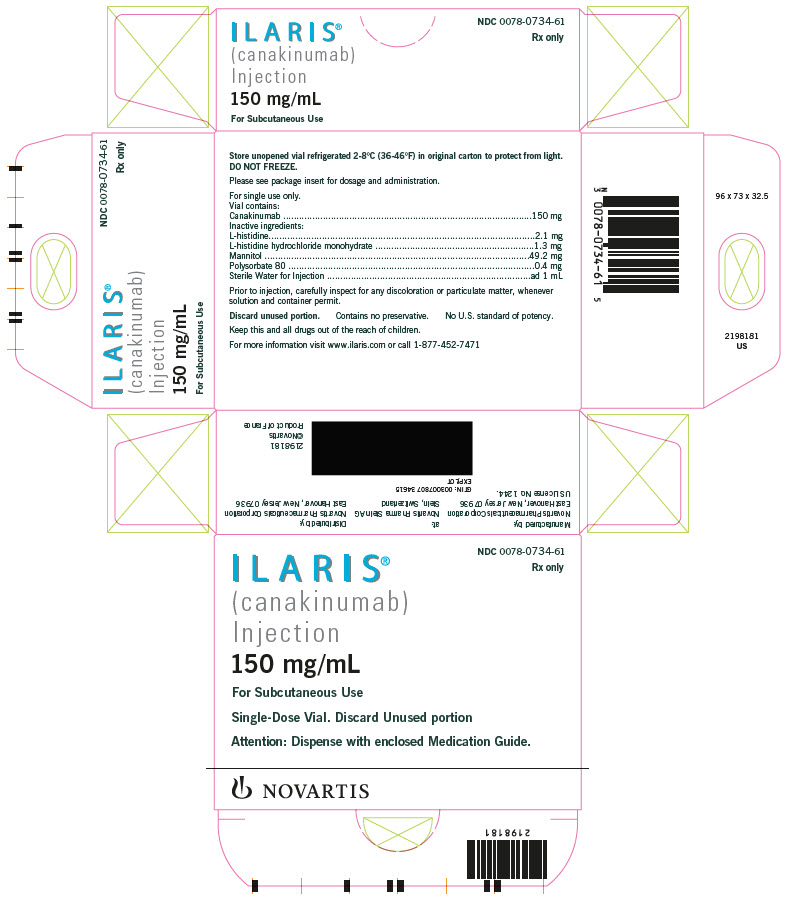
Ilaris canakinumab 150 mg/mL Injection, Solution, 1 vial — NDC 0078-0734-61 (Billing 00078-0734-61)
This is a package of 1 vial of Ilaris canakinumab 150 mg/mL Injection, Solution from Novartis Pharmaceuticals Corporation, marketed since Dec 2016 and currently FDA-listed. It is this product's only package size.
NDC database record
One package, one record: these facts belong to NDC 0078-0734-61 alone.
- Record
- FDA NDC Directory package listing · Human prescription drug
- Code segments
- 0078 labeler · 0734 product · 61 package
- Package marketed since
- Dec 22, 2016
- Sample package
- No — commercial package
- Listing certified through
- Dec 31, 2027
- Barcode (UPC-A, from the NDC)
- 3 0078073461 5
- Medicaid fills, this package
- 7,033 prescriptions in the last four reported quarters
- FDA record last changed
- Jul 24, 2026
Identity & classification
Regulatory identifiers FDA, NLM and CMS codes for this package
Drug-database identifiers Medi-Span GPI and First Databank GCN / HICL / AHFS classification
- GSN (GCN sequence number): 077202
- GCN: 43148
- GPI-14 (Medi-Span): 66460020002015
- HICL (First Databank): 036497
- AHFS class code: 08:18.24.00
- RxCUI (RxNorm): 1864324
Where does this data come from?
- FDA openFDA NDC Directory · synced Oct 8, 2026
- FDA label on DailyMed · label index refreshed Oct 8, 2026
- RxNorm (NLM RxNav) · catalog refreshed Oct 8, 2026
- Medi-Span GPI (licensed)
- First Databank (licensed) · refreshed Oct 8, 2026
RxNorm drug class
This medicine belongs to the Interleukin inhibitors class.
Where does this data come from?
- RxClass (NLM) · catalog refreshed Oct 8, 2026
Clinical
Canakinumab injection is used to treat certain periodic fever syndromes (inherited conditions in which the body attacks its own tissues and organs causing fever, inflammation, joint and muscle pain, eye redness or pain, stomach pain, rash, and fatigue) including familial cold autoinflammatory syndrome (FCAS) and Muckle-Wells syndrome (MWS) in adults and children 4 years of age or older; and tumor necrosis factor receptor-associated periodic syndrome (TRAPS), mevalonate kinase deficiency (MKD)/ hyperimmunoglobulin D syndrome (HIDS), and familial Mediterranean fever (FMF) in adults and children....
Read the full MedlinePlus article ↗- It treats inherited periodic fever syndromes (CAPS, TRAPS, HIDS/MKD and FMF), active Still’s disease, and gout flares in certain adults. For gout, it is for people who can’t use or...
- It is an injection under the skin only. How often depends on your condition and weight, so follow your prescriber’s schedule exactly. Don’t shake the vial and don’t use it if it lo...
- Colds, sore throat, and injection-site reactions are the most common. Some people get diarrhea, nausea, headache or stomach pain. Call your doctor if you have a fever that won’t go...
- Avoid live vaccines while on Ilaris. If possible, get all your recommended vaccines before you start, since vaccines may not work as well afterward.
Patient education
Supplement & herbal interactions
Where does this data come from?
- MedlinePlus (NLM) · refreshed Oct 8, 2026
- FDA label on DailyMed · label index refreshed Oct 8, 2026
Ask a licensed pharmacist directly — free, answered by our team.
Pricing
A drug doesn't have one price. Each row is a different public payment system, and none is what you'd pay at the counter — that depends on your insurance. The ⓘ on each row explains what it measures.
| Price system | Per mL | Per package |
|---|---|---|
| Retail pharmacies payNADAC · weekly | Not in the retail survey — common for institutional, discontinued, or low-volume packs. | |
| Medicaid paysCMS SDUD · 12 mo | $21,020.18 | $21,020.18 / 1 ml |
| Medicare drug plans payPart D · quarterly | No Part D plan price is available for this NDC in our data. | |
| Medicare Part B allowsASP · J0638 | $156.541 / J0638 unit | — |
Where does this data come from?
- CMS NADAC weekly file
- CMS ASP pricing files · refreshed Sep 20, 2026
- CMS Medicaid State Drug Utilization Data · through Q1 2026
- CMS Part D plan pricing files · refreshed Sep 24, 2026
- VA National Acquisition Center price file
Billing & reimbursement
Where does this data come from?
- CMS ASP NDC-HCPCS crosswalk · refreshed Sep 22, 2026
- DMEPDAC NDC-HCPCS crosswalk
- openFDA NSDE billing units · refreshed Oct 7, 2026
Packaging — all sizes for this product
| Package NDC | Description | Marketing start | Marketing end | Status |
|---|---|---|---|---|
| 00078-0734-61 You're viewing this Main listing | 1 VIAL, SINGLE-USE in 1 CARTON / 1 mL in 1 VIAL, SINGLE-USE | 2016-12-22 | — | Active |
Therapeutic equivalents
| Product | Labeler | Pack | NADAC/unit | TE | Status | Price vs. this |
|---|---|---|---|---|---|---|
| Ilaris 150 mg/mLthis 00078-0734-61 | Novartis | 1 vial | — | — | FDA listed | — |
Where does this data come from?
- FDA openFDA NDC Directory · synced Oct 8, 2026
- FDA Purple Book · refreshed Oct 5, 2026
- CMS NADAC weekly file
Availability & biosimilar status
Biologics have no small-molecule generics; biosimilar competition is tracked in the FDA Purple Book.
Where does this data come from?
- FDA Purple Book · refreshed Oct 5, 2026
Inactive Ingredients / Excipients
Inactive ingredients, also called excipients, are components of the drug product other than the active ingredient. They may include fillers, dyes, coatings, preservatives, flavors, or other formulation ingredients.
🧪 Avoiding an ingredient? See Canakinumab Injection inactive ingredients by manufacturer: every current product's list side by side, so you can ask your pharmacy for the version that does not list it.
💡 Tap an ingredient (hover on desktop) to see what it is and why it’s used.
-
2.1 mg / 1 mL
UNII 4QD397987E
An amino acid used as a buffer and stabilizer in medications. It helps maintain the pH balance and protects the active drug from breaking down during storage and use.
-
1.3 mg / 1 mL
UNII 1D5Q932XM6
An amino acid salt used in medicines as a buffer and pH regulator. It helps maintain the proper acidity level in liquid formulations to keep the drug stable and effective.
-
49.2 mg / 1 mL
UNII 3OWL53L36A
A natural sugar alcohol derived from seaweed or synthesized in the lab. It's used as a filler to add bulk, a sweetener in sugar-free formulas, and a disintegrant to help tablets break apart in the stomach.
-
0.4 mg / 1 mL
UNII 6OZP39ZG8H
Polysorbate 80 is a synthetic emulsifier derived from sorbitol and oleic acid. It helps mix oil and water-based ingredients together in medications and improves how the product disperses in the body.
-
UNII 059QF0KO0R
Water is a liquid solvent that dissolves and mixes ingredients together in liquid medicines, syrups, and injections. It helps distribute the active drug evenly throughout the product.
5 inactive ingredients listed in the exact product block matched to this NDC.
Where does this data come from?
ingredient classCode="IACT" elements from the exact product block matched by this NDC. Label-section narrative from DailyMed / the openFDA label index is shown separately when available.- FDA label on DailyMed · label index refreshed Oct 8, 2026
- FDA openFDA NDC Directory · synced Oct 8, 2026
Inactive ingredient FAQ
Are inactive ingredients the same for every manufacturer?
Why might an inactive ingredient be missing?
Can inactive ingredients matter?
Manufacturer & labeler
More NDCs from Novartis Pharmaceuticals Corporation labeler code 00078
- Jadenu deferasirox 180 mg Granule NDC 0078-0713-15
- PIQRAY alpelisib Kit NDC 0078-0715-02
- Tabrecta capmatinib 200 mg Tablet, Film Coated NDC 0078-0716-56
- Jadenu deferasirox 360 mg Granule NDC 0078-0720-15
- Jadenu deferasirox 90 mg Granule NDC 0078-0727-15
- Betoptic S betaxolol hydrochloride 2.8 mg/mL Suspension/ Drops NDC 0078-0729-10
- ILEVRO nepafenac 3 mg/mL Suspension/ Drops NDC 0078-0743-03
- MAXITROL neomycin sulfate, polymyxin b sulfate and dexamethasone 3.5 mg/g; 10000 [USP'U]/g; 1 mg/g Ointment NDC 0078-0771-01
- ENTRESTO Sacubitril and Valsartan 49 mg; 51 mg Tablet, Film Coated NDC 0078-0777-20
- Sandostatin LAR Depot octreotide acetate Kit NDC 0078-0811-81
- Tobrex tobramycin 3 mg/g Ointment NDC 0078-0813-01
- Sandostatin LAR Depot octreotide acetate Kit NDC 0078-0818-81
Where does this data come from?
- FDA openFDA NDC Directory · synced Oct 8, 2026
- Drugs@FDA
Full prescribing information FDA SPL
🎯 Indications and Usage ▾
1 INDICATIONS AND USAGE ILARIS is an interleukin-1β blocker indicated for the treatment of: • Periodic Fever Syndromes ( 1.1 ): - Cryopyrin-Associated Periodic Syndromes (CAPS), in adults and children 4 years of age and older, including: ◾ Familial Cold Auto-inflammatory Syndrome (FCAS) ◾ Muckle-Wells Syndrome (MWS) - Tumor Necrosis Factor Receptor Associated Periodic Syndrome (TRAPS) in adult and pediatric patients - Hyperimmunoglobulin D Syndrome (HIDS)/ Mevalonate Kinase Deficiency (MKD) in adult and pediatric patients - Familial Mediterranean Fever (FMF) in adult and pediatric patients • Active Still’s Disease, including Adult-Onset Still’s Disease (AOSD) and Systemic Juvenile Idiopathic Arthritis (SJIA) in patients 2 years of age and older ( 1.2 ) • Gout flares in adults in whom non-steroidal anti-inflammatory drugs (NSAIDs) and colchicine are contraindicated, are not tolerated, or do not provide an adequate response, and in whom repeated courses of corticosteroids are not appropriate ( 1.3 )
1.1Periodic Fever Syndromes ILARIS ® (canakinumab) is an interleukin-1β (IL-1β) blocker indicated for the treatment of the following autoinflammatory Periodic Fever Syndromes: Cryopyrin-Associated Periodic Syndromes (CAPS) ILARIS is indicated for the treatment of Cryopyrin-Associated Periodic Syndromes (CAPS), in adults and pediatric patients 4 years of age and older, including: Familial Cold Autoinflammatory Syndrome (FCAS) Muckle-Wells Syndrome (MWS) Tumor Necrosis Factor Receptor (TNF) Associated Periodic Syndrome (TRAPS) ILARIS is indicated for the treatment of Tumor Necrosis Factor (TNF) Receptor Associated Periodic Syndrome (TRAPS) in adult and pediatric patients.
Hyperimmunoglobulin D Syndrome (HIDS)/Mevalonate Kinase Deficiency (MKD) ILARIS is indicated for the treatment of Hyperimmunoglobulin D (Hyper-IgD) Syndrome (HIDS)/Mevalonate Kinase Deficiency (MKD) in adult and pediatric patients. Familial Mediterranean Fever (FMF) ILARIS is indicated for the treatment of Familial Mediterranean Fever (FMF) in adult and pediatric patients.
1.2Still’s Disease (Adult-Onset Still’s Disease [AOSD] and Systemic Juvenile Idiopathic Arthritis [SJIA]) ILARIS is indicated for the treatment of active Still’s Disease, including Adult-Onset Still’s Disease (AOSD) and Systemic Juvenile Idiopathic Arthritis (SJIA) in patients 2 years of age and older.
1.3Gout Flares ILARIS is indicated for the symptomatic treatment of adult patients with gout flares in whom non-steroidal anti-inflammatory drugs (NSAIDs) and colchicine are contraindicated, are not tolerated, or do not provide an adequate response, and in whom repeated courses of corticosteroids are not appropriate.
⏱️ Dosage and Administration ▾
2 DOSAGE AND ADMINISTRATION • CAPS: Recommended weight-based dosage is: - For patients > 40 kg: 150 mg subcutaneously, every 8 weeks - For patients ≥ 15 kg and < 40 kg: 2 mg/kg subcutaneously, every 8 weeks. For pediatric patients 15 kg to 40 kg with an inadequate response, the dose can be increased to 3 mg/kg. ( 2.2 ) • TRAPS, HIDS/MKD, and FMF: Recommended weight-based dosage is: - For patients > 40 kg: Starting dosage is 150 mg subcutaneously every 4 weeks.
The dosage can be increased to 300 mg every 4 weeks if the clinical response is not adequate. ( 2.3 ) - For patients ≤ 40 kg: Starting dosage is 2 mg/kg subcutaneously every 4 weeks. The dosage can be increased to 4 mg/kg every 4 weeks if the clinical response is not adequate.
( 2.3 ) Still’s disease (AOSD and SJIA): Recommended weight-based dosage for patients ≥ 7.5 kg is 4 mg/kg (maximum dose of 300 mg), subcutaneously, every 4 weeks. ( 2.4 ) Gout Flares: Recommended dosage is 150 mg subcutaneously. In patients who require re-treatment, there should be an interval of at least 12 weeks before a new dose of ILARIS may be administered.
( 2.5 )
2.1General Dosing Information ILARIS IS FOR SUBCUTANEOUS USE ONLY.
2.2Recommended Dosage for Cryopyrin-Associated Periodic Syndromes (CAPS) The recommended weight-based dosage of ILARIS is: For patients with CAPS > 40 kg: 150 mg subcutaneously, every 8 weeks For patients with CAPS ≥ 15 kg and ≤ 40 kg: 2 mg/kg subcutaneously, every 8 weeks. For pediatric patients with CAPS 15 kg to 40 kg with an inadequate response, the dosage can be increased to 3 mg/kg subcutaneously, every 8 weeks.
2.3Recommended Dosage for Tumor Necrosis Factor Receptor Associated Periodic Syndrome (TRAPS), Hyperimmunoglobulin D Syndrome/Mevalonate Kinase Deficiency (HIDS/MKD), and Familial Mediterranean Fever (FMF) The recommended weight-based dosage of ILARIS for patients with TRAPS, HIDS/MKD, and FMF is: For patients > 40 kg: 150 mg subcutaneously, every 4 weeks. The dosage can be increased to 300 mg every 4 weeks if the clinical response is not adequate. For patients ≤ 40 kg: 2 mg/kg administered subcutaneously, every 4 weeks.
The dosage can be increased to 4 mg/kg every 4 weeks if the clinical response is not adequate.
2.4Recommended Dosage for Still’s Disease, Including Adult-Onset Still’s Disease (AOSD) and Systemic Juvenile Idiopathic Arthritis (SJIA) The recommended weight-based dosage of ILARIS for patients with Still’s Disease (AOSD and SJIA) weighing ≥ 7.5 kg is 4 mg/kg (maximum dose of 300 mg) administered subcutaneously every 4 weeks.
2.5Recommended Dosage for Gout Flares The recommended dose of ILARIS for adult patients with a gout flare is 150 mg administered subcutaneously. In patients who require re-treatment, there should be an interval of at least 12 weeks before a new dose of ILARIS may be administered.
2.6Administration Instructions for ILARIS Injection STEP 1: ILARIS injection has a concentration of 150 mg/mL. Do not shake. The solution should be essentially free from particulates, clear to opalescent, colorless to slightly brownish-yellow tint.
If the solution has a distinctly brown discoloration, is highly opalescent or contains visible particles, do not use. STEP 2: Using a sterile 1-mL syringe and 18-gauge x 2” needle, carefully withdraw the required volume depending on the dose to be administered and subcutaneously inject using a 27-gauge x 0.5” needle. Avoid injection into scar tissue as this may result in insufficient exposure to ILARIS.
Discard unused product or waste material in accordance with the local requirements.
💊 Dosage Forms and Strengths ▾
3 DOSAGE FORMS AND STRENGTHS Injection: 150 mg/mL, clear to slightly opalescent, colorless to a slightly brownish yellow tint solution, in single-dose vials. Injection: 150 mg/mL solution in single-dose vials. ( 3 )
⛔ Contraindications ▾
4 CONTRAINDICATIONS Confirmed hypersensitivity to canakinumab or to any of the excipients [see Warnings and Precautions (5.3) and Adverse Reactions (6.1)] . Confirmed hypersensitivity to canakinumab or to any of the excipients. ( 4 )
⚠️ Warnings and Cautions ▾
5 WARNINGS AND PRECAUTIONS Serious Infections: ILARIS has been associated with an increased incidence of serious infections. Exercise caution when administering ILARIS to patients with infections, a history of recurring infections or underlying conditions which may predispose them to infections. Discontinue ILARIS if a patient develops a serious infection.
Avoid administering ILARIS to patients during an active infection requiring medical intervention. ( 5.1 ) Hypersensitivity Reactions and Drug Reaction with Eosinophilia and Systemic Symptoms (DRESS) can occur; discontinue ILARIS, treat promptly, and monitor until reaction resolves. ( 5.3 ) Immunizations: Avoid administration of live vaccines concurrently with ILARIS.
Update all recommended vaccinations prior to initiation of therapy with ILARIS. ( 5.4 )
5.1Serious Infections ILARIS has been associated with an increased risk of serious infections. Exercise caution when administering ILARIS to patients with infections, a history of recurring infections or underlying conditions which may predispose them to infections. Avoid administering ILARIS to patients during an active infection requiring medical intervention.
Discontinue ILARIS if a patient develops a serious infection. Infections, predominantly of the upper respiratory tract, in some instances serious, have been reported with ILARIS. Generally, the observed infections responded to standard therapy.
Isolated cases of unusual or opportunistic infections (e.g., aspergillosis, atypical mycobacterial infections, cytomegalovirus, herpes zoster) were reported during ILARIS treatment. A causal relationship of ILARIS to these events cannot be excluded. In clinical trials, ILARIS has not been administered concomitantly with tumor necrosis factor (TNF) inhibitors.
An increased incidence of serious infections has been associated with administration of another IL-1 blocker in combination with TNF inhibitors. Coadministration of ILARIS with TNF inhibitors is not recommended because this may increase the risk of serious infections [ see Drug Interactions (7.1) ] . Drugs that affect the immune system by blocking TNF have been associated with an increased risk of new tuberculosis and reactivation of latent tuberculosis (TB).
It is possible that use of IL-1 inhibitors, such as ILARIS, increases the risk of reactivation of tuberculosis or of opportunistic infections. Prior to initiating immunomodulatory therapies, including ILARIS, evaluate patients for active and latent tuberculosis infection. Appropriate screening tests should be performed in all patients.
ILARIS has not been studied in patients with a positive tuberculosis screen, and the safety of ILARIS in individuals with latent tuberculosis infection is unknown. Treat patients testing positive in tuberculosis screening according to standard medical practice prior to therapy with ILARIS. Instruct patients to seek medical advice if signs, symptoms, or high-risk exposure suggestive of tuberculosis (e.g., persistent cough, weight loss, subfebrile temperature) appear during or after ILARIS therapy.
Healthcare providers should follow current CDC guidelines both to evaluate for and to treat possible latent tuberculosis infections before initiating therapy with ILARIS.
5.2Immunosuppression The impact of treatment with anti-interleukin-1 (IL-1) therapy on the development of malignancies is not known. However, treatment with immunosuppressants, including ILARIS, may result in an increase in the risk of malignancies.
5.3Hypersensitivity Reactions Hypersensitivity reactions have been reported with ILARIS. During clinical trials, no anaphylactic reactions attributable to treatment with canakinumab have been reported. It should be recognized that symptoms of the underlying disease being treated may be similar to symptoms of hypersensitivity [see Adverse Reactions (6.1)] .
Drug Reaction with Eosinophilia and Systemic Symptoms (DRESS), characterized by serious skin eruptions, has been reported in… [Excerpted — this section continues on DailyMed.]
🤒 Adverse Reactions ▾
6 ADVERSE REACTIONS The following clinically significant adverse reactions are described elsewhere in the labeling: Serious Infections [see Warnings and Precautions (5.1)] Immunosuppression [see Warnings and Precautions (5.2)] Hypersensitivity Reactions [see Warnings and Precautions (5.3)] Macrophage Activation Syndrome [see Warnings and Precautions (5.5)] CAPS: The most common adverse reactions (>10%) are nasopharyngitis, diarrhea, influenza, rhinitis, nausea, headache, bronchitis, gastroenteritis, pharyngitis, weight increased, musculoskeletal pain, and vertigo.
( 6 ) TRAPS, HIDS/MKD, and FMF: The most common adverse reactions (≥10%) are injection-site reactions and nasopharyngitis. ( 6 ) Still’s Disease: The most common adverse drug reactions (>10%) are infections (nasopharyngitis and upper respiratory tract infections), abdominal pain, and injection-site reactions. ( 6 ) Gout Flares: The most common adverse reactions (>2%) reported by are nasopharyngitis, upper respiratory tract infections, urinary tract infections, hypertriglyceridemia, and back pain.
( 6 ) To report SUSPECTED ADVERSE REACTIONS, contact Novartis Pharmaceuticals Corporation at 1-888-669-6682 or FDA at 1-800-FDA-1088 or www.fda.gov/medwatch .
6.1Clinical Trials Experience Because clinical trials are conducted under widely varying conditions, adverse reaction rates observed in the clinical trials of a drug cannot be directly compared to rates in the clinical trials of another drug and may not reflect the rates observed in practice. Adverse Reactions from Clinical Trials for Treatment of Periodic Fever Syndromes: CAPS, TRAPS, HIDS/MKD, and FMF Treatment of CAPS The data described herein reflect exposure to ILARIS in 104 adult and pediatric CAPS patients, including 20 FCAS, 72 MWS, 10 MWS/NOMID (Neonatal Onset Multisystem Inflammatory Disorder) overlap, 1 non-FCAS non-MWS, and 1 misdiagnosed in placebo-controlled (35 patients) and uncontrolled trials.
Sixty-two patients were exposed to ILARIS for at least 6 months, 56 for at least 1 year, and 4 for at least 3 years. A total of 9 serious adverse reactions were reported for CAPS patients. Among these were vertigo (2 patients), infections (3 patients), including intra-abdominal abscess following appendectomy (1 patient).
The most commonly reported adverse reactions associated with ILARIS treatment in greater than 10% of the CAPS patients were nasopharyngitis, diarrhea, influenza, rhinitis, nausea, headache, bronchitis, gastroenteritis, pharyngitis, weight increased, musculoskeletal pain, and vertigo. One patient discontinued treatment due to potential infection. CAPS Study 1 investigated the safety of ILARIS in an 8-week, open-label period (Part 1), followed by a 24-week, randomized withdrawal period (Part 2), followed by a 16-week, open-label period (Part 3).
All patients were treated with ILARIS 150 mg subcutaneously or 2 mg/kg if body weight was greater than or equal to 15 kg and less than or equal to 40 kg (see Table 1). Since all CAPS patients received ILARIS in Part 1, there are no controlled data on adverse events (AEs). Data in Table 1 are for all AEs for all CAPS patients receiving canakinumab.
In CAPS Study 1, no pattern was observed for any type or frequency of adverse events throughout the 3 study periods. Table 1: Adverse Reactions in ≥ 10% of Patients in Parts 1 to 3 of the Phase 3 Trial for Patients with CAPS Adverse reactions ILARIS N = 35 n (%) n (%) of patients with adverse reactions 35 (100) Nasopharyngitis 12 (34) Diarrhea 7 (20) Influenza 6 (17) Rhinitis 6 (17) Nausea 5 (14) Headache 5 (14) Bronchitis 4 (11) Gastroenteritis 4 (11) Pharyngitis 4 (11) Weight increased 4 (11) Musculoskeletal pain 4 (11) Vertigo 4 (11) Vertigo Vertigo has been reported in 9% to 14% of patients in CAPS studies, exclusively in MWS patients, and reported as a serious adverse event in 2 cases.
All events resolved with continued treatment with ILARIS. Injection-Site Reactions In CAPS Study 1, subcutaneous injection-s… [Excerpted — this section continues on DailyMed.]
🔄 Drug Interactions ▾
7 DRUG INTERACTIONS Interactions between ILARIS and other medicinal products have not been investigated in formal studies.
7.1TNF-Blocker and IL-1 Blocking Agent An increased incidence of serious infections and an increased risk of neutropenia have been associated with administration of another IL-1 blocker in combination with TNF inhibitors in another patient population. Use of ILARIS with TNF inhibitors may also result in similar toxicities and is not recommended because this may increase the risk of serious infections [ see Warnings and Precautions (5.1) ] . The concomitant administration of ILARIS with other drugs that block IL-1 has not been studied.
Based upon the potential for pharmacological interactions between ILARIS and a recombinant IL-1ra, concomitant administration of ILARIS and other agents that block IL-1 or its receptors is not recommended.
7.2Immunization No data are available on either the effects of live vaccination or the secondary transmission of infection by live vaccines in patients receiving ILARIS. Therefore, avoid administration of live vaccines concurrently with ILARIS. It is recommended that, if possible, pediatric and adult patients complete all immunizations in accordance with current immunization guidelines prior to initiating ILARIS therapy [ see Warnings and Precautions (5.
4 ) ] .
7.3Cytochrome P450 Substrates The formation of CYP450 enzymes is suppressed by increased levels of cytokines (e.g., IL-1) during chronic inflammation. Thus, it is expected that for a molecule that binds to IL-1, such as canakinumab, the formation of CYP450 enzymes could be normalized. This is clinically relevant for CYP450 substrates with a narrow therapeutic index, where the dose is individually adjusted (e.g., warfarin).
Upon initiation of canakinumab, in patients being treated with these types of medicinal products, therapeutic monitoring of the effect or drug concentration should be performed, and the individual dose of the medicinal product may need to be adjusted as needed.
👥 Use in Specific Populations ▾
8 USE IN SPECIFIC POPULATIONS
8.1Pregnancy Risk Summary Available human data from postmarketing experience and published case reports on ILARIS use in pregnant women are insufficient to identify a drug-associated risk of major birth defects, miscarriage, and adverse maternal or fetal outcomes. Canakinumab, like other monoclonal antibodies, is actively transported across the placenta mainly during the third trimester of pregnancy and may cause immunosuppression in the in utero exposed infant ( see Clinical Considerations ). In an animal embryo-fetal development study with marmoset monkeys, there was no evidence of embryotoxicity or fetal malformations with subcutaneous administration of canakinumab during the period of organogenesis and later in gestation at doses that produced exposures approximately 11 times the exposure at the maximum recommended human dose (MRHD) and greater.
Delays in fetal skeletal development were observed in marmoset monkeys following prenatal exposure to ILARIS at concentrations approximately 11 times the MRHD and greater. Similar delays in fetal skeletal development were observed in mice administered a murine analog of ILARIS during the period of organogenesis. Delays in skeletal ossification are changes from the expected ossification state in an otherwise normal structure/bone: these findings are generally reversible or transitory and not detrimental to postnatal survival ( see Animal Data ).
The estimated background risk of major birth defects and miscarriage for the indicated population(s) are unknown. In the U.S. general population, the estimated background risk of major birth defects and miscarriage in clinically recognized pregnancies is 2% to 4% and 15% to 20%, respectively. Clinical Considerations Fetal/Neonatal Adverse Reactions Monoclonal antibodies are increasingly transported across the placenta as pregnancy progresses, with the largest amount transferred during the third trimester.
Because IL-1 blockade may interfere with immune response to infections, risks and benefits should be considered prior to administering live vaccines to infants who were exposed to ILARIS in utero for at least 4 to 12 months following the mother’s last dose of ILARIS. The ideal time to avoid live vaccines in infants exposed to ILARIS in utero is unknown, as there are insufficient data regarding infant serum levels of canakinumab at birth and the duration of persistence of canakinumab in infant serum after birth is also unknown.
Data Animal Data In an embryo-fetal development study, pregnant marmoset monkeys received canakinumab from gestation days 25 to 109 at doses that produced exposures approximately 11 times that achieved with MRHD and greater (on a plasma area under the curve [AUC] basis with maternal subcutaneous doses of 15, 50, or 150 mg/kg twice weekly). ILARIS did not elicit any evidence of embryotoxicity or fetal malformations. There were increases in the incidence of incomplete ossification of the terminal caudal vertebra and misaligned and/or bipartite vertebra in fetuses at all dose levels when compared to concurrent controls suggestive of delay in skeletal development in the marmoset.
Since ILARIS does not cross-react with mouse or rat IL-1β, pregnant mice were subcutaneously administered a murine analog of ILARIS at doses of 15, 50, or 150 mg/kg during the period of organogenesis on gestation days 6, 11, and 17. The incidence of incomplete ossification of the parietal and frontal skull bones of fetuses was increased in a dose-dependent manner at all dose levels tested.
8.2Lactation Risk Summary There is no information regarding the presence of canakinumab in human milk or the effects on milk production. There are a small number of published case reports that do not establish an association between maternal canakinumab use during lactation and adverse effects on breastfed infants. Maternal IgG is known to be present in human milk.
The effects of canakinumab in breast milk and possible systemic e… [Excerpted — this section continues on DailyMed.]
🤰 Pregnancy ▾
8.1Pregnancy Risk Summary Available human data from postmarketing experience and published case reports on ILARIS use in pregnant women are insufficient to identify a drug-associated risk of major birth defects, miscarriage, and adverse maternal or fetal outcomes. Canakinumab, like other monoclonal antibodies, is actively transported across the placenta mainly during the third trimester of pregnancy and may cause immunosuppression in the in utero exposed infant ( see Clinical Considerations ). In an animal embryo-fetal development study with marmoset monkeys, there was no evidence of embryotoxicity or fetal malformations with subcutaneous administration of canakinumab during the period of organogenesis and later in gestation at doses that produced exposures approximately 11 times the exposure at the maximum recommended human dose (MRHD) and greater.
Delays in fetal skeletal development were observed in marmoset monkeys following prenatal exposure to ILARIS at concentrations approximately 11 times the MRHD and greater. Similar delays in fetal skeletal development were observed in mice administered a murine analog of ILARIS during the period of organogenesis. Delays in skeletal ossification are changes from the expected ossification state in an otherwise normal structure/bone: these findings are generally reversible or transitory and not detrimental to postnatal survival ( see Animal Data ).
The estimated background risk of major birth defects and miscarriage for the indicated population(s) are unknown. In the U.S. general population, the estimated background risk of major birth defects and miscarriage in clinically recognized pregnancies is 2% to 4% and 15% to 20%, respectively. Clinical Considerations Fetal/Neonatal Adverse Reactions Monoclonal antibodies are increasingly transported across the placenta as pregnancy progresses, with the largest amount transferred during the third trimester.
Because IL-1 blockade may interfere with immune response to infections, risks and benefits should be considered prior to administering live vaccines to infants who were exposed to ILARIS in utero for at least 4 to 12 months following the mother’s last dose of ILARIS. The ideal time to avoid live vaccines in infants exposed to ILARIS in utero is unknown, as there are insufficient data regarding infant serum levels of canakinumab at birth and the duration of persistence of canakinumab in infant serum after birth is also unknown.
Data Animal Data In an embryo-fetal development study, pregnant marmoset monkeys received canakinumab from gestation days 25 to 109 at doses that produced exposures approximately 11 times that achieved with MRHD and greater (on a plasma area under the curve [AUC] basis with maternal subcutaneous doses of 15, 50, or 150 mg/kg twice weekly). ILARIS did not elicit any evidence of embryotoxicity or fetal malformations. There were increases in the incidence of incomplete ossification of the terminal caudal vertebra and misaligned and/or bipartite vertebra in fetuses at all dose levels when compared to concurrent controls suggestive of delay in skeletal development in the marmoset.
Since ILARIS does not cross-react with mouse or rat IL-1β, pregnant mice were subcutaneously administered a murine analog of ILARIS at doses of 15, 50, or 150 mg/kg during the period of organogenesis on gestation days 6, 11, and 17. The incidence of incomplete ossification of the parietal and frontal skull bones of fetuses was increased in a dose-dependent manner at all dose levels tested.
🧒 Pediatric Use ▾
8.4Pediatric Use The CAPS trials with ILARIS included a total of 23 pediatric patients with an age range from 4 years to 17 years (11 adolescents were treated subcutaneously with 150 mg, and 12 children were treated with 2 mg/kg based on body weight greater than or equal to 15 kg and less than or equal to 40 kg). The majority of patients achieved improvement in clinical symptoms and objective markers of inflammation (e.g., Serum Amyloid A [SAA] and C-Reactive Protein). Overall, the efficacy and safety of ILARIS in pediatric and adult patients were comparable.
Infections of the upper respiratory tract were the most frequently reported infection. The safety and effectiveness of ILARIS in CAPS patients less than 4 years of age has not been established [see Adverse Reactions (6.1), Clinical Pharmacology (12.3), and Clinical Studies (14.1)] . The safety and effectiveness of ILARIS in SJIA patients less than 2 years of age have not been established [see Adverse Reactions (6.1), Clinical Pharmacology (12.3), and Clinical Studies (14.3)] .
The TRAPS, HIDS/MKD, and FMF trial included a total of 102 pediatric patients (TRAPS, HIDS/MKD and FMF patients) with an age range from 2 to 17 years who received ILARIS. Overall, there were no clinically meaningful differences in the efficacy, safety and tolerability profile of ILARIS in pediatric patients compared to the overall TRAPS, HIDS/MKD, and FMF populations (comprised of adult and pediatric patients, N = 169). The majority of pediatric patients achieved improvement in clinical symptoms and objective markers of inflammation [see Adverse Reactions (6.1), Clinical Pharmacology (12.3), and Clinical Studies (14.2)] .
The safety and effectiveness of ILARIS for the treatment of gout flares in the pediatric population have not been established. Because IL-1 blockade may interfere with immune response to infections, it is recommended that prior to initiation of therapy with ILARIS, pediatric patients receive all recommended vaccinations. Avoid use of live virus vaccines concurrently with ILARIS treatment in pediatric patients or in infants exposed in utero following maternal administration [see Warnings and Precautions (5.4) and Use in Specific Populations (8.1)] .
🧓 Geriatric Use ▾
8.5Geriatric Use Clinical studies of ILARIS in patients with CAPS, TRAPS, HIDS/MKD, FMF and Still’s disease, did not include sufficient numbers of patients 65 years and older to determine whether they respond differently from younger patients. In the clinical studies for gout flares, of the total number of ILARIS- treated patients (n=491), 85 (17.3 %) were 65 years of age and older, while 16 (3.3 %) were 75 years of age and older [see Clinical Studies (14.4)] . Overall, the efficacy profile of ILARIS in patients with gout flares was comparable between the age group of patients less than 65 years of age, and of patients 65 to 75 years of age.
The studies did not include sufficient numbers of patients 75 years and older to determine whether they respond differently from younger patients. No new safety findings were observed in patients across these age groups [see Adverse Reactions (6.1)] .
🆘 Overdosage ▾
10 OVERDOSAGE No confirmed case of overdose has been reported. In the case of overdose, it is recommended that the subject be monitored for any signs and symptoms of adverse reactions or effects, and appropriate symptomatic treatment be instituted immediately.
🧬 Clinical Pharmacology ▾
12 CLINICAL PHARMACOLOGY
12.1Mechanism of Action Canakinumab is a human monoclonal anti-human IL-1β antibody of the IgG1/κ isotype. Canakinumab binds to human IL-1β and neutralizes its activity by blocking its interaction with IL-1 receptors, but it does not bind IL-1α or IL-1 receptor antagonist (IL-1ra). CAPS refer to rare genetic syndromes generally caused by mutations in the NLRP-3 [nucleotide-binding domain, leucine rich family (NLR), pyrin domain containing 3] gene (also known as Cold-Induced Autoinflammatory Syndrome-1 [CIAS1]).
CAPS disorders are inherited in an autosomal dominant pattern with male and female offspring equally affected. Features common to all disorders include fever, urticaria-like rash, arthralgia, myalgia, fatigue, and conjunctivitis. The NLRP3 protein is an important component of the inflammasome and regulates the protease caspase-1 and controls the activation of IL-1β.
Mutations in NLRP3 result in an overactive inflammasome resulting in excessive release of activated IL-1β that drives inflammation. Still’s disease is a severe autoinflammatory disease, driven by innate immunity by means of proinflammatory cytokines such as IL-1β. Gout flares are characterized by activation of resident macrophages and infiltrating neutrophils in the joint, and concomitant overproduction of IL-1β resulting in an acute painful inflammatory response.
IL-1β production by macrophages is triggered by uric acid (monosodium urate monohydrate) crystals in the joint and surrounding tissue through activation of the NLRP3 inflammasome complex.
12.2Pharmacodynamics C-reactive protein and Serum Amyloid A (SAA) are indicators of inflammatory disease activity that are elevated in patients with CAPS and gout flares. Elevated SAA has been associated with the development of systemic amyloidosis in patients with CAPS. Following ILARIS treatment, CRP, and SAA levels normalize within 8 days.
In patients with gout flares, CRP and SAA were rapidly reduced following ILARIS treatment. Reductions in CRP and SAA were sustained throughout the 24-week observation period. Improvement in pharmacodynamic markers may not be representative of clinical response.
In SJIA the median percent reduction in CRP from baseline to Day 15 was 91%. Improvement in pharmacodynamic markers may not be representative of clinical response.
12.3Pharmacokinetics The pharmacokinetic properties of canakinumab are typical for an IgG-type antibody and are comparable in different diseases but influenced by body weight. Absorption The peak serum canakinumab concentration (C max ) of 16 ± 3.5 mcg/mL occurred approximately 7 days after subcutaneous administration of a single, 150 mg dose subcutaneously to adult CAPS patients. The mean terminal half-life was 26 days.
The absolute bioavailability of subcutaneous canakinumab was estimated to be 66%. Exposure parameters (such as AUC and C max ) increased in proportion to dose over the dose range of 0.30 to 10 mg/kg given as intravenous infusion or from 150 to 300 mg as subcutaneous injection. Distribution Canakinumab binds to serum IL-1β.
Canakinumab volume of distribution (V ss ) varied according to body weight and was estimated to be 6.01 liters in a typical CAPS patient weighing 70 kg, 3.2 liters in a SJIA patient weighing 33 kg, and 6.34 liters for a Periodic Fever Syndrome (TRAPS, HIDS/MKD, FMF) patient weighing 70 kg and 7.9 liters in a typical patient with gout flares of body weight 93 kg. The expected accumulation ratio was 1.3-fold for CAPS patients, 1.6-fold for SJIA patients, and 1.1-fold for patients with gout flares following 6 months of subcutaneous dosing of 150 mg ILARIS every 8 weeks, 4 mg/kg every 4 weeks, and 150 mg every 12 weeks, respectively.
Elimination Clearance (CL) of canakinumab varied according to body weight and was estimated to be 0.174 L/day in a typical CAPS patient weighing 70 kg,
0.11 L/day in an SJIA patient weighing 33 kg, and
0.17L/day in a Periodic Fever Syndrome (TRAPS, HIDS/MKD, FMF) patie… [Excerpted — this section continues on DailyMed.]
🧬 Mechanism of Action ▾
12.1Mechanism of Action Canakinumab is a human monoclonal anti-human IL-1β antibody of the IgG1/κ isotype. Canakinumab binds to human IL-1β and neutralizes its activity by blocking its interaction with IL-1 receptors, but it does not bind IL-1α or IL-1 receptor antagonist (IL-1ra). CAPS refer to rare genetic syndromes generally caused by mutations in the NLRP-3 [nucleotide-binding domain, leucine rich family (NLR), pyrin domain containing 3] gene (also known as Cold-Induced Autoinflammatory Syndrome-1 [CIAS1]).
CAPS disorders are inherited in an autosomal dominant pattern with male and female offspring equally affected. Features common to all disorders include fever, urticaria-like rash, arthralgia, myalgia, fatigue, and conjunctivitis. The NLRP3 protein is an important component of the inflammasome and regulates the protease caspase-1 and controls the activation of IL-1β.
Mutations in NLRP3 result in an overactive inflammasome resulting in excessive release of activated IL-1β that drives inflammation. Still’s disease is a severe autoinflammatory disease, driven by innate immunity by means of proinflammatory cytokines such as IL-1β. Gout flares are characterized by activation of resident macrophages and infiltrating neutrophils in the joint, and concomitant overproduction of IL-1β resulting in an acute painful inflammatory response.
IL-1β production by macrophages is triggered by uric acid (monosodium urate monohydrate) crystals in the joint and surrounding tissue through activation of the NLRP3 inflammasome complex.
📦 How Supplied / Storage and Handling ▾
16 HOW SUPPLIED/STORAGE AND HANDLING How Supplied ILARIS Injection (Solution) Carton of 1 vial NDC 0078-0734-61 Each single-dose vial of ILARIS (canakinumab) Injection delivers 150 mg/mL sterile, preservative-free, clear to slightly opalescent, colorless to a slight brownish to yellow solution. Storage and Handling The unopened vial must be stored refrigerated at 2°C to 8°C (36°F to 46°F). Do not freeze.
Store in the original carton to protect from light. Do not use beyond the date stamped on the label. ILARIS does not contain preservatives.
Discard any unused portions of ILARIS or waste material in accordance with local requirements. Keep this and all drugs out of the reach of children.
📋 Description ▾
11 DESCRIPTION Canakinumab is a recombinant, human anti-human-IL-1β monoclonal antibody that belongs to the IgG1/κ isotype subclass. It is expressed in a murine Sp2/0-Ag14 cell line and comprised of two 447- (or 448-) residue heavy chains and two 214-residue light chains, with a molecular mass of 145157 Daltons when deglycosylated. Both heavy chains of canakinumab contain oligosaccharide chains linked to the protein backbone at asparagine 298 (Asn 298).
The biological activity of canakinumab is measured by comparing its inhibition of IL-1β-dependent expression of the reporter gene luciferase to that of a canakinumab internal reference standard, using a stably transfected cell line. ILARIS Injection ILARIS (canakinumab) Injection is supplied as a sterile, preservative-free, clear to opalescent, colorless to slightly brownish-yellow solution for subcutaneous injection in a single-dose, glass vial with coated stopper and aluminum flip-off cap. Each vial delivers 1 mL containing 150 mg canakinumab, L-histidine (2.1 mg), L-histidine HCl monohydrate (1.3 mg), mannitol (49.2 mg), polysorbate 80 (0.4 mg), and Sterile Water for Injection.
💬 Information for Patients ▾
17 PATIENT COUNSELING INFORMATION Advise the patient to read the FDA-approved patient labeling (Medication Guide). Advise the patient of the potential benefits and risks of ILARIS. Physicians should instruct their patients to read the Medication Guide before starting ILARIS therapy.
Drug Administration Advise the patient that healthcare providers should perform administration of ILARIS by the subcutaneous injection route [see Dosage and Administration (2.1)] . Infections Caution the patient that ILARIS use has been associated with serious infections. Counsel the patient to contact their healthcare professional immediately if they develop an infection after starting ILARIS.
Treatment with ILARIS should be discontinued if a patient develops a serious infection. Counsel the patient not to take any IL-1 blocking drug, including ILARIS, if they are also taking a drug that blocks TNF, such as etanercept, infliximab, or adalimumab. Use of ILARIS with other IL-1 blocking agents, such as rilonacept and anakinra is not recommended.
Caution the patient not to receive ILARIS if they have a chronic or active infection, including HIV, Hepatitis B, or Hepatitis C [see Warnings and Precautions (5.1)] . Vaccinations Prior to initiation of therapy with ILARIS, physicians should review with adult and pediatric patients their vaccination history relative to current medical guidelines for vaccine use, including taking into account the potential of increased risk of infection during treatment with ILARIS [see Warnings and Precautions (5.4)] . Injection-Site Reactions Physicians should explain to patients that a very small number of patients in the clinical trials experienced a reaction at the subcutaneous injection site.
Injection-site reactions may include pain, erythema, swelling, pruritus, bruising, mass, inflammation, dermatitis, edema, urticaria, vesicles, warmth, and hemorrhage. Healthcare providers should be cautioned to avoid injecting into an area that is already swollen or red. Any persistent reaction should be brought to the attention of the prescribing physician.
Hypersensitivity Reactions Counsel the patient to stop taking ILARIS and contact their healthcare provider immediately if they develop serious skin reactions or signs of allergic reaction, such as difficulty breathing or swallowing, nausea, dizziness, skin rash, itching, hives, palpitations, or low blood pressure [see Warnings and Precautions (5.3)] . Pregnancy Advise female patients of the potential risk to a fetus [see Use in Specific Populations (8.1)]. Manufactured by: Novartis Pharmaceuticals Corporation East Hanover, New Jersey 07936 US License Number 1244 Distributed by: Novartis Pharmaceuticals Corporation East Hanover, New Jersey 07936 © Novartis T2024-80
💬 Medication Guide ▾
This Medication Guide has been approved by the U.S. Food and Drug Administration. Revised: November 2024 Medication Guide ILARIS ® (i-LAHR-us) (canakinumab) injection, for subcutaneous use What is the most important information I should know about ILARIS?
ILARIS can cause serious side effects, including: Increased risk of serious infections. ILARIS can lower the ability of your immune system to fight infections. Your healthcare provider should: test you for tuberculosis (TB) before you receive ILARIS. monitor you closely for symptoms of TB during treatment with ILARIS. check you for symptoms of any type of infection before, during, and after your treatment with ILARIS.
Tell your healthcare provider right away if you have any symptoms of an infection, such as fever, sweats or chills, cough, flu-like symptoms, weight loss, shortness of breath, blood in your phlegm, sores on your body, warm or painful areas on your body, diarrhea or stomach pain, or feeling very tired. See "What are possible side effects of ILARIS?" for more information about side effects. What is ILARIS?
ILARIS is a prescription medicine injected by your healthcare provider just below the skin (subcutaneous) used to treat: The following Periodic Fever Syndromes: Adults and children 4 years of age and older who have auto-inflammatory diseases called Cryopyrin-Associated Periodic Syndromes (CAPS), including: Familial Cold Auto-inflammatory Syndrome (FCAS). Muckle-Wells Syndrome (MWS). Adults and children who have an auto-inflammatory disease called Tumor Necrosis Factor Receptor Associated Periodic Syndrome (TRAPS).
Adults and children who have an auto-inflammatory disease called Hyperimmunoglobulin D Syndrome (HIDS) [also known as Mevalonate Kinase Deficiency (MKD)]. Adults and children who have an auto-inflammatory disease called Familial Mediterranean Fever (FMF). Still’s disease, including Adult-Onset Still’s Disease (AOSD) and Systemic Juvenile Idiopathic Arthritis (SJIA) in children 2 years of age and older.
Gout flares in adults who: are not able to receive or tolerate treatment with non-steroidal anti-inflammatory drugs (NSAIDS) and colchicine. have not responded to treatment with NSAIDS and colchicine. are not able to receive repeated treatment with steroids. It is not known if ILARIS is safe and effective when used to treat: SJIA in children under 2 years of age. CAPS in children under 4 years of age. gout flares in children.
Who should not receive ILARIS? Do not receive ILARIS if you are allergic to canakinumab or any of the ingredients in ILARIS. See the end of this Medication Guide for a complete list of ingredients in ILARIS.
Before you receive ILARIS, tell your healthcare provider about all your medical conditions, including if you: think you have or are being treated for an active infection. have symptoms of an infection. have a history of infections that keep coming back. have a history of low white blood cells. have or have had HIV, Hepatitis B, or Hepatitis C. have recently received or are scheduled to receive any vaccinations. You should be brought up to date with all age required vaccines before starting treatment with ILARIS. You should not receive ‘live’ vaccines while you are being treated with ILARIS and until your healthcare provider tells you that your immune system is no longer weakened. are pregnant or planning to become pregnant.
It is not known if ILARIS will harm your unborn baby. Tell your healthcare provider right away if you become pregnant while receiving ILARIS. received ILARIS while you were pregnant. It is important that you tell your baby’s healthcare provider before any vaccinations are given to your baby within 4 to 12 months after you received your last dose of ILARIS before giving birth. are breastfeeding or planning to breastfeed.
It is not known if ILARIS passes into your breast milk. Talk to your healthcare provider about the best way to feed your baby if you receive ILARIS. Tell your healthcare provider about all the… [Excerpted — this section continues on DailyMed.]
🧬 Pharmacokinetics ▾
12.3Pharmacokinetics The pharmacokinetic properties of canakinumab are typical for an IgG-type antibody and are comparable in different diseases but influenced by body weight. Absorption The peak serum canakinumab concentration (C max ) of 16 ± 3.5 mcg/mL occurred approximately 7 days after subcutaneous administration of a single, 150 mg dose subcutaneously to adult CAPS patients. The mean terminal half-life was 26 days.
The absolute bioavailability of subcutaneous canakinumab was estimated to be 66%. Exposure parameters (such as AUC and C max ) increased in proportion to dose over the dose range of 0.30 to 10 mg/kg given as intravenous infusion or from 150 to 300 mg as subcutaneous injection. Distribution Canakinumab binds to serum IL-1β.
Canakinumab volume of distribution (V ss ) varied according to body weight and was estimated to be 6.01 liters in a typical CAPS patient weighing 70 kg, 3.2 liters in a SJIA patient weighing 33 kg, and 6.34 liters for a Periodic Fever Syndrome (TRAPS, HIDS/MKD, FMF) patient weighing 70 kg and 7.9 liters in a typical patient with gout flares of body weight 93 kg. The expected accumulation ratio was 1.3-fold for CAPS patients, 1.6-fold for SJIA patients, and 1.1-fold for patients with gout flares following 6 months of subcutaneous dosing of 150 mg ILARIS every 8 weeks, 4 mg/kg every 4 weeks, and 150 mg every 12 weeks, respectively.
Elimination Clearance (CL) of canakinumab varied according to body weight and was estimated to be 0.174 L/day in a typical CAPS patient weighing 70 kg,
0.11 L/day in an SJIA patient weighing 33 kg, and
0.17 L/day in a Periodic Fever Syndrome (TRAPS, HIDS/MKD, FMF) patient weighing 70 kg and
0.23L/day in a typical patient with gout flares of body weight 93 kg. There was no indication of accelerated clearance or time-dependent change in the pharmacokinetic properties of canakinumab following repeated administration. No gender- or age-related pharmacokinetic differences were observed after correction for body weight.
Specific Populations Pediatric Patients Pharmacokinetic properties are similar in Periodic Fever Syndromes (CAPS, TRAPS, HIDS/MKD, FMF) and SJIA pediatric populations. In patients less than 2 years of age (n = 7), the exposure of canakinumab were comparable to older age groups with the same weight-based dose. In CAPS patients, peak concentrations of canakinumab occurred between 2 to 7 days following single subcutaneous administration of ILARIS 150 mg or 2 mg/kg in pediatric patients.
The terminal half-life ranged from 22.9 to 25.7 days, similar to the pharmacokinetic properties observed in adults. In SJIA, exposure parameters (such as AUC and C max ) were comparable across age groups from 2 years of age and above following subcutaneous administration of canakinumab 4 mg/kg every 4 weeks. Across the indications, SJIA and AOSD, the pharmacokinetics of canakinumab are similar.
In TRAPS, HIDS/MKD, and FMF exposure parameter trough concentrations were comparable across age groups from 2 to less than 20 years following subcutaneous administration of canakinumab 2 mg/kg every 4 weeks.
🧬 Pharmacodynamics ▾
12.2Pharmacodynamics C-reactive protein and Serum Amyloid A (SAA) are indicators of inflammatory disease activity that are elevated in patients with CAPS and gout flares. Elevated SAA has been associated with the development of systemic amyloidosis in patients with CAPS. Following ILARIS treatment, CRP, and SAA levels normalize within 8 days.
In patients with gout flares, CRP and SAA were rapidly reduced following ILARIS treatment. Reductions in CRP and SAA were sustained throughout the 24-week observation period. Improvement in pharmacodynamic markers may not be representative of clinical response.
In SJIA the median percent reduction in CRP from baseline to Day 15 was 91%. Improvement in pharmacodynamic markers may not be representative of clinical response.
🔬 Clinical Studies ▾
14 CLINICAL STUDIES Figure 1. Mean C-Reactive Protein Levels at the End of Parts 1, 2, and 3 of CAPS Study 1 Figure 2. Kaplan-Meier Estimates of the Probability to Stay Flare-Free in Part II of SJIA Study 2 by Treatment (ILARIS (ACZ885) and Placebo groups) Figure 3. Pain Intensity Over Time in the Subpopulation of Patients Unable to Use NSAIDs and Colchicine (Study 3, ILARIS (ACZ885) 150mg)
14.1Treatment of CAPS The efficacy and safety of ILARIS for the treatment of CAPS was demonstrated in CAPS Study (NCT00465985), a 3-part trial in patients 9 to 74 years of age with the MWS phenotype of CAPS. Throughout the trial, patients weighing more than 40 kg received ILARIS 150 mg and patients weighing 15 to 40 kg received 2 mg/kg. Part 1 was an 8-week open-label, single-dose period where all patients received ILARIS.
Patients who achieved a complete clinical response and did not relapse by Week 8 were randomized into Part 2, a 24-week randomized, double-blind, placebo-controlled withdrawal period. Patients who completed Part 2 or experienced a disease flare entered Part 3, a 16-week open-label active treatment phase. A complete response was defined as ratings of minimal or better for physician’s assessment of disease activity (PHY) and assessment of skin disease (SKD) and had serum levels of C-Reactive Protein (CRP) and Serum Amyloid A (SAA) less than 10 mg/L.
A disease flare was defined as a CRP and/or SAA values greater than 30 mg/L and either a score of mild or worse for PHY or a score of minimal or worse for PHY and SKD. In Part 1, a complete clinical response was observed in 71% of patients one week following initiation of treatment and in 97% of patients by Week 8 (see Table 4 and Figure 1). In the randomized withdrawal period, a total of 81% of the patients randomized to placebo flared as compared to none (0%) of the patients randomized to ILARIS.
The 95% confidence interval for treatment difference in the proportion of flares was 53% to 96%. At the end of Part 2, all 15 patients treated with ILARIS had absent or minimal disease activity and skin disease (see Table 4). In a second trial (NCT00465985), patients 4 to 74 years of age with both MWS and FCAS phenotypes of CAPS were treated in an open-label manner.
Treatment with ILARIS resulted in clinically significant improvement of signs and symptoms and in normalization of high CRP and SAA in a majority of patients within 1 week. Table 4: Physician’s Global Assessment of Auto Inflammatory Disease Activity and Assessment of Skin Disease: Frequency Table and Treatment Comparison in Part 2 (Using LOCF, ITT Population) ILARIS N = 15 Placebo N = 16 Baseline Start of Part 2 (Week 8) End of Part 2 Start of Part 2 (Week 8) End of Part 2 Physician's Global Assessment of Auto Inflammatory Disease Activity – n (%) Absent 0/31 (0) 9/15 (60) 8/15 (53) 8/16 (50) 0/16 (0) Minimal 1/31 (3) 4/15 (27) 7/15 (47) 8/16 (50) 4/16 (25) Mild 7/31 (23) 2/15 (13) 0/15 (0) 0/16 (0) 8/16 (50) Moderate 19/31 (61) 0/15 (0) 0/15 (0) 0/16 (0) 4/16 (25) Severe 4/31 (13) 0/15 (0) 0/15 (0) 0/16 (0) 0/16 (0) Assessment of skin disease – n (%) Absent 3/31 (10) 13/15 (87) 14/15 (93) 13/16 (81) 5/16 (31) Minimal 6/31 (19) 2/15 (13) 1/15 (7) 3/16 (19) 3/16 (19) Mild 9/31 (29) 0/15 (0) 0/15 (0) 0/16 (0) 5/16 (31) Moderate 12/31 (39) 0/15 (0) 0/15 (0) 0/16 (0) 3/16 (19) Severe 1/32 (3) 0/15 (0) 0/15 (0) 0/16 (0) 0/16 (0) Markers of inflammation CRP and SAA normalized within 8 days of treatment in the majority of patients.
Normal mean CRP (Figure 1) and SAA values were sustained throughout CAPS Study 1 in patients continuously treated with canakinumab. After withdrawal of canakinumab in Part 2, CRP (Figure 1) and SAA values again returned to abnormal values and subsequently normalized after reintroduction of canakinumab in Part 3. The pattern of normalization of CRP and SAA was similar.
Figure 1. Mean C-Reactive Protein Levels at the End of Parts 1, 2, and 3 of CAPS Study 1
14.2Treatment of Periodic Fever Syndromes: TR… [Excerpted — this section continues on DailyMed.]
🧪 Nonclinical Toxicology ▾
13 NONCLINICAL TOXICOLOGY
13.1Carcinogenesis, Mutagenesis, Impairment of Fertility Long-term animal studies have not been performed to evaluate the carcinogenic potential of canakinumab. As canakinumab does not cross-react with rodent IL-1β, male and female fertility were evaluated in a mouse model using a murine analog of canakinumab. Male mice were treated weekly beginning 4 weeks prior to mating and continuing through 3 weeks after mating.
Female mice were treated weekly for 2 weeks prior to mating through gestation day 3 or 4. The murine analog of canakinumab did not alter either male or female fertility parameters at subcutaneous doses up to 150 mg/kg.
📄 Carcinogenesis, Mutagenesis, Impairment of Fertility ▾
13.1Carcinogenesis, Mutagenesis, Impairment of Fertility Long-term animal studies have not been performed to evaluate the carcinogenic potential of canakinumab. As canakinumab does not cross-react with rodent IL-1β, male and female fertility were evaluated in a mouse model using a murine analog of canakinumab. Male mice were treated weekly beginning 4 weeks prior to mating and continuing through 3 weeks after mating.
Female mice were treated weekly for 2 weeks prior to mating through gestation day 3 or 4. The murine analog of canakinumab did not alter either male or female fertility parameters at subcutaneous doses up to 150 mg/kg.
📄 Recent Major Changes ▾
Warnings and Precautions, Hypersensitivity Reactions ( 5.3 ) 11/2024
📄 Package Label / Principal Display Panel ▾
PRINCIPAL DISPLAY PANEL NDC 0078-0734-61 Rx only ILARIS ® (canakinumab) Injection 150 mg/mL For Subcutaneous Use Single-Dose Vial. Discard Unused portion Attention: Dispense with enclosed Medication Guide. NOVARTIS PRINCIPAL DISPLAY PANEL NDC 0078-0734-61 ILARIS® (canakinumab) Injection 150 mg/mL For Subcutaneous Use Single-Dose Vial. Discard Unused portion Attention: Dispense with enclosed Medication Guide. NOVARTIS
Medicaid utilization & spend
Medicare Part D spend CMS · PART D · 2026 (Q1)
About this NDC listing & data coverage
What data is (and isn’t) available for this NDC — tap to expand
| NDC identity (package / product / labeler codes) | ✓ Available |
| Labeler | ✓ Available |
| Product & package description | ✓ Available |
| Marketing category & status | ✓ Available |
| Active ingredient / dosage form / route | ✓ Available |
| FDA label (SPL via DailyMed) | ✓ Available |
| Package photos | ✓ Available |
| Inactive ingredients (structured) | ✓ Available |
| NADAC pharmacy acquisition price (CMS) | — Not published for this NDC CMS publishes NADAC only for NDCs reported in its retail-pharmacy survey. |
| Orange Book / therapeutic-equivalence data | — Not published for this NDC Applies only to products approved under an NDA/ANDA; many listings are out of scope. |
| HCPCS J-code billing crosswalk | ✓ Available |
| Medicaid utilization (CMS SDUD) | ✓ Available |