
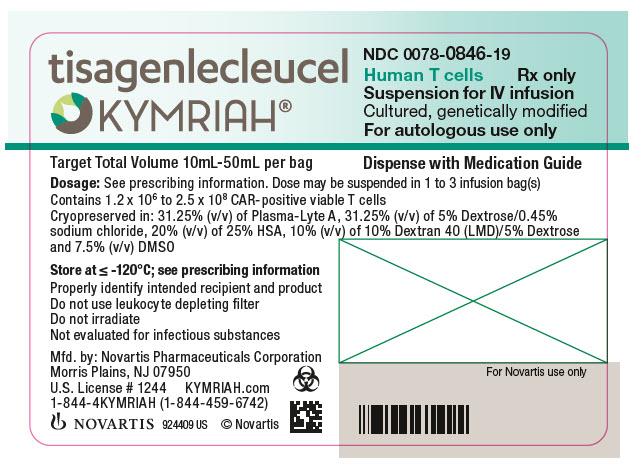
Kymriah tisagenlecleucel 2000000 1/1 Injection, Suspension, 1 injection — NDC 0078-0846-19 (Billing 00078-0846-19)
This is a package of 1 injection of Kymriah tisagenlecleucel 2000000 1/1 Injection, Suspension from Novartis Pharmaceuticals Corporation, marketed since Aug 2017 and currently FDA-listed. It is this product's only package size.
NDC database record
One package, one record: these facts belong to NDC 0078-0846-19 alone.
- Record
- FDA NDC Directory package listing · Cellular therapy
- Code segments
- 0078 labeler · 0846 product · 19 package
- Package marketed since
- Aug 30, 2017
- Sample package
- No — commercial package
- Listing certified through
- Dec 31, 2026
- Billing quantity
- 1 EA per package
- Barcode (UPC-A, from the NDC)
- 3 0078084619 6
- FDA record last changed
- Oct 8, 2026
Identity & classification
Regulatory identifiers FDA, NLM and CMS codes for this package
Drug-database identifiers Medi-Span GPI and First Databank GCN / HICL / AHFS classification
- GSN (GCN sequence number): 077696
- GCN: 43799
- GPI-14 (Medi-Span): 21651075001820
- HICL (First Databank): 044483
- AHFS class code: 10:00.00.00
- RxCUI (RxNorm): 1986442
Where does this data come from?
- FDA openFDA NDC Directory · synced Oct 8, 2026
- FDA label on DailyMed · label index refreshed Oct 8, 2026
- RxNorm (NLM RxNav) · catalog refreshed Oct 1, 2026
- Medi-Span GPI (licensed)
- First Databank (licensed) · refreshed Oct 8, 2026
RxNorm drug class
This medicine belongs to the CD19-directed Chimeric Antigen Receptor class.
Where does this data come from?
- RxClass (NLM) · catalog refreshed Oct 1, 2026
Clinical
- Kymriah is made from your own immune cells, not a chemical drug. Doctors collect your T cells, reprogram them in a lab to recognize and attack your specific type of cancer cells, a...
- What exactly is Kymriah and how is it different from regular chemotherapy?
- The most important one to know about is cytokine release syndrome — CRS for short. It's an immune overreaction that causes high fever, very low blood pressure, and low oxygen level...
- What side effects should I actually watch out for after I get Kymriah?
Patient education
Supplement & herbal interactions
Where does this data come from?
- MedlinePlus (NLM) · refreshed Oct 8, 2026
- FDA label on DailyMed · label index refreshed Oct 8, 2026
Ask a licensed pharmacist directly — free, answered by our team.
Pricing
A drug doesn't have one price. Each row is a different public payment system, and none is what you'd pay at the counter — that depends on your insurance. The ⓘ on each row explains what it measures.
| Price system | Per mL | Per package |
|---|---|---|
| Retail pharmacies payNADAC · weekly | Not in the retail survey — common for institutional, discontinued, or low-volume packs. | |
| Medicaid paysCMS SDUD · 12 mo | No recent Medicaid claims on file for this NDC — rare and low-volume NDCs are suppressed in the public data. | |
| Medicare drug plans payPart D · quarterly | No Part D plan price is available for this NDC in our data. | |
| Medicare Part B allowsASP · Q2042 | $611,693.171 / Q2042 unit | — |
Where does this data come from?
- CMS NADAC weekly file
- CMS ASP pricing files · refreshed Sep 20, 2026
- CMS Medicaid State Drug Utilization Data · refreshed Oct 8, 2026
- CMS Part D plan pricing files · refreshed Sep 24, 2026
- VA National Acquisition Center price file
Billing & reimbursement
Where does this data come from?
- CMS ASP NDC-HCPCS crosswalk · refreshed Sep 22, 2026
- DMEPDAC NDC-HCPCS crosswalk
- openFDA NSDE billing units · refreshed Oct 7, 2026
Packaging — all sizes for this product
| Package NDC | Description | Marketing start | Marketing end | Status |
|---|---|---|---|---|
| 00078-0846-19 You're viewing this Main listing | 1 INJECTION, SUSPENSION in 1 BAG | 2017-08-30 | — | Active |
Therapeutic equivalents
| Product | Labeler | Pack | NADAC/unit | TE | Status | Price vs. this |
|---|---|---|---|---|---|---|
| Kymriah 2000000 1this 00078-0846-19 | Novartis | 1 injection | — | — | FDA listed | — |
Where does this data come from?
- FDA openFDA NDC Directory · synced Oct 8, 2026
- FDA Purple Book · refreshed Oct 5, 2026
- CMS NADAC weekly file
Availability & biosimilar status
Biologics have no small-molecule generics; biosimilar competition is tracked in the FDA Purple Book.
Why the date isn’t exact: Biosimilar timing can change because patents may be challenged, settled, licensed, added or removed, and litigation can move the real date earlier or later.
🛈 What do these terms mean?
- Biologic patent
- A patent the reference product’s maker has publicly listed. A biosimilar generally can’t launch until these expire — unless they’re invalidated or resolved in a settlement.
- Reference-product exclusivity
- A flat 12 years of FDA market protection from the biologic’s first licensure (the BPCIA). No biosimilar can be licensed before it ends, regardless of patents.
- Interchangeable exclusivity
- The first interchangeable biosimilar can earn a period as the only interchangeable version (pharmacists can substitute it without the prescriber).
- Earliest biosimilar (LOE)
- The latest of all the dates above — the soonest a biosimilar can realistically reach the market. Litigation and settlements can move it earlier.
Biologics have no small-molecule “generics” — competition comes from FDA-licensed biosimilars, tracked in the FDA Purple Book.
| Code | What it grants | Expires |
|---|---|---|
| RefProduct | Reference-product exclusivity (12-year, BPCIA) — no biosimilar can be licensed before this date | Aug 30, 2029 |
Is there a biosimilar for KYMRIAH INFUSION BAG?
Why do different websites show different biosimilar dates?
Can a biosimilar launch before the last patent expires?
What does “current Purple Book estimate” mean?
What does “FDA listed” mean?
What does a patent or protection date mean here?
Where does this data come from?
- FDA Purple Book · refreshed Oct 5, 2026
Inactive Ingredients / Excipients
Inactive ingredients, also called excipients, are components of the drug product other than the active ingredient. They may include fillers, dyes, coatings, preservatives, flavors, or other formulation ingredients.
🧪 Avoiding an ingredient? See Tisagenlecleucel Injection inactive ingredients by manufacturer: every current product's list side by side, so you can ask your pharmacy for the version that does not list it.
💡 Tap an ingredient (hover on desktop) to see what it is and why it’s used.
-
UNII ZIF514RVZR
A protein derived from human blood plasma. In medicines, it acts as a stabilizer and binder, helping maintain drug potency and form, and may improve how the medication disperses or dissolves in the body.
-
UNII K3R6ZDH4DU
Dextran 40 is a sugar-based polymer derived from bacteria. It acts as a thickener and volume expander in liquid medicines, helping achieve proper consistency and stability.
-
UNII YOW8V9698H
Dimethyl sulfoxide is a clear liquid solvent derived from wood pulp. In medicines, it helps dissolve or carry active ingredients and improve how the body absorbs the drug.
3 inactive ingredients listed in the exact product block matched to this NDC.
Where does this data come from?
ingredient classCode="IACT" elements from the exact product block matched by this NDC. Label-section narrative from DailyMed / the openFDA label index is shown separately when available.- FDA label on DailyMed · label index refreshed Oct 8, 2026
- FDA openFDA NDC Directory · synced Oct 8, 2026
Inactive ingredient FAQ
Are inactive ingredients the same for every manufacturer?
Why might an inactive ingredient be missing?
Can inactive ingredients matter?
Manufacturer & labeler
More NDCs from Novartis Pharmaceuticals Corporation labeler code 00078
- ENTRESTO Sacubitril and Valsartan 49 mg; 51 mg Tablet, Film Coated NDC 0078-0777-20
- Sandostatin LAR Depot octreotide acetate Kit NDC 0078-0811-81
- Tobrex tobramycin 3 mg/g Ointment NDC 0078-0813-01
- Sandostatin LAR Depot octreotide acetate Kit NDC 0078-0818-81
- Sandostatin LAR Depot octreotide acetate Kit NDC 0078-0825-81
- BEOVU brolucizumab 6 mg/.05mL Injection, Solution NDC 0078-0827-60
- Kisqali ribociclib 200 mg Tablet, Film Coated NDC 0078-0860-01
- Kisqali ribociclib 200 mg Tablet, Film Coated NDC 0078-0867-42
- Kisqali ribociclib 200 mg Tablet, Film Coated NDC 0078-0874-63
- TobraDex tobramycin and dexamethasone 1 mg/g; 3 mg/g Ointment NDC 0078-0876-01
- ADAKVEO crizanlizumab 10 mg/mL Injection NDC 0078-0883-61
- TRIESENCE triamcinolone acetonide 40 mg/mL Injection, Suspension NDC 0078-0897-78
Where does this data come from?
- FDA openFDA NDC Directory · synced Oct 8, 2026
- Drugs@FDA
Full FDA label FDA SPL
🚨 Boxed Warning ▾
WARNING: CYTOKINE RELEASE SYNDROME, NEUROLOGICAL TOXICITIES, and SECONDARY HEMATOLOGICAL MALIGNANCIES Cytokine Release Syndrome (CRS), including fatal or life-threatening reactions, occurred in patients receiving KYMRIAH. Do not administer KYMRIAH to patients with active infection or inflammatory disorders. Treat severe or life-threatening CRS with tocilizumab or tocilizumab and corticosteroids [see Dosage and Administration (2.2, 2.3), Warnings and Precautions (5.1)].
Neurological toxicities, including severe or life-threatening reactions, occurred following treatment with KYMRIAH, including concurrently with CRS. Monitor for neurological events after treatment with KYMRIAH. Provide supportive care and/or corticosteroids as needed [see Warnings and Precautions (5.2)].
T cell malignancies have occurred following treatment of hematologic malignancies with BCMA- and CD19- directed genetically modified autologous T cell immunotherapies, including KYMRIAH [see Warnings and Precautions (5.8)]. WARNING: CYTOKINE RELEASE SYNDROME, NEUROLOGICAL TOXICITIES, and SECONDARY HEMATOLOGICAL MALIGNANCIES See full prescribing information for complete boxed warning. Cytokine Release Syndrome (CRS), including fatal or life-threatening reactions, occurred in patients receiving KYMRIAH.
Do not administer KYMRIAH to patients with active infection or inflammatory disorders. Treat severe or life-threatening CRS with tocilizumab or tocilizumab and corticosteroids. ( 2.2 , 2.3 , 5.1 ) Neurological toxicities, including severe or life-threatening reactions, occurred following treatment with KYMRIAH, including concurrently with CRS.
Monitor for neurological events after treatment with KYMRIAH. Provide supportive care and/or corticosteroids as needed. ( 5.2 ) T cell malignancies have occurred following treatment of hematologic malignancies with BCMA- and CD19- directed genetically modified autologous T cell immunotherapies, including KYMRIAH.
( 5.8 )
🎯 Indications and Usage ▾
1 INDICATIONS AND USAGE KYMRIAH is a CD19-directed genetically modified autologous T cell immunotherapy indicated for the treatment of: Patients up to 25 years of age with B-cell precursor acute lymphoblastic leukemia (ALL) that is refractory or in second or later relapse. ( 1.1 ) Adult patients with relapsed or refractory (r/r) large B-cell lymphoma after two or more lines of systemic therapy, including diffuse large B-cell lymphoma (DLBCL) not otherwise specified, high grade B-cell lymphoma and DLBCL arising from follicular lymphoma.
Limitations of Use : KYMRIAH is not indicated for treatment of patients with primary central nervous system lymphoma. ( 1.2 ) Adult patients with relapsed or refractory follicular lymphoma (FL) after two or more lines of systemic therapy. This indication is approved under accelerated approval based on response rate and duration of response.
Continued approval for this indication may be contingent upon verification and description of clinical benefit in confirmatory trial(s). ( 1.3 )
1.1Pediatric and Young Adult Relapsed or Refractory B-cell Acute Lymphoblastic Leukemia KYMRIAH is indicated for treatment of patients up to 25 years of age with B-cell precursor acute lymphoblastic leukemia (ALL) that is refractory or in second or later relapse.
1.2Adult Relapsed or Refractory Diffuse Large B-cell Lymphoma KYMRIAH is indicated for treatment of adult patients with relapsed or refractory (r/r) large B-cell lymphoma after two or more lines of systemic therapy, including diffuse large B-cell lymphoma (DLBCL) not otherwise specified, high grade B-cell lymphoma and DLBCL arising from follicular lymphoma. Limitation of Use: KYMRIAH is not indicated for treatment of patients with primary central nervous system lymphoma.
1.3Adult Relapsed or Refractory Follicular Lymphoma KYMRIAH is indicated for treatment of adult patients with relapsed or refractory (r/r) follicular lymphoma (FL) after two or more lines of systemic therapy. This indication is approved under accelerated approval based on response rate and duration of response [see Clinical Studies (14.3)] . Continued approval for this indication may be contingent upon verification and description of clinical benefit in confirmatory trial(s).
⏱️ Dosage and Administration ▾
2 DOSAGE AND ADMINISTRATION For autologous use only. For intravenous use only. Administer a lymphodepleting regimen if needed before infusion of KYMRIAH.
( 2.2) Do NOT use a leukodepleting filter. ( 2.2 ) Verify the patient’s identity prior to infusion. ( 2.2 ) Premedicate with acetaminophen and an H1-antihistamine.
( 2.2 ) Confirm availability of tocilizumab prior to infusion. ( 2.2 , 5.1 ) Dosing of KYMRIAH is based on the number of chimeric antigen receptor (CAR)-positive viable T cells. Pediatric and Young Adult B-cell ALL (up to 25 years of age) • For patients 50 kg or less, administer 0.2 to 5.0 x 10 6 CAR-positive viable T cells per kg body weight intravenously.
( 2.1 ) • For patients above 50 kg, administer 0.1 to 2.5 x 10 8 total CAR-positive viable T cells (non-weight based) intravenously. ( 2.1 ) Adult Relapsed or Refractory Diffuse Large B-cell Lymphoma and Follicular Lymphoma • Administer 0.6 to 6.0 x 10 8 CAR-positive viable T cells intravenously. ( 2.1 ) Note: The patient identifier number may be preceded by the letters DIN or Aph ID.
Figure 1. KYMRIAH Infusion Bag
2.1Recommended Dose For autologous use only. For intravenous use only. Pediatric and Young Adult Relapsed or Refractory B-cell Acute Lymphoblastic Leukemia KYMRIAH is provided as a single-dose for infusion containing a suspension of chimeric antigen receptor (CAR)-positive viable T cells.
Based on the patient weight reported at the time of leukapheresis: - Patients 50 kg or less: administer 0.2 to 5.0 x 10 6 CAR-positive viable T cells per kg body weight. - Patients above 50 kg: administer 0.1 to 2.5 x 10 8 CAR-positive viable T cells. Adult Relapsed or Refractory Diffuse Large B-cell Lymphoma and Follicular Lymphoma KYMRIAH is provided as a single-dose for infusion containing a suspension of chimeric antigen receptor (CAR)-positive viable T cells. - For adult patients: administer 0.6 to 6.0 x 10 8 CAR-positive viable T cells.
2.2Administration Preparing Patient for KYMRIAH Administration with Lymphodepletion - Confirm availability of KYMRIAH prior to starting the lymphodepleting regimen. Pediatric and Young Adult Relapsed or Refractory B-cell Acute Lymphoblastic Leukemia Lymphodepleting chemotherapy: Fludarabine (30 mg/m 2 intravenously daily for 4 days) and cyclophosphamide (500 mg/m 2 intravenously daily for 2 days starting with the first dose of fludarabine). Infuse KYMRIAH 2 to 14 days after completion of the lymphodepleting chemotherapy.
Adult Relapsed or Refractory Diffuse Large B-cell Lymphoma and r/r Follicular Lymphoma • Lymphodepleting chemotherapy: Fludarabine (25 mg/m 2 intravenously daily for 3 days) and cyclophosphamide (250 mg/m 2 intravenously daily for 3 days starting with the first dose of fludarabine). • Alternate lymphodepleting chemotherapy: bendamustine 90 mg/m 2 intravenously daily for 2 days if a patient experienced a previous Grade 4 hemorrhagic cystitis with cyclophosphamide or demonstrates resistance to a previous cyclophosphamide containing regimen. • Infuse KYMRIAH 2 to 11 days (r/r DLBCL) or 2 to 6 days (r/r FL) after completion of the lymphodepleting chemotherapy. • Lymphodepleting chemotherapy may be omitted if a patient is experiencing significant cytopenia, e.g., white blood cell (WBC) count is less than 1 x 10 9 /L within 1 week prior to KYMRIAH infusion.
Preparation of KYMRIAH for Infusion and Administration Delay the infusion of KYMRIAH if a patient has unresolved serious adverse reactions (including pulmonary reactions, cardiac reactions, or hypotension) from preceding chemotherapies, active uncontrolled infection, active graft versus host disease (GVHD), or worsening of leukemia burden following lymphodepleting chemotherapy [see Warnings and Precautions (5.1)]. A KYMRIAH dose may be contained in one to three cryopreserved patient specific infusion bag(s). Verify the number of bags received for the dose of KYMRIAH with the Certificate of Conformance (CoC) and Certificate of Analysis (CoA).
Coordinate the timing… [Excerpted — this section continues on DailyMed.]
💊 Dosage Forms and Strengths ▾
3 DOSAGE FORMS AND STRENGTHS Pediatric and Young Adult r/r B-cell ALL (up to 25 years of age): A single dose of KYMRIAH contains 0.2 to 5.0 x 10 6 CAR-positive viable T cells per kg of body weight for patients 50 kg and below or 0.1 to 2.5 x 10 8 CAR-positive viable T cells for patients above 50 kg, suspended in one to three patient-specific infusion bag(s) [see How Supplied/Storage and Handling (16)] . Adult r/r DLBCL and r/r FL: A single dose of KYMRIAH contains 0.6 to 6.0 x 10 8 CAR-positive viable T cells, which may be suspended in one to three patient-specific infusion bag(s) [see How Supplied/Storage and Handling (16)] .
See the CoA for actual cell count. The volume in the infusion bag ranges from 10 mL to 50 mL. Pediatric and Young Adult B-cell ALL (up to 25 years of age): A single dose of KYMRIAH contains 0.2 to 5.0 x 10 6 CAR-positive viable T cells per kg of body weight for patients 50 kg or less, or 0.1 to 2.5 x 10 8 CAR-positive viable T cells for patients more than 50 kg, suspended in one to three patient-specific infusion bag(s) for intravenous infusion.
( 3 ) Adult Relapsed or Refractory Diffuse Large B-cell Lymphoma and Follicular Lymphoma: A single dose of KYMRIAH contains 0.6 to 6.0 x 10 8 CAR-positive viable T cells suspended in one to three patient-specific infusion bag(s) for intravenous infusion. ( 3 )
⛔ Contraindications ▾
4 CONTRAINDICATIONS None. None. ( 4 )
⚠️ Warnings and Cautions ▾
5 WARNINGS AND PRECAUTIONS Hypersensitivity Reactions: Monitor for hypersensitivity reactions during infusion. ( 5.4 ) Serious Infections: Monitor patients for signs and symptoms of infection; treat appropriately. ( 5.5 ) Prolonged Cytopenias: Patients may exhibit ≥ Grade 3 cytopenias for several weeks following KYMRIAH infusion.
Prolonged neutropenia has been associated with increased risk of infection. ( 5.6 ) Hypogammaglobulinemia: Monitor and provide replacement therapy until resolution. Assess immunoglobulin levels in newborns of mothers treated with KYMRIAH.
( 5.7 ) Secondary Malignancies: T cell malignancies have occurred following treatment of hematologic malignancies with BCMA- and CD19-directed genetically modified autologous T cell immunotherapies, including KYMRIAH. In the event that a secondary malignancy occurs after treatment with KYMRIAH, contact Novartis Pharmaceuticals Corporation at 1-844-4KYMRIAH. ( 5.8 )
5.1Cytokine Release Syndrome Cytokine release syndrome (CRS), including fatal or life-threatening reactions, occurred following treatment with KYMRIAH. CRS occurred in 61 (77%) of the 79 pediatric and young adult patients with r/r ALL receiving KYMRIAH, including ≥ Grade 3 CRS (Penn grading system 1 ) occurring in 48% of patients. The median times to onset and resolution of CRS were 3 days (range, 1 to 22; 1 patient with onset after Day 10) and 8 days (range, 1 to 36), respectively.
Of the 61 patients with CRS, 31 (51%) received tocilizumab. Ten (16%) patients received two doses of tocilizumab and 3 (5%) patients received three doses of tocilizumab; 17 (28%) patients received addition of corticosteroids (e.g., methylprednisolone). CRS occurred in 85 (74%) of the 115 adult patients with r/r DLBCL receiving KYMRIAH, including ≥ Grade 3 CRS (Penn grading system 1 ) occurring in 23% of patients.
The median times to onset and resolution of CRS were 3 days (range, 1 to 51; 1 patient with onset after Day 10) and 7 days (range, 2 to 30), respectively. Of the 85 patients with CRS, 19 (22%) received systemic tocilizumab or corticosteroids. Seven (8%) patients received a single dose of tocilizumab and 11 (13%) patients received two doses of tocilizumab; 11 (13%) patients received corticosteroids in addition to tocilizumab.
One patient received corticosteroids for CRS without concomitant tocilizumab, and two patients received corticosteroids for persistent neurotoxicity after resolution of CRS. CRS occurred in 51 (53%) of the 97 adult patients with r/r FL receiving KYMRIAH; all were Grade 1 or 2 CRS (Lee grading system 2 ). The median times to onset and resolution of CRS were 4 days (range, 1 to 14) and 4 days (range, 1 to 13), respectively.
Of the 51 patients with CRS, 15 (29%) received systemic anticytokine treatment with tocilizumab. Three (6%) patients required 3 dosages of tocilizumab, 4 (8%) patients required 2 dosages and 8 (16%) patients required single dose of tocilizumab. Two (4%) patients received corticosteroids in addition to tocilizumab.
Five deaths occurred within 30 days of KYMRIAH infusion. One patient with r/r ALL died with CRS and progressive leukemia, and one patient had resolving CRS with abdominal compartment syndrome, coagulopathy, and renal failure when an intracranial hemorrhage occurred. Of the 3 r/r DLBCL patients who died within 30 days of infusion, all had CRS in the setting of stable to progressive underlying disease, one of whom developed bowel necrosis.
Among patients with CRS, key manifestations include fever (93% in r/r ALL; 85% in r/r DLBCL; 92% in r/r FL), hypotension (69% in r/r ALL; 45% in r/r DLBCL; 40% in r/r FL), hypoxia (57% in r/r ALL; 35% in r/r DLBCL; 19% in r/r FL), and tachycardia (26% in r/r ALL; 13% in r/r DLBCL; 2% in r/r FL). CRS may be associated with hepatic, renal, and cardiac dysfunction, and coagulopathy. Delay the infusion of KYMRIAH after lymphodepleting chemotherapy if the patient has unresolved serious adverse reactions from preceding chemotherapies (includi… [Excerpted — this section continues on DailyMed.]
🤒 Adverse Reactions ▾
6 ADVERSE REACTIONS Pediatric and Young Adult B-cell ALL (up to 25 years of age): The most common adverse reactions (incidence greater than 20%) are CRS, infections-pathogen unspecified, hypogammaglobulinemia, fever, decreased appetite, viral infectious disorders, headache, febrile neutropenia, hemorrhage, musculoskeletal pain, vomiting, encephalopathy, diarrhea, hypotension, cough, nausea, bacterial infectious disorders, pain, hypoxia, tachycardia, edema, fatigue, and acute kidney injury. ( 6.1 ) Adult Relapsed or Refractory Diffuse Large B-cell Lymphoma: The most common adverse reactions (incidence greater than 20%) are CRS, infections-pathogen unspecified, fever, diarrhea, nausea, fatigue, hypotension, edema, hemorrhage, dyspnea, and headache.
( 6.1 ) Adult Relapsed or Refractory Follicular Lymphoma: The most common adverse reactions (incidence greater than 20%) are CRS, infections-pathogens unspecified, fatigue, musculoskeletal pain, headache, and diarrhea. ( 6.1 ) To report SUSPECTED ADVERSE REACTIONS, contact Novartis Pharmaceuticals Corporation at 1-888-669-6682 or FDA at 1-800-FDA-1088 or www.fda.gov/medwatch .
6.1Clinical Trials Experience Because clinical trials are conducted under widely varying conditions, adverse reaction rates observed in the clinical trials of a drug cannot be directly compared to rates in the clinical trials of another drug and may not reflect the rates observed in practice. The safety data described in the WARNINGS AND PRECAUTIONS and in this section reflect exposure to KYMRIAH in three non-randomized, single-arm studies in which 79 pediatric and young adult patients with relapsed/refractory (r/r) B-cell ALL (Study 1: CCTL019B2202), 115 adults with r/r diffuse large B-cell lymphoma (Study 2: CCTL019C2201), and 97 adults with r/r follicular lymphoma (Study 3: CCTL019E2202) received a single dose of CAR-positive viable T cells.
Pediatric and Young Adult r/r B-cell Acute Lymphoblastic Leukemia (ALL) (up to 25 years of age) Based on a recommended dose which was weight-based, all 79 patients in the Study 1 received a single intravenous dose of KYMRIAH [see Clinical Studies (14.1)] . The most common adverse reactions (> 20%) were CRS (77%), infections-pathogen unspecified (57%), hypogammaglobulinemia (53%), fever (42%), decreased appetite (38%), viral infectious disorders (38%), headache (35%), febrile neutropenia (34%), hemorrhage (32%), musculoskeletal pain (32%), vomiting (32%), encephalopathy (30%), bacterial infectious disorders (29%), diarrhea (29%), hypotension (29%), cough (27%), nausea (27%), pain (25%), hypoxia (25%), tachycardia (24%), edema (23%), fatigue (23%), and acute kidney injury (22%).
The adverse reactions with greater than or equal to 10% incidence for any Grade are summarized in Table 3. Table 3. Adverse Reactions in ≥ 10% of Pediatric and Young Adults Patients with r/r B-cell ALL in Study 1 (N = 79) a Includes multiple related composite terms. b Encephalopathy includes encephalopathy, cognitive disorder, confusional state, depressed level of consciousness, disturbance in attention, lethargy, mental status changes, somnolence, memory impairment, and automatism.
Encephalopathy is a dominant feature of immune effector cell-associated neurotoxicity syndrome (ICANS), along with other symptoms. c Dyspnea includes acute respiratory failure, dyspnea, respiratory distress, and respiratory failure. Adverse reaction All Grades (%) Grades 3 or higher (%) Blood and lymphatic system disorders Febrile neutropenia 34 34 Cardiac disorders Tachycardia a 24 4 Gastrointestinal disorders Vomiting 32 1 Diarrhea 29 1 Nausea 27 3 Abdominal pain a 18 3 Constipation 18 0 General disorders and administration site conditions Fever 42 13 Pain a 25 3 Fatigue a 23 0 Edema a 23 8 Immune system disorders Cytokine release syndrome 77 48 Hypogammaglobulinemia a 53 13 Infections and infestations Infections-pathogen unspecified 57 27 Viral infectious disorders 37 22 Bacterial infectious disorders 29 16 Fungal in… [Excerpted — this section continues on DailyMed.]
🔄 Drug Interactions ▾
7 DRUG INTERACTIONS HIV and the lentivirus used to make KYMRIAH have limited, short spans of identical genetic material (RNA). Therefore, some commercial HIV nucleic acid tests (NATs) may yield false-positive results in patients who have received KYMRIAH.
👥 Use in Specific Populations ▾
8 USE IN SPECIFIC POPULATIONS
8.1Pregnancy Risk Summary There are no available data with KYMRIAH use in pregnant women. No animal reproductive and developmental toxicity studies have been conducted with KYMRIAH to assess whether it can cause fetal harm when administered to a pregnant woman. It is not known if KYMRIAH has the potential to be transferred to the fetus.
Based on the mechanism of action, if the transduced cells cross the placenta, they may cause fetal toxicity, including B-cell lymphocytopenia. Therefore, KYMRIAH is not recommended for women who are pregnant, and pregnancy after KYMRIAH administration should be discussed with the treating physician. Report pregnancies to Novartis Pharmaceuticals Corporation at 1-888-669-6682.
In the U.S. general population, the estimated background risk of major birth defects and miscarriage in clinically recognized pregnancies is 2% to 4% and 15% to 20%, respectively.
8.2Lactation Risk Summary There is no information regarding the presence of KYMRIAH in human milk, the effect on the breastfed infant, and the effects on milk production. A risk to the breastfed infant cannot be excluded. The developmental and health benefits of breastfeeding should be considered along with the mother’s clinical need for KYMRIAH and any potential adverse effects on the breastfed infant from KYMRIAH or from the underlying maternal condition.
8.3Females and Males of Reproductive Potential Pregnancy Testing Pregnancy status of females with reproductive potential should be verified. Sexually active females of reproductive potential should have a pregnancy test prior to starting treatment with KYMRIAH. Contraception See the prescribing information for fludarabine and cyclophosphamide for information on the need for effective contraception in patients who receive the lymphodepleting chemotherapy.
There are insufficient exposure data to provide a recommendation concerning duration of contraception following treatment with KYMRIAH. Infertility There are no data on the effect of KYMRIAH on male and female fertility.
8.4Pediatric Use The safety and efficacy of KYMRIAH have been established in pediatric patients with r/r B-cell ALL. Use of KYMRIAH is supported by a single-arm trial [see Clinical Studies (14.1)] that included 61 pediatric patients with r/r B-cell precursor ALL in the following age groups: 40 children (ages 2 years to less than 12 years) and 21 adolescents (ages 12 years to less than 17 years). No differences in efficacy or safety were observed between the different age subgroups or in comparison to the young adults in the trial.
The safety and efficacy of KYMRIAH in pediatric patients with r/r DLBCL and r/r FL have not been established.
8.5Geriatric Use The safety and effectiveness of KYMRIAH have not been established in geriatric patients with r/r B-cell ALL. Clinical studies of KYMRIAH did not include sufficient numbers of subjects aged 65 and over to determine whether they respond differently from younger subjects.
🤰 Pregnancy ▾
8.1Pregnancy Risk Summary There are no available data with KYMRIAH use in pregnant women. No animal reproductive and developmental toxicity studies have been conducted with KYMRIAH to assess whether it can cause fetal harm when administered to a pregnant woman. It is not known if KYMRIAH has the potential to be transferred to the fetus.
Based on the mechanism of action, if the transduced cells cross the placenta, they may cause fetal toxicity, including B-cell lymphocytopenia. Therefore, KYMRIAH is not recommended for women who are pregnant, and pregnancy after KYMRIAH administration should be discussed with the treating physician. Report pregnancies to Novartis Pharmaceuticals Corporation at 1-888-669-6682.
In the U.S. general population, the estimated background risk of major birth defects and miscarriage in clinically recognized pregnancies is 2% to 4% and 15% to 20%, respectively.
🧒 Pediatric Use ▾
8.4Pediatric Use The safety and efficacy of KYMRIAH have been established in pediatric patients with r/r B-cell ALL. Use of KYMRIAH is supported by a single-arm trial [see Clinical Studies (14.1)] that included 61 pediatric patients with r/r B-cell precursor ALL in the following age groups: 40 children (ages 2 years to less than 12 years) and 21 adolescents (ages 12 years to less than 17 years). No differences in efficacy or safety were observed between the different age subgroups or in comparison to the young adults in the trial.
The safety and efficacy of KYMRIAH in pediatric patients with r/r DLBCL and r/r FL have not been established.
🧓 Geriatric Use ▾
8.5Geriatric Use The safety and effectiveness of KYMRIAH have not been established in geriatric patients with r/r B-cell ALL. Clinical studies of KYMRIAH did not include sufficient numbers of subjects aged 65 and over to determine whether they respond differently from younger subjects.
🧬 Clinical Pharmacology ▾
12 CLINICAL PHARMACOLOGY
12.1Mechanism of Action KYMRIAH is a CD19-directed genetically modified autologous T cell immunotherapy which involves reprogramming a patient’s own T cells with a transgene encoding a chimeric antigen receptor (CAR) to identify and eliminate CD19-expressing malignant and normal cells. The CAR is comprised of a murine single-chain antibody fragment which recognizes CD19 and is fused to intracellular signaling domains from 4-1BB (CD137) and CD3 zeta. The CD3 zeta component is critical for initiating T cell activation and antitumor activity, while 4-1BB enhances the expansion and persistence of KYMRIAH.
Upon binding to CD19-expressing cells, the CAR transmits a signal to promote T cell expansion, activation, target cell elimination, and persistence of the KYMRIAH cells.
12.2Pharmacodynamics Due to the on-target effect of KYMRIAH, a period of B-cell aplasia is expected. Among evaluable pediatric and young adult r/r B-cell ALL patients with an ongoing response at Month 24, 33% had no detectable B cells at baseline prior to infusion. At Month 24, 88% had no detectable B cells.
Most adult r/r DLBCL patients had B-cell depletion at baseline prior to infusion due to previous treatment with rituximab. Recovery of B-cell levels were observed with longer follow-up in some of the responding DLBCL patients after KYMRIAH infusion. Among evaluable adult r/r DLBCL and FL patients with an ongoing response at Month 24, all patients had no detectable B cells at baseline prior to infusion or at Month 24.
12.3Pharmacokinetics/Cellular Kinetics Following infusion, KYMRIAH exhibited an initial rapid expansion followed by a bi-exponential decline in pediatric and young adult r/r B-cell acute lymphoblastic leukemia (ALL) patients, adult r/r diffuse large B-cell lymphoma patients, and adult r/r follicular lymphoma patients. A summary of pharmacokinetic parameters of KYMRIAH is provided in Table 10 below. Table 10.
Pharmacokinetic Parameters of KYMRIAH in Pediatric and Young Adult r/r B-cell ALL, Adult r/r DLBCL, and Adult r/r FL Parameter Summary statistics Pediatric ALL responding patients N = 62 Pediatric ALL non-responding patients N = 8 r/r DLBCL responding patients (CR and PR) N = 34 r/r DLBCL non- responding patients (SD/PD/ unknown) N = 34 r/r FL responding patients (CR and PR) N = 77 r/r FL non-responding patients (SD/PD) N = 12 C max (copies/mcg) Geometric mean (CV%), n 34,700 (155.4), 61 20,000 (71.6), 7 5,210 (256.5), 33 6,450 (408.2), 32 6,250 (344), 64 3,000 (1190), 8 T max (day) Median [min; max], n 9.91 [0.008; 27], 61 20.0 [0.03; 62.7], 7 9.83 [5.73; 16.8], 33 8.39 [3.04; 27.7], 32 9.94 [2.62; 28.0], 64 13.0 [7.73; 16.0], 8 AUC 0-28d (copies/mcg*day) Geometric mean (CV%), n 318,000 (177.8), 61 156,000 (99.4), 6 58,200 (165.1), 30 75,800 (292.3), 25 56,900 (270), 63 20,100 (18100), 7 T ½ (day) Geometric mean (CV%), n 16.8 (155.9), 54 2.52 (171.9), 3 45.3 (157.7), 21 13.6 (167.0), 22 44.0 (296), 42 24.4 (180), 6 Description of Pharmacokinetics in Pediatric and Young Adult r/r B-cell ALL (up to 25 years of age) The C max and AUC 0-28d were similar between CR/CRi patients compared with non-responding (NR) patients.
KYMRIAH was present in the blood as well as bone marrow and was measurable beyond 2 years. Blood to bone marrow partitioning suggested that KYMRIAH distribution in bone marrow was 44% of that present in blood at Day 28 while at Months 3 and 6 KYMRIAH distributed at 67% and 69%, respectively, indicating high distribution to bone marrow. Children < 10 years and between 10-18 years of age had similar- to 1.7-fold higher C max and AUC 0-28d than adults.
Due to small sample size and high variability, it is difficult to assess the impact of age on the pharmacokinetics of KYMRIAH. Description of Pharmacokinetics in Adult r/r DLBCL The C max and AUC 0-28d were similar between responding and non-responding (NR) patients. KYMRIAH was present in adult r/r DLBCL patients up to 18 months in peripheral blood and up… [Excerpted — this section continues on DailyMed.]
🧬 Mechanism of Action ▾
12.1Mechanism of Action KYMRIAH is a CD19-directed genetically modified autologous T cell immunotherapy which involves reprogramming a patient’s own T cells with a transgene encoding a chimeric antigen receptor (CAR) to identify and eliminate CD19-expressing malignant and normal cells. The CAR is comprised of a murine single-chain antibody fragment which recognizes CD19 and is fused to intracellular signaling domains from 4-1BB (CD137) and CD3 zeta. The CD3 zeta component is critical for initiating T cell activation and antitumor activity, while 4-1BB enhances the expansion and persistence of KYMRIAH.
Upon binding to CD19-expressing cells, the CAR transmits a signal to promote T cell expansion, activation, target cell elimination, and persistence of the KYMRIAH cells.
📦 How Supplied / Storage and Handling ▾
16 HOW SUPPLIED/STORAGE AND HANDLING KYMRIAH is supplied as a frozen suspension of genetically modified autologous T cells in an infusion bag(s) labeled for the specific recipient. KYMRIAH is shipped directly to the cell lab associated with the infusion center in a liquid nitrogen Dewar. Product and patient-specific labels are located inside the Dewar.
Ped ALL: NDC 0078-0846-19 DLBCL and FL: NDC 0078-0958-19 Confirm patient identity upon receipt. Store infusion bag(s) in a temperature-monitored system less than or equal to minus 120°C, e.g., in the vapor phase of liquid nitrogen. Use closed, break-proof, leak-proof containers when transporting infusion bags within the facility.
Thaw KYMRIAH prior to infusion [see Dosage and Administration (2)] .
📋 Description ▾
11 DESCRIPTION KYMRIAH (tisagenlecleucel) is a CD19-directed genetically modified autologous T cell immunotherapy comprised of autologous T cells that are genetically modified using a lentiviral vector to encode an anti-CD19 chimeric antigen receptor (CAR). The CAR is comprised of a murine single-chain antibody fragment (scFv) specific for CD19, followed by a CD8 hinge and transmembrane region that is fused to the intracellular signaling domains for 4-1BB (CD137) and CD3 zeta. KYMRIAH is prepared from the patient’s peripheral blood mononuclear cells, which are obtained via a standard leukapheresis procedure.
The mononuclear cells are enriched for T cells, then transduced with the lentiviral vector containing the anti-CD19 CAR transgene and activated with anti-CD3/CD28 antibody coated beads. The transduced T cells are expanded in cell culture, washed, and formulated into a suspension, which then is cryopreserved. The product must pass a sterility test before release for shipping as a frozen suspension in a patient-specific infusion bag(s).
The product is thawed prior to administration [see Dosage and Administration (2.2), How Supplied/Storage and Handling (16)] . The thawed product is a colorless to slightly yellow suspension of cells. In addition to T cells, other cell populations, including monocytes, NK cells, and B cells, may be present.
The formulation contains 31.25% (v/v) of Plasma-Lyte A, 31.25% (v/v) of 5% Dextrose/0.45% sodium chloride, 10% Dextran 40 (LMD)/5% Dextrose, 20% (v/v) of 25% Human Serum Albumin (HSA), and 7.5% (v/v) dimethyl sulfoxide (DMSO). Pediatric and Young Adult r/r B-cell ALL: A single dose of KYMRIAH may contain up to 2.5 x 10 8 CAR-positive viable T cells provided in one to three patient-specific infusion bag(s). Based on the patient’s weight reported at the time of leukapheresis, one of two possible dose ranges will be prepared for the patient: For patients 50 kg or less: 0.2 to 5.0 x 10 6 CAR-positive viable T cells per kg body weight.
For patients above 50 kg: 0.1 to 2.5 x 10 8 CAR-positive viable T cells. Adult r/r DLBCL and r/r FL: A single dose of KYMRIAH may contain 0.6 to 6.0 x 10 8 CAR-positive viable T cells provided in one to three patient-specific infusion bag(s). The actual number of CAR-positive T cells in the product is reported on the Certificate of Analysis (CoA) that is shipped with KYMRIAH.
The volume of CAR-positive viable T cells in an infusion bag ranges from 10 mL to 50 mL.
💬 Information for Patients ▾
17 PATIENT COUNSELING INFORMATION Advise the patient to read the FDA-approved patient labeling (Medication Guide). Ensure that patients understand the risk of manufacturing failure. This has been reported in up to 9% of manufacturing attempts.
In case of a manufacturing failure, a second manufacturing of KYMRIAH may be attempted. In addition, while the patient awaits the product, additional chemotherapy (not the lymphodepletion) may be necessary and may increase the risk of adverse events during the pre-infusion period. Prior to infusion, advise patients of the following risks: Cytokine Release Syndrome (CRS) -- Report signs and symptoms of CRS (high fever, difficulty breathing, chills/shaking chills, severe nausea, severe vomiting, severe diarrhea, severe muscle pain, severe joint pain, very low blood pressure, or dizziness/lightheadedness) to their healthcare professional [see Warnings and Precautions (5.1), Adverse Reactions (6.1)].
Neurological Toxicities -- Report altered or decreased consciousness, delirium, confusion, agitation, seizures, difficulty speaking and understanding, or loss of balance to their healthcare professional. Avoid driving for at least 2 weeks after KYMRIAH administration [see Warnings and Precautions (5.2), Adverse Reactions (6.1)]. Hemophagocytic Lymphohistiocytosis (HLH)/Macrophage Activation Syndrome (MAS) -- Presenting signs and symptoms are similar to those of CRS and infections [see Warnings and Precautions (5.3), Adverse Reactions (6.1)] .
Serious Infections -- KYMRIAH may cause serious infections. Advise patients that they will be screened for HBV, HCV, and HIV before collection of cells [see Warnings and Precautions (5.5), Adverse Reactions (6.1)]. Hypogammaglobulinemia -- Patients may need to receive immunoglobulin replacement for an indefinite amount of time following treatment with KYMRIAH.
Patients should tell their physician about their treatment with KYMRIAH before receiving a live vaccine [see Warnings and Precautions (5.7), Adverse Reactions (6.1)]. Prolonged Cytopenia -- Patient may exhibit signs or symptoms associated with bone marrow suppression (i.e., neutropenia, thrombocytopenia and anemia) for several weeks following lymphodepleting chemotherapy and KYMRIAH [see Warnings and Precautions (5.6)] . Secondary Malignancies -- Secondary malignancies, including T cell malignancies, have occurred [see Boxed Warning, Warnings and Precautions (5.8), Adverse Reactions (6.2)] .
Patients should be instructed to contact Novartis Pharmaceuticals Corporation at 1-844-4KYMRIAH if they get secondary malignancies [see Warnings and Precautions (5.8)]. Distributed by: Novartis Pharmaceuticals Corporation East Hanover, New Jersey 07936 US License Number 1244 © Novartis T2025-69
💬 Medication Guide ▾
This Medication Guide has been approved by the U.S. Food and Drug Administration. Revised: June 2025 MEDICATION GUIDE KYMRIAH ® (pronounced KIM-RYE-AH ) (tisagenlecleucel) suspension, for intravenous infusion Read this Medication Guide before you start your KYMRIAH treatment.
The more you know about your treatment, the more active you can be in your care. Talk with your healthcare provider if you have questions about your health condition or treatment. Reading this Medication Guide does not take the place of talking with your healthcare provider about your treatment.
What is the most important information I should know about KYMRIAH? KYMRIAH may cause side effects that are severe or life-threatening. Call your healthcare provider or get emergency help right away if you get any of the following: difficulty breathing fever (100.4°F/38°C or higher) chills/shaking chills confusion severe nausea, vomiting, diarrhea severe muscle or joint pain very low blood pressure dizziness/lightheadedness It is important that you tell your healthcare providers that you have received KYMRIAH.
Your healthcare providers may give you other medicines to treat your side effects. What is KYMRIAH? KYMRIAH is made from your own white blood cells and is a prescription cancer treatment used in patients up to 25 years old who have acute lymphoblastic leukemia (ALL) that is either relapsing (went into remission, then came back) or refractory (did not go into remission after receiving other leukemia treatments).
It is also used in patients with large B-cell lymphoma or follicular lymphoma, two types of non-Hodgkin lymphoma, that have relapsed or are refractory after having at least two other kinds of treatment. How will I get KYMRIAH? Since KYMRIAH is made from your own white blood cells, your healthcare provider has to take some of your blood.
This is called “leukapheresis.” It takes 3 to 6 hours and may need to be repeated. A tube (intravenous catheter) will be placed in your vein to collect your blood. Your blood cells are frozen and sent to the manufacturing site to make KYMRIAH.
It takes about 3-4 weeks from the time your cells are received at the manufacturing site and shipped back to your healthcare provider, but the time may vary. While waiting for KYMRIAH to be made, your healthcare provider may give you therapy to stabilize your cancer. In addition, before you get KYMRIAH, your healthcare provider may give you chemotherapy for a few days to prepare your body.
When your body is ready, your healthcare provider will give you KYMRIAH through a tube (intravenous catheter) in your vein. This usually takes less than one hour. You should plan to stay close to a healthcare facility for at least 2 weeks after getting KYMRIAH.
Your healthcare provider will check to see if your treatment is working and help you with any side effects that occur. What should I avoid after receiving KYMRIAH? Avoid driving for at least 2 weeks after you get KYMRIAH.
Do not donate blood, organs, tissues, sperm, oocytes, and other cells. What are the possible or reasonably likely side effects of KYMRIAH? The most common side effects of KYMRIAH are: difficulty breathing fever (100.4°F/38°C or higher) chills/shaking chills confusion severe nausea, vomiting, diarrhea severe muscle or joint pain very low blood pressure dizziness/lightheadedness headache KYMRIAH can increase the risk of life-threatening infections that may lead to death.
Tell your healthcare provider right away if you develop fever, chills, or any signs or symptoms of an infection. KYMRIAH can lower one or more types of your blood cells (red blood cells, white blood cells, or platelets). After treatment, your healthcare provider will test your blood to check for this.
Tell your healthcare provider right away if you get a fever, are feeling tired, weak, or short of breath, or have bruising or bleeding. Having KYMRIAH in your blood may cause a false-positive HIV test result by some commercial tests. KYMRIAH may increase you… [Excerpted — this section continues on DailyMed.]
🧬 Pharmacodynamics ▾
12.2Pharmacodynamics Due to the on-target effect of KYMRIAH, a period of B-cell aplasia is expected. Among evaluable pediatric and young adult r/r B-cell ALL patients with an ongoing response at Month 24, 33% had no detectable B cells at baseline prior to infusion. At Month 24, 88% had no detectable B cells.
Most adult r/r DLBCL patients had B-cell depletion at baseline prior to infusion due to previous treatment with rituximab. Recovery of B-cell levels were observed with longer follow-up in some of the responding DLBCL patients after KYMRIAH infusion. Among evaluable adult r/r DLBCL and FL patients with an ongoing response at Month 24, all patients had no detectable B cells at baseline prior to infusion or at Month 24.
🔬 Clinical Studies ▾
14 CLINICAL STUDIES
14.1Relapsed or Refractory B-cell Acute Lymphoblastic Leukemia The efficacy of KYMRIAH in pediatric and young adults with r/r B-cell precursor ALL was evaluated in an open-label, multicenter single-arm trial (Study 1: CCTL019B2202; NCT02435849). In total, 107 patients were screened, 88 were enrolled, 68 were treated, and 63 were evaluable for efficacy. Nine percent of the enrolled patients did not receive the product due to manufacturing failure.
The 63 evaluable patients included 35 males and 28 females of median age 12 years (range, 3 to 23 years). Seventy-three percent of patients were White, 10% were Asian, and 17% were of other races. Six (10%) had primary refractory disease, 30 (48%) had one prior stem cell transplantation, 5 patients (8%) had two stem cell transplantations.
Treatment consisted of lymphodepleting chemotherapy (fludarabine 30 mg/m 2 daily for 4 days and cyclophosphamide 500 mg/m 2 daily for 2 days) followed by a single dose of KYMRIAH. Of the 22 patients who had a WBC count < 1000/µL, 20 received lymphodepleting chemotherapy prior to KYMRIAH while 2 received KYMRIAH infusion without lymphodepleting chemotherapy. Fifty-three patients received bridging chemotherapy between time of enrollment and lymphodepleting chemotherapy.
The efficacy of KYMRIAH was established on the basis of complete remission (CR) within 3 months after infusion, the duration of CR, and proportion of patients with CR and minimal residual disease (MRD) < 0.01% by flow cytometry (MRD-negative) (Table 11). Among the 63 infused patients, 52 (83%) achieved CR/CRi, all of which were MRD-negative. With a median follow-up of 4.8 months from response, the median duration of CR/CRi was not reached (range, 1.2 to 14.1+ months).
Median time to onset of CR/CRi was 29 days with onset of CR/CRi between 26 and 31 days for 50/52 (96%) responders. The stem cell transplantation rate among those who achieved CR/CRi was 12% (6/52). Table 11 shows the efficacy results from this study.
Table 11. Efficacy Results in Pediatric and Young Adult Patients with r/r B-cell ALL 1 CR/CRi was calculated based on all patients who received KYMRIAH and completed at least 3 months follow-up or discontinued earlier prior to the data cut-off. Requires remission status to be maintained for at least 28 days without clinical evidence of relapse.
2 The null hypothesis of CR/CRi less than or equal to 20% was rejected. 3 CR (complete remission) was defined as less than 5% of blasts in the bone marrow, no evidence of extramedullary disease, and full recovery of peripheral blood counts (platelets greater than 100,000/microliter and absolute neutrophil counts [ANC] greater than 1,000/microliter) without blood transfusion. 4 CRi (complete remission with incomplete blood count recovery) was defined as less than 5% of blasts in the bone marrow, no evidence of extramedullary disease, and without full recovery of peripheral blood counts with or without blood transfusion.
5 MRD (minimal residual disease) negative was defined as MRD by flow cytometry less than 0.01%. 6 The null hypothesis of MRD-negative remission rate less than or equal to 15% was rejected. 7 DOR (duration of remission) was defined as time since onset of CR or CRi to relapse or death due to underlying cancer, whichever is earlier, censoring for new cancer therapy including stem cell transplantation (N = 52).
8 Not Estimable. Results N = 63 CR/CRi 1,2 (95% CI) 52 (83%) (71%, 91%) p < 0.0001 CR 3 40 (63%) CRi 4 12 (19%) CR or CRi with MRD-negative bone marrow 5,6 (95% CI) 52 (83%) (71%, 91%) p < 0.0001 Duration of remission 7 N = 52 Median (months) Not reached (95% CI) (7.5, NE 8 )
14.2Adult Relapsed or Refractory Diffuse Large B-cell Lymphoma The efficacy and safety of KYMRIAH was evaluated in an open-label, multicenter, single-arm trial (Study 2: CCTL019C2201; NCT02445248). Eligible patients were ≥ 18 years of age with relapsed or refractory DLBCL, who received ≥ 2 lines of chemotherapy, including rit… [Excerpted — this section continues on DailyMed.]
🧪 Nonclinical Toxicology ▾
13 NONCLINICAL TOXICOLOGY
13.1Carcinogenesis, Mutagenesis, Impairment of Fertility Genotoxicity assays and carcinogenicity assessment in rodent models were not performed for KYMRIAH. I n vitro expansion studies with transduced T cells (KYMRIAH) from healthy donors and patients showed no evidence for transformation and/or immortalization of T cells. I n vivo studies in immunocompromised mice did not show signs of abnormal cell growth or signs of clonal cell expansion for up to 7 months after cell injection.
A genomic insertion site analysis was performed on KYMRIAH products from 14 individual donors (12 patients and 2 healthy volunteers). There was no evidence for preferential integration near genes of concern, or preferential outgrowth of cells harboring integration sites of concern. No studies on the effects of KYMRIAH on fertility have been conducted.
📄 Carcinogenesis, Mutagenesis, Impairment of Fertility ▾
13.1Carcinogenesis, Mutagenesis, Impairment of Fertility Genotoxicity assays and carcinogenicity assessment in rodent models were not performed for KYMRIAH. I n vitro expansion studies with transduced T cells (KYMRIAH) from healthy donors and patients showed no evidence for transformation and/or immortalization of T cells. I n vivo studies in immunocompromised mice did not show signs of abnormal cell growth or signs of clonal cell expansion for up to 7 months after cell injection.
A genomic insertion site analysis was performed on KYMRIAH products from 14 individual donors (12 patients and 2 healthy volunteers). There was no evidence for preferential integration near genes of concern, or preferential outgrowth of cells harboring integration sites of concern. No studies on the effects of KYMRIAH on fertility have been conducted.
📚 References ▾
15 REFERENCES 1. Porter DL, Hwang WT, Frey N, et al. (2015).
Chimeric antigen receptor T cells persist and induce sustained remissions in relapsed refractory chronic lymphocytic leukemia (Table S4A). Sci. Transl Med; 7(303):303ra139.
DOI: 10.1126/scitranslmed.aac5415. 2. Lee DW, Gardner R, Porter DL, et al.
(2014). Current concepts in the diagnosis and management of cytokine release syndrome. Blood; 124(2):188-95.
3. Lee DW, Santomasso BD, Locke FL, et al. (2019) ASTCT Consensus Grading for Cytokine Release Syndrome and Neurologic Toxicity Associated with Immune Effector Cells.
Biol Blood Marrow Transplant; 25(4):625-38. 4. Santomosso BD, Nastoupil LJ, Adkins S, et al.
(2021) Management of Immune-Related Adverse Events in Patients Treated With Chimeric Antigen Receptor T-Cell Therapy: ASCO Guideline. J Clin Oncol; 39(35):3978-92.
📄 Recent Major Changes ▾
Boxed Warning 6/2025 Dosage and Administration ( 2.3 ) 6/2025 Warnings and Precautions ( 5.1 , 5.2 , 5.4 , 5.5 , 5.6 ) 12/2025 Warnings and Precautions, REMS (5.3) Removed 6/2025
📄 Package Label / Principal Display Panel ▾
PRINCIPAL DISPLAY PANEL tisagenlecleucel KYMRIAH ® NDC 0078-0958-19 Human T cells Rx only Suspension for IV infusion Cultured, genetically modified For autologous use only Dispense with Medication Guide NOVARTIS PRINCIPAL DISPLAY PANEL tisagenlecleucel KYMRIAH® NDC 0078-0958-19 Human T cells Rx only Suspension for IV infusion Cultured, genetically modified For autologous use only Dispense with Medication Guide NOVARTIS
PRINCIPAL DISPLAY PANEL tisagenlecleucel KYMRIAH ® NDC 0078-0846-19 Human T cells Rx only Suspension for IV infusion Cultured, genetically modified For autologous use only Dispense with Medication Guide NOVARTIS PRINCIPAL DISPLAY PANEL tisagenlecleucel KYMRIAH® NDC 0078-0846-19 Human T cells Rx only Suspension for IV infusion Cultured, genetically modified For autologous use only Dispense with Medication Guide NOVARTIS
Reported adverse events (FAERS)
Top reported reactions
Age at onset
Reporter sex
Serious outcomes
Where does this data come from?
About this NDC listing & data coverage
What data is (and isn’t) available for this NDC — tap to expand
| NDC identity (package / product / labeler codes) | ✓ Available |
| Labeler | ✓ Available |
| Product & package description | ✓ Available |
| Marketing category & status | ✓ Available |
| Active ingredient / dosage form / route | ✓ Available |
| FDA label (SPL via DailyMed) | ✓ Available |
| Package photos | ✓ Available |
| Inactive ingredients (structured) | ✓ Available |
| NADAC pharmacy acquisition price (CMS) | — Not published for this NDC CMS publishes NADAC only for NDCs reported in its retail-pharmacy survey. |
| Orange Book / therapeutic-equivalence data | ✓ Available |
| HCPCS J-code billing crosswalk | ✓ Available |
| Medicaid utilization (CMS SDUD) | — Not published for this NDC CMS reports utilization only for NDCs with Medicaid claims above its privacy threshold. |