
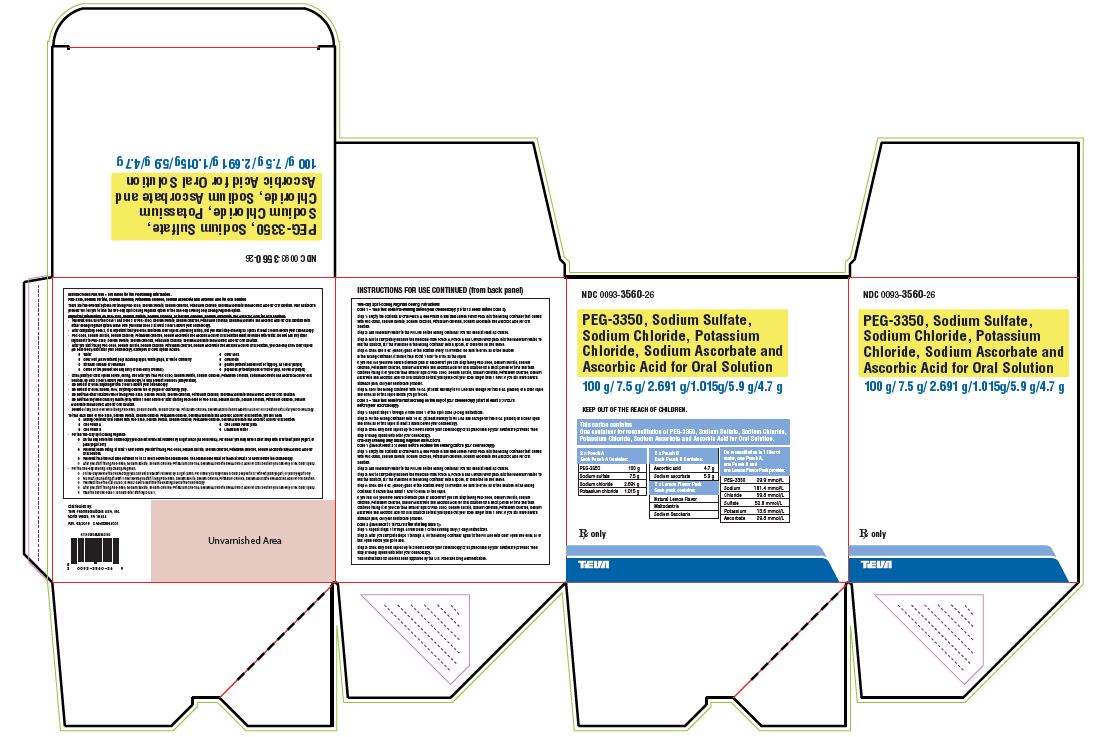
PEG-3350, Sodium Sulfate, Sodium Chloride, Potassium Chloride, Sodium Ascorbate and Ascorbic Acid Kit — NDC 0093-3560-26 (Billing 00093-3560-26)
This is a package of PEG-3350, Sodium Sulfate, Sodium Chloride, Potassium Chloride, Sodium Ascorbate and Ascorbic Acid Kit from Teva Pharmaceuticals USA, Inc., marketed since Aug 2020 and currently FDA-listed; retail pharmacies pay about $79.53 per unit (NADAC). It is this product's only package size.
NDC database record
One package, one record: these facts belong to NDC 0093-3560-26 alone.
- Record
- FDA NDC Directory package listing · Human prescription drug
- Code segments
- 0093 labeler · 3560 product · 26 package
- Package marketed since
- Aug 31, 2020
- Sample package
- No — commercial package
- Listing certified through
- Dec 31, 2026
- Barcode (UPC-A, from the NDC)
- 3 0093356026 9
- Medicaid fills, this package
- 2,061 prescriptions in the last four reported quarters
- FDA record last changed
- Jul 24, 2026
Past resolved recalls for this product (1)
Identity & classification
Regulatory identifiers FDA, NLM and CMS codes for this package
Drug-database identifiers Medi-Span GPI and First Databank GCN / HICL / AHFS classification
- GSN (GCN sequence number): 061457
- GCN: 97248
- GPI-14 (Medi-Span): 46992006302120
- HICL (First Databank): 034026
- AHFS class code: 56:12.00.00
- RxCUI (RxNorm): 800915
Where does this data come from?
- FDA openFDA NDC Directory · synced Oct 8, 2026
- FDA label on DailyMed · label index refreshed Oct 6, 2026
- RxNorm (NLM RxNav) · catalog refreshed Oct 1, 2026
- Medi-Span GPI (licensed)
- First Databank (licensed) · refreshed Oct 8, 2026
RxNorm drug class
This medicine belongs to the Vitamin C class.
Where does this data come from?
- RxClass (NLM) · catalog refreshed Oct 1, 2026
Clinical
Ascorbic acid (vitamin C) is used as a dietary supplement when the amount of ascorbic acid in the diet is not enough. People most at risk for ascorbic acid deficiency are those with a limited variety of food in their diet, or who have intestinal malabsorption problems from cancer or kidney disease. Ascorbic acid is also used to prevent and treat scurvy (a disease that causes fatigue, gum swelling, joint pain, and poor wound healing from a lack of vitamin C in the body). Ascorbic acid is in a class of medications called antioxidants. It is needed by the body to help wounds heal, to enhance the...
Read the full MedlinePlus article ↗- No, this is a one-time prescription bowel prep taken only before your colonoscopy. It's not meant for everyday constipation. Its sole job is to flush your colon completely clean so...
- What exactly is this prep for — is it a laxative I'll take regularly?
- Most people have their first bowel movement about 1 to 2 hours after starting the preparation. It will be watery and frequent — that's completely expected and is exactly what the p...
- When will I actually start going to the bathroom after I take it?
Patient education
Supplement & herbal interactions
Where does this data come from?
- MedlinePlus (NLM) · refreshed Oct 1, 2026
- FDA label on DailyMed · label index refreshed Oct 6, 2026
Ask a licensed pharmacist directly — free, answered by our team.
Pricing
A drug doesn't have one price. Each row is a different public payment system, and none is what you'd pay at the counter — that depends on your insurance. The ⓘ on each row explains what it measures.
| Price system | Per ea | Per package |
|---|---|---|
| Retail pharmacies payNADAC · weekly | $79.534 | — |
| Medicaid paysCMS SDUD · 12 mo | $75.64 | — |
| Medicare drug plans payPart D · quarterly | No Part D plan price is available for this NDC in our data. | |
Where does this data come from?
- CMS NADAC weekly file · file of Oct 7, 2026
- CMS ASP pricing files · refreshed Sep 20, 2026
- CMS Medicaid State Drug Utilization Data · through Q1 2026
- CMS Part D plan pricing files · refreshed Sep 24, 2026
- VA National Acquisition Center price file
Packaging — all sizes for this product
| Package NDC | Description | Marketing start | Marketing end | Status |
|---|---|---|---|---|
| 00093-3560-26 You're viewing this Main listing | 2 CARTON in 1 CARTON / 1 KIT in 1 CARTON * 1 L in 1 POUCH * 1 L in 1 POUCH * 1 L in 1 POUCH | 2020-08-31 | — | Active |
Therapeutic equivalents
| Product | Labeler | Pack | NADAC/unit | TE | Status | Price vs. this |
|---|---|---|---|---|---|---|
| Peg-3350, Sodium Sulfate, Sodium Chloride, Potassium Chloride, Sodium Ascorbate And Ascorbic Acidthis 00093-3560-26 | Teva | 1 kit | $79.534 | AA | Availability likely | — |
| PEG-3350, Electrolytes, and Ascorbate 68682-0201-75 | Oceanside | 1 kit | $86.805 | AA | FDA listed | +9% |
| MoviPrep 65649-0201-75 | Salix | 1 kit | $120.378 | AA | FDA listed | +51% |
Where does this data come from?
- FDA openFDA NDC Directory · synced Oct 8, 2026
- FDA Orange Book · refreshed Oct 3, 2026
- CMS NADAC weekly file · file of Oct 7, 2026
Availability & generic status
This product is an FDA-approved generic. Other versions of the same drug are listed under Therapeutic equivalents, least expensive first.
Where does this data come from?
- FDA Orange Book · refreshed Oct 3, 2026
Inactive Ingredients / Excipients
Inactive ingredients, also called excipients, are components of the drug product other than the active ingredient. They may include fillers, dyes, coatings, preservatives, flavors, or other formulation ingredients.
Where does this data come from?
IACT rows and label-wide narrative are kept separate; availability and product-level specificity depend on the submitted label.- FDA label on DailyMed · label index refreshed Oct 6, 2026
- FDA openFDA NDC Directory · synced Oct 8, 2026
Inactive ingredient FAQ
Are inactive ingredients the same for every manufacturer?
Why might an inactive ingredient be missing?
Can inactive ingredients matter?
Manufacturer & labeler
More NDCs from Teva Pharmaceuticals USA, Inc. labeler code 00093
- Atomoxetine 18 mg Capsule NDC 0093-3543-56
- Atomoxetine 25 mg Capsule NDC 0093-3544-56
- Atomoxetine 40 mg Capsule NDC 0093-3545-56
- Atomoxetine 60 mg Capsule NDC 0093-3546-56
- Atomoxetine 80 mg Capsule NDC 0093-3547-56
- Atomoxetine 100 mg Capsule NDC 0093-3548-56
- Fluticasone Propionate and Salmeterol 55 ug; 14 ug Powder, Metered NDC 0093-3607-82
- Fluticasone Propionate and Salmeterol 113 ug; 14 ug Powder, Metered NDC 0093-3608-82
- Fluticasone Propionate and Salmeterol 232 ug; 14 ug Powder, Metered NDC 0093-3609-82
- Acyclovir 50 mg/g Cream NDC 0093-3630-20
- Methylergonovine Maleate .2 mg Tablet NDC 0093-3655-22
- Buprenorphine 5 ug/h Patch, Extended Release NDC 0093-3656-40
Where does this data come from?
- FDA openFDA NDC Directory · synced Oct 8, 2026
- Drugs@FDA
Full prescribing information FDA SPL
🎯 Indications and Usage ▾
1 INDICATIONS AND USAGE PEG-3350, Sodium Sulfate, Sodium Chloride, Potassium Chloride, Sodium Ascorbate, and Ascorbic Acid for Oral Solution is an osmotic laxative indicated for cleansing of the colon as a preparation for colonoscopy in adults. PEG-3350, Sodium Sulfate, Sodium Chloride, Potassium Chloride, Sodium Ascorbate, and Ascorbic Acid for Oral Solution is an osmotic laxative indicated for cleansing of the colon as a preparation for colonoscopy in adults
⏱️ Dosage and Administration ▾
2 DOSAGE AND ADMINISTRATION Preparation and Administration: Two doses of PEG-3350, Sodium Sulfate, Sodium Chloride, Potassium Chloride, Sodium Ascorbate, and Ascorbic Acid for Oral Solution are required for a complete preparation for colonoscopy, using a "Two-Day" preferred method or "One-Day" alternative method dosing regimen. ( 2.1 ) PEG-3350, Sodium Sulfate, Sodium Chloride, Potassium Chloride, Sodium Ascorbate, and Ascorbic Acid for Oral Solution must be reconstituted in water prior to ingestion. ( 2.1 ) Additional clear liquids must be consumed after each dose of PEG-3350, Sodium Sulfate, Sodium Chloride, Potassium Chloride, Sodium Ascorbate, and Ascorbic Acid for Oral Solution in both dosing regiments.
( 2.1 , 5.1 ) Do not take other laxatives while taking PEG-3350, Sodium Sulfate, Sodium Chloride, Potassium Chloride, Sodium Ascorbate, and Ascorbic Acid for Oral Solution. ( 2.1 , 5.5 ) Do not take oral medications within 1 hour of starting each dose. ( 2.1 ) Dosing Regimen: Two-Day (Split-Dose) (Preferred Method) : Dose 1 the evening before the colonoscopy, and Dose 2 the morning of the colonoscopy (approximately 12 hours after the start of Dose 1, and at least 3 ½ hours prior to the colonoscopy).
( 2.2 ) One-Day (Evening Only) (Alternative Method) : Dose 1 at least 3 ½ hours prior to bedtime the evening before the colonoscopy and Dose 2 approximately 1 ½ hours after starting Dose 1 the evening before the colonoscopy. ( 2.3 ) For complete information on dosing, preparation and administration see full prescribing information ( 2.1 , 2.2 , 2.3 )
2.1Important Preparation and Administration Instructions Correct fluid and electrolyte abnormalities before treatment with PEG-3350, Sodium Sulfate, Sodium Chloride, Potassium Chloride, Sodium Ascorbate, and Ascorbic Acid for Oral Solution [ see Warnings and Precautions (5.1) ]. Two doses of PEG-3350, Sodium Sulfate, Sodium Chloride, Potassium Chloride, Sodium Ascorbate, and Ascorbic Acid for Oral Solution are required for a complete preparation for colonoscopy. The time interval between the two doses depends on the regimen prescribed and the planned timing of the colonoscopy procedure. [see Dosage and Administration ( 2.2 , 2.3 ) ] .
The "Split-Dose" is the preferred method and consists of two separate doses: the first dose is taken the evening before the colonoscopy, and the second dose is taken the next day, the morning of the day of the colonoscopy [ see Dosage and Administration (2.2) ]. The "Evening Only" is the alternative method and consists of two separate doses: both doses are taken in the evening before the day of the colonoscopy, with a minimum of 1.5 hours between the start of the first dose and the start of the second dose [ see Dosage and Administration (2.3) ].
Both PEG-3350, Sodium Sulfate, Sodium Chloride, Potassium Chloride, Sodium Ascorbate, and Ascorbic Acid for Oral Solution dosing regimens require administration of PEG-3350, Sodium Sulfate, Sodium Chloride, Potassium Chloride, Sodium Ascorbate, and Ascorbic Acid for Oral Solution using the mixing container provided to reconstitute the contents of Pouch A, Pouch B and Lemon flavor pack with water to the Fill Line. Do not reconstitute with other liquids and/or add starch-based thickeners to the mixing container [see Warnings and Precautions (5.7) ].
Additional clear liquids (including water) must be consumed in both dosing regimens [see Dosage and Administration ( 2.2 , 2.3 ), Warnings and Precautions (5.1) ] . Consume only clear liquids (no solid food) from the start of PEG-3350, Sodium Sulfate, Sodium Chloride, Potassium Chloride, Sodium Ascorbate, and Ascorbic Acid for Oral Solution treatment until after the colonoscopy. Do not eat or drink alcohol, milk, anything colored red or purple or any other foods containing pulp material.
Do not take other laxatives while taking PEG-3350, Sodium Sulfate, Sodium Chloride, Potassium Chloride, Sodium Ascorbate, and Ascorbic Acid for Oral Solution [ see Drug Interaction… [Excerpted — this section continues on DailyMed.]
💊 Dosage Forms and Strengths ▾
3 DOSAGE FORMS AND STRENGTHS PEG-3350, Sodium Sulfate, Sodium Chloride, Potassium Chloride, Sodium Ascorbate, and Ascorbic Acid for Oral Solution is supplied as a white to yellow free flowing powder with odor of lemon for reconstitution and is available in a carton that contains 2 pouches labeled Pouch A, 2 pouches labeled Pouch B and 2 Pouches labeled as Lemon Flavor pack. Each Pouch A contains 100 grams of polyethylene glycol (PEG) 3350, NF, 7.5 grams of sodium sulfate, USP, 2.691 grams of sodium chloride, USP, and 1.015 grams of potassium chloride, USP.
Each Pouch B contains 4.7 grams of ascorbic acid, USP and 5.9 grams of sodium ascorbate, USP. Each Lemon Flavor pack contains natural lemon flavor, maltodextrin and saccharin sodium. For Oral Solution: 2 pouches labeled Pouch A, 2 pouches labeled Pouch B and 2 pouches labeled Lemon Flavor pack.
(3) Each Pouch A contains 100 grams of polyethylene glycol (PEG) 3350, NF, 7.5 grams of sodium sulfate, USP, 2.691 grams of sodium chloride, USP, and 1.015 grams of potassium chloride, USP. (3) Each Pouch B contains 4.7 grams of ascorbic acid, USP and 5.9 grams of sodium ascorbate, USP. (3) Each Lemon Flavor pack contains Natural Lemon Flavor, Maltodextrin and Saccharin Sodium (3)
⛔ Contraindications ▾
4 CONTRAINDICATIONS PEG-3350, Sodium Sulfate, Sodium Chloride, Potassium Chloride, Sodium Ascorbate, and Ascorbic Acid for Oral Solution is contraindicated in the following conditions: Gastrointestinal (GI) obstruction [ see Warnings and Precautions (5.6) ] Bowel perforation [ see Warnings and Precautions (5.6) ] Gastric retention Ileus Toxic colitis or toxic megacolon Hypersensitivity to any ingredient in PEG-3350, Sodium Sulfate, Sodium Chloride, Potassium Chloride, Sodium Ascorbate, and Ascorbic Acid for Oral Solution [ see Warnings and Precautions (5.10) ] Gastrointestinal (GI) obstruction (4, 5.6 ) Bowel perforation (4, 4.6) Gastric retention (4) Ileus (4) Toxic colitis or toxic megacolon (4) Hypersensitivity to any ingredient in PEG-3350, Sodium Sulfate, Sodium Chloride, Potassium Chloride, Sodium Ascorbate, and Ascorbic Acid for Oral Solution (4, 5.10 )
⚠️ Warnings and Cautions ▾
5 WARNINGS AND PRECAUTIONS Risk of fluid and electrolyte abnormalities : Encourage adequate hydration, assess concurrent medications, and consider laboratory assessments prior to and after use. ( 5.1 , 7.1 ) Cardiac arrhythmias : Consider pre-dose and post-colonoscopy ECGs in patients at increased risk. (5.2) Seizures: Use caution in patients with a history of seizures and patients at increased risk of seizure, including medications that lower the seizure threshold.
( 5.3 , 7.1 ) Patients with renal impairment or taking concomitant medications that affect renal function : Use caution, ensure adequate hydration and consider laboratory testing. ( 5.4 , 7.1 , 8.6 ) Colonic mucosal ulcerations : Consider potential for ulcerations when interpreting colonoscopy findings in patients with known or suspected inflammatory bowel disease. ( 5.5 ) Suspected GI obstruction or perforation : Rule out the diagnosis before administration.
( 5.6 ) Patients at risk for aspiration : Observe during administration. ( 5.7 ) Glucose-6-phosphate dehydrogenase deficiency (G-6-PD) : Use with caution. ( 5.8 ) Hypersensitivity reactions, including anaphylaxis : Inform patients to seek immediate medical care if symptoms occur.
( 5.10 )
5.1Serious Fluid and Electrolyte Abnormalities Advise patients to hydrate adequately before, during, and after the use of PEG-3350, Sodium Sulfate, Sodium Chloride, Potassium Chloride, Sodium Ascorbate, and Ascorbic Acid for Oral Solution. If a patient develops significant vomiting or signs of dehydration after taking PEG-3350, Sodium Sulfate, Sodium Chloride, Potassium Chloride, Sodium Ascorbate, and Ascorbic Acid for Oral Solution, consider performing post-colonoscopy lab tests (electrolytes, creatinine, and BUN).
Bowel preparations can cause fluid and electrolyte disturbances, which can lead to serious adverse reactions including cardiac arrhythmias, seizures, and renal impairment [ see Adverse Reactions (6.2) ] . Correct fluid and electrolyte abnormalities before treatment with PEG-3350, Sodium Sulfate, Sodium Chloride, Potassium Chloride, Sodium Ascorbate, and Ascorbic Acid for Oral Solution. PEG-3350, Sodium Sulfate, Sodium Chloride, Potassium Chloride, Sodium Ascorbate, and Ascorbic Acid for Oral Solution should be used with caution in patients using concomitant medications that increase the risk of electrolyte abnormalities [such as diuretics, angiotensin converting enzyme (ACE) inhibitors or angiotensin receptor blockers (ARBs)] or in patients with known or suspected hyponatremia.
Consider performing pre-dose and post-colonoscopy laboratory tests (sodium, potassium, calcium, creatinine, and BUN) in these patients [ see Drug Interactions (7.1) ].
5.2Cardiac Arrhythmias There have been rare reports of serious arrhythmias (including atrial fibrillation) associated with the use of ionic osmotic laxative products for bowel preparation. These occur predominantly in patients with underlying cardiac risk factors and electrolyte disturbances. Use caution when prescribing PEG-3350, Sodium Sulfate, Sodium Chloride, Potassium Chloride, Sodium Ascorbate, and Ascorbic Acid for Oral Solution for patients at increased risk of arrhythmias (e.g., patients with a history of prolonged QT, uncontrolled arrhythmias, recent myocardial infarction, unstable angina, congestive heart failure, cardiomyopathy, or electrolyte imbalance).
Consider pre-dose and post-colonoscopy ECGs in patients at increased risk of serious cardiac arrhythmias.
5.3Seizures There have been rare reports of generalized tonic-clonic seizures and/or loss of consciousness associated with use of bowel preparation products in patients with no prior history of seizures. The seizure cases were associated with electrolyte abnormalities (e.g., hyponatremia, hypokalemia, hypocalcemia, and hypomagnesemia) and low serum osmolality. The neurologic abnormalities resolved with correction of fluid and electrolyte abnormalities.
Use caution when prescribing PEG-3350, Sodium Sulfate,… [Excerpted — this section continues on DailyMed.]
🤒 Adverse Reactions ▾
6 ADVERSE REACTIONS The following serious or otherwise important adverse reactions for bowel preparations are described elsewhere in the labeling: Serious Fluid and Electrolyte Abnormalities [ see Warnings and Precautions (5.1) ] Cardiac Arrhythmias [ see Warnings and Precautions (5.2) ] Seizures [ see Warnings and Precautions (5.3) ] Patients with Renal Impairment [ see Warnings and Precautions (5.4) ] Colonic Mucosal Ulceration, Ischemic Colitis and Ulcerative Colitis [ see Warnings and Precautions (5.5) ] Patients with Significant Gastrointestinal Disease [ see Warnings and Precautions (5.6) ] Aspiration [ see Warnings and Precautions (5.7) ] Glucose-6-Phosphate Dehydrogenase (G6PD) Deficiency [ see Warnings and Precautions (5.8) ] Hypersensitivity Reactions [ see Warnings and Precautions (5.10) ] Most common adverse reactions (≥ 5%) are: Two-Day (Split-Dose): malaise, nausea, abdominal pain, vomiting, and upper abdominal pain.
( 6.1 ) One-Day (Evening-Only): abdominal distension, anal discomfort, thirst, nausea, abdominal pain, sleep disorder, rigors, hunger, malaise, vomiting, and dizziness. ( 6.1 ) To report SUSPECTED ADVERSE REACTIONS, contact Lupin Pharmaceuticals, Inc. at 1-866-403-7592 or FDA at 1-800-FDA-1088 or www.fda.gov/medwatch.
6.1Clinical Studies Experience Because clinical trials are conducted under widely varying conditions, adverse reaction rates observed in the clinical trials of a drug cannot be directly compared to rates in the clinical trials of another drug and may not reflect the rates observed in clinical practice. The safety of PEG-3350, Sodium Sulfate, Sodium Chloride, Potassium Chloride, Sodium Ascorbate, and Ascorbic Acid for Oral Solution as a Two-Day Split-Dosing and One-Day Evening Only Dosing Regimen was evaluated in two randomized, active-controlled, multicenter, investigator-blinded clinical trials in adult patients scheduled to have an elective colonoscopy [see Clinical Studies (14)] .
The safety analysis for Study 1 included 359 adult patients ranging in age from 18 to 88 years (mean age 59), with 52% female and 48% male patients. The safety analysis for Study 2 included 340 adult patients ranging in age from 21 to 76 years (mean age 53), with 53% male and 47% female patients. Tables 1 and 2 display adverse reactions reported in at least 2% and 5% of patients in either treatment group in Study 1 and Study 2, respectively.
Since diarrhea was considered as a part of the efficacy assessment, it was not defined as an adverse reaction in these trials. Table 1: Common Adverse Reactions1 in Patients Undergoing Colonoscopy in Study 11 PEG-3350, Sodium Sulfate, Sodium Chloride, Potassium Chloride, Sodium Ascorbate, and Ascorbic Acid for Oral Solution Two-Day Split Dosing Regimen (N=180) 4 Liter PEG + Electrolytes Solution (N=179) Malaise 19% 18% Nausea 14% 20% Abdominal pain 13% 15% Vomiting 8% 13% Upper abdominal pain 6% 6% Dyspepsia 3% 1% 1 Reported in at least 2% of patients in either treatment group Table 2: Common Adverse Reactions1,2 in Patients Undergoing Colonoscopy in Study 22 PEG-3350, Sodium Sulfate, Sodium Chloride, Potassium Chloride, Sodium Ascorbate, and Ascorbic Acid for Oral Solution One-Day Evening Only Dosing Regimen(N=169) 90 mL Oral Sodium Phosphate Solution (N=171) Abdominal distension 60% 41% Anal discomfort 51% 52% Thirst 47% 65% Nausea 47% 47% Abdominal pain 39% 32% Sleep disorder 35% 29% Rigors 34% 30% Hunger 30% 71% Malaise 27% 53% Vomiting 7% 8% Dizziness 7% 18% Headache 2% 5% Hypokalemia 0% 6% Hyperphosphatemia 0% 6% 1 Reported in at least 5% of patients in either treatment group 2 Patients were specifically asked about the occurrence of the following symptoms: shivering, anal irritations, abdominal bloating or fullness, sleep loss, nausea, vomiting, weakness, hunger sensation, abdominal cramps or pain, thirst sensation, and dizziness.
6.2Postmarketing Experience The following adverse reactions have been identified during post-approval use of PEG-3350, Sodium Sulfat… [Excerpted — this section continues on DailyMed.]
🔄 Drug Interactions ▾
7 DRUG INTERACTIONS Drugs that increase risk for fluid and electrolyte imbalance. ( 7.1 )
7.1Drugs That May Increase Risks due to Fluid and Electrolyte Abnormalities Use caution when prescribing PEG-3350, Sodium Sulfate, Sodium Chloride, Potassium Chloride, Sodium Ascorbate, and Ascorbic Acid for Oral Solution for patients with conditions and/or who are using medications that increase the risk for fluid and electrolyte disturbances or may increase the risk of renal impairment, seizures, arrhythmias, or QT prolongation in the setting of fluid and electrolyte abnormalities [see Warnings and Precautions ( 5.1 , 5.2 , 5.3 , 5.4 )].
Consider additional patient evaluations as appropriate
7.2Potential for Reduced Drug Absorption PEG-3350, Sodium Sulfate, Sodium Chloride, Potassium Chloride, Sodium Ascorbate, and Ascorbic Acid for Oral Solution can reduce the absorption of other co-administered drugs. Administer oral medications at least 1 hour before the start of administration of each dose of PEG-3350, Sodium Sulfate, Sodium Chloride, Potassium Chloride, Sodium Ascorbate, and Ascorbic Acid for Oral Solution [ see Dosage and Administration (2.1) ] .
7.3Stimulant Laxatives Concurrent use of stimulant laxatives and PEG-3350, Sodium Sulfate, Sodium Chloride, Potassium Chloride, Sodium Ascorbate, and Ascorbic Acid for Oral Solution may increase the risk of mucosal ulceration or ischemic colitis. Avoid use of stimulant laxatives (e.g., bisacodyl, sodium picosulfate) while taking PEG-3350, Sodium Sulfate, Sodium Chloride, Potassium Chloride, Sodium Ascorbate, and Ascorbic Acid for Oral Solution [see Warnings and Precautions ( 5.5 , 5.6 )] .
👥 Use in Specific Populations ▾
8 USE IN SPECIFIC POPULATIONS
8.1Pregnancy Risk Summary There are no available data on PEG-3350, Sodium Sulfate, Sodium Chloride, Potassium Chloride, Sodium Ascorbate, and Ascorbic Acid for Oral Solution in pregnant women to inform a drug-associated risk for adverse developmental outcomes. Animal reproduction studies have not been conducted with PEG-3350, Sodium Sulfate, Sodium Chloride, Potassium Chloride, Sodium Ascorbate, and Ascorbic Acid for Oral Solution. The estimated background risk of major birth defects and miscarriage for the indicated population is unknown.
All pregnancies have a background risk of birth defect, loss, or other adverse outcomes. In the U.S. general population, the estimated background risk of major birth defects and miscarriage in clinically recognized pregnancies is 2% to 4% and 15% to 20%, respectively.
8.2Lactation Risk Summary There are no data available on the presence of PEG-3350, Sodium Sulfate, Sodium Chloride, Potassium Chloride, Sodium Ascorbate, and Ascorbic Acid for Oral Solution in human milk, the effects of the drug on the breastfed child, or the effects of the drug on milk production. The lack of clinical data during lactation precludes a clear determination of the risk of PEG-3350, Sodium Sulfate, Sodium Chloride, Potassium Chloride, Sodium Ascorbate, and Ascorbic Acid for Oral Solution to a child during lactation; therefore, the developmental and health benefits of breastfeeding should be considered along with the mother's clinical need for PEG-3350, Sodium Sulfate, Sodium Chloride, Potassium Chloride, Sodium Ascorbate, and Ascorbic Acid for Oral Solution and any potential adverse effects on the breastfed child from PEG-3350, Sodium Sulfate, Sodium Chloride, Potassium Chloride, Sodium Ascorbate, and Ascorbic Acid for Oral Solution or from the underlying maternal condition.
8.4Pediatric Use The safety and effectiveness of PEG-3350, Sodium Sulfate, Sodium Chloride, Potassium Chloride, Sodium Ascorbate, and Ascorbic Acid for Oral Solution in pediatric patients have not been established.
8.5Geriatric Use Of the 413 patients in clinical trials receiving PEG-3350, Sodium Sulfate, Sodium Chloride, Potassium Chloride, Sodium Ascorbate, and Ascorbic Acid for Oral Solution, 91 (22%) patients were aged 65 or older, while 25 (6%) patients were over 75 years of age. No overall differences in safety or effectiveness were observed between geriatric patients and younger patients, and other reported clinical experience has not identified differences in responses between geriatric patients and younger patients. However, elderly patients are more likely to have decreased hepatic, renal or cardiac function and may be more susceptible to adverse reactions resulting from fluid and electrolyte abnormalities [ see Warnings and Precautions (5.1) ] .
8.6Renal Impairment Use PEG-3350, Sodium Sulfate, Sodium Chloride, Potassium Chloride, Sodium Ascorbate, and Ascorbic Acid for Oral Solution with caution in patients with renal impairment or patients taking concomitant medications that may affect renal function [see Drug Interactions (7.1)] . These patients may be at risk for renal injury. Advise these patients of the importance of adequate hydration before, during and after the use of PEG-3350, Sodium Sulfate, Sodium Chloride, Potassium Chloride, Sodium Ascorbate, and Ascorbic Acid for Oral Solution, and consider performing baseline and post-colonoscopy laboratory tests (electrolytes, creatinine, and BUN) in these patients [ see Warnings and Precautions (5.4) ] .
🤰 Pregnancy ▾
8.1Pregnancy Risk Summary There are no available data on PEG-3350, Sodium Sulfate, Sodium Chloride, Potassium Chloride, Sodium Ascorbate, and Ascorbic Acid for Oral Solution in pregnant women to inform a drug-associated risk for adverse developmental outcomes. Animal reproduction studies have not been conducted with PEG-3350, Sodium Sulfate, Sodium Chloride, Potassium Chloride, Sodium Ascorbate, and Ascorbic Acid for Oral Solution. The estimated background risk of major birth defects and miscarriage for the indicated population is unknown.
All pregnancies have a background risk of birth defect, loss, or other adverse outcomes. In the U.S. general population, the estimated background risk of major birth defects and miscarriage in clinically recognized pregnancies is 2% to 4% and 15% to 20%, respectively.
🧒 Pediatric Use ▾
8.4Pediatric Use The safety and effectiveness of PEG-3350, Sodium Sulfate, Sodium Chloride, Potassium Chloride, Sodium Ascorbate, and Ascorbic Acid for Oral Solution in pediatric patients have not been established.
🧓 Geriatric Use ▾
8.5Geriatric Use Of the 413 patients in clinical trials receiving PEG-3350, Sodium Sulfate, Sodium Chloride, Potassium Chloride, Sodium Ascorbate, and Ascorbic Acid for Oral Solution, 91 (22%) patients were aged 65 or older, while 25 (6%) patients were over 75 years of age. No overall differences in safety or effectiveness were observed between geriatric patients and younger patients, and other reported clinical experience has not identified differences in responses between geriatric patients and younger patients. However, elderly patients are more likely to have decreased hepatic, renal or cardiac function and may be more susceptible to adverse reactions resulting from fluid and electrolyte abnormalities [ see Warnings and Precautions (5.1) ] .
🆘 Overdosage ▾
10 OVERDOSAGE Overdosage of more than the recommended dose of PEG-3350, Sodium Sulfate, Sodium Chloride, Potassium Chloride, Sodium Ascorbate, and Ascorbic Acid for Oral Solution may lead to severe electrolyte disturbances, including hyponatremia and/or hypokalemia, as well as dehydration and hypovolemia, with signs and symptoms of these disturbances. Certain severe electrolyte disturbances may lead to cardiac arrhythmias, seizures, and renal failure [see Warnings and Precautions ( 5.1 , 5.2 , 5.3 )] . Monitor for fluid and electrolyte disturbances and treat symptomatically.
🧬 Clinical Pharmacology ▾
12 CLINICAL PHARMACOLOGY
12.1Mechanism of Action The primary mode of action is osmotic action of polyethylene glycol 3350, sodium sulfate, sodium chloride, potassium chloride, sodium ascorbate, and ascorbic acid, which induce a laxative effect. The physiological consequence is increased water retention in the lumen of the colon, resulting in loose stools.
🧬 Mechanism of Action ▾
12.1Mechanism of Action The primary mode of action is osmotic action of polyethylene glycol 3350, sodium sulfate, sodium chloride, potassium chloride, sodium ascorbate, and ascorbic acid, which induce a laxative effect. The physiological consequence is increased water retention in the lumen of the colon, resulting in loose stools.
📦 How Supplied / Storage and Handling ▾
16 HOW SUPPLIED/STORAGE AND HANDLING PEG-3350, Sodium Sulfate, Sodium Chloride, Potassium Chloride, Sodium Ascorbate, and Ascorbic Acid for Oral Solution is supplied as a white to yellow free flowing powder with odor of lemon for reconstitution. Pouch A contains 100 grams of PEG 3350, NF; 7.5 grams of sodium sulfate, NF; 2.691 grams of sodium chloride, USP/NF; and 1.015 gram of potassium chloride, USP/NF: NDC 0093-9044-19. Pouch B contains 4.7 grams of Ascorbic acid; 5.9 grams of sodium ascorbate, USP/NF: NDC 0093-9043-19.
Lemon flavor pack contains natural lemon flavor; maltodextrin and saccharin sodium. PEG-3350, Sodium Sulfate, Sodium Chloride, Potassium Chloride, Sodium Ascorbate, and Ascorbic Acid for Oral Solution, mixing container: NDC 0093-9045-19 PEG-3350, Sodium Sulfate, Sodium Chloride, Potassium Chloride, Sodium Ascorbate, and Ascorbic Acid for Oral Solution, single-use inner carton: The inner carton contains three pouches labeled Pouch A, Pouch B and lemon flavor pack: NDC 0093-3560-19. PEG-3350, Sodium Sulfate, Sodium Chloride, Potassium Chloride, Sodium Ascorbate, and Ascorbic Acid for Oral Solution, single-use outer carton: Each outer carton contains 2 inner cartons, prescribing information and patient information and a mixing container with lid for reconstitution of PEG-3350, Sodium Sulfate, Sodium Chloride, Potassium Chloride, Sodium Ascorbate, and Ascorbic Acid for Oral Solution: NDC 0093-3560-26 Storage Store carton/container at room temperature, between 20° to 25°C (68° to 77°F); excursions permitted to 15° to 30°C (59° to 86°F).When reconstituted, store upright and keep solution refrigerated.
Use within 24 hours [see Dosage and Administration (2.1)] .
📋 Description ▾
11 DESCRIPTION PEG-3350, Sodium Sulfate, Sodium Chloride, Potassium Chloride, Sodium Ascorbate, and Ascorbic Acid for Oral Solution is an osmotic laxative consisting of 6 pouches (2 of Pouch A, 2 of Pouch B and 2 of Lemon Flavor Pack) containing white to yellow free flowing powder with odor of lemon for reconstitution. Each Pouch A contains 100 grams of polyethylene glycol (PEG) 3350, NF, 7.5 grams of sodium sulfate, USP, 2.691 grams of sodium chloride, USP, and 1.015 grams of potassium chloride, USP. Pouch A contains 111.2 g of powder for oral solution.
Each Pouch B contains 4.7 grams of ascorbic acid, USP and 5.9 grams of sodium ascorbate, USP. Pouch B contains 10.6 g of powder for oral solution. Each Lemon Flavor pack contains natural lemon flavor; maltodextrin and saccharin sodium.
When 1 Pouch A, 1 Pouch B and 1 Lemon Flavor pack are dissolved together in water to a volume of 1 liter, PEG-3350, Sodium Sulfate, Sodium Chloride, Potassium Chloride, Sodium Ascorbate, and Ascorbic Acid for Oral Solution is an oral solution having a lemon taste. The entire, reconstituted, 2-liter PEG-3350, Sodium Sulfate, Sodium Chloride, Potassium Chloride, Sodium Ascorbate, and Ascorbic Acid for Oral Solution colon preparation contains 200 grams of PEG-3350, 15 grams of sodium sulfate, 5.38 grams of sodium chloride, 2.03 grams of potassium chloride, 9.4 grams of ascorbic acid, and 11.8 grams of sodium ascorbate plus the following excipients: sodium saccharin, USP, maltodextrin, NF, and lemon flavoring.
A mixing container for reconstitution is enclosed.
💬 Information for Patients ▾
17 PATIENT COUNSELING INFORMATION Advise the patient to read the FDA-approved patient labeling (Medication Guide and Instructions for Use). Instruct patients: That two doses of PEG-3350, Sodium Sulfate, Sodium Chloride, Potassium Chloride, Sodium Ascorbate, and Ascorbic Acid for Oral Solution are required for a complete preparation for colonoscopy either as a Split-Dose (2-Day), or Evening Only (1-Day) dosing regimen [ see Instructions for Use ] . Not to take other laxatives while they are taking PEG-3350, Sodium Sulfate, Sodium Chloride, Potassium Chloride, Sodium Ascorbate, and Ascorbic Acid for Oral Solution.
That each pouch needs to be reconstituted in water before ingestion and that they should drink additional clear liquids. Examples of clear liquids can be found in the Instructions for Use . Not to take oral medications within one hour of starting each dose of PEG-3350, Sodium Sulfate, Sodium Chloride, Potassium Chloride, Sodium Ascorbate, and Ascorbic Acid for Oral Solution.
To follow the directions in the Instructions for Use , for either the Two-Day Split-Dosing or the One-Day Evening Only Dosing regimen, as prescribed. To consume additional clear liquids before, during, and after the use of PEG-3350, Sodium Sulfate, Sodium Chloride, Potassium Chloride, Sodium Ascorbate, and Ascorbic Acid for Oral Solution to prevent dehydration [ see Warnings and Precautions (5.1) ] . To contact their healthcare provider if they develop significant vomiting or signs of dehydration after taking PEG-3350, Sodium Sulfate, Sodium Chloride, Potassium Chloride, Sodium Ascorbate, and Ascorbic Acid for Oral Solution or if they experience altered consciousness or seizures [see Warnings and Precautions ( 5.1 , 5.2 , 5.3 , 5.4 )] Not to eat or drink alcohol, milk, anything colored red or purple or any other foods containing pulp material.
To stop drinking PEG-3350, Sodium Sulfate, Sodium Chloride, Potassium Chloride, Sodium Ascorbate, and Ascorbic Acid for Oral Solution temporarily or drink each portion at longer intervals if they develop severe abdominal discomfort or distention until these symptoms diminish. If severe symptoms persist, tell patients to contact their healthcare provider. Distributed By: Teva Pharmaceuticals USA, Inc.
North Wales, PA 19454 SAP Code: 270438 Rev. 04/2022
💬 Medication Guide ▾
MEDICATION GUIDE PEG-3350, Sodium Sulfate, Sodium Chloride, Potassium Chloride, Sodium Ascorbate, and Ascorbic Acid for Oral Solution (pol˝ ee eth´ i leen glye´ kol, soeˊ dee um sul' fate, soeˊ dee um klor´ ide, poe tasˊee um klor´ ide, soeˊ dee um a skor´ bate, as koreˊ bik as´ id for oral solution) Read this Medication Guide and Instructions for Use before your colonoscopy and again before you start taking PEG-3350, Sodium Sulfate, Sodium Chloride, Potassium Chloride, Sodium Ascorbate, and Ascorbic Acid for Oral Solution.
What is the most important information I should know about PEG-3350, Sodium Sulfate, Sodium Chloride, Potassium Chloride, Sodium Ascorbate, and Ascorbic Acid for Oral Solution? PEG-3350, Sodium Sulfate, Sodium Chloride, Potassium Chloride, Sodium Ascorbate, and Ascorbic Acid for Oral Solution and other bowel preparations can cause serious side effects, including: Serious loss of body fluid (dehydration) and changes in blood salts (electrolytes) in your blood. These changes can cause: abnormal heartbeats that can cause death. seizures.
This can happen even if you have never had a seizure. kidney problems. Your chance of having fluid loss and changes in body salts with PEG-3350, Sodium Sulfate, Sodium Chloride, Potassium Chloride, Sodium Ascorbate, and Ascorbic Acid for Oral Solution is higher if you: have heart problems. have kidney problems. take water pills (diuretics), high blood pressure medicine, or non-steroidal anti-inflammatory drugs (NSAIDS). Tell your healthcare provider right away if you have any of these symptoms of serious loss of body fluid (dehydration) while taking PEG-3350, Sodium Sulfate, Sodium Chloride, Potassium Chloride, Sodium Ascorbate, and Ascorbic Acid for Oral Solution: vomiting dizziness urinating less often than normal headache See "What are the possible side effects of PEG-3350, Sodium Sulfate, Sodium Chloride, Potassium Chloride, Sodium Ascorbate, and Ascorbic Acid for Oral Solution?" for more information about side effects.
What is PEG-3350, Sodium Sulfate, Sodium Chloride, Potassium Chloride, Sodium Ascorbate, and Ascorbic Acid for Oral Solution? PEG-3350, Sodium Sulfate, Sodium Chloride, Potassium Chloride, Sodium Ascorbate, and Ascorbic Acid for Oral Solution is a prescription medicine used by adults to clean the colon before a colonoscopy. PEG-3350, Sodium Sulfate, Sodium Chloride, Potassium Chloride, Sodium Ascorbate, and Ascorbic Acid for Oral Solution cleans your colon by causing you to have diarrhea (loose stools).
Cleaning your colon helps your healthcare provider see the inside of your colon more clearly during your colonoscopy. It is not known if PEG-3350, Sodium Sulfate, Sodium Chloride, Potassium Chloride, Sodium Ascorbate, and Ascorbic Acid for Oral Solution is safe and effective in children. Who should not take PEG-3350, Sodium Sulfate, Sodium Chloride, Potassium Chloride, Sodium Ascorbate, and Ascorbic Acid for Oral Solution?
Do not take PEG-3350, Sodium Sulfate, Sodium Chloride, Potassium Chloride, Sodium Ascorbate, and Ascorbic Acid for Oral Solution if your healthcare provider has told you that you have: a blockage in your intestine (bowel obstruction). an opening in the wall of your stomach or intestine (bowel perforation). problems with food and fluid emptying from your stomach (gastric retention). a problem with food moving too slowly through your intestines (ileus). a very dilated intestine (toxic megacolon). an allergy to any of the ingredients in PEG-3350, Sodium Sulfate, Sodium Chloride, Potassium Chloride, Sodium Ascorbate, and Ascorbic Acid for Oral Solution.
See the end of this Medication Guide for a complete list of ingredients in PEG-3350, Sodium Sulfate, Sodium Chloride, Potassium Chloride, Sodium Ascorbate, and Ascorbic Acid for Oral Solution. What should I tell my healthcare provider before taking PEG-3350, Sodium Sulfate, Sodium Chloride, Potassium Chloride, Sodium Ascorbate, and Ascorbic Acid for Oral Solution? Before taking PEG-3350, Sodium… [Excerpted — this section continues on DailyMed.]
🔬 Clinical Studies ▾
14 CLINICAL STUDIES The colon cleansing efficacy and safety of PEG-3350, Sodium Sulfate, Sodium Chloride, Potassium Chloride, Sodium Ascorbate, and Ascorbic Acid for Oral Solution was evaluated in two randomized, actively-controlled, multi-center, investigator-blinded trials in adult patients scheduled to have an elective colonoscopy. In Study 1, patients were randomized to one of the following two colon preparation treatments: 1) 2 liters of PEG-3350, Sodium Sulfate, Sodium Chloride, Potassium Chloride, Sodium Ascorbate, and Ascorbic Acid for Oral Solution with 1 additional liter of clear liquid split into two doses (during the evening before and the morning of the colonoscopy) and 2) 4 liters of polyethylene glycol plus electrolytes solution (4L PEG + E) split into two doses (during the evening before and the morning of the colonoscopy).
Patients were allowed to have a morning breakfast, a light lunch, clear soup and/or plain yogurt for dinner. Dinner had to be completed at least one hour prior to initiation of the colon preparation administration. The primary efficacy endpoint was the proportion of patients with effective colon cleansing as judged by blinded gastroenterologists on the basis of videotapes recorded during the colonoscopy.
The blinded gastroenterologists graded the colon cleansing twice (during introduction and withdrawal of the colonoscope) and the poorer of the two assessments was used in the primary efficacy analysis. The efficacy analysis included 308 adult patients who had an elective colonoscopy. Patients ranged in age from 18 to 88 years old (mean age about 59 years old) with 52% female and 48% male patients.
Table 3 displays the results. Table 3: Effectiveness of Overall Colon Cleansing of PEG-3350, Sodium Sulfate, Sodium Chloride, Potassium Chloride, Sodium Ascorbate, and Ascorbic Acid for Oral Solution vs. 4 Liter Polyethylene Glycol plus Electrolytes Solution in Study 1 Responders A 2 or B 3 (%) C 4 (%) D 5 (%) PEG-3350, Sodium Sulfate, Sodium Chloride, Potassium Chloride, Sodium Ascorbate, and Ascorbic Acid for Oral Solution (N=153) 88.9 9.8 1.3 4L PEG + E 1 (N=155) 94.8 4.5 0.6 1 4L PEG + E is 4 Liter Polyethylene Glycol plus Electrolytes Solution.
2 A: colon empty and clean or presence of clear liquid, but easily removed by suction 3 B: brown liquid or semisolid remaining amounts of stool, fully removable by suction or displaceable, thus allowing a complete visualization of the gut mucosa 4 C: semisolid amounts of stool, only partially removable with a risk of incomplete visualization of the gut mucosa 5 D: semisolid or solid amounts of stool; consequently colonoscopy incomplete or needed to be terminated. 4L PEG+E's responder rate was not significantly higher than PEG-3350, Sodium Sulfate, Sodium Chloride, Potassium Chloride, Sodium Ascorbate, and Ascorbic Acid for Oral Solution's responder rate.
In Study 2, patients were randomized to one of the following two colon preparation treatments: 1) 2 liters of PEG-3350, Sodium Sulfate, Sodium Chloride, Potassium Chloride, Sodium Ascorbate, and Ascorbic Acid for Oral Solution with 1 additional liter of clear liquid in the evening prior to the colonoscopy and 2) 90 mL of oral sodium phosphate solution (90 mL OSPS) with at least 2 liters of additional clear liquid during the day and evening prior to the colonoscopy. Patients randomized to PEG-3350, Sodium Sulfate, Sodium Chloride, Potassium Chloride, Sodium Ascorbate, and Ascorbic Acid for Oral Solution therapy were allowed to have a morning breakfast; a light lunch; and clear soup and/or plain yogurt for dinner.
Dinner had to be completed at least one hour prior to initiation of the colon preparation administration. The primary efficacy endpoint was the proportion of patients with effective colon cleansing as judged by the colonoscopist and one blinded gastroenterologist (on the basis of videotapes recorded during the colonoscopy). In case of a discrepancy between the colonoscopist and the blinded gastr… [Excerpted — this section continues on DailyMed.]
📄 Recent Major Changes ▾
RECENT MAJOR CHANGES Warnings and Precautions, Aspiration: (5.7) 05/2021
📄 Package Label / Principal Display Panel ▾
PACKAGE LABEL.PRINCIPAL DISPLAY PANEL Outer-carton
Medicaid utilization & spend
About this NDC listing & data coverage
Kit / multi-component package
This NDC identifies a kit — a package containing more than one component. Structured data (pricing, ingredients, equivalents) is often reported per component rather than for the kit NDC itself, which can make this page look thinner than the components' own pages.
What data is (and isn’t) available for this NDC — tap to expand
| NDC identity (package / product / labeler codes) | ✓ Available |
| Labeler | ✓ Available |
| Product & package description | ✓ Available |
| Marketing category & status | ✓ Available |
| Active ingredient / dosage form / route | ✓ Available |
| FDA label (SPL via DailyMed) | ✓ Available |
| Package photos | ✓ Available |
| Inactive ingredients (structured) | — Not published for this NDC The labeler did not submit a structured excipient list, or no SPL is available. |
| NADAC pharmacy acquisition price (CMS) | ✓ Available |
| Orange Book / therapeutic-equivalence data | ✓ Available |
| HCPCS J-code billing crosswalk | — Not published for this NDC Most self-administered / retail products have no J-code — that is normal. |
| Medicaid utilization (CMS SDUD) | ✓ Available |