
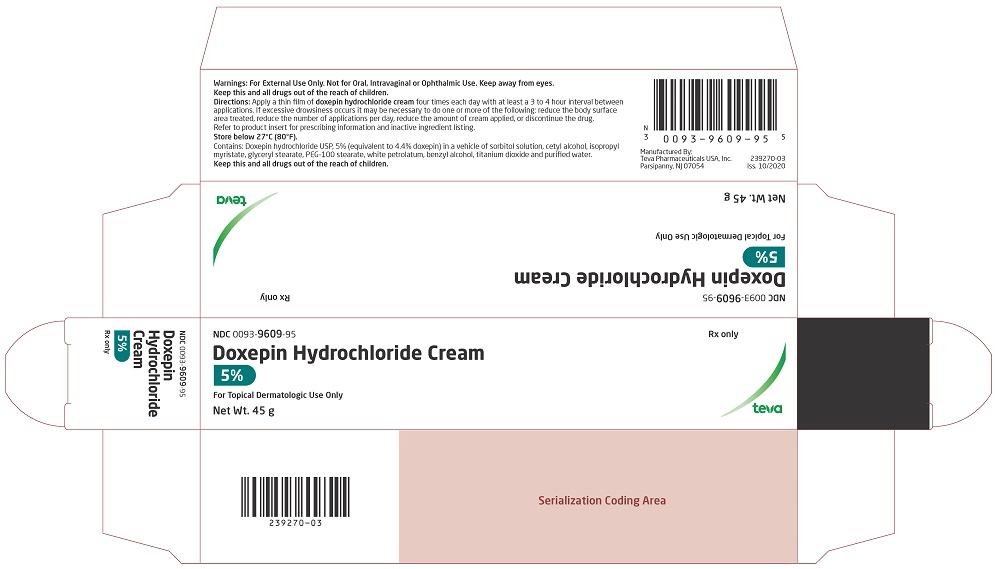
doxepin hydrochloride 50 mg/g Cream — NDC 0093-9609-95 (Billing 00093-9609-95)
This is a package of doxepin hydrochloride 50 mg/g Cream from Teva Pharmaceuticals USA, Inc., marketed since Feb 2023 and currently FDA-listed; retail pharmacies pay about $7.12 per g (NADAC). It is this product's only package size.
Other active recalls for Doxepin Hydrochloride (different manufacturers) — 1 · tap to view
Identity & classification
Regulatory identifiers FDA, NLM and CMS codes for this package
Drug-database identifiers Medi-Span GPI and First Databank GCN / HICL / AHFS classification
- GSN (GCN sequence number): 021715
- GCN: 21210
- GPI-14 (Medi-Span): 90220015103710
- HICL (First Databank): 001650
- AHFS class code: 28:16.04.28
- RxCUI (RxNorm): 1000091
Where does this data come from?
- FDA openFDA NDC Directory · synced Oct 1, 2026
- FDA label on DailyMed · label index refreshed Oct 1, 2026
- RxNorm (NLM RxNav) · catalog refreshed Oct 1, 2026
- Medi-Span GPI (licensed)
- First Databank (licensed) · refreshed Oct 1, 2026
RxNorm drug class
This medicine belongs to the Tricyclic Antidepressant class.
Where does this data come from?
- RxClass (NLM) · catalog refreshed Oct 1, 2026
Clinical
Doxepin topical is used to relieve itching of the skin caused by eczema. Doxepin is in a class of medications called topical antipruritics. It may work by blocking histamine, a substance in the body that causes certain symptoms, such as itching.
Read the full MedlinePlus article ↗- It depends on the product. Capsules treat depression and anxiety, the oral solution treats major depressive disorder in adults, tablets such as Silenor treat trouble staying asleep...
- Take it within 30 minutes of bedtime. Do not take it within 3 hours of a meal. A meal can slow absorption and may cause more next-day effects.
- Sleepiness is the most common, along with nausea, cold-like symptoms and dizziness. Dry mouth, blurred vision and constipation can also happen. Call me or your doctor if anything b...
- Avoid it. Doxepin can make alcohol’s sedating effects stronger. Also avoid driving until you know how it affects you.
Patient education
Supplement & herbal interactions
Doxepin may be associated with lower levels of 1 nutrient — worth a chat with your pharmacist, not a cause for alarm.
Where does this data come from?
- MedlinePlus (NLM) · refreshed Oct 1, 2026
- FDA label on DailyMed · label index refreshed Oct 1, 2026
Ask a licensed pharmacist directly — free, answered by our team.
Pricing
A drug doesn't have one price. Each row is a different public payment system, and none is what you'd pay at the counter — that depends on your insurance. The ⓘ on each row explains what it measures.
| Price system | Per g | Per package |
|---|---|---|
| Retail pharmacies payNADAC · weekly | $7.118 | $320.29 / 45 g |
| Medicaid paysCMS SDUD · 12 mo | $11.20 | $504.06 / 45 g |
| Medicare drug plans payPart D · Q2 2026 | $10.79 | $485.58 / 45 g |
Where does this data come from?
- CMS NADAC weekly file · file of Sep 30, 2026
- CMS ASP pricing files · refreshed Sep 20, 2026
- CMS Medicaid State Drug Utilization Data · through Q1 2026
- CMS Part D plan pricing files · refreshed Sep 24, 2026
- VA National Acquisition Center price file
Packaging — all sizes for this product
| Package NDC | Description | Marketing start | Marketing end | Status |
|---|---|---|---|---|
| 00093-9609-95 You're viewing this Main listing | 1 TUBE in 1 CARTON / 45 g in 1 TUBE | 2023-02-17 | — | Active |
Therapeutic equivalents
| Product | Labeler | Pack | NADAC/unit | TE | Status | Price vs. this |
|---|---|---|---|---|---|---|
| doxepin hydrochloride 50 mg/gthis 00093-9609-95 | Teva | 1 tube | $7.118 | AB | Availability likely | — |
| Doxepin Hydrochloride 50 mg/g 00378-8117-45 | Mylan | 1 tube | $7.118 | AB | Availability likely | — |
| Doxepin Hydrochloride 50 mg/g 69238-1733-06 | Amneal | 1 tube | $7.118 | AB | Availability likely | — |
| Zonalon 50 mg/g 00378-8123-30 | Mylan | 1 tube | — | AB | FDA listed | — |
| Prudoxin 50 mg/g 00378-8130-45 | Mylan | 1 tube | — | AB | FDA listed | — |
Where does this data come from?
- FDA openFDA NDC Directory · synced Oct 1, 2026
- FDA Orange Book · refreshed Sep 3, 2026
- CMS NADAC weekly file · file of Sep 30, 2026
Availability & generic status
This product is an FDA-approved generic. Other versions of the same drug are listed under Therapeutic equivalents, least expensive first.
Where does this data come from?
- FDA Orange Book · refreshed Sep 3, 2026
Inactive Ingredients / Excipients
Inactive ingredients, also called excipients, are components of the drug product other than the active ingredient. They may include fillers, dyes, coatings, preservatives, flavors, or other formulation ingredients.
💡 Tap an ingredient (hover on desktop) to see what it is and why it’s used.
-
UNII LKG8494WBH
Benzyl alcohol is a clear liquid used as a preservative and solvent in medicines. It helps prevent bacterial and fungal growth and dissolves other ingredients to create uniform liquid formulations.
-
UNII 936JST6JCN
Cetyl alcohol is a waxy, fatty substance derived from plant or animal sources. It acts as an emulsifier and thickener in medicines, helping blend oil and water components and giving products a smooth, creamy texture.
-
UNII 230OU9XXE4
A waxy substance made from glycerin and stearic acid that acts as an emulsifier to blend oily and watery ingredients together. It also helps thicken and stabilize the medicine's texture.
-
UNII 0RE8K4LNJS
Isopropyl myristate is an oily liquid made from coconut or palm oil. It's used in medicines as an emollient and penetration enhancer to help the medicine absorb through skin or improve spreadability in topical products.
-
UNII YD01N1999R
A waxy substance made from polyethylene glycol and stearic acid. It helps mix oil and water-based ingredients together and serves as an emulsifier and solubilizer in liquid and semi-solid medicines.
-
UNII 8KW3E207O2
A liquid sweetener made from sorbitol, a sugar alcohol derived from glucose. It sweetens the medicine and also acts as a humectant to help retain moisture and improve texture in liquid formulations.
-
UNII 15FIX9V2JP
Titanium dioxide is a bright white mineral powder commonly used as a colorant and opacifying agent. It makes pills and tablets white or lighter in color and helps make coatings non-transparent.
-
UNII 059QF0KO0R
Water is a liquid solvent that dissolves and mixes ingredients together in liquid medicines, syrups, and injections. It helps distribute the active drug evenly throughout the product.
-
UNII B6E5W8RQJ4
White petrolatum is a purified mineral oil product used as a lubricant and skin protectant in medications. It helps pills slide through manufacturing equipment and can soften or protect the skin when applied topically.
9 inactive ingredients listed in the exact product block matched to this NDC.
Where does this data come from?
ingredient classCode="IACT" elements from the exact product block matched by this NDC. Label-section narrative from DailyMed / the openFDA label index is shown separately when available.- FDA label on DailyMed · label index refreshed Oct 1, 2026
- FDA openFDA NDC Directory · synced Oct 1, 2026
Inactive ingredient FAQ
Are inactive ingredients the same for every manufacturer?
Why might an inactive ingredient be missing?
Can inactive ingredients matter?
Manufacturer & labeler
Where does this data come from?
- FDA openFDA NDC Directory · synced Oct 1, 2026
- Drugs@FDA
Full prescribing information FDA SPL
🎯 Indications and Usage ▾
INDICATIONS AND USAGE Doxepin hydrochloride cream, 5% is indicated for the short-term (up to 8 days) management of moderate pruritus in adult patients with atopic dermatitis or lichen simplex chronicus (see DOSAGE AND ADMINISTRATION ).
⏱️ Dosage and Administration ▾
DOSAGE AND ADMINISTRATION A thin film of doxepin hydrochloride cream should be applied four times each day with at least a 3 to 4 hour interval between applications. There are no data to establish the safety and effectiveness of doxepin hydrochloride cream when used for greater than 8 days. Chronic use beyond eight days may result in higher systemic levels and should be avoided.
Use of doxepin hydrochloride cream for longer than 8 days may result in an increased likelihood of contact sensitization. The risk for sedation may increase with greater body surface area application of doxepin hydrochloride cream (see WARNINGS ). Clinical experience has shown that drowsiness is significantly more common in patients applying doxepin hydrochloride cream to over 10% of body surface area; therefore, patients with greater than 10% of body surface area (see WARNINGS ) affected should be particularly cautioned concerning possible drowsiness and other systemic adverse effects of doxepin.
If excessive drowsiness occurs, it may be necessary to do one or more of the following: reduce the body surface area treated, reduce the number of applications per day, reduce the amount of cream applied, or discontinue the drug. Occlusive dressings may increase the absorption of most topical drugs; therefore, occlusive dressings should not be utilized with doxepin hydrochloride cream.
⛔ Contraindications ▾
CONTRAINDICATIONS Because doxepin hydrochloride has an anticholinergic effect and because significant plasma levels of doxepin are detectable after topical doxepin hydrochloride cream application, the use of doxepin hydrochloride cream is contraindicated in patients with untreated narrow angle glaucoma or a tendency to urinary retention. Doxepin hydrochloride cream is contraindicated in individuals who have shown previous sensitivity to any of its components.
⚠️ Warnings ▾
WARNINGS Drowsiness occurs in over 20% of patients treated with doxepin hydrochloride cream, especially in patients receiving treatment to greater than 10% of their body surface area. Patients should be warned about the possibility of sedation and cautioned against driving a motor vehicle or operating hazardous machinery while being treated with doxepin hydrochloride cream. The sedating effects of alcoholic beverages, antihistamines, and other CNS depressants may be potentiated when doxepin hydrochloride cream is used.
If excessive drowsiness occurs it may be necessary to reduce the frequency of applications, the amount of cream applied, and/or the percentage of body surface area treated, or discontinue the drug. However, the efficacy with reduced frequency of applications has not been established. Keep this product away from the eyes.
🤒 Adverse Reactions ▾
ADVERSE REACTIONS Controlled Clinical Trials Systemic Adverse Effects In controlled clinical trials of patients treated with doxepin hydrochloride cream, the most common systemic adverse event reported was drowsiness. Drowsiness occurred in 71 of 330 (22%) of patients treated with doxepin hydrochloride cream compared to 7 of 334 (2%) of patients treated with vehicle cream. Drowsiness resulted in the premature discontinuation of the drug in approximately 5% of patients treated with doxepin hydrochloride cream in controlled clinical trials.
Local Site Adverse Effects In controlled clinical trials of patients treated with doxepin hydrochloride cream, the most common local site adverse event reported was burning and/or stinging at the site of application. These occurred in 76 of 330 (23%) of patients treated with doxepin hydrochloride cream compared to 54 of 334 (16%) of patients treated with vehicle cream. Most of these reactions were categorized as "mild"; however, approximately 25% of patients who reported burning and/or stinging reported the reaction as "severe".
Four patients treated with doxepin hydrochloride cream withdrew from the study because of the burning and/or stinging. The table below presents the adverse events reported at an incidence of ≥1% in either doxepin hydrochloride cream or vehicle cream treatment groups during the trials: Adverse Event Doxepin Hydrochloride Cream N=330 Vehicle N=334 Burning/Stinging 76 (23.0%) 54 (16.2%) Drowsiness 71 (21.5%) 7 (2.1%) Dry Mouth 1 32 (9.7%) 4 (1.2%) Pruritus 2 13 (3.9%) 20 (6.0%) Fatigue/Tiredness 10 (3.0%) 5 (1.5%) Exacerbated Eczema 10 (3.0%) 8 (2.4%) Other Application Site Reaction 3 10 (3.0%) 16 (4.8%) Dizziness 4 7 (2.1%) 3 (0.9%) Mental Emotional Changes 6 (1.8%) 1 (0.3%) Taste Perversion 5 5 (1.5%) 1 (0.3%) Edema 4 (1.2%) 1 (0.3%) Headache 3 (0.9%) 14 (4.2%) 1 Includes reports of “dry lips”, “dry throat”, and “thirst” 2 Includes reports of “Pruritus Exacerbated” 3 Includes report of “increased irritation at application site” 4 Includes reports of “lightheadedness” and “dizziness/vertigo” 5 Includes reports of “bitter taste” and “metallic taste in mouth” Adverse events occurring in 0.5% to <1.0% of doxepin hydrochloride cream treated patients in the controlled clinical trials included: nervousness/anxiety, tongue numbness, fever, and nausea.
To report SUSPECTED ADVERSE EVENTS, contact Teva Pharmaceuticals USA, Inc. at 1-888-838-2872 or FDA at 1-800-FDA-1088 or http://www.fda.gov/medwatch for voluntary reporting of adverse reactions. Postmarketing Experience Twenty-six cases of allergic contact dermatitis have been reported in patients using doxepin hydrochloride cream, twenty of which were documented by positive patch test to doxepin 5% cream.
🔄 Drug Interactions ▾
Drug Interactions Studies have not been performed examining drug interactions with doxepin hydrochloride cream. However, since plasma levels of doxepin following topical application of doxepin hydrochloride cream can reach levels obtained with oral doxepin hydrochloride therapy, the following drug interactions are possible following topical doxepin hydrochloride cream application: Drugs Metabolized by P450 2D6 The biochemical activity of the drug metabolizing isozyme cytochrome P450 2D6 (debrisoquin hydroxylase) is reduced in a subset of the Caucasian population (about 7% to 10% of Caucasians are so-called "poor metabolizers"); reliable estimates of the prevalence of reduced P450 2D6 isozyme activity among Asian, African and other populations are not yet available.
Poor metabolizers have higher than expected plasma concentrations of tricyclic antidepressants (TCAs) when given usual doses. Depending on the fraction of drug metabolized by P450 2D6, the increase in plasma concentration may be small, or quite large (8-fold increase in plasma AUC of the TCA). In addition, certain drugs inhibit the activity of this isozyme and make normal metabolizers resemble poor metabolizers.
An individual who is stable on a given dosage regimen of a TCA may become abruptly toxic when given one of these inhibiting drugs as concomitant therapy. The drugs that inhibit cytochrome P450 2D6 include some that are not metabolized by the enzyme (quinidine; cimetidine) and many that are substrates for P450 2D6 (many other antidepressants, phenothiazines, and the Type 1C antiarrhythmics propafenone and flecainide). While all the selective serotonin reuptake inhibitors (SSRIs), e.g., fluoxetine, sertraline, and paroxetine, inhibit P450 2D6, they may vary in the extent of inhibition.
The extent to which SSRI-TCA interactions may pose clinical problems will depend on the degree of inhibition and the pharmacokinetics of the SSRI involved. Nevertheless, caution is indicated in the coadministration of TCAs with any of the SSRIs. Of particular importance, sufficient time must elapse before initiating TCA treatment in a patient being withdrawn from fluoxetine, given the long half-life of the parent and active metabolite (at least 5 weeks may be necessary).
Concomitant use of tricyclic antidepressants with drugs that can inhibit cytochrome P450 2D6 may require lower doses than usually prescribed for either the tricyclic antidepressant or the other drug. It is desirable to monitor TCA plasma levels whenever a TCA is going to be coadministered with another drug known to be an inhibitor of P450 2D6. MAO Inhibitors Serious side effects and even death have been reported following the concomitant use of certain drugs with MAO inhibitors.
Therefore, MAO inhibitors should be discontinued at least two weeks prior to the cautious initiation of therapy with doxepin hydrochloride cream. The exact length of time may vary and is dependent upon the particular MAO inhibitor being used, the length of time it has been administered, and the dosage involved. Cimetidine Serious anticholinergic symptoms (i.e., severe dry mouth, urinary retention and blurred vision) have been associated with elevations in the serum levels of tricyclic antidepressants when cimetidine therapy is initiated.
Additionally, higher than expected tricyclic antidepressant levels have been observed when they are begun in patients already taking cimetidine. Alcohol Alcohol ingestion may exacerbate the potential sedative effects of doxepin hydrochloride cream. This is especially important in patients who may use alcohol excessively.
Tolazamide A case of severe hypoglycemia has been reported in a type II diabetic patient maintained on tolazamide (1 gm/day) 11 days after the addition of oral doxepin (75 mg/day).
🤰 Pregnancy ▾
Pregnancy Reproduction studies have been performed in which doxepin was orally administered to rats and rabbits at doses up to 0.6 and 1.2 times, respectively, the estimated exposure to doxepin that results from use of 16 grams of doxepin hydrochloride cream per day (four applications of four grams of cream per day; dose multiples reflect comparisons made following normalization of the data on the basis of body surface area estimates) and have revealed no evidence of harm to rat or rabbit fetuses due to doxepin. There are, however, no adequate and well-controlled studies in pregnant women.
Because animal reproduction studies are not always predictive of human response, this drug should be used during pregnancy only if clearly needed.
🧒 Pediatric Use ▾
Pediatric Use The use of doxepin hydrochloride cream in pediatric patients is not recommended. Safe conditions for use of doxepin hydrochloride cream in children have not been established. One case has been reported of a 2.5 year old child who developed somnolence, grand mal seizure, respiratory depression, ECG abnormalities, and coma after treatment with doxepin hydrochloride cream.
A total of 27 grams had been applied over three days for eczema. He was treated with supportive care, activated charcoal, and systemic alkalization and recovered.
🧓 Geriatric Use ▾
Geriatric Use Clinical studies of doxepin hydrochloride cream did not include sufficient numbers of subjects aged 65 and over to determine whether they respond differently from younger subjects. Other reported clinical experience has not identified differences in responses between the elderly and younger patients. In general, dose selection for an elderly patient should be cautious, usually starting at the low end of the dosing range, reflecting the greater frequency of decreased hepatic, renal or cardiac function, and of concomitant disease or other drug therapy.
The extent of renal excretion of doxepin has not been determined. Because elderly patients are more likely to have decreased renal function, care should be taken in dose selections. Sedating drugs may cause confusion and oversedation in the elderly; elderly patients generally should be observed closely for confusion and oversedation when started on doxepin hydrochloride cream (see WARNINGS ).
An 80-year old male nursing home patient developed probable systemic anticholinergic toxicity which included urinary retention and delirium after doxepin hydrochloride cream had been applied to his arms, legs and back three times daily for two days.
🆘 Overdosage ▾
OVERDOSAGE Deaths may occur from overdosage with this class of drugs. As the management is complex and changing, it is recommended that the physician contact a poison control center for current information on treatment. Signs and symptoms of toxicity develop rapidly after tricyclic antidepressant overdose; therefore, hospital monitoring is required as soon as possible.
Manifestations Should overdosage with topical application of doxepin hydrochloride cream occur, the signs and symptoms may include: cardiac dysrhythmias, severe hypotension, convulsions, and CNS depression, including coma. Changes in the electrocardiogram, particularly in QRS axis or width, are clinically significant indicators of tricyclic antidepressant toxicity. Other signs of overdose may include: confusion, disturbed concentration, transient visual hallucinations, dilated pupils, agitation, hyperactive reflexes, stupor, drowsiness, muscle rigidity, vomiting, hypothermia, hyperpyrexia, or any of the symptoms listed under ADVERSE REACTIONS .
General Recommendations General Obtain an ECG and immediately initiate cardiac monitoring. Protect the patient's airway, establish an intravenous line and initiate gastric decontamination. A minimum of six hours of observation with cardiac monitoring and observation for signs of CNS or respiratory depression, hypotension, cardiac dysrhythmias and/or conduction blocks, and seizures is strongly advised.
If signs of toxicity occur at any time during this period, extended monitoring is recommended. There are case reports of patients succumbing to fatal dysrhythmias late after overdose; these patients had clinical evidence of significant poisoning prior to death and most received inadequate gastrointestinal decontamination. Monitoring of plasma drug levels should not guide management of the patient.
Cardiovascular A maximal limb-lead QRS duration of ≥0.10 seconds may be the best indication of the severity of the overdose. Intravenous sodium bicarbonate should be used to maintain the serum pH in the range of 7.45 to 7.55. If the pH response is inadequate, hyperventilation may also be used.
Concomitant use of hyperventilation and sodium bicarbonate should be done with extreme caution, with frequent pH monitoring. A pH >7.60 or a pCO 2 <20 mm Hg is undesirable. Dysrhythmias unresponsive to sodium bicarbonate therapy/hyperventilation may respond to lidocaine, bretylium or phenytoin.
Type 1A and 1C antiarrhythmics are generally contraindicated (e.g., quinidine, disopyramide, and procainamide). In rare instances, hemoperfusion may be beneficial in acute refractory cardiovascular instability in patients with acute toxicity. However, hemodialysis, peritoneal dialysis, exchange transfusions, and forced diuresis generally have been reported as ineffective in tricyclic antidepressant poisoning.
CNS In patients with CNS depression, early intubation is advised because of the potential for abrupt deterioration. Seizures should be controlled with benzodiazepines, or if these are ineffective, other anticonvulsants (e.g., phenobarbital, phenytoin). Physostigmine is not recommended except to treat life-threatening symptoms that have been unresponsive to other therapies, and then only in consultation with a poison control center.
Pediatric Management The principles of management of child and adult overdosages are similar. It is strongly recommended that the physician contact the local poison control center for specific pediatric treatment.
🧬 Clinical Pharmacology ▾
CLINICAL PHARMACOLOGY Although doxepin hydrochloride does have H 1 and H 2 histamine receptor blocking actions, the exact mechanism by which doxepin exerts its antipruritic effect is unknown. Doxepin hydrochloride cream can produce drowsiness in significant numbers of patients, and this sedation may reduce awareness, including awareness of pruritic symptoms. In 19 pruritic eczema patients treated with doxepin hydrochloride cream, plasma doxepin concentrations ranged from non-detectable to 47 ng/mL from percutaneous absorption.
Plasma levels from topical application of doxepin hydrochloride cream can result in CNS and other systemic side effects. Once absorbed into the systemic circulation, doxepin undergoes hepatic metabolism that results in conversion to pharmacologically-active desmethyldoxepin. Further glucuronidation results in urinary excretion of the parent drug and its metabolites.
Desmethyldoxepin has a half-life that ranges from 28 to 52 hours and is not affected by multiple dosing. Plasma levels of both doxepin and desmethyldoxepin are highly variable and are poorly correlated with dosage. Wide distribution occurs in body tissues including lungs, heart, brain, and liver.
Renal disease, genetic factors, age, and other medications affect the metabolism and subsequent elimination of doxepin (see PRECAUTIONS, Drug Interactions ).
📦 How Supplied / Storage and Handling ▾
HOW SUPPLIED Doxepin hydrochloride cream, 5% is a white cream and is available in a 45 g (NDC 0093-9609-95) tube. Store below 27°C (80°F). Manufactured By: Teva Pharmaceuticals USA, Inc. Parsippany, NJ 07054 Iss. 6/2021
📋 Description ▾
DESCRIPTION Doxepin hydrochloride cream, 5% is a topical cream. Each gram contains: 50 mg of doxepin hydrochloride, USP (equivalent to 44.3 mg of doxepin). Doxepin hydrochloride, USP is one of a class of agents known as dibenzoxepin tricyclic antidepressant compounds.
It is an isomeric mixture of N,N-dimethyldibenz[ b,e ]oxepin-∆ 11(6H),γ -propylaminehydrochloride. Doxepin hydrochloride, USP has a molecular formula of C 19 H 21 NO•HCl and a molecular weight of 315.84. Doxepin hydrochloride cream, 5% is a white cream and contains the following inactive ingredients: sorbitol solution, cetyl alcohol, isopropyl myristate, glyceryl stearate, PEG-100 stearate, white petrolatum, benzyl alcohol, titanium dioxide, and purified water.
1
⚠️ Precautions ▾
PRECAUTIONS General Drowsiness Since drowsiness may occur with the use of doxepin hydrochloride cream, patients should be warned of the possibility and cautioned against driving a car or operating dangerous machinery while using this drug. Patients should also be cautioned that their response to alcohol may be potentiated. Sedating drugs may cause confusion and oversedation in the elderly; elderly patients generally should be observed closely for confusion and oversedation when started on doxepin hydrochloride cream (see PRECAUTIONS, Geriatric Use ).
Use under occlusion Occlusive dressings may increase the absorption of most topical drugs; therefore, occlusive dressings should not be utilized with doxepin hydrochloride cream. Contact sensitization Use of doxepin hydrochloride cream can cause Type IV hypersensitivity reactions (contact sensitization) to doxepin. Drug Interactions Studies have not been performed examining drug interactions with doxepin hydrochloride cream.
However, since plasma levels of doxepin following topical application of doxepin hydrochloride cream can reach levels obtained with oral doxepin hydrochloride therapy, the following drug interactions are possible following topical doxepin hydrochloride cream application: Drugs Metabolized by P450 2D6 The biochemical activity of the drug metabolizing isozyme cytochrome P450 2D6 (debrisoquin hydroxylase) is reduced in a subset of the Caucasian population (about 7% to 10% of Caucasians are so-called "poor metabolizers"); reliable estimates of the prevalence of reduced P450 2D6 isozyme activity among Asian, African and other populations are not yet available.
Poor metabolizers have higher than expected plasma concentrations of tricyclic antidepressants (TCAs) when given usual doses. Depending on the fraction of drug metabolized by P450 2D6, the increase in plasma concentration may be small, or quite large (8-fold increase in plasma AUC of the TCA). In addition, certain drugs inhibit the activity of this isozyme and make normal metabolizers resemble poor metabolizers.
An individual who is stable on a given dosage regimen of a TCA may become abruptly toxic when given one of these inhibiting drugs as concomitant therapy. The drugs that inhibit cytochrome P450 2D6 include some that are not metabolized by the enzyme (quinidine; cimetidine) and many that are substrates for P450 2D6 (many other antidepressants, phenothiazines, and the Type 1C antiarrhythmics propafenone and flecainide). While all the selective serotonin reuptake inhibitors (SSRIs), e.g., fluoxetine, sertraline, and paroxetine, inhibit P450 2D6, they may vary in the extent of inhibition.
The extent to which SSRI-TCA interactions may pose clinical problems will depend on the degree of inhibition and the pharmacokinetics of the SSRI involved. Nevertheless, caution is indicated in the coadministration of TCAs with any of the SSRIs. Of particular importance, sufficient time must elapse before initiating TCA treatment in a patient being withdrawn from fluoxetine, given the long half-life of the parent and active metabolite (at least 5 weeks may be necessary).
Concomitant use of tricyclic antidepressants with drugs that can inhibit cytochrome P450 2D6 may require lower doses than usually prescribed for either the tricyclic antidepressant or the other drug. It is desirable to monitor TCA plasma levels whenever a TCA is going to be coadministered with another drug known to be an inhibitor of P450 2D6. MAO Inhibitors Serious side effects and even death have been reported following the concomitant use of certain drugs with MAO inhibitors.
Therefore, MAO inhibitors should be discontinued at least two weeks prior to the cautious initiation of therapy with doxepin hydrochloride cream. The exact length of time may vary and is dependent upon the particular MAO inhibitor being used, the length of time it has been administered, and the dosage involved. Cimetidine Serious anticholinergic symptoms (i.e., severe dry mouth, u… [Excerpted — this section continues on DailyMed.]
🍼 Nursing Mothers ▾
Nursing Mothers Doxepin is excreted in human milk after oral administration. It is possible that doxepin may also be excreted in human milk following topical application of doxepin hydrochloride cream. One case has been reported of apnea and drowsiness in a nursing infant whose mother was taking an oral dosage form of doxepin hydrochloride.
Because of the potential for serious adverse reactions in nursing infants from doxepin, a decision should be made whether to discontinue nursing or to discontinue the drug, taking into account the importance of the drug to the mother.
📄 Carcinogenesis, Mutagenesis, Impairment of Fertility ▾
Carcinogenesis, Mutagenesis, Impairment of Fertility Carcinogenesis, mutagenesis, and impairment of fertility studies have not been conducted with doxepin hydrochloride.
📄 Package Label / Principal Display Panel ▾
PACKAGE LABEL.PRINCIPAL DISPLAY PANEL NDC 0093-9609-95 Doxepin Hydrochloride Cream 5% For Topical Dermatologic Use Only Net Wt. 45 g Rx only 1