
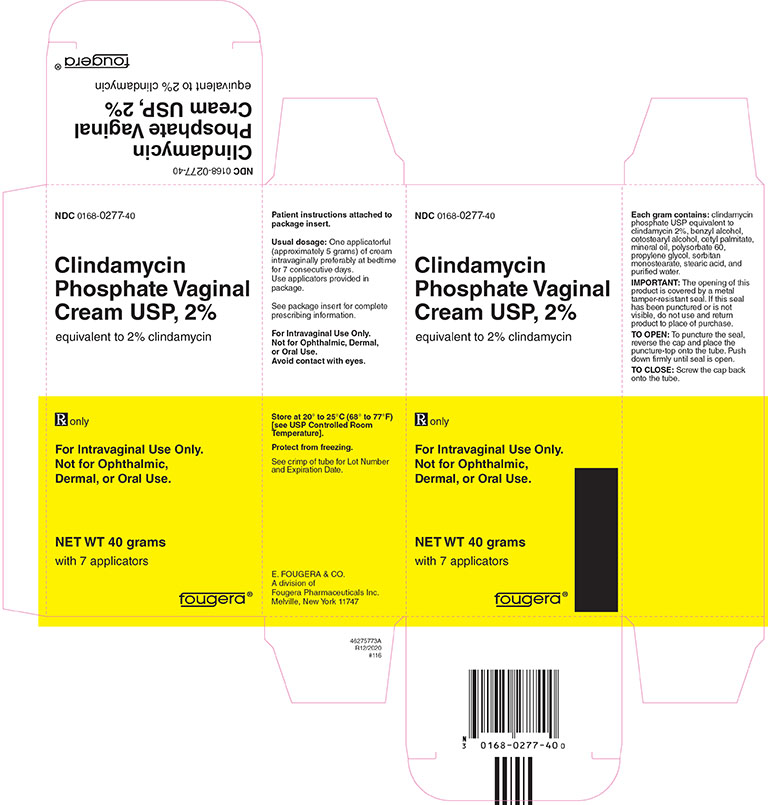
Clindamycin Phosphate 20 mg/g Cream, 40 g — NDC 0168-0277-40 (Billing 00168-0277-40)
This is a package of 40 g of Clindamycin Phosphate 20 mg/g Cream from E. Fougera & Co. a division of Fougera Pharmaceuticals, LLC, marketed since Dec 2004 and currently FDA-listed; retail pharmacies pay about $1.86 per g (NADAC). It is this product's only package size.
NDC database record
One package, one record: these facts belong to NDC 0168-0277-40 alone.
- Record
- FDA NDC Directory package listing · Human prescription drug
- Code segments
- 0168 labeler · 0277 product · 40 package
- Package marketed since
- Dec 27, 2004
- Sample package
- No — commercial package
- Listing certified through
- Dec 31, 2027
- Billing quantity
- 40 g per package
- Barcode (UPC)
- 0301680277400
- Medicaid fills, this package
- 26,103 prescriptions in the last four reported quarters
- FDA record last changed
- Jul 24, 2026
Other active recalls for Clindamycin Phosphate (different manufacturers) — 6 · tap to view
Identity & classification
Regulatory identifiers FDA, NLM and CMS codes for this package
Drug-database identifiers Medi-Span GPI and First Databank GCN / HICL / AHFS classification
- GSN (GCN sequence number): 016924
- GCN: 28581
- GPI-14 (Medi-Span): 55100018103720
- HICL (First Databank): 004045
- AHFS class code: 08:12.28.20
- RxCUI (RxNorm): 309337
Where does this data come from?
- FDA openFDA NDC Directory · synced Oct 8, 2026
- FDA label on DailyMed · label index refreshed Oct 8, 2026
- RxNorm (NLM RxNav) · catalog refreshed Oct 1, 2026
- Medi-Span GPI (licensed)
- First Databank (licensed) · refreshed Oct 8, 2026
RxNorm drug class
This medicine belongs to the Lincosamide Antibacterial class.
Where does this data come from?
- RxClass (NLM) · catalog refreshed Oct 1, 2026
Clinical
Vaginal clindamycin is used to treat bacterial vaginosis (an infection caused by harmful bacteria in the vagina). Clindamycin is in a class of medications called lincomycin antibiotics. It works by slowing or stopping the growth of bacteria. Vaginal clindamycin is not used to treat vaginal irritation caused by yeast infections or by sexually transmitted diseases such as chlamydia and trichomoniasis.
Read the full MedlinePlus article ↗- It treats serious bacterial infections, such as anaerobic infections, skin, lung, abdominal, gynecological, and bone and joint infections, depending on the product. It is often use...
- Swallow them with a full glass of water and stay upright for at least 30 minutes afterward. This helps prevent irritation of your throat. Take it as often as your prescriber says a...
- Rash, nausea, vomiting, stomach pain and itching are among the more commonly reported effects. Call your doctor right away if you get severe, watery or bloody diarrhea, even weeks...
- What side effects are normal, and when should I call you?
Patient education
Supplement & herbal interactions
Clindamycin may be associated with lower levels of 7 nutrients — worth a chat with your pharmacist, not a cause for alarm.
Where does this data come from?
- MedlinePlus (NLM) · refreshed Oct 8, 2026
- FDA label on DailyMed · label index refreshed Oct 8, 2026
Ask a licensed pharmacist directly — free, answered by our team.
Pricing
A drug doesn't have one price. Each row is a different public payment system, and none is what you'd pay at the counter — that depends on your insurance. The ⓘ on each row explains what it measures.
| Price system | Per g | Per package |
|---|---|---|
| Retail pharmacies payNADAC · weekly | $1.859 | $74.37 / 40 g |
| Medicaid paysCMS SDUD · 12 mo | $1.67 | $66.60 / 40 g |
| Medicare drug plans payPart D · Q2 2026 | $1.70 | $67.92 / 40 g |
Where does this data come from?
- CMS NADAC weekly file · file of Oct 7, 2026
- CMS ASP pricing files · refreshed Sep 20, 2026
- CMS Medicaid State Drug Utilization Data · through Q1 2026
- CMS Part D plan pricing files · refreshed Sep 24, 2026
- VA National Acquisition Center price file
Packaging — all sizes for this product
| Package NDC | Description | Marketing start | Marketing end | Status |
|---|---|---|---|---|
| 00168-0277-40 You're viewing this Main listing | 40 g in 1 TUBE, WITH APPLICATOR | 2004-12-27 | — | Active |
Therapeutic equivalents
| Product | Labeler | Pack | NADAC/unit | TE | Status | Price vs. this |
|---|---|---|---|---|---|---|
| Cleocin 20 mg/g 00009-3448-01 | Pharmacia | 1 tube | $1.792 | AB | Availability likely | save 4% |
| Clindamycin Phosphate 20 mg/gthis 00168-0277-40 | E. | 40 g | $1.859 | AB | Availability likely | — |
| clindamycin phosphate 20 mg/g 59762-5009-01 | Mylan | 1 tube | $1.859 | AB | Availability likely | — |
| Clindesse 100 mg/5g 45802-0042-01 | Padagis | 1 applicator | $26.621 | — | Availability likely | +1332% |
Where does this data come from?
- FDA openFDA NDC Directory · synced Oct 8, 2026
- FDA Orange Book · refreshed Oct 3, 2026
- CMS NADAC weekly file · file of Oct 7, 2026
Availability & generic status
This product is an FDA-approved generic. Other versions of the same drug are listed under Therapeutic equivalents, least expensive first.
Where does this data come from?
- FDA Orange Book · refreshed Oct 3, 2026
Inactive Ingredients / Excipients
Inactive ingredients, also called excipients, are components of the drug product other than the active ingredient. They may include fillers, dyes, coatings, preservatives, flavors, or other formulation ingredients.
🧪 Avoiding an ingredient? See Clindamycin inactive ingredients by manufacturer: every current product's list side by side, so you can ask your pharmacy for the version that does not list it.
💡 Tap an ingredient (hover on desktop) to see what it is and why it’s used.
-
UNII LKG8494WBH
Benzyl alcohol is a clear liquid used as a preservative and solvent in medicines. It helps prevent bacterial and fungal growth and dissolves other ingredients to create uniform liquid formulations.
-
UNII 2DMT128M1S
A waxy solid derived from plant or animal sources. It acts as an emulsifier to blend oil and water components, and also thickens the medicine to give it the right texture and consistency.
-
UNII 5ZA2S6B08X
Cetyl palmitate is a waxy substance made from natural fats. It works as a binder and thickener to help hold the medicine together and control how it dissolves in your body.
-
UNII T5L8T28FGP
Mineral oil is a clear, odorless liquid derived from crude oil. It acts as a lubricant and emollient in medications, helping pills slide smoothly during manufacturing and aiding moisture retention in topical products.
-
UNII CAL22UVI4M
A synthetic emulsifier derived from sorbitol and fatty acids. It helps mix oil and water-based ingredients together and improves the texture and stability of the medicine.
-
UNII 6DC9Q167V3
Propylene glycol is a clear liquid derived from petroleum or vegetable sources. It acts as a solvent, humectant, and preservative in medicines, helping dissolve active ingredients and maintain product stability.
-
UNII NVZ4I0H58X
A waxy substance made from sorbitol and stearic acid. It acts as an emulsifier and stabilizer, helping keep oil and water mixed together and preventing separation in the medicine.
-
UNII 4ELV7Z65AP
Stearic acid is a fatty acid derived from plant or animal sources. It acts as a binder and lubricant in tablets and capsules, helping them hold together and flow smoothly during manufacturing.
-
UNII 059QF0KO0R
Water is a liquid solvent that dissolves and mixes ingredients together in liquid medicines, syrups, and injections. It helps distribute the active drug evenly throughout the product.
9 inactive ingredients listed in the exact product block matched to this NDC.
Where does this data come from?
ingredient classCode="IACT" elements from the exact product block matched by this NDC. Label-section narrative from DailyMed / the openFDA label index is shown separately when available.- FDA label on DailyMed · label index refreshed Oct 8, 2026
- FDA openFDA NDC Directory · synced Oct 8, 2026
Inactive ingredient FAQ
Are inactive ingredients the same for every manufacturer?
Why might an inactive ingredient be missing?
Can inactive ingredients matter?
Manufacturer & labeler
More NDCs from E. Fougera & Co. a division of Fougera Pharmaceu... labeler code 00168
- Lidocaine 50 mg/g Ointment NDC 0168-0204-37
- Clotrimazole and Betamethasone Dipropionate 10 mg/g; .5 mg/g Cream NDC 0168-0258-15
- Alclometasone Dipropionate .5 mg/g Cream NDC 0168-0263-15
- Betamethasone Dipropionate .5 mg/mL Lotion, Augmented NDC 0168-0267-30
- Betamethasone Dipropionate .5 mg/g Ointment, Augmented NDC 0168-0268-15
- Clobetasol Propionate .5 mg/mL Solution NDC 0168-0269-50
- Amcinonide 1 mg/g Cream NDC 0168-0278-15
- Clobetasol Propionate .5 mg/g Gel NDC 0168-0293-15
- Clobetasol Propionate (emollient) .5 mg/g Cream NDC 0168-0301-15
- Metronidazole 7.5 mg/g Cream NDC 0168-0323-46
- Fluticasone Propionate .5 mg/g Cream NDC 0168-0332-15
- Terconazole 4 mg/g Cream NDC 0168-0346-46
Where does this data come from?
- FDA openFDA NDC Directory · synced Oct 8, 2026
- Drugs@FDA
Full prescribing information FDA SPL
🎯 Indications and Usage ▾
INDICATIONS AND USAGE Clindamycin phosphate vaginal cream 2%, is indicated in the treatment of bacterial vaginosis (formerly referred to as Haemophilus vaginitis, Gardnerella vaginitis, nonspecific vaginitis, Corynebacterium vaginitis, or anaerobic vaginosis). Clindamycin phosphate vaginal cream 2%, can be used to treat non-pregnant women and pregnant women during the second and third trimester. (See CLINICAL STUDIES. ) NOTE: For purposes of this indication, a clinical diagnosis of bacterial vaginosis is usually defined by the presence of a homogeneous vaginal discharge that (a) has a pH of greater than 4.5, (b) emits a "fishy" amine odor when mixed with a 10% KOH solution, and (c) contains clue cells on microscopic examination.
Gram's stain results consistent with a diagnosis of bacterial vaginosis include (a) markedly reduced or absent Lactobacillus morphology, (b) predominance of Gardnerella morphotype, and (c) absent or few white blood cells. Other pathogens commonly associated with vulvovaginitis, eg, Trichomonas vaginalis , Chlamydia trachomatis, N. gonorrhoeae, Candida albicans , and Herpes simplex virus should be ruled out.
⏱️ Dosage and Administration ▾
DOSAGE AND ADMINISTRATION The recommended dose is one applicatorful of clindamycin phosphate vaginal cream 2%, (5 grams containing approximately 100 mg of clindamycin phosphate) intravaginally, preferably at bedtime, for 3 or 7 consecutive days in non-pregnant patients and for 7 consecutive days in pregnant patients. (See CLINICAL STUDIES. )
⛔ Contraindications ▾
CONTRAINDICATIONS Clindamycin phosphate vaginal cream 2%, is contraindicated in individuals with a history of hypersensitivity to clindamycin, lincomycin, or any of the components of this vaginal cream. Clindamycin phosphate vaginal cream 2%, is also contraindicated in individuals with a history of regional enteritis, ulcerative colitis, or a history of "antibiotic-associated" colitis.
⚠️ Warnings ▾
WARNINGS Pseudomembranous colitis has been reported with nearly all antibacterial agents, including clindamycin, and may range in severity from mild to life-threatening. Orally and parenterally administered clindamycin has been associated with severe colitis which may end fatally. Diarrhea, bloody diarrhea, and colitis (including pseudomembranous colitis) have been reported with the use of orally and parenterally administered clindamycin, as well as with topical (dermal and vaginal) formulations of clindamycin.
Therefore, it is important to consider this diagnosis in patients who present with diarrhea subsequent to the administration of clindamycin, even when administered by the vaginal route, because approximately 5% of the clindamycin dose is systemically absorbed from the vagina. Treatment with antibacterial agents alters the normal flora of the colon and may permit overgrowth of clostridia. Studies indicate that a toxin produced by Clostridioides difficile is a primary cause of "antibiotic-associated′′ colitis.
After the diagnosis of pseudomembranous colitis has been established, therapeutic measures should be initiated. Mild cases of pseudomembranous colitis usually respond to discontinuation of the drug alone. In moderate to severe cases, consideration should be given to management with fluids and electrolytes, protein supplementation, and treatment with an antibacterial drug clinically effective against Clostridioides difficile colitis.
Onset of pseudomembranous colitis symptoms may occur during or after antimicrobial treatment.
🤒 Adverse Reactions ▾
ADVERSE REACTIONS Clinical trials Non-pregnant Women In clinical trials involving non-pregnant women, 1.8% of 600 patients who received treatment with clindamycin phosphate vaginal cream 2% for 3 days and 2.7% of 1325 patients who received treatment for 7 days discontinued therapy due to drug-related adverse events. Medical events judged to be related, probably related, possibly related, or of unknown relationship to vaginally administered clindamycin phosphate vaginal cream 2%, were reported for 20.7% of the patients receiving treatment for 3 days and 21.3% of the patients receiving treatment for 7 days.
Events occurring in ≥1% of patients receiving clindamycin phosphate vaginal cream 2% are shown in Table 1 . TABLE 1 – Events Occurring in ≥1% of Non-pregnant Patients Receiving Clindamycin Phosphate Vaginal Cream 2% Event Clindamycin Phosphate Vaginal Cream 2% 3 Day n=600 7 Day n=1325 Urogenital Vaginal moniliasis 7.7
10.4Vulvovaginitis 6.0
4.4Vulvovaginal disorder 3.2
5.3 Trichomonal vaginitis 0
1.3Body as a Whole Moniliasis (body) 1.3
0.2Other events occurring in <1% of the clindamycin vaginal cream 2% groups include: Urogenital system : vaginal discharge, metrorrhagia, urinary tract infection, endometriosis, menstrual disorder, vaginitis/vaginal infection, and vaginal pain. Body as a whole: localized abdominal pain, generalized abdominal pain, abdominal cramps, halitosis, headache, bacterial infection, inflammatory swelling, allergic reaction, and fungal infection. Digestive system: nausea, vomiting, constipation, dyspepsia, flatulence, diarrhea, and gastrointestinal disorder.
Endocrine system : hyperthyroidism. Central nervous system: dizziness and vertigo. Respiratory system: epistaxis.
Skin: pruritus (non-application site), moniliasis, rash, maculopapular rash, erythema, and urticaria. Special senses: taste perversion. Pregnant Women In a clinical trial involving pregnant women during the second trimester, 1.7% of 180 patients who received treatment for 7 days discontinued therapy due to drug-related adverse events.
Medical events judged to be related, probably related, possibly related, or of unknown relationship to vaginally administered clindamycin phosphate vaginal cream 2%, were reported for 22.8% of pregnant patients. Events occurring in ≥1% of patients receiving either clindamycin phosphate vaginal cream 2% or placebo are shown in Table 2 . TABLE 2 - Events Occurring in ≥1% of Pregnant Patients Receiving Clindamycin Phosphate Vaginal Cream 2% or Placebo Event Clindamycin Phosphate Vaginal Cream 2% Placebo 7 DAY n=180 7 Day n=184 Urogenital Vaginal moniliasis 13.3
7.1Vulvovaginal disorder 6.7
7.1Abnormal labor 1.1
0.5Body as a Whole Fungal infection 1.7 0 Skin Pruritus, non-application site 1.1 0 Other events occurring in <1% of the clindamycin vaginal cream 2% group include: Urogenital system: dysuria, metrorrhagia, vaginal pain, and trichomonal vaginitis. Body as a whole: upper respiratory infection. Skin: pruritus (topical application site) and erythema.
Post-marketing Experience Because these reactions are reported voluntarily from a population of uncertain size, it is not always possible to reliably estimate their frequency or establish a causal relationship to drug exposure. In the post-marketing period, there have been case reports of pseudomembranous colitis with the use of clindamycin phosphate vaginal cream. Other clindamycin formulations Clindamycin vaginal cream affords minimal peak serum levels and systemic exposure (AUCs) of clindamycin compared to 100 mg oral clindamycin dosing.
Although these lower levels of exposure are less likely to produce the common reactions seen with oral clindamycin, the possibility of these and other reactions cannot be excluded presently. Data from well-controlled trials directly comparing clindamycin administered orally to clindamycin administered vaginally are not available. The following adverse reactions and altered laboratory tests have been reported with the… [Excerpted — this section continues on DailyMed.]
🔄 Drug Interactions ▾
Drug Interactions Systemic clindamycin has been shown to have neuromuscular blocking properties that may enhance the action of other neuromuscular blocking agents. Therefore, it should be used with caution in patients receiving such agents.
🧒 Pediatric Use ▾
Pediatric Use Safety and effectiveness in pediatric patients have not been established.
🧓 Geriatric Use ▾
Geriatric Use Clinical studies for clindamycin phosphate vaginal cream 2% did not include sufficient numbers of subjects aged 65 and over to determine whether they respond differently from younger subjects. Other reported clinical experience has not identified differences in responses between the elderly and younger patients.
🆘 Overdosage ▾
OVERDOSAGE Vaginally applied clindamycin phosphate vaginal cream 2% could be absorbed in sufficient amounts to produce systemic effects. (See WARNINGS. )
🧬 Clinical Pharmacology ▾
CLINICAL PHARMACOLOGY Mechanism of Action Clindamycin is an antibacterial drug (See MICROBIOLOGY ). Pharmacokinetics Following a once a day intravaginal dose of 100 mg of clindamycin phosphate vaginal cream 2%, administered to 6 healthy female volunteers for 7 days, approximately 5% (range 0.6% to 11%) of the administered dose was absorbed systemically. The peak serum clindamycin concentration observed on the first day averaged 18 ng/mL (range 4 to 47 ng/mL) and on day 7 it averaged 25 ng/mL (range 6 to 61 ng/mL).
These peak concentrations were attained approximately 10 hours post-dosing (range 4 to 24 hours). Following a once a day intravaginal dose of 100 mg of clindamycin phosphate vaginal cream 2%, administered for 7 consecutive days to 5 women with bacterial vaginosis, absorption was slower and less variable than that observed in healthy females. Approximately 5% (range 2% to 8%) of the dose was absorbed systemically.
The peak serum clindamycin concentration observed on the first day averaged 13 ng/mL (range 6 to 34 ng/mL) and on day 7 it averaged 16 ng/mL (range 7 to 26 ng/mL). These peak concentrations were attained approximately 14 hours post-dosing (range 4 to 24 hours). There was little or no systemic accumulation of clindamycin after repeated vaginal dosing of clindamycin phosphate vaginal cream 2%.
The systemic half-life was 1.5 to 2.6 hours.
📦 How Supplied / Storage and Handling ▾
HOW SUPPLIED Clindamycin Phosphate Vaginal Cream USP, 2% is supplied as follows: 40 g tube (with 7 disposable applicators) NDC 0168-0277-40 Store at 20° to 25°C (68° to 77° F) [see USP Controlled Room Temperature]. Protect from freezing.
📋 Description ▾
DESCRIPTION Clindamycin phosphate is a water soluble ester of the semi-synthetic antibiotic produced by a 7(S)-chloro-substitution of the 7(R)-hydroxyl group of the parent antibiotic lincomycin. The chemical name for clindamycin phosphate is methyl 7-chloro-6,7,8-trideoxy-6-(1-methyl- trans -4-propyl-L-2-pyrrolidinecarboxamido)-1-thio-L- threo -α- D-galacto -octopyranoside 2-(dihydrogen phosphate). It has a molecular weight of 504.96, and the molecular formula is C 18 H 34 ClN 2 O 8 PS.
The structural formula is represented below: Clindamycin phosphate vaginal cream USP, 2%, is a semi-solid, white cream, which contains 2% clindamycin phosphate, USP, at a concentration equivalent to 20 mg clindamycin per gram. The pH of the cream is between 3.0 and 6.0. The cream also contains benzyl alcohol, cetostearyl alcohol, cetyl palmitate, mineral oil, polysorbate 60, propylene glycol, sorbitan monostearate, stearic acid and purified water.
Each applicatorful of 5 grams of vaginal cream contains approximately 100 mg of clindamycin phosphate. structure
💬 Information for Patients ▾
Information for the Patient: The patient should be instructed not to engage in vaginal intercourse, or use other vaginal products (such as tampons or douches) during treatment with this product. The patient should also be advised that this cream contains mineral oil that may weaken latex or rubber products such as condoms or vaginal contraceptive diaphragms. Therefore, use of such products within 72 hours following treatment with clindamycin phosphate vaginal cream 2%, is not recommended.
⚠️ Precautions ▾
PRECAUTIONS General Clindamycin phosphate vaginal cream 2%, contains ingredients that will cause burning and irritation of the eye. In the event of accidental contact with the eye, rinse the eye with copious amounts of cool tap water. The use of clindamycin phosphate vaginal cream 2% may result in the overgrowth of nonsusceptible organisms in the vagina.
In clinical studies involving 600 non-pregnant women who received treatment for 3 days, Candida albicans was detected, either symptomatically or by culture, in 8.8% of patients. In 9% of the patients, vaginitis was recorded. In clinical studies involving 1325 non-pregnant women who received treatment for 7 days, Candida albicans was detected, either symptomatically or by culture, in 10.5% of patients.
Vaginitis was recorded in 10.7% of the patients. In 180 pregnant women who received treatment for 7 days, Candida albicans was detected, either symptomatically or by culture, in 13.3% of patients. In 7.2% of the patients, vaginitis was recorded.
Candida albicans , as reported here, includes the terms: vaginal moniliasis and moniliasis (body as a whole). Vaginitis includes the terms: vulvovaginal disorder, vulvovaginitis, vaginal discharge, trichomonal vaginitis, and vaginitis. Information for the Patient: The patient should be instructed not to engage in vaginal intercourse, or use other vaginal products (such as tampons or douches) during treatment with this product.
The patient should also be advised that this cream contains mineral oil that may weaken latex or rubber products such as condoms or vaginal contraceptive diaphragms. Therefore, use of such products within 72 hours following treatment with clindamycin phosphate vaginal cream 2%, is not recommended. Drug Interactions Systemic clindamycin has been shown to have neuromuscular blocking properties that may enhance the action of other neuromuscular blocking agents.
Therefore, it should be used with caution in patients receiving such agents. Carcinogenesis, Mutagenesis, Impairment of Fertility Long term studies in animals have not been performed with clindamycin to evaluate carcinogenic potential. Genotoxicity tests performed included a rat micronucleus test and an Ames test.
Both tests were negative. Fertility studies in rats treated orally with up to 300 mg/kg/day (31 times the human exposure based on mg/m 2 ) revealed no effects on fertility or mating ability. Pregnancy: Teratogenic effects In clinical trials with pregnant women, the systemic administration of clindamycin during the second and third trimesters, has not been associated with an increased frequency of congenital abnormalities.
Clindamycin vaginal cream should be used during the first trimester of pregnancy only if clearly needed and the benefits outweigh the risks. There are no adequate and well-controlled studies in pregnant women during the first trimester of pregnancy. Clindamycin phosphate vaginal cream 2% has been studied in pregnant women during the second trimester.
In women treated for seven days, abnormal labor was reported in 1.1% of patients who received clindamycin vaginal cream 2% compared with 0.5% of patients who received placebo. Reproduction studies have been performed in rats and mice using oral and parenteral doses of clindamycin up to 600 mg/kg/day (62 and 25 times, respectively, the maximum human exposure based on body surface area) and have revealed no evidence of harm to the fetus due to clindamycin. Cleft palates were observed in fetuses from one mouse strain treated intraperitoneally with clindamycin at 200 mg/kg/day (about 10 times the recommended dose based on body surface area conversions).
Since this effect was not observed in other mouse strains or in other species, the effect may be strain specific. Nursing Mothers Limited published data based on breast milk sampling reports that clindamycin appears in human breast milk in the range of less than 0.5 to 3.8 mcg/mL at dosages of 150 mg orally to 600 mg intravenously. It is not k… [Excerpted — this section continues on DailyMed.]
🍼 Nursing Mothers ▾
Nursing Mothers Limited published data based on breast milk sampling reports that clindamycin appears in human breast milk in the range of less than 0.5 to 3.8 mcg/mL at dosages of 150 mg orally to 600 mg intravenously. It is not known if clindamycin is excreted in human breast milk following the use of vaginally administered clindamycin phosphate. Clindamycin has the potential to cause adverse effects on the breast-fed infant's gastrointestinal flora.
If clindamycin is required by a nursing mother, it is not a reason to discontinue breastfeeding, but an alternate drug may be preferred. Monitor the breast-fed infant for possible adverse effects on the gastrointestinal flora, such as diarrhea, candidiasis (thrush, diaper rash) or rarely, blood in the stool indicating possible antibiotic-associated colitis. The developmental and health benefits of breastfeeding should be considered along with the mother's clinical need for clindamycin and any potential adverse effects on the breast-fed child from clindamycin or from the underlying maternal condition.
🔬 Clinical Studies ▾
CLINICAL STUDIES In two clinical studies involving 674 evaluable non-pregnant women with bacterial vaginosis comparing clindamycin phosphate vaginal cream 2% for 3 or 7 days, the clinical cure rates, determined at 1 month posttherapy, ranged from 72% to 81% for the 3-day treatment and 84% to 86% for the 7-day treatment. Clindamycin Phosphate Vaginal Cream 2% 3 Day Clindamycin Phosphate Vaginal Cream 2% 7 Day US Study European Study 94/131 161/199 72% 81% 110/128 181/216 86% 84% In a clinical study involving 249 evaluable pregnant patients in the second and third trimester treated for 7 days, the clinical cure rate, determined at 1 month posttherapy, was 60% (77/129) in the clindamycin arm and 9% (11/120) for the vehicle arm.
The determination of clinical cure was based on the absence of a "fishy" amine odor when the vaginal discharge was mixed with a 10% KOH solution and the absence of clue cells on microscopic examination. Rx only E. FOUGERA & CO.
A division of Fougera PHARMACEUTICALS INC. Melville, New York 11747 46311926A R06/2022 #116
📄 Carcinogenesis, Mutagenesis, Impairment of Fertility ▾
Carcinogenesis, Mutagenesis, Impairment of Fertility Long term studies in animals have not been performed with clindamycin to evaluate carcinogenic potential. Genotoxicity tests performed included a rat micronucleus test and an Ames test. Both tests were negative. Fertility studies in rats treated orally with up to 300 mg/kg/day (31 times the human exposure based on mg/m 2 ) revealed no effects on fertility or mating ability.
📄 Patient Package Insert ▾
DIRECTIONS FOR USE 7 Disposable plastic applicators are provided with this package. They are designed to allow proper vaginal administration of the cream. Remove cap from cream tube.
Screw a plastic applicator on the threaded end of the tube. Rolling tube from the bottom, squeeze gently and force the medication into the applicator. The applicator is filled when the plunger reaches its predetermined stopping point.
Unscrew the applicator from the tube and replace the cap. While lying on your back, firmly grasp the applicator barrel and insert into vagina as far as possible without causing discomfort. Slowly push the plunger until it stops.
Carefully withdraw applicator from vagina, and discard applicator. REMEMBER TO APPLY ONE APPLICATORFUL EACH NIGHT BEFORE BEDTIME, OR AS PRESCRIBED BY YOUR DOCTOR. INSTRUCCIONES PARA LA PACIENTE Este envase contiene 7 aplicadores de plástico desechables.
Los aplicadores están diseñados para la administración apropiada de la crema en la vagina. Remueva la tapa del tubo de crema y enrosque el aplicador de plástico al tubo. Exprima el tubo suavemente desde el extremo inferior y fuerce el medicamento al aplicador.
El aplicador estará lleno cuando el émbolo llega a su máxima longitud. Desenrosque el aplicador del tubo y vuelva a poner la tapa. Acuéstese de espalda y agarrando firmemente el aplicador, introdúzcalo en la vagina tanto como sea posible sin causar molestias.
Empuje lentamente el émbolo hasta que se detenga. Saque el aplicador cuidadosamente de la vagina y descártelo. RECUERDE APLICARSE UN APLICADOR LLENO TODAS LAS NOCHES AL ACOSTARSE, O DE ACUERDO CON LAS INDICACIONES DE SU MEDICO.
Figure1 Figure2 Figure3 Figure4
📄 Package Label / Principal Display Panel ▾
PACKAGE LABEL – PRINCIPAL DISPLAY PANEL – 40 GRAM TUBE NDC 0168-0277-40 Fougera ® CLINDAMYCIN PHOSPHATE VAGINAL CREAM USP, 2% equivalent to 2% clindamycin Rx only For Intravaginal Use Only. Not for Ophthalmic, Dermal, or Oral Use. NET WT 40 grams 40gTube
Package/Label Display Panel PACKAGE LABEL – PRINCIPAL DISPLAY PANEL – 40 GRAM CARTON NDC 0168-0277-40 Fougera ® CLINDAMYCIN PHOSPHATE VAGINAL CREAM USP, 2% equivalent to 2% clindamycin For Intravaginal Use Only. Not for Ophthalmic, Dermal, or Oral Use. Rx only NET WT 40 grams with 7 applicators E. FOUGERA & CO. A division of Fougera Pharmaceuticals Inc. Melville, New York 11747 40gCarton