
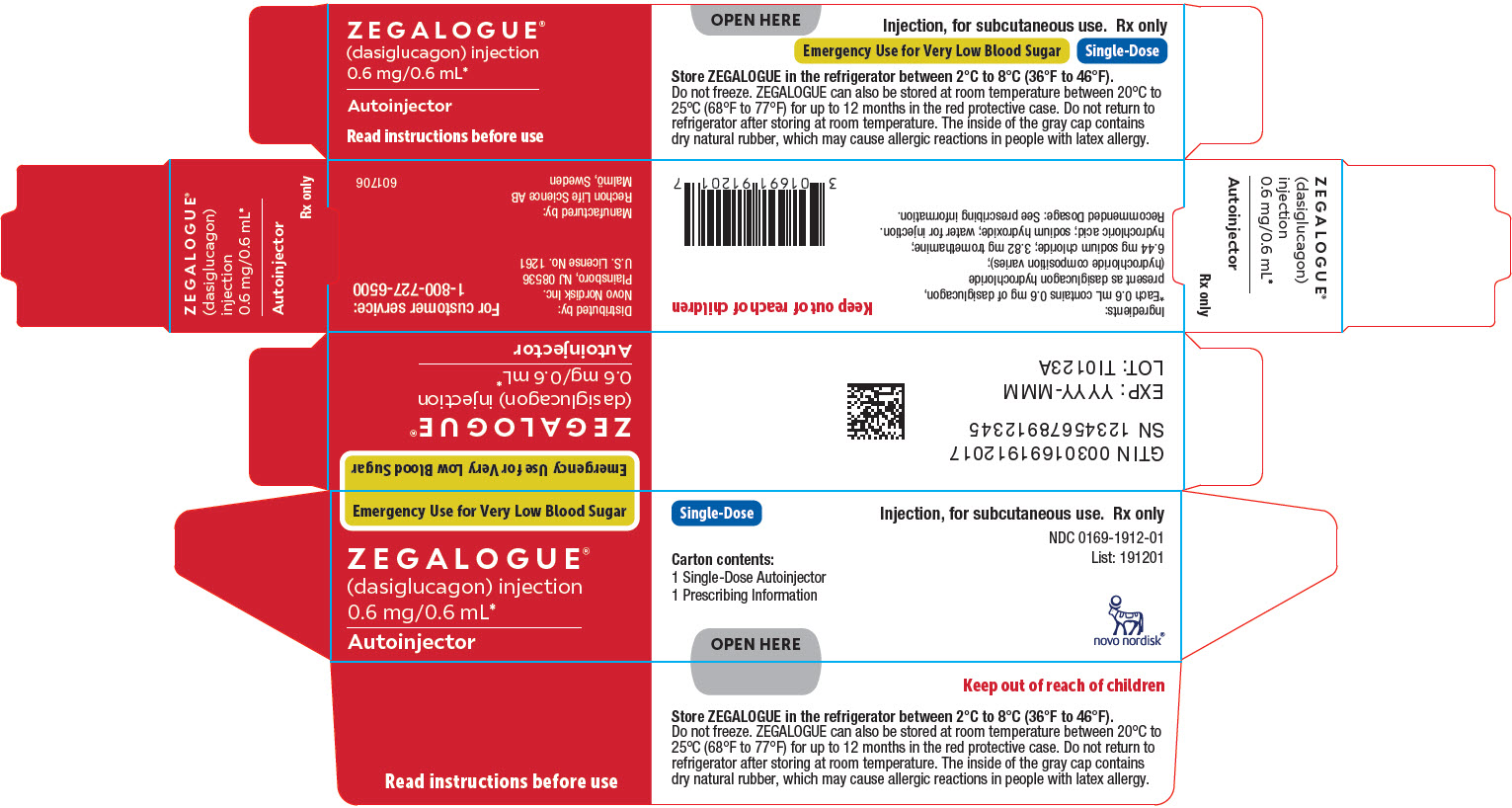
Zegalogue dasiglucagon .6 mg/.6mL Injection, Solution, 1 syringe — NDC 0169-1912-01 (Billing 00169-1912-01)
This is a package of 1 syringe of Zegalogue dasiglucagon .6 mg/.6mL Injection, Solution from Novo Nordisk, marketed since Jun 2023 and currently FDA-listed, this package's marketing is listed to end Aug 2027; retail pharmacies pay about $493.90 per mL (NADAC). It is the main listing for this product, which comes in 2 package sizes.
NDC database record
One package, one record: these facts belong to NDC 0169-1912-01 alone.
- Record
- FDA NDC Directory package listing · Human prescription drug
- Code segments
- 0169 labeler · 1912 product · 01 package
- Package marketed since
- Jun 26, 2023
- Package marketing ended
- Aug 31, 2027
- Sample package
- No — commercial package
- Barcode (UPC-A, from the NDC)
- 3 0169191201 7
- Medicaid fills, this package
- 2,273 prescriptions in the last four reported quarters
- FDA record last changed
- Jul 24, 2026
Identity & classification
Regulatory identifiers FDA, NLM and CMS codes for this package
Drug-database identifiers Medi-Span GPI and First Databank GCN / HICL / AHFS classification
- GSN (GCN sequence number): 082098
- GCN: 49403
- HICL (First Databank): 047227
- AHFS class code: 68:22.12.00
- RxCUI (RxNorm): 2535238
Where does this data come from?
- FDA openFDA NDC Directory · synced Oct 8, 2026
- FDA label on DailyMed · label index refreshed Oct 8, 2026
- RxNorm (NLM RxNav) · catalog refreshed Oct 1, 2026
- Medi-Span GPI (licensed)
- First Databank (licensed) · refreshed Oct 8, 2026
RxNorm drug class
This medicine belongs to the Antihypoglycemic Agent class.
Where does this data come from?
- RxClass (NLM) · catalog refreshed Oct 1, 2026
Clinical
- No, Zegalogue is not a daily diabetes medicine. It's an emergency injection you keep on hand in case you — or your child — has a severe low blood sugar episode and can't safely eat...
- What is Zegalogue actually for? Is it something I take every day?
- Zegalogue comes as either an autoinjector or a prefilled syringe, and it's given as a shot just under the skin. You can inject it into the outer thigh, lower abdomen, buttocks, or...
- How do I — or someone with me — actually give this injection?
Patient education
Supplement & herbal interactions
Some supplements/herbs that may interact with Dasiglucagon Hydrochloride — tap one for details:
Dasiglucagon Hydrochloride may be associated with lower levels of 1 nutrient — worth a chat with your pharmacist, not a cause for alarm.
Where does this data come from?
- MedlinePlus (NLM) · refreshed Oct 8, 2026
- FDA label on DailyMed · label index refreshed Oct 8, 2026
Ask a licensed pharmacist directly — free, answered by our team.
Pricing
A drug doesn't have one price. Each row is a different public payment system, and none is what you'd pay at the counter — that depends on your insurance. The ⓘ on each row explains what it measures.
| Price system | Per mL | Per package |
|---|---|---|
| Retail pharmacies payNADAC · weekly | $493.896 | $296.34 / 0.6 ml |
| Medicaid paysCMS SDUD · 12 mo | $499.07 | $299.44 / 0.6 ml |
| Medicare drug plans payPart D · Q2 2026 | $506.76 | $304.06 / 0.6 ml |
Where does this data come from?
- CMS NADAC weekly file · file of Oct 7, 2026
- CMS ASP pricing files · refreshed Sep 20, 2026
- CMS Medicaid State Drug Utilization Data · through Q1 2026
- CMS Part D plan pricing files · refreshed Sep 24, 2026
- VA National Acquisition Center price file
Packaging — all sizes for this product
| Package NDC | Description | Per unit | Per pack | Marketing start | Marketing end | Status |
|---|---|---|---|---|---|---|
| 00169-1912-01 You're viewing this Main listing | 1 CONTAINER in 1 PACKAGE / 1 SYRINGE, GLASS in 1 CONTAINER / .6 mL in 1 SYRINGE, GLASS | $493.90 / mL | $296.34 | 2023-06-26 | Aug 31, 2027 | Active |
| 00169-1912-02 0169-1912-02 | 2 PACKAGE in 1 CARTON / 1 CONTAINER in 1 PACKAGE / 1 SYRINGE, GLASS in 1 CONTAINER / .6 mL in 1 SYRINGE, GLASS | $492.83 / mL | $591.40 | 2023-06-26 | Aug 31, 2027 | Active |
This pack effectively ties for the lowest per-mL cost of the 2 priced pack sizes ($493.90 NADAC).
In Medicaid, this is the most-dispensed pack of this product — about 79% of fills over the last four reported quarters. See all packs ↓
Pack size FAQ
What quantity is in this package?
What NDC number is used to bill for this package of Zegalogue dasiglucagon .6 mg/.6mL Injection, Solution?
Prices are the latest CMS NADAC pharmacy acquisition cost per NDC; per-pack figures are per-unit × pack quantity, shown only when the pack is denominated in the same measure NADAC prices.
Therapeutic equivalents
| Product | Labeler | Pack | NADAC/unit | TE | Status | Price vs. this |
|---|---|---|---|---|---|---|
| Zegalogue .6 mg/.6mLthis 00169-1912-01 | Novo | 1 syringe | $493.896 | — | Availability likely | — |
| Zegalogue .6 mg/.6mL 00169-1913-01 | Novo | 1 syringe | $494.052 | — | Availability likely | +0% |
Where does this data come from?
- FDA openFDA NDC Directory · synced Oct 8, 2026
- FDA Orange Book · refreshed Oct 3, 2026
- CMS NADAC weekly file · file of Oct 7, 2026
Availability & generic status
We did not find an FDA-approved generic match for this exact strength, form and route. Patent/protection dates below may affect future generic timing.
Why the date isn’t exact: Generic timing can change because patents may be challenged, settled, licensed, added, removed, or worked around with a narrower label — and FDA approval does not always mean a pharmacy can get the generic today.
🛈 What do these terms mean?
- Patent
- Legal protection listed in the Orange Book that may delay generic approval or launch. Issued by the U.S. Patent & Trademark Office.
- Substance patent
- Covers the active drug molecule itself — the hardest to design around. A generic generally can’t launch until it expires.
- Formulation (product) patent
- Covers a specific formulation or dosage form. A generic can sometimes work around it with a different formulation.
- Method-of-use patent
- A patent covering one specific approved use of the drug — not necessarily the whole molecule. A generic can sometimes launch with a “skinny label” that carves out the protected use and keeps the others.
- Skinny label
- A generic label that omits a still-patented use when the FDA allows it — letting a generic reach the market for the unprotected uses.
- Exclusivity
- FDA-granted marketing protection, separate from patents — e.g. 5-yr new chemical entity, 7-yr orphan drug, or a +6-month pediatric extension.
- Paragraph IV
- A generic applicant’s formal challenge to a listed patent. It can potentially lead to earlier generic entry, but often involves litigation or a settlement.
- RLD / RS
- Reference Listed Drug — the brand product the FDA uses as the reference for generic applications. Reference Standard — the product the FDA expects generics to compare against in bioequivalence testing.
- TE / AB rating
- FDA therapeutic-equivalence rating. An AB rating generally means the FDA considers a generic therapeutically equivalent to — and substitutable for — the brand.
- LOE (loss of exclusivity)
- The latest patent or exclusivity currently listed — the loss-of-exclusivity / latest-listed-protection date shown on this page. Paragraph-IV challenges and settlements can move the real date earlier; FDA approval and a manufacturer’s decision to market can move it later.
Built from the FDA Orange Book. The bars above are scaled to each protection’s expiry; the red LOE marker is the last one to lapse.
| Patent | Type | Use code | Expires |
|---|---|---|---|
| US 11795204 ↗ | Method of use | U-3752 | Jan 6, 2034 |
| US 11795204 ↗ | Method of use | U-3752 | Jan 6, 2034 |
| US 10442847 ↗ | Drug substance | — | Mar 22, 2035 |
| US 10442847 ↗ | Drug substance | — | Mar 22, 2035 |
| Code | What it grants | Expires |
|---|---|---|
| NCE | New Chemical Entity (5-year) | Mar 22, 2026 |
| NPP | New Patient Population | Jun 18, 2029 |
| NCE | New Chemical Entity (5-year) | Mar 22, 2026 |
| NPP | New Patient Population | Jun 18, 2029 |
Is there a generic version of ZEGALOGUE 0.6 MG/0.6ML AUTOINJ?
The FDA approved a generic — why can’t I get it at my pharmacy yet?
Why do different websites show different generic release dates?
What does “FDA listed” mean?
What does a patent or protection date mean here?
What does “current Orange Book estimate” mean?
Can a generic come out before the last patent expires?
Can a generic come out after the listed dates?
What is the difference between patents and exclusivity?
Why are there multiple patent dates?
Where does this data come from?
- FDA Orange Book · refreshed Oct 3, 2026
Inactive Ingredients / Excipients
Inactive ingredients, also called excipients, are components of the drug product other than the active ingredient. They may include fillers, dyes, coatings, preservatives, flavors, or other formulation ingredients.
🧪 Avoiding an ingredient? See Dasiglucagon Injection inactive ingredients by manufacturer: every current product's list side by side, so you can ask your pharmacy for the version that does not list it.
💡 Tap an ingredient (hover on desktop) to see what it is and why it’s used.
-
UNII QTT17582CB
A strong acid used to adjust and maintain the proper pH level in liquid medicines, ensuring stability and preventing breakdown of active ingredients.
-
6.44 mg / 0.6 mL
UNII 451W47IQ8X
Sodium chloride is common table salt. It's used in medicines as a buffer to maintain proper pH, as a filler to add bulk, or to adjust the osmotic balance in liquid formulations.
-
UNII 55X04QC32I
A strong alkaline chemical used to adjust and maintain the pH balance of liquid medicines. It helps keep the medicine stable and ensures it stays effective during storage.
-
3.82 mg / 0.6 mL
UNII 023C2WHX2V
Tromethamine is a chemical buffer that helps maintain the proper acidity level in liquid medicines. It neutralizes acids and stabilizes the solution so the medication remains effective and safe throughout its shelf life.
-
UNII 059QF0KO0R
Water is a liquid solvent that dissolves and mixes ingredients together in liquid medicines, syrups, and injections. It helps distribute the active drug evenly throughout the product.
5 inactive ingredients listed in the exact product block matched to this NDC.
Where does this data come from?
ingredient classCode="IACT" elements from the exact product block matched by this NDC. Label-section narrative from DailyMed / the openFDA label index is shown separately when available.- FDA label on DailyMed · label index refreshed Oct 8, 2026
- FDA openFDA NDC Directory · synced Oct 8, 2026
Inactive ingredient FAQ
Are inactive ingredients the same for every manufacturer?
Why might an inactive ingredient be missing?
Can inactive ingredients matter?
Manufacturer & labeler
More NDCs from Novo Nordisk labeler code 00169
- Ozempic oral semaglutide 4 mg Tablet NDC 0169-1704-30
- Ozempic oral semaglutide 9 mg Tablet NDC 0169-1709-30
- Ozempic oral semaglutide 1.5 mg Tablet NDC 0169-1715-30
- Novolin R Human Insulin 100 [iU]/mL Injection, Solution NDC 0169-1833-02
- Novolin N Human Insulin 100 [iU]/mL Injection, Suspension NDC 0169-1834-02
- Novolin 70/30 Human Insulin 100 [iU]/mL Injection, Suspension NDC 0169-1837-02
- Zegalogue dasiglucagon .6 mg/.6mL Injection, Solution NDC 0169-1913-01
- Insulin Diluting Medium for NovoLog water injection 1 mL/mL Injection, Solution NDC 0169-2001-90
- SOGROYA somapacitan-beco 6.7 mg/mL Injection, Solution NDC 0169-2030-11
- SOGROYA somapacitan-beco 3.3 mg/mL Injection, Solution NDC 0169-2035-11
- SOGROYA somapacitan-beco 10 mg/mL Injection, Solution NDC 0169-2037-11
- Alhemo concizumab 100 mg/mL Injection, Solution NDC 0169-2080-15
Where does this data come from?
- FDA openFDA NDC Directory · synced Oct 8, 2026
- Drugs@FDA
Full prescribing information FDA SPL
🎯 Indications and Usage ▾
1 INDICATIONS AND USAGE ZEGALOGUE ® is indicated for the treatment of severe hypoglycemia in pediatric and adult patients with diabetes aged 6 years and above. ZEGALOGUE is an antihypoglycemic agent indicated for the treatment of severe hypoglycemia in pediatric and adult patients with diabetes aged 6 years and above. ( 1 )
⏱️ Dosage and Administration ▾
2 DOSAGE AND ADMINISTRATION • ZEGALOGUE autoinjector and prefilled syringe are for subcutaneous injection only. ( 2.1 ) • The dose in adults and pediatric patients aged 6 years and older is 0.6 mg. ( 2.2 ) • Administer ZEGALOGUE according to the printed instructions on the protective case label and the Instructions For Use.
( 2.1 ) • Visually inspect ZEGALOGUE prior to administration. The solution should appear clear, colorless, and free from particles. If the solution is discolored or contains particulate matter, do not use.
( 2.1 ) • Administer the injection into the lower abdomen, buttocks, thigh, or outer upper arm. ( 2.1 ) • Call for emergency assistance immediately after administering the dose. ( 2.1 ) • If there has been no response after 15 minutes, an additional dose of ZEGALOGUE from a new device may be administered while waiting for emergency assistance.
( 2.1 ) • When the patient has responded to treatment, give oral carbohydrates. ( 2.1 ) • Do not attempt to reuse ZEGALOGUE. Each device contains a single dose of dasiglucagon and cannot be reused.
( 2.1 )
2.1Administration Instructions ZEGALOGUE autoinjector and prefilled syringe are for subcutaneous injection only. Instruct patients and their caregivers on the signs and symptoms of severe hypoglycemia. Because severe hypoglycemia requires the help of others to recover, instruct the patient to inform those around them about ZEGALOGUE and its Instructions For Use.
Administer ZEGALOGUE as soon as possible when severe hypoglycemia is recognized. Instruct the patient or caregiver to read the Instructions For Use at the time they receive a prescription for ZEGALOGUE. Emphasize the following instructions to the patient or caregiver: • Administer ZEGALOGUE according to the printed instructions on the protective case label and the Instructions For Use. • Visually inspect ZEGALOGUE prior to administration.
The solution should appear clear, colorless, and free from particles. If the solution is discolored or contains particulate matter, do not use. • Administer the injection in the lower abdomen, buttocks, thigh, or outer upper arm. • Call for emergency assistance immediately after administering the dose. • If there has been no response after 15 minutes, an additional dose of ZEGALOGUE may be administered while waiting for emergency assistance. • When the patient has responded to treatment, give oral carbohydrates to restore liver glycogen and prevent recurrence of hypoglycemia. • Do not attempt to reuse ZEGALOGUE.
Each ZEGALOGUE device contains a single dose of dasiglucagon and cannot be reused.
2.2Recommended Dosage The recommended dose of ZEGALOGUE in adults and pediatric patients aged 6 years and older is 0.6 mg administered by subcutaneous injection into the lower abdomen, buttocks, thigh, or outer upper arm. If there has been no response after 15 minutes, an additional 0.6 mg dose of ZEGALOGUE from a new device may be administered.
💊 Dosage Forms and Strengths ▾
3 DOSAGE FORMS AND STRENGTHS ZEGALOGUE injection is a clear, colorless solution available as: • 0.6 mg/0.6 mL single-dose autoinjector • 0.6 mg/0.6 mL single-dose prefilled syringe Injection: • 0.6 mg/0.6 mL single-dose autoinjector ( 3 ) • 0.6 mg/0.6 mL single-dose prefilled syringe ( 3 )
⛔ Contraindications ▾
4 CONTRAINDICATIONS ZEGALOGUE is contraindicated in patients with: • Pheochromocytoma because of the risk of substantial increase in blood pressure [see Warnings and Precautions (5.1) ] • Insulinoma because of the risk of hypoglycemia [see Warnings and Precautions (5.2) ] Pheochromocytoma ( 4 ) Insulinoma ( 4 )
⚠️ Warnings and Cautions ▾
5 WARNINGS AND PRECAUTIONS • Substantial Increase in Blood Pressure in Patients with Pheochromocytoma: Contraindicated in patients with pheochromocytoma because ZEGALOGUE may stimulate the release of catecholamines from the tumor. ( 4 , 5.1 ) • Hypoglycemia in Patients with Insulinoma: In patients with insulinoma, administration may produce an initial increase in blood glucose, but ZEGALOGUE may stimulate exaggerated insulin release from an insulinoma and cause subsequent hypoglycemia. If a patient develops symptoms of hypoglycemia after a dose of ZEGALOGUE, give glucose orally or intravenously.
( 4 , 5.2 ) • Hypersensitivity and Allergic Reactions: Allergic reactions have been reported with glucagon products and may include generalized rash, and in some cases anaphylactic shock with breathing difficulties and hypotension. ( 5.3 ) • Lack of Efficacy in Patients with Decreased Hepatic Glycogen: ZEGALOGUE is effective in treating hypoglycemia only if sufficient hepatic glycogen is present. Patients in states of starvation, with adrenal insufficiency or chronic hypoglycemia may not have adequate levels of hepatic glycogen for ZEGALOGUE to be effective.
Patients with these conditions should be treated with glucose. ( 5.4 )
5.1Substantial Increase in Blood Pressure in Patients with Pheochromocytoma ZEGALOGUE is contraindicated in patients with pheochromocytoma because glucagon products may stimulate the release of catecholamines from the tumor [see Contraindications (4) ] . If the patient develops a substantial increase in blood pressure and a previously undiagnosed pheochromocytoma is suspected, 5 to 10 mg of phentolamine mesylate, administered intravenously, has been shown to be effective in lowering blood pressure.
5.2Hypoglycemia in Patients with Insulinoma In patients with insulinoma, administration of glucagon products may produce an initial increase in blood glucose; however, ZEGALOGUE administration may directly or indirectly (through an initial rise in blood glucose) stimulate exaggerated insulin release from an insulinoma and cause hypoglycemia. ZEGALOGUE is contraindicated in patients with insulinoma [see Contraindications (4) ] . If a patient develops symptoms of hypoglycemia after a dose of ZEGALOGUE, give glucose orally or intravenously.
5.3Hypersensitivity and Allergic Reactions Allergic reactions have been reported with glucagon products; these include generalized rash, and in some cases anaphylactic shock with breathing difficulties and hypotension. Advise patients to seek immediate medical attention if they experience any symptoms of serious hypersensitivity reactions.
5.4Lack of Efficacy in Patients with Decreased Hepatic Glycogen ZEGALOGUE is effective in treating hypoglycemia only if sufficient hepatic glycogen is present. Patients in states of starvation, with adrenal insufficiency or chronic hypoglycemia may not have adequate levels of hepatic glycogen for ZEGALOGUE administration to be effective. Patients with these conditions should be treated with glucose.
🤒 Adverse Reactions ▾
6 ADVERSE REACTIONS The following important adverse reactions are described elsewhere in the labeling: • Hypersensitivity and Allergic Reactions [see Warnings and Precautions (5.3) ] Most common adverse reactions (≥2%) associated with ZEGALOGUE are: Adults: nausea, vomiting, headache, diarrhea, and injection site pain Pediatrics: nausea, vomiting, headache, and injection site pain ( 6.1 ) To report SUSPECTED ADVERSE REACTIONS, contact Novo Nordisk Inc., at 1-800-727-6500 or FDA at 1-800-FDA-1088 or www.fda.gov/medwatch.
6.1Clinical Trials Experience Because clinical trials are conducted under widely varying conditions, adverse reaction rates observed in the clinical trials of ZEGALOGUE cannot be directly compared to rates in the clinical trials of another drug and may not reflect the rates observed in practice. In clinical trials, 316 adult patients with type 1 diabetes and 20 pediatric patients with type 1 diabetes were exposed to ZEGALOGUE. The data in Table 1 reflect exposure of 116 adult patients to ZEGALOGUE in 2 placebo-controlled trials (mean age 40 years).
Table 2 reflects exposure of 20 pediatric patients exposed to ZEGALOGUE in a placebo-controlled trial. Eight patients were 7 to 11 years old, and 12 were 12 to 17 years old [see Clinical Studies (14) ] . Table 1.
Adverse Reactions Occurring ≥2% and More Frequently than with Placebo in ZEGALOGUE-treated Adult Patients within 12 hours of Treatment in 2 Placebo-Controlled Trials Adverse reaction type Placebo (N=53) Dasiglucagon (N=116) % of Patients % of Patients Nausea 4% 57% Vomiting 2% 25% Headache 4% 11% Diarrhea 0% 5% Injection site pain 0% 2% Table 2. Adverse Reactions Occurring ≥2% and More Frequently than with Placebo in ZEGALOGUE-treated Pediatric Patients within 12 hours of Treatment in a Placebo-Controlled Trial Adverse reaction type Placebo (N=11) Dasiglucagon Age 6-11 years (N=8) Dasiglucagon Age 12-17 years (N=12) Dasiglucagon All (N=20) % of Patients % of Patients % of Patients % of Patients Nausea 0% 25% 92% 65% Vomiting 0% 25% 67% 50% Headache 0% 0% 17% 10% Injection site pain 0% 0% 8% 5% Other Adverse Reactions Other adverse reactions in patients treated with dasiglucagon occurring within 12 hours of treatment include: hypertension, hypotension, bradycardia, presyncope, palpitations, and orthostatic intolerance.
6.2Immunogenicity As with all therapeutic peptides, there is a potential for immunogenicity with ZEGALOGUE. The detection of antibody formation is highly dependent on the sensitivity and specificity of the assay. Additionally, the observed incidence of antibody (including neutralizing antibody) positivity in an assay may be influenced by several factors including assay methodology, sample handling, timing of sample collection, concomitant medications, and underlying disease.
For these reasons, comparison of the incidence of antibodies to ZEGALOGUE with the incidence of antibodies to other products may be misleading. In clinical trials, 4/498 (<1%) of ZEGALOGUE-treated patients developed treatment-emergent anti-drug antibodies (ADAs). Two patients receiving a single dose of ZEGALOGUE had detectable ADAs to dasiglucagon for at least 14 months after dosing.
One ADA-positive patient receiving multiple doses of ZEGALOGUE had ADAs with transient neutralizing activity and with cross-reactivity against native glucagon. Although no safety or efficacy concerns were noted for these ADA-positive subjects, it is unknown whether ADAs may affect pharmacokinetics, pharmacodynamics, safety, and/or effectiveness of the drug [see Clinical Studies (14) ] .
🔄 Drug Interactions ▾
7 DRUG INTERACTIONS Table 3. Clinically Significant Drug Interactions with ZEGALOGUE Beta-Blockers Clinical Impact: Patients taking beta-blockers may have a transient increase in pulse and blood pressure when given ZEGALOGUE. Indomethacin Clinical Impact: In patients taking indomethacin, ZEGALOGUE may lose its ability to raise blood glucose or may even produce hypoglycemia.
Warfarin Clinical Impact: ZEGALOGUE may increase the anticoagulant effect of warfarin. • Beta-blockers: Patients taking beta-blockers may have a transient increase in pulse and blood pressure. ( 7 ) • Indomethacin: In patients taking indomethacin, ZEGALOGUE may lose its ability to raise blood glucose or may produce hypoglycemia. ( 7 ) • Warfarin: ZEGALOGUE may increase the anticoagulant effect of warfarin.
( 7 )
👥 Use in Specific Populations ▾
8 USE IN SPECIFIC POPULATIONS
8.1Pregnancy Risk Summary There are no available data on dasiglucagon use in pregnant women to evaluate for a drug-associated risk of major birth defects, miscarriage or adverse maternal or fetal outcomes. Untreated hypoglycemia in pregnancy can cause complications and may be fatal. In animal reproduction studies, daily subcutaneous administration of dasiglucagon to pregnant rabbits and rats during the period of organogenesis did not cause adverse developmental effects at exposures 7 and 709 times the human dose of 0.6 mg based on AUC, respectively (see Data ) .
Data Animal Data In an embryo-fetal development study, pregnant rats were treated daily with subcutaneous doses of 2, 10, and 24 mg/kg/day during the period of organogenesis (gestation day 6 to 17). Maternal toxicity, in terms of decreased body weight gain, lower fetal body weight, and delayed bone ossification, was observed at ≥10 mg/kg/day (≥475 times the human dose, based on AUC). In an embryo-fetal development study, pregnant rabbits were treated daily with subcutaneous doses of 0.1, 0.3, and 1 mg/kg/day during the period of organogenesis (gestation day 6 to 19).
Lower fetal body weight and delayed bone ossification were observed at 1 mg/kg/day (100 times the human dose, based on AUC), a dose that also induced maternal toxicity in terms of decreased body weight gain. At ≥0.3 mg/kg/day (≥20 times the human dose), dasiglucagon caused fetal skeletal and visceral malformations. No adverse fetal developmental effects were observed at 0.1 mg/kg/day, corresponding to exposure 7 times the human dose.
8.2Lactation Risk Summary There is no information on the presence of dasiglucagon in either human or animal milk, or the effects of the drug on the breastfed infant or milk production. Dasiglucagon is a peptide and would be expected to be broken down to its constituent amino acids in the infant's digestive tract and is therefore unlikely to cause harm to an exposed infant.
8.4Pediatric Use The safety and effectiveness of ZEGALOGUE for the treatment of severe hypoglycemia in patients with diabetes have been established in pediatric patients aged 6 years and above. Use of ZEGALOGUE for this indication is supported by evidence from a study in 42 pediatric patients with type 1 diabetes [see Clinical Studies (14.2) ] . The safety and effectiveness of ZEGALOGUE have not been established in pediatric patients younger than 6 years of age.
8.5Geriatric Use Clinical studies of ZEGALOGUE included too few patients 65 years of age and older to determine whether these patients respond differently from younger adult patients.
🤰 Pregnancy ▾
8.1Pregnancy Risk Summary There are no available data on dasiglucagon use in pregnant women to evaluate for a drug-associated risk of major birth defects, miscarriage or adverse maternal or fetal outcomes. Untreated hypoglycemia in pregnancy can cause complications and may be fatal. In animal reproduction studies, daily subcutaneous administration of dasiglucagon to pregnant rabbits and rats during the period of organogenesis did not cause adverse developmental effects at exposures 7 and 709 times the human dose of 0.6 mg based on AUC, respectively (see Data ) .
Data Animal Data In an embryo-fetal development study, pregnant rats were treated daily with subcutaneous doses of 2, 10, and 24 mg/kg/day during the period of organogenesis (gestation day 6 to 17). Maternal toxicity, in terms of decreased body weight gain, lower fetal body weight, and delayed bone ossification, was observed at ≥10 mg/kg/day (≥475 times the human dose, based on AUC). In an embryo-fetal development study, pregnant rabbits were treated daily with subcutaneous doses of 0.1, 0.3, and 1 mg/kg/day during the period of organogenesis (gestation day 6 to 19).
Lower fetal body weight and delayed bone ossification were observed at 1 mg/kg/day (100 times the human dose, based on AUC), a dose that also induced maternal toxicity in terms of decreased body weight gain. At ≥0.3 mg/kg/day (≥20 times the human dose), dasiglucagon caused fetal skeletal and visceral malformations. No adverse fetal developmental effects were observed at 0.1 mg/kg/day, corresponding to exposure 7 times the human dose.
🧒 Pediatric Use ▾
8.4Pediatric Use The safety and effectiveness of ZEGALOGUE for the treatment of severe hypoglycemia in patients with diabetes have been established in pediatric patients aged 6 years and above. Use of ZEGALOGUE for this indication is supported by evidence from a study in 42 pediatric patients with type 1 diabetes [see Clinical Studies (14.2) ] . The safety and effectiveness of ZEGALOGUE have not been established in pediatric patients younger than 6 years of age.
🧓 Geriatric Use ▾
8.5Geriatric Use Clinical studies of ZEGALOGUE included too few patients 65 years of age and older to determine whether these patients respond differently from younger adult patients.
🆘 Overdosage ▾
10 OVERDOSAGE If overdosage occurs, the patient may experience nausea, vomiting, inhibition of GI tract motility, and/or increases in blood pressure and heart rate. In case of suspected overdosing, serum potassium may decrease and should be monitored and corrected if needed. If the patient develops a marked increase in blood pressure, phentolamine mesylate has been shown to be effective in lowering blood pressure for the short time that control would be needed.
Appropriate supportive treatment should be initiated according to the patient's clinical signs and symptoms.
🧬 Clinical Pharmacology ▾
12 CLINICAL PHARMACOLOGY
12.1Mechanism of Action Dasiglucagon is a glucagon receptor agonist, which increases blood glucose concentration by activating hepatic glucagon receptors, thereby stimulating glycogen breakdown and release of glucose from the liver. Hepatic stores of glycogen are necessary for dasiglucagon to produce an antihypoglycemic effect.
12.2Pharmacodynamics After administration of ZEGALOGUE in adult patients with type 1 diabetes, the mean glucose increase from baseline at 90 minutes was 168 mg/dL (Figure 1). Figure 1. Mean plasma glucose over time in adults with type 1 diabetes administered 0.6 mg dasiglucagon In pediatric patients (7 to 17 years) with type 1 diabetes, the mean glucose increase at 60 minutes after administration of ZEGALOGUE was 162 mg/dL (Figure 2).
Figure 2. Mean plasma glucose over time in pediatric patients with type 1 diabetes administered 0.6 mg dasiglucagon Cardiac Electrophysiology At a dose resulting in more than 5 times the concentration achieved with the recommended therapeutic dose, ZEGALOGUE does not prolong the QT interval to any clinically relevant extent. Figure 1 Figure 2
12.3Pharmacokinetics Absorption ZEGALOGUE absorption following subcutaneous injection of 0.6 mg resulted in a mean peak plasma concentration of 5110 pg/mL (1510 pmol/L) at around 35 minutes. Distribution The mean apparent volume of distribution was 47 L to 57 L following subcutaneous administration. Elimination The half-life was approximately 30 minutes.
Metabolism Metabolism data indicated that dasiglucagon is cleared like native glucagon through proteolytic degradation pathways in blood, liver, and kidney. Specific Populations After administration of ZEGALOGUE in pediatric patients with type 1 diabetes, the mean peak plasma concentration of 3920 pg/mL occurred at around 21 minutes.
🧬 Mechanism of Action ▾
12.1Mechanism of Action Dasiglucagon is a glucagon receptor agonist, which increases blood glucose concentration by activating hepatic glucagon receptors, thereby stimulating glycogen breakdown and release of glucose from the liver. Hepatic stores of glycogen are necessary for dasiglucagon to produce an antihypoglycemic effect.
📦 How Supplied / Storage and Handling ▾
16 HOW SUPPLIED/STORAGE AND HANDLING
16.1How Supplied ZEGALOGUE injection is a clear, colorless solution supplied as follows: Presentation Strength Package Size NDC Single-dose autoinjector 0.6 mg/0.6 mL 1 0169-1912-01 Single-dose autoinjector 0.6 mg/0.6 mL 2 0169-1912-02 Single-dose prefilled syringe 0.6 mg/0.6 mL 1 0169-1913-01 Single-dose prefilled syringe 0.6 mg/0.6 mL 2 0169-1913-02
16.2Recommended Storage Store ZEGALOGUE in a refrigerator, 2°C to 8°C (36°F to 46°F). Keep away from the cooling element. Do not freeze.
ZEGALOGUE can be kept at room temperature between 20°C to 25°C (68°F to 77°F) for up to 12 months. Record the date when the product was removed from the refrigerator in the space provided on the protective case. Do not return the product to the refrigerator after storing at room temperature.
Store in the provided protective case and protect from light. Discard ZEGALOGUE after the end of the 12-month period at room temperature storage, or after the expiration date stated on the product, whichever occurs first. The inside of the gray cap on ZEGALOGUE autoinjector contains dry natural rubber (a derivative of latex).
The inside of the gray needle cover on ZEGALOGUE prefilled syringe contains dry natural rubber (a derivative of latex).
📦 Storage and Handling ▾
16.2Recommended Storage Store ZEGALOGUE in a refrigerator, 2°C to 8°C (36°F to 46°F). Keep away from the cooling element. Do not freeze.
ZEGALOGUE can be kept at room temperature between 20°C to 25°C (68°F to 77°F) for up to 12 months. Record the date when the product was removed from the refrigerator in the space provided on the protective case. Do not return the product to the refrigerator after storing at room temperature.
Store in the provided protective case and protect from light. Discard ZEGALOGUE after the end of the 12-month period at room temperature storage, or after the expiration date stated on the product, whichever occurs first. The inside of the gray cap on ZEGALOGUE autoinjector contains dry natural rubber (a derivative of latex).
The inside of the gray needle cover on ZEGALOGUE prefilled syringe contains dry natural rubber (a derivative of latex).
📋 Description ▾
11 DESCRIPTION ZEGALOGUE contains dasiglucagon hydrochloride, which is a glucagon analog and an antihypoglycemic agent. Dasiglucagon is comprised of 29 amino acids. The molecular formula of dasiglucagon (anhydrous, free-base) is C 152 H 222 N 38 O 50 , and its molecular mass is 3382 g/mol (anhydrous, free-base).
Dasiglucagon hydrochloride has the following chemical structure: ZEGALOGUE injection is a preservative free, sterile, aqueous, clear, and colorless solution for subcutaneous use in a single-dose prefilled syringe and an autoinjector. Each prefilled syringe and autoinjector contains 0.63 mg of dasiglucagon provided as dasiglucagon hydrochloride, which is a salt with 3 - 5 equivalents of hydrochloride, and contains the following inactive ingredients: 3.82 mg tromethamine, 6.44 mg sodium chloride, and water for injection.
Hydrochloric acid and/or sodium hydroxide may have been added to adjust pH to 6.5. Chemical Structure
💬 Information for Patients ▾
17 PATIENT COUNSELING INFORMATION Advise the patient and family members or caregivers to read the FDA-approved patient labeling (Patient Information and Instructions For Use). Recognition of Severe Hypoglycemia Inform patient and family members or caregivers on how to recognize the signs and symptoms of severe hypoglycemia and the risks of prolonged hypoglycemia. Administration Review the Patient Information and Instructions For Use with the patient and family members or caregivers.
Serious Hypersensitivity Inform patients that allergic reactions can occur with glucagon products like ZEGALOGUE. Advise patients to seek immediate medical attention if they experience any symptoms of serious hypersensitivity reactions [see Warnings and Precautions (5.3) ].
🧬 Pharmacokinetics ▾
12.3Pharmacokinetics Absorption ZEGALOGUE absorption following subcutaneous injection of 0.6 mg resulted in a mean peak plasma concentration of 5110 pg/mL (1510 pmol/L) at around 35 minutes. Distribution The mean apparent volume of distribution was 47 L to 57 L following subcutaneous administration. Elimination The half-life was approximately 30 minutes.
Metabolism Metabolism data indicated that dasiglucagon is cleared like native glucagon through proteolytic degradation pathways in blood, liver, and kidney. Specific Populations After administration of ZEGALOGUE in pediatric patients with type 1 diabetes, the mean peak plasma concentration of 3920 pg/mL occurred at around 21 minutes.
🧬 Pharmacodynamics ▾
12.2Pharmacodynamics After administration of ZEGALOGUE in adult patients with type 1 diabetes, the mean glucose increase from baseline at 90 minutes was 168 mg/dL (Figure 1). Figure 1. Mean plasma glucose over time in adults with type 1 diabetes administered 0.6 mg dasiglucagon In pediatric patients (7 to 17 years) with type 1 diabetes, the mean glucose increase at 60 minutes after administration of ZEGALOGUE was 162 mg/dL (Figure 2).
Figure 2. Mean plasma glucose over time in pediatric patients with type 1 diabetes administered 0.6 mg dasiglucagon Cardiac Electrophysiology At a dose resulting in more than 5 times the concentration achieved with the recommended therapeutic dose, ZEGALOGUE does not prolong the QT interval to any clinically relevant extent. Figure 1 Figure 2
🔬 Clinical Studies ▾
14 CLINICAL STUDIES Three randomized, double-blind, placebo-controlled, multicenter trials were conducted in patients with type 1 diabetes. Two trials (Trial A and Trial B) were conducted in adult patients, and one trial (Trial C) was conducted in pediatric patients aged 6 to 17 years. In all 3 trials, patients were randomized to ZEGALOGUE 0.6 mg, placebo, or (in Trials A and C) glucagon for injection 1.0 mg.
ZEGALOGUE and the comparators were administered as single subcutaneous injections following a controlled induction of hypoglycemia using intravenous administration of insulin. During this procedure, a plasma glucose concentration of <60 mg/dL was targeted in Trials A and B, whereas the target was <80 mg/dL in Trial C. The primary efficacy endpoint for all 3 trials was time to plasma glucose recovery (treatment success), defined as an increase in blood glucose of ≥20 mg/dL from time of administration, without additional intervention within 45 minutes.
In Trials A and B, plasma glucose values were collected and assessed at pre-dose, and at 4, 6, 8, 10, 12, 15, 17, 20, 25, 30, 40, 45, 50, 60, 75, 90 minutes after treatment. Trial C assessed plasma glucose at the same timepoints as did Trials A and B, with the exception of the 25, 40, 50, 75 and 90-minute post-treatment timepoints. The primary hypothesis test was superiority of ZEGALOGUE versus placebo.
There was no formal hypothesis test of ZEGALOGUE versus glucagon for injection.
14.1Adult Patients Trial A, NCT03378635: A total of 170 patients were randomized 2:1:1 to ZEGALOGUE, placebo, and glucagon for injection, stratified by injection sites (abdominal region, buttocks, thigh). The mean age of the patients was 39.1 years (96% were < 65 years), and the mean duration of diabetes was 20.0 years; 63% were male; 92% were White. The mean baseline plasma glucose was 58.8 mg/dL.
The median time to plasma glucose recovery was statistically significantly shorter for ZEGALOGUE (10 minutes) versus placebo (40 minutes) (Table 4). Figure 3 shows the cumulative proportions of patients achieving plasma glucose recovery over time. The median time to plasma glucose recovery was numerically similar between ZEGALOGUE (10 minutes) and glucagon for injection (12 minutes).
Trial B, NCT03688711: A total of 45 patients were randomized 3:1 to ZEGALOGUE and placebo stratified by injection sites (buttocks, deltoid). The mean age of the patients was 41.0 years (95% were < 65 years), and the mean duration of diabetes was 22.5 years; 57% were male; 93% were White. The mean baseline plasma glucose was 55.0 mg/dL.
The median time to plasma glucose recovery was statistically significantly shorter for ZEGALOGUE (10 minutes) versus placebo (35 minutes) (Table 4). Table 4. Plasma Glucose Recovery in Adult Patients Trial A Trial B ZEGALOGUE N=82 Placebo N=43 ZEGALOGUE N=34 Placebo N=10 N is the number of patients who were randomized and treated.
Median time to recovery [95% CI log-log confidence interval ] 10 min [10; 10] p < 0.001 versus placebo (log-rank test stratified by injection sites) 40 min [30; 40] 10 min [8; 12] 35 min [20; -) Figure 3 Time to plasma glucose recovery in Trial A Figure 3
14.2Pediatric Patients Trial C, NCT03667053: Pediatric patients aged 6 to 17 years and weighing ≥20 kg, were randomized 2:1:1 to ZEGALOGUE, placebo, and glucagon for injection, stratified by injection sites (abdominal region, thigh) and age groups (6-11 years and 12-17 years). A total of 42 patients were randomized. The mean age was 12.5 years (range 7 to 17 years), and the mean duration of diabetes was 5.9 years; 56% were male; 95% were White.
The mean baseline plasma glucose was 72.0 mg/dL. The median time to plasma glucose recovery was statistically significantly shorter for ZEGALOGUE (10 minutes) versus placebo (30 minutes) (Table 5). Figure 4 shows the cumulative proportions of pediatric patients achieving plasma glucose recovery over time.
The median time to plasma glucose recovery was numerically similar be… [Excerpted — this section continues on DailyMed.]
🧪 Nonclinical Toxicology ▾
13 NONCLINICAL TOXICOLOGY
13.1Carcinogenesis, Mutagenesis, Impairment of Fertility Carcinogenesis Long-term studies in animals to evaluate carcinogenicity of dasiglucagon have not been performed. Mutagenesis Dasiglucagon was not mutagenic or clastogenic in a standard battery of genotoxicity tests: bacterial mutagenicity (Ames), human lymphocyte chromosome aberration, and rat bone marrow micronucleus. Impairment of Fertility In a fertility and early embryofetal development study in rats, dasiglucagon administered by subcutaneous injection (0.5, 2, and 8 mg/kg/day) did not impair fertility in male and female rats at exposures 179 and 269 times the human dose of 0.6 mg (based on AUC), respectively.
📄 Carcinogenesis, Mutagenesis, Impairment of Fertility ▾
13.1Carcinogenesis, Mutagenesis, Impairment of Fertility Carcinogenesis Long-term studies in animals to evaluate carcinogenicity of dasiglucagon have not been performed. Mutagenesis Dasiglucagon was not mutagenic or clastogenic in a standard battery of genotoxicity tests: bacterial mutagenicity (Ames), human lymphocyte chromosome aberration, and rat bone marrow micronucleus. Impairment of Fertility In a fertility and early embryofetal development study in rats, dasiglucagon administered by subcutaneous injection (0.5, 2, and 8 mg/kg/day) did not impair fertility in male and female rats at exposures 179 and 269 times the human dose of 0.6 mg (based on AUC), respectively.
📄 Patient Package Insert ▾
Patient Information ZEGALOGUE (ze' gah log) (dasiglucagon) injection, for subcutaneous use What is ZEGALOGUE? ZEGALOGUE is a prescription medicine used to treat very low blood sugar (severe hypoglycemia) in people with diabetes aged 6 years and older. It is not known if ZEGALOGUE is safe and effective in children under 6 years of age.
Do not use ZEGALOGUE if you: • have a tumor called pheochromocytoma in the gland on top of your kidneys (adrenal gland). • have a tumor called insulinoma in your pancreas. Before using ZEGALOGUE, tell your healthcare provider about all of your medical conditions, including if you: • have a tumor in your pancreas. • are allergic to dasiglucagon or any other ingredients in ZEGALOGUE. See the end of this Patient Information for a complete list of ingredients in ZEGALOGUE. • have not had food or water for a long time (prolonged fasting or starvation). • have adrenal insufficiency. • have low blood sugar that does not go away (chronic hypoglycemia). • are pregnant or plan to become pregnant. • are breastfeeding or plan to breastfeed.
It is not known if ZEGALOGUE passes into your breast milk. You and your healthcare provider should decide if you can use ZEGALOGUE while breastfeeding. Tell your healthcare provider about all the medicines you take , including prescription and over-the-counter medicines, vitamins, and herbal supplements.
How should I use ZEGALOGUE? • Read the detailed Instructions For Use that come with ZEGALOGUE. • Use ZEGALOGUE exactly how your healthcare provider tells you to use it. • Make sure your caregiver knows where you keep your ZEGALOGUE and how to use ZEGALOGUE the right way before you need it. • Your caregiver must act quickly. Having very low blood sugar for a period of time may be harmful. • Your healthcare provider will tell you how and when to use ZEGALOGUE. • After giving ZEGALOGUE, your caregiver should call for emergency medical help right away. • Once you are able to safely consume food or drink, your caregiver should give you a fast-acting source of sugar (such as fruit juice) and a long-acting source of sugar (such as crackers with cheese or peanut butter). • If you do not respond to treatment after 15 minutes, your caregiver may give you another dose, if available. • Tell your healthcare provider each time you use ZEGALOGUE.
Your healthcare provider may need to change the dose of your other diabetes medicines. What are the possible side effects of ZEGALOGUE? ZEGALOGUE may cause serious side effects, including: • high blood pressure .
ZEGALOGUE can cause high blood pressure in certain people with tumors in their adrenal glands. • low blood sugar . ZEGALOGUE can cause certain people with tumors in their pancreas called insulinomas to have low blood sugar. • serious allergic reaction . Call your healthcare provider or get medical help right away if you have a serious allergic reaction including: rash, difficulty breathing, or low blood pressure (hypotension).
The most common side effects of ZEGALOGUE include: 1. Adults 2. nausea 3. vomiting 4. headache 5. diarrhea 6. injection site pain 1. Children 2. nausea 3. vomiting 4. headache 5. injection site pain These are not all of the possible side effects of ZEGALOGUE.
Call your doctor for medical advice about side effects. You may report side effects to FDA at 1-800-FDA-1088. How should I store ZEGALOGUE? • Store ZEGALOGUE in a refrigerator between 36°F to 46°F (2°C to 8°C). • Do not freeze ZEGALOGUE. • ZEGALOGUE can also be stored at room temperature between 68°F to 77°F (20°C to 25°C) for up to 12 months.
See example in the Instructions For Use for how to keep track of this 12-month period. • Do not return ZEGALOGUE to the refrigerator after storing at room temperature. • Throw away ZEGALOGUE if it has been stored at room temperature for more than 12 months. • Replace ZEGALOGUE before the expiration date printed on the red protective case. • Store ZEGALOGUE in the red protective case it comes in. Keep ZEGALOGUE and all… [Excerpted — this section continues on DailyMed.]
📖 Instructions for Use ▾
INSTRUCTIONS FOR USE ZEGALOGUE ® (ze' gah log) (dasiglucagon) injection 0.6 mg/0.6 mL Emergency Use for Very Low Blood Sugar Single-Dose Prefilled Syringe Injection, for subcutaneous use Important: ZEGALOGUE is used to treat very low blood sugar (severe hypoglycemia) where you need help from others. ZEGALOGUE contains 1 dose of dasiglucagon in a prefilled syringe and cannot be reused. Read and understand this Instructions For Use before an emergency happens.
Show your family and friends where you keep ZEGALOGUE and explain how to use it by sharing these instructions, so they know how to use ZEGALOGUE before an emergency happens. The inside of the gray needle cover contains dry natural rubber, which may cause allergic reactions in people with latex allergy. Read before Injecting ZEGALOGUE • Do not use ZEGALOGUE if the: • expiration date has passed • gray needle cover is missing or • syringe appears damaged • When opening the red protective case make sure to hold it up straight (with the gray cap on top) to avoid dropping ZEGALOGUE. • Do not remove the gray needle cover until you are ready to inject ZEGALOGUE. • For questions or more information about ZEGALOGUE, call your healthcare provider.
Storage information • Store ZEGALOGUE in the refrigerator between 36°F to 46°F (2°C to 8°C). • Do not freeze. • Store ZEGALOGUE in the red protective case it comes in. • ZEGALOGUE can also be stored at room temperature between 68°F to 77°F (20°C to 25°C) for up to 12 months. See example to the right for how to keep track of this 12-month period. • Do not return to refrigerator after storing at room temperature. • Throw away ZEGALOGUE if it has been stored at room temperature for more than 12 months. • Replace ZEGALOGUE before the expiration date printed on the red protective case. • Keep ZEGALOGUE and all medicines out of the reach of children.
Description of parts Before injection Choose injection site and expose skin Injection sites include: • Outer upper arms • Lower abdomen (at least 2 inches from the belly button) • Front or back of thighs • Buttocks Roll back any clothing to expose bare skin. Do not inject through clothes. Hold the red protective case upright and remove gray cap • Hold the red protective case upright with the gray cap on top. • Pull the gray cap up to open. • Carefully remove ZEGALOGUE from the red protective case without dropping it.
How to inject Step 1 Remove the gray needle cover Pull the gray needle cover straight off. Be careful not to bend the needle. Step 2 Pinch the skin and insert the needle Gently pinch the skin and insert the entire needle into the skin at a 45° angle.
Step 3 Give the injection After inserting the needle, release the pinched skin and slowly press the plunger rod all the way down until the syringe is empty and the plunger rod stops. Step 4 Remove the needle After the plunger rod stops and the injection is complete, carefully remove the needle from the injection site. After injection • After you have given the injection, roll the unconscious person on to their side to prevent choking. • Call for emergency medical help or a healthcare provider right away after you have injected ZEGALOGUE.
Even if the ZEGALOGUE injection helps the person to wake up, still call for emergency medical help right away. If the person does not respond after 15 minutes, another dose may be given, if available. • Once the person is able to safely consume food or drink, give the person a fast-acting source of sugar (such as fruit juice) and a long-acting source of sugar (such as crackers with cheese or peanut butter). • Replace the used ZEGALOGUE right away so you will have a new ZEGALOGUE in case you need it. Hypoglycemia may happen again after receiving ZEGALOGUE treatment.
Early symptoms of hypoglycemia may include: • sweating • drowsiness • dizziness • sleep disturbances • irregular heartbeat (palpitation) • anxiety • tremor • blurred vision • hunger • slurred speech • restlessness • depressed mood • tingling in th… [Excerpted — this section continues on DailyMed.]
📄 Package Label / Principal Display Panel ▾
PRINCIPAL DISPLAY PANEL - 0.6 mg/0.6 mL Prefilled Syringe 1ct Carton Emergency Use for Very Low Blood Sugar ZEGALOGUE ® (dasiglucagon) injection 0.6 mg/0.6 mL* Prefilled Syringe Single-Dose Injection, for subcutaneous use. Rx only NDC 0169-1913-01 List: 191301 Carton contents: 1 Single-Dose Prefilled Syringe 1 Prescribing Information OPEN HERE Novo Nordisk ® Carton - PFS - 1ct
PRINCIPAL DISPLAY PANEL - 0.6 mg/0.6 mL Prefilled Syringe 2ct Carton Emergency Use for Very Low Blood Sugar ZEGALOGUE ® (dasiglucagon) injection 0.6 mg/0.6 mL* Prefilled Syringe 2 Single-Dose Prefilled Syringes Injection, for subcutaneous use. Rx only Novo Nordisk ® NDC 0169-1913-02 List: 191302 Carton contents: 2 Single-Dose Prefilled Syringes 2 Prescribing Information OPEN HERE 2 PACK Carton - PFS - 2ct
Package/Label Display Panel - 0.6 mg/0.6 mL 1ct Autoinjector Carton Emergency Use for Very Low Blood Sugar ZEGALOGUE ® (dasiglucagon) injection 0.6 mg/0.6 mL* Autoinjector Single-Dose Injection, for subcutaneous use. Rx only NDC 0169-1912-01 List: 191201 Carton contents: 1 Single-Dose Autoinjector 1 Prescribing Information OPEN HERE Novo Nordisk ® Carton - AI - 1ct
Package/Label Display Panel - 0.6 mg/0.6 mL 2ct Autoinjector Carton Emergency Use for Very Low Blood Sugar ZEGALOGUE ® (dasiglucagon) injection 0.6 mg/0.6 mL* Autoinjector 2 Single-Dose Autoinjectors Injection, for subcutaneous use. Rx only Novo Nordisk ® NDC 0169-1912-02 List: 191202 Carton contents: 2 Single-Dose Autoinjectors 2 Prescribing Information OPEN HERE 2 PACK Carton-AI-2ct