
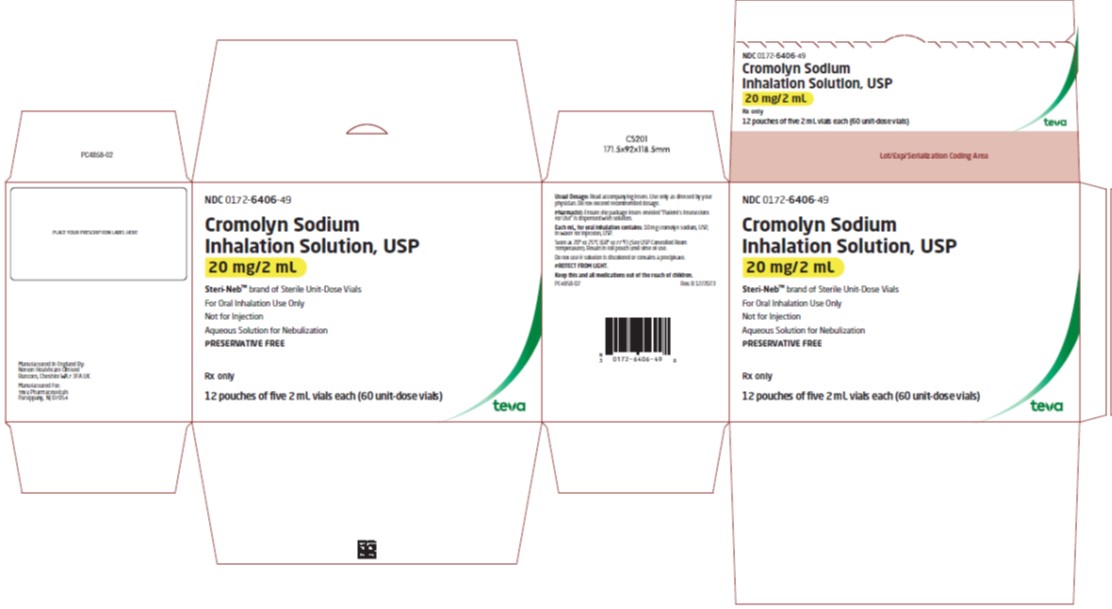
Cromolyn Sodium 20 mg/2mL Solution — NDC 0172-6406-49 (Billing 00172-6406-49)
This is a package of Cromolyn Sodium 20 mg/2mL Solution from Teva Pharmaceuticals USA, Inc., marketed since Jan 2000 and currently FDA-listed; retail pharmacies pay about $0.9626 per mL (NADAC). It is this product's only package size.
NDC database record
One package, one record: these facts belong to NDC 0172-6406-49 alone.
- Record
- FDA NDC Directory package listing · Human prescription drug
- Code segments
- 0172 labeler · 6406 product · 49 package
- Package marketed since
- Jan 18, 2000
- Sample package
- No — commercial package
- Listing certified through
- Dec 31, 2026
- Barcode (UPC-A, from the NDC)
- 3 0172640649 8
- Medicaid fills, this package
- 362 prescriptions in the last four reported quarters
- FDA record last changed
- Jul 24, 2026
Identity & classification
Regulatory identifiers FDA, NLM and CMS codes for this package
Drug-database identifiers Medi-Span GPI and First Databank GCN / HICL / AHFS classification
- GSN (GCN sequence number): 011688
- GCN: 46780
- GPI-14 (Medi-Span): 44150010102505
- HICL (First Databank): 004526
- AHFS class code: 48:10.32.00
- RxCUI (RxNorm): 831246
Where does this data come from?
- FDA openFDA NDC Directory · synced Oct 1, 2026
- FDA label on DailyMed · label index refreshed Oct 6, 2026
- RxNorm (NLM RxNav) · catalog refreshed Oct 1, 2026
- Medi-Span GPI (licensed)
- First Databank (licensed) · refreshed Oct 1, 2026
RxNorm drug class
This medicine belongs to the Mast Cell Stabilizer class.
Where does this data come from?
- RxClass (NLM) · catalog refreshed Oct 1, 2026
Clinical
Patient education
Supplement & herbal interactions
Some supplements/herbs that may interact with Cromolyn Sodium — tap one for details:
Where does this data come from?
- MedlinePlus (NLM) · refreshed Oct 1, 2026
- FDA label on DailyMed · label index refreshed Oct 6, 2026
Ask a licensed pharmacist directly — free, answered by our team.
Pricing
A drug doesn't have one price. Each row is a different public payment system, and none is what you'd pay at the counter — that depends on your insurance. The ⓘ on each row explains what it measures.
| Price system | Per mL | Per package |
|---|---|---|
| Retail pharmacies payNADAC · weekly | $0.963 | $115.51 / 120 ml |
| Medicaid paysCMS SDUD · 12 mo | $0.8225 | $98.70 / 120 ml |
| Medicare drug plans payPart D · Q2 2026 | $1.86 | $222.70 / 120 ml |
| Medicare Part B allowsASP · J7631 | $0.691 / J7631 unit | — |
Where does this data come from?
- CMS NADAC weekly file · file of Sep 30, 2026
- CMS ASP pricing files · refreshed Sep 20, 2026
- CMS Medicaid State Drug Utilization Data · through Q1 2026
- CMS Part D plan pricing files · refreshed Sep 24, 2026
- VA National Acquisition Center price file
Billing & reimbursement
Where does this data come from?
- CMS ASP NDC-HCPCS crosswalk · refreshed Sep 22, 2026
- DMEPDAC NDC-HCPCS crosswalk
- openFDA NSDE billing units · refreshed Oct 7, 2026
Packaging — all sizes for this product
| Package NDC | Description | Marketing start | Marketing end | Status |
|---|---|---|---|---|
| 00172-6406-49 You're viewing this Main listing | 12 POUCH in 1 CARTON / 5 VIAL, SINGLE-DOSE in 1 POUCH / 2 mL in 1 VIAL, SINGLE-DOSE | 2000-01-18 | — | Active |
Therapeutic equivalents
| Product | Labeler | Pack | NADAC/unit | TE | Status | Price vs. this |
|---|---|---|---|---|---|---|
| Cromolyn Sodium 20 mg/2mLthis 00172-6406-49 | Teva | 12 pouches | $0.963 | AN | Availability likely | — |
| Cromolyn Sodium 20 mg/2mL 42571-0350-09 | Micro | 12 ampules | $0.963 | — | Discontinued | — |
| Cromolyn Sodium Inhalation Solution 20 mg/2mL 76204-0028-60 | Ritedose | 2 pouches | $0.963 | AN | Discontinued | — |
Where does this data come from?
- FDA openFDA NDC Directory · synced Oct 1, 2026
- FDA Orange Book · refreshed Oct 3, 2026
- CMS NADAC weekly file · file of Sep 30, 2026
Availability & generic status
This product is an FDA-approved generic. Other versions of the same drug are listed under Therapeutic equivalents, least expensive first.
Where does this data come from?
- FDA Orange Book · refreshed Oct 3, 2026
Inactive Ingredients / Excipients
Inactive ingredients, also called excipients, are components of the drug product other than the active ingredient. They may include fillers, dyes, coatings, preservatives, flavors, or other formulation ingredients.
Where does this data come from?
IACT rows and label-wide narrative are kept separate; availability and product-level specificity depend on the submitted label.- FDA label on DailyMed · label index refreshed Oct 6, 2026
- FDA openFDA NDC Directory · synced Oct 1, 2026
Inactive ingredient FAQ
Are inactive ingredients the same for every manufacturer?
Why might an inactive ingredient be missing?
Can inactive ingredients matter?
Manufacturer & labeler
More NDCs from Teva Pharmaceuticals USA, Inc. labeler code 00172
- Diazepam 5 mg Tablet NDC 0172-3926-60
- Diazepam 10 mg Tablet NDC 0172-3927-60
- Baclofen 10 mg Tablet NDC 0172-4096-60
- Baclofen 20 mg Tablet NDC 0172-4097-60
- Famotidine 20 mg Tablet, Film Coated NDC 0172-5728-60
- Famotidine 40 mg Tablet, Film Coated NDC 0172-5729-60
- Cyclosporine 100 mg/mL Solution NDC 0172-7313-20
Where does this data come from?
- FDA openFDA NDC Directory · synced Oct 1, 2026
- Drugs@FDA
Full prescribing information FDA SPL
🎯 Indications and Usage ▾
INDICATIONS AND USAGE Cromolyn sodium inhalation solution USP is a prophylactic agent indicated in the management of patients with bronchial asthma. In patients whose symptoms are sufficiently frequent to require a continuous program of medication, cromolyn sodium inhalation solution USP is given by inhalation on a regular daily basis (see DOSAGE AND ADMINISTRATION ). The effect of cromolyn sodium is usually evident after several weeks of treatment, although some patients show an almost immediate response.
In patients who develop acute bronchoconstriction in response to exposure to exercise, toluene diisocyanate, environmental pollutants, etc., cromolyn sodium should be given shortly before exposure to the precipitating factor (see DOSAGE AND ADMINISTRATION ).
⏱️ Dosage and Administration ▾
DOSAGE AND ADMINISTRATION For management of bronchial asthma in adults and pediatric patients (two years of age and over), the usual starting dosage is the contents of one vial administered by nebulization four times a day at regular intervals. Drug stability and safety of cromolyn sodium inhalation solution when mixed with other drugs in a nebulizer have not been established. Patients with chronic asthma should be advised that the effect of cromolyn sodium inhalation solution therapy is dependent upon its administration at regular intervals, as directed.
Cromolyn sodium inhalation solution should be introduced into the patient's therapeutic regimen when the acute episode has been controlled, the airway has been cleared and the patient is able to inhale adequately. For the prevention of acute bronchospasm which follows exercise or exposure to cold dry air, environmental agents (e.g., animal danders, toluene diisocyanate, pollutants), etc., the usual dose is the contents of one vial administered by nebulization shortly before exposure to the precipitating factor. It should be emphasized to the patient that the drug is poorly absorbed when swallowed and is not effective by this route of administration.
For additional information, see the accompanying leaflet entitled “Living a Full Life with Asthma” . Cromolyn Sodium Inhalation Solution Therapy in Relation to Other Treatments for Asthma Non-steroidal agents Cromolyn sodium inhalation solution should be added to the patient's existing treatment regimen (e.g., bronchodilators). When a clinical response to cromolyn sodium inhalation solution is evident, usually within two to four weeks, and if the asthma is under good control, an attempt may be made to decrease concomitant medication usage gradually.
If concomitant medications are eliminated or required on no more than a prn basis, the frequency of administration of cromolyn sodium inhalation solution may be titrated downward to the lowest level consistent with the desired effect. The usual decrease is from four to three vials per day. It is important that the dosage be reduced gradually to avoid exacerbation of asthma.
It is emphasized that in patients whose dosage has been titrated to fewer than four vials per day, an increase in the dose of cromolyn sodium inhalation solution and the introduction of, or increase in, symptomatic medications may be needed if the patient's clinical condition deteriorates. Corticosteroids In patients chronically receiving corticosteroids for the management of bronchial asthma, the dosage should be maintained following the introduction of cromolyn sodium inhalation solution. If the patient improves, an attempt to decrease corticosteroids should be made.
Even if the corticosteroid-dependent patient fails to show symptomatic improvement following cromolyn sodium inhalation solution administration, the potential to reduce corticosteroids may nonetheless be present. Thus, gradual tapering of corticosteroid dosage may be attempted. It is important that the dose be reduced slowly, maintaining close supervision of the patient to avoid an exacerbation of asthma.
It should be borne in mind that prolonged corticosteroid therapy frequently causes an impairment in the activity of the hypothalamic-pituitary-adrenal axis and a reduction in the size of the adrenal cortex. A potentially critical degree of impairment or insufficiency may persist asymptomatically for some time even after gradual discontinuation of adrenocortical steroids. Therefore, if a patient is subjected to significant stress, such as a severe asthmatic attack, surgery, trauma or severe illness while being treated or within one year (occasionally up to two years) after corticosteroid treatment has been terminated, consideration should be given to reinstituting corticosteroid therapy.
When respiratory function is impaired, as may occur in severe exacerbation of asthma, a temporary increase in the amount of corticosteroids may be required to regain… [Excerpted — this section continues on DailyMed.]
⛔ Contraindications ▾
CONTRAINDICATIONS Cromolyn sodium inhalation solution is contraindicated in those patients who have shown hypersensitivity to cromolyn sodium.
⚠️ Warnings ▾
WARNINGS Cromolyn sodium inhalation solution has no role in the treatment of status asthmaticus. Anaphylactic reactions with cromolyn sodium administration have been reported rarely.
🤒 Adverse Reactions ▾
ADVERSE REACTIONS Clinical experience with the use of cromolyn sodium suggests that adverse reactions are rare events. The following adverse reactions have been associated with cromolyn sodium: cough, nasal congestion, nausea, sneezing, and wheezing. Other reactions have been reported in clinical trials; however, a causal relationship could not be established: drowsiness, nasal itching, nose bleed, nose burning, serum sickness, and stomachache.
In addition, adverse reactions have been reported with cromolyn sodium for inhalation capsules. The most common side effects are associated with inhalation of the powder and include transient cough (1 in 5 patients) and mild wheezing (1 in 25 patients). These effects rarely require treatment or discontinuation of the drug.
Information on the incidence of adverse reactions to cromolyn sodium for inhalation capsules has been derived from U.S. postmarketing surveillance experience. The following adverse reactions attributed to cromolyn sodium, based upon recurrence following readministration, have been reported in less than 1 in 10,000 patients: laryngeal edema, swollen parotid gland, angioedema, bronchospasm, joint swelling and pain, dizziness, dysuria and urinary frequency, nausea, cough, wheezing, headache, nasal congestion, rash, urticaria and lacrimation.
Other adverse reactions have been reported in less than 1 in 100,000 patients, and it is unclear whether these are attributable to the drug: anaphylaxis, nephrosis, periarteritic vasculitis, pericarditis, peripheral neuritis, pulmonary infiltrates with eosinophilia, polymyositis, exfoliative dermatitis, hemoptysis, anemia, myalgia, hoarseness, photodermatitis, and vertigo.
🔄 Drug Interactions ▾
Drug Interaction During Pregnancy Cromolyn sodium and isoproterenol were studied following subcutaneous injections in pregnant mice. Cromolyn sodium alone in doses up to 540 mg/kg (approximately 27 times the maximum recommended adult human daily inhalation dose on a mg/m 2 basis) did not cause significant increases in resorptions or major malformations. Isoproterenol alone at a dose of 2.7 mg/kg (approximately 7 times the maximum recommended adult human daily inhalation dose on a mg/m 2 basis) increased both resorptions and malformations.
The addition of cromolyn sodium (approximately 27 times the maximum recommended adult human daily inhalation dose on a mg/m 2 basis) to isoproterenol (approximately 7 times the maximum recommended adult human daily inhalation dose on a mg/m 2 basis) appears to have increased the incidence of both resorptions and malformations.
🤰 Pregnancy ▾
Pregnancy Teratogenic Effects Pregnancy Category B Reproduction studies with cromolyn sodium administered subcutaneously to pregnant mice and rats at maximum daily doses of 540 mg/kg and 164 mg/kg, respectively, and intravenously to rabbits at a maximum daily dose of 485 mg/kg produced no evidence of fetal malformations. These doses represent approximately 27, 17, and 98 times, respectively, the maximum recommended adult human daily inhalation dose on a mg/m 2 basis. Adverse fetal effects (increased resorption and decreased fetal weight) were noted only at the very high parenteral doses that produced maternal toxicity.
There are, however, no adequate and well-controlled studies in pregnant women. Because animal reproduction studies are not always predictive of human response, this drug should be used during pregnancy only if clearly needed.
🧒 Pediatric Use ▾
Pediatric Use Safety and effectiveness in pediatric patients below the age of 2 years have not been established.
🧓 Geriatric Use ▾
Geriatric Use Clinical studies of cromolyn sodium inhalation solution did not include sufficient numbers of subjects aged 65 and over to determine whether they respond differently from younger subjects. Other reported clinical experience has not identified differences in responses between the elderly and younger patients.
🆘 Overdosage ▾
OVERDOSAGE There is no clinical syndrome associated with an overdosage of cromolyn sodium. Acute toxicity testing in a wide variety of species has demonstrated that toxicity with cromolyn sodium occurs only with very high exposure levels, regardless of whether administration was parenteral, oral or by inhalation. Parenteral administration in mice, rats, guinea pigs, hamsters, and rabbits demonstrated a median lethal dose of approximately 4000 mg/kg.
Intravenous administration in monkeys also indicated a similar pattern of toxicity. The highest dose administered by the oral route in rats and mice was 8000 mg/kg, (approximately 261 and 130 times, respectively, the maximum recommended human daily inhalation dose on a mg/m 2 basis) and at this dose level no deaths occurred. By inhalation, even in long term studies, it proved impossible to achieve toxic dose levels of cromolyn sodium in a range of mammalian species.
🧬 Clinical Pharmacology ▾
CLINICAL PHARMACOLOGY In vitro and in vivo animal studies have shown that cromolyn sodium inhibits sensitized mast cell degranulation which occurs after exposure to specific antigens. Cromolyn sodium acts by inhibiting the release of mediators from mast cells. Studies show that cromolyn sodium indirectly blocks calcium ions from entering the mast cell, thereby preventing mediator release.
Cromolyn sodium inhibits both the immediate and non-immediate bronchoconstrictive reactions to inhaled antigen. Cromolyn sodium also attenuates bronchospasm caused by exercise, toluene diisocyanate, aspirin, cold air, sulfur dioxide, and environmental pollutants. Cromolyn sodium has no intrinsic bronchodilator or antihistamine activity.
After administration by inhalation, approximately 8% of the total cromolyn sodium dose administered is absorbed and rapidly excreted unchanged, approximately equally divided between urine and bile. The remainder of the dose is either exhaled or deposited in the oropharynx, swallowed and excreted via the alimentary tract.
📦 How Supplied / Storage and Handling ▾
HOW SUPPLIED Cromolyn sodium inhalation solution, USP Unit-Dose 2 mL Vial is supplied as a colorless to pale yellow solution containing 20 mg cromolyn sodium, USP, in water for injection, USP, with 5 vials per foil pouch in a carton as listed below. 60 vials per carton (NDC 0172-6406-49). Each vial is made from a low density polyethylene (LDPE) resin.
Store at 20° to 25°C (68° to 77°F) [See USP Controlled Room Temperature]. Do not use if solution is discolored or contains a precipitate. Retain in foil pouch until time of use.
PROTECT FROM LIGHT. Keep this and all medications out of the reach of children. Manufactured In England By: Norton Healthcare Limited Runcorn, Cheshire WA7 3FA UK Manufactured For: Teva Pharmaceuticals Parsippany, NJ 07054 Rev.
B 12/2023
📋 Description ▾
DESCRIPTION The active ingredient of cromolyn sodium inhalation solution, USP is cromolyn sodium, USP. It is an inhaled anti-inflammatory agent for the preventive management of asthma. Cromolyn sodium, USP is chemically designated as disodium 5,5'- [(2-hydroxytrimethylene)dioxy] bis [4-oxo-4 H -1-benzopyran-2-carboxylate].
The molecular formula is C 23 H 14 Na 2 O 11 ; the molecular weight is 512.34. Cromolyn sodium, USP is a water-soluble, odorless, white, hydrated crystalline powder. It is tasteless at first, but leaves a slightly bitter aftertaste.
Cromolyn sodium inhalation solution USP is clear, colorless to pale yellow, sterile and has a target pH of 5.5. The structural formula is: Each 2 mL vial for oral inhalation use only contains 20 mg cromolyn sodium, USP in water for injection, USP. structure
💬 Information for Patients ▾
Information for Patients Cromolyn sodium is to be taken as directed by the physician. Because it is preventive medication, it may take up to four weeks before the patient experiences maximum benefit. Cromolyn sodium should be used in a power-driven nebulizer with an adequate airflow rate equipped with a suitable face mask or mouthpiece.
Drug stability and safety of cromolyn sodium inhalation solution when mixed with other drugs in a nebulizer have not been established. For additional information, see the accompanying leaflet entitled Living a Full Life with Asthma.
⚠️ Precautions ▾
PRECAUTIONS General Occasionally, patients may experience cough and/or bronchospasm following inhalation of cromolyn sodium. At times, patients who develop bronchospasm may not be able to continue cromolyn sodium administration despite prior bronchodilator administration. Rarely, very severe bronchospasm has been encountered.
Symptoms of asthma may recur if cromolyn sodium is reduced below the recommended dosage or discontinued. Information for Patients Cromolyn sodium is to be taken as directed by the physician. Because it is preventive medication, it may take up to four weeks before the patient experiences maximum benefit.
Cromolyn sodium should be used in a power-driven nebulizer with an adequate airflow rate equipped with a suitable face mask or mouthpiece. Drug stability and safety of cromolyn sodium inhalation solution when mixed with other drugs in a nebulizer have not been established. For additional information, see the accompanying leaflet entitled Living a Full Life with Asthma.
Carcinogenesis, Mutagenesis, and Impairment of Fertility Long-term studies of cromolyn sodium in mice (12 months intraperitoneal administration at doses up to 150 mg/kg three days per week), hamsters (intraperitoneal administration at doses up to 53 mg/kg three days per week for 15 weeks followed by 17.5 mg/kg three days per week for 37 weeks), and rats (18 months subcutaneous treatment at doses up to 75 mg/kg six days per week) showed no neoplastic effects. These doses correspond to approximately 1.0, 0.3, and 2 times, respectively, the maximum recommended human daily inhalation dose on a mg/m 2 basis.
Cromolyn sodium showed no mutagenic potential in Ames Salmonella/microsome plate assays, mitotic gene conversion in Saccharomyces cerevisiae and in an in vitro cytogenetic study in human peripheral lymphocytes. No evidence of impaired fertility was shown in laboratory reproduction studies conducted subcutaneously in rats at the highest doses tested, 175 mg/kg/day in males and 100 mg/kg/day in females. These doses are approximately 18 and 10 times, respectively, the maximum recommended adult human daily inhalation dose on a mg/m 2 basis.
Pregnancy Teratogenic Effects Pregnancy Category B Reproduction studies with cromolyn sodium administered subcutaneously to pregnant mice and rats at maximum daily doses of 540 mg/kg and 164 mg/kg, respectively, and intravenously to rabbits at a maximum daily dose of 485 mg/kg produced no evidence of fetal malformations. These doses represent approximately 27, 17, and 98 times, respectively, the maximum recommended adult human daily inhalation dose on a mg/m 2 basis. Adverse fetal effects (increased resorption and decreased fetal weight) were noted only at the very high parenteral doses that produced maternal toxicity.
There are, however, no adequate and well-controlled studies in pregnant women. Because animal reproduction studies are not always predictive of human response, this drug should be used during pregnancy only if clearly needed. Drug Interaction During Pregnancy Cromolyn sodium and isoproterenol were studied following subcutaneous injections in pregnant mice.
Cromolyn sodium alone in doses up to 540 mg/kg (approximately 27 times the maximum recommended adult human daily inhalation dose on a mg/m 2 basis) did not cause significant increases in resorptions or major malformations. Isoproterenol alone at a dose of 2.7 mg/kg (approximately 7 times the maximum recommended adult human daily inhalation dose on a mg/m 2 basis) increased both resorptions and malformations. The addition of cromolyn sodium (approximately 27 times the maximum recommended adult human daily inhalation dose on a mg/m 2 basis) to isoproterenol (approximately 7 times the maximum recommended adult human daily inhalation dose on a mg/m 2 basis) appears to have increased the incidence of both resorptions and malformations.
Nursing Mothers It is not known whether this drug is excreted in human milk. Because many drugs are excreted in hu… [Excerpted — this section continues on DailyMed.]
🍼 Nursing Mothers ▾
Nursing Mothers It is not known whether this drug is excreted in human milk. Because many drugs are excreted in human milk, caution should be exercised when cromolyn sodium is administered to a nursing woman.
📄 Carcinogenesis, Mutagenesis, Impairment of Fertility ▾
Carcinogenesis, Mutagenesis, and Impairment of Fertility Long-term studies of cromolyn sodium in mice (12 months intraperitoneal administration at doses up to 150 mg/kg three days per week), hamsters (intraperitoneal administration at doses up to 53 mg/kg three days per week for 15 weeks followed by 17.5 mg/kg three days per week for 37 weeks), and rats (18 months subcutaneous treatment at doses up to 75 mg/kg six days per week) showed no neoplastic effects. These doses correspond to approximately 1.0, 0.3, and 2 times, respectively, the maximum recommended human daily inhalation dose on a mg/m 2 basis.
Cromolyn sodium showed no mutagenic potential in Ames Salmonella/microsome plate assays, mitotic gene conversion in Saccharomyces cerevisiae and in an in vitro cytogenetic study in human peripheral lymphocytes. No evidence of impaired fertility was shown in laboratory reproduction studies conducted subcutaneously in rats at the highest doses tested, 175 mg/kg/day in males and 100 mg/kg/day in females. These doses are approximately 18 and 10 times, respectively, the maximum recommended adult human daily inhalation dose on a mg/m 2 basis.
📄 Patient Package Insert ▾
LIVING A FULL LIFE WITH ASTHMA PATIENT INSTRUCTIONS Cromolyn Sodium Inhalation Solution, USP You or your child may be among the millions of Americans who have asthma. For most patients, asthma need not limit your lifestyle, if you closely follow the asthma management plan your doctor provides you. Your doctor has given you this instruction sheet to help you learn more about asthma and ways to control it.
WHAT IS ASTHMA? Asthma is a disease that causes patients to have difficulty breathing. Asthma “attacks” occur when the air passages (airways) to the lungs close up, blocking air from passing through.
The closing up is caused by two things: The muscles around the airways tighten (constrict) making the airway narrower, and The passage lining swells and produces larger amounts of mucus (a sticky liquid normally found in airways). This swelling is caused by a certain type of inflammation that can build up in the airways of patients with asthma. Inflammation and the airway sensitivity that results from it cause further attacks to occur.
WHAT CAUSES THESE ATTACKS? Asthma experts know that patients with asthma have attacks because their airways are inflamed and over reactive. Their lungs become super-sensitive to certain irritants or “triggers”, such as cold dry air, pollen, smoke, or cat dander.
In the presence of such triggers, someone with asthma may have an attack, and attacks may occur more often. Asthma triggers fall into 6 categories: Substances that cause allergies (pollens, animal dander, molds, house dust, some foods and medicines) Infections that affect breathing (colds, flu) Emotional stress (difficult situations at home, school, or work) Strenuous exercise Irritating gases (chlorine, perfume, tobacco smoke) Sudden changes in temperature or humidity HOW TO PREVENT ASTHMA ATTACKS No medicine or procedure will “cure” asthma.
The key to asthma relief, therefore, is to prevent attacks and to relieve attack symptoms if they do occur. A successful prevention plan* will do the following: Keep your activities, including exercise, at normal levels. Keep your lungs functioning normally or at a near-normal level.
Prevent symptoms such as coughing or breathlessness that can keep you up at night, or occur in the early morning hours, or after exertion. Prevent asthma attacks from happening. Avoid unpleasant or harmful side effects that may result from using asthma medicine.
The best way to prevent asthma attacks is to avoid the triggers that bother you or your child. Try to identify the specific things that cause problems for you - things such as certain foods, house dust, or animal dander. Avoiding these triggers may be difficult or unpleasant.
You may need to find a new home for a family pet or remove a carpet or a favorite stuffed toy. Even though these steps are difficult, they may be necessary in order to help prevent asthma attacks. If house dust is a trigger, remove dust-collectors such as feather pillows, mattresses, quilts, and carpets from the bedroom.
Mattresses and pillows can be covered with allergen-free covers. If a certain food triggers attacks, keep it out of your diet. Irritants in the air can be reduced by air conditioning, electrostatic air filters, or small-pore (HEPA) filters.
Be careful of certain medicines. Aspirin and aspirin-like pain relievers, for example, can trigger attacks in some people and should be avoided if they do. * Adapted from the National Heart, Lung, and Blood Institute: Guidelines for the Diagnosis and Management of Asthma. National Asthma Education Program, Expert Panel Report, 1991.
OTHER DO’S AND DON’TS Anyone with asthma should stick to a healthy, balanced diet, get lots of rest and moderate exercise, and follow these do’s and don’ts: Don’t smoke, and don’t stay in the same room with people that do. Avoid fresh paint. Avoid sudden changes of temperature.
Don’t go in and out of extremely cool air-conditioned buildings during hot weather. Stay home in extremely cold weather, if possible. Sta… [Excerpted — this section continues on DailyMed.]
📄 Package Label / Principal Display Panel ▾
Package/Label Display Panel NDC 0172-6406-49 Cromolyn Sodium Inhalation Solution, USP 20 mg/2 mL Steri-Neb™ brand of Sterile Unit-Dose Vials For Oral Inhalation Use Only Not for Injection Aqueous Solution for Nebulization PRESERVATIVE FREE Rx only 12 pouches of five 2 mL vials each (60 unit-dose vials) carton