
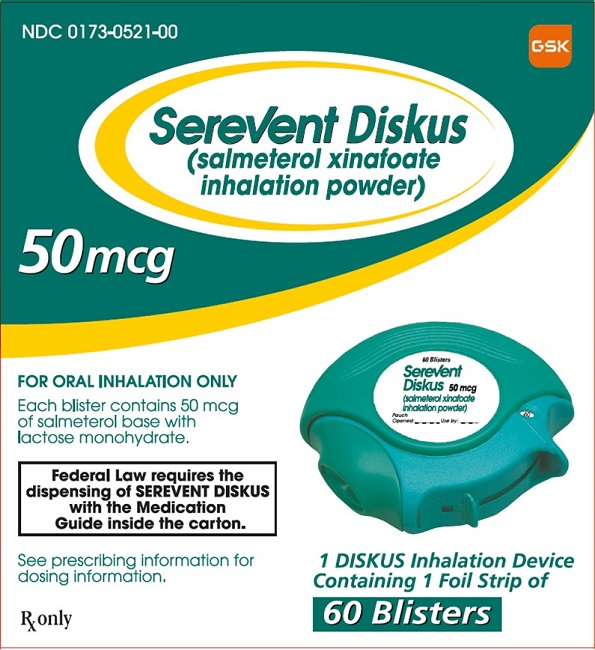
Serevent Diskus salmeterol xinafoate 50 ug Powder, Metered — NDC 0173-0521-00 (Billing 00173-0521-00)
This is a package of Serevent Diskus salmeterol xinafoate 50 ug Powder, Metered from GlaxoSmithKline LLC, marketed since Nov 1997 and currently FDA-listed; retail pharmacies pay about $6.74 per unit (NADAC). It is this product's only package size.
NDC database record
One package, one record: these facts belong to NDC 0173-0521-00 alone.
- Record
- FDA NDC Directory package listing · Human prescription drug
- Code segments
- 0173 labeler · 0521 product · 00 package
- Package marketed since
- Nov 25, 1997
- Sample package
- No — commercial package
- Listing certified through
- Dec 31, 2027
- Barcode (UPC-A, from the NDC)
- 3 0173052100 2
- Medicaid fills, this package
- 14,468 prescriptions in the last four reported quarters
- FDA record last changed
- Sep 17, 2026
Identity & classification
Regulatory identifiers FDA, NLM and CMS codes for this package
Drug-database identifiers Medi-Span GPI and First Databank GCN / HICL / AHFS classification
- GSN (GCN sequence number): 031417
- GCN: 64012
- HICL (First Databank): 007393
- AHFS class code: 12:12.08.12
- RxCUI (RxNorm): 866048
Where does this data come from?
- FDA openFDA NDC Directory · synced Oct 1, 2026
- FDA label on DailyMed · label index refreshed Oct 5, 2026
- RxNorm (NLM RxNav) · catalog refreshed Oct 1, 2026
- Medi-Span GPI (licensed)
- First Databank (licensed) · refreshed Oct 1, 2026
RxNorm drug class
This medicine belongs to the beta2-Adrenergic Agonist class.
Where does this data come from?
- RxClass (NLM) · catalog refreshed Oct 1, 2026
Clinical
Salmeterol is used to control wheezing, shortness of breath, coughing, and chest tightness in people with chronic obstructive pulmonary disease (COPD; a group of lung diseases that includes chronic bronchitis and emphysema). It is also used along with an inhaled steroid medication to control wheezing, shortness of breath, coughing, and chest tightness and in adults and children 4 years of age and older with asthma. It is also is used to prevent bronchospasm (breathing difficulties) during exercise in adults and children 4 years of age and older. Salmeterol is in a class of medications called l...
Read the full MedlinePlus article ↗- No. Serevent Diskus is a maintenance medicine and does not work fast enough for sudden symptoms. Use your short-acting rescue inhaler, such as albuterol, instead. If you need rescu...
- Can I use this inhaler when I'm suddenly short of breath?
- Yes. Salmeterol does not treat airway inflammation, and using it for asthma without an inhaled corticosteroid is contraindicated because of the risk of asthma-related death. Keep t...
- Do I still need my steroid inhaler for asthma?
Patient education
Supplement & herbal interactions
Where does this data come from?
- MedlinePlus (NLM) · refreshed Oct 1, 2026
- FDA label on DailyMed · label index refreshed Oct 5, 2026
Ask a licensed pharmacist directly — free, answered by our team.
Pricing
A drug doesn't have one price. Each row is a different public payment system, and none is what you'd pay at the counter — that depends on your insurance. The ⓘ on each row explains what it measures.
| Price system | Per ea | Per package |
|---|---|---|
| Retail pharmacies payNADAC · weekly | $6.745 | $404.68 / 60 powders |
| Medicaid paysCMS SDUD · 12 mo | $6.86 | $411.89 / 60 powders |
| Medicare drug plans payPart D · Q2 2026 | $6.80 | $407.92 / 60 powders |
Where does this data come from?
- CMS NADAC weekly file · file of Sep 30, 2026
- CMS ASP pricing files · refreshed Sep 20, 2026
- CMS Medicaid State Drug Utilization Data · through Q1 2026
- CMS Part D plan pricing files · refreshed Sep 24, 2026
- VA National Acquisition Center price file
Packaging — all sizes for this product
| Package NDC | Description | Marketing start | Marketing end | Status |
|---|---|---|---|---|
| 00173-0521-00 You're viewing this Main listing | 1 INHALER in 1 CARTON / 60 POWDER, METERED in 1 INHALER | 1997-11-25 | — | Active |
Therapeutic equivalents
| Product | Labeler | Pack | NADAC/unit | TE | Status | Price vs. this |
|---|---|---|---|---|---|---|
| Serevent Diskus 50 ugthis 00173-0521-00 | GlaxoSmithKline | 1 inhaler | $6.745 | — | Availability likely | — |
Where does this data come from?
- FDA openFDA NDC Directory · synced Oct 1, 2026
- FDA Orange Book · refreshed Oct 3, 2026
- CMS NADAC weekly file · file of Sep 30, 2026
Availability & generic status
We did not find an FDA-approved generic match for this exact strength, form and route.
Where does this data come from?
- FDA Orange Book · refreshed Oct 3, 2026
Inactive Ingredients / Excipients
Inactive ingredients, also called excipients, are components of the drug product other than the active ingredient. They may include fillers, dyes, coatings, preservatives, flavors, or other formulation ingredients.
💡 Tap an ingredient (hover on desktop) to see what it is and why it’s used.
-
UNII J2B2A4N98G
Lactose is a natural sugar derived from milk. In medications, it serves as a filler and binder to add bulk and help hold tablet or capsule ingredients together during manufacturing.
1 inactive ingredient listed in the exact product block matched to this NDC.
Where does this data come from?
ingredient classCode="IACT" elements from the exact product block matched by this NDC. Label-section narrative from DailyMed / the openFDA label index is shown separately when available.- FDA label on DailyMed · label index refreshed Oct 5, 2026
- FDA openFDA NDC Directory · synced Oct 1, 2026
Inactive ingredient FAQ
Are inactive ingredients the same for every manufacturer?
Why might an inactive ingredient be missing?
Can inactive ingredients matter?
Manufacturer & labeler
More NDCs from GlaxoSmithKline LLC labeler code 00173
- Wellbutrin SR bupropion hydrochloride 150 mg Tablet, Film Coated NDC 0173-0135-55
- IMITREX sumatriptan 6 mg/.5mL Injection NDC 0173-0478-00
- IMITREX sumatriptan 6 mg/.5mL Injection NDC 0173-0479-00
- Lamictal lamotrigine 5 mg Tablet, For Suspension NDC 0173-0526-00
- Lamictal lamotrigine 25 mg Tablet, For Suspension NDC 0173-0527-00
- MEPRON atovaquone 750 mg/5mL Suspension NDC 0173-0547-00
- Valtrex valacyclovir hydrochloride 1 g Tablet, Film Coated NDC 0173-0565-04
- LAMICTAL lamotrigine Kit NDC 0173-0594-02
- Lamictal lamotrigine 25 mg Tablet NDC 0173-0633-02
Where does this data come from?
- FDA openFDA NDC Directory · synced Oct 1, 2026
- Drugs@FDA
Full prescribing information FDA SPL
🚨 Boxed Warning ▾
WARNING: ASTHMA-RELATED DEATH Long-acting beta 2 -adrenergic agonists (LABA), such as salmeterol, the active ingredient in SEREVENT DISKUS, as monotherapy (without inhaled corticosteroids [ICS]) increase the risk of asthma-related death. Data from a large placebo-controlled U.S. trial that compared the safety of salmeterol with placebo added to usual asthma therapy showed an increase in asthma-related deaths in subjects receiving salmeterol (13 deaths out of 13,176 subjects treated for 28 weeks on salmeterol versus 3 deaths out of 13,179 subjects on placebo).
Use of background ICS was not required in this study. When LABA are used in fixed-dose combination with ICS, data from large clinical trials do not show a significant increase in the risk of serious asthma-related events (hospitalizations, intubations, death) compared with ICS alone. Use of SEREVENT DISKUS for the treatment of asthma as monotherapy without a concomitant ICS is contraindicated.
Use SEREVENT DISKUS only as additional therapy for patients with asthma who are currently taking but are inadequately controlled on an ICS. Do not use SEREVENT DISKUS for patients whose asthma is adequately controlled on low- or medium-dose ICS. Pediatric and Adolescent Patients Available data from controlled clinical trials suggest that LABA as monotherapy increase the risk of asthma-related hospitalization in pediatric and adolescent patients.
For pediatric and adolescent patients with asthma who require addition of a LABA to an ICS, a fixed-dose combination product containing both an ICS and a LABA should ordinarily be used to ensure adherence with both drugs. In cases where use of an ICS and a LABA is clinically indicated, appropriate steps must be taken to ensure adherence with both treatment components. If adherence cannot be assured, a fixed-dose combination product containing both an ICS and a LABA is recommended.
WARNING: ASTHMA-RELATED DEATH See full prescribing information for complete boxed warning. • Long-acting beta 2 -adrenergic agonists (LABA), such as salmeterol, the active ingredient in SEREVENT DISKUS, as monotherapy (without inhaled corticosteroids [ICS]) increase the risk of asthma - related death. A U.S. trial showed an increase in asthma - related deaths in subjects receiving salmeterol (13 deaths out of 13,176 subjects treated for 28 weeks on salmeterol versus 3 out of 13,179 subjects on placebo). When LABA are used in fixed-dose combination with ICS, data from large clinical trials do not show a significant increase in the risk of serious asthma-related events (hospitalizations, intubations, death) compared with ICS alone.
( 5.1 ) • Prescribe SEREVENT DISKUS only as additional therapy for patients with asthma who are currently taking but are inadequately controlled on an ICS. Do not use SEREVENT DISKUS for patients whose asthma is adequately controlled on low- or medium-dose ICS. ( 1.1 , 5.1 ) • Available data from controlled clinical trials suggest that LABA as monotherapy increase the risk of asthma-related hospitalization in pediatric and adolescent patients.
( 5.1 )
🎯 Indications and Usage ▾
1 INDICATIONS AND USAGE SEREVENT DISKUS is a LABA indicated for: • Treatment of asthma in patients aged 4 years and older with an ICS. ( 1.1 ) • Prevention of exercise-induced bronchospasm (EIB) in patients aged 4 years and older. ( 1.2 ) • Maintenance treatment of bronchospasm associated with chronic obstructive pulmonary disease (COPD). ( 1.3 ) Important limitation of use: Not indicated for relief of acute bronchospasm. ( 1.1 , 1.3 )
1.1Treatment of Asthma SEREVENT DISKUS is indicated for the treatment of asthma and in the prevention of bronchospasm only as concomitant therapy with an ICS in patients aged 4 years and older with reversible obstructive airway disease, including patients with symptoms of nocturnal asthma. LABA, such as salmeterol, the active ingredient in SEREVENT DISKUS, as monotherapy (without ICS) increase the risk of asthma-related death [see Warnings and Precautions ( 5.1 )] . Use of SEREVENT DISKUS for the treatment of asthma without concomitant use of an ICS is contraindicated [see Contraindications ( 4 )] .
Use SEREVENT DISKUS only as additional therapy for patients with asthma who are currently taking but are inadequately controlled on an ICS. Do not use SEREVENT DISKUS for patients whose asthma is adequately controlled on low- or medium-dose ICS. Pediatric and Adolescent Patients Available data from controlled clinical trials suggest that LABA as monotherapy increase the risk of asthma-related hospitalization in pediatric and adolescent patients.
For pediatric and adolescent patients with asthma who require addition of a LABA to an ICS, a fixed-dose combination product containing both an ICS and a LABA should ordinarily be used to ensure adherence with both drugs. In cases where use of a separate ICS and a LABA is clinically indicated, appropriate steps must be taken to ensure adherence with both treatment components. If adherence cannot be assured, a fixed-dose combination product containing both an ICS and a LABA is recommended.
Important Limitation of Use SEREVENT DISKUS is NOT indicated for the relief of acute bronchospasm.
1.2Prevention of Exercise-Induced Bronchospasm SEREVENT DISKUS is also indicated for prevention of exercise-induced bronchospasm (EIB) in patients aged 4 years and older. Use of SEREVENT DISKUS as a single agent for the prevention of EIB may be clinically indicated in patients who do not have persistent asthma. In patients with persistent asthma, use of SEREVENT DISKUS for the prevention of EIB may be clinically indicated, but the treatment of asthma should include an ICS.
1.3Maintenance Treatment of Chronic Obstructive Pulmonary Disease SEREVENT DISKUS is indicated for the long-term twice-daily administration in the maintenance treatment of bronchospasm associated with chronic obstructive pulmonary disease (COPD) (including emphysema and chronic bronchitis). Important Limitation of Use SEREVENT DISKUS is NOT indicated for the relief of acute bronchospasm.
⏱️ Dosage and Administration ▾
2 DOSAGE AND ADMINISTRATION SEREVENT DISKUS should be administered by the orally inhaled route only. More frequent administration or a greater number of inhalations (more than 1 inhalation twice daily) is not recommended as some patients are more likely to experience adverse effects. Patients using SEREVENT DISKUS should not use additional LABA for any reason. [See Warnings and Precautions ( 5.4 , 5.6 ).] • For oral inhalation only.
( 2 ) • Treatment of asthma in patients aged 4 years and older: 1 inhalation twice daily in addition to concomitant treatment with an ICS. ( 2.1 ) • EIB: 1 inhalation at least 30 minutes before exercise. ( 2.2 ) • Maintenance treatment of bronchospasm associated with COPD: 1 inhalation twice daily.
( 2.3 )
2.1Asthma LABA, such as salmeterol, the active ingredient in SEREVENT DISKUS, as monotherapy (without ICS) increase the risk of asthma-related death [see Warnings and Precautions ( 5.1 )]. Because of this risk, use of SEREVENT DISKUS for the treatment of asthma without concomitant use of an ICS is contraindicated. Use SEREVENT DISKUS only as additional therapy for patients with asthma who are currently taking but are inadequately controlled on an ICS.
Do not use SEREVENT DISKUS for patients whose asthma is adequately controlled on low- or medium-dose ICS. Pediatric and Adolescent Patients Available data from controlled clinical trials suggest that LABA as monotherapy increase the risk of asthma-related hospitalization in pediatric and adolescent patients. For patients with asthma younger than 18 years who require addition of a LABA to an ICS, a fixed-dose combination product containing both an ICS and a LABA should ordinarily be used to ensure adherence with both drugs.
In cases where use of a separate ICS and a LABA is clinically indicated, appropriate steps must be taken to ensure adherence with both treatment components. If adherence cannot be assured, a fixed-dose combination product containing both an ICS and a LABA is recommended. For bronchodilatation and prevention of symptoms of asthma, including the symptoms of nocturnal asthma, the usual dosage for adults and children aged 4 years and older is 1 inhalation (50 mcg) twice daily, approximately 12 hours apart.
If a previously effective dosage regimen fails to provide the usual response, medical advice should be sought immediately as this is often a sign of destabilization of asthma. Under these circumstances, the therapeutic regimen should be reevaluated. If symptoms arise in the period between doses, an inhaled, short-acting beta 2 -agonist should be taken for immediate relief.
2.2Exercise-Induced Bronchospasm Use of SEREVENT DISKUS as a single agent for the prevention of EIB may be clinically indicated in patients who do not have persistent asthma. In patients with persistent asthma, use of SEREVENT DISKUS for the prevention of EIB may be clinically indicated, but the treatment of asthma should include an ICS. One inhalation of SEREVENT DISKUS at least 30 minutes before exercise has been shown to protect patients against EIB.
When used intermittently as needed for prevention of EIB, this protection may last up to 9 hours in adults and adolescents and up to 12 hours in patients aged 4 to 11 years. Additional doses of SEREVENT should not be used for 12 hours after the administration of this drug. Patients who are receiving SEREVENT DISKUS twice daily should not use additional SEREVENT for prevention of EIB.
2.3Chronic Obstructive Pulmonary Disease For maintenance treatment of bronchospasm associated with COPD (including chronic bronchitis and emphysema), the dosage for adults is 1 inhalation (50 mcg) twice daily, approximately 12 hours apart.
💊 Dosage Forms and Strengths ▾
3 DOSAGE FORMS AND STRENGTHS Inhalation powder: Inhaler containing a foil blister strip of powder formulation for oral inhalation. The strip contains salmeterol 50 mcg per blister. Inhalation powder: Inhaler containing salmeterol (50 mcg) as a powder formulation for oral inhalation. ( 3 )
⛔ Contraindications ▾
4 CONTRAINDICATIONS Use of SEREVENT DISKUS for the treatment of asthma without concomitant use of an ICS is contraindicated [see Warnings and Precautions ( 5.1 )] . The use of SEREVENT DISKUS is contraindicated in the following conditions: • Primary treatment of status asthmaticus or other acute episodes of asthma or COPD where intensive measures are required [see Warnings and Precautions ( 5.2 )] • Severe hypersensitivity to milk proteins or demonstrated hypersensitivity to salmeterol or any of the excipients [see Warnings and Precautions ( 5.7 ), Adverse Reactions ( 6.3 ), Description ( 11 )] • Asthma: Without concomitant use of an ICS.
( 4 ) • Primary treatment of status asthmaticus or acute episodes of asthma or COPD requiring intensive measures. ( 4 ) • Severe hypersensitivity to milk proteins or demonstrated hypersensitivity to salmeterol or any of the excipients. ( 4 )
⚠️ Warnings and Cautions ▾
5 WARNINGS AND PRECAUTIONS • LABA as monotherapy (without ICS) for asthma increase the risk of asthma-related death and asthma-related hospitalizations. Prescribe for asthma only as concomitant therapy with an inhaled corticosteroid. ( 5.1 ) • Do not initiate in acutely deteriorating asthma or COPD.
Do not use to treat acute symptoms. ( 5.2 ) • Not a substitute for corticosteroids. Patients with asthma must take a concomitant ICS.
( 5.3 ) • Do not use in combination with an additional medicine containing a LABA because of risk of overdose. ( 5.4 ) • If paradoxical bronchospasm occurs, discontinue SEREVENT DISKUS and institute alternative therapy. ( 5.5 ) • Use with caution in patients with cardiovascular or central nervous system disorders because of beta-adrenergic stimulation.
( 5.6 ) • Use with caution in patients with convulsive disorders, thyrotoxicosis, diabetes mellitus, and ketoacidosis. ( 5.9 ) • Be alert to hypokalemia and hyperglycemia. ( 5.10 )
5.1Asthma-Related Death LABA, such as salmeterol, the active ingredient in SEREVENT DISKUS, as monotherapy (without ICS) increase the risk of asthma-related death. When LABA are used in fixed - dose combination with ICS, data from large clinical trials do not show a significant increase in the risk of serious asthma-related events (hospitalizations, intubations, death) compared with ICS alone. Use of SEREVENT DISKUS for the treatment of asthma without concomitant use of an ICS is contraindicated.
Use SEREVENT DISKUS only as additional therapy for patients with asthma who are currently taking but are inadequately controlled on an ICS. Do not use SEREVENT DISKUS for patients whose asthma is adequately controlled on low- or medium-dose ICS. Pediatric and Adolescent Patients Available data from controlled clinical trials suggest that LABA as monotherapy increase the risk of asthma-related hospitalization in pediatric and adolescent patients.
For pediatric and adolescent patients with asthma who require addition of a LABA to an ICS, a fixed-dose combination product containing both an ICS and a LABA should ordinarily be used to ensure adherence with both drugs. In cases where use of a separate ICS and a LABA is clinically indicated, appropriate steps must be taken to ensure adherence with both treatment components. If adherence cannot be assured, a fixed-dose combination product containing both an ICS and a LABA is recommended.
The Salmeterol Multicenter Asthma Research Trial (SMART) was a large 28-week placebo-controlled U.S. trial comparing the safety of salmeterol (SEREVENT Inhalation Aerosol) with placebo, each added to usual asthma therapy, that showed an increase in asthma-related deaths in subjects receiving salmeterol [see Clinical Studies ( 14.1 )] . Given the similar basic mechanisms of action of beta 2 -agonists, the findings seen in the SMART trial are considered a class effect. A 16-week clinical trial performed in the United Kingdom, the Salmeterol Nationwide Surveillance (SNS) trial, showed results similar to the SMART trial.
In the SNS trial, the rate of asthma-related death was numerically, though not statistically significantly, greater in subjects with asthma treated with salmeterol (42 mcg twice daily) than those treated with albuterol (180 mcg 4 times daily) added to usual asthma therapy. The SNS and SMART trials enrolled subjects with asthma. Available data do not suggest an increased risk of death with use of LABA in patients with COPD.
5.2Deterioration of Disease and Acute Episodes SEREVENT DISKUS should not be initiated in patients during rapidly deteriorating or potentially life-threatening episodes of asthma or COPD. SEREVENT DISKUS has not been studied in subjects with acutely deteriorating asthma or COPD. The initiation of SEREVENT DISKUS in this setting is not appropriate.
Serious acute respiratory events, including fatalities, have been reported when salmeterol has been initiated in patients with significantly worsening or acutely deteriorating ast… [Excerpted — this section continues on DailyMed.]
🤒 Adverse Reactions ▾
6 ADVERSE REACTIONS LABA, including salmeterol, the active ingredient in SEREVENT DISKUS, as monotherapy (without ICS) increase the risk of asthma-related death. Data from a large 28-week placebo-controlled U.S. trial that compared the safety of salmeterol or placebo added to usual asthma therapy showed an increase in asthma-related deaths in subjects receiving salmeterol. Available data from controlled clinical trials suggest that LABA as monotherapy increase the risk of asthma-related hospitalization in pediatric and adolescent patients [see Warnings and Precautions ( 5.1 ), Clinical Studies ( 14.1 )] .
Because clinical trials are conducted under widely varying conditions, adverse reaction rates observed in the clinical trials of a drug cannot be directly compared with rates in the clinical trials of another drug and may not reflect the rates observed in practice. Most common adverse reactions (incidence ≥5%) are: • Asthma: Headache, influenza, nasal/sinus congestion, pharyngitis, rhinitis, tracheitis/bronchitis. ( 6.1 ) • COPD: Cough, headache, musculoskeletal pain, throat irritation, viral respiratory infection.
( 6.2 ) To report SUSPECTED ADVERSE REACTIONS, contact GlaxoSmithKline at 1-888-825-5249 or FDA at 1-800-FDA-1088 or www.fda.gov/medwatch
6.1Clinical Trials Experience in Asthma Adult and Adolescent Subjects Aged 12 Years and Older Two multicenter, 12-week, placebo-controlled clinical trials evaluated twice-daily doses of SEREVENT DISKUS in subjects aged 12 years and older with asthma. Table 1 reports the incidence of adverse reactions in these 2 trials. Table 1.
Adverse Reactions with SEREVENT DISKUS with ≥3% Incidence and More Common than Placebo in Adult and Adolescent Subjects with Asthma a a Table 1 includes all events (whether considered drug-related or nondrug-related by the investigator) that occurred at a rate of ≥3% in the group receiving SEREVENT DISKUS and were more common than in the placebo group. Adverse Event Percent of Subjects SEREVENT DISKUS 50 mcg Twice Daily (n = 149) Albuterol Inhalation Aerosol 180 mcg 4 Times Daily (n = 150) Placebo (n = 152) Ear, nose, and throat Nasal/sinus congestion, pallor 9 8 6 Rhinitis 5 4 4 Neurological Headache 13 12 9 Respiratory Asthma 3 <1 1 Tracheitis/bronchitis 7 3 4 Influenza 5 5 2 Pharyngitis, sinusitis, upper respiratory tract infection, and cough occurred at ≥3% but were more common in the placebo group.
However, throat irritation has been described at rates exceeding that of placebo in other controlled clinical trials. Additional Adverse Reactions: Other adverse reactions not previously listed, whether considered drug-related or not by the investigators, that were reported more frequently by subjects with asthma treated with SEREVENT DISKUS compared with subjects treated with placebo include the following: contact dermatitis, eczema, localized aches and pains, nausea, oral mucosal abnormality, pain in joint, paresthesia, pyrexia of unknown origin, sinus headache, and sleep disturbance.
Pediatric Subjects Aged 4 to 11 Years Two multicenter, 12-week, controlled trials have evaluated twice-daily doses of SEREVENT DISKUS in subjects aged 4 to 11 years with asthma. Table 2 includes all events (whether considered drug-related or nondrug-related by the investigator) that occurred at a rate of ≥3% in the group receiving SEREVENT DISKUS and were more common than in the placebo group. Table 2.
Adverse Reaction Incidence in Two 12-Week Pediatric Clinical Trials in Subjects with Asthma Adverse Event Percent of Subjects SEREVENT DISKUS 50 mcg Twice Daily (n = 211) Albuterol Inhalation Aerosol 200 mcg 4 Times Daily (n = 115) Placebo (n = 215) Ear, nose, and throat Ear signs and symptoms 4 9 3 Pharyngitis 6 3 3 Neurological Headache 17 20 14 Respiratory Asthma 4 <1 2 Skin Skin rashes 4 2 3 Urticaria 3 2 0 The following events were reported at an incidence of >1% in the salmeterol group and with a higher incidence than in the albuterol and placebo groups: gastrointestina… [Excerpted — this section continues on DailyMed.]
🔄 Drug Interactions ▾
7 DRUG INTERACTIONS • Strong cytochrome P450 3A4 inhibitors (e.g., ritonavir, ketoconazole): Use not recommended. May increase risk of cardiovascular effects. ( 7.1 ) • Monoamine oxidase inhibitors and tricyclic antidepressants: Use with extreme caution.
May potentiate effect of salmeterol on vascular system. ( 7.2 ) • Beta-blockers: Use with caution. May block bronchodilatory effects of beta-agonists and produce severe bronchospasm.
( 7.3 ) • Diuretics: Use with caution. Electrocardiographic changes and/or hypokalemia associated with non–potassium-sparing diuretics may worsen with concomitant beta-agonists. ( 7.4 )
7.1Inhibitors of Cytochrome P450 3A4 Salmeterol is a substrate of CYP3A4. The use of strong CYP3A4 inhibitors (e.g., ritonavir, atazanavir, clarithromycin, indinavir, itraconazole, nefazodone, nelfinavir, saquinavir, ketoconazole, telithromycin) with SEREVENT DISKUS is not recommended because increased cardiovascular adverse effects may occur. In a drug interaction trial in 20 healthy subjects, coadministration of inhaled salmeterol (50 mcg twice daily) and oral ketoconazole (400 mg once daily) for 7 days resulted in greater systemic exposure to salmeterol (AUC increased 16-fold and C max increased 1.4-fold).
Three (3) subjects were withdrawn due to beta 2 -agonist side effects (2 with prolonged QTc and 1 with palpitations and sinus tachycardia). Although there was no statistical effect on the mean QTc, coadministration of salmeterol and ketoconazole was associated with more frequent increases in QTc duration compared with salmeterol and placebo administration.
7.2Monoamine Oxidase Inhibitors and Tricyclic Antidepressants SEREVENT DISKUS should be administered with extreme caution to patients being treated with monoamine oxidase inhibitors or tricyclic antidepressants, or within 2 weeks of discontinuation of such agents, because the action of salmeterol on the vascular system may be potentiated by these agents.
7.3Beta-adrenergic Receptor Blocking Agents Beta-blockers not only block the pulmonary effect of beta-agonists, such as salmeterol, but may also produce severe bronchospasm in patients with asthma or COPD. Therefore, patients with asthma or COPD should not normally be treated with beta-blockers. However, under certain circumstances, there may be no acceptable alternatives to the use of beta-adrenergic blocking agents for these patients; cardioselective beta-blockers could be considered, although they should be administered with caution.
7.4Non–Potassium-Sparing Diuretics The ECG changes and/or hypokalemia that may result from the administration of non–potassium-sparing diuretics (such as loop or thiazide diuretics) can be acutely worsened by beta-agonists, especially when the recommended dose of the beta-agonist is exceeded. Although the clinical significance of these effects is not known, caution is advised in the coadministration of SEREVENT DISKUS with non–potassium-sparing diuretics.
👥 Use in Specific Populations ▾
8 USE IN SPECIFIC POPULATIONS Hepatic impairment: Monitor patients for signs of increased drug exposure. ( 8.6 )
8.1Pregnancy Risk Summary The available data from published epidemiological studies and case reports with use of SEREVENT DISKUS in pregnant women have not identified a drug-associated risk of major birth defects, miscarriage, or adverse maternal or fetal outcomes (see Data) . Beta‑agonists may interfere with uterine contractility. There are clinical considerations in pregnant women with asthma (see Clinical Considerations) .
Oral administration of salmeterol to pregnant rabbits caused teratogenicity characteristic of beta‑adrenoceptor stimulation at maternal doses approximately 50 times the maximum recommended human daily inhaled dose (MRHDID) on an AUC basis. These adverse effects generally occurred at large multiples of the MRHDID when salmeterol was administered by the oral route to achieve high systemic exposures. No such effects occurred at an oral salmeterol dose approximately 20 times the MRHDID (see Data) .
The estimated background risk of major birth defects and miscarriage for the indicated population is unknown. All pregnancies have a background risk of birth defect, loss, or other adverse outcomes. In the U.S. general population, the estimated background risk of major birth defects and miscarriage in clinically recognized pregnancies is 2% to 4% and 15% to 20%, respectively.
Clinical Considerations Disease-Associated Maternal and/or Embryofetal Risk: In women with poorly or moderately controlled asthma, there is an increased risk of pre-eclampsia in the mother and prematurity, low birth weight, and small for gestational age in the neonate. Severe asthma during pregnancy has been associated with maternal mortality, fetal mortality, or both. Pregnant women with asthma should be closely monitored and medication adjusted as necessary to maintain optimal asthma control.
Labor and Delivery: There are no adequate and well-controlled human studies that have evaluated the effects of SEREVENT DISKUS during labor and delivery. Because of the potential for beta-agonist interference with uterine contractility, use of SEREVENT DISKUS during labor should be restricted to those patients in whom the benefits clearly outweigh the risks. Data Human Data: While available studies cannot definitively establish the absence of risk, published data from epidemiological studies and case reports have not established an association with SEREVENT DISKUS use during pregnancy and major birth defects, miscarriage, or adverse maternal or fetal outcomes.
The available studies have methodologic limitations, including retrospective data collection and inconsistent comparator groups. Animal Data: In 3 embryofetal development studies, pregnant rabbits received oral administration of salmeterol at doses ranging from 100 to 10,000 mcg/kg/day during the period of organogenesis. In pregnant Dutch rabbits administered salmeterol doses approximately 50 times the MRHDID (on an AUC basis at maternal oral doses of 1,000 mcg/kg/day and higher), fetal toxic effects were observed characteristically resulting from beta‑adrenoceptor stimulation.
These included precocious eyelid openings, cleft palate, sternebral fusion, limb and paw flexures, and delayed ossification of the frontal cranial bones. No such effects occurred at a salmeterol dose approximately 20 times the MRHDID (on an AUC basis at a maternal oral dose of 600 mcg/kg/day). New Zealand White rabbits were less sensitive since only delayed ossification of the frontal cranial bones was seen at a salmeterol dose approximately 2,000 times the MRHDID (on a mcg/m 2 basis at a maternal oral dose of 10,000 mcg/kg/day).
In 2 embryofetal development studies, pregnant rats received salmeterol by oral administration at doses ranging from 100 to 10,000 mcg/kg/day during the period of organogenesis. Salmeterol produced no maternal toxicity or embryofetal effects at doses up to 973 times the MRHDID (on a mcg… [Excerpted — this section continues on DailyMed.]
🤰 Pregnancy ▾
8.1Pregnancy Risk Summary The available data from published epidemiological studies and case reports with use of SEREVENT DISKUS in pregnant women have not identified a drug-associated risk of major birth defects, miscarriage, or adverse maternal or fetal outcomes (see Data) . Beta‑agonists may interfere with uterine contractility. There are clinical considerations in pregnant women with asthma (see Clinical Considerations) .
Oral administration of salmeterol to pregnant rabbits caused teratogenicity characteristic of beta‑adrenoceptor stimulation at maternal doses approximately 50 times the maximum recommended human daily inhaled dose (MRHDID) on an AUC basis. These adverse effects generally occurred at large multiples of the MRHDID when salmeterol was administered by the oral route to achieve high systemic exposures. No such effects occurred at an oral salmeterol dose approximately 20 times the MRHDID (see Data) .
The estimated background risk of major birth defects and miscarriage for the indicated population is unknown. All pregnancies have a background risk of birth defect, loss, or other adverse outcomes. In the U.S. general population, the estimated background risk of major birth defects and miscarriage in clinically recognized pregnancies is 2% to 4% and 15% to 20%, respectively.
Clinical Considerations Disease-Associated Maternal and/or Embryofetal Risk: In women with poorly or moderately controlled asthma, there is an increased risk of pre-eclampsia in the mother and prematurity, low birth weight, and small for gestational age in the neonate. Severe asthma during pregnancy has been associated with maternal mortality, fetal mortality, or both. Pregnant women with asthma should be closely monitored and medication adjusted as necessary to maintain optimal asthma control.
Labor and Delivery: There are no adequate and well-controlled human studies that have evaluated the effects of SEREVENT DISKUS during labor and delivery. Because of the potential for beta-agonist interference with uterine contractility, use of SEREVENT DISKUS during labor should be restricted to those patients in whom the benefits clearly outweigh the risks. Data Human Data: While available studies cannot definitively establish the absence of risk, published data from epidemiological studies and case reports have not established an association with SEREVENT DISKUS use during pregnancy and major birth defects, miscarriage, or adverse maternal or fetal outcomes.
The available studies have methodologic limitations, including retrospective data collection and inconsistent comparator groups. Animal Data: In 3 embryofetal development studies, pregnant rabbits received oral administration of salmeterol at doses ranging from 100 to 10,000 mcg/kg/day during the period of organogenesis. In pregnant Dutch rabbits administered salmeterol doses approximately 50 times the MRHDID (on an AUC basis at maternal oral doses of 1,000 mcg/kg/day and higher), fetal toxic effects were observed characteristically resulting from beta‑adrenoceptor stimulation.
These included precocious eyelid openings, cleft palate, sternebral fusion, limb and paw flexures, and delayed ossification of the frontal cranial bones. No such effects occurred at a salmeterol dose approximately 20 times the MRHDID (on an AUC basis at a maternal oral dose of 600 mcg/kg/day). New Zealand White rabbits were less sensitive since only delayed ossification of the frontal cranial bones was seen at a salmeterol dose approximately 2,000 times the MRHDID (on a mcg/m 2 basis at a maternal oral dose of 10,000 mcg/kg/day).
In 2 embryofetal development studies, pregnant rats received salmeterol by oral administration at doses ranging from 100 to 10,000 mcg/kg/day during the period of organogenesis. Salmeterol produced no maternal toxicity or embryofetal effects at doses up to 973 times the MRHDID (on a mcg/m 2 basis at maternal oral doses up to 10,000 mcg/kg/day). In a peri- and post-natal development study in pregna… [Excerpted — this section continues on DailyMed.]
🧒 Pediatric Use ▾
8.4Pediatric Use Available data from controlled clinical trials suggest that LABA used as monotherapy increase the risk of asthma-related hospitalization in pediatric and adolescent patients. For pediatric and adolescent patients with asthma who require addition of a LABA to an ICS, a fixed-dose combination product containing both an ICS and a LABA should ordinarily be used to ensure adherence with both drugs [see Indications and Usage ( 1.1 ), Warnings and Precautions ( 5.1 )] . The safety and efficacy of SEREVENT DISKUS in adolescents (aged 12 years and older) have been established based on adequate and well-controlled trials conducted in adults and adolescents [see Clinical Studies ( 14.1 )] .
A large 28-week placebo-controlled U.S. trial comparing salmeterol (SEREVENT Inhalation Aerosol) and placebo, each added to usual asthma therapy, showed an increase in asthma-related deaths in subjects receiving salmeterol [see Clinical Studies ( 14.1 )] . Post hoc analyses in pediatric subjects aged 12 to 18 years were also performed. Pediatric subjects accounted for approximately 12% of subjects in each treatment arm.
Respiratory-related death or life-threatening experience occurred at a similar rate in the salmeterol group (0.12% [2/1,653]) and the placebo group (0.12% [2/1,622]; relative risk: 1.0 [95% CI: 0.1, 7.2]). All-cause hospitalization, however, was increased in the salmeterol group (2% [35/1,653]) versus the placebo group (less than 1% [16/1,622]; relative risk: 2.1 [95% CI: 1.1, 3.7]). The safety and efficacy of SEREVENT DISKUS have been evaluated in over 2,500 subjects aged 4 to 11 years with asthma, 346 of whom were administered SEREVENT DISKUS for 1 year.
Based on available data, no adjustment of dosage of SEREVENT DISKUS in pediatric patients is warranted for either asthma or EIB. In 2 randomized, double-blind, controlled clinical trials of 12 weeks’ duration, SEREVENT DISKUS 50 mcg was administered to 211 pediatric subjects with asthma who did and who did not receive concurrent ICS. The efficacy of SEREVENT DISKUS was demonstrated over the 12-week treatment period with respect to peak expiratory flow (PEF) and forced expiratory volume in 1 second (FEV 1 ).
SEREVENT DISKUS was effective in demographic subgroups (gender and age) of the population. In 2 randomized trials in children aged 4 to 11 years with asthma and EIB, a single 50-mcg dose of SEREVENT DISKUS prevented EIB when dosed 30 minutes prior to exercise, with protection lasting up to 11.5 hours in repeat testing following this single dose in many subjects.
🧓 Geriatric Use ▾
8.5Geriatric Use Of the total number of adult and adolescent subjects with asthma who received SEREVENT DISKUS in chronic dosing clinical trials, 209 were aged 65 years and older. Of the total number of subjects with COPD who received SEREVENT DISKUS in chronic dosing clinical trials, 167 were aged 65 years and older and 45 were aged 75 years and older. No apparent differences in the safety of SEREVENT DISKUS were observed when geriatric subjects were compared with younger subjects in clinical trials.
As with other beta 2 -agonists, however, special caution should be observed when using SEREVENT DISKUS in geriatric patients who have concomitant cardiovascular disease that could be adversely affected by beta-agonists. Data from the trials in subjects with COPD suggested a greater effect on FEV 1 of SEREVENT DISKUS in subjects younger than 65 years, as compared with subjects aged 65 years and older. However, based on available data, no adjustment of dosage of SEREVENT DISKUS in geriatric patients is warranted.
🆘 Overdosage ▾
10 OVERDOSAGE The expected signs and symptoms with overdosage of SEREVENT DISKUS are those of excessive beta-adrenergic stimulation and/or occurrence or exaggeration of any of the signs and symptoms of beta-adrenergic stimulation (e.g., seizures, angina, hypertension or hypotension, tachycardia with rates up to 200 beats/min, arrhythmias, nervousness, headache, tremor, muscle cramps, dry mouth, palpitation, nausea, dizziness, fatigue, malaise, insomnia, hyperglycemia, hypokalemia, metabolic acidosis). Overdosage with SEREVENT DISKUS can lead to clinically significant prolongation of the QTc interval, which can produce ventricular arrhythmias.
As with all inhaled sympathomimetic medicines, cardiac arrest and even death may be associated with an overdose of SEREVENT DISKUS. Treatment consists of discontinuation of SEREVENT DISKUS together with appropriate symptomatic therapy. The judicious use of a cardioselective beta-receptor blocker may be considered, bearing in mind that such medication can produce bronchospasm.
There is insufficient evidence to determine if dialysis is beneficial for overdosage of SEREVENT DISKUS. Cardiac monitoring is recommended in cases of overdosage.
🧬 Clinical Pharmacology ▾
12 CLINICAL PHARMACOLOGY
12.1Mechanism of Action Salmeterol is a selective LABA. In vitro studies show salmeterol to be at least 50 times more selective for beta 2 -adrenoceptors than albuterol. Although beta 2 -adrenoceptors are the predominant adrenergic receptors in bronchial smooth muscle and beta 1 -adrenoceptors are the predominant receptors in the heart, there are also beta 2 -adrenoceptors in the human heart comprising 10% to 50% of the total beta-adrenoceptors.
The precise function of these receptors has not been established, but their presence raises the possibility that even selective beta 2 -agonists may have cardiac effects. The pharmacologic effects of beta 2 -adrenoceptor agonist drugs, including salmeterol, are at least in part attributable to stimulation of intracellular adenyl cyclase, the enzyme that catalyzes the conversion of adenosine triphosphate (ATP) to cyclic-3′,5′-adenosine monophosphate (cyclic AMP). Increased cyclic AMP levels cause relaxation of bronchial smooth muscle and inhibition of release of mediators of immediate hypersensitivity from cells, especially from mast cells.
In vitro tests show that salmeterol is a potent and long-lasting inhibitor of the release of mast cell mediators, such as histamine, leukotrienes, and prostaglandin D 2 , from human lung. Salmeterol inhibits histamine-induced plasma protein extravasation and inhibits platelet-activating factor–induced eosinophil accumulation in the lungs of guinea pigs when administered by the inhaled route. In humans, single doses of salmeterol administered via inhalation aerosol attenuate allergen-induced bronchial hyper-responsiveness.
12.2Pharmacodynamics Inhaled salmeterol, like other beta-adrenergic agonist drugs, can produce dose-related cardiovascular effects and effects on blood glucose and/or serum potassium [see Warnings and Precautions ( 5.6 , 5.10 )] . The cardiovascular effects (heart rate, blood pressure) associated with salmeterol inhalation aerosol occur with similar frequency, and are of similar type and severity, as those noted following albuterol administration. The effects of rising inhaled doses of salmeterol and standard inhaled doses of albuterol were studied in volunteers and in subjects with asthma.
Salmeterol doses up to 84 mcg administered as inhalation aerosol resulted in heart rate increases of 3 to 16 beats/min, about the same as albuterol dosed at 180 mcg by inhalation aerosol (4 to 10 beats/min). Adult and adolescent subjects receiving 50-mcg doses of salmeterol inhalation powder (n = 60) underwent continuous electrocardiographic monitoring during two 12-hour periods after the first dose and after 1 month of therapy, and no clinically significant dysrhythmias were noted. Also, pediatric patients receiving 50-mcg doses of salmeterol inhalation powder (n = 67) underwent continuous electrocardiographic monitoring during two 12-hour periods after the first dose and after 3 months of therapy, and no clinically significant dysrhythmias were noted.
In 24-week clinical studies in patients with COPD, the incidence of clinically significant abnormalities on the predose ECGs at Weeks 12 and 24 in patients who received salmeterol 50 mcg was not different compared with placebo. No effect of treatment with salmeterol 50 mcg was observed on pulse rate and systolic and diastolic blood pressure in a subset of patients with COPD who underwent 12-hour serial vital sign measurements after the first dose (n = 91) and after 12 weeks of therapy (n = 74). Median changes from baseline in pulse rate and systolic and diastolic blood pressure were similar for patients receiving either salmeterol or placebo [see Adverse Reactions ( 6.1 )] .
Concomitant Use of SEREVENT DISKUS with Other Respiratory Medications Short-acting Beta 2 -agonists: In two 12-week repetitive-dose clinical trials in adult and adolescent subjects with asthma (N = 149), the mean daily need for additional beta 2 -agonist in subjects using SEREVENT DISKUS was approxim… [Excerpted — this section continues on DailyMed.]
🧬 Mechanism of Action ▾
12.1Mechanism of Action Salmeterol is a selective LABA. In vitro studies show salmeterol to be at least 50 times more selective for beta 2 -adrenoceptors than albuterol. Although beta 2 -adrenoceptors are the predominant adrenergic receptors in bronchial smooth muscle and beta 1 -adrenoceptors are the predominant receptors in the heart, there are also beta 2 -adrenoceptors in the human heart comprising 10% to 50% of the total beta-adrenoceptors.
The precise function of these receptors has not been established, but their presence raises the possibility that even selective beta 2 -agonists may have cardiac effects. The pharmacologic effects of beta 2 -adrenoceptor agonist drugs, including salmeterol, are at least in part attributable to stimulation of intracellular adenyl cyclase, the enzyme that catalyzes the conversion of adenosine triphosphate (ATP) to cyclic-3′,5′-adenosine monophosphate (cyclic AMP). Increased cyclic AMP levels cause relaxation of bronchial smooth muscle and inhibition of release of mediators of immediate hypersensitivity from cells, especially from mast cells.
In vitro tests show that salmeterol is a potent and long-lasting inhibitor of the release of mast cell mediators, such as histamine, leukotrienes, and prostaglandin D 2 , from human lung. Salmeterol inhibits histamine-induced plasma protein extravasation and inhibits platelet-activating factor–induced eosinophil accumulation in the lungs of guinea pigs when administered by the inhaled route. In humans, single doses of salmeterol administered via inhalation aerosol attenuate allergen-induced bronchial hyper-responsiveness.
📦 How Supplied / Storage and Handling ▾
16 HOW SUPPLIED/STORAGE AND HANDLING SEREVENT DISKUS is supplied as a disposable teal green plastic inhaler containing a foil blister strip with 60 blisters. The inhaler is packaged in a plastic-coated, moisture-protective foil pouch (NDC 0173-0521-00). Store at room temperature between 68°F and 77°F (20°C and 25°C); excursions permitted from 59°F to 86°F (15°C to 30°C) [See USP Controlled Room Temperature].
Store in a dry place away from direct heat or sunlight. Keep out of reach of children. SEREVENT DISKUS should be stored inside the unopened moisture-protective foil pouch and only removed from the pouch immediately before initial use.
Discard SEREVENT DISKUS 6 weeks after opening the foil pouch or when the counter reads “0” (after all blisters have been used), whichever comes first. The inhaler is not reusable. Do not attempt to take the inhaler apart.
📋 Description ▾
11 DESCRIPTION The active component of SEREVENT DISKUS is salmeterol xinafoate, a beta 2 -adrenergic bronchodilator. Salmeterol xinafoate is the racemic form of the 1-hydroxy-2-naphthoic acid salt of salmeterol. It has the chemical name 4-hydroxy-α 1 -[[[6-(4-phenylbutoxy)hexyl]amino]methyl]-1,3-benzenedimethanol, 1-hydroxy-2-naphthalenecarboxylate and the following chemical structure: Salmeterol xinafoate is a white powder with a molecular weight of 603.8, and the empirical formula is C 25 H 37 NO 4 •C 11 H 8 O 3 .
It is freely soluble in methanol; slightly soluble in ethanol, chloroform, and isopropanol; and sparingly soluble in water. SEREVENT DISKUS is a teal green plastic inhaler containing a foil blister strip. Each blister on the strip contains a white powder mix of micronized salmeterol xinafoate salt (72.5 mcg, equivalent to 50 mcg of salmeterol base) in 12.5 mg of formulation containing lactose monohydrate (which contains milk proteins).
After the inhaler is activated, the powder is dispersed into the airstream created by the patient inhaling through the mouthpiece. Under standardized in vitro test conditions, SEREVENT DISKUS delivers 47 mcg of salmeterol base per blister when tested at a flow rate of 60 L/min for 2 seconds. In adult subjects with obstructive lung disease and severely compromised lung function (mean FEV 1 20% to 30% of predicted), mean peak inspiratory flow (PIF) through the DISKUS inhaler was
82.4L/min (range: 46.1 to 115.3 L/min). The actual amount of drug delivered to the lung will depend on patient factors, such as inspiratory flow profile. Salmeterol chemical structure
💬 Information for Patients ▾
17 PATIENT COUNSELING INFORMATION Advise the patient to read the FDA-approved patient labeling (Medication Guide and Instructions for Use). Asthma-Related Death Inform patients that salmeterol when used alone increases the risk of asthma-related death and may increase the risk of asthma-related hospitalization in pediatric and adolescent patients. Inform patients that SEREVENT DISKUS should not be the only therapy for the treatment of asthma and must only be used as additional therapy when ICS do not adequately control asthma symptoms.
Inform patients that when SEREVENT DISKUS is added to their treatment regimen they must continue to use their ICS. Not for Acute Symptoms Inform patients that SEREVENT DISKUS is not meant to relieve acute asthma symptoms or exacerbations of COPD and extra doses should not be used for that purpose. Advise patients to treat acute symptoms with an inhaled, short-acting beta 2 -agonist such as albuterol.
Provide patients with such medication and instruct them in how it should be used. Instruct patients to seek medical attention immediately if they experience any of the following: • Decreasing effectiveness of inhaled, short-acting beta 2 -agonists • Need for more inhalations than usual of inhaled, short-acting beta 2 -agonists • Significant decrease in lung function as outlined by the physician Tell patients they should not stop therapy with SEREVENT DISKUS without physician/provider guidance since symptoms may recur after discontinuation.
Not a Substitute for Corticosteroids Advise all patients with asthma that they must also continue regular maintenance treatment with an ICS if they are taking SEREVENT DISKUS. SEREVENT DISKUS should not be used as a substitute for oral or inhaled corticosteroids. The dosage of these medications should not be changed and they should not be stopped without consulting the physician, even if the patient feels better after initiating treatment with SEREVENT DISKUS.
Do Not Use Additional Long-acting Beta 2 -agonists Instruct patients not to use other LABA. Immediate Hypersensitivity Reactions Advise patients that immediate hypersensitivity reactions (e.g., urticaria, angioedema, rash, bronchospasm, hypotension), including anaphylaxis, may occur after administration of SEREVENT DISKUS. Patients should discontinue SEREVENT DISKUS if such reactions occur.
There have been reports of anaphylactic reactions in patients with severe milk protein allergy after inhalation of powder products containing lactose; therefore, patients with severe milk protein allergy should not take SEREVENT DISKUS. Risks Associated with Beta-agonist Therapy Inform patients of adverse effects associated with beta 2 -agonists, such as palpitations, chest pain, rapid heart rate, tremor, or nervousness. Treatment of Exercise-Induced Bronchospasm Patients using SEREVENT DISKUS for the treatment of EIB should not use additional doses for 12 hours.
Patients who are receiving SEREVENT DISKUS twice daily should not use additional SEREVENT for prevention of EIB. Trademarks are owned by or licensed to the GSK group of companies. GlaxoSmithKline Durham, NC 27701 ©2022 GSK group of companies or its licensor.
SRD:17PI
💬 Medication Guide ▾
MEDICATION GUIDE SEREVENT DISKUS (SER uh vent DISK us) (salmeterol xinafoate inhalation powder) for oral inhalation use What is the most important information I should know about SEREVENT DISKUS? SEREVENT DISKUS can cause serious side effects, including: • People with asthma who take long-acting beta 2 -adrenergic agonist (LABA) medicines, such as salmeterol (the medicine in SEREVENT DISKUS), have an increased risk of death from asthma problems if they use SEREVENT DISKUS without also using a medicine called an inhaled corticosteroid (ICS). • Call your healthcare provider if breathing problems worsen over time while using SEREVENT DISKUS.
You may need different treatment. • Get emergency medical care if: • your breathing problems worsen quickly. • you use your rescue inhaler, but it does not relieve your breathing problems. • Do not use SEREVENT DISKUS as your only asthma medicine. SEREVENT DISKUS must only be used with an ICS. • SEREVENT DISKUS should be used only if your healthcare provider decides that your asthma is not well controlled with an ICS. • Children and adolescents who take LABA medicines as their only asthma medicine may have an increased risk of being hospitalized for asthma problems.
What is SEREVENT DISKUS? • SEREVENT DISKUS is a prescription inhaled LABA medicine. LABA medicines such as salmeterol help the muscles around the airways in your lungs stay relaxed to prevent symptoms, such as wheezing, cough, chest tightness, and shortness of breath. These symptoms can happen when the muscles around the airways tighten.
This makes it hard to breathe. • SEREVENT DISKUS is not used to relieve sudden breathing problems and will not replace a rescue inhaler. • It is not known if SEREVENT DISKUS is safe and effective in children younger than 4 years. • SEREVENT DISKUS is used for asthma, exercise-induced bronchospasm (EIB), and chronic obstructive pulmonary disease (COPD) as follows: Asthma: • SEREVENT DISKUS is a prescription medicine used to control symptoms of asthma and to prevent symptoms such as wheezing in adults and children aged 4 years and older. • SEREVENT DISKUS contains salmeterol.
LABA medicines such as salmeterol when used alone increase the risk of death from asthma problems. • SEREVENT DISKUS is not for adults and children with asthma who are well controlled with an asthma control medicine, such as a low to medium dose of an ICS medicine. Exercise-Induced Bronchospasm (EIB): • SEREVENT DISKUS is used to prevent wheezing caused by exercise in adults and children aged 4 years and older. • If you only have EIB, your healthcare provider may only prescribe SEREVENT DISKUS for your condition. • If you have EIB and asthma, your healthcare provider should also prescribe an ICS.
Chronic Obstructive Pulmonary Disease (COPD): • COPD is a chronic lung disease that includes chronic bronchitis, emphysema, or both. • SEREVENT DISKUS is a prescription medicine used long term as 1 inhalation 2 times each day to improve symptoms of COPD for better breathing. Do not use SEREVENT DISKUS: • to treat your asthma without an ICS. • to treat sudden, severe symptoms of asthma or COPD. • if you have a severe allergy to milk proteins. Ask your healthcare provider if you are not sure. • if you are allergic to salmeterol xinafoate or any of the ingredients in SEREVENT DISKUS.
See the end of this Medication Guide for a complete list of ingredients in SEREVENT DISKUS. Before using SEREVENT DISKUS, tell your healthcare provider about all of your medical conditions, including if you: • have heart problems. • have high blood pressure. • have seizures. • have thyroid problems. • have diabetes. • have liver problems. • are allergic to milk proteins. • are pregnant or plan to become pregnant. It is not known if the medicine salmeterol in SEREVENT DISKUS may harm your unborn baby. • are breastfeeding or plan to breastfeed.
It is not known if the medicine in SEREVENT DISKUS passes into your breast milk and if it can harm your baby. Tell you… [Excerpted — this section continues on DailyMed.]
🧬 Pharmacokinetics ▾
12.3Pharmacokinetics Salmeterol xinafoate, an ionic salt, dissociates in solution so that the salmeterol and 1-hydroxy-2-naphthoic acid (xinafoate) moieties are absorbed, distributed, metabolized, and eliminated independently. Salmeterol acts locally in the lung; therefore, plasma levels do not predict therapeutic effect. Absorption Because of the small therapeutic dose, systemic levels of salmeterol are low or undetectable after inhalation of recommended doses (50 mcg of salmeterol inhalation powder twice daily).
Following chronic administration of an inhaled dose of 50 mcg of salmeterol inhalation powder twice daily, salmeterol was detected in plasma within 5 to 45 minutes in 7 subjects with asthma; plasma concentrations were very low, with mean peak concentrations of 167 pg/mL at 20 minutes and no accumulation with repeated doses. Distribution The percentage of salmeterol bound to human plasma proteins averages 96% in vitro over the concentration range of 8 to 7,722 ng of salmeterol base per milliliter, much higher concentrations than those achieved following therapeutic doses of salmeterol.
Metabolism Salmeterol base is extensively metabolized by hydroxylation, with subsequent elimination predominantly in the feces. No significant amount of unchanged salmeterol base was detected in either urine or feces. An in vitro study using human liver microsomes showed that salmeterol is extensively metabolized to α-hydroxysalmeterol (aliphatic oxidation) by CYP3A4.
Ketoconazole, a strong inhibitor of CYP3A4, essentially completely inhibited the formation of α-hydroxysalmeterol in vitro. Elimination In 2 healthy adult subjects who received 1 mg of radiolabeled salmeterol (as salmeterol xinafoate) orally, approximately 25% and 60% of the radiolabeled salmeterol was eliminated in urine and feces, respectively, over a period of 7 days. The terminal elimination half-life was about 5.5 hours (1 volunteer only).
The xinafoate moiety has no apparent pharmacologic activity. The xinafoate moiety is highly protein bound (>99%) and has a long elimination half-life of 11 days. Drug Interaction Studies Inhibitors of Cytochrome P450 3A4: Ketoconazole: In a placebo-controlled crossover drug interaction trial in 20 healthy male and female subjects, coadministration of salmeterol (50 mcg twice daily) and the strong CYP3A4 inhibitor ketoconazole (400 mg once daily) for 7 days resulted in a significant increase in plasma salmeterol exposure as determined by a 16-fold increase in AUC (ratio with and without ketoconazole 15.76 [90% CI: 10.66, 23.31]) mainly due to increased bioavailability of the swallowed portion of the dose.
Peak plasma salmeterol concentrations were increased by 1.4-fold (90% CI: 1.23, 1.68). Three (3) out of 20 subjects (15%) were withdrawn from salmeterol and ketoconazole coadministration due to beta-agonist–mediated systemic effects (2 with QTc prolongation and 1 with palpitations and sinus tachycardia). Coadministration of salmeterol and ketoconazole did not result in a clinically significant effect on mean heart rate, mean blood potassium, or mean blood glucose.
Although there was no statistical effect on the mean QTc, coadministration of salmeterol and ketoconazole was associated with more frequent increases in QTc duration compared with salmeterol and placebo administration. Erythromycin: In a repeat-dose trial in 13 healthy subjects, concomitant administration of erythromycin (a moderate CYP3A4 inhibitor) and salmeterol inhalation aerosol resulted in a 40% increase in salmeterol C max at steady state (ratio with and without erythromycin 1.4 [90% CI: 0.96, 2.03], P = 0.12), a 3.6-beat/min increase in heart rate ([95% CI: 0.19, 7.03], P <0.04), a 5.8-msec increase in QTc interval ([95% CI: -6.14, 17.77], P = 0.34), and no change in plasma potassium.
🧬 Pharmacodynamics ▾
12.2Pharmacodynamics Inhaled salmeterol, like other beta-adrenergic agonist drugs, can produce dose-related cardiovascular effects and effects on blood glucose and/or serum potassium [see Warnings and Precautions ( 5.6 , 5.10 )] . The cardiovascular effects (heart rate, blood pressure) associated with salmeterol inhalation aerosol occur with similar frequency, and are of similar type and severity, as those noted following albuterol administration. The effects of rising inhaled doses of salmeterol and standard inhaled doses of albuterol were studied in volunteers and in subjects with asthma.
Salmeterol doses up to 84 mcg administered as inhalation aerosol resulted in heart rate increases of 3 to 16 beats/min, about the same as albuterol dosed at 180 mcg by inhalation aerosol (4 to 10 beats/min). Adult and adolescent subjects receiving 50-mcg doses of salmeterol inhalation powder (n = 60) underwent continuous electrocardiographic monitoring during two 12-hour periods after the first dose and after 1 month of therapy, and no clinically significant dysrhythmias were noted. Also, pediatric patients receiving 50-mcg doses of salmeterol inhalation powder (n = 67) underwent continuous electrocardiographic monitoring during two 12-hour periods after the first dose and after 3 months of therapy, and no clinically significant dysrhythmias were noted.
In 24-week clinical studies in patients with COPD, the incidence of clinically significant abnormalities on the predose ECGs at Weeks 12 and 24 in patients who received salmeterol 50 mcg was not different compared with placebo. No effect of treatment with salmeterol 50 mcg was observed on pulse rate and systolic and diastolic blood pressure in a subset of patients with COPD who underwent 12-hour serial vital sign measurements after the first dose (n = 91) and after 12 weeks of therapy (n = 74). Median changes from baseline in pulse rate and systolic and diastolic blood pressure were similar for patients receiving either salmeterol or placebo [see Adverse Reactions ( 6.1 )] .
Concomitant Use of SEREVENT DISKUS with Other Respiratory Medications Short-acting Beta 2 -agonists: In two 12-week repetitive-dose clinical trials in adult and adolescent subjects with asthma (N = 149), the mean daily need for additional beta 2 -agonist in subjects using SEREVENT DISKUS was approximately 1½ inhalations/day. Twenty-six percent (26%) of the subjects in these trials used between 8 and 24 inhalations of short-acting beta-agonist per day on 1 or more occasions. Nine percent (9%) of the subjects in these trials averaged over 4 inhalations/day over the course of the 12-week trials.
No increase in frequency of cardiovascular events was observed among the 3 subjects who averaged 8 to 11 inhalations/day; however, the safety of concomitant use of more than 8 inhalations/day of short-acting beta 2 -agonist with SEREVENT DISKUS has not been established. In 29 subjects who experienced worsening of asthma while receiving SEREVENT DISKUS during these trials, albuterol therapy administered via either nebulizer or inhalation aerosol (1 dose in most cases) led to improvement in FEV 1 and no increase in occurrence of cardiovascular adverse events.
In 2 clinical trials in subjects with COPD, the mean daily need for additional beta 2 -agonist for subjects using SEREVENT DISKUS was approximately 4 inhalations/day. Twenty-four percent (24%) of subjects using SEREVENT DISKUS averaged 6 or more inhalations of albuterol per day over the course of the 24-week trials. No increase in frequency of cardiovascular adverse reactions was observed among subjects who averaged 6 or more inhalations per day.
Methylxanthines: The concurrent use of intravenously or orally administered methylxanthines (e.g., aminophylline, theophylline) by subjects receiving salmeterol has not been completely evaluated. In 1 clinical trial in subjects with asthma, 87 subjects receiving SEREVENT Inhalation Aerosol 42 mcg twice daily concurrently with a theophyl… [Excerpted — this section continues on DailyMed.]
🔬 Clinical Studies ▾
14 CLINICAL STUDIES
14.1Asthma The initial trials supporting the approval of SEREVENT DISKUS for the treatment of asthma did not require the regular use of ICS. However, for the treatment of asthma, SEREVENT DISKUS is currently indicated only as concomitant therapy with an ICS [see Indications and Usage ( 1.1 )] . Adult and Adolescent Subjects Aged 12 Years and Older In 2 randomized double-blind trials, SEREVENT DISKUS was compared with albuterol inhalation aerosol and placebo in adolescent and adult subjects with mild-to-moderate asthma (protocol defined as 50% to 80% predicted FEV 1 , actual mean of 67.7% at baseline), including subjects who did and who did not receive concurrent ICS.
The efficacy of SEREVENT DISKUS was demonstrated over the 12-week period with no change in effectiveness over this time period (Figure 1). There were no gender- or age-related differences in safety or efficacy. No development of tachyphylaxis to the bronchodilator effect was noted in these trials.
FEV 1 measurements (mean change from baseline) from these two 12-week trials are shown in Figure 1 for both the first and last treatment days. Figure 1. Serial 12-Hour FEV 1 from Two 12-Week Clinical Trials in Subjects with Asthma First Treatment Day Last Treatment Day (Week 12) Table 4 shows the treatment effects seen during daily treatment with SEREVENT DISKUS for 12 weeks in adolescent and adult subjects with mild-to-moderate asthma.
Table 4. Daily Efficacy Measurements in Two 12-Week Clinical Trials (Combined Data) a Statistically superior to placebo and albuterol ( P <0.001). b Statistically superior to placebo ( P <0.001). Parameter Time SEREVENT DISKUS Albuterol Inhalation Aerosol Placebo No. of randomized subjects 149 148 152 Mean AM peak expiratory flow (L/min) Baseline 12 weeks 395 394 394 427 a 394 396 Mean % days with no asthma symptoms Baseline 12 weeks 13 12 14 33 21 20 Mean % nights with no awakenings Baseline 12 weeks 63 68 70 85 a 71 73 Rescue medications (mean no. of inhalations per day) Baseline 12 weeks 4.3 4.3 4.2 1.6 b 2.2
3.3Asthma exacerbations (%) 15 16 14 Maintenance of efficacy for periods up to 1 year has been documented. SEREVENT DISKUS and SEREVENT Inhalation Aerosol were compared with placebo in 2 additional randomized double-blind clinical trials in adolescent and adult subjects with mild-to-moderate asthma. SEREVENT DISKUS 50 mcg and SEREVENT Inhalation Aerosol 42 mcg, both administered twice daily, produced significant improvements in pulmonary function compared with placebo over the 12-week period.
While no statistically significant differences were observed between the active treatments for any of the efficacy assessments or safety evaluations performed, there were some efficacy measures on which the metered-dose inhaler appeared to provide better results. Similar findings were noted in 2 randomized, single-dose, crossover comparisons of SEREVENT DISKUS and SEREVENT Inhalation Aerosol for the prevention of EIB. Therefore, while SEREVENT DISKUS was comparable to SEREVENT Inhalation Aerosol in clinical trials in mild-to-moderate subjects with asthma, it should not be assumed that they will produce clinically equivalent outcomes in all subjects.
Subjects on Concomitant Inhaled Corticosteroids: In 4 clinical trials in adult and adolescent subjects with asthma (N = 1,922), the effect of adding SEREVENT Inhalation Aerosol to ICS therapy was evaluated over a 24-week treatment period. The trials compared the addition of salmeterol therapy to an increase (at least doubling) of the ICS dose. Two randomized, double-blind, controlled, parallel-group clinical trials (N = 997) enrolled subjects (aged 18 to 82 years) with persistent asthma who were previously maintained but not adequately controlled on ICS therapy.
During the 2-week run-in period, all subjects were switched to beclomethasone dipropionate (BDP) 168 mcg twice daily. Subjects still not adequately controlled were randomized to either the addition of SEREVENT Inhalat… [Excerpted — this section continues on DailyMed.]
🧪 Nonclinical Toxicology ▾
13 NONCLINICAL TOXICOLOGY
13.1Carcinogenesis, Mutagenesis, Impairment of Fertility In an 18-month carcinogenicity study in CD-mice, salmeterol at oral doses of 1,400 mcg/kg and above (approximately 20 times the MRHDID for adults and children based on comparison of the plasma AUCs) caused a dose-related increase in the incidence of smooth muscle hyperplasia, cystic glandular hyperplasia, leiomyomas of the uterus, and ovarian cysts. No tumors were seen at 200 mcg/kg (approximately 3 times the MRHDID for adults and children based on comparison of the AUCs).
In a 24-month oral and inhalation carcinogenicity study in Sprague Dawley rats, salmeterol caused a dose-related increase in the incidence of mesovarian leiomyomas and ovarian cysts at doses of 680 mcg/kg and above (approximately 66 and 35 times the MRHDID for adults and children, respectively, on a mcg/m 2 basis). No tumors were seen at 210 mcg/kg (approximately 20 and 10 times the MRHDID for adults and children, respectively, on a mcg/m 2 basis). These findings in rodents are similar to those reported previously for other beta-adrenergic agonist drugs.
The relevance of these findings to human use is unknown. Salmeterol produced no detectable or reproducible increases in microbial and mammalian gene mutation in vitro. No clastogenic activity occurred in vitro in human lymphocytes or in vivo in a rat micronucleus test.
Fertility and reproductive performance were unaffected in male and female rats at oral doses up to 2,000 mcg/kg (approximately 195 times the MRHDID for adults on a mcg/m 2 basis).
13.2Animal Toxicology and/or Pharmacology Preclinical Studies in laboratory animals (minipigs, rodents, and dogs) have demonstrated the occurrence of cardiac arrhythmias and sudden death (with histologic evidence of myocardial necrosis) when beta-agonists and methylxanthines are administered concurrently. The clinical relevance of these findings is unknown.
📄 Carcinogenesis, Mutagenesis, Impairment of Fertility ▾
13.1Carcinogenesis, Mutagenesis, Impairment of Fertility In an 18-month carcinogenicity study in CD-mice, salmeterol at oral doses of 1,400 mcg/kg and above (approximately 20 times the MRHDID for adults and children based on comparison of the plasma AUCs) caused a dose-related increase in the incidence of smooth muscle hyperplasia, cystic glandular hyperplasia, leiomyomas of the uterus, and ovarian cysts. No tumors were seen at 200 mcg/kg (approximately 3 times the MRHDID for adults and children based on comparison of the AUCs).
In a 24-month oral and inhalation carcinogenicity study in Sprague Dawley rats, salmeterol caused a dose-related increase in the incidence of mesovarian leiomyomas and ovarian cysts at doses of 680 mcg/kg and above (approximately 66 and 35 times the MRHDID for adults and children, respectively, on a mcg/m 2 basis). No tumors were seen at 210 mcg/kg (approximately 20 and 10 times the MRHDID for adults and children, respectively, on a mcg/m 2 basis). These findings in rodents are similar to those reported previously for other beta-adrenergic agonist drugs.
The relevance of these findings to human use is unknown. Salmeterol produced no detectable or reproducible increases in microbial and mammalian gene mutation in vitro. No clastogenic activity occurred in vitro in human lymphocytes or in vivo in a rat micronucleus test.
Fertility and reproductive performance were unaffected in male and female rats at oral doses up to 2,000 mcg/kg (approximately 195 times the MRHDID for adults on a mcg/m 2 basis).
📖 Instructions for Use ▾
INSTRUCTIONS FOR USE SEREVENT DISKUS (SER uh vent DISK us) (salmeterol xinafoate inhalation powder) for oral inhalation use Read this Instructions for Use before you start using SEREVENT DISKUS and each time you get a refill. There may be new information. This information does not take the place of talking to your healthcare provider about your medical condition or treatment.
Your SEREVENT DISKUS inhaler Figure A Important information about your SEREVENT DISKUS inhaler: • SEREVENT DISKUS is for oral inhalation use only. • Take SEREVENT DISKUS out of the foil pouch just before you use it for the first time. Safely throw away the pouch. The DISKUS will be in the closed position. • Write the date you opened the foil pouch in the first blank line on the label.
See Figure A. • Write the “use by” date in the second blank line on the label. See Figure A. That date is 6 weeks after the date you wrote in the first line. • The counter should read 60 .
How to use your SEREVENT DISKUS inhaler Follow these steps every time you use SEREVENT DISKUS. Step 1. Open your SEREVENT DISKUS. • Hold the DISKUS in your left hand and place the thumb of your right hand in the thumb grip.
Push the thumb grip away from you as far as it will go until the mouthpiece shows and snaps into place. See Figure B . Figure B Step 2.
Slide the lever until you hear it click. • Hold the DISKUS in a level, flat position with the mouthpiece towards you. Slide the lever away from the mouthpiece as far as it will go until it clicks . See Figure C.
Figure C • The number on the counter will count down by 1. The DISKUS is now ready to use. Follow the instructions below so you will not accidentally waste a dose: • Do not close the DISKUS. • Do not tilt the DISKUS. • Do not move the lever on the DISKUS.
Step 3. Inhale your medicine. • Before you breathe in your dose from the DISKUS, breathe out (exhale) as long as you can while you hold the DISKUS level and away from your mouth. See Figure D.
Do not breathe into the mouthpiece. Figure D • Put the mouthpiece to your lips. See Figure E.
Breathe in quickly and deeply through the DISKUS. Do not breathe in through your nose. Figure E • Remove the DISKUS from your mouth and hold your breath for about 10 seconds, or for as long as is comfortable for you. • Breathe out slowly as long as you can.
See Figure D. • The DISKUS delivers your dose of medicine as a very fine powder that you may or may not taste or feel. Do not take an extra dose from the DISKUS even if you do not taste or feel the medicine. Step 4.
Close the DISKUS. • Place your thumb in the thumb grip and slide it back towards you as far as it will go. See Figure F . Make sure the DISKUS clicks shut and you cannot see the mouthpiece.
Figure F • The DISKUS is now ready for you to take your next scheduled dose in about 12 hours. When you are ready to take your next dose, repeat Steps 1 through 4. When should you get a refill?
The counter on top of the DISKUS shows you how many doses are left. After you have taken 55 doses, the numbers 5 to 0 will show in red. See Figure G.
These numbers warn you there are only a few doses left and are a reminder to get a refill. Figure G For correct use of the DISKUS, remember: • Always use the DISKUS in a level, flat position. • Make sure the lever firmly clicks into place. • Hold your breath for about 10 seconds after inhaling. Then breathe out fully. • Do not take an extra dose, even if you did not taste or feel the powder. • Do not take the DISKUS apart. • Do not wash the DISKUS. • Always keep the DISKUS in a dry place. • Do not use the DISKUS with a spacer device.
For more information about SEREVENT DISKUS or how to use your inhaler, call 1-888-825-5249. Trademarks are owned by or licensed to the GSK group of companies. GlaxoSmithKline, Durham, NC 27701 ©2022 GSK group of companies or its licensor.
SRD:4IFU This Instructions for Use has been approved by the U.S. Food and Drug Administration Revised: October 2022 Figure A Figure B Figure C… [Excerpted — this section continues on DailyMed.]
📄 Package Label / Principal Display Panel ▾
PRINCIPAL DISPLAY PANEL NDC 0173-0521-00 Serevent Diskus (salmeterol xinafoate inhalation powder) 50 mcg FOR ORAL INHALATION ONLY Each blister contains 50 mcg of salmeterol base with lactose monohydrate. Federal Law requires the dispensing of SEREVENT DISKUS with the Medication Guide inside the carton. See prescribing information for dosing information.
R x only GSK 1 DISKUS Inhalation Device Containing 1 Foil Strip of 60 Blisters Made in Singapore ©2022 GSK group of companies or its licensor. 62000000084267 Rev. 12/22 Serevent Diskus 50 mcg 60 dose carton