
Relenza zanamivir 5 mg Powder — NDC 0173-0681-22 (Billing 00173-0681-22)
This is a package of Relenza zanamivir 5 mg Powder from GlaxoSmithKline LLC, marketed since Sep 1999 and currently FDA-listed.
NDC database record
One package, one record: these facts belong to NDC 0173-0681-22 alone.
- Record
- FDA NDC Directory package listing · Human prescription drug
- Code segments
- 0173 labeler · 0681 product · 22 package
- Package marketed since
- Mar 9, 2007
- Sample package
- No — commercial package
- Listing certified through
- Dec 31, 2027
- Barcode (UPC-A, from the NDC)
- 3 0173068122 5
- FDA record last changed
- Aug 6, 2026
Identity & classification
Regulatory identifiers FDA, NLM and CMS codes for this package
Drug-database identifiers Medi-Span GPI and First Databank GCN / HICL / AHFS classification
- GSN (GCN sequence number): 043119
- GCN: 92221
- HICL (First Databank): 020398
- AHFS class code: 08:18.28.00
- RxCUI (RxNorm): 759471
Where does this data come from?
- FDA openFDA NDC Directory · synced Oct 1, 2026
- FDA label on DailyMed · label index refreshed Oct 5, 2026
- RxNorm (NLM RxNav) · catalog refreshed Oct 1, 2026
- Medi-Span GPI (licensed)
- First Databank (licensed) · refreshed Oct 1, 2026
RxNorm drug class
This medicine belongs to the Neuraminidase Inhibitor class.
Where does this data come from?
- RxClass (NLM) · catalog refreshed Oct 1, 2026
Clinical
Zanamivir is used in adults and children at least 7 years of age to treat some types of influenza ('flu') in people who have had symptoms of the flu for less than 2 days. This medication is also used to prevent some types of flu in adults and children at least 5 years of age when they have spent time with someone who has the flu or when there is a flu outbreak. Zanamivir is in a class of medications called neuraminidase inhibitors. It works by stopping the growth and spread of the flu virus in your body. Zanamivir helps shorten the time you have flu symptoms such as nasal congestion, sore thro...
Read the full MedlinePlus article ↗- It treats flu types A and B if you start within 2 days of symptoms, and it can help prevent flu. It does not replace your yearly flu shot.
- You inhale it through the mouth with the DISKHALER that comes with it. Each dose is two inhalations. Ask me to show you how. Children should use it with an adult's help.
- It's generally not recommended. It can cause serious tightening of the airways. If your doctor still prescribes it, they should monitor you closely and you should have a fast-actin...
- Some people get sinusitis, dizziness, headache, nausea, diarrhea or cough. Stop it and get help if you wheeze, have trouble breathing, swelling in the mouth or throat, a serious ra...
Patient education
Supplement & herbal interactions
Some supplements/herbs that may interact with Zanamivir — tap one for details:
Where does this data come from?
- MedlinePlus (NLM) · refreshed Oct 1, 2026
- FDA label on DailyMed · label index refreshed Oct 5, 2026
Ask a licensed pharmacist directly — free, answered by our team.
Pricing
A drug doesn't have one price. Each row is a different public payment system, and none is what you'd pay at the counter — that depends on your insurance. The ⓘ on each row explains what it measures.
| Price system | Per g | Per package |
|---|---|---|
| Retail pharmacies payNADAC · weekly | Not in the retail survey — common for institutional, discontinued, or low-volume packs. | |
| Medicaid paysCMS SDUD · 12 mo | No recent Medicaid claims on file for this NDC — rare and low-volume NDCs are suppressed in the public data. | |
| Medicare drug plans payPart D · Q2 2026 | $2.95 | — |
Where does this data come from?
- CMS NADAC weekly file
- CMS ASP pricing files · refreshed Sep 20, 2026
- CMS Medicaid State Drug Utilization Data · refreshed Oct 5, 2026
- CMS Part D plan pricing files · refreshed Sep 24, 2026
- VA National Acquisition Center price file
Packaging — all sizes for this product
| Package NDC | Description | Per unit | Per pack | Marketing start | Marketing end | Status |
|---|---|---|---|---|---|---|
| 00173-0681-01 0173-0681-01 Main listing | 5 PACKAGE in 1 CARTON / 4 POWDER in 1 PACKAGE | $2.83 / ea | $56.64 | 1999-09-22 | — | Active |
| 00173-0681-22 You're viewing this | 5 PACKAGE in 1 CARTON / 4 POWDER in 1 PACKAGE | — | — | 2007-03-09 | — | Active |
Pack size FAQ
What quantity is in this package?
What NDC number is used to bill for this package of Relenza zanamivir 5 mg Powder?
Prices are the latest CMS NADAC pharmacy acquisition cost per NDC; per-pack figures are per-unit × pack quantity, shown only when the pack is denominated in the same measure NADAC prices.
Therapeutic equivalents
| Product | Labeler | Pack | NADAC/unit | TE | Status | Price vs. this |
|---|---|---|---|---|---|---|
| Relenza 5 mgthis 00173-0681-22 | GlaxoSmithKline | 4 powders | — | — | FDA listed | — |
| Relenza 5 mg 50090-8016-00 | A-S | 4 powders | — | — | FDA listed | — |
Where does this data come from?
- FDA openFDA NDC Directory · synced Oct 1, 2026
- FDA Orange Book · refreshed Oct 3, 2026
- CMS NADAC weekly file
Availability & generic status
We did not find an FDA-approved generic match for this exact strength, form and route.
Where does this data come from?
- FDA Orange Book · refreshed Oct 3, 2026
Inactive Ingredients / Excipients
Inactive ingredients, also called excipients, are components of the drug product other than the active ingredient. They may include fillers, dyes, coatings, preservatives, flavors, or other formulation ingredients.
🧪 Avoiding an ingredient? See Zanamivir Oral Inhalation inactive ingredients by manufacturer: every current product's list side by side, so you can ask your pharmacy for the version that does not list it.
💡 Tap an ingredient (hover on desktop) to see what it is and why it’s used.
-
UNII J2B2A4N98G
Lactose is a natural sugar derived from milk. In medications, it serves as a filler and binder to add bulk and help hold tablet or capsule ingredients together during manufacturing.
1 inactive ingredient listed in the exact product block matched to this NDC.
Where does this data come from?
ingredient classCode="IACT" elements from the exact product block matched by this NDC. Label-section narrative from DailyMed / the openFDA label index is shown separately when available.- FDA label on DailyMed · label index refreshed Oct 5, 2026
- FDA openFDA NDC Directory · synced Oct 1, 2026
Inactive ingredient FAQ
Are inactive ingredients the same for every manufacturer?
Why might an inactive ingredient be missing?
Can inactive ingredients matter?
Manufacturer & labeler
More NDCs from GlaxoSmithKline LLC labeler code 00173
- Lamictal lamotrigine 100 mg Tablet NDC 0173-0642-55
- Lamictal lamotrigine 150 mg Tablet NDC 0173-0643-60
- Lamictal lamotrigine 200 mg Tablet NDC 0173-0644-60
- MEPRON atovaquone 750 mg/5mL Suspension NDC 0173-0665-18
- Malarone atovaquone and proguanil hydrochloride 250 mg; 100 mg Tablet, Film Coated NDC 0173-0675-01
- Malarone atovaquone and proguanil hydrochloride 62.5 mg; 25 mg Tablet, Film Coated NDC 0173-0676-01
- Ventolin HFA albuterol sulfate 90 ug Aerosol, Metered NDC 0173-0682-20
- Advair Diskus fluticasone propionate and salmeterol 50 ug; 100 ug Powder NDC 0173-0695-00
- Advair Diskus fluticasone propionate and salmeterol 50 ug; 250 ug Powder NDC 0173-0696-00
- Advair Diskus fluticasone propionate and salmeterol 50 ug; 500 ug Powder NDC 0173-0697-00
- Lamictal lamotrigine 2 mg Tablet, For Suspension NDC 0173-0699-00
- Advair HFA fluticasone propionate and salmeterol xinafoate 45 ug; 21 ug Aerosol, Metered NDC 0173-0715-20
Where does this data come from?
- FDA openFDA NDC Directory · synced Oct 1, 2026
- Drugs@FDA
Full prescribing information FDA SPL
🎯 Indications and Usage ▾
1 INDICATIONS AND USAGE RELENZA, an influenza virus neuraminidase inhibitor (NAI), is indicated for: Treatment of acute, uncomplicated influenza type A and B infections in patients aged 7 years and older who have been symptomatic for no more than 2 days. ( 1.1 ) Prophylaxis of influenza in patients aged 5 years and older. ( 1.2 ) Important Limitations of Use: Not recommended for treatment or prophylaxis of influenza in: • Individuals with underlying airways disease.
( 5.1 ) Not proven effective for: • Treatment in individuals with underlying airways disease. ( 1.3 ) • Prophylaxis in nursing home residents. ( 1.3 ) Not a substitute for annual influenza vaccination.
( 1.3 ) Consider available information on influenza drug susceptibility patterns and treatment effects when deciding whether to use RELENZA. ( 1.3 )
1.1Treatment of Influenza RELENZA (zanamivir) inhalation powder is indicated for treatment of uncomplicated acute illness due to influenza A and B virus in adults and pediatric patients aged 7 years and older who have been symptomatic for no more than 2 days.
1.2Prophylaxis of Influenza RELENZA is indicated for prophylaxis of influenza in adults and pediatric patients aged 5 years and older.
1.3Important Limitations of Use • RELENZA is not recommended for treatment or prophylaxis of influenza in individuals with underlying airways disease (such as asthma or chronic obstructive pulmonary disease) due to risk of serious bronchospasm [see Warnings and Precautions ( 5.1 )] . • RELENZA has not been proven effective for treatment of influenza in individuals with underlying airways disease. • RELENZA has not been proven effective for prophylaxis of influenza in the nursing home setting. • RELENZA is not a substitute for early influenza vaccination on an annual basis as recommended by the Centers for Disease Control's Immunization Practices Advisory Committee. • Influenza viruses change over time.
Emergence of resistance mutations could decrease drug effectiveness. Other factors (for example, changes in viral virulence) might also diminish clinical benefit of antiviral drugs. Prescribers should consider available information on influenza drug susceptibility patterns and treatment effects when deciding whether to use RELENZA. • There is no evidence for efficacy of zanamivir in any illness caused by agents other than influenza virus A and B. • Patients should be advised that the use of RELENZA for treatment of influenza has not been shown to reduce the risk of transmission of influenza to others.
⏱️ Dosage and Administration ▾
2 DOSAGE AND ADMINISTRATION Indication Dose Treatment of Influenza ( 2.2 ) 10 mg twice daily for 5 days Prophylaxis: ( 2.3 ) Household Setting 10 mg once daily for 10 days Community Outbreaks 10 mg once daily for 28 days Note: The 10-mg dose is provided by 2 inhalations (one 5-mg blister per inhalation). ( 2.1 )
2.1Dosing Considerations • RELENZA is for administration to the respiratory tract by oral inhalation only , using the DISKHALER device provided [see Warnings and Precautions ( 5.6 )] . • The 10-mg dose is provided by 2 inhalations (one 5-mg blister per inhalation). • Patients should be instructed in the use of the delivery system. Instructions should include a demonstration whenever possible. If RELENZA is prescribed for children, it should be used only under adult supervision and instruction, and the supervising adult should first be instructed by a healthcare professional [see Patient Counseling Information ( 17 )] . • Patients scheduled to use an inhaled bronchodilator at the same time as RELENZA should use their bronchodilator before taking RELENZA [see Patient Counseling Information ( 17 )] .
2.2Treatment of Influenza • The recommended dose of RELENZA for treatment of influenza in adults and pediatric patients aged 7 years and older is 10 mg twice daily (approximately 12 hours apart) for 5 days. • Two doses should be taken on the first day of treatment whenever possible provided there is at least 2 hours between doses. • On subsequent days, doses should be about 12 hours apart (e.g., morning and evening) at approximately the same time each day. • The safety and efficacy of repeated treatment courses have not been studied.
2.3Prophylaxis of Influenza Household Setting • The recommended dose of RELENZA for prophylaxis of influenza in adults and pediatric patients aged 5 years and older in a household setting is 10 mg once daily for 10 days. • The dose should be administered at approximately the same time each day. • There are no data on the effectiveness of prophylaxis with RELENZA in a household setting when initiated more than 1.5 days after the onset of signs or symptoms in the index case. Community Outbreaks • The recommended dose of RELENZA for prophylaxis of influenza in adults and adolescents in a community setting is 10 mg once daily for 28 days. • The dose should be administered at approximately the same time each day. • There are no data on the effectiveness of prophylaxis with RELENZA in a community outbreak when initiated more than 5 days after the outbreak was identified in the community. • The safety and effectiveness of prophylaxis with RELENZA have not been evaluated for longer than 28 days’ duration.
💊 Dosage Forms and Strengths ▾
3 DOSAGE FORMS AND STRENGTHS Blister for oral inhalation: 5 mg. Four 5-mg blisters of powder on a ROTADISK for oral inhalation via DISKHALER. Packaged in carton containing 5 ROTADISKs (total of 10 doses) and 1 DISKHALER inhalation device [see How Supplied/Storage and Handling ( 16 )] .
Blister for oral inhalation: 5 mg. Four 5-mg blisters of powder on a ROTADISK for oral inhalation via DISKHALER. Packaged in carton containing 5 ROTADISKs (total of 10 doses) and 1 DISKHALER inhalation device.
( 3 )
⛔ Contraindications ▾
4 CONTRAINDICATIONS RELENZA is contraindicated in patients with history of allergic reaction to any ingredient of RELENZA, including milk proteins [see Warnings and Precautions ( 5.2 ), Description ( 11 )] . Do not use in patients with history of allergic reaction to any ingredient of RELENZA, including milk proteins. ( 4 )
⚠️ Warnings and Cautions ▾
5 WARNINGS AND PRECAUTIONS • Bronchospasm: Serious, sometimes fatal, cases have occurred. Not recommended in individuals with underlying airways disease. Discontinue RELENZA if bronchospasm or decline in respiratory function develops.
( 5.1 ) • Allergic Reactions: Discontinue RELENZA and initiate appropriate treatment if an allergic reaction occurs or is suspected. ( 5.2 ) • Neuropsychiatric Events: Patients with influenza, particularly pediatric patients, may be at an increased risk of seizures, confusion, or abnormal behavior early in their illness. Monitor for signs of abnormal behavior.
( 5.3 ) • High-Risk Underlying Medical Conditions: Safety and effectiveness have not been demonstrated in these patients. ( 5.4 )
5.1Bronchospasm RELENZA is not recommended for treatment or prophylaxis of influenza in individuals with underlying airways disease (such as asthma or chronic obstructive pulmonary disease). Serious cases of bronchospasm, including fatalities, have been reported during treatment with RELENZA in patients with and without underlying airways disease. Many of these cases were reported during postmarketing and causality was difficult to assess.
RELENZA should be discontinued in any patient who develops bronchospasm or decline in respiratory function; immediate treatment and hospitalization may be required. Some patients without prior pulmonary disease may also have respiratory abnormalities from acute respiratory infection that could resemble adverse drug reactions or increase patient vulnerability to adverse drug reactions. Bronchospasm was documented following administration of zanamivir in 1 of 13 subjects with mild or moderate asthma (but without acute influenza‑like illness) in a Phase 1 trial.
In a Phase 3 trial in subjects with acute influenza‑like illness superimposed on underlying asthma or chronic obstructive pulmonary disease, 10% (24 of 244) of subjects on zanamivir and 9% (22 of 237) on placebo experienced a greater than 20% decline in forced expiratory volume in 1 second (FEV 1 ) following treatment for 5 days. If use of RELENZA is considered for a patient with underlying airways disease, the potential risks and benefits should be carefully weighed. If a decision is made to prescribe RELENZA for such a patient, this should be done only under conditions of careful monitoring of respiratory function, close observation, and appropriate supportive care, including availability of fast‑acting bronchodilators.
5.2Allergic Reactions Allergic-like reactions, including oropharyngeal edema, serious skin rashes, and anaphylaxis have been reported in postmarketing experience with RELENZA. RELENZA should be stopped and appropriate treatment instituted if an allergic reaction occurs or is suspected.
5.3Neuropsychiatric Events Influenza can be associated with a variety of neurologic and behavioral symptoms which can include events such as seizures, hallucinations, delirium, and abnormal behavior, in some cases resulting in fatal outcomes. These events may occur in the setting of encephalitis or encephalopathy but can occur without obvious severe disease. There have been postmarketing reports of delirium and abnormal behavior leading to injury in patients with influenza who were receiving neuraminidase inhibitors (NAIs), including RELENZA.
Because these events were reported voluntarily during clinical practice, estimates of frequency cannot be made, but they appear to be uncommon based on usage data for RELENZA. These events were reported primarily among pediatric patients and often had an abrupt onset and rapid resolution. The contribution of RELENZA to these events has not been established.
Patients with influenza should be closely monitored for signs of abnormal behavior. If neuropsychiatric symptoms occur, the risks and benefits of continuing treatment should be evaluated for each patient.
5.4Limitations of Populations Studied Safety and efficacy have not been demonstrated in patients with high-risk underlying me… [Excerpted — this section continues on DailyMed.]
🤒 Adverse Reactions ▾
6 ADVERSE REACTIONS The following adverse reactions are discussed in greater detail in other sections of the labeling: • Bronchospasm [see Warnings and Precautions ( 5.1 )] . • Safety information in patients with underlying airways disease [see Warnings and Precautions ( 5.1 )]. • Allergic-like reactions [see Warnings and Precautions ( 5.2 )] . The most common adverse events reported in greater than 1.5% of subjects treated with RELENZA and more commonly than in subjects treated with placebo are: • Treatment Trials – sinusitis, dizziness.
( 6.1 ) • Prophylaxis Trials – fever and/or chills, arthralgia, and articular rheumatism. ( 6.1 ) To report SUSPECTED ADVERSE REACTIONS, contact GlaxoSmithKline at 1-888-825-5249 or FDA at 1-800-FDA-1088 or www.fda.gov/medwatch .
6.1Clinical Trials Experience Because clinical trials are conducted under widely varying conditions, adverse reaction rates observed in the clinical trials of a drug cannot be directly compared with rates in the clinical trials of another drug and may not reflect the rates observed in practice. The placebo used in clinical trials consisted of inhaled lactose powder, which is also the vehicle for the active drug; therefore, some adverse events occurring at similar frequencies in different treatment groups could be related to lactose vehicle inhalation.
Treatment of Influenza Clinical Trials in Adults and Adolescents: Adverse events that occurred with an incidence greater than or equal to 1.5% in treatment trials are listed in Table 1. This table shows adverse events occurring in subjects aged 12 years and older receiving RELENZA 10 mg inhaled twice daily, RELENZA in all inhalation regimens, and placebo inhaled twice daily (where placebo consisted of the same lactose vehicle used in RELENZA). Table 1.
Summary of Adverse Events ≥1.5% Incidence during Treatment in Adults and Adolescents a Includes trials where RELENZA was administered intranasally (6.4 mg 2 to 4 times per day in addition to inhaled preparation) and/or inhaled more frequently (q.i.d.) than the currently recommended dose. Adverse Event RELENZA Placebo (Lactose Vehicle) (n = 1,520) 10 mg b.i.d. Inhaled (n = 1,132) All Dosing Regimens a (n = 2,289) Body as a whole Headaches 2% 2% 3% Digestive Diarrhea 3% 3% 4% Nausea 3% 3% 3% Vomiting 1% 1% 2% Respiratory Nasal signs and symptoms 2% 3% 3% Bronchitis 2% 2% 3% Cough 2% 2% 3% Sinusitis 3% 2% 2% Ear, nose, and throat infections 2% 1% 2% Nervous system Dizziness 2% 1% <1% Additional adverse reactions occurring in less than 1.5% of subjects receiving RELENZA included malaise, fatigue, fever, abdominal pain, myalgia, arthralgia, and urticaria.
The most frequent laboratory abnormalities in Phase 3 treatment trials included elevations of liver enzymes and creatine phosphokinase (CPK), lymphopenia, and neutropenia. These were reported in similar proportions of zanamivir and lactose vehicle placebo recipients with acute influenza‑like illness. Clinical Trials in Pediatric Subjects: Adverse events that occurred with an incidence greater than or equal to 1.5% in children receiving treatment doses of RELENZA in 2 Phase 3 trials are listed in Table 2 .
This table shows adverse events occurring in pediatric subjects aged 5 to 12 years receiving RELENZA 10 mg inhaled twice daily and placebo inhaled twice daily (where placebo consisted of the same lactose vehicle used in RELENZA). Table 2. Summary of Adverse Events ≥1.5% Incidence during Treatment in Pediatric Subjects a a Includes a subset of subjects receiving RELENZA for treatment of influenza in a prophylaxis trial.
Adverse Event RELENZA 10 mg b.i.d. Inhaled (n = 291) Placebo (Lactose Vehicle) (n = 318) Respiratory Ear, nose, and throat infections 5% 5% Ear, nose, and throat hemorrhage <1% 2% Asthma <1% 2% Cough <1% 2% Digestive Vomiting 2% 3% Diarrhea 2% 2% Nausea <1% 2% In 1 of the 2 trials described in Table 2 , some additional information is available from children (aged 5 to 12 years) without acute influenza-like il… [Excerpted — this section continues on DailyMed.]
🔄 Drug Interactions ▾
7 DRUG INTERACTIONS The concurrent use of RELENZA with live attenuated influenza vaccine (LAIV) intranasal has not been evaluated. However, because of potential interference between these products, LAIV should not be administered within 2 weeks before or 48 hours after administration of RELENZA, unless medically indicated. The concern about possible interference arises from the potential for antiviral drugs to inhibit replication of live vaccine virus.
Trivalent inactivated influenza vaccine can be administered at any time relative to use of RELENZA [see Microbiology ( 12.4 )] . Live attenuated influenza vaccine, intranasal ( 7 ): • Do not administer until 48 hours following cessation of RELENZA. • Do not administer RELENZA until 2 weeks following administration of the live attenuated influenza vaccine, unless medically indicated.
👥 Use in Specific Populations ▾
8 USE IN SPECIFIC POPULATIONS
8.1Pregnancy Risk Summary Available data from published studies suggest that use of RELENZA during pregnancy is not associated with an increased risk of birth defects or adverse maternal or fetal outcomes. However, these studies are limited by their small sample sizes, which preclude a definitive assessment of the risk (see Data). There are risks to the mother and fetus associated with influenza infection in pregnancy (see Clinical Considerations) .
In animal reproduction studies, no adverse developmental effects were observed with intravenous or subcutaneous administration of zanamivir at exposures 300 and 150 times, respectively, the systemic exposure at the maximum recommended human inhalation dose (MRHID) of 10 mg twice daily (see Data) . The background risk of major birth defects and miscarriage for the indicated population is unknown. All pregnancies have a background risk of birth defect, loss, or other adverse outcomes.
In the U.S. general population, the background risk of major birth defects and miscarriage in clinically recognized pregnancies is 2% to 4% and 15% to 20%, respectively. Clinical Considerations Disease-Associated Maternal and/or Embryo/Fetal Risk: Pregnant women are at higher risk of severe complications from influenza, which may lead to adverse pregnancy and/or fetal outcomes, including maternal death, stillbirths, birth defects, preterm delivery, low birth weight, and small for gestational age. Data Human Data: A study of population-based registers from Denmark, Norway, Sweden, and France reported outcomes of 5,824 pregnant women who filled a prescription for an NAI compared with outcomes in unexposed pregnant women in the general population.
This study included 1,560 women who filled a prescription for zanamivir (including 321 first trimester exposures). Although no specific analyses were conducted for zanamivir, exposure to the NAI class in utero was not associated with major birth defects, preterm birth, low birth weight, small for gestational age, still birth, neonatal morbidity, or neonatal mortality. A few published studies compared outcomes of pregnant women exposed to zanamivir with outcomes in various comparator cohorts.
These studies suggested no increased risk of major birth defects, preterm birth, or low birth weight. Sample sizes in these studies ranged from 50 to 180 pregnant women exposed to zanamivir, including 15 to 44 women exposed in the first trimester. Limitations of available studies include the lack of specific analyses for zanamivir, possible exposure and outcome misclassification, and small sample sizes.
These limitations preclude a definitive assessment of the risk. Animal Data: Zanamivir was administered intravenously to pregnant rats and rabbits at 1, 9, or 90 mg/kg/day during organogenesis (gestation Day 6 to 15 [rat] and 7 to 19 [rabbit]). No adverse maternal or embryo-fetal effects were observed up to the highest intravenous dose of zanamivir (90 mg/kg/day), resulting in systemic drug exposure (AUC) estimated from both rats and rabbits, 300 times the exposure at the MRHID.
In a separate study, zanamivir was administered subcutaneously to pregnant rats at 3, 27, and 240 mg/kg/day in three divided doses during organogenesis (gestation Day 7 to 17). An increased incidence of skeletal and visceral alterations and variants was observed at the high dose (240 mg/kg/day). No adverse maternal or embryo-fetal effects were observed at the middle dose (27 mg/kg/day), resulting in systemic drug exposure (AUC) 150 times the exposure at the MRHID.
In prenatal and postnatal development studies in rats, zanamivir was administered intravenously at 1, 9, or 90 mg/kg/day during organogenesis (gestation Day 0 to 19) or from late gestation through delivery and lactation (gestation Day 16 to post-partum/lactation Day 21). No significant effects were observed in the offspring at systemic drug exposures (AUC) estimated to be 300 times the exposure at the MRHID. Zan… [Excerpted — this section continues on DailyMed.]
🤰 Pregnancy ▾
8.1Pregnancy Risk Summary Available data from published studies suggest that use of RELENZA during pregnancy is not associated with an increased risk of birth defects or adverse maternal or fetal outcomes. However, these studies are limited by their small sample sizes, which preclude a definitive assessment of the risk (see Data). There are risks to the mother and fetus associated with influenza infection in pregnancy (see Clinical Considerations) .
In animal reproduction studies, no adverse developmental effects were observed with intravenous or subcutaneous administration of zanamivir at exposures 300 and 150 times, respectively, the systemic exposure at the maximum recommended human inhalation dose (MRHID) of 10 mg twice daily (see Data) . The background risk of major birth defects and miscarriage for the indicated population is unknown. All pregnancies have a background risk of birth defect, loss, or other adverse outcomes.
In the U.S. general population, the background risk of major birth defects and miscarriage in clinically recognized pregnancies is 2% to 4% and 15% to 20%, respectively. Clinical Considerations Disease-Associated Maternal and/or Embryo/Fetal Risk: Pregnant women are at higher risk of severe complications from influenza, which may lead to adverse pregnancy and/or fetal outcomes, including maternal death, stillbirths, birth defects, preterm delivery, low birth weight, and small for gestational age. Data Human Data: A study of population-based registers from Denmark, Norway, Sweden, and France reported outcomes of 5,824 pregnant women who filled a prescription for an NAI compared with outcomes in unexposed pregnant women in the general population.
This study included 1,560 women who filled a prescription for zanamivir (including 321 first trimester exposures). Although no specific analyses were conducted for zanamivir, exposure to the NAI class in utero was not associated with major birth defects, preterm birth, low birth weight, small for gestational age, still birth, neonatal morbidity, or neonatal mortality. A few published studies compared outcomes of pregnant women exposed to zanamivir with outcomes in various comparator cohorts.
These studies suggested no increased risk of major birth defects, preterm birth, or low birth weight. Sample sizes in these studies ranged from 50 to 180 pregnant women exposed to zanamivir, including 15 to 44 women exposed in the first trimester. Limitations of available studies include the lack of specific analyses for zanamivir, possible exposure and outcome misclassification, and small sample sizes.
These limitations preclude a definitive assessment of the risk. Animal Data: Zanamivir was administered intravenously to pregnant rats and rabbits at 1, 9, or 90 mg/kg/day during organogenesis (gestation Day 6 to 15 [rat] and 7 to 19 [rabbit]). No adverse maternal or embryo-fetal effects were observed up to the highest intravenous dose of zanamivir (90 mg/kg/day), resulting in systemic drug exposure (AUC) estimated from both rats and rabbits, 300 times the exposure at the MRHID.
In a separate study, zanamivir was administered subcutaneously to pregnant rats at 3, 27, and 240 mg/kg/day in three divided doses during organogenesis (gestation Day 7 to 17). An increased incidence of skeletal and visceral alterations and variants was observed at the high dose (240 mg/kg/day). No adverse maternal or embryo-fetal effects were observed at the middle dose (27 mg/kg/day), resulting in systemic drug exposure (AUC) 150 times the exposure at the MRHID.
In prenatal and postnatal development studies in rats, zanamivir was administered intravenously at 1, 9, or 90 mg/kg/day during organogenesis (gestation Day 0 to 19) or from late gestation through delivery and lactation (gestation Day 16 to post-partum/lactation Day 21). No significant effects were observed in the offspring at systemic drug exposures (AUC) estimated to be 300 times the exposure at the MRHID. Zanamivir distributed across the… [Excerpted — this section continues on DailyMed.]
🧒 Pediatric Use ▾
8.4Pediatric Use Treatment of Influenza Safety and effectiveness of RELENZA for treatment of influenza have not been assessed in pediatric patients younger than 7 years, but were studied in a Phase 3 treatment trial in pediatric subjects, where 471 children aged 5 to 12 years received zanamivir or placebo [see Clinical Studies ( 14.1 )] . Adolescents were included in the 3 principal Phase 3 adult treatment trials. In these trials, 67 patients were aged 12 to 16 years.
No definite differences in safety and efficacy were observed between these adolescent patients and young adults. In a Phase 1 trial of 16 children aged 6 to 12 years with signs and symptoms of respiratory disease, 4 did not produce a measurable peak inspiratory flow rate (PIFR) through the DISKHALER (3 with no adequate inhalation on request, 1 with missing data), 9 had measurable PIFR on each of 2 inhalations, and 3 achieved measurable PIFR on only 1 of 2 inhalations. Neither of two 6-year-olds and one of two 7-year-olds produced measurable PIFR.
Overall, 8 of the 16 children (including all those younger than 8 years) either did not produce measurable inspiratory flow through the DISKHALER or produced peak inspiratory flow rates below the 60 L/minute considered optimal for the device under standardized in vitro testing; lack of measurable flow rate was related to low or undetectable serum concentrations [see Clinical Pharmacology ( 12.3 ), Clinical Studies ( 14.1 )] . Prescribers should carefully evaluate the ability of young children to use the delivery system if prescription of RELENZA is considered.
Prophylaxis of Influenza The safety and effectiveness of RELENZA for prophylaxis of influenza have been studied in 4 Phase 3 trials where 273 children aged 5 to 11 years and 239 adolescents aged 12 to 16 years received RELENZA. No differences in safety and effectiveness were observed between pediatric and adult subjects [see Clinical Studies ( 14.2 )] .
🧓 Geriatric Use ▾
8.5Geriatric Use Of the total number of subjects in 6 clinical trials of RELENZA for treatment of influenza, 59 subjects were aged 65 years and older, while 24 subjects were aged 75 years and older. Of the total number of subjects in 4 clinical trials of RELENZA for prophylaxis of influenza in households and community settings, 954 subjects were aged 65 years and older, while 347 subjects were aged 75 years and older. No overall differences in safety or effectiveness were observed between these subjects and younger subjects, and other reported clinical experience has not identified differences in responses between the elderly and younger subjects, but greater sensitivity of some older individuals cannot be ruled out.
Elderly patients may need assistance with use of the device. In 2 additional trials of RELENZA for prophylaxis of influenza in the nursing home setting, efficacy was not demonstrated [see Indications and Usage ( 1.3 )] .
🆘 Overdosage ▾
10 OVERDOSAGE Reports of overdosage from administration of RELENZA have been received during postmarketing experience. The reported clinical signs or symptoms were similar to those observed with therapeutic doses of RELENZA and the underlying disease. As zanamivir has a low molecular weight, low protein binding, and small volume of distribution, it is expected to be removed by hemodialysis.
🧬 Clinical Pharmacology ▾
12 CLINICAL PHARMACOLOGY
12.1Mechanism of Action Zanamivir is an antiviral drug with activity against influenza virus [see Microbiology ( 12.4 )] .
12.2Pharmacodynamics Cardiac Electrophysiology In a thorough QT/QTc study in 40 healthy subjects, intravenous zanamivir 600 mg and 1,200 mg (60 and 120 times the dose in RELENZA) had no effect on the QTc interval and did not prolong the PR interval.
12.3Pharmacokinetics Absorption and Bioavailability Pharmacokinetic studies of orally inhaled zanamivir indicate that approximately 4% to 17% of the inhaled dose is systemically absorbed. The peak serum concentrations ranged from 17 to 142 ng/mL within 1 to 2 hours following a 10‑mg dose. The area under the serum concentration versus time curve (AUC∞) ranged from 111 to 1,364 ng•hour/mL.
Distribution Zanamivir plasma protein binding is less than 10% and the blood to plasma ratio is 0.56. The volume of distribution is approximately 16 L. The 2 major sites of deposition are the oropharynx and the lungs (mean 77.6% and 13.2%, respectively).
Elimination The serum half‑life of zanamivir following administration by oral inhalation ranges from 2.5 to 5.1 hours. Metabolism: No metabolites have been detected in humans. Excretion: Zanamivir is eliminated by renal filtration with excretion of a single dose completed within 24 hours.
Total clearance ranges from 2.5 to
10.9L/hour. Unabsorbed drug is excreted in the feces. Specific Populations Patients with Hepatic Impairment: The pharmacokinetics of zanamivir have not been studied in patients with impaired hepatic function.
Patients with Renal Impairment: After a single intravenous dose of 4 mg or 2 mg of zanamivir in volunteers with renal impairment determined by the Cockcroft and Gault method, significant increases in systemic exposure were observed ( Table 5 ). Table 5. Zanamivir Exposure in Subjects with Renal Impairment Compared with Healthy Subjects Cmax = Maximum serum concentration; AUC0-inf = Area under the serum concentration-time curve from zero to infinity; CrCl = Creatinine Clearance. a Geometric mean (95% confidence interval).
CrCl >70 mL/min (n = 7) CrCl = 25-70 mL/min (n = 5) CrCl <25 mL/min (n = 5) C max (ng/mL) a 257 (182, 363) 316 (234, 427) 202 (141, 289) AUC 0-inf (ng∙h/mL) a 737 (567, 957) 1,519 (1181, 1954) 2,587 (1514, 4419) Pediatric Patients: The pharmacokinetics of zanamivir were evaluated in pediatric subjects with signs and symptoms of respiratory illness. Sixteen subjects, aged 6 to 12 years, received a single dose of 10 mg zanamivir dry powder via DISKHALER. Five subjects had either undetectable zanamivir serum concentrations or had low drug concentrations (8.32 to 10.38 ng/mL) that were not detectable after 1.5 hours.
Eleven subjects had C max median values of 43 ng/mL (range: 15 to 74) and AUC∞ median values of 167 ng•hour/mL (range: 58 to 279). Low or undetectable serum concentrations were related to lack of measurable PIFR in individual subjects [see Use in Specific Populations ( 8.4 ), Clinical Studies ( 14.1 )] . Geriatric Patients: The pharmacokinetics of zanamivir have not been studied in subjects older than 65 years [see Use in Specific Populations ( 8.5 )] .
Gender, Race, and Weight: There were no clinically significant pharmacokinetic changes associated with gender, race, or weight. Drug Interaction Studies Zanamivir is not a substrate of cytochrome P450 (CYP) isoenzymes or P-glycoprotein (P-gp), does not inhibit renal transporters OAT1-4, OCT1-3, or URAT1, and does not inhibit CYP isoenzymes CYP1A1/2, 2A6, 2C9, 2C19, 2D6, 2E1, and 3A4 in human liver microsomes.
12.4Microbiology Mechanism of Action Zanamivir is an inhibitor of influenza virus neuraminidase (NA), an enzyme that releases viral particles from the plasma membrane of infected cells and promotes virus spread in the respiratory tract. In neuraminidase inhibition assays, zanamivir is active against all NA enzyme subtypes N1 to N9. The median baseline 50% neuraminidase inhibitory concentrations… [Excerpted — this section continues on DailyMed.]
🧬 Mechanism of Action ▾
12.1Mechanism of Action Zanamivir is an antiviral drug with activity against influenza virus [see Microbiology ( 12.4 )] .
📦 How Supplied / Storage and Handling ▾
16 HOW SUPPLIED/STORAGE AND HANDLING RELENZA is supplied in a circular double-foil pack (a ROTADISK) containing 4 blisters of the drug. Five ROTADISKs are packaged in a white polypropylene tube. The tube is packaged in a carton with 1 blue and gray DISKHALER inhalation device (NDC 0173-0681-01).
Store at 25 ° C (77 ° F); excursions permitted to 15 ° to 30 ° C (59 ° to 86 ° F) (see USP Controlled Room Temperature). Keep out of reach of children. Do not puncture any RELENZA ROTADISK blister until taking a dose using the DISKHALER.
📋 Description ▾
11 DESCRIPTION The active component of RELENZA is zanamivir. The chemical name of zanamivir is 5-(acetylamino)-4-[(aminoiminomethyl)-amino]-2,6-anhydro-3,4,5-trideoxy-D-glycero-D-galacto-non-2-enonic acid. It has a molecular formula of C 12 H 20 N 4 O 7 and a molecular weight of 332.3.
It has the following structural formula: Zanamivir is a white to off-white powder for oral inhalation with a solubility of approximately 18 mg/mL in water at 20°C. RELENZA is for administration to the respiratory tract by oral inhalation only. Each RELENZA ROTADISK contains 4 regularly spaced double-foil blisters with each blister containing a powder mixture of 5 mg of zanamivir and 20 mg of lactose (which contains milk proteins).
The contents of each blister are inhaled using a specially designed breath-activated plastic device for inhaling powder called the DISKHALER. After a RELENZA ROTADISK is loaded into the DISKHALER, a blister that contains medication is pierced and the zanamivir is dispersed into the air stream created when the patient inhales through the mouthpiece. The amount of drug delivered to the respiratory tract will depend on patient factors such as inspiratory flow.
Under standardized in vitro testing, RELENZA ROTADISK delivers 4 mg of zanamivir from the DISKHALER device when tested at a pressure drop of 3 kPa (corresponding to a flow rate of about 62 to 65 L/minute) for 3 seconds. zanamivir structural formula
💬 Information for Patients ▾
17 PATIENT COUNSELING INFORMATION Advise the patient to read the FDA-approved patient labeling (Patient Information and Instructions for Use). Bronchospasm Inform patients of the risk of bronchospasm, especially in the setting of underlying airways disease, and advise patients to stop RELENZA and contact their healthcare provider if they experience increased respiratory symptoms during treatment such as worsening wheezing, shortness of breath, or other signs or symptoms of bronchospasm [see Warnings and Precautions ( 5.1 )] .
If a decision is made to prescribe RELENZA for a patient with asthma or chronic obstructive pulmonary disease, the patient should be made aware of the risks and should have a fast-acting bronchodilator available. Concomitant Bronchodilator Use Patients scheduled to take inhaled bronchodilators at the same time as RELENZA should be advised to use their bronchodilators before taking RELENZA. Neuropsychiatric Events Inform patients with influenza (the flu), particularly children and adolescents, they may be at an increased risk of seizures, confusion, or abnormal behavior early in their illness.
These events may occur after beginning RELENZA or may occur when flu is not treated. These events are uncommon but may result in accidental injury to the patient. Therefore, patients should be observed for signs of unusual behavior and a healthcare professional should be contacted immediately if the patient shows any signs of unusual behavior [see Warnings and Precautions ( 5.3 )] .
Risk of Influenza Transmission to Others Inform patients that the use of RELENZA for treatment of influenza has not been shown to reduce the risk of transmission of influenza to others. Missed Dose Instruct patients that if they miss a dose of RELENZA, to take it as soon as they remember. If it is 2 hours or less before their next dose, instruct patients not to take the missed dose and to take the next dose of RELENZA at the next scheduled time.
Advise patients not to double their next dose or take more than the prescribed dose. Instructions for Use Instruct patients in use of the delivery system. Instructions should include a demonstration whenever possible.
For the proper use of RELENZA, the patient should read and follow carefully the accompanying Instructions for Use. If RELENZA is prescribed for children, it should be used only under adult supervision and instruction, and the supervising adult should first be instructed by a healthcare professional [see Dosage and Administration ( 2.1 )] . Trademarks are owned by or licensed to the GSK group of companies.
GlaxoSmithKline Durham, NC 27701 ©2023 GSK group of companies or its licensor. RLZ:14PI
🍼 Nursing Mothers ▾
8.2Lactation Risk Summary There are no data on the presence of zanamivir in human milk or the effects on milk production. There are data from adults that have shown low oral bioavailability of zanamivir. Limited data from postmarketing case reports have not suggested a safety concern in infants exposed to breast milk of mothers using RELENZA.
Zanamivir was present in the milk of lactating rats without effect on nursing pups (see Data) . The developmental and health benefits of breastfeeding should be considered along with the mother’s clinical need for RELENZA and any potential adverse effects on the breastfed child from RELENZA or the underlying maternal condition. Data In a lactation study, zanamivir was excreted in the milk of lactating rats administered zanamivir intravenously (10 mg/kg) on post-partum/lactation Day 10, with peak milk concentrations of approximately 10% that of maternal plasma concentrations occurring 30 minutes post-dose.
No effects of zanamivir on growth and postnatal development were observed in nursing pups at the highest intravenous dose tested in rats. Maternal systemic exposure (AUC) of zanamivir was approximately 300 times the exposure in humans at the MRHID.
🧬 Pharmacokinetics ▾
12.3Pharmacokinetics Absorption and Bioavailability Pharmacokinetic studies of orally inhaled zanamivir indicate that approximately 4% to 17% of the inhaled dose is systemically absorbed. The peak serum concentrations ranged from 17 to 142 ng/mL within 1 to 2 hours following a 10‑mg dose. The area under the serum concentration versus time curve (AUC∞) ranged from 111 to 1,364 ng•hour/mL.
Distribution Zanamivir plasma protein binding is less than 10% and the blood to plasma ratio is 0.56. The volume of distribution is approximately 16 L. The 2 major sites of deposition are the oropharynx and the lungs (mean 77.6% and 13.2%, respectively).
Elimination The serum half‑life of zanamivir following administration by oral inhalation ranges from 2.5 to 5.1 hours. Metabolism: No metabolites have been detected in humans. Excretion: Zanamivir is eliminated by renal filtration with excretion of a single dose completed within 24 hours.
Total clearance ranges from 2.5 to
10.9L/hour. Unabsorbed drug is excreted in the feces. Specific Populations Patients with Hepatic Impairment: The pharmacokinetics of zanamivir have not been studied in patients with impaired hepatic function.
Patients with Renal Impairment: After a single intravenous dose of 4 mg or 2 mg of zanamivir in volunteers with renal impairment determined by the Cockcroft and Gault method, significant increases in systemic exposure were observed ( Table 5 ). Table 5. Zanamivir Exposure in Subjects with Renal Impairment Compared with Healthy Subjects Cmax = Maximum serum concentration; AUC0-inf = Area under the serum concentration-time curve from zero to infinity; CrCl = Creatinine Clearance. a Geometric mean (95% confidence interval).
CrCl >70 mL/min (n = 7) CrCl = 25-70 mL/min (n = 5) CrCl <25 mL/min (n = 5) C max (ng/mL) a 257 (182, 363) 316 (234, 427) 202 (141, 289) AUC 0-inf (ng∙h/mL) a 737 (567, 957) 1,519 (1181, 1954) 2,587 (1514, 4419) Pediatric Patients: The pharmacokinetics of zanamivir were evaluated in pediatric subjects with signs and symptoms of respiratory illness. Sixteen subjects, aged 6 to 12 years, received a single dose of 10 mg zanamivir dry powder via DISKHALER. Five subjects had either undetectable zanamivir serum concentrations or had low drug concentrations (8.32 to 10.38 ng/mL) that were not detectable after 1.5 hours.
Eleven subjects had C max median values of 43 ng/mL (range: 15 to 74) and AUC∞ median values of 167 ng•hour/mL (range: 58 to 279). Low or undetectable serum concentrations were related to lack of measurable PIFR in individual subjects [see Use in Specific Populations ( 8.4 ), Clinical Studies ( 14.1 )] . Geriatric Patients: The pharmacokinetics of zanamivir have not been studied in subjects older than 65 years [see Use in Specific Populations ( 8.5 )] .
Gender, Race, and Weight: There were no clinically significant pharmacokinetic changes associated with gender, race, or weight. Drug Interaction Studies Zanamivir is not a substrate of cytochrome P450 (CYP) isoenzymes or P-glycoprotein (P-gp), does not inhibit renal transporters OAT1-4, OCT1-3, or URAT1, and does not inhibit CYP isoenzymes CYP1A1/2, 2A6, 2C9, 2C19, 2D6, 2E1, and 3A4 in human liver microsomes.
🧬 Pharmacodynamics ▾
12.2Pharmacodynamics Cardiac Electrophysiology In a thorough QT/QTc study in 40 healthy subjects, intravenous zanamivir 600 mg and 1,200 mg (60 and 120 times the dose in RELENZA) had no effect on the QTc interval and did not prolong the PR interval.
🔬 Clinical Studies ▾
14 CLINICAL STUDIES
14.1Treatment of Influenza Adults and Adolescents The efficacy of RELENZA 10 mg inhaled twice daily for 5 days in the treatment of influenza has been evaluated in placebo-controlled trials conducted in North America, the Southern Hemisphere, and Europe during their respective influenza seasons. The magnitude of treatment effect varied between trials, with possible relationships to population-related factors including amount of symptomatic relief medication used. Populations Studied: The principal Phase 3 trials enrolled 1,588 subjects aged 12 years and older (median age 34 years, 49% male, 91% Caucasian), with uncomplicated influenza-like illness within 2 days of symptom onset.
Influenza was confirmed by culture, hemagglutination inhibition antibodies, or investigational direct tests. Of 1,164 subjects with confirmed influenza, 89% had influenza A and 11% had influenza B. These trials served as the principal basis for efficacy evaluation, with more limited Phase 2 studies providing supporting information where necessary.
Following randomization to either zanamivir or placebo (inhaled lactose vehicle), all subjects received instruction and supervision by a healthcare professional for the initial dose. Principal Results: The definition of time to improvement in major symptoms of influenza included no fever and self-assessment of “none” or “mild” for headache, myalgia, cough, and sore throat. A Phase 2 and a Phase 3 trial conducted in North America (total of over 600 influenza-positive subjects) suggested up to 1 day of shortening of median time to this defined improvement in symptoms in subjects receiving zanamivir compared with placebo, although statistical significance was not reached in either of these trials.
In a trial conducted in the Southern Hemisphere (321 influenza-positive subjects), a 1.5-day difference in median time to symptom improvement was observed. Additional evidence of efficacy was provided by the European trial. Other Findings: There was no consistent difference in treatment effect in subjects with influenza A compared with influenza B; however, these trials enrolled smaller numbers of subjects with influenza B and thus provided less evidence in support of efficacy in influenza B.
In general, subjects with lower temperature (e.g., 38.2°C or less) or investigator-rated as having less severe symptoms at entry derived less benefit from therapy. No consistent treatment effect was demonstrated in subjects with underlying chronic medical conditions, including respiratory or cardiovascular disease [see Warnings and Precautions ( 5.4 )]. No consistent differences in rate of development of complications were observed between treatment groups.
Some fluctuation of symptoms was observed after the primary trial endpoint in both treatment groups. Pediatric Patients The efficacy of RELENZA 10 mg inhaled twice daily for 5 days in the treatment of influenza in pediatric patients has been evaluated in a placebo-controlled trial conducted in North America and Europe, enrolling 471 subjects, aged 5 to 12 years (55% male, 90% Caucasian), within 36 hours of symptom onset. Of 346 subjects with confirmed influenza, 65% had influenza A and 35% had influenza B.
The definition of time to improvement included no fever and parental assessment of no or mild cough and absent/minimal muscle and joint aches or pains, sore throat, chills/feverishness, and headache. Median time to symptom improvement was 1 day shorter in subjects receiving zanamivir compared with placebo. No consistent differences in rate of development of complications were observed between treatment groups.
Some fluctuation of symptoms was observed after the primary trial endpoint in both treatment groups. Although this trial was designed to enroll children aged 5 to 12 years, the product is indicated only for children aged 7 years and older. This evaluation is based on the combination of lower estimates of treatment effect in 5- and 6-year-olds compare… [Excerpted — this section continues on DailyMed.]
🧪 Nonclinical Toxicology ▾
13 NONCLINICAL TOXICOLOGY
13.1Carcinogenesis, Mutagenesis, Impairment of Fertility Carcinogenesis In 2-year carcinogenicity studies conducted in rats and mice using a powder formulation administered through inhalation, zanamivir induced no statistically significant increases in tumors over controls. The maximum daily exposures in rats and mice were approximately 23 to 25 and 20 to 22 times, respectively, greater than those in humans at the proposed clinical dose based on AUC comparisons. Mutagenesis Zanamivir was not mutagenic in in vitro and in vivo genotoxicity assays which included bacterial mutation assays in S. typhimurium and E. coli , mammalian mutation assays in mouse lymphoma, chromosomal aberration assays in human peripheral blood lymphocytes, and the in vivo mouse bone marrow micronucleus assay.
Impairment of Fertility Zanamivir did not impair mating or fertility of male or female rats and did not affect the sperm of treated male rats dosed for 10 weeks prior to mating and throughout mating, gestation/lactation, and shortly after weaning, and female rats dosed for 3 weeks prior to mating through organogenesis or lactation, at intravenous (IV) doses 1, 9, and 90 mg/kg/day, resulting in systemic drug exposures (AUC) estimated to be up to 300 times higher than the MRHID.
📄 Carcinogenesis, Mutagenesis, Impairment of Fertility ▾
13.1Carcinogenesis, Mutagenesis, Impairment of Fertility Carcinogenesis In 2-year carcinogenicity studies conducted in rats and mice using a powder formulation administered through inhalation, zanamivir induced no statistically significant increases in tumors over controls. The maximum daily exposures in rats and mice were approximately 23 to 25 and 20 to 22 times, respectively, greater than those in humans at the proposed clinical dose based on AUC comparisons. Mutagenesis Zanamivir was not mutagenic in in vitro and in vivo genotoxicity assays which included bacterial mutation assays in S. typhimurium and E. coli , mammalian mutation assays in mouse lymphoma, chromosomal aberration assays in human peripheral blood lymphocytes, and the in vivo mouse bone marrow micronucleus assay.
Impairment of Fertility Zanamivir did not impair mating or fertility of male or female rats and did not affect the sperm of treated male rats dosed for 10 weeks prior to mating and throughout mating, gestation/lactation, and shortly after weaning, and female rats dosed for 3 weeks prior to mating through organogenesis or lactation, at intravenous (IV) doses 1, 9, and 90 mg/kg/day, resulting in systemic drug exposures (AUC) estimated to be up to 300 times higher than the MRHID.
📄 Patient Package Insert ▾
PATIENT INFORMATION RELENZA (ruh-LENS-uh) (zanamivir inhalation powder) for oral inhalation use What is RELENZA? RELENZA is a prescription medicine used to: • treat the flu (influenza A and B virus) in people who are aged 7 years and older who have had flu symptoms for no more than 2 days. • help prevent the flu in people who are aged 5 years and older. RELENZA is not recommended for the treatment or prevention of the flu in people with breathing problems, such as asthma and chronic obstructive pulmonary disease (COPD).
RELENZA does not treat or prevent illness that is caused by infections other than the influenza virus (A and B). Using RELENZA for the treatment of the flu has not been shown to reduce the risk of spreading the flu to others. It is not known if RELENZA is: • effective for the treatment of flu in people with breathing problems. • effective for the prevention of flu in people who live in nursing homes. • safe and effective for the treatment of flu in children younger than 7 years. • safe and effective for the prevention of flu in children younger than 5 years.
RELENZA does not take the place of receiving a flu vaccination. Talk to your healthcare provider about when you should receive an annual flu vaccination. Do not take RELENZA if you are allergic to zanamivir or any other ingredient of RELENZA, including milk proteins.
See the end of this Patient Information leaflet for a complete list of ingredients in RELENZA. Before taking RELENZA, tell your healthcare provider about all of your medical conditions, including if you: • have any breathing problems, such as asthma or COPD. • received live attenuated influenza vaccine (LAIV) in your nose (intranasal) in the past 2 weeks. • are pregnant or plan to become pregnant. • are breastfeeding or plan to breastfeed. It is not known if RELENZA passes into your breast milk.
Tell your healthcare provider about all the medicines you take, including prescription and over-the-counter medicines, vitamins, and herbal supplements. How should I take RELENZA? Read the Instructions for Use at the end of this Patient Information for detailed information on how to take RELENZA. • Take RELENZA exactly as your healthcare provider tells you to. • RELENZA is taken by oral inhalation using a DISKHALER. • If you are scheduled to use an inhaled bronchodilator at the same time as RELENZA, use the inhaled bronchodilator before taking RELENZA. • Each dose of RELENZA requires 2 inhalations.
Each inhalation requires 1 blister. For the treatment of flu in people aged 7 years and older, take RELENZA as follows: • Take each dose of RELENZA as 2 inhalations (use 1 blister per inhalation) 2 times a day for 5 days. • On the first day, wait at least 2 hours between each dose. • Starting on the second day, wait at least 12 hours between each dose. To help prevent the flu in people aged 5 years and older, take RELENZA as follows: • Take each dose of RELENZA as 2 inhalations (use 1 blister per inhalation) 1 time each day for 10 or 28 days as prescribed by your healthcare provider. • Take RELENZA at the same time each day.
If you miss a dose of RELENZA, take it as soon as you remember. If it is 2 hours or less before your next dose, do not take the missed dose. Take your next dose of RELENZA at your scheduled time.
Do not take 2 doses at the same time. What are the possible side effects of RELENZA? RELENZA can cause serious side effects, including: • Bronchospasm (wheezing).
Serious breathing problems, including death, have happened during treatment with RELENZA in people with and without a history of breathing problems. Stop taking RELENZA and get emergency medical help right away if you develop: o worsening breathing o shortness of breath o chest pain or tightness o cough o If you have breathing problems, such as asthma and COPD and your healthcare provider has prescribed RELENZA, you should have a fast‑acting, inhaled bronchodilator available for your use. See “How should I take RELENZA?” • Serious aller… [Excerpted — this section continues on DailyMed.]
📄 Package Label / Principal Display Panel ▾
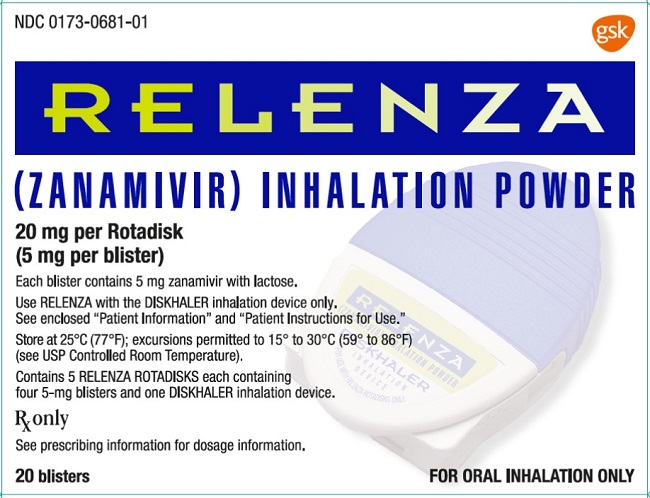
PRINCIPAL DISPLAY PANEL NDC 0173-0681-01 RELENZA (ZANAMIVIR) INHALATION POWDER 20 mg per Rotadisk (5 mg per blister) Each blister contains 5 mg zanamivir with lactose. Use RELENZA with DISKHALER inhalation device only. See enclosed “Patient Information” and “Patient Instructions for Use.” Store at 25 o C (77 o F); excursions permitted to 15 o to 30 o C (59 o to 86 o F) (see USP Controlled Room Temperature).
Do not accept if glued carton seals are broken. Contains 5 RELENZA ROTADISKS each containing four 5-mg blisters and one DISKHALER inhalation device. R x only See prescribing information for dosage information.
20 blisters FOR ORAL INHALATION ONLY GSK Made in UK ©2024 the GSK group of companies Rev. 1/24 62000000091644 Relenza carton
Medicare Part D spend CMS · PART D · 2026 (Q1)
About this NDC listing & data coverage
What data is (and isn’t) available for this NDC — tap to expand
| NDC identity (package / product / labeler codes) | ✓ Available |
| Labeler | ✓ Available |
| Product & package description | ✓ Available |
| Marketing category & status | ✓ Available |
| Active ingredient / dosage form / route | ✓ Available |
| FDA label (SPL via DailyMed) | ✓ Available |
| Package photos | ✓ Available |
| Inactive ingredients (structured) | ✓ Available |
| NADAC pharmacy acquisition price (CMS) | — Not published for this NDC CMS publishes NADAC only for NDCs reported in its retail-pharmacy survey. |
| Orange Book / therapeutic-equivalence data | — Not published for this NDC Applies only to products approved under an NDA/ANDA; many listings are out of scope. |
| HCPCS J-code billing crosswalk | — Not published for this NDC Most self-administered / retail products have no J-code — that is normal. |
| Medicaid utilization (CMS SDUD) | — Not published for this NDC CMS reports utilization only for NDCs with Medicaid claims above its privacy threshold. |