
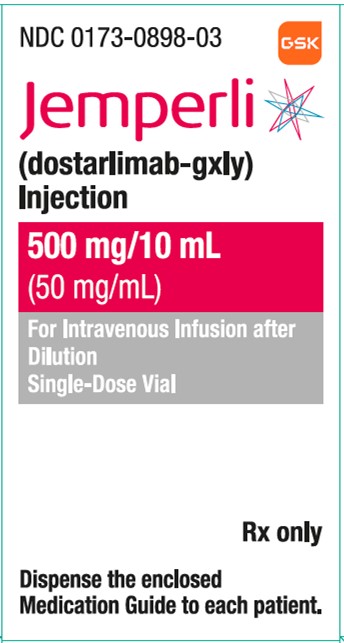
Jemperli dostarlimab 50 mg/mL Injection — NDC 0173-0898-03 (Billing 00173-0898-03)
This is a package of Jemperli dostarlimab 50 mg/mL Injection from GlaxoSmithKline LLC, marketed since Apr 2021 and currently FDA-listed. It is this product's only package size.
NDC database record
One package, one record: these facts belong to NDC 0173-0898-03 alone.
- Record
- FDA NDC Directory package listing · Human prescription drug
- Code segments
- 0173 labeler · 0898 product · 03 package
- Package marketed since
- Apr 22, 2021
- Sample package
- No — commercial package
- Listing certified through
- Dec 31, 2027
- Barcode (UPC-A, from the NDC)
- 3 0173089803 6
- Medicaid fills, this package
- 1,461 prescriptions in the last four reported quarters
- FDA record last changed
- Jul 24, 2026
Identity & classification
Regulatory identifiers FDA, NLM and CMS codes for this package
Drug-database identifiers Medi-Span GPI and First Databank GCN / HICL / AHFS classification
- GSN (GCN sequence number): 082209
- GCN: 49556
- GPI-14 (Medi-Span): 21357928302020
- HICL (First Databank): 047318
- AHFS class code: 10:00.00.00
- RxCUI (RxNorm): 2539972
Where does this data come from?
- FDA openFDA NDC Directory · synced Oct 8, 2026
- FDA label on DailyMed · label index refreshed Oct 6, 2026
- RxNorm (NLM RxNav) · catalog refreshed Oct 1, 2026
- Medi-Span GPI (licensed)
- First Databank (licensed) · refreshed Oct 8, 2026
RxNorm drug class
This medicine belongs to the Programmed Death Receptor-1 Blocking Antibody class.
Where does this data come from?
- RxClass (NLM) · catalog refreshed Oct 1, 2026
Clinical
Patient education
Supplement & herbal interactions
Where does this data come from?
- MedlinePlus (NLM) · refreshed Oct 1, 2026
- FDA label on DailyMed · label index refreshed Oct 6, 2026
Ask a licensed pharmacist directly — free, answered by our team.
Pricing
A drug doesn't have one price. Each row is a different public payment system, and none is what you'd pay at the counter — that depends on your insurance. The ⓘ on each row explains what it measures.
| Price system | Per each | Per package |
|---|---|---|
| Retail pharmacies payNADAC · weekly | Not in the retail survey — common for institutional, discontinued, or low-volume packs. | |
| Medicaid paysCMS SDUD · 12 mo | $1,030.92 | $1,030.92 / 1 vial |
| Medicare drug plans payPart D · quarterly | No Part D plan price is available for this NDC in our data. | |
| Medicare Part B allowsASP · J9272 | $251.298 / J9272 unit | — |
Where does this data come from?
- CMS NADAC weekly file
- CMS ASP pricing files · refreshed Sep 20, 2026
- CMS Medicaid State Drug Utilization Data · through Q1 2026
- CMS Part D plan pricing files · refreshed Sep 24, 2026
- VA National Acquisition Center price file
Billing & reimbursement
Where does this data come from?
- CMS ASP NDC-HCPCS crosswalk · refreshed Sep 22, 2026
- DMEPDAC NDC-HCPCS crosswalk
- openFDA NSDE billing units · refreshed Oct 7, 2026
Packaging — all sizes for this product
| Package NDC | Description | Marketing start | Marketing end | Status |
|---|---|---|---|---|
| 00173-0898-03 You're viewing this Main listing | 1 VIAL in 1 CARTON / 10 mL in 1 VIAL | 2021-04-22 | — | Active |
Therapeutic equivalents
| Product | Labeler | Pack | NADAC/unit | TE | Status | Price vs. this |
|---|---|---|---|---|---|---|
| Jemperli 50 mg/mLthis 00173-0898-03 | GlaxoSmithKline | 1 vial | — | — | FDA listed | — |
Where does this data come from?
- FDA openFDA NDC Directory · synced Oct 8, 2026
- FDA Purple Book · refreshed Oct 5, 2026
- CMS NADAC weekly file
Availability & biosimilar status
Biologics have no small-molecule generics; biosimilar competition is tracked in the FDA Purple Book.
Why the date isn’t exact: Biosimilar timing can change because patents may be challenged, settled, licensed, added or removed, and litigation can move the real date earlier or later.
🛈 What do these terms mean?
- Biologic patent
- A patent the reference product’s maker has publicly listed. A biosimilar generally can’t launch until these expire — unless they’re invalidated or resolved in a settlement.
- Reference-product exclusivity
- A flat 12 years of FDA market protection from the biologic’s first licensure (the BPCIA). No biosimilar can be licensed before it ends, regardless of patents.
- Interchangeable exclusivity
- The first interchangeable biosimilar can earn a period as the only interchangeable version (pharmacists can substitute it without the prescriber).
- Earliest biosimilar (LOE)
- The latest of all the dates above — the soonest a biosimilar can realistically reach the market. Litigation and settlements can move it earlier.
Biologics have no small-molecule “generics” — competition comes from FDA-licensed biosimilars, tracked in the FDA Purple Book.
| Code | What it grants | Expires |
|---|---|---|
| RefProduct | Reference-product exclusivity (12-year, BPCIA) — no biosimilar can be licensed before this date | Apr 22, 2033 |
Is there a biosimilar for JEMPERLI 500 MG/10 ML VIAL?
Why do different websites show different biosimilar dates?
Can a biosimilar launch before the last patent expires?
What does “current Purple Book estimate” mean?
What does “FDA listed” mean?
What does a patent or protection date mean here?
Where does this data come from?
- FDA Purple Book · refreshed Oct 5, 2026
Inactive Ingredients / Excipients
Inactive ingredients, also called excipients, are components of the drug product other than the active ingredient. They may include fillers, dyes, coatings, preservatives, flavors, or other formulation ingredients.
💡 Tap an ingredient (hover on desktop) to see what it is and why it’s used.
-
UNII F7LTH1E20Y
Arginine hydrochloride is an amino acid salt used as a buffer and pH adjuster in medicines. It helps maintain the correct acidity level to keep the drug stable and effective.
-
UNII 2968PHW8QP
A weak organic acid derived from citrus fruits or made through fermentation. It works as a buffer to control pH, a preservative to extend shelf life, and a flavoring agent in medications.
-
UNII 6OZP39ZG8H
Polysorbate 80 is a synthetic emulsifier derived from sorbitol and oleic acid. It helps mix oil and water-based ingredients together in medications and improves how the product disperses in the body.
-
UNII 451W47IQ8X
Sodium chloride is common table salt. It's used in medicines as a buffer to maintain proper pH, as a filler to add bulk, or to adjust the osmotic balance in liquid formulations.
-
UNII B22547B95K
A salt derived from citric acid that helps maintain the proper acid-base balance in the medicine. It's used as a buffer to keep the product stable and at the right pH level.
-
UNII 059QF0KO0R
Water is a liquid solvent that dissolves and mixes ingredients together in liquid medicines, syrups, and injections. It helps distribute the active drug evenly throughout the product.
6 inactive ingredients listed in the exact product block matched to this NDC.
Where does this data come from?
ingredient classCode="IACT" elements from the exact product block matched by this NDC. Label-section narrative from DailyMed / the openFDA label index is shown separately when available.- FDA label on DailyMed · label index refreshed Oct 6, 2026
- FDA openFDA NDC Directory · synced Oct 8, 2026
Inactive ingredient FAQ
Are inactive ingredients the same for every manufacturer?
Why might an inactive ingredient be missing?
Can inactive ingredients matter?
Manufacturer & labeler
More NDCs from GlaxoSmithKline LLC labeler code 00173
- Trelegy Ellipta fluticasone furoate, umeclidinium bromide and vilanterol trifenatate 100 ug; 62.5 ug; 25 ug Powder NDC 0173-0887-10
- Arnuity Ellipta fluticasone furoate 50 ug Powder NDC 0173-0888-10
- Krintafel tafenoquine succinate 150 mg Tablet, Film Coated NDC 0173-0889-13
- Nucala mepolizumab 100 mg/mL Injection, Solution NDC 0173-0892-01
- Trelegy Ellipta fluticasone furoate, umeclidinium bromide and vilanterol trifenatate 200 ug; 62.5 ug; 25 ug Powder NDC 0173-0893-10
- Jesduvroq daprodustat 1 mg Tablet, Film Coated NDC 0173-0897-13
- Jesduvroq daprodustat 2 mg Tablet, Film Coated NDC 0173-0903-13
- Nucala mepolizumab 40 mg/.4mL Injection, Solution NDC 0173-0904-42
- Jesduvroq daprodustat 4 mg Tablet, Film Coated NDC 0173-0906-13
- Zejula niraparib 100 mg Tablet, Film Coated NDC 0173-0909-13
- Jesduvroq daprodustat 6 mg Tablet, Film Coated NDC 0173-0911-13
- Zejula niraparib 200 mg Tablet, Film Coated NDC 0173-0912-13
Where does this data come from?
- FDA openFDA NDC Directory · synced Oct 8, 2026
- Drugs@FDA
Full prescribing information FDA SPL
🎯 Indications and Usage ▾
1 INDICATIONS AND USAGE JEMPERLI is a programmed death receptor-1 (PD-1)–blocking antibody indicated: Endometrial Cancer • in combination with carboplatin and paclitaxel, followed by JEMPERLI as a single agent, for the treatment of adult patients with primary advanced or recurrent endometrial cancer (EC). ( 1.1 ) • as a single agent for the treatment of adult patients with mismatch repair deficient (dMMR) recurrent or advanced EC, as determined by an FDA-approved test, that has progressed on or following prior treatment with a platinum-containing regimen in any setting and are not candidates for curative surgery or radiation.
( 1.1 , 2.1 ) Mismatch Repair Deficient Recurrent or Advanced Solid Tumors • as a single agent for the treatment of adult patients with dMMR recurrent or advanced solid tumors, as determined by an FDA-approved test, that have progressed on or following prior treatment and who have no satisfactory alternative treatment options. 1 ( 1.2 , 2.1 ) 1 This indication is approved under accelerated approval based on tumor response rate and durability of response. Continued approval for this indication may be contingent upon verification and description of clinical benefit in a confirmatory trial(s).
( 1.2 )
1.1Endometrial Cancer JEMPERLI, in combination with carboplatin and paclitaxel, followed by JEMPERLI as a single agent, is indicated for the treatment of adult patients with primary advanced or recurrent endometrial cancer (EC). JEMPERLI, as a single agent, is indicated for the treatment of adult patients with mismatch repair deficient (dMMR) recurrent or advanced EC, as determined by an FDA-approved test, that has progressed on or following prior treatment with a platinum-containing regimen in any setting and are not candidates for curative surgery or radiation [see Dosage and Administration ( 2.1 )].
1.2Mismatch Repair Deficient Recurrent or Advanced Solid Tumors JEMPERLI, as a single agent, is indicated for the treatment of adult patients with dMMR recurrent or advanced solid tumors, as determined by an FDA-approved test, that have progressed on or following prior treatment and who have no satisfactory alternative treatment options [see Dosage and Administration ( 2.1 )]. This indication is approved under accelerated approval based on tumor response rate and durability of response [see Clinical Studies ( 14.2 )].
Continued approval for this indication may be contingent upon verification and description of clinical benefit in a confirmatory trial(s).
⏱️ Dosage and Administration ▾
2 DOSAGE AND ADMINISTRATION • JEMPERLI, in combination with carboplatin and paclitaxel, for primary advanced or recurrent EC: 500 mg every 3 weeks for 6 cycles followed by 1,000 mg monotherapy every 6 weeks for all cycles thereafter. ( 2.2 ) • JEMPERLI, as a single agent, for dMMR recurrent or advanced EC: 500 mg every 3 weeks for 4 cycles followed by 1,000 mg every 6 weeks for all cycles thereafter. ( 2.2 ) • JEMPERLI, as a single agent, for dMMR recurrent or advanced solid tumors: 500 mg every 3 weeks for 4 cycles followed by 1,000 mg every 6 weeks for all cycles thereafter.
( 2.2 ) • Administer as an intravenous infusion over 30 minutes. ( 2.2 ) • For complete dosing instructions, see full prescribing information.
2.1Patient Selection Single Agent Select patients for treatment with JEMPERLI as a single agent based on the presence of dMMR in tumor specimens in: • recurrent or advanced EC [see Clinical Studies ( 14.1 )] . • recurrent or advanced solid tumors [see Clinical Studies ( 14.2 )] . Information on FDA-approved tests for the detection of dMMR status is available at https://www.fda.gov/companiondiagnostics . Because the effect of prior chemotherapy on test results for dMMR in patients with high-grade gliomas is unclear, it is recommended to test for this marker in the primary tumor specimen obtained prior to initiation of temozolomide chemotherapy in patients with high-grade gliomas.
2.2Recommended Dosage The recommended dosage for JEMPERLI is presented in Table 1 . Table 1. Recommended Dosage of JEMPERLI dMMR = Mismatch Repair Deficient; EC = endometrial cancer. a 30-minute intravenous infusion. b Refer to the Prescribing Information for the agents administered in combination with JEMPERLI, as appropriate.
Indication Recommended Dosage Duration/Timing of Treatment Combination Therapy Adults with primary advanced or recurrent EC 500 mg a JEMPERLI every 3 weeks for 6 cycles in combination with carboplatin and paclitaxel b followed by 1,000 mg JEMPERLI as monotherapy every 6 weeks for all cycles thereafter. Administer JEMPERLI prior to carboplatin and paclitaxel when given on the same day. Until disease progression, unacceptable toxicity, or up to 3 years.
Monotherapy Adults with dMMR recurrent or advanced EC and dMMR recurrent or advanced solid tumors 500 mg a JEMPERLI every 3 weeks for 4 cycles followed by 1,000 mg a JEMPERLI every 6 weeks for all cycles thereafter. Until disease progression or unacceptable toxicity.
2.3Dosage Modifications for Adverse Reactions No dose reductions of JEMPERLI are recommended. In general, withhold JEMPERLI for severe (Grade 3) immune‑mediated adverse reactions. Permanently discontinue JEMPERLI for life‑threatening (Grade 4) immune‑mediated adverse reactions, recurrent severe (Grade 3) immune-mediated reactions that require systemic immunosuppressive treatment, or an inability to reduce corticosteroid dose to 10 mg or less of prednisone equivalent per day within 12 weeks of initiating steroids.
Dosage modifications for JEMPERLI for adverse reactions that require management different from these general guidelines are summarized in Table 2 . Table 2. Recommended Dosage Modifications for Adverse Reactions ALT = alanine aminotransferase; AST = aspartate aminotransferase; DRESS = drug rash with eosinophilia and systemic symptoms; SJS = Stevens-Johnson syndrome; TEN = toxic epidermal necrolysis; ULN = upper limit of normal. a Based on National Cancer Institute Common Terminology Criteria for Adverse Events, Version 5.0. b Resume in patients with complete or partial resolution (Grade 0 to 1) after corticosteroid taper.
Permanently discontinue if no complete or partial resolution within 12 weeks of initiating steroids or inability to reduce prednisone to less than 10 mg/day (or equivalent) within 12 weeks of initiating steroids. c If AST and ALT are less than or equal to ULN at baseline in patients with liver involvement, withhold or permanently discontinue JEMPERLI based on recommendations f… [Excerpted — this section continues on DailyMed.]
💊 Dosage Forms and Strengths ▾
3 DOSAGE FORMS AND STRENGTHS Injection: 500 mg/10 mL (50 mg/mL) clear to slightly opalescent, colorless to yellow solution in a single-dose vial for intravenous infusion after dilution. Injection: 500 mg/10 mL (50 mg/mL) solution in a single-dose vial. ( 3 )
⛔ Contraindications ▾
4 CONTRAINDICATIONS None. None. ( 4 )
⚠️ Warnings and Cautions ▾
5 WARNINGS AND PRECAUTIONS • Immune-mediated adverse reactions, which may be severe or fatal, can occur in any organ system or tissue, including the following: immune‑mediated pneumonitis, immune-mediated colitis, immune‑mediated hepatitis, immune-mediated endocrinopathies, immune-mediated nephritis with renal dysfunction, immune‑mediated dermatologic adverse reactions, and solid organ transplant rejection. Monitor for signs and symptoms of immune‑mediated adverse reactions. Evaluate clinical chemistries, including liver enzymes, creatinine, and thyroid function, at baseline and periodically during treatment.
Withhold or permanently discontinue JEMPERLI and administer corticosteroids based on the severity of reaction. ( 2.3 , 5.1 ) • Infusion-related reactions: Interrupt, slow the rate of infusion, or permanently discontinue JEMPERLI based on severity of reaction. ( 2.3 , 5.2 ) • Complications of allogeneic hematopoietic stem cell transplantation (HSCT): Fatal and other serious complications can occur in patients who receive allogeneic HSCT before or after being treated with a PD‑1/PD-L1–blocking antibody.
( 5.3 ) • Embryo-fetal toxicity: Can cause fetal harm. Advise females of reproductive potential of the potential risk to a fetus and to use effective contraception. ( 5.4 , 8.1 , 8.3 )
5.1Severe and Fatal Immune-Mediated Adverse Reactions JEMPERLI is a monoclonal antibody that belongs to a class of drugs that bind to either the programmed death receptor-1 (PD-1) or PD-ligand 1 (PD-L1), blocking the PD-1/PD-L1 pathway, thereby removing inhibition of the immune response, potentially breaking peripheral tolerance, and inducing immune-mediated adverse reactions. Important immune-mediated adverse reactions listed in WARNINGS AND PRECAUTIONS may not include all possible severe and fatal immune‑mediated reactions.
Immune-mediated adverse reactions, which can be severe or fatal, can occur in any organ system or tissue. Immune‑mediated adverse reactions can occur at any time after starting a PD-1/PD-L1–blocking antibody. While immune-mediated adverse reactions usually manifest during treatment with PD-1/PD-L1–blocking antibodies, they can also manifest after discontinuation of PD-1/PD-L1–blocking antibodies.
Early identification and management of immune-mediated adverse reactions are essential to ensure safe use of PD‑1/PD‑L1–blocking antibodies. Monitor closely for symptoms and signs that may be clinical manifestations of underlying immune-mediated adverse reactions. Evaluate liver enzymes, creatinine, and thyroid function tests at baseline and periodically during treatment.
In cases of suspected immune-mediated adverse reactions, initiate appropriate workup to exclude alternative etiologies, including infection. Institute medical management promptly, including specialty consultation as appropriate. Withhold or permanently discontinue JEMPERLI depending on severity [see Dosage and Administration ( 2.3 )] .
In general, if JEMPERLI requires interruption or discontinuation, administer systemic corticosteroids (1 to 2 mg/kg/day prednisone or equivalent) until improvement to Grade 1 or less. Upon improvement to Grade 1 or less, initiate corticosteroid taper and continue to taper over at least 1 month. Consider administration of other systemic immunosuppressants in patients whose immune-mediated adverse reaction is not controlled with corticosteroids.
Toxicity management guidelines for adverse reactions that do not necessarily require systemic steroids (e.g., endocrinopathies, dermatologic reactions) are discussed below. Immune-Mediated Pneumonitis JEMPERLI can cause immune-mediated pneumonitis, which can be fatal. In patients treated with other PD-1/PD-L1–blocking antibodies, the incidence of pneumonitis is higher in patients who have received prior thoracic radiation.
Immune-mediated pneumonitis occurred in 2.3% (14/605) of patients receiving JEMPERLI, including Grade 2 (1.3%), Grade 3 (0.8%) and Grade 4 (0.2%) pneumonitis. Pneumonitis… [Excerpted — this section continues on DailyMed.]
🤒 Adverse Reactions ▾
6 ADVERSE REACTIONS The following clinically significant adverse reactions are described elsewhere in the labeling: • Severe and fatal immune-mediated adverse reactions [see Warnings and Precautions ( 5.1 )] • Infusion-related reactions [see Warnings and Precautions ( 5.2 )] • Most common adverse reactions (≥20%), including laboratory abnormalities, with JEMPERLI in combination with carboplatin and paclitaxel in patients with EC are decreased hemoglobin, increased creatinine, peripheral neuropathy, decreased white blood cell count, fatigue, nausea, alopecia, decreased platelets, increased glucose, decreased lymphocytes, decreased magnesium, decreased neutrophils, increased aspartate aminotransferase (AST), arthralgia, rash, constipation, diarrhea, increased alanine aminotransferase (ALT), decreased potassium, decreased albumin, decreased sodium, increased alkaline phosphatase, abdominal pain, dyspnea, decreased appetite, increased amylase, decreased phosphate, urinary tract infection, and vomiting.
( 6.1 ) • Most common adverse reactions (≥20%) with JEMPERLI as a single agent in patients with dMMR solid tumors are fatigue/asthenia, anemia, diarrhea, and nausea. Most common Grade 3 or 4 laboratory abnormalities (≥2%) are decreased lymphocytes, decreased sodium, increased alkaline phosphatase, and decreased albumin. ( 6.1 ) To report SUSPECTED ADVERSE REACTIONS, contact GlaxoSmithKline at 1-888-825-5249 or FDA at 1-800-FDA-1088 or www.fda.gov/medwatch .
6.1Clinical Trials Experience Because clinical trials are conducted under widely varying conditions, adverse reaction rates observed in the clinical trials of a drug cannot be directly compared with rates in the clinical trials of another drug and may not reflect the rates observed in practice. The safety population described in the Warnings and Precautions for use of JEMPERLI in combination with carboplatin and paclitaxel was evaluated in 241 patients with primary advanced or recurrent EC in the randomized, double-blind, active-controlled RUBY trial.
Additionally, the pooled safety population described in Warnings and Precautions reflects exposure to JEMPERLI as a single agent in 605 patients with advanced or recurrent solid tumors in the non-randomized, open-label, multicohort GARNET trial that enrolled 314 patients with EC and 291 patients with other solid tumors. JEMPERLI was administered intravenously at doses of 500 mg every 3 weeks for 4 cycles followed by 1,000 mg every 6 weeks until disease progression or unacceptable toxicity. Among the 605 patients, 32% were exposed for >1 year and 19% were exposed for >2 years.
Primary Advanced or Recurrent Endometrial Cancer: JEMPERLI in Combination with Carboplatin and Paclitaxel The safety of JEMPERLI in patients with primary advanced or recurrent EC was evaluated in RUBY [see Clinical Studies (14.1)] . Patients received JEMPERLI 500 mg (n = 241) or placebo (n = 246) in combination with carboplatin and paclitaxel every 3 weeks for 6 cycles followed by JEMPERLI 1,000 mg or placebo every 6 weeks until disease progression or unacceptable toxicity. Among the 241 patients, 38.6% were exposed for >1 year and 24.1% were exposed for >2 years.
Serious adverse reactions occurred in 39% of patients receiving JEMPERLI in combination with carboplatin and paclitaxel; the most common serious adverse reactions were sepsis, including urosepsis (3.7%), and pulmonary embolism (3.3%). Fatal adverse reactions occurred in 1.2% of patients receiving JEMPERLI including septic shock (0.8%) and myelosuppression (0.4%). In patients receiving JEMPERLI in combination with carboplatin and paclitaxel, JEMPERLI was permanently discontinued due to adverse reactions in 46 patients (19%).
Adverse reactions that required permanent discontinuation in ≥2 patients included 3 cases (1.2%) of rash maculo-papular, and 2 cases (0.8%) each of increased alanine aminotransferase (ALT), increased aspartate aminotransferase (AST), diarrhea, pancreatitis, fatigue, pneumonitis, a… [Excerpted — this section continues on DailyMed.]
👥 Use in Specific Populations ▾
8 USE IN SPECIFIC POPULATIONS Lactation: Advise not to breastfeed. ( 8.2 )
8.1Pregnancy Risk Summary Based on its mechanism of action, JEMPERLI can cause fetal harm when administered to a pregnant woman [see Clinical Pharmacology ( 12.1 )] . There are no available data on the use of JEMPERLI in pregnant women. Animal studies have demonstrated that inhibition of the PD-1/PD-L1 pathway can lead to increased risk of immune-mediated rejection of the developing fetus resulting in fetal death (see ) .
Human IgG4 immunoglobulins (IgG4) are known to cross the placental barrier; therefore, dostarlimab-gxly has the potential to be transmitted from the mother to the developing fetus. Advise women of the potential risk to a fetus. In the U.S. general population, the estimated background risk of major birth defects and miscarriage in clinically recognized pregnancies is 2% to 4% and 15% to 20%, respectively.
Data Animal Data: Animal reproduction studies have not been conducted with JEMPERLI to evaluate its effect on reproduction and fetal development. A central function of the PD-1/PD-L1 pathway is to preserve pregnancy by maintaining maternal immune tolerance to the fetus. In murine models of pregnancy, blockade of PD-L1 signaling has been shown to disrupt tolerance to the fetus and to result in an increase in fetal loss; therefore, potential risks of administering JEMPERLI during pregnancy include increased rates of abortion or stillbirth.
As reported in the literature, there were no malformations related to the blockade of PD-1/PD-L1 signaling in the offspring of these animals; however, immune-mediated disorders occurred in PD-1 and PD-L1 knockout mice. Based on its mechanism of action, fetal exposure to dostarlimab-gxly may increase the risk of developing immune-mediated disorders or altering the normal immune response.
8.2Lactation Risk Summary There is no information regarding the presence of dostarlimab-gxly in human milk or its effects on the breastfed child or on milk production. Maternal IgG is known to be present in human milk. The effects of local gastrointestinal exposure and limited systemic exposure in the breastfed child to JEMPERLI are unknown.
Because of the potential for serious adverse reactions in a breastfed child, advise women not to breastfeed during treatment and for 4 months after the last dose of JEMPERLI.
8.3Females and Males of Reproductive Potential JEMPERLI can cause fetal harm when administered to a pregnant woman [see Use in Specific Populations ( 8.1 )] . Pregnancy Testing Verify pregnancy status in females of reproductive potential prior to initiating JEMPERLI [see Use in Specific Populations ( 8.1 )] . Contraception Females: Advise females of reproductive potential to use effective contraception during treatment with JEMPERLI and for 4 months after the last dose.
8.4Pediatric Use The safety and efficacy of JEMPERLI have not been established in pediatric patients.
8.5Geriatric Use In Combination with Carboplatin and Paclitaxel Of the 241 patients treated with JEMPERLI in RUBY, 52.3% were younger than 65 years, 36.5% were aged 65 through 74 years, and 11.2% were 75 years or older. No overall differences in safety or effectiveness were observed between these patients and younger patients. As a Single Agent Of the 605 patients treated with JEMPERLI in GARNET, 51.6% were younger than 65 years, 36.9% were aged 65 through 74 years, and 11.5% were 75 years or older.
No overall differences in safety or effectiveness were observed between these patients and younger patients.
🤰 Pregnancy ▾
8.1Pregnancy Risk Summary Based on its mechanism of action, JEMPERLI can cause fetal harm when administered to a pregnant woman [see Clinical Pharmacology ( 12.1 )] . There are no available data on the use of JEMPERLI in pregnant women. Animal studies have demonstrated that inhibition of the PD-1/PD-L1 pathway can lead to increased risk of immune-mediated rejection of the developing fetus resulting in fetal death (see ) .
Human IgG4 immunoglobulins (IgG4) are known to cross the placental barrier; therefore, dostarlimab-gxly has the potential to be transmitted from the mother to the developing fetus. Advise women of the potential risk to a fetus. In the U.S. general population, the estimated background risk of major birth defects and miscarriage in clinically recognized pregnancies is 2% to 4% and 15% to 20%, respectively.
Data Animal Data: Animal reproduction studies have not been conducted with JEMPERLI to evaluate its effect on reproduction and fetal development. A central function of the PD-1/PD-L1 pathway is to preserve pregnancy by maintaining maternal immune tolerance to the fetus. In murine models of pregnancy, blockade of PD-L1 signaling has been shown to disrupt tolerance to the fetus and to result in an increase in fetal loss; therefore, potential risks of administering JEMPERLI during pregnancy include increased rates of abortion or stillbirth.
As reported in the literature, there were no malformations related to the blockade of PD-1/PD-L1 signaling in the offspring of these animals; however, immune-mediated disorders occurred in PD-1 and PD-L1 knockout mice. Based on its mechanism of action, fetal exposure to dostarlimab-gxly may increase the risk of developing immune-mediated disorders or altering the normal immune response.
🧒 Pediatric Use ▾
8.4Pediatric Use The safety and efficacy of JEMPERLI have not been established in pediatric patients.
🧓 Geriatric Use ▾
8.5Geriatric Use In Combination with Carboplatin and Paclitaxel Of the 241 patients treated with JEMPERLI in RUBY, 52.3% were younger than 65 years, 36.5% were aged 65 through 74 years, and 11.2% were 75 years or older. No overall differences in safety or effectiveness were observed between these patients and younger patients. As a Single Agent Of the 605 patients treated with JEMPERLI in GARNET, 51.6% were younger than 65 years, 36.9% were aged 65 through 74 years, and 11.5% were 75 years or older.
No overall differences in safety or effectiveness were observed between these patients and younger patients.
🧬 Clinical Pharmacology ▾
12 CLINICAL PHARMACOLOGY
12.1Mechanism of Action Binding of the PD-1 ligands, PD-L1 and PD-L2, to the PD-1 receptor found on T cells inhibits T-cell proliferation and cytokine production. Upregulation of PD-1 ligands occurs in some tumors, and signaling through this pathway can contribute to inhibition of active T-cell immune surveillance of tumors. Dostarlimab-gxly is a humanized monoclonal antibody of the IgG4 isotype that binds to the PD-1 receptor and blocks its interaction with PD-L1 and PD-L2, releasing PD-1 pathway-mediated inhibition of the immune response, including the anti-tumor immune response.
In syngeneic mouse tumor models, blocking PD-1 activity resulted in decreased tumor growth.
12.2Pharmacodynamics The exposure-response relationship and time course of pharmacodynamic response for safety and effectiveness of dostarlimab-gxly have not been fully characterized. Dostarlimab-gxly provides sustained target engagement as measured by direct PD-1 binding and stimulation of IL-2 production throughout the dosing interval at the recommended dosage.
12.3Pharmacokinetics The pharmacokinetics of dostarlimab-gxly as a single agent and in combination with carboplatin and paclitaxel were evaluated in patients with various solid tumors, including patients with EC. Mean C max , AUC 0-inf , and AUC 0-tau increased proportionally over the dose range of 1 to 10 mg/kg. The Cycle 1 mean (coefficient of variation [%CV]) C max and AUC 0-tau of dostarlimab-gxly as a single agent were 171 mcg/mL (20%) and 35,730 mcg*h/mL (20%), respectively at the dosage of 500 mg once every 3 weeks and 309 mcg/mL (31%) and 95,820 mcg*h/mL (29%), respectively at the dosage of 1,000 mg every 6 weeks.
Distribution The mean (%CV) volume of distribution of dostarlimab-gxly at steady state is approximately
5.8L (15%). Elimination The mean terminal elimination half-life of dostarlimab-gxly at steady state is 23.5 days and its mean (%CV) clearance at steady state is 0.007 L/h (30%). Metabolism: Dostarlimab-gxly is expected to be metabolized into small peptides and amino acids by catabolic pathways.
Specific Populations No clinically significant differences in the pharmacokinetics of dostarlimab-gxly were observed based on age (24 to 86 years), sex, race/ethnicity (75% White, 2% Asian, and 5% African American), tumor type, and renal impairment based on the estimated creatinine clearance (eGFR ≥15 mL/min/1.73 m 2 ), and mild to moderate hepatic impairment [total bilirubin (TB) >ULN to 3 times ULN or AST>ULN to any AST]. Drug Interaction Studies Dostarlimab exposure when administered in combination with carboplatin and paclitaxel was comparable to single agent exposure and there was no evidence to suggest a clinically relevant change of dostarlimab-gxly clearance over time in patients with recurrent or advanced EC.
12.6Immunogenicity The observed incidence of anti-drug antibodies is highly dependent on the sensitivity and specificity of the assay. Differences in assay methods preclude meaningful comparisons of the incidence of anti-drug antibodies in the studies described below with the incidence of anti-drug antibodies in other studies, including those of JEMPERLI or of other dostarlimab-gxly products. The immunogenicity of dostarlimab-gxly was evaluated in RUBY at a dosage of 500 mg every 3 weeks for 6 cycles followed by 1,000 mg every 6 weeks thereafter; there was no formation of anti-drug antibodies and neutralizing antibodies in 225 patients receiving JEMPERLI at the recommended dosage.
The immunogenicity of dostarlimab-gxly was evaluated in GARNET at a dose of 500 mg every 3 weeks for 4 cycles followed by 1,000 mg every 6 weeks thereafter. Anti‑drug antibodies against dostarlimab-gxly were detected in 2.1% (8/384) of patients who received JEMPERLI at the recommended dosage. Neutralizing antibodies were detected in 1% (4/384) of patients.
Because of the small number of patients who developed anti-drug antibodies, the effect of immunogenicity on the phar… [Excerpted — this section continues on DailyMed.]
🧬 Mechanism of Action ▾
12.1Mechanism of Action Binding of the PD-1 ligands, PD-L1 and PD-L2, to the PD-1 receptor found on T cells inhibits T-cell proliferation and cytokine production. Upregulation of PD-1 ligands occurs in some tumors, and signaling through this pathway can contribute to inhibition of active T-cell immune surveillance of tumors. Dostarlimab-gxly is a humanized monoclonal antibody of the IgG4 isotype that binds to the PD-1 receptor and blocks its interaction with PD-L1 and PD-L2, releasing PD-1 pathway-mediated inhibition of the immune response, including the anti-tumor immune response.
In syngeneic mouse tumor models, blocking PD-1 activity resulted in decreased tumor growth.
📦 How Supplied / Storage and Handling ▾
16 HOW SUPPLIED/STORAGE AND HANDLING JEMPERLI (dostarlimab-gxly) injection is a clear to slightly opalescent, colorless to yellow solution supplied in a carton containing one 500 mg/10 mL (50 mg/mL), single-dose vial (NDC 0173-0898-03). Store vial refrigerated at 2°C to 8°C (36°F to 46°F) in original carton to protect from light. Do not freeze or shake.
📋 Description ▾
11 DESCRIPTION Dostarlimab-gxly is a programmed death receptor-1 (PD-1)–blocking IgG 4 humanized monoclonal antibody. Dostarlimab‑gxly is produced in Chinese hamster ovary cells and has a calculated molecular weight of about 144 kDa. JEMPERLI (dostarlimab-gxly) injection is a sterile, clear to slightly opalescent, colorless to yellow solution essentially free from visible particles.
It is supplied as single-dose vials. Each vial contains 500 mg of JEMPERLI in 10 mL of solution with a pH of 6. Each mL of solution contains 50 mg of dostarlimab-gxly, citric acid monohydrate (0.48 mg), L-arginine hydrochloride (21.07 mg), polysorbate 80 (0.2 mg), sodium chloride (1.81 mg), trisodium citrate dihydrate (6.68 mg), and Water for Injection, USP.
💬 Information for Patients ▾
17 PATIENT COUNSELING INFORMATION Advise the patient to read the FDA-approved patient labeling (Medication Guide). Immune-Mediated Adverse Reactions Inform patients of the risk of immune-mediated adverse reactions that may be severe or fatal, may occur after discontinuation of treatment, and may require corticosteroid or other treatment and interruption or discontinuation of JEMPERLI. These reactions may include: • Pneumonitis: Advise patients to contact their healthcare provider immediately for new or worsening cough, chest pain, or shortness of breath [see Warnings and Precautions ( 5.1 )] . • Colitis: Advise patients to contact their healthcare provider immediately for diarrhea or severe abdominal pain [see Warnings and Precautions ( 5.1 )] . • Hepatitis: Advise patients to contact their healthcare provider immediately for jaundice, severe nausea or vomiting, or easy bruising or bleeding [see Warnings and Precautions ( 5.1 )] . • Immune-mediated endocrinopathies: Advise patients to contact their healthcare provider immediately for signs or symptoms of hypothyroidism, hyperthyroidism, thyroiditis, adrenal insufficiency, hypophysitis, or type 1 diabetes mellitus [see Warnings and Precautions ( 5.1 )] . • Nephritis: Advise patients to contact their healthcare provider immediately for signs or symptoms of nephritis [see Warnings and Precautions ( 5.1 )] . • Severe skin reactions: Advise patients to contact their healthcare provider immediately for any signs or symptoms of severe skin reactions, SJS, TEN, or DRESS [see Warnings and Precautions ( 5.1 )] . • Other immune-mediated adverse reactions: o Advise patients that immune-mediated adverse reactions can occur and may involve any organ system, and to contact their healthcare provider immediately for any new signs or symptoms [see Warnings and Precautions ( 5.1 )] . o Advise patients of the risk of solid organ transplant rejection and to contact their healthcare provider immediately for signs or symptoms of organ transplant rejection [see Warnings and Precautions ( 5.1 )] .
Infusion-Related Reactions • Advise patients to contact their healthcare provider immediately for signs or symptoms of infusion-related reactions [see Warnings and Precautions ( 5.2 )]. Complications of Allogeneic HSCT • Advise patients of the risk of post-allogeneic hematopoietic stem cell transplantation complications [see Warnings and Precautions ( 5.3 )] . Embryo-Fetal Toxicity • Advise females of reproductive potential of the potential risk to a fetus and to inform their healthcare provider of a known or suspected pregnancy [see Warnings and Precautions ( 5.4 ), Use in Specific Populations ( 8.1 , 8.3 )] . • Advise females of reproductive potential to use effective contraception during treatment with JEMPERLI and for 4 months after the last dose [see Warnings and Precautions ( 5.4 ), Use in Specific Populations ( 8.1 , 8.3 )] .
Lactation • Advise women not to breastfeed during treatment with JEMPERLI and for 4 months after the last dose [see Use in Specific Populations ( 8.2 )] . Trademarks are owned by or licensed to the GSK group of companies. Manufactured by: GlaxoSmithKline LLC Philadelphia, PA 19104 U.S.
License No. 1727 Distributed by: GlaxoSmithKline Durham, NC 27701 ©2025 GSK group of companies or its licensor. JMP:8PI
💬 Medication Guide ▾
MEDICATION GUIDE JEMPERLI (jem-PER-lee) (dostarlimab-gxly) injection What is the most important information I should know about JEMPERLI? JEMPERLI is a medicine that may treat certain cancers by working with your immune system. JEMPERLI can cause your immune system to attack normal organs and tissues in any area of your body and can affect the way they work.
These problems can sometimes become severe or life-threatening and can lead to death. You can have more than one of these problems at the same time. These problems may happen anytime during treatment or even after your treatment has ended.
Call or see your healthcare provider right away if you develop any new or worsening signs or symptoms, including: Lung problems. • cough • shortness of breath • chest pain Intestinal problems. • diarrhea or more bowel movements than usual • stools that are black, tarry, sticky, or have blood or mucus • severe stomach-area (abdomen) pain or tenderness Liver problems. • yellowing of your skin or the whites of your eyes • severe nausea or vomiting • pain on the right side of your stomach-area (abdomen) • dark urine (tea colored) • bleeding or bruising more easily than usual Hormone gland problems. • headaches that will not go away or unusual headaches • eye sensitivity to light • eye problems • rapid heartbeat • increased sweating • extreme tiredness • weight gain or weight loss • feeling more hungry or thirsty than usual • urinating more often than usual • hair loss • feeling cold • constipation • your voice gets deeper • dizziness or fainting • changes in mood or behavior, such as decreased sex drive, irritability, or forgetfulness Kidney problems. • change in the amount or color of your urine • blood in your urine • swelling in your ankles • loss of appetite Skin problems. • rash • itching • skin blistering or peeling • swollen lymph nodes • painful sores or ulcers in your mouth or in your nose, throat, or genital area • fever or flu-like symptoms Problems can also happen in other organs and tissues.
These are not all of the signs and symptoms of immune system problems that can happen with JEMPERLI. Call or see your healthcare provider right away for any new or worse signs or symptoms. • chest pain, irregular heartbeat, shortness of breath, swelling of ankles • confusion, sleepiness, memory problems, changes in mood or behavior, stiff neck, balance problems, tingling or numbness of the arms or legs • double vision, blurry vision, sensitivity to light, eye pain, changes in eyesight • persistent or severe muscle pain or weakness, muscle cramps • low red blood cells, bruising Infusion reactions that can sometimes be severe or life-threatening.
Signs and symptoms of infusion reactions may include: • chills or shaking • itching or rash • flushing • shortness of breath or wheezing • dizziness • feel like passing out • fever • back or neck pain Rejection of a transplanted organ. Your healthcare provider should tell you what signs and symptoms you should report and monitor you, depending on the type of organ transplant that you have had. Complications, including graft-versus-host-disease (GVHD), in people who have received a bone marrow (stem cell) transplant that uses donor stem cells (allogeneic).
These complications can be serious and can lead to death. These complications may happen if you underwent transplantation either before or after being treated with JEMPERLI. Your healthcare provider will monitor you for these complications.
Getting medical treatment right away may help keep these problems from becoming more serious. Your healthcare provider will check you for these problems during treatment with JEMPERLI. Your healthcare provider may treat you with corticosteroid or hormone replacement medicines.
Your healthcare provider may also need to delay or completely stop treatment with JEMPERLI, if you have severe side effects. What is JEMPERLI? JEMPERLI is a prescription medicine used to treat adults with: • a kind of uterine cancer called e… [Excerpted — this section continues on DailyMed.]
🧬 Pharmacokinetics ▾
12.3Pharmacokinetics The pharmacokinetics of dostarlimab-gxly as a single agent and in combination with carboplatin and paclitaxel were evaluated in patients with various solid tumors, including patients with EC. Mean C max , AUC 0-inf , and AUC 0-tau increased proportionally over the dose range of 1 to 10 mg/kg. The Cycle 1 mean (coefficient of variation [%CV]) C max and AUC 0-tau of dostarlimab-gxly as a single agent were 171 mcg/mL (20%) and 35,730 mcg*h/mL (20%), respectively at the dosage of 500 mg once every 3 weeks and 309 mcg/mL (31%) and 95,820 mcg*h/mL (29%), respectively at the dosage of 1,000 mg every 6 weeks.
Distribution The mean (%CV) volume of distribution of dostarlimab-gxly at steady state is approximately
5.8L (15%). Elimination The mean terminal elimination half-life of dostarlimab-gxly at steady state is 23.5 days and its mean (%CV) clearance at steady state is 0.007 L/h (30%). Metabolism: Dostarlimab-gxly is expected to be metabolized into small peptides and amino acids by catabolic pathways.
Specific Populations No clinically significant differences in the pharmacokinetics of dostarlimab-gxly were observed based on age (24 to 86 years), sex, race/ethnicity (75% White, 2% Asian, and 5% African American), tumor type, and renal impairment based on the estimated creatinine clearance (eGFR ≥15 mL/min/1.73 m 2 ), and mild to moderate hepatic impairment [total bilirubin (TB) >ULN to 3 times ULN or AST>ULN to any AST]. Drug Interaction Studies Dostarlimab exposure when administered in combination with carboplatin and paclitaxel was comparable to single agent exposure and there was no evidence to suggest a clinically relevant change of dostarlimab-gxly clearance over time in patients with recurrent or advanced EC.
🧬 Pharmacodynamics ▾
12.2Pharmacodynamics The exposure-response relationship and time course of pharmacodynamic response for safety and effectiveness of dostarlimab-gxly have not been fully characterized. Dostarlimab-gxly provides sustained target engagement as measured by direct PD-1 binding and stimulation of IL-2 production throughout the dosing interval at the recommended dosage.
🔬 Clinical Studies ▾
14 CLINICAL STUDIES
14.1Endometrial Cancer In Combination with Carboplatin and Paclitaxel for the Treatment of Primary Advanced or Recurrent Endometrial Cancer The efficacy of JEMPERLI in combination with carboplatin and paclitaxel, followed by JEMPERLI as a single agent, was evaluated in RUBY (NCT03981796), a randomized, multicenter, double-blind, placebo-controlled trial conducted in 494 patients with primary advanced or recurrent EC. The trial enrolled patients with primary Stage III or Stage IV disease (per FIGO Staging Classification), including Stage IIIA to IIIC1 patients with evaluable or measurable disease, Stage IIIC1 patients with carcinosarcoma, clear cell, serous, or mixed histology regardless of presence of evaluable or measurable disease, Stage IIIC2 or Stage IV disease regardless of presence of evaluable or measurable disease.
The trial also enrolled patients with first recurrent disease with a low potential for cure by radiation therapy or surgery alone or in combination, including patients who were naïve to systemic anticancer therapy or who had received prior neo-adjuvant/adjuvant systemic anticancer therapy and had a recurrence or disease progression ≥6 months after completing treatment. Patients were randomized (1:1) to one of the following treatments arms: • JEMPERLI 500 mg, carboplatin AUC 5 mg/mL/min, paclitaxel 175 mg/m 2 intravenously on Day 1 of each 21-day cycle for 6 cycles followed by JEMPERLI 1,000 mg intravenously every 6 weeks.
JEMPERLI was administered prior to chemotherapy on Day 1. • Placebo, carboplatin AUC 5 mg/mL/min, paclitaxel 175 mg/m 2 intravenously on Day 1 of each 21-day cycle for 6 cycles followed by placebo intravenously every 6 weeks. Randomization was stratified by mismatch repair (MMR)/microsatellite instability (MSI) status, prior external pelvic radiotherapy, and disease status (recurrent, primary Stage III, or primary Stage IV). Treatment with JEMPERLI continued until disease progression, unacceptable toxicity, or a maximum of 3 years.
Administration of JEMPERLI was permitted beyond disease progression (defined by Response Evaluation Criteria in Solid Tumors [RECIST] v1.1) if the patient was clinically stable and considered to be deriving clinical benefit by the investigator. Assessment of tumor status was performed every 6 weeks through Week 25, every 9 weeks through Week 52 and every 12 weeks thereafter. The major efficacy outcomes were Progression-Free Survival (PFS) using RECIST v1.1 as assessed by investigator in the dMMR/MSI-H and overall populations, and Overall Survival (OS) in the overall population.
Additional efficacy outcome measures included Objective Response Rate (ORR) per RECIST v1.1 as assessed by investigator and Duration of Response (DOR). Among the 494 patients evaluated, the baseline characteristics were: median age 65 years (51% aged 65 years or older); 77% White, 12% Black, 3% Asian, 3% Hispanic or Latino; Eastern Cooperative Oncology Group (ECOG) Performance Status 0 (63%) or 1 (37%); and primary stage III (18%); primary stage IV (34%) and recurrent EC (48%). Overall, 24% were dMMR/MSI-H tumors and 76% were mismatch repair proficient (MMRp)/microsatellite stable (MSS) tumors.
Efficacy results are presented in Table 9 and Figures , and . Treatment with JEMPERLI in combination with carboplatin and paclitaxel demonstrated statistically significant improvements in OS in the overall population and PFS in both the dMMR/MSI-H and overall population versus placebo in combination with carboplatin and paclitaxel. Pre-specified exploratory analyses of PFS and OS were performed in patients with MMRp/MSS EC.
Table 9. Efficacy Results of Endometrial Cancer Population in RUBY dMMR = Mismatch Repair Deficient; MSI-H = Microsatellite Instability-High; NR = Not Reached; + = ongoing at last assessment. a Based on stratified Cox regression model. b One-sided P-value based on stratified log-rank test. c Confirmed responses. Endpoint Overall Population dMMR/MSI-H Populati… [Excerpted — this section continues on DailyMed.]
🧪 Nonclinical Toxicology ▾
13 NONCLINICAL TOXICOLOGY
13.1Carcinogenesis, Mutagenesis, Impairment of Fertility No studies have been performed to assess the potential of dostarlimab-gxly for carcinogenicity or genotoxicity. Fertility studies have not been conducted with dostarlimab-gxly. In 1- and 3-month repeat‑dose toxicology studies in monkeys, there were no notable effects in the male and female reproductive organs; however, many animals in these studies were not sexually mature.
13.2Animal Toxicology and/or Pharmacology In animal models, inhibition of PD-L1/PD-1 signaling increased the severity of some infections and enhanced inflammatory responses. Mycobacterium tuberculosis -infected PD-1 knockout mice exhibit markedly decreased survival compared with wild-type controls, which correlated with increased bacterial proliferation and inflammatory responses in these animals. PD-1 blockade using a primate anti-PD-1 antibody was also shown to exacerbate M. tuberculosis infection in rhesus macaques.
PD-L1 and PD-1 knockout mice and mice receiving PD-L1–blocking antibody have also shown decreased survival following infection with lymphocytic choriomeningitis virus.
📄 Carcinogenesis, Mutagenesis, Impairment of Fertility ▾
13.1Carcinogenesis, Mutagenesis, Impairment of Fertility No studies have been performed to assess the potential of dostarlimab-gxly for carcinogenicity or genotoxicity. Fertility studies have not been conducted with dostarlimab-gxly. In 1- and 3-month repeat‑dose toxicology studies in monkeys, there were no notable effects in the male and female reproductive organs; however, many animals in these studies were not sexually mature.
📄 Package Label / Principal Display Panel ▾
PRINCIPAL DISPLAY PANEL NDC 0173-0898-03 Jemperli (dostarlimab-gxly) Injection 500 mg/10 mL (50 mg/mL) gsk For Intravenous Infusion after Dilution Single-Dose Vial Rx only Dispense the enclosed Medication Guide to each patient ©2020 GSK group of companies or its licensor. Rev. 3/23 PCR-0022923 Jemperli 10 mL carton
Medicaid utilization & spend
Medicare Part D spend CMS · PART D · 2026 (Q1)
About this NDC listing & data coverage
What data is (and isn’t) available for this NDC — tap to expand
| NDC identity (package / product / labeler codes) | ✓ Available |
| Labeler | ✓ Available |
| Product & package description | ✓ Available |
| Marketing category & status | ✓ Available |
| Active ingredient / dosage form / route | ✓ Available |
| FDA label (SPL via DailyMed) | ✓ Available |
| Package photos | ✓ Available |
| Inactive ingredients (structured) | ✓ Available |
| NADAC pharmacy acquisition price (CMS) | — Not published for this NDC CMS publishes NADAC only for NDCs reported in its retail-pharmacy survey. |
| Orange Book / therapeutic-equivalence data | ✓ Available |
| HCPCS J-code billing crosswalk | ✓ Available |
| Medicaid utilization (CMS SDUD) | ✓ Available |