
Zelapar Selegiline Hydrochloride 1.25 mg Tablet, Orally Disintegrating — NDC 0187-0453-02 (Billing 00187-0453-02)
This is a package of Zelapar Selegiline Hydrochloride 1.25 mg Tablet, Orally Disintegrating from Bausch Health US, LLC, marketed since Jun 2006 and currently FDA-listed, this package's marketing is listed to end Jul 2028. It is this product's only package size.
NDC database record
One package, one record: these facts belong to NDC 0187-0453-02 alone.
- Record
- FDA NDC Directory package listing · Human prescription drug
- Code segments
- 0187 labeler · 0453 product · 02 package
- Package marketed since
- Jun 14, 2006
- Package marketing ended
- Jul 31, 2028
- Sample package
- No — commercial package
- Barcode (UPC-A, from the NDC)
- 3 0187045302 7
- FDA record last changed
- Jul 24, 2026
Identity & classification
Regulatory identifiers FDA, NLM and CMS codes for this package
Drug-database identifiers Medi-Span GPI and First Databank GCN / HICL / AHFS classification
- GSN (GCN sequence number): 054736
- GCN: 22783
- HICL (First Databank): 016483
- AHFS class code: 28:16.04.12
- RxCUI (RxNorm): 859190
Where does this data come from?
- FDA openFDA NDC Directory · synced Oct 8, 2026
- FDA label on DailyMed · label index refreshed Oct 8, 2026
- RxNorm (NLM RxNav) · catalog refreshed Oct 8, 2026
- Medi-Span GPI (licensed)
- First Databank (licensed) · refreshed Oct 8, 2026
RxNorm drug class
This medicine belongs to the Monoamine Oxidase Inhibitor class.
Where does this data come from?
- RxClass (NLM) · catalog refreshed Oct 8, 2026
Clinical
Selegiline is used to help control the symptoms of Parkinson's disease (PD; a disorder of the nervous system that causes difficulties with movement, muscle control, and balance) in people who are taking levodopa and carbidopa combination (Sinemet). Selegiline may help people with Parkinson's disease by decreasing the dose of levodopa/carbidopa needed to control symptoms, stopping the effects of levodopa/carbidopa from wearing off between doses, and increasing the length of time that levodopa/carbidopa will continue to control symptoms. Selegiline is in a group of medications called monoamine o...
Read the full MedlinePlus article ↗- It depends on the product. The tablets, capsules and Zelapar are add-ons for Parkinson’s disease in people on levodopa/carbidopa whose response has worsened. The Emsam patch treats...
- Take it in the morning before breakfast. With dry hands, peel back the foil, then place the tablet on your tongue, where it dissolves in seconds. Skip food and drink for 5 minutes...
- With the Emsam patch at the 9 or 12 mg per 24 hours doses, you must avoid tyramine-rich foods such as aged cheese, cured meats and tap beer. Keep this up for 2 weeks after lowering...
- Check with me first. Many antidepressants, some pain medicines, dextromethorphan and carbamazepine can be dangerous with selegiline. Decongestants like pseudoephedrine can raise yo...
Patient education
Supplement & herbal interactions
Selegiline may be associated with lower levels of 1 nutrient — worth a chat with your pharmacist, not a cause for alarm.
Where does this data come from?
- MedlinePlus (NLM) · refreshed Oct 8, 2026
- FDA label on DailyMed · label index refreshed Oct 8, 2026
Ask a licensed pharmacist directly — free, answered by our team.
Pricing
A drug doesn't have one price. Each row is a different public payment system, and none is what you'd pay at the counter — that depends on your insurance. The ⓘ on each row explains what it measures.
| Price system | Per each | Per package |
|---|---|---|
| Retail pharmacies payNADAC · weekly | Not in the retail survey — common for institutional, discontinued, or low-volume packs. | |
| Medicaid paysCMS SDUD · 12 mo | No recent Medicaid claims on file for this NDC — rare and low-volume NDCs are suppressed in the public data. | |
| Medicare drug plans payPart D · Q2 2026 | $111.68 | $6,701.00 / 60 tablets |
Where does this data come from?
- CMS NADAC weekly file
- CMS ASP pricing files · refreshed Sep 20, 2026
- CMS Medicaid State Drug Utilization Data · refreshed Oct 9, 2026
- CMS Part D plan pricing files · refreshed Sep 24, 2026
- VA National Acquisition Center price file
Packaging — all sizes for this product
| Package NDC | Description | Marketing start | Marketing end | Status |
|---|---|---|---|---|
| 00187-0453-02 You're viewing this Main listing | 6 POUCH in 1 CARTON / 10 TABLET, ORALLY DISINTEGRATING in 1 POUCH | 2006-06-14 | Jul 31, 2028 | Active |
Therapeutic equivalents
| Product | Labeler | Pack | NADAC/unit | TE | Status | Price vs. this |
|---|---|---|---|---|---|---|
| Zelapar 1.25 mgthis 00187-0453-02 | Bausch | 10 tablets | — | — | FDA listed | — |
Where does this data come from?
- FDA openFDA NDC Directory · synced Oct 8, 2026
- FDA Orange Book · refreshed Oct 3, 2026
- CMS NADAC weekly file
Availability & generic status
We did not find an FDA-approved generic match for this exact strength, form and route.
Where does this data come from?
- FDA Orange Book · refreshed Oct 3, 2026
What it looks like
Where does this data come from?
- FDA label on DailyMed · label index refreshed Oct 8, 2026
Inactive Ingredients / Excipients
Inactive ingredients, also called excipients, are components of the drug product other than the active ingredient. They may include fillers, dyes, coatings, preservatives, flavors, or other formulation ingredients.
🧪 Avoiding an ingredient? See Selegiline inactive ingredients by manufacturer: every current product's list side by side, so you can ask your pharmacy for the version that does not list it.
💡 Tap an ingredient (hover on desktop) to see what it is and why it’s used.
-
UNII Z0H242BBR1
Aspartame is an artificial sweetener made from amino acids. It's added to medicines to improve taste, making bitter or unpleasant-tasting drugs easier to take.
-
UNII 2968PHW8QP
A weak organic acid derived from citrus fruits or made through fermentation. It works as a buffer to control pH, a preservative to extend shelf life, and a flavoring agent in medications.
-
UNII EX438O2MRT
Ferric oxide yellow is a naturally occurring iron compound used as a colorant in medications. It gives tablets, capsules, and other forms a yellow or golden hue for identification and appearance.
-
UNII 2G86QN327L
Gelatin is a protein derived from animal collagen, commonly used in medicines as a gelling agent and capsule material. It helps create soft or hard capsule shells that hold and release medication, and can also thicken liquid formulations.
-
UNII PDC6A3C0OX
Glycerin is a clear, thick liquid derived from plant oils or fats. It acts as a humectant to retain moisture, a sweetener, and a solvent in medications.
-
UNII 3OWL53L36A
A natural sugar alcohol derived from seaweed or synthesized in the lab. It's used as a filler to add bulk, a sweetener in sugar-free formulas, and a disintegrant to help tablets break apart in the stomach.
6 inactive ingredients listed in the exact product block matched to this NDC.
Where does this data come from?
ingredient classCode="IACT" elements from the exact product block matched by this NDC. Label-section narrative from DailyMed / the openFDA label index is shown separately when available.- FDA label on DailyMed · label index refreshed Oct 8, 2026
- FDA openFDA NDC Directory · synced Oct 8, 2026
Inactive ingredient FAQ
Are inactive ingredients the same for every manufacturer?
Why might an inactive ingredient be missing?
Can inactive ingredients matter?
Manufacturer & labeler
More NDCs from Bausch Health US, LLC labeler code 00187
- Ativan lorazepam 2 mg Tablet NDC 0187-0065-01
- Vasotec Enalapril Maleate 2.5 mg Tablet NDC 0187-0140-30
- Vasotec Enalapril Maleate 5 mg Tablet NDC 0187-0141-30
- Vasotec Enalapril Maleate 10 mg Tablet NDC 0187-0142-10
- Vasotec Enalapril Maleate 20 mg Tablet NDC 0187-0143-10
- Vaseretic enalapril maleate and hydrochlorothiazide 10 mg; 25 mg Tablet NDC 0187-0146-01
- Duobrii halobetasol propionate and tazarotene .1 mg/g; .45 mg/g Lotion NDC 0187-0653-01
- Wellbutrin XL bupropion hydrochloride 150 mg Tablet, Extended Release NDC 0187-0730-07
- Wellbutrin XL bupropion hydrochloride 300 mg Tablet, Extended Release NDC 0187-0731-07
- Cardizem Diltiazem Hydrochloride 30 mg Tablet, Coated NDC 0187-0771-47
- Cardizem Diltiazem Hydrochloride 60 mg Tablet, Coated NDC 0187-0772-47
- Cardizem Diltiazem Hydrochloride 120 mg Tablet, Coated NDC 0187-0792-47
Where does this data come from?
- FDA openFDA NDC Directory · synced Oct 8, 2026
- Drugs@FDA
Full prescribing information FDA SPL
🎯 Indications and Usage ▾
1 INDICATIONS AND USAGE ZELAPAR is indicated as an adjunct in the management of patients with Parkinson’s disease being treated with levodopa/carbidopa who exhibit deterioration in the quality of their response to this therapy. There is no evidence from controlled studies that ZELAPAR has any beneficial effect in the absence of concurrent levodopa therapy [see Clinical Studies (14 ) ]. ZELAPAR, a monoamine oxidase type B (MAO-B) inhibitor, is indicated as an adjunct in the management of patients with Parkinson’s disease being treated with levodopa/carbidopa who exhibit deterioration in the quality of their response to this therapy ( 1 )
⏱️ Dosage and Administration ▾
2 DOSAGE AND ADMINISTRATION • Initiate treatment with 1.25 mg given once a day for at least 6 weeks; after 6 weeks, the dose may be escalated to 2.5 mg once a day (2.1 ) • Place tablet on top of the tongue where the tablet will disintegrate in seconds; avoid food and liquid intake 5 minutes before and after each dose (2.1 ) • In patients with mild or moderate hepatic impairment, the dose should be reduced to 1.25 mg; ZELAPAR is not recommended in patients with severe (Child-Pugh score >9) hepatic impairment ( 2.2 )
2.1General Dosage Recommendations Initiate treatment with 1.25 mg given once a day for at least 6 weeks. After 6 weeks, the dose may be increased to 2.5 mg given once a day if a desired benefit has not been achieved and the patient is tolerating ZELAPAR. There is no evidence that doses greater than 2.5 mg a day provide additional benefit, and they should ordinarily be avoided because of the potential increased risk of adverse events.
Take ZELAPAR in the morning before breakfast and without liquid. Patients should avoid ingesting food or liquids for 5 minutes before and after taking ZELAPAR. Patients should not attempt to push ZELAPAR through the foil backing.
Patients should PEEL BACK the backing of one or two blisters (as prescribed) with dry hands, and GENTLY remove the tablet(s). Patients should IMMEDIATELY place the ZELAPAR tablet(s) on top of the tongue where it will disintegrate in seconds.
2.2Patients with Hepatic Impairment In patients with mild to moderate hepatic disease (Child-Pugh score 5 to 9), the daily dose of ZELAPAR should be reduced (from 2.5 to 1.25 mg daily), depending on the clinical response. ZELAPAR is not recommended in patients with severe hepatic impairment (Child-Pugh score greater than 9) [see Use in Specific Populations (8.6) and Clinical Pharmacology (12.3) ].
2.3Patients with Renal Impairment No dose adjustment of ZELAPAR is required in patients with mild to moderate renal impairment (creatinine clearance [CLcr] 30 to 89 mL/min). The maintenance dose of ZELAPAR (1.25 mg or 2.5 mg) is determined by the individual clinical response. ZELAPAR is not recommended in patients with severe renal impairment and patients with end-stage renal disease [ESRD] (creatinine clearance [CLcr] <30 mL/min) [see Use in Specific Populations (8.7) and Clinical Pharmacology (12.3) ].
💊 Dosage Forms and Strengths ▾
3 DOSAGE FORMS AND STRENGTHS ZELAPAR Orally Disintegrating Tablets are pale yellow, imprinted with a stylized “V”, and contain 1.25 mg selegiline hydrochloride. Orally Disintegrating Tablets: 1.25 mg ( 3 )
⛔ Contraindications ▾
4 CONTRAINDICATIONS ZELAPAR is contraindicated in patients with: • Concomitant use of opioid drugs (e.g., meperidine, tramadol, or methadone). Serotonin syndrome, a potentially serious condition, which can result in death, has been reported with concomitant use of meperidine (e.g., Demerol and other trade names). At least 14 days should elapse between discontinuation of ZELAPAR and initiation of treatment with these medications [see Warnings and Precautions (5.2) ] . • Concomitant use of other drugs in the monoamine oxidase inhibitor (MAOI) class or other drugs that are potent inhibitors of monoamine oxidase, including linezolid), because of an increased risk for hypertensive crisis [see Warnings and Precautions (5.1)].
At least 14 days should elapse between discontinuation of ZELAPAR and initiation of treatment with any MAO inhibitor. • Concomitant use of St. John’s wort or cyclobenzaprine (a tricyclic muscle relaxant). • Concomitant use of dextromethorphan, because of reported episodes of psychosis or bizarre behavior. ZELAPAR is contraindicated in patients using the following drugs: opioid drugs (e.g., meperidine, tramadol, methadone), MAO inhibitors including selective MAO-B inhibitors, dextromethorphan, St.
John’s wort, and cyclobenzaprine ( 4 )
⚠️ Warnings and Cautions ▾
5 WARNINGS AND PRECAUTIONS • May cause hypertension above 2.5 mg/day (5.1) • May cause serotonin syndrome when used with antidepressants (5.2) • May cause falling asleep during activities of daily living (5.3) • May cause hypotension/orthostatic hypotension (5.4) • May cause or exacerbate dyskinesia (5.5) • May cause hallucinations and psychotic-like behavior (5.6) • May cause problems with impulse control and compulsive behaviors (5.7) • Abrupt discontinuation may cause hyperpyrexia and confusion (5.8) • May cause irritation of the buccal mucosa ( 5.9 ) • Increased risk for patients with phenylketonuria ( 5.10 )
5.1Hypertension ZELAPAR should not be used at daily doses exceeding those recommended (2.5 mg/day) because of the risks associated with non-selective inhibition of MAO [see Drug Interactions (7.3) and Clinical Pharmacology (12.2) ]. The selectivity of ZELAPAR for MAO-B may not be absolute even at the recommended daily dose of 2.5 mg daily. The selectivity of MAO-B inhibitors typically decreases, and it is ultimately lost as the dose is increased beyond recommended doses.
Hypertensive reactions associated with ingestion of tyramine-containing foods have been reported even in patients taking the recommended daily dose of swallowed selegiline, a dose which is generally believed to be selective for MAO-B. Selectivity for MAO-B inhibition is gradually lost with increasing daily doses. An increase in tyramine sensitivity for blood pressure responses appears to begin at a dose of 5 mg ZELAPAR daily [see Drug Interactions (7.5) ] .
However, the precise dose at which ZELAPAR becomes a non-selective inhibitor of all MAO enzymes in individual patients is unknown. Reports of hypertensive reactions have occurred in patients who ingested tyramine-containing consumables (i.e., food or drink) while receiving swallowed selegiline at the recommended dose (a dose believed to be relatively selective for MAO-B). The safe use of ZELAPAR at doses above 2.5 mg daily without dietary tyramine restrictions has not been established.
A pharmacodynamic study showed increased tyramine sensitivity for increasing blood pressure and decreased selectivity for MAO-B with dosing above the recommended level (2.5 mg daily) [see Clinical Pharmacology (12.2) ]. Uncontrolled hypertension has been reported when taking the recommended dose of swallowed selegiline and a sympathomimetic medication (ephedrine). After starting ZELAPAR, monitor patients for new onset hypertension or exacerbation of hypertension that is not adequately controlled.
5.2Serotonin Syndrome Serotonin syndrome and hyperpyrexia have been reported with the combined treatment of an antidepressant (e.g., selective serotonin reuptake inhibitors-SSRIs, serotonin-norepinephrine reuptake inhibitors-SNRIs, tricyclic antidepressants, tetracyclic antidepressants, triazolopyridine antidepressants) and a non-selective MAOI (e.g., phenelzine, tranylcypromine) or selective MAO-B inhibitors, such as selegiline (ELDEPRYL), rasagiline (AZILECT), and olanzapine (Zydis) selegiline (ZELAPAR). Serotonin syndrome is a potentially serious condition, which can result in death.
Typical clinical signs and symptoms include behavioral and cognitive/mental status changes (e.g., confusion, hypomania, hallucinations, agitation, delirium, headache, and coma), autonomic effects (e.g., syncope, shivering, sweating, high fever/hyperthermia, hypertension, hypotension, tachycardia, nausea, diarrhea), and somatic effects (e.g., muscular rigidity, myoclonus, muscle twitching, hyperreflexia manifested by clonus, and tremor). In the post-marketing period, fatal and non-fatal cases of serotonin syndrome have been reported in patients treated with antidepressants concomitantly with ZELAPAR [see Contraindications (4) and Drug Interactions ( 7.1 , 7.2 , 7.3 ) ].
Clinical studies of ZELAPAR did not allow concomitant use of any selective serotonin re-uptake inhibitor (e.g., fluoxetine-Prozac, fluvoxamine-Luvox, paroxetine-Paxil, sertra… [Excerpted — this section continues on DailyMed.]
🤒 Adverse Reactions ▾
6 ADVERSE REACTIONS The following adverse reactions are discussed in more detail in the Warnings and Precautions section of labeling: • Risk for Hypertension [see Warnings and Precautions (5.1) ] • Risk of Serotonin Syndrome [see Warnings and Precautions (5.2) ] • Falling Asleep During Activities of Daily Living and Somnolence [see Warnings and Precautions (5.3) ] • Hypotension/Orthostatic Hypotension [see Warnings and Precautions (5.4) ] • Dyskinesia [see Warnings and Precautions (5.5) ] • Hallucinations/Psychotic-Like Behavior [see Warnings and Precautions (5.6) ] • Impulse Control/Compulsive Behaviors [see Warnings and Precautions (5.7) ] • Withdrawal Emergent Hyperpyrexia and Confusion [see Warnings and Precautions (5.8) ] • Irritation of the Buccal Mucosa [see Warnings and Precautions (5.9) ] • Risk for Patients with Phenylketonuria [see Warnings and Precautions (5.10) ] The most common adverse reactions (incidence at least 3% greater than on placebo) are constipation, skin disorders, vomiting, dizziness, dyskinesia, insomnia, dyspnea, myalgia, and rash (6.1) To report SUSPECTED ADVERSE REACTIONS, contact Bausch Health US, LLC at 1-800-321-4576 or FDA at 1-800-FDA-1088 or www.fda.gov/medwatch.
6.1Clinical Trials Experience Because clinical trials are conducted under widely varying conditions, the incidence of adverse reactions (number of unique patients experiencing an adverse reaction per total number of patients treated) observed in the clinical trials of a drug cannot be directly compared to rates in the clinical trials of another drug and may not reflect the incidence of adverse reactions observed in clinical practice. Because the controlled trials performed during premarketing development both used a titration design (1.25 mg per day for 6 weeks, followed by 2.5 mg per day for 6 weeks), with a resultant confounding of time and dose, it was impossible to adequately evaluate the effects of dose on the incidence of adverse reactions.
The most common adverse reactions (treatment difference incidence at least 3% greater than placebo incidence) reported in the double-blind, placebo-controlled trials during ZELAPAR treatment were constipation, skin disorders, vomiting, dizziness, dyskinesia, insomnia, dyspnea, myalgia, and rash (see Table 1 ). Of the 194 patients treated with ZELAPAR in the double-blind, placebo-controlled trials, 5% discontinued due to adverse reactions compared to 1% of the 98 patients who received placebo. Most common adverse reactions causing discontinuation of treatment included dizziness, chest pain, accidental injury, and myasthenia.
Incidence in Controlled Clinical Trials Table 1 lists the adverse reactions reported in the placebo-controlled trials after at least one dose of ZELAPAR (incidence 2% or greater). Table 1: Adverse Reactions Patients may have reported multiple adverse experiences during the study or at discontinuation; thus patients may be included in more than one category. in Double-Blind, Placebo-Controlled Trials with an Incidence ≥2% of Patients Treated with ZELAPAR and More Frequent than the Placebo Group Body System/ Adverse Event ZELAPAR 1.25/2.5 mg N=194 % Placebo N=98 % Body as a Whole Pain 8 7 Back Pain 5 3 Chest Pain 2 0 Cardiovascular System Hypertension 3 2 Digestive System Nausea 11 9 Stomatitis 5 4 Dyspepsia 5 3 Constipation 4 0 Vomiting 3 0 Diarrhea 2 1 Dysphagia 2 1 Flatulence 2 1 Tooth Disorder 2 1 Hemic and Lymphatic System Ecchymosis 2 0 Metabolic and Nutritional Disorders Hypokalemia 2 0 Musculoskeletal System Leg Cramps 3 1 Myalgia 3 0 Nervous System Dizziness 11 8 Headache 7 6 Insomnia 7 4 Dyskinesia 6 3 Dry Mouth 4 2 Hallucinations 4 2 Somnolence 3 2 Tremor 3 1 Ataxia 3 1 Depression 2 1 Respiratory System Pharyngitis 4 2 Rhinitis 7 6 Dyspnea 3 0 Skin and Appendages Rash 4 1 Skin Disorders Skin disorders represent any new skin abnormality that would not be characterized as rash or neoplastic lesion.
These include events such as skin ulcer, fungal dermatitis, skin… [Excerpted — this section continues on DailyMed.]
🔄 Drug Interactions ▾
7 DRUG INTERACTIONS
7.1Opioid Drugs Because serious, sometimes fatal reactions have been precipitated with concomitant use of opioid drugs (e.g., meperidine and its derivatives, methadone, or tramadol) and MAOIs, including selective MAO-B inhibitors, concomitant use of these drugs with ZELAPAR is contraindicated [see Contraindications (4) and Warnings and Precautions (5.2)] . At least 14 days should elapse between discontinuation of ZELAPAR and initiation of treatment with these drugs.
7.2Dextromethorphan The combination of MAO inhibitors and dextromethorphan has been reported to cause brief episodes of psychosis or bizarre behavior. Therefore, in view of ZELAPAR’s MAO inhibitory activity, dextromethorphan should not be used concomitantly with ZELAPAR [see Contraindications (4) ].
7.3MAO Inhibitors ZELAPAR is contraindicated for concomitant use with other drugs in the MAOI class or other drugs that are potent inhibitors of monoamine oxidase (including linezolid, an oxazolidinone antibacterial, which also has reversible nonselective MAO inhibition activity) because of the increased risk for hypertensive crisis [see Contraindications (4) and Warnings and Precautions (5.1 ) ] . At least 14 days should elapse between discontinuation of ZELAPAR and initiation of treatment with other MAOIs.
7.4Sympathomimetic Medications Uncontrolled hypertension, including hypertensive crisis, has been reported when taking the recommended dose of swallowed selegiline and a sympathomimetic medication (ephedrine).
7.5Tyramine/Selegiline Interaction The enzyme, monoamine oxidase (MAO) (primarily type A), in the gastrointestinal tract and liver provides protection from ingested amines (e.g., tyramine) that, if absorbed, have the capacity to cause uncontrolled hypertension (tyramine reaction). If MAO is inhibited in the gastrointestinal tract and liver, ingestion of exogenous amines contained in some foods such as fermented cheese, herring, or over-the-counter cough/cold medicines may be absorbed systemically causing release of norepinephrine and a rise in systemic blood pressure with the potential for uncontrolled hypertension.
Selective MAO-B inhibitors lose their selectivity for MAO-B when taken in doses higher than recommended . Non-selective MAO-A inhibitors or MAO-B inhibitors in higher than recommended doses may result in MAO-A inhibition in the gastrointestinal tract and liver. Results of a tyramine challenge study indicate that ZELAPAR is relatively selective for MAO-B at the recommended dose.
In most cases, there is no need for dietary tyramine restriction in patients prescribed ZELAPAR [see Clinical Pharmacology (12.2) ] at the recommended dose. Because the selectivity for inhibiting MAO-B diminishes as the dose of ZELAPAR is increased above the recommended daily dose, patients should not take more than 2.5 mg of ZELAPAR daily. Reports of hypertensive reactions have occurred in patients who ingested tyramine-containing consumables (i.e., food or drink) while receiving swallowed selegiline at the recommended dose (a dose believed to be relatively selective for MAO-B).
Hypertensive crisis has also been reported with ZELAPAR use that was not above the recommended dosing. Uncontrolled hypertension has been reported when taking the recommended dose of swallowed selegiline and a sympathomimetic medication (ephedrine).
7.6Tricyclic Antidepressants and Selective Serotonin Reuptake Inhibitors Severe toxicity has also been reported in patients receiving the combination of tricyclic antidepressants and swallowed selegiline, or selective serotonin reuptake inhibitors and swallowed selegiline [see Warnings and Precautions (5.2) ].
7.7Drugs that Induce CYP450 Adequate studies have not been done investigating the effect of CYP3A4 inducers on selegiline. Drugs that induce CYP3A4 (e.g., phenytoin, carbamazepine, nafcillin, phenobarbital, and rifampin) should be used with caution.
7.8Dopaminergic Antagonists It is possible that dopamine antagonists, su… [Excerpted — this section continues on DailyMed.]
👥 Use in Specific Populations ▾
8 USE IN SPECIFIC POPULATIONS • Pregnancy: Based on animal data, may cause fetal harm ( 8.1 ) • Renal Impairment: ZELAPAR is not recommended in patients with severe renal impairment (CLcr <30 mL/min) ( 2.3 , 8.7 )
8.1Pregnancy Risk Summary There are no adequate data on the developmental risk associated with the use of ZELAPAR in pregnant women. In animal studies, administration of selegiline during pregnancy was associated with developmental toxicity (decreased embryofetal and postnatal offspring growth and survival) at doses greater than those used clinically. In the U.S. general population, the estimated background risk of major birth defects and of miscarriage in clinically recognized pregnancies is 2% to 4% and 15% to 20%, respectively.
The background risk of major birth defects and miscarriage in the indicated population is unknown. Data Animal Data In rats administered selegiline orally (5, 10, and 40 mg/kg/day) throughout the period of organogenesis, a decrease in fetal body weight was observed at the mid and high doses. The no-effect dose for embryofetal developmental toxicity in rats (5 mg/kg/day) is approximately 20 times the maximum recommended human dose (MRHD) of 2.5 mg/day on a mg/m 2 basis.
In rabbits administered selegiline orally (5, 30, and 60 mg/kg/day) throughout the period of organogenesis, embryolethality was observed at the highest dose tested and reduced fetal body weight was observed at the mid and high doses. The no-effect dose for embryofetal developmental toxicity in rabbits (5 mg/kg/day) is approximately 40 times the MRHD on a mg/m 2 basis. In rats administered selegiline orally (0.3, 1, and 10 mg/kg/day) during gestation and lactation, decreases in offspring survival and body weights were observed at the highest dose tested.
The no-effect dose for pre- and postnatal developmental toxicity (1 mg/kg/day) is approximately 4 times the MRHD on a mg/m 2 basis.
8.2Lactation Risk Summary There are no data on the presence of selegiline or its metabolites in human milk, the effects on the breastfed infant, or the effects on milk production. Selegiline and metabolites were detected in rat milk at levels higher than those in maternal plasma. Because of the potential for serious adverse reactions in breastfed infants from ZELAPAR, including the potential for hypertensive reactions, advise a woman that breastfeeding is not recommended during treatment with ZELAPAR and for 7 days after the final dose.
8.4Pediatric Use Safety and effectiveness in pediatric patients have not been established.
8.5Geriatric Use The overall incidence of adverse reactions was increased in geriatric patients (≥65 years) compared to non-geriatric patients (<65 years). Clinical studies did not include a sufficient number of geriatric subjects older than 75 years to determine whether they respond differently to ZELAPAR. Analysis of adverse reaction incidence in each group was conducted to calculate and compare relative risk (ZELAPAR % / Placebo %) for each treatment.
The relative risk was ≥2 fold higher for ZELAPAR treatment in the geriatric patients compared to the non-geriatric patients for hypertension, orthostatic/postural hypotension [see Warnings and Precautions (5.4) ]. The incidence of orthostatic hypotension by measurement of blood pressure was also higher in geriatric patients than in non-geriatric patients. In the geriatric patients, the treatment difference for incidence of orthostatic hypotension determined by supine and standing blood measurements was 3%.
8.6Hepatic Impairment Patients with mild to moderate hepatic impairment (Child-Pugh score 5 to 9) may require a dose reduction of ZELAPAR (from 2.5 to 1.25 mg daily) depending on the clinical response. ZELAPAR is not recommended in patients with severe hepatic impairment (Child-Pugh score >9) [see Dosage and Administration (2.2) and Clinical Pharmacology (12.3) ].
8.7Renal Impairment No dose adjustment of ZELAPAR is required in patients with mild to moderate renal imp… [Excerpted — this section continues on DailyMed.]
🧒 Pediatric Use ▾
8.4Pediatric Use Safety and effectiveness in pediatric patients have not been established.
🧓 Geriatric Use ▾
8.5Geriatric Use The overall incidence of adverse reactions was increased in geriatric patients (≥65 years) compared to non-geriatric patients (<65 years). Clinical studies did not include a sufficient number of geriatric subjects older than 75 years to determine whether they respond differently to ZELAPAR. Analysis of adverse reaction incidence in each group was conducted to calculate and compare relative risk (ZELAPAR % / Placebo %) for each treatment.
The relative risk was ≥2 fold higher for ZELAPAR treatment in the geriatric patients compared to the non-geriatric patients for hypertension, orthostatic/postural hypotension [see Warnings and Precautions (5.4) ]. The incidence of orthostatic hypotension by measurement of blood pressure was also higher in geriatric patients than in non-geriatric patients. In the geriatric patients, the treatment difference for incidence of orthostatic hypotension determined by supine and standing blood measurements was 3%.
🆘 Overdosage ▾
10 OVERDOSAGE
10.1Selegiline Experience gained during development of the 5 mg swallowed dosage form reveals that some individuals exposed to doses of 600 mg of d,l-selegiline suffered severe hypotension and psychomotor agitation. Small increments in serum BUN and creatinine have been observed in patients who received ZELAPAR 10 mg daily (4 times the recommended dose). Since the selective inhibition of MAO-B by ZELAPAR is achieved only at doses in the range recommended for the treatment of Parkinson’s disease (e.g., 2.5 mg/day), overdoses are likely to cause significant inhibition of both MAO-A and MAO-B.
Consequently, the signs and symptoms of overdose may resemble those observed with marketed non-selective MAO inhibitors [e.g., tranylcypromine (PARNATE ® ), isocarboxazid (MARPLAN ® ), and phenelzine (NARDIL ® )]. For this reason, in cases of overdose with selegiline, dietary tyramine restriction should be observed for several weeks to avoid the risk of a hypertensive reaction.
10.2Overdose with Non-selective MAO Inhibitors NOTE: The following description of presenting symptoms and clinical course is based upon overdose descriptions of non-selective MAO inhibitors and does not include information from patients who have overdosed on oral selegiline or ZELAPAR. Characteristically, signs and symptoms of non-selective MAO inhibitor overdose may not appear immediately. Delays of up to 12 hours between ingestion of drug and the appearance of signs may occur.
Importantly, the peak intensity of the syndrome may not be reached for upwards of a day following the overdose. Death has been reported following overdosage. Therefore, immediate hospitalization, with continuous patient observation and monitoring for a period of at least two days following the ingestion of such drugs in overdose, is strongly recommended.
The clinical picture of MAO inhibitor overdose varies considerably; its severity may be a function of the amount of drug consumed. The central nervous and cardiovascular systems are prominently involved. Signs and symptoms of overdosage may include, alone or in combination, any of the following: drowsiness, dizziness, faintness, irritability, hyperactivity, agitation, severe headache, hallucinations, trismus, opisthotonos, convulsions, and coma; rapid and irregular pulse, hypertension, hypotension and vascular collapse; precordial pain, respiratory depression and failure, hyperpyrexia, diaphoresis, and cool, clammy skin.
10.3Treatment or Management of Overdose Treatment of overdose with non-selective MAO inhibitors is symptomatic and supportive. Induction of emesis or gastric lavage with instillation of charcoal slurry may be helpful in early poisoning, provided the airway has been protected against aspiration. Signs and symptoms of central nervous system stimulation, including convulsions, should be treated with diazepam, given slowly intravenously.
Phenothiazine derivatives and central nervous system stimulants should be avoided. Hypotension and vascular collapse should be treated with intravenous fluids and, if necessary, blood pressure titration with an intravenous infusion of a dilute pressor agent. It should be noted that adrenergic agents may produce a markedly increased pressor response.
Support respiration, including management of the airway, use of supplemental oxygen, and mechanical ventilatory assistance, as required. Body temperature should be monitored closely. Intensive management of hyperpyrexia may be required.
Maintenance of fluid and electrolyte balance is essential.
🧬 Clinical Pharmacology ▾
12 CLINICAL PHARMACOLOGY
12.1Mechanism of Action Selegiline is an irreversible inhibitor of monoamine oxidase (MAO), which regulates the metabolic degradation of catecholamines and serotonin in the central nervous system and peripheral tissues. At recommended doses, selegiline is selective for MAO type B (MAO-B), the major form in the brain. Inhibition of MAO-B activity, by blocking the catabolism of dopamine, may result in increased dopamine levels; however, there is evidence that selegiline may act through other mechanisms to increase dopaminergic activity.
12.2Pharmacodynamics A pharmacodynamic study investigating daily ZELAPAR doses of 2.5 mg, 5 mg, and 10 mg for tyramine sensitivity showed that increased tyramine sensitivity resulting in increased blood pressure (because of MAO-A inhibition and decreased selectivity for MAO-B) occurred with dosing above the recommended level (2.5 mg daily). An increase in tyramine sensitivity for blood pressure responses appears to begin at a dose of 5 mg ZELAPAR daily [see Warnings and Precautions (5.1) ].
12.3Pharmacokinetics Absorption ZELAPAR disintegrates within seconds after placement on the tongue and is rapidly absorbed. Detectable levels of selegiline from ZELAPAR have been measured at 5 minutes after administration, the earliest time point examined. Selegiline is more rapidly absorbed from the 1.25 or 2.5 mg dose of ZELAPAR (T max range: 10-15 minutes) than from the swallowed 5 mg selegiline tablet (T max range: 40-90 minutes).
Mean (SD) maximum plasma concentrations of 3.34 (1.68) and 4.47 (2.56) ng/mL are reached after single dose of 1.25 and 2.5 mg ZELAPAR compared to 1.12 ng/mL (1.48) for the swallowed 5 mg selegiline tablets (given as 5 mg bid). On a dose-normalized basis, the relative bioavailability of selegiline from ZELAPAR is greater than from the swallowed formulation. The pre-gastric absorption from ZELAPAR and the avoidance of first-pass metabolism results in higher concentrations of selegiline and lower concentrations of the metabolites compared to the 5 mg swallowed selegiline tablet.
Plasma C max and AUC of ZELAPAR were dose proportional at doses between 2.5 and 10 mg daily. Food Effects When ZELAPAR is taken with food, the C max and AUC of selegiline are about 60% of those seen when ZELAPAR is taken in the fasted state. Since ZELAPAR is placed on the tongue and absorbed through the oral mucosa, the intake of food and liquid should be avoided 5 minutes before and after ZELAPAR administration [see Dosage and Administration (2.1) ] .
Distribution Up to 85% of plasma selegiline is reversibly bound to proteins. Metabolism Following a single dose, the median elimination half-life of selegiline was 1.3 hours at the 1.25 mg dose. Under steady-state conditions, the median elimination half-life increases to 10 hours.
Upon repeat dosing, accumulation in the plasma concentration of selegiline is observed both with ZELAPAR and the swallowed 5 mg tablet. Steady state is achieved after 8 days. Selegiline is metabolized in vivo to l -methamphetamine and N -desmethylselegiline and subsequently to l-amphetamine; which in turn are further metabolized to their hydroxymetabolites.
ZELAPAR also produces a smaller fraction of the administered dose recoverable as the metabolites than the conventional, swallowed formulation of selegiline. In vitro metabolism studies indicate that CYP2B6 and CYP3A4 are involved in the metabolism of selegiline. CYP2A6 may play a minor role in the metabolism.
Elimination Following metabolism in the liver, selegiline is excreted primarily in the urine as metabolites (mainly as l -methamphetamine) and as a small amount in the feces. Specific Populations Age: The effect of age on the pharmacokinetics of selegiline following ZELAPAR administration has not been adequately characterized. Gender: There are no differences between male and female subjects in overall (AUC ∞ ), time to maximum exposure (T max ), and elimination half-life (t ½ ) after administratio… [Excerpted — this section continues on DailyMed.]
🧬 Mechanism of Action ▾
12.1Mechanism of Action Selegiline is an irreversible inhibitor of monoamine oxidase (MAO), which regulates the metabolic degradation of catecholamines and serotonin in the central nervous system and peripheral tissues. At recommended doses, selegiline is selective for MAO type B (MAO-B), the major form in the brain. Inhibition of MAO-B activity, by blocking the catabolism of dopamine, may result in increased dopamine levels; however, there is evidence that selegiline may act through other mechanisms to increase dopaminergic activity.
📦 How Supplied / Storage and Handling ▾
16 HOW SUPPLIED/STORAGE AND HANDLING ZELAPAR Orally Disintegrating Tablets are available containing 1.25 mg selegiline hydrochloride in a Zydis ® formulation. Each pale yellow tablet is imprinted with a stylized “V”. Ten tablets in a blister card are provided in a sachet pouch.
The sachet pouch is stored inside a clear child-resistant outer pouch and is packaged in a carton. The blister card and sachet pouch are not child-resistant. The clear outer pouch is child-resistant.
ZELAPAR (selegiline hydrochloride) is available as: NDC 0187-0453-02 1.25 mg per tablet carton of 6 sachet pouches (60 tablets) Store at controlled room temperature, 25°C (77°F); excursions permitted to 15°C to 30°C (59°F to 86°F). Use within 3 months of opening pouch and immediately upon opening individual blister. Store blister tablets in sachet pouch at all times.
Keep sachet pouch sealed or closed inside clear child-resistant pouch provided. Potency cannot be guaranteed after 3 months of opening the sachet pouch.
📋 Description ▾
11 DESCRIPTION ZELAPAR Orally Disintegrating Tablets contain selegiline hydrochloride, a levorotatory acetylenic derivative of phenethylamine. Selegiline hydrochloride is described chemically as: (-)-(R)-N, α-dimethyl-N-2-propynylphenethylamine hydrochloride and its structural formula is: Its empirical formula is C 13 H 17 N ∙ HCl, representing a molecular weight of 223.74. Selegiline hydrochloride is a white to almost white crystalline powder that is freely soluble in water and in methanol, slightly soluble in acetone.
ZELAPAR Orally Disintegrating Tablets are available for oral administration ( not to be swallowed) in a strength of 1.25 mg. Each lyophilized orally disintegrating tablet contains the following inactive ingredients: aspartame, citric acid, gelatin, glycine, mannitol, opatint yellow, purified water, and grapefruit flavor. chem
💬 Information for Patients ▾
17 PATIENT COUNSELING INFORMATION Hypertension and Non-selective Inhibition of MAO Above the Recommended Dose Advise patients (or their caregivers) not to exceed the daily recommended dose of 2.5 mg. Explain the risk of using higher daily doses of ZELAPAR and provide a brief description of the hypertensive tyramine reaction provided. Rare hypertensive reactions with oral selegiline at recommended doses associated with dietary influences have been reported.
Inform patients (or their caregivers) about the potential for MAOI-induced hypertensive reactions and describe their signs and symptoms. Instruct patients to report, immediately, severe headache or other atypical or unusual symptoms not previously experienced or very high blood pressure. The possibility exists that very tyramine-rich foods (e.g., aged cheese such as Stilton) could possibly cause an increase in blood pressure.
Patients should be advised to avoid certain foods (e.g., aged cheese) containing a very large amount of tyramine while taking recommended doses of ZELAPAR because of the potential for large increases in blood pressure. If patients eat foods very rich in tyramine and do not feel well soon after eating, they should contact their healthcare provider [see Warnings and Precautions (5.1) ]. Serotonin Syndrome Inform patients if they are taking, or planning to take, any prescription or over-the-counter drugs, especially antidepressants and over-the-counter cold medications, because there is a potential for interaction with ZELAPAR.
Because patients should not use meperidine or certain other analgesics with ZELAPAR, they should contact their healthcare provider before taking analgesics [see Warnings and Precautions (5.2) ]. Falling Asleep During Activities of Daily Living and Somnolence Advise patients about the potential for sedating effects associated with ZELAPAR, including somnolence and particularly to the possibility of falling asleep while engaged in activities of daily living. Because somnolence can be a frequent adverse reaction with potentially serious consequences, patients should neither drive a car nor engage in other potentially dangerous activities until they have gained sufficient experience with ZELAPAR to gauge whether or not it affects their mental and/or motor performance adversely.
Advise patients that if they experience increased somnolence or new episodes of falling asleep during activities of daily living (e.g., watching television, passenger in a car, etc.) at any time during treatment, they should not drive or participate in potentially dangerous activities until they have contacted their physician. Advise patients not to drive, operate machinery, or work at heights during treatment if they have previously experienced somnolence and/or have fallen asleep without warning prior to use of ZELAPAR [see Warnings and Precautions (5.3) ].
Hypotension/Orthostatic Hypotension Advise patients that they may develop symptomatic (or asymptomatic) hypotension while taking ZELAPAR, especially if they are elderly. Hypotension may occur more frequently during initial therapy. Accordingly, caution patients against rising rapidly after sitting or lying down, especially if they have been doing so for prolonged periods and especially at the initiation of treatment with ZELAPAR [see Warnings and Precautions (5.4) ].
Dyskinesia Inform patients that ZELAPAR may cause and/or exacerbate pre-existing dyskinesias [see Warnings and Precautions (5.5) ]. Hallucinations/Psychotic-Like Behavior Inform patients that hallucinations and other psychotic-like behavior can occur while taking ZELAPAR and that the elderly are at a higher risk than younger patients with Parkinson's disease. Tell patients to report hallucinations or psychotic-like behavior to their healthcare provider promptly should they develop [see Warnings and Precautions (5.6) ].
Impulse Control/Compulsive Behaviors Advise patients that they may experience impulse control and/or compulsive behaviors while… [Excerpted — this section continues on DailyMed.]
🧬 Pharmacokinetics ▾
12.3Pharmacokinetics Absorption ZELAPAR disintegrates within seconds after placement on the tongue and is rapidly absorbed. Detectable levels of selegiline from ZELAPAR have been measured at 5 minutes after administration, the earliest time point examined. Selegiline is more rapidly absorbed from the 1.25 or 2.5 mg dose of ZELAPAR (T max range: 10-15 minutes) than from the swallowed 5 mg selegiline tablet (T max range: 40-90 minutes).
Mean (SD) maximum plasma concentrations of 3.34 (1.68) and 4.47 (2.56) ng/mL are reached after single dose of 1.25 and 2.5 mg ZELAPAR compared to 1.12 ng/mL (1.48) for the swallowed 5 mg selegiline tablets (given as 5 mg bid). On a dose-normalized basis, the relative bioavailability of selegiline from ZELAPAR is greater than from the swallowed formulation. The pre-gastric absorption from ZELAPAR and the avoidance of first-pass metabolism results in higher concentrations of selegiline and lower concentrations of the metabolites compared to the 5 mg swallowed selegiline tablet.
Plasma C max and AUC of ZELAPAR were dose proportional at doses between 2.5 and 10 mg daily. Food Effects When ZELAPAR is taken with food, the C max and AUC of selegiline are about 60% of those seen when ZELAPAR is taken in the fasted state. Since ZELAPAR is placed on the tongue and absorbed through the oral mucosa, the intake of food and liquid should be avoided 5 minutes before and after ZELAPAR administration [see Dosage and Administration (2.1) ] .
Distribution Up to 85% of plasma selegiline is reversibly bound to proteins. Metabolism Following a single dose, the median elimination half-life of selegiline was 1.3 hours at the 1.25 mg dose. Under steady-state conditions, the median elimination half-life increases to 10 hours.
Upon repeat dosing, accumulation in the plasma concentration of selegiline is observed both with ZELAPAR and the swallowed 5 mg tablet. Steady state is achieved after 8 days. Selegiline is metabolized in vivo to l -methamphetamine and N -desmethylselegiline and subsequently to l-amphetamine; which in turn are further metabolized to their hydroxymetabolites.
ZELAPAR also produces a smaller fraction of the administered dose recoverable as the metabolites than the conventional, swallowed formulation of selegiline. In vitro metabolism studies indicate that CYP2B6 and CYP3A4 are involved in the metabolism of selegiline. CYP2A6 may play a minor role in the metabolism.
Elimination Following metabolism in the liver, selegiline is excreted primarily in the urine as metabolites (mainly as l -methamphetamine) and as a small amount in the feces. Specific Populations Age: The effect of age on the pharmacokinetics of selegiline following ZELAPAR administration has not been adequately characterized. Gender: There are no differences between male and female subjects in overall (AUC ∞ ), time to maximum exposure (T max ), and elimination half-life (t ½ ) after administration of ZELAPAR.
Female subjects have an approximate 25% decrease in C max compared to male subjects. However, since the overall exposure (AUC ∞ ) is not different between the genders, this pharmacokinetic difference is not likely to be clinically relevant. Race: No studies have been conducted to evaluate the effects of race on the pharmacokinetics of ZELAPAR.
Renal Impairment: Following once-daily dosing of ZELAPAR 2.5 mg to selegiline steady-state (10 days) in 6 subjects with mild renal impairment (CLcr >50 to 89 mL/min) and in 6 subjects with moderate renal impairment (CLcr >30 to 50 mL/min), AUC and C max of selegiline and desmethylselegiline were not substantially different from healthy subjects; however, methamphetamine and amphetamine exposures were increased by 34-67% in subjects with moderate renal impairment. Following once-daily dosing of ZELAPAR 1.25 mg to steady-state (10 days) in 6 end-stage renal disease patients, off dialysis, selegiline exposure was not substantially different from that in healthy subjects, however methamphetamine and… [Excerpted — this section continues on DailyMed.]
🧬 Pharmacodynamics ▾
12.2Pharmacodynamics A pharmacodynamic study investigating daily ZELAPAR doses of 2.5 mg, 5 mg, and 10 mg for tyramine sensitivity showed that increased tyramine sensitivity resulting in increased blood pressure (because of MAO-A inhibition and decreased selectivity for MAO-B) occurred with dosing above the recommended level (2.5 mg daily). An increase in tyramine sensitivity for blood pressure responses appears to begin at a dose of 5 mg ZELAPAR daily [see Warnings and Precautions (5.1) ].
🔬 Clinical Studies ▾
14 CLINICAL STUDIES The effectiveness of ZELAPAR as an adjunct to levodopa/carbidopa in the treatment of Parkinson’s disease was established in a multicenter, randomized, placebo-controlled trial (n=140; 94 received ZELAPAR, 46 received placebo) of three months’ duration. Patients randomized to ZELAPAR received a daily dose of 1.25 mg for the first 6 weeks, and a daily dose of 2.5 mg for the last 6 weeks. All patients were treated with concomitant levodopa products and could additionally have been on concomitant dopamine agonists, anticholinergics, amantadine, or any combination of these during the trial.
COMT (catechol-O-methyl-transferase) inhibitors were not allowed. Patients with idiopathic Parkinson’s disease receiving levodopa were enrolled if they demonstrated an average of at least 3 hours of “OFF” time per day on weekly diaries collected during a 2-week screening period. The patients enrolled had a mean duration of Parkinson’s disease of 7 years, with a range from 0.3 years to 22 years.
At selected times during the 12-week study, patients were asked to record the amount of “OFF,” “ON,” “ON with dyskinesia,” or “sleep” time per day for two separate days during the week prior to each scheduled visit. The primary efficacy outcome was the reduction in average percentage daily “OFF” time during waking hours from baseline to the end of the trial (averaging results at Weeks 10 and 12). Both treatment groups had an average of 7 hours per day of “OFF” time at baseline.
Table 2 shows the primary efficacy results. Patients treated with ZELAPAR had a 13% reduction from baseline in daily “OFF” time, compared with a 5% reduction for patients treated with placebo. ZELAPAR-treated patients had an average reduction from baseline of “OFF” time of 2.2 hours per day, compared with a reduction of 0.6 hours in placebo-treated patients.
Table 2: Mean Percentage Change from Baseline in Daily "Off" Hours at End of Treatment (Average of Weeks 10 and 12) for Intent-to-Treat Population Treatment Change from Baseline Placebo - 5% ZELAPAR - 13% Figure 1 shows the mean daily percent “OFF” time during treatment over the whole study period for patients treated with ZELAPAR vs. patients treated with placebo. Figure 1 : Mean Daily Percent "OFF" Time During Treatment Over the Whole Study Period for Patients Treated with ZELAPAR vs. Patients Treated with Placebo Dosage reduction of levodopa was allowed during this study if dopaminergic side effects, including dyskinesia and hallucinations, emerged.
In those patients who had levodopa dosage reduced, the dose was reduced on average by 24% in ZELAPAR-treated patients and by 21% in placebo-treated patients. No difference in effectiveness based on age (patients >66 years old vs. <66 years) was detected. The treatment effect size in males was twice that in females, but, given the size of this single trial, this finding is of doubtful significance. graph
🧪 Nonclinical Toxicology ▾
13 NONCLINICAL TOXICOLOGY
13.1Carcinogenesis, Mutagenesis, Impairment of Fertility Carcinogenesis Carcinogenicity studies of orally administered selegiline are not available for ZELAPAR. Carcinogenicity studies of selegiline have not been conducted using the buccal route. Mutagenesis Selegiline was negative in the in vitro bacterial reverse mutation (Ames) assay in and the in vivo micronucleus assay.
In the in vitro chromosomal aberration assay in mammalian cells, selegiline was negative in the absence of metabolic activation but was clastogenic in the presence of metabolic activation. Impairment of Fertility When selegiline was administered orally to male (5, 10, and 40 mg/kg/day) and female (1, 5, and 25 mg/kg/day) rats prior to and during mating and continuing in females to gestation day 7, a decreased number of implantations was observed at the highest doses tested. In males, a reduction in sperm count and density was observed at the highest dose tested.
The no-effect doses for reproductive impairment in rats (10 mg/kg/day in males and 5 mg/kg/day in females) are approximately 40 (males) and 20 (females) times the maximum recommended human dose of 2.5 mg/day on a mg/m 2 basis. No fertility studies have been conducted with selegiline using the buccal route.
📄 Carcinogenesis, Mutagenesis, Impairment of Fertility ▾
13.1Carcinogenesis, Mutagenesis, Impairment of Fertility Carcinogenesis Carcinogenicity studies of orally administered selegiline are not available for ZELAPAR. Carcinogenicity studies of selegiline have not been conducted using the buccal route. Mutagenesis Selegiline was negative in the in vitro bacterial reverse mutation (Ames) assay in and the in vivo micronucleus assay.
In the in vitro chromosomal aberration assay in mammalian cells, selegiline was negative in the absence of metabolic activation but was clastogenic in the presence of metabolic activation. Impairment of Fertility When selegiline was administered orally to male (5, 10, and 40 mg/kg/day) and female (1, 5, and 25 mg/kg/day) rats prior to and during mating and continuing in females to gestation day 7, a decreased number of implantations was observed at the highest doses tested. In males, a reduction in sperm count and density was observed at the highest dose tested.
The no-effect doses for reproductive impairment in rats (10 mg/kg/day in males and 5 mg/kg/day in females) are approximately 40 (males) and 20 (females) times the maximum recommended human dose of 2.5 mg/day on a mg/m 2 basis. No fertility studies have been conducted with selegiline using the buccal route.
📄 Recent Major Changes ▾
Contraindications (4) 6/2021 Warnings and Precautions, Melanoma-removal (5.9 ) 6/2021 Risk for Patients with Phenylketonuria ( 5.10 ) 6/2021
📄 Package Label / Principal Display Panel ▾
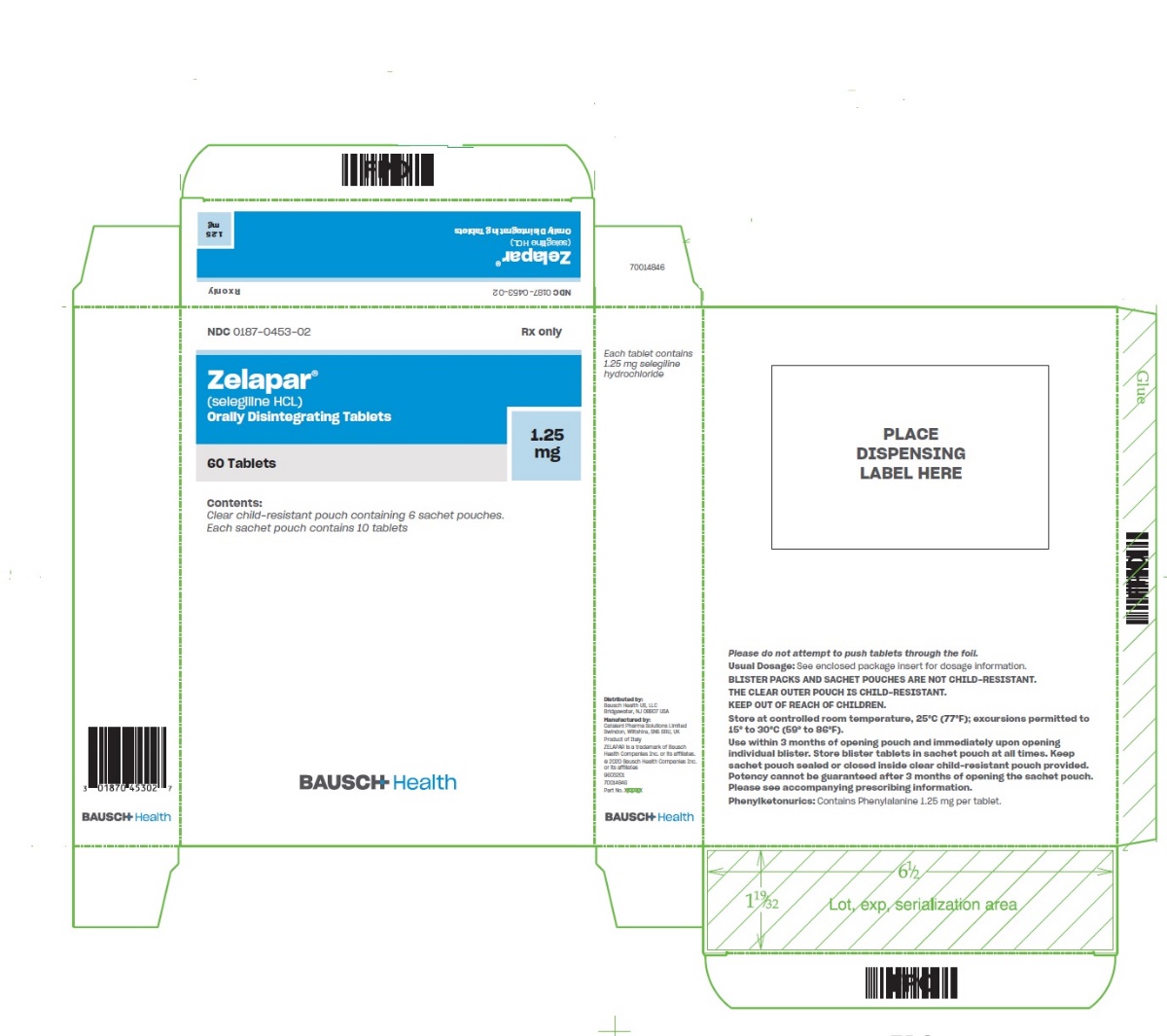
PACKAGE/LABEL PRINCIPAL DISPLAY PANEL NDC 0187-0453-02 Rx only Zelapar ® (selegiline HCL) Orally Disintegrating Tablets 60 Tablets 1.25 mg Contents: Clear child-resistant pouch containing 6 sachetpouches. Each sachet pouch contains 10 tablets BAUSCH HEALTH zelapar 1.25mg carton
Medicare Part D spend CMS · PART D · 2026 (Q1)
Reported adverse events (FAERS)
Top reported reactions
Age at onset
Reporter sex
Serious outcomes
Where does this data come from?
About this NDC listing & data coverage
What data is (and isn’t) available for this NDC — tap to expand
| NDC identity (package / product / labeler codes) | ✓ Available |
| Labeler | ✓ Available |
| Product & package description | ✓ Available |
| Marketing category & status | ✓ Available |
| Active ingredient / dosage form / route | ✓ Available |
| FDA label (SPL via DailyMed) | ✓ Available |
| Package photos | ✓ Available |
| Inactive ingredients (structured) | ✓ Available |
| NADAC pharmacy acquisition price (CMS) | — Not published for this NDC CMS publishes NADAC only for NDCs reported in its retail-pharmacy survey. |
| Orange Book / therapeutic-equivalence data | — Not published for this NDC Applies only to products approved under an NDA/ANDA; many listings are out of scope. |
| HCPCS J-code billing crosswalk | — Not published for this NDC Most self-administered / retail products have no J-code — that is normal. |
| Medicaid utilization (CMS SDUD) | — Not published for this NDC CMS reports utilization only for NDCs with Medicaid claims above its privacy threshold. |