
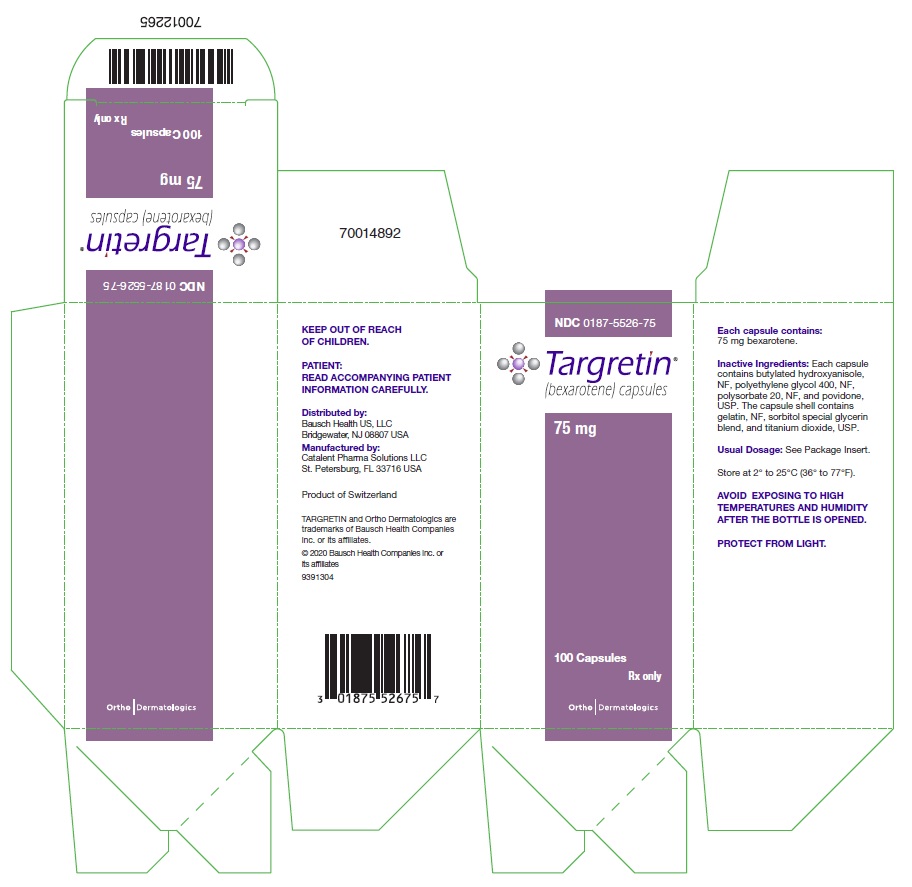
Targretin bexarotene 75 mg Capsule, Liquid Filled, 100-count — NDC 0187-5526-75 (Billing 00187-5526-75)
This is a package of 100 capsules of Targretin bexarotene 75 mg Capsule, Liquid Filled from Bausch Health US, LLC, marketed since Dec 1999 and currently FDA-listed. It is this product's only package size.
Identity & classification
Regulatory identifiers FDA, NLM and CMS codes for this package
Drug-database identifiers Medi-Span GPI and First Databank GCN / HICL / AHFS classification
- GSN (GCN sequence number): 044269
- GCN: 92373
- HICL (First Databank): 020832
- AHFS class code: 10:00.00.00
- RxCUI (RxNorm): 261349
Where does this data come from?
- FDA openFDA NDC Directory · synced Oct 1, 2026
- FDA label on DailyMed · label index refreshed Oct 1, 2026
- RxNorm (NLM RxNav) · catalog refreshed Oct 1, 2026
- Medi-Span GPI (licensed)
- First Databank (licensed) · refreshed Oct 1, 2026
RxNorm drug class
This medicine belongs to the Retinoid class.
Where does this data come from?
- RxClass (NLM) · catalog refreshed Oct 1, 2026
Clinical
Bexarotene is used to treat cutaneous T-cell lymphoma (CTCL, a type of lymphoma [cancer] that attacks the skin) in people whose disease could not be treated successfully with at least one other medication. Bexarotene is in a class of medications called retinoids. It works by stopping the growth of cancer cells.
Read the full MedlinePlus article ↗- Bexarotene is used to treat cutaneous T-cell lymphoma — a type of cancer that mainly shows up in the skin. The capsule form (Targretin or generic bexarotene) is for people who've a...
- Bexarotene capsules significantly raise blood fat levels — especially triglycerides — in most patients, and very high triglycerides can cause a serious condition called pancreatiti...
- Why do I need so many blood tests while taking the capsules?
- This is one of the most critical things about bexarotene — it causes serious birth defects and absolutely cannot be used during pregnancy. You'll need a negative pregnancy test bef...
Patient education
Supplement & herbal interactions
Some supplements/herbs that may interact with Bexarotene — tap one for details:
Where does this data come from?
- MedlinePlus (NLM) · refreshed Oct 1, 2026
- FDA label on DailyMed · label index refreshed Oct 1, 2026
Ask a licensed pharmacist directly — free, answered by our team.
Pricing
A drug doesn't have one price. Each row is a different public payment system, and none is what you'd pay at the counter — that depends on your insurance. The ⓘ on each row explains what it measures.
| Price system | Per mL | Per package |
|---|---|---|
| Retail pharmacies payNADAC · weekly | Not in the retail survey — common for institutional, discontinued, or low-volume packs. | |
| Medicaid paysCMS SDUD · 12 mo | $235.78 | — |
| Medicare drug plans payPart D · Q2 2026 | $254.01 | — |
Where does this data come from?
- CMS NADAC weekly file
- CMS ASP pricing files · refreshed Sep 20, 2026
- CMS Medicaid State Drug Utilization Data · through Q3 2025
- CMS Part D plan pricing files · refreshed Sep 24, 2026
- VA National Acquisition Center price file
Packaging — all sizes for this product
| Package NDC | Description | Marketing start | Marketing end | Status |
|---|---|---|---|---|
| 00187-5526-75 You're viewing this Main listing | 1 BOTTLE in 1 CARTON / 100 CAPSULE, LIQUID FILLED in 1 BOTTLE | 1999-12-29 | — | Active |
Therapeutic equivalents
| Product | Labeler | Pack | NADAC/unit | TE | Status | Price vs. this |
|---|---|---|---|---|---|---|
| Targretin 75 mgthis 00187-5526-75 | Bausch | 100 capsules | — | AB | FDA listed | — |
| Bexarotene 75 mg 00378-6955-01 | Mylan | 100 capsules | — | AB | FDA listed | — |
| bexarotene 75 mg 00591-2832-01 | Actavis | 100 capsules | — | AB | FDA listed | — |
| Bexarotene 75 mg 00832-0285-00 | Upsher-Smith | 100 capsules | — | AB | FDA listed | — |
| Bexarotene 75 mg 31722-0380-01 | Camber | 100 capsules | — | AB | FDA listed | — |
| Bexarotene 75 mg 42291-0072-01 | AvKARE | 100 capsules | — | AB | FDA listed | — |
| Bexarotene 75 mg 43975-0315-10 | ANI | 100 capsules | — | AB | FDA listed | — |
| Bexarotene 75 mg 69238-1250-01 | Amneal | 100 capsules | — | AB | FDA listed | — |
Where does this data come from?
- FDA openFDA NDC Directory · synced Oct 1, 2026
- FDA Orange Book · refreshed Sep 3, 2026
- CMS NADAC weekly file
Availability & generic status
The FDA lists approved generic versions of this medicine, but that does not always mean a pharmacy can get one today. Patent rules, launch agreements, supply and pricing can affect when generics actually arrive.
Where does this data come from?
- FDA Orange Book · refreshed Sep 3, 2026
What it looks like
Where does this data come from?
- FDA label on DailyMed · label index refreshed Oct 1, 2026
Inactive Ingredients / Excipients
Inactive ingredients, also called excipients, are components of the drug product other than the active ingredient. They may include fillers, dyes, coatings, preservatives, flavors, or other formulation ingredients.
💡 Tap an ingredient (hover on desktop) to see what it is and why it’s used.
-
UNII AV0YTZ4E6J
A chemical compound derived from sorbitol, a natural sugar alcohol. It acts as an emulsifier and surfactant to help blend oil and water-based ingredients in medicines, ensuring uniform texture and stability.
-
UNII REK4960K2U
Butylated hydroxyanisole is a synthetic preservative that prevents oils and fats in medicines from spoiling or becoming rancid. It keeps the medicine stable and extends its shelf life.
-
UNII 2S7830E561
Crospovidone is a synthetic polymer derived from povidone. It acts as a disintegrant, helping the tablet or capsule break apart quickly in the stomach so the active ingredient can be absorbed.
-
UNII 2G86QN327L
Gelatin is a protein derived from animal collagen, commonly used in medicines as a gelling agent and capsule material. It helps create soft or hard capsule shells that hold and release medication, and can also thicken liquid formulations.
-
UNII PDC6A3C0OX
Glycerin is a clear, thick liquid derived from plant oils or fats. It acts as a humectant to retain moisture, a sweetener, and a solvent in medications.
-
UNII 3OWL53L36A
A natural sugar alcohol derived from seaweed or synthesized in the lab. It's used as a filler to add bulk, a sweetener in sugar-free formulas, and a disintegrant to help tablets break apart in the stomach.
-
UNII B697894SGQ
Polyethylene glycol 400 is a clear, thick liquid made from petroleum-derived polymers. It acts as a solvent and humectant in medicines, helping dissolve active ingredients and retain moisture in the formulation.
-
UNII 7T1F30V5YH
A synthetic emulsifier derived from sorbitol and oleic acid. It helps mix oil and water-based ingredients together and keeps them from separating in liquid formulations.
-
UNII 506T60A25R
Sorbitol is a natural sugar alcohol derived from glucose. It serves as a sweetener, humectant, and bulking agent in medications to improve taste and help maintain moisture in the product.
-
UNII 15FIX9V2JP
Titanium dioxide is a bright white mineral powder commonly used as a colorant and opacifying agent. It makes pills and tablets white or lighter in color and helps make coatings non-transparent.
-
UNII 059QF0KO0R
Water is a liquid solvent that dissolves and mixes ingredients together in liquid medicines, syrups, and injections. It helps distribute the active drug evenly throughout the product.
11 inactive ingredients listed in the exact product block matched to this NDC.
Where does this data come from?
ingredient classCode="IACT" elements from the exact product block matched by this NDC. Label-section narrative from DailyMed / the openFDA label index is shown separately when available.- FDA label on DailyMed · label index refreshed Oct 1, 2026
- FDA openFDA NDC Directory · synced Oct 1, 2026
Inactive ingredient FAQ
Are inactive ingredients the same for every manufacturer?
Why might an inactive ingredient be missing?
Can inactive ingredients matter?
Manufacturer & labeler
Where does this data come from?
- FDA openFDA NDC Directory · synced Oct 1, 2026
- Drugs@FDA
Full prescribing information FDA SPL
🚨 Boxed Warning ▾
WARNING: BIRTH DEFECTS TARGRETIN is a member of the retinoid class of drugs that is associated with birth defects in humans. Bexarotene also caused birth defects when administered orally to pregnant rats. TARGRETIN must not be administered to a pregnant woman.
( 8.1 ) WARNING: BIRTH DEFECTS See full prescribing information for complete boxed warning. TARGRETIN is a member of the retinoid class of drugs that is associated with birth defects in humans. Bexarotene also caused birth defects when administered orally to pregnant rats.
TARGRETIN must not be administered to a pregnant woman. ( 8.1 )
🎯 Indications and Usage ▾
1 INDICATIONS AND USAGE TARGRETIN ® (bexarotene) Capsules are indicated for the treatment of cutaneous manifestations of cutaneous T-cell lymphoma in patients who are refractory to at least one prior systemic therapy. TARGRETIN (bexarotene) is a retinoid indicated for the treatment of cutaneous manifestations of cutaneous T-cell lymphoma in patients who are refractory to at least one prior systemic therapy. ( 1 )
⏱️ Dosage and Administration ▾
2 DOSAGE AND ADMINISTRATION The recommended initial dose of TARGRETIN is 300 mg/m 2 /day (see Table 1). TARGRETIN should be taken as a single oral daily dose with a meal. For precautions to prevent pregnancy and birth defects in women of child-bearing potential [ see Use in Specific Populations (8.1) ].
Table 1: TARGRETIN Initial Dose Calculation According to Body Surface Area Initial Dose Level (300 mg/m 2 /day) Number of 75 mg TARGRETIN Capsules Body Surface Area (m 2 ) Total Daily Dose (mg/day) 0.88 – 1.12 300 4 1.13 – 1.37 375 5 1.38 – 1.62 450 6 1.63 – 1.87 525 7 1.88 – 2.12 600 8 2.13 – 2.37 675 9 2.38 – 2.62 750 10 Dose Modification Guidelines: The 300 mg/m 2 /day dose level of TARGRETIN may be adjusted to 200 mg/m 2 /day then to 100 mg/m 2 /day, or temporarily suspended, if necessitated by toxicity. When toxicity is controlled, doses may be carefully readjusted upward.
If there is no tumor response after 8 weeks of treatment and if the initial dose of 300 mg/m 2 /day is well tolerated, the dose may be escalated to 400 mg/m 2 /day with careful monitoring. Duration of Therapy: In clinical trials in CTCL, TARGRETIN was administered for up to 97 weeks. TARGRETIN should be continued as long as the patient is deriving benefit. • Recommended initial dose is 300 mg/m 2 /day.
( 2 ) • Take TARGRETIN as a single oral daily dose with a meal. ( 2 ) • Dose Adjustment: May be adjusted to 200 mg/m 2 /day then to 100 mg/m 2 /day. ( 2 )
💊 Dosage Forms and Strengths ▾
3 DOSAGE FORMS AND STRENGTHS Capsules: 75 mg, off-white, oblong soft gelatin capsules, imprinted with black ink “Targretin”. Capsules: 75 mg ( 3 )
⛔ Contraindications ▾
4 CONTRAINDICATIONS • Pregnancy (Boxed Warning, 4.1 ) • Known hypersensitivity to bexarotene ( 4.2 )
4.1Pregnancy TARGRETIN can cause fetal harm when administered to a pregnant female. TARGRETIN is a member of the retinoid class of drugs that is associated with birth defects in humans and is contraindicated in females who are pregnant. Bexarotene was also teratogenic and caused developmental mortality when administered orally to pregnant rats.
If this drug is used during pregnancy or if the patient becomes pregnant while taking this drug, the patient should be advised of the potential risk to a fetus.
4.2Hypersensitivity TARGRETIN Capsules are contraindicated in patients with a known serious hypersensitivity to bexarotene or other components of the product.
⚠️ Warnings and Cautions ▾
5 WARNINGS AND PRECAUTIONS • Hyperlipidemia: TARGRETIN causes elevations in blood lipids. Obtain baseline values, monitor, and manage elevations during therapy by dose reduction, interruption, discontinuation and/or lipid lowering therapy. ( 5.1 , 5.11 ) • Pancreatitis: Interrupt TARGRETIN and evaluate if suspected.
( 5.2 ) • Hepatotoxicity, Cholestasis, and Hepatic Failure: Interrupt or discontinue TARGRETIN and evaluate if liver chemistry tests exceed three times the upper limit of normal values. ( 5.3 ) • Hypothyroidism: TARGRETIN therapy can cause hypothyroidism. Monitor and replace thyroid hormone if needed.
( 5.5 ) • Neutropenia: Monitor for neutropenia. Reduce TARGRETIN dose or interrupt as indicated. ( 5.6 ) • Photosensitivity: Minimize exposure to sunlight and artificial ultraviolet light during treatment.
( 5.10 )
5.1Hyperlipidemia TARGRETIN induces substantial elevations in lipids in most patients. About 70% of patients with CTCL who received an initial dose of > 300 mg/m 2 /day of TARGRETIN had fasting triglyceride levels greater than 2.5 times the upper limit of normal. About 55% had values over 800 mg/dL with a median of about 1200 mg/dL in those patients.
Cholesterol elevations above 300 mg/dL occurred in approximately 60% and 75% of patients with CTCL who received an initial dose of 300 mg/m 2 /day or greater than 300 mg/m 2 /day, respectively. Decreases in high density lipoprotein (HDL) cholesterol to less than 25 mg/dL were seen in about 55% and 90% of patients receiving an initial dose of 300 mg/m 2 /day or greater than 300 mg/m 2 /day, respectively, of TARGRETIN. Monitor lipid changes and treat abnormalities during therapy.
The effects on triglycerides, HDL cholesterol, and total cholesterol were reversible with cessation of therapy, and could generally be mitigated by dose reduction and/or concomitant antilipemic therapy. Perform fasting blood lipid determinations before TARGRETIN therapy is initiated and weekly until the lipid response to TARGRETIN is established, which usually occurs within 2 to 4 weeks, and monitor at 8-week intervals thereafter. Fasting triglycerides should be normal or normalized with appropriate intervention prior to initiating TARGRETIN therapy.
Maintain triglyceride levels below 400 mg/dL to reduce the risk of clinical sequelae [ see Warnings and Precautions (5.2) ]. If fasting triglycerides are elevated or become elevated during treatment, institute antilipemic therapy, and if necessary, reduce or interrupt the dose of TARGRETIN. In the 300 mg/m 2 /day initial dose group, 60% of patients were given lipid lowering drugs.
Atorvastatin was used in 48% (73/152) of patients with CTCL. Because of a potential drug-drug interaction, avoid gemfibrozil use with TARGRETIN [ see Drug Interactions (7) ].
5.2Pancreatitis Acute pancreatitis, including a fatal case, has been reported in four patients with CTCL and in six patients with non-CTCL cancers treated with TARGRETIN; the cases were associated with marked elevations of fasting serum triglycerides, the lowest being 770 mg/dL in one patient. One patient with advanced non-CTCL cancer died of pancreatitis. Interrupt TARGRETIN and evaluate if pancreatitis is suspected.
Patients with CTCL who have risk factors for pancreatitis (e.g., prior pancreatitis, uncontrolled hyperlipidemia, excessive alcohol consumption, uncontrolled diabetes mellitus, biliary tract disease, and medications known to increase triglyceride levels or to be associated with pancreatic toxicity) may be at greater risk for pancreatitis associated with TARGRETIN [ see Warnings and Precautions (5.1) ].
5.3Hepatotoxicity, Cholestasis, and Hepatic Failure TARGRETIN caused elevations in liver chemistry tests (LFTs) in 5% (AST), 2% (ALT), and 0% (bilirubin) in patients with CTCL receiving an initial dose of 300 mg/m 2 /day. In contrast, with an initial dose greater than 300 mg/m 2 /day of TARGRETIN, the incidence of LFT elevations was higher at 7% (SGOT/AST), 9% (SGPT/ALT), and 6%… [Excerpted — this section continues on DailyMed.]
🤒 Adverse Reactions ▾
6 ADVERSE REACTIONS The following serious adverse reactions are discussed in greater detail in other sections of the prescribing information: • Hyperlipidemia [ see Warnings and Precautions (5.1) ] • Pancreatitis [ see Warnings and Precautions (5.2) ] • Hepatotoxicity, Cholestasis, and Hepatic Failure [ see Warnings and Precautions (5.3) ] • Hypothyroidism [ see Warnings and Precautions (5.4) ] • Neutropenia [ see Warnings and Precautions (5.5) ] • Cataracts [ see Warnings and Precautions (5.6) ] • Vitamin A Supplementation Hazard [ see Warnings and Precautions (5.7) ] • Hypoglycemia Risk in Patients with Diabetes Mellitus [ see Warnings and Precautions (5.8) ] • Photosensitivity [ see Warnings and Precautions (5.9) ] • Laboratory Tests [ see Warnings and Precautions (5.10) ] • Drug/Laboratory Test Interactions [ see Warnings and Precautions (5.11) ] The most common adverse reactions (greater than 10%) include: hyperlipidemia, hypercholesteremia, headache, hypothyroidism, asthenia, leukopenia, rash, nausea, infection, peripheral edema, abdominal pain, and dry skin.
( 6.1 ) To report SUSPECTED ADVERSE REACTIONS, contact Bausch Health US, LLC at 1-800-321-4576 or FDA at 1-800-FDA-1088 or www.fda.gov/medwatch.
6.1Clinical Trials Experience Because clinical trials are conducted under widely varying conditions, adverse reaction rates observed in the clinical trials of a drug cannot be directly compared to rates in the clinical trials of another drug and may not reflect the rates observed in practice. The safety of TARGRETIN has been evaluated in two clinical trials of 152 patients with CTCL who received TARGRETIN for up to 97 weeks and in 352 patients in other trials. The mean duration of therapy for the 152 patients with CTCL was 166 days.
The most common adverse events reported with an incidence of at least 10% in patients with CTCL treated at an initial dose of 300 mg/m 2 /day of TARGRETIN are shown in Table 2. The events at least possibly related to treatment are lipid abnormalities (elevated triglycerides, elevated total and LDL cholesterol and decreased HDL cholesterol), hypothyroidism, headache, asthenia, rash, leukopenia, anemia, nausea, infection, peripheral edema, abdominal pain, and dry skin. Most adverse events occurred at a greater incidence in patients treated at starting doses of greater than 300 mg/m 2 /day (see Table 2).
Adverse reactions leading to TARGRETIN dose reduction or discontinuation in at least two patients were hyperlipemia, neutropenia/leukopenia, diarrhea, fatigue/lethargy, hypothyroidism, headache, liver function test abnormalities, rash, pancreatitis, nausea, anemia, allergic reaction, muscle spasm, pneumonia, and confusion. The NCI Grade 3 and NCI Grade 4 adverse reactions reported in two or more patients with CTCL treated at an initial dose of 300 mg/m 2 /day of TARGRETIN (see Table 3) were hypertriglyceridemia, pruritus, headache, peripheral edema, leukopenia, rash, and hypercholesteremia.
Most of these moderately severe or severe adverse events occurred at a higher rate in patients treated at starting doses of greater than 300 mg/m 2 /day than in patients treated at a starting dose of 300 mg/m 2 /day. In patients with CTCL receiving an initial dose of 300 mg/m 2 /day, the incidence of NCI Grade 3 or 4 elevations in triglycerides and total cholesterol was 28% and 25%, respectively (Table 4). In contrast, in patients with CTCL receiving greater than 300 mg/m 2 /day, the incidence of NCI Grade 3 or 4 elevated triglycerides and total cholesterol was 45% and 45%, respectively.
Other Grade 3 and 4 laboratory abnormalities are shown in Table 3. In addition to the 152 patients enrolled in the two CTCL trials, 352 patients received TARGRETIN as monotherapy for various advanced malignancies at doses from 5 mg/m 2 /day to 1000 mg/m 2 /day. The common adverse reactions (incidence greater than 10%) were similar to those seen in patients with CTCL.
In the 504 patients (CTCL and non-CTCL) who received TARGRETI… [Excerpted — this section continues on DailyMed.]
🔄 Drug Interactions ▾
7 DRUG INTERACTIONS Effect of Other Drugs on TARGRETIN Gemfibrozil: Concomitant administration of TARGRETIN and gemfibrozil resulted in increases in plasma concentrations of bexarotene. Concomitant administration of gemfibrozil with TARGRETIN is not recommended. Effect of TARGRETIN on Other Drugs TARGRETIN may be an inducer for the CYP3A4 enzymes, and may reduce plasma concentrations of other substrates metabolized by CYP3A4.
Drug products which may be affected include oral or other systemic hormonal contraceptives. Thus, if treatment with TARGRETIN is intended for a female with reproductive potential, it is strongly recommended that a non-hormonal contraception be considered. [ see Use in Specific Populations (8.3) , Clinical Pharmacology (12.3) ]. Laboratory Test Interference CA125 assay values in patients with ovarian cancer may be increased by TARGRETIN therapy.
👥 Use in Specific Populations ▾
8 USE IN SPECIFIC POPULATIONS
8.1Pregnancy Risk Summary TARGRETIN, a retinoid, can cause fetal harm based on findings from animal studies when administered to a pregnant female and is contraindicated during pregnancy. Bexarotene was teratogenic and caused developmental mortality in rats following oral administration during organogenesis [see Data] . TARGRETIN must not be given to a pregnant female or a female who intends to become pregnant.
If pregnancy does occur during treatment with TARGRETIN, immediately discontinue the drug and advise the pregnant female of the potential risk to a fetus. The background risk of major birth defects and miscarriage for the indicated populations is unknown. However, the background risk in the U.S. general population of major birth defects is 2-4% and of miscarriage is 15-20% of clinically recognized pregnancies.
Data Animal Data Bexarotene caused malformations when administered orally to pregnant rats during days 7-17 of gestation. Developmental abnormalities included incomplete ossification at 4 mg/kg/day and cleft palate, depressed eye bulge/microphthalmia, and small ears at 16 mg/kg/day. The plasma AUC of bexarotene in rats at 4 mg/kg/day is approximately one third the AUC in humans at the recommended daily dose.
At doses greater than 10 mg/kg/day, bexarotene caused developmental mortality. The no effect dose for fetal effects in rats was 1 mg/kg/day (producing an AUC approximately one sixth of the AUC at the recommended human daily dose).
8.2Lactation Risk Summary There is no information regarding the presence of TARGRETIN in human milk, the effects on the breast fed infant, or the effects on milk production. Because many drugs are excreted in human milk and because of the potential for serious adverse reactions in nursing infants from TARGRETIN, discontinue breastfeeding during treatment with TARGRETIN.
8.3Females and Males of Reproductive Potential Pregnancy Testing Obtain a negative serum pregnancy test (e.g., serum beta-human chorionic gonadotropin [beta-HCG]) with a sensitivity of at least 50 mIU/L within 1 week prior to TARGRETIN therapy. Obtain another pregnancy test at monthly intervals while the patient remains on TARGRETIN. Contraception Females TARGRETIN can cause fetal harm when administered to a pregnant female [ see Use in Specific Populations (8.1) ].
Females of reproductive potential should be advised to avoid becoming pregnant when TARGRETIN is used. Effective contraception must be used for 1 month prior to the initiation of therapy, during therapy and for at least 1 month following discontinuation of therapy; it is recommended that two reliable forms of contraception be used simultaneously unless abstinence is the chosen method. Bexarotene can potentially induce metabolic enzymes and thereby theoretically reduce the plasma concentrations of oral or other systemic hormonal contraceptives [ see Drug Interactions (7) ].
Thus, if treatment with TARGRETIN is intended in a female with reproductive potential, it is strongly recommended that one of the two reliable forms of contraception should be non-hormonal. TARGRETIN therapy should be initiated on the second or third day of a normal menstrual period. No more than a 1-month supply of TARGRETIN should be given to the patient so that the results of pregnancy testing can be assessed and counseling regarding avoidance of pregnancy and birth defects can be reinforced.
Males Male patients with sexual partners who are pregnant, possibly pregnant, or who could become pregnant must use condoms during sexual intercourse while taking TARGRETIN and for at least 1 month after the last dose of drug.
8.4Pediatric Use Safety and effectiveness of TARGRETIN in pediatric patients have not been established.
8.5Geriatric Use Of the total patients with CTCL in clinical trials of TARGRETIN, 64% were 60 years or older, while 33% were 70 years or older. No overall differences in safety were observed between patients 70 years or older and younger… [Excerpted — this section continues on DailyMed.]
🤰 Pregnancy ▾
8.1Pregnancy Risk Summary TARGRETIN, a retinoid, can cause fetal harm based on findings from animal studies when administered to a pregnant female and is contraindicated during pregnancy. Bexarotene was teratogenic and caused developmental mortality in rats following oral administration during organogenesis [see Data] . TARGRETIN must not be given to a pregnant female or a female who intends to become pregnant.
If pregnancy does occur during treatment with TARGRETIN, immediately discontinue the drug and advise the pregnant female of the potential risk to a fetus. The background risk of major birth defects and miscarriage for the indicated populations is unknown. However, the background risk in the U.S. general population of major birth defects is 2-4% and of miscarriage is 15-20% of clinically recognized pregnancies.
Data Animal Data Bexarotene caused malformations when administered orally to pregnant rats during days 7-17 of gestation. Developmental abnormalities included incomplete ossification at 4 mg/kg/day and cleft palate, depressed eye bulge/microphthalmia, and small ears at 16 mg/kg/day. The plasma AUC of bexarotene in rats at 4 mg/kg/day is approximately one third the AUC in humans at the recommended daily dose.
At doses greater than 10 mg/kg/day, bexarotene caused developmental mortality. The no effect dose for fetal effects in rats was 1 mg/kg/day (producing an AUC approximately one sixth of the AUC at the recommended human daily dose).
🧒 Pediatric Use ▾
8.4Pediatric Use Safety and effectiveness of TARGRETIN in pediatric patients have not been established.
🧓 Geriatric Use ▾
8.5Geriatric Use Of the total patients with CTCL in clinical trials of TARGRETIN, 64% were 60 years or older, while 33% were 70 years or older. No overall differences in safety were observed between patients 70 years or older and younger patients, but greater sensitivity of some older individuals to TARGRETIN cannot be ruled out. Responses to TARGRETIN were observed across all age group decades, without preference for any individual age group decade.
🆘 Overdosage ▾
10 OVERDOSAGE Doses up to 1000 mg/m 2 /day of TARGRETIN have been administered in short-term trials in patients with advanced cancer without acute toxic effects. Single doses of 1500 mg/kg and 720 mg/kg were tolerated without significant toxicity in rats and dogs, respectively. These doses are approximately 30 and 50 times, respectively, the recommended human dose on a mg/m 2 basis.
🧬 Clinical Pharmacology ▾
12 CLINICAL PHARMACOLOGY
12.1Mechanism of Action Bexarotene selectively binds and activates retinoid X receptor subtypes (RXRα, RXRß, RXRγ). RXRs can form heterodimers with various receptor partners such as retinoic acid receptors (RARs), vitamin D receptor, thyroid receptor, and peroxisome proliferator activator receptors (PPARs). Once activated, these receptors function as transcription factors that regulate the expression of genes that control cellular differentiation and proliferation.
Bexarotene inhibits the growth in vitro of some tumor cell lines of hematopoietic and squamous cell origin. It also induces tumor regression in vivo in some animal models. The exact mechanism of action of bexarotene in the treatment of cutaneous T-cell lymphoma (CTCL) is unknown.
12.3Pharmacokinetics Terminal half-life of bexarotene is approximately 7 hours. Studies in patients with advanced malignancies show approximate single dose linearity within the therapeutic range. Absorption After oral administration of TARGRETIN, bexarotene is absorbed with a T max of about 2 hours.
Plasma bexarotene AUC and C max values resulting from a 75 to 300 mg dose were 35% and 48% higher, respectively, after a fat-containing meal than after a glucose solution. Distribution Bexarotene is highly bound (>99%) to plasma proteins. The plasma proteins to which bexarotene binds have not been elucidated, and the ability of bexarotene to displace drugs bound to plasma proteins and the ability of drugs to displace bexarotene binding have not been studied.
Elimination Metabolism Four bexarotene metabolites have been identified in plasma: 6- and 7-hydroxy-bexarotene and 6- and 7-oxo-bexarotene. In vitro studies suggest that cytochrome P450 3A4 is the major cytochrome P450 responsible for formation of the oxidative metabolites and that the oxidative metabolites may be glucuronidated. The oxidative metabolites are active in in vitro assays of retinoid receptor activation, but the relative contribution of the parent and any metabolites to the efficacy and safety of TARGRETIN is unknown.
Excretion The renal elimination of bexarotene and its metabolites was examined in patients with Type 2 diabetes mellitus. Urinary elimination of bexarotene and its known metabolites is a minor excretory pathway (<1% of administered dose). Pharmacokinetics in Specific Populations Age: Based on the population pharmacokinetic analysis of data for 232 patients aged ≥65 years and 343 patients aged <65 years, age has no statistically significant effect on bexarotene pharmacokinetics.
Body Weight and Gender: Based on the population pharmacokinetics analysis of data for 614 patients with a weight range of 26 to 145 kg, the bexarotene apparent clearance increases with increasing body weight. Gender has no statistically significant effect on bexarotene pharmacokinetics. Race: Based on the population pharmacokinetic analysis of data for 540 Caucasian and 44 Black patients, bexarotene pharmacokinetics are similar in Blacks and Caucasians.
There are insufficient data to evaluate potential differences in the pharmacokinetics of bexarotene for other races. Renal Impairment: No formal studies have been conducted with TARGRETIN in patients with renal impairment. Urinary elimination of bexarotene and its known metabolites is a minor excretory pathway (<1% of administered dose), but because renal impairment can result in significant protein binding changes, pharmacokinetics may be altered in patients with renal impairment.
Hepatic Impairment: No specific studies have been conducted with TARGRETIN in patients with hepatic impairment. Because less than 1% of the dose is excreted in the urine unchanged and there is in vitro evidence of extensive hepatic contribution to bexarotene elimination, hepatic impairment would be expected to lead to greatly decreased clearance. Drug Interactions Effect of Other Drugs on TARGRETIN CYP3A4 Inhibitors/Inducers: In a clinical study, concomitant administration of multiple dos… [Excerpted — this section continues on DailyMed.]
🧬 Mechanism of Action ▾
12.1Mechanism of Action Bexarotene selectively binds and activates retinoid X receptor subtypes (RXRα, RXRß, RXRγ). RXRs can form heterodimers with various receptor partners such as retinoic acid receptors (RARs), vitamin D receptor, thyroid receptor, and peroxisome proliferator activator receptors (PPARs). Once activated, these receptors function as transcription factors that regulate the expression of genes that control cellular differentiation and proliferation.
Bexarotene inhibits the growth in vitro of some tumor cell lines of hematopoietic and squamous cell origin. It also induces tumor regression in vivo in some animal models. The exact mechanism of action of bexarotene in the treatment of cutaneous T-cell lymphoma (CTCL) is unknown.
📦 How Supplied / Storage and Handling ▾
16 HOW SUPPLIED/STORAGE AND HANDLING TARGRETIN ® (bexarotene) Capsules are supplied as 75 mg off-white, oblong soft gelatin capsules, imprinted with “Targretin”, in high density polyethylene bottles with child-resistant closures. Bottles of 100 capsules: NDC 0187-5526-75 Store at 2° to 25°C (36° to 77°F). Avoid exposing to high temperatures and humidity after the bottle is opened. Protect from light.
📋 Description ▾
11 DESCRIPTION TARGRETIN ® (bexarotene) Capsules contain bexarotene, a member of a subclass of retinoids that selectively activate retinoid X receptors (RXRs). These retinoid receptors have biologic activity distinct from that of retinoic acid receptors (RARs). The chemical name of bexarotene is 4-[1-(5,6,7,8-tetrahydro-3,5,5,8,8-pentamethyl-2-naphthalenyl)ethenyl]benzoic acid, and the structural formula is as follows: Bexarotene is an off-white to white powder with a molecular weight of 348.48 and a molecular formula of C 24 H 28 O 2 .
It is insoluble in water and slightly soluble in vegetable oils and ethanol, USP. Each TARGRETIN capsule contains 75 mg of bexarotene for oral administration. It also contains the following inactive ingredients: butylated hydroxyanisole, NF, polyethylene glycol 400, NF, polysorbate 20, NF, and povidone, USP.
The capsule shell contains gelatin, NF, sorbitol special glycerin blend, and titanium dioxide, USP. Description
💬 Information for Patients ▾
17 PATIENT COUNSELING INFORMATION Advise the patient to read the FDA-approved patient labeling (Patient Information). Inform the patient or caregiver about the following: Birth Defects Advise patients that TARGRETIN is contraindicated in pregnancy [see Contraindications (4.1) ]. TARGRETIN is a member of the retinoid class of drugs that is associated with birth defects in humans [see Use In Specific Populations (8.1) ]. • Advise females of reproductive potential that they must avoid pregnancy while taking TARGRETIN and for at least 1 month following discontinuation of therapy. • Advise females of reproductive potential of the importance of monthly pregnancy testing while taking TARGRETIN. • Advise females of reproductive potential to use effective contraception for 1 month prior to the initiation of therapy, during therapy, and for at least 1 month following discontinuation of therapy and that two reliable forms of contraception should be used simultaneously, one of which should be non-hormonal. • Advise females of reproductive potential that TARGRETIN therapy should be initiated on the second or third day of a normal menstrual period. • Instruct patient to immediately stop taking TARGRETIN if she becomes pregnant while taking this drug. • Advise male patients with sexual partners who are pregnant, possibly pregnant, or who could become pregnant that they must use condoms during sexual intercourse while taking TARGRETIN and for at least 1 month after the last dose of the drug.
Pancreatitis Advise patients of the risk of developing pancreatitis, which may be accompanied by nausea, vomiting, and abdominal or back pain and to immediately contact their healthcare provider if these symptoms occur [see Warnings and Precautions (5.2) ]. Hepatotoxicity Inform patients of the possibility of developing liver function abnormalities and serious hepatic toxicity. Advise patients to immediately contact their healthcare provider if signs of liver failure occur, including jaundice, anorexia, bleeding, or bruising [see Warnings and Precautions (5.3) ].
Neutropenia Advise patients of the possibility of developing neutropenia and to immediately contact their healthcare provider should they develop a fever, particularly in association with any suggestion of infection [see Warnings and Precautions (5.5) ]. Cataracts Advise patients of the possibility of developing new or worsening cataracts and to inform their healthcare provider about any changes in their vision during treatment with TARGRETIN [see Warnings and Precautions (5.6) ]. Vitamin A Supplementation Hazard Advise patients to limit vitamin A intake to ≤15,000 IU/day to avoid potential additive toxic effects.
Hypoglycemia and Diabetes Mellitus Advise patients of the possibility of developing hypoglycemia when using insulin, agents enhancing insulin secretion, or insulin sensitizers while on TARGRETIN therapy. Instruct patients on these medications to check their blood sugar frequently and to notify their physicians of any changes in blood sugar level [see Warnings and Precautions (5.8) ]. Photosensitivity Advise patients of potential increased skin sensitivity to sunlight while taking TARGRETIN and to minimize exposure to sunlight and artificial ultraviolet light [see Warnings and Precautions (5.9) ].
Laboratory Tests Advise patients of laboratory testing which will occur during therapy to monitor lipids, liver function, thyroid function, and white blood cell counts [see Warnings and Precautions (5.10) ]. If applicable, advise patients of monthly pregnancy testing [see Use In Specific Populations (8.3) ]. Administration Instructions Advise patients to take TARGRETIN with a meal [see DOSAGE AND ADMINISTRATION ].
Distributed by: Bausch Health US, LLC Bridgewater, NJ 08807 USA Manufactured by: Catalent Pharma Solutions LLC St. Petersburg, FL 33716 USA TARGRETIN is a trademark of Bausch Health Companies Inc. or its affiliates. Any other product/brand names are trademarks of their respective owne… [Excerpted — this section continues on DailyMed.]
🧬 Pharmacokinetics ▾
12.3Pharmacokinetics Terminal half-life of bexarotene is approximately 7 hours. Studies in patients with advanced malignancies show approximate single dose linearity within the therapeutic range. Absorption After oral administration of TARGRETIN, bexarotene is absorbed with a T max of about 2 hours.
Plasma bexarotene AUC and C max values resulting from a 75 to 300 mg dose were 35% and 48% higher, respectively, after a fat-containing meal than after a glucose solution. Distribution Bexarotene is highly bound (>99%) to plasma proteins. The plasma proteins to which bexarotene binds have not been elucidated, and the ability of bexarotene to displace drugs bound to plasma proteins and the ability of drugs to displace bexarotene binding have not been studied.
Elimination Metabolism Four bexarotene metabolites have been identified in plasma: 6- and 7-hydroxy-bexarotene and 6- and 7-oxo-bexarotene. In vitro studies suggest that cytochrome P450 3A4 is the major cytochrome P450 responsible for formation of the oxidative metabolites and that the oxidative metabolites may be glucuronidated. The oxidative metabolites are active in in vitro assays of retinoid receptor activation, but the relative contribution of the parent and any metabolites to the efficacy and safety of TARGRETIN is unknown.
Excretion The renal elimination of bexarotene and its metabolites was examined in patients with Type 2 diabetes mellitus. Urinary elimination of bexarotene and its known metabolites is a minor excretory pathway (<1% of administered dose). Pharmacokinetics in Specific Populations Age: Based on the population pharmacokinetic analysis of data for 232 patients aged ≥65 years and 343 patients aged <65 years, age has no statistically significant effect on bexarotene pharmacokinetics.
Body Weight and Gender: Based on the population pharmacokinetics analysis of data for 614 patients with a weight range of 26 to 145 kg, the bexarotene apparent clearance increases with increasing body weight. Gender has no statistically significant effect on bexarotene pharmacokinetics. Race: Based on the population pharmacokinetic analysis of data for 540 Caucasian and 44 Black patients, bexarotene pharmacokinetics are similar in Blacks and Caucasians.
There are insufficient data to evaluate potential differences in the pharmacokinetics of bexarotene for other races. Renal Impairment: No formal studies have been conducted with TARGRETIN in patients with renal impairment. Urinary elimination of bexarotene and its known metabolites is a minor excretory pathway (<1% of administered dose), but because renal impairment can result in significant protein binding changes, pharmacokinetics may be altered in patients with renal impairment.
Hepatic Impairment: No specific studies have been conducted with TARGRETIN in patients with hepatic impairment. Because less than 1% of the dose is excreted in the urine unchanged and there is in vitro evidence of extensive hepatic contribution to bexarotene elimination, hepatic impairment would be expected to lead to greatly decreased clearance. Drug Interactions Effect of Other Drugs on TARGRETIN CYP3A4 Inhibitors/Inducers: In a clinical study, concomitant administration of multiple doses of ketoconazole with TARGRETIN did not alter bexarotene plasma concentrations.
This suggests that bexarotene elimination is not dependent on CYP3A4 metabolism. Paclitaxel plus Carboplatin: The co-administration of paclitaxel (200 mg/m 2 IV dose over 3 hours) plus carboplatin (at a dose expected to achieve an AUC of 6 mg●min/mL) with TARGRETIN (400 mg/m 2 orally once daily) increased the exposure to bexarotene (AUC 0-24 and C max ) by 2-fold compared to TARGRETIN alone. Atorvastatin: Bexarotene concentrations were not affected by concomitant atorvastatin administration.
Effect of TARGRETIN on Other Drugs Bexarotene did not significantly inhibit the following enzymes in human liver microsomes: CYP1A2, CYP2A6, CYP2C9, CYP2C19, CYP2D6, CYP2E1 and CYP3A4. In vitro data… [Excerpted — this section continues on DailyMed.]
🔬 Clinical Studies ▾
14 CLINICAL STUDIES TARGRETIN was evaluated in two clinical trials in 152 patients with advanced and early stage cutaneous T-cell lymphoma (CTCL) in two multicenter, open-label, historically controlled clinical trials conducted in the U.S., Canada, Europe, and Australia. The advanced disease patients had disease refractory to at least one prior systemic therapy (median of two, range 1 to 6 prior systemic therapies) and had been treated with a median of five (range 1 to 11) prior systemic, irradiation, and/or topical therapies.
Early disease patients were intolerant to, had disease that was refractory to, or had reached a response plateau of 6 months on, at least two prior therapies. The patients entered had been treated with a median of 3.5 (range 2 to 12) therapies (systemic, irradiation, and/or topical). The two clinical trials enrolled a total of 152 patients, 102 of whom had disease refractory to at least one prior systemic therapy, 90 with advanced disease and 12 with early disease.
This is the patient population for whom TARGRETIN is indicated. Patients were initially treated with a starting dose of 650 mg/m 2 /day with a subsequent reduction of starting dose to 500 mg/m 2 /day. Neither of these starting doses was tolerated, and the starting dose was then reduced to 300 mg/m 2 /day.
If, however, a patient on 300 mg/m 2 /day of TARGRETIN showed no response after 8 or more weeks of therapy, the dose could be increased to 400 mg/m 2 /day. Tumor response was assessed in both trials by observation of up to five baseline-defined index lesions using a Composite Assessment of Index Lesion Disease Severity (CA). This endpoint was based on a summation of the grades, for all index lesions, of erythema, scaling, plaque elevation, hypopigmentation or hyperpigmentation, and area of involvement.
Also considered in response assessment was the presence or absence of cutaneous tumors and extracutaneous disease manifestations. All tumor responses required confirmation over at least two assessments separated by at least 4 weeks. A partial response was defined as an improvement of at least 50% in the index lesions without worsening, or development of new cutaneous tumors or non-cutaneous manifestations.
A complete clinical response required complete disappearance of all manifestations of disease, but did not require confirmation by biopsy. At the initial dose of 300 mg/m 2 /day, 1/62 (1.6%) of patients had a complete clinical tumor response and 19/62 (30%) of patients had a partial tumor response. The rate of relapse (25% increase in CA or worsening of other aspects of disease) in the 20 patients who had a tumor response was 6/20 (30%) over a median duration of observation of 21 weeks, and the median duration of tumor response had not been reached.
Responses were seen as early as 4 weeks and new responses continued to be seen at later visits. In one post-approval clinical trial with a total of 59 subjects (29 in 300 mg/m 2 /day dose group and 30 in the 150 mg/m 2 /day dose), the objective response rate was higher in the TARGRETIN 300 mg/m 2 /day group than in the TARGRETIN 150 mg/m 2 /day group with respect to the CA (34.5% vs 23.3%), Physicians Global Assessment (PGA) (37.9% vs 20.0%), and percent BSA involvement (34.5% vs 23.3%). The median duration of response in the TARGRETIN 300 mg/m 2 /day group based on the CA, PGA, and percent BSA involvement was 86.5 days, 72.0 days and 60.0 days, respectively.
While in the TARGRETIN 150 mg/m 2 /day group the median duration of response based on the CA, PGA, and percent BSA involvement was 55 days, 119.0 days and 118.0 days, respectively. The median time to cutaneous tumor response (the time to cutaneous tumor response for a given subject is defined as the time interval from the first day of TARGRETIN treatment to the time of the first observation when the subject with subsequent confirmation of response meets criteria for CR, CCR or PR) in the TARGRETIN 300 mg/m 2 /day group based on the CA, PGA, a… [Excerpted — this section continues on DailyMed.]
🧪 Nonclinical Toxicology ▾
13 NONCLINICAL TOXICOLOGY
13.1Carcinogenesis, Mutagenesis, Impairment of Fertility Long-term studies in animals to assess the carcinogenic potential of bexarotene have not been conducted. Bexarotene is not mutagenic to bacteria (Ames assay) or mammalian cells (mouse lymphoma assay). Bexarotene was not clastogenic in vivo (micronucleus test in mice).
No formal fertility studies were conducted with bexarotene. Bexarotene caused testicular degeneration when oral doses of 1.5 mg/kg/day were given to dogs for 91 days (producing an AUC of approximately one fifth the AUC at the recommended human daily dose).
📄 Carcinogenesis, Mutagenesis, Impairment of Fertility ▾
13.1Carcinogenesis, Mutagenesis, Impairment of Fertility Long-term studies in animals to assess the carcinogenic potential of bexarotene have not been conducted. Bexarotene is not mutagenic to bacteria (Ames assay) or mammalian cells (mouse lymphoma assay). Bexarotene was not clastogenic in vivo (micronucleus test in mice).
No formal fertility studies were conducted with bexarotene. Bexarotene caused testicular degeneration when oral doses of 1.5 mg/kg/day were given to dogs for 91 days (producing an AUC of approximately one fifth the AUC at the recommended human daily dose).
📄 Patient Package Insert ▾
Patient Information TARGRETIN ® (tar-GRET-in) (bexarotene) Capsules What is the most important information I should know about TARGRETIN? TARGRETIN can cause serious side effects, including major birth defects to an unborn baby, if taken during pregnancy. For females who can become pregnant: • You should avoid becoming pregnant during treatment with TARGRETIN. • Do not take TARGRETIN if you are pregnant or plan to become pregnant. • Your healthcare provider will do a pregnancy test, within 1 week before you start TARGRETIN, and each month during treatment with TARGRETIN to make sure that you are not pregnant. • You must use two effective forms of birth control together starting 1 month before you begin treatment with TARGRETIN, during treatment, and for 1 month after stopping TARGRETIN.
Birth control pills (oral contraceptives) and other hormonal forms of birth control may not be effective if used with TARGRETIN. At least one of the forms of birth control that you choose should not contain hormones. Talk to your healthcare provider about what forms of birth control may be right for you during treatment with TARGRETIN. • You should start taking TARGRETIN on the second or third day of a normal menstrual period.
Follow your healthcare provider’s instructions about when to start TARGRETIN. • Call your healthcare provider right away, if you become pregnant or think that you are pregnant during treatment with TARGRETIN, and for 1 month after you stop taking TARGRETIN. For males: • You must use a condom with female partners who are pregnant, might be pregnant, or who are able to become pregnant, during treatment with TARGRETIN and for at least 1 month after your last dose. What is TARGRETIN?
TARGRETIN is a prescription medicine used to treat the skin problems that happen with a type of cancer called cutaneous T-cell lymphoma (CTCL) after treatment with at least one other type of medicine by mouth or injection, did not work or has stopped working. It is not known if TARGRETIN is safe and effective in children. Who should not take TARGRETIN?
Do not take TARGRETIN: • if you are pregnant or plan to become pregnant. See “What is the most important information I should know about TARGRETIN?” • if you are allergic to bexarotene or any of the ingredients in TARGRETIN. See the end of this leaflet for a complete list of ingredients in TARGRETIN.
Before taking TARGRETIN, tell your healthcare provider about all of your medical conditions, including if you: • have or have had problems with your pancreas, including pancreatitis • have or have had gallbladder problems • have or have had liver problems • have thyroid problems • have diabetes • have high levels of fats (lipids) called cholesterol or triglycerides in your blood • have cataracts or a history of cataracts • drink alcohol • are pregnant, plan to become pregnant, or think you may be pregnant. See “What is the most important information I should know about TARGRETIN?” • are breastfeeding or plan to breastfeed.
It is not known if TARGRETIN passes into your breast milk. You should not breastfeed during treatment with TARGRETIN. Talk to your healthcare provider about the best way to feed your baby during treatment with TARGRETIN.
Tell your healthcare provider about all of the medicines you take, including prescription and over-the-counter medicines, vitamins, and herbal supplements. Using TARGRETIN with certain other medicines can affect each other. How should I take TARGRETIN? • Take TARGRETIN exactly as your healthcare provider tells you. • Your healthcare provider will tell you how many TARGRETIN capsules to take each day.
Your healthcare provider may change your daily dose of TARGRETIN as needed to treat your CTCL or if you get certain side effects. You should not change your dose unless your healthcare provider tells you to. Take your dose of TARGRETIN one time a day with a meal.
Your healthcare provider will do blood tests before you start TARGRETIN and during treatment to check for sid… [Excerpted — this section continues on DailyMed.]
📄 Package Label / Principal Display Panel ▾
PACKAGE/LABEL PRINCIPAL DISPLAY PANEL – TARGRETIN – 75 mg Carton NDC 0187-5526-75 Targretin ® (bexarotene) capsules 75 mg 100 Capsules Rx Only Bausch Health Companies 75mg carton
Medicaid utilization & spend
Medicare Part D spend CMS · PART D · 2026 (Q1)
Reported adverse events (FAERS)
Top reported reactions
Age at onset
Reporter sex
Where does this data come from?
About this NDC listing & data coverage
What data is (and isn’t) available for this NDC — tap to expand
| NDC identity (package / product / labeler codes) | ✓ Available |
| Labeler | ✓ Available |
| Product & package description | ✓ Available |
| Marketing category & status | ✓ Available |
| Active ingredient / dosage form / route | ✓ Available |
| FDA label (SPL via DailyMed) | ✓ Available |
| Package photos | ✓ Available |
| Inactive ingredients (structured) | ✓ Available |
| NADAC pharmacy acquisition price (CMS) | — Not published for this NDC CMS publishes NADAC only for NDCs reported in its retail-pharmacy survey. |
| Orange Book / therapeutic-equivalence data | ✓ Available |
| HCPCS J-code billing crosswalk | — Not published for this NDC Most self-administered / retail products have no J-code — that is normal. |
| Medicaid utilization (CMS SDUD) | ✓ Available |