
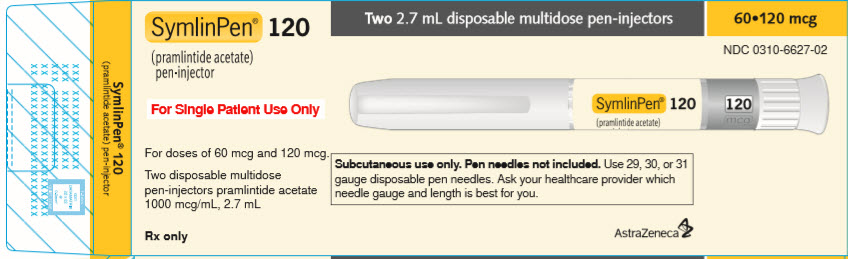
SymlinPen pramlintide acetate 1000 ug/mL Injection, 2 cartridges — NDC 0310-6627-02 (Billing 00310-6627-02)
This is a package of 2 cartridges of SymlinPen pramlintide acetate 1000 ug/mL Injection from AstraZeneca Pharmaceuticals LP, marketed since Jan 2015 and currently FDA-listed, this package's marketing is listed to end Jan 2027; retail pharmacies pay about $217.52 per mL (NADAC). It is this product's only package size.
NDC database record
One package, one record: these facts belong to NDC 0310-6627-02 alone.
- Record
- FDA NDC Directory package listing · Human prescription drug
- Code segments
- 0310 labeler · 6627 product · 02 package
- Package marketed since
- Jan 8, 2015
- Package marketing ended
- Jan 31, 2027
- Sample package
- No — commercial package
- Barcode (UPC-A, from the NDC)
- 3 0310662702 8
- FDA record last changed
- Jul 24, 2026
Identity & classification
Regulatory identifiers FDA, NLM and CMS codes for this package
Drug-database identifiers Medi-Span GPI and First Databank GCN / HICL / AHFS classification
- GSN (GCN sequence number): 063735
- GCN: 99450
- GPI-14 (Medi-Span): 2715005010D240
- HICL (First Databank): 032805
- AHFS class code: 68:20.03.00
- RxCUI (RxNorm): 861042
Where does this data come from?
- FDA openFDA NDC Directory · synced Oct 8, 2026
- FDA label on DailyMed · label index refreshed Oct 8, 2026
- RxNorm (NLM RxNav) · catalog refreshed Oct 8, 2026
- Medi-Span GPI (licensed)
- First Databank (licensed) · refreshed Oct 8, 2026
RxNorm drug class
This medicine belongs to the Amylin Analog class.
Where does this data come from?
- RxClass (NLM) · catalog refreshed Oct 8, 2026
Clinical
- It's an add-on to your mealtime insulin if you have type 1 or type 2 diabetes and your glucose still isn't where it should be. It helps lower the rise in blood sugar after meals. I...
- You inject it under the skin of your abdomen or thigh right before each major meal. Use a separate injection from your insulin and never mix the two. Rotate your sites, and never s...
- Using pramlintide with mealtime insulin can cause severe low blood sugar, so your insulin is cut at the start. You'll check your glucose often while your doses are adjusted. Only c...
- Nausea is the most common side effect, especially early on, and it usually eases over time. Your dose goes up slowly to help with this. Call your doctor if it's strong or won't go...
Patient education
Supplement & herbal interactions
Pramlintide may be associated with lower levels of 1 nutrient — worth a chat with your pharmacist, not a cause for alarm.
Where does this data come from?
- MedlinePlus (NLM) · refreshed Oct 8, 2026
- FDA label on DailyMed · label index refreshed Oct 8, 2026
Ask a licensed pharmacist directly — free, answered by our team.
Pricing
A drug doesn't have one price. Each row is a different public payment system, and none is what you'd pay at the counter — that depends on your insurance. The ⓘ on each row explains what it measures.
| Price system | Per mL | Per package |
|---|---|---|
| Retail pharmacies payNADAC · weekly | $217.521 | $1,174.61 / 5.4 ml |
| Medicaid paysCMS SDUD · 12 mo | No recent Medicaid claims on file for this NDC — rare and low-volume NDCs are suppressed in the public data. | |
| Medicare drug plans payPart D · quarterly | No Part D plan price is available for this NDC in our data. | |
Where does this data come from?
- CMS NADAC weekly file · file of Jun 10, 2026
- CMS ASP pricing files · refreshed Sep 20, 2026
- CMS Medicaid State Drug Utilization Data · refreshed Oct 9, 2026
- CMS Part D plan pricing files · refreshed Sep 24, 2026
- VA National Acquisition Center price file
Packaging — all sizes for this product
| Package NDC | Description | Marketing start | Marketing end | Status |
|---|---|---|---|---|
| 00310-6627-02 You're viewing this Main listing | 2 CARTRIDGE in 1 CARTON / 2.7 mL in 1 CARTRIDGE | 2015-01-08 | Jan 31, 2027 | Active |
Therapeutic equivalents
| Product | Labeler | Pack | NADAC/unit | TE | Status | Price vs. this |
|---|---|---|---|---|---|---|
| SymlinPen 1000 ug/mLthis 00310-6627-02 | AstraZeneca | 2 cartridges | $217.521 | — | Availability likely | — |
| SymlinPen 1000 ug/mL 00310-6615-02 | AstraZeneca | 2 cartridges | $330.952 | — | Availability likely | +52% |
Where does this data come from?
- FDA openFDA NDC Directory · synced Oct 8, 2026
- FDA Orange Book · refreshed Oct 3, 2026
- CMS NADAC weekly file · file of Jun 10, 2026
Availability & generic status
We did not find an FDA-approved generic match for this exact strength, form and route.
Where does this data come from?
- FDA Orange Book · refreshed Oct 3, 2026
Inactive Ingredients / Excipients
Inactive ingredients, also called excipients, are components of the drug product other than the active ingredient. They may include fillers, dyes, coatings, preservatives, flavors, or other formulation ingredients.
🧪 Avoiding an ingredient? See Pramlintide Injection inactive ingredients by manufacturer: every current product's list side by side, so you can ask your pharmacy for the version that does not list it.
💡 Tap an ingredient (hover on desktop) to see what it is and why it’s used.
-
UNII Q40Q9N063P
Acetic acid is a weak organic acid commonly used in medicines as a buffer and pH adjuster. It helps maintain the proper acidity level to ensure the drug remains stable and effective in its formulation.
-
UNII 3OWL53L36A
A natural sugar alcohol derived from seaweed or synthesized in the lab. It's used as a filler to add bulk, a sweetener in sugar-free formulas, and a disintegrant to help tablets break apart in the stomach.
-
2.25 mg / 1 mL
UNII GGO4Y809LO
Metacresol is a preservative derived from coal tar or petroleum. It prevents bacterial and fungal growth in liquid medicines, helping keep the product safe and stable during storage.
-
UNII 4550K0SC9B
Sodium acetate is a salt derived from acetic acid. It acts as a buffer to help maintain the medicine's pH stability and may serve as a preservative or solubilizer in liquid formulations.
-
UNII 059QF0KO0R
Water is a liquid solvent that dissolves and mixes ingredients together in liquid medicines, syrups, and injections. It helps distribute the active drug evenly throughout the product.
5 inactive ingredients listed in the exact product block matched to this NDC.
Where does this data come from?
ingredient classCode="IACT" elements from the exact product block matched by this NDC. Label-section narrative from DailyMed / the openFDA label index is shown separately when available.- FDA label on DailyMed · label index refreshed Oct 8, 2026
- FDA openFDA NDC Directory · synced Oct 8, 2026
Inactive ingredient FAQ
Are inactive ingredients the same for every manufacturer?
Why might an inactive ingredient be missing?
Can inactive ingredients matter?
Manufacturer & labeler
More NDCs from AstraZeneca Pharmaceuticals LP labeler code 00310
- dapagliflozin and metformin hydrochloride 10 mg; 500 mg Tablet, Film Coated, Extended Release NDC 0310-6370-00
- dapagliflozin and metformin hydrochloride 10 mg; 1000 mg Tablet, Film Coated, Extended Release NDC 0310-6380-00
- Byetta exenatide 250 ug/mL Injection NDC 0310-6512-01
- Byetta exenatide 250 ug/mL Injection NDC 0310-6524-01
- SymlinPen pramlintide acetate 1000 ug/mL Injection NDC 0310-6615-02
- Breztri budesonide, glycopyrrolate, and formoterol fumarate 160 ug; 18 ug; 4.8 ug Aerosol, Metered NDC 0310-6616-01
- Budesonide and Formoterol Fumarate Dihydrate 160 ug; 4.5 ug Aerosol NDC 0310-7370-20
- Budesonide and Formoterol Fumarate Dihydrate 80 ug; 4.5 ug Aerosol NDC 0310-7372-20
- Crestor Rosuvastatin 5 mg Tablet, Film Coated NDC 0310-7560-90
- Crestor Rosuvastatin 10 mg Tablet, Film Coated NDC 0310-7570-90
- Crestor Rosuvastatin 20 mg Tablet, Film Coated NDC 0310-7580-90
- Crestor Rosuvastatin 40 mg Tablet, Film Coated NDC 0310-7590-30
Where does this data come from?
- FDA openFDA NDC Directory · synced Oct 8, 2026
- Drugs@FDA
Full prescribing information FDA SPL
🚨 Boxed Warning ▾
WARNING: SEVERE HYPOGLYCEMIA SYMLIN use with insulin increases the risk of severe hypoglycemia, particularly in patients with type 1 diabetes. When severe hypoglycemia occurs, it is seen within 3 hours following a SYMLIN injection. Serious injuries may occur if severe hypoglycemia occurs while operating a motor vehicle, heavy machinery, or while engaging in other high-risk activities.
Appropriate patient selection, careful patient instruction, and insulin dose reduction are critical elements for reducing this risk. WARNING: SEVERE HYPOGLYCEMIA See full prescribing information for complete boxed warning. • SYMLIN use with insulin has been associated with an increased risk of severe hypoglycemia, particularly in patients with type 1 diabetes. • Hypoglycemia risk may be reduced by appropriate patient selection, careful patient instruction, and insulin dose reduction (5.1 , 5.2) .
🎯 Indications and Usage ▾
1 INDICATIONS AND USAGE SYMLIN is indicated as an adjunctive treatment in patients with type 1 or type 2 diabetes who use mealtime insulin therapy and who have failed to achieve desired glucose control despite optimal insulin therapy. SYMLIN is an amylin analog indicated for patients with type 1 or type 2 diabetes who use mealtime insulin and have failed to achieve desired glycemic control despite optimal insulin therapy (1) .
⏱️ Dosage and Administration ▾
2 DOSAGE AND ADMINISTRATION • Upon initiation of SYMLIN, reduce mealtime insulin dose by 50%. Monitor glucoses frequently and individualize subsequent insulin dose adjustments (2.1) . • Type 1 Diabetes: Start at 15 mcg subcutaneously before major meals. Increase in 15 mcg increments to a maximum premeal dose of 30 or 60 mcg; if not tolerated, reduce to 30 mcg, as tolerated (2.2) . • Type 2 Diabetes: Start at 60 mcg subcutaneously before major meals then increase to 120 mcg before meals, as tolerated (2.2) . • Wait at least 3 days between dose titrations to minimize nausea (2.1) .
2.1Important Considerations Pertaining to SYMLIN and Insulin Dose Adjustments SYMLIN dosage differs depending on whether the patient has type 1 or type 2 diabetes [see Dosage and Administration (2.2 , 2.3) ]. SYMLIN should be used only in patients who can fully understand and adhere to proper insulin adjustments and glucose monitoring. Insulin and SYMLIN dose adjustments should be made only as directed by a healthcare professional skilled in the use of insulin.
When initiating SYMLIN, reduce mealtime insulin doses, including premixed insulins, by 50% to reduce the risk of hypoglycemia. To reduce the risk of nausea, wait at least 3 days before titrating SYMLIN to the next dose increment. Monitor blood glucoses frequently, including pre- and post-meals and at bedtime, particularly when initiating SYMLIN or increasing the SYMLIN dose.
After the initial 50% reduction in mealtime insulin dose, individualize insulin dose adjustments based on glycemic control and tolerability (e.g., if nausea occurs it may affect the dose of insulin required). An increased frequency of mild-to-moderate hypoglycemia should be viewed as a warning sign of increased risk for severe hypoglycemia. If SYMLIN therapy is discontinued for any reason (e.g., surgery or illnesses), the same initiation protocol should be followed when SYMLIN therapy is reinstituted [see Dosage and Administration (2.2) ].
2.2Patients with Type 2 Diabetes Using Mealtime Insulin Reduce mealtime insulin doses (including premixed insulins) by 50%, then initiate SYMLIN at 60 mcg subcutaneously, injecting immediately prior to each major meal. Increase the SYMLIN dose from 60 to 120 mcg prior to each major meal when no clinically significant nausea has occurred for at least 3 days. If significant nausea persists at the 120 mcg dose, the SYMLIN dose should be decreased to 60 mcg.
2.3Patients with Type 1 Diabetes Reduce mealtime insulin doses by 50%, then initiate SYMLIN at 15 mcg subcutaneously, injecting immediately prior to each major meal. Increase the SYMLIN dose to the next increment (30, 45, or 60 mcg) when no clinically significant nausea has occurred for at least 3 days. If significant nausea persists at the 45 or 60 mcg dose level, the SYMLIN dose should be decreased to 30 mcg.
If the 30 mcg dose is not tolerated, discontinuation of SYMLIN therapy should be considered.
2.4Administration SYMLIN should be administered subcutaneously immediately prior to each major meal (≥250 kcal or containing ≥30 grams of carbohydrate). SYMLIN should be at room temperature before injecting to reduce potential injection site reactions. Each SYMLIN dose should be administered subcutaneously into the abdomen or thigh.
Administration into the arm is not recommended because of variable absorption. Injection sites should be rotated so that the same site is not used repeatedly. The injection site selected should also be distinct from the site chosen for any concomitant insulin injection.
SYMLIN and insulin should always be administered as separate injections. SYMLIN should not be mixed with any type of insulin. If a SYMLIN dose is missed, wait until the next scheduled dose and administer the usual amount.
2.5Discontinuation of Therapy SYMLIN therapy should be discontinued if there is: • recurrent unexplained hypoglycemia that requires medical assistance. • persistent clinically significant nausea. • noncompliance with self-m… [Excerpted — this section continues on DailyMed.]
💊 Dosage Forms and Strengths ▾
3 DOSAGE FORMS AND STRENGTHS SYMLIN is supplied as a sterile injection in the following dosage forms: • 1.5 mL disposable multidose SymlinPen ® 60 pen-injector containing 1000 mcg/mL pramlintide (as acetate). • 2.7 mL disposable multidose SymlinPen ® 120 pen-injector containing 1000 mcg/mL pramlintide (as acetate). • 1.5 mL SymlinPen ® 60 disposable multidose pen-injector, (1000 mcg/mL) for 15, 30, 45, and 60 mcg doses (3) . • 2.7 mL SymlinPen ® 120 disposable multidose pen-injector, (1000 mcg/mL) for 60 and 120 mcg doses (3) .
⛔ Contraindications ▾
4 CONTRAINDICATIONS SYMLIN is contraindicated in patients with any of the following: • serious hypersensitivity reaction to SYMLIN or to any of its product components. • hypoglycemia unawareness. • confirmed gastroparesis. • Prior serious hypersensitivity reaction to SYMLIN or its ingredients (4) • Hypoglycemia unawareness (4) • Confirmed gastroparesis (4)
⚠️ Warnings and Cautions ▾
5 WARNINGS AND PRECAUTIONS • Severe hypoglycemia: Increased risk particularly for type 1 diabetes. Upon initiation of SYMLIN, reduce mealtime insulin dose by 50% and frequently monitor blood glucoses (5.2) . • Never share a SymlinPen between patients, even if the needle is changed (5.3) . • Do not mix SYMLIN and insulin: Mixing can alter the pharmacokinetics of both products. Administer as separate injections (5.4 , 7.1) . • Slows gastric emptying: Administer concomitant oral medications at least 1 hour before or 2 hours after SYMLIN if rapid onset or threshold concentration is critical (5.6 , 7.2) .
5.1Patient Selection Proper patient selection is critical to the safe and effective use of SYMLIN. Before initiating SYMLIN, the patient's HbA1c, recent blood glucose monitoring data, history of insulin-induced hypoglycemia, current insulin regimen, and body weight should be reviewed. SYMLIN therapy should only be considered in patients with type 1 diabetes or patients with type 2 diabetes using mealtime insulin who fulfill the following criteria: • have failed to achieve adequate glycemic control despite individualized insulin management. • are receiving ongoing care under the guidance of a healthcare professional skilled in the use of insulin and supported by the services of diabetes educator(s).
Patients meeting any of the following criteria should NOT be considered for SYMLIN therapy: • poor compliance with current insulin regimen. • poor compliance with prescribed self blood glucose monitoring. • have a HbA1c >9%. • recurrent severe hypoglycemia requiring assistance during the past 6 months. • presence of hypoglycemia unawareness. • confirmed diagnosis of gastroparesis. • require the use of drugs that stimulate gastrointestinal motility. • pediatric patients. SYMLIN should be prescribed with caution to persons with visual or dexterity impairment.
5.2Hypoglycemia SYMLIN alone does not cause hypoglycemia. However, SYMLIN is indicated to be coadministered with mealtime insulin therapy, and in this setting there is an increased risk of severe hypoglycemia, particularly in patients with type 1 diabetes. If severe hypoglycemia associated with SYMLIN occurs, it is usually seen within the first 2 to 3 hours following a SYMLIN injection.
If severe hypoglycemia occurs while operating a motor vehicle, heavy machinery, or while engaging in other high-risk activities, serious injuries or death may occur. Therefore, when introducing SYMLIN therapy, appropriate precautions need to be taken to avoid increasing the risk for severe hypoglycemia. These precautions include frequent monitoring of pre- and post-meal glucose combined with an initial 50% reduction in doses of mealtime insulin [see Dosage and Administration (2.1 , 2.2 ) ].
Early warning symptoms of hypoglycemia may be different or less pronounced under certain conditions, such as longstanding diabetes; diabetic neuropathy; use of medications such as beta-blockers, clonidine, guanethidine, or reserpine; or intensified glycemic control. The addition of any anti-diabetic medication, such as SYMLIN, to an existing regimen of one or more anti-diabetic medications (e.g., sulfonylurea), or other medications that can increase the risk of hypoglycemia may necessitate further insulin dose adjustments and particularly close monitoring of blood glucose.
5.3Never Share a SymlinPen Between Patients SymlinPen must never be shared between patients, even if the needle is changed. Pen-sharing poses a risk for transmission of blood-borne pathogens.
5.4Never Mix SYMLIN and Insulin Mixing SYMLIN and insulin can alter the pharmacokinetics of both products which may result in inadequate glucose control or hypoglycemia. Therefore, SYMLIN and insulin must always be administered as separate injections and should never be mixed [see Drug Interactions (7.1) and Clinical Pharmacology (12.3) ].
5.5Concomitantly Administered Oral Medications SYMLIN slows gastric emptying, which may delay the absorption of con… [Excerpted — this section continues on DailyMed.]
🤒 Adverse Reactions ▾
6 ADVERSE REACTIONS Because clinical trials are conducted under widely varying conditions, adverse reaction rates observed in the clinical trials of a drug cannot be directly compared to rates in the clinical trials of another drug and may not reflect the rates observed in practice. • Most common adverse reactions (incidence ≥5% and higher incidence than placebo): nausea, vomiting, anorexia, headache (6.1) . To report SUSPECTED ADVERSE REACTIONS, contact AstraZeneca at 1-800-236-9933 or FDA at 1-800-FDA-1088 or www.fda.gov/medwatch .
6.1Clinical Trial Experience Adverse Reactions (Excluding Hypoglycemia) Adverse reactions (excluding hypoglycemia, which is discussed separately below) commonly associated with SYMLIN when coadministered with a fixed dose of insulin in the 26- to 52-week, placebo-controlled trials in patients with type 1 diabetes and patients with type 2 diabetes on mealtime insulin are presented in Table 1 and Table 2, respectively. Table 1: Patients with Type 1 Diabetes: Common Adverse Reactions (Incidence ≥5% and Greater Incidence with SYMLIN Compared to Placebo) in 3 Pooled Placebo-Controlled Trials Long-Term, Placebo-Controlled Studies SYMLIN 30 or 60 mcg 3 Times Daily + Insulin Placebo + Insulin (N=716) % (N=538) % Nausea 48 17 Anorexia 17 2 Inflicted Injury Examples of inflicted injury included among others, abrasions, bruises, burns, fractures, lacerations, and muscle strains.
14 10 Vomiting 11 7 Arthralgia 7 5 Fatigue 7 4 Allergic Reaction 6 5 Dizziness 5 4 Table 2: Patients with Type 2 Diabetes on Insulin: Common Adverse Reactions (Incidence ≥5% and Greater Incidence with SYMLIN Compared to Placebo) in 2 Pooled Placebo-Controlled Trials Long-Term, Placebo-Controlled Studies SYMLIN 120 mcg 2 Times Daily + Insulin Placebo + Insulin (N=292) % (N=284) % Nausea 28 12 Headache 13 7 Anorexia 9 2 Vomiting 8 4 Abdominal pain 8 7 Fatigue 7 4 Dizziness 6 4 Cough 6 4 Pharyngitis 5 2 Most adverse reactions were gastrointestinal in nature.
The incidence of nausea is higher at the beginning of SYMLIN treatment and decreases with time in most patients. Gradual titration of the SYMLIN dose minimizes the incidence and severity of nausea [see Dosage and Administration (2) ]. Severe Hypoglycemia Coadministration of SYMLIN with mealtime insulin increases the risk of severe hypoglycemia, particularly in patients with type 1 diabetes [see Boxed Warning and Warnings and Precautions (5.1) ].
Two definitions of severe hypoglycemia were used in the SYMLIN clinical trials. Patient-ascertained severe hypoglycemia was defined as an episode of hypoglycemia requiring the assistance of another individual (including help administering oral carbohydrate) or requiring the administration of glucagon, intravenous glucose, or other medical intervention. Medically-assisted severe hypoglycemia was defined as an episode of hypoglycemia that was classified as a serious event by the investigator or that required glucagon, intravenous glucose, hospitalization, paramedic assistance or an emergency room visit.
The incidence of severe hypoglycemia during the SYMLIN clinical development program is summarized in Table 3 and Table 4. Table 3: Incidence and Event Rate of Severe Hypoglycemia in Six-Month, Placebo-Controlled Trials and Dose Titration Trial in Patients with Type 1 Diabetes Long-Term, Placebo-Controlled Studies (No Insulin Dose-Reduction During Initiation) Placebo-Controlled Dose Titration Study SYMLIN + Insulin Placebo + Insulin SYMLIN + Insulin Placebo + Insulin Severe Hypoglycemia 0 to 3 Months (n=716) >3 to 6 Months (n=576) 0 to 3 Months (n=538) >3 to 6 Months (n=470) 0 to 3 Months (n=148) >3 to 6 Months (n=133) 0 to 3 Months (n=147) >3 to 6 Months (n=138) Patient-Ascertained Patient-ascertained severe hypoglycemia: Requiring the assistance of another individual (including help ingesting oral carbohydrate) and/or requiring the administration of glucagon injection, intravenous glucose, or other medical intervention.
Event Rate (events/pat… [Excerpted — this section continues on DailyMed.]
🔄 Drug Interactions ▾
7 DRUG INTERACTIONS
7.1Insulin The pharmacokinetic parameters of pramlintide are altered when SYMLIN is mixed in the same syringe with regular, NPH, and 70/30 premixed formulations of recombinant human insulin. SYMLIN and insulin must not be mixed and must be administered as separate injections [see Dosage and Administration (2.4) , Warnings and Precautions (5.4) , and Clinical Pharmacology (12.3) ].
7.2Oral Medications SYMLIN has the potential to delay the absorption of concomitantly administered oral medications. When the rapid onset or threshold concentration of a concomitant orally administered medication is a critical determinant of effectiveness (such as with analgesics, antibiotics, and oral contraceptives), the medication should be administered at least 1 hour prior to SYMLIN injection or 2 hours after SYMLIN injection [see Warnings and Precautions (5.5) and Clinical Pharmacology (12.3) ].
7.3Drugs Affecting Gastrointestinal Motility Due to its effects on gastric emptying, SYMLIN should not be considered for patients taking medications that alter gastrointestinal motility (e.g., anticholinergic agents such as atropine) or medications that slow the intestinal absorption of nutrients (e.g., alpha-glucosidase inhibitors). Patients using these medications have not been studied in SYMLIN clinical trials [see Warnings and Precautions (5.6) ].
7.4Drugs Affecting Glucose Metabolism The following are examples of medications that may increase the susceptibility to hypoglycemia when administered with SYMLIN: anti-diabetic products, angiotensin converting enzyme (ACE) inhibitors, disopyramide, fibrates, fluoxetine, monoamine oxidase inhibitors, pentoxifylline, salicylates, somatostatin analogs, and sulfonamide antibiotics. SYMLIN and these drugs should be coadministered with caution.
👥 Use in Specific Populations ▾
8 USE IN SPECIFIC POPULATIONS
8.1Pregnancy Risk Summary Available data from a small number of reports in the manufacturer’s safety database on SYMLIN use in pregnant women are not sufficient to determine a drug-associated risk for major birth defects, miscarriage, or other adverse maternal or fetal outcomes. There are risks to the mother and fetus associated with poorly controlled diabetes in pregnancy ( see Clinical Considerations ). Ex-vivo studies using term perfused human, rabbit, and rat placentas indicate that SYMLIN has low potential to cross the maternal/fetal placental barrier.
In animal reproduction studies, congenital abnormalities were observed in fetuses of pregnant rats but not in fetuses of pregnant rabbits exposed during organogenesis to pramlintide at 10 times the clinical dose of 360 mcg/day, based on exposure (see Data ). The estimated background risk of major birth defects is 6-10% in women with pre-gestational diabetes with an HbA1c >7 and has been reported to be as high as 20-25% in women with HbA1c >10. The estimated background risk of miscarriage for the indicated population is unknown.
In the U.S. general population, the estimated background risk of major birth defects and miscarriage in clinically recognized pregnancies is 2-4% and 15-20%, respectively. Clinical Considerations Disease-associated maternal and/or embryo/fetal risk Poorly controlled diabetes in pregnancy increases the maternal risk for diabetic ketoacidosis, preeclampsia, spontaneous abortions, preterm delivery, and delivery complications. Poorly controlled diabetes increases the fetal risk for major birth defects, stillbirth, and macrosomia related morbidity.
Data Animal Data Developmental and reproductive toxicity studies with SYMLIN were performed in pregnant rats and rabbits. Increases in congenital abnormalities (neural tube defect, cleft palate, exencephaly) were observed in fetuses of pregnant rats administered pramlintide subcutaneously during organogenesis at 0.3 and 1 mg/kg/day (10 and 47 times the human dose of 360 mcg/day based on AUC, respectively), but not at 3mg/kg/day. Administration of pramlintide to pregnant rabbits during organogenesis resulted in maternal toxicity but did not increase fetal malformations at doses up to 0.3 mg/kg/day (9 times the human dose of 360 mcg/day based on AUC).
8.2Lactation Risk Summary There is no data on the presence of pramlintide in human milk, the effects on the breastfed infant, or the effects on milk production. The developmental and health benefits of breastfeeding should be considered along with the mother’s clinical need for SYMLIN and any potential adverse effects on the breastfed child from SYMLIN or from the underlying maternal condition.
8.4Pediatric Use Safety and effectiveness of SYMLIN in pediatric patients have not been established.
8.5Geriatric Use SYMLIN has been studied in patients ranging in age from 15 to 84 years of age, including 769 patients ≥65 to 75 years of age and 87 patients ≥75 years of age. No consistent differences in the efficacy and safety of SYMLIN have been observed in older patients, but greater sensitivity in some older individuals cannot be ruled out. As is recommended for all patients, SYMLIN and insulin regimens should be carefully managed to minimize the risk of severe hypoglycemia.
8.6Renal Impairment The dosing requirements for SYMLIN are not altered in patients with mild (creatinine clearance [Cl Cr ] 60-89 mL/min), moderate (Cl Cr 30-59 mL/min) or severe renal impairment (Cl Cr 15-29 mL/min). SYMLIN has not been studied in patients with end-stage renal disease [see Clinical Pharmacology (12.3) ] .
8.7Hepatic Impairment SYMLIN use has not been studied in patients with hepatic impairment [see Clinical Pharmacology (12.3) ] .
8.8Gender No consistent differences in the efficacy and safety of SYMLIN have been observed between men and women in SYMLIN clinical trials (n=2799 for male and n=2085 for female).
8.9Race/Ethnicity No consistent differ… [Excerpted — this section continues on DailyMed.]
🤰 Pregnancy ▾
8.1Pregnancy Risk Summary Available data from a small number of reports in the manufacturer’s safety database on SYMLIN use in pregnant women are not sufficient to determine a drug-associated risk for major birth defects, miscarriage, or other adverse maternal or fetal outcomes. There are risks to the mother and fetus associated with poorly controlled diabetes in pregnancy ( see Clinical Considerations ). Ex-vivo studies using term perfused human, rabbit, and rat placentas indicate that SYMLIN has low potential to cross the maternal/fetal placental barrier.
In animal reproduction studies, congenital abnormalities were observed in fetuses of pregnant rats but not in fetuses of pregnant rabbits exposed during organogenesis to pramlintide at 10 times the clinical dose of 360 mcg/day, based on exposure (see Data ). The estimated background risk of major birth defects is 6-10% in women with pre-gestational diabetes with an HbA1c >7 and has been reported to be as high as 20-25% in women with HbA1c >10. The estimated background risk of miscarriage for the indicated population is unknown.
In the U.S. general population, the estimated background risk of major birth defects and miscarriage in clinically recognized pregnancies is 2-4% and 15-20%, respectively. Clinical Considerations Disease-associated maternal and/or embryo/fetal risk Poorly controlled diabetes in pregnancy increases the maternal risk for diabetic ketoacidosis, preeclampsia, spontaneous abortions, preterm delivery, and delivery complications. Poorly controlled diabetes increases the fetal risk for major birth defects, stillbirth, and macrosomia related morbidity.
Data Animal Data Developmental and reproductive toxicity studies with SYMLIN were performed in pregnant rats and rabbits. Increases in congenital abnormalities (neural tube defect, cleft palate, exencephaly) were observed in fetuses of pregnant rats administered pramlintide subcutaneously during organogenesis at 0.3 and 1 mg/kg/day (10 and 47 times the human dose of 360 mcg/day based on AUC, respectively), but not at 3mg/kg/day. Administration of pramlintide to pregnant rabbits during organogenesis resulted in maternal toxicity but did not increase fetal malformations at doses up to 0.3 mg/kg/day (9 times the human dose of 360 mcg/day based on AUC).
🧒 Pediatric Use ▾
8.4Pediatric Use Safety and effectiveness of SYMLIN in pediatric patients have not been established.
🧓 Geriatric Use ▾
8.5Geriatric Use SYMLIN has been studied in patients ranging in age from 15 to 84 years of age, including 769 patients ≥65 to 75 years of age and 87 patients ≥75 years of age. No consistent differences in the efficacy and safety of SYMLIN have been observed in older patients, but greater sensitivity in some older individuals cannot be ruled out. As is recommended for all patients, SYMLIN and insulin regimens should be carefully managed to minimize the risk of severe hypoglycemia.
🆘 Overdosage ▾
10 OVERDOSAGE Single 10 mg doses of SYMLIN (83 times the maximum recommended dose of 120 mcg for patients with type 2 diabetes) were administered to 3 healthy volunteers. All 3 individuals reported severe nausea associated with vomiting, diarrhea, vasodilatation, and dizziness. No hypoglycemia was reported. Pramlintide has a short half-life (approximately 48 minutes in healthy individuals). Initiate supportive measures in the case of overdose.
🧬 Clinical Pharmacology ▾
12 CLINICAL PHARMACOLOGY
12.1Mechanism of Action Pramlintide is an analog of human amylin. Amylin is colocated with insulin in secretory granules and cosecreted with insulin by pancreatic beta cells in response to food intake. Amylin and insulin show similar fasting and postprandial patterns in healthy individuals (Figure 1).
Figure 1: Secretion Profile of Amylin and Insulin in Healthy Adults In patients with type 1 and type 2 diabetes, there is reduced secretion from pancreatic beta cells of both insulin and amylin in response to food. Amylin affects the rate of postprandial glucose appearance through a variety of mechanisms, as determined by nonclinical studies. Amylin slows gastric emptying (i.e., the rate at which food is released from the stomach to the small intestine) without altering the overall absorption of nutrients.
In addition, amylin suppresses glucagon secretion (not normalized by insulin alone), which leads to suppression of endogenous glucose output from the liver. Amylin also regulates food intake due to centrally-mediated modulation of appetite. In human studies, pramlintide, acting as an amylin analog, slows gastric emptying, reduces the postprandial rise in plasma glucagon, and modulates satiety leading to decreased caloric intake.
Figure 1
12.2Pharmacodynamics In clinical studies in patients with type 1 diabetes and patients with type 2 diabetes using mealtime insulin, SYMLIN reduced mean postprandial glucose concentrations, reduced glucose fluctuations, and reduced food intake. Reduction in Postprandial Glucose Concentrations In a randomized, single-blind, placebo-controlled, crossover study, 19 subjects with type 2 diabetes using insulin lispro, 19 subjects with type 1 diabetes using regular human insulin, and 21 subjects with type 1 diabetes using insulin lispro underwent mixed-meal tests.
SYMLIN administered subcutaneously immediately prior to a meal reduced plasma glucose concentrations following the meal when used with mealtime insulin (rapid-acting insulin analogs or regular human insulin) (Figure 2). When rapid-acting insulin analogs were used, plasma glucose concentrations tended to rise during the interval between 150 minutes following SYMLIN injection and the next meal [see Dosage and Administration (2) ]. Figure 2: Postprandial Plasma Glucose Profiles in Patients with Type 1 Diabetes or Type 2 Diabetes Receiving SYMLIN and Insulin Compared to Those Receiving Insulin Alone While SYMLIN reduces postprandial glucose, clinical studies employing a controlled hypoglycemic challenge have demonstrated that SYMLIN does not alter the counter-regulatory hormonal response to insulin-induced hypoglycemia.
Likewise, in SYMLIN-treated patients, the perception of hypoglycemic symptoms was not altered with plasma glucose concentrations as low as 45 mg/dL. In a separate clinical trial pramlintide also reduced the 24-hour glucose fluctuations based upon 24-hour glucose monitoring. Figure 2 Reduced Food Intake A single, subcutaneous dose of 30 mcg of SYMLIN to patients with type 1 diabetes and 120 mcg of SYMLIN to patients with type 2 diabetes administered 1 hour prior to an unlimited buffet meal was associated with reductions in total caloric intake (placebo-subtracted mean changes of ~21% and 23%, respectively), which occurred without decreases in meal duration.
12.3Pharmacokinetics Absorption The absolute bioavailability of pramlintide following a single subcutaneous dose of SYMLIN is approximately 30% to 40%. Subcutaneous administration of different doses of SYMLIN into the abdominal area or thigh of healthy individuals showed a linear, dose-dependent increase in maximum plasma concentrations (C max ) and overall exposure (AUC) (Table 5). Table 5: Mean Pharmacokinetic Parameters Following Administration of Single Subcutaneous Doses of SYMLIN Subcutaneous Dose (mcg) AUC (0-∞) (pmol*min/L) C max (pmol/L) T max (min) Elimination t ½ (min) 30 3750 39 21 55 60 6778 79 20 49 90 8507 102 19 51 120 11970 147 21 48… [Excerpted — this section continues on DailyMed.]
🧬 Mechanism of Action ▾
12.1Mechanism of Action Pramlintide is an analog of human amylin. Amylin is colocated with insulin in secretory granules and cosecreted with insulin by pancreatic beta cells in response to food intake. Amylin and insulin show similar fasting and postprandial patterns in healthy individuals (Figure 1).
Figure 1: Secretion Profile of Amylin and Insulin in Healthy Adults In patients with type 1 and type 2 diabetes, there is reduced secretion from pancreatic beta cells of both insulin and amylin in response to food. Amylin affects the rate of postprandial glucose appearance through a variety of mechanisms, as determined by nonclinical studies. Amylin slows gastric emptying (i.e., the rate at which food is released from the stomach to the small intestine) without altering the overall absorption of nutrients.
In addition, amylin suppresses glucagon secretion (not normalized by insulin alone), which leads to suppression of endogenous glucose output from the liver. Amylin also regulates food intake due to centrally-mediated modulation of appetite. In human studies, pramlintide, acting as an amylin analog, slows gastric emptying, reduces the postprandial rise in plasma glucagon, and modulates satiety leading to decreased caloric intake.
Figure 1
📦 How Supplied / Storage and Handling ▾
16 HOW SUPPLIED/STORAGE AND HANDLING SYMLIN Injection is available in the following package sizes: • SymlinPen ® 60 pen-injector, containing 1000 mcg/mL pramlintide (as acetate) Two 1.5 mL disposable multidose pen-injectors (NDC 0310-6615-02) • SymlinPen ® 120 pen-injector, containing 1000 mcg/mL pramlintide (as acetate) Two 2.7 mL disposable multidose pen-injectors (NDC 0310-6627-02) Storage and Handling SYMLIN pen-injectors not in use: Refrigerate (2°C to 8°C; 36°F to 46°F), and protect from light. Do not freeze. Do not use if product has been frozen.
Unused SYMLIN (opened or unopened) should not be used after the expiration (EXP) date printed on the carton and the label. SYMLIN pen-injectors in use: After first use, refrigerate or keep at a temperature not greater than 86°F (30°C) for 30 days. Use within 30 days, whether or not refrigerated.
Storage conditions are summarized in Table 9. Table 9: Storage Conditions Dosage Form Unopened (not in use) Refrigerated Open (in use) Refrigerated or Temperature up to 86°F (30°C) 1.5 mL pen-injector Until Expiration Date Use Within 30 Days 2.7 mL pen-injector
📦 Storage and Handling ▾
Storage and Handling SYMLIN pen-injectors not in use: Refrigerate (2°C to 8°C; 36°F to 46°F), and protect from light. Do not freeze. Do not use if product has been frozen.
Unused SYMLIN (opened or unopened) should not be used after the expiration (EXP) date printed on the carton and the label. SYMLIN pen-injectors in use: After first use, refrigerate or keep at a temperature not greater than 86°F (30°C) for 30 days. Use within 30 days, whether or not refrigerated.
Storage conditions are summarized in Table 9. Table 9: Storage Conditions Dosage Form Unopened (not in use) Refrigerated Open (in use) Refrigerated or Temperature up to 86°F (30°C) 1.5 mL pen-injector Until Expiration Date Use Within 30 Days 2.7 mL pen-injector
📋 Description ▾
11 DESCRIPTION SYMLIN ® (pramlintide acetate) injection is an anti-diabetic medication for use in patients with diabetes treated with insulin. Pramlintide is a synthetic analog of human amylin, a naturally occurring neuroendocrine hormone synthesized by pancreatic beta cells that contributes to glucose control during the postprandial period. Pramlintide is provided as an acetate salt of the synthetic 37-amino acid polypeptide, which differs in amino acid sequence from human amylin by replacement with proline at positions 25 (alanine), 28 (serine), and 29 (serine).
The structural formula of pramlintide acetate is shown below: Pramlintide acetate is a white powder that has a molecular formula of C 171 H 267 N 51 O 53 S 2 • × C 2 H 4 O 2 (3≤ × ≤8); the molecular weight is 3949.4. Pramlintide acetate is soluble in water. SYMLIN is formulated as a clear, isotonic, sterile solution for subcutaneous administration.
The disposable multidose SymlinPen ® pen-injector contains 1000 mcg/mL of pramlintide (as acetate). The formulation contains 2.25 mg/mL of metacresol as a preservative, D-mannitol as a tonicity modifier, acetic acid, sodium acetate as pH modifiers, and water for injection. SYMLIN has a pH of approximately 4.0.
Pramlintide Acetate Chemical Structure
💬 Information for Patients ▾
17 PATIENT COUNSELING INFORMATION Advise the patient to read the FDA-approved patient labeling (Medication Guide). Risk of Hypoglycemia Discuss the risk and consequences of hypoglycemia and approaches to minimize its occurrence. Inform patients about the importance of self-management practices including glucose monitoring and timing of dosing.
In addition, reinforce the importance of adherence to meal planning, physical activity, recognition and management of hypoglycemia and hyperglycemia, and assessment of diabetes complications. Never Share a SymlinPen Between Patients Advise patients that they must never share a SymlinPen with another person, even if the needle is changed, because doing so carries a risk for transmission of blood-borne pathogens. Never Mix SYMLIN and Insulin Inform patients that SYMLIN and insulin should always be administered as separate injections and never be mixed.
Show patients how to administer SYMLIN using the pen-injector. Advise patients to use a new needle for each injection. Instructions Instruct patients on the proper injection technique and proper storage of SYMLIN.
Refer patients to the SYMLIN Medication Guide and Patient Instructions for Use for additional information. Distributed by: AstraZeneca Pharmaceuticals LP Wilmington, DE 19850 SYMLIN and SymlinPen are registered trademarks of the AstraZeneca group of companies.
💬 Medication Guide ▾
MEDICATION GUIDE SYMLIN ® (SĬM-lĭn) (pramlintide acetate) injection for subcutaneous use Read this Medication Guide and Instructions for Use that come with your SYMLIN before you start using it and each time you get a refill. There may be new information. This Medication Guide does not take the place of talking to your healthcare provider about your medical condition or treatment.
What is the most important information I should know about SYMLIN? SYMLIN can cause serious side effects, including : • severe low blood sugar (hypoglycemia) . Even when SYMLIN is carefully added to your mealtime insulin therapy, your blood sugar may drop too low, especially if you have type 1 diabetes.
If this severe low blood sugar (hypoglycemia) happens, it is seen within 3 hours after a SYMLIN injection. Symptoms of severe low blood sugar and low blood sugar include: o lightheadedness o dizziness o shakiness o sweating o hunger o fast heartbeat o trouble concentrating or confusion o change in vision o headache o irritability o drowsiness People who have severely low blood sugar have had injuries while driving their car, operating heavy machinery or doing other dangerous activities. You and your healthcare provider should talk about a plan to treat low blood sugar.
You should have fast-acting sugar (such as hard candy, glucose tablets, juice) or glucagon for injection with you at all times. Call your healthcare provider if you have severe low blood sugar or if you have low blood sugar more often than normal. You have a higher chance of getting severe low blood sugar if you: o do not follow your healthcare provider’s instructions to reduce your insulin use before meals o use more SYMLIN or insulin than prescribed by your healthcare provider o change your insulin dose without checking your blood sugar o eat less food than your usual meal o are sick and cannot eat o are more active than usual o have a low blood sugar level before eating o drink alcohol SYMLIN is used with insulin to lower blood sugar, especially high blood sugar that happens after meals.
SYMLIN is taken at mealtimes. The use of SYMLIN does not replace your daily insulin but may lower the amount of insulin you need, especially before meals. Do not share your SymlinPen with other people, even if the needle has been changed.
You may give other people a serious infection, or get a serious infection from them. What is SYMLIN? SYMLIN is an injectable prescription medicine used to treat adults with type 1 and type 2 diabetes to control blood sugar.
SYMLIN is used when your mealtime insulin dose has not controlled your blood sugar well enough. It is not known if SYMLIN is safe and effective in children. Who should not use SYMLIN?
Do not use SYMLIN if you: • are allergic to SYMLIN or any ingredients in SYMLIN. See the end of this Medication Guide for a complete list of ingredients in SYMLIN. • cannot tell when your blood sugar is low (hypoglycemia unawareness) • have a stomach problem called gastroparesis. This is when your stomach does not empty as fast as it should.
What should I tell my healthcare provider before using SYMLIN? Before you use SYMLIN, tell your healthcare provider about all of your medical conditions, including if you: • are pregnant or plan to become pregnant. It is not known if SYMLIN will harm your unborn baby.
You and your healthcare provider should decide how to best control your blood sugar levels during pregnancy. • are breastfeeding or plan to breastfeed. It is not known if SYMLIN passes into your breast milk. You and your healthcare provider should decide about the best way to feed your baby if you are using SYMLIN.
Tell your healthcare provider about all the medicines you take, including prescription and over-the-counter medicines, vitamins, and herbal supplements. SYMLIN slows stomach emptying and can affect medicines that need to pass through the stomach quickly. How should I use SYMLIN? • Read the “Instructions for Use” and the Medication Guide and that come wit… [Excerpted — this section continues on DailyMed.]
🧬 Pharmacokinetics ▾
12.3Pharmacokinetics Absorption The absolute bioavailability of pramlintide following a single subcutaneous dose of SYMLIN is approximately 30% to 40%. Subcutaneous administration of different doses of SYMLIN into the abdominal area or thigh of healthy individuals showed a linear, dose-dependent increase in maximum plasma concentrations (C max ) and overall exposure (AUC) (Table 5). Table 5: Mean Pharmacokinetic Parameters Following Administration of Single Subcutaneous Doses of SYMLIN Subcutaneous Dose (mcg) AUC (0-∞) (pmol*min/L) C max (pmol/L) T max (min) Elimination t ½ (min) 30 3750 39 21 55 60 6778 79 20 49 90 8507 102 19 51 120 11970 147 21 48 Injection of SYMLIN into the arm in obese patients with type 1 or type 2 diabetes showed higher overall exposure (20%-36%) with greater variability (% CV for AUC: 73%-106%), compared with exposure after injection of SYMLIN into the abdominal area or thigh.
Relative bioavailability of pramlintide was not significantly different between obese and non-obese patients and based on BMI or skin fold thickness. Injections administered with 6.0-mm and 12.7-mm needles yielded similar bioavailability. Distribution SYMLIN does not extensively bind to red blood cells or albumin (approximately 40% of the drug is unbound in plasma).
Metabolism and Elimination In healthy individuals, the half-life of pramlintide is approximately 48 minutes. The primary metabolite, Des-lys 1 pramlintide (2-37 pramlintide), is biologically active in vitro . Overall exposure (AUC) to pramlintide is relatively constant with repeat dosing of SYMLIN, indicating no bioaccumulation.
Specific Populations Renal Impairment No studies have been conducted in patients with end-stage renal disease. In a single-dose pharmacokinetic study in patients with type 1 diabetes, 60 mcg of SYMLIN was administered to 4 patients with normal renal function (Cl Cr >90 mL/min), 9 patients with mild renal impairment (Cl Cr 60-89 mL/min), 5 patients with moderate renal impairment (Cl Cr 30-59 mL/min) and 3 patients with severe renal impairment (Cl Cr 15-29 mL/min). No statistically significant differences were noted in total (AUC 0-∞ ) and peak (C max ) exposure of pramlintide for mild, moderate, and severe renal impairment categories in comparison to patients with normal renal function; although, inter-patient variability in pharmacokinetic parameters was high.
Hepatic Impairment Pharmacokinetic studies have not been conducted in patients with hepatic impairment. Geriatric Pharmacokinetic studies have not been conducted in the geriatric population [see Use in Specific Populations (8.5) ]. Pediatric The efficacy and safety of SYMLIN have not been established in the pediatric population.
The use of SYMLIN is not recommended in pediatric patients due to the risk of severe hypoglycemia [see Warnings and Precautions (5.1 , 5.2) ]. Gender No study has been conducted to evaluate the effect of gender on pramlintide pharmacokinetics. Race/Ethnicity No study has been conducted to evaluate the effect of ethnicity on pramlintide pharmacokinetics.
Drug Interactions Effect of Pre-Mixing SYMLIN with Insulin Pharmacokinetic profiles of pramlintide and insulins after coadministration of 30 mcg SYMLIN with different insulins (regular, NPH, and 70/30 premixed formulations of recombinant human insulin) as one subcutaneous injection, premixed in one syringe, were compared to those observed after the coadministration of SYMLIN and different insulins given as separate subcutaneous injections. The effects of premixing on pramlintide pharmacokinetics varied across the different insulin products with a maximum decrease of 40% in pramlintide C max and a maximum increase of 36% in pramlintide AUC 0-∞ .
Similarly, effects of premixing on insulin pharmacokinetics varied across different insulin products with a maximum increase of 15% in insulin C max and up to a 20% increase in insulin AUC 0-600min . Always administer SYMLIN and insulin as separate injections and never mi… [Excerpted — this section continues on DailyMed.]
🧬 Pharmacodynamics ▾
12.2Pharmacodynamics In clinical studies in patients with type 1 diabetes and patients with type 2 diabetes using mealtime insulin, SYMLIN reduced mean postprandial glucose concentrations, reduced glucose fluctuations, and reduced food intake. Reduction in Postprandial Glucose Concentrations In a randomized, single-blind, placebo-controlled, crossover study, 19 subjects with type 2 diabetes using insulin lispro, 19 subjects with type 1 diabetes using regular human insulin, and 21 subjects with type 1 diabetes using insulin lispro underwent mixed-meal tests.
SYMLIN administered subcutaneously immediately prior to a meal reduced plasma glucose concentrations following the meal when used with mealtime insulin (rapid-acting insulin analogs or regular human insulin) (Figure 2). When rapid-acting insulin analogs were used, plasma glucose concentrations tended to rise during the interval between 150 minutes following SYMLIN injection and the next meal [see Dosage and Administration (2) ]. Figure 2: Postprandial Plasma Glucose Profiles in Patients with Type 1 Diabetes or Type 2 Diabetes Receiving SYMLIN and Insulin Compared to Those Receiving Insulin Alone While SYMLIN reduces postprandial glucose, clinical studies employing a controlled hypoglycemic challenge have demonstrated that SYMLIN does not alter the counter-regulatory hormonal response to insulin-induced hypoglycemia.
Likewise, in SYMLIN-treated patients, the perception of hypoglycemic symptoms was not altered with plasma glucose concentrations as low as 45 mg/dL. In a separate clinical trial pramlintide also reduced the 24-hour glucose fluctuations based upon 24-hour glucose monitoring. Figure 2 Reduced Food Intake A single, subcutaneous dose of 30 mcg of SYMLIN to patients with type 1 diabetes and 120 mcg of SYMLIN to patients with type 2 diabetes administered 1 hour prior to an unlimited buffet meal was associated with reductions in total caloric intake (placebo-subtracted mean changes of ~21% and 23%, respectively), which occurred without decreases in meal duration.
🔬 Clinical Studies ▾
14 CLINICAL STUDIES A total of 2333 patients with type 1 diabetes and 1852 patients with type 2 diabetes received SYMLIN in controlled clinical trials.
14.1Type 1 Diabetes The efficacy and safety of SYMLIN were evaluated in 3 (26-52-week), randomized, double-blind, placebo-controlled trials in patients with type 1 diabetes. In these studies, insulin adjustments were minimized in order to isolate the SYMLIN effect with insulin adjustments allowed, at the investigator's discretion, when excessive hypoglycemia was encountered. Patients participating in these 3 trials had a mean age of 40 years, a mean duration of diabetes of 17 years, and a mean body mass index of 25.9 kg/m 2 .
Table 6 summarizes the 6-month results for those patients assigned to the 30 or 60 mcg dose of SYMLIN or placebo. Table 6: Mean (SE) Change in HbA1c and Insulin at 6 Months in the Double-Blind, Placebo-Controlled Studies in Patients with Type 1 Diabetes for the Intent-to-Treat Population Trial 1 Trial 2 Trial 3 Variable SYMLIN (30/60 mcg) Placebo SYMLIN (60 mcg) Placebo SYMLIN (60 mcg TID) SYMLIN (60 mcg QID) Placebo N=243 N=237 N=148 N=147 N=164 N=161 N=154 Baseline HbA 1c (%) (SD) 8.7 (1.33) 8.9 (1.46) 9.0 (1.12) 9.1 (1.08) 8.9 (1.1) 8.9 (1.0) 9.0 (1.1) LSM Change in HbA 1c at 6 Months Relative to Baseline (%) (SE) –0.58 (0.07) Statistically significant reduction compared to placebo (p-value <0.05). –0.25 (0.07) –0.24 (0.09) +0.08 (0.09) –0.44 (0.07) –0.44 (–0.07) –0.19 (0.08) Placebo- Subtracted LSM change in HbA 1c at 6 Months (%) –0.34 NA –0.32 NA –0.25 –0.25 NA Mean Insulin Doses at Baseline: Mealtime/Bolus (U) (SE) NM NM 29.5 (1.4) 28.5 (1.1) 19.9 (1.2) 19.8 (2.2) 19.8 (1.3) Mean Change in Insulin Doses (U) at 6 Months: Mealtime/Bolus (SE) NM NM –2.0 (0.5) +0.3 (0.4) +0.6 (0.8) –0.8 (0.7) +0.3 (1.4) Mean Insulin Doses at Baseline: Basal (U) (SE ) NM NM 21.0 (1.1) 21.0 (1.1) 33.1 (1.7) 33.7 (1.6) 31.9 (1.8) Mean Change in Insulin Doses (U) at 6 Months: Basal (SE) NM NM +0.2 (0.3) –0.3 (0.4) –0.1 (0.9) –0.6 (0.7) +0.6 (0.7) SD: standard deviation; LSM: least squares mean; SE: standard error; U: Units; NM: not measured; TID: 3 times a day; QID: 4 times a day.
In the three studies, from a mean baseline body weight of 75.3 kg, 73.3 kg, and 76.6 kg, respectively, after randomization there were corresponding mean reductions of –0.8 kg, –1.6 kg, and –1.3 kg (60 mcg TID) and –0.8 kg (60 mcg QID) in the SYMLIN treatment group compared to mean increases of +0.8 kg, +0.4 kg, and +0.7 kg in the placebo treatment group. SYMLIN Dose-Titration Study A dose-titration study of SYMLIN was conducted in patients with type 1 diabetes who had a mean age of 41 years, a mean duration of diabetes of 20 years, and a mean body mass index of 28 kg/m 2 .
Patients with a mean baseline HbA1c of 8.1% (range 6.5%-10.7%) were randomized to receive either SYMLIN or placebo, both administered before major meals as add-on to insulin therapy. SYMLIN was initiated at a dose of 15 mcg and titrated upward at weekly intervals in 15 mcg increments to maintenance doses of 30 or 60 mcg, based on whether patients experienced nausea. Upon initiation of SYMLIN, the insulin dose (mostly the mealtime insulin) was reduced by 30% to 50% in order to minimize the occurrence of hypoglycemia.
Once the maintenance dose of SYMLIN was reached, insulin dose adjustments were made according to standard clinical practice, based on pre- and post-meal blood glucose monitoring. Table 7 summarizes the 6-month results for the dose-titration study. Table 7: Mean (SE) Change in HbA1c and Insulin at 6 Months in the Dose-Titration Study in Patients with Type 1 Diabetes for Intent-to-Treat Population Variable SYMLIN (all doses) Placebo N=148 N=147 Mean Baseline HbA 1c (%), (SD) 8.1 (0.8) 8.1 (0.8) LSM Change in HbA 1c at Week 29 Relative to Baseline (%) –0.47 (0.07) –0.49 (0.07) Placebo-Subtracted LSM change in HbA 1c at 6 Months (%) (SE) 0.03 (0.10) NA Mean Insulin Doses at Baseline: Mealtime/Bolus (U) (SD) 26.5 (14.2)… [Excerpted — this section continues on DailyMed.]
🧪 Nonclinical Toxicology ▾
13 NONCLINICAL TOXICOLOGY
13.1Carcinogenesis, Mutagenesis, Impairment of Fertility Carcinogenesis A two-year carcinogenicity study was conducted in CD-1 mice with doses of 0.2, 0.5, and 1.2 mg/kg/day of pramlintide (32, 67, and 159 times the exposure resulting from the human dose of 360 mcg/day based on area under the plasma concentration curve or AUC, respectively). No drug-induced tumors were observed. A two-year carcinogenicity study was conducted in Sprague-Dawley rats with doses of 0.04, 0.2, and 0.5 mg/kg/day of pramlintide (3, 9, and 25 times the exposure resulting from the human dose of 360 mcg/day based on AUC, respectively).
No drug-induced tumors were observed in any organ. Mutagenesis Pramlintide was not mutagenic in the Ames test and did not increase chromosomal aberration in the human lymphocytes assay. Pramlintide was not clastogenic in the in vivo mouse micronucleus test or in the chromosomal aberration assay utilizing Chinese hamster ovary cells.
Impairment of Fertility Administration of 0.3, 1, or 3 mg/kg/day of pramlintide (up to 140 times the human dose of 360 mcg/day based on exposure) prior to and during mating had no significant effects on fertility in male or female rats. The highest dose of 3 mg/kg/day resulted in dystocia in 8/12 female rats secondary to maternal toxicity and significant decreases in serum calcium levels.
📄 Carcinogenesis, Mutagenesis, Impairment of Fertility ▾
13.1Carcinogenesis, Mutagenesis, Impairment of Fertility Carcinogenesis A two-year carcinogenicity study was conducted in CD-1 mice with doses of 0.2, 0.5, and 1.2 mg/kg/day of pramlintide (32, 67, and 159 times the exposure resulting from the human dose of 360 mcg/day based on area under the plasma concentration curve or AUC, respectively). No drug-induced tumors were observed. A two-year carcinogenicity study was conducted in Sprague-Dawley rats with doses of 0.04, 0.2, and 0.5 mg/kg/day of pramlintide (3, 9, and 25 times the exposure resulting from the human dose of 360 mcg/day based on AUC, respectively).
No drug-induced tumors were observed in any organ. Mutagenesis Pramlintide was not mutagenic in the Ames test and did not increase chromosomal aberration in the human lymphocytes assay. Pramlintide was not clastogenic in the in vivo mouse micronucleus test or in the chromosomal aberration assay utilizing Chinese hamster ovary cells.
Impairment of Fertility Administration of 0.3, 1, or 3 mg/kg/day of pramlintide (up to 140 times the human dose of 360 mcg/day based on exposure) prior to and during mating had no significant effects on fertility in male or female rats. The highest dose of 3 mg/kg/day resulted in dystocia in 8/12 female rats secondary to maternal toxicity and significant decreases in serum calcium levels.
📖 Instructions for Use ▾
Instructions for Use SymlinPen ® (SĬM-lĭnP ε n) 120 (pramlintide acetate) Pen-Injector Read the Medication Guide and these Instructions for Use before you start using SYMLIN and each time you get a refill. There may be new information. Do not share your SymlinPen with other people, even if the needle has been changed.
You may give other people a serious infection, or get a serious infection from them. Important: • Ask your healthcare provider about your dose of SYMLIN and how to inject SYMLIN the right way before you inject it for the first time. • Use a new needle for each SYMLIN injection. Do not reuse or share your needles with other people.
You may give other people a serious infection, or get a serious infection from them. • This SymlinPen is not recommended for use by the blind or visually impaired without the assistance of a person trained in the proper use of this SymlinPen. • Check SYMLIN before you use it. SYMLIN should be clear and colorless. Do not use SYMLIN if the liquid looks cloudy or colored or has lumps or particles in it. • Your SymlinPen may look empty because SYMLIN is a clear and colorless liquid. • Small bubbles will not hurt you or affect your dose of SYMLIN. • Do not transfer SYMLIN from your SymlinPen into a syringe. • Do not inject your dose of SYMLIN if you: ∘ have low blood sugar (hypoglycemia) ∘ do not plan to eat.
Do not inject SYMLIN if you skip a meal. Wait until the next meal and take your usual dose of SYMLIN at that meal. ∘ plan to eat a meal with less than 250 calories or 30 grams of carbohydrate ∘ are sick and cannot eat your usual meal ∘ are having surgery or a medical test where you cannot eat • If you take more than your prescribed dose of SYMLIN, you may get nauseous or vomit, and may not be able to eat the amount of food you usually eat. If you take more SYMLIN than your prescribed dose, pay careful attention to the amount of insulin you use because you may be at more risk for low blood sugar.
Contact your healthcare provider for guidance. Supplies you will need to give each injection of SYMLIN: • SymlinPen ® 120 Pen-Injector (Pen) (See Figure A) • a new SymlinPen compatible needle (See Figure B). Pen needles are not included.
Use 29, 30, or 31 gauge disposable pen needles. Ask your healthcare provider which needle gauge and length is best for you. • alcohol swab • 1 sharps container for throwing away used SymlinPens and needles. See “Disposing of used SymlinPens and needles” at the end of these Instructions for Use.
(Figure A) (Figure B) Preparing your SymlinPen: • Wash your hands with soap and water. • Check the SymlinPen label before each use to make sure you have the right SymlinPen. • Check the expiration date (EXP) on the SymlinPen label (See Figure A). Do not use the SymlinPen past the expiration date printed on the label. • Check the liquid in your SymlinPen to make sure you have enough SYMLIN left in your SymlinPen to load your correct dose. ∘ The lines on the cartridge show about how much SYMLIN is left in your SymlinPen.
When the top of the plunger is at the thickest line on the cartridge, your SymlinPen is almost empty (See Figure C). (Figure C) Attaching a Needle: Step 1: • Pull the pen cap straight off the SymlinPen and wipe the rubber seal with an alcohol swab. Figure D Step 2: • Get a new needle. • Peel off the paper tab and throw it away.
Figure E Step 3: • Push the capped needle straight onto the end of the SymlinPen and twist the needle clockwise until it is tight. Figure F Step 4: • Pull off the outer needle cover. Do not throw it away. • Pull off the inner needle cover and throw it away.
Figure G New Pen Setup - Priming your SymlinPen: Note: • Steps 5 through 7 are only required if you are using your SymlinPen for the first time. Do not repeat Step 1 through 4 before each dose. ∘ If you have already primed your SymlinPen, go to Step 8 for instructions about giving your scheduled dose. Step 5: • Turn the dial to select 60 mcg. ∘ You should see the number 60 in the… [Excerpted — this section continues on DailyMed.]
📄 Package Label / Principal Display Panel ▾
PACKAGE/LABEL PRINCIPAL DISPLAY PANEL – 1.5 mL pen-injector SymlinPen ® 60 (pramlintide acetate) pen-injector For Single Patient Use Only For doses of 15 mcg, 30 mcg, 45 mcg, and 60 mcg. Two disposable multidose pen-injectors pramlintide acetate 1000 mcg/mL, 1.5 mL Subcutaneous use only. Pen needles not included.
Use 29, 30, or 31 gauge disposable pen needles. Ask your healthcare provider which needle gauge and length is best for you. Rx Only AstraZeneca 1.5 mL pen-injector carton
PACKAGE/LABEL PRINCIPAL DISPLAY PANEL – 2.7 mL pen-injector SymlinPen ® 120 (pramlintide acetate) pen-injector Two 2.7 mL disposable multidose pen-injectors 60•120 mcg NDC 0310-6627-02 For Single Patient Use Only For doses of 60 mcg and 120 mcg. Two disposable multidose pen-injectors pramlintide acetate 1000 mcg/mL, 2.7 mL Subcutaneous use only. Pen needles not included.
Use 29, 30, or 31 gauge disposable pen needles. Ask your healthcare provider which needle gauge and length is best for you. Rx Only AstraZeneca 2.7 mL pen-injector carton