
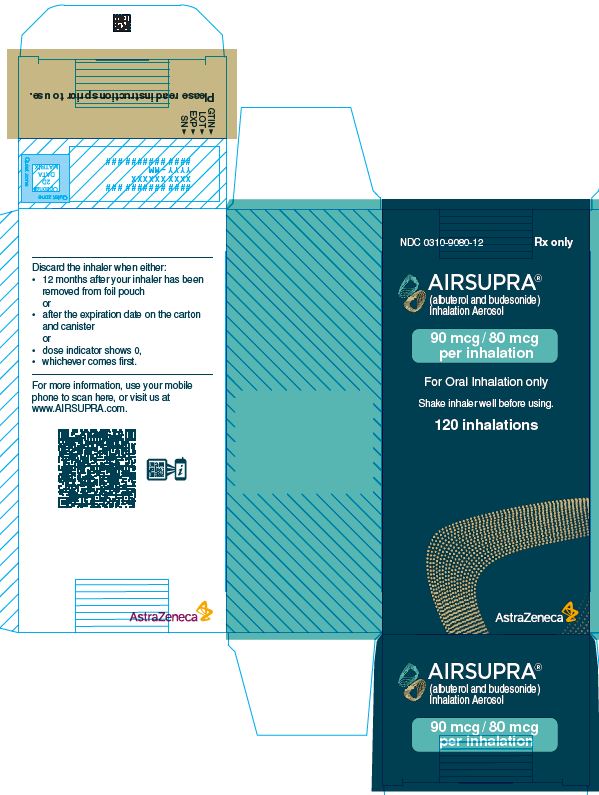
AIRSUPRA Albuterol sulfate and budesonide 90 ug; 80 ug Aerosol, Metered — NDC 0310-9080-12 (Billing 00310-9080-12)
This is a package of AIRSUPRA Albuterol sulfate and budesonide 90 ug; 80 ug Aerosol, Metered from AstraZeneca Pharmaceuticals LP, marketed since Oct 2023 and currently FDA-listed; retail pharmacies pay about $45.03 per g (NADAC). It is the main listing for this product, which comes in 2 package sizes.
Identity & classification
Regulatory identifiers FDA, NLM and CMS codes for this package
Drug-database identifiers Medi-Span GPI and First Databank GCN / HICL / AHFS classification
- GSN (GCN sequence number): 084298
- GCN: 53534
- GPI-14 (Medi-Span): 44209902783220
- HICL (First Databank): 048596
- AHFS class code: 12:12.08.12
- RxCUI (RxNorm): 2665906
Where does this data come from?
- FDA openFDA NDC Directory · synced Oct 1, 2026
- FDA label on DailyMed · label index refreshed Oct 1, 2026
- RxNorm (NLM RxNav) · catalog refreshed Oct 1, 2026
- Medi-Span GPI (licensed)
- First Databank (licensed) · refreshed Oct 1, 2026
RxNorm drug class
This medicine belongs to the Corticosteroid class.
Where does this data come from?
- RxClass (NLM) · catalog refreshed Oct 1, 2026
Clinical
- It is an as-needed inhaler for adults 18 and older with asthma. It treats or prevents airway tightening and lowers the risk of asthma flare-ups. It contains albuterol to open the a...
- Take 2 puffs as needed for symptoms. Don't use more than 6 doses (12 puffs) in 24 hours. Prime it before first use by spraying 4 times away from your face, shaking before each spra...
- The most common are headache, cough, a hoarse voice and thrush in the mouth. Rinsing your mouth helps with thrush. Call your doctor if you see white patches in your mouth.
- Call if your symptoms don't improve or you need it more often than usual, as your asthma may be getting worse. Get help right away if your breathing gets worse after a dose, if you...
Patient education
Supplement & herbal interactions
Where does this data come from?
- MedlinePlus (NLM) · refreshed Oct 1, 2026
- FDA label on DailyMed · label index refreshed Oct 1, 2026
Ask a licensed pharmacist directly — free, answered by our team.
Pricing
A drug doesn't have one price. Each row is a different public payment system, and none is what you'd pay at the counter — that depends on your insurance. The ⓘ on each row explains what it measures.
| Price system | Per g | Per package |
|---|---|---|
| Retail pharmacies payNADAC · weekly | $45.035 | — |
| Medicaid paysCMS SDUD · 12 mo | $44.86 | — |
| Medicare drug plans payPart D · Q2 2026 | $45.22 | — |
Where does this data come from?
- CMS NADAC weekly file · file of Sep 30, 2026
- CMS ASP pricing files · refreshed Sep 20, 2026
- CMS Medicaid State Drug Utilization Data · through Q1 2026
- CMS Part D plan pricing files · refreshed Sep 24, 2026
- VA National Acquisition Center price file
Packaging — all sizes for this product
| Package NDC | Description | Per unit | Per pack | Marketing start | Marketing end | Status |
|---|---|---|---|---|---|---|
| 00310-9080-12 You're viewing this Main listing | 1 INHALER in 1 CARTON / 120 AEROSOL, METERED in 1 INHALER | $45.03 / g | — | 2023-10-02 | — | Active |
| 00310-9080-28 0310-9080-28 | 1 INHALER in 1 CARTON / 28 AEROSOL, METERED in 1 INHALER Sample | — | — | 2023-10-02 | — | Active |
In Medicaid, this is the most-dispensed pack of this product — about 100% of fills over the last four reported quarters. See all packs ↓
Pack size FAQ
What quantity is in this package?
What NDC number is used to bill for this package of AIRSUPRA Albuterol sulfate and budesonide 90 ug; 80 ug Aerosol, Metered?
Prices are the latest CMS NADAC pharmacy acquisition cost per NDC; per-pack figures are per-unit × pack quantity, shown only when the pack is denominated in the same measure NADAC prices.
Therapeutic equivalents
| Product | Labeler | Pack | NADAC/unit | TE | Status | Price vs. this |
|---|---|---|---|---|---|---|
| Airsupra 90 ug/1; 80 ugthis 00310-9080-12 | AstraZeneca | 1 inhaler | $45.035 | — | Availability likely | — |
Where does this data come from?
- FDA openFDA NDC Directory · synced Oct 1, 2026
- FDA Orange Book · refreshed Sep 3, 2026
- CMS NADAC weekly file · file of Sep 30, 2026
Availability & generic status
We did not find an FDA-approved generic match for this exact strength, form and route. Patent/protection dates below may affect future generic timing.
Why the date isn’t exact: Generic timing can change because patents may be challenged, settled, licensed, added, removed, or worked around with a narrower label — and FDA approval does not always mean a pharmacy can get the generic today.
🛈 What do these terms mean?
- Patent
- Legal protection listed in the Orange Book that may delay generic approval or launch. Issued by the U.S. Patent & Trademark Office.
- Substance patent
- Covers the active drug molecule itself — the hardest to design around. A generic generally can’t launch until it expires.
- Formulation (product) patent
- Covers a specific formulation or dosage form. A generic can sometimes work around it with a different formulation.
- Method-of-use patent
- A patent covering one specific approved use of the drug — not necessarily the whole molecule. A generic can sometimes launch with a “skinny label” that carves out the protected use and keeps the others.
- Skinny label
- A generic label that omits a still-patented use when the FDA allows it — letting a generic reach the market for the unprotected uses.
- Exclusivity
- FDA-granted marketing protection, separate from patents — e.g. 5-yr new chemical entity, 7-yr orphan drug, or a +6-month pediatric extension.
- Paragraph IV
- A generic applicant’s formal challenge to a listed patent. It can potentially lead to earlier generic entry, but often involves litigation or a settlement.
- RLD / RS
- Reference Listed Drug — the brand product the FDA uses as the reference for generic applications. Reference Standard — the product the FDA expects generics to compare against in bioequivalence testing.
- TE / AB rating
- FDA therapeutic-equivalence rating. An AB rating generally means the FDA considers a generic therapeutically equivalent to — and substitutable for — the brand.
- LOE (loss of exclusivity)
- The latest patent or exclusivity currently listed — the loss-of-exclusivity / latest-listed-protection date shown on this page. Paragraph-IV challenges and settlements can move the real date earlier; FDA approval and a manufacturer’s decision to market can move it later.
Built from the FDA Orange Book. The bars above are scaled to each protection’s expiry; the red LOE marker is the last one to lapse.
| Patent | Type | Use code | Expires |
|---|---|---|---|
| US 9415009 ↗ | Method of use | U-3509 | May 28, 2030 |
| Code | What it grants | Expires |
|---|---|---|
| M-317 | New indication / labeling change (3-year) | Sep 15, 2028 |
| NP | New Product | Jan 10, 2026 |
Is there a generic version of AIRSUPRA 90-80 MCG INHALER?
The FDA approved a generic — why can’t I get it at my pharmacy yet?
Why do different websites show different generic release dates?
What does “FDA listed” mean?
What does a patent or protection date mean here?
What does “current Orange Book estimate” mean?
Can a generic come out before the last patent expires?
Can a generic come out after the listed dates?
What is the difference between patents and exclusivity?
Why are there multiple patent dates?
Where does this data come from?
- FDA Orange Book · refreshed Sep 3, 2026
Inactive Ingredients / Excipients
Inactive ingredients, also called excipients, are components of the drug product other than the active ingredient. They may include fillers, dyes, coatings, preservatives, flavors, or other formulation ingredients.
Where does this data come from?
IACT rows and label-wide narrative are kept separate; availability and product-level specificity depend on the submitted label.- FDA label on DailyMed · label index refreshed Oct 1, 2026
- FDA openFDA NDC Directory · synced Oct 1, 2026
Inactive ingredient FAQ
Are inactive ingredients the same for every manufacturer?
Why might an inactive ingredient be missing?
Can inactive ingredients matter?
Manufacturer & labeler
Where does this data come from?
- FDA openFDA NDC Directory · synced Oct 1, 2026
- Drugs@FDA
Full prescribing information FDA SPL
🎯 Indications and Usage ▾
1 INDICATIONS AND USAGE AIRSUPRA is indicated for the as-needed treatment or prevention of bronchoconstriction and to reduce the risk of exacerbations in patients with asthma 18 years of age and older. AIRSUPRA is a combination of albuterol, a beta 2 -adrenergic agonist and budesonide, a corticosteroid, indicated for the as-needed treatment or prevention of bronchoconstriction and to reduce the risk of exacerbations in patients with asthma 18 years of age and older. ( 1 )
⏱️ Dosage and Administration ▾
2 DOSAGE AND ADMINISTRATION • Recommended Dosage: AIRSUPRA 180 mcg/160 mcg (administered as 2 actuations of albuterol/budesonide 90 mcg/80 mcg) by oral inhalation as needed for asthma symptoms. ( 2.1 ) • Do not take more than 6 doses (12 inhalations) in a 24-hour period. ( 2.1 ) • Prime inhaler prior to first use.
Re-prime when inhaler has not been used for more than 7 days, is dropped, or after cleaning. ( 2.2 ) • Discard when the dose counter displays 0. ( 2.3 )
2.1Recommended Dosage and Administration The recommended dosage of AIRSUPRA is albuterol 180 mcg and budesonide 160 mcg (administered as 2 actuations of AIRSUPRA [albuterol/budesonide 90 mcg/80 mcg]) as needed for asthma symptoms by oral inhalation. Do not take more than 6 doses (12 inhalations) in a 24-hour period [see Warnings and Precautions (5.4) ] .
2.2Priming Before Use • Priming AIRSUPRA is essential to ensure appropriate drug content in each actuation. Prime AIRSUPRA before using for the first time. To prime AIRSUPRA, release 4 sprays into the air away from the face, shaking well before each spray. • AIRSUPRA must be re-primed when the inhaler has not been used for more than 7 days, is dropped, or after cleaning.
To re-prime AIRSUPRA, release 2 sprays into the air away from the face, shaking well before each spray.
2.3Dose Counter The canister has an attached dose indicator (also known as puff indicator) which indicates how many inhalations (puffs) remain. The dose indicator pointer will move after every actuation. The pointer will show the number of inhalations remaining in the canister.
When nearing the end of the usable inhalations, the color behind the number in the dose indicator display window changes to yellow. AIRSUPRA should be discarded when the pointer reaches zero.
💊 Dosage Forms and Strengths ▾
3 DOSAGE FORMS AND STRENGTHS Inhalation aerosol: a pressurized metered dose inhaler (a pressurized canister with an attached dose indicator, supplied with a white plastic actuator with a frosted clear plastic dust cap) that delivers a combination of albuterol 90 mcg and budesonide 80 mcg per actuation. Inhalation aerosol: Pressurized metered dose inhaler that delivers a combination of albuterol 90 mcg and budesonide 80 mcg per actuation. ( 3 )
⛔ Contraindications ▾
4 CONTRAINDICATIONS AIRSUPRA is contraindicated in patients with a history of hypersensitivity to albuterol, budesonide, or any of the excipients [see Warnings and Precautions (5.5) , Description (11) ] . Hypersensitivity to albuterol, budesonide, or to any of the excipients. ( 4 )
⚠️ Warnings and Cautions ▾
5 WARNINGS AND PRECAUTIONS • If symptoms continue after using AIRSUPRA, this may be a marker of destabilization of asthma and requires reevaluation of treatment. ( 5.1 ) • If paradoxical bronchospasm occurs, discontinue AIRSUPRA immediately and institute alternative therapy. ( 5.2 ) • Cardiovascular effects may occur.
Use with caution in patients sensitive to sympathomimetic drugs and patients with cardiovascular disorders. ( 5.3 ) • Excessive use may be fatal. Do not exceed maximum recommended dosage.
( 5.4 ) • Hypersensitivity reactions may occur. Discontinue AIRSUPRA immediately. ( 5.5 ) • Use with caution in patients with convulsive disorders, hyperthyroidism, diabetes mellitus, and ketoacidosis.
( 5.6 ) • Hypokalemia may occur. ( 5.7 ) • Potential worsening of infections (e.g., existing tuberculosis; fungal, bacterial, viral, or parasitic infections; or ocular herpes simplex). Use with caution in patients with these infections.
More serious or even fatal course of chickenpox or measles can occur in susceptible patients. ( 5.8 ) • Oropharyngeal candidiasis may occur. Advise patients to rinse mouth with water, if available, without swallowing after use.
Monitor patients periodically. ( 5.9 ) • Hypercorticism and adrenal suppression may occur with very high dosages in susceptible individuals. If such changes occur, consider appropriate therapy.
( 5.10 ) • Monitor patients with major risk factors for decreased bone mineral content. ( 5.11 ) • Glaucoma and cataracts may occur. Consider referral to an ophthalmologist in patients who develop ocular symptoms.
( 5.12 )
5.1Deterioration of Asthma Asthma may deteriorate acutely over a period of hours or chronically over several days or longer. If the patient continues to experience symptoms after using AIRSUPRA or requires more doses of AIRSUPRA than usual, this may be a marker of destabilization of asthma and requires evaluation of the patient and their treatment regimen.
5.2Paradoxical Bronchospasm AIRSUPRA can produce paradoxical bronchospasm, which may be life threatening. If paradoxical bronchospasm occurs following dosing with AIRSUPRA, it should be discontinued immediately, and alternative therapy should be instituted. It should be recognized that paradoxical bronchospasm, when associated with inhaled formulations, frequently occurs with the first use of a new canister.
5.3Cardiovascular Effects AIRSUPRA, like other drugs containing beta 2 -adrenergic agonists, can produce clinically significant cardiovascular effects in some patients as measured by increases in pulse rate, blood pressure, and/or other symptoms. If such effects occur, AIRSUPRA may need to be discontinued. In addition, beta-agonists have been reported to produce electrocardiogram (ECG) changes, such as flattening of the T wave, prolongation of the QTc interval, and ST-segment depression.
The clinical significance of these findings is unknown. Therefore, AIRSUPRA, like all sympathomimetic amines, should be used with caution in patients with cardiovascular disorders, especially coronary insufficiency, cardiac arrhythmias, and hypertension.
5.4Do Not Exceed Recommended Dosage As with other inhaled drugs containing beta-adrenergic agents, AIRSUPRA should not be used more than the maximum daily dose [see Dosage and Administration (2.1) ] , as an overdose may result. Clinically significant cardiovascular effects and fatalities have been reported in association with excessive use of inhaled sympathomimetic drugs.
5.5Hypersensitivity Reactions, Including Anaphylaxis Hypersensitivity reactions can occur after administration of albuterol sulfate and budesonide, components of AIRSUPRA, as demonstrated by cases of anaphylaxis, angioedema, bronchospasm, oropharyngeal edema, rash, and urticaria. Discontinue AIRSUPRA if such reactions occur [see Contraindications (4) ] .
5.6Risk of Sympathomimetic Amines with Certain Coexisting Conditions AIRSUPRA, like all therapies containing sympathomimetic amines, should be used wi… [Excerpted — this section continues on DailyMed.]
🤒 Adverse Reactions ▾
6 ADVERSE REACTIONS The following clinically significant adverse reactions are described elsewhere in labeling: • Deterioration of Asthma [see Warnings and Precautions (5.1) ] • Paradoxical Bronchospasm [see Warnings and Precautions (5.2) ] • Cardiovascular Effects [see Warnings and Precautions (5.3) ] • Hypersensitivity Reactions, including Anaphylaxis [see Warnings and Precautions (5.5) ] • Hypokalemia [see Warnings and Precautions (5.7) ] • Immunosuppression and Risk of Infections [see Warnings and Precautions (5.8) ] • Oropharyngeal Candidiasis [see Warnings and Precautions (5.9) ] • Hypercorticism and Adrenal Suppression [see Warnings and Precautions (5.10) ] • Reduction in Bone Mineral Density [see Warnings and Precautions (5.11) ] • Glaucoma and Cataracts [see Warnings and Precautions (5.12) ] • Effects on Growth in Pediatric Patients [see Warnings and Precautions (5.14) ] Most common adverse reactions (incidence ≥ 1%) are headache, oral candidiasis, cough, dysphonia.
( 6.1 ) To report SUSPECTED ADVERSE REACTIONS, contact AstraZeneca at 1-800-236-9933 or FDA at 1-800-FDA-1088 or www.fda.gov/medwatch.
6.1Clinical Trials Experience Because clinical trials are conducted under widely varying conditions, adverse reaction rates observed in the clinical trials of a drug cannot be directly compared to rates in the clinical trials of another drug and may not reflect the rates observed in practice. The safety of AIRSUPRA is based on data from 3 trials: MANDALA, DENALI and BATURA [see Clinical Studies (14) ] . All reported safety data is based on patients who received AIRSUPRA 180 mcg/160 mcg.
While patients 12 to 17 years of age were included in these trials, AIRSUPRA is not approved in this age group [see Use in Specific Populations (8.4) ] . In MANDALA, AIRSUPRA 180 mcg/160 mcg was administered as needed in patients with asthma who were receiving medium to high dose ICS or low to high dose ICS/LABA, with or without another controller medicine as maintenance therapy. A total of 1015 patients 12 to 84 years of age (mean age: 51 years) received at least one dose of AIRSUPRA and participated in the study for a mean duration of 310 days.
Of these, 905 patients were exposed for at least 24 weeks and 323 patients had exposure for at least 1 year. The mean daily use was 2.6 actuations. On the majority of study days, patients used 2 or less actuations; more than 8 actuations were used on less than 2% of study days.
The incidence of common adverse reactions in MANDALA is described in Table 1. Table 1 Summary of Adverse Reactions with AIRSUPRA Reported in ≥ 1% of Patients (MANDALA) Adverse Reaction AIRSUPRA 180 mcg/160 mcg N = 1015 (%) AS MDI 1 180 mcg N = 1015 (%) Headache 44 (4.3) 50 (4.9) Oral candidiasis 2 13 (1.3) 5 (0.5) Cough 10 (1.0) 11 (1.1) 1 Albuterol Metered Dose Inhaler = AS MDI 2 Oral candidiasis also includes those reactions reported under the preferred term oropharyngeal candidiasis. The safety profile of AIRSUPRA in MANDALA was similar to that observed with AS MDI, irrespective of background ICS dose.
In DENALI, AIRSUPRA 180 mcg/160 mcg was administered 4 times a day for 12 weeks in patients with asthma who were previously treated with as-needed short-acting beta 2 -agonists (SABA) alone or with low-dose ICS maintenance therapy plus as-needed SABA. A total of 197 patients 13 to 81 years of age (mean age: 50 years) received at least one dose of AIRSUPRA. The adverse reactions profile was similar to MANDALA except for the following adverse reactions for AIRSUPRA with an incidence ≥ 1.0% that exceeded the incidence in MANDALA: headache (5.1%), dysphonia (2.0%), and oral/oropharyngeal candidiasis (1.5%), compared to headache (7.1%), dysphonia (0%), and oral/oropharyngeal candidiasis (0%) in the placebo arm.
In BATURA, AIRSUPRA 180 mcg/160 mcg was administered as needed for 12 to 52 weeks in patients with asthma who were previously treated with as-needed SABA alone, or as-needed SABA plus background maintenance of either low-… [Excerpted — this section continues on DailyMed.]
🔄 Drug Interactions ▾
7 DRUG INTERACTIONS No formal drug interaction studies have been performed with AIRSUPRA. • Strong cytochrome P450 3A4 inhibitors (e.g. ritonavir): Use with caution. May cause systemic corticosteroid effects. ( 7.1 ) • Other short-acting bronchodilators: Use judiciously with other short-acting beta agonists.
( 7.2 ) • Beta blockers: May decrease effectiveness of AIRSUPRA and produce severe bronchospasm. When there are no acceptable alternatives to the use of beta-adrenergic-blocking agents, consider cardioselective beta-blockers and use with caution. ( 7.3 ) • Diuretics, or non-potassium-sparing diuretics: May potentiate hypokalemia or ECG changes.
Consider monitoring potassium levels with concomitant use. ( 7.4 ) • Digoxin: May decrease serum digoxin levels. Carefully evaluate digoxin levels with concomitant use.
( 7.5 ) • Monoamine oxidase inhibitors (MAOI) and tricyclic antidepressants: Use AIRSUPRA with extreme caution with concomitant use. ( 7.6 )
7.1Inhibitors of Cytochrome P450 3A4 The main route of metabolism of corticosteroids, including budesonide, a component of AIRSUPRA, is via cytochrome P450 (CYP) isoenzyme 3A4 (CYP3A4). After oral administration of ketoconazole, a strong inhibitor of CYP3A4, the mean plasma concentration of orally administered budesonide increased. Concomitant administration of a CYP3A4 inhibitor may inhibit the metabolism of, and increase the systemic exposure to, budesonide.
Caution should be exercised when considering the co-administration of AIRSUPRA with long-term ketoconazole and other known strong CYP3A4 inhibitors (e.g., ritonavir, atazanavir, clarithromycin, indinavir, itraconazole, nefazodone, nelfinavir, saquinavir, telithromycin) [see Warnings and Precautions (5.11) ] .
7.2Use with Other Short-Acting Bronchodilators AIRSUPRA contains the short-acting beta-agonist, albuterol. Therefore, concomitant use of additional beta-agonists with AIRSUPRA should be used judiciously to prevent beta-agonist overdose.
7.3Beta-Blockers Beta-adrenergic receptor blocking agents not only block the pulmonary effect of beta-agonists, such as albuterol, a component of AIRSUPRA, but may also produce severe bronchospasm in patients with asthma. Therefore, patients with asthma should not normally be treated with beta-blockers. However, under certain circumstances, e.g., as prophylaxis after myocardial infarction, there may be no acceptable alternatives to the use of beta-adrenergic-blocking agents in these patients.
In this setting, consider cardioselective beta-blockers, although they should be administered with caution.
7.4Diuretics The ECG changes and/or hypokalemia which may result from the administration of non-potassium-sparing diuretics (such as loop or thiazide diuretics) can be acutely worsened by beta-agonists, especially when the recommended dose of the beta-agonist is exceeded. Although the clinical significance of these effects is not known, caution is advised in the coadministration of AIRSUPRA with non-potassium-sparing diuretics. Consider monitoring potassium levels.
7.5Digoxin Mean decreases of 16% and 22% in serum digoxin levels were demonstrated after single-dose intravenous and oral administration of albuterol, respectively, to normal volunteers who had received digoxin for 10 days. The clinical significance of these findings for patients with obstructive airway disease who are receiving albuterol and digoxin on a chronic basis is unclear. Nevertheless, it would be prudent to carefully evaluate the serum digoxin levels in patients who are currently receiving digoxin and AIRSUPRA.
7.6Monoamine Oxidase Inhibitors or Tricyclic Antidepressants AIRSUPRA should be administered with extreme caution to patients being treated with monoamine oxidase inhibitors or tricyclic antidepressants, or within 2 weeks of discontinuation of such agents, because the action of albuterol on the cardiovascular system may be potentiated.
👥 Use in Specific Populations ▾
8 USE IN SPECIFIC POPULATIONS Hepatic impairment: Budesonide systemic exposure may increase in patients with severe hepatic impairment. Monitor patients with hepatic disease. ( 8.6 )
8.1Pregnancy Pregnancy Exposure Registry There is a pregnancy exposure registry that monitors pregnancy outcomes in women exposed to asthma medications during pregnancy. For more information, contact the MotherToBaby Pregnancy Studies conducted by the Organization of Teratology Information Specialists at 1-877-311-8972 or visit http://mothertobaby.org/pregnancy-studies/ . Risk Summary Available data from published case series, epidemiological studies and reviews with budesonide use in pregnant women have not identified a drug-related risk of major birth defects, miscarriage or other adverse maternal or fetal outcomes.
Available data from epidemiological studies and postmarketing case reports of pregnancy outcomes following inhaled albuterol use do not consistently demonstrate a risk of major birth defects or miscarriage. The available epidemiological studies have methodologic limitations, including inconsistent comparator groups, definitions of outcomes, and assessment of disease impact. There are risks to the mother and fetus associated with asthma in pregnancy (see Clinical Considerations) .
Animal reproduction studies have not been conducted with AIRSUPRA, however, animal studies are available with its individual components, albuterol and budesonide. Administration of albuterol to mice and rabbits during the period of organogenesis revealed evidence of adverse developmental outcomes (cleft palate in mice, delayed ossification in rabbits) at less than maximum recommended human daily inhalation dose (MRHDID) (see Data) . In animal reproduction studies, budesonide, administered by the subcutaneous route, caused structural abnormalities, was embryocidal, and reduced fetal weights in rats and rabbits at less than the MRHDID in adults, but these effects were not seen in rats that received inhaled doses approximately 2.5 times the MRHDID in adults (see Data) .
Experience with oral corticosteroids suggests that rodents are more prone to structural abnormalities from corticosteroid exposure than humans. The background risk of major birth defects and miscarriage of the indicated populations is unknown. All pregnancies have a background risk of birth defect, loss, or other adverse outcomes.
In the U.S. general population, the estimated background risk of major birth defects and miscarriage in clinically recognized pregnancies is 2% to 4% and 15% to 20%, respectively. Clinical Considerations Disease-Associated Maternal and/or Embryo/Fetal risk In women with poorly or moderately controlled asthma, there is an increased risk of several perinatal adverse outcomes such as preeclampsia in the mother and prematurity, low birth weight, and small for gestational age in the neonate. Pregnant women with asthma should be closely monitored and medication adjusted as necessary to maintain optimal asthma control.
Labor or Delivery Because of the potential for beta-agonist interference with uterine contractility, use of AIRSUPRA during labor should be restricted to those patients in whom the benefits clearly outweigh the risk. AIRSUPRA has not been approved for the management of pre-term labor. Serious adverse reactions, including pulmonary edema, have been reported during or following treatment of premature labor with beta 2 -agonists, including albuterol.
Data Animal Data Albuterol In a study in pregnant mice, subcutaneously administered albuterol sulfate produced cleft palate formation in 5 of 111 (4.5%) fetuses at an exposure less than the MRHDID in adults (on a mg/m 2 basis at a maternal dose of 0.25 mg/kg) and in 10 of 108 (9.3%) fetuses at approximately 9 times the MRHDID in adults (on a mg/m 2 basis at a maternal dose of 2.5 mg/kg). Cleft palate also occurred in 22 of 72 (30.5%) fetuses from females treated subcutaneously with isoproterenol, another beta 2 -agon… [Excerpted — this section continues on DailyMed.]
🤰 Pregnancy ▾
8.1Pregnancy Pregnancy Exposure Registry There is a pregnancy exposure registry that monitors pregnancy outcomes in women exposed to asthma medications during pregnancy. For more information, contact the MotherToBaby Pregnancy Studies conducted by the Organization of Teratology Information Specialists at 1-877-311-8972 or visit http://mothertobaby.org/pregnancy-studies/ . Risk Summary Available data from published case series, epidemiological studies and reviews with budesonide use in pregnant women have not identified a drug-related risk of major birth defects, miscarriage or other adverse maternal or fetal outcomes.
Available data from epidemiological studies and postmarketing case reports of pregnancy outcomes following inhaled albuterol use do not consistently demonstrate a risk of major birth defects or miscarriage. The available epidemiological studies have methodologic limitations, including inconsistent comparator groups, definitions of outcomes, and assessment of disease impact. There are risks to the mother and fetus associated with asthma in pregnancy (see Clinical Considerations) .
Animal reproduction studies have not been conducted with AIRSUPRA, however, animal studies are available with its individual components, albuterol and budesonide. Administration of albuterol to mice and rabbits during the period of organogenesis revealed evidence of adverse developmental outcomes (cleft palate in mice, delayed ossification in rabbits) at less than maximum recommended human daily inhalation dose (MRHDID) (see Data) . In animal reproduction studies, budesonide, administered by the subcutaneous route, caused structural abnormalities, was embryocidal, and reduced fetal weights in rats and rabbits at less than the MRHDID in adults, but these effects were not seen in rats that received inhaled doses approximately 2.5 times the MRHDID in adults (see Data) .
Experience with oral corticosteroids suggests that rodents are more prone to structural abnormalities from corticosteroid exposure than humans. The background risk of major birth defects and miscarriage of the indicated populations is unknown. All pregnancies have a background risk of birth defect, loss, or other adverse outcomes.
In the U.S. general population, the estimated background risk of major birth defects and miscarriage in clinically recognized pregnancies is 2% to 4% and 15% to 20%, respectively. Clinical Considerations Disease-Associated Maternal and/or Embryo/Fetal risk In women with poorly or moderately controlled asthma, there is an increased risk of several perinatal adverse outcomes such as preeclampsia in the mother and prematurity, low birth weight, and small for gestational age in the neonate. Pregnant women with asthma should be closely monitored and medication adjusted as necessary to maintain optimal asthma control.
Labor or Delivery Because of the potential for beta-agonist interference with uterine contractility, use of AIRSUPRA during labor should be restricted to those patients in whom the benefits clearly outweigh the risk. AIRSUPRA has not been approved for the management of pre-term labor. Serious adverse reactions, including pulmonary edema, have been reported during or following treatment of premature labor with beta 2 -agonists, including albuterol.
Data Animal Data Albuterol In a study in pregnant mice, subcutaneously administered albuterol sulfate produced cleft palate formation in 5 of 111 (4.5%) fetuses at an exposure less than the MRHDID in adults (on a mg/m 2 basis at a maternal dose of 0.25 mg/kg) and in 10 of 108 (9.3%) fetuses at approximately 9 times the MRHDID in adults (on a mg/m 2 basis at a maternal dose of 2.5 mg/kg). Cleft palate also occurred in 22 of 72 (30.5%) fetuses from females treated subcutaneously with isoproterenol, another beta 2 -agonist.
In a study in pregnant rabbits, orally administered albuterol sulfate produced cranioschisis in 7 of 19 fetuses (37%) at approximately 750 times the MRHDID in adults (on a mg/m 2… [Excerpted — this section continues on DailyMed.]
🧒 Pediatric Use ▾
8.4Pediatric Use The safety and effectiveness of AIRSUPRA have not been established in pediatric patients. A limited number of pediatric patients were enrolled in the efficacy trials MANDALA (4 to 17 years of age) and BATURA (12 to 17 years of age) to evaluate AIRSUPRA to reduce the risk of severe asthma exacerbations. The primary efficacy endpoint was time to first severe asthma exacerbation.
MANDALA enrolled patients with asthma who were receiving medium to high dose ICS or low to high dose ICS/LABA, with or without another controller medicine as maintenance therapy. In MANDALA, there were 9 patients with severe exacerbation events in 34 patients 12 to 17 years of age treated with AIRSUPRA 180 mcg/160 mcg and 7 patients with severe exacerbation events in 34 patients treated with albuterol (AS MDI) [HR 1.44 (0.54, 3.87)]. There were 11 patients with severe exacerbation events in 41 patients 4 to 11 years of age treated with albuterol/budesonide (AS-BD MDI) 180 mcg/80 mcg and 10 in the 42 patients 4 to 11 years of age treated with AS MDI [HR: 1.09 (0.46, 2.56)].
BATURA enrolled patients with asthma who were previously treated with as-needed SABA alone, or as-needed SABA plus background maintenance of either low-dose ICS or LTRA. In the BATURA trial, 1 patient had a severe exacerbation event in 29 patients treated with AIRSUPRA 180 mcg/160 mcg and 1 patient with severe exacerbation events in 39 patients treated with AS MDI. These data are inadequate to make a determination regarding the safety or effectiveness of AIRSUPRA or AS-BD 180 mcg/80 mcg in pediatric patients 4 to 17 years of age [see Clinical Studies (14) ] .
Controlled clinical studies have shown that ICS agents, including budesonide, one of the components of AIRSUPRA, may cause a reduction in growth velocity in pediatric patients. The effects of long-term treatment of pediatric patients with ICS on final adult height are not known [see Warnings and Precautions (5.14) ].
🧓 Geriatric Use ▾
8.5Geriatric Use There were 921 patients 65 years of age and older in the clinical studies for asthma [see Clinical Studies (14) ] . Of the total number of AIRSUPRA-treated patients in these studies, 311 (13%) were 65 years of age and older, while 52 (2%) were 75 years of age and older. In general, no differences in safety or effectiveness were observed between these patients and younger patients, and other reported clinical experience has not identified differences in responses between the elderly and younger patients, but greater sensitivity of some older individuals cannot be ruled out.
As with other products containing beta 2 -agonists, special caution should be observed when using AIRSUPRA in geriatric patients who have concomitant cardiovascular disease that could be adversely affected by this class of drug. All beta 2 -adrenergic agonists, including albuterol, are known to be substantially excreted by the kidney, and the risk of toxic reactions may be greater in patients with impaired renal function. Because geriatric patients are more likely to have decreased renal function, care should be taken when dosing, and it may be useful to monitor renal function.
🆘 Overdosage ▾
10 OVERDOSAGE AIRSUPRA contains both albuterol and budesonide; therefore, the risks associated with overdosage for the individual components described below apply to AIRSUPRA. Albuterol The expected symptoms with overdosage are those of excessive beta-adrenergic stimulation and/or occurrence or exaggeration of any of the symptoms of beta-adrenergic stimulation (e.g., seizures, angina, hypertension or hypotension, tachycardia with rates up to 200 beats/minute, arrhythmias, nervousness, headache, tremor, muscle cramps, dry mouth, palpitation, nausea, dizziness, fatigue, malaise, insomnia, hyperglycemia, and metabolic acidosis).
Hypokalemia may also occur. As with all sympathomimetic medications, cardiac arrest and even death may be associated with abuse of AIRSUPRA. Treatment consists of discontinuation of AIRSUPRA together with appropriate symptomatic therapy.
The judicious use of a cardioselective beta-receptor blocker may be considered, bearing in mind that such medication can produce bronchospasm. There is insufficient evidence to determine if dialysis is beneficial for overdosage of AIRSUPRA. Budesonide If used at excessive doses for prolonged periods, systemic corticosteroid effects such as hypercorticism may occur [see Warnings and Precautions (5.10) ] .
🧬 Clinical Pharmacology ▾
12 CLINICAL PHARMACOLOGY
12.1Mechanism of Action AIRSUPRA contains both albuterol and budesonide; therefore, the mechanisms of action described below for the individual components apply to AIRSUPRA. These drugs represent two classes of medications (a short-acting selective beta 2 -adrenergic agonist and a synthetic corticosteroid) that have different effects on clinical, physiological, and inflammatory indices of asthma. Albuterol In vitro studies and in vivo pharmacologic studies have demonstrated that albuterol has a preferential effect on beta 2 -adrenergic receptors compared with isoproterenol.
Although beta 2 -adrenoceptors are the predominant adrenergic receptors in bronchial smooth muscle and beta 1 -adrenoceptors are the predominant receptors in the heart, there are also beta 2 -adrenoceptors in the human heart comprising 10% to 50% of the total beta-adrenoceptors. The precise function of these receptors has not been established, but their presence raises the possibility that even selective beta 2 -agonists may have cardiac effects. Activation of beta 2 -adrenergic receptors on airway smooth muscle leads to the activation of adenyl cyclase and to an increase in the intracellular concentration of cyclic-3′,5′-adenosine monophosphate (cyclic AMP).
This increase of cyclic AMP leads to the activation of protein kinase A, which inhibits the phosphorylation of myosin and lowers intracellular ionic calcium concentrations, resulting in relaxation. Albuterol relaxes the smooth muscles of all airways, from the trachea to the terminal bronchioles. Albuterol acts as a functional antagonist to relax the airway irrespective of the spasmogen involved, thus protecting against all bronchoconstrictor challenges.
Increased cyclic AMP concentrations are also associated with the inhibition of release of mediators from mast cells in the airway. Albuterol has been shown in most controlled clinical trials to have more effect on the respiratory tract, in the form of bronchial smooth muscle relaxation, than isoproterenol at comparable doses while producing fewer cardiovascular effects. Controlled clinical studies and other clinical experience have shown that inhaled albuterol, like other beta-adrenergic agonist drugs, can produce a significant cardiovascular effect in some patients, as measured by pulse rate, blood pressure, symptoms, and/or electrocardiographic changes [see Warnings and Precautions (5.3) ] .
Budesonide Budesonide is an anti-inflammatory corticosteroid that exhibits potent glucocorticoid activity and weak mineralocorticoid activity. In standard in vitro and animal models, budesonide has approximately a 200-fold higher affinity for the glucocorticoid receptor and a 1000-fold higher topical anti-inflammatory potency than cortisol (rat croton oil ear edema assay). As a measure of systemic activity, budesonide is 40 times more potent than cortisol when administered subcutaneously and 25 times more potent when administered orally in the rat thymus involution assay.
The clinical significance of this is unknown. In glucocorticoid receptor affinity studies, the 22R form was two times as active as the 22S epimer. In vitro studies indicated that the two forms of budesonide do not interconvert.
The precise mechanism of corticosteroid actions on inflammation in asthma is not known. Inflammation is an important component in the pathogenesis of asthma. Corticosteroids have a wide range of inhibitory activities against multiple cell types (e.g., mast cells, eosinophils, neutrophils, macrophages, and lymphocytes) and mediators (e.g., histamine, eicosanoids, leukotrienes, and cytokines) involved in allergic and non-allergic-mediated inflammation.
These anti-inflammatory actions of corticosteroids may contribute to their efficacy in asthma. Studies in asthmatic patients have shown a favorable ratio between topical anti-inflammatory activity and both genomic and non-genomic systemic corticosteroid effects over a wide range of doses of inhaled bu… [Excerpted — this section continues on DailyMed.]
🧬 Mechanism of Action ▾
12.1Mechanism of Action AIRSUPRA contains both albuterol and budesonide; therefore, the mechanisms of action described below for the individual components apply to AIRSUPRA. These drugs represent two classes of medications (a short-acting selective beta 2 -adrenergic agonist and a synthetic corticosteroid) that have different effects on clinical, physiological, and inflammatory indices of asthma. Albuterol In vitro studies and in vivo pharmacologic studies have demonstrated that albuterol has a preferential effect on beta 2 -adrenergic receptors compared with isoproterenol.
Although beta 2 -adrenoceptors are the predominant adrenergic receptors in bronchial smooth muscle and beta 1 -adrenoceptors are the predominant receptors in the heart, there are also beta 2 -adrenoceptors in the human heart comprising 10% to 50% of the total beta-adrenoceptors. The precise function of these receptors has not been established, but their presence raises the possibility that even selective beta 2 -agonists may have cardiac effects. Activation of beta 2 -adrenergic receptors on airway smooth muscle leads to the activation of adenyl cyclase and to an increase in the intracellular concentration of cyclic-3′,5′-adenosine monophosphate (cyclic AMP).
This increase of cyclic AMP leads to the activation of protein kinase A, which inhibits the phosphorylation of myosin and lowers intracellular ionic calcium concentrations, resulting in relaxation. Albuterol relaxes the smooth muscles of all airways, from the trachea to the terminal bronchioles. Albuterol acts as a functional antagonist to relax the airway irrespective of the spasmogen involved, thus protecting against all bronchoconstrictor challenges.
Increased cyclic AMP concentrations are also associated with the inhibition of release of mediators from mast cells in the airway. Albuterol has been shown in most controlled clinical trials to have more effect on the respiratory tract, in the form of bronchial smooth muscle relaxation, than isoproterenol at comparable doses while producing fewer cardiovascular effects. Controlled clinical studies and other clinical experience have shown that inhaled albuterol, like other beta-adrenergic agonist drugs, can produce a significant cardiovascular effect in some patients, as measured by pulse rate, blood pressure, symptoms, and/or electrocardiographic changes [see Warnings and Precautions (5.3) ] .
Budesonide Budesonide is an anti-inflammatory corticosteroid that exhibits potent glucocorticoid activity and weak mineralocorticoid activity. In standard in vitro and animal models, budesonide has approximately a 200-fold higher affinity for the glucocorticoid receptor and a 1000-fold higher topical anti-inflammatory potency than cortisol (rat croton oil ear edema assay). As a measure of systemic activity, budesonide is 40 times more potent than cortisol when administered subcutaneously and 25 times more potent when administered orally in the rat thymus involution assay.
The clinical significance of this is unknown. In glucocorticoid receptor affinity studies, the 22R form was two times as active as the 22S epimer. In vitro studies indicated that the two forms of budesonide do not interconvert.
The precise mechanism of corticosteroid actions on inflammation in asthma is not known. Inflammation is an important component in the pathogenesis of asthma. Corticosteroids have a wide range of inhibitory activities against multiple cell types (e.g., mast cells, eosinophils, neutrophils, macrophages, and lymphocytes) and mediators (e.g., histamine, eicosanoids, leukotrienes, and cytokines) involved in allergic and non-allergic-mediated inflammation.
These anti-inflammatory actions of corticosteroids may contribute to their efficacy in asthma. Studies in asthmatic patients have shown a favorable ratio between topical anti-inflammatory activity and both genomic and non-genomic systemic corticosteroid effects over a wide range of doses of inhaled budesonide. This is explain… [Excerpted — this section continues on DailyMed.]
📦 How Supplied / Storage and Handling ▾
16 HOW SUPPLIED/STORAGE AND HANDLING AIRSUPRA Inhalation Aerosol is supplied as a pressurized aluminum canister with an attached dose indicator and a white plastic actuator, with a frosted clear plastic dust cap tethered to it. Each canister is packaged in a foil overwrap pouch with a desiccant sachet and placed into a carton. Each carton contains one canister and a Patient Information leaflet.
Each 120-inhalation canister has a net fill weight of 10.7 grams. AIRSUPRA is available in the following package size as presented in Table 4: Table 4 Package Information for AIRSUPRA Package Size Strength albuterol/budesonide Number of Inhalations per Canister NDC AIRSUPRA 90 mcg/80 mcg 120 0310-9080-12 The AIRSUPRA canister should only be used with the AIRSUPRA actuator, and the AIRSUPRA actuator should not be used with any other inhalation drug product. Counter The correct amount of medication in each inhalation cannot be ensured after the labeled number of inhalations from the canister have been used, when the dose indicator pointer reaches zero, even though the canister may not feel completely empty.
AIRSUPRA should be discarded when the dose indicator pointer reaches zero, or 12 months after removal of the foil pouch, whichever comes first. Never immerse the canister in water to determine the amount remaining in the canister (“float test”). Storage Store at controlled room temperature 20°C to 25°C (68°F to 77°F); excursions permitted to 15°C to 30°C (59°F to 86°F) [ see USP ] .
Keep in a dry place away from heat and sunlight. For best results, the canister should be at room temperature before use. Shake well before using.
Keep out of reach of children. Contents under pressure. Do not puncture.
Do not use or store near heat or open flame. Exposure to temperatures above 49°C (120°F) may cause bursting. Never throw canister into fire or incinerator.
Avoid spraying in eyes.
📋 Description ▾
11 DESCRIPTION AIRSUPRA (albuterol and budesonide) Inhalation Aerosol is a pressurized metered dose inhaler containing a combination of micronized albuterol sulfate, a relatively selective, short-acting beta 2 -adrenergic agonist and micronized budesonide, a corticosteroid, for oral inhalation. Albuterol sulfate is the official generic name in the United States. The World Health Organization recommended name for the drug is salbutamol sulfate.
Albuterol sulfate has the following chemical name: USP racemic α 1 [( tert- Butylamino)methyl]-4-hydroxy- m -xylene-α,α'-diol sulfate (2:1) (salt). The empirical formula is (C 13 H 21 NO 3 ) 2 •H 2 SO 4 , and the molecular weight is 576.7. Its structural formula is: Albuterol sulfate is a white to off-white powder that is freely soluble in water, slightly soluble in alcohol and in ether, and practically insoluble in chloroform.
It has a LogP of 0.44 at physiological pH. Albuterol has one chiral center and exists as a 1:1 racemic mixture. Budesonide is a corticosteroid designated chemically as (RS)-11β, 16α, 17,21-Tetrahydroxypregna-1,4-diene-3,20-dione cyclic 16,17-acetal with butyraldehyde.
Budesonide is provided as a mixture of two epimers (22R and 22S). The empirical formula of budesonide is C 25 H 34 O 6 and its molecular weight is 430.5. Its structural formula is: Budesonide is a white to off-white powder that is practically insoluble in water and in heptane, sparingly soluble in ethanol, and freely soluble in chloroform.
Its partition coefficient between octanol and water at pH 7.4 is 1.6 x 10 3 . AIRSUPRA is formulated as a hydrofluoroalkane (HFA-134a) propelled pressurized metered dose inhaler containing 120 inhalations. The canister has an attached dose indicator and is supplied with a white plastic actuator with a frosted clear plastic dust cap tethered to it.
After priming, each actuation of AIRSUPRA 90 mcg/80 mcg meters 99 mcg of albuterol and 88 mcg of budesonide from the valve which delivers 90 mcg of albuterol (equivalent to 108 mcg of albuterol sulfate) and 80 mcg of budesonide from the actuator. The actual amount of drug delivered to the lung may depend on patient factors, such as the coordination between actuation of the device and inhalation through the delivery system. AIRSUPRA also contains porous particles that form a co-suspension with the drug crystals.
The porous particles are comprised of the phospholipid 1,2-distearoyl- sn -glycero-3-phosphocholine (DSPC) and calcium chloride. Porous particles and HFA-134a are excipients in the formulation. Albuterol structural formula Budesonide structural formula
💬 Information for Patients ▾
17 PATIENT COUNSELING INFORMATION Advise the patient to read the FDA-approved patient labeling (Patient Information and Instructions for Use). Deterioration of Asthma Inform patients to seek medical attention immediately if treatment with AIRSUPRA becomes less effective for symptomatic relief, and/or symptoms become worse [see Warnings and Precautions (5.1) ] . Paradoxical Bronchospasm Instruct patients to discontinue AIRSUPRA and contact their healthcare provider right away if they develop paradoxical bronchospasm [see Warnings and Precautions (5.2) ] .
Do Not Exceed Recommended Dosage Instruct patients concerning the recommended dosage of AIRSUPRA and not to exceed 6 doses (12 inhalations) in a 24-hour period [see Dosage and Administration (2.1) , Warnings and Precautions (5.4) ] . Hypersensitivity Reactions, Including Anaphylaxis Advise patients to contact their healthcare provider and discontinue AIRSUPRA if hypersensitivity reactions (e.g., anaphylaxis, rash, urticaria, angioedema, and bronchospasm) occur with AIRSUPRA use [see Warnings and Precautions (5.5) ] .
Priming and Cleaning Inhaler Instruct patients to prime the inhaler before using for the first time, when the inhaler has not been used for more than 7 days, is dropped, or after cleaning and to shake well before each spray. To ensure proper dosing and to prevent actuator mouthpiece blockage, instruct patients how to clean the actuator [see Dosage and Administration (2.1) and Instructions for Use ] . Use with Other Short-Acting Bronchodilators Advise patients concerning the appropriate use of other short-acting bronchodilators while using AIRSUPRA [see Drug Interactions (7.2) ] .
Immunosuppression and Risk of Infections Warn patients who are on immunosuppressant doses of corticosteroids to avoid exposure to chickenpox or measles and, if exposed, to consult their physician without delay. Patients should be informed of potential worsening of existing tuberculosis, fungal, bacterial, viral, or parasitic infections, or ocular herpes simplex [see Warnings and Precautions (5.8) ] . Oropharyngeal Candidiasis Patients should be advised that localized infections with Candida albicans occurred in the mouth and pharynx in some patients.
Advise patients to rinse the mouth with water, if available, without swallowing after AIRSUPRA inhalation to help reduce the risk of thrush [see Warnings and Precautions (5.9) ] . Hypercorticism and Adrenal Suppression Advise patients that AIRSUPRA may cause systemic corticosteroid effects of hypercorticism and adrenal suppression [see Warnings and Precautions (5.10) ] . Reduction in Bone Mineral Density Advise patients who are at an increased risk for decreased BMD that the use of AIRSUPRA may pose an additional risk [see Warnings and Precautions (5.11) ] .
Glaucoma and Cataracts Inform patients that long-term use of AIRSUPRA may increase the risk of increased intraocular pressure, glaucoma, and cataracts; consider regular eye examinations [see Warnings and Precautions (5.12) ] . Pregnancy Advise pregnant women that there is a pregnancy exposure registry that monitors pregnancy outcomes in women exposed to asthma medications during pregnancy and to contact the MotherToBaby Pregnancy Studies at 1-877-311-8972 or visit http://mothertobaby.org/pregnancy-studies/ . Manufactured for: AstraZeneca Pharmaceuticals LP, Wilmington, DE 19850 Manufactured by: AstraZeneca Dunkerque Production (AZDP), Dunkerque, France AIRSUPRA is a registered trademark of the AstraZeneca group of companies. ©AstraZeneca 2025
🧬 Pharmacokinetics ▾
12.3Pharmacokinetics The pharmacokinetics of AIRSUPRA and its individual components were evaluated in 3 studies in subjects 18 years of age and older (2 studies in healthy subjects and 1 study in patients with asthma). The pharmacokinetics of albuterol and budesonide from AIRSUPRA are comparable to the pharmacokinetics of albuterol and budesonide when administered as single dose of the individual components in studies of healthy subjects. The pharmacokinetics presented below are primarily from studies conducted on AIRSUPRA and on its individual components, albuterol (AS MDI) and budesonide (BD MDI), also administered by the inhaled route.
Absorption Albuterol Healthy Subjects : Following inhaled administration of AIRSUPRA 180 mcg/160 mcg (administered as 2 inhalations of 90 mcg/80 mcg), the median t max of albuterol was 1.00 hour (individual values ranged from 0.08 to 6.05 hours). Geometric mean C max was 472.2 pg/mL (individual values ranged from 38.4 to 971 pg/mL). Asthma Patients : Following increasing cumulative doses (a total dose of 1440 mcg) of albuterol (AS MDI) and an active albuterol aerosol inhaler comparator in patients with asthma, mean albuterol plasma concentrations (at 15 minutes after dose) increased from predose levels (44.2 and 51.4 pg/mL) to 3278.0 pg/mL and 5241.7 pg/mL with AS MDI and the comparator, respectively.
Results from this study indicate the total systemic exposure of albuterol was 21% (for AUC) and 27% (for C max ) lower for AS MDI than for the comparator. Budesonide Healthy Subjects : Following inhaled administration in healthy subjects of AIRSUPRA 180 mcg/160 mcg (administered as 2 inhalations of 90 mcg/80 mcg), the median t max of budesonide was 0.33 hours (individual values ranged from 0.08 to 4.00 hours). Geometric mean C max was 272.8 pg/mL (individual values ranged from 51.7 to 819 pg/mL).
Systemic exposure to budesonide with AIRSUPRA did not exceed that from inhaled budesonide via a dry powder inhaler comparator in healthy subjects. Distribution Albuterol Healthy Subjects : Following inhaled administration of AIRSUPRA 180 mcg/160 mcg (administered as 2 inhalations of 90 mcg/80 mcg), the mean apparent volume of distribution (Vz/F) of albuterol was 565.7 L. Budesonide Healthy Subjects : Following inhaled administration of AIRSUPRA 180 mcg/160 mcg (administered as 2 inhalations of 90 mcg/80 mcg), the mean apparent volume of distribution (Vz/F) of budesonide administered in AIRSUPRA was 1002 L.
Budesonide was 85-90% bound to plasma proteins. Protein binding was constant over the concentration range of 1‑100 nmol/L. Budesonide showed little or no binding to corticosteroid binding globulin.
Budesonide rapidly equilibrated with red blood cells in a concentration independent manner with a blood/plasma ratio of about 0.8. Elimination Following inhaled single-dose administration with AIRSUPRA in healthy subjects, the mean terminal half-life of albuterol was estimated to be 7.1 hours (individual values ranged from 4.62 to 10.0 hours) and the mean terminal half-life of budesonide was estimated to be 4.1 hours (individual values ranges from 2.46 to 6.15 hours). Metabolism Albuterol Information available in the published literature suggests that the primary enzyme responsible for the metabolism of albuterol in humans is SULTIA3 (sulfotransferase).
Budesonide In vitro studies with human liver homogenates have shown that budesonide is rapidly and extensively metabolized. Two major metabolites formed via cytochrome P450 (CYP) isoenzyme 3A4 (CYP3A4) catalyzed biotransformation have been isolated and identified as 16α-hydroxyprednisolone and 6β-hydroxybudesonide. The corticosteroid activity of each of these two metabolites is less than 1% of that of the parent compound.
No qualitative differences between the in vitro and in vivo metabolic patterns have been detected. Negligible metabolic inactivation was observed in human lung and serum preparations. Excretion Albuterol The primary route of elimination of… [Excerpted — this section continues on DailyMed.]
🧬 Pharmacodynamics ▾
12.2Pharmacodynamics Albuterol Albuterol has been shown in most controlled clinical trials to have more effect on the respiratory tract in the form of bronchial smooth muscle relaxation than isoproterenol at comparable doses while producing fewer cardiovascular effects. Controlled clinical studies and other clinical experience have shown that inhaled albuterol, like other beta-adrenergic agonist drugs, can produce a significant cardiovascular effect in some patients, as measured by pulse rate, blood pressure, symptoms, and/or electrocardiographic changes [see Warnings and Precautions (5.3) ] .
Budesonide The therapeutic effects of conventional doses of orally inhaled budesonide are largely explained by its direct local action on the respiratory tract. Inhaled budesonide has been shown to decrease airway reactivity in various challenge models, including histamine, methacholine, sodium metabisulfite, and adenosine monophosphate in patients with hyperreactive airways. The clinical relevance of these models is not certain.
HPA Axis Effects AIRSUPRA, like other inhaled corticosteroid products, may impact the HPA axis, especially in susceptible individuals, in younger children, and in patients given high doses for prolonged periods [see Warnings and Precautions (5.10) ] . The effects of AIRSUPRA on hypothalamic-pituitary-adrenal (HPA) axis were not studied in dedicated clinical trials. The effects of inhaled AIRSUPRA 180 mcg/160 mcg and AS-BD MDI 180 mcg/80 mcg administered as 2 inhalations of 90 mcg/80 mcg or 90 mcg/40 mcg as needed in response to symptoms were studied on morning serum cortisol in 1254 patients with asthma between the ages of 4 and 84 years in MANDALA.
Morning serum cortisol was collected at baseline, Week 24, end of study, or time of discontinuation. Morning cortisol concentration changes over time varied across treatment groups with mean changes from baseline to the Week 24 visit of ‑1.52 nmol/L, +5.43 nmol/L, and +15.42 nmol/L in the AIRSUPRA 180 mcg/160 mcg, AS-BD MDI 180 mcg/80 mcg, and AS MDI 180 mcg treatment groups, respectively.
🔬 Clinical Studies ▾
14 CLINICAL STUDIES The efficacy of AIRSUPRA was evaluated in MANDALA, DENALI and BATURA as described below. While patients 12 to 17 years of age were included in these trials, AIRSUPRA is not approved in this age group; therefore, efficacy results are presented for adults only. MANDALA The efficacy of AIRSUPRA 180 mcg/160 mcg was evaluated in patients 12 years of age and older with asthma in MANDALA (NCT03769090), a randomized, double-blind, multicenter study.
MANDALA was a variable length exacerbation study with at least 24 weeks duration. Patients 12 years of age and older were randomized (1:1:1) and received at least one dose of AIRSUPRA (AS-BD MDI 180 mcg/160 mcg), albuterol/budesonide (AS-BD MDI 180 mcg/80 mcg) or albuterol (AS MDI 180 mcg) as needed. Patients were required to be receiving medium to high dose ICS (inhaled corticosteroid) or low to high dose ICS/long-acting beta 2 -adrenergic agonists (LABA), with or without another controller medicine as maintenance therapy.
All patients continued their own maintenance therapy throughout the trial. MANDALA was conducted in symptomatic patients with a history of at least 1 severe asthma exacerbation in the year prior to screening, pre-bronchodilator FEV 1 40 to < 90% of predicted normal (for patients aged 12 to < 18 years old, ≥ 60%) and a confirmed reversibility to albuterol. The adult efficacy population (n=2940) in MANDALA had a mean age of 52 years (range: 18-84 years), with 66% female and 82% White, and 25% of Hispanic or Latino ethnicity.
The median duration of asthma was 21 years (range: 1 to 80 years) since the first diagnosis of asthma. The mean pre-bronchodilator percent predicted FEV 1 was 63% (range: 33% - 101%). The overall patterns of use of AIRSUPRA and AS MDI 180 mcg were similar during the randomized treatment period.
The primary efficacy endpoint was the time to first severe asthma exacerbation (defined as worsening or onset of asthma symptoms that required systemic corticosteroids for at least 3 days or an emergency room visit that led to the use of systemic corticosteroids for at least 3 days or a hospitalization for at least 24 hours due to asthma). Efficacy results are shown for only the approved adult population. Treatment with AIRSUPRA, compared with AS MDI 180 mcg, demonstrated statistically significant reductions in the risk of severe asthma exacerbations among adult patients, as assessed by the time to first severe asthma exacerbation as described in Figure 1.
Compared with AS MDI 180 mcg, patients receiving AIRSUPRA experienced a statistically significant 28% reduction (Hazard Ratio [HR]: 0.72; 95% CI: 0.60, 0.86) in the risk of a severe asthma exacerbation (p<0.001). Figure 1. Kaplan-Meier Cumulative Incidence Curve for Time to First Exacerbation (MANDALA) 1 There were reductions in severe asthma exacerbation risk regardless of exacerbation history (1 or > 1 in the past year), baseline lung function, and asthma severity (defined by background maintenance therapy) compared with AS MDI 180 mcg.
Treatment with AIRSUPRA 180 mcg/160 mcg statistically significantly reduced the annual rate of severe asthma exacerbations by 24% compared with AS MDI 180 mcg as shown in Table 2. Table 2 Annualized Rate of Severe Asthma Exacerbations (MANDALA) Analysis Group N n Number of Severe Exacerbations Annualized Rate Rate Ratio vs AS MDI (95% CI) P-value AIRSUPRA 180 mcg/160 mcg ≥ 18 years 979 198 (20%) 324 0.46 0.76 (0.62, 0.93) 0.008 AS MDI 180 mcg ≥ 18 years 980 259 (26%) 403
0.60N = number of adults in the efficacy population; n = number of adults who experienced at least one severe exacerbation The annualized total systemic corticosteroid (SCS) dose due to asthma was calculated for each patient during the study period. For patients treated with AIRSUPRA 180 mcg/160 mcg the annualized total SCS dose when compared with AS MDI 180 mcg was statistically significantly different, with a reduction in mean annualized dose of 40 mg per patient [AIRSUPRA (87 mg) vs A… [Excerpted — this section continues on DailyMed.]
🧪 Nonclinical Toxicology ▾
13 NONCLINICAL TOXICOLOGY
13.1Carcinogenesis, Mutagenesis, Impairment of Fertility No studies of carcinogenicity, mutagenicity, or impairment of fertility were conducted with AIRSUPRA; however, available studies for the individual components, albuterol and budesonide, are described below. Findings are reported based on the MRHDID for albuterol and budesonide contained in AIRSUPRA. Albuterol In a 2-year study in Sprague-Dawley rats, albuterol sulfate caused a dose-related increase in the incidence of benign leiomyomas of the mesovarium at and above dietary doses of 2 mg/kg/day (approximately 15 times the MRHDID for adults on a mg/m 2 basis).
In another study this effect was blocked by the coadministration of propranolol, a nonselective beta-adrenergic antagonist. In an 18-month study in CD-1 mice, albuterol sulfate showed no evidence of tumorigenicity at dietary doses of up to 500 mg/kg/day (approximately 1,900 times the MRHDID for adults on a mg/m 2 basis). In a 22-month study in Golden Hamsters, albuterol sulfate showed no evidence of tumorigenicity at dietary doses of up to 50 mg/kg/day (approximately 250 times the MRHDID for adults on a mg/m 2 basis).
Albuterol sulfate was not mutagenic in the Ames test or a mutation test in yeast. Albuterol sulfate was not clastogenic in a human peripheral lymphocyte assay or in an AH1 strain mouse micronucleus assay. Reproduction studies in rats demonstrated no evidence of impaired fertility at oral doses up to 50 mg/kg/day (approximately 380 times the MRHDID for adults on a mg/m 2 basis).
Budesonide In a 2-year study in Sprague-Dawley rats, budesonide caused a statistically significant increase in the incidence of gliomas in male rats receiving an oral dose of 50 mcg/kg/day (approximately 0.5 times the MRHDID in adults on a mcg/m 2 basis). No tumorigenicity was seen in male rats at oral doses up to 25 mcg/kg/day (approximately 0.5 times the MRHDID in adults on a mcg/m 2 basis) and in female rats at oral doses up to 50 mcg/kg/day (approximately 0.5 times the MRHDID doses in adults on a mcg/m 2 basis).
In two additional 2-year studies in male Fischer and Sprague-Dawley rats, budesonide caused no gliomas at an oral dose of 50 mcg/kg/day (approximately 0.5 times the MRHDID in adults on a mcg/m 2 basis). However, in the male Sprague-Dawley rats, budesonide caused a statistically significant increase in the incidence of hepatocellular tumors at an oral dose of 50 mcg/kg/day (approximately 0.5 times the MRHDID in adults on a mcg/m 2 basis). The concurrent reference corticosteroids (prednisone and triamcinolone acetonide) in these two studies showed similar findings.
There was no evidence of a carcinogenic effect when budesonide was administered orally for 91 weeks to mice at doses up to 200 mcg/kg/day (equal to the MRHDID in adults on a mcg/m 2 basis). Budesonide was not mutagenic or clastogenic in six different test systems: Ames Salmonella /microsome plate test, mouse micronucleus test, mouse lymphoma test, chromosome aberration test in human lymphocytes, sex-linked recessive lethal test in Drosophila melanogaster , and DNA repair analysis in rat hepatocyte culture. Fertility and reproductive performance were unaffected in rats at subcutaneous doses up to 80 mcg/kg/day (approximately 0.8 times the MRHDID in adults on a mcg/m 2 basis).
At a subcutaneous dose of 20 mcg/kg/day (approximately 0.2 times the MRHDID in adults on a mcg/m 2 basis), decreases in maternal body weight gain, prenatal viability, and viability of the young at birth and during lactation were observed. No such effects were noted at 5 mcg/kg/day (approximately 0.05 times the MRHDID in adults on a mcg/m 2 basis).
📄 Carcinogenesis, Mutagenesis, Impairment of Fertility ▾
13.1Carcinogenesis, Mutagenesis, Impairment of Fertility No studies of carcinogenicity, mutagenicity, or impairment of fertility were conducted with AIRSUPRA; however, available studies for the individual components, albuterol and budesonide, are described below. Findings are reported based on the MRHDID for albuterol and budesonide contained in AIRSUPRA. Albuterol In a 2-year study in Sprague-Dawley rats, albuterol sulfate caused a dose-related increase in the incidence of benign leiomyomas of the mesovarium at and above dietary doses of 2 mg/kg/day (approximately 15 times the MRHDID for adults on a mg/m 2 basis).
In another study this effect was blocked by the coadministration of propranolol, a nonselective beta-adrenergic antagonist. In an 18-month study in CD-1 mice, albuterol sulfate showed no evidence of tumorigenicity at dietary doses of up to 500 mg/kg/day (approximately 1,900 times the MRHDID for adults on a mg/m 2 basis). In a 22-month study in Golden Hamsters, albuterol sulfate showed no evidence of tumorigenicity at dietary doses of up to 50 mg/kg/day (approximately 250 times the MRHDID for adults on a mg/m 2 basis).
Albuterol sulfate was not mutagenic in the Ames test or a mutation test in yeast. Albuterol sulfate was not clastogenic in a human peripheral lymphocyte assay or in an AH1 strain mouse micronucleus assay. Reproduction studies in rats demonstrated no evidence of impaired fertility at oral doses up to 50 mg/kg/day (approximately 380 times the MRHDID for adults on a mg/m 2 basis).
Budesonide In a 2-year study in Sprague-Dawley rats, budesonide caused a statistically significant increase in the incidence of gliomas in male rats receiving an oral dose of 50 mcg/kg/day (approximately 0.5 times the MRHDID in adults on a mcg/m 2 basis). No tumorigenicity was seen in male rats at oral doses up to 25 mcg/kg/day (approximately 0.5 times the MRHDID in adults on a mcg/m 2 basis) and in female rats at oral doses up to 50 mcg/kg/day (approximately 0.5 times the MRHDID doses in adults on a mcg/m 2 basis).
In two additional 2-year studies in male Fischer and Sprague-Dawley rats, budesonide caused no gliomas at an oral dose of 50 mcg/kg/day (approximately 0.5 times the MRHDID in adults on a mcg/m 2 basis). However, in the male Sprague-Dawley rats, budesonide caused a statistically significant increase in the incidence of hepatocellular tumors at an oral dose of 50 mcg/kg/day (approximately 0.5 times the MRHDID in adults on a mcg/m 2 basis). The concurrent reference corticosteroids (prednisone and triamcinolone acetonide) in these two studies showed similar findings.
There was no evidence of a carcinogenic effect when budesonide was administered orally for 91 weeks to mice at doses up to 200 mcg/kg/day (equal to the MRHDID in adults on a mcg/m 2 basis). Budesonide was not mutagenic or clastogenic in six different test systems: Ames Salmonella /microsome plate test, mouse micronucleus test, mouse lymphoma test, chromosome aberration test in human lymphocytes, sex-linked recessive lethal test in Drosophila melanogaster , and DNA repair analysis in rat hepatocyte culture. Fertility and reproductive performance were unaffected in rats at subcutaneous doses up to 80 mcg/kg/day (approximately 0.8 times the MRHDID in adults on a mcg/m 2 basis).
At a subcutaneous dose of 20 mcg/kg/day (approximately 0.2 times the MRHDID in adults on a mcg/m 2 basis), decreases in maternal body weight gain, prenatal viability, and viability of the young at birth and during lactation were observed. No such effects were noted at 5 mcg/kg/day (approximately 0.05 times the MRHDID in adults on a mcg/m 2 basis).
📄 Patient Package Insert ▾
Patient Package Insert PATIENT INFORMATION AIRSUPRA ® (ayr soo' prah) (albuterol and budesonide) inhalation aerosol, for oral inhalation use What is AIRSUPRA? AIRSUPRA combines 2 medicines, a short/rapid-acting beta 2 -adrenergic agonist (SABA) medicine (albuterol sulfate) and an inhaled corticosteroid (ICS) medicine (budesonide), in 1 inhaler, delivered as a propelled spray. • SABA medicines such as albuterol help to relax the smooth muscles of the airways, causing the airways to widen, leading to easier breathing. • ICS medicines such as budesonide help to decrease inflammation in the lungs.
Inflammation in the lungs can lead to breathing difficulties. • AIRSUPRA is a prescription medicine used: o as needed as a rescue inhaler to treat or prevent symptoms of asthma (tightening of the airways, wheezing, cough, and shortness of breath). o to help prevent sudden severe breathing problems (asthma attacks). • AIRSUPRA is used as 2 inhalations (puffs) as needed. Do not use more than 12 inhalations (puffs) in a 24-hour period. • AIRSUPRA is not to be used as maintenance treatment for asthma. If you are currently taking medicine long-term to maintain control of asthma symptoms, you should continue to take that medicine as directed by your healthcare provider. • It is not known if AIRSUPRA is safe and effective in children.
Do not use AIRSUPRA if you: • are allergic to albuterol sulfate, budesonide, or any of the other ingredients in AIRSUPRA. See the end of this Patient Information leaflet for a complete list of ingredients in AIRSUPRA. Before using AIRSUPRA, tell your healthcare provider about all your medical conditions, including if you: • have heart problems. • have high blood pressure (hypertension). • have convulsions (seizures). • have thyroid problems. • have diabetes. • have low potassium levels in your blood. • have an immune system problem. • have or had tuberculosis of your respiratory tract. • have had any type of viral, bacterial, parasitic, fungal infection, or herpes simplex infection of the eye (ocular herpes simplex) that has not been treated. • have been exposed to chickenpox or measles or you have not received vaccines against these diseases. • have or are at risk for weak bones.
You are at risk for weak bones if you: o are inactive for a long period of time. o have a family history of osteoporosis. o are a woman going through menopause (“the change of life”) or are past menopause. o smoke or use tobacco. o are elderly. o do not eat well (poor nutrition). o use medicines that cause bone thinning (such as seizure medicines or corticosteroids) for a long time. • have eye problems such as increased pressure in the eye, glaucoma, or cataracts. • have liver problems. • are pregnant or plan to become pregnant.
It is not known if AIRSUPRA may harm your unborn baby. o Pregnancy Registry. There is a pregnancy registry for women who use asthma medicines during pregnancy. If you become pregnant, contact the MotherToBaby Pregnancy Studies conducted by the Organization of Teratology Information Specialists at 1-877-311-8972 or visit http://mothertobaby.org/pregnancy-studies/ . • are breastfeeding.
It is not known if the medicines in AIRSUPRA pass into your breast milk and if they can harm your baby. You and your healthcare provider should decide if you will take AIRSUPRA while breastfeeding. Tell your healthcare provider about all the medicines you take, including prescription and over-the-counter medicines, vitamins, and herbal supplements.
AIRSUPRA and certain other medicines may affect each other causing side effects. Especially, tell your healthcare provider if you take: o medicines known as strong CYP3A4 inhibitors o other inhaled medicines or asthma medicines o beta blockers o diuretics o digoxin o monoamine oxidase inhibitors o tricyclic antidepressants Ask your healthcare provider or pharmacist for a list of these medicines, if you are not sure. Know the medicines that you take.
Keep a list of them to show your health… [Excerpted — this section continues on DailyMed.]
📖 Instructions for Use ▾
Instructions for Use AIRSUPRA ® (ayr soo' prah) (albuterol and budesonide) inhalation aerosol, for oral inhalation use 120-inhalation canister Read this Instructions for Use before you start using AIRSUPRA and each time you get a new refill. There may be new information. This information does not take the place of talking to your healthcare provider about your medical condition or treatment.
Important information • For oral inhalation use only. • Use AIRSUPRA exactly as your healthcare provider tells you to. • Before you use AIRSUPRA for the first time, you will need to prime it. • Rinse the white actuator 1-time each week so that the medicine does not build up and block the spray through the mouthpiece. • 2 puffs of medicine is 1-dose. Do not use more than 6 doses (12 puffs) in a 24-hour period. • Rinse your mouth with water, if available, after using AIRSUPRA to decrease the chance of getting a fungal infection (thrush) in your mouth and throat.
Parts of your AIRSUPRA inhaler Reading the puff indicator • The puff indicator will count down by 1 each time you spray a puff of medicine. Do not try to take a puff of medicine when the pointer is at 0 because you will not receive a full dose. Before using your AIRSUPRA inhaler 1.
Write the Use by date Write the Use By Date (the date 12 months after you open the foil pouch) on the actuator label using permanent ink. For example, if you open the foil pouch on March 1, you will write March 1 on the actuator label. Write the Use By Date on the actuator label.
2. Prime your AIRSUPRA inhaler before first use Take the cover off the mouthpiece by squeezing both sides of the cover while pulling it down. Shake the inhaler well.
Hold your AIRSUPRA inhaler facing away from you and press down firmly on the top of the puff indicator to spray 1 test-puff into the air. Repeat the priming steps for a total of 4 test-puffs. Shake your AIRSUPRA inhaler before each test-puff.
Extra puffs are provided for priming. Do not skip priming. When and how to re-prime your AIRSUPRA inhaler Re-prime your inhaler: • if it is not used for more than 7 days. • if it is dropped • after rinsing white actuator To re-prime your inhaler: Take the cover off the mouthpiece and spray 2 test-puffs into the air .
Shake your AIRSUPRA inhaler before each test-puff. Extra puffs are provided for priming. Do not skip priming.
Inhaling your medicine 1. Check Take the cover off the mouthpiece. Check the mouthpiece for foreign objects and remove objects before use.
Check inside mouthpiece. 2. Shake and Inhale Shake well Breathe out fully Place the mouthpiece into your mouth and close your lips around the mouthpiece.
Start to breathe in deeply and slowly while spraying 1 puff . Continue breathing in until you cannot anymore. Remove the mouthpiece from your mouth.
Hold your breath for as long as you can or up to 10 seconds. 3. Repeat 4.
Place the mouthpiece cover back on 5. Rinse Immediately repeat the shake and inhale step to take a second puff. Place the mouthpiece cover back on the mouthpiece.
Rinse your mouth with water, if available (Do not swallow the water). 2 puffs equals 1 dose. Rinsing your actuator 1 time each week 1.
Remove canister Remove the canister and set it aside. Take the cover off the mouthpiece. Do not allow the canister to get wet.
2. Rinse through both ends Rinse each end of the actuator with warm water for 30 seconds. Shake off as much water as you can.
Do not use soap. Do not dry with a towel or tissue. Look into the mouthpiece and actuator to make sure any medicine build-up has been completely washed away.
If there is any build-up, repeat the weekly rinse step 2 again. Check inside mouthpiece and actuator. 3.
Air-dry Let the actuator air-dry, such as overnight. 4. Re-assemble and re-prime Re-assemble AIRSUPRA when the actuator is fully dry.
First , place the mouthpiece cover back on. After the mouthpiece cover is on, gently press the canister down into actuator. Do not insert the canister while the mouthpiece… [Excerpted — this section continues on DailyMed.]
📄 Package Label / Principal Display Panel ▾
Package/Label Display Panel NDC 0310-9080-12 Rx only AIRSUPRA ® (albuterol and budesonide) inhalation aerosol 90 mcg/80 mcg Per inhalation For Oral Inhalation only Shake inhaler well before using 120 inhalations AstraZeneca AIRSUPRA ® (albuterol and budesonide) inhalation aerosol 90 mcg/80 mcg Per inhalation airsupra_carton