
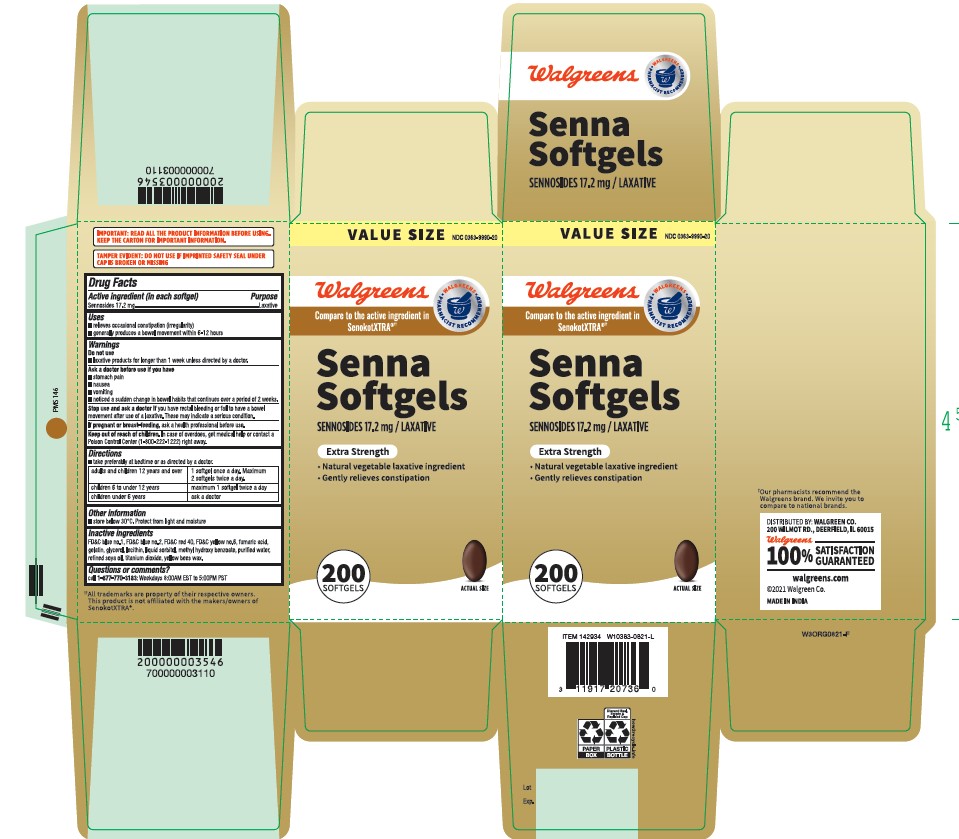
Sennosides 17.2 mg/17.21 Capsule, Liquid Filled, 200-count
🆔 Identity & classification
Where does this data come from?
🏷️ RxNorm drug class
This medicine belongs to the Contact laxatives class.
Where does this data come from?
🏭 Manufacturer & labeler
Where does this data come from?
🩺 Clinical
Senna is used on a short-term basis to treat constipation. It also is used to empty the bowels before surgery and certain medical procedures. Senna is in a class of medications called stimulant laxatives. It works by increasing activity of the intestines to cause a bowel movement.
Read the full MedlinePlus article ↗- Senna typically produces a bowel movement within 6 to 12 hours. That's why most people take it at bedtime — so it can do its job overnight and you get results in the morning. If no...
- How long does it take for senna to work?
- Senna is designed for short-term, occasional use. You should not use it for more than 1 week unless your doctor specifically tells you it's okay. Using laxatives too often or for t...
- Laxatives like senna can affect how your body absorbs other medications. To be safe, take senna at least 2 hours before or after any other drugs you use. It's always a good idea to...
Patient education
Supplement & herbal interactions
Some supplements/herbs that may interact with Sennosides (OTC drug) — tap one for details:
Sennosides (OTC drug) may be associated with lower levels of 3 nutrients — worth a chat with your pharmacist, not a cause for alarm.
Where does this data come from?
Ask a licensed pharmacist directly — free, answered by our team.
💊 What it looks like
Where does this data come from?
🧪 Inactive Ingredients / Excipients
Inactive ingredients, also called excipients, are components of the drug product other than the active ingredient. They may include fillers, dyes, coatings, preservatives, flavors, or other formulation ingredients.
💡 Tap an ingredient (hover on desktop) to see what it is and why it’s used.
-
UNII H3R47K3TBD
FD&C Blue No. 1 is a synthetic blue dye approved for use in foods and medicines. It serves as a colorant to give the medication its distinctive appearance and help with product identification.
-
UNII L06K8R7DQK
A synthetic blue dye approved by the FDA for use in medications and foods. It serves as a colorant to make pills and liquids visually distinct and easier to identify.
-
UNII WZB9127XOA
A synthetic red dye used to color medications and make them easier to identify. It serves as a colorant in tablets, capsules, and liquid formulations.
-
UNII H77VEI93A8
A synthetic yellow dye used to color medications. It helps identify the drug and make it visually distinctive, with no effect on how the medicine works.
-
UNII 88XHZ13131
Fumaric acid is an organic acid used in medications as a buffer and pH regulator. It helps maintain the proper acidity level in the medicine and may aid in tablet disintegration.
-
UNII 2G86QN327L
Gelatin is a protein derived from animal collagen, commonly used in medicines as a gelling agent and capsule material. It helps create soft or hard capsule shells that hold and release medication, and can also thicken liquid formulations.
-
UNII PDC6A3C0OX
Glycerin is a clear, thick liquid derived from plant oils or fats. It acts as a humectant to retain moisture, a sweetener, and a solvent in medications.
-
UNII 1DI56QDM62
A natural fatty substance from soybeans that helps mix oil and water-based ingredients together. It acts as an emulsifier and lubricant in medicines to improve texture and help the product break down properly in your body.
-
UNII A2I8C7HI9T
Methylparaben is a preservative derived from benzoic acid that prevents growth of bacteria, fungi, and mold in medicines. It extends the product's shelf life and maintains safety during storage.
-
UNII 506T60A25R
Sorbitol is a natural sugar alcohol derived from glucose. It serves as a sweetener, humectant, and bulking agent in medications to improve taste and help maintain moisture in the product.
-
UNII 241ATL177A
Soybean oil is a natural plant oil derived from soybean seeds. It's used in medicines as a solvent and carrier to help dissolve or suspend active ingredients and improve how the body absorbs them.
-
UNII 15FIX9V2JP
Titanium dioxide is a bright white mineral powder commonly used as a colorant and opacifying agent. It makes pills and tablets white or lighter in color and helps make coatings non-transparent.
-
UNII 059QF0KO0R
Water is a liquid solvent that dissolves and mixes ingredients together in liquid medicines, syrups, and injections. It helps distribute the active drug evenly throughout the product.
-
UNII 2ZA36H0S2V
Beeswax is a natural wax produced by honeybees. In medicines, it works as a coating agent and thickener to control how fast the drug dissolves and improve the product's texture and appearance.
14 inactive ingredients listed in the exact product block matched to this NDC.
Label-section wording can be broader than the structured product block and may mention additional formulation ingredients.
Where does this data come from?
ingredient classCode="IACT" elements from the exact product block matched by this NDC. Label-section narrative from DailyMed / the openFDA label index is shown separately when available.Inactive ingredient FAQ
Are inactive ingredients the same for every manufacturer?
Why might an inactive ingredient be missing?
Can inactive ingredients matter?
💲 Pricing
A drug doesn't have one price. Each row is a different public payment system, and none is what you'd pay at the counter — that depends on your insurance. The ⓘ on each row explains what it measures.
| Price system | Per mL | Per package |
|---|---|---|
| Retail pharmacies payNADAC · weekly | Not in the retail survey — common for institutional, discontinued, or low-volume packs. | |
| Medicaid paysCMS SDUD · 12 mo | No recent Medicaid claims on file for this NDC — rare and low-volume NDCs are suppressed in the public data. | |
| Medicare drug plans payPart D · quarterly | No Part D plan price is available for this NDC in our data. | |
Where does this data come from?
🔁 Therapeutic equivalents
| Product | Labeler | Pack | NADAC/unit | TE | Status | Price vs. this |
|---|---|---|---|---|---|---|
| Sennosides 17.2 mg/17.21this 00363-9990-20 | Walgreens | 200 capsules | — | — | FDA listed | — |
| Sennosides 17.2 mg 35916-0423-01 | SOFTGEL | 1000 capsules | — | — | FDA listed | — |
| Sennosides 17.2 mg/17.21 37808-0712-10 | H | 100 capsules | — | — | FDA listed | — |
| Sennosides 17.2 mg/17.21 69848-0016-10 | Granules | 100 capsules | — | — | FDA listed | — |
Where does this data come from?
⏳ Availability & generic status
We did not find an FDA-approved generic match for this exact strength, form and route.
Where does this data come from?
📦 Packaging — all sizes for this product
| Package NDC | Description | Marketing start | Status |
|---|---|---|---|
| 00363-9990-20 You're viewing this | 200 CAPSULE, LIQUID FILLED in 1 BOTTLE (0363-9990-20) | 2019-05-29 | Active |
🧭 About this NDC listing & data coverage
What data is (and isn’t) available for this NDC — tap to expand
| NDC identity (package / product / labeler codes) | ✓ Available |
| Labeler | ✓ Available |
| Product & package description | ✓ Available |
| Marketing category & status | ✓ Available |
| Active ingredient / dosage form / route | ✓ Available |
| FDA label (SPL via DailyMed) | ✓ Available |
| Package photos | ✓ Available |
| Inactive ingredients (structured) | ✓ Available |
| NADAC pharmacy acquisition price (CMS) | — Not published for this NDC CMS publishes NADAC only for NDCs reported in its retail-pharmacy survey. |
| Orange Book / therapeutic-equivalence data | — Not published for this NDC Applies only to products approved under an NDA/ANDA; many listings are out of scope. |
| HCPCS J-code billing crosswalk | — Not published for this NDC Most self-administered / retail products have no J-code — that is normal. |
| Medicaid utilization (CMS SDUD) | — Not published for this NDC CMS reports utilization only for NDCs with Medicaid claims above its privacy threshold. |
Questions about this listing
Is this NDC FDA-approved?
Why is there no price listed?
Is the NDC printed on the package the same as the 11-digit billing NDC?
What do the three segments of this NDC mean?
Is this package still being marketed?
Who lists this product with the FDA?
Do I need a prescription for this product?
Where does this data come from?
📄 FDA label — Drug Facts FDA SPL
🎯 Indications and Usage ▾
Uses ■ relieves occasional constipation (irregularity) ■ generally produces a bowel movement within 6-12 hours
⏱️ Dosage and Administration ▾
Directions ■ take preferably at bedtime or as directed by a doctor. adults and children 12 years and over ■ 1 capsule once a day. Maximum 2 capsules twice a day. children 6 to under 12 years ■ maximum 1 capsule twice a day children under 6 years ■ ask a doctor
⚠️ Warnings ▾
Do not use ■ laxative products for longer than 1 week unless directed by a doctor
📦 Storage and Handling ▾
Other information ■ store below 30°C and protect from light and moisture
🧪 Active Ingredient ▾
Active Ingredient (in each softgel) Sennosides 17.2 mg
🧪 Inactive Ingredients ▾
Inactive ingredients FD&C blue no.1, FD&C blue no.2, FD&C red no. 40, FD&C yellow no.6, fumaric acid, gelatin, glycerol, lecithin, liquid sorbitol, methyl hydroxy benzoate, purified water, refined soya oil, titanium dioxide, yellow bees wax.
🎯 Purpose ▾
Purpose Laxative