
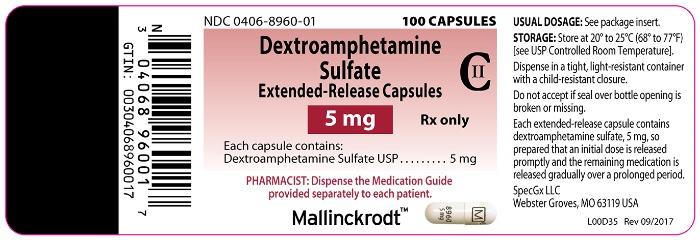
Dextroamphetamine Sulfate Extended-Release 5 mg Capsule, Extended Release, 100-count — NDC 0406-8960-01 (Billing 00406-8960-01)
This is a package of 100 capsules of Dextroamphetamine Sulfate Extended-Release 5 mg Capsule, Extended Release from SpecGx LLC, marketed since May 2003 and currently FDA-listed; retail pharmacies pay about $1.10 per capsule (NADAC). It is this product's only package size.
Identity & classification
Regulatory identifiers FDA, NLM and CMS codes for this package
Drug-database identifiers Medi-Span GPI and First Databank GCN / HICL / AHFS classification
- GSN (GCN sequence number): 005007
- GCN: 19852
- GPI-14 (Medi-Span): 61100020107005
- HICL (First Databank): 002065
- AHFS class code: 28:20.04.00
- RxCUI (RxNorm): 884520
Where does this data come from?
- FDA openFDA NDC Directory · synced Oct 1, 2026
- FDA label on DailyMed · label index refreshed Oct 1, 2026
- RxNorm (NLM RxNav) · catalog refreshed Oct 1, 2026
- Medi-Span GPI (licensed)
- First Databank (licensed) · refreshed Oct 1, 2026
RxNorm drug class
This medicine belongs to the Central Nervous System Stimulant class.
Where does this data come from?
- RxClass (NLM) · catalog refreshed Oct 1, 2026
Clinical
Dextroamphetamine is used to control symptoms of attention deficit hyperactivity disorder (ADHD; more difficulty focusing, controlling actions, and remaining still or quiet than other people who are the same age) and to treat narcolepsy (a sleep disorder that causes excessive daytime sleepiness and sudden attacks of sleep). Dextroamphetamine is in a class of medications called central nervous system stimulants. It works by changing the amounts of certain natural substances in the brain.
Read the full MedlinePlus article ↗- It treats ADHD, and some oral forms are also used for narcolepsy. Which use and age range applies depends on the product you have. Your prescriber decides if it fits you or your ch...
- Take it exactly as prescribed, usually at the lowest dose that works. Avoid late-evening doses because they can keep you awake. If you use the Xelstrym patch, put it on about 2 hou...
- Common ones are reduced appetite, trouble sleeping, headache, stomach upset and irritability. Kids may lose weight, so we watch growth. Call your doctor for chest pain, a racing he...
- Check with me first. MAO inhibitors are a serious problem, and antidepressants, triptans, tramadol and St. John’s Wort can raise the risk of serotonin syndrome. Vitamin C and fruit...
Patient education
Supplement & herbal interactions
Where does this data come from?
- MedlinePlus (NLM) · refreshed Oct 1, 2026
- FDA label on DailyMed · label index refreshed Oct 1, 2026
Ask a licensed pharmacist directly — free, answered by our team.
Pricing
A drug doesn't have one price. Each row is a different public payment system, and none is what you'd pay at the counter — that depends on your insurance. The ⓘ on each row explains what it measures.
| Price system | Per ea | Per package |
|---|---|---|
| Retail pharmacies payNADAC · weekly | $1.101 | $110.06 / 100 capsules |
| Medicaid paysCMS SDUD · 12 mo | $1.10 | $109.60 / 100 capsules |
| Medicare drug plans payPart D · Q2 2026 | $1.43 | $143.01 / 100 capsules |
Where does this data come from?
- CMS NADAC weekly file · file of Sep 30, 2026
- CMS ASP pricing files · refreshed Sep 20, 2026
- CMS Medicaid State Drug Utilization Data · through Q1 2026
- CMS Part D plan pricing files · refreshed Sep 24, 2026
- VA National Acquisition Center price file
Packaging — all sizes for this product
| Package NDC | Description | Marketing start | Marketing end | Status |
|---|---|---|---|---|
| 00406-8960-01 You're viewing this Main listing | 100 CAPSULE, EXTENDED RELEASE in 1 BOTTLE | 2003-05-06 | — | Active |
Therapeutic equivalents
| Product | Labeler | Pack | NADAC/unit | TE | Status | Price vs. this |
|---|---|---|---|---|---|---|
| Dextroamphetamine Sulfate Extended-Release 5 mg 00115-9927-10 | Amneal | 90 capsules | $0.822 | AB | FDA listed | save 25% |
| Dextroamphetamine Sulfate Extended-Release 5 mgthis 00406-8960-01 | SpecGx | 100 capsules | $1.101 | AB | Availability likely | — |
| dextroamphetamine sulfate 5 mg 45963-0303-09 | Actavis | 90 capsules | $1.101 | AB | Availability likely | — |
| Dexedrine Spansule 5 mg 64896-0673-10 | Amneal | 90 capsules | — | AB | FDA listed | — |
Where does this data come from?
- FDA openFDA NDC Directory · synced Oct 1, 2026
- FDA Orange Book · refreshed Sep 3, 2026
- CMS NADAC weekly file · file of Sep 30, 2026
Availability & generic status
This product is an FDA-approved generic. Other versions of the same drug are listed under Therapeutic equivalents, least expensive first.
Where does this data come from?
- FDA Orange Book · refreshed Sep 3, 2026
What it looks like
Where does this data come from?
- FDA label on DailyMed · label index refreshed Oct 1, 2026
Inactive Ingredients / Excipients
Inactive ingredients, also called excipients, are components of the drug product other than the active ingredient. They may include fillers, dyes, coatings, preservatives, flavors, or other formulation ingredients.
💡 Tap an ingredient (hover on desktop) to see what it is and why it’s used.
-
UNII 3K9958V90M
A liquid solvent derived from fermentation or chemical synthesis. In medicines, alcohol dissolves active ingredients, helps preserve the product, and improves how the body absorbs certain drugs.
-
UNII LMI26O6933
Alumina is a white powder form of aluminum oxide. It's used as a filler to add bulk to tablets and capsules, and sometimes as a thickening or anti-caking agent in powdered formulations.
-
UNII 5138Q19F1X
Ammonia is a colorless gas made from nitrogen and hydrogen. It's used in medicines as a pH buffer to maintain the correct acidity level and help keep the product stable.
-
UNII 8PJ61P6TS3
Butyl alcohol is a clear liquid organic solvent derived from petroleum or natural sources. In medicines, it helps dissolve active ingredients and serves as a solvent in liquid formulations and some topical products.
-
UNII QG4MW19XYX
A modified starch derived from corn, chemically altered to improve how the medicine dissolves and flows. It acts as a binder and disintegrant, helping the tablet hold together while also breaking apart in the digestive system for proper absorption.
-
UNII 7Z8S9VYZ4B
Ethylcellulose is a plant-derived thickener and film-former made by chemically modifying cellulose. It's used as a binder to hold tablet ingredients together, a coating to control how quickly medicine is released, or a thickener in liquid formulations.
-
UNII H3R47K3TBD
FD&C Blue No. 1 is a synthetic blue dye approved for use in foods and medicines. It serves as a colorant to give the medication its distinctive appearance and help with product identification.
-
UNII L06K8R7DQK
A synthetic blue dye approved by the FDA for use in medications and foods. It serves as a colorant to make pills and liquids visually distinct and easier to identify.
-
UNII WZB9127XOA
A synthetic red dye used to color medications and make them easier to identify. It serves as a colorant in tablets, capsules, and liquid formulations.
-
UNII XM0M87F357
A dark iron oxide compound that gives medicines their black or dark color. It's used as a colorant in tablets and capsules to help identify the product and make it visually distinctive.
-
UNII 2G86QN327L
Gelatin is a protein derived from animal collagen, commonly used in medicines as a gelling agent and capsule material. It helps create soft or hard capsule shells that hold and release medication, and can also thicken liquid formulations.
-
UNII VM7F0B23ZI
Hypromellose 2208 is a plant-derived thickening agent that forms a protective coating on tablets and capsules. It slows down how quickly the medicine dissolves, controlling drug release into your body.
-
UNII ND2M416302
Isopropyl alcohol is a clear liquid solvent derived from petroleum. In medicines, it dissolves active ingredients and other components, helps the product flow smoothly, and aids in sterilization during manufacturing.
-
UNII C9H2L21V7U
A fat derived from coconut or palm oil containing shorter fatty acid chains. It serves as a solvent and carrier to help dissolve or suspend active ingredients, improving absorption and stability in liquid formulations.
-
UNII 2UMI9U37CP
Oleic acid is a naturally occurring fatty acid derived from plant or animal oils. It functions as an emulsifier and solvent in medicines, helping blend water and oil-based ingredients together and dissolving other components.
-
UNII 3WJQ0SDW1A
Polyethylene glycol is a synthetic liquid or solid polymer used in medicines as a solvent, lubricant, and humectant. It helps dissolve active ingredients, reduces friction during manufacturing, and retains moisture in the final product.
-
UNII 6DC9Q167V3
Propylene glycol is a clear liquid derived from petroleum or vegetable sources. It acts as a solvent, humectant, and preservative in medicines, helping dissolve active ingredients and maintain product stability.
-
UNII C151H8M554
A natural sugar derived from sugar cane or sugar beets. It's used as a sweetener, filler, and binder to improve taste, add bulk, and help hold tablet or capsule ingredients together.
-
UNII 15FIX9V2JP
Titanium dioxide is a bright white mineral powder commonly used as a colorant and opacifying agent. It makes pills and tablets white or lighter in color and helps make coatings non-transparent.
-
UNII 059QF0KO0R
Water is a liquid solvent that dissolves and mixes ingredients together in liquid medicines, syrups, and injections. It helps distribute the active drug evenly throughout the product.
20 inactive ingredients listed in the exact product block matched to this NDC.
Where does this data come from?
ingredient classCode="IACT" elements from the exact product block matched by this NDC. Label-section narrative from DailyMed / the openFDA label index is shown separately when available.- FDA label on DailyMed · label index refreshed Oct 1, 2026
- FDA openFDA NDC Directory · synced Oct 1, 2026
Inactive ingredient FAQ
Are inactive ingredients the same for every manufacturer?
Why might an inactive ingredient be missing?
Can inactive ingredients matter?
Manufacturer & labeler
Where does this data come from?
- FDA openFDA NDC Directory · synced Oct 1, 2026
- Drugs@FDA
Full prescribing information FDA SPL
🚨 Boxed Warning ▾
WARNING: ABUSE, MISUSE, AND ADDICTION Dextroamphetamine sulfate extended-release capsules have a high potential for abuse and misuse, which can lead to the development of a substance use disorder, including addiction. Misuse and abuse of CNS stimulants, including dextroamphetamine sulfate extended-release capsules, can result in overdose and death ( see OVERDOSAGE ), and this risk is increased with higher doses or unapproved methods of administration, such as snorting or injection. Before prescribing dextroamphetamine sulfate extended-release capsules, assess each patient’s risk for abuse, misuse, and addiction.
Educate patients and their families about these risks, proper storage of the drug, and proper disposal of any unused drug. Throughout dextroamphetamine sulfate extended-release capsules treatment, reassess each patient’s risk of abuse, misuse, and addiction and frequently monitor for signs and symptoms of abuse, misuse, and addiction ( see WARNINGS and DRUG ABUSE AND DEPENDENCE ).
🎯 Indications and Usage ▾
INDICATIONS AND USAGE Dextroamphetamine sulfate extended-release capsules are indicated in: Narcolepsy Attention Deficit Disorder with Hyperactivity As an integral part of a total treatment program that typically includes other measures (psychological, educational, social) for patients (ages 6 years to 16 years) with this syndrome. A diagnosis of Attention Deficit Hyperactivity Disorder (ADHD; DSM-IV) implies the presence of the hyperactive-impulsive or inattentive symptoms that caused impairment and were present before age 7 years.
The symptoms must cause clinically significant impairment, e.g., in social, academic, or occupational functioning, and be present in 2 or more settings, e.g., school (or work) and at home. The symptoms must not be better accounted for by another mental disorder. For the Inattentive Type, at least 6 of the following symptoms must have persisted for at least 6 months: lack of attention to details/careless mistakes; lack of sustained attention; poor listener; failure to follow through on tasks; poor organization; avoids tasks requiring sustained mental effort; loses things; easily distracted; forgetful.
For the Hyperactive-Impulsive Type, at least 6 of the following symptoms must have persisted for at least 6 months: fidgeting/squirming; leaving seat; inappropriate running/climbing; difficulty with quiet activities; “on the go”; excessive talking; blurting answers; can’t wait turn; intrusive. The Combined Type requires both inattentive and hyperactive-impulsive criteria to be met. Special Diagnostic Considerations Specific etiology of this syndrome is unknown, and there is no single diagnostic test.
Adequate diagnosis requires the use of medical and special psychological, educational, and social resources. Learning may or may not be impaired. The diagnosis must be based upon a complete history and evaluation of the patient and not solely on the presences of the required number of DSM-IV characteristics.
Need for Comprehensive Treatment Program Dextroamphetamine sulfate extended-release capsules are indicated as an integral part of a total treatment program for ADHD that may include other measures (psychological, educational, social) for patients with this syndrome. Drug treatment may not be indicated for all patients with this syndrome. Stimulants are not intended for use in patients who exhibit symptoms secondary to environmental factors and/or other primary psychiatric disorders, including psychosis.
Appropriate educational placement is essential and psychosocial intervention is often helpful. When remedial measures alone are insufficient, the decision to prescribe stimulant medication will depend upon the physician’s assessment of the chronicity and severity of the patient’s symptoms. Limitations of Use The use of dextroamphetamine sulfate extended-release capsules is not recommended in pediatric patients younger than 6 years of age because they had higher plasma exposure and a higher incidence of adverse reactions (e.g., weight loss) than patients 6 years and older at the same dosage ( see PRECAUTIONS, Pediatric Use ).
⏱️ Dosage and Administration ▾
DOSAGE AND ADMINISTRATION Amphetamines should be administered at the lowest effective dosage and dosage should be individually adjusted. Late evening doses should be avoided because of the resulting insomnia. Prior to treating patients with dextroamphetamine sulfate extended-release capsules, assess: for the presence of cardiac disease (i.e., perform a careful history, family history of sudden death or ventricular arrhythmia, and physical exam) ( see WARNINGS ). the family history and clinically evaluate patients for motor or verbal tics or Tourette’s syndrome ( see WARNINGS ).
Narcolepsy Usual dose is 5 to 60 mg per day in divided doses, depending on the individual patient response. Narcolepsy seldom occurs in children under 12 years of age; however, when it does, dextroamphetamine sulfate extended-release capsules may be used. The suggested initial dose for patients aged 6 to 12 is 5 mg daily; daily dose may be raised in increments of 5 mg at weekly intervals until an optimal response is obtained.
In patients 12 years of age and older, start with 10 mg daily; daily dosage may be raised in increments of 10 mg at weekly intervals until an optimal response is obtained. If bothersome adverse reactions appear (e.g., insomnia or anorexia), dosage should be reduced. Dextroamphetamine sulfate extended-release capsules may be used for once-a-day dosage wherever appropriate.
Attention Deficit Disorder with Hyperactivity The dextroamphetamine sulfate extended-release capsule formulation is not recommended for pediatric patients younger than 6 years of age. In pediatric patients 6 years of age and older, start with 5 mg once or twice daily; daily dosage may be raised in increments of 5 mg at weekly intervals until optimal response is obtained. Only in rare cases will it be necessary to exceed a total of 40 mg per day.
Dextroamphetamine sulfate extended-release capsules may be used for once-a-day dosage wherever appropriate.
⛔ Contraindications ▾
CONTRAINDICATIONS In patients known to be hypersensitive to amphetamine, or other components of dextroamphetamine sulfate extended-release capsules. Hypersensitivity reactions such as angioedema and anaphylactic reactions have been reported in patients treated with other amphetamine products ( see ADVERSE REACTIONS ). Patients taking monoamine oxidase inhibitors (MAOIs), or within 14 days of stopping MAOIs (including MAOIs such as linezolid or intravenous methylene blue), because of an increased risk of hypertensive crisis ( see WARNINGS and Drug Interactions ).
⚠️ Warnings ▾
WARNINGS Abuse, Misuse, and Addiction Dextroamphetamine sulfate extended-release capsules have a high potential for abuse and misuse. The use of dextroamphetamine sulfate extended-release capsules exposes individuals to the risks of abuse and misuse, which can lead to the development of a substance use disorder, including addiction. Dextroamphetamine sulfate extended-release capsules can be diverted for non-medical use into illicit channels or distribution ( see DRUG ABUSE AND DEPENDENCE ).
Misuse and abuse of CNS stimulants, including dextroamphetamine sulfate extended-release capsules, can result in overdose and death ( see OVERDOSAGE ), and this risk is increased with higher doses or unapproved methods of administration, such as snorting or injection. Before prescribing dextroamphetamine sulfate extended-release capsules, assess each patient’s risk for abuse, misuse, and addiction. Educate patients and their families about these risks and proper disposal of any unused drug.
Advise patients to store amphetamine sulfate in a safe place, preferably locked, and instruct patients to not give dextroamphetamine sulfate extended-release capsules to anyone else. Throughout dextroamphetamine sulfate extended-release capsules treatment, reassess each patient’s risk of abuse, misuse, and addiction and frequently monitor for signs and symptoms of abuse, misuse, and addiction. Risks to Patients with Serious Cardiac Disease Sudden death has been reported in patients with structural cardiac abnormalities or other serious cardiac disease who are treated with CNS stimulants at the recommended ADHD dosages.
Avoid dextroamphetamine sulfate extended-release capsule use in patients with known structural cardiac abnormalities, cardiomyopathy, serious cardiac arrhythmia, coronary artery disease, or other serious cardiac disease. Increased Blood Pressure and Heart Rate CNS stimulants cause an increase in blood pressure (mean increase about 2 to 4 mm Hg) and heart rate (mean increase about 3 to 6 bpm). Monitor all patients for potential tachycardia and hypertension.
Psychiatric Adverse Reactions Exacerbation of Pre-Existing Psychosis CNS stimulants may exacerbate symptoms of behavior disturbance and thought disorder in patients with a preexisting psychotic disorder. Induction of a Manic Episode in Patients with Bipolar Disease CNS stimulants may induce a manic or mixed episode in patients. Prior to initiating treatment, screen patients for risk factors for developing a manic episode (e.g., comorbid or history of depressive symptoms or a family history of suicide, bipolar disorder, or depression).
New Psychotic or Manic Symptoms CNS stimulants, at recommended doses, may cause psychotic or manic symptoms (e.g., hallucinations, delusional thinking, or mania) in patients without a prior history of psychotic illness or mania. In a pooled analysis of multiple short-term, placebo-controlled studies of CNS stimulants, psychotic or manic symptoms occurred in approximately 0.1% of CNS stimulant-treated patients, compared with 0% of placebo-treated patients. If such symptoms occur, consider discontinuing dextroamphetamine sulfate extended-release capsules.
Long-Term Suppression of Growth in Pediatric Patients Dextroamphetamine sulfate extended-release capsules are not approved for use and are not recommended in pediatric patients below 6 years of age ( see PRECAUTIONS, Pediatric Use ). CNS stimulants have been associated with weight loss and slowing of growth rate in pediatric patients, including dextroamphetamine sulfate extended-release capsules. Closely monitor growth (weight and height) in dextroamphetamine sulfate extended-release capsules-treated pediatric patients treated with CNS stimulants.
Pediatric patients who are not growing or gaining height or weight as expected may need to have their treatment interrupted ( see PRECAUTIONS, Pediatric Use ). Seizures There is some clinical evidence that stimulants may lower the convulsive threshold in patients w… [Excerpted — this section continues on DailyMed.]
🤒 Adverse Reactions ▾
ADVERSE REACTIONS Cardiovascular Palpitations, tachycardia, elevation of blood pressure. There have been isolated reports of cardiomyopathy associated with chronic amphetamine use. Central Nervous System Psychotic episodes at recommended doses (rare), overstimulation, restlessness, dizziness, insomnia, euphoria, dyskinesia, dysphoria, tremor, headache, exacerbation of motor and verbal tics and Tourette’s syndrome.
Gastrointestinal Dryness of the mouth, unpleasant taste, diarrhea, constipation, intestinal ischemia, and other gastrointestinal disturbances. Anorexia and weight loss may occur as undesirable effects. Allergic Urticaria.
Endocrine Impotence, changes in libido, frequent or prolonged erections. Musculoskeletal Rhabdomyolysis. Skin and Subcutaneous Tissue Disorders Alopecia.
To report SUSPECTED ADVERSE REACTIONS, contact Mallinckrodt at 1-800-778-7898 or FDA at 1-800-FDA-1088 or www.fda.gov/medwatch.
🔄 Drug Interactions ▾
Drug Interactions Acidifying Agents Lower blood levels and efficacy of amphetamines. Increase dose based on clinical response. Examples of acidifying agents include gastrointestinal acidifying agents (e.g., guanethidine, reserpine, glutamic acid HCl, ascorbic acid) and urinary acidifying agents (e.g., ammonium chloride, sodium acid phosphate, methenamine salts).
Adrenergic Blockers Adrenergic blockers are inhibited by amphetamines. Alkalinizing Agents Increase blood levels and potentiate the action of amphetamine. Co-administration of dextroamphetamine sulfate extended-release capsules and gastrointestinal alkalinizing agents should be avoided.
Examples of alkalinizing agents include gastrointestinal alkalinizing agents (e.g., sodium bicarbonate) and urinary alkalinizing agents (e.g., acetazolamide, some thiazides). Tricyclic Antidepressants May enhance the activity of tricyclic or sympathomimetic agents causing striking and sustained increases in the concentration of d-amphetamine in the brain; cardiovascular effects can be potentiated. Monitor frequently and adjust or use alternative therapy based on clinical response.
Examples of tricyclic antidepressants include desipramine, Protriptyline. CYP2D6 Inhibitors The concomitant use of dextroamphetamine sulfate extended-release capsules and CYP2D6 inhibitors may increase the exposure of dextroamphetamine sulfate extended-release capsules compared to the use of the drug alone and increase the risk of serotonin syndrome. Initiate with lower doses and monitor patients for signs and symptoms of serotonin syndrome particularly during dextroamphetamine sulfate extended-release capsules initiation and after a dosage increase.
If serotonin syndrome occurs, discontinue dextroamphetamine sulfate extended-release capsules and the CYP2D6 inhibitor ( see WARNINGS , OVERDOSAGE ). Examples of CYP2D6 Inhibitors include paroxetine and fluoxetine (also serotonergic drugs), quinidine, ritonavir. Serotonergic Drugs The concomitant use of dextroamphetamine sulfate extended-release capsules and serotonergic drugs increases the risk of serotonin syndrome.
Initiate with lower doses and monitor patients for signs and symptoms of serotonin syndrome, particularly during dextroamphetamine sulfate extended-release capsules initiation or dosage increase. If serotonin syndrome occurs, discontinue dextroamphetamine sulfate extended-release capsules and the concomitant serotonergic drug(s) ( see WARNINGS and PRECAUTIONS ). Examples of serotonergic drugs include selective serotonin reuptake inhibitors (SSRI), serotonin norepinephrine reuptake inhibitors (SNRI), triptans, tricyclic antidepressants, fentanyl, lithium, tramadol, tryptophan, buspirone, St.
John’s Wort. MAO Inhibitors Concomitant use of MAOIs and CNS stimulants can cause hypertensive crisis. Potential outcomes include death, stroke, myocardial infarction, aortic dissection, ophthalmological complications, eclampsia, pulmonary edema, and renal failure.
Do not administer dextroamphetamine sulfate extended-release capsules concomitantly or within 14 days after discontinuing MAOI ( see CONTRAINDICATIONS and WARNINGS ). Examples of MAOIs include selegiline, tranylcypromine, isocarboxazid, phenelzine, linezolid, methylene blue. Proton Pump Inhibitors Time to maximum concentration (T max ) of amphetamine is decreased compared to when administered alone.
Monitor patients for changes in clinical effect and adjust therapy based on clinical response. An example of a proton pump inhibitor is omeprazole. Antihistamines Amphetamines may counteract the sedative effect of antihistamines.
Antihypertensives Amphetamines may antagonize the hypotensive effects of antihypertensives. Chlorpromazine Chlorpromazine blocks dopamine and norepinephrine reuptake, thus inhibiting the central stimulant effects of amphetamines, and can be used to treat amphetamine poisoning. Ethosuximide Amphetamines may delay intestinal absorption of ethosuximide.
Haloperidol Haloperidol blocks d… [Excerpted — this section continues on DailyMed.]
🤰 Pregnancy ▾
Pregnancy Teratogenic Effects Dextroamphetamine sulfate extended-release capsules have been shown to have embryotoxic and teratogenic effects when administered to A/Jax mice and C57BL mice in doses approximately 41 times the maximum human dose. Embryotoxic effects were not seen in New Zealand white rabbits given the drug in doses 7 times the human dose nor in rats given 12.5 times the maximum human dose. While there are no adequate and well-controlled studies in pregnant women, there has been one report of severe congenital bony deformity, tracheoesophageal fistula, and anal atresia (VATER association) in a baby born to a woman who took dextroamphetamine sulfate with lovastatin during the first trimester of pregnancy.
Dextroamphetamine sulfate extended-release capsules should be used during pregnancy only if the potential benefit justifies the potential risk to the fetus. Nonteratogenic Effects Infants born to mothers dependent on amphetamines have an increased risk of premature delivery and low birth weight. Also, these infants may experience symptoms of withdrawal as demonstrated by dysphoria, including agitation, and significant lassitude.
🧒 Pediatric Use ▾
Pediatric Use The safety and effectiveness of dextroamphetamine sulfate extended-release capsules have not been established in pediatric patients below the age of 6 years. In studies evaluating extended-release amphetamine products, patients 4 to <6 years of age had higher systemic amphetamine exposures than those observed in older pediatric patients at the same dosage. Pediatric patients 4 to <6 years of age also had a higher incidence of adverse reactions, including weight loss.
Clinical experience suggests that in psychotic children, administration of amphetamines may exacerbate symptoms of behavior disturbance and thought disorder. Amphetamines have been reported to exacerbate motor and phonic tics and Tourette’s syndrome. Therefore, clinical evaluation for tics and Tourette’s syndrome in children and their families should precede use of stimulant medications.
Data are inadequate to determine whether chronic administration of amphetamines may be associated with growth inhibition; therefore, growth should be monitored during treatment. Drug treatment is not indicated in all cases of Attention Deficit Disorder with Hyperactivity and should be considered only in light of the complete history and evaluation of the child. The decision to prescribe amphetamines should depend on the physician’s assessment of the chronicity and severity of the child’s symptoms and their appropriateness for his or her age.
Prescription should not depend solely on the presence of one or more of the behavioral characteristics. When these symptoms are associated with acute stress reactions, treatment with amphetamines is usually not indicated.
🆘 Overdosage ▾
OVERDOSAGE Clinical Effects of Overdose Overdose of CNS stimulants is characterized by the following sympathomimetic effects: Cardiovascular effects including tachyarrhythmias, and hypertension or hypotension. Vasospasm, myocardial infarction, or aortic dissection may precipitate sudden cardiac death. Takotsubo cardiomyopathy may develop.
CNS effects including psychomotor agitation, confusion, and hallucinations. Serotonin syndrome, seizures, cerebral vascular accidents, and coma may occur. Life-threatening hyperthermia (temperatures greater than 104°F) and rhabdomyolysis may develop.
Overdose Management Consider the possibility of multiple drug ingestion. The pharmacokinetic profile of dextroamphetamine sulfate extended-release capsules should be considered when treating patients with overdose. D-amphetamine is not dialyzable.
Consider contacting the Poison Help line (1-800-222-1222) or a medical toxicologist for additional overdose management recommendations.
🧬 Clinical Pharmacology ▾
CLINICAL PHARMACOLOGY Amphetamines are noncatecholamine, sympathomimetic amines with CNS stimulant activity. Peripheral actions include elevations of systolic and diastolic blood pressures and weak bronchodilator and respiratory stimulant action. There is neither specific evidence that clearly establishes the mechanism whereby amphetamines produce mental and behavioral effects in children, nor conclusive evidence regarding how these effects relate to the condition of the central nervous system.
Dextroamphetamine sulfate extended-release capsules are formulated to release the active drug substance in vivo in a more gradual fashion than the standard formulation, as demonstrated by blood levels. The formulation has not been shown superior in effectiveness over the same dosage of the standard, noncontrolled-release formulations given in divided doses. Pharmacokinetics The pharmacokinetics of the tablet and sustained-release capsule were compared in 12 healthy subjects.
The extent of bioavailability of the sustained-release capsule was similar compared to the immediate-release tablet. Following administration of three 5 mg tablets, average maximal dextroamphetamine plasma concentrations (C max ) of 36.6 ng/mL were achieved at approximately 3 hours. Following administration of one 15 mg sustained-release capsule, maximal dextroamphetamine plasma concentrations were obtained approximately 8 hours after dosing.
The average C max was 23.5 ng/mL. The average plasma T 1/2 was similar for both the tablet and sustained-release capsule and was approximately 12 hours. In 12 healthy subjects, the rate and extent of dextroamphetamine absorption were similar following administration of the sustained-release capsule formulation in the fed (58 g to 75 g fat) and fasted state.
📦 How Supplied / Storage and Handling ▾
HOW SUPPLIED Dextroamphetamine Sulfate Extended-Release Capsules Each capsule, with white opaque cap and white opaque body, contains dextroamphetamine sulfate. The 5 mg capsule is imprinted with an ® on the cap and is imprinted 8960 5 mg on the body in black. The 10 mg capsule is imprinted with an ® on the cap and is imprinted 8961 10 mg on the body in blue.
The 15 mg capsule is imprinted with an ® on the cap and is imprinted 8962 15 mg on the body in pink. 5 mg Bottles of 100……………….NDC 0406-8960-01 10 mg Bottles of 100……………….NDC 0406-8961-01 15 mg Bottles of 100……………….NDC 0406-8962-01 Store at controlled room temperature between 20° to 25°C (68° to 77°F) [see USP]. Dispense in a tight, light-resistant container with a child-resistant closure.
Mallinckrodt, the “M” brand mark, the Mallinckrodt Pharmaceuticals logo and are trademarks of a Mallinckrodt company. © 2025 Mallinckrodt. SpecGx LLC Webster Groves, MO 63119 USA Rev 09/2025 Mallinckrodt™ Pharmaceuticals Boxed M Boxed M Boxed M Boxed M
📋 Description ▾
DESCRIPTION Dextroamphetamine sulfate extended-release capsule is the dextro isomer of the compound d,l -amphetamine sulfate, a sympathomimetic amine of the amphetamine group. Chemically, dextroamphetamine is d -alpha-methylphenethylamine, and is present in all forms of dextroamphetamine sulfate extended-release capsules as the neutral sulfate. Structural formula: Chemical Structure Dextroamphetamine Sulfate Extended-Release Capsules Each dextroamphetamine sulfate extended-release capsule is so prepared that an initial dose is released promptly and the remaining medication is released gradually over a prolonged period.
Each capsule, with white opaque cap and white opaque body, contains dextroamphetamine sulfate USP. The 5 mg capsule is imprinted with an ® on the cap and is imprinted 8960 5 mg on the body in black. The 10 mg capsule is imprinted with an ® on the cap and is imprinted 8961 10 mg on the body in blue.
The 15 mg capsule is imprinted with an ® on the cap and is imprinted 8962 15 mg on the body in pink. Inactive ingredients consist of sugar spheres, titanium dioxide, gelatin, shellac glaze-45%, SD-45 alcohol, iron oxide black, propylene glycol, FD&C Blue #2/Indigo Carmine Lake, FD&C Red #40/Allura Red AC Lake, FD&C Blue #1/Brilliant Blue FCF Lake, D&C Yellow #10 Lake, SD3A alcohol, shellac, dehydrated alcohol, isopropyl alcohol, butyl alcohol, strong ammonia solution, FD&C Blue #2 Aluminum Lake, D&C Red #7 Calcium Lake, hydroxypropyl methylcellulose/hypromellose, macrogol/polyethylene glycol, purified water, ethylcellulose, ammonium hydroxide 28%, medium chain triglycerides, oleic acid.
Boxed M Boxed M Boxed M
💬 Information for Patients ▾
Information for Patients Advise the patient to read the FDA-approved patient labeling (Medication Guide). Abuse, Misuse, and Addiction Educate patients and their families about the risks of abuse, misuse, and addiction of dextroamphetamine sulfate extended-release capsules, which can lead to overdose and death, and proper disposal of any unused drug ( see WARNINGS , DRUG ABUSE AND DEPENDENCE , OVERDOSAGE ). Advise patients to store dextroamphetamine sulfate extended-release capsules in a safe place, preferably locked, and instruct patients to not give dextroamphetamine sulfate extended-release capsules to anyone else.
Risks to Patients with Serious Cardiac Disease Advise patients that there are potential risks to patients with serious cardiac disease, including sudden death, with dextroamphetamine sulfate extended-release capsules use. Instruct patients to contact a healthcare provider immediately if they develop symptoms such as exertional chest pain, unexplained syncope, or other symptoms suggestive of cardiac disease ( see WARNINGS ). Increased Blood Pressure and Heart Rate Instruct patients that dextroamphetamine sulfate extended-release capsules can elevate blood pressure and heart rate ( see WARNINGS ).
Psychiatric Adverse Reactions Advise patients that dextroamphetamine sulfate extended-release capsules, at recommended doses, can cause psychotic or manic symptoms, even in patients without prior history of psychotic symptoms or mania ( see WARNINGS ). Long-Term Suppression of Growth in Pediatric Patients Advise patients that dextroamphetamine sulfate extended-release capsules may cause slowing of growth and weight loss in pediatric patients ( see WARNINGS ). Circulation problems in fingers and toes [Peripheral vasculopathy, including Raynaud’s phenomenon] Instruct patients beginning treatment with dextroamphetamine sulfate extended-release capsules about the risk of peripheral vasculopathy, including Raynaud’s phenomenon, and associated signs and symptoms: fingers or toes may feel numb, cool, painful, and/or may change color from pale, to blue, to red.
Instruct patients to report to their physician any new numbness, pain, skin color change, or sensitivity to temperature in fingers or toes. Instruct patients to call their physician immediately with any signs of unexplained wounds appearing on fingers or toes while taking dextroamphetamine sulfate extended-release capsules. Further clinical evaluation (e.g., rheumatology referral) may be appropriate for certain patients ( see WARNINGS ).
Motor and Verbal Tics, and Worsening of Tourette’s Syndrome Advise patients that motor and verbal tics and worsening of Tourette’s syndrome may occur during treatment with dextroamphetamine sulfate extended-release capsules. Instruct the patients to notify their healthcare provider if emergence or worsening of tics or Tourette’s syndrome occurs ( see WARNINGS ).
💬 Medication Guide ▾
An electronic copy of this medication guide can be obtained from www.mallinckrodt.com/Medguide/L20D09.pdf or by calling 1-800-778-7898 for alternate delivery options. MEDICATION GUIDE Dextroamphetamine Sulfate Extended-Release Capsules, CII (DEX-troe-am-FET-uh-meen SULL-fate) What is the most important information I should know about dextroamphetamine sulfate extended-release capsules? Dextroamphetamine sulfate extended-release capsules may cause serious side effects, including: Abuse, misuse, and addiction.
Dextroamphetamine sulfate extended-release capsules have a high chance for abuse and misuse and may lead to substance use problems, including addiction. Misuse and abuse of dextroamphetamine sulfate extended-release capsules, other amphetamine-containing medicines, and methylphenidate containing medicines, can lead to overdose and death. The risk of overdose and death is increased with higher doses of dextroamphetamine sulfate extended-release capsules or when they are used in ways that are not approved, such as snorting or injection.
Your healthcare provider should check you or your child’s risk for abuse, misuse, and addiction before starting treatment with dextroamphetamine sulfate extended-release capsules and will monitor you or your child during treatment. Dextroamphetamine sulfate extended-release capsules may lead to physical dependence after prolonged use, even if taken as directed by your healthcare provider. Do not give dextroamphetamine sulfate extended-release capsules to anyone else.
See “What are dextroamphetamine sulfate extended-release capsules?” for more information. Keep dextroamphetamine sulfate extended-release capsules in a safe place and properly dispose of any unused medicine. See “How should I store dextroamphetamine sulfate extended-release capsules?” for more information.
Tell your healthcare provider if you or your child have ever abused or been dependent on alcohol, prescription medicines, or street drugs. Risks for people with serious heart disease. Sudden death has happened in people who have heart defects or other serious heart disease.
Your healthcare provider should check you or your child carefully for heart problems before starting dextroamphetamine sulfate extended-release capsules. Tell your healthcare provider if you or your child have any heart problems, heart disease, or heart defects. Call your healthcare provider right away or go to the nearest hospital emergency room right away if you or your child have any signs of heart problems such as chest pain, shortness of breath, or fainting during treatment with dextroamphetamine sulfate extended-release capsules.
Increased blood pressure and heart rate. Your healthcare provider should check you or your child’s blood pressure and heart rate regularly during treatment with dextroamphetamine sulfate extended-release capsules. Mental (psychiatric) problems, including: new or worse behavior or thought problems new or worse bipolar illness new psychotic symptoms (such as hearing voices, or seeing or believing things that are not real) or new manic symptoms Tell your healthcare provider about any mental problems you or your child have, or about a family history of suicide, bipolar illness, or depression.
Call your healthcare provider right away if you or your child have any new or worsening mental symptoms or problems during treatment with dextroamphetamine sulfate extended-release capsules, especially hearing voices, seeing or believing things that are not real, or new manic symptoms. What are dextroamphetamine sulfate extended-release capsules? Dextroamphetamine sulfate extended-release capsules are a central nervous system (CNS) stimulant prescription medicine used for the treatment of: a sleep disorder called narcolepsy.
Attention-Deficit Hyperactivity Disorder (ADHD) in children 6 to 17 years of age. dextroamphetamine sulfate extended-release capsules may help increase attention and decrease impulsiveness and hyperactivity in people with… [Excerpted — this section continues on DailyMed.]
⚠️ Precautions ▾
PRECAUTIONS General The least amount feasible should be prescribed or dispensed at one time in order to minimize the possibility of overdosage. Information for Patients Advise the patient to read the FDA-approved patient labeling (Medication Guide). Abuse, Misuse, and Addiction Educate patients and their families about the risks of abuse, misuse, and addiction of dextroamphetamine sulfate extended-release capsules, which can lead to overdose and death, and proper disposal of any unused drug ( see WARNINGS , DRUG ABUSE AND DEPENDENCE , OVERDOSAGE ).
Advise patients to store dextroamphetamine sulfate extended-release capsules in a safe place, preferably locked, and instruct patients to not give dextroamphetamine sulfate extended-release capsules to anyone else. Risks to Patients with Serious Cardiac Disease Advise patients that there are potential risks to patients with serious cardiac disease, including sudden death, with dextroamphetamine sulfate extended-release capsules use. Instruct patients to contact a healthcare provider immediately if they develop symptoms such as exertional chest pain, unexplained syncope, or other symptoms suggestive of cardiac disease ( see WARNINGS ).
Increased Blood Pressure and Heart Rate Instruct patients that dextroamphetamine sulfate extended-release capsules can elevate blood pressure and heart rate ( see WARNINGS ). Psychiatric Adverse Reactions Advise patients that dextroamphetamine sulfate extended-release capsules, at recommended doses, can cause psychotic or manic symptoms, even in patients without prior history of psychotic symptoms or mania ( see WARNINGS ). Long-Term Suppression of Growth in Pediatric Patients Advise patients that dextroamphetamine sulfate extended-release capsules may cause slowing of growth and weight loss in pediatric patients ( see WARNINGS ).
Circulation problems in fingers and toes [Peripheral vasculopathy, including Raynaud’s phenomenon] Instruct patients beginning treatment with dextroamphetamine sulfate extended-release capsules about the risk of peripheral vasculopathy, including Raynaud’s phenomenon, and associated signs and symptoms: fingers or toes may feel numb, cool, painful, and/or may change color from pale, to blue, to red. Instruct patients to report to their physician any new numbness, pain, skin color change, or sensitivity to temperature in fingers or toes.
Instruct patients to call their physician immediately with any signs of unexplained wounds appearing on fingers or toes while taking dextroamphetamine sulfate extended-release capsules. Further clinical evaluation (e.g., rheumatology referral) may be appropriate for certain patients ( see WARNINGS ). Motor and Verbal Tics, and Worsening of Tourette’s Syndrome Advise patients that motor and verbal tics and worsening of Tourette’s syndrome may occur during treatment with dextroamphetamine sulfate extended-release capsules.
Instruct the patients to notify their healthcare provider if emergence or worsening of tics or Tourette’s syndrome occurs ( see WARNINGS ). Drug Interactions Acidifying Agents Lower blood levels and efficacy of amphetamines. Increase dose based on clinical response.
Examples of acidifying agents include gastrointestinal acidifying agents (e.g., guanethidine, reserpine, glutamic acid HCl, ascorbic acid) and urinary acidifying agents (e.g., ammonium chloride, sodium acid phosphate, methenamine salts). Adrenergic Blockers Adrenergic blockers are inhibited by amphetamines. Alkalinizing Agents Increase blood levels and potentiate the action of amphetamine.
Co-administration of dextroamphetamine sulfate extended-release capsules and gastrointestinal alkalinizing agents should be avoided. Examples of alkalinizing agents include gastrointestinal alkalinizing agents (e.g., sodium bicarbonate) and urinary alkalinizing agents (e.g., acetazolamide, some thiazides). Tricyclic Antidepressants May enhance the activity of tricyclic or sympathomimetic agents causing striking and sustained incre… [Excerpted — this section continues on DailyMed.]
🍼 Nursing Mothers ▾
Nursing Mothers Amphetamines are excreted in human milk. Mothers taking amphetamines should be advised to refrain from nursing.
🧬 Pharmacokinetics ▾
Pharmacokinetics The pharmacokinetics of the tablet and sustained-release capsule were compared in 12 healthy subjects. The extent of bioavailability of the sustained-release capsule was similar compared to the immediate-release tablet. Following administration of three 5 mg tablets, average maximal dextroamphetamine plasma concentrations (C max ) of 36.6 ng/mL were achieved at approximately 3 hours.
Following administration of one 15 mg sustained-release capsule, maximal dextroamphetamine plasma concentrations were obtained approximately 8 hours after dosing. The average C max was 23.5 ng/mL. The average plasma T 1/2 was similar for both the tablet and sustained-release capsule and was approximately 12 hours.
In 12 healthy subjects, the rate and extent of dextroamphetamine absorption were similar following administration of the sustained-release capsule formulation in the fed (58 g to 75 g fat) and fasted state.
🔒 Drug Abuse and Dependence ▾
DRUG ABUSE AND DEPENDENCE Controlled Substance Dextroamphetamine sulfate extended-release capsules contain dextroamphetamine, a Schedule II controlled substance. Abuse Dextroamphetamine sulfate extended-release capsules have a high potential for abuse and misuse which can lead to the development of a substance use disorder, including addiction ( see WARNINGS ). Dextroamphetamine sulfate extended-release capsules can be diverted for non-medical use into illicit channels or distribution.
Abuse is the intentional non-therapeutic use of a drug, even once, to achieve a desired psychological or physiological effect. Misuse is the intentional use, for therapeutic purposes, of a drug by an individual in a way other than prescribed by a healthcare provider or for whom it was not prescribed. Drug addiction is a cluster of behavioral, cognitive, and physiological phenomena that may include a strong desire to take the drug, difficulties in controlling drug use (e.g., continuing drug use despite harmful consequences, giving a higher priority to drug use than other activities and obligations), and possible tolerance or physical dependence.
Misuse and abuse of amphetamine may cause increased heart rate, respiratory rate, or blood pressure; sweating; dilated pupils; hyperactivity; restlessness; insomnia; decreased appetite; loss of coordination; tremors; flushed skin; vomiting; and/or abdominal pain. Anxiety, psychosis, hostility, aggression, and suicidal or homicidal ideation have also been observed with CNS stimulants abuse and/or misuse. Misuse and abuse of CNS stimulants, including dextroamphetamine sulfate extended-release capsules, can result in overdose and death ( see OVERDOSAGE ), and this risk is increased with higher doses or unapproved methods of administration, such as snorting or injection.
Dependence Physical Dependence Dextroamphetamine sulfate extended-release capsules may produce physical dependence. Physical dependence is a state that develops as a result of physiological adaptation in response to repeated drug use, manifested by withdrawal signs and symptoms after abrupt discontinuation or a significant dose reduction of a drug. Withdrawal signs and symptoms after abrupt discontinuation or dose reduction following prolonged use of CNS stimulants including dextroamphetamine sulfate extended-release capsules include dysphoric mood; depression; fatigue; vivid, unpleasant dreams; insomnia or hypersomnia; increased appetite; and psychomotor retardation or agitation.
Tolerance Dextroamphetamine sulfate extended-release capsules may produce tolerance. Tolerance is a physiological state characterized by a reduced response to a drug after repeated administration (i.e., a higher dose of a drug is required to produce the same effect that was once obtained at a lower dose).
📄 Package Label / Principal Display Panel ▾
PACKAGE LABEL - PRINCIPAL DISPLAY PANEL - 5 mg capsule NDC 0406-8960-01 100 CAPSULES Dextroamphetamine Sulfate Extended-Release Capsules CII 5 mg Rx only Each capsule contains: Dextroamphetamine Sulfate USP......... 5 mg PHARMACIST: Dispense the Medication Guide provided separately to each patient. Mallinckrodt™ L00D35 Rev 09/2017 5 mg
PACKAGE LABEL - PRINCIPAL DISPLAY PANEL - 10 mg capsule NDC 0406-8961-01 100 CAPSULES Dextroamphetamine Sulfate Extended-Release Capsules CII 10 mg Rx only Each capsule contains: Dextroamphetamine Sulfate USP......... 10 mg PHARMACIST: Dispense the Medication Guide provided separately to each patient. Mallinckrodt™ L00D38 Rev 09/2017 10 mg
PACKAGE LABEL - PRINCIPAL DISPLAY PANEL - 15 mg capsule NDC 0406-8962-01 100 CAPSULES Dextroamphetamine Sulfate Extended-Release Capsules CII 15 mg Rx only Each capsule contains: Dextroamphetamine Sulfate USP......... 15 mg PHARMACIST: Dispense the Medication Guide provided separately to each patient. Mallinckrodt™ L00D41 Rev 09/2017 15 mg