
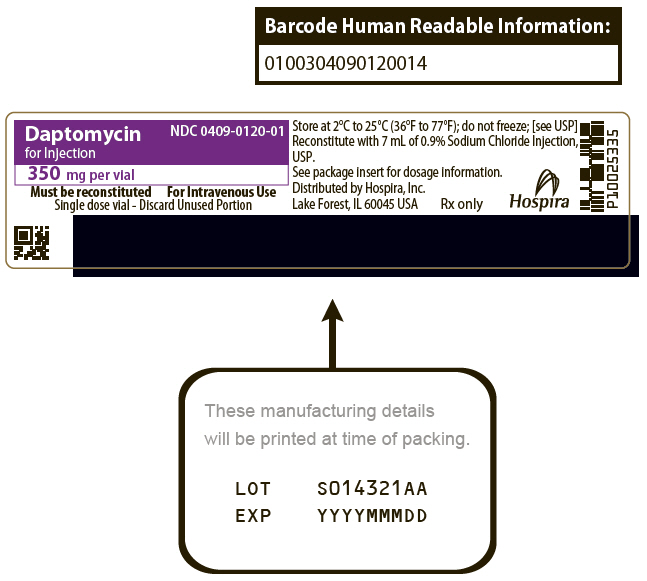
Daptomycin 350 mg/7mL Injection, Powder, Lyophilized, For Solution — NDC 0409-0120-01 (Billing 00409-0120-01)
This is a package of Daptomycin 350 mg/7mL Injection, Powder, Lyophilized, For Solution from Hospira, Inc., marketed since Aug 2021 and currently FDA-listed; retail pharmacies pay about $13.42 per unit (NADAC). It is this product's only package size.
NDC database record
One package, one record: these facts belong to NDC 0409-0120-01 alone.
- Record
- FDA NDC Directory package listing · Human prescription drug
- Code segments
- 0409 labeler · 0120 product · 01 package
- Package marketed since
- Aug 2, 2021
- Sample package
- No — commercial package
- Listing certified through
- Dec 31, 2027
- Barcode (UPC-A, from the NDC)
- 3 0409012001 4
- Medicaid fills, this package
- 213 prescriptions in the last four reported quarters
- FDA record last changed
- Jul 24, 2026
Identity & classification
Regulatory identifiers FDA, NLM and CMS codes for this package
Drug-database identifiers Medi-Span GPI and First Databank GCN / HICL / AHFS classification
- GSN (GCN sequence number): 060477
- GCN: 26638
- GPI-14 (Medi-Span): 16270030002130
- HICL (First Databank): 025673
- AHFS class code: 08:12.28.12
- RxCUI (RxNorm): 403920
Where does this data come from?
- FDA openFDA NDC Directory · synced Oct 8, 2026
- FDA label on DailyMed · label index refreshed Oct 6, 2026
- RxNorm (NLM RxNav) · catalog refreshed Oct 1, 2026
- Medi-Span GPI (licensed)
- First Databank (licensed) · refreshed Oct 8, 2026
RxNorm drug class
This medicine belongs to the Lipopeptide Antibacterial class.
Where does this data come from?
- RxClass (NLM) · catalog refreshed Oct 1, 2026
Clinical
- It treats complicated skin infections and Staphylococcus aureus bloodstream infections caused by susceptible bacteria. Some products are also approved for children 1 to 17. It does...
- You get it through a vein, usually once a day, from a healthcare professional. It runs in over about 2 or 30 minutes depending on the product. Your prescriber decides how long you...
- Diarrhea, headache, dizziness, rash and itching are among the more common ones. Blood tests may show higher CPK or liver values. Tell your team how you feel.
- Call right away for trouble breathing, swelling, or a severe rash. Also report muscle pain or weakness, numbness or tingling, new cough or fever, or ongoing diarrhea, even weeks la...
Patient education
Supplement & herbal interactions
Some supplements/herbs that may interact with Daptomycin — tap one for details:
Daptomycin may be associated with lower levels of 7 nutrients — worth a chat with your pharmacist, not a cause for alarm.
Where does this data come from?
- MedlinePlus (NLM) · refreshed Oct 1, 2026
- FDA label on DailyMed · label index refreshed Oct 6, 2026
Ask a licensed pharmacist directly — free, answered by our team.
Pricing
A drug doesn't have one price. Each row is a different public payment system, and none is what you'd pay at the counter — that depends on your insurance. The ⓘ on each row explains what it measures.
| Price system | Per ea | Per package |
|---|---|---|
| Retail pharmacies payNADAC · weekly | $13.418 | $13.42 / 1 vial |
| Medicaid paysCMS SDUD · 12 mo | $16.86 | $16.86 / 1 vial |
| Medicare drug plans payPart D · Q2 2026 | $55.37 | $55.37 / 1 vial |
| Medicare Part B allowsASP · J0877 | $0.057 / J0877 unit | — |
Where does this data come from?
- CMS NADAC weekly file · file of Jul 15, 2026
- CMS ASP pricing files · refreshed Sep 20, 2026
- CMS Medicaid State Drug Utilization Data · through Q1 2026
- CMS Part D plan pricing files · refreshed Sep 24, 2026
- VA National Acquisition Center price file
Billing & reimbursement
Where does this data come from?
- CMS ASP NDC-HCPCS crosswalk · refreshed Sep 22, 2026
- DMEPDAC NDC-HCPCS crosswalk
- openFDA NSDE billing units · refreshed Oct 7, 2026
Packaging — all sizes for this product
| Package NDC | Description | Marketing start | Marketing end | Status |
|---|---|---|---|---|
| 00409-0120-01 You're viewing this Main listing | 1 VIAL, SINGLE-DOSE in 1 CARTON / 7 mL in 1 VIAL, SINGLE-DOSE | 2021-08-02 | — | Active |
Therapeutic equivalents
| Product | Labeler | Pack | NADAC/unit | TE | Status | Price vs. this |
|---|---|---|---|---|---|---|
| Daptomycin 350 mg/7mL 00143-9455-01 | Hikma | 1 vial | $13.418 | — | Availability likely | — |
| Daptomycin 350 mg/7mLthis 00409-0120-01 | Hospira, | 1 vial | $13.418 | — | Availability likely | — |
| Daptomycin 350 mg/7mL 16729-0434-05 | Accord | 1 vial | $13.418 | AP | Availability likely | — |
| Daptomycin 350 mg/7mL 25021-0179-15 | Sagent | 1 vial | $13.418 | AP | Availability likely | — |
| Daptomycin 350 mg/7mL 31722-0215-01 | Camber | 1 vial | $13.418 | AP | Availability likely | — |
| Daptomycin 350 mg/7mL 43598-0476-11 | Dr. | 1 vial | $13.418 | AP | Availability likely | — |
| Daptomycin 350 mg/7mL 70594-0053-01 | Xellia | 1 vial | $13.418 | — | Availability likely | — |
| Daptomycin 350 mg/7mL 70594-0066-01 | Xellia | 1 vial | $13.418 | — | Availability likely | — |
| Daptomycin 350 mg/7mL 71288-0017-91 | Meitheal | 1 vial | $13.418 | AP | Availability likely | — |
| daptomycin 350 mg/7mL 71839-0108-01 | BE | 1 vial | $13.418 | AP | Availability likely | — |
| Daptomycin 350 mg/7mL 72572-0100-01 | Civica, | 1 vial | $13.418 | — | Availability likely | — |
| Daptomycin 350 mg/7mL 72603-0147-01 | NorthStar | 1 vial | $13.418 | AP | Availability likely | — |
| Daptomycin 350 mg/7mL 00143-9456-01 | Hikma | 1 vial | — | — | FDA listed | — |
Where does this data come from?
- FDA openFDA NDC Directory · synced Oct 8, 2026
- FDA Orange Book · refreshed Oct 3, 2026
- CMS NADAC weekly file · file of Jul 15, 2026
Availability & generic status
FDA-approved generic versions are listed, and recent pricing/market data suggests they may be available — see Therapeutic equivalents.
Why the date isn’t exact: Generic timing can change because patents may be challenged, settled, licensed, added, removed, or worked around with a narrower label — and FDA approval does not always mean a pharmacy can get the generic today.
🛈 What do these terms mean?
- Patent
- Legal protection listed in the Orange Book that may delay generic approval or launch. Issued by the U.S. Patent & Trademark Office.
- Substance patent
- Covers the active drug molecule itself — the hardest to design around. A generic generally can’t launch until it expires.
- Formulation (product) patent
- Covers a specific formulation or dosage form. A generic can sometimes work around it with a different formulation.
- Method-of-use patent
- A patent covering one specific approved use of the drug — not necessarily the whole molecule. A generic can sometimes launch with a “skinny label” that carves out the protected use and keeps the others.
- Skinny label
- A generic label that omits a still-patented use when the FDA allows it — letting a generic reach the market for the unprotected uses.
- Exclusivity
- FDA-granted marketing protection, separate from patents — e.g. 5-yr new chemical entity, 7-yr orphan drug, or a +6-month pediatric extension.
- Paragraph IV
- A generic applicant’s formal challenge to a listed patent. It can potentially lead to earlier generic entry, but often involves litigation or a settlement.
- RLD / RS
- Reference Listed Drug — the brand product the FDA uses as the reference for generic applications. Reference Standard — the product the FDA expects generics to compare against in bioequivalence testing.
- TE / AB rating
- FDA therapeutic-equivalence rating. An AB rating generally means the FDA considers a generic therapeutically equivalent to — and substitutable for — the brand.
- LOE (loss of exclusivity)
- The latest patent or exclusivity currently listed — the loss-of-exclusivity / latest-listed-protection date shown on this page. Paragraph-IV challenges and settlements can move the real date earlier; FDA approval and a manufacturer’s decision to market can move it later.
Built from the FDA Orange Book. The bars above are scaled to each protection’s expiry; the red LOE marker is the last one to lapse.
| Patent | Type | Use code | Expires |
|---|---|---|---|
| US 10357535 ↗ | Method of use | U-3176 | Sep 11, 2033 |
| US 9655946 ↗ | Method of use | U-3175 | Sep 11, 2033 |
| US 10357535 ↗ | Method of use | U-3176 | Sep 11, 2033 |
| US 9655946 ↗ | Method of use | U-3175 | Sep 11, 2033 |
Is there a generic version of DAPTOMYCIN 350 MG VIAL?
The FDA approved a generic — why can’t I get it at my pharmacy yet?
Why do different websites show different generic release dates?
What does “FDA listed” mean?
What does a patent or protection date mean here?
What does “current Orange Book estimate” mean?
Can a generic come out before the last patent expires?
Can a generic come out after the listed dates?
What is the difference between patents and exclusivity?
Why are there multiple patent dates?
Where does this data come from?
- FDA Orange Book · refreshed Oct 3, 2026
Inactive Ingredients / Excipients
Inactive ingredients, also called excipients, are components of the drug product other than the active ingredient. They may include fillers, dyes, coatings, preservatives, flavors, or other formulation ingredients.
🧪 Avoiding an ingredient? See Daptomycin inactive ingredients by manufacturer: every current product's list side by side, so you can ask your pharmacy for the version that does not list it.
💡 Tap an ingredient (hover on desktop) to see what it is and why it’s used.
-
UNII XF417D3PSL
Anhydrous citric acid is a sour, crystalline powder derived from citric acid with water removed. In medicines, it acts as a buffer to control pH, adds tartness to improve taste, and helps tablets disintegrate.
-
UNII 55X04QC32I
A strong alkaline chemical used to adjust and maintain the pH balance of liquid medicines. It helps keep the medicine stable and ensures it stays effective during storage.
2 inactive ingredients listed in the exact product block matched to this NDC.
Where does this data come from?
ingredient classCode="IACT" elements from the exact product block matched by this NDC. Label-section narrative from DailyMed / the openFDA label index is shown separately when available.- FDA label on DailyMed · label index refreshed Oct 6, 2026
- FDA openFDA NDC Directory · synced Oct 8, 2026
Inactive ingredient FAQ
Are inactive ingredients the same for every manufacturer?
Why might an inactive ingredient be missing?
Can inactive ingredients matter?
Manufacturer & labeler
More NDCs from Hospira, Inc. labeler code 00409
- Sterile Water 1 mL/mL Injection NDC 0409-0024-10
- Dobutamine in Dextrose 100 mg/100mL Injection, Solution NDC 0409-0025-10
- Potassium Phosphates 224 mg/mL; 236 mg/mL Injection, Solution, Concentrate NDC 0409-0032-01
- Ketamine Hydrochloride 100 mg/mL Injection, Solution, Concentrate NDC 0409-0040-10
- Dopamine Hydrochloride in Dextrose 1.6 mg/mL Injection, Solution NDC 0409-0042-12
- carboprost tromethamine 250 ug/mL Injection, Solution NDC 0409-0064-10
- Daptomycin 500 mg/10mL Injection, Powder, Lyophilized, For Solution NDC 0409-0122-01
- Labetalol Hydrochloride 5 mg/mL Injection, Solution NDC 0409-0125-25
- Lidocaine Hydrochloride and Epinephrine 10 ug/mL; 20 mg/mL Injection, Solution NDC 0409-0147-10
- Dobutamine in Dextrose 200 mg/100mL Injection, Solution NDC 0409-0151-10
- Metronidazole 5 mg/mL Injection, Solution NDC 0409-0152-24
- Precedex DEXMEDETOMIDINE HYDROCHLORIDE 4 ug/mL Injection, Solution NDC 0409-0155-02
Where does this data come from?
- FDA openFDA NDC Directory · synced Oct 8, 2026
- Drugs@FDA
Full prescribing information FDA SPL
🎯 Indications and Usage ▾
1 INDICATIONS AND USAGE Daptomycin for Injection is a lipopeptide antibacterial indicated for the treatment of: • Complicated skin and skin structure infections (cSSSI) in adult patients ( 1.1 ) and, • Staphylococcus aureus bloodstream infections (bacteremia), in adult patients including those with right-sided infective endocarditis, ( 1.2 ) Limitations of Use: • This Daptomycin for Injection product is not approved for use in pediatric patients. ( 1.3 ) • Daptomycin for Injection is not indicated for the treatment of pneumonia.
( 1.3 ) • Daptomycin for Injection is not indicated for the treatment of left-sided infective endocarditis due to S. aureus . ( 1.3 ) • Daptomycin for Injection is not recommended in pediatric patients younger than one year of age due to the risk of potential effects on muscular, neuromuscular, and/or nervous systems (either peripheral and/or central) observed in neonatal dogs. ( 1.3 ) To reduce the development of drug-resistant bacteria and maintain the effectiveness of Daptomycin for Injection and other antibacterial drugs, Daptomycin for Injection should be used to treat or prevent infections that are proven or strongly suspected to be caused by bacteria.
( 1.4 )
1.1Complicated Skin and Skin Structure Infections (cSSSI) Daptomycin for Injection is indicated for the treatment of adult patients with complicated skin and skin structure infections (cSSSI) caused by susceptible isolates of the following Gram-positive bacteria: Staphylococcus aureus (including methicillin-resistant isolates), Streptococcus pyogenes, Streptococcus agalactiae, Streptococcus dysgalactiae subsp. equisimilis, and Enterococcus faecalis (vancomycin-susceptible isolates only).
1.2Staphylococcus aureus Bloodstream Infections (Bacteremia) in Adult Patients, Including Those with Right-Sided Infective Endocarditis, Caused by Methicillin-Susceptible and Methicillin-Resistant Isolates Daptomycin for Injection is indicated for the treatment of adult patients with Staphylococcus aureus bloodstream infections (bacteremia), including adult patients with right-sided infective endocarditis, caused by methicillin-susceptible and methicillin-resistant isolates.
1.3Limitations of Use This Daptomycin for Injection product is not approved for use in pediatric patients [see Use in Specific Populations (8.4) ] . Daptomycin for Injection is not indicated for the treatment of pneumonia. Daptomycin for Injection is not indicated for the treatment of left-sided infective endocarditis due to S. aureus .
The clinical trial of daptomycin for injection in adult patients with S. aureus bloodstream infections included limited data from patients with left-sided infective endocarditis; outcomes in these patients were poor [see Clinical Studies (14.2) ] . Daptomycin for Injection has not been studied in patients with prosthetic valve endocarditis. Daptomycin for Injection is not recommended in pediatric patients younger than 1 year of age due to the risk of potential effects on muscular, neuromuscular, and/or nervous systems (either peripheral and/or central) observed in neonatal dogs [see Warnings and Precautions (5.7) and Nonclinical Toxicology (13.2) ] .
1.4Usage Appropriate specimens for microbiological examination should be obtained in order to isolate and identify the causative pathogens and to determine their susceptibility to daptomycin. To reduce the development of drug-resistant bacteria and maintain the effectiveness of Daptomycin for Injection and other antibacterial drugs, Daptomycin for Injection should be used only to treat or prevent infections that are proven or strongly suspected to be caused by susceptible bacteria. When culture and susceptibility information is available, it should be considered in selecting or modifying antibacterial therapy.
In the absence of such data, local epidemiology and susceptibility patterns may contribute to the empiric selection of therapy. Empiric therapy may be initiated while awaiting test results.
⏱️ Dosage and Administration ▾
2 DOSAGE AND ADMINISTRATION Adult Patients • Administer to adult patients intravenously in 0.9% sodium chloride, either by injection over a 2-minute period or by infusion over a 30-minute period. ( 2.1 , 2.5 ) • Recommended dosage regimen for adult patients ( 2.2 , 2.3 , 2.4 ): Creatinine Clearance (CrCl) Dosage Regimen cSSSI For 7 to 14 days S. aureus Bacteremia For 2 to 6 weeks ≥30 mL/min 4 mg/kg once every 24 hours 6 mg/kg once every 24 hours <30 mL/min, including hemodialysis and CAPD 4 mg/kg once every 48 hours Administered following hemodialysis on hemodialysis days.
6 mg/kg once every 48 hours • There are other formulations of daptomycin that have differences concerning storage and reconstitution. Carefully follow the reconstitution and storage procedures described in this labeling. ( 2.5 ) • Do not use in conjunction with ReadyMED ® elastomeric infusion pumps in adult patients.
( 2.5 )
2.1Important Administration Duration Instructions Adults Administer the appropriate volume of the reconstituted Daptomycin for Injection (concentration of 50 mg/mL) to adult patients intravenously either by injection over a two (2) minute period or by intravenous infusion over a thirty (30) minute period [see Dosage and Administration (2.2 , 2.3 , 2.5) ] .
2.2Dosage in Adults for cSSSI Administer Daptomycin for Injection 4 mg/kg to adult patients intravenously in 0.9% sodium chloride injection once every 24 hours for 7 to 14 days.
2.3Dosage in Adult Patients with Staphylococcus aureus Bloodstream Infections (Bacteremia), Including Those with Right-Sided Infective Endocarditis, Caused by Methicillin-Susceptible and Methicillin-Resistant Isolates Administer Daptomycin for Injection 6 mg/kg to adult patients intravenously in 0.9% sodium chloride injection once every 24 hours for 2 to 6 weeks. There are limited safety data for the use of daptomycin for injection for more than 28 days of therapy. In the Phase 3 trial, there were a total of 14 adult patients who were treated with daptomycin for injection for more than 28 days.
2.4Dosage in Patients with Renal Impairment Adult Patients: No dosage adjustment is required in adult patients with creatinine clearance (CL CR ) greater than or equal to 30 mL/min. The recommended dosage regimen for Daptomycin for Injection in adult patients with CL CR less than 30 mL/min, including adult patients on hemodialysis or continuous ambulatory peritoneal dialysis (CAPD), is 4 mg/kg (cSSSI) or 6 mg/kg ( S. aureus bloodstream infections) once every 48 hours (Table 1). When possible, Daptomycin for Injection should be administered following the completion of hemodialysis on hemodialysis days [see Warnings and Precautions (5.2 , 5.10) , Use in Specific Populations (8.6) , and Clinical Pharmacology (12.3) ] .
Table 1: Recommended Dosage of Daptomycin for Injection in Adult Patients Creatinine Clearance (CL CR ) Dosage Regimen in Adults cSSSI S. aureus Bloodstream Infections Greater than or equal to 30 mL/min 4 mg/kg once every 24 hours 6 mg/kg once every 24 hours Less than 30 mL/min, including hemodialysis and CAPD 4 mg/kg once every 48 hours When possible, administer Daptomycin for Injection following the completion of hemodialysis on hemodialysis days. 6 mg/kg once every 48 hours Pediatric Patients: The dosage regimen for Daptomycin for Injection in pediatric patients with renal impairment has not been established.
2.5Preparation and Administration of Daptomycin for Injection There are other formulations of daptomycin that have differences concerning reconstitution and storage. Carefully follow the reconstitution and storage procedures described in this labeling. Reconstitution of Daptomycin for Injection Vial Daptomycin for Injection is supplied in single-dose vials, each containing 350 mg or 500 mg daptomycin as a sterile, lyophilized powder.
The contents of a Daptomycin for Injection vial should be reconstituted, using aseptic technique, to 50 mg/mL as follows: • To minimize foaming, AVOID vigorous agita… [Excerpted — this section continues on DailyMed.]
💊 Dosage Forms and Strengths ▾
3 DOSAGE FORMS AND STRENGTHS For Injection: 350 mg and 500 mg daptomycin as a sterile, pale yellow to light brown lyophilized powder for reconstitution in a single-dose vial. • 350 mg lyophilized powder for reconstitution in a single-dose vial ( 3 ) • 500 mg lyophilized powder for reconstitution in a single-dose vial ( 3 )
⛔ Contraindications ▾
4 CONTRAINDICATIONS Daptomycin for Injection is contraindicated in patients with known hypersensitivity to daptomycin [see Warnings and Precautions (5.1) ] . Known hypersensitivity to daptomycin ( 4 )
⚠️ Warnings and Cautions ▾
5 WARNINGS AND PRECAUTIONS • Anaphylaxis/hypersensitivity reactions (including life-threatening): Discontinue Daptomycin for Injection and treat sign/symptoms. ( 5.1 ) • Myopathy and rhabdomyolysis: Monitor CPK levels and follow muscle pain or weakness; if elevated CPK or myopathy occurs, consider discontinuation of Daptomycin for Injection. ( 5.2 ) • Eosinophilic pneumonia: Discontinue Daptomycin for Injection and consider treatment with systemic steroids.
( 5.3 ) • Drug Reaction with Eosinophilia and Systemic Symptoms (DRESS): Discontinue Daptomycin for Injection and institute appropriate treatment. ( 5.4 ) • Tubulointerstitial Nephritis (TIN): Discontinue Daptomycin for Injection and institute appropriate treatment. ( 5.5 ) • Peripheral neuropathy: Monitor for neuropathy and consider discontinuation.
( 5.6 ) • Potential nervous system and/or muscular system effects in pediatric patients younger than 12 months: Avoid use of Daptomycin for Injection in this age group. ( 5.7 ) • Clostridioides difficile– associated diarrhea: Evaluate patients if diarrhea occurs. ( 5.8 ) • Persisting or relapsing S. aureus bacteremia/endocarditis: Perform susceptibility testing and rule out sequestered foci of infection.
( 5.9 ) • Decreased efficacy was observed in adult patients with moderate baseline renal impairment. ( 5.10 )
5.1Anaphylaxis/Hypersensitivity Reactions Anaphylaxis/hypersensitivity reactions have been reported with the use of antibacterial agents, including daptomycin for injection, and may be life-threatening. If an allergic reaction to Daptomycin for Injection occurs, discontinue the drug and institute appropriate therapy [see Adverse Reactions (6.2) ] .
5.2Myopathy and Rhabdomyolysis Myopathy, defined as muscle aching or muscle weakness in conjunction with increases in creatine phosphokinase (CPK) values to greater than 10 times the upper limit of normal (ULN), has been reported with the use of daptomycin for injection. Rhabdomyolysis, with or without acute renal failure, has been reported [see Adverse Reactions (6.2) ] . Patients receiving Daptomycin for Injection should be monitored for the development of muscle pain or weakness, particularly of the distal extremities.
In patients who receive Daptomycin for Injection, CPK levels should be monitored weekly, and more frequently in patients who received recent prior or concomitant therapy with an HMG-CoA reductase inhibitor or in whom elevations in CPK occur during treatment with Daptomycin for Injection. In adult patients with renal impairment, both renal function and CPK should be monitored more frequently than once weekly [see Use in Specific Populations (8.6) and Clinical Pharmacology (12.3) ]. In Phase 1 studies and Phase 2 clinical trials in adults, CPK elevations appeared to be more frequent when daptomycin for injection was dosed more than once daily.
Therefore, Daptomycin for Injection should not be dosed more frequently than once a day. Daptomycin for Injection should be discontinued in patients with unexplained signs and symptoms of myopathy in conjunction with CPK elevations to levels >1,000 U/L (~5× ULN), and in patients without reported symptoms who have marked elevations in CPK, with levels >2,000 U/L (≥10× ULN). In addition, consideration should be given to suspending agents associated with rhabdomyolysis, such as HMG-CoA reductase inhibitors, temporarily in patients receiving Daptomycin for Injection [see Drug Interactions (7.1) ].
5.3Eosinophilic Pneumonia Eosinophilic pneumonia has been reported in patients receiving daptomycin for injection [see Adverse Reactions (6.2) ] . In reported cases associated with daptomycin for injection, patients developed fever, dyspnea with hypoxic respiratory insufficiency, and diffuse pulmonary infiltrates or organizing pneumonia. In general, patients developed eosinophilic pneumonia 2 to 4 weeks after starting daptomycin for injection, and improved when daptomycin for injection was discontinued and steroid therapy was in… [Excerpted — this section continues on DailyMed.]
🤒 Adverse Reactions ▾
6 ADVERSE REACTIONS The following adverse reactions are described, or described in greater detail, in other sections: • Anaphylaxis/Hypersensitivity Reactions [see Warnings and Precautions (5.1) ] • Myopathy and Rhabdomyolysis [see Warnings and Precautions (5.2) ] • Eosinophilic Pneumonia [see Warnings and Precautions (5.3) ] • Drug Reaction with Eosinophilia and Systemic Symptoms [see Warnings and Precautions (5.4) ] • Tubulointerstitial Nephritis [see Warnings and Precautions (5.5) ] • Peripheral Neuropathy [see Warnings and Precautions (5.6) ] • Increased International Normalized Ratio (INR)/Prolonged Prothrombin Time [see Warnings and Precautions (5.11) and Drug Interactions (7.2) ] • Adult cSSSI Patients : The most common adverse reactions that occurred in ≥2% of adult cSSSI patients receiving daptomycin for injection 4 mg/kg were diarrhea, headache, dizziness, rash, abnormal liver function tests, elevated creatine phosphokinase (CPK), urinary tract infections hypotension, and dyspnea.
( 6.1 ) • Adult S. aureus bacteremia/endocarditis Patients: The most common adverse reactions that occurred in ≥5% of S. aureus bacteremia/endocarditis patients receiving daptomycin for injection 6 mg/kg were sepsis, bacteremia, abdominal pain, chest pain, edema, pharyngolaryngeal pain, pruritus, increased sweating, insomnia, elevated CPK, and hypertension. ( 6.1 ) To report SUSPECTED ADVERSE REACTIONS, contact Hospira at 1-800-438-1985 or FDA at 1-800-FDA-1088 or www.fda.gov/medwatch .
6.1Clinical Trials Experience Because clinical trials are conducted under widely varying conditions, adverse reaction rates observed in the clinical trials of a drug cannot be directly compared with rates in the clinical trials of another drug and may not reflect the rates observed in practice. Clinical Trial Experience in Adult Patients Clinical trials enrolled 1,864 adult patients treated with daptomycin and 1,416 treated with comparator. Complicated Skin and Skin Structure Infection Trials in Adults In Phase 3 complicated skin and skin structure infection (cSSSI) trials in adult patients, daptomycin for injection was discontinued in 15/534 (2.8%) patients due to an adverse reaction, while comparator was discontinued in 17/558 (3.0%) patients.
The rates of the most common adverse reactions, organized by body system, observed in adult patients with cSSSI (receiving 4 mg/kg daptomycin) are displayed in Table 4. Table 4: Incidence of Adverse Reactions that Occurred in ≥2% of Adult Patients in the Daptomycin for Injection Treatment Group and ≥ the Comparator Treatment Group in Phase 3 cSSSI Trials Adverse Reaction Adult Patients n (%) Daptomycin for Injection 4 mg/kg (N=534) Comparator Comparator: vancomycin (1 g IV every 12h) or an anti-staphylococcal semi-synthetic penicillin (i.e., nafcillin, oxacillin, cloxacillin, or flucloxacillin; 4 to 12 g/day IV in divided doses).
(N=558) Gastrointestinal disorders Diarrhea 5.2
4.3Nervous system disorders Headache 5.4
5.4Dizziness 2.2
2.0Skin/subcutaneous disorders Rash 4.3
3.8Diagnostic investigations Abnormal liver function tests 3.0
1.6Elevated CPK 2.8
1.8Infections Urinary tract infections 2.4
0.5Vascular disorders Hypotension 2.4
1.4Respiratory disorders Dyspnea 2.1
1.6Drug-related adverse reactions (possibly or probably drug-related) that occurred in <1% of adult patients receiving daptomycin in the cSSSI trials are as follows: Body as a Whole: fatigue, weakness, rigors, flushing, hypersensitivity Blood/Lymphatic System: leukocytosis, thrombocytopenia, thrombocytosis, eosinophilia, increased International Normalized Ratio (INR) Cardiovascular System: supraventricular arrhythmia Dermatologic System: eczema Digestive System: abdominal distension, stomatitis, jaundice, increased serum lactate dehydrogenase Metabolic/Nutritional System: hypomagnesemia, increased serum bicarbonate, electrolyte disturbance Musculoskeletal System: myalgia, muscle cramps, muscle weakness, arthralgia Nervous System: vertigo, me… [Excerpted — this section continues on DailyMed.]
🔄 Drug Interactions ▾
7 DRUG INTERACTIONS
7.1HMG-CoA Reductase Inhibitors In healthy adult subjects, concomitant administration of daptomycin and simvastatin had no effect on plasma trough concentrations of simvastatin, and there were no reports of skeletal myopathy [see Clinical Pharmacology (12.3) ]. However, inhibitors of HMG-CoA reductase may cause myopathy, which is manifested as muscle pain or weakness associated with elevated levels of creatine phosphokinase (CPK). In the adult Phase 3 S. aureus bacteremia/endocarditis trial, some patients who received prior or concomitant treatment with an HMG-CoA reductase inhibitor developed elevated CPK [see Adverse Reactions (6.1) ].
Experience with the co-administration of HMG-CoA reductase inhibitors and daptomycin in patients is limited; therefore, consideration should be given to suspending use of HMG-CoA reductase inhibitors temporarily in patients receiving Daptomycin for Injection.
7.2Drug-Laboratory Test Interactions Clinically relevant plasma concentrations of daptomycin have been observed to cause a significant concentration-dependent false prolongation of prothrombin time (PT) and elevation of International Normalized Ratio (INR) when certain recombinant thromboplastin reagents are utilized for the assay. The possibility of an erroneously elevated PT/INR result due to interaction with a recombinant thromboplastin reagent may be minimized by drawing specimens for PT or INR testing near the time of trough plasma concentrations of daptomycin.
However, sufficient daptomycin concentrations may be present at trough to cause interaction. If confronted with an abnormally high PT/INR result in a patient being treated with daptomycin, it is recommended that clinicians: 1. Repeat the assessment of PT/INR, requesting that the specimen be drawn just prior to the next Daptomycin for Injection dose (i.e., at trough concentration).
If the PT/INR value obtained at trough remains substantially elevated above what would otherwise be expected, consider evaluating PT/INR utilizing an alternative method. 2. Evaluate for other causes of abnormally elevated PT/INR results.
👥 Use in Specific Populations ▾
8 USE IN SPECIFIC POPULATIONS
8.1Pregnancy Risk Summary Limited published data on use of daptomycin in pregnant women are insufficient to inform a drug-associated risk for major birth defects and miscarriage. In animal reproduction studies performed in rats and rabbits daptomycin was administered intravenously during organogenesis at doses 2 and 4-times, respectively, the recommended 6 mg/kg human dose (on a body surface area basis). No evidence of adverse developmental outcomes was observed.
The background risk of major birth defects and miscarriage for the indicated population is unknown. All pregnancies have a background risk of birth defect, loss, or other adverse outcomes. In the U.S. general population, the estimated background risk of major birth defects and miscarriage in clinically recognized pregnancies is 2–4% and 15–20%, respectively.
Data Animal Data In pregnant rats, daptomycin was administered intravenously at doses of 5, 20, or 75 mg/kg/day during the gestation days 6 to 18. Maternal body weight gain was decreased at 75 mg/kg/day. No embryo/fetal effects were noted at the highest dose of 75 mg/kg/day, a dose approximately 2-fold higher than in humans at the recommended maximum dose of 6 mg/kg (based on body surface area).
In pregnant rabbits, daptomycin was administered intravenously at doses of 5, 20, or 75 mg/kg/day during the gestation days 6 to 15. Maternal body weight gain and food consumption were decreased at 75 mg/kg/day. No embryo/fetal effects were noted at the highest dose of 75 mg/kg/day, a dose approximately 4-fold higher than in humans at the maximum recommended dose of 6mg/kg (based on body surface area).
In a combined fertility and pre/postnatal development study, daptomycin was administered intravenously to female rats at doses of 2, 25, 75 mg/kg/day from 14 days pre-mating through lactation/postpartum day 20). No effects on pre/postnatal development were observed up to the highest dose of 75 mg/kg/day, a dose approximately 2-fold higher than the maximum recommended human dose of 6 mg/kg (based on body surface area) 1 .
8.2Lactation Risk Summary Limited published data report that daptomycin is present in human milk at infant doses of 0.1% of the maternal dose (see Data ) 2,3,4 . There is no information on the effects of daptomycin on the breastfed infant or the effects of daptomycin on milk production. The developmental and health benefits of breastfeeding should be considered along with the mother's clinical need for Daptomycin for Injection and any potential adverse effects on the breastfed infant from Daptomycin for Injection or from the underlying maternal condition.
8.4Pediatric Use This Daptomycin for Injection product is not approved for use in pediatric patients. Safety and effectiveness of daptomycin for injection in pediatric patients below the age of one year have not been established. Avoid use of Daptomycin for Injection in pediatric patients younger than one year of age due to the risk of potential effects on muscular, neuromuscular, and/or nervous systems (either peripheral and/or central) observed in neonatal dogs [see Warnings and Precautions (5.7) and Nonclinical Toxicology (13.2) ] .
Daptomycin for Injection is not indicated in pediatric patients with renal impairment because dosage has not been established in these patients.
8.5Geriatric Use Of the 534 adult patients treated with daptomycin for injection in Phase 3 controlled clinical trials of complicated skin and skin structure infections (cSSSI), 27% were 65 years of age or older and 12% were 75 years of age or older. Of the 120 adult patients treated with daptomycin for injection in the Phase 3 controlled clinical trial of S. aureus bacteremia/endocarditis, 25% were 65 years of age or older and 16% were 75 years of age or older. In Phase 3 adult clinical trials of cSSSI and S. aureus bacteremia/endocarditis, clinical success rates were lower in patients ≥65 years of age than in patients <65 years of age.
In addition,… [Excerpted — this section continues on DailyMed.]
🤰 Pregnancy ▾
8.1Pregnancy Risk Summary Limited published data on use of daptomycin in pregnant women are insufficient to inform a drug-associated risk for major birth defects and miscarriage. In animal reproduction studies performed in rats and rabbits daptomycin was administered intravenously during organogenesis at doses 2 and 4-times, respectively, the recommended 6 mg/kg human dose (on a body surface area basis). No evidence of adverse developmental outcomes was observed.
The background risk of major birth defects and miscarriage for the indicated population is unknown. All pregnancies have a background risk of birth defect, loss, or other adverse outcomes. In the U.S. general population, the estimated background risk of major birth defects and miscarriage in clinically recognized pregnancies is 2–4% and 15–20%, respectively.
Data Animal Data In pregnant rats, daptomycin was administered intravenously at doses of 5, 20, or 75 mg/kg/day during the gestation days 6 to 18. Maternal body weight gain was decreased at 75 mg/kg/day. No embryo/fetal effects were noted at the highest dose of 75 mg/kg/day, a dose approximately 2-fold higher than in humans at the recommended maximum dose of 6 mg/kg (based on body surface area).
In pregnant rabbits, daptomycin was administered intravenously at doses of 5, 20, or 75 mg/kg/day during the gestation days 6 to 15. Maternal body weight gain and food consumption were decreased at 75 mg/kg/day. No embryo/fetal effects were noted at the highest dose of 75 mg/kg/day, a dose approximately 4-fold higher than in humans at the maximum recommended dose of 6mg/kg (based on body surface area).
In a combined fertility and pre/postnatal development study, daptomycin was administered intravenously to female rats at doses of 2, 25, 75 mg/kg/day from 14 days pre-mating through lactation/postpartum day 20). No effects on pre/postnatal development were observed up to the highest dose of 75 mg/kg/day, a dose approximately 2-fold higher than the maximum recommended human dose of 6 mg/kg (based on body surface area) 1 .
🧒 Pediatric Use ▾
8.4Pediatric Use This Daptomycin for Injection product is not approved for use in pediatric patients. Safety and effectiveness of daptomycin for injection in pediatric patients below the age of one year have not been established. Avoid use of Daptomycin for Injection in pediatric patients younger than one year of age due to the risk of potential effects on muscular, neuromuscular, and/or nervous systems (either peripheral and/or central) observed in neonatal dogs [see Warnings and Precautions (5.7) and Nonclinical Toxicology (13.2) ] .
Daptomycin for Injection is not indicated in pediatric patients with renal impairment because dosage has not been established in these patients.
🧓 Geriatric Use ▾
8.5Geriatric Use Of the 534 adult patients treated with daptomycin for injection in Phase 3 controlled clinical trials of complicated skin and skin structure infections (cSSSI), 27% were 65 years of age or older and 12% were 75 years of age or older. Of the 120 adult patients treated with daptomycin for injection in the Phase 3 controlled clinical trial of S. aureus bacteremia/endocarditis, 25% were 65 years of age or older and 16% were 75 years of age or older. In Phase 3 adult clinical trials of cSSSI and S. aureus bacteremia/endocarditis, clinical success rates were lower in patients ≥65 years of age than in patients <65 years of age.
In addition, treatment-emergent adverse events were more common in patients ≥65 years of age than in patients <65 years of age. The exposure of daptomycin was higher in healthy elderly subjects than in healthy young adult subjects. However, no adjustment of Daptomycin for Injection dosage is warranted for elderly patients with creatinine clearance (CL CR ) ≥30 mL/min [see Dosage and Administration (2.4) and Clinical Pharmacology (12.3) ].
🆘 Overdosage ▾
10 OVERDOSAGE In the event of overdosage, supportive care is advised with maintenance of glomerular filtration. Daptomycin is cleared slowly from the body by hemodialysis (approximately 15% of the administered dose is removed over 4 hours) and by peritoneal dialysis (approximately 11% of the administered dose is removed over 48 hours). The use of high-flux dialysis membranes during 4 hours of hemodialysis may increase the percentage of dose removed compared with that removed by low-flux membranes.
🧬 Clinical Pharmacology ▾
12 CLINICAL PHARMACOLOGY
12.1Mechanism of Action Daptomycin is an antibacterial drug [see Clinical Pharmacology (12.4) ].
12.2Pharmacodynamics Based on animal models of infection, the antimicrobial activity of daptomycin appears to correlate with the AUC/MIC (area under the concentration-time curve/minimum inhibitory concentration) ratio for certain pathogens, including S. aureus . The principal pharmacokinetic/pharmacodynamic parameter best associated with clinical and microbiological cure has not been elucidated in clinical trials with daptomycin for injection.
12.3Pharmacokinetics Daptomycin for Injection Administered over a 30-Minute Period in Adults The mean and standard deviation (SD) pharmacokinetic parameters of daptomycin at steady-state following intravenous (IV) administration of daptomycin for injection over a 30-minute period at 4 to 12 mg/kg every 24h to healthy young adults are summarized in Table 7. Table 7: Mean (SD) Daptomycin Pharmacokinetic Parameters in Healthy Adult Volunteers at Steady-State Dose Daptomycin for injection was administered by IV infusion over a 30-minute period.
Doses of daptomycin for injection in excess of 6 mg/kg have not been approved. (mg/kg) Pharmacokinetic Parameters AUC 0–24 , area under the concentration-time curve from 0 to 24 hours; t 1/2 , elimination half-life; V ss , volume of distribution at steady-state; CL T , total plasma clearance; C max , maximum plasma concentration. AUC 0–24 (mcg∙h/mL) t 1/2 (h) V ss (L/kg) CL T (mL/h/kg) C max (mcg/mL) 4 (N=6) 494 (75) 8.1 (1.0) 0.096 (0.009) 8.3 (1.3) 57.8 (3.0) 6 (N=6) 632 (78) 7.9 (1.0) 0.101 (0.007) 9.1 (1.5) 93.9 (6.0) 8 (N=6) 858 (213) 8.3 (2.2) 0.101 (0.013) 9.0 (3.0) 123.3 (16.0) 10 (N=9) 1039 (178) 7.9 (0.6) 0.098 (0.017) 8.8 (2.2) 141.1 (24.0) 12 (N=9) 1277 (253) 7.7 (1.1) 0.097 (0.018) 9.0 (2.8) 183.7 (25.0) Daptomycin pharmacokinetics were generally linear and time-independent at Daptomycin for Injection doses of 4 to 12 mg/kg every 24h administered by IV infusion over a 30-minute period for up to 14 days.
Steady-state trough concentrations were achieved by the third daily dose. The mean (SD) steady-state trough concentrations attained following the administration of 4, 6, 8, 10, and 12 mg/kg every 24h were 5.9 (1.6), 6.7 (1.6), 10.3 (5.5), 12.9 (2.9), and 13.7 (5.2) mcg/mL, respectively. Daptomycin for Injection Administered over a 2-Minute Period in Adults Following IV administration of daptomycin for injection over a 2-minute period to healthy adult volunteers at doses of 4 mg/kg (N=8) and 6 mg/kg (N=12), the mean (SD) steady-state systemic exposure (AUC) values were 475 (71) and 701 (82) mcg∙h/mL, respectively.
Values for maximum plasma concentration (C max ) at the end of the 2-minute period could not be determined adequately in this study. However, using pharmacokinetic parameters from 14 healthy adult volunteers who received a single-dose of daptomycin for injection 6 mg/kg IV administered over a 30-minute period in a separate study, steady-state C max values were simulated for daptomycin for injection 4 and 6 mg/kg IV administered over a 2-minute period. The simulated mean (SD) steady-state C max values were 77.7 (8.1) and 116.6 (12.2) mcg/mL, respectively.
Distribution Daptomycin is reversibly bound to human plasma proteins, primarily to serum albumin, in a concentration-independent manner. The overall mean binding ranges from 90 to 93%. In clinical studies, mean serum protein binding in adult subjects with creatinine clearance (CL CR ) ≥30 mL/min was comparable to that observed in healthy adult subjects with normal renal function.
However, there was a trend toward decreasing serum protein binding among subjects with CL CR <30 mL/min (88%), including those receiving hemodialysis (86%) and continuous ambulatory peritoneal dialysis (CAPD) (84%). The protein binding of daptomycin in adult subjects with moderate hepatic impairment (Child-Pugh Class B) was similar to that in healthy adult subjects. The volume of di… [Excerpted — this section continues on DailyMed.]
🧬 Mechanism of Action ▾
12.1Mechanism of Action Daptomycin is an antibacterial drug [see Clinical Pharmacology (12.4) ].
📦 How Supplied / Storage and Handling ▾
16 HOW SUPPLIED/STORAGE AND HANDLING Daptomycin for Injection is supplied as a sterile pale yellow to light brown lyophilized cake in a single-dose vial containing either 350 mg or 500 mg of daptomycin: Unit of Sale Strength NDC 0409-0120-01 Carton containing 1 single-dose vial 350 mg/vial NDC 0409-0122-01 Carton containing 1 single-dose vial 500 mg/vial Store original packages at 2°C to 25°C (36°F to 77°F); do not freeze. Brief exposure to 30°C (86°F) permitted [see USP Controlled Room Temperature] [see Dosage and Administration (2.5) ] .
Storage conditions for the reconstituted and diluted solutions are described in another section of the prescribing information [see Dosage and Administration (2.5) ] . The vial stopper is not made with natural rubber latex.
📦 Storage and Handling ▾
Store original packages at 2°C to 25°C (36°F to 77°F); do not freeze. Brief exposure to 30°C (86°F) permitted [see USP Controlled Room Temperature] [see Dosage and Administration (2.5) ] . Storage conditions for the reconstituted and diluted solutions are described in another section of the prescribing information [see Dosage and Administration (2.5) ] . The vial stopper is not made with natural rubber latex.
📋 Description ▾
11 DESCRIPTION Daptomycin for Injection contains daptomycin, a cyclic lipopeptide antibacterial agent derived from the fermentation of Streptomyces roseosporus . The chemical name is N -decanoyl-L-tryptophyl-D-asparaginyl-L-aspartyl-L‑threonylglycyl-L-ornithyl-L-aspartyl-D-alanyl-L-aspartylglycyl-D-seryl- threo -3-methyl-L-glutamyl-3-anthraniloyl-L-alanine ε1‑ lactone. The chemical structure is: The empirical formula is C 72 H 101 N 17 O 26 ; the molecular weight is 1620.67.
Daptomycin for Injection is supplied in a single-dose vial as a sterile, preservative-free, pale yellow to light brown, lyophilized cake containing 350 mg or 500 mg of daptomycin for intravenous (IV) use following reconstitution with 0.9% sodium chloride injection [see Dosage and Administration (2.5) ] . Daptomycin for Injection 350 mg per vial, contains 350 mg daptomycin and 53.8 mg citric acid. Sodium hydroxide is used to adjust the pH.
Daptomycin for Injection 500 mg per vial contains 500 mg daptomycin, and 76.8 mg citric acid. Sodium hydroxide is used to adjust the pH. Freshly reconstituted solutions of Daptomycin for Injection range in color from light yellow to light brown.
Chemical Structure
💬 Information for Patients ▾
17 PATIENT COUNSELING INFORMATION Allergic Reactions Advise patients that allergic reactions, including serious skin, kidney, lung, or other organ reactions, could occur and that these serious reactions require immediate treatment. Patients should report any previous allergic reactions to daptomycin [see Warnings and Precautions (5.1 , 5.4 , 5.5) ]. Muscle Pain or Weakness (Myopathy and Rhabdomyolysis, Peripheral Neuropathy) Advise patients to report muscle pain or weakness, especially in the forearms and lower legs, as well as tingling or numbness [see Warnings and Precautions (5.2 , 5.6) ].
Cough, Breathlessness or Fever (Eosinophilic Pneumonia) Advise patients to report any symptoms of cough, breathlessness, or fever [see Warnings and Precautions (5.3) ]. C. difficile -Associated Diarrhea (CDAD) Advise patients that diarrhea is a common problem caused by antibacterials, including Daptomycin for Injection that usually ends when the antibacterial is discontinued. Sometimes after starting treatment with antibacterials, including Daptomycin for Injection, patients can develop watery and bloody stools (with or without stomach cramps and fever), even as late as 2 or more months after having received the last dose of the antibacterial.
If this occurs, patients should contact their physician as soon as possible [see Warnings and Precautions (5.8) ] , Antibacterial Resistance Patients should be counseled that antibacterial drugs, including Daptomycin for Injection, should be used to treat bacterial infections. They do not treat viral infections (e.g., the common cold). When Daptomycin for Injection is prescribed to treat a bacterial infection, patients should be told that although it is common to feel better early in the course of therapy, the medication should be administered exactly as directed.
Skipping doses or not completing the full course of therapy may (1) decrease the effectiveness of the immediate treatment and (2) increase the likelihood that bacteria will develop resistance and will not be treatable by Daptomycin for Injection or other antibacterial drugs in the future.
🧬 Pharmacokinetics ▾
12.3Pharmacokinetics Daptomycin for Injection Administered over a 30-Minute Period in Adults The mean and standard deviation (SD) pharmacokinetic parameters of daptomycin at steady-state following intravenous (IV) administration of daptomycin for injection over a 30-minute period at 4 to 12 mg/kg every 24h to healthy young adults are summarized in Table 7. Table 7: Mean (SD) Daptomycin Pharmacokinetic Parameters in Healthy Adult Volunteers at Steady-State Dose Daptomycin for injection was administered by IV infusion over a 30-minute period.
Doses of daptomycin for injection in excess of 6 mg/kg have not been approved. (mg/kg) Pharmacokinetic Parameters AUC 0–24 , area under the concentration-time curve from 0 to 24 hours; t 1/2 , elimination half-life; V ss , volume of distribution at steady-state; CL T , total plasma clearance; C max , maximum plasma concentration. AUC 0–24 (mcg∙h/mL) t 1/2 (h) V ss (L/kg) CL T (mL/h/kg) C max (mcg/mL) 4 (N=6) 494 (75) 8.1 (1.0) 0.096 (0.009) 8.3 (1.3) 57.8 (3.0) 6 (N=6) 632 (78) 7.9 (1.0) 0.101 (0.007) 9.1 (1.5) 93.9 (6.0) 8 (N=6) 858 (213) 8.3 (2.2) 0.101 (0.013) 9.0 (3.0) 123.3 (16.0) 10 (N=9) 1039 (178) 7.9 (0.6) 0.098 (0.017) 8.8 (2.2) 141.1 (24.0) 12 (N=9) 1277 (253) 7.7 (1.1) 0.097 (0.018) 9.0 (2.8) 183.7 (25.0) Daptomycin pharmacokinetics were generally linear and time-independent at Daptomycin for Injection doses of 4 to 12 mg/kg every 24h administered by IV infusion over a 30-minute period for up to 14 days.
Steady-state trough concentrations were achieved by the third daily dose. The mean (SD) steady-state trough concentrations attained following the administration of 4, 6, 8, 10, and 12 mg/kg every 24h were 5.9 (1.6), 6.7 (1.6), 10.3 (5.5), 12.9 (2.9), and 13.7 (5.2) mcg/mL, respectively. Daptomycin for Injection Administered over a 2-Minute Period in Adults Following IV administration of daptomycin for injection over a 2-minute period to healthy adult volunteers at doses of 4 mg/kg (N=8) and 6 mg/kg (N=12), the mean (SD) steady-state systemic exposure (AUC) values were 475 (71) and 701 (82) mcg∙h/mL, respectively.
Values for maximum plasma concentration (C max ) at the end of the 2-minute period could not be determined adequately in this study. However, using pharmacokinetic parameters from 14 healthy adult volunteers who received a single-dose of daptomycin for injection 6 mg/kg IV administered over a 30-minute period in a separate study, steady-state C max values were simulated for daptomycin for injection 4 and 6 mg/kg IV administered over a 2-minute period. The simulated mean (SD) steady-state C max values were 77.7 (8.1) and 116.6 (12.2) mcg/mL, respectively.
Distribution Daptomycin is reversibly bound to human plasma proteins, primarily to serum albumin, in a concentration-independent manner. The overall mean binding ranges from 90 to 93%. In clinical studies, mean serum protein binding in adult subjects with creatinine clearance (CL CR ) ≥30 mL/min was comparable to that observed in healthy adult subjects with normal renal function.
However, there was a trend toward decreasing serum protein binding among subjects with CL CR <30 mL/min (88%), including those receiving hemodialysis (86%) and continuous ambulatory peritoneal dialysis (CAPD) (84%). The protein binding of daptomycin in adult subjects with moderate hepatic impairment (Child-Pugh Class B) was similar to that in healthy adult subjects. The volume of distribution at steady-state (Vss) of daptomycin in healthy adult subjects was approximately
0.1L/kg and was independent of dose. Metabolism In in vitro studies, daptomycin was not metabolized by human liver microsomes. In 5 healthy adults after infusion of radiolabeled 14 C-daptomycin, the plasma total radioactivity was similar to the concentration determined by microbiological assay.
Inactive metabolites were detected in urine, as determined by the difference between total radioactive concentrations and microbiologically active concentrations. In a separate study,… [Excerpted — this section continues on DailyMed.]
🧬 Pharmacodynamics ▾
12.2Pharmacodynamics Based on animal models of infection, the antimicrobial activity of daptomycin appears to correlate with the AUC/MIC (area under the concentration-time curve/minimum inhibitory concentration) ratio for certain pathogens, including S. aureus . The principal pharmacokinetic/pharmacodynamic parameter best associated with clinical and microbiological cure has not been elucidated in clinical trials with daptomycin for injection.
🔬 Clinical Studies ▾
14 CLINICAL STUDIES
14.1Complicated Skin and Skin Structure Infections Adults with cSSSI Adult patients with clinically documented complicated skin and skin structure infections (cSSSI) (Table 9) were enrolled in two randomized, multinational, multi-center, investigator-blinded trials comparing daptomycin for injection (4 mg/kg IV every 24h) with either vancomycin (1 g IV every 12h) or an anti-staphylococcal semi-synthetic penicillin (i.e., nafcillin, oxacillin, cloxacillin, or flucloxacillin; 4 to 12 g IV per day). Patients could switch to oral therapy after a minimum of 4 days of IV treatment if clinical improvement was demonstrated.
Patients known to have bacteremia at baseline were excluded. Patients with creatinine clearance (CL CR ) between 30 and 70 mL/min were to receive a lower dose of daptomycin for injection as specified in the protocol; however, the majority of patients in this subpopulation did not have the dose of daptomycin for injection adjusted. Table 9: Investigator's Primary Diagnosis in the cSSSI Trials in Adult Patients (Population: ITT) Primary Diagnosis Adult Patients (Daptomycin for Injection/ Comparator Comparator: vancomycin (1 g IV every 12h) or an anti-staphylococcal semi-synthetic penicillin (i.e., nafcillin, oxacillin, cloxacillin, or flucloxacillin; 4 to 12 g/day IV in divided doses). ) Study 9801 N=264/N=266 Study 9901 N=270/N=292 Pooled N=534/N=558 Wound Infection 99 (38%)/116 (44%) 102 (38%)/108 (37%) 201 (38%)/224 (40%) Major Abscess 55 (21%)/43 (16%) 59 (22%)/65 (22%) 114 (21%)/108 (19%) Ulcer Infection 71 (27%)/75 (28%) 53 (20%)/68 (23%) 124 (23%)/143 (26%) Other Infection The majority of cases were subsequently categorized as complicated cellulitis, major abscesses, or traumatic wound infections.
39 (15%)/32 (12%) 56 (21%)/51 (18%) 95 (18%)/83 (15%) One trial was conducted primarily in the United States and South Africa (study 9801), and the second was conducted at non-US sites only (study 9901). The two trials were similar in design but differed in patient characteristics, including history of diabetes and peripheral vascular disease. There were a total of 534 adult patients treated with daptomycin for injection and 558 treated with comparator in the two trials.
The majority (89.7%) of patients received IV medication exclusively. The efficacy endpoints in both trials were the clinical success rates in the intent-to-treat (ITT) population and in the clinically evaluable (CE) population. In study 9801, clinical success rates in the ITT population were 62.5% (165/264) in patients treated with daptomycin for injection and 60.9% (162/266) in patients treated with comparator drugs.
Clinical success rates in the CE population were 76.0% (158/208) in patients treated with daptomycin for injection and 76.7% (158/206) in patients treated with comparator drugs. In study 9901, clinical success rates in the ITT population were 80.4% (217/270) in patients treated with daptomycin for injection and 80.5% (235/292) in patients treated with comparator drugs. Clinical success rates in the CE population were 89.9% (214/238) in patients treated with daptomycin for injection and 90.4% (226/250) in patients treated with comparator drugs.
The success rates by pathogen for microbiologically evaluable patients are presented in Table 10. Table 10: Clinical Success Rates by Infecting Pathogen in the cSSSI Trials in Adult Patients (Population: Microbiologically Evaluable) Pathogen Success Rate n/N (%) Daptomycin for Injection Comparator Comparator: vancomycin (1 g IV every 12h) or an anti-staphylococcal semi-synthetic penicillin (i.e., nafcillin, oxacillin, cloxacillin, or flucloxacillin; 4 to 12 g/day IV in divided doses). Methicillin-susceptible Staphylococcus aureus (MSSA) As determined by the central laboratory.
170/198 (86%) 180/207 (87%) Methicillin-resistant Staphylococcus aureus (MRSA) 21/28 (75%) 25/36 (69%) Streptococcus pyogenes 79/84 (94%) 80/88 (91%) Streptococcus agalactiae 23/27 (85%) 22/29 (76%) Stre… [Excerpted — this section continues on DailyMed.]
🧪 Nonclinical Toxicology ▾
13 NONCLINICAL TOXICOLOGY
13.1Carcinogenesis, Mutagenesis, Impairment of Fertility Long-term carcinogenicity studies in animals have not been conducted to evaluate the carcinogenic potential of daptomycin for injection. However, neither mutagenic nor clastogenic potential was found in a battery of genotoxicity tests, including the Ames assay, a mammalian cell gene mutation assay, a test for chromosomal aberrations in Chinese hamster ovary cells, an in vivo micronucleus assay, an in vitro DNA repair assay, and an in vivo sister chromatid exchange assay in Chinese hamsters.
Daptomycin did not affect the fertility or reproductive performance of male and female rats when administered intravenously at doses of 25, 75, or 150 mg/kg/day, which is approximately up to 9 times the estimated human exposure level based upon AUC s (or approximately up to 4 times the recommended human dose of 6 mg/kg based on body surface area comparison).
13.2Animal Toxicology and/or Pharmacology Adult Animals In animals, daptomycin administration has been associated with effects on skeletal muscle. However, there were no changes in cardiac or smooth muscle. Skeletal muscle effects were characterized by microscopic degenerative/regenerative changes and variable elevations in creatine phosphokinase (CPK).
No fibrosis or rhabdomyolysis was evident in repeat-dose studies up to the highest doses tested in rats (150 mg/kg/day) and dogs (100 mg/kg/day). The degree of skeletal myopathy showed no increase when treatment was extended from 1 month to up to 6 months. Severity was dose-dependent.
All muscle effects, including microscopic changes, were fully reversible within 30 days following the cessation of dosing. In adult animals, effects on peripheral nerve (characterized by axonal degeneration and frequently accompanied by significant losses of patellar reflex, gag reflex, and pain perception) were observed at daptomycin doses higher than those associated with skeletal myopathy. Deficits in the dogs' patellar reflexes were seen within 2 weeks after the start of treatment at 40 mg/kg/day (9 times the human C max at the 6 mg/kg/day dose), with some clinical improvement noted within 2 weeks after the cessation of dosing.
However, at 75 mg/kg/day for 1 month, 7 of 8 dogs failed to regain full patellar reflex responses within a 3-month recovery period. In a separate study in dogs receiving doses of 75 and 100 mg/kg/day for 2 weeks, minimal residual histological changes were noted at 6 months after the cessation of dosing. However, recovery of peripheral nerve function was evident.
Tissue distribution studies in rats showed that daptomycin is retained in the kidney but appears to penetrate the blood-brain barrier only minimally following single and multiple doses. Juvenile Animals Target organs of daptomycin-related effects in 7-week-old juvenile dogs were skeletal muscle and nerve, the same target organs as in adult dogs. In juvenile dogs, nerve effects were noted at lower daptomycin blood concentrations than in adult dogs following 28 days of dosing.
In contrast to adult dogs, juvenile dogs also showed evidence of effects in nerves of the spinal cord as well as peripheral nerves after 28 days of dosing. No nerve effects were noted in juvenile dogs following 14 days of dosing at doses up to 75 mg/kg/day. Administration of daptomycin to 7-week-old juvenile dogs for 28 days at doses of 50 mg/kg/day produced minimal degenerative effects on the peripheral nerve and spinal cord in several animals, with no corresponding clinical signs.
A dose of 150 mg/kg/day for 28 days produced minimal degeneration in the peripheral nerve and spinal cord as well as minimal to mild degeneration of the skeletal muscle in a majority of animals, accompanied by slight to severe muscle weakness evident in most dogs. Following a 28-day recovery phase, microscopic examination revealed recovery of the skeletal muscle and the ulnar nerve effects, but nerve degeneration in the sciatic nerve and s… [Excerpted — this section continues on DailyMed.]
📄 Carcinogenesis, Mutagenesis, Impairment of Fertility ▾
13.1Carcinogenesis, Mutagenesis, Impairment of Fertility Long-term carcinogenicity studies in animals have not been conducted to evaluate the carcinogenic potential of daptomycin for injection. However, neither mutagenic nor clastogenic potential was found in a battery of genotoxicity tests, including the Ames assay, a mammalian cell gene mutation assay, a test for chromosomal aberrations in Chinese hamster ovary cells, an in vivo micronucleus assay, an in vitro DNA repair assay, and an in vivo sister chromatid exchange assay in Chinese hamsters.
Daptomycin did not affect the fertility or reproductive performance of male and female rats when administered intravenously at doses of 25, 75, or 150 mg/kg/day, which is approximately up to 9 times the estimated human exposure level based upon AUC s (or approximately up to 4 times the recommended human dose of 6 mg/kg based on body surface area comparison).
📚 References ▾
15 REFERENCES 1. Liu SL, Howard LC, Van Lier RBL, Markham JK: Teratology studies with daptomycin administered intravenously (iv) to rats and rabbits. Teratology 37(5):475, 1988.
2. Stroup JS, Wagner J, Badzinski T: Use of daptomycin in a pregnant patient with Staphylococcus aureus endocarditis. Ann Pharmacother 44(4):746–749, 2010.
3. Buitrago MI, Crompton JA, Bertolami S, North DS, Nathan RA. Extremely low excretion of daptomycin into breast milk of a nursing mother with methicillin-resistant Staphylococcus aureus pelvic inflammatory disease.
Pharmacotherapy 2009;29(3):347–351. 4. Klibanov OM, Vickery S, Nortey C: Successful treatment of infective panniculitis with daptomycin in a pregnant, morbidly obese patient.
Ann Pharmacother 48(5):652–655, 2014. 5. Li JS, Sexton DJ, Mick N, Nettles R, Fowler VG Jr, Ryan T, Bashore T, Corey GR.
Proposed modifications to the Duke criteria for the diagnosis of infective endocarditis. Clin Infect Dis 2000;30:633–638.
📄 Package Label / Principal Display Panel ▾
PRINCIPAL DISPLAY PANEL - 500 mg Vial Label NDC 0409-0122-01 Daptomycin for Injection 500 mg per vial Must be reconstituted For Intravenous Use Single dose vial - Discard Unused Portion PRINCIPAL DISPLAY PANEL - 500 mg Vial Label
PRINCIPAL DISPLAY PANEL - 500 mg Vial Carton NDC 0409-0122-01 Rx only Daptomycin for Injection 500 mg per vial For Intravenous Use Use 0.9% Sodium Chloride Injection, USP for reconstitution only. Single-dose vial - Discard unused portion Hospira PRINCIPAL DISPLAY PANEL - 500 mg Vial Carton
PRINCIPAL DISPLAY PANEL - 350 mg Vial Label NDC 0409-0120-01 Daptomycin for Injection 350 mg per vial Must be reconstituted For Intravenous Use Single dose vial - Discard Unused Portion PRINCIPAL DISPLAY PANEL - 350 mg Vial Label
PRINCIPAL DISPLAY PANEL - 350 mg Vial Carton NDC 0409-0120-01 Rx only Daptomycin for Injection 350 mg per vial For Intravenous Use Use 0.9% Sodium Chloride Injection, USP for reconstitution only. Single-dose vial - Discard unused portion Hospira PRINCIPAL DISPLAY PANEL - 350 mg Vial Carton