
BUSULFAN 6 mg/mL Injection, Solution — NDC 0409-1112-01 (Billing 00409-1112-01)
This is a package of BUSULFAN 6 mg/mL Injection, Solution from Hospira, Inc., marketed since Feb 2019 and currently FDA-listed. It is this product's only package size.
NDC database record
One package, one record: these facts belong to NDC 0409-1112-01 alone.
- Record
- FDA NDC Directory package listing · Human prescription drug
- Code segments
- 0409 labeler · 1112 product · 01 package
- Package marketed since
- Feb 28, 2019
- Sample package
- No — commercial package
- Listing certified through
- Dec 31, 2026
- Barcode (UPC-A, from the NDC)
- 3 0409111201 8
- FDA record last changed
- Jul 24, 2026
Other active recalls for Busulfan (different manufacturers) — 1 · tap to view
Identity & classification
Regulatory identifiers FDA, NLM and CMS codes for this package
Drug-database identifiers Medi-Span GPI and First Databank GCN / HICL / AHFS classification
- GSN (GCN sequence number): 063053
- GCN: 98813
- GPI-14 (Medi-Span): 21100010002020
- HICL (First Databank): 003899
- AHFS class code: 10:00.00.00
- RxCUI (RxNorm): 253113
Where does this data come from?
- FDA openFDA NDC Directory · synced Oct 1, 2026
- FDA label on DailyMed · label index refreshed Oct 6, 2026
- RxNorm (NLM RxNav) · catalog refreshed Oct 1, 2026
- Medi-Span GPI (licensed)
- First Databank (licensed) · refreshed Oct 1, 2026
RxNorm drug class
This medicine belongs to the Alkylating Drug class.
Where does this data come from?
- RxClass (NLM) · catalog refreshed Oct 1, 2026
Clinical
- It treats chronic myelogenous leukemia (CML). Myleran tablets are used to ease the disease, while the IV forms are given with cyclophosphamide to prepare you for a donor stem cell...
- Myleran is a tablet you take by mouth, usually daily, while your doctor follows your blood counts. Busulfex and Busulfan Injection are given by IV through a central line over 2 hou...
- Nausea, vomiting, mouth sores, poor appetite, diarrhea, trouble sleeping, and low blood counts are very common. Your team will watch your blood counts closely and treat these as ne...
- Call right away for fever, bleeding or bruising, a new cough or shortness of breath, yellow skin or eyes, belly swelling, chest pain, or seizures. These can signal serious problems...
Patient education
Supplement & herbal interactions
Some supplements/herbs that may interact with Busulfan — tap one for details:
Busulfan may be associated with lower levels of 1 nutrient — worth a chat with your pharmacist, not a cause for alarm.
Where does this data come from?
- MedlinePlus (NLM) · refreshed Oct 1, 2026
- FDA label on DailyMed · label index refreshed Oct 6, 2026
Ask a licensed pharmacist directly — free, answered by our team.
Pricing
A drug doesn't have one price. Each row is a different public payment system, and none is what you'd pay at the counter — that depends on your insurance. The ⓘ on each row explains what it measures.
| Price system | Per mL | Per package |
|---|---|---|
| Retail pharmacies payNADAC · weekly | Not in the retail survey — common for institutional, discontinued, or low-volume packs. | |
| Medicaid paysCMS SDUD · 12 mo | No recent Medicaid claims on file for this NDC — rare and low-volume NDCs are suppressed in the public data. | |
| Medicare drug plans payPart D · quarterly | No Part D plan price is available for this NDC in our data. | |
| Medicare Part B allowsASP · J0594 | $1.033 / J0594 unit | — |
Where does this data come from?
- CMS NADAC weekly file
- CMS ASP pricing files · refreshed Sep 20, 2026
- CMS Medicaid State Drug Utilization Data · refreshed Oct 7, 2026
- CMS Part D plan pricing files · refreshed Sep 24, 2026
- VA National Acquisition Center price file
Billing & reimbursement
Where does this data come from?
- CMS ASP NDC-HCPCS crosswalk · refreshed Sep 22, 2026
- DMEPDAC NDC-HCPCS crosswalk
- openFDA NSDE billing units · refreshed Sep 7, 2026
Packaging — all sizes for this product
| Package NDC | Description | Marketing start | Marketing end | Status |
|---|---|---|---|---|
| 00409-1112-01 You're viewing this Main listing | 8 CARTON in 1 CARTON / 1 VIAL, SINGLE-DOSE in 1 CARTON / 10 mL in 1 VIAL, SINGLE-DOSE | 2019-02-28 | — | Active |
Therapeutic equivalents
| Product | Labeler | Pack | NADAC/unit | TE | Status | Price vs. this |
|---|---|---|---|---|---|---|
| Busulfan 6 mg/mLthis 00409-1112-01 | Hospira, | 1 vial | — | AP | FDA listed | — |
| Busulfan 6 mg/mL 16729-0351-92 | Accord | 8 vials | — | AP | FDA listed | — |
| Busulfan 6 mg/mL 25021-0241-10 | Sagent | 8 vials | — | AP | FDA listed | — |
| Busulfan 6 mg/mL 51817-0170-01 | Pharmascience | 8 vials | — | AP | FDA listed | — |
| Busulfan 6 mg/mL 55150-0395-08 | Eugia | 8 vials | — | — | FDA listed | — |
| Busulfex 6 mg/mL 59148-0070-91 | Otsuka | 1 vial | — | AP | Discontinued | — |
| Busulfan 6 mg/mL 70121-1244-07 | Amneal | 8 vials | — | AP | FDA listed | — |
| Busulfan 6 mg/mL 71288-0116-11 | Meitheal | 8 vials | — | AP | FDA listed | — |
| Busulfan 6 mg/mL 71288-0158-96 | Meitheal | 8 vials | — | AP | FDA listed | — |
Where does this data come from?
- FDA openFDA NDC Directory · synced Oct 1, 2026
- FDA Orange Book · refreshed Oct 3, 2026
- CMS NADAC weekly file
Availability & generic status
This product is an FDA-approved generic. Other versions of the same drug are listed under Therapeutic equivalents, least expensive first.
Where does this data come from?
- FDA Orange Book · refreshed Oct 3, 2026
Inactive Ingredients / Excipients
Inactive ingredients, also called excipients, are components of the drug product other than the active ingredient. They may include fillers, dyes, coatings, preservatives, flavors, or other formulation ingredients.
🧪 Avoiding an ingredient? See Busulfan inactive ingredients by manufacturer: every current product's list side by side, so you can ask your pharmacy for the version that does not list it.
💡 Tap an ingredient (hover on desktop) to see what it is and why it’s used.
-
UNII JCV5VDB3HY
N,N-Dimethylacetamide is a clear liquid solvent derived from acetic acid and dimethylamine. In medicines, it dissolves or suspends active ingredients to create uniform liquid formulations.
-
UNII B697894SGQ
Polyethylene glycol 400 is a clear, thick liquid made from petroleum-derived polymers. It acts as a solvent and humectant in medicines, helping dissolve active ingredients and retain moisture in the formulation.
2 inactive ingredients listed in the exact product block matched to this NDC.
Where does this data come from?
ingredient classCode="IACT" elements from the exact product block matched by this NDC. Label-section narrative from DailyMed / the openFDA label index is shown separately when available.- FDA label on DailyMed · label index refreshed Oct 6, 2026
- FDA openFDA NDC Directory · synced Oct 1, 2026
Inactive ingredient FAQ
Are inactive ingredients the same for every manufacturer?
Why might an inactive ingredient be missing?
Can inactive ingredients matter?
Manufacturer & labeler
More NDCs from Hospira, Inc. labeler code 00409
- PEMETREXED 100 mg/4mL Injection, Solution, Concentrate NDC 0409-1045-01
- Cisatracurium Besylate 2 mg/mL Injection, Solution NDC 0409-1098-02
- Dobutamine in Dextrose 400 mg/100mL Injection, Solution NDC 0409-1100-10
- Cisatracurium Besylate 10 mg/mL Injection, Solution NDC 0409-1103-01
- Atracurium Besylate 10 mg/mL Injection, Solution NDC 0409-1105-02
- Atracurium Besylate 10 mg/mL Injection, Solution NDC 0409-1109-01
- SODIUM CHLORIDE 234 mg/mL Injection, Solution, Concentrate NDC 0409-1141-02
- Verapamil Hydrochloride 2.5 mg/mL Injection, Solution NDC 0409-1144-02
- BUPIVACAINE HYDROCHLORIDE 2.5 mg/mL Injection, Solution NDC 0409-1159-01
- Bupivacaine Hydrochloride 2.5 mg/mL Injection, Solution NDC 0409-1160-01
- Bupivacaine Hydrochloride 5 mg/mL Injection, Solution NDC 0409-1162-01
- Bupivacaine Hydrochloride 5 mg/mL Injection, Solution NDC 0409-1163-01
Where does this data come from?
- FDA openFDA NDC Directory · synced Oct 1, 2026
- Drugs@FDA
Full prescribing information FDA SPL
🚨 Boxed Warning ▾
WARNING: MYELOSUPPRESSION Busulfan Injection causes severe and prolonged myelosuppression at the recommended dosage. Hematopoietic progenitor cell transplantation is required to prevent potentially fatal complications of the prolonged myelosuppression [see Warnings and Precautions (5.1) ]. WARNING: MYELOSUPPRESSION See full prescribing information for complete boxed warning.
Causes severe and prolonged myelosuppression. ( 5.1 ) Hematopoietic progenitor cell transplantation is required to prevent potentially fatal complications of the prolonged myelosuppression . ( 5.1 )
🎯 Indications and Usage ▾
1 INDICATIONS AND USAGE Busulfan Injection is indicated for use in combination with cyclophosphamide as a conditioning regimen prior to allogeneic hematopoietic progenitor cell transplantation for chronic myelogenous leukemia. Busulfan Injection is an alkylating drug indicated for: Use in combination with cyclophosphamide as a conditioning regimen prior to allogeneic hematopoietic progenitor cell transplantation for chronic myelogenous leukemia (CML). ( 1 )
⏱️ Dosage and Administration ▾
2 DOSAGE AND ADMINISTRATION Pre-medicate with anticonvulsants (e.g. benzodiazepines, phenytoin, valproic acid or levetiracetam) and antiemetic. ( 2.1 , 5.2 ) Dilute and administer as intravenous infusion. Do not administer as intravenous push or bolus.
( 2.1 , 2.3 ) Recommended adult dose: 0.8 mg per kg of ideal body weight or actual body weight, whichever is lower, administered intravenously via a central venous catheter as a two-hour infusion every six hours for four consecutive days for a total of 16 doses. ( 2.1 )
2.1Initial Dosing Information Administer Busulfan Injection in combination with cyclophosphamide as a conditioning regimen prior to bone marrow or peripheral blood progenitor cell replacement. For patients weighing more than 12 kg, the recommended doses are: Busulfan Injection 0.8 mg per kg (ideal body weight or actual body weight, whichever is lower) intravenously via a central venous catheter as a two-hour infusion every six hours for four consecutive days for a total of 16 doses (Days -7, -6, -5 and -4). Cyclophosphamide 60 mg per kg intravenously as a one-hour infusion on each of two days beginning no sooner than six hours following the 16 th dose of Busulfan Injection (Days -3 and -2).
Administer hematopoietic progenitor cells on Day 0. Premedicate patients with anticonvulsants (e.g., benzodiazepines, phenytoin, valproic acid or levetiracetam) to prevent seizures reported with the use of high dose Busulfan Injection. Administer anticonvulsants 12 hours prior to Busulfan Injection to 24 hours after the last dose of Busulfan Injection [see Warnings and Precautions (5.2) ] .
Administer antiemetics prior to the first dose of Busulfan Injection and continue on a fixed schedule through Busulfan Injection administration. Busulfan Injection clearance is best predicted when the Busulfan Injection dose is administered based on adjusted ideal body weight. Dosing Busulfan Injection based on actual body weight, ideal body weight or other factors can produce significant differences in Busulfan Injection clearance among lean, normal and obese patients.
Calculate ideal body weight (IBW) as follows (height in cm, and weight in kg): Men: IBW (kg)=50+0.91× (height in cm -152) Women: IBW (kg)=45+0.91× (height in cm -152) For obese or severely obese patients, base Busulfan Injection dosing on adjusted ideal body weight (AIBW): AIBW= IBW +0.25× (actual weight -IBW).
2.2Preparation and Administration Precautions Busulfan Injection is incompatible with polycarbonate. Do not use any infusion components (syringes, filter needles, intravenous tubing, etc.) containing polycarbonate with Busulfan Injection. Use an administration set with minimal residual hold-up volume (2 mL to 5 mL) for product administration.
Busulfan Injection is a cytotoxic drug. Follow applicable special handling and disposal procedures. Skin reactions may occur with accidental exposure.
Use gloves when preparing Busulfan Injection. If Busulfan Injection or diluted Busulfan Injection solution contacts the skin or mucosa, wash the skin or mucosa thoroughly with water. Visually inspect parenteral drug products for particulate matter and discoloration prior to administration whenever the solution and container permit.
Do not use if particulate matter is seen in the Busulfan Injection vial.
2.3Preparation for Intravenous Administration Busulfan Injection must be diluted prior to intravenous infusion with either 0.9% Sodium Chloride Injection, USP (normal saline) or 5% Dextrose Injection, USP (D5W). The diluent quantity should be 10 times the volume of Busulfan Injection, so that the final concentration of busulfan is approximately 0.5 mg per mL. Calculation of the dose for a 70 kg patient would be performed as follows: (70 kg patient) × (0.8 mg per kg) ÷ (6 mg per mL) =9.3 mL Busulfan Injection (56 mg total dose).
To prepare the final solution for infusion, add 9.3 mL of Busulfan Injection to 93 mL of diluent (normal saline or D5W) as calculated below: (9.3 mL Busul… [Excerpted — this section continues on DailyMed.]
💊 Dosage Forms and Strengths ▾
3 DOSAGE FORMS AND STRENGTHS Injection: 60 mg/10 mL (6 mg/mL) as a clear, colorless, sterile, solution in a single-dose vial for intravenous use only . Injection: 60 mg/10 mL (6 mg/mL) single-dose vial. ( 3 )
⛔ Contraindications ▾
4 CONTRAINDICATIONS Busulfan Injection is contraindicated in patients with a history of hypersensitivity to any of its components. Busulfan Injection is contraindicated in patients with a history of hypersensitivity to any of its components. ( 4 )
⚠️ Warnings and Cautions ▾
5 WARNINGS AND PRECAUTIONS Seizures: Initiate anticonvulsant prophylactic therapy prior to treatment with Busulfan Injection. Monitor patients with history of seizure disorder, head trauma or receiving epileptogenic drugs. ( 5.2 ) Hepatic Veno-Occlusive Disease (HVOD): Increased risk of developing HVOD at AUC greater than 1,500 µM∙min.
Monitor serum transaminases, alkaline phosphatase and bilirubin daily. ( 5.3 ) Embryo-fetal Toxicity: Can cause fetal harm. Advise of potential risk to a fetus and use of effective contraception.
( 5.4 , 8.1 , 8.3 ) Cardiac tamponade has been reported in pediatric patients with thalassemia who received high doses of oral busulfan and cyclophosphamide. Abdominal pain and vomiting preceded the tamponade in most patients. ( 5.5 )
5.1Myelosuppression The most frequent serious consequence of treatment with Busulfan Injection at the recommended dose and schedule is prolonged myelosuppression, occurring in all patients (100%). Severe granulocytopenia, thrombocytopenia, anemia, or any combination thereof may develop. Hematopoietic progenitor cell transplantation is required to prevent potentially fatal complications of the prolonged myelosuppression.
Monitor complete blood counts, including white blood cell differentials, and quantitative platelet counts daily during treatment and until engraftment is demonstrated. Absolute neutrophil counts dropped below 0.5×10 9 /L at a median of 4 days post-transplant in 100% of patients treated in the Busulfan Injection clinical trial. The absolute neutrophil count recovered at a median of 13 days following allogeneic transplantation when prophylactic filgrastim was used in the majority of patients.
Thrombocytopenia (less than 25,000/mm 3 or requiring platelet transfusion) occurred at a median of 5 to 6 days in 98% of patients. Anemia (hemoglobin less than 8.0 g/dL) occurred in 69% of patients. Use antibiotic therapy and platelet and red blood cell support when medically indicated.
5.2Seizures Seizures have been reported in patients receiving high-dose oral busulfan at doses producing plasma drug levels similar to those achieved following the recommended dosage of Busulfan Injection. Despite prophylactic therapy with phenytoin, one seizure (1/42 patients) was reported during an autologous transplantation clinical trial of Busulfan Injection. This episode occurred during the cyclophosphamide portion of the conditioning regimen, 36 hours after the last Busulfan Injection dose.
Initiate phenytoin therapy or any other alternative anti-convulsant prophylactic therapy (e.g., benzodiazepines, valproic acid or levetiracetam) prior to Busulfan Injection treatment [see Dosage and Administration (2.1) ] . Use caution when administering the recommended dose of Busulfan Injection to patients with a history of a seizure disorder or head trauma or who are receiving other potentially epileptogenic drugs.
5.3Hepatic Veno-Occlusive Disease (HVOD) Current literature suggests that high busulfan area under the plasma concentration verses time curve (AUC) values (greater than 1,500 µM∙min) may be associated with an increased risk of developing HVOD. Patients who have received prior radiation therapy, greater than or equal to three cycles of chemotherapy, or a prior progenitor cell transplant may be at an increased risk of developing HVOD with the recommended Busulfan Injection dose and regimen. Based on clinical examination and laboratory findings, HVOD was diagnosed in 8% (5/61) of patients treated with Busulfan Injection in the setting of allogeneic transplantation, was fatal in 2/5 cases (40%), and yielded an overall mortality from HVOD in the entire study population of 2/61 (3%).
Three of the five patients diagnosed with HVOD were retrospectively found to meet the Jones' criteria. The incidence of HVOD reported in the literature from the randomized, controlled trials was 7.7% to 12% [see Clinical Studies (14) ]. Monitor serum transaminases, alkaline phosphatase, and bilirubin dail… [Excerpted — this section continues on DailyMed.]
🤒 Adverse Reactions ▾
6 ADVERSE REACTIONS The following adverse reactions are discussed in more detail in other sections of the labeling: Myelosuppression [see Warnings and Precautions (5.1) ] Seizures [see Warnings and Precautions (5.2) ] Hepatic Veno-Occlusive Disease (HVOD) [see Warnings and Precautions (5.3) ] Embryo-fetal Toxicity [see Warnings and Precautions (5.4) ] Cardiac Tamponade [see Warnings and Precautions (5.5) ] Bronchopulmonary Dysplasia [see Warnings and Precautions (5.6) ] Cellular Dysplasia [see Warnings and Precautions (5.7) ] Most common adverse reactions (incidence > 60%) were: myelosuppression, nausea, stomatitis, vomiting, anorexia, diarrhea, insomnia, fever, hypomagnesemia, abdominal pain, anxiety, headache, hyperglycemia and hypokalemia.
( 6.1 ) To report SUSPECTED ADVERSE REACTIONS, contact Hospira, Inc. at 1-800-441-4100 or FDA at 1-800-FDA-1088 or www.fda.gov/medwatch.
6.1Clinical Trials Experience Because clinical trials are conducted under widely varying conditions, adverse reaction rates observed in the clinical trials of a drug cannot be directly compared to rates in the clinical trials of another drug and may not reflect the rates observed in practice. Adverse reaction information is primarily derived from the clinical study (N=61) of Busulfan Injection and the data obtained for high-dose oral busulfan conditioning in the setting of randomized, controlled trials identified through a literature review.
In the Busulfan Injection allogeneic stem cell transplantation clinical trial, all patients were treated with Busulfan Injection 0.8 mg per kg as a two-hour infusion every six hours for 16 doses over four days, combined with cyclophosphamide 60 mg per kg × 2 days. Ninety-three percent (93%) of evaluable patients receiving this dose of Busulfan Injection maintained an AUC less than 1,500 µM∙min for dose 9, which has generally been considered the level that minimizes the risk of HVOD. Table 1 lists the non-hematologic adverse reactions events through Bone Marrow Transplantation (BMT) Day+28 at a rate greater than or equal to 20% in patients treated with Busulfan Injection prior to allogeneic hematopoietic cell transplantation.
Table 1: Summary of the Incidence (greater than or equal to 20%) of Non-Hematologic Adverse Reactions through BMT Day +28 in Patients who Received Busulfan Injection Prior to Allogeneic Hematopoietic Progenitor Cell Transplantation Non-Hematological Adverse Reactions Includes all reported adverse reactions regardless of severity (toxicity grades 1–4) Percent Incidence BODY AS A WHOLE Fever 80 Headache 69 Asthenia 51 Chills 46 Pain 44 Edema General 28 Allergic Reaction 26 Chest Pain 26 Inflammation at Injection Site 25 Back Pain 23 CARDIOVASCULAR SYSTEM Tachycardia 44 Hypertension 36 Thrombosis 33 Vasodilation 25 DIGESTIVE SYSTEM Nausea 98 Stomatitis (Mucositis) 97 Vomiting 95 Anorexia 85 Diarrhea 84 Abdominal Pain 72 Dyspepsia 44 Constipation 38 Dry Mouth 26 Rectal Disorder 25 Abdominal Enlargement 23 METABOLIC AND NUTRITIONAL SYSTEM Hypomagnesemia 77 Hyperglycemia 66 Hypokalemia 64 Hypocalcemia 49 Hyperbilirubinemia 49 Edema 36 SGPT Elevation 31 Creatinine Increased 21 NERVOUS SYSTEM Insomnia 84 Anxiety 72 Dizziness 30 Depression 23 RESPIRATORY SYSTEM Rhinitis Lung Disorder Cough Epistaxis Dyspnea 44 34 28 25 25 SKIN AND APPENDAGES Rash 57 Pruritus 28 Additional Adverse Reactions by Body System Hematologic: Prolonged prothrombin time Gastrointestinal: Esophagitis, ileus, hematemesis, pancreatitis, rectal discomfort Hepatic: Alkaline phosphatase increases, jaundice, hepatomegaly Graft-versus-host disease: Graft-versus-host disease.
There were 3 deaths (5%) attributed to GVHD. Edema: Hypervolemia, or documented weight increase Infection: Infection, pneumonia (fatal in one patient and life-threatening in 3% of patients) Cardiovascular: Arrhythmia, atrial fibrillation, ventricular extrasystoles, third degree heart block, thrombosis (all episodes were associated with the central venous catheter), hy… [Excerpted — this section continues on DailyMed.]
🔄 Drug Interactions ▾
7 DRUG INTERACTIONS Drugs that Decrease Busulfan Injection Clearance: Metronidazole, itraconazole, iron chelating agents, acetaminophen. ( 7.1 ) Drugs that Increase Busulfan Injection Clearance: Phenytoin. ( 7.2 )
7.1Drugs that Decrease Busulfan Injection Clearance Itraconazole decreases busulfan clearance by up to 25%. Metronidazole decreases the clearance of busulfan to a greater extent than does itraconazole; metronidazole coadministration has been associated with increased busulfan toxicity. Fluconazole (200 mg) has been used with Busulfan Injection.
Decreased clearance of busulfan was observed with concomitant use with deferasirox. The mechanism of this interaction is not fully elucidated. Discontinue iron chelating agents well in advance of administration of Busulfan Injection to avoid increased exposure to busulfan.
Because busulfan is eliminated from the body via conjugation with glutathione, use of acetaminophen prior to (less than 72 hours) or concurrent with Busulfan Injection may result in reduced busulfan clearance based upon the known property of acetaminophen to decrease glutathione levels in the blood and tissues.
7.2Drugs that Increase Busulfan Injection Clearance Phenytoin increases the clearance of busulfan by 15% or more, possibly due to the induction of glutathione-S-transferase. Since the pharmacokinetics of Busulfan Injection were studied in patients treated with phenytoin, the clearance of Busulfan Injection at the recommended dose may be lower and exposure (AUC) higher in patients not treated with phenytoin.
👥 Use in Specific Populations ▾
8 USE IN SPECIFIC POPULATIONS Lactation: Advise women not to breastfeed. ( 8.2 )
8.1Pregnancy Risk Summary Busulfan Injection can cause fetal harm when administered to a pregnant woman based on animal data. Busulfan was teratogenic in mice, rats, and rabbits following administration during organogenesis. The solvent, DMA, may also cause fetal harm when administered to a pregnant woman.
In rats, DMA doses of approximately 40% of the daily dose of DMA in the Busulfan Injection dose on a mg/m 2 basis given during organogenesis caused significant developmental anomalies ( see Data ) . There are no available human data informing the drug-associated risk. Advise pregnant women of the potential risk to a fetus.
The background risk of major birth defects and miscarriage for the indicated populations are unknown. However, the background risk in the U.S. general population of major birth defects is 2 to 4% and of miscarriage is 15 to 20% of clinically recognized pregnancies. Animal Data Following administration during organogenesis in animals, busulfan caused malformations and anomalies, including significant alterations in the musculoskeletal system, body weight gain, and size.
In pregnant rats, busulfan produced sterility in both male and female offspring due to the absence of germinal cells in the testes and ovaries. The solvent, N,N-dimethylacetamide (DMA), administered to rats at doses of 400 mg/kg/day (about 40% of the daily dose of DMA in the Busulfan Injection dose on a mg/m 2 basis) during organogenesis caused significant developmental anomalies. The most striking abnormalities included anasarca, cleft palate, vertebral anomalies, rib anomalies, and serious anomalies of the vessels of the heart.
8.2Lactation Risk Summary It is not known whether busulfan is present in human milk. Because many drugs are excreted in human milk and because of the potential for tumorigenicity shown for busulfan in human and animal studies, discontinue breastfeeding during treatment with Busulfan Injection.
8.3Females and Males of Reproductive Potential Contraception Females Busulfan Injection can cause fetal harm when administered to a pregnant woman [see Use in Specific Populations (8.1) ] . Advise females of reproductive potential to use effective contraception during treatment with Busulfan Injection and for 6 months following cessation of therapy. Males Busulfan Injection may damage spermatozoa and testicular tissue, resulting in possible genetic fetal abnormalities.
Males with female sexual partners of reproductive potential should use effective contraception during treatment with Busulfan Injection and for 3 months after cessation of therapy [see Nonclinical Toxicology (13.1) ]. Infertility Females Ovarian suppression and amenorrhea commonly occur in premenopausal women undergoing chronic, low-dose busulfan therapy for chronic myelogenous leukemia. Busulfan Injection may cause temporary or permanent infertility in prepubertal girls or in females of child-bearing potential treated with high-dose Busulfan Injection in the conditioning regimen prior to allogeneic hematopoietic progenitor cell transplantation.
Males Sterility, azoospermia, and testicular atrophy have been reported in male patients.
8.4Pediatric Use The effectiveness of Busulfan Injection in the treatment of CML has not been specifically studied in pediatric patients. An open-label, uncontrolled study evaluated the pharmacokinetics of Busulfan Injection in 24 pediatric patients receiving busulfan as part of a conditioning regimen administered prior to hematopoietic progenitor cell transplantation for a variety of malignant hematologic (N=15) or non-malignant diseases (N=9). Patients ranged in age from 5 months to 16 years (median 3 years).
Busulfan Injection dosing was targeted to achieve an area under the plasma concentration curve (AUC) of 900–1350 µM∙min with an initial dose of 0.8 mg per kg or 1.0 mg per kg (based on Actual Body Weight (ABW)) if the patient was greater than… [Excerpted — this section continues on DailyMed.]
🤰 Pregnancy ▾
8.1Pregnancy Risk Summary Busulfan Injection can cause fetal harm when administered to a pregnant woman based on animal data. Busulfan was teratogenic in mice, rats, and rabbits following administration during organogenesis. The solvent, DMA, may also cause fetal harm when administered to a pregnant woman.
In rats, DMA doses of approximately 40% of the daily dose of DMA in the Busulfan Injection dose on a mg/m 2 basis given during organogenesis caused significant developmental anomalies ( see Data ) . There are no available human data informing the drug-associated risk. Advise pregnant women of the potential risk to a fetus.
The background risk of major birth defects and miscarriage for the indicated populations are unknown. However, the background risk in the U.S. general population of major birth defects is 2 to 4% and of miscarriage is 15 to 20% of clinically recognized pregnancies. Animal Data Following administration during organogenesis in animals, busulfan caused malformations and anomalies, including significant alterations in the musculoskeletal system, body weight gain, and size.
In pregnant rats, busulfan produced sterility in both male and female offspring due to the absence of germinal cells in the testes and ovaries. The solvent, N,N-dimethylacetamide (DMA), administered to rats at doses of 400 mg/kg/day (about 40% of the daily dose of DMA in the Busulfan Injection dose on a mg/m 2 basis) during organogenesis caused significant developmental anomalies. The most striking abnormalities included anasarca, cleft palate, vertebral anomalies, rib anomalies, and serious anomalies of the vessels of the heart.
🧒 Pediatric Use ▾
8.4Pediatric Use The effectiveness of Busulfan Injection in the treatment of CML has not been specifically studied in pediatric patients. An open-label, uncontrolled study evaluated the pharmacokinetics of Busulfan Injection in 24 pediatric patients receiving busulfan as part of a conditioning regimen administered prior to hematopoietic progenitor cell transplantation for a variety of malignant hematologic (N=15) or non-malignant diseases (N=9). Patients ranged in age from 5 months to 16 years (median 3 years).
Busulfan Injection dosing was targeted to achieve an area under the plasma concentration curve (AUC) of 900–1350 µM∙min with an initial dose of 0.8 mg per kg or 1.0 mg per kg (based on Actual Body Weight (ABW)) if the patient was greater than 4 or less than or equal to 4 years, respectively. The dose was adjusted based on plasma concentration after completion of dose 1. Patients received Busulfan Injection doses every six hours as a two-hour infusion over four days for a total of 16 doses, followed by cyclophosphamide 50 mg per kg once daily for four days.
After one rest day, hematopoietic progenitor cells were infused. All patients received phenytoin as seizure prophylaxis. The target AUC (900–1350±5% µM∙min) for Busulfan Injection was achieved at dose 1 in 71% (17/24) of patients.
Steady state pharmacokinetic testing was performed at dose 9 and 13. Busulfan Injection levels were within the target range for 21 of 23 evaluable patients. All 24 patients experienced neutropenia (absolute neutrophil count (ANC) less than 0.5×10 9 /L) and thrombocytopenia (platelet transfusions or platelet count less than 20,000/mm 3 ).
Seventy-nine percent (19/24) of patients experienced lymphopenia (absolute lymphocyte count less than 0.1×10 9 ). In 23 patients, the ANC recovered to greater than 0.5×10 9 /L (median time to recovery = BMT day +13; range = BMT day +9 to +22). One patient who died on day +20 had not recovered to an ANC >0.5×10 9 /L.
Four (17%) patients died during the study. Two patients died within 28 days of transplant; one with pneumonia and capillary leak syndrome, and the other with pneumonia and veno-occlusive disease. Two patients died prior to day 100; one due to progressive disease and one due to multi-organ failure.
Adverse reactions were reported in all 24 patients during the study period (BMT day -10 through BMT day +28) or post-study surveillance period (day +29 through +100). These included vomiting (100%), nausea (83%), stomatitis (79%), HVOD (21%), graft-versus host disease (GVHD) (25%), and pneumonia (21%). Based on the results of this 24-patient clinical trial, a suggested dosing regimen of Busulfan Injection in pediatric patients is shown in the following dosing nomogram: Busulfan Injection Dosing Nomogram Patient's Actual Body Weight (ABW) Busulfan Injection Dosage less than or equal to 12 kgs 1.1 (mg per kg) greater than 12 kgs 0.8 (mg per kg) Simulations based on a pediatric population pharmacokinetic model indicate that approximately 60% of pediatric patients will achieve a target Busulfan Injection exposure (AUC) between 900 to 1350 µM∙min with the first dose of Busulfan Injection using this dosing nomogram.
Therapeutic drug monitoring and dose adjustment following the first dose of Busulfan Injection is recommended. Dose Adjustment Based on Therapeutic Drug Monitoring Instructions for measuring the AUC of busulfan at dose 1 (see Blood Sample Collection for AUC Determination ) and the formula for adjustment of subsequent doses to achieve the desired target AUC (1125 µM∙min), are provided below. Adjusted dose (mg) = Actual Dose (mg) × Target AUC (µM∙min)/Actual AUC (µM∙min) For example, if a patient received a dose of 11 mg busulfan and if the corresponding AUC measured was 800 µM∙min, for a target AUC of 1125 µM∙min, the target mg dose would be: Mg dose =11 mg × 1125 µM∙min /800 µM∙min =15.5 mg Busulfan Injection dose adjustment may be made using this formula and instructions below.
Blood Sample Coll… [Excerpted — this section continues on DailyMed.]
🧓 Geriatric Use ▾
8.5Geriatric Use Clinical studies of Busulfan Injection did not include sufficient numbers of subjects aged 65 and over to determine whether they respond differently from younger subjects.
🆘 Overdosage ▾
10 OVERDOSAGE There is no known antidote to Busulfan Injection other than hematopoietic progenitor cell transplantation. In the absence of hematopoietic progenitor cell transplantation, the recommended dosage for Busulfan Injection would constitute an overdose of busulfan. The principal toxic effect is profound bone marrow hypoplasia/aplasia and pancytopenia, but the central nervous system, liver, lungs, and gastrointestinal tract may be affected.
Monitor hematologic status closely and institute vigorous supportive measures as medically indicated. Survival after a single 140 mg dose of Myleran ® Tablets in an 18 kg, 4-year old child has been reported. Inadvertent administration of a greater than normal dose of oral busulfan (2.1 mg per kg; total dose of 23.3 mg per kg) occurred in a 2-year old child prior to a scheduled bone marrow transplant without sequelae.
An acute dose of 2.4 g was fatal in a 10-year old boy. There is one report that busulfan is dialyzable, thus dialysis should be considered in the case of overdose.
🧬 Clinical Pharmacology ▾
12 CLINICAL PHARMACOLOGY
12.1Mechanism of Action Busulfan is a bifunctional alkylating agent in which two labile methanesulfonate groups are attached to opposite ends of a four-carbon alkyl chain. In aqueous media, busulfan hydrolyzes to release the methanesulfonate groups. This produces reactive carbonium ions that can alkylate DNA. DNA damage is thought to be responsible for much of the cytotoxicity of busulfan.
12.3Pharmacokinetics The pharmacokinetics of Busulfan Injection were studied in 59 patients participating in a prospective trial of a Busulfan Injection-cyclophosphamide preparatory regimen prior to allogeneic hematopoietic progenitor stem cell transplantation. Patients received 0.8 mg/kg Busulfan Injection every six hours, for a total of 16 doses over four days. Fifty-five of fifty-nine patients (93%) administered Busulfan Injection maintained AUC values below the target value (less than 1500 μM∙min).
Table 3: Steady State Pharmacokinetic Parameters Following Busulfan Injection Infusion (0.8 mg per kg; N=59) Mean CV (%) Range C max (ng per mL) 1222 18 496 to 1684 AUC (μM∙min) 1167 20 556 to 1673 CL (mL per min per kg) Clearance normalized to actual body weight for all patients. 2.52 25 1.49 to
4.31Busulfan Injection pharmacokinetics showed consistency between dose 9 and dose 13 as demonstrated by reproducibility of steady state C max and a low coefficient of variation for this parameter. Distribution: Busulfan achieves concentrations in the cerebrospinal fluid approximately equal to those in plasma. Busulfan primarily binds to albumin (Mean ± standard deviation=32.4 ± 2.2%).
Metabolism: Busulfan is predominantly metabolized by conjugation with glutathione, both spontaneously and by glutathione S-transferase (GST) catalysis. This conjugate undergoes extensive oxidative metabolism in the liver. Excretion: Following administration of 14 C-labeled busulfan to humans, approximately 30% of the radioactivity was excreted into the urine over 48 hours; negligible amounts were recovered in feces.
Specific Populations Pediatric Patients: In a pharmacokinetic study of Busulfan Injection in 24 pediatric patients, the population pharmacokinetic (PPK) estimates of Busulfan Injection for clearance (CL) and volume of distribution (V) were determined. For actual body weight, PPK estimates of CL and V were
4.04L/hr per 20 kg (3.37 mL per min per kg; interpatient variability 23%); and
12.8L per 20 kg (0.64 L per kg; interpatient variability 11%).
🧬 Mechanism of Action ▾
12.1Mechanism of Action Busulfan is a bifunctional alkylating agent in which two labile methanesulfonate groups are attached to opposite ends of a four-carbon alkyl chain. In aqueous media, busulfan hydrolyzes to release the methanesulfonate groups. This produces reactive carbonium ions that can alkylate DNA. DNA damage is thought to be responsible for much of the cytotoxicity of busulfan.
📦 How Supplied / Storage and Handling ▾
16 HOW SUPPLIED/STORAGE AND HANDLING
16.1How Supplied Busulfan Injection is packaged as a sterile solution in 10 mL single-dose clear glass vials. Busulfan Injection is available as follows: Unit of Sale Concentration NDC 0409-1112-01 Carton containing 8 Single-dose vials 60 mg/10 mL (6 mg/mL)
16.2Storage and Handling Unopened vials of Busulfan Injection must be stored under refrigerated conditions between 2°C to 8°C (36°F to 46°F). Discard unused portion. Busulfan Injection diluted in 0.9% Sodium Chloride Injection, USP or 5% Dextrose Injection, USP is stable at room temperature (25°C) for up to 8 hours but the infusion must be completed within that time.
Busulfan Injection diluted in 0.9% Sodium Chloride Injection, USP is stable at refrigerated conditions (2°C to 8°C) for up to 12 hours but the infusion must be completed within that time. Busulfan Injection is a cytotoxic drug. Follow applicable special handling and disposal procedures 1 .
16.1How Supplied Busulfan Injection is packaged as a sterile solution in 10 mL single-dose clear glass vials. Busulfan Injection is available as follows: Unit of Sale Concentration NDC 0409-1112-01 Carton containing 8 Single-dose vials 60 mg/10 mL (6 mg/mL)
📦 Storage and Handling ▾
16.2Storage and Handling Unopened vials of Busulfan Injection must be stored under refrigerated conditions between 2°C to 8°C (36°F to 46°F). Discard unused portion. Busulfan Injection diluted in 0.9% Sodium Chloride Injection, USP or 5% Dextrose Injection, USP is stable at room temperature (25°C) for up to 8 hours but the infusion must be completed within that time.
Busulfan Injection diluted in 0.9% Sodium Chloride Injection, USP is stable at refrigerated conditions (2°C to 8°C) for up to 12 hours but the infusion must be completed within that time. Busulfan Injection is a cytotoxic drug. Follow applicable special handling and disposal procedures 1 .
📋 Description ▾
11 DESCRIPTION Busulfan is a bifunctional alkylating agent known chemically as 1,4-butanediol, dimethanesulfonate. The molecular formula of busulfan is CH 3 SO 2 O(CH 2 ) 4 OSO 2 CH 3 with a molecular weight of 246 g/mole. Busulfan has the following chemical structure: Busulfan Injection is supplied as a clear, colorless, sterile, solution in 10 mL single-dose vials for intravenous administration upon dilution.
Each vial contains 60 mg of busulfan in N,N-dimethylacetamide (DMA), 3.3 mL and Polyethylene Glycol 400, NF 6.7 mL. The solubility of busulfan in water is 0.1 g per L and the pH of Busulfan Injection diluted to approximately 0.5 mg per mL busulfan in 0.9% Sodium Chloride Injection, USP or 5% Dextrose Injection, USP as recommended for infusion reflects the pH of the diluent used and ranges from 3.4 to 3.9. Chemical Structure
💬 Information for Patients ▾
17 PATIENT COUNSELING INFORMATION Myelosuppression Advise patients of the possibility of developing low blood cell counts and the need for hematopoietic progenitor cell infusion. Instruct patients to immediately report to their healthcare provider if fever develops [see Warnings and Precautions (5.1) ]. Seizures Advise patients of the possibility of seizures and that they will be given medication to prevent them.
Patients should be asked to report a history of seizure or head trauma [see Warnings and Precautions (5.2) ]. Hepatic Veno-Occlusive Disease (HVOD) Advise patients of the risks associated with the use of Busulfan Injection as well as the plan for regular blood monitoring during therapy. Specifically inform patients of the following: The risk of veno-occlusive liver disease [see Warnings and Precautions (5.3) ].
Embryo-fetal Toxicity Advise females of reproductive potential of the potential risk to a fetus and to inform their healthcare provider with a known or suspected pregnancy [see Warnings and Precautions (5.4) and Use in Specific Populations (8.1) ] . Females of Reproductive Potential Advise females of reproductive potential to use effective contraception during treatment with Busulfan Injection and for 6 months following cessation of therapy [see Use in Specific Populations (8.3) ] . Males of Reproductive Potential Advise males with female sexual partners of reproductive potential to use effective contraception during treatment with Busulfan Injection and for 3 months following cessation of therapy [see Use in Specific Populations (8.3) ] .
Lactation Advise females to discontinue breastfeeding during treatment with Busulfan Injection [see Use in Specific Populations (8.2) ]. Infertility Advise females and males of reproductive potential that Busulfan Injection may cause temporary or permanent infertility [see Use in Specific Populations (8.3) ]. Cardiac Tamponade Advise patients of the risk of cardiac tamponade.
Instruct patients to report to their healthcare provider symptoms of abdominal pain and vomiting [see Warnings and Precautions (5.5) ]. Bronchopulmonary Dysplasia Advise patients of the possibility of bronchopulmonary dysplasia with pulmonary fibrosis with chronic Busulfan Injection therapy. Instruct patients to report symptoms of shortness of breath and cough to their healthcare provider.
These symptoms could occur several months or years after therapy with Busulfan Injection [see Warnings and Precautions (5.6) ].
🧬 Pharmacokinetics ▾
12.3Pharmacokinetics The pharmacokinetics of Busulfan Injection were studied in 59 patients participating in a prospective trial of a Busulfan Injection-cyclophosphamide preparatory regimen prior to allogeneic hematopoietic progenitor stem cell transplantation. Patients received 0.8 mg/kg Busulfan Injection every six hours, for a total of 16 doses over four days. Fifty-five of fifty-nine patients (93%) administered Busulfan Injection maintained AUC values below the target value (less than 1500 μM∙min).
Table 3: Steady State Pharmacokinetic Parameters Following Busulfan Injection Infusion (0.8 mg per kg; N=59) Mean CV (%) Range C max (ng per mL) 1222 18 496 to 1684 AUC (μM∙min) 1167 20 556 to 1673 CL (mL per min per kg) Clearance normalized to actual body weight for all patients. 2.52 25 1.49 to
4.31Busulfan Injection pharmacokinetics showed consistency between dose 9 and dose 13 as demonstrated by reproducibility of steady state C max and a low coefficient of variation for this parameter. Distribution: Busulfan achieves concentrations in the cerebrospinal fluid approximately equal to those in plasma. Busulfan primarily binds to albumin (Mean ± standard deviation=32.4 ± 2.2%).
Metabolism: Busulfan is predominantly metabolized by conjugation with glutathione, both spontaneously and by glutathione S-transferase (GST) catalysis. This conjugate undergoes extensive oxidative metabolism in the liver. Excretion: Following administration of 14 C-labeled busulfan to humans, approximately 30% of the radioactivity was excreted into the urine over 48 hours; negligible amounts were recovered in feces.
Specific Populations Pediatric Patients: In a pharmacokinetic study of Busulfan Injection in 24 pediatric patients, the population pharmacokinetic (PPK) estimates of Busulfan Injection for clearance (CL) and volume of distribution (V) were determined. For actual body weight, PPK estimates of CL and V were
4.04L/hr per 20 kg (3.37 mL per min per kg; interpatient variability 23%); and
12.8L per 20 kg (0.64 L per kg; interpatient variability 11%).
🔬 Clinical Studies ▾
14 CLINICAL STUDIES Documentation of the safety and efficacy of busulfan as a component of a conditioning regimen prior to allogeneic hematopoietic progenitor cell reconstitution is derived from two sources: i) analysis of a prospective clinical trial of Busulfan Injection that involved 61 patients diagnosed with various hematologic malignancies, and ii) the published reports of randomized, controlled trials that employed high-dose oral busulfan as a component of a conditioning regimen for transplantation, which were identified in a literature review of five established commercial databases.
Prospective Clinical Trial of Busulfan Injection: The prospective trial was a single-arm, open-label study in 61 patients who received Busulfan Injection as part of a conditioning regimen for allogeneic hematopoietic stem cell transplantation. The study included patients with acute leukemia past first remission (first or subsequent relapse), with high-risk first remission, or with induction failure; chronic myelogenous leukemia (CML) in chronic phase, accelerated phase, or blast crisis; primary refractory or resistant relapsed Hodgkin's disease or non-Hodgkin's lymphoma; and myelodysplastic syndrome.
Forty-eight percent of patients (29/61) were heavily pretreated, defined as having at least one of the following: prior radiation, greater than or equal to 3 prior chemotherapeutic regimens, or prior hematopoietic stem cell transplant. Seventy-five percent of patients (46/61) were transplanted with active disease. Patients received 16 Busulfan Injection doses of 0.8 mg per kg every 6 hours as a two-hour infusion for 4 days, followed by cyclophosphamide 60 mg per kg once per day for two days (BuCy2 regimen).
All patients received 100% of their scheduled Busulfan Injection regimen. No dose adjustments were made. After one rest day, allogeneic hematopoietic progenitor cells were infused.
The efficacy parameters in this study were myeloablation (defined as one or more of the following: absolute neutrophil count [ANC] less than 0.5×10 9 /L, absolute lymphocyte count [ALC] less than 0.1×10 9 /L, thrombocytopenia defined as a platelet count less than 20,000/mm 3 or a platelet transfusion requirement) and engraftment (ANC greater than or equal to 0.5×10 9 /L). All patients (61/61) experienced myeloablation. The median time to neutropenia was 4 days.
All evaluable patients (60/60) engrafted at a median of 13 days post-transplant (range 9 to 29 days); one patient was considered non-evaluable because he died of a fungal pneumonia 20 days after BMT and before engraftment occurred. All but 13 of the patients were treated with prophylactic G-CSF. Evidence of donor cell engraftment and chimerism was documented in all patients who had a chromosomal sex marker or leukemic marker (43/43), and no patient with chimeric evidence of allogeneic engraftment suffered a later loss of the allogeneic graft.
There were no reports of graft failure in the overall study population. The median number of platelet transfusions per patient was 6, and the median number of red blood cell transfusions per patient was 4. Twenty-three patients (38%) relapsed at a median of 183 days post-transplant (range 36 to 406 days).
Sixty-two percent of patients (38/61) were free from disease with a median follow-up of 269 days post-transplant (range 20 to 583 days). Forty-three patients (70%) were alive with a median follow up of 288 days post-transplant (range 51 to 583 days). There were two deaths before BMT Day +28 and six additional patients died by BMT Day +100.
Ten patients (16%) died after BMT Day +100, at a median of 199 days post-transplant (range 113 to 275 days). Oral Busulfan Literature Review: Four publications of randomized, controlled trials that evaluated a high-dose oral busulfan-containing conditioning regimen (busulfan 4 mg/kg/d ×4 days + cyclophosphamide 60 mg/kg/d ×2 days) for allogeneic transplantation in the setting of CML were identified. Two of the studies (Clift and De… [Excerpted — this section continues on DailyMed.]
🧪 Nonclinical Toxicology ▾
13 NONCLINICAL TOXICOLOGY
13.1Carcinogenesis, Mutagenesis, Impairment of Fertility Busulfan is a mutagen and a clastogen. In in vitro tests it caused mutations in Salmonella typhimurium and Drosophila melanogaster . Chromosomal aberrations induced by busulfan have been reported in vivo (rats, mice, hamsters, and humans) and in vitro (rodent and human cells).
The intravenous administration of busulfan (48 mg/kg given as biweekly doses of 12 mg/kg, or 30% of the total Busulfan Injection dose on a mg/m 2 basis) has been shown to increase the incidence of thymic and ovarian tumors in mice. Busulfan depleted oocytes of female rats and induced sterility in male rats and hamsters. The solvent DMA may also impair fertility.
A DMA daily dose of 0.45 g/kg/day given to rats for nine days (equivalent to 44% of the daily dose of DMA contained in the recommended dose of Busulfan Injection on a mg/m 2 basis) significantly decreased spermatogenesis in rats. A single subcutaneous dose of 2.2 g/kg (27% of the total DMA dose contained in Busulfan Injection on a mg/m 2 basis) four days after insemination terminated pregnancy in 100% of tested hamsters [see Use in Specific Populations (8.3) ].
📄 Carcinogenesis, Mutagenesis, Impairment of Fertility ▾
13.1Carcinogenesis, Mutagenesis, Impairment of Fertility Busulfan is a mutagen and a clastogen. In in vitro tests it caused mutations in Salmonella typhimurium and Drosophila melanogaster . Chromosomal aberrations induced by busulfan have been reported in vivo (rats, mice, hamsters, and humans) and in vitro (rodent and human cells).
The intravenous administration of busulfan (48 mg/kg given as biweekly doses of 12 mg/kg, or 30% of the total Busulfan Injection dose on a mg/m 2 basis) has been shown to increase the incidence of thymic and ovarian tumors in mice. Busulfan depleted oocytes of female rats and induced sterility in male rats and hamsters. The solvent DMA may also impair fertility.
A DMA daily dose of 0.45 g/kg/day given to rats for nine days (equivalent to 44% of the daily dose of DMA contained in the recommended dose of Busulfan Injection on a mg/m 2 basis) significantly decreased spermatogenesis in rats. A single subcutaneous dose of 2.2 g/kg (27% of the total DMA dose contained in Busulfan Injection on a mg/m 2 basis) four days after insemination terminated pregnancy in 100% of tested hamsters [see Use in Specific Populations (8.3) ].
📚 References ▾
15 REFERENCES 1.OSHA Hazardous Drugs. OSHA. [Accessed on June 18, 2014 from http://www.osha.gov/SLTC/hazardousdrugs/index.html]
📄 Package Label / Principal Display Panel ▾
PRINCIPAL DISPLAY PANEL - 10 mL Vial Label NDC 0409-1112-10 Rx only Busulfan Injection 60 mg/10 mL (6 mg/mL) FOR INTRAVENOUS INFUSION ONLY Caution: Must be diluted before use. Sterile Single-Dose Vial CYTOTOXIC AGENT Hospira PRINCIPAL DISPLAY PANEL - 10 mL Vial Label
PRINCIPAL DISPLAY PANEL - 10 mL Vial Carton NDC 0409-1112-10 Rx only Busulfan Injection 60 mg/10 mL (6 mg/mL) FOR INTRAVENOUS INFUSION ONLY Caution: Must be diluted before use. Sterile Single-Dose Vial CYTOTOXIC AGENT Hospira PRINCIPAL DISPLAY PANEL - 10 mL Vial Carton
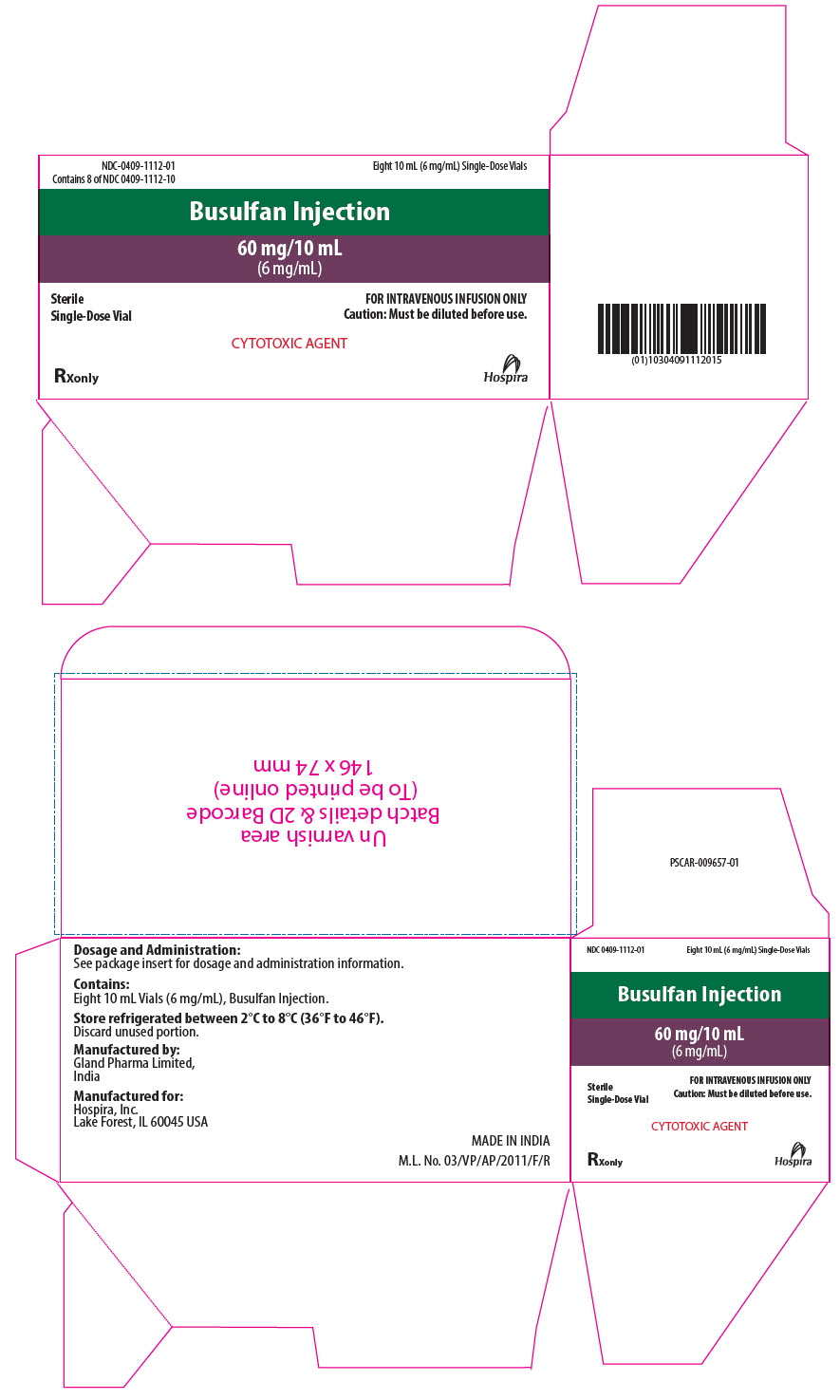
PRINCIPAL DISPLAY PANEL - 8 Vial Carton NDC-0409-1112-01 Contains 8 of NDC 0409-1112-10 Eight 10 mL (6 mg/mL) Single-Dose Vials Busulfan Injection 60 mg/10 mL (6 mg/mL) Sterile Single-Dose Vial FOR INTRAVENOUS INFUSION ONLY Caution: Must be diluted before use. CYTOTOXIC AGENT Rxonly Hospira PRINCIPAL DISPLAY PANEL - 8 Vial Carton
Medicare Part D spend CMS · PART D · 2025 (Q1-Q4)
Reported adverse events (FAERS)
Top reported reactions
Age at onset
Reporter sex
Serious outcomes
Where does this data come from?
About this NDC listing & data coverage
What data is (and isn’t) available for this NDC — tap to expand
| NDC identity (package / product / labeler codes) | ✓ Available |
| Labeler | ✓ Available |
| Product & package description | ✓ Available |
| Marketing category & status | ✓ Available |
| Active ingredient / dosage form / route | ✓ Available |
| FDA label (SPL via DailyMed) | ✓ Available |
| Package photos | ✓ Available |
| Inactive ingredients (structured) | ✓ Available |
| NADAC pharmacy acquisition price (CMS) | — Not published for this NDC CMS publishes NADAC only for NDCs reported in its retail-pharmacy survey. |
| Orange Book / therapeutic-equivalence data | ✓ Available |
| HCPCS J-code billing crosswalk | ✓ Available |
| Medicaid utilization (CMS SDUD) | — Not published for this NDC CMS reports utilization only for NDCs with Medicaid claims above its privacy threshold. |