
DOPamine Hydrochloride 40 mg/mL Injection, Solution, Concentrate — NDC 0409-5820-01 (Billing 00409-5820-01)
This is a package of DOPamine Hydrochloride 40 mg/mL Injection, Solution, Concentrate from Hospira, Inc., marketed since Aug 2005 and currently FDA-listed. It is this product's only package size.
NDC database record
One package, one record: these facts belong to NDC 0409-5820-01 alone.
- Record
- FDA NDC Directory package listing · Human prescription drug
- Code segments
- 0409 labeler · 5820 product · 01 package
- Package marketed since
- Aug 25, 2005
- Sample package
- No — commercial package
- Listing certified through
- Dec 31, 2027
- Barcode (UPC-A, from the NDC)
- 3 0409582001 8
- FDA record last changed
- Jul 24, 2026
Identity & classification
Regulatory identifiers FDA, NLM and CMS codes for this package
Drug-database identifiers Medi-Span GPI and First Databank GCN / HICL / AHFS classification
- GSN (GCN sequence number): 064569
- GCN: 14866
- GPI-14 (Medi-Span): 31350020102010
- HICL (First Databank): 002060
- AHFS class code: 12:12.08.08
- RxCUI (RxNorm): 1743938
Where does this data come from?
- FDA openFDA NDC Directory · synced Oct 8, 2026
- FDA label on DailyMed · label index refreshed Oct 6, 2026
- RxNorm (NLM RxNav) · catalog refreshed Oct 1, 2026
- Medi-Span GPI (licensed)
- First Databank (licensed) · refreshed Oct 8, 2026
RxNorm drug class
This medicine belongs to the Catecholamine class.
Where does this data come from?
- RxClass (NLM) · catalog refreshed Oct 1, 2026
Clinical
- It's an IV medicine for shock, when blood pressure and blood flow are dangerously low. That can happen after a heart attack, trauma, severe infection, open-heart surgery, kidney fa...
- Only through an IV, usually in a hospital and often with an infusion pump. The care team adjusts the rate based on how you respond. You won't take it at home.
- Possible effects include nausea, vomiting, headache, anxiety, a pounding heartbeat, chest pain, shortness of breath and high blood pressure. Tell your nurse about any of these. Rep...
- If dopamine leaks out of the vein, it can seriously damage the surrounding tissue. That's why it goes into a large vein and the site is checked often. Speak up right away if it hur...
Patient education
Supplement & herbal interactions
Where does this data come from?
- MedlinePlus (NLM) · refreshed Oct 1, 2026
- FDA label on DailyMed · label index refreshed Oct 6, 2026
Ask a licensed pharmacist directly — free, answered by our team.
Pricing
A drug doesn't have one price. Each row is a different public payment system, and none is what you'd pay at the counter — that depends on your insurance. The ⓘ on each row explains what it measures.
| Price system | Per mL | Per package |
|---|---|---|
| Retail pharmacies payNADAC · weekly | Not in the retail survey — common for institutional, discontinued, or low-volume packs. | |
| Medicaid paysCMS SDUD · 12 mo | No recent Medicaid claims on file for this NDC — rare and low-volume NDCs are suppressed in the public data. | |
| Medicare drug plans payPart D · quarterly | No Part D plan price is available for this NDC in our data. | |
| Medicare Part B allowsASP · J1265 | $1.012 / J1265 unit | — |
Where does this data come from?
- CMS NADAC weekly file
- CMS ASP pricing files · refreshed Sep 20, 2026
- CMS Medicaid State Drug Utilization Data · refreshed Oct 8, 2026
- CMS Part D plan pricing files · refreshed Sep 24, 2026
- VA National Acquisition Center price file
Billing & reimbursement
Where does this data come from?
- CMS ASP NDC-HCPCS crosswalk · refreshed Sep 22, 2026
- DMEPDAC NDC-HCPCS crosswalk
- openFDA NSDE billing units · refreshed Oct 7, 2026
Packaging — all sizes for this product
| Package NDC | Description | Marketing start | Marketing end | Status |
|---|---|---|---|---|
| 00409-5820-01 You're viewing this Main listing | 25 VIAL, SINGLE-DOSE in 1 TRAY / 5 mL in 1 VIAL, SINGLE-DOSE | 2005-08-25 | — | Active |
Therapeutic equivalents
| Product | Labeler | Pack | NADAC/unit | TE | Status | Price vs. this |
|---|---|---|---|---|---|---|
| Dopamine Hydrochloride 40 mg/mL 00143-9252-25 | Hikma | 25 vials | — | AP | FDA listed | — |
| Dopamine Hydrochloride 40 mg/mL 00404-9982-05 | Henry | 1 vial | — | AP | FDA listed | — |
| DOPamine Hydrochloride 40 mg/mLthis 00409-5820-01 | Hospira, | 25 vials | — | AP | FDA listed | — |
| Dopamine Hydrochloride 40 mg/mL 51662-1489-01 | HF | 5 ml | — | AP | FDA listed | — |
| DOPamine Hydrochloride 40 mg/mL 71872-7066-01 | Medical | 1 vial | — | AP | FDA listed | — |
| Dopamine Hydrochloride 40 mg/mL 71872-7305-01 | Medical | 1 vial | — | AP | FDA listed | — |
| Dopamine Hydrochloride 40 mg/mL 84549-0252-25 | ProPharma | 5 ml | — | AP | FDA listed | — |
| DOPamine Hydrochloride 40 mg/mL 84549-0820-01 | ProPharma | 5 ml | — | AP | FDA listed | — |
| DOPamine Hydrochloride 40 mg/mL 00409-9104-20 | Hospira, | 25 vials | — | AP | FDA listed | — |
| Dopamine Hydrochloride 40 mg/mL 00404-9981-10 | Henry | 1 vial | — | AP | FDA listed | — |
| Dopamine Hydrochloride 40 mg/mL 51662-1490-01 | HF | 10 ml | — | AP | FDA listed | — |
| Dopamine Hydrochloride 40 mg/mL 00143-9254-25 | Hikma | 25 vials | — | AP | FDA listed | — |
Where does this data come from?
- FDA openFDA NDC Directory · synced Oct 8, 2026
- FDA Orange Book · refreshed Oct 3, 2026
- CMS NADAC weekly file
Availability & generic status
The FDA lists approved generic versions of this medicine, but that does not always mean a pharmacy can get one today. Patent rules, launch agreements, supply and pricing can affect when generics actually arrive.
Where does this data come from?
- FDA Orange Book · refreshed Oct 3, 2026
Inactive Ingredients / Excipients
Inactive ingredients, also called excipients, are components of the drug product other than the active ingredient. They may include fillers, dyes, coatings, preservatives, flavors, or other formulation ingredients.
🧪 Avoiding an ingredient? See Dopamine inactive ingredients by manufacturer: every current product's list side by side, so you can ask your pharmacy for the version that does not list it.
💡 Tap an ingredient (hover on desktop) to see what it is and why it’s used.
-
10 mg / 1 mL
UNII XF417D3PSL
Anhydrous citric acid is a sour, crystalline powder derived from citric acid with water removed. In medicines, it acts as a buffer to control pH, adds tartness to improve taste, and helps tablets disintegrate.
-
9 mg / 1 mL
UNII 4VON5FNS3C
Sodium metabisulfite is a preservative derived from sulfur compounds. It prevents microbial growth and oxidation in medicines, helping extend shelf life and maintain product stability.
-
5 mg / 1 mL
UNII B22547B95K
A salt derived from citric acid that helps maintain the proper acid-base balance in the medicine. It's used as a buffer to keep the product stable and at the right pH level.
3 inactive ingredients listed in the exact product block matched to this NDC.
Where does this data come from?
ingredient classCode="IACT" elements from the exact product block matched by this NDC. Label-section narrative from DailyMed / the openFDA label index is shown separately when available.- FDA label on DailyMed · label index refreshed Oct 6, 2026
- FDA openFDA NDC Directory · synced Oct 8, 2026
Inactive ingredient FAQ
Are inactive ingredients the same for every manufacturer?
Why might an inactive ingredient be missing?
Can inactive ingredients matter?
Manufacturer & labeler
More NDCs from Hospira, Inc. labeler code 00409
- rocuronium bromide 10 mg/mL Injection, Solution NDC 0409-5160-10
- Magnesium Sulfate in Water 2 g/50mL Injection, Solution NDC 0409-5239-24
- Metoclopramide 5 mg/mL Injection, Solution NDC 0409-5255-15
- Sodium Bicarbonate 42 mg/mL Injection, Solution NDC 0409-5555-01
- Marcaine with Epinephrine BUPIVACAINE HYDROCHLORIDE AND 2.5 mg/mL; .0091 mg/mL Injection, Solution NDC 0409-5738-10
- TPN Electrolytes SODIUM CHLORIDE, CALCIUM CHLORIDE, POTASSIUM CHLORIDE, MAGNESIUM CHLORIDE, and SODIUM ACETATE ANHYDROUS 321 mg/20mL; 331 mg/20mL; 1491 mg/20mL; 508 mg/20mL; 2420 mg/20mL Injection, Solution, Concentrate NDC 0409-5779-01
- Aminophylline 25 mg/mL Injection, Solution NDC 0409-5921-01
- Aminophylline 25 mg/mL Injection, Solution NDC 0409-5922-01
- PROPOFOL 10 mg/mL Injection, Emulsion NDC 0409-6010-25
- FUROSEMIDE 10 mg/mL Injection, Solution NDC 0409-6102-02
- Erythrocin Lactobionate ERYTHROMYCIN 500 mg/10mL Injection, Powder, Lyophilized, For Solution NDC 0409-6482-01
- Vancomycin Hydrochloride 500 mg/10mL Injection, Powder, Lyophilized, For Solution NDC 0409-6509-01
Where does this data come from?
- FDA openFDA NDC Directory · synced Oct 8, 2026
- Drugs@FDA
Full prescribing information FDA SPL
🎯 Indications and Usage ▾
1 INDICATIONS AND USAGE Dopamine HCl Injection is indicated to improve hemodynamic status in patients in distributive shock or shock due to reduced cardiac output. Dopamine HCl Injection is a catecholamine indicated to improve hemodynamic status in patients in shock. ( 1 )
⏱️ Dosage and Administration ▾
2 DOSAGE AND ADMINISTRATION Correct hypovolemia, acidosis, and hypoxia prior to use. ( 2.1 ) Administer in a large vein with an infusion pump preferably in an intensive care setting. ( 2.1 ) Recommended starting dosage in adults and pediatric patients is 2 to 5 mcg/kg/minute as a continuous intravenous infusion.
Titrate in 5 to 10 mcg/kg/minute increments based on hemodynamic response and tolerability, up to not more than 50 mcg/kg/minute. ( 2.2 ) See the Full Prescribing Information for important preparation instructions and drug incompatibilities. ( 2.1, 2.3 )
2.1Preparation and Administration Instructions Correct Hypovolemia, Acidosis, and Hypoxia Address hypovolemia, acidosis, and hypoxia before initiating Dopamine HCl Injection. If patient does not respond to therapy, suspect occult hypovolemia. Acidosis may reduce the effectiveness of dopamine [see Warnings and Precautions (5.1) ] .
Preparation For the 40‑mg/mL preparation, transfer by aseptic technique the contents containing either 5 mL (200 mg) or 10 mL (400 mg) of Dopamine HCl Injection to either a 250‑mL or a 500‑mL bottle of one of the sterile intravenous solutions listed below: • 0.9% Sodium Chloride Injection, USP • 5% Dextrose Injection, USP • 5% Dextrose and 0.9% Sodium Chloride Injection, USP • 5% Dextrose and 0.45% Sodium Chloride Injection, USP • 5% Dextrose and Lactated Ringer’s Injection • Sodium Lactate Injection, USP 1/6 Molar • Lactated Ringer’s Injection, USP The resultant dilutions are summarized in the following chart: Volume of IV solution Volume of Dopamine Hydrochloride Injection 5 mL 10 mL 250 mL 800 mcg/mL 1600 mcg/mL 500 mL 400 mcg/mL 800 mcg/mL 1000 mL 200 mcg/mL 400 mcg/mL Dopamine HCl Injection has been found to be stable for 24 hours after dilution in the foregoing intravenous solutions.
Administration Dopamine HCl Injection is administered (only after dilution) by intravenous infusion. Administer Dopamine HCl Injection into a large vein [see Warnings and Precautions (5.1) ] with the use of an infusion pump preferably in an intensive care setting. Inspect Dopamine HCl Injection for particulate matter and discoloration prior to administration whenever solution and container permit (the solution is clear, practically colorless).
Do not administer if the solution is darker or discolored. Use higher concentration solutions (e.g., 3200 mcg/mL or 1600 mcg/mL strengths) in patients requiring fluid restriction. Discontinuation When discontinuing Dopamine HCl Injection, gradually reduce the infusion rate while expanding blood volume with intravenous fluids [see Warnings and Precautions (5.3) ] .
2.2Recommended Dosage The recommended starting dosage in adults and pediatric patients is 2 to 5 mcg/kg/minute as a continuous intravenous infusion [see Dosage and Administration (2.3) ] . Titrate the infusion rate in increments of 5 to 10 mcg/kg/minute based on hemodynamic response and tolerability, but do not exceed 50 mcg/kg/minute. Infusion rates may be calculated using the following formula: Infusion Rate (mL/hour) = [Dose (mcg/kg/minute) x Weight (kg) x 60 (minutes/hour)] Concentration (mcg/mL) Example calculations for infusion rates are as follows: Example 1: for a 60 kg person at the recommended initial dose of 2 mcg/kg/minute using a 800 mcg/mL concentration, the infusion rate would be as follows: Infusion Rate (mL/hour) = [2 (mcg/kg/minute) x 60 (kg) x 60 (minutes/hour) ] = 9 (mL/hour) 800 (mcg/mL) Example 2: for a 70 kg person at a dose of 5 mcg/kg/minute using a 1600 mcg/mL concentration, the infusion rate would be as follows: Infusion Rate (mL/hour) = [5 (mcg/kg/minute) x 70 (kg) x 60 (minutes/hour) ] = 13.13 (mL/hour) 1600 (mcg/mL)
2.3Drug Incompatibilities Dopamine HCl Injection is incompatible with the following products; therefore, avoid simultaneous administration (through the same infusion set): • Sodium bicarbonate or other alkalinizing substances, because dopamine is inactivated in alkaline solution • Blood, because of the risk of pse… [Excerpted — this section continues on DailyMed.]
💊 Dosage Forms and Strengths ▾
3 DOSAGE FORMS AND STRENGTHS The following strengths of Dopamine HCL, USP, are supplied in single-dose vials (the solution is clear practically colorless): • 200 mg/5 mL (40 mg/mL) • 400 mg/10 mL (40 mg/mL) The following strengths of Dopamine HCL, USP, are supplied in single-dose vials: ( 3 ) • 200 mg/5 mL (40 mg/mL) • 400 mg/10 mL (40 mg/mL)
⛔ Contraindications ▾
4 CONTRAINDICATIONS Dopamine is contraindicated in patients with pheochromocytoma. Dopamine is contraindicated in patients with pheochromocytoma. ( 4 )
⚠️ Warnings and Cautions ▾
5 WARNINGS AND PRECAUTIONS • Tissue ischemia: Severe peripheral and visceral vasoconstriction can occur. Address hypovolemia prior to use, monitor extremities, and infuse into large vein. ( 5.1 ) • Cardiac arrhythmias: Monitor closely.
( 5.2 ) • Hypotension after abrupt discontinuation: Gradually reduce infusion rate while expanding blood volume with intravenous fluids. ( 5.3 ) • Severe hypersensitivity reactions due to sodium metabisulfite excipient: May cause anaphylaxis including life‑threatening or less severe asthmatic episodes in susceptible individuals. ( 5.4 )
5.1Tissue Ischemia Administration of dopamine to patients who are hypotensive from hypovolemia can result in severe peripheral and visceral vasoconstriction, decreased renal perfusion and hypouresis, tissue hypoxia, lactic acidosis, and poor systemic blood flow despite “normal” blood pressure. Address hypovolemia prior to initiating Dopamine HCl Injection [see Dosage and Administration (2.2) ] . Gangrene of the extremities has occurred in patients with occlusive vascular disease or who received prolonged or high dose infusions.
Monitor for changes to the skin of the extremities in susceptible patients. Extravasation of Dopamine HCl Injection may cause necrosis and sloughing of surrounding tissue. To reduce the risk of extravasation, infuse into a large vein [see Dosage and Administration (2.1) ] , check the infusion site frequently for free flow, and monitor for signs of extravasation.
Emergency Treatment of Extravasation To prevent sloughing and necrosis in areas in which extravasation has occurred, infiltrate the ischemic area as soon as possible, using a syringe with a fine hypodermic needle with: • 5 to 10 mg of phentolamine mesylate in 10 to 15 mL of 0.9% Sodium Chloride Injection in adults • 0.1 to 0.2 mg/kg of phentolamine mesylate up to a maximum of 10 mg per dose in pediatric patients. Sympathetic blockade with phentolamine causes immediate and conspicuous local hyperemic changes if the area is infiltrated within 12 hours.
5.2Cardiac Arrhythmias Dopamine may cause arrhythmias. Monitor patients with arrhythmias and treat appropriately.
5.3Hypotension after Abrupt Discontinuation Sudden cessation of the infusion may result in marked hypotension. Gradually reduce the infusion rate while expanding blood volume with intravenous fluids.
5.4Severe Hypersensitivity Reactions due to Sodium Metabisulfite Excipient Dopamine HCl Injection contains sodium metabisulfite, a sulfite that may cause allergic-type reactions including anaphylactic symptoms and life-threatening or less severe asthmatic episodes in certain susceptible people. The overall prevalence of sulfite sensitivity in the general population is unknown and probably low. Sulfite sensitivity is seen more frequently in asthmatic than in nonasthmatic people.
🤒 Adverse Reactions ▾
6 ADVERSE REACTIONS The following adverse reactions are described elsewhere in the labeling: • Tissue Ischemia [see Warnings and Precautions (5.1) ] • Cardiac Arrhythmias [see Warnings and Precautions (5.2) ] • Hypotension [see Warnings and Precautions (5.3) ] • Severe Hypersensitivity Reactions [see Warnings and Precautions (5.4) ] The following adverse reactions have been identified during postapproval use of dopamine. Because these reactions are reported voluntarily from a population of uncertain size, it is not always possible to reliably estimate their frequency or establish a causal relationship to drug exposure.
Cardiac Disorders: anginal pain, palpitation Gastrointestinal Disorders: nausea, vomiting Metabolism and Nutrition Disorders: azotemia Nervous System Disorders: headache, anxiety Respiratory Disorders: dyspnea Skin and Subcutaneous Tissue Disorders: piloerection Vascular Disorders: hypertension The most common adverse reaction is localized vasoconstriction due to extravasation. ( 6 ) To report SUSPECTED ADVERSE REACTIONS, contact Pfizer Inc. at 1-800-438-1985 or FDA at 1-800-FDA-1088 or www.fda.gov/medwatch.
🔄 Drug Interactions ▾
7 DRUG INTERACTIONS See Table 1 for clinically significant drug interactions with dopamine. Table 1: Clinically Significant Drug Interactions with Dopamine Halogenated Anesthetics Clinical Impact: Concomitant use may increase cardiac autonomic irritability and can sensitize the myocardium to the action of dopamine which may lead to ventricular arrhythmias and hypertension. Intervention: Monitor cardiac rhythm.
Examples: desflurane, enflurane, isoflurane, and sevoflurane. MAO Inhibitors Clinical Impact: Because dopamine is metabolized by monoamine oxidase (MAO), inhibition of this enzyme prolongs and potentiates the effect of dopamine which may result in severe hypertension and cardiac arrhythmia. Intervention: Reduce the recommended starting dosage to no greater than one‑tenth (1/10) of the recommended dose in patients who have been treated with MAO inhibitors within two to three weeks prior to the administration of Dopamine HCl Injection.
Examples: isocarboxazid, phenelzine, tranylcypromine, rasagiline, selegiline, linezolid. Tricyclic Antidepressants Clinical Impact: Concomitant use may potentiate the cardiovascular effects of dopamine (e.g., hypertension). Intervention: Monitor blood pressure.
Examples: amitriptyline, desipramine, doxepin, imipramine, nortriptyline. Vasopressors Clinical Impact: Concomitant use may result in severe hypertension. Intervention: Monitor blood pressure.
Examples: norepinephrine, epinephrine, oxytocin. • Halogenated anesthetics: Can sensitize the myocardium to the effects of dopamine and can produce ventricular arrhythmias and hypertension. ( 7 ) • MAO inhibitors: Risk of severe hypertension. Reduce recommended Dopamine HCl Injection dosage.
( 7 ) • Tricyclic antidepressants: Risk of hypertension. Monitor blood pressure. ( 7 ) • Vasopressors: Risk of severe hypertension.
Monitor blood pressure. ( 7 )
👥 Use in Specific Populations ▾
8 USE IN SPECIFIC POPULATIONS
8.1Pregnancy Risk Summary There are no human data with dopamine use in pregnant women. There are risks to the mother and fetus from hypotension associated with shock, which can be fatal if left untreated ( see Clinical Considerations ). In animal reproduction studies, adverse developmental outcomes were observed with intravenous dopamine HCl administration in pregnant rats during organogenesis at doses, on a mcg/m 2 basis, of one‑third the human starting dose of 2 mcg/kg/minute (90 mcg/m 2 /minute).
The background risk of major birth defects and miscarriage for the indicated population is unknown. All pregnancies carry some risk of birth defect, loss, or other adverse outcomes. In the U.S. general population, the background risk of major birth defects and miscarriage in clinically recognized pregnancies is 2‑4% and 15‑20%, respectively.
Clinical Considerations Disease-Associated Maternal and/or Embryo/Fetal risk Hypotension associated with distributive shock, or shock due to reduced cardiac output are medical emergencies in pregnancy which can be fatal if left untreated. Delaying treatment in pregnant women with hypotension associated with distributive shock, or shock due to reduced cardiac output may increase the risk of maternal and fetal morbidity and mortality. Life-sustaining therapy for the pregnant woman should not be withheld due to potential concerns regarding the effects of dopamine on the fetus.
Labor or Delivery Vasopressor drugs, including dopamine, may cause severe maternal hypertension when used concomitantly with some oxytocic drugs [see Drug Interactions (7) ] . Data Animal Data Animal reproduction studies in rats and rabbits at dopamine HCl dosages up to 6 mg/kg/day intravenously (on a mcg/m 2 basis, one third and two thirds, respectively, the human starting dosage of 2 mcg/kg/minute) during organogenesis produced no detectable teratogenic or embryotoxic effects, although maternal toxicity consisting of mortalities, decreased body weight gain, and pharmacotoxic signs were observed in rats.
In a published study, administration of 10 mg/kg/day dopamine HCl (on a mcg/m 2 basis, two-thirds the human starting dosage of 2 mcg/kg/minute) to pregnant rats throughout gestation or for 5 days starting on gestation day 10 or 15 resulted in decreased body weight gain, increased mortality, and slight increase in cataract formation among the offspring.
8.2Lactation Risk Summary There are no data regarding the presence of dopamine in human milk, the effects of dopamine on the breastfed infant, or the effects of the drug on milk production.
8.4Pediatric Use Dopamine HCl infusions have been used in pediatric patients from birth through adolescence. Most reports in pediatric patients describe dosing that is similar (on a mcg/kg/minute basis) to that used in adults [see Dosage and Administration (2.2) ] . Except for vasoconstrictive effects caused by inadvertent infusion of dopamine into the umbilical artery, adverse reactions unique to pediatric patients have not been identified, nor have adverse reactions identified in adults been found to be more common in pediatric patients.
8.5Geriatric Use Clinical studies of dopamine did not include sufficient numbers of subjects aged 65 and over to determine whether they respond differently from younger subjects. Other reported clinical experience has not identified differences in responses between the elderly and younger patients. In general, dose selection for an elderly patient should start at the low end of the dosing range, reflecting the frequency of decreased hepatic, renal or cardiac function, and of concomitant disease or other drug therapy.
🤰 Pregnancy ▾
8.1Pregnancy Risk Summary There are no human data with dopamine use in pregnant women. There are risks to the mother and fetus from hypotension associated with shock, which can be fatal if left untreated ( see Clinical Considerations ). In animal reproduction studies, adverse developmental outcomes were observed with intravenous dopamine HCl administration in pregnant rats during organogenesis at doses, on a mcg/m 2 basis, of one‑third the human starting dose of 2 mcg/kg/minute (90 mcg/m 2 /minute).
The background risk of major birth defects and miscarriage for the indicated population is unknown. All pregnancies carry some risk of birth defect, loss, or other adverse outcomes. In the U.S. general population, the background risk of major birth defects and miscarriage in clinically recognized pregnancies is 2‑4% and 15‑20%, respectively.
Clinical Considerations Disease-Associated Maternal and/or Embryo/Fetal risk Hypotension associated with distributive shock, or shock due to reduced cardiac output are medical emergencies in pregnancy which can be fatal if left untreated. Delaying treatment in pregnant women with hypotension associated with distributive shock, or shock due to reduced cardiac output may increase the risk of maternal and fetal morbidity and mortality. Life-sustaining therapy for the pregnant woman should not be withheld due to potential concerns regarding the effects of dopamine on the fetus.
Labor or Delivery Vasopressor drugs, including dopamine, may cause severe maternal hypertension when used concomitantly with some oxytocic drugs [see Drug Interactions (7) ] . Data Animal Data Animal reproduction studies in rats and rabbits at dopamine HCl dosages up to 6 mg/kg/day intravenously (on a mcg/m 2 basis, one third and two thirds, respectively, the human starting dosage of 2 mcg/kg/minute) during organogenesis produced no detectable teratogenic or embryotoxic effects, although maternal toxicity consisting of mortalities, decreased body weight gain, and pharmacotoxic signs were observed in rats.
In a published study, administration of 10 mg/kg/day dopamine HCl (on a mcg/m 2 basis, two-thirds the human starting dosage of 2 mcg/kg/minute) to pregnant rats throughout gestation or for 5 days starting on gestation day 10 or 15 resulted in decreased body weight gain, increased mortality, and slight increase in cataract formation among the offspring.
🧒 Pediatric Use ▾
8.4Pediatric Use Dopamine HCl infusions have been used in pediatric patients from birth through adolescence. Most reports in pediatric patients describe dosing that is similar (on a mcg/kg/minute basis) to that used in adults [see Dosage and Administration (2.2) ] . Except for vasoconstrictive effects caused by inadvertent infusion of dopamine into the umbilical artery, adverse reactions unique to pediatric patients have not been identified, nor have adverse reactions identified in adults been found to be more common in pediatric patients.
🧓 Geriatric Use ▾
8.5Geriatric Use Clinical studies of dopamine did not include sufficient numbers of subjects aged 65 and over to determine whether they respond differently from younger subjects. Other reported clinical experience has not identified differences in responses between the elderly and younger patients. In general, dose selection for an elderly patient should start at the low end of the dosing range, reflecting the frequency of decreased hepatic, renal or cardiac function, and of concomitant disease or other drug therapy.
🆘 Overdosage ▾
10 OVERDOSAGE Manifestations of overdosage include excessive blood pressure elevation. In the case of accidental overdosage, reduce rate of Dopamine HCl Injection administration or temporarily discontinue the dopamine HCl until the overdosage related adverse reactions resolves. Since dopamine’s duration of action is quite short, no additional remedial measures are usually necessary.
If these measures fail to resolve the overdosage related adverse reactions, consider using an alpha-adrenergic blocking agent (e.g., phentolamine).
🧬 Clinical Pharmacology ▾
12 CLINICAL PHARMACOLOGY
12.1Mechanism of Action Dopamine is a natural catecholamine formed by the decarboxylation of 3,4 dihydroxyphenylalanine (DOPA). It is a precursor to norepinephrine in noradrenergic nerves and is also a neurotransmitter in certain areas of the central nervous system, especially in the nigrostriatal tract, and in a few peripheral sympathetic nerves. Dopamine elicits its pharmacological action by activating dopamine D1 and D2 receptors, beta 1 receptors and alpha 1 receptors.
The activation of different receptors leading to its effects are dependent on dopamine dose.
12.2Pharmacodynamics Dopamine’s onset of action occurs within five minutes of intravenous administration and the duration of action is less than about ten minutes. Dopamine effects are dosage‑dependent. • At <5 mcg/kg/minute, dopamine HCl activates dopamine D1 and D2 receptors in the renal, mesenteric, and coronary vasculature causing vasodilation. • At 5 to 10 mcg/kg/minute, dopamine HCl activates beta‑1 receptors enhancing heart rate and contractility. • At >10 mcg/kg/minute, dopamine HCl activates alpha‑1 receptors causing vasoconstriction and increased blood pressure
12.3Pharmacokinetics Distribution Following intravenous administration, dopamine is widely distributed in the body but does not cross the blood‑brain barrier to a significant extent. Elimination The half‑life of dopamine in adults is less than 2 minutes. Metabolism About 75% of dopamine is metabolized by monoamine oxidase (MAO) and catechol O‑methyl transferase (COMT) in the liver, kidney, and plasma to the inactive compounds homovanillic acid (HVA) and 3,4‑dihydroxyphenylacetic acid, and about 25% is metabolized to norepinephrine in the adrenergic nerve terminals.
Excretion About 80% of dopamine is renally excreted as inactive metabolites within 24 hours. Dopamine is stored in vesicles or diffused back into the plasma. Specific Populations Pediatric Patients The reported clearance rate of dopamine in critically ill infants and pediatric patients ranged from 46 to 168 mL/kg/minute, with the higher values seen in the younger patients.
The reported apparent volume of distribution in neonates was 0.6 to 4 L/kg, leading to an elimination half life of 5 to 11 minutes.
🧬 Mechanism of Action ▾
12.1Mechanism of Action Dopamine is a natural catecholamine formed by the decarboxylation of 3,4 dihydroxyphenylalanine (DOPA). It is a precursor to norepinephrine in noradrenergic nerves and is also a neurotransmitter in certain areas of the central nervous system, especially in the nigrostriatal tract, and in a few peripheral sympathetic nerves. Dopamine elicits its pharmacological action by activating dopamine D1 and D2 receptors, beta 1 receptors and alpha 1 receptors.
The activation of different receptors leading to its effects are dependent on dopamine dose.
📦 How Supplied / Storage and Handling ▾
16 HOW SUPPLIED/STORAGE AND HANDLING Dopamine Hydrochloride Injection, USP is a clear, practically colorless solution supplied as follows: Unit of Sale Total Strength/Total Volume (Concentration) NDC 0409-5820-01 25 Fliptop Single-dose Vials in a Tray 200 mg/5 mL (40 mg/mL) NDC 0409-9104-20 25 Fliptop Single-dose Vials in a Tray 400 mg/10 mL (40 mg/mL) Store at 20°C to 25°C (68°F to 77°F). [See USP Controlled Room Temperature.]
📋 Description ▾
11 DESCRIPTION Dopamine, a sympathomimetic amine vasopressor, is the naturally occurring immediate precursor of norepinephrine. Dopamine hydrochloride is a white to off-white crystalline powder, which may have a slight odor of hydrochloric acid. It is freely soluble in water and soluble in alcohol.
Dopamine HCl is sensitive to alkalies, iron salts, and oxidizing agents. Chemically it is designated as 4-(2-aminoethyl) pyrocatechol hydrochloride, and its molecular formula is C 8 H 11 NO 2 • HCl. Dopamine HCl has a molecular weight of 189.64 and it has the following structural formula: Dopamine (also referred to as 3 hydroxytyramine) is a naturally occurring endogenous catecholamine.
Dopamine hydrochloride injection is a clear, practically colorless, sterile, pyrogen-free, aqueous solution of dopamine HCl for intravenous infusion after dilution. Each milliliter of the 40 mg/mL preparation contains 40 mg of dopamine hydrochloride (equivalent to 32.31 mg of dopamine base). Each milliliter of preparation contains the following: Sodium metabisulfite 9 mg added as an antioxidant; citric acid, anhydrous 10 mg; and sodium citrate, dihydrate 5 mg added as a buffer.
May contain additional citric acid and/or sodium citrate for pH adjustment. pH is 3.3 (2.5 to 5.0). Dopamine must be diluted in an appropriate sterile parenteral solution before intravenous administration [see Dosage and Administration (2.1) ] . structural formula dopamine
💬 Information for Patients ▾
17 PATIENT COUNSELING INFORMATION Risk of Tissue Damage Advise the patient, family, or caregiver to report signs of extravasation urgently [see Warnings and Precautions (5.1) ]. Distributed by Hospira, Inc., Lake Forest, IL 60045 USA LAB-1154-4.0 Hospira Logo
🧬 Pharmacokinetics ▾
12.3Pharmacokinetics Distribution Following intravenous administration, dopamine is widely distributed in the body but does not cross the blood‑brain barrier to a significant extent. Elimination The half‑life of dopamine in adults is less than 2 minutes. Metabolism About 75% of dopamine is metabolized by monoamine oxidase (MAO) and catechol O‑methyl transferase (COMT) in the liver, kidney, and plasma to the inactive compounds homovanillic acid (HVA) and 3,4‑dihydroxyphenylacetic acid, and about 25% is metabolized to norepinephrine in the adrenergic nerve terminals.
Excretion About 80% of dopamine is renally excreted as inactive metabolites within 24 hours. Dopamine is stored in vesicles or diffused back into the plasma. Specific Populations Pediatric Patients The reported clearance rate of dopamine in critically ill infants and pediatric patients ranged from 46 to 168 mL/kg/minute, with the higher values seen in the younger patients.
The reported apparent volume of distribution in neonates was 0.6 to 4 L/kg, leading to an elimination half life of 5 to 11 minutes.
🧬 Pharmacodynamics ▾
12.2Pharmacodynamics Dopamine’s onset of action occurs within five minutes of intravenous administration and the duration of action is less than about ten minutes. Dopamine effects are dosage‑dependent. • At <5 mcg/kg/minute, dopamine HCl activates dopamine D1 and D2 receptors in the renal, mesenteric, and coronary vasculature causing vasodilation. • At 5 to 10 mcg/kg/minute, dopamine HCl activates beta‑1 receptors enhancing heart rate and contractility. • At >10 mcg/kg/minute, dopamine HCl activates alpha‑1 receptors causing vasoconstriction and increased blood pressure
🧪 Nonclinical Toxicology ▾
13 NONCLINICAL TOXICOLOGY
13.1Carcinogenesis, Mutagenesis, Impairment of Fertility Carcinogenesis Long term animal studies have not been performed to evaluate the carcinogenic potential of dopamine. Mutagenesis Dopamine HCl at doses approaching maximal solubility showed no clear genotoxic potential in the Ames test. Although there was a reproducible dose‑dependent increase in the number of revertant colonies with strains TA100 and TA98, both with and without metabolic activation, the small increase was considered inconclusive evidence of mutagenicity.
In the L5178Y TK +/- mouse lymphoma assay, dopamine HCl at the highest concentrations used of 750 mcg/mL without metabolic activation, and 3000 mcg/mL with activation, was toxic and associated with increases in mutant frequencies when compared to untreated and solvent controls; at the lower concentrations no increases over controls were noted. No clear evidence of clastogenic potential was reported in the in vivo mouse or male rat bone marrow micronucleus test when the animals were treated intravenously with up to 224 mg/kg and 30 mg/kg of dopamine HCl, respectively.
📄 Carcinogenesis, Mutagenesis, Impairment of Fertility ▾
13.1Carcinogenesis, Mutagenesis, Impairment of Fertility Carcinogenesis Long term animal studies have not been performed to evaluate the carcinogenic potential of dopamine. Mutagenesis Dopamine HCl at doses approaching maximal solubility showed no clear genotoxic potential in the Ames test. Although there was a reproducible dose‑dependent increase in the number of revertant colonies with strains TA100 and TA98, both with and without metabolic activation, the small increase was considered inconclusive evidence of mutagenicity.
In the L5178Y TK +/- mouse lymphoma assay, dopamine HCl at the highest concentrations used of 750 mcg/mL without metabolic activation, and 3000 mcg/mL with activation, was toxic and associated with increases in mutant frequencies when compared to untreated and solvent controls; at the lower concentrations no increases over controls were noted. No clear evidence of clastogenic potential was reported in the in vivo mouse or male rat bone marrow micronucleus test when the animals were treated intravenously with up to 224 mg/kg and 30 mg/kg of dopamine HCl, respectively.
📄 Package Label / Principal Display Panel ▾
PACKAGE/LABEL PRINCIPAL DISPLAY PANEL 5 mL Single-dose DOPamine HCl Inj., USP 200 mg/5 mL (40 mg/mL) CAUTION: MUST BE DILUTED. FOR INTRAVENOUS USE. Rx only Dist. by Hospira, Inc., Lake Forest, IL 60045 USA PRINCIPAL DISPLAY PANEL - 5 mL Vial Label
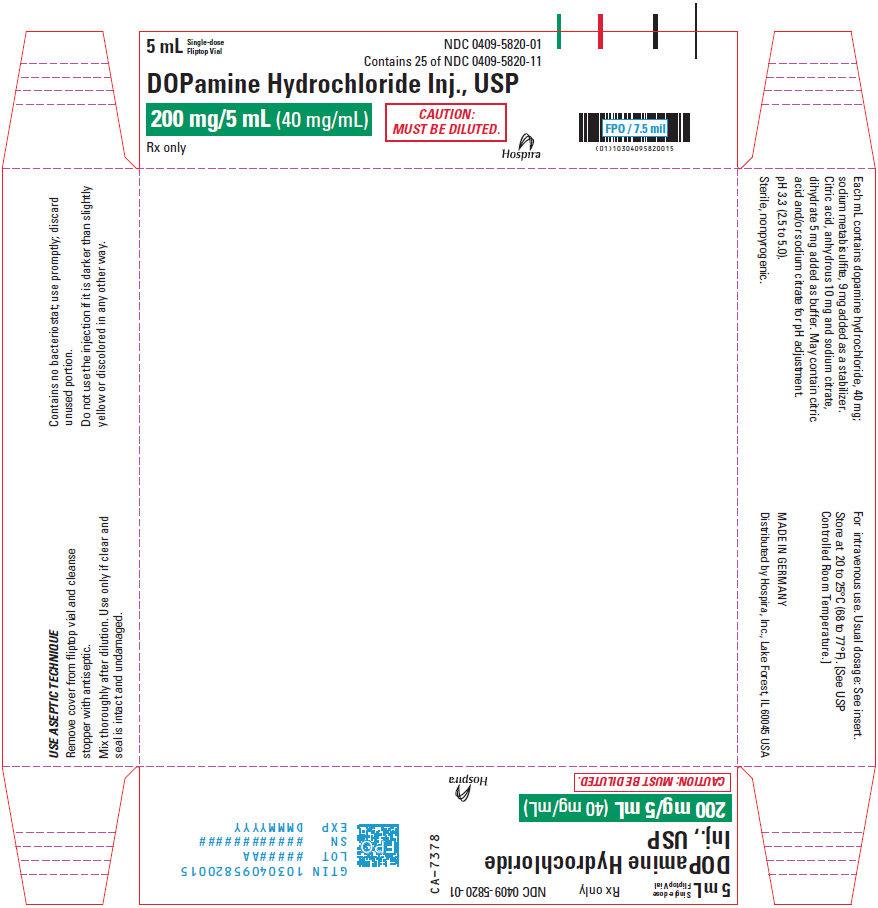
PRINCIPAL DISPLAY PANEL - 5 mL Vial Tray 5 mL Single-dose Fliptop Vial NDC 0409-5820-01 Contains 25 of NDC 0409-5820-11 DOPamine Hydrochloride Inj., USP 200 mg/5 mL (40 mg/mL) CAUTION: MUST BE DILUTED. Rx only Hospira PRINCIPAL DISPLAY PANEL - 5 mL Vial Tray
PRINCIPAL DISPLAY PANEL - 10 mL Vial Label 10 mL Single-dose DOPamine HCl Inj., USP 400 mg/10 mL (40 mg/mL) CAUTION: MUST BE DILUTED. FOR INTRAVENOUS USE. Rx only Dist. by Hospira, Inc., Lake Forest, IL 60045 USA PRINCIPAL DISPLAY PANEL - 10 mL Vial Label
PRINCIPAL DISPLAY PANEL - 10 mL Vial Tray 10 mL Single-dose Fliptop Vial NDC 0409-9104-20 Contains 25 of NDC 0409-9104-21 DOPamine Hydrochloride Inj., USP 400 mg/10 mL (40 mg/mL) CAUTION: MUST BE DILUTED. Rx only Hospira PRINCIPAL DISPLAY PANEL - 10 mL Vial Tray
About this NDC listing & data coverage
What data is (and isn’t) available for this NDC — tap to expand
| NDC identity (package / product / labeler codes) | ✓ Available |
| Labeler | ✓ Available |
| Product & package description | ✓ Available |
| Marketing category & status | ✓ Available |
| Active ingredient / dosage form / route | ✓ Available |
| FDA label (SPL via DailyMed) | ✓ Available |
| Package photos | ✓ Available |
| Inactive ingredients (structured) | ✓ Available |
| NADAC pharmacy acquisition price (CMS) | — Not published for this NDC CMS publishes NADAC only for NDCs reported in its retail-pharmacy survey. |
| Orange Book / therapeutic-equivalence data | ✓ Available |
| HCPCS J-code billing crosswalk | ✓ Available |
| Medicaid utilization (CMS SDUD) | — Not published for this NDC CMS reports utilization only for NDCs with Medicaid claims above its privacy threshold. |