
Furosemide 10 mg/mL Injection, Solution — NDC 0409-6102-25 (Billing 00409-6102-25)
This is a package of Furosemide 10 mg/mL Injection, Solution from Hospira, Inc., marketed since Feb 2005 and currently FDA-listed; retail pharmacies pay about $0.4901 per mL (NADAC).
NDC database record
One package, one record: these facts belong to NDC 0409-6102-25 alone.
- Record
- FDA NDC Directory package listing · Human prescription drug
- Code segments
- 0409 labeler · 6102 product · 25 package
- Package marketed since
- Nov 19, 2013
- Sample package
- No — commercial package
- Listing certified through
- Dec 31, 2027
- Barcode (UPC-A, from the NDC)
- 3 0409610225 0
- Medicaid fills, this package
- 170 prescriptions in the last four reported quarters
- FDA record last changed
- Jul 24, 2026
Other active recalls for Furosemide (different manufacturers) — 2 · tap to view
Identity & classification
Regulatory identifiers FDA, NLM and CMS codes for this package
Drug-database identifiers Medi-Span GPI and First Databank GCN / HICL / AHFS classification
- GSN (GCN sequence number): 008205
- GCN: 34940
- GPI-14 (Medi-Span): 37200030002005
- HICL (First Databank): 003660
- AHFS class code: 24:36.08.00
- RxCUI (RxNorm): 1719286
Where does this data come from?
- FDA openFDA NDC Directory · synced Oct 8, 2026
- FDA label on DailyMed · label index refreshed Oct 8, 2026
- RxNorm (NLM RxNav) · catalog refreshed Oct 1, 2026
- Medi-Span GPI (licensed)
- First Databank (licensed) · refreshed Oct 8, 2026
RxNorm drug class
This medicine belongs to the Loop Diuretic class.
Where does this data come from?
- RxClass (NLM) · catalog refreshed Oct 1, 2026
Clinical
- It helps your body get rid of extra fluid. It is used for swelling from heart failure, liver cirrhosis and kidney disease. In adults, oral forms can also treat high blood pressure.
- Tablets and oral solution are swallowed, usually once or twice a day, or on certain days of the week if your doctor says so. Injected forms are for short-term use and are switched...
- Dizziness, stomach upset, headache and more frequent urination can happen. Call your doctor right away for ringing in the ears, hearing loss, fainting, severe weakness, little urin...
- What side effects are normal, and what should I call about?
Patient education
Supplement & herbal interactions
Some supplements/herbs that may interact with Furosemide — tap one for details:
Furosemide may be associated with lower levels of 9 nutrients — worth a chat with your pharmacist, not a cause for alarm.
Where does this data come from?
- MedlinePlus (NLM) · refreshed Oct 8, 2026
- FDA label on DailyMed · label index refreshed Oct 8, 2026
Ask a licensed pharmacist directly — free, answered by our team.
Pricing
A drug doesn't have one price. Each row is a different public payment system, and none is what you'd pay at the counter — that depends on your insurance. The ⓘ on each row explains what it measures.
| Price system | Per mL | Per package |
|---|---|---|
| Retail pharmacies payNADAC · weekly | $0.490 | $24.51 / 50 ml |
| Medicaid paysCMS SDUD · 12 mo | $1.56 | $77.96 / 50 ml |
| Medicare drug plans payPart D · Q2 2026 | $0.3524 | $17.62 / 50 ml |
Where does this data come from?
- CMS NADAC weekly file · file of Oct 7, 2026
- CMS ASP pricing files · refreshed Sep 20, 2026
- CMS Medicaid State Drug Utilization Data · through Q1 2026
- CMS Part D plan pricing files · refreshed Sep 24, 2026
- VA National Acquisition Center price file
Packaging — all sizes for this product
| Package NDC | Description | Per unit | Per pack | Marketing start | Marketing end | Status |
|---|---|---|---|---|---|---|
| 00409-6102-02 0409-6102-02 | 25 VIAL, SINGLE-DOSE in 1 TRAY / 2 mL in 1 VIAL, SINGLE-DOSE | $0.4901 / mL | $24.51 | 2005-02-28 | — | Active |
| 00409-6102-04 0409-6102-04 Main listing | 25 VIAL, SINGLE-DOSE in 1 TRAY / 4 mL in 1 VIAL, SINGLE-DOSE | $0.2525 / mL | $25.25 | 2005-02-28 | — | Active |
| 00409-6102-10 0409-6102-10 | 25 VIAL, SINGLE-DOSE in 1 TRAY / 10 mL in 1 VIAL, SINGLE-DOSE | — | — | 2005-03-31 | — | Active |
| 00409-6102-25 You're viewing this | 25 VIAL, SINGLE-DOSE in 1 TRAY / 2 mL in 1 VIAL, SINGLE-DOSE | $0.4901 / mL | $24.51 | 2013-11-19 | — | Active |
| 00409-6102-26 0409-6102-26 | 25 VIAL, SINGLE-DOSE in 1 TRAY / 4 mL in 1 VIAL, SINGLE-DOSE | $0.2525 / mL | $25.25 | 2013-11-19 | — | Active |
| 00409-6102-27 0409-6102-27 | 25 VIAL, SINGLE-DOSE in 1 TRAY / 10 mL in 1 VIAL, SINGLE-DOSE | — | — | 2013-11-19 | — | Active |
Per mL, this pack runs about 94% above the cheapest pack (NDC 00409-6102-04, $0.2525 vs $0.4901 NADAC).
This pack accounts for about 2.3% of this product's recent Medicaid fills; most go to a different pack size. See all packs ↓
Pack size FAQ
What quantity is in this package?
What NDC number is used to bill for this package of Furosemide 10 mg/mL Injection, Solution?
Prices are the latest CMS NADAC pharmacy acquisition cost per NDC; per-pack figures are per-unit × pack quantity, shown only when the pack is denominated in the same measure NADAC prices.
Therapeutic equivalents
| Product | Labeler | Pack | NADAC/unit | TE | Status | Price vs. this |
|---|---|---|---|---|---|---|
| Furosemide 10 mg/mL 00143-9159-01 | Hikma | 1 vial | $0.253 | AP | Availability likely | save 48% |
| Furosemide 10 mg/mL 00143-9157-10 | Hikma | 10 vials | $0.253 | AP | Availability likely | save 48% |
| Furosemide 10 mg/mL 16729-0502-43 | Accord | 10 vials | $0.342 | AP | Availability likely | save 30% |
| Furosemide 10 mg/mL 16729-0500-08 | Accord | 25 vials | $0.415 | AP | Availability likely | save 15% |
| Furosemide 10 mg/mL 25021-0311-02 | Sagent | 25 vials | $0.490 | AP | Availability likely | — |
| Furosemide 10 mg/mL 81565-0201-02 | Phlow | 25 vials | $0.490 | AP | Availability likely | — |
| Furosemide 10 mg/mLthis 00409-6102-25 | Hospira, | 25 vials | $0.490 | AP | Availability likely | — |
| Furosemide 10 mg/mL 83634-0302-02 | Avenacy | 25 vials | $0.490 | AP | Availability likely | — |
| Furosemide 10 mg/mL 25021-0320-02 | Sagent | 25 vials | $0.490 | AP | Availability likely | — |
| Furosemide 10 mg/mL 00143-9158-01 | Hikma | 1 vial | $0.490 | AP | Availability likely | — |
| Furosemide 10 mg/mL 63323-0280-02 | Fresenius | 25 vials | $0.490 | AP | Availability likely | — |
| Furosemide 10 mg/mL 00143-9155-25 | Hikma | 25 vials | $0.490 | AP | Availability likely | — |
| Furosemide 10 mg/mL 71288-0203-03 | Meitheal | 25 vials | $0.490 | AP | Availability likely | — |
| Furosemide 10 mg/mL 51662-1575-01 | HF | 10 ml | — | AP | FDA listed | — |
| Furosemide 10 mg/mL 68083-0432-05 | Gland | 5 vials | — | AP | FDA listed | — |
| Furosemide 10 mg/mL 68083-0433-05 | Gland | 5 vials | — | AP | FDA listed | — |
| Furosemide 10 mg/mL 68083-0434-05 | Gland | 5 vials | — | AP | FDA listed | — |
| Furosemide 10 mg/mL 71872-7278-01 | Medical | 1 vial | — | AP | FDA listed | — |
| Furosemide 10 mg/mL 51662-1226-01 | HF | 10 ml | — | AP | FDA listed | — |
| Furosemide 10 mg/mL 55154-9582-05 | Cardinal | 5 vials | — | AP | FDA listed | — |
| Furosemide 10 mg/mL 00143-9156-10 | Hikma | 10 vials | — | AP | FDA listed | — |
| Furosemide 10 mg/mL 55154-2365-05 | Cardinal | 5 vials | — | AP | Discontinued | — |
| Furosemide 10 mg/mL 51662-1572-01 | HF | 2 ml | — | AP | FDA listed | — |
| Furosemide 10 mg/mL 72572-0275-10 | Civica, | 10 vials | — | AP | FDA listed | — |
| Furosemide 10 mg/mL 71872-7350-01 | Medical | 1 vial | — | AP | FDA listed | — |
| Furosemide 10 mg/mL 55154-2364-05 | Cardinal | 5 vials | — | AP | FDA listed | — |
| Furosemide 10 mg/mL 16729-0501-43 | Accord | 10 vials | — | AP | FDA listed | — |
| Furosemide 10 mg/mL 51662-1574-01 | HF | 4 ml | — | AP | FDA listed | — |
| Furosemide 10 mg/mL 51662-1336-01 | HF | 4 ml | — | AP | FDA listed | — |
| Furosemide 10 mg/mL 55154-9581-05 | Cardinal | 5 vials | — | AP | FDA listed | — |
| Furosemide 10 mg/mL 51662-1227-01 | HF | 2 ml | — | AP | FDA listed | — |
| Furosemide 10 mg/mL 71872-7380-01 | Medical | 1 vial | — | AP | FDA listed | — |
Where does this data come from?
- FDA openFDA NDC Directory · synced Oct 8, 2026
- FDA Orange Book · refreshed Oct 3, 2026
- CMS NADAC weekly file · file of Oct 7, 2026
Availability & generic status
FDA-approved generic versions are listed, and recent pricing/market data suggests they may be available — see Therapeutic equivalents.
Where does this data come from?
- FDA Orange Book · refreshed Oct 3, 2026
Inactive Ingredients / Excipients
Inactive ingredients, also called excipients, are components of the drug product other than the active ingredient. They may include fillers, dyes, coatings, preservatives, flavors, or other formulation ingredients.
🧪 Avoiding an ingredient? See Furosemide inactive ingredients by manufacturer: every current product's list side by side, so you can ask your pharmacy for the version that does not list it.
💡 Tap an ingredient (hover on desktop) to see what it is and why it’s used.
-
UNII QTT17582CB
A strong acid used to adjust and maintain the proper pH level in liquid medicines, ensuring stability and preventing breakdown of active ingredients.
-
7.5 mg / 1 mL
UNII 451W47IQ8X
Sodium chloride is common table salt. It's used in medicines as a buffer to maintain proper pH, as a filler to add bulk, or to adjust the osmotic balance in liquid formulations.
-
1.34 mg / 1 mL
UNII 55X04QC32I
A strong alkaline chemical used to adjust and maintain the pH balance of liquid medicines. It helps keep the medicine stable and ensures it stays effective during storage.
-
UNII 059QF0KO0R
Water is a liquid solvent that dissolves and mixes ingredients together in liquid medicines, syrups, and injections. It helps distribute the active drug evenly throughout the product.
4 inactive ingredients listed in the exact product block matched to this NDC.
Where does this data come from?
ingredient classCode="IACT" elements from the exact product block matched by this NDC. Label-section narrative from DailyMed / the openFDA label index is shown separately when available.- FDA label on DailyMed · label index refreshed Oct 8, 2026
- FDA openFDA NDC Directory · synced Oct 8, 2026
Inactive ingredient FAQ
Are inactive ingredients the same for every manufacturer?
Why might an inactive ingredient be missing?
Can inactive ingredients matter?
Manufacturer & labeler
More NDCs from Hospira, Inc. labeler code 00409
- Marcaine with Epinephrine BUPIVACAINE HYDROCHLORIDE AND 2.5 mg/mL; .0091 mg/mL Injection, Solution NDC 0409-5738-10
- TPN Electrolytes SODIUM CHLORIDE, CALCIUM CHLORIDE, POTASSIUM CHLORIDE, MAGNESIUM CHLORIDE, and SODIUM ACETATE ANHYDROUS 321 mg/20mL; 331 mg/20mL; 1491 mg/20mL; 508 mg/20mL; 2420 mg/20mL Injection, Solution, Concentrate NDC 0409-5779-01
- DOPamine Hydrochloride 40 mg/mL Injection, Solution, Concentrate NDC 0409-5820-01
- Aminophylline 25 mg/mL Injection, Solution NDC 0409-5921-01
- Aminophylline 25 mg/mL Injection, Solution NDC 0409-5922-01
- PROPOFOL 10 mg/mL Injection, Emulsion NDC 0409-6010-25
- Erythrocin Lactobionate ERYTHROMYCIN 500 mg/10mL Injection, Powder, Lyophilized, For Solution NDC 0409-6482-01
- Vancomycin Hydrochloride 500 mg/10mL Injection, Powder, Lyophilized, For Solution NDC 0409-6509-01
- Vancomycin Hydrochloride 750 mg Injection, Powder, Lyophilized, For Solution NDC 0409-6531-01
- Vancomycin Hydrochloride 1 g Injection, Powder, Lyophilized, For Solution NDC 0409-6533-21
- Testosterone Cypionate 100 mg/mL Injection, Solution NDC 0409-6557-01
- Testosterone Cypionate 200 mg/mL Injection, Solution NDC 0409-6562-01
Where does this data come from?
- FDA openFDA NDC Directory · synced Oct 8, 2026
- Drugs@FDA
Full prescribing information FDA SPL
🎯 Indications and Usage ▾
1 INDICATIONS AND USAGE FUROSEMIDE INJECTION is a loop diuretic indicated for: • The treatment of edema associated with heart failure, cirrhosis of the liver, and renal disease ( 1.1 ) • Acute pulmonary edema as adjunctive therapy ( 1.2 )
1.1Edema Furosemide Injection is indicated in adults and pediatric patients for the treatment of edema associated with heart failure, cirrhosis of the liver, and renal disease, including the nephrotic syndrome.
1.2Acute Pulmonary Edema Furosemide Injection is indicated as adjunctive therapy in acute pulmonary edema.
⏱️ Dosage and Administration ▾
2 DOSAGE AND ADMINISTRATION Edema : • Initial dose is 20 mg to 40 mg once given intramuscularly or intravenously. The intravenous dose should be administered slowly over 1 minute to 2 minutes ( 2.2 ) • If needed, a second dose may be administered 2 hours after the first dose ( 2.2 ) Acute Pulmonary Edema : • Initial dose is 40 mg injected slowly intravenously over 1 minute to 2 minutes ( 2.2 ) • If needed, a second dose is 80 mg injected intravenously slowly in 1 minute to 2 minutes ( 2.2 ) Pediatric Dosage : • The initial dose in pediatric patients is 1 mg/kg body weight once given slowly intramuscularly or intravenously.
If needed, dosage may be increased by 1 mg/kg not sooner than 2 hours after the previous dose, until the desired diuretic effect has been obtained. Doses greater than 6 mg/kg body weight are not recommended ( 2.3 )
2.1General Considerations Inspect Furosemide Injection visually for particulate matter and discoloration before administration.
2.2Recommended Dosage for Adults Edema Individualize therapy according to patient response. The usual initial dose of furosemide is 20 mg to 40 mg given as a single-dose, injected intramuscularly or intravenously. Give the intravenous dose slowly (over 1 minute to 2 minutes).
If needed, administer another dose in the same manner 2 hours later or increase the dose. The dose may be raised by 20 mg and administered not sooner than 2 hours after the previous dose until the desired diuretic effect has been obtained. Administer this individually determined single-dose once or twice daily.
If the physician elects to use high-dose parenteral therapy, add the furosemide to either 0.9% Sodium Chloride Injection USP, Lactated Ringer's Injection USP, or Dextrose Injection 5%, USP, after pH has been adjusted to above 5.5, and administer as a controlled intravenous infusion at a rate not greater than 4 mg/min. Furosemide Injection is a buffered alkaline solution with a pH of about 9 and the drug may precipitate at pH values below 7. Care must be taken to ensure that the pH of the prepared infusion solution is in the weakly alkaline to neutral range.
Acid solutions, including other parenteral medications (e.g., labetalol, ciprofloxacin, amrinone, milrinone) must not be administered concurrently in the same infusion because they may cause precipitation of the furosemide. Acute Pulmonary Edema The usual initial dose of furosemide is 40 mg injected slowly intravenously (over 1 minute to 2 minutes). If a satisfactory response does not occur within 1 hour, increase the dose to 80 mg injected slowly intravenously (over 1 minute to 2 minutes).
2.3Recommended Dosage for Pediatric Patients The usual initial dose of Furosemide Injection (intravenously or intramuscularly) in pediatric patients is 1 mg/kg body weight administered slowly (over 1 minute to 2 minutes). If the diuretic response to the initial dose is not satisfactory, dosage may be increased by 1 mg/kg not sooner than 2 hours after the previous dose, until the desired diuretic effect has been obtained. Doses greater than 6 mg/kg body weight are not recommended.
The maximum dose for premature infants should not exceed 1 mg/kg/day [see Use in Specific Populations (8.4) ] .
💊 Dosage Forms and Strengths ▾
3 DOSAGE FORMS AND STRENGTHS Injection: Furosemide Injection, USP is supplied as a sterile, colorless solution as • 20 mg/2 mL (10 mg/mL) in a single-dose vial • 40 mg/4 mL (10 mg/mL) in a single-dose vial • 100 mg/10 mL (10 mg/mL) in a single-dose vial Injection: Furosemide Injection, USP is supplied as a sterile, colorless solution as • 20 mg/2 mL (10 mg/mL) in a single-dose vial ( 3 ) • 40 mg/4 mL (10 mg/mL) in a single-dose vial ( 3 ) • 100 mg/10 mL (10 mg/mL) in a single-dose vial ( 3 )
⛔ Contraindications ▾
4 CONTRAINDICATIONS • Furosemide Injection is contraindicated in patients with anuria. • Furosemide Injection is contraindicated in patients with a history of hypersensitivity to furosemide. • Anuria ( 4 ) • Hypersensitivity to furosemide ( 4 )
⚠️ Warnings and Cautions ▾
5 WARNINGS AND PRECAUTIONS • Fluid, Electrolyte, and Metabolic Abnormalities : Monitor serum electrolytes, CO 2 , BUN, creatinine, glucose, and uric acid ( 5.1 ) • Worsening Renal Function : Monitor for dehydration and azotemia. ( 5.2 ) • Ototoxicity: Avoid rapid injection and higher than recommended doses. ( 5.3 , 7.1 ) • Acute Urinary Retention : Monitor patients with symptoms of urinary retention. ( 5.4 )
5.1Fluid, Electrolyte, and Metabolic Abnormalities Furosemide may cause fluid, electrolyte, and metabolic abnormalities such as hypovolemia, hypokalemia, azotemia, hyponatremia, hypochloremic alkalosis, hypomagnesemia, hypocalcemia, hyperglycemia, or hyperuricemia, particularly in patients receiving higher doses, patients with inadequate oral electrolyte intake, and in elderly patients. Excessive diuresis may cause dehydration and blood volume reduction with circulatory collapse and possibly vascular thrombosis and embolism, particularly in elderly patients.
Serum electrolytes, CO 2 , BUN, creatinine, glucose, and uric acid should be monitored frequently during furosemide therapy. In patients with hepatic cirrhosis and ascites, sudden alterations of fluid and electrolyte balance may precipitate hepatic encephalopathy and coma. Treatment in such patients is best initiated in the hospital with small doses and careful monitoring of the patient's clinical status and electrolyte balance.
5.2Worsening Renal Function Furosemide can cause dehydration and azotemia. If increasing azotemia and oliguria occur during treatment of severe progressive renal disease, furosemide should be discontinued [see Clinical Pharmacology (12.3) ] . Furosemide use in the first year of life, especially in patients born pre-term, may precipitate nephrocalcinosis/nephrolithiasis.
Therefore renal function must be monitored and renal ultrasonography performed in this age group [see Use in Specific Populations (8.4) ] .
5.3Ototoxicity Cases of tinnitus and reversible or irreversible hearing impairment and deafness have been reported. Reports usually indicate that furosemide ototoxicity is associated with rapid injection, severe renal impairment, the use of higher than recommended doses, hypoproteinemia or concomitant therapy with aminoglycoside antibiotics, ethacrynic acid, or other ototoxic drugs. If the physician elects to use high-dose parenteral therapy, controlled intravenous infusion is advisable (for adults, an infusion rate not exceeding 4 mg furosemide per minute has been used) [see Drug Interactions (7.1) ] .
Hearing loss in neonates, including premature neonates has been associated with the use of Furosemide Injection [see Use in Specific Populations (8.4) ].
5.4Acute Urinary Retention In patients with severe symptoms of urinary retention (because of bladder emptying disorders, prostatic hyperplasia, urethral narrowing), the administration of furosemide can cause acute urinary retention related to increased production and retention of urine. Thus, these patients require careful monitoring, especially during the initial stages of treatment.
🤒 Adverse Reactions ▾
6 ADVERSE REACTIONS The following adverse reactions are described elsewhere in the labeling: • Fluid, Electrolyte, and Metabolic Abnormalities [see Warnings and Precautions (5.1) ] • Ototoxicity [see Warnings and Precautions (5.3) ] The following adverse reactions associated with the use of furosemide were identified in clinical studies or postmarketing reports. Because some of these reactions were reported voluntarily from a population of uncertain size, it is not always possible to reliably estimate their frequency or establish a causal relationship to drug exposure.
Adverse reactions are categorized below by organ system and listed by decreasing severity. Gastrointestinal System Reactions: pancreatitis, jaundice (intrahepatic cholestatic jaundice), increased liver enzymes, anorexia, oral and gastric irritation, cramping, diarrhea, constipation, nausea, vomiting. Systemic Hypersensitivity Reactions: severe anaphylactic or anaphylactoid reactions (e.g., with shock), systemic vasculitis, interstitial nephritis, necrotizing angiitis.
Central Nervous System Reactions: tinnitus and hearing loss, paresthesias, vertigo, dizziness, headache, blurred vision, xanthopsia. Hematologic Reactions: aplastic anemia, thrombocytopenia, agranulocytosis, hemolytic anemia, leukopenia, anemia, eosinophilia. Dermatologic-Hypersensitivity Reactions: toxic epidermal necrolysis, Stevens-Johnson Syndrome, erythema multiforme, drug rash with eosinophilia and systemic symptoms, acute generalized exanthematous pustulosis, exfoliative dermatitis, bullous pemphigoid, purpura, photosensitivity, rash.
Cardiovascular Reactions: orthostatic hypotension, increase in cholesterol and triglyceride serum levels. Other Reactions: glycosuria, muscle spasm, weakness, restlessness, urinary bladder spasm, thrombophlebitis, transient injection site pain following intramuscular injection, fever. Most common adverse reactions are related to fluid and electrolyte imbalance ( 6 ) To report SUSPECTED ADVERSE REACTIONS, contact Pfizer Inc. at 1-800-438-1985 or FDA at 1-800-FDA-1088 or www.fda.gov/medwatch.
🔄 Drug Interactions ▾
7 DRUG INTERACTIONS • Aminoglycoside antibiotics : Increased potential ototoxicity of the antibiotics. Avoid combination ( 7.1 ) • Ethacrynic acid : Risk of ototoxicity. Avoid combination ( 7.1 ) • Salicylates : Risk of salicylate toxicity ( 7.1 ) • Cisplatin and nephrotoxic drugs : Risk of ototoxicity and nephrotoxicity ( 7.1 ) • Lithium : Risk of lithium toxicity ( 7.1 ) • Renin-angiotensin inhibitors : Increased risk of hypotension and renal failure.( 7.1 ) • Adrenergic blocking drugs : Risk of potentiation ( 7.1 ) • Drugs undergoing renal tubular secretion : Risk of toxicity potentiation ( 7.1 )
7.1Effects of Furosemide on Other Drugs Drug/Substance Class or Name Drug Interaction Effect Recommendations Aminoglycoside antibiotics Furosemide may increase the ototoxic potential of aminoglycoside antibiotics, especially in the presence of impaired renal function [see Warnings and Precautions (5.3) ]. Avoid combination except in life-threatening situations. Ethacrynic acid Possibility of ototoxicity [see Warnings and Precautions (5.3) ].
Avoid concomitant use with ethacrynic acid. Salicylates May experience salicylate toxicity at lower doses because of competitive renal excretory sites. Monitor for symptoms of salicylate toxicity.
Cisplatin There is a risk of ototoxic effects if cisplatin and furosemide are given concomitantly [see Warnings and Precautions (5.3) ]. Cisplatin and nephrotoxic drugs Nephrotoxicity Administer furosemide at lower doses and with postitive fluid balance when used to achieve forced diuresis during cisplatin treatment. Monitor renal function.
Paralytic agents Furosemide has a tendency to antagonize the skeletal muscle relaxing effect of tubocurarine and may potentiate the action of succinylcholine. Monitor for skeletal muscle effect. Lithium Furosemide reduces lithium's renal clearance and add a high-risk of lithium toxicity.
Avoid concomitant use with lithium. Angiotensin converting enzyme inhibitors or angiotensin II receptor blockers May lead to severe hypotension and deterioration in renal function, including renal failure. Monitor for changes in blood pressure and renal function and interrupt or reduce the dosage of furosemide, angiotensin converting enzyme inhibitors, or angiotensin receptor blockers if needed.
Antihypertensive drugs Furosemide may add to or potentiate the therapeutic effect of other antihypertensive drugs. Monitor for changes in blood pressure and adjust the dose of other antihypertensive drugs if needed. Adrenergic blocking drugs or peripheral adrenergic blocking drugs Potentiation occurs.
Monitor for changes in blood pressure and adjust the dose of adrenergic blocking drugs if needed. Norepinephrine Furosemide may decrease arterial responsiveness (vasoconstricting effect) to norepinephrine. Monitor blood pressure (or mean arterial pressure).
Chloral hydrate In isolated cases, intravenous administration of furosemide within 24 hours of taking chloral hydrate may lead to flushing, sweating attacks, restlessness, nausea, increase in blood pressure, and tachycardia. Concomitant use with chloral hydrate is not recommended. Methotrexate and other drugs undergoing renal tubular secretion Furosemide may decrease renal elimination of other drugs that undergo tubular secretion.
High-dose treatment of furosemide may result in elevated serum levels of these drugs and may potentiate their toxicity. Monitor serum levels of drugs undergoing renal tubular secretion and adjust the dose if needed. Cephalosporin Furosemide can increase the risk of cephalosporin-induced nephrotoxicity even in the setting of minor or transient renal impairment.
Monitor for changes in renal function. Cyclosporine Increased risk of gouty arthritis secondary to furosemide-induced hyperuricemia and cyclosporine impairment of renal urate excretion. Monitor serum urate levels.
Thyroid hormones High-doses (> 80 mg) of furosemide may inhibit the binding of thyroid hormones to carrier proteins and result in transient incre… [Excerpted — this section continues on DailyMed.]
👥 Use in Specific Populations ▾
8 USE IN SPECIFIC POPULATIONS
8.1Pregnancy Risk Summary Available data from published observational studies, case reports, and postmarketing reports, from decades of use, have not demonstrated a drug-associated risk of major birth defects, miscarriage, or other adverse maternal or fetal outcomes with furosemide use during pregnancy. Untreated congestive heart failure and cirrhosis of the liver can lead to adverse outcomes for the mother and the fetus (see Clinical Considerations ) . In animal reproduction studies, furosemide has been shown to cause unexplained maternal deaths and abortions in rabbits when administered orally during organogenesis at 4 times a human i.v. dose of 80 mg based on body surface area (BSA) and oral bioavailability corrections, presumably secondary to volume depletion (see Data ) .
The estimated background risk for major birth defects and miscarriage for the indicated populations is unknown. All pregnancies have a background risk of birth defect, loss, or other adverse outcomes. In the U.S. general population, the estimated background risk of major birth defects and miscarriage in the clinically recognized pregnancies is 2 to 4% and 15 to 20%, respectively.
Clinical Considerations Disease-Associated Maternal and/or Embryo/Fetal Risk Pregnant women with congestive heart failure are at increased risk for pre-term birth. Stroke volume and heart rate increase during pregnancy, increasing cardiac output, especially during the first trimester. Clinical classification of heart disease may worsen with pregnancy and lead to maternal death and/or stillbirth.
Closely monitor pregnant patients for destabilization of their heart failure. Pregnant women with symptomatic cirrhosis generally have poor outcomes including hepatic failure, variceal hemorrhage, pre-term delivery, fetal growth restriction and maternal death. Outcomes are worse with coexisting esophageal varices.
Pregnant women with cirrhosis of the liver should be carefully monitored and managed accordingly. Data Animal Data The effects of furosemide on embryonic and fetal development and on pregnant dams were studied in mice, rats and rabbits. Furosemide caused unexplained maternal deaths and abortions in the rabbit at the lowest dose of 25 mg/kg (approximately 4 times a human i.v. dose of 80 mg based on BSA and oral bioavailability corrections).
In another study, a dose of 50 mg/kg (approximately 7 times a human i.v. dose of 80 mg based on BSA and oral bioavailability corrections) also caused maternal deaths and abortions when administered to rabbits between Days 12 and 17 of gestation. In a third study, none of the pregnant rabbits survived an oral dose of 100 mg/kg. Data from the above studies indicate fetal lethality that can precede maternal deaths.
The results of the mouse study and one of the three rabbit studies also showed an increased incidence and severity of hydronephrosis (distention of the renal pelvis and, in some cases, of the ureters) in fetuses of treated dams as compared with the incidence of fetuses from the control group.
8.2Lactation Risk Summary The presence of furosemide has been reported in human milk. There are no data on the effects on the breastfed infant or the effects on milk production. Doses of furosemide associated with clinically significant diuresis may impair milk production.
The developmental and health benefits of breastfeeding should be considered along with the mother's clinical need for furosemide and any potential adverse effects on the breastfed infant from furosemide or from the underlying maternal condition.
8.4Pediatric Use Published reports indicate that premature infants with post conceptual age (gestational plus postnatal) less than 31 weeks receiving doses exceeding 1 mg/kg/24 hours may develop plasma levels which could be associated with potential toxic effects including ototoxicity [see Warnings and Precautions (5.3) ] . Furosemide in the first year of life, especially in patients born pre-term, may p… [Excerpted — this section continues on DailyMed.]
🤰 Pregnancy ▾
8.1Pregnancy Risk Summary Available data from published observational studies, case reports, and postmarketing reports, from decades of use, have not demonstrated a drug-associated risk of major birth defects, miscarriage, or other adverse maternal or fetal outcomes with furosemide use during pregnancy. Untreated congestive heart failure and cirrhosis of the liver can lead to adverse outcomes for the mother and the fetus (see Clinical Considerations ) . In animal reproduction studies, furosemide has been shown to cause unexplained maternal deaths and abortions in rabbits when administered orally during organogenesis at 4 times a human i.v. dose of 80 mg based on body surface area (BSA) and oral bioavailability corrections, presumably secondary to volume depletion (see Data ) .
The estimated background risk for major birth defects and miscarriage for the indicated populations is unknown. All pregnancies have a background risk of birth defect, loss, or other adverse outcomes. In the U.S. general population, the estimated background risk of major birth defects and miscarriage in the clinically recognized pregnancies is 2 to 4% and 15 to 20%, respectively.
Clinical Considerations Disease-Associated Maternal and/or Embryo/Fetal Risk Pregnant women with congestive heart failure are at increased risk for pre-term birth. Stroke volume and heart rate increase during pregnancy, increasing cardiac output, especially during the first trimester. Clinical classification of heart disease may worsen with pregnancy and lead to maternal death and/or stillbirth.
Closely monitor pregnant patients for destabilization of their heart failure. Pregnant women with symptomatic cirrhosis generally have poor outcomes including hepatic failure, variceal hemorrhage, pre-term delivery, fetal growth restriction and maternal death. Outcomes are worse with coexisting esophageal varices.
Pregnant women with cirrhosis of the liver should be carefully monitored and managed accordingly. Data Animal Data The effects of furosemide on embryonic and fetal development and on pregnant dams were studied in mice, rats and rabbits. Furosemide caused unexplained maternal deaths and abortions in the rabbit at the lowest dose of 25 mg/kg (approximately 4 times a human i.v. dose of 80 mg based on BSA and oral bioavailability corrections).
In another study, a dose of 50 mg/kg (approximately 7 times a human i.v. dose of 80 mg based on BSA and oral bioavailability corrections) also caused maternal deaths and abortions when administered to rabbits between Days 12 and 17 of gestation. In a third study, none of the pregnant rabbits survived an oral dose of 100 mg/kg. Data from the above studies indicate fetal lethality that can precede maternal deaths.
The results of the mouse study and one of the three rabbit studies also showed an increased incidence and severity of hydronephrosis (distention of the renal pelvis and, in some cases, of the ureters) in fetuses of treated dams as compared with the incidence of fetuses from the control group.
🧒 Pediatric Use ▾
8.4Pediatric Use Published reports indicate that premature infants with post conceptual age (gestational plus postnatal) less than 31 weeks receiving doses exceeding 1 mg/kg/24 hours may develop plasma levels which could be associated with potential toxic effects including ototoxicity [see Warnings and Precautions (5.3) ] . Furosemide in the first year of life, especially in patients born pre-term, may precipitate nephrocalcinosis/nephrolithiasis [see Warnings and Precautions (5.2) ] .
🧓 Geriatric Use ▾
8.5Geriatric Use Controlled clinical studies of furosemide did not include sufficient numbers of subjects aged 65 and over to determine whether they respond differently from younger subjects. Other reported clinical experience has not identified differences in responses between the elderly and younger patients. In general, dose selection for the elderly patient should be cautious, usually starting at the low end of the dosing range, reflecting the greater frequency of decreased hepatic, renal or cardiac function, and of concomitant disease or other drug therapy.
This drug is known to be substantially excreted by the kidney, and the risk of toxic reactions to this drug may be greater in patients with impaired renal function. Because elderly patients are more likely to have decreased renal function, care should be taken in dose selection and it may be useful to monitor renal function [see Clinical Pharmacology (12.3) ] .
🆘 Overdosage ▾
10 OVERDOSAGE The principal signs and symptoms of overdose with furosemide are dehydration, blood volume reduction, hypotension, electrolyte imbalance, hypokalemia and hypochloremic alkalosis, and are extensions of its diuretic action. The concentration of furosemide in biological fluids associated with toxicity or death is not known. Treatment of overdosage is supportive and consists of replacement of excessive fluid and electrolyte losses.
Serum electrolytes, carbon dioxide level, and blood pressure should be determined frequently. Adequate drainage must be assured in patients with urinary bladder outlet obstruction (such as prostatic hypertrophy). Hemodialysis does not accelerate furosemide elimination.
🧬 Clinical Pharmacology ▾
12 CLINICAL PHARMACOLOGY
12.1Mechanism of Action Furosemide inhibits primarily the reabsorption of sodium and chloride not only in the proximal and distal tubules but also in the loop of Henle. The high degree of efficacy is largely due to this unique site of action. The action on the distal tubule is independent of any inhibitory effect on carbonic anhydrase and aldosterone.
12.2Pharmacodynamics The onset of diuresis following intravenous administration is within 5 minutes and somewhat later after intramuscular administration. The peak effect occurs within the first half hour. The duration of diuretic effect is approximately 2 hours.
12.3Pharmacokinetics Distribution Furosemide is extensively bound to plasma proteins, mainly to albumin. Plasma concentrations ranging from 1 to 400 mcg/mL are 91 to 99% bound in healthy individuals. The unbound fraction averages 2.3 to 4.1% at therapeutic concentrations.
Elimination The terminal half-life of furosemide is approximately 2 hours. Metabolism Recent evidence suggests that furosemide glucuronide is the only or at least the major biotransformation product of furosemide in man. Excretion Significantly more furosemide is excreted in urine following the intravenous injection than after the tablet or oral solution.
Specific Populations Geriatric Patients Furosemide binding to albumin may be reduced in elderly patients. Furosemide is predominantly excreted unchanged in the urine. The renal clearance of furosemide after intravenous administration in older healthy male subjects (60 to 70 years of age) is statistically significantly smaller than in younger healthy male subjects (20 to 35 years of age).
The initial diuretic effect of furosemide in older subjects is decreased relative to younger subjects [see Use in Specific Populations (8.5) ] . Pediatric Patients Based on PK results obtained from 51 premature infants (23-29 weeks gestational age (GA)) receiving repeated doses up to 4 times the maximum recommended total daily dose for intravenous (IV) administration (or 8 times the maximum recommended total daily dose for enteral administration), body weight and postnatal age were found to have an impact on furosemide clearance.
Median clearance (normalized by dosing weight) was observed to increase from 8.9 (range: 2.1-21.2) ml/h/kg in infants with postnatal age (PNA) <30 days to 25.3 (range: 8.3 to 44.2) ml/h/kg in infants with PNA ≥30 days. In addition, higher clearance was observed in infants with higher body weight. Bioavailability of enteral dose compared to IV dose was estimated to be around 79%.
Patients with Renal Impairment One study in six subjects demonstrated that the combination of furosemide and acetylsalicylic acid temporarily reduced creatinine clearance in patients with chronic renal insufficiency. There are case reports of patients who developed increased BUN, serum creatinine and serum potassium levels, and weight gain when furosemide was used in conjunction with NSAIDs.
🧬 Mechanism of Action ▾
12.1Mechanism of Action Furosemide inhibits primarily the reabsorption of sodium and chloride not only in the proximal and distal tubules but also in the loop of Henle. The high degree of efficacy is largely due to this unique site of action. The action on the distal tubule is independent of any inhibitory effect on carbonic anhydrase and aldosterone.
📦 How Supplied / Storage and Handling ▾
16 HOW SUPPLIED/STORAGE AND HANDLING Store at 20°C to 25°C (68°F to 77°F); excursions permitted to 15°C to 30°C (59°F to 86°F). [See USP Controlled Room Temperature.] Protect from light. Furosemide Injection, USP is a sterile, colorless solution for injection, available as a single-dose vial that contains 10 mg/mL of furosemide, and is supplied as follows: Unit of Sale Presentations Concentration NDC 0409-6102-02 Tray of 25 amber glass single-dose vials 20 mg/2 mL (10 mg/mL) NDC 0409-6102-04 Tray of 25 amber glass single-dose vials 40 mg/4 mL (10 mg/mL) NDC 0409-6102-10 Tray of 25 amber glass single-dose vials 100 mg/10 mL (10 mg/mL) Discard unused portion.
Do not use if solution is discolored or contains particulate.
📦 Storage and Handling ▾
Store at 20°C to 25°C (68°F to 77°F); excursions permitted to 15°C to 30°C (59°F to 86°F). [See USP Controlled Room Temperature.] Protect from light. Furosemide Injection, USP is a sterile, colorless solution for injection, available as a single-dose vial that contains 10 mg/mL of furosemide, and is supplied as follows: Unit of Sale Presentations Concentration NDC 0409-6102-02 Tray of 25 amber glass single-dose vials 20 mg/2 mL (10 mg/mL) NDC 0409-6102-04 Tray of 25 amber glass single-dose vials 40 mg/4 mL (10 mg/mL) NDC 0409-6102-10 Tray of 25 amber glass single-dose vials 100 mg/10 mL (10 mg/mL) Discard unused portion.
Do not use if solution is discolored or contains particulate.
📋 Description ▾
11 DESCRIPTION Furosemide Injection contains furosemide as the active pharmaceutical ingredient. Furosemide is a loop diuretic which is an anthranilic acid derivative. Furosemide chemical name is 4-chloro- N -furfuryl-5-sulfamoylanthranilic acid.
Furosemide is a white to slightly-yellow crystalline powder. It is practically insoluble in water, sparingly soluble in alcohol, freely soluble in dilute alkali solutions and insoluble in dilute acids. The structural formula is as follows: Molecular formula: C 12 H 11 CIN 2 O 5 S Molecular weight: 330.74 Furosemide Injection, USP 10 mg/mL is a sterile, non-pyrogenic solution, available in single-dose vials for intravenous and intramuscular injection.
Each mL of Furosemide Injection contains: 10 mg of Furosemide, 7.5 mg of Sodium Chloride for isotonicity, 1.34 mg of Sodium Hydroxide, Hydrochloric Acid and Sodium Hydroxide as pH adjusters, in Water for Injection. Furosemide Injection solution pH is between 8.0 and 9.3. It contains no preservative.
Chemical Structure
💬 Information for Patients ▾
17 PATIENT COUNSELING INFORMATION Fluid, Electrolyte, and Metabolic Abnormalities Advise patients that they may experience symptoms from excessive fluid and/or electrolyte losses. The postural hypotension that sometimes occurs can usually be managed by getting up slowly. Potassium supplements and/or dietary measures may be needed to control or avoid hypokalemia [see Warnings and Precautions (5.1) ] .
Advise patients that furosemide may increase blood glucose levels and thereby affect urine glucose tests [see Warnings and Precautions (5.1) ] . Photosensitivity The skin of some patients may be more sensitive to the effects of sunlight while taking furosemide [see Adverse Reactions (6) ] . Advise hypertensive patients to avoid medications that may increase blood pressure, including over-the-counter products for appetite suppression and cold symptoms [see Drug Interactions (7.1) ] .
🧬 Pharmacokinetics ▾
12.3Pharmacokinetics Distribution Furosemide is extensively bound to plasma proteins, mainly to albumin. Plasma concentrations ranging from 1 to 400 mcg/mL are 91 to 99% bound in healthy individuals. The unbound fraction averages 2.3 to 4.1% at therapeutic concentrations.
Elimination The terminal half-life of furosemide is approximately 2 hours. Metabolism Recent evidence suggests that furosemide glucuronide is the only or at least the major biotransformation product of furosemide in man. Excretion Significantly more furosemide is excreted in urine following the intravenous injection than after the tablet or oral solution.
Specific Populations Geriatric Patients Furosemide binding to albumin may be reduced in elderly patients. Furosemide is predominantly excreted unchanged in the urine. The renal clearance of furosemide after intravenous administration in older healthy male subjects (60 to 70 years of age) is statistically significantly smaller than in younger healthy male subjects (20 to 35 years of age).
The initial diuretic effect of furosemide in older subjects is decreased relative to younger subjects [see Use in Specific Populations (8.5) ] . Pediatric Patients Based on PK results obtained from 51 premature infants (23-29 weeks gestational age (GA)) receiving repeated doses up to 4 times the maximum recommended total daily dose for intravenous (IV) administration (or 8 times the maximum recommended total daily dose for enteral administration), body weight and postnatal age were found to have an impact on furosemide clearance.
Median clearance (normalized by dosing weight) was observed to increase from 8.9 (range: 2.1-21.2) ml/h/kg in infants with postnatal age (PNA) <30 days to 25.3 (range: 8.3 to 44.2) ml/h/kg in infants with PNA ≥30 days. In addition, higher clearance was observed in infants with higher body weight. Bioavailability of enteral dose compared to IV dose was estimated to be around 79%.
Patients with Renal Impairment One study in six subjects demonstrated that the combination of furosemide and acetylsalicylic acid temporarily reduced creatinine clearance in patients with chronic renal insufficiency. There are case reports of patients who developed increased BUN, serum creatinine and serum potassium levels, and weight gain when furosemide was used in conjunction with NSAIDs.
🧬 Pharmacodynamics ▾
12.2Pharmacodynamics The onset of diuresis following intravenous administration is within 5 minutes and somewhat later after intramuscular administration. The peak effect occurs within the first half hour. The duration of diuretic effect is approximately 2 hours.
🧪 Nonclinical Toxicology ▾
13 NONCLINICAL TOXICOLOGY
13.1Carcinogenesis, Mutagenesis, Impairment of Fertility Carcinogenesis Furosemide was tested for carcinogenicity by oral administration in one strain of mice and one strain of rats. A small but significantly increased incidence of mammary gland carcinomas occurred in female mice at a dose approximately 8 times a human i.v. dose of 80 mg based on BSA and oral bioavailability corrections. There were marginal increases in uncommon tumors in male rats at a dose of 15 mg/kg but not at 30 mg/kg.
Mutagenesis Furosemide was devoid of mutagenic activity in various strains of Salmonella typhimurium when tested in the presence or absence of an in vitro metabolic activation system, and questionably positive for gene mutation in mouse lymphoma cells in the presence of rat liver S9 at the highest dose tested. Furosemide did not induce sister chromatid exchange in human cells in vitro , but other studies on chromosomal aberrations in human cells in vitro gave conflicting results. In Chinese hamster cells it induced chromosomal damage but was questionably positive for sister chromatid exchange.
Studies on the induction by furosemide of chromosomal aberrations in mice were inconclusive. The urine of rats treated with this drug did not induce gene conversion in Saccharomyces cerevisiae . Impairment of Fertility Furosemide produced no impairment of fertility in male or female rats, at 100 mg/kg/day (the maximum effective diuretic dose in the rat), approximately 7 times a human i.v. dose of 80 mg based on BSA and oral bioavailability corrections.
📄 Carcinogenesis, Mutagenesis, Impairment of Fertility ▾
13.1Carcinogenesis, Mutagenesis, Impairment of Fertility Carcinogenesis Furosemide was tested for carcinogenicity by oral administration in one strain of mice and one strain of rats. A small but significantly increased incidence of mammary gland carcinomas occurred in female mice at a dose approximately 8 times a human i.v. dose of 80 mg based on BSA and oral bioavailability corrections. There were marginal increases in uncommon tumors in male rats at a dose of 15 mg/kg but not at 30 mg/kg.
Mutagenesis Furosemide was devoid of mutagenic activity in various strains of Salmonella typhimurium when tested in the presence or absence of an in vitro metabolic activation system, and questionably positive for gene mutation in mouse lymphoma cells in the presence of rat liver S9 at the highest dose tested. Furosemide did not induce sister chromatid exchange in human cells in vitro , but other studies on chromosomal aberrations in human cells in vitro gave conflicting results. In Chinese hamster cells it induced chromosomal damage but was questionably positive for sister chromatid exchange.
Studies on the induction by furosemide of chromosomal aberrations in mice were inconclusive. The urine of rats treated with this drug did not induce gene conversion in Saccharomyces cerevisiae . Impairment of Fertility Furosemide produced no impairment of fertility in male or female rats, at 100 mg/kg/day (the maximum effective diuretic dose in the rat), approximately 7 times a human i.v. dose of 80 mg based on BSA and oral bioavailability corrections.
📄 Package Label / Principal Display Panel ▾
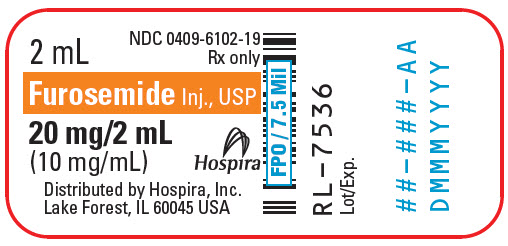
PRINCIPAL DISPLAY PANEL - 2 mL Vial Label 2 mL NDC 0409-6102-19 Rx only Furosemide Inj., USP 20 mg/2 mL (10 mg/mL) Hospira Distributed by Hospira, Inc. Lake Forest, IL 60045 USA PRINCIPAL DISPLAY PANEL - 2 mL Vial Label
PRINCIPAL DISPLAY PANEL - 2 mL Vial Tray 2 mL Single-Dose Vials - Discard unused portion Rx only NDC 0409-6102-02 Contains 25 of NDC 0409-6102-19 Furosemide Injection, USP 20 mg/2 mL (10 mg/mL) For INTRAVENOUS or INTRAMUSCULAR use. Hospira PRINCIPAL DISPLAY PANEL - 2 mL Vial Tray
PRINCIPAL DISPLAY PANEL - 4 mL Vial Label 4 mL Single-Dose Vial Furosemide Injection, USP 40 mg/4 mL (10 mg/mL) Distributed by Hospira, Inc. Lake Forest, IL 60045 USA Hospira PRINCIPAL DISPLAY PANEL - 4 mL Vial Label
PRINCIPAL DISPLAY PANEL - 4 mL Vial Tray 4 mL Single-Dose Vials - Discard unused portion NDC 0409-6102-04 Contains 25 of NDC 0409-6102-18 Rx only Furosemide Injection, USP 40 mg/4 mL (10 mg/mL) FOR INTRAVENOUS or INTRAMUSCULAR USE. Hospira PRINCIPAL DISPLAY PANEL - 4 mL Vial Tray
PRINCIPAL DISPLAY PANEL - 10 mL Vial Label 10 mL Single-Dose Vial Furosemide Injection, USP 100 mg/10 mL (10 mg/mL) Distributed by Hospira Inc., Lake Forest, IL 60045 USA Hospira PRINCIPAL DISPLAY PANEL - 10 mL Vial Label
PRINCIPAL DISPLAY PANEL - 10 mL Vial Tray 10 mL Single-Dose Vials - Discard unused portion Rx only NDC 0409-6102-10 Contains 25 of NDC 0409-6102-20 Furosemide Injection, USP 100 mg/10 mL (10 mg/mL) For INTRAVENOUS or INTRAMUSCULAR use. Hospira PRINCIPAL DISPLAY PANEL - 10 mL Vial Tray