
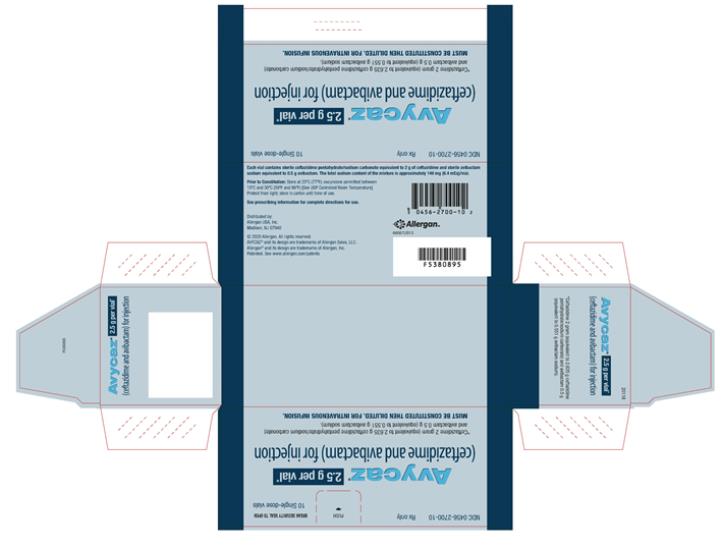
Avycaz ceftazidime, avibactam 2 g; .5 g Powder, For Solution, 10 vials — NDC 0456-2700-10 (Billing 00456-2700-10)
This is a package of 10 vials of Avycaz ceftazidime, avibactam 2 g; .5 g Powder, For Solution from Allergan, Inc., marketed since Dec 2014 and currently FDA-listed. It is this product's only package size.
NDC database record
One package, one record: these facts belong to NDC 0456-2700-10 alone.
- Record
- FDA NDC Directory package listing · Human prescription drug
- Code segments
- 0456 labeler · 2700 product · 10 package
- Package marketed since
- Dec 26, 2014
- Sample package
- No — commercial package
- Listing certified through
- Dec 31, 2027
- Billing quantity
- 10 EA per package
- Barcode (UPC-A, from the NDC)
- 3 0456270010 2
- Medicaid fills, this package
- 1,576 prescriptions in the last four reported quarters
- FDA record last changed
- Aug 27, 2026
Identity & classification
Regulatory identifiers FDA, NLM and CMS codes for this package
Drug-database identifiers Medi-Span GPI and First Databank GCN / HICL / AHFS classification
- GSN (GCN sequence number): 073580
- GCN: 38002
- HICL (First Databank): 041790
- AHFS class code: 08:12.06.12
- RxCUI (RxNorm): 1603840
Where does this data come from?
- FDA openFDA NDC Directory · synced Oct 8, 2026
- FDA label on DailyMed · label index refreshed Oct 8, 2026
- RxNorm (NLM RxNav) · catalog refreshed Oct 8, 2026
- Medi-Span GPI (licensed)
- First Databank (licensed) · refreshed Oct 8, 2026
RxNorm drug class
This medicine belongs to the beta Lactamase Inhibitor class.
Where does this data come from?
- RxClass (NLM) · catalog refreshed Oct 8, 2026
Clinical
The combination of ceftazidime and avibactam injection is used with metronidazole (Flagyl) to treat abdominal (stomach area) infections. It is also used to treat pneumonia that developed in people who are on ventilators or who were in a hospital, and kidney and urinary tract infections. Ceftazidime is in a class of medications called cephalosporin antibiotics. It works by killing bacteria. Avibactam is in a class of medications called beta-lactamase inhibitors. It works by preventing bacteria from breaking down ceftazidime. Antibiotics such as ceftazidime and avibactam will not work for colds,...
Read the full MedlinePlus article ↗- Avycaz is reserved for serious infections caused by gram-negative bacteria that are difficult to treat — sometimes because they've developed resistance to other antibiotics. The av...
- Why do I need this specific antibiotic instead of a regular one?
- The most common side effects are digestive — diarrhea, nausea, and vomiting. These are uncomfortable but usually manageable. What you should report immediately is severe or bloody...
- What side effects should I actually expect, and which ones should make me call someone right away?
Patient education
Supplement & herbal interactions
Where does this data come from?
- MedlinePlus (NLM) · refreshed Oct 8, 2026
- FDA label on DailyMed · label index refreshed Oct 8, 2026
Ask a licensed pharmacist directly — free, answered by our team.
Pricing
A drug doesn't have one price. Each row is a different public payment system, and none is what you'd pay at the counter — that depends on your insurance. The ⓘ on each row explains what it measures.
| Price system | Per mL | Per package |
|---|---|---|
| Retail pharmacies payNADAC · weekly | Not in the retail survey — common for institutional, discontinued, or low-volume packs. | |
| Medicaid paysCMS SDUD · 12 mo | $414.21 | — |
| Medicare drug plans payPart D · Q2 2026 | $416.23 | — |
| Medicare Part B allowsASP · J0714 | $109.768 / J0714 unit | — |
Where does this data come from?
- CMS NADAC weekly file
- CMS ASP pricing files · refreshed Sep 20, 2026
- CMS Medicaid State Drug Utilization Data · through Q1 2026
- CMS Part D plan pricing files · refreshed Sep 24, 2026
- VA National Acquisition Center price file
Billing & reimbursement
Where does this data come from?
- CMS ASP NDC-HCPCS crosswalk · refreshed Sep 22, 2026
- DMEPDAC NDC-HCPCS crosswalk
- openFDA NSDE billing units · refreshed Oct 7, 2026
Packaging — all sizes for this product
| Package NDC | Description | Marketing start | Marketing end | Status |
|---|---|---|---|---|
| 00456-2700-10 You're viewing this Main listing | 10 VIAL, SINGLE-DOSE in 1 CARTON / 1 POWDER, FOR SOLUTION in 1 VIAL, SINGLE-DOSE | 2014-12-26 | — | Active |
Therapeutic equivalents
| Product | Labeler | Pack | NADAC/unit | TE | Status | Price vs. this |
|---|---|---|---|---|---|---|
| Avycaz 2 g/1; .5 gthis 00456-2700-10 | Allergan, | 10 vials | — | — | FDA listed | — |
Where does this data come from?
- FDA openFDA NDC Directory · synced Oct 8, 2026
- FDA Orange Book · refreshed Oct 9, 2026
- CMS NADAC weekly file
Availability & generic status
We did not find an FDA-approved generic match for this exact strength, form and route. Patent/protection dates below may affect future generic timing.
Why the date isn’t exact: Generic timing can change because patents may be challenged, settled, licensed, added, removed, or worked around with a narrower label — and FDA approval does not always mean a pharmacy can get the generic today.
Our estimate: 2028 to 2029 a wide window
How sure: Probable. More likely than not, but it can still move.
Why then: The brand company and a generic maker settled their patent fight and agreed on when a generic can launch.
That is before the June 2032 date above, which is common: a court ruling or a deal with the brand’s maker often lets a generic in before the last patent runs out.
See the full forecast for generic Avycaz →🛈 What do these terms mean?
- Patent
- Legal protection listed in the Orange Book that may delay generic approval or launch. Issued by the U.S. Patent & Trademark Office.
- Substance patent
- Covers the active drug molecule itself — the hardest to design around. A generic generally can’t launch until it expires.
- Formulation (product) patent
- Covers a specific formulation or dosage form. A generic can sometimes work around it with a different formulation.
- Method-of-use patent
- A patent covering one specific approved use of the drug — not necessarily the whole molecule. A generic can sometimes launch with a “skinny label” that carves out the protected use and keeps the others.
- Skinny label
- A generic label that omits a still-patented use when the FDA allows it — letting a generic reach the market for the unprotected uses.
- Exclusivity
- FDA-granted marketing protection, separate from patents — e.g. 5-yr new chemical entity, 7-yr orphan drug, or a +6-month pediatric extension.
- Paragraph IV
- A generic applicant’s formal challenge to a listed patent. It can potentially lead to earlier generic entry, but often involves litigation or a settlement.
- RLD / RS
- Reference Listed Drug — the brand product the FDA uses as the reference for generic applications. Reference Standard — the product the FDA expects generics to compare against in bioequivalence testing.
- TE / AB rating
- FDA therapeutic-equivalence rating. An AB rating generally means the FDA considers a generic therapeutically equivalent to — and substitutable for — the brand.
- LOE (loss of exclusivity)
- The latest patent or exclusivity currently listed — the loss-of-exclusivity / latest-listed-protection date shown on this page. Paragraph-IV challenges and settlements can move the real date earlier; FDA approval and a manufacturer’s decision to market can move it later.
Built from the FDA Orange Book. The bars above are scaled to each protection’s expiry; the red LOE marker is the last one to lapse.
| Patent | Type | Use code | Expires |
|---|---|---|---|
| US 7112592 ↗ | Drug substance | U-2508 | Jan 7, 2026 |
| US 7112592 ↗ | Drug substance | U-2244 | Jan 7, 2026 |
| US 7112592 ↗ | Drug substance | U-282 | Jan 7, 2026 |
| US 7112592 ↗ | Drug substance | U-3818 | Jan 7, 2026 |
| US 9284314 ↗ | Drug substance | — | Jun 15, 2032 |
| US 7612087 ↗ | Drug product | — | Nov 12, 2026 |
| US 8471025 ↗ | Drug substance | — | Aug 12, 2031 |
| US 8969566 ↗ | Drug substance | — | Jun 15, 2032 |
| US 8835455 ↗ | Drug product | — | Oct 8, 2030 |
| US 9695122 ↗ | Drug substance | — | Jun 15, 2032 |
| Code | What it grants | Expires |
|---|---|---|
| NPP | New Patient Population | Jan 26, 2027 |
Is there a generic version of AVYCAZ 2.5 GRAM VIAL?
The FDA approved a generic — why can’t I get it at my pharmacy yet?
Why do different websites show different generic release dates?
What does “FDA listed” mean?
What does a patent or protection date mean here?
What does “current Orange Book estimate” mean?
Can a generic come out before the last patent expires?
Can a generic come out after the listed dates?
What is the difference between patents and exclusivity?
Why are there multiple patent dates?
Where does this data come from?
- FDA Orange Book · refreshed Oct 9, 2026
Inactive Ingredients / Excipients
Inactive ingredients, also called excipients, are components of the drug product other than the active ingredient. They may include fillers, dyes, coatings, preservatives, flavors, or other formulation ingredients.
🧪 Avoiding an ingredient? See Ceftazidime and Avibactam Injection inactive ingredients by manufacturer: every current product's list side by side, so you can ask your pharmacy for the version that does not list it.
💡 Tap an ingredient (hover on desktop) to see what it is and why it’s used.
-
146 mg
UNII 45P3261C7T
Sodium carbonate is an alkaline mineral salt commonly used in medications as a buffer to help maintain pH balance and improve stability. It may also function as a disintegrant to help tablets break apart in the digestive system.
1 inactive ingredient listed in the exact product block matched to this NDC.
Where does this data come from?
ingredient classCode="IACT" elements from the exact product block matched by this NDC. Label-section narrative from DailyMed / the openFDA label index is shown separately when available.- FDA label on DailyMed · label index refreshed Oct 8, 2026
- FDA openFDA NDC Directory · synced Oct 8, 2026
Inactive ingredient FAQ
Are inactive ingredients the same for every manufacturer?
Why might an inactive ingredient be missing?
Can inactive ingredients matter?
Manufacturer & labeler
More NDCs from Allergan, Inc. labeler code 00456
- SAPHRIS Asenapine Maleate 2.5 mg Tablet NDC 0456-2402-10
- Asenapine Maleate 2.5 mg Tablet NDC 0456-2404-00
- SAPHRIS Asenapine Maleate 5 mg Tablet NDC 0456-2405-10
- Asenapine Maleate 5 mg Tablet NDC 0456-2407-00
- SAPHRIS Asenapine Maleate 10 mg Tablet NDC 0456-2410-10
- Asenapine Maleate 10 mg Tablet NDC 0456-2412-00
- memantine hydrochloride 7 mg Capsule, Extended Release NDC 0456-3408-00
- memantine hydrochloride 14 mg Capsule, Extended Release NDC 0456-3415-00
- memantine hydrochloride 21 mg Capsule, Extended Release NDC 0456-3422-00
- memantine hydrochloride 28 mg Capsule, Extended Release NDC 0456-3429-00
- Celexa citalopram 10 mg Tablet, Film Coated NDC 0456-4010-01
- citalopram hydrobromide 10 mg Tablet, Film Coated NDC 0456-4011-00
Where does this data come from?
- FDA openFDA NDC Directory · synced Oct 8, 2026
- Drugs@FDA
Full prescribing information FDA SPL
🎯 Indications and Usage ▾
1 INDICATIONS AND USAGE AVYCAZ is a combination of ceftazidime, a cephalosporin, and avibactam, a beta-lactamase inhibitor, indicated for the treatment of the following infections caused by designated susceptible Gram-negative microorganisms in adult and pediatric patients (at least 31 weeks gestational age): Complicated Intra-abdominal Infections (cIAI), used in combination with metronidazole ( 1.1 ) Complicated Urinary Tract Infections (cUTI), including Pyelonephritis ( 1.2 ) Hospital-acquired Bacterial Pneumonia and Ventilator-associated Bacterial Pneumonia (HABP/VABP) ( 1.3 ) To reduce the development of drug-resistant bacteria and maintain the effectiveness of AVYCAZ and other antibacterial drugs, AVYCAZ should be used only to treat or prevent infections that are proven or strongly suspected to be caused by susceptible bacteria.
( 1.4 ) 1. 1 Complicated Intra- a bdominal Infections ( cIAI ) AVYCAZ (ceftazidime and avibactam) in combination with metronidazole, is indicated for the treatment of complicated intra-abdominal infections (cIAI) in adult and pediatric patients (at least 31 weeks gestational age) caused by the following susceptible gram-negative microorganisms: Escherichia coli , Klebsiella pneumoniae , Proteus mirabilis, Enterobacter cloacae, Klebsiella oxytoca, Citrobacter freundii complex, and Pseudomonas aeruginosa . 1.
2 Complicated Urinary Tract Infections ( cUTI ), including Pyelonephritis AVYCAZ (ceftazidime and avibactam) is indicated for the treatment of complicated urinary tract infections (cUTI) including pyelonephritis in adult and pediatric patients (at least 31 weeks gestational age) caused by the following susceptible gram-negative microorganisms: Escherichia coli , Klebsiella pneumoniae, Enterobacter cloacae, Citrobacter freundii complex, Proteus mirabilis , and Pseudomonas aeruginosa .
1.3Hospital-acquired Bacterial Pneumonia and Ventilator-associated Bacterial Pneumonia (HABP/VABP) AVYCAZ (ceftazidime and avibactam) is indicated for the treatment of hospital-acquired bacterial pneumonia and ventilator-associated bacterial pneumonia (HABP/VABP) in adult and pediatric patients (at least 31 weeks gestational age) caused by the following susceptible gram-negative microorganisms: Klebsiella pneumoniae, Enterobacter cloacae, Escherichia coli, Serratia marcescens, Proteus mirabilis, Pseudomonas aeruginosa, and Haemophilus influenzae .
1. 4 Usage To reduce the development of drug-resistant bacteria and maintain the effectiveness of AVYCAZ and other antibacterial drugs, AVYCAZ should be used only to treat or prevent infections that are proven or strongly suspected to be caused by susceptible bacteria. When culture and susceptibility information are available, they should be considered in selecting or modifying antibacterial therapy.
In the absence of such data, local epidemiology and susceptibility patterns may contribute to the empiric selection of therapy .
⏱️ Dosage and Administration ▾
2 DOSAGE AND ADMINISTRATION Dosage of AVYCAZ in Adult Patients with Creatinine Clearance (CrCl) greater than 50 mL/min ( 2.1 ) Infection Dose Frequency Infusion Time cIAI * , cUTI including Pyelonephritis, and HABP/VABP AVYCAZ 2.5 grams (ceftazidime 2 grams and avibactam 0.5 grams) Every 8 hours 2 hours * Used in conjunction with metronidazole 0.5 g intravenously every 8 hours in adult cIAI patients Dosage of AVYCAZ in Pediatric Patients aged 2 years to less than 18 years with Estimated Glomerular Filtration Rate (eGFR) greater than 50 mL/min/1.73 m 2 and in Pediatric Patients less than 2 years of age without Renal Impairment ( 2.2 ) Infection Age Range Dose Infusion Time/ Frequency cIAI * , cUTI including Pyelonephritis, HABP/VABP 2 years to less than 18 years AVYCAZ 62.5 mg/kg to a maximum of 2.5 grams (ceftazidime 50 mg/kg and avibactam 12.5 mg/kg to a maximum dose of ceftazidime 2 grams and avibactam 0.5 grams) 2 hours/ Every 8 hours 6 months to less than 2 years AVYCAZ 62.5 mg/kg (ceftazidime 50 mg/kg and avibactam 12.5 mg/kg) 3 months to less than 6 months AVYCAZ 50 mg/kg (ceftazidime 40 mg/kg and avibactam 10 mg/kg) Greater than 28 days a to less than 3 months AVYCAZ 37.5 mg/kg (ceftazidime 30 mg/kg and avibactam 7.5 mg/kg) Less than or equal to 28 days b with GA 31 weeks and older AVYCAZ 25 mg/kg (ceftazidime 20 mg/kg and avibactam 5 mg/kg) * Used in conjunction with metronidazole 10 mg/kg intravenously every 8 hours in pediatric cIAI patients a Includes full-term infants with PNA > 28 days and pre-term infants with corrected age > 28 days.
Corrected age is calculated by subtracting the number of weeks born before 40 weeks of gestation from the postnatal age. b Includes neonates PNA ≤ 28 days and pre-term infants with corrected age ≤ 28 days. GA = gestational age and PNA = postnatal age. For treatment of cIAI, metronidazole should be given concurrently Recommended duration of treatment in adult and pediatric patients: ( 2.1 , 2.2 ) cIAI: 5 to 14 days cUTI including pyelonephritis: 7 to 14 days HABP/VABP: 7 to 14 days Dosage adjustment is required in adult patients with creatinine clearance (CrCl) less than or equal to 50 mL/min and in pediatric patients aged 2 years and older with renal impairment.
There is insufficient information to recommend a dosing regimen for pediatric patients younger than 2 years of age with renal impairment. See Full Prescribing Information for additional information. ( 2.3 ) See Full Prescribing Information for instructions for constituting supplied dry powder and subsequent required dilution.
( 2.4 ) See Full Prescribing Information for drug compatibilities. ( 2.5 )
2.1Recommended Dosage in Adult Patients The recommended dosage of AVYCAZ is 2.5 grams (ceftazidime 2 grams and avibactam 0.5 grams) administered every 8 hours by intravenous (IV) infusion over 2 hours in patients 18 years of age and older with CrCl greater than 50 mL/min. For treatment of cIAI, metronidazole should be given concurrently. The guidelines for dosage of AVYCAZ in patients with creatinine clearance (CrCl) greater than 50 mL/min are listed in Table 1 .
Table 1. Dosage of AVYCAZ 2.5 grams (ceftazidime 2 grams and avibactam 0.5 grams) by Indication in Adult Patients (18 years of age and older) Infection Dos e Frequency Infusion Time (hours) Duration of Treatment Complicated Intra-abdominal Infections (cIAI) * 2.5 grams Every 8 hours 2 cIAI: 5 to 14 days cUTI: 7 to 14 days HABP/VABP: 7 to 14 days Complicated Urinary Tract Infections including Pyelonephritis (cUTI) Hospital-acquired Bacterial Pneumonia and Ventilator-associated Bacterial Pneumonia (HABP/VABP) * Used in conjunction with metronidazole 0.5 g intravenously every 8 hours in adult cIAI patients [see Clinical Studies ( 14.1 ) ].
2.2Recommended Dosage in Pediatric Patients The recommended dosage of AVYCAZ in pediatric patients aged 2 years to less than 18 years and an estimated glomerular filtration rate (eGFR) greater than 50 mL/min/1.73 m 2 and in pediatric pa… [Excerpted — this section continues on DailyMed.]
💊 Dosage Forms and Strengths ▾
3 DOSAGE FORMS AND STRENGTHS AVYCAZ 2.5 grams (ceftazidime and avibactam) for injection is supplied as a white to yellow sterile powder for constitution in a single-dose, sterile, clear glass vial containing ceftazidime 2 grams and avibactam 0.5 grams. AVYCAZ 2.5g (ceftazidime and avibactam) for injection is supplied as a sterile powder for constitution in single-dose vials containing ceftazidime 2 grams and avibactam 0.5 grams. ( 3 )
⛔ Contraindications ▾
4 CONTRAINDICATIONS AVYCAZ is contraindicated in patients with known serious hypersensitivity to the components of AVYCAZ (ceftazidime and avibactam), avibactam containing products, or other members of the cephalosporin class [see Warnings and Precautions ( 5.2 )] . AVYCAZ is contraindicated in patients with known serious hypersensitivity to the components of AVYCAZ (ceftazidime and avibactam), avibactam-containing products or other members of the cephalosporin class. ( 4 )
⚠️ Warnings and Cautions ▾
5 WARNINGS AND PRECAUTIONS Decreased Clinical Response in A dult cIAI P atients with B aseline CrC l of 30 to L ess T han or E qual to 50 mL/ min : Monitor CrCl at least daily in adult and pediatric patients with changing renal function and adjust the dosage of AVYCAZ accordingly. ( 5.1 ) Hypersensitivity R eactions : Includes anaphylaxis and serious skin reactions. Cross sensitivity may occur in patients with a history of penicillin allergy.
If an allergic reaction occurs, discontinue AVYCAZ. ( 5.2 ) Clostrid io i des difficile -associated D iarrhea (CDAD) : CDAD has been reported with nearly all systemic antibacterial agents, including AVYCAZ. Evaluate if diarrhea occurs.
( 5.3 ) C entral Nervous System Reactions : Seizures and other neurologic events may occur, especially in patients with renal impairment. Adjust dose in patients with renal impairment. ( 5.4 )
5.1Decreased Clinical Response in Adult cIAI Patients with Baseline Creatinine Clearance of 30 to Less Than or Equal to 50 mL/min In a Phase 3 cIAI trial in adult patients, clinical cure rates were lower in a subgroup of patients with baseline CrCl of 30 to less than or equal to 50 mL/min compared to those with CrCl greater than 50 mL/min (Table 10). The reduction in clinical cure rates was more marked in patients treated with AVYCAZ plus metronidazole compared to meropenem-treated patients. Within this subgroup, patients treated with AVYCAZ received a 33% lower daily dose than is currently recommended for patients with CrCl 30 to less than or equal to 50 mL/min.
The decreased clinical response was not observed for patients with moderate renal impairment at baseline (CrCl of 30 to less than or equal to 50 mL/min) in the Phase 3 cUTI trials or the Phase 3 HABP/VABP trial. Monitor CrCl at least daily in adult and pediatric patients with changing renal function and adjust the dosage of AVYCAZ accordingly [ see Dosage and Administration ( 2.2 , 2.3 ) , and Adverse Reactions ( 6.1 ) ] . Table 10.
Clinical Cure Rate at Test of Cure in a Phase 3 cIAI Trial, by Baseline Renal Function – mMITT Population a AVYCAZ + Metronidazole % (n/N) Meropenem % (n/N) Normal function / mild impairment (CrCl greater than 50 mL/min) 85% (322/379) 86% (321/373) Moderate impairment (CrCl 30 to less than or equal to 50 mL/min) 45% (14/31) 74% (26/35) a Microbiological modified intent-to-treat (mMITT) population included patients who had at least one bacterial pathogen at baseline and received at least one dose of study drug. 5. 2 Hypersensitivity Reactions Serious and occasionally fatal hypersensitivity (anaphylactic) reactions and serious skin reactions have been reported in patients receiving beta-lactam antibacterial drugs.
Before therapy with AVYCAZ is instituted, careful inquiry about previous hypersensitivity reactions to other cephalosporins, penicillins, or carbapenems should be made. Exercise caution if this product is to be given to a penicillin or other beta-lactam-allergic patient because cross sensitivity among beta-lactam antibacterial drugs has been established. Discontinue the drug if an allergic reaction to AVYCAZ occurs.
5. 3 Clostridi oides difficile- associated Diarrhea Clostridi oides difficile -associated diarrhea (CDAD) has been reported for nearly all systemic antibacterial drugs, including AVYCAZ, and may range in severity from mild diarrhea to fatal colitis. Treatment with antibacterial drugs alters the normal flora of the colon and may permit overgrowth of C. difficile .
C. difficile produces toxins A and B which contribute to the development of CDAD. Hypertoxin producing strains of C. difficile cause increased morbidity and mortality, as these infections can be refractory to antimicrobial therapy and may require colectomy. CDAD must be considered in all patients who present with diarrhea following antibacterial use.
Careful medical history is necessary because CDAD has been reported to occur more than 2 months after the administration of antibacterial drugs. If CDAD… [Excerpted — this section continues on DailyMed.]
🤒 Adverse Reactions ▾
6 ADVERSE REACTIONS The following adverse reactions are discussed in greater detail in the Warnings and Precautions section: Hypersensitivity Reactions [ see Warnings and Precautions ( 5.2 ) ] Clostridi oid e s difficile -Associated Diarrhea [ see Warnings and Precautions ( 5.3 ) ] Central Nervous System Reactions [ see Warnings and Precautions ( 5.4 ) ] Adult Patients : The most common adverse reactions in cIAI (≥ 5%, when used with metronidazole) patients are diarrhea, nausea and vomiting. The most common adverse reactions (3%) in cUTI patients are diarrhea and nausea.
The most common adverse reactions (≥ 5%) in HABP/VABP patients were diarrhea and vomiting. ( 6.1 ) Pediatric Patients (aged 3 months to less than 18 years) : The most common adverse reactions (≥ 3%) in pediatric patients aged 3 months and older were vomiting, diarrhea, rash, and infusion site phlebitis. ( 6.1 ) Pediatric Patients (less than 3 months of age) : The most common adverse reactions (>3 %) in pediatric patients less than 3 months of age were vomiting and increased transaminases.
( 6.1 ) To report SUSPECTED ADVERSE REACTIONS, contact AbbVie at 1-800-633-9110 or FDA at 1-800-FDA-1088 or www.fda.gov/medwatch.
6.1Clinical Trial s Experience Because clinical trials are conducted under widely varying conditions, adverse reaction rates observed in the clinical trials of a drug cannot be directly compared to rates in the clinical trials of another drug and may not reflect the rates observed in practice. Clinical Trials Experience in Adult Patients AVYCAZ was evaluated in six active-controlled clinical trials in patients with cIAI, cUTI, including pyelonephritis, or HABP/VABP. These trials included two Phase 2 trials, one in cIAI and one in cUTI, as well as four Phase 3 trials, one in cIAI, one in cUTI (Trial 1), one in cIAI or cUTI due to ceftazidime non-susceptible pathogens (Trial 2), and one in HABP/VABP.
Data from cUTI Trial 1 served as the primary dataset for AVYCAZ safety findings in cUTI as there was a single comparator. cUTI Trial 2 had an open-label design as well as multiple comparator regimens which prevented pooling but provided supportive information. The six clinical trials included a total of 1809 adult patients treated with AVYCAZ and 1809 patients treated with comparators. Complicated Intra- a bdominal Infections The Phase 3 cIAI trial included 529 adult patients treated with AVYCAZ 2.5 grams (ceftazidime 2 grams and avibactam 0.5 grams) administered intravenously over 120 minutes every 8 hours plus 0.5 grams metronidazole administered intravenously over 60 minutes every 8 hours and 529 patients treated with meropenem.
The median age of patients treated with AVYCAZ was 50 years (range 18 to 90 years) and 22.5% of patients were 65 years of age or older. Patients were predominantly male (62%) and Caucasian (76.6%). Treatment discontinuation due to an adverse reaction occurred in 2.6% (14/529) of patients receiving AVYCAZ plus metronidazole and 1.3% (7/529) of patients receiving meropenem.
Adverse reactions occurring at 5% or greater in patients receiving AVYCAZ plus metronidazole were diarrhea, nausea, and vomiting. Table 11 lists adverse reactions occurring in 1% or more of patients receiving AVYCAZ plus metronidazole and with incidences greater than the comparator in the Phase 3 cIAI clinical trial. Table 11.
Incidence of Selected Adverse Reactions Occurring in 1% or more of Adult Patients (18 years of age and older) Receiving AVYCAZ in the Phase 3 cIAI Trial Adverse Reactions AVYCAZ plus metronidazole a (N=529) Meropenem b (N=529) Nervous system disorders Headache 3% 2% Dizziness 2% 1% Gastrointestinal disorders Diarrhea 8% 3% Nausea 7% 5% Vomiting 5% 2% Abdominal Pain 1% 1% a 2.5 grams (ceftazidime 2 grams and avibactam 0.5 grams) IV over 120 minutes every 8 hours (with metronidazole 0.5 grams IV every 8 hours) b 1 gram IV over 30 minutes every 8 hours Increased Mortality In the Phase 3 cIAI trial, death occurred in 2.5% (13/529) of patie… [Excerpted — this section continues on DailyMed.]
🔄 Drug Interactions ▾
7 DRUG INTERACTIONS
7.1Probenecid In vitro , avibactam is a substrate of OAT1 and OAT3 transporters which might contribute to the active uptake from the blood compartment, and thereby its excretion. As a potent OAT inhibitor, probenecid inhibits OAT uptake of avibactam by 56% to 70% in vitro and, therefore, has the potential to decrease the elimination of avibactam when co-administered. Because a clinical interaction study of AVYCAZ or avibactam alone with probenecid has not been conducted, co-administration of AVYCAZ with probenecid is not recommended [ see Clinical Pharmacology ( 12.3 ) ] .
7.2Drug/Laboratory Test Interactions The administration of ceftazidime may result in a false-positive reaction for glucose in the urine with certain methods. It is recommended that glucose tests based on enzymatic glucose oxidase reactions be used.
🔄 Drug / Laboratory Test Interactions ▾
7.2Drug/Laboratory Test Interactions The administration of ceftazidime may result in a false-positive reaction for glucose in the urine with certain methods. It is recommended that glucose tests based on enzymatic glucose oxidase reactions be used.
👥 Use in Specific Populations ▾
8 USE IN SPECIFIC POPULATIONS
8.1Pregnancy Risk Summary There are no adequate and well-controlled studies of AVYCAZ, ceftazidime, or avibactam in pregnant women. Neither ceftazidime nor avibactam were teratogenic in rats at doses 40 and 9 times the recommended human clinical dose. In the rabbit, at twice the exposure as seen at the human clinical dose, there were no effects on embryofetal development with avibactam.
The background risk of major birth defects and miscarriage for the indicated population is unknown. The background risk of major birth defects is 2-4% and of miscarriage is 15-20% of clinically recognized pregnancies within the general population. Because animal reproduction studies are not always predictive of human response, this drug should be used in pregnancy only if clearly needed.
Data Animal Data Ceftazidime Reproduction studies have been performed in mice and rats at doses up to 40 times the human dose and showed no evidence of harm to the fetus due to ceftazidime. Avibactam Avibactam was not teratogenic in rats or rabbits. In the rat, intravenous studies with 0, 250, 500 and 1000 mg/kg/day avibactam during gestation days 6-17 showed no embryofetal toxicity at doses up to 1000 mg/kg/day, approximately 9 times the human dose based on exposure (AUC).
In a rat pre- and post-natal study at up to 825 mg/kg/day intravenously (11 times the human exposure based on AUC), there were no effects on pup growth and viability. A dose-related increase in the incidence of renal pelvic and ureter dilatation was observed in female weaning pups that was not associated with pathological changes to renal parenchyma or renal function, with renal pelvic dilatation persisting after female weaning pups became adults. Rabbits administered intravenous avibactam on gestation days 6-19 at 0, 100, 300 and 1000 mg/kg/day showed no effects on embryofetal development at a dose of 100 mg/kg, twice the human exposure (AUC).
At higher doses, increased post-implantation loss, lower mean fetal weights, delayed ossification of several bones and other anomalies were observed. 8. 2 Lactation Risk Summary Ceftazidime is excreted in human milk in low concentrations.
It is not known whether avibactam is excreted into human milk, although avibactam was shown to be excreted in the milk of rats. No information is available on the effects of ceftazidime and avibactam on the breast-fed child or on milk production. The developmental and health benefits of breastfeeding should be considered along with the mother’s clinical need for AVYCAZ and any potential adverse effects on the breastfed child from AVYCAZ or from the underlying maternal conditions.
Data In a rat pre- and post-natal study at doses up to 825 mg/kg/day intravenously (11 times the human exposure based on AUC), the exposure to avibactam was minimal in the pups in comparison to the dams. Exposure to avibactam was observed in both pups and milk on PND 7.
8.4Pediatric Use The safety and effectiveness of AVYCAZ in the treatment of cUTI, cIAI, and HABP/VABP have been established in pediatric patients at least 31 weeks gestational age and older. Use of AVYCAZ is supported by evidence from adequate and well-controlled studies of AVYCAZ in adults with cUTI, cIAI, and HABP/VABP and additional pharmacokinetic and safety data from pediatric trials [see Clinical Pharmacology ( 12.3 ), Clinical Studies ( 14.1 and 14.2 )] . The safety profile of AVYCAZ in pediatric patients was similar to adults with cIAI, cUTI, and HABP/VABP treated with AVYCAZ [see Adverse Reactions ( 6.1 ) ] .
The safety and effectiveness of AVYCAZ in the treatment of cUTI, cIAI, and HABP/VABP have not been established in pediatric patients less than 31 weeks gestational age.
8.5Geriatric Use Of the 1809 patients treated with AVYCAZ in the Phase 2 and Phase 3 clinical trials 621 (34.5%) were 65 years of age and older, including 302 (16.7 %) patients 75 years of age and older. In the pooled Phase 2 and Phase 3 cIAI AVYCAZ clinical trial… [Excerpted — this section continues on DailyMed.]
🤰 Pregnancy ▾
8.1Pregnancy Risk Summary There are no adequate and well-controlled studies of AVYCAZ, ceftazidime, or avibactam in pregnant women. Neither ceftazidime nor avibactam were teratogenic in rats at doses 40 and 9 times the recommended human clinical dose. In the rabbit, at twice the exposure as seen at the human clinical dose, there were no effects on embryofetal development with avibactam.
The background risk of major birth defects and miscarriage for the indicated population is unknown. The background risk of major birth defects is 2-4% and of miscarriage is 15-20% of clinically recognized pregnancies within the general population. Because animal reproduction studies are not always predictive of human response, this drug should be used in pregnancy only if clearly needed.
Data Animal Data Ceftazidime Reproduction studies have been performed in mice and rats at doses up to 40 times the human dose and showed no evidence of harm to the fetus due to ceftazidime. Avibactam Avibactam was not teratogenic in rats or rabbits. In the rat, intravenous studies with 0, 250, 500 and 1000 mg/kg/day avibactam during gestation days 6-17 showed no embryofetal toxicity at doses up to 1000 mg/kg/day, approximately 9 times the human dose based on exposure (AUC).
In a rat pre- and post-natal study at up to 825 mg/kg/day intravenously (11 times the human exposure based on AUC), there were no effects on pup growth and viability. A dose-related increase in the incidence of renal pelvic and ureter dilatation was observed in female weaning pups that was not associated with pathological changes to renal parenchyma or renal function, with renal pelvic dilatation persisting after female weaning pups became adults. Rabbits administered intravenous avibactam on gestation days 6-19 at 0, 100, 300 and 1000 mg/kg/day showed no effects on embryofetal development at a dose of 100 mg/kg, twice the human exposure (AUC).
At higher doses, increased post-implantation loss, lower mean fetal weights, delayed ossification of several bones and other anomalies were observed.
🧒 Pediatric Use ▾
8.4Pediatric Use The safety and effectiveness of AVYCAZ in the treatment of cUTI, cIAI, and HABP/VABP have been established in pediatric patients at least 31 weeks gestational age and older. Use of AVYCAZ is supported by evidence from adequate and well-controlled studies of AVYCAZ in adults with cUTI, cIAI, and HABP/VABP and additional pharmacokinetic and safety data from pediatric trials [see Clinical Pharmacology ( 12.3 ), Clinical Studies ( 14.1 and 14.2 )] . The safety profile of AVYCAZ in pediatric patients was similar to adults with cIAI, cUTI, and HABP/VABP treated with AVYCAZ [see Adverse Reactions ( 6.1 ) ] .
The safety and effectiveness of AVYCAZ in the treatment of cUTI, cIAI, and HABP/VABP have not been established in pediatric patients less than 31 weeks gestational age.
🧓 Geriatric Use ▾
8.5Geriatric Use Of the 1809 patients treated with AVYCAZ in the Phase 2 and Phase 3 clinical trials 621 (34.5%) were 65 years of age and older, including 302 (16.7 %) patients 75 years of age and older. In the pooled Phase 2 and Phase 3 cIAI AVYCAZ clinical trials, 20% (126/630) of patients treated with AVYCAZ were 65 years of age and older, including 49 (7.8%) patients 75 years of age and older. The incidence of adverse reactions in both treatment groups was higher in older patients (≥ 65 years of age) and similar in both treatment groups; clinical cure rates for patients 65 years of age or older were 73.0% (73/100) in the AVYCAZ plus metronidazole arm and 78.6% (77/98) in the meropenem arm.
In the Phase 3 cUTI trial, 30.7% (157/511) of patients treated with AVYCAZ were 65 years of age or older, including 78 (15.3%) patients 75 years of age or older. The incidence of adverse reactions in both treatment groups was lower in older patients (≥ 65 years of age) and similar between treatment groups. Among patients 65 years of age or older in the Phase 3 cUTI trial, 66.1% (82/124) of patients treated with AVYCAZ had symptomatic resolution at Day 5 compared with 56.6% (77/136) of patients treated with doripenem.
The combined response (microbiological cure and symptomatic response) observed at the test-of-cure (TOC) visit for patients 65 years of age or older were 58.1% (72/124) in the AVYCAZ arm and 58.8% (80/136) in the doripenem arm. In the Phase 3 HABP/VABP trial, 54.1% (236/436) of patients treated with AVYCAZ were 65 years of age or older, including 129 (29.6%) patients 75 years of age or older. The incidence of adverse reactions in patients ≥ 65 years of age was similar to patients < 65 years of age.
The 28-day all-cause mortality was similar between treatment groups for patients 65 years of age or older (12.7% [29/229] for patients in the AVYCAZ arm and 11.3% [26/230] for patients in the meropenem arm). Ceftazidime and avibactam are known to be substantially excreted by the kidney; therefore, the risk of adverse reactions to ceftazidime and avibactam may be greater in patients with decreased renal function. Because elderly patients are more likely to have decreased renal function, care should be taken in dose selection and it may be useful to monitor renal function.
Healthy elderly subjects had 17% greater exposure relative to healthy young subjects when administered the same single dose of avibactam, which may have been related to decreased renal function in the elderly subjects. Dosage adjustment for elderly patients should be based on renal function [ see Dosage and Administration ( 2.2 ) and Clinical Pharmacology ( 12.3 ) ].
🆘 Overdosage ▾
10 OVERDOSAGE In the event of overdose, discontinue AVYCAZ and institute general supportive treatment. Ceftazidime and avibactam can be removed by hemodialysis. In subjects with end-stage renal disease (ESRD) administered 1 gram ceftazidime, the mean total recovery in dialysate following a 4-hour hemodialysis session was 55% of the administered dose.
In subjects with ESRD administered 100 mg avibactam, the mean total recovery in dialysate following a 4-hour hemodialysis session started 1 hour after dosing was approximately 55% of the dose. No clinical information is available on the use of hemodialysis to treat AVYCAZ overdosage [ see Clinical Pharmacology ( 12.3 ) ].
🧬 Clinical Pharmacology ▾
12 CLINICAL PHARMACOLOGY
12.1Mechanism of Action AVYCAZ is an antibacterial drug [ see Clinical Pharmacology ( 12.4 ) ].
12.2Pharmacodynamics As with other beta-lactam antimicrobial drugs, the time that unbound plasma concentrations of ceftazidime exceed the AVYCAZ minimum inhibitory concentration (MIC) against the infecting organism has been shown to best correlate with efficacy in a neutropenic murine thigh infection model with Enterobacteriaceae and Pseudomonas aeruginosa . The time above a threshold concentration has been determined to be the parameter that best predicts the efficacy of avibactam in in vitro and in vivo nonclinical models.
Cardiac Electrophysiology In a thorough QT study, a supratherapeutic dose of ceftazidime (3 grams) was investigated for QT effects in combination with a supratherapeutic dose of avibactam (2 grams) given as a 30-minute single infusion. No significant effect on QT c F interval was detected at peak plasma concentration or at any other time. The largest 90% upper bound for the placebo corrected mean change from baseline was 5.9 ms.
There were no QT c F intervals greater than 450 ms, nor were there any QT c F interval changes from baseline greater than 30 ms.
12.3Pharmacokinetics The mean pharmacokinetic parameters for ceftazidime and avibactam in healthy adult male subjects with normal renal function after single and multiple 2-hour intravenous infusions of AVYCAZ 2.5 grams (ceftazidime 2 grams and avibactam 0.5 grams) administered every 8 hours are summarized in Table 14. Pharmacokinetic parameters of ceftazidime and avibactam were similar for single and multiple dose administration of AVYCAZ and were similar to those determined when ceftazidime or avibactam were administered alone.
Table 14. Pharmacokinetic Parameters (Geometric Mean [%CV]) of Ceftazidime and Avibactam Following Administration of AVYCAZ 2.5 grams (ceftazidime 2 grams and avibactam 0.5 grams) in Healthy Adult Male Subjects Ceftazidime Avibactam Parameter Single AVYCAZ 2.5 grams a Dose Administered as a 2-hour Infusion (n = 16) Multiple AVYCAZ 2.5 grams a Doses Administered every 8 hours as 2-hour Infusions for 11 Days (n = 16) Single AVYCAZ 2.5 grams a Dose Administered as a 2-hour Infusion (n = 16) Multiple AVYCAZ 2.5 grams a Doses Administered every 8 hours as 2-hour Infusions for 11 Days (n = 16) C max (mg/L) 88.1 (14) 90.4 (16) 15.2 (14) 14.6 (17) AUC (mg-h/L) b 289 (15) c 291 (15) 42.1 (16) d 38.2 (19) T 1/2 (h) 3.27 (33) c 2.76 (7) 2.22 (31) d 2.71 (25) CL (L/h) 6.93 (15) c 6.86 (15) 11.9 (16) d 13.1 (19) V ss (L) 18.1 (20) c 17 (16) 23.2 (23) d 22.2 (18) CL = plasma clearance; C max = maximum observed concentration; T 1/2 = terminal elimination half-life; V ss (L) = volume of distribution at steady state a ceftazidime 2 grams and avibactam 0.5 grams b AUC 0-inf (area under concentration-time curve from time 0 to infinity) reported for single-dose administration; AUC 0 -tau (area under concentration curve over dosing interval) reported for multiple-dose administration c n = 15 d n = 13 The C max and AUC of ceftazidime increase in proportion to dose.
Avibactam demonstrated approximately linear pharmacokinetics across the dose range studied (50 mg to 2000 mg) for single intravenous administration. No appreciable accumulation of ceftazidime or avibactam was observed following multiple intravenous infusions of AVYCAZ 2.5 grams (ceftazidime 2 grams and avibactam 0.5 grams) administered every 8 hours for up to 11 days in healthy adults with normal renal function. Distribution Less than 10% of ceftazidime was protein bound.
The degree of protein binding was independent of concentration. The binding of avibactam to human plasma proteins was low (5.7% to 8.2%) and was similar across the range of concentrations tested in vitro (0.5 to 50 mg/L). The steady-state volumes of distribution of ceftazidime and avibactam were 17 L and
22.2L, respectively, in healthy adults following multiple doses of AVYCAZ 2.5 grams (ceftazidime… [Excerpted — this section continues on DailyMed.]
🧬 Mechanism of Action ▾
12.1Mechanism of Action AVYCAZ is an antibacterial drug [ see Clinical Pharmacology ( 12.4 ) ].
📦 How Supplied / Storage and Handling ▾
16 HOW SUPPLIED/STORAGE AND HANDLING AVYCAZ 2.5 grams (ceftazidime and avibactam) for injection is supplied as a white to yellow sterile powder for constitution in single-dose, clear glass vial containing: ceftazidime 2 grams and avibactam 0.5 grams. Vials are supplied as individual vial (NDC # 0456-2700-01) and in cartons containing 10 vials (NDC # 0456-2700-10). AVYCAZ vials should be stored at 25°C (77°F); excursions permitted between 15°C and 30°C (59°F and 86°F) [See USP Controlled Room Temperature].
Protect from light. Store in carton until time of use. Storage conditions for constituted and diluted solutions of AVYCAZ for injection are described in another section of labeling [see Dosage and Administration ( 2.4 , 2.6 )] .
📋 Description ▾
11 DESCRIPTION AVYCAZ is an antibacterial combination product consisting of the semisynthetic cephalosporin ceftazidime pentahydrate and the beta-lactamase inhibitor avibactam sodium for intravenous administration. Ceftazidime Ceftazidime is a semisynthetic, beta-lactam antibacterial drug. It is the pentahydrate of (6 R ,7 R , Z )-7-(2-(2-aminothiazol-4-yl)-2-(2-carboxypropan-2-yloxyimino)acetamido)-8-oxo-3-(pyridinium-1-ylmethyl)-5-thia-1-aza-bicyclo[4.2.0]oct-2-ene-2-carboxylate.
Its molecular weight is 636.6. The empirical formula is C 22 H 32 N 6 O 12 S 2 . Figure 1.
Chemical structure of ceftazidime pentahydrate Avibactam Avibactam sodium chemical name is sodium [(2S,5R)-2-carbamoyl-7-oxo-1,6-diazabicyclo[3.2.1]octan-6-yl] sulfate. Its molecular weight is 287.23. The empirical formula is C 7 H 10 N 3 O 6 SNa.
Figure 2. Chemical structure of avibactam sodium AVYCAZ 2.5 grams (ceftazidime and avibactam) for injection is a white to yellow sterile powder for constitution consisting of ceftazidime pentahydrate and avibactam sodium packaged in glass vials. The formulation also contains sodium carbonate.
Each AVYCAZ 2.5 grams single-dose vial contains ceftazidime 2 grams (equivalent to 2.601 grams sterile ceftazidime pentahydrate/sodium carbonate) and avibactam 0.5 grams (equivalent to 0.544 grams sterile avibactam sodium). The sodium carbonate content of the mixture is 236.5 mg/vial. The total sodium content of the mixture is approximately 146 mg (6.4 mEq)/vial.
Figure 1 Chemical structure of ceftazidime pentahydrate Figure 2 Chemical structure of avibactam sodium
💬 Information for Patients ▾
17 PATIENT COUNSELING INFORMATION Serious Allergic Reactions Advise patients, their families, or caregivers that allergic reactions, including serious allergic reactions, could occur that require immediate treatment. Ask them about any previous hypersensitivity reactions to AVYCAZ, other beta-lactams (including cephalosporins), or other allergens [see Warnings and Precautio ns ( 5.2 )]. Potentially Serious Diarrhea Advise patients, their families, or caregivers that diarrhea is a common problem caused by antibacterial drugs.
Sometimes, frequent watery or bloody diarrhea may occur and may be a sign of a more serious intestinal infection. If severe watery or bloody diarrhea develops, tell them to contact his or her healthcare provider [see Warnings and Precautions ( 5.3 )]. Nervous System Reactions Advise patients, their families, or caregivers that neurological adverse reactions can occur with AVYCAZ use.
Instruct patients their families, or caregivers to inform a healthcare provider at once of any neurological signs and symptoms, including encephalopathy (disturbance of consciousness including confusion, hallucinations, stupor, and coma), myoclonus, and seizures, for immediate treatment, dosage adjustment, or discontinuation of AVYCAZ [see Warnings and Precautions ( 5.4 )]. Antibacterial Resistance Patients should be counseled that antibacterial drugs including AVYCAZ should only be used to treat bacterial infections.
They do not treat viral infections (e.g., the common cold). When AVYCAZ is prescribed to treat a bacterial infection, patients should be told that although it is common to feel better early in the course of therapy, the medication should be taken exactly as directed. Skipping doses or not completing the full course of therapy may (1) decrease the effectiveness of the immediate treatment and (2) increase the likelihood that bacteria will develop resistance and will not be treatable by AVYCAZ or other antibacterial drugs in the future [ see Warnings and Precautions ( 5.5 )] .
Distributed b y : AbbVie, Inc. North Chicago, IL 60064, USA Manufactured by: ACS Dobfar SpA Via Alessandro Fleming, 2 Verona 37135, Italy AVYCAZ ® and its designs are trademarks of Allergan Sales, LLC, an AbbVie company. © 2025 AbbVie. All rights reserved.
V4.0USPI2700
🧬 Pharmacokinetics ▾
12.3Pharmacokinetics The mean pharmacokinetic parameters for ceftazidime and avibactam in healthy adult male subjects with normal renal function after single and multiple 2-hour intravenous infusions of AVYCAZ 2.5 grams (ceftazidime 2 grams and avibactam 0.5 grams) administered every 8 hours are summarized in Table 14. Pharmacokinetic parameters of ceftazidime and avibactam were similar for single and multiple dose administration of AVYCAZ and were similar to those determined when ceftazidime or avibactam were administered alone.
Table 14. Pharmacokinetic Parameters (Geometric Mean [%CV]) of Ceftazidime and Avibactam Following Administration of AVYCAZ 2.5 grams (ceftazidime 2 grams and avibactam 0.5 grams) in Healthy Adult Male Subjects Ceftazidime Avibactam Parameter Single AVYCAZ 2.5 grams a Dose Administered as a 2-hour Infusion (n = 16) Multiple AVYCAZ 2.5 grams a Doses Administered every 8 hours as 2-hour Infusions for 11 Days (n = 16) Single AVYCAZ 2.5 grams a Dose Administered as a 2-hour Infusion (n = 16) Multiple AVYCAZ 2.5 grams a Doses Administered every 8 hours as 2-hour Infusions for 11 Days (n = 16) C max (mg/L) 88.1 (14) 90.4 (16) 15.2 (14) 14.6 (17) AUC (mg-h/L) b 289 (15) c 291 (15) 42.1 (16) d 38.2 (19) T 1/2 (h) 3.27 (33) c 2.76 (7) 2.22 (31) d 2.71 (25) CL (L/h) 6.93 (15) c 6.86 (15) 11.9 (16) d 13.1 (19) V ss (L) 18.1 (20) c 17 (16) 23.2 (23) d 22.2 (18) CL = plasma clearance; C max = maximum observed concentration; T 1/2 = terminal elimination half-life; V ss (L) = volume of distribution at steady state a ceftazidime 2 grams and avibactam 0.5 grams b AUC 0-inf (area under concentration-time curve from time 0 to infinity) reported for single-dose administration; AUC 0 -tau (area under concentration curve over dosing interval) reported for multiple-dose administration c n = 15 d n = 13 The C max and AUC of ceftazidime increase in proportion to dose.
Avibactam demonstrated approximately linear pharmacokinetics across the dose range studied (50 mg to 2000 mg) for single intravenous administration. No appreciable accumulation of ceftazidime or avibactam was observed following multiple intravenous infusions of AVYCAZ 2.5 grams (ceftazidime 2 grams and avibactam 0.5 grams) administered every 8 hours for up to 11 days in healthy adults with normal renal function. Distribution Less than 10% of ceftazidime was protein bound.
The degree of protein binding was independent of concentration. The binding of avibactam to human plasma proteins was low (5.7% to 8.2%) and was similar across the range of concentrations tested in vitro (0.5 to 50 mg/L). The steady-state volumes of distribution of ceftazidime and avibactam were 17 L and
22.2L, respectively, in healthy adults following multiple doses of AVYCAZ 2.5 grams (ceftazidime 2 grams and avibactam 0.5 grams) infused every 8 hours over 2 hours for 11 days. Following administration of AVYCAZ 2.5 g (ceftazidime 2 grams and avibactam 0.5 grams) to healthy male subjects every 8 hours as a 2-hour infusion for 3 days, the mean bronchial epithelial lining fluid-to-plasma ratios of avibactam C max and AUC 0-tau were 35%. The mean bronchial epithelial lining fluid-to-plasma ratios of ceftazidime C max and AUC 0-tau were 26% and 31%, respectively.
Metabolism Ceftazidime is mostly (80% to 90% of the dose) eliminated as unchanged drug. No metabolism of avibactam was observed in human liver preparations (microsomes and hepatocytes). Unchanged avibactam was the major drug-related component in human plasma and urine after a single intravenous dose of 0.5 grams 14 C-labelled avibactam.
Excretion Both ceftazidime and avibactam are excreted mainly by the kidneys. Approximately 80% to 90% of an intravenous dose of ceftazidime is excreted unchanged by the kidneys over a 24-hour period. After the intravenous administration of single 0.5-grams or 1-gram doses, approximately 50% of the dose appeared in the urine in the first 2 hours.
An additional 20% was excreted between 2 and 4 hours after… [Excerpted — this section continues on DailyMed.]
🧬 Pharmacodynamics ▾
12.2Pharmacodynamics As with other beta-lactam antimicrobial drugs, the time that unbound plasma concentrations of ceftazidime exceed the AVYCAZ minimum inhibitory concentration (MIC) against the infecting organism has been shown to best correlate with efficacy in a neutropenic murine thigh infection model with Enterobacteriaceae and Pseudomonas aeruginosa . The time above a threshold concentration has been determined to be the parameter that best predicts the efficacy of avibactam in in vitro and in vivo nonclinical models.
Cardiac Electrophysiology In a thorough QT study, a supratherapeutic dose of ceftazidime (3 grams) was investigated for QT effects in combination with a supratherapeutic dose of avibactam (2 grams) given as a 30-minute single infusion. No significant effect on QT c F interval was detected at peak plasma concentration or at any other time. The largest 90% upper bound for the placebo corrected mean change from baseline was 5.9 ms.
There were no QT c F intervals greater than 450 ms, nor were there any QT c F interval changes from baseline greater than 30 ms.
🔬 Clinical Studies ▾
14 CLINICAL STUDIES 14. 1 Complicated Intra-abdominal Infections Adult Patients A total of 1058 adults hospitalized with cIAI were randomized and received trial medications in a multinational, multi-center, double-blind trial comparing AVYCAZ 2.5 grams (ceftazidime 2 grams and avibactam 0.5 grams) intravenously every 8 hours plus metronidazole (0.5 grams intravenously every 8 hours) to meropenem (1 gram intravenously every 8 hours) for 5 to 14 days of therapy. Complicated intra-abdominal infections included appendicitis, cholecystitis, diverticulitis, gastric/duodenal perforation, perforation of the intestine, and other causes of intra-abdominal abscesses and peritonitis.
The microbiologically modified intent-to treat (mMITT) population, which included all patients who had at least one baseline intra-abdominal pathogen, consisted of 823 patients; the median age was 51 years and 62.8% were male. The majority of patients (64.9%) were from Eastern Europe; 7.5% were from the United States. Less than 1.0% of patients were of Pacific Island or African descent.
The most common primary cIAI diagnosis was appendiceal perforation or peri-appendiceal abscess, occurring in 44.7% of patients. Bacteremia at baseline was present in 4.3% of patients. Clinical cure was defined as complete resolution or significant improvement in signs and symptoms of the index infection at the test-of-cure (TOC) visit which occurred 28 to 35 days after randomization.
Table 15 presents the clinical cure in the mMITT population and in the microbiologically evaluable (ME) population, which included all protocol-adherent mMITT patients. AVYCAZ plus metronidazole was non-inferior to meropenem with regard to the primary endpoint (clinical cure rate at the TOC visit in the mMITT population). Clinical cure rates at the TOC visit by pathogen in the mMITT population are presented in Table 16.
Table 15. Clinical Cure Rates at TOC from the Phase 3 cIAI Trial Analysis population AVYCAZ plus metronidazole a n/N (%) Meropenem b n/N (%) Treatment Difference ( 95% CI) c mMITT 337/413 (81.6) 349/410 (85.1) -3.5 (-8.6, 1.6) ME 244/265 (92.1) 272/287 (94.8) -2.7 (-7.1, 1.5) a AVYCAZ 2.5 grams (ceftazidime 2 grams and avibactam 0.5 grams) IV every 8 hours + metronidazole 0.5 grams IV every 8 hours b 1 gram IV every 8 hours c The 95% confidence interval (CI) was calculated as an unstratified Miettinen and Nurminen method Of the 823 patients in the mMITT population, 14 (1.7%) had baseline E. coli bacteremia; 7/10 (70.0%) of patients in the AVYCAZ arm and 3/4 (75.0%) of patients in the meropenem arm had a clinical cure.
Table 16. Clinical Cure Rates at TOC by Baseline Pathogen from the Phase 3 cIAI Trial, mMITT Population Aerobic Gram-negative group or pathogen AVYCAZ plus metronidazole a n/N (%) Meropenem b n/N (%) Enterobacteriaceae 272/334 (81.4) 305/353 (86.4) Escherichia coli 218/271 (80.4) 248/285 (87.0) Klebsiella pneumoniae 40/51 (78.4) 37/49 (75.5) Klebsiella oxytoca 14/18 (77.8) 12/15 (80.0) Enterobacter cloacae 11/13 (84.6) 16/19 (84.2) Citrobacter freundii complex 14/18 (77.8) 9/12 (75.0) Proteus mirabilis 5/8 (62.5) 7/9 (77.8) Pseudomonas aeruginosa 30/35 (85.7) 34/36 (94.4) a AVYCAZ 2.5 grams (ceftazidime 2 grams and avibactam 0.5 grams) IV every 8 hours + metronidazole 0.5 grams IV every 8 hours b 1 gram IV every 8 hours At baseline, 111 patients in the mMITT population had Gram-negative isolates that were not susceptible to ceftazidime, including 61 patients with E. coli and 26 patients with K. pneumoniae isolates.
Cure rates were 39/47 (83.0%) in patients who received AVYCAZ and 55/64 (85.9%) of patients who received meropenem. In a subset of Gram-negative pathogens from both arms of the Phase 3 cIAI trial that met phenotypic screening criteria for the presence of a beta-lactamase, genotypic testing identified certain ESBL groups (e.g., TEM-1, SHV-12, CTX-M-15, OXA-48) and AmpC that were expected to be inhibited by avibactam in isolates from 105 (12.8%) of the 823 pa… [Excerpted — this section continues on DailyMed.]
🧪 Nonclinical Toxicology ▾
13 NONCLINICAL TOXICOLOGY
13.1Carcinogenesis, Mutagenesis, Impairment of Fertility Ceftazidime and avibactam were each evaluated for mutagenic potential in several in vitro and in vivo assays. Ceftazidime was negative for mutagenicity in a mouse micronucleus test and an Ames test. Avibactam was negative for genotoxicity in the Ames assay, unscheduled DNA synthesis, chromosomal aberration assay, and a rat micronucleus study.
Avibactam had no adverse effects on fertility of male and female rats given up to 1 g/kg/day (approximately 20-fold higher than the recommended clinical dose on a body surface area basis). There was a dose-related increase in the percentage of pre- and post-implantation loss relative to controls, resulting in a lower mean litter size at doses 0.5 g/kg and greater with intravenous administration to female rats beginning 2 weeks prior to mating.
📄 Carcinogenesis, Mutagenesis, Impairment of Fertility ▾
13.1Carcinogenesis, Mutagenesis, Impairment of Fertility Ceftazidime and avibactam were each evaluated for mutagenic potential in several in vitro and in vivo assays. Ceftazidime was negative for mutagenicity in a mouse micronucleus test and an Ames test. Avibactam was negative for genotoxicity in the Ames assay, unscheduled DNA synthesis, chromosomal aberration assay, and a rat micronucleus study.
Avibactam had no adverse effects on fertility of male and female rats given up to 1 g/kg/day (approximately 20-fold higher than the recommended clinical dose on a body surface area basis). There was a dose-related increase in the percentage of pre- and post-implantation loss relative to controls, resulting in a lower mean litter size at doses 0.5 g/kg and greater with intravenous administration to female rats beginning 2 weeks prior to mating.
📄 Package Label / Principal Display Panel ▾
PRINCIPAL DISPLAY PANEL NDC 0456-2700-10 Rx only 10 Single-dose vials Avyca z ® 2.5 g per vial* (ceftazidime and avibactam) for injection *Ceftazidime 2 gram (equivalent to 2.601 g ceftazidime pentahydrate/sodium carbonate) and avibactam 0.5 g (equivalent to 0.544 g avibactam sodium). MUST BE CONSTITUTED THEN DILUTED, FOR INTRAVENOUS INFUSION. PRINCIPAL DISPLAY PANEL NDC 0456-2700-10 Rx only 10 Single-dose vials Avycaz® 2.5 g per vial* (ceftazidime and avibactam) for injection *Ceftazidime 2 gram (equivalent to 2.601 g ceftazidime pentahydrate/sodium carbonate) and avibactam 0.5 g (equivalent to 0.544 g avibactam sodium).
MUST BE CONSTITUTED THEN DILUTED, FOR INTRAVENOUS INFUSION.
Medicaid utilization & spend
Medicare Part D spend CMS · PART D · 2026 (Q1)
Reported adverse events (FAERS)
Top reported reactions
Age at onset
Reporter sex
Serious outcomes
Where does this data come from?
About this NDC listing & data coverage
What data is (and isn’t) available for this NDC — tap to expand
| NDC identity (package / product / labeler codes) | ✓ Available |
| Labeler | ✓ Available |
| Product & package description | ✓ Available |
| Marketing category & status | ✓ Available |
| Active ingredient / dosage form / route | ✓ Available |
| FDA label (SPL via DailyMed) | ✓ Available |
| Package photos | ✓ Available |
| Inactive ingredients (structured) | ✓ Available |
| NADAC pharmacy acquisition price (CMS) | — Not published for this NDC CMS publishes NADAC only for NDCs reported in its retail-pharmacy survey. |
| Orange Book / therapeutic-equivalence data | ✓ Available |
| HCPCS J-code billing crosswalk | ✓ Available |
| Medicaid utilization (CMS SDUD) | ✓ Available |