
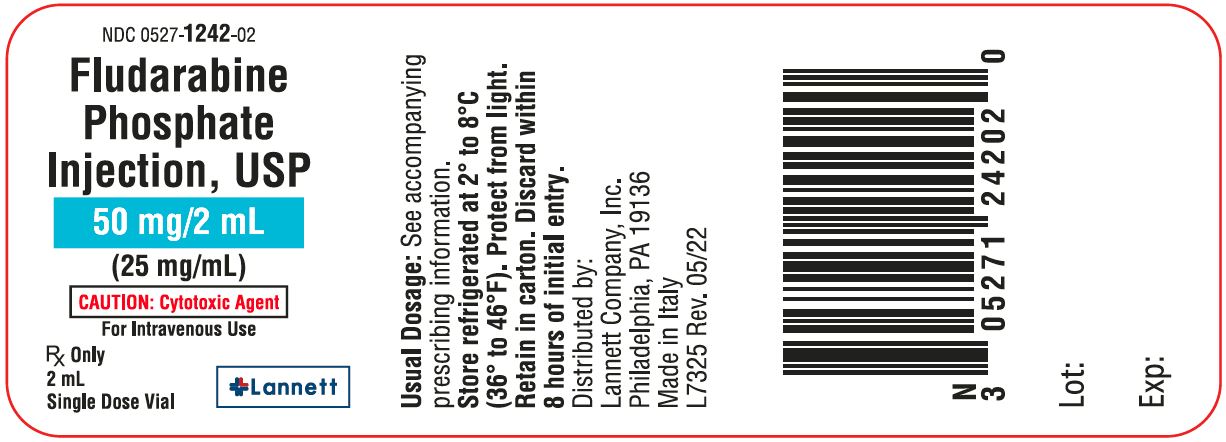
Fludarabine Phosphate 25 mg/mL Injection — NDC 0527-1242-02 (Billing 00527-1242-02)
This is a package of Fludarabine Phosphate 25 mg/mL Injection from Lannett Company, Inc., marketed since Dec 2019 and currently FDA-listed. It is this product's only package size.
NDC database record
One package, one record: these facts belong to NDC 0527-1242-02 alone.
- Record
- FDA NDC Directory package listing · Human prescription drug
- Code segments
- 0527 labeler · 1242 product · 02 package
- Package marketed since
- Dec 31, 2019
- Sample package
- No — commercial package
- Listing certified through
- Dec 31, 2026
- Barcode (UPC)
- 0305271242020
- FDA record last changed
- Jul 24, 2026
Identity & classification
Regulatory identifiers FDA, NLM and CMS codes for this package
- RxCUI (RxNorm): 1740865
Where does this data come from?
- FDA openFDA NDC Directory · synced Oct 8, 2026
- FDA label on DailyMed · label index refreshed Oct 8, 2026
- RxNorm (NLM RxNav) · catalog refreshed Oct 8, 2026
- Medi-Span GPI (licensed)
- First Databank (licensed) · refreshed Oct 8, 2026
RxNorm drug class
This medicine belongs to the Nucleoside Metabolic Inhibitor class.
Where does this data come from?
- RxClass (NLM) · catalog refreshed Oct 8, 2026
Clinical
Fludarabine injection is used to treat certain types of chronic lymphocytic leukemia (CLL; a type of cancer of the white blood cells). Fludarabine injection is in a class of medications called purine analogs. It works by slowing or stopping the growth of cancer cells in your body.
Read the full MedlinePlus article ↗- It treats adults with B-cell chronic lymphocytic leukemia (CLL) that didn’t respond to, or got worse during, treatment with at least one standard alkylating-agent chemotherapy. Its...
- A healthcare professional gives it through a vein over about 30 minutes, once a day for five days. A new course starts about every 28 days. Your doctor may delay or adjust doses ba...
- Common ones include low blood counts, fever, chills, infections, nausea, vomiting, tiredness and weakness. Your team will check your blood counts regularly. Tell them about any fev...
- Call for confusion, seizures, vision changes, trouble breathing, unusual bleeding or bruising, yellow skin or eyes, dark urine, or flank pain with blood in the urine. These can be...
Patient education
Supplement & herbal interactions
Where does this data come from?
- MedlinePlus (NLM) · refreshed Oct 8, 2026
- FDA label on DailyMed · label index refreshed Oct 8, 2026
Ask a licensed pharmacist directly — free, answered by our team.
Pricing
A drug doesn't have one price. Each row is a different public payment system, and none is what you'd pay at the counter — that depends on your insurance. The ⓘ on each row explains what it measures.
| Price system | Per each | Per package |
|---|---|---|
| Retail pharmacies payNADAC · weekly | Not in the retail survey — common for institutional, discontinued, or low-volume packs. | |
| Medicaid paysCMS SDUD · 12 mo | No recent Medicaid claims on file for this NDC — rare and low-volume NDCs are suppressed in the public data. | |
| Medicare drug plans payPart D · quarterly | No Part D plan price is available for this NDC in our data. | |
Where does this data come from?
- CMS NADAC weekly file
- CMS ASP pricing files · refreshed Sep 20, 2026
- CMS Medicaid State Drug Utilization Data · refreshed Oct 9, 2026
- CMS Part D plan pricing files · refreshed Sep 24, 2026
- VA National Acquisition Center price file
Packaging — all sizes for this product
| Package NDC | Description | Marketing start | Marketing end | Status |
|---|---|---|---|---|
| 00527-1242-02 You're viewing this Main listing | 1 VIAL, SINGLE-DOSE in 1 CARTON / 2 mL in 1 VIAL, SINGLE-DOSE | 2019-12-31 | — | Active |
Therapeutic equivalents
| Product | Labeler | Pack | NADAC/unit | TE | Status | Price vs. this |
|---|---|---|---|---|---|---|
| Fludarabine Phosphate 25 mg/mLthis 00527-1242-02 | Lannett | 1 vial | — | AP1 | FDA listed | — |
| Fludarabine Phosphate 25 mg/mL 25021-0242-02 | Sagent | 1 vial | — | AP1 | FDA listed | — |
| Fludarabine Phosphate 25 mg/mL 59923-0604-02 | Areva | 1 vial | — | AP1 | FDA listed | — |
| Fludarabine 25 mg/mL 63323-0192-02 | Fresenius | 1 vial | — | AP1 | FDA listed | — |
| Fludarabine Phosphate 25 mg/mL 42658-0024-01 | Hisun | 1 vial | — | — | FDA listed | — |
Where does this data come from?
- FDA openFDA NDC Directory · synced Oct 8, 2026
- FDA Orange Book · refreshed Oct 9, 2026
- CMS NADAC weekly file
Availability & generic status
This product is an FDA-approved generic. Other versions of the same drug are listed under Therapeutic equivalents, least expensive first.
Where does this data come from?
- FDA Orange Book · refreshed Oct 9, 2026
Inactive Ingredients / Excipients
Inactive ingredients, also called excipients, are components of the drug product other than the active ingredient. They may include fillers, dyes, coatings, preservatives, flavors, or other formulation ingredients.
🧪 Avoiding an ingredient? See Fludarabine Injection inactive ingredients by manufacturer: every current product's list side by side, so you can ask your pharmacy for the version that does not list it.
💡 Tap an ingredient (hover on desktop) to see what it is and why it’s used.
-
UNII 3OWL53L36A
A natural sugar alcohol derived from seaweed or synthesized in the lab. It's used as a filler to add bulk, a sweetener in sugar-free formulas, and a disintegrant to help tablets break apart in the stomach.
-
UNII 55X04QC32I
A strong alkaline chemical used to adjust and maintain the pH balance of liquid medicines. It helps keep the medicine stable and ensures it stays effective during storage.
-
UNII 059QF0KO0R
Water is a liquid solvent that dissolves and mixes ingredients together in liquid medicines, syrups, and injections. It helps distribute the active drug evenly throughout the product.
3 inactive ingredients listed in the exact product block matched to this NDC.
Where does this data come from?
ingredient classCode="IACT" elements from the exact product block matched by this NDC. Label-section narrative from DailyMed / the openFDA label index is shown separately when available.- FDA label on DailyMed · label index refreshed Oct 8, 2026
- FDA openFDA NDC Directory · synced Oct 8, 2026
Inactive ingredient FAQ
Are inactive ingredients the same for every manufacturer?
Why might an inactive ingredient be missing?
Can inactive ingredients matter?
Manufacturer & labeler
More NDCs from Lannett Company, Inc. labeler code 00527
- Dextroamphetamine Saccharate, Amphetamine Aspartate Monohydrate, Dextroamphetamine Sulfate and 2.5 mg; 2.5 mg; 2.5 mg; 2.5 mg Capsule, Extended Release NDC 0527-0791-37
- Dextroamphetamine Saccharate, Amphetamine Aspartate Monohydrate, Dextroamphetamine Sulfate and 3.75 mg; 3.75 mg; 3.75 mg; 3.75 mg Capsule, Extended Release NDC 0527-0792-37
- Dextroamphetamine Saccharate, Amphetamine Aspartate Monohydrate, Dextroamphetamine Sulfate and 5 mg; 5 mg; 5 mg; 5 mg Capsule, Extended Release NDC 0527-0793-37
- Dextroamphetamine Saccharate, Amphetamine Aspartate Monohydrate, Dextroamphetamine Sulfate and 6.25 mg; 6.25 mg; 6.25 mg; 6.25 mg Capsule, Extended Release NDC 0527-0794-37
- Dextroamphetamine Saccharate, Amphetamine Aspartate Monohydrate, Dextroamphetamine Sulfate and 7.5 mg; 7.5 mg; 7.5 mg; 7.5 mg Capsule, Extended Release NDC 0527-0795-37
- Primidone 250 mg Tablet NDC 0527-1231-01
- Dicyclomine Hydrochloride 20 mg Tablet NDC 0527-1282-01
- Primidone 50 mg Tablet NDC 0527-1301-01
- Terbutaline Sulfate 5 mg Tablet NDC 0527-1311-01
- Pilocarpine Hydrochloride 5 mg Tablet, Film Coated NDC 0527-1313-01
- Terbutaline Sulfate 2.5 mg Tablet NDC 0527-1318-01
- Ursodiol 300 mg Capsule NDC 0527-1326-01
Where does this data come from?
- FDA openFDA NDC Directory · synced Oct 8, 2026
- Drugs@FDA
Full prescribing information FDA SPL
🚨 Boxed Warning ▾
WARNING: SEVERE BONE MARROW SUPPRESSION, CNS TOXICITY, HEMOLYTIC ANEMIA, AND PULMONARY TOXICITY Fludarabine Phosphate Injection should be administered under the supervision of a qualified physician experienced in the use of antineoplastic therapy. Fludarabine phosphate injection can severely suppress bone marrow function. When used at high doses in dose-ranging studies in patients with acute leukemia, fludarabine phosphate was associated with severe neurologic effects, including blindness, coma, and death.
This severe central nervous system toxicity occurred in 36% of patients treated with doses approximately four times greater (96 mg/m 2 /day for 5 to 7 days) than the recommended dose. Similar severe central nervous system toxicity, including coma, seizures, agitation and confusion, has been reported in patients treated at doses in the range of the dose recommended for chronic lymphocytic leukemia [see Warnings and Precautions ( 5.2 )] . Instances of life-threatening and sometimes fatal autoimmune phenomena such as hemolytic anemia, autoimmune thrombocytopenia/thrombocytopenic purpura (ITP), Evans syndrome, and acquired hemophilia have been reported to occur after one or more cycles of treatment with Fludarabine Phosphate Injection.
Patients undergoing treatment with Fludarabine Phosphate Injection should be evaluated and closely monitored for hemolysis [see Warnings and Precautions ( 5.3 )]. In a clinical investigation using fludarabine phosphate in combination with pentostatin (deoxycoformycin) for the treatment of refractory chronic lymphocytic leukemia (CLL), there was an unacceptably high incidence of fatal pulmonary toxicity. Therefore, the use of Fludarabine Phosphate Injection in combination with pentostatin is not recommended [see Warnings and Precautions ( 5.5 )].
WARNING: CNS TOXICITY, HEMOLYTIC ANEMIA, AND PULMONARY TOXICITY See full prescribing information for complete boxed warning. Severe central nervous system toxicity occurred in 36% of patients treated with doses approximately four times greater (96 mg/m 2 /day for 5 to 7 days) than the recommended dose. This toxicity was seen in ≤0.2% of patients treated at the recommended dose levels (25 mg/m 2 ).
( 5.1 ) Instances of life-threatening and sometimes fatal autoimmune hemolytic anemia have been reported after one or more cycles of treatment. ( 5.3 ) In a clinical investigation of the combination of fludarabine phosphate with pentostatin (deoxycoformycin) for the treatment of refractory chronic lymphocytic leukemia (CLL), there was an unacceptably high incidence of fatal pulmonary toxicity. ( 5.5 )
🎯 Indications and Usage ▾
1 INDICATIONS AND USAGE Fludarabine Phosphate Injection is a nucleotide metabolic inhibitor indicated for: The treatment of adult patients with B-cell chronic lymphocytic leukemia (CLL) who have not responded to or whose disease has progressed during treatment with at least one standard alkylating-agent containing regimen. Benefit in treatment-naïve or non-refractory CLL patients is not established. ( 1.1 )
1.1Indication Fludarabine Phosphate Injection is indicated for the treatment of adult patients with B-cell chronic lymphocytic leukemia (CLL) who have not responded to or whose disease has progressed during treatment with at least one standard alkylating-agent containing regimen. The safety and effectiveness of Fludarabine Phosphate Injection in previously untreated or non-refractory patients with CLL have not been established.
⏱️ Dosage and Administration ▾
2 DOSAGE AND ADMINISTRATION The recommended adult dose is 25 mg/m 2 administered intravenously over a period of approximately 30 minutes daily for five consecutive days. Each 5 day course of treatment should commence every 28 days. ( 2.1 ) Reduce dose in patients with creatinine clearance 30 to 70 mL/min/l.73 m 2 . Do not use in patients with severe renal impairment ( 2.2 ).
2.1Recommended Dose The recommended adult dose of fludarabine phosphate injection is 25 mg/m 2 administered intravenously over a period of approximately 30 minutes daily for five consecutive days. Each 5-day course of treatment should commence every 28 days. Dosage may be decreased or delayed based on evidence of hematologic or nonhematologic toxicity.
Physicians should consider delaying or discontinuing the drug if neurotoxicity occurs. A number of clinical settings may predispose to increased toxicity from Fludarabine Phosphate Injection. These include advanced age, renal impairment, and bone marrow impairment.
Such patients should be monitored closely for excessive toxicity and the dose modified accordingly. The optimal duration of treatment has not been clearly established. It is recommended that three additional cycles of Fludarabine Phosphate Injection be administered following the achievement of a maximal response and then the drug should be discontinued.
2.2Renal Impairment Adjustments to the starting dose are recommended to provide appropriate drug exposure in patients with creatinine clearance 30 to 79 mL/min, as estimated by the Cockroft-Gault equations. These adjustments are based on a pharmacokinetic study in patients with renal impairment. Fludarabine Phosphate Injection should not be administered to patients with creatinine clearance less than 30 mL/min.
Starting Dose Adjustment for Renal Impairment Creatinine Clearance Starting Dose ≥ 80 mL/min 25 mg/m 2 (full dose) 50 to 79 mL/min 20 mg/m 2 30 to 49 mL/min 15 mg/m 2 < 30 mL/min Do not administer Renally impaired patients should be monitored closely for excessive toxicity and the dose modified accordingly.
2.3Use of Infusion Solutions Fludarabine Phosphate Injection contains no antimicrobial preservative and should be used within 8 hours of opening. Care must be taken to assure sterility of infusion solutions. Parenteral drug products should be inspected visually for particulate matter and discoloration prior to administration, whenever solution and container permit. Fludarabine Phosphate Injection should not be mixed with other drugs.
💊 Dosage Forms and Strengths ▾
3 DOSAGE FORMS AND STRENGTHS Fludarabine Phosphate Injection is supplied as a 50 mg per 2 mL (25 mg per mL) sterile solution. Fludarabine Phosphate Injection is supplied as a 50 mg per 2 mL (25 mg per mL) sterile solution. ( 3 )
⛔ Contraindications ▾
4 CONTRAINDICATIONS None None
⚠️ Warnings and Cautions ▾
5 WARNINGS AND PRECAUTIONS ( see BOXED WARNINGS ) Severe bone marrow suppression, notably anemia, thrombocytopenia and neutropenia. Monitor blood counts before and during treatment. ( 5.2 ) Transfusion-associated graft-versus-host disease.
Use only irradiated blood products for transfusions. ( 5.4 ) Infections. Monitor for infection.
( 5.2 ) Renal Insufficiency. Reduce dose for moderate renal impairment and monitor closely. Do not administer to patients with severe renal impairment.
( 5.9 ) Tumor lysis syndrome (TLS). Take precautions for patients at high risk for TLS. ( 5.8 ) Can cause fetal harm when administered to a pregnant woman.
Women should be advised to avoid becoming pregnant. ( 5.6 )
5.1Dose Dependent Neurologic Toxicities There are clear dose dependent toxic effects seen with fludarabine phosphate. Dose levels approximately 4 times greater (96 mg/m 2 /day for 5 to 7 days) than that recommended for CLL (25 mg/m 2 /day for 5 days) were associated with a syndrome characterized by delayed blindness, coma and death. Symptoms appeared from 21 to 60 days following the last dose.
Thirteen of 36 patients (36%) who received fludarabine phosphate at high doses (96 mg/m 2 /day for 5 to 7 days) developed this severe neurotoxicity. Similar severe central nervous system toxicity, including coma, seizures, agitation and confusion, has been reported in patients treated at doses in the range of the dose recommended for chronic lymphocytic leukemia. In post-marketing experience neurotoxicity has been reported to occur either earlier or later than in clinical trials (range 7 to 225 days).
The effect of chronic administration of fludarabine phosphate on the central nervous system is unknown; however, patients have received the recommended dose for up to 15 courses of therapy. Fludarabine phosphate may reduce the ability to drive or use mechanical equipment, since fatigue, weakness, visual disturbances, confusion, agitation and seizures have been observed.
5.2Bone Marrow Suppression Severe bone marrow suppression, notably anemia, thrombocytopenia and neutropenia, has been reported in patients treated with fludarabine phosphate. In a Phase I study in adult solid tumor patients, the median time to nadir counts was 13 days (range, 3 to 25 days) for granulocytes and 16 days (range, 2 to 32 days) for platelets. Most patients had hematologic impairment at baseline either as a result of disease or as a result of prior myelosuppressive therapy.
Cumulative myelosuppression may be seen. While chemotherapy-induced myelosuppression is often reversible, administration of Fludarabine Phosphate Injection requires careful hematologic monitoring. Several instances of trilineage bone marrow hypoplasia or aplasia resulting in pancytopenia, sometimes resulting in death, have been reported in adult patients.
The duration of clinically significant cytopenia in the reported cases has ranged from approximately 2 months to approximately 1 year. These episodes have occurred both in previously treated or untreated patients.
5.3Autoimmune Reactions Instances of life-threatening and sometimes fatal autoimmune phenomena such as hemolytic anemia, autoimmune thrombocytopenia/thrombocytopenic purpura (ITP), Evans syndrome, and acquired hemophilia have been reported to occur after one or more cycles of treatment with fludarabine phosphate in patients with or without a previous history of autoimmune hemolytic anemia or a positive Coombs' test and who may or may not be in remission from their disease. Steroids may or may not be effective in controlling these hemolytic episodes.
The majority of patients rechallenged with fludarabine phosphate developed a recurrence in the hemolytic process. The mechanism(s) which predispose patients to the development of this complication has not been identified. Patients undergoing treatment with Fludarabine Phosphate Injection should be evaluated and closely monitored for hemolysis.
Discontinuation of therapy with Fludarabine Phosphat… [Excerpted — this section continues on DailyMed.]
🤒 Adverse Reactions ▾
6 ADVERSE REACTIONS Because clinical trials are conducted under widely varying conditions, adverse reaction rates observed in the clinical trials of a drug cannot be directly compared to rates in the clinical trials of another drug and may not reflect the rates observed in practice. Very common adverse reactions include myelosuppression (neutropenia, thrombocytopenia and anemia), fever and chills, fatigue, weakness, infection, pneumonia, cough, nausea, vomiting and diarrhea. Other commonly reported events include malaise, mucositis, and anorexia.
Serious opportunistic infections have occurred in CLL patients treated with fludarabine phosphate. The most frequently reported adverse reactions and those reactions which are more clearly related to the drug are arranged below according to body system. Most common adverse reactions (incidence > 30%) include myelosuppression (neutropenia, thrombocytopenia and anemia), fever, infection, nausea and vomiting, fatigue, anorexia, cough and weakness ( 6 ).
To report SUSPECTED ADVERSE REACTIONS, contact Areva at 1-855-853-4760 or FDA at 1-800-FDA-1088 or www.fda.gov/medwatch.
6.1Hematopoietic Systems Hematologic events (neutropenia, thrombocytopenia, and/or anemia) were reported in the majority of CLL patients treated with fludarabine phosphate. During fludarabine phosphate treatment of 133 patients with CLL, the absolute neutrophil count decreased to less than 500/mm 3 in 59% of patients, hemoglobin decreased from pretreatment values by at least 2 grams percent in 60%, and platelet count decreased from pretreatment values by at least 50% in 55%. Myelosuppression may be severe, cumulative, and may affect multiple cell lines.
Bone marrow fibrosis occurred in one CLL patient treated with fludarabine phosphate. Several instances of trilineage bone marrow hypoplasia or aplasia resulting in pancytopenia, sometimes resulting in death, have been reported in post-marketing surveillance. The duration of clinically significant cytopenia in the reported cases has ranged from approximately 2 months to approximately 1 year.
These episodes have occurred both in previously treated or untreated patients. Life-threatening and sometimes fatal autoimmune phenomena such as hemolytic anemias, autoimmune thrombocytopenia/thrombocytopenic purpura (ITP), Evans syndrome, and acquired hemophilia have been reported to occur in patients receiving fludarabine phosphate [see Warnings and Precautions ( 5.3 )]. The majority of patients rechallenged with fludarabine phosphate developed a recurrence in the hemolytic process.
In post-marketing experience, cases of myelodysplastic syndrome and acute myeloid leukemia, mainly associated with prior, concomitant or subsequent treatment with alkylating agents, topoisomerase inhibitors, or irradiation have been reported.
6.2Infections Serious and sometimes fatal infections, including opportunistic infections and reactivations of latent viral infections such as VZV (herpes zoster), Epstein-Barr virus and JC virus (progressive multifocal leukoencephalopathy) have been reported in patients treated with fludarabine phosphate. Rare cases of Epstein-Barr (EBV) associated lymphoproliferative disorders have been reported in patients treated with fludarabine phosphate. In post-marketing experience, cases of progressive multifocal leukoencephalopathy have been reported.
Most cases had a fatal outcome. Many of these cases were confounded by prior and/or concurrent chemotherapy. The time to onset ranged from a few weeks to approximately one year after initiating treatment.
Of the 133 adult CLL patients in the two trials, there were 29 fatalities during study, approximately 50% of which were due to infection.
6.3Metabolic Tumor lysis syndrome has been reported in CLL patients treated with fludarabine phosphate. This complication may include hyperuricemia, hyperphosphatemia, hypocalcemia, metabolic acidosis, hyperkalemia, hematuria, urate crystalluria, and renal failure. The onset of this synd… [Excerpted — this section continues on DailyMed.]
🔄 Drug Interactions ▾
7 DRUG INTERACTIONS Fludarabine phosphate injection in combination with pentostatin is not recommended due to the risk of severe pulmonary toxicity ( 5.5 and 7.1 ).
7.1Pentostatin The use of Fludarabine Phosphate Injection in combination with pentostatin is not recommended due to the risk of fatal pulmonary toxicity [see Warnings and Precautions ( 5.5 )].
👥 Use in Specific Populations ▾
8 USE IN SPECIFIC POPULATIONS Renal Impairment: Fludarabine Phosphate Injection should not be used in patients with creatinine clearance <30 mL/min/1.73 m 2 . For patients with creatinine clearance 30 to 70 mL/min/1.73 m 2 , reduce the dose ( 2.2 , 5.9 , 8.6 ) See 17 for PATIENT COUNSELING INFORMATION.
8.1Pregnancy [See Warnings and Precautions ( 5.6 )]. Based on its mechanism of action, fludarabine phosphate can cause fetal harm when administered to a pregnant woman. There are no adequate and well-controlled studies of Fludarabine Phosphate Injection in pregnant women.
In rats, repeated intravenous doses of fludarabine phosphate at 2.4 times and 7.2 times the recommended human intravenous dose (25 mg/m 2 ) administered during organogenesis caused an increase in resorptions, skeletal and visceral malformations (cleft palate, exencephaly, and fetal vertebrae deformities) and decreased fetal body weights. Maternal toxicity was not apparent at 2.4 times the human intravenous dose, and was limited to slight body weight decreases at 7.2 times the human intravenous dose. In rabbits, repeated intravenous doses of fludarabine phosphate at 3.8 times the human intravenous dose administered during organogenesis increased embryo and fetal lethality as indicated by increased resorptions and a decrease in live fetuses.
A significant increase in malformations including cleft palate, hydrocephaly, adactyly, brachydactyly, fusions of the digits, diaphragmatic hernia, heart/great vessel defects, and vertebrae/rib anomalies were seen in all dose levels (≥ 0.5 times the human intravenous dose). If this drug is used during pregnancy, or if the patient becomes pregnant while taking this drug, the patient should be apprised of the potential hazard to the fetus. Women of childbearing potential should be advised to avoid becoming pregnant.
8.3Nursing Mothers It is not known whether fludarabine phosphate is excreted in human milk. Because many drugs are excreted in human milk and because of the potential for serious adverse reactions including tumorigenicity in nursing infants, a decision should be made to discontinue nursing or discontinue the drug, taking into account the importance of the drug for the mother.
8.4Pediatric Use Data submitted to the FDA was insufficient to establish efficacy in any childhood malignancy. Fludarabine phosphate was evaluated in 62 pediatric patients (median age 10, range 1 to 21) with refractory acute leukemia (45 patients) or solid tumors (17 patients). Limited pharmacokinetic data for fludarabine phosphate are available in children (ages 1 to 21 years).
When fludarabine phosphate was administered as a loading dose over 10 minutes immediately followed by a 5-day continuous infusion, steady-state conditions were reached early. The fludarabine phosphate regimen tested for pediatric lymphocytic leukemia (ALL) patients was a loading bolus of 10.5 mg/m 2 /day followed by a continuous infusion of 30.5 mg/m 2 /day for 5 days. In 12 pediatric patients with solid tumors, dose-limiting myelosuppression was observed with a loading dose of 8 mg/m 2 /day followed by a continuous infusion of 23.5 mg/m 2 /day for 5 days.
The maximum tolerated dose was a loading dose of 7 mg/m 2 /day followed by a continuous infusion of 20 mg/m 2 /day for 5 days. Treatment toxicity included bone marrow suppression. Platelet counts appeared to be more sensitive to the effects of fludarabine phosphate than hemoglobin and white blood cell counts.
Other adverse events included fever, chills, asthenia, rash, nausea, vomiting, diarrhea, and infection. There were no reported occurrences of peripheral neuropathy or pulmonary hypersensitivity reaction.
8.6Patients with Renal Impairment The total body clearance of the principal metabolite 2-fluoro-ara-A correlated with the creatinine clearance, indicating the importance of the renal excretion pathway for the elimination of the drug. Renal clearance represents approximately 40% of the total body clearance. Pa… [Excerpted — this section continues on DailyMed.]
🤰 Pregnancy ▾
5.6Pregnancy Based on its mechanism of action, fludarabine phosphate can cause fetal harm when administered to a pregnant woman. There are no adequate and well-controlled studies of Fludarabine Phosphate Injection in pregnant women. Fludarabine phosphate was embryolethal and teratogenic in rats and rabbits.
If this drug is used during pregnancy, or if the patient becomes pregnant while taking this drug, the patient should be apprised of the potential hazard to the fetus. Women of childbearing potential should be advised to avoid becoming pregnant [see Use in Specific Populations ( 8.1 )].
8.1Pregnancy [See Warnings and Precautions ( 5.6 )]. Based on its mechanism of action, fludarabine phosphate can cause fetal harm when administered to a pregnant woman. There are no adequate and well-controlled studies of Fludarabine Phosphate Injection in pregnant women.
In rats, repeated intravenous doses of fludarabine phosphate at 2.4 times and 7.2 times the recommended human intravenous dose (25 mg/m 2 ) administered during organogenesis caused an increase in resorptions, skeletal and visceral malformations (cleft palate, exencephaly, and fetal vertebrae deformities) and decreased fetal body weights. Maternal toxicity was not apparent at 2.4 times the human intravenous dose, and was limited to slight body weight decreases at 7.2 times the human intravenous dose. In rabbits, repeated intravenous doses of fludarabine phosphate at 3.8 times the human intravenous dose administered during organogenesis increased embryo and fetal lethality as indicated by increased resorptions and a decrease in live fetuses.
A significant increase in malformations including cleft palate, hydrocephaly, adactyly, brachydactyly, fusions of the digits, diaphragmatic hernia, heart/great vessel defects, and vertebrae/rib anomalies were seen in all dose levels (≥ 0.5 times the human intravenous dose). If this drug is used during pregnancy, or if the patient becomes pregnant while taking this drug, the patient should be apprised of the potential hazard to the fetus. Women of childbearing potential should be advised to avoid becoming pregnant.
17.3Pregnancy Fludarabine phosphate can cause fetal harm when administered to a pregnant woman. Women should be advised to avoid becoming pregnant [see Warnings and Precautions ( 5.6 )]. Distributed by: Lannett Company, Inc. Philadelphia, PA 19136 Made in Italy L7324 Rev. 05/2022
🧒 Pediatric Use ▾
8.4Pediatric Use Data submitted to the FDA was insufficient to establish efficacy in any childhood malignancy. Fludarabine phosphate was evaluated in 62 pediatric patients (median age 10, range 1 to 21) with refractory acute leukemia (45 patients) or solid tumors (17 patients). Limited pharmacokinetic data for fludarabine phosphate are available in children (ages 1 to 21 years).
When fludarabine phosphate was administered as a loading dose over 10 minutes immediately followed by a 5-day continuous infusion, steady-state conditions were reached early. The fludarabine phosphate regimen tested for pediatric lymphocytic leukemia (ALL) patients was a loading bolus of 10.5 mg/m 2 /day followed by a continuous infusion of 30.5 mg/m 2 /day for 5 days. In 12 pediatric patients with solid tumors, dose-limiting myelosuppression was observed with a loading dose of 8 mg/m 2 /day followed by a continuous infusion of 23.5 mg/m 2 /day for 5 days.
The maximum tolerated dose was a loading dose of 7 mg/m 2 /day followed by a continuous infusion of 20 mg/m 2 /day for 5 days. Treatment toxicity included bone marrow suppression. Platelet counts appeared to be more sensitive to the effects of fludarabine phosphate than hemoglobin and white blood cell counts.
Other adverse events included fever, chills, asthenia, rash, nausea, vomiting, diarrhea, and infection. There were no reported occurrences of peripheral neuropathy or pulmonary hypersensitivity reaction.
🆘 Overdosage ▾
10 OVERDOSAGE High doses of fludarabine phosphate [see Warnings and Precautions (5)] have been associated with an irreversible central nervous system toxicity characterized by delayed blindness, coma and death. High doses are also associated with severe thrombocytopenia and neutropenia due to bone marrow suppression. There is no known specific antidote for fludarabine phosphate overdosage. Treatment consists of drug discontinuation and supportive therapy.
🧬 Clinical Pharmacology ▾
12 CLINICAL PHARMACOLOGY
12.1Mechanism of Action Fludarabine phosphate is rapidly dephosphorylated to 2-fluoro-ara-A and then phosphorylated intracellularly by deoxycytidine kinase to the active triphosphate, 2-fluoro-ara-ATP. This metabolite appears to act by inhibiting DNA polymerase alpha, ribonucleotide reductase and DNA primase, thus inhibiting DNA synthesis. The mechanism of action of this antimetabolite is not completely characterized and may be multi-faceted.
12.3Pharmacokinetics Phase I studies in humans have demonstrated that fludarabine phosphate is rapidly converted to the active metabolite, 2-fluoro-ara-A, within minutes after intravenous infusion. Consequently, clinical pharmacology studies have focused on 2-fluoro-ara-A pharmacokinetics. After the five daily doses of 25 mg 2-fluoro-ara-AMP/m 2 to cancer patients infused over 30 minutes, 2-fluoro-ara-A concentrations show a moderate accumulation.
During a 5-day treatment schedule, 2-fluoroara-A plasma trough levels increased by a factor of about 2. The terminal half-life of 2-fluoro-ara-A was estimated as approximately 20 hours. In vitro , plasma protein binding of fludarabine ranged between 19% and 29%.
A correlation was noted between the degree of absolute granulocyte count nadir and increased area under the concentration x time curve (AUC).
🧬 Mechanism of Action ▾
12.1Mechanism of Action Fludarabine phosphate is rapidly dephosphorylated to 2-fluoro-ara-A and then phosphorylated intracellularly by deoxycytidine kinase to the active triphosphate, 2-fluoro-ara-ATP. This metabolite appears to act by inhibiting DNA polymerase alpha, ribonucleotide reductase and DNA primase, thus inhibiting DNA synthesis. The mechanism of action of this antimetabolite is not completely characterized and may be multi-faceted.
📦 How Supplied / Storage and Handling ▾
16 HOW SUPPLIED/STORAGE AND HANDLING
16.1How Supplied Fludarabine Phosphate Injection, USP is supplied as a sterile solution containing 50 mg/2 mL (25 mg/mL) of fludarabine phosphate in a 2 mL single use vial. NDC 0527-1242-02 one carton containing 1 vial of Fludarabine Phosphate Injection.
16.2Storage Store refrigerated between 2° and 8°C (36° and 46°F).
16.3Handling and Disposal Procedures for proper handling and disposal should be considered. Consideration should be given to handling and disposal according to guidelines issued for cytotoxic drugs. Several guidelines on this subject have been published.
1-4 Caution should be exercised in the handling and preparation of Fludarabine Phosphate Injection solution. The use of latex gloves and safety glasses is recommended to avoid exposure in case of breakage of the vial or other accidental spillage. If the solution contacts the skin or mucous membranes, wash thoroughly with soap and water; rinse eyes thoroughly with plain water.
Avoid exposure by inhalation or by direct contact of the skin or mucous membranes.
16.1How Supplied Fludarabine Phosphate Injection, USP is supplied as a sterile solution containing 50 mg/2 mL (25 mg/mL) of fludarabine phosphate in a 2 mL single use vial. NDC 0527-1242-02 one carton containing 1 vial of Fludarabine Phosphate Injection.
📦 Storage and Handling ▾
16.2Storage Store refrigerated between 2° and 8°C (36° and 46°F).
16.3Handling and Disposal Procedures for proper handling and disposal should be considered. Consideration should be given to handling and disposal according to guidelines issued for cytotoxic drugs. Several guidelines on this subject have been published.
1-4 Caution should be exercised in the handling and preparation of Fludarabine Phosphate Injection solution. The use of latex gloves and safety glasses is recommended to avoid exposure in case of breakage of the vial or other accidental spillage. If the solution contacts the skin or mucous membranes, wash thoroughly with soap and water; rinse eyes thoroughly with plain water.
Avoid exposure by inhalation or by direct contact of the skin or mucous membranes.
📋 Description ▾
11 DESCRIPTION Fludarabine Phosphate Injection contains fludarabine phosphate, a nucleotide metabolic inhibitor. Fludarabine phosphate is a fluorinated nucleotide analog of the antiviral agent vidarabine, 9- ß -D-arabinofuranosyladenine (ara-A), that is relatively resistant to deamination by adenosine deaminase. The chemical name for fludarabine phosphate is 9H-Purin-6-amine, 2-fluoro-9-(5-0- phosphono- ß -D-arabinofuranosyl)(2-fluoro-ara-AMP).
The molecular formula of fludarabine phosphate is C 10 H 13 FN 5 O 7 P (MW 365.2) and the structure is provided in Figure 1. Figure 1: Chemical Structure of Fludarabine Phosphate Each mL contains 25 mg of the active ingredient fludarabine phosphate, 25 mg of mannitol, water for injection, q.s.; and sodium hydroxide to adjust pH to 6.8. The pH range for the final product is 6.0 to 7.1.
Fludarabine Phosphate Injection is a sterile solution intended for intravenous administration. Chemical Structure
💬 Information for Patients ▾
17 PATIENT COUNSELING INFORMATION
17.1Monitoring Patients should be informed of the importance of periodic assessment of their blood count to detect the development of anemia, neutropenia and thrombocytopenia.
17.2Laboratory Tests During treatment, the patient's hematologic profile (particularly neutrophils, red blood cells, and platelets) should be monitored regularly to determine the degree of hematopoietic suppression [see Warnings and Precautions ( 5.2 )].
17.3Pregnancy Fludarabine phosphate can cause fetal harm when administered to a pregnant woman. Women should be advised to avoid becoming pregnant [see Warnings and Precautions ( 5.6 )]. Distributed by: Lannett Company, Inc. Philadelphia, PA 19136 Made in Italy L7324 Rev. 05/2022
🍼 Nursing Mothers ▾
8.3Nursing Mothers It is not known whether fludarabine phosphate is excreted in human milk. Because many drugs are excreted in human milk and because of the potential for serious adverse reactions including tumorigenicity in nursing infants, a decision should be made to discontinue nursing or discontinue the drug, taking into account the importance of the drug for the mother.
🧬 Pharmacokinetics ▾
12.3Pharmacokinetics Phase I studies in humans have demonstrated that fludarabine phosphate is rapidly converted to the active metabolite, 2-fluoro-ara-A, within minutes after intravenous infusion. Consequently, clinical pharmacology studies have focused on 2-fluoro-ara-A pharmacokinetics. After the five daily doses of 25 mg 2-fluoro-ara-AMP/m 2 to cancer patients infused over 30 minutes, 2-fluoro-ara-A concentrations show a moderate accumulation.
During a 5-day treatment schedule, 2-fluoroara-A plasma trough levels increased by a factor of about 2. The terminal half-life of 2-fluoro-ara-A was estimated as approximately 20 hours. In vitro , plasma protein binding of fludarabine ranged between 19% and 29%.
A correlation was noted between the degree of absolute granulocyte count nadir and increased area under the concentration x time curve (AUC).
🔬 Clinical Studies ▾
14 CLINICAL STUDIES
14.1Adults Two single-arm open-label studies of fludarabine phosphate have been conducted in adult patients with CLL refractory to at least one prior standard alkylating-agent containing regimen. In a study conducted by M.D. Anderson Cancer Center (MDAH), 48 patients were treated with a dose of 22 to 40 mg/m 2 daily for 5 days every 28 days.
Another study conducted by the Southwest Oncology Group (SWOG) involved 31 patients treated with a dose of 15 to 25 mg/m 2 daily for 5 days every 28 days. The overall objective response rates were 48% and 32% in the MDAH and SWOG studies, respectively. The complete response rate in both studies was 13%; the partial response rate was 35% in the MDAH study and 19% in the SWOG study.
These response rates were obtained using standardized response criteria developed by the National Cancer Institute CLL Working Group and were achieved in heavily pretreated patients. The ability of fludarabine phosphate to induce a significant rate of response in refractory patients suggests minimal cross-resistance with commonly used anti-CLL agents. The median time to response in the MDAH and SWOG studies was 7 weeks (range of 1 to 68 weeks) and 21 weeks (range of 1 to 53 weeks), respectively.
The median duration of disease control was 91 weeks (MDAH) and 65 weeks (SWOG). The median survival of all refractory CLL patients treated with fludarabine phosphate was 43 weeks and 52 weeks in the MDAH and SWOG studies, respectively. Rai stage improved to Stage II or better in 7 of 12 MDAH responders (58%) and in 5 of 7 SWOG responders (71%) who were Stage III or IV at baseline.
In the combined studies, mean hemoglobin concentration improved from 9.0 g/dL at baseline to 11.8 g/dL at the time of response in a subgroup of anemic patients. Similarly, average platelet count improved from 63,500/mm 3 to 103,300/mm 3 at the time of response in a subgroup of patients who were thrombocytopenic at baseline.
🧪 Nonclinical Toxicology ▾
13 NONCLINICAL TOXICOLOGY
13.1Carcinogenesis, Mutagenesis, Impairment of Fertility No animal carcinogenicity studies with fludarabine have been conducted. Fludarabine phosphate was clastogenic in vitro to Chinese hamster ovary cells (chromosome aberrations in the presence of metabolic activation) and induced sister chromatid exchanges both with and without metabolic activation. In addition, fludarabine phosphate was clastogenic in vivo (mouse micronucleus assay) but was not mutagenic to germ cells (dominant lethal test in male mice).
Fludarabine phosphate was not mutagenic to bacteria (Ames test) or mammalian cells (HGRPT assay in Chinese hamster ovary cells) either in the presence or absence of metabolic activation. Studies in mice, rats and dogs have demonstrated dose-related adverse effects on the male reproductive system. Observations consisted of a decrease in mean testicular weights in mice and rats with a trend toward decreased testicular weights in dogs and degeneration and necrosis of spermatogenic epithelium of the testes in mice, rats and dogs.
The possible adverse effects on fertility in humans have not been adequately evaluated [see Warnings and Precautions ( 5.7 )].
📄 Carcinogenesis, Mutagenesis, Impairment of Fertility ▾
13.1Carcinogenesis, Mutagenesis, Impairment of Fertility No animal carcinogenicity studies with fludarabine have been conducted. Fludarabine phosphate was clastogenic in vitro to Chinese hamster ovary cells (chromosome aberrations in the presence of metabolic activation) and induced sister chromatid exchanges both with and without metabolic activation. In addition, fludarabine phosphate was clastogenic in vivo (mouse micronucleus assay) but was not mutagenic to germ cells (dominant lethal test in male mice).
Fludarabine phosphate was not mutagenic to bacteria (Ames test) or mammalian cells (HGRPT assay in Chinese hamster ovary cells) either in the presence or absence of metabolic activation. Studies in mice, rats and dogs have demonstrated dose-related adverse effects on the male reproductive system. Observations consisted of a decrease in mean testicular weights in mice and rats with a trend toward decreased testicular weights in dogs and degeneration and necrosis of spermatogenic epithelium of the testes in mice, rats and dogs.
The possible adverse effects on fertility in humans have not been adequately evaluated [see Warnings and Precautions ( 5.7 )].
📚 References ▾
15 REFERENCES 1. Preventing Occupational Exposures to Antineoplastic and Other Hazardous Drugs in Health Care Settings. NIOSH Alert 2004-165.
2. OSHA Technical Manual, TED 1-0.l5A, Section VI: Chapter 2. Controlling Occupational Exposure to Hazardous Drugs.
OSHA, 1999. http://www.osha.gov/dts/osta/otm/otm_vi/otim_vi_2.html 3. American Society of Health-System Pharmacists. ASHP guidelines on handling hazardous drugs.
Am J Health-Syst Pharm . 2006; 63:172-1193. 4.
Polovich, M., White, J. M., & Kelleher, L.O. (eds.) 2005.
Chemotherapy and biotherapy guidelines and recommendations for practice (2nd. ed.) Pittsburgh, PA: Oncology Nursing Society
📄 Package Label / Principal Display Panel ▾
Vial Label NDC 0527-1242-02 Fludarabine Phosphate Injection, USP 50 mg/2 mL (25 mg/mL) CAUTION: Cytotoxic Agent For Intravenous Use Rx Only 2 mL Single Dose Vial Lannett vial-label
Carton NDC 0527-1242-02 Fludarabine Phosphate Injection, USP 50 mg/2 mL (25 mg/mL) CAUTION: Cytotoxic Agent For Intravenous Use Rx Only 2 mL Single Dose Vial Lannett carton
About this NDC listing & data coverage
What data is (and isn’t) available for this NDC — tap to expand
| NDC identity (package / product / labeler codes) | ✓ Available |
| Labeler | ✓ Available |
| Product & package description | ✓ Available |
| Marketing category & status | ✓ Available |
| Active ingredient / dosage form / route | ✓ Available |
| FDA label (SPL via DailyMed) | ✓ Available |
| Package photos | ✓ Available |
| Inactive ingredients (structured) | ✓ Available |
| NADAC pharmacy acquisition price (CMS) | — Not published for this NDC CMS publishes NADAC only for NDCs reported in its retail-pharmacy survey. |
| Orange Book / therapeutic-equivalence data | ✓ Available |
| HCPCS J-code billing crosswalk | — Not published for this NDC Most self-administered / retail products have no J-code — that is normal. |
| Medicaid utilization (CMS SDUD) | — Not published for this NDC CMS reports utilization only for NDCs with Medicaid claims above its privacy threshold. |