
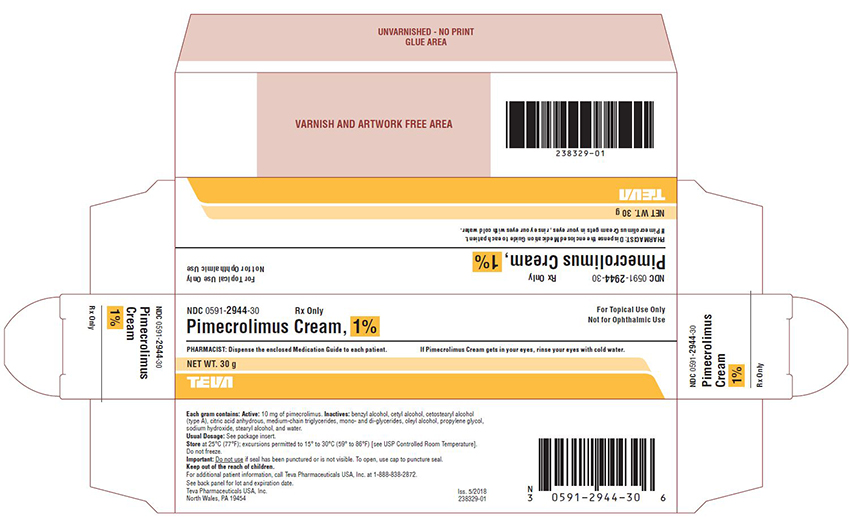
pimecrolimus 10 mg/g Cream, 30 g — NDC 0591-2944-30 (Billing 00591-2944-30)
This is a package of 30 g of pimecrolimus 10 mg/g Cream from Actavis Pharma, Inc., marketed since Dec 2018 and currently FDA-listed; retail pharmacies pay about $3.31 per g (NADAC). It is the main listing for this product, which comes in 3 package sizes.
NDC database record
One package, one record: these facts belong to NDC 0591-2944-30 alone.
- Record
- FDA NDC Directory package listing · Human prescription drug
- Code segments
- 0591 labeler · 2944 product · 30 package
- Package marketed since
- Dec 27, 2018
- Sample package
- No — commercial package
- Listing certified through
- Dec 31, 2026
- Billing quantity
- 30 g per package
- Barcode (UPC-A, from the NDC)
- 3 0591294430 6
- Medicaid fills, this package
- 9,198 prescriptions in the last four reported quarters
- FDA record last changed
- Jul 24, 2026
Identity & classification
Regulatory identifiers FDA, NLM and CMS codes for this package
Drug-database identifiers Medi-Span GPI and First Databank GCN / HICL / AHFS classification
- GSN (GCN sequence number): 049724
- GCN: 15348
- GPI-14 (Medi-Span): 90784060003720
- HICL (First Databank): 023167
- AHFS class code: 84:06.28.00
- RxCUI (RxNorm): 562806
Where does this data come from?
- FDA openFDA NDC Directory · synced Oct 1, 2026
- FDA label on DailyMed · label index refreshed Oct 5, 2026
- RxNorm (NLM RxNav) · catalog refreshed Oct 1, 2026
- Medi-Span GPI (licensed)
- First Databank (licensed) · refreshed Oct 1, 2026
RxNorm drug class
This medicine belongs to the Calcineurin Inhibitor Immunosuppressant class.
Where does this data come from?
- RxClass (NLM) · catalog refreshed Oct 1, 2026
Clinical
Pimecrolimus is used to control the symptoms of eczema (atopic dermatitis; a skin disease that causes the skin to be dry and itchy and to sometimes develop red, scaly rashes). Pimecrolimus is only used to treat patients who cannot use other medications for eczema, or whose symptoms were not controlled by other medications. Pimecrolimus is in a class of medications called topical calcineurin inhibitors. It works by stopping the immune system from producing substances that may cause eczema.
Read the full MedlinePlus article ↗- It treats mild to moderate eczema (atopic dermatitis) in people 2 and older. It is usually tried when other prescription skin treatments did not work well enough or are not advisab...
- Apply a thin layer to the affected skin, usually twice a day. Stop once the itch, rash and redness clear. Do not cover it with airtight dressings. If you are not better after 6 wee...
- No. It has a boxed warning about long-term safety, because rare cases of skin cancer and lymphoma have been reported. A cause has not been proven. Use it only on affected areas, an...
- Burning or stinging where you apply it is the most common. It is usually worst in the first few days and fades as your skin heals. Headache, cold symptoms, cough and flu were also...
Patient education
Supplement & herbal interactions
Some supplements/herbs that may interact with Pimecrolimus — tap one for details:
Where does this data come from?
- MedlinePlus (NLM) · refreshed Oct 1, 2026
- FDA label on DailyMed · label index refreshed Oct 5, 2026
Ask a licensed pharmacist directly — free, answered by our team.
Pricing
A drug doesn't have one price. Each row is a different public payment system, and none is what you'd pay at the counter — that depends on your insurance. The ⓘ on each row explains what it measures.
| Price system | Per g | Per package |
|---|---|---|
| Retail pharmacies payNADAC · weekly | $3.315 | $99.45 / 30 g |
| Medicaid paysCMS SDUD · 12 mo | $3.26 | $97.67 / 30 g |
| Medicare drug plans payPart D · Q2 2026 | $3.80 | $114.04 / 30 g |
Where does this data come from?
- CMS NADAC weekly file · file of Sep 30, 2026
- CMS ASP pricing files · refreshed Sep 20, 2026
- CMS Medicaid State Drug Utilization Data · through Q1 2026
- CMS Part D plan pricing files · refreshed Sep 24, 2026
- VA National Acquisition Center price file
Packaging — all sizes for this product
| Package NDC | Description | Per unit | Per pack | Marketing start | Marketing end | Status |
|---|---|---|---|---|---|---|
| 00591-2944-30 You're viewing this Main listing | 30 g in 1 TUBE | $3.31 / g | $99.45 | 2018-12-27 | — | Active |
| 00591-2944-60 0591-2944-60 | 60 g in 1 TUBE | $3.10 / g | $186.29 | 2018-12-27 | — | Active |
| 00591-2944-87 0591-2944-87 | 100 g in 1 TUBE | $3.39 / g | $338.61 | 2018-12-27 | — | Active |
You're viewing the smallest of 3 pack sizes for this product.
Per g, this pack runs about 7% above the cheapest pack (60 g, $3.10 vs $3.31 NADAC).
In Medicaid, this is the most-dispensed pack of this product — about 68% of fills over the last four reported quarters. See all packs ↓
Pack size FAQ
What quantity is in this package?
How does this package differ from NDC 00591-2944-60?
What NDC number is used to bill for this package of pimecrolimus 10 mg/g Cream?
Prices are the latest CMS NADAC pharmacy acquisition cost per NDC; per-pack figures are per-unit × pack quantity, shown only when the pack is denominated in the same measure NADAC prices.
Therapeutic equivalents
| Product | Labeler | Pack | NADAC/unit | TE | Status | Price vs. this |
|---|---|---|---|---|---|---|
| Pimecrolimus 10 mg/g 68682-0112-03 | Oceanside | 1 tube | $3.274 | AB | FDA listed | save 1% |
| pimecrolimus 10 mg/gthis 00591-2944-30 | Actavis | 30 g | $3.315 | AB | Availability likely | — |
| Pimecrolimus 10 mg/g 68462-0609-35 | Glenmark | 1 tube | $3.315 | AB | Availability likely | — |
| Pimecrolimus 10 mg/g 68682-0111-02 | Oceanside | 1 tube | $3.380 | AB | FDA listed | +2% |
| Pimecrolimus 10 mg/g 68682-0110-01 | Oceanside | 1 tube | $3.742 | AB | FDA listed | +13% |
| Pimecrolimus 10 mg/g 71335-2988-01 | Bryant | 1 tube | — | AB | FDA listed | — |
Where does this data come from?
- FDA openFDA NDC Directory · synced Oct 1, 2026
- FDA Orange Book · refreshed Oct 3, 2026
- CMS NADAC weekly file · file of Sep 30, 2026
Availability & generic status
This product is an FDA-approved generic. Other versions of the same drug are listed under Therapeutic equivalents, least expensive first.
Where does this data come from?
- FDA Orange Book · refreshed Oct 3, 2026
What it looks like
Where does this data come from?
- FDA label on DailyMed · label index refreshed Oct 5, 2026
Inactive Ingredients / Excipients
Inactive ingredients, also called excipients, are components of the drug product other than the active ingredient. They may include fillers, dyes, coatings, preservatives, flavors, or other formulation ingredients.
🧪 Avoiding an ingredient? See Pimecrolimus Topical inactive ingredients by manufacturer: every current product's list side by side, so you can ask your pharmacy for the version that does not list it.
💡 Tap an ingredient (hover on desktop) to see what it is and why it’s used.
-
UNII XF417D3PSL
Anhydrous citric acid is a sour, crystalline powder derived from citric acid with water removed. In medicines, it acts as a buffer to control pH, adds tartness to improve taste, and helps tablets disintegrate.
-
UNII LKG8494WBH
Benzyl alcohol is a clear liquid used as a preservative and solvent in medicines. It helps prevent bacterial and fungal growth and dissolves other ingredients to create uniform liquid formulations.
-
UNII 2DMT128M1S
A waxy solid derived from plant or animal sources. It acts as an emulsifier to blend oil and water components, and also thickens the medicine to give it the right texture and consistency.
-
UNII 936JST6JCN
Cetyl alcohol is a waxy, fatty substance derived from plant or animal sources. It acts as an emulsifier and thickener in medicines, helping blend oil and water components and giving products a smooth, creamy texture.
-
UNII C9H2L21V7U
A fat derived from coconut or palm oil containing shorter fatty acid chains. It serves as a solvent and carrier to help dissolve or suspend active ingredients, improving absorption and stability in liquid formulations.
-
UNII 172F2WN8DV
A fatty alcohol derived from animal or plant oils. It acts as an emollient and helps stabilize emulsions, allowing oil and water to mix evenly in the medication.
-
UNII 6DC9Q167V3
Propylene glycol is a clear liquid derived from petroleum or vegetable sources. It acts as a solvent, humectant, and preservative in medicines, helping dissolve active ingredients and maintain product stability.
-
UNII 55X04QC32I
A strong alkaline chemical used to adjust and maintain the pH balance of liquid medicines. It helps keep the medicine stable and ensures it stays effective during storage.
-
UNII 2KR89I4H1Y
Stearyl alcohol is a waxy, fatty substance derived from natural oils or made synthetically. It acts as an emulsifier and thickener in medicines, helping mix ingredients together and give the product the right texture.
-
UNII 059QF0KO0R
Water is a liquid solvent that dissolves and mixes ingredients together in liquid medicines, syrups, and injections. It helps distribute the active drug evenly throughout the product.
10 inactive ingredients listed in the exact product block matched to this NDC.
Where does this data come from?
ingredient classCode="IACT" elements from the exact product block matched by this NDC. Label-section narrative from DailyMed / the openFDA label index is shown separately when available.- FDA label on DailyMed · label index refreshed Oct 5, 2026
- FDA openFDA NDC Directory · synced Oct 1, 2026
Inactive ingredient FAQ
Are inactive ingredients the same for every manufacturer?
Why might an inactive ingredient be missing?
Can inactive ingredients matter?
Manufacturer & labeler
More NDCs from Actavis Pharma, Inc. labeler code 00591
- Verapamil Hydrochloride 360 mg Capsule, Delayed Release Pellets NDC 0591-2886-01
- Hydroxocobalamin 1000 ug/mL Injection, Solution NDC 0591-2888-30
- Testosterone 10 mg/g Gel NDC 0591-2921-02
- Testosterone 16.2 mg/g Gel NDC 0591-2924-18
- Testosterone 16.2 mg/g Gel NDC 0591-2926-30
- Levalbuterol tartrate HFA inhalation 45 ug Aerosol, Metered NDC 0591-2927-54
- Docosanol 100 mg/g Cream NDC 0591-2981-00
- Fluocinolone Acetonide Topical .1 mg/mL Solution NDC 0591-2990-60
- PROGESTERONE 50 mg/mL Injection, Solution NDC 0591-3128-79
- Nizatidine 150 mg Capsule NDC 0591-3137-00
- Nizatidine 300 mg Capsule NDC 0591-3138-00
- Minocycline Hydrochloride 75 mg Capsule NDC 0591-3153-00
Where does this data come from?
- FDA openFDA NDC Directory · synced Oct 1, 2026
- Drugs@FDA
Full prescribing information FDA SPL
🚨 Boxed Warning ▾
WARNING: LONG-TERM SAFETY OF TOPICAL CALCINEURIN INHIBITORS HAS NOT BEEN ESTABLISHED Although a causal relationship has not been established, rare cases of malignancy (e.g., skin and lymphoma) have been reported in patients treated with topical calcineurin inhibitors, including pimecrolimus cream, 1% [see Warnings and Precautions (5.1) ]. Therefore: Continuous long-term use of topical calcineurin inhibitors, including pimecrolimus cream, 1%, in any age group should be avoided, and application limited to areas of involvement with atopic dermatitis [see Dosage and Administration (2) , Warnings and Precautions (5.1) ].
Pimecrolimus cream, 1% is not indicated for use in children less than 2 years of age [see Warnings and Precautions (5.1) , Use in Specific Populations (8.4) ]. WARNING: LONG-TERM SAFETY OF TOPICAL CALCINEURIN INHIBITORS HAS NOT BEEN ESTABLISHED See full prescribing information for complete boxed warning. Although a causal relationship has not been established, rare cases of malignancy (e.g., skin and lymphoma) have been reported in patients treated with topical calcineurin inhibitors, including pimecrolimus cream, 1%.
( 5.1 ) Therefore: Continuous long-term use of topical calcineurin inhibitors, including pimecrolimus cream, 1%, in any age group should be avoided, and application limited to areas of involvement with atopic dermatitis. ( 2 , 5.1 ) Pimecrolimus cream, 1% is not indicated for use in children less than 2 years of age. ( 1 , 5.1 , 8.4 )
🎯 Indications and Usage ▾
1 INDICATIONS AND USAGE Pimecrolimus cream, 1% is indicated as second-line therapy for the short-term and non-continuous chronic treatment of mild to moderate atopic dermatitis in non-immunocompromised adults and children 2 years of age and older, who have failed to respond adequately to other topical prescription treatments, or when those treatments are not advisable. Pimecrolimus c ream, 1% is not indicated for use in children less than 2 years of age [see Warnings and Precautions (5.1) , Use in Specific Populations (8.4) ].
Pimecrolimus cream, 1% is a calcineurin inhibitor immunosuppressant indicated as s e c o n d -l i n e th e r a p y for the short-term and non-continuous chronic treatment of mild to moderate atopic dermatitis in non-immunocompromised adults and children 2 years of age and older, who have failed to respond adequately to other topical prescription treatments, or when those treatments are not advisable. ( 1 )
⏱️ Dosage and Administration ▾
2 DOSAGE AND ADMINISTRATION Apply a thin layer of pimecrolimus cream, 1% to the affected skin twice daily. The patient should stop using pimecrolimus cream, 1% when signs and symptoms (e.g., itch, rash and redness) resolve and should be instructed on what actions to take if symptoms recur. If signs and symptoms persist beyond 6 weeks, patients should be re-examined by their health care provider to confirm the diagnosis of atopic dermatitis.
Continuous long-term use of pimecrolimus cream, 1% should be avoided, and application should be limited to areas of involvement with atopic dermatitis [see Warnings and Precautions (5.1) ]. The safety of pimecrolimus cream, 1% under occlusion, which may promote systemic exposure, has not been evaluated. Avoid use of pimecrolimus cream, 1% with occlusive dressings.
Apply a thin layer of pimecrolimus cream, 1% to the affected skin twice daily. ( 2 ) If signs and symptoms persist beyond 6 weeks, patients should be re-examined. ( 2 ) Continuous long-term use of pimecrolimus cream, 1% should be avoided.
( 2 ) Avoid use with occlusive dressings. ( 2 )
💊 Dosage Forms and Strengths ▾
3 DOSAGE FORMS AND STRENGTHS Cream, 1%. Each gram of pimecrolimus cream, 1% contains 10 mg of pimecrolimus in a whitish cream base. Cream, 1%. ( 3 )
⛔ Contraindications ▾
4 CONTRAINDICATIONS Pimecrolimus cream, 1% is contraindicated in individuals with a history of hypersensitivity to pimecrolimus or any of the components of the cream. Pimecrolimus cream 1% is contraindicated in individuals with a history of hypersensitivity to pimecrolimus or any of the components of the cream. ( 4 , 6.2 )
⚠️ Warnings and Cautions ▾
5 WARNINGS AND PRECAUTIONS Should not be used in immunocompromised adults and children, including patients on systemic immunosuppressive medications. ( 5.1 ) Avoid treatment on malignant or pre-malignant skin conditions, as these can present as dermatitis. ( 5.2 ) Should not be used in patients with Netherton’s Syndrome or skin diseases with a potential for increased systemic absorption.
( 5.2 ) 5. 1 Risk of Immunosuppression Prolonged systemic use of calcineurin inhibitors for sustained immunosuppression in animal studies and transplant patients following systemic administration has been associated with an increased risk of infections, lymphomas, and skin malignancies. These risks are associated with the intensity and duration of immunosuppression.
Based on this information and the mechanism of action, there is a concern about a potential risk with the use of topical calcineurin inhibitors, including pimecrolimus cream, 1%. While a causal relationship has not been established, rare cases of skin malignancy and lymphoma have been reported in patients treated with topical calcineurin inhibitors, including pimecrolimus cream, 1%. Therefore: Continuous long-term use of topical calcineurin inhibitors, including pimecrolimus cream, 1%, in any age group should be avoided, and application limited to areas of involvement with atopic dermatitis Pimecrolimus cream, 1% is not indicated for use in children less than 2 years of age Pimecrolimus cream, 1% should not be used in immunocompromised adults and children, including patients on systemic immunosuppressive medications.
If signs and symptoms of atopic dermatitis do not improve within 6 weeks, patients should be re-examined by their healthcare provider and their diagnosis be confirmed. The safety of pimecrolimus cream, 1% has not been established beyond one year of non-continuous use. 5.
2 Application to Malignant or Pre-malignant Skin Conditions The use of pimecrolimus cream, 1% should be avoided on malignant or pre-malignant skin conditions. Malignant or pre-malignant skin conditions, such as cutaneous T-cell lymphoma (CTCL), can present as dermatitis. Pimecrolimus cream, 1% should not be used in patients with Netherton’s Syndrome or other skin diseases where there is the potential for increased systemic absorption of pimecrolimus.
The safety of pimecrolimus cream, 1% has not been established in patients with generalized erythroderma. The use of pimecrolimus cream, 1% may cause local symptoms such as skin burning (burning sensation, stinging, soreness) or pruritus. Localized symptoms are most common during the first few days of pimecrolimus cream, 1% application and typically improve as the lesions of atopic dermatitis resolve [see Adverse Reactions (6.1) ].
5. 3 Bacterial and Viral Skin Infections Before commencing treatment with pimecrolimus cream, 1%, bacterial or viral infections at treatment sites should be resolved. Trials have not evaluated the safety and efficacy of pimecrolimus cream, 1% in the treatment of clinically infected atopic dermatitis.
While patients with atopic dermatitis are predisposed to superficial skin infections including eczema herpeticum (Kaposi’s varicelliform eruption), treatment with pimecrolimus cream, 1% may be independently associated with an increased risk of varicella zoster virus infection (chicken pox or shingles), herpes simplex virus infection, or eczema herpeticum. In clinical trials, 15/1,544 (1%) cases of skin papilloma (warts) were observed in subjects using pimecrolimus cream, 1%. The youngest subject was age 2 and the oldest was age 12.
In cases where there is worsening of skin papillomas or they do not respond to conventional therapy, discontinuation of pimecrolimus cream, 1% should be considered until complete resolution of the warts is achieved. 5. 4 Patients with Lymphadenopathy In clinical trials, 14/1,544 (0.9%) cases of lymphadenopathy were reported while using pimecrolimus cream, 1%.
These cases of lymphadenopathy were usually rel… [Excerpted — this section continues on DailyMed.]
🤒 Adverse Reactions ▾
6 ADVERSE REACTIONS The most commonly reported adverse reactions (greater than or equal to 1%) were application site burning, headache, nasopharyngitis, cough, influenza, pyrexia and viral infection. ( 6.1 ) To report SUSPECTED ADVERSE REACTIONS, contact Teva Pharmaceuticals USA, Inc. at 1-888-838-2872 or FDA at 1-800-FDA-1088 or www.fda.gov/medwatch. 6.
1 Clinical Trials Experience Because clinical trials are conducted under widely varying conditions, adverse reaction rates observed in the clinical trials of a drug cannot be directly compared to rates in the clinical trials of another drug and may not reflect the rates observed in practice. No phototoxicity and no photoallergenicity were detected in clinical trials with 24 and 33 normal volunteers, respectively. In human dermal safety trials, pimecrolimus cream, 1% did not induce contact sensitization or cumulative irritation.
In a one-year safety trial in pediatric subjects age 2 to 17 years old involving sequential use of pimecrolimus cream, 1% and a topical corticosteroid, 43% of pimecrolimus cream, 1% treated subjects and 68% of vehicle-treated subjects used corticosteroids during the trial. Corticosteroids were used for more than 7 days by 34% of pimecrolimus cream, 1% treated subjects and 54% of vehicle-treated subjects. An increased incidence of impetigo, skin infection, superinfection (infected atopic dermatitis), rhinitis, and urticaria were found in the subjects that had used pimecrolimus cream, 1% and topical corticosteroid sequentially as compared to pimecrolimus cream, 1% alone.
In 3 randomized, double-blind vehicle-controlled pediatric trials and one active-controlled adult trial, 843 and 328 subjects respectively, were treated with pimecrolimus cream, 1%. In these clinical trials, 48 (4%) of the 1,171 pimecrolimus treated subjects and 13 (3%) of 408 vehicle-treated subjects discontinued therapy due to adverse events. Discontinuations for AEs were primarily due to application site reactions, and cutaneous infections.
The most common application site reaction was application site burning, which occurred in 8% to 26% of subjects treated with pimecrolimus cream, 1%. Table 1 depicts the incidence of adverse events pooled across the 2 identically designed 6-week trials with their open label extensions and the 1-year safety trial for pediatric subjects ages 2 to 17. Data from the adult active-controlled trial is also included in Table 1.
Adverse events are listed regardless of relationship to trial drug. Table 1. Treatment Emergent Adverse Events (≥1%) in Pimecrolimus Cream Treatment Groups P e di a t r i c Subj e c t s* P e di a t r i c Subj e c t s* P e di a t r i c Subj e c t s* Adu l t A c t i v e V e h i c le -C o nt r o lle d O p e n- La b e l V e h i c le -C o nt r o lle d C o m p ara to r ( 6 wee k s) ( 2 0 w ee k s) ( 1 y e ar ) ( 1 y e ar) Pimecrolimus Cream Vehicle Pimecrolimus Cream Pimecrolimus Cream Vehicle Pimecrolimus Cream (N=267) (N=136) (N=335) (N=272) (N=75) (N=328) N (%) N (%) N (%) N (%) N (%) N (%) At least 1 AE 182 (68.2%) 97 (71.3%) 240 (72.0%) 230 (84.6%) 56 (74.7%) 256 (78.0%) I n f e c ti o n s a n d I nf e s t a t io n s Upper Respiratory Tract Infection NOS 38 (14.2%) 18 (13.2%) 65 (19.4%) 13 (4.8%) 6 (8.0%) 14 (4.3%) Nasopharyngitis 27 (10.1%) 10 (7.4%) 32 (19.6%) 72 (26.5%) 16 (21.3%) 25 (7.6%) Skin Infection NOS 8 (3.0%) 9 (5.1%) 18 (5.4%) 6 (2.2%) 3 (4.0%) 21 (6.4%) Influenza 8 (3.0%) 1 (0.7%) 22 (6.6%) 36 (13.2%) 3 (4.0%) 32 (9.8%) Ear Infection NOS 6 (2.2%) 2 (1.5%) 19 (5.7%) 9 (3.3%) 1 (1.3%) 2 (0.6%) Otitis Media 6 (2.2%) 1 (0.7%) 10 (3.0%) 8 (2.9%) 4 (5.3%) 2 (0.6%) Impetigo 5 (1.9%) 3 (2.2%) 12 (3.6%) 11 (4.0%) 4 (5.3%) 8 (2.4%) Bacterial Infection 4 (1.5%) 3 (2.2%) 4 (1.2%) 3 (1.1%) 0 6 (1.8%) Folliculitis 3 (1.1%) 1 (0.7%) 3 (0.9%) 6 (2.2%) 3 (4.0%) 20 (6.1%) Sinusitis 3 (1.1%) 1 (0.7%) 11 (3.3%) 6 (2.2%) 1 (1.3%) 2 (0.6%) Pneumonia NOS 3 (1.1%) 1 (0.7%) 5 (1.5%) 0 1 (1.3%) 1 (0.3%) Pharyngitis NOS 2 (0.7%) 2 (1.5%) 3 (0.9%) 2… [Excerpted — this section continues on DailyMed.]
🔄 Drug Interactions ▾
7 DRUG INTERACTIONS Potential interactions between pimecrolimus cream, 1% and other drugs, including immunizations, have not been systematically evaluated. Due to low blood levels of pimecrolimus detected in some patients after topical application, systemic drug interactions are not expected, but cannot be ruled out. The concomitant administration of known CYP3A family of inhibitors in patients with widespread and/or erythrodermic disease should be done with caution.
Some examples of such drugs are erythromycin, itraconazole, ketoconazole, fluconazole, calcium channel blockers and cimetidine.
👥 Use in Specific Populations ▾
8 USE IN SPECIFIC POPULATIONS 8. 1 Pregnancy Pregnancy Category C There are no adequate and well-controlled studies with pimecrolimus cream, 1% in pregnant women. Therefore, pimecrolimus cream, 1% should be used during pregnancy only if the potential benefit justifies the potential risk to the fetus.
In dermal embryofetal developmental studies, no maternal or fetal toxicity was observed up to the highest practicable doses tested, 10 mg/kg/day (1% pimecrolimus cream) in rats (0.14X MRHD based on body surface area) and 10 mg/kg/day (1% pimecrolimus cream) in rabbits (0.65X MRHD based on AUC comparisons). The 1% pimecrolimus cream was administered topically for 6 hours/day during the period of organogenesis in rats and rabbits (gestational days 6 to 21 in rats and gestational days 6 to 20 in rabbits). A second dermal embryofetal development study was conducted in rats using pimecrolimus cream applied dermally to pregnant rats (1 g cream/kg body weight of 0.2%, 0.6% and 1.0% pimecrolimus cream) from gestation day 6 to 17 at doses of 2, 6, and 10 mg/kg/day with daily exposure of approximately 22 hours.
No maternal, reproductive, or embryo-fetal toxicity attributable to pimecrolimus was noted at 10 mg/kg/day (0.66X MRHD based on AUC comparisons), the highest dose evaluated in this study. No teratogenicity was noted in this study at any dose. A combined oral fertility and embryofetal developmental study was conducted in rats and an oral embryofetal developmental study was conducted in rabbits.
Pimecrolimus was administered during the period of organogenesis (2 weeks prior to mating until gestational day 16 in rats, gestational days 6 to 18 in rabbits) up to dose levels of 45 mg/kg/day in rats and 20 mg/kg/day in rabbits. In the absence of maternal toxicity, indicators of embryofetal toxicity (post-implantation loss and reduction in litter size) were noted at 45 mg/kg/day (38X MRHD based on AUC comparisons) in the oral fertility and embryofetal developmental study conducted in rats. No malformations in the fetuses were noted at 45 mg/kg/day (38X MRHD based on AUC comparisons) in this study.
No maternal toxicity, embryotoxicity or teratogenicity were noted in the oral rabbit embryofetal developmental toxicity study at 20 mg/kg/day (3.9X MRHD based on AUC comparisons), which was the highest dose tested in this study. A second oral embryofetal development study was conducted in rats. Pimecrolimus was administered during the period of organogenesis (gestational days 6 to 17) at doses of 2, 10 and 45 mg/kg/day.
Maternal toxicity, embryolethality and fetotoxicity were noted at 45 mg/kg/day (271X MRHD based on AUC comparisons). A slight increase in skeletal variations that were indicative of delayed skeletal ossification was also noted at this dose. No maternal toxicity, embryolethality or fetotoxicity were noted at 10 mg/kg/day (16X MRHD based on AUC comparisons).
No teratogenicity was noted in this study at any dose. A second oral embryofetal development study was conducted in rabbits. Pimecrolimus was administered during the period of organogenesis (gestational days 7 to 20) at doses of 2, 6 and 20 mg/kg/day.
Maternal toxicity, embryotoxicity and fetotoxicity were noted at 20 mg/kg/day (12X MRHD based on AUC comparisons). A slight increase in skeletal variations that were indicative of delayed skeletal ossification was also noted at this dose. No maternal toxicity, embryotoxicity or fetotoxicity were noted at 6 mg/kg/day (5X MRHD based on AUC comparisons).
No teratogenicity was noted in this study at any dose. An oral peri- and post-natal developmental study was conducted in rats. Pimecrolimus was administered from gestational day 6 through lactational day 21 up to a dose level of 40 mg/kg/day.
Only 2 of 22 females delivered live pups at the highest dose of 40 mg/kg/day. Postnatal survival, development of the F1 generation, their subsequent maturation and fertility were not affected at 10 mg/kg/day (12X MRHD based on AUC comparisons), the… [Excerpted — this section continues on DailyMed.]
🤰 Pregnancy ▾
8. 1 Pregnancy Pregnancy Category C There are no adequate and well-controlled studies with pimecrolimus cream, 1% in pregnant women. Therefore, pimecrolimus cream, 1% should be used during pregnancy only if the potential benefit justifies the potential risk to the fetus.
In dermal embryofetal developmental studies, no maternal or fetal toxicity was observed up to the highest practicable doses tested, 10 mg/kg/day (1% pimecrolimus cream) in rats (0.14X MRHD based on body surface area) and 10 mg/kg/day (1% pimecrolimus cream) in rabbits (0.65X MRHD based on AUC comparisons). The 1% pimecrolimus cream was administered topically for 6 hours/day during the period of organogenesis in rats and rabbits (gestational days 6 to 21 in rats and gestational days 6 to 20 in rabbits). A second dermal embryofetal development study was conducted in rats using pimecrolimus cream applied dermally to pregnant rats (1 g cream/kg body weight of 0.2%, 0.6% and 1.0% pimecrolimus cream) from gestation day 6 to 17 at doses of 2, 6, and 10 mg/kg/day with daily exposure of approximately 22 hours.
No maternal, reproductive, or embryo-fetal toxicity attributable to pimecrolimus was noted at 10 mg/kg/day (0.66X MRHD based on AUC comparisons), the highest dose evaluated in this study. No teratogenicity was noted in this study at any dose. A combined oral fertility and embryofetal developmental study was conducted in rats and an oral embryofetal developmental study was conducted in rabbits.
Pimecrolimus was administered during the period of organogenesis (2 weeks prior to mating until gestational day 16 in rats, gestational days 6 to 18 in rabbits) up to dose levels of 45 mg/kg/day in rats and 20 mg/kg/day in rabbits. In the absence of maternal toxicity, indicators of embryofetal toxicity (post-implantation loss and reduction in litter size) were noted at 45 mg/kg/day (38X MRHD based on AUC comparisons) in the oral fertility and embryofetal developmental study conducted in rats. No malformations in the fetuses were noted at 45 mg/kg/day (38X MRHD based on AUC comparisons) in this study.
No maternal toxicity, embryotoxicity or teratogenicity were noted in the oral rabbit embryofetal developmental toxicity study at 20 mg/kg/day (3.9X MRHD based on AUC comparisons), which was the highest dose tested in this study. A second oral embryofetal development study was conducted in rats. Pimecrolimus was administered during the period of organogenesis (gestational days 6 to 17) at doses of 2, 10 and 45 mg/kg/day.
Maternal toxicity, embryolethality and fetotoxicity were noted at 45 mg/kg/day (271X MRHD based on AUC comparisons). A slight increase in skeletal variations that were indicative of delayed skeletal ossification was also noted at this dose. No maternal toxicity, embryolethality or fetotoxicity were noted at 10 mg/kg/day (16X MRHD based on AUC comparisons).
No teratogenicity was noted in this study at any dose. A second oral embryofetal development study was conducted in rabbits. Pimecrolimus was administered during the period of organogenesis (gestational days 7 to 20) at doses of 2, 6 and 20 mg/kg/day.
Maternal toxicity, embryotoxicity and fetotoxicity were noted at 20 mg/kg/day (12X MRHD based on AUC comparisons). A slight increase in skeletal variations that were indicative of delayed skeletal ossification was also noted at this dose. No maternal toxicity, embryotoxicity or fetotoxicity were noted at 6 mg/kg/day (5X MRHD based on AUC comparisons).
No teratogenicity was noted in this study at any dose. An oral peri- and post-natal developmental study was conducted in rats. Pimecrolimus was administered from gestational day 6 through lactational day 21 up to a dose level of 40 mg/kg/day.
Only 2 of 22 females delivered live pups at the highest dose of 40 mg/kg/day. Postnatal survival, development of the F1 generation, their subsequent maturation and fertility were not affected at 10 mg/kg/day (12X MRHD based on AUC comparisons), the highest dose evaluated in thi… [Excerpted — this section continues on DailyMed.]
🧒 Pediatric Use ▾
8. 4 Pediatric Use Pimecrolimus c ream, 1% is not indicated for use in children less than 2 years of age. The long-term safety and effects of pimecrolimus cream, 1% on the developing immune system are unknown.
Three Phase 3 pediatric trials were conducted involving 1,114 subjects 2 to 17 years of age. Two trials were 6-week randomized vehicle-controlled trials with a 20-week open-label phase and one was a vehicle-controlled (up to 1 year) safety trial with the option for sequential topical corticosteroid use. Of these subjects 542 (49%) were 2 to 6 years of age.
In the short-term trials, 11% of pimecrolimus subjects did not complete these trials and 1.5% of pimecrolimus subjects discontinued due to adverse events. In the one-year trial, 32% of pimecrolimus subjects did not complete this trial and 3% of pimecrolimus subjects discontinued due to adverse events. Most discontinuations were due to unsatisfactory therapeutic effect.
The most common local adverse event in the short-term trials of pimecrolimus cream, 1% in pediatric subjects ages 2 to 17 was application site burning (10% vs. 13% vehicle); the incidence in the long-term trial was 9% pimecrolimus vs. 7% vehicle [see Adverse Reactions (6.1) ].
Adverse events that were more frequent (greater than 5%) in subjects treated with pimecrolimus cream, 1% compared to vehicle were headache (14% vs. 9%) in the short-term trial. Nasopharyngitis (26% vs.
21%), influenza (13% vs. 4%), pharyngitis (8% vs. 3%), viral infection (7% vs.
1%), pyrexia (13% vs. 5%), cough (16% vs. 11%), and headache (25% vs.
16%) were increased over vehicle in the 1-year safety trial [see Adverse Reactions (6.1) ]. In 843 subjects ages 2 to 17 years treated with pimecrolimus cream, 1%, 9 (0.8%) developed eczema herpeticum (5 on pimecrolimus cream, 1% alone and 4 on pimecrolimus cream, 1% used in sequence with corticosteroids). In 211 subjects on vehicle alone, there were no cases of eczema herpeticum.
The majority of adverse events were mild to moderate in severity. Two Phase 3 trials were conducted involving 436 infants age 3 months-23 months. One 6-week randomized vehicle-controlled trial with a 20-week open-label phase and one safety trial, up to one year, were conducted.
In the 6-week trial, 11% of pimecrolimus and 48% of vehicle subjects did not complete this trial; no subject in either group discontinued due to adverse events. Infants on pimecrolimus cream, 1% had an increased incidence of some adverse events compared to vehicle. In the 6-week vehicle-controlled trial these adverse events included pyrexia (32% vs.
13% vehicle), URI (24% vs. 14%), nasopharyngitis (15% vs. 8%), gastroenteritis (7% vs.
3%), otitis media (4% vs. 0%), and diarrhea (8% vs. 0%).
In the open-label phase of the trial, for infants who switched to pimecrolimus cream, 1% from vehicle, the incidence of the above-cited adverse events approached or equaled the incidence of those subjects who remained on pimecrolimus cream, 1%. In the 6 month safety data, 16% of pimecrolimus and 35% of vehicle subjects discontinued early and 1.5% of pimecrolimus and 0% of vehicle subjects discontinued due to adverse events. Infants on pimecrolimus cream, 1% had a greater incidence of some adverse events as compared to vehicle.
These included pyrexia (30% vs. 20%), URI (21% vs. 17%), cough (15% vs.
9%), hypersensitivity (8% vs. 2%), teething (27% vs. 22%), vomiting (9% vs.
4%), rhinitis (13% vs. 9%), viral rash (4% vs. 0%), rhinorrhea (4% vs.
0%), and wheezing (4% vs. 0%). The systemic exposure to pimecrolimus from pimecrolimus cream, 1% was investigated in 28 pediatric subjects with atopic dermatitis (20% to 80% BSA involvement) between the ages of 8 months to 14 yrs.
Following twice daily application for three weeks, blood concentrations of pimecrolimus were less than 2 ng/mL with 60% (96/161) of the blood samples having blood concentration below the limit of quantification (0.5 ng/mL). However, more children (23 children out of the total 28 children… [Excerpted — this section continues on DailyMed.]
🧓 Geriatric Use ▾
8. 5 Geriatric Use Nine (9) subjects greater than or equal to 65 years old received pimecrolimus cream, 1% in Phase 3 trials. Clinical trials of pimecrolimus cream, 1% did not include sufficient numbers of subjects aged 65 and over to assess efficacy and safety.
🧬 Clinical Pharmacology ▾
12 CLINICAL PHARMACOLOGY
12.1Mechanism of Action The mechanism of action of pimecrolimus in atopic dermatitis is not known. While the following have been observed, the clinical significance of these observations in atopic dermatitis is not known. It has been demonstrated that pimecrolimus binds with high affinity to macrophilin-12 (FKBP-12) and inhibits the calcium-dependent phosphatase, calcineurin.
As a consequence, it inhibits T cell activation by blocking the transcription of early cytokines. In particular, pimecrolimus inhibits at nanomolar concentrations Interleukin-2 and interferon gamma (Th1-type) and Interleukin-4 and Interleukin-10 (Th2-type) cytokine synthesis in human T-cells. In addition, pimecrolimus prevents the release of inflammatory cytokines and mediators from mast cells in vitro after stimulation by antigen/IgE.
12.3Pharmacokinetics Absorption In adult subjects (n=52) being treated for atopic dermatitis [13% to 62% Body Surface Area (BSA) involvement] for periods up to a year, a maximum pimecrolimus concentration of 1.4 ng/mL was observed among those subjects with detectable blood levels. In the majority of samples in adult (91%; 1,244/1,362) subjects, blood concentrations of pimecrolimus were below 0.5 ng/mL. Data on blood levels of pimecrolimus measured in pediatric subjects are described in Use in Specific Populations (8.4).
Distribution Laboratory in vitro plasma protein binding studies using equilibrium gel filtration have shown that 99.5% of pimecrolimus in plasma is bound to proteins over the pimecrolimus concentration range of 2 ng/mL to 100 ng/mL tested. The major fraction of pimecrolimus in plasma appears to be bound to various lipoproteins. As with other topical calcineurin inhibitors, it is not known whether pimecrolimus is absorbed into cutaneous lymphatic vessels or in regional lymph nodes.
Metabolism Following the administration of a single oral radiolabeled dose of pimecrolimus numerous circulating Odemethylation metabolites were seen. Studies with human liver microsomes indicate that pimecrolimus is metabolized in vitro by the CYP3A sub-family of metabolizing enzymes. No evidence of skin mediated drug metabolism was identified in vivo using the minipig or in vitro using stripped human skin.
Elimination Based on the results of the aforementioned radiolabeled study, following a single oral dose of pimecrolimus ~81% of the administered radioactivity was recovered, primarily in the feces (78.4%) as metabolites. Less than 1% of the radioactivity found in the feces was due to unchanged pimecrolimus.
🧬 Mechanism of Action ▾
12.1Mechanism of Action The mechanism of action of pimecrolimus in atopic dermatitis is not known. While the following have been observed, the clinical significance of these observations in atopic dermatitis is not known. It has been demonstrated that pimecrolimus binds with high affinity to macrophilin-12 (FKBP-12) and inhibits the calcium-dependent phosphatase, calcineurin.
As a consequence, it inhibits T cell activation by blocking the transcription of early cytokines. In particular, pimecrolimus inhibits at nanomolar concentrations Interleukin-2 and interferon gamma (Th1-type) and Interleukin-4 and Interleukin-10 (Th2-type) cytokine synthesis in human T-cells. In addition, pimecrolimus prevents the release of inflammatory cytokines and mediators from mast cells in vitro after stimulation by antigen/IgE.
📦 How Supplied / Storage and Handling ▾
16 HOW SUPPLIED/STORAGE AND HANDLING Pimecrolimus cream, 1% is a whitish cream available in tubes of 30 grams, 60 grams, and 100 grams. 30 gram tube………………………………………………………………NDC 0591-2944-30 60 gram tube………………………………………………………………NDC 0591-2944-60 100 gram tube……………………………………………………………..NDC 0591-2944-87 Store at 25°C (77°F); excursions permitted to 15° to 30°C (59° to 86°F) [see USP Controlled Room Temperature]. Do not freeze.
📋 Description ▾
11 DESCRIPTION Pimecrolimus cream, 1%, for topical use, contains the compound pimecrolimus, the immunosuppressant 33-epi-chloro-derivative of the macrolactam ascomycin. Chemically, pimecrolimus is (1R,9S,12S,13R,14S,17R,18E,21S,23S,24R,25S,27R)-12-[(1E)-2-{(1R,3R,4S)-4-chloro-3-methoxycyclohexyl}-1-methylvinyl]-17-ethyl-1,14-dihydroxy-23,25-dimethoxy-13,19,21,27-tetramethyl-11,28-dioxa-4-aza-tricyclo[22.3.1.04,9]octacos-18-ene-2,3,10,16-tetraone. The compound has the molecular formula C 43 H 68 CINO 11 and the molecular weight of 810.47.
The structural formula is: Pimecrolimus is a white to off-white fine crystalline powder. It is soluble in methanol and ethanol and insoluble in water. Each gram of pimecrolimus cream, 1% contains 10 mg of pimecrolimus in a whitish cream base of benzyl alcohol, cetyl alcohol, cetostearyl alcohol (type A), citric acid anhydrous, medium-chain triglycerides, mono- and di-glycerides, oleyl alcohol, propylene glycol, sodium hydroxide, stearyl alcohol, and water.
The Structural formula of pimecrolimus is (1R,9S,12S,13R,14S,17R,18E,21S,23S,24R,25S,27R)-12-[(1E)-2-{(1R,3R,4S)-4-chloro-3-methoxycyclohexyl}-1-methylvinyl]-17-ethyl-1,14-dihydroxy-23,25-dimethoxy-13,19,21,27-tetramethyl-11,28-dioxa-4-aza-tricyclo[22.3.1.04,9]octacos-18-ene-2,3,10,16-tetraone. The compound has the molecular formula C43H68CINO11 and the molecular weight of 810.47.
💬 Information for Patients ▾
17 PATIENT COUNSELING INFORMATION See FDA-approved patient labeling ( Medication Guide ) Patients using pimecrolimus cream, 1% should receive the following information and instructions: Pimecrolimus c ream, 1% may cause serious side effects. It is not known if pimecrolimus cream, 1% is safe to use for a long period of time. A very small number of people who have used pimecrolimus cream, 1% have had cancer (for example, skin or lymphoma).
However, a link with pimecrolimus cream, 1% use has not been shown. Because of this concern: A patient should not use pimecrolimus cream, 1% continuously for a long time. Pimecrolimus cream, 1% should be used only on areas of skin that have eczema.
Pimecrolimus cream, 1% is not for use on a child under 2 years old. A patient should not use sun lamps, tanning beds, or get treatment with ultraviolet light therapy during treatment with pimecrolimus cream, 1%. A patient should limit sun exposure during treatment with pimecrolimus cream, 1% even when the medicine is not on the skin.
If a patient needs to be outdoors after applying pimecrolimus cream, 1%, the patient should wear loose fitting clothing that protects the treated area from the sun. The physician should advise the patient about other types of protection from the sun. A patient should not cover the skin being treated with bandages, dressings or wraps.
A patient can wear normal clothing. Pimecrolimus cream, 1% is for use on the skin only. Do not get pimecrolimus cream, 1% in your eyes, nose, mouth, vagina, or rectum (mucous membranes).
If you get pimecrolimus cream, 1% in any of these areas, burning or irritation can happen. Wipe off any pimecrolimus cream, 1% from the affected area and then rinse the area well with cold water. Pimecrolimus cream, 1% is for external use only.
A patient should use pimecrolimus cream, 1% for short periods, and if needed, treatment may be repeated with breaks in between. Wash hands before using pimecrolimus cream, 1%. When applying pimecrolimus cream, 1% after a bath or shower, the skin should be dry.
Apply a thin layer of pimecrolimus cream, 1% only to the affected skin areas, twice a day, as directed by the physician. Use the smallest amount of pimecrolimus cream, 1% needed to control the signs and symptoms of eczema. A patient should not bathe, shower or swim right after applying pimecrolimus cream, 1%.
This could wash off the cream. A patient can use moisturizers with pimecrolimus cream, 1%. They should be sure to check with the physician first about the products that are right for them.
Because the skin of patients with eczema can be very dry, it is important they keep up good skin care practices. If a patient uses moisturizers, he or she should apply them after pimecrolimus cream, 1%. Teva Pharmaceuticals USA, Inc.
North Wales, PA 19454 Iss. 5/2018
💬 Medication Guide ▾
MEDICATION GUIDE P imecrolimus (pim ʺ e kroeʹ li mus) Cream, 1% Important: Pimecrolimus c ream, 1% is for use on the skin only (topical). Do not get pimecrolimus cream, 1% in your eyes, nose, mouth, vagina, or rectum. What is the most important information I should know about pimecrolimus c ream, 1%?
It is not known if pimecrolimus cream, 1% is safe to use for a long period of time. A very small number of people who have used pimecrolimus cream, 1% have developed cancer (for example, skin cancer or lymphoma). But a link that pimecrolimus cream, 1% use caused these cancers has not been shown.
Because of this concern: Do not use pimecrolimus cream, 1% continuously for a long time. Use pimecrolimus cream, 1% only on areas of your skin that have eczema. Do not use pimecrolimus cream, 1% on a child under 2 years of age.
What is pimecrolimus c ream, 1%? Pimecrolimus cream, 1% is a prescription medicine used on the skin (topical) to treat mild to moderate eczema (atopic dermatitis). Pimecrolimus cream, 1% is for adults and children age 2 years and older who do not have a weakened immune system.
Pimecrolimus cream, 1% is used on the skin for short periods, and if needed, treatment may be repeated with breaks in between. Pimecrolimus cream, 1% is for use after other prescription medicines have not worked for you or if your doctor recommends that other prescription medicines should not be used. It is not known if pimecrolimus cream, 1% is safe and effective in people who have a weakened immune system.
Pimecrolimus cream, 1% is not for use in children under 2 years of age. Who should not use pimecrolimus c ream, 1%? Do not use pimecrolimus c ream, 1% if you are allergic to pimecrolimus or any of the ingredients in pimecrolimus cream, 1%.
See the end of this Medication Guide for a complete list of ingredients in pimecrolimus cream, 1%. What should I tell my doctor before using pimecrolimus c ream, 1%? Before using pimecrolimus c ream, 1%, tell your doctor about all of your medical conditions, including if you: have a skin disease called Netherton’s syndrome (a rare inherited condition) have any infection on your skin including chicken pox or herpes have been told you have a weakened immune system are pregnant or plan to become pregnant.
It is not known if pimecrolimus cream, 1% will harm your unborn baby. are breastfeeding or plan to breastfeed. It is not known if pimecrolimus, 1% passes into your breast milk. You and your doctor should decide if you will use pimecrolimus cream, 1% or breastfeed.
You should not do both. Tell your doctor about all the medicines you take, including prescription and over-the-counter medicines, vitamins, and herbal supplements. Tell your doctor about all the skin medicines and products you use.
Know the medicines you take. Keep a list of them with you to show your doctor and pharmacist each time you get a new medicine. How should I use pimecrolimus c ream, 1%?
Use pimecrolimus cream, 1% exactly as your doctor tells you to use it. Stop pimecrolimus cream, 1% when the signs and symptoms of eczema, such as itching, rash, and redness go away, or as directed by your doctor. Wash your hands before using pimecrolimus cream, 1%.
If you apply pimecrolimus cream, 1% after a bath or shower, make sure your skin is dry. Apply a thin layer of pimecrolimus cream, 1% only to the affected skin areas, two times each day, as directed by your doctor. Use the smallest amount of pimecrolimus cream, 1% to help control the signs and symptoms of eczema.
If you apply pimecrolimus cream, 1% to another person, or if you have eczema and are not treating your hands, it is important for you to wash your hands with soap and water after applying pimecrolimus cream, 1%. This should remove any cream left on your hands. Do not bathe, shower or swim right after applying pimecrolimus cream, 1%.
This could wash off the cream. You can use moisturizers with pimecrolimus cream, 1%. Ask your doctor first about the products that are right for you.
Peop… [Excerpted — this section continues on DailyMed.]
🍼 Nursing Mothers ▾
8. 3 Nursing Mothers It is not known whether this drug is excreted in human milk. Because of the potential for serious adverse reactions in nursing infants from pimecrolimus, a decision should be made whether to discontinue nursing or to discontinue the drug, taking into account the importance of the drug to the mother.
🧬 Pharmacokinetics ▾
12.3Pharmacokinetics Absorption In adult subjects (n=52) being treated for atopic dermatitis [13% to 62% Body Surface Area (BSA) involvement] for periods up to a year, a maximum pimecrolimus concentration of 1.4 ng/mL was observed among those subjects with detectable blood levels. In the majority of samples in adult (91%; 1,244/1,362) subjects, blood concentrations of pimecrolimus were below 0.5 ng/mL. Data on blood levels of pimecrolimus measured in pediatric subjects are described in Use in Specific Populations (8.4).
Distribution Laboratory in vitro plasma protein binding studies using equilibrium gel filtration have shown that 99.5% of pimecrolimus in plasma is bound to proteins over the pimecrolimus concentration range of 2 ng/mL to 100 ng/mL tested. The major fraction of pimecrolimus in plasma appears to be bound to various lipoproteins. As with other topical calcineurin inhibitors, it is not known whether pimecrolimus is absorbed into cutaneous lymphatic vessels or in regional lymph nodes.
Metabolism Following the administration of a single oral radiolabeled dose of pimecrolimus numerous circulating Odemethylation metabolites were seen. Studies with human liver microsomes indicate that pimecrolimus is metabolized in vitro by the CYP3A sub-family of metabolizing enzymes. No evidence of skin mediated drug metabolism was identified in vivo using the minipig or in vitro using stripped human skin.
Elimination Based on the results of the aforementioned radiolabeled study, following a single oral dose of pimecrolimus ~81% of the administered radioactivity was recovered, primarily in the feces (78.4%) as metabolites. Less than 1% of the radioactivity found in the feces was due to unchanged pimecrolimus.
🔬 Clinical Studies ▾
6. 1 Clinical Trials Experience Because clinical trials are conducted under widely varying conditions, adverse reaction rates observed in the clinical trials of a drug cannot be directly compared to rates in the clinical trials of another drug and may not reflect the rates observed in practice. No phototoxicity and no photoallergenicity were detected in clinical trials with 24 and 33 normal volunteers, respectively.
In human dermal safety trials, pimecrolimus cream, 1% did not induce contact sensitization or cumulative irritation. In a one-year safety trial in pediatric subjects age 2 to 17 years old involving sequential use of pimecrolimus cream, 1% and a topical corticosteroid, 43% of pimecrolimus cream, 1% treated subjects and 68% of vehicle-treated subjects used corticosteroids during the trial. Corticosteroids were used for more than 7 days by 34% of pimecrolimus cream, 1% treated subjects and 54% of vehicle-treated subjects.
An increased incidence of impetigo, skin infection, superinfection (infected atopic dermatitis), rhinitis, and urticaria were found in the subjects that had used pimecrolimus cream, 1% and topical corticosteroid sequentially as compared to pimecrolimus cream, 1% alone. In 3 randomized, double-blind vehicle-controlled pediatric trials and one active-controlled adult trial, 843 and 328 subjects respectively, were treated with pimecrolimus cream, 1%. In these clinical trials, 48 (4%) of the 1,171 pimecrolimus treated subjects and 13 (3%) of 408 vehicle-treated subjects discontinued therapy due to adverse events.
Discontinuations for AEs were primarily due to application site reactions, and cutaneous infections. The most common application site reaction was application site burning, which occurred in 8% to 26% of subjects treated with pimecrolimus cream, 1%. Table 1 depicts the incidence of adverse events pooled across the 2 identically designed 6-week trials with their open label extensions and the 1-year safety trial for pediatric subjects ages 2 to 17.
Data from the adult active-controlled trial is also included in Table 1. Adverse events are listed regardless of relationship to trial drug. Table 1.
Treatment Emergent Adverse Events (≥1%) in Pimecrolimus Cream Treatment Groups P e di a t r i c Subj e c t s* P e di a t r i c Subj e c t s* P e di a t r i c Subj e c t s* Adu l t A c t i v e V e h i c le -C o nt r o lle d O p e n- La b e l V e h i c le -C o nt r o lle d C o m p ara to r ( 6 wee k s) ( 2 0 w ee k s) ( 1 y e ar ) ( 1 y e ar) Pimecrolimus Cream Vehicle Pimecrolimus Cream Pimecrolimus Cream Vehicle Pimecrolimus Cream (N=267) (N=136) (N=335) (N=272) (N=75) (N=328) N (%) N (%) N (%) N (%) N (%) N (%) At least 1 AE 182 (68.2%) 97 (71.3%) 240 (72.0%) 230 (84.6%) 56 (74.7%) 256 (78.0%) I n f e c ti o n s a n d I nf e s t a t io n s Upper Respiratory Tract Infection NOS 38 (14.2%) 18 (13.2%) 65 (19.4%) 13 (4.8%) 6 (8.0%) 14 (4.3%) Nasopharyngitis 27 (10.1%) 10 (7.4%) 32 (19.6%) 72 (26.5%) 16 (21.3%) 25 (7.6%) Skin Infection NOS 8 (3.0%) 9 (5.1%) 18 (5.4%) 6 (2.2%) 3 (4.0%) 21 (6.4%) Influenza 8 (3.0%) 1 (0.7%) 22 (6.6%) 36 (13.2%) 3 (4.0%) 32 (9.8%) Ear Infection NOS 6 (2.2%) 2 (1.5%) 19 (5.7%) 9 (3.3%) 1 (1.3%) 2 (0.6%) Otitis Media 6 (2.2%) 1 (0.7%) 10 (3.0%) 8 (2.9%) 4 (5.3%) 2 (0.6%) Impetigo 5 (1.9%) 3 (2.2%) 12 (3.6%) 11 (4.0%) 4 (5.3%) 8 (2.4%) Bacterial Infection 4 (1.5%) 3 (2.2%) 4 (1.2%) 3 (1.1%) 0 6 (1.8%) Folliculitis 3 (1.1%) 1 (0.7%) 3 (0.9%) 6 (2.2%) 3 (4.0%) 20 (6.1%) Sinusitis 3 (1.1%) 1 (0.7%) 11 (3.3%) 6 (2.2%) 1 (1.3%) 2 (0.6%) Pneumonia NOS 3 (1.1%) 1 (0.7%) 5 (1.5%) 0 1 (1.3%) 1 (0.3%) Pharyngitis NOS 2 (0.7%) 2 (1.5%) 3 (0.9%) 22 (8.1%) 2 (2.7%) 3 (0.9%) Pharyngitis Streptococcal 2 (0.7%) 2 (1.5%) 10 (3.0%) 0 <1% 0 Molluscum Contagiosum 2 (0.7%) 0 4 (1.2%) 5 (1.8%) 0 0 Staphylococcal Infection 1 (0.4%) 5 (3.7%) 7 (2.1%) 0 <1% 3 (0.9%) Bronchitis NOS 1 (0.4%) 3 (2.2%) 4 (1.2%) 29 (10.7%) 6 (8.0%) 8 (2.4%) Herpes Simplex 1 (0.4%) 0 4 (1.2%) 9 (3.3%) 2 (2.7%) 13 (4.0%) Tonsillit… [Excerpted — this section continues on DailyMed.]
🧪 Nonclinical Toxicology ▾
13 NONCLINICAL TOXICOLOGY
13.1Carcinogenesis, Mutagenesis, Impairment of Fertility In a 2-year rat dermal carcinogenicity study using pimecrolimus cream, 1%, a statistically significant increase in the incidence of follicular cell adenoma of the thyroid was noted in low, mid and high dose male animals compared to vehicle and saline control male animals. Follicular cell adenoma of the thyroid was noted in the dermal rat carcinogenicity study at the lowest dose of 2 mg/kg/day [0.2% pimecrolimus cream; 1.5X the Maximum Recommended Human Dose (MRHD) based on AUC comparisons].
No increase in the incidence of follicular cell adenoma of the thyroid was noted in the oral carcinogenicity study in male rats up to 10 mg/kg/day (66X MRHD based on AUC comparisons). However, oral studies may not reflect continuous exposure or the same metabolic profile as by the dermal route. In a mouse dermal carcinogenicity study using pimecrolimus in an ethanolic solution, no increase in incidence of neoplasms was observed in the skin or other organs up to the highest dose of 4 mg/kg/day (0.32% pimecrolimus in ethanol) 27X MRHD based on AUC comparisons.
However, lymphoproliferative changes (including lymphoma) were noted in a 13 week repeat dose dermal toxicity study conducted in mice using pimecrolimus in an ethanolic solution at a dose of 25 mg/kg/day (47X MRHD based on AUC comparisons). No lymphoproliferative changes were noted in this study at a dose of 10 mg/kg/day (17X MRHD based on AUC comparison). However, the latency time to lymphoma formation was shortened to 8 weeks after dermal administration of pimecrolimus dissolved in ethanol at a dose of 100 mg/kg/day (179-217X MRHD based on AUC comparisons).
In a mouse oral (gavage) carcinogenicity study, a statistically significant increase in the incidence of lymphoma was noted in high dose male and female animals compared to vehicle control male and female animals. Lymphomas were noted in the oral mouse carcinogenicity study at a dose of 45 mg/kg/day (258-340X MRHD based on AUC comparisons). No drug-related tumors were noted in the mouse oral carcinogenicity study at a dose of 15 mg/kg/day (60-133X MRHD based on AUC comparisons).
In an oral (gavage) rat carcinogenicity study, a statistically significant increase in the incidence of benign thymoma was noted in 10 mg/kg/day pimecrolimus treated male and female animals compared to vehicle control treated male and female animals. In addition, a significant increase in the incidence of benign thymoma was noted in another oral (gavage) rat carcinogenicity study in 5 mg/kg/day pimecrolimus treated male animals compared to vehicle control treated male animals. No drug-related tumors were noted in the rat oral carcinogenicity study at a dose of 1 mg/kg/day male animals (1.1X MRHD based on AUC comparisons) and at a dose of 5 mg/kg/day for female animals (21X MRHD based on AUC comparisons).
In a 52-week dermal photo-carcinogenicity study, the median time to onset of skin tumor formation was decreased in hairless mice following chronic topical dosing with concurrent exposure to UV radiation (40 weeks of treatment followed by 12 weeks of observation) with the pimecrolimus cream, 1% vehicle alone. No additional effect on tumor development beyond the vehicle effect was noted with the addition of the active ingredient, pimecrolimus, to the vehicle cream. A 39-week oral monkey toxicology study was conducted with pimecrolimus doses of 15 mg/kg/day, 45 mg/kg/day and 120 mg/kg/day.
A dose dependent increase in expression of immunosuppressive-related lymphoproliferative disorder (IRLD) associated with lymphocryptovirus (a monkey strain of virus related to human Epstein Barr virus) was observed. IRLD in monkeys mirrors what has been noted in human transplant patients after chronic systemic immunosuppressive therapy, post transplantation lymphoproliferative disease (PTLD), after treatment with chronic systemic immunosuppressive therapy. Both IRLD and PTLD can progress to l… [Excerpted — this section continues on DailyMed.]
📄 Carcinogenesis, Mutagenesis, Impairment of Fertility ▾
13.1Carcinogenesis, Mutagenesis, Impairment of Fertility In a 2-year rat dermal carcinogenicity study using pimecrolimus cream, 1%, a statistically significant increase in the incidence of follicular cell adenoma of the thyroid was noted in low, mid and high dose male animals compared to vehicle and saline control male animals. Follicular cell adenoma of the thyroid was noted in the dermal rat carcinogenicity study at the lowest dose of 2 mg/kg/day [0.2% pimecrolimus cream; 1.5X the Maximum Recommended Human Dose (MRHD) based on AUC comparisons].
No increase in the incidence of follicular cell adenoma of the thyroid was noted in the oral carcinogenicity study in male rats up to 10 mg/kg/day (66X MRHD based on AUC comparisons). However, oral studies may not reflect continuous exposure or the same metabolic profile as by the dermal route. In a mouse dermal carcinogenicity study using pimecrolimus in an ethanolic solution, no increase in incidence of neoplasms was observed in the skin or other organs up to the highest dose of 4 mg/kg/day (0.32% pimecrolimus in ethanol) 27X MRHD based on AUC comparisons.
However, lymphoproliferative changes (including lymphoma) were noted in a 13 week repeat dose dermal toxicity study conducted in mice using pimecrolimus in an ethanolic solution at a dose of 25 mg/kg/day (47X MRHD based on AUC comparisons). No lymphoproliferative changes were noted in this study at a dose of 10 mg/kg/day (17X MRHD based on AUC comparison). However, the latency time to lymphoma formation was shortened to 8 weeks after dermal administration of pimecrolimus dissolved in ethanol at a dose of 100 mg/kg/day (179-217X MRHD based on AUC comparisons).
In a mouse oral (gavage) carcinogenicity study, a statistically significant increase in the incidence of lymphoma was noted in high dose male and female animals compared to vehicle control male and female animals. Lymphomas were noted in the oral mouse carcinogenicity study at a dose of 45 mg/kg/day (258-340X MRHD based on AUC comparisons). No drug-related tumors were noted in the mouse oral carcinogenicity study at a dose of 15 mg/kg/day (60-133X MRHD based on AUC comparisons).
In an oral (gavage) rat carcinogenicity study, a statistically significant increase in the incidence of benign thymoma was noted in 10 mg/kg/day pimecrolimus treated male and female animals compared to vehicle control treated male and female animals. In addition, a significant increase in the incidence of benign thymoma was noted in another oral (gavage) rat carcinogenicity study in 5 mg/kg/day pimecrolimus treated male animals compared to vehicle control treated male animals. No drug-related tumors were noted in the rat oral carcinogenicity study at a dose of 1 mg/kg/day male animals (1.1X MRHD based on AUC comparisons) and at a dose of 5 mg/kg/day for female animals (21X MRHD based on AUC comparisons).
In a 52-week dermal photo-carcinogenicity study, the median time to onset of skin tumor formation was decreased in hairless mice following chronic topical dosing with concurrent exposure to UV radiation (40 weeks of treatment followed by 12 weeks of observation) with the pimecrolimus cream, 1% vehicle alone. No additional effect on tumor development beyond the vehicle effect was noted with the addition of the active ingredient, pimecrolimus, to the vehicle cream. A 39-week oral monkey toxicology study was conducted with pimecrolimus doses of 15 mg/kg/day, 45 mg/kg/day and 120 mg/kg/day.
A dose dependent increase in expression of immunosuppressive-related lymphoproliferative disorder (IRLD) associated with lymphocryptovirus (a monkey strain of virus related to human Epstein Barr virus) was observed. IRLD in monkeys mirrors what has been noted in human transplant patients after chronic systemic immunosuppressive therapy, post transplantation lymphoproliferative disease (PTLD), after treatment with chronic systemic immunosuppressive therapy. Both IRLD and PTLD can progress to lymphoma, which is dependen… [Excerpted — this section continues on DailyMed.]
📄 Package Label / Principal Display Panel ▾
PRINCIPAL DISPLAY PANEL NDC 0591- 2944 -30 Rx Only For Topical Use Only Not for Ophthalmic Use Pimecrolimus Cream, 1% PHARMACIST: Dispense the enclosed Medication Guide to each patient. If Pimecrolimus Cream gets in your eyes, rinse your eyes with cold water. NET WT. 30 g TEVA 1