
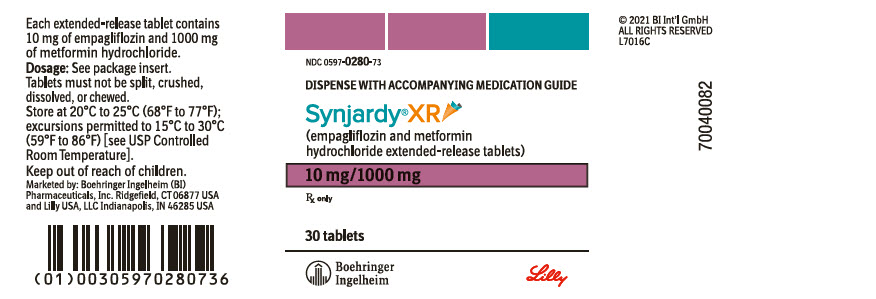
Synjardy XR empagliflozin, metformin hydrochloride 10 mg; 1000 mg Tablet, Extended Release, 7-count
🆔 Identity & classification
Where does this data come from?
🏷️ RxNorm drug class
This medicine belongs to the Sodium-Glucose Cotransporter 2 Inhibitor class.
Where does this data come from?
🏭 Manufacturer & labeler
Where does this data come from?
🩺 Clinical
Empagliflozin is used to: lower blood sugar in people with type 2 diabetes (condition in which blood sugar is too high because the body does not make or use insulin normally). reduce the risk of stroke, heart attack, or death in certain people who have type 2 diabetes. reduce the risk of being hospitalized for heart failure and death in adults with heart failure. reduce the risk of worsening of kidney disease, being hospitalized for heart failure, and death in certain adults with kidney disease. Empagliflozin is in a class of medications called sodium-glucose co-transporter 2 (SGLT2) inh...
Read the full MedlinePlus article ↗- Great question — combining empagliflozin and metformin into one tablet is mostly about convenience. Both medicines help control your blood sugar, but they work in completely differ...
- Why is my doctor prescribing one pill that has two different medicines in it?
- It's worth knowing about, but it's also quite rare. The risk is real mainly for people with kidney problems, liver disease, heavy alcohol use, or who are seriously ill. Your doctor...
- I've heard metformin can cause a dangerous condition with lactic acid — should I be worried?
Patient education
Supplement & herbal interactions
Some supplements/herbs that may interact with Empagliflozin, Metformin Hydrochloride — tap one for details:
Empagliflozin, Metformin Hydrochloride may be associated with lower levels of 4 nutrients — worth a chat with your pharmacist, not a cause for alarm.
Where does this data come from?
Ask a licensed pharmacist directly — free, answered by our team.
💊 What it looks like
Where does this data come from?
🧪 Inactive Ingredients / Excipients
Inactive ingredients, also called excipients, are components of the drug product other than the active ingredient. They may include fillers, dyes, coatings, preservatives, flavors, or other formulation ingredients.
Where does this data come from?
IACT rows and label-wide narrative are kept separate; availability and product-level specificity depend on the submitted label.Inactive ingredient FAQ
Are inactive ingredients the same for every manufacturer?
Why might an inactive ingredient be missing?
Can inactive ingredients matter?
💲 Pricing
A drug doesn't have one price. Each row is a different public payment system, and none is what you'd pay at the counter — that depends on your insurance. The ⓘ on each row explains what it measures.
| Price system | Per each | Per package |
|---|---|---|
| Retail pharmacies payNADAC · weekly | Not in the retail survey — common for institutional, discontinued, or low-volume packs. | |
| Medicaid paysCMS SDUD · 12 mo | No recent Medicaid claims on file for this NDC — rare and low-volume NDCs are suppressed in the public data. | |
| Medicare drug plans payPart D · quarterly | No Part D plan price is available for this NDC in our data. | |
Where does this data come from?
🔁 Therapeutic equivalents
| Product | Labeler | Pack | NADAC/unit | TE | Status | Price vs. this |
|---|---|---|---|---|---|---|
| Synjardy XR 10 mg/1; 1000 mgthis 00597-0280-36 | Boehringer | 7 tablets | — | — | Discontinued | — |
Where does this data come from?
⏳ Availability & generic status
We did not find an FDA-approved generic match for this exact strength, form and route. Patent/protection dates below may affect future generic timing.
Why the date isn’t exact: Generic timing can change because patents may be challenged, settled, licensed, added, removed, or worked around with a narrower label — and FDA approval does not always mean a pharmacy can get the generic today.
🛈 What do these terms mean?
- Patent
- Legal protection listed in the Orange Book that may delay generic approval or launch. Issued by the U.S. Patent & Trademark Office.
- Substance patent
- Covers the active drug molecule itself — the hardest to design around. A generic generally can’t launch until it expires.
- Formulation (product) patent
- Covers a specific formulation or dosage form. A generic can sometimes work around it with a different formulation.
- Method-of-use patent
- A patent covering one specific approved use of the drug — not necessarily the whole molecule. A generic can sometimes launch with a “skinny label” that carves out the protected use and keeps the others.
- Skinny label
- A generic label that omits a still-patented use when the FDA allows it — letting a generic reach the market for the unprotected uses.
- Exclusivity
- FDA-granted marketing protection, separate from patents — e.g. 5-yr new chemical entity, 7-yr orphan drug, or a +6-month pediatric extension.
- Paragraph IV
- A generic applicant’s formal challenge to a listed patent. It can potentially lead to earlier generic entry, but often involves litigation or a settlement.
- RLD / RS
- Reference Listed Drug — the brand product the FDA uses as the reference for generic applications. Reference Standard — the product the FDA expects generics to compare against in bioequivalence testing.
- TE / AB rating
- FDA therapeutic-equivalence rating. An AB rating generally means the FDA considers a generic therapeutically equivalent to — and substitutable for — the brand.
- LOE (loss of exclusivity)
- The latest patent or exclusivity currently listed — the loss-of-exclusivity / latest-listed-protection date shown on this page. Paragraph-IV challenges and settlements can move the real date earlier; FDA approval and a manufacturer’s decision to market can move it later.
Built from the FDA Orange Book. The bars above are scaled to each protection’s expiry; the red LOE marker is the last one to lapse.
| Patent | Type | Use code | Expires |
|---|---|---|---|
| US 9949998 ↗ | Method of use | U-2290 | Jun 11, 2034 |
| US 10258637 ↗ | Method of use | U-2290 | Apr 3, 2034 |
| US 10258637 ↗ | Method of use | U-2290 | Apr 3, 2034 |
| US 9949998 ↗ | Method of use | U-2290 | Jun 11, 2034 |
| US 10258637 ↗ | Method of use | U-2290 | Apr 3, 2034 |
| US 9949998 ↗ | Method of use | U-2290 | Jun 11, 2034 |
| US 10596120 ↗ | Method of use | U-2775 | Mar 7, 2032 |
| US 10596120 ↗ | Method of use | U-2775 | Mar 7, 2032 |
| US 10596120 ↗ | Method of use | U-2775 | Mar 7, 2032 |
| US 10596120 ↗ | Method of use | U-2775 | Mar 7, 2032 |
| US 12433906 ↗ | Method of use | U-4304 | Apr 3, 2034 |
| US 12433906 ↗ | Method of use | U-4304 | Apr 3, 2034 |
| US 12433906 ↗ | Method of use | U-4304 | Apr 3, 2034 |
| US 12433906 ↗ | Method of use | U-4304 | Apr 3, 2034 |
| US 11666590 ↗ | Method of use | U-4154 | Apr 3, 2034 |
| US 11666590 ↗ | Method of use | U-4154 | Apr 3, 2034 |
| US 11666590 ↗ | Method of use | U-4154 | Apr 3, 2034 |
| US 11666590 ↗ | Method of use | U-4154 | Apr 3, 2034 |
| US 12263153 ↗ | Method of use | U-4154 | Apr 3, 2034 |
| US 12263153 ↗ | Method of use | U-4154 | Apr 3, 2034 |
| US 12263153 ↗ | Method of use | U-4154 | Apr 3, 2034 |
| US 12263153 ↗ | Method of use | U-4154 | Apr 3, 2034 |
| US 12427162 ↗ | Method of use | U-4287 | Apr 3, 2034 |
| US 12427162 ↗ | Method of use | U-4287 | Apr 3, 2034 |
| US 12427162 ↗ | Method of use | U-4287 | Apr 3, 2034 |
| US 12427162 ↗ | Method of use | U-4287 | Apr 3, 2034 |
| US 9949997 ↗ | Method of use | U-3532 | May 17, 2034 |
| US 9949997 ↗ | Method of use | U-3532 | May 17, 2034 |
| US 9949997 ↗ | Method of use | U-3532 | May 17, 2034 |
| US 9949997 ↗ | Method of use | U-3532 | May 17, 2034 |
| US 9949997 ↗ | Method of use | U-3533 | May 17, 2034 |
| US 9949997 ↗ | Method of use | U-3533 | May 17, 2034 |
| US 9949997 ↗ | Method of use | U-3533 | May 17, 2034 |
| US 9949997 ↗ | Method of use | U-3533 | May 17, 2034 |
| US 12433906 ↗ | Method of use | U-4293 | Apr 3, 2034 |
| US 12433906 ↗ | Method of use | U-4293 | Apr 3, 2034 |
| US 12433906 ↗ | Method of use | U-4293 | Apr 3, 2034 |
| US 12433906 ↗ | Method of use | U-4293 | Apr 3, 2034 |
| US 12433906 ↗ | Method of use | U-4294 | Apr 3, 2034 |
| US 12433906 ↗ | Method of use | U-4295 | Apr 3, 2034 |
| US 12433906 ↗ | Method of use | U-4296 | Apr 3, 2034 |
| US 12433906 ↗ | Method of use | U-4296 | Apr 3, 2034 |
| US 12433906 ↗ | Method of use | U-4295 | Apr 3, 2034 |
| US 12433906 ↗ | Method of use | U-4294 | Apr 3, 2034 |
| US 12433906 ↗ | Method of use | U-4296 | Apr 3, 2034 |
| US 12433906 ↗ | Method of use | U-4295 | Apr 3, 2034 |
| US 12433906 ↗ | Method of use | U-4294 | Apr 3, 2034 |
| US 12433906 ↗ | Method of use | U-4295 | Apr 3, 2034 |
| US 12433906 ↗ | Method of use | U-4294 | Apr 3, 2034 |
| US 12433906 ↗ | Method of use | U-4296 | Apr 3, 2034 |
| US 10596120 ↗ | Method of use | U-2792 | Mar 7, 2032 |
| US 10596120 ↗ | Method of use | U-2792 | Mar 7, 2032 |
| US 10596120 ↗ | Method of use | U-2792 | Mar 7, 2032 |
| US 10596120 ↗ | Method of use | U-2792 | Mar 7, 2032 |
| US 9949998 ↗ | Method of use | U-2290 | Jun 11, 2034 |
| US 10258637 ↗ | Method of use | U-2290 | Apr 3, 2034 |
| US 11833166 ↗ | Method of use | U-3776 | Apr 3, 2034 |
| US 11833166 ↗ | Method of use | U-3777 | Apr 3, 2034 |
| US 11833166 ↗ | Method of use | U-3777 | Apr 3, 2034 |
| US 11833166 ↗ | Method of use | U-3777 | Apr 3, 2034 |
| US 11833166 ↗ | Method of use | U-3777 | Apr 3, 2034 |
| US 11833166 ↗ | Method of use | U-3776 | Apr 3, 2034 |
| US 11833166 ↗ | Method of use | U-3776 | Apr 3, 2034 |
| US 11833166 ↗ | Method of use | U-3776 | Apr 3, 2034 |
| US 11090323 ↗ | Method of use | U-3193 | Apr 3, 2034 |
| US 11090323 ↗ | Method of use | U-3193 | Apr 3, 2034 |
| US 11090323 ↗ | Method of use | U-3193 | Apr 3, 2034 |
| US 11090323 ↗ | Method of use | U-3193 | Apr 3, 2034 |
| US 11813275 ↗ | Method of use | U-3759 | Apr 3, 2034 |
| US 11813275 ↗ | Method of use | U-3759 | Apr 3, 2034 |
| US 12115179 ↗ | Method of use | U-4023 | Feb 11, 2030 |
| US 12115179 ↗ | Method of use | U-4023 | Feb 11, 2030 |
| US 12115179 ↗ | Method of use | U-4023 | Feb 11, 2030 |
| US 12115179 ↗ | Method of use | U-4023 | Feb 11, 2030 |
| US 7713938 ↗ | Drug substance | — | Apr 15, 2027 |
| US 7579449 ↗ | Drug substance | — | Aug 1, 2028 |
| US 7579449 ↗ | Drug substance | — | Aug 1, 2028 |
| US 7713938 ↗ | Drug substance | — | Apr 15, 2027 |
| US 7579449 ↗ | Drug substance | — | Aug 1, 2028 |
| US 7713938 ↗ | Drug substance | — | Apr 15, 2027 |
| US 7579449 ↗ | Drug substance | — | Aug 1, 2028 |
| US 7713938 ↗ | Drug substance | — | Apr 15, 2027 |
| US 9949998*PED ↗ | Drug product | — | Dec 11, 2034 |
| US 9949998*PED ↗ | Drug product | — | Dec 11, 2034 |
| US 9949998*PED ↗ | Drug product | — | Dec 11, 2034 |
| US 9949998*PED ↗ | Drug product | — | Dec 11, 2034 |
| US 7579449*PED ↗ | Drug product | — | Feb 1, 2029 |
| US 7713938*PED ↗ | Drug product | — | Oct 15, 2027 |
| US 7579449*PED ↗ | Drug product | — | Feb 1, 2029 |
| US 7713938*PED ↗ | Drug product | — | Oct 15, 2027 |
| US 7713938*PED ↗ | Drug product | — | Oct 15, 2027 |
| US 7579449*PED ↗ | Drug product | — | Feb 1, 2029 |
| US 7579449*PED ↗ | Drug product | — | Feb 1, 2029 |
| US 7713938*PED ↗ | Drug product | — | Oct 15, 2027 |
| US 10258637*PED ↗ | Drug product | — | Oct 3, 2034 |
| US 10258637*PED ↗ | Drug product | — | Oct 3, 2034 |
| US 10258637*PED ↗ | Drug product | — | Oct 3, 2034 |
| US 10258637*PED ↗ | Drug product | — | Oct 3, 2034 |
| US 11813275*PED ↗ | Drug product | — | Oct 3, 2034 |
| US 11813275*PED ↗ | Drug product | — | Oct 3, 2034 |
| US 12115179*PED ↗ | Drug product | — | Aug 11, 2030 |
| US 12115179*PED ↗ | Drug product | — | Aug 11, 2030 |
| US 12115179*PED ↗ | Drug product | — | Aug 11, 2030 |
| US 12115179*PED ↗ | Drug product | — | Aug 11, 2030 |
| US 11833166*PED ↗ | Drug product | — | Oct 3, 2034 |
| US 11833166*PED ↗ | Drug product | — | Oct 3, 2034 |
| US 11833166*PED ↗ | Drug product | — | Oct 3, 2034 |
| US 11833166*PED ↗ | Drug product | — | Oct 3, 2034 |
| US 11090323*PED ↗ | Drug product | — | Oct 3, 2034 |
| US 11090323*PED ↗ | Drug product | — | Oct 3, 2034 |
| US 11090323*PED ↗ | Drug product | — | Oct 3, 2034 |
| US 11090323*PED ↗ | Drug product | — | Oct 3, 2034 |
| US 10596120*PED ↗ | Drug product | — | Sep 7, 2032 |
| US 10596120*PED ↗ | Drug product | — | Sep 7, 2032 |
| US 10596120*PED ↗ | Drug product | — | Sep 7, 2032 |
| US 10596120*PED ↗ | Drug product | — | Sep 7, 2032 |
| US 12433906*PED ↗ | Drug product | — | Oct 3, 2034 |
| US 12433906*PED ↗ | Drug product | — | Oct 3, 2034 |
| US 12433906*PED ↗ | Drug product | — | Oct 3, 2034 |
| US 12433906*PED ↗ | Drug product | — | Oct 3, 2034 |
| US 9949997*PED ↗ | Drug product | — | Nov 17, 2034 |
| US 9949997*PED ↗ | Drug product | — | Nov 17, 2034 |
| US 9949997*PED ↗ | Drug product | — | Nov 17, 2034 |
| US 9949997*PED ↗ | Drug product | — | Nov 17, 2034 |
| Code | What it grants | Expires |
|---|---|---|
| M-296 | New indication / labeling change (3-year) | Jun 20, 2026 |
| M-296 | New indication / labeling change (3-year) | Jun 20, 2026 |
| M-296 | New indication / labeling change (3-year) | Jun 20, 2026 |
| M-296 | New indication / labeling change (3-year) | Jun 20, 2026 |
| PED | Pediatric Exclusivity (+6 months) | Dec 20, 2026 |
| PED | Pediatric Exclusivity (+6 months) | Dec 20, 2026 |
| PED | Pediatric Exclusivity (+6 months) | Dec 20, 2026 |
| PED | Pediatric Exclusivity (+6 months) | Dec 20, 2026 |
Is there a generic version of SYNJARDY XR 10-1,000 MG TABLET?
The FDA approved a generic — why can’t I get it at my pharmacy yet?
Why do different websites show different generic release dates?
What does “FDA listed” mean?
What does a patent or protection date mean here?
What does “current Orange Book estimate” mean?
Can a generic come out before the last patent expires?
Can a generic come out after the listed dates?
What is the difference between patents and exclusivity?
Why are there multiple patent dates?
Where does this data come from?
💊 Medicaid utilization by pack size
📊 Medicare Part D spend CMS · PART D · 2026 (Q1)
📦 Packaging — all sizes for this product
| Package NDC | Description | Per unit | Per pack | Marketing start | Status |
|---|---|---|---|---|---|
| 00597-0280-36 You're viewing this | 1 BOTTLE in 1 CARTON (0597-0280-36) / 7 TABLET, EXTENDED RELEASE in 1 BOTTLE | — | — | 2016-12-10 | Discontinued by firm |
| 00597-0280-73 | 30 TABLET, EXTENDED RELEASE in 1 BOTTLE (0597-0280-73) | $11.21 / ea | $336.35 | 2016-12-10 | Discontinued by firm |
| 00597-0280-90 | 90 TABLET, EXTENDED RELEASE in 1 BOTTLE (0597-0280-90) | $11.21 / ea | $1,009.04 | 2016-12-10 | Discontinued by firm |
This pack shows little to no recent Medicaid volume — the 30 tablets pack carries most fills. See all packs ↓
Pack size FAQ
What quantity is in NDC 00597-0280-36?
What is the difference between NDC 00597-0280-36 and NDC 00597-0280-73?
What NDC number is used to bill for this package of Synjardy XR empagliflozin, metformin hydrochloride 10 mg; 1000 mg Tablet, Extended Release?
Prices are the latest CMS NADAC pharmacy acquisition cost per NDC; per-pack figures are per-unit × pack quantity, shown only when the pack is denominated in the same measure NADAC prices.
🧭 About this NDC listing & data coverage
What data is (and isn’t) available for this NDC — tap to expand
| NDC identity (package / product / labeler codes) | ✓ Available |
| Labeler | ✓ Available |
| Product & package description | ✓ Available |
| Marketing category & status | ✓ Available |
| Active ingredient / dosage form / route | ✓ Available |
| FDA label (SPL via DailyMed) | ✓ Available |
| Package photos | ✓ Available |
| Inactive ingredients (structured) | — Not published for this NDC The labeler did not submit a structured excipient list, or no SPL is available. |
| NADAC pharmacy acquisition price (CMS) | — Not published for this NDC CMS publishes NADAC only for NDCs reported in its retail-pharmacy survey. |
| Orange Book / therapeutic-equivalence data | ✓ Available |
| HCPCS J-code billing crosswalk | — Not published for this NDC Most self-administered / retail products have no J-code — that is normal. |
| Medicaid utilization (CMS SDUD) | — Not published for this NDC CMS reports utilization only for NDCs with Medicaid claims above its privacy threshold. |
Questions about this listing
Why is there no price listed?
What does the discontinued status mean for this NDC?
Is the NDC printed on the package the same as the 11-digit billing NDC?
What do the three segments of this NDC mean?
Does this product come in other package sizes?
Who lists this product with the FDA?
Do I need a prescription for this product?
Where does this data come from?
📄 Full prescribing information FDA SPL
🚨 Boxed Warning ▾
WARNING: LACTIC ACIDOSIS Postmarketing cases of metformin-associated lactic acidosis have resulted in death, hypothermia, hypotension, and resistant bradyarrhythmias. The onset of metformin-associated lactic acidosis is often subtle, accompanied only by nonspecific symptoms such as malaise, myalgias, respiratory distress, somnolence, and abdominal pain. Metformin-associated lactic acidosis was characterized by elevated blood lactate levels (>5 mmol/Liter), anion gap acidosis (without evidence of ketonuria or ketonemia), an increased lactate/pyruvate ratio; and metformin plasma levels generally >5 mcg/mL [see Warnings and Precautions (5.1) ] .
Risk factors for metformin-associated lactic acidosis include renal impairment, concomitant use of certain drugs (e.g., carbonic anhydrase inhibitors such as topiramate), age 65 years old or greater, having a radiological study with contrast, surgery and other procedures, hypoxic states (e.g., acute congestive heart failure), excessive alcohol intake, hepatic impairment, and mitochondrial diseases [see Warnings and Precautions (5.1) ] . Steps to reduce the risk of and manage metformin-associated lactic acidosis in these high risk groups are provided in the full prescribing information [see Dosage and Administration (2.1) , Contraindications (4) , Warnings and Precautions (5.1) , Drug Interactions (7) , and Use in Specific Populations (8.6 , 8.7) ].
If metformin-associated lactic acidosis is suspected, immediately discontinue SYNJARDY or SYNJARDY XR and institute general supportive measures in a hospital setting. Prompt hemodialysis is recommended [see Warnings and Precautions (5.1) ]. WARNING: LACTIC ACIDOSIS See full prescribing information for complete boxed warning.
Postmarketing cases of metformin-associated lactic acidosis have resulted in death, hypothermia, hypotension, and resistant bradyarrhythmias. Symptoms included malaise, myalgias, respiratory distress, somnolence, and abdominal pain. Laboratory abnormalities included elevated blood lactate levels, anion gap acidosis, increased lactate/pyruvate ratio; and metformin plasma levels generally >5 mcg/mL.
( 5.1 ) Risk factors include renal impairment, concomitant use of certain drugs, age ≥65 years old, radiological studies with contrast, surgery and other procedures, hypoxic states, excessive alcohol intake, hepatic impairment, and mitochondrial diseases. Steps to reduce the risk of and manage metformin-associated lactic acidosis in these high risk groups are provided in the Full Prescribing Information. ( 5.1 ) If lactic acidosis is suspected, discontinue SYNJARDY or SYNJARDY XR and institute general supportive measures in a hospital setting.
Prompt hemodialysis is recommended. ( 5.1 )
🎯 Indications and Usage ▾
1 INDICATIONS AND USAGE SYNJARDY SYNJARDY is a combination of empagliflozin, a sodium-glucose co-transporter 2 (SGLT2) inhibitor and metformin hydrochloride (HCl) immediate-release, a biguanide, indicated as an adjunct to diet and exercise to improve glycemic control in adults and pediatric patients aged 10 years and older with type 2 diabetes mellitus. SYNJARDY XR SYNJARDY XR is a combination of empagliflozin, a SGLT2 inhibitor and metformin HCl extended-release, a biguanide, indicated as an adjunct to diet and exercise to improve glycemic control in adults with type 2 diabetes mellitus .
Empagliflozin Empagliflozin, when used as a component of SYNJARDY or SYNJARDY XR, is indicated in adults with type 2 diabetes mellitus to reduce the risk of: Cardiovascular (CV) death in adults with established CV disease. ( 1 ) CV death and hospitalization for heart failure in adults with heart failure. ( 1 ) Sustained decline in eGFR, end-stage kidney disease, CV death, and hospitalization in adults with chronic kidney disease at risk of progression.
( 1 ) Limitations of Use : Not recommended for use to improve glycemic control in patients with type 1 diabetes mellitus. It may increase the risk of diabetic ketoacidosis in these patients. ( 1 ) Because of the metformin HCl component, the use of SYNJARDY or SYNJARDY XR is limited to patients with type 2 diabetes mellitus for all indications.
( 1 ) Empagliflozin, when used as a component of SYNJARDY or SYNJARDY XR, is not recommended for the treatment of chronic kidney disease in patients with polycystic kidney disease or patients requiring or with a recent history of intravenous immunosuppressive therapy or greater than 45 mg of prednisone or equivalent for kidney disease. Empagliflozin is not expected to be effective in these populations. ( 1 ) SYNJARDY SYNJARDY is a combination of empagliflozin and metformin hydrochloride (HCl) immediate-release indicated as an adjunct to diet and exercise to improve glycemic control in adults and pediatric patients aged 10 years and older with type 2 diabetes mellitus .
SYNJARDY XR SYNJARDY XR is a combination of empagliflozin and metformin HCl extended-release indicated as an adjunct to diet and exercise to improve glycemic control in adults with type 2 diabetes mellitus . Empagliflozin Empagliflozin, when used as a component of SYNJARDY or SYNJARDY XR, is indicated in adults with type 2 diabetes mellitus to reduce the risk of: • Cardiovascular (CV) death in adults with established CV disease. • CV death and hospitalization for heart failure in adults with heart failure. • Sustained decline in eGFR, end-stage kidney disease, CV death, and hospitalization in adults with chronic kidney disease at risk of progression.
Limitations of Use • SYNJARDY and SYNJARDY XR are not recommended for use to improve glycemic control in patients with type 1 diabetes mellitus. It may increase the risk of diabetic ketoacidosis in these patients [see Warnings and Precautions (5.2) ] . • Because of the metformin HCl component, the use of SYNJARDY or SYNJARDY XR is limited to patients with type 2 diabetes mellitus for all indications. • Empagliflozin, when used as a component of SYNJARDY or SYNJARDY XR, is not recommended for the treatment of chronic kidney disease in patients with polycystic kidney disease or patients requiring or with a recent history of intravenous immunosuppressive therapy or greater than 45 mg of prednisone or equivalent for kidney disease [see Clinical Studies (14.5) ] .
Empagliflozin is not expected to be effective in these populations.
⏱️ Dosage and Administration ▾
2 DOSAGE AND ADMINISTRATION Assess renal function before initiating and as clinically indicated. Assess volume status and correct volume depletion before initiating. ( 2.1 ) Individualize the starting dosage based on the patient's current regimen and renal function.
( 2.2 , 2.3 , 2.4 ) The maximum recommended dosage is 25 mg/day of empagliflozin and 2,000 mg/day of metformin HCl. ( 2.2 , 2.3 ) Initiation of SYNJARDY or SYNJARDY XR is not recommended in patients with an eGFR less than 45 mL/min/1.73 m 2 , due to the metformin HCl component. ( 2.4 ) SYNJARDY: take orally twice daily with meals, with gradual dosage escalation to reduce the gastrointestinal adverse reactions due to metformin HCl.
( 2.2 , 2.3 ) SYNJARDY XR: take orally once daily with a meal in the morning, with gradual dosage escalation to reduce the gastrointestinal adverse reactions due to metformin HCl. Swallow whole; do not split, crush, dissolve, or chew. ( 2.2 ) SYNJARDY or SYNJARDY XR may need to be discontinued at time of, or prior to, iodinated contrast imaging procedures.
( 2.5 ) Withhold SYNJARDY or SYNJARDY XR at least 3 days, if possible, prior to surgery or procedures associated with prolonged fasting. ( 2.6 )
2.1Testing Prior to Initiation of SYNJARDY or SYNJARDY XR Assess renal function before initiating SYNJARDY or SYNJARDY XR and as clinically indicated [see Warnings and Precautions (5.1 , 5.3) ] . Assess volume status. In patients with volume depletion, correct this condition before initiating SYNJARDY or SYNJARDY XR [see Warnings and Precautions (5.3) and Use in Specific Populations (8.5 , 8.6) ] .
2.2Recommended Dosage and Administration of SYNJARDY or SYNJARDY XR in Adults When switching to SYNJARDY or SYNJARDY XR from: Metformin HCl: initiate SYNJARDY or SYNJARDY XR at a similar total daily dosage of metformin HCl and a total daily empagliflozin dosage of 10 mg. Empagliflozin: initiate SYNJARDY or SYNJARDY XR at the same total daily dosage of empagliflozin and a total daily metformin HCl dosage of 1,000 mg. Empagliflozin and metformin HCl: initiate SYNJARDY or SYNJARDY XR at the same total daily dosages of each component.
Recommended dosage of SYNJARDY or SYNJARDY XR: The recommended total daily dosage of empagliflozin is 10 mg. For additional glycemic control, empagliflozin may be increased to a maximum total daily dosage of 25 mg in patients tolerating 10 mg daily and metformin HCl may be increased to a maximum total daily dosage of 2,000 mg, with gradual escalation to reduce gastrointestinal adverse reactions with metformin HCl [see Adverse Reactions (6.1) ]. Take SYNJARDY orally twice daily with meals.
Take SYNJARDY XR orally once daily with a meal in the morning. Swallow each tablet whole. Do not split, crush, dissolve, or chew.
2.3Recommended Dosage and Administration of SYNJARDY in Pediatric Patients Aged 10 Years and Older Individualize the dosage of SYNJARDY based on the patient's current regimen. Monitor effectiveness and tolerability, and adjust dosage as appropriate, not to exceed the maximum total daily dosage of empagliflozin 25 mg and metformin HCl 2,000 mg . Take SYNJARDY orally twice daily with meals; with gradual dose escalation to reduce gastrointestinal adverse reactions with metformin HCl [see Adverse Reactions (6.1) ].
2.4Dosage Recommendations in Patients with Renal Impairment Initiation of SYNJARDY or SYNJARDY XR is not recommended in patients with an eGFR less than 45 mL/min/1.73 m 2 , due to the metformin HCl component. SYNJARDY and SYNJARDY XR are contraindicated in patients with an eGFR less than 30 mL/min/1.73 m 2 [see Contraindications (4) , Warnings and Precautions (5.1) , and Use in Specific Populations (8.6) ] .
2.5Discontinuation for Iodinated Contrast Imaging Procedures Discontinue SYNJARDY or SYNJARDY XR at the time of, or prior to, an iodinated contrast imaging procedure in patients with an eGFR less than 60 mL/min/1.73 m 2 ; in patients with a history of liver disease, alcoholism or heart failure; o…
💊 Dosage Forms and Strengths ▾
3 DOSAGE FORMS AND STRENGTHS SYNJARDY Tablets: 5 mg empagliflozin/500 mg metformin HCl ( 3 ) 5 mg empagliflozin/1,000 mg metformin HCl ( 3 ) 12.5 mg empagliflozin/500 mg metformin HCl ( 3 ) 12.5 mg empagliflozin/1,000 mg metformin HCl ( 3 ) SYNJARDY XR Tablets: 5 mg empagliflozin/1,000 mg metformin HCl extended-release ( 3 ) 10 mg empagliflozin/1,000 mg metformin HCl extended-release ( 3 ) 12.5 mg empagliflozin/1,000 mg metformin HCl extended-release ( 3 ) 25 mg empagliflozin/1,000 mg metformin HCl extended-release ( 3 ) SYNJARDY Tablets: Empagliflozin Strength Metformin HCl Strength Color/Shape Tablet Markings 5 mg 500 mg orange yellow, oval, biconvex, film-coated tablet Boehringer Ingelheim company symbol and "S5" debossed on one side; the other side is debossed with "500".
5 mg 1,000 mg brownish yellow, oval, biconvex, film-coated tablet Boehringer Ingelheim company symbol and "S5" debossed on one side; the other side is debossed with "1000". 12.5 mg 500 mg pale brownish purple, oval, biconvex, film-coated tablet Boehringer Ingelheim company symbol and "S12" debossed on one side; the other side is debossed with "500". 12.5 mg 1,000 mg dark brownish purple, oval, biconvex, film-coated tablet Boehringer Ingelheim company symbol and "S12" debossed on one side; the other side is debossed with "1000".
SYNJARDY XR Tablets: Empagliflozin Strength Metformin HCl Extended - Release Strength Color/Shape Tablet Markings 5 mg 1,000 mg olive green, oval, biconvex, film-coated tablet Printed on one side in black ink with the Boehringer Ingelheim company symbol and "S5" on the top line and "1000 M" on the bottom line. 10 mg 1,000 mg orange, oval, biconvex, film-coated tablet Printed on one side in black ink with the Boehringer Ingelheim company symbol and "S10" on the top line and "1000 M" on the bottom line. 12.5 mg 1,000 mg blue, oval, biconvex, film-coated tablet Printed on one side in black ink with the Boehringer Ingelheim company symbol and "S12" on the top line and "1000 M" on the bottom line.
25 mg 1,000 mg light green, oval, biconvex, film-coated tablet Printed on one side in black ink with the Boehringer Ingelheim company symbol and "S25" on the top line and "1000 M" on the bottom line.
⛔ Contraindications ▾
4 CONTRAINDICATIONS SYNJARDY and SYNJARDY XR are contraindicated in patients with: severe renal impairment (eGFR less than 30 mL/min/1.73 m 2 ) [see Warnings and Precautions (5.1) and Use in Specific Populations (8.6) ]. acute or chronic metabolic acidosis, including diabetic ketoacidosis [see Warnings and Precautions (5.1) ]. hypersensitivity to empagliflozin, metformin HCl or any of the excipients in SYNJARDY or SYNJARDY XR, reactions such as angioedema have occurred [see Warnings and Precautions (5.7) ] . Severe renal impairment (eGFR below 30 mL/min/1.73 m 2 ) ( 4 ) Metabolic acidosis, including diabetic ketoacidosis ( 4 ) Hypersensitivity to empagliflozin, metformin HCl or any of the excipients in SYNJARDY or SYNJARDY XR ( 4 )
⚠️ Warnings and Cautions ▾
5 WARNINGS AND PRECAUTIONS Diabetic Ketoacidosis in Patients with Type 1 Diabetes Mellitus and Other Ketoacidosis: Consider ketone monitoring in patients at risk of ketoacidosis, as indicated. Assess for ketoacidosis regardless of presenting blood glucose levels and discontinue SYNJARDY or SYNJARDY XR if ketoacidosis is suspected. Monitor patients for resolution of ketoacidosis before restarting.
( 5.2 ) Volume Depletion: Before initiating SYNJARDY or SYNJARDY XR, assess volume status and renal function in patients with impaired renal function, elderly patients, or patients on loop diuretics. Monitor for signs and symptoms during therapy. ( 5.3 ) Genitourinary Infections, including Urosepsis, Pyelonephritis, Necrotizing Fasciitis of the Perineum (Fournier's Gangrene), and Genital Mycotic Infections: Monitor patients for signs and symptoms of genitourinary infections and treat promptly, if indicated.
Immediately evaluate patients presenting with pain or tenderness, erythema, or swelling in the genital or perineal area, along with fever or malaise, for necrotizing fasciitis and if suspected, discontinue SYNJARDY or SYNJARDY XR, and promptly institute appropriate medical and/or surgical intervention. ( 5.4 ) Hypoglycemia: Adult patients taking an insulin secretagogue or insulin may have an increased risk of hypoglycemia. In pediatric patients 10 years of age and older, the risk of hypoglycemia was higher regardless of insulin use.
Consider lowering the dosage of insulin secretagogue or insulin to reduce the risk of hypoglycemia when initiating SYNJARDY or SYNJARDY XR. ( 5.5 ) Lower Limb Amputation: Monitor patients for infections or ulcers of lower limbs, and institute appropriate treatment. ( 5.6 ) Hypersensitivity Reactions: Serious hypersensitivity reactions (e.g., angioedema) have occurred with empagliflozin.
If hypersensitivity reactions occur, discontinue SYNJARDY or SYNJARDY XR, treat promptly, and monitor until signs and symptoms resolve. ( 5.7 ) Vitamin B 12 Deficiency: Metformin may lower vitamin B 12 levels. Measure hematologic parameters annually and vitamin B 12 at 2 to 3 year intervals and manage any abnormalities.
( 5.8 )
5.1Lactic Acidosis There have been postmarketing cases of metformin-associated lactic acidosis, including fatal cases. These cases had a subtle onset and were accompanied by nonspecific symptoms such as malaise, myalgias, abdominal pain, respiratory distress, or increased somnolence; however, hypothermia, hypotension, and resistant bradyarrhythmias have occurred with severe acidosis. Metformin-associated lactic acidosis was characterized by elevated blood lactate concentrations (>5 mmol/Liter), anion gap acidosis (without evidence of ketonuria or ketonemia), and an increased lactate/pyruvate ratio; metformin plasma levels generally >5 mcg/mL.
Metformin decreases liver uptake of lactate increasing lactate blood levels which may increase the risk of lactic acidosis, especially in patients at risk. If metformin-associated lactic acidosis is suspected, general supportive measures should be instituted promptly in a hospital setting, along with immediate discontinuation of SYNJARDY or SYNJARDY XR. In SYNJARDY or SYNJARDY XR-treated patients with a diagnosis or strong suspicion of lactic acidosis, prompt hemodialysis is recommended to correct the acidosis and remove accumulated metformin (metformin is dialyzable, with a clearance of up to 170 mL/minute under good hemodynamic conditions).
Hemodialysis has often resulted in reversal of symptoms and recovery . Educate patients and their families about the symptoms of lactic acidosis and if these symptoms occur instruct them to discontinue SYNJARDY or SYNJARDY XR and report these symptoms to their healthcare provider. For each of the known and possible risk factors for metformin-associated lactic acidosis, recommendations to reduce the risk of and manage metformin-associated lactic acidosis are provided below: Renal Impairment: The postmarketing metformin-a…
🤒 Adverse Reactions ▾
6 ADVERSE REACTIONS The following important adverse reactions are described below and elsewhere in the labeling: Lactic Acidosis [see Boxed Warning and Warnings and Precautions (5.1) ] Diabetic Ketoacidosis in Patients with Type 1 Diabetes Mellitus and Other Ketoacidosis [see Warnings and Precautions (5.2) ] Volume Depletion [see Warnings and Precautions (5.3) ] Genitourinary Infections, including Urosepsis, Pyelonephritis, Necrotizing Fasciitis of the Perineum (Fournier's Gangrene), and Genital Mycotic Infections [see Warnings and Precautions (5.4) ] Hypoglycemia [see Warnings and Precautions (5.5) ] Lower Limb Amputation [see Warnings and Precautions (5.6) ] Hypersensitivity Reactions [see Warnings and Precautions (5.7) ] Vitamin B 12 Deficiency [see Warnings and Precautions (5.8) ] Most common adverse reactions associated with empagliflozin (5% or greater incidence) were urinary tract infections and female genital mycotic infections.
( 6.1 ) Most common adverse reactions associated with metformin HCl (>5%) are diarrhea, nausea/vomiting, flatulence, abdominal discomfort, indigestion, asthenia, and headache. ( 6.1 ) To report SUSPECTED ADVERSE REACTIONS, contact Boehringer Ingelheim Pharmaceuticals, Inc. at 1-800-542-6257 or FDA at 1-800-FDA-1088 or www.fda.gov/medwatch .
6.1Clinical Trials Experience Because clinical trials are conducted under widely varying conditions, adverse reaction rates observed in the clinical trials of a drug cannot be directly compared to rates in the clinical trials of another drug and may not reflect the rates observed in practice. The safety of concomitantly administered empagliflozin (daily dosage 10 mg or 25 mg) and metformin HCl (mean daily dosage of approximately 1,800 mg) has been evaluated in 3,456 adult patients with type 2 diabetes mellitus treated for 16 to 24 weeks, of which 926 patients received placebo, 1,271 patients received a daily dosage of empagliflozin 10 mg, and 1,259 patients received a daily dosage of empagliflozin 25 mg.
Discontinuation of therapy due to adverse events across treatment groups was 3.0%, 2.8%, and 2.9% for placebo, empagliflozin 10 mg, and empagliflozin 25 mg, respectively. Adverse Reactions in a Clinical Trial with Empagliflozin (Add-On Combination Therapy with Metformin HCl and Sulfonylurea) for Glycemic Control in Adults with Type 2 Diabetes Mellitus In a 24-week placebo-controlled trial of empagliflozin 10 mg or 25 mg administered once daily added to metformin HCl and sulfonylurea, adverse reactions reported in ≥5% of empagliflozin-treated patients and more commonly than in placebo-treated patients are presented in Table 1 (see also Table 4 ).
Table 1 Adverse Reactions Reported in ≥5% of Adults with Type 2 Diabetes Mellitus Treated with Empagliflozin added on to Metformin HCl plus Sulfonylurea and Greater than with Placebo in a 24-week Placebo Controlled Clinical Trial Adverse Reactions Placebo (%) n=225 Empagliflozin 10 mg (%) n=224 Empagliflozin 25 mg (%) n=217 Hypoglycemia 9.8 15.6
12.9Urinary tract infection 6.7 9.4
6.9Nasopharyngitis 4.9 8.0
6.0Empagliflozin Clinical Trials in Adults with Type 2 Diabetes Mellitus The data in Table 2 are derived from a pool of four 24-week placebo-controlled trials and 18-week data from a placebo-controlled trial with basal insulin in adult patients with type 2 diabetes mellitus. Empagliflozin was used as monotherapy in one trial and as add-on therapy in four trials [see Clinical Studies (14.1) ] . These data reflect exposure of 1,976 adult patients to empagliflozin with a mean exposure duration of approximately 23 weeks.
Patients received placebo (N=995), empagliflozin 10 mg (N=999), or empagliflozin 25 mg (N=977) once daily. The mean age of the population was 56 years and 3% were older than 75 years of age. More than half (55%) of the population was male; 46% were White, 50% were Asian, and 3% were Black or African American.
At baseline, 57% of the population had diabetes mellitus more than 5 years and had a mean…
🔄 Drug Interactions ▾
7 DRUG INTERACTIONS See Table 4 for clinically relevant interactions with SYNJARDY or SYNJARDY XR. Table 4 Clinically Relevant Interactions with SYNJARDY or SYNJARDY XR Carbonic Anhydrase Inhibitors Clinical Impact Topiramate or other carbonic anhydrase inhibitors (e.g., zonisamide, acetazolamide or dichlorphenamide) frequently causes a decrease in serum bicarbonate and induce non-anion gap, hyperchloremic metabolic acidosis. Concomitant use of these drugs with SYNJARDY or SYNJARDY XR may increase the risk of lactic acidosis.
Intervention Consider more frequent monitoring of these patients. Drugs that Reduce Metformin Clearance Clinical Impact Concomitant use of drugs that interfere with common renal tubular transport systems involved in the renal elimination of metformin (e.g., organic cationic transporter-2 [OCT2] / multidrug and toxin extrusion [MATE] inhibitors such as ranolazine, vandetanib, dolutegravir, and cimetidine) could increase systemic exposure to metformin and may increase the risk for lactic acidosis [see Clinical Pharmacology (12.3) ] .
Intervention Consider the benefits and risks of concomitant use. Alcohol Clinical Impact Alcohol is known to potentiate the effect of metformin on lactate metabolism. Intervention Warn patients against excessive alcohol intake while receiving SYNJARDY or SYNJARDY XR.
Diuretics Clinical Impact Coadministration of empagliflozin with diuretics resulted in increased urine volume and frequency of voids, which might enhance the potential for volume depletion. Intervention Before initiating SYNJARDY or SYNJARDY XR, assess volume status and renal function. In patients with volume depletion, correct this condition before initiating SYNJARDY or SYNJARDY XR.
Monitor for signs and symptoms of volume depletion, and renal function after initiating therapy. Insulin or Insulin Secretagogues Clinical Impact The risk of hypoglycemia is increased when SYNJARDY or SYNJARDY XR is used in combination with insulin secretagogues (e.g., sulfonylurea) or insulin. Intervention Coadministration of SYNJARDY or SYNJARDY XR with an insulin secretagogue (e.g., sulfonylurea) or insulin may require lower dosages of the insulin secretagogue or insulin to reduce the risk of hypoglycemia.
Drugs Affecting Glycemic Control Clinical Impact Certain drugs tend to produce hyperglycemia and may lead to loss of glycemic control. These drugs include the thiazides and other diuretics, corticosteroids, phenothiazines, thyroid products, estrogens, oral contraceptives, phenytoin, nicotinic acid, sympathomimetics, calcium channel blocking drugs, and isoniazid. Intervention When such drugs are administered to a patient receiving SYNJARDY or SYNJARDY XR, the patient should be closely observed to maintain adequate glycemic control.
When such drugs are withdrawn from a patient receiving SYNJARDY or SYNJARDY XR, the patient should be observed closely for hypoglycemia. Lithium Clinical Impact Concomitant use of an SGLT2 inhibitor with lithium may decrease serum lithium concentrations. Intervention Monitor serum lithium concentration more frequently during SYNJARDY or SYNJARDY XR initiation and dosage changes.
Positive Urine Glucose Test Clinical Impact SGLT2 inhibitors increase urinary glucose excretion and will lead to positive urine glucose tests. Intervention Monitoring glycemic control with urine glucose tests is not recommended in patients taking SGLT2 inhibitors. Use alternative methods to monitor glycemic control.
Interference with 1,5-anhydroglucitol (1,5-AG) Assay Clinical Impact Measurements of 1,5-AG are unreliable in assessing glycemic control in patients taking SGLT2 inhibitors. Intervention Monitoring glycemic control with 1,5-AG assay is not recommended. Use alternative methods to monitor glycemic control.
Carbonic Anhydrase Inhibitors: May increase risk of lactic acidosis. Consider more frequent monitoring. ( 7 ) Drugs that Reduce Metformin Clearance: May increase risk of lactic acidosis.
Consider benefits and risks o…
👥 Use in Specific Populations ▾
8 USE IN SPECIFIC POPULATIONS Pregnancy: Advise females of the potential risk to a fetus especially during the second and third trimesters. ( 8.1 ) Lactation: Not recommended when breastfeeding. ( 8.2 ) Females and Males of Reproductive Potential: Advise premenopausal females of the potential for an unintended pregnancy.
( 8.3 ) Geriatric Patients: Higher incidence of adverse reactions related to volume depletion and reduced renal function. ( 8.5 ) Renal Impairment: Higher incidence of adverse reactions related to reduced renal function. ( 8.6 ) Hepatic Impairment: Avoid use in patients with hepatic impairment.
( 8.7 )
8.1Pregnancy Risk Summary Based on animal data showing adverse renal effects from empagliflozin, SYNJARDY and SYNJARDY XR are not recommended during the second and third trimesters of pregnancy. The limited available data with SYNJARDY, SYNJARDY XR, or empagliflozin in pregnant women are not sufficient to determine a drug-associated risk for major birth defects and miscarriage. Published studies with metformin HCl use during pregnancy have not reported a clear association with metformin HCl and major birth defect or miscarriage risk (see Data ) .
There are risks to the mother and fetus associated with poorly controlled diabetes in pregnancy (see Clinical Considerations ) . In animal studies, empagliflozin, a component of SYNJARDY and SYNJARDY XR, resulted in adverse renal changes in rats when administered during a period of renal development corresponding to the late second and third trimesters of human pregnancy. Doses approximately 13-times the maximum clinical dose caused renal pelvic and tubule dilatations that were reversible.
No adverse developmental effects were observed when metformin HCl was administered to pregnant rats or rabbits (see Data ) . The estimated background risk of major birth defects is 6% to 10% in women with pre-gestational diabetes with a HbA1c >7 and has been reported to be as high as 20% to 25% in women with HbA1c >10. The estimated background risk of miscarriage for the indicated population is unknown.
In the U.S. general population, the estimated background risk of major birth defects and miscarriage in clinically recognized pregnancies is 2% to 4% and 15% to 20%, respectively. Clinical Considerations Disease-associated maternal and/or embryo/fetal risk Poorly controlled diabetes in pregnancy increases the maternal risk for diabetic ketoacidosis, pre-eclampsia, spontaneous abortions, preterm delivery, and delivery complications. Poorly controlled diabetes increases the fetal risk for major birth defects, stillbirth, and macrosomia related morbidity.
Data Human Data Published data from postmarketing studies have not reported a clear association with metformin HCl and major birth defects, miscarriage, or adverse maternal or fetal outcomes when metformin HCl was used during pregnancy. However, these studies cannot definitely establish the absence of any metformin-associated risk because of methodological limitations, including small sample size and inconsistent comparator groups. Animal Data Empagliflozin: Empagliflozin dosed directly to juvenile rats from postnatal day (PND) 21 until PND 90 at doses of 1, 10, 30, and 100 mg/kg/day caused increased kidney weights and renal tubular and pelvic dilatation at 100 mg/kg/day, which approximates 13-times the maximum clinical dose of 25 mg, based on AUC.
These findings were not observed after a 13-week, drug-free recovery period. These outcomes occurred with drug exposure during periods of renal development in rats that correspond to the late second and third trimester of human renal development. In embryo-fetal development studies in rats and rabbits, empagliflozin was administered for intervals coinciding with the first trimester period of organogenesis in humans.
Doses up to 300 mg/kg/day, which approximates 48-times (rats) and 128-times (rabbits) the maximum clinical dose of 25 mg (based on AUC), did not result in adverse developmental ef…
🤰 Pregnancy ▾
8.1Pregnancy Risk Summary Based on animal data showing adverse renal effects from empagliflozin, SYNJARDY and SYNJARDY XR are not recommended during the second and third trimesters of pregnancy. The limited available data with SYNJARDY, SYNJARDY XR, or empagliflozin in pregnant women are not sufficient to determine a drug-associated risk for major birth defects and miscarriage. Published studies with metformin HCl use during pregnancy have not reported a clear association with metformin HCl and major birth defect or miscarriage risk (see Data ) .
There are risks to the mother and fetus associated with poorly controlled diabetes in pregnancy (see Clinical Considerations ) . In animal studies, empagliflozin, a component of SYNJARDY and SYNJARDY XR, resulted in adverse renal changes in rats when administered during a period of renal development corresponding to the late second and third trimesters of human pregnancy. Doses approximately 13-times the maximum clinical dose caused renal pelvic and tubule dilatations that were reversible.
No adverse developmental effects were observed when metformin HCl was administered to pregnant rats or rabbits (see Data ) . The estimated background risk of major birth defects is 6% to 10% in women with pre-gestational diabetes with a HbA1c >7 and has been reported to be as high as 20% to 25% in women with HbA1c >10. The estimated background risk of miscarriage for the indicated population is unknown.
In the U.S. general population, the estimated background risk of major birth defects and miscarriage in clinically recognized pregnancies is 2% to 4% and 15% to 20%, respectively. Clinical Considerations Disease-associated maternal and/or embryo/fetal risk Poorly controlled diabetes in pregnancy increases the maternal risk for diabetic ketoacidosis, pre-eclampsia, spontaneous abortions, preterm delivery, and delivery complications. Poorly controlled diabetes increases the fetal risk for major birth defects, stillbirth, and macrosomia related morbidity.
Data Human Data Published data from postmarketing studies have not reported a clear association with metformin HCl and major birth defects, miscarriage, or adverse maternal or fetal outcomes when metformin HCl was used during pregnancy. However, these studies cannot definitely establish the absence of any metformin-associated risk because of methodological limitations, including small sample size and inconsistent comparator groups. Animal Data Empagliflozin: Empagliflozin dosed directly to juvenile rats from postnatal day (PND) 21 until PND 90 at doses of 1, 10, 30, and 100 mg/kg/day caused increased kidney weights and renal tubular and pelvic dilatation at 100 mg/kg/day, which approximates 13-times the maximum clinical dose of 25 mg, based on AUC.
These findings were not observed after a 13-week, drug-free recovery period. These outcomes occurred with drug exposure during periods of renal development in rats that correspond to the late second and third trimester of human renal development. In embryo-fetal development studies in rats and rabbits, empagliflozin was administered for intervals coinciding with the first trimester period of organogenesis in humans.
Doses up to 300 mg/kg/day, which approximates 48-times (rats) and 128-times (rabbits) the maximum clinical dose of 25 mg (based on AUC), did not result in adverse developmental effects. In rats, at higher doses of empagliflozin causing maternal toxicity, malformations of limb bones increased in fetuses at 700 mg/kg/day or 154-times the 25 mg maximum clinical dose. Empagliflozin crosses the placenta and reaches fetal tissues in rats.
In the rabbit, higher doses of empagliflozin resulted in maternal and fetal toxicity at 700 mg/kg/day, or 139-times the 25 mg maximum clinical dose. In pre- and postnatal development studies in pregnant rats, empagliflozin was administered from gestation day 6 through to lactation day 20 (weaning) at up to 100 mg/kg/day (approximately 16-times the 25 mg maximum clini…
🧒 Pediatric Use ▾
8.4Pediatric Use SYNJARDY The safety and effectiveness of SYNJARDY as an adjunct to diet and exercise to improve glycemic control in type 2 diabetes mellitus have been established in pediatric patients aged 10 years and older. Use of SYNJARDY for this indication is supported by evidence from a 26-week double-blind, placebo-controlled clinical trial of empagliflozin, with a double-blind active treatment safety extension period of up to 52 weeks in 157 pediatric patients aged 10 to 17 years with type 2 diabetes mellitus and a pediatric pharmacokinetic study [see Clinical Pharmacology (12.3) and Clinical Studies (14.2) ] .
The safety profile of pediatric patients treated with empagliflozin was similar to that observed in adults with type 2 diabetes mellitus, with the exception of hypoglycemia risk which was higher in pediatric patients treated with empagliflozin regardless of concomitant insulin use [see Warnings and Precautions (5.5) and Adverse Reactions (6.1) ]. Use of SYNJARDY for this indication is also supported by evidence from adequate and well-controlled studies of metformin HCl immediate-release tablets in adults with additional data from a controlled clinical study using metformin HCl immediate-release tablets in pediatric patients 10 to 16 years old with type 2 diabetes mellitus [see Clinical Studies (14) ] .
In this study, adverse reactions were similar to those described in adults. The safety and effectiveness of SYNJARDY have not been established in pediatric patients less than 10 years of age. SYNJARDY XR Safety and effectiveness of SYNJARDY XR have not been established in pediatric patients.
🧓 Geriatric Use ▾
8.5Geriatric Use Assess renal function more frequently in SYNJARDY or SYNJARDY XR-treated geriatric patients because there is a greater risk of empagliflozin-associated intravascular volume contraction and symptomatic hypotension in geriatric patients and there is a greater risk of metformin-associated lactic acidosis in geriatric patients [see Dosage and Administration (2.4) and Warnings and Precautions (5.1 , 5.3) ]. The recommended dosage for the metformin HCl component of SYNJARDY or SYNJARDY XR in geriatric patients should usually start at the lower end of the dosage range.
Empagliflozin In empagliflozin type 2 diabetes mellitus trials, 2,721 empagliflozin-treated patients were 65 years of age and older and 491 patients were 75 years of age and older. In these trials, volume depletion-related adverse reactions occurred in 2.1%, 2.3%, and 4.4% of patients 75 years of age and older in the placebo, empagliflozin 10 mg, and empagliflozin 25 mg once daily groups, respectively; and urinary tract infections occurred in 10.5%, 15.7%, and 15.1% of patients 75 years of age and older in the placebo, empagliflozin 10 mg, and empagliflozin 25 mg once daily groups, respectively.
In the EMPEROR-Reduced, EMPEROR-Preserved, and EMPA-KIDNEY trials, no overall differences in safety and effectiveness have been observed between patients 65 years of age and older and younger adult patients. EMPEROR-Reduced included 1,188 (64%) patients treated with empagliflozin 65 years of age and older, and 503 (27%) patients 75 years of age and older. EMPEROR-Preserved included 2,403 (80%) patients treated with empagliflozin 65 years of age and older, and 1,281 (43%) patients 75 years of age and older.
EMPA-KIDNEY included 1,803 (55%) patients treated with empagliflozin 65 years of age and older, and 758 (23%) patients 75 years of age and older. Metformin HCl Clinical studies of metformin HCl did not include sufficient numbers of patients 65 years of age and older to determine whether they respond differently from younger adult patients .
🆘 Overdosage ▾
10 OVERDOSAGE In the event of an overdose with SYNJARDY or SYNJARDY XR, consider contacting the Poison Help line (1-800-222-1222) or a medical toxicologist for additional overdosage management recommendations. Overdose of metformin HCl has occurred, including ingestion of amounts greater than 50 grams. Lactic acidosis has been reported in approximately 32% of metformin overdose cases [see Warnings and Precautions (5.1) ].
Metformin is dialyzable with a clearance of up to 170 mL/min under good hemodynamic conditions. Therefore, hemodialysis may be useful for removal of accumulated drug from patients in whom metformin overdosage is suspected. Removal of empagliflozin by hemodialysis has not been studied.
🧬 Clinical Pharmacology ▾
12 CLINICAL PHARMACOLOGY
12.1Mechanism of Action SYNJARDY or SYNJARDY XR SYNJARDY and SYNJARDY XR contain: empagliflozin, a SGLT2 inhibitor, and metformin HCl, a biguanide. Empagliflozin Empagliflozin is an inhibitor of SGLT2, the predominant transporter responsible for reabsorption of glucose from the glomerular filtrate back into the circulation. By inhibiting SGLT2, empagliflozin reduces renal reabsorption of filtered glucose and lowers the renal threshold for glucose, and thereby increases urinary glucose excretion.
Empagliflozin also reduces sodium reabsorption and increases the delivery of sodium to the distal tubule. This may influence several physiological functions including, but not restricted to, increasing tubuloglomerular feedback and reducing intraglomerular pressure, lowering both pre- and afterload of the heart and downregulating sympathetic activity. Metformin HCl Metformin HCl is an antihyperglycemic agent which improves glucose tolerance in patients with type 2 diabetes mellitus, lowering both basal and postprandial plasma glucose.
It is not chemically or pharmacologically related to any other classes of oral antihyperglycemic agents. Metformin HCl decreases hepatic glucose production, decreases intestinal absorption of glucose, and improves insulin sensitivity by increasing peripheral glucose uptake and utilization. Unlike sulfonylureas, metformin HCl does not produce hypoglycemia in either patients with type 2 diabetes mellitus or normal subjects (except in special circumstances) [see Warnings and Precautions (5.5) ] and does not cause hyperinsulinemia.
With metformin HCl therapy, insulin secretion remains unchanged while fasting insulin levels and day-long plasma insulin response may decrease.
12.2Pharmacodynamics Empagliflozin Urinary Glucose Excretion In patients with type 2 diabetes mellitus, urinary glucose excretion increased immediately following a dose of empagliflozin and was maintained at the end of a 4-week treatment period averaging at approximately 64 grams per day with 10 mg empagliflozin and 78 grams per day with 25 mg empagliflozin once daily [see Clinical Studies (14) ] . Data from single oral doses of empagliflozin in healthy subjects indicate that, on average, the elevation in urinary glucose excretion approaches baseline by about 3 days for the 10 mg and 25 mg doses.
Urinary Volume In a 5-day study, mean 24-hour urine volume increase from baseline was 341 mL on Day 1 and 135 mL on Day 5 of empagliflozin 25 mg once daily treatment. Cardiac Electrophysiology In a randomized, placebo-controlled, active-comparator, crossover study, 30 healthy subjects were administered a single oral dose of empagliflozin 25 mg, empagliflozin 200 mg (8 times the maximum dose), moxifloxacin, and placebo. No increase in QTc was observed with either 25 mg or 200 mg empagliflozin.
12.3Pharmacokinetics SYNJARDY Administration of 12.5 mg empagliflozin/1,000 mg metformin HCl under fed conditions resulted in a 9% decrease in AUC and a 28% decrease in C max for empagliflozin, when compared to fasted conditions. For metformin, AUC decreased by 12% and C max decreased by 26% compared to fasting conditions. The observed effect of food on empagliflozin and metformin is not considered to be clinically relevant.
SYNJARDY XR Administration of SYNJARDY XR with food resulted in no change in overall exposure of empagliflozin. For metformin HCl extended-release high-fat meals increased systemic exposure to metformin (as measured by area-under-the-curve [AUC]) by approximately 70% relative to fasting, while C max is not affected. Meals prolonged T max by approximately 3 hours.
Empagliflozin The pharmacokinetics of empagliflozin has been characterized in healthy volunteers and patients with type 2 diabetes mellitus and no clinically relevant differences were noted between the two populations. The steady-state mean plasma AUC and C max were 1,870 nmol∙h/L and 259 nmol/L, respectively, with 10 mg empagliflozin once daily treatme…
🧬 Mechanism of Action ▾
12.1Mechanism of Action SYNJARDY or SYNJARDY XR SYNJARDY and SYNJARDY XR contain: empagliflozin, a SGLT2 inhibitor, and metformin HCl, a biguanide. Empagliflozin Empagliflozin is an inhibitor of SGLT2, the predominant transporter responsible for reabsorption of glucose from the glomerular filtrate back into the circulation. By inhibiting SGLT2, empagliflozin reduces renal reabsorption of filtered glucose and lowers the renal threshold for glucose, and thereby increases urinary glucose excretion.
Empagliflozin also reduces sodium reabsorption and increases the delivery of sodium to the distal tubule. This may influence several physiological functions including, but not restricted to, increasing tubuloglomerular feedback and reducing intraglomerular pressure, lowering both pre- and afterload of the heart and downregulating sympathetic activity. Metformin HCl Metformin HCl is an antihyperglycemic agent which improves glucose tolerance in patients with type 2 diabetes mellitus, lowering both basal and postprandial plasma glucose.
It is not chemically or pharmacologically related to any other classes of oral antihyperglycemic agents. Metformin HCl decreases hepatic glucose production, decreases intestinal absorption of glucose, and improves insulin sensitivity by increasing peripheral glucose uptake and utilization. Unlike sulfonylureas, metformin HCl does not produce hypoglycemia in either patients with type 2 diabetes mellitus or normal subjects (except in special circumstances) [see Warnings and Precautions (5.5) ] and does not cause hyperinsulinemia.
With metformin HCl therapy, insulin secretion remains unchanged while fasting insulin levels and day-long plasma insulin response may decrease.
📦 How Supplied / Storage and Handling ▾
16 HOW SUPPLIED/STORAGE AND HANDLING SYNJARDY tablets are available as follows: Tablet Strength Color/Shape Tablet Markings Package Size NDC Number 5 mg Empagliflozin 500 mg Metformin HCl orange yellow, oval, biconvex, film-coated tablet Boehringer Ingelheim company symbol and "S5" debossed on one side; the other side is debossed with "500". Bottles of 60 Bottles of 180 0597-0159-60 0597-0159-18 5 mg Empagliflozin 1,000 mg Metformin HCl brownish yellow, oval, biconvex, film-coated tablet Boehringer Ingelheim company symbol and "S5" debossed on one side; the other side is debossed with "1000".
Bottles of 60 Bottles of 180 0597-0175-60 0597-0175-18 12.5 mg Empagliflozin 500 mg Metformin HCl pale brownish purple, oval, biconvex, film-coated tablet Boehringer Ingelheim company symbol and "S12" debossed on one side; the other side is debossed with "500". Bottles of 60 Bottles of 180 0597-0180-60 0597-0180-18 12.5 mg Empagliflozin 1,000 mg Metformin HCl dark brownish purple, oval, biconvex, film-coated tablet Boehringer Ingelheim company symbol and "S12" debossed on one side; the other side is debossed with "1000".
Bottles of 60 Bottles of 180 0597-0168-60 0597-0168-18 SYNJARDY XR extended-release tablets are available as follows: Tablet Strength Color/Shape Tablet Markings Package Size NDC Number 5 mg Empagliflozin 1,000 mg Metformin HCl olive green, oval, biconvex, film-coated tablet Printed on one side in black ink with the Boehringer Ingelheim company symbol and "S5" on the top line and "1000 M" on the bottom line. Bottles of 60 Bottles of 180 0597-0290-74 0597-0290-59 10 mg Empagliflozin 1,000 mg Metformin HCl orange, oval, biconvex, film-coated tablet Printed on one side in black ink with the Boehringer Ingelheim company symbol and "S10" on the top line and "1000 M" on the bottom line.
Bottles of 30 Bottles of 90 0597-0280-73 0597-0280-90 12.5 mg Empagliflozin 1,000 mg Metformin HCl blue, oval, biconvex, film-coated tablet Printed on one side in black ink with the Boehringer Ingelheim company symbol and "S12" on the top line and "1000 M" on the bottom line. Bottles of 60 Bottles of 180 0597-0300-45 0597-0300-93 25 mg Empagliflozin 1,000 mg Metformin HCl light green, oval, biconvex, film-coated tablet Printed on one side in black ink with the Boehringer Ingelheim company symbol and "S25" on the top line and "1000 M" on the bottom line.
Bottles of 30 Bottles of 90 0597-0295-88 0597-0295-78 Storage Store at 20°C to 25°C (68°F to 77°F); excursions permitted to 15°C to 30°C (59°F to 86°F) [see USP Controlled Room Temperature].
📦 Storage and Handling ▾
Storage Store at 20°C to 25°C (68°F to 77°F); excursions permitted to 15°C to 30°C (59°F to 86°F) [see USP Controlled Room Temperature].
📋 Description ▾
11 DESCRIPTION SYNJARDY and SYNJARDY XR tablets for oral use contain: empagliflozin and metformin HCl. Empagliflozin Empagliflozin is an inhibitor of the SGLT2. The chemical name of empagliflozin is D-Glucitol,1,5-anhydro-1-C-[4-chloro-3-[[4-[[(3S)-tetrahydro-3-furanyl]oxy]phenyl]methyl]phenyl]-, (1S).
Its molecular formula is C 23 H 27 ClO 7 and the molecular weight is 450.91. The structural formula is: Empagliflozin is a white to yellowish, non-hygroscopic powder. It is very slightly soluble in water, sparingly soluble in methanol, slightly soluble in ethanol and acetonitrile, soluble in 50% acetonitrile/water, and practically insoluble in toluene.
Chemical Structure Metformin HCl Metformin HCl ( N,N -dimethylimidodicarbonimidic diamide HCl) is a biguanide. Metformin HCl is a white to off-white crystalline compound with a molecular formula of C 4 H 11 N 5 •HCl and a molecular weight of 165.63. Metformin HCl is freely soluble in water and is practically insoluble in acetone, ether, and chloroform.
The pKa of metformin is 12.4. The pH of a 1% aqueous solution of metformin HCl is 6.68. The structural formula is: Chemical Structure SYNJARDY SYNJARDY tablets for oral administration are available in four dosage strengths containing: 5 mg empagliflozin and 500 mg metformin HCl (equivalent to 389.93 mg of metformin) 5 mg empagliflozin and 1,000 mg metformin HCl (equivalent to 779.86 mg of metformin) 12.5 mg empagliflozin and 500 mg metformin HCl (equivalent to 389.93 mg of metformin) 12.5 mg empagliflozin and 1,000 mg metformin HCl (equivalent to 779.86 mg of metformin) Each film-coated tablet of SYNJARDY contains the following inactive ingredients: colloidal silicon dioxide, copovidone, corn starch, and magnesium stearate.
Film-coating: black ferrosoferric oxide and ferric oxide red (12.5 mg/500 mg, 12.5 mg/1,000 mg) or ferric oxide yellow (5 mg/500 mg, 5 mg/1,000 mg), hypromellose, polyethylene glycol 400, talc and titanium dioxide. SYNJARDY XR Each film-coated tablet of SYNJARDY XR consists of an extended-release metformin HCl core tablet that is coated with the immediate-release drug substance empagliflozin. SYNJARDY XR tablets for oral administration are available in four dosage strengths containing: 5 mg empagliflozin and 1,000 mg metformin HCl (equivalent to 779.86 mg of metformin) 10 mg empagliflozin and 1,000 mg metformin HCl (equivalent to 779.86 mg of metformin) 12.5 mg empagliflozin and 1,000 mg metformin HCl (equivalent to 779.86 mg of metformin) 25 mg empagliflozin and 1,000 mg metformin HCl (equivalent to 779.86 mg of metformin) Each film-coated tablet of SYNJARDY XR contains the following inactive ingredients: Tablet Core: hypromellose, magnesium stearate, and polyethylene oxide.
Film-coatings and Printing Ink: carnauba wax, FD&C blue#2/indigo carmine aluminum lake (12.5 mg/1,000 mg, 25 mg/1,000 mg), ferric oxide red (10 mg/1,000 mg), ferric oxide yellow (5 mg/1,000 mg, 10 mg/1,000 mg, 25 mg/1,000 mg), ferrosoferric oxide, hypromellose, isopropyl alcohol, polydextrose, polyethylene glycol, propylene glycol, purified water, talc, and titanium dioxide.
💬 Information for Patients ▾
17 PATIENT COUNSELING INFORMATION Advise the patient to read the FDA-approved patient labeling (Medication Guide). Lactic Acidosis Inform patients of the risks of lactic acidosis due to metformin, its symptoms, and conditions that predispose to its development. Advise patients to discontinue SYNJARDY or SYNJARDY XR immediately and to notify their healthcare provider promptly if unexplained hyperventilation, malaise, myalgia, unusual somnolence, or other nonspecific symptoms occur.
Counsel patients against excessive alcohol intake and inform patients about the importance of regular testing of renal function while receiving SYNJARDY or SYNJARDY XR. Instruct patients to inform their healthcare provider that they are taking SYNJARDY or SYNJARDY XR prior to any surgical or radiological procedure, as temporary discontinuation may be required until renal function has been confirmed to be normal [see Warnings and Precautions (5.1) ] . Diabetic Ketoacidosis in Patients with Type 1 Diabetes Mellitus and Other Ketoacidosis Inform patients that SYNJARDY or SYNJARDY XR can cause potentially fatal ketoacidosis and that type 2 diabetes mellitus and pancreatic disorders (e.g., history of pancreatitis or pancreatic surgery) are risk factors.
Educate all patients on precipitating factors (such as insulin dose reduction or missed insulin doses, infection, reduced caloric intake, ketogenic diet, surgery, dehydration, and alcohol abuse) and symptoms of ketoacidosis (including nausea, vomiting, abdominal pain, tiredness, and labored breathing). Inform patients that blood glucose may be normal even in the presence of ketoacidosis. Advise patients that they may be asked to monitor ketones.
If symptoms of ketoacidosis occur, instruct patients to discontinue SYNJARDY or SYNJARDY XR and seek medical attention immediately [see Warnings and Precautions (5.2) ] . Volume Depletion Inform patients that symptomatic hypotension may occur with SYNJARDY or SYNJARDY XR and advise them to contact their healthcare provider if they experience such symptoms [see Warnings and Precautions (5.3) ] . Inform patients that dehydration may increase the risk for hypotension, and to maintain adequate fluid intake.
Genitourinary Infections, including Urosepsis, Pyelonephritis, Necrotizing Fasciitis of the Perineum (Fournier's Gangrene), and Genital Mycotic Infections Counsel patients that genitourinary infections may occur when taking empagliflozin, a component of SYNJARDY and SYNJARDY XR, and may become serious. Educate patients on the symptoms and advise them to seek medical advice if symptoms occur. Specifically, advise patients to promptly seek medical attention if they develop pain or tenderness, redness, or swelling of the genitals or the area from the genitals back to the rectum, along with a fever above 100.4°F or malaise [see Warnings and Precautions (5.4) ] .
Hypoglycemia Inform patients that hypoglycemia has been reported when SYNJARDY or SYNJARDY XR is used with insulin secretagogues or insulin. Hypoglycemia may occur in pediatric patients regardless of concomitant antidiabetic treatment. Educate patients or caregivers on the signs and symptoms of hypoglycemia [see Warnings and Precautions (5.5) ] .
Lower Limb Amputation Counsel patients about the importance of routine preventative foot care. Instruct patients to monitor for new pain or tenderness, sores or ulcers, or infections involving the leg or foot and to seek medical advice immediately if such signs or symptoms develop [see Warnings and Precautions (5.6) ]. Hypersensitivity Reactions Inform patients that serious hypersensitivity reactions, such as urticaria and angioedema, have been reported with empagliflozin, a component of SYNJARDY and SYNJARDY XR.
Advise patients to report immediately any skin reaction or angioedema, and to discontinue the drug until they have consulted prescribing healthcare provider [see Warnings and Precautions (5.7) ] . Vitamin B 12 Deficiency Inform patients about the importance of…
💬 Medication Guide ▾
This Medication Guide has been approved by the U.S. Food and Drug Administration. Revised: August 2026 MEDICATION GUIDE SYNJARDY ® (sin-JAR-dee) (empagliflozin and metformin hydrochloride tablets), for oral use and SYNJARDY ® XR (sin-JAR-dee XR) (empagliflozin and metformin hydrochloride extended-release tablets), for oral use What is the most important information I should know about SYNJARDY or SYNJARDY XR?
SYNJARDY or SYNJARDY XR can cause serious side effects, including: Lactic Acidosis. Metformin hydrochloride (HCl), one of the medicines in SYNJARDY and SYNJARDY XR, can cause a rare but serious condition called lactic acidosis (a build-up of lactic acid in the blood) that can cause death. Lactic acidosis is a medical emergency and must be treated in a hospital.
Stop taking SYNJARDY or SYNJARDY XR and call your healthcare provider right away or go to the nearest hospital emergency room if you get any of the following symptoms of lactic acidosis: feel very weak and tired have unusual (not normal) muscle pain have trouble breathing have unexplained stomach or intestinal problems with nausea and vomiting, or diarrhea have unusual sleepiness or sleep longer than usual feel cold, especially in your arms and legs feel dizzy or lightheaded have a slow or irregular heartbeat You have a higher chance of getting lactic acidosis with SYNJARDY or SYNJARDY XR if you: have moderate to severe kidney problems. have liver problems. drink a lot of alcohol (very often or short-term "binge" drinking). get dehydrated (lose a large amount of body fluids).
This can happen if you are sick with a fever, vomiting, or diarrhea. Dehydration can also happen when you sweat a lot with activity or exercise and do not drink enough fluids. have certain x-ray tests with injectable dyes or contrast agents. have surgery or other procedure for which you need to restrict the amount of food and liquid you eat and drink. have congestive heart failure. have a heart attack, severe infection, or stroke. are 65 years of age or older. have a genetically inherited disease affecting mitochondria (the energy-producing parts within cells) such as mitochondrial encephalomyopathy with lactic acidosis, and stroke-like episodes (MELAS) syndrome and maternally inherited diabetes and deafness (MIDD).
Tell your healthcare provider if you have any of the problems in the list above. Tell your healthcare provider that you are taking SYNJARDY or SYNJARDY XR before you have surgery or x-ray tests. Your healthcare provider may need to stop your SYNJARDY or SYNJARDY XR for a while if you have surgery or certain x-ray tests.
SYNJARDY or SYNJARDY XR can have other serious side effects. See " What are the possible side effects of SYNJARDY or SYNJARDY XR? " Diabetic ketoacidosis (increased ketones in your blood or urine) in people with type 1 and other ketoacidosis. SYNJARDY or SYNJARDY XR can cause ketoacidosis that can be life-threatening and may lead to death.
Ketoacidosis is a serious condition which needs to be treated in a hospital. People with type 1 diabetes have a high risk of getting ketoacidosis. People with type 2 diabetes or pancreas problems also have an increased risk of getting ketoacidosis.
Ketoacidosis can also happen in people who: are sick, cannot eat or drink as usual, skip meals, are on a diet high in fat and low in carbohydrates (ketogenic diet), take less than the usual amount of insulin or miss insulin doses, drink too much alcohol, have a loss of too much fluid from the body (volume depletion), or who have surgery. Ketoacidosis can happen even if your blood sugar is less than 250 mg/dL. Your healthcare provider may ask you to periodically check ketones in your urine or blood.
Stop taking SYNJARDY or SYNJARDY XR and call your healthcare provider or get medical help right away if you get any of the following. If possible, check for ketones in your urine or blood, even if your blood sugar is less than 250 mg/dL: nausea vomiting stomach-area (abdominal) pain tiredness…