
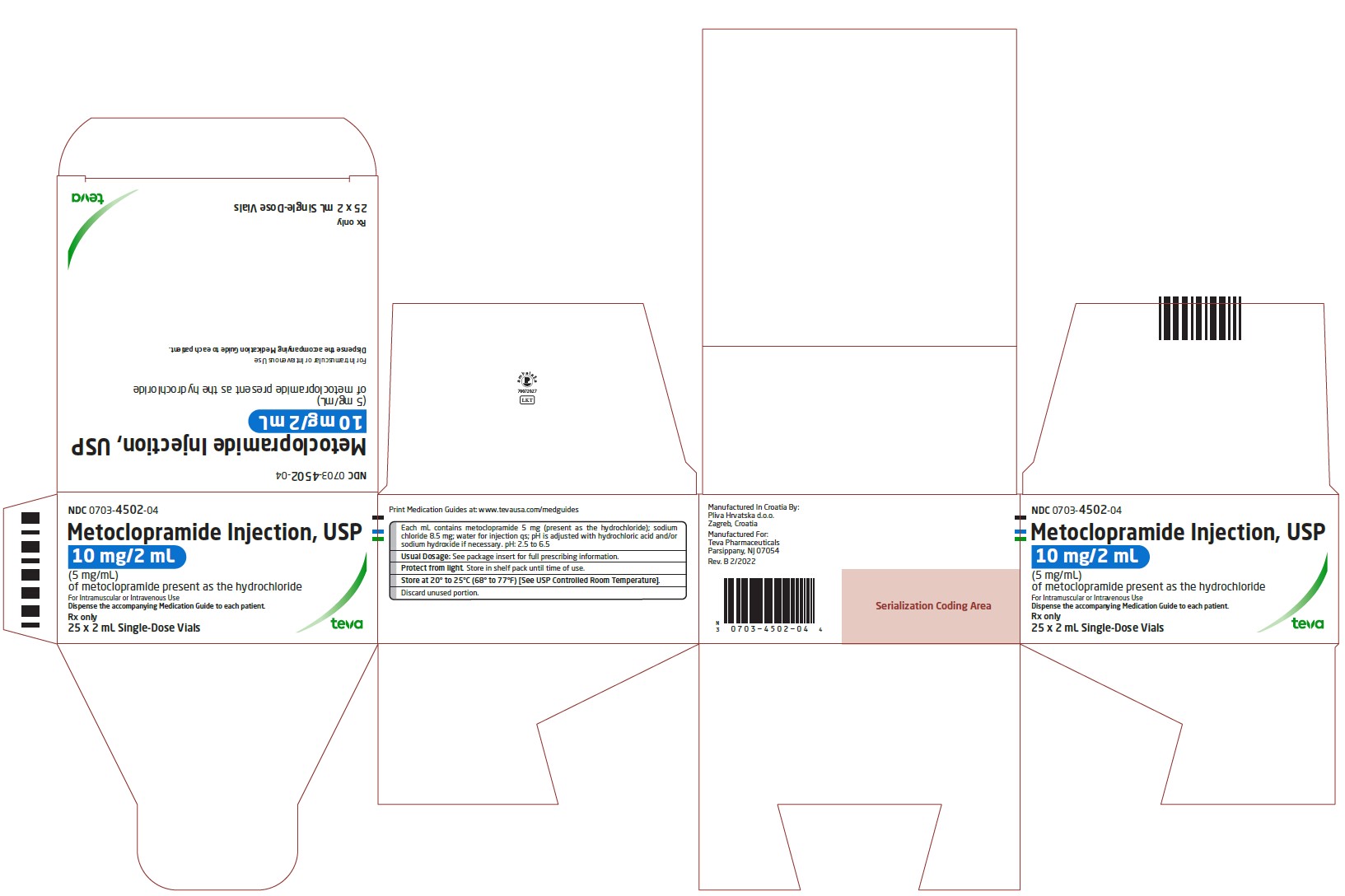
Metoclopramide 5 mg/mL Injection, Solution — NDC 0703-4502-04 (Billing 00703-4502-04)
This is a package of Metoclopramide 5 mg/mL Injection, Solution from Teva Parenteral Medicines, Inc., marketed since Sep 2024 and currently FDA-listed; retail pharmacies pay about $0.5290 per mL (NADAC). It is the main listing for this product, which comes in 2 package sizes.
NDC database record
One package, one record: these facts belong to NDC 0703-4502-04 alone.
- Record
- FDA NDC Directory package listing · Human prescription drug
- Code segments
- 0703 labeler · 4502 product · 04 package
- Listing certified through
- Dec 31, 2027
- Barcode (UPC-A, from the NDC)
- 3 0703450204 4
- Medicaid fills, this package
- 16,918 prescriptions in the last four reported quarters
- FDA record last changed
- Oct 8, 2026
Other active recalls for Metoclopramide (different manufacturers) — 1 · tap to view
Past resolved recalls for this product (1)
Identity & classification
Regulatory identifiers FDA, NLM and CMS codes for this package
Drug-database identifiers Medi-Span GPI and First Databank GCN / HICL / AHFS classification
- GSN (GCN sequence number): 005229
- GCN: 20510
- GPI-14 (Medi-Span): 52300020102005
- HICL (First Databank): 002148
- AHFS class code: 56:32.00.00
- RxCUI (RxNorm): 311670
Where does this data come from?
- FDA openFDA NDC Directory · synced Oct 8, 2026
- FDA label on DailyMed · label index refreshed Oct 8, 2026
- RxNorm (NLM RxNav) · catalog refreshed Oct 8, 2026
- Medi-Span GPI (licensed)
- First Databank (licensed) · refreshed Oct 8, 2026
RxNorm drug class
This medicine belongs to the Dopamine-2 Receptor Antagonist class.
Where does this data come from?
- RxClass (NLM) · catalog refreshed Oct 8, 2026
Clinical
Metoclopramide injection is used to relieve symptoms caused by slow stomach emptying in people who have diabetes. These symptoms include nausea, vomiting, heartburn, loss of appetite, and feeling of fullness that lasts long after meals. Metoclopramide injection is also used to prevent nausea and vomiting caused by chemotherapy or that may occur after surgery. Metoclopramide injection is also sometimes used to empty the intestines during certain medical procedures. Metoclopramide injection is in a class of medications called prokinetic agents. It works by speeding the movement of food through t...
Read the full MedlinePlus article ↗- It helps the stomach and esophagus move things along. It's used for reflux that hasn't responded to usual treatment and for diabetic gastroparesis. The injection is also used for c...
- The oral forms and Gimoti nasal spray are generally used about 30 minutes before meals and at bedtime. Follow your prescriber's directions and the label. Don't keep taking it longe...
- Treatment is meant to be short, generally no more than 12 weeks. The longer you take it, the higher your risk of tardive dyskinesia, a movement disorder that can be permanent.
- Restlessness, drowsiness, tiredness and weakness are most common. Some people have nausea, diarrhea, headache or dizziness. Be careful driving until you know how it affects you.
Patient education
Supplement & herbal interactions
Some supplements/herbs that may interact with Metoclopramide — tap one for details:
Where does this data come from?
- MedlinePlus (NLM) · refreshed Oct 8, 2026
- FDA label on DailyMed · label index refreshed Oct 8, 2026
Ask a licensed pharmacist directly — free, answered by our team.
Pricing
A drug doesn't have one price. Each row is a different public payment system, and none is what you'd pay at the counter — that depends on your insurance. The ⓘ on each row explains what it measures.
| Price system | Per mL | Per package |
|---|---|---|
| Retail pharmacies payNADAC · weekly | $0.529 | $26.45 / 50 ml |
| Medicaid paysCMS SDUD · 12 mo | $15.25 | $762.55 / 50 ml |
| Medicare drug plans payPart D · quarterly | No Part D plan price is available for this NDC in our data. | |
| Medicare Part B allowsASP · J2765 | $1.004 / J2765 unit | — |
Where does this data come from?
- CMS NADAC weekly file · file of Oct 7, 2026
- CMS ASP pricing files · refreshed Sep 20, 2026
- CMS Medicaid State Drug Utilization Data · through Q1 2026
- CMS Part D plan pricing files · refreshed Sep 24, 2026
- VA National Acquisition Center price file
Billing & reimbursement
Where does this data come from?
- CMS ASP NDC-HCPCS crosswalk · refreshed Sep 22, 2026
- DMEPDAC NDC-HCPCS crosswalk
- openFDA NSDE billing units · refreshed Oct 7, 2026
Packaging — all sizes for this product
| Package NDC | Description | Per unit | Per pack | Marketing start | Marketing end | Status |
|---|---|---|---|---|---|---|
| 00703-4502-04 You're viewing this Main listing | 25 VIAL, SINGLE-USE in 1 TRAY / 2 mL in 1 VIAL, SINGLE-USE | $0.5290 / mL | $26.45 | 1991-12-01 | — | Active |
| 00703-4502-93 0703-4502-93 | 10 VIAL, SINGLE-USE in 1 CARTON / 2 mL in 1 VIAL, SINGLE-USE | — | — | 2024-09-04 | — | Active |
In Medicaid, this is the most-dispensed pack of this product — about 81% of fills over the last four reported quarters. See all packs ↓
Pack size FAQ
What quantity is in this package?
What NDC number is used to bill for this package of Metoclopramide 5 mg/mL Injection, Solution?
Prices are the latest CMS NADAC pharmacy acquisition cost per NDC; per-pack figures are per-unit × pack quantity, shown only when the pack is denominated in the same measure NADAC prices.
Therapeutic equivalents
| Product | Labeler | Pack | NADAC/unit | TE | Status | Price vs. this |
|---|---|---|---|---|---|---|
| Metoclopramide 5 mg/mL 00409-3414-01 | Hospira, | 25 vials | $0.529 | AP | Discontinued | — |
| Metoclopramide 5 mg/mL 00409-5255-25 | Hospira, | 25 vials | $0.529 | AP | Discontinued | — |
| Metoclopramide 5 mg/mLthis 00703-4502-04 | Teva | 25 vials | $0.529 | AP | Availability likely | — |
| Metoclopramide 5 mg/mL 23155-0240-41 | Heritage | 25 vials | $0.529 | AP | Availability likely | — |
| Metoclopramide 5 mg/mL 83634-0779-02 | Avenacy, | 25 vials | $0.529 | AP | Availability likely | — |
| Metoclopramide 5 mg/mL 00404-9771-02 | Henry | 1 vial | — | AP | FDA listed | — |
| Metoclopramide 5 mg/mL 51662-1288-01 | HF | 2 ml | — | AP | FDA listed | — |
| Metoclopramide 5 mg/mL 51662-1670-03 | HF | 25 pouches | — | AP | FDA listed | — |
| Metoclopramide 5 mg/mL 55154-0450-05 | Cardinal | 5 vials | — | AP | FDA listed | — |
| Metoclopramide 5 mg/mL 55154-2353-05 | Cardinal | 5 vials | — | AP | FDA listed | — |
| Metoclopramide 5 mg/mL 55154-7832-05 | Cardinal | 5 vials | — | AP | FDA listed | — |
| Metoclopramide 5 mg/mL 71872-7076-01 | Medical | 1 vial | — | AP | FDA listed | — |
| Metoclopramide 5 mg/mL 71872-7265-01 | Medical | 1 vial | — | AP | FDA listed | — |
| Metoclopramide 5 mg/mL 71872-7346-01 | Medical | 1 vial | — | AP | FDA listed | — |
| Metoclopramide 5 mg/mL 84549-0414-11 | ProPharma | 2 ml | — | AP | FDA listed | — |
| Metoclopramide 5 mg/mL 36000-0366-25 | Baxter | 25 vials | — | — | FDA listed | — |
Where does this data come from?
- FDA openFDA NDC Directory · synced Oct 8, 2026
- FDA Orange Book · refreshed Oct 3, 2026
- CMS NADAC weekly file · file of Oct 7, 2026
Availability & generic status
This product is an FDA-approved generic. Other versions of the same drug are listed under Therapeutic equivalents, least expensive first.
Where does this data come from?
- FDA Orange Book · refreshed Oct 3, 2026
Inactive Ingredients / Excipients
Inactive ingredients, also called excipients, are components of the drug product other than the active ingredient. They may include fillers, dyes, coatings, preservatives, flavors, or other formulation ingredients.
🧪 Avoiding an ingredient? See Metoclopramide inactive ingredients by manufacturer: every current product's list side by side, so you can ask your pharmacy for the version that does not list it.
💡 Tap an ingredient (hover on desktop) to see what it is and why it’s used.
-
UNII QTT17582CB
A strong acid used to adjust and maintain the proper pH level in liquid medicines, ensuring stability and preventing breakdown of active ingredients.
-
UNII 451W47IQ8X
Sodium chloride is common table salt. It's used in medicines as a buffer to maintain proper pH, as a filler to add bulk, or to adjust the osmotic balance in liquid formulations.
-
UNII 55X04QC32I
A strong alkaline chemical used to adjust and maintain the pH balance of liquid medicines. It helps keep the medicine stable and ensures it stays effective during storage.
-
UNII 059QF0KO0R
Water is a liquid solvent that dissolves and mixes ingredients together in liquid medicines, syrups, and injections. It helps distribute the active drug evenly throughout the product.
4 inactive ingredients listed in the exact product block matched to this NDC.
Where does this data come from?
ingredient classCode="IACT" elements from the exact product block matched by this NDC. Label-section narrative from DailyMed / the openFDA label index is shown separately when available.- FDA label on DailyMed · label index refreshed Oct 8, 2026
- FDA openFDA NDC Directory · synced Oct 8, 2026
Inactive ingredient FAQ
Are inactive ingredients the same for every manufacturer?
Why might an inactive ingredient be missing?
Can inactive ingredients matter?
Manufacturer & labeler
More NDCs from Teva Parenteral Medicines, Inc. labeler code 00703
- Methotrexate 25 mg/mL Injection, Solution NDC 0703-3678-01
- Palonosetron Hydrochloride .25 mg/5mL Injection, Solution NDC 0703-4094-01
- CARBOplatin 10 mg/mL Injection, Solution NDC 0703-4239-01
- CARBOplatin 10 mg/mL Injection, Solution NDC 0703-4244-01
- CARBOplatin 10 mg/mL Injection, Solution NDC 0703-4246-01
- CARBOplatin 10 mg/mL Injection, Solution NDC 0703-4248-01
- Cisplatin 50 mg/50mL Injection, Solution NDC 0703-5747-11
- Cisplatin 100 mg/100mL Injection, Solution NDC 0703-5748-11
- Sulfamethoxazole and Trimethoprim 80 mg/mL; 16 mg/mL Injection, Solution, Concentrate NDC 0703-9503-03
- Sulfamethoxazole and Trimethoprim 80 mg/mL; 16 mg/mL Injection, Solution, Concentrate NDC 0703-9514-03
- Sulfamethoxazole and Trimethoprim 80 mg/mL; 16 mg/mL Injection, Solution, Concentrate NDC 0703-9526-01
Where does this data come from?
- FDA openFDA NDC Directory · synced Oct 8, 2026
- Drugs@FDA
Full prescribing information FDA SPL
🚨 Boxed Warning ▾
WARNING: TARDIVE DYSKINESIA Metoclopramide, including metoclopramide injection, can cause tardive dyskinesia (TD), a potentially irreversible serious movement disorder. In patients treated with metoclopramide, including metoclopramide injection, the risk of developing tardive dyskinesia increases with duration of treatment and total cumulative dosage. Metoclopramide injection is contraindicated in patients with a history of TD.
Immediately discontinue metoclopramide injection in patients who develop signs or symptoms of TD. In patients with diabetic gastroparesis, avoid a total duration of treatment with metoclopramide products, including metoclopramide injection, for longer than 12 weeks. If longer-term use is unavoidable, routinely monitor for signs and symptoms of TD.
See WARNINGS .
🎯 Indications and Usage ▾
INDICATIONS AND USAGE Diabetic Gastroparesis Metoclopramide injection is indicated for the relief of symptoms associated with acute and recurrent diabetic gastroparesis is in adults. The Prevention of Nausea and Vomiting Associated with Emetogenic Cancer Chemotherapy Metoclopramide injection is indicated for the prophylaxis of vomiting associated with emetogenic cancer chemotherapy in adults. The Prevention of Postoperative Nausea and Vomiting Metoclopramide injection is indicated for the prophylaxis of postoperative nausea and vomiting in those circumstances where nasogastric suction is undesirable in adults.
Small Bowel Intubation Metoclopramide injection is indicated to facilitate small bowel intubation in adult and pediatric patients in whom the tube does not pass the pylorus with conventional maneuvers. Radiological Examination Metoclopramide injection is indicated to stimulate gastric emptying and intestinal transit of barium where delayed emptying interferes with radiological examination of the stomach and/or small intestine in adults.
⏱️ Dosage and Administration ▾
DOSAGE AND ADMINISTRATION For the Relief of Symptoms Associated with Diabetic Gastroparesis If only the earliest manifestations of diabetic gastroparesis are present, oral administration of metoclopramide may be initiated. However, if severe symptoms are present, the recommended dosage of metoclopramide injection in adults is 10 mg administered intramuscularly or intravenously over at least 1- to 2-minutes. Administration of metoclopramide injection up to 10 days may be required before symptoms subside, at which time oral administration of metoclopramide may be instituted.
Avoid a total duration of treatment with metoclopramide products, including metoclopramide injection, for longer than 12 weeks. If longer-term use is unavoidable, routinely monitor for signs and symptoms of TD (see WARNINGS – Tardive Dyskinesia ). For the Prevention of Nausea and Vomiting Associated with Emetogenic Cancer Chemotherapy The recommended dosage of metoclopramide injection in adults is 2 mg/kg, with highly emetogenic drugs (e.g., cisplatin or dacarbazine) alone or in combination, and 1 mg/kg, with less emetogenic drugs, infused intravenously over at least 15 minutes, 30 minutes before beginning cancer chemotherapy and repeated every 2 hours for two doses, then every 3 hours for three doses.
For doses in excess of 10 mg, metoclopramide injection should be diluted in 50 mL of a parenteral solution. The preferred parenteral solution is Sodium Chloride Injection (normal saline), which when combined with metoclopramide injection, can be stored frozen for up to 4 weeks. Metoclopramide injection is degraded when admixed and frozen with Dextrose-5% in Water.
Metoclopramide injection diluted in Sodium Chloride Injection, Dextrose-5% in Water, Dextrose-5% in 0.45% Sodium Chloride, Ringer’s Injection, or Lactated Ringer’s Injection may be stored up to 48 hours (without freezing) after preparation if protected from light. All dilutions may be stored unprotected from light under normal light conditions up to 24 hours after preparation. If acute dystonic reactions should occur, inject 50 mg Benadryl ® (diphenhydramine hydrochloride) intramuscularly, and the symptoms usually will subside.
For the Prevention of Postoperative Nausea and Vomiting The recommended dosage of metoclopramide injection in adults is 10 mg or 20 mg as a single intramuscular injection near the end of surgery. To Facilitate Small Bowel Intubation In adult and pediatric patients undergoing small bowel intubation, in whom the tube has not passed the pylorus with conventional maneuvers after 10 minutes, the recommended dosage of metoclopramide injection is a single dose administered (undiluted) by the intravenous route over at least 1 to 2 minutes: Adults and pediatric patients above 14 years of age: 10 mg Pediatric patients 6 to 14 years of age: 2.5 to 5 mg Pediatric patients less than 6 years of age: 0.1 mg/kg To Aid in Radiological Examinations In adult patients where delayed gastric emptying interferes with radiological examination of the stomach and/or small intestine, the recommended dosage of metoclopramide injection is a single 10 mg dose administered (undiluted) by the intravenous route over at least 1- to 2-minutes.
Use in Patients with Renal Impairment The clearance of metoclopramide is decreased, and the systemic exposure is increased in patients with moderate to severe renal impairment compared to patients with normal renal function, which may increase the risk of adverse reactions. There is no dosage adjustment for patients with mild renal impairment (creatinine clearance greater than 60 mL/minute). For patients with moderate or severe renal impairment (creatinine clearance less than or equal to 60 mL/minute), who are receiving more than a single dose of metoclopramide injection, reduce the metoclopramide injection dosage to one-half the dosage recommended for patients with normal renal function.
For patients with End-Stage Renal Disease (ESRD) including those treated with hemodi… [Excerpted — this section continues on DailyMed.]
⛔ Contraindications ▾
CONTRAINDICATIONS Metoclopramide injection is contraindicated: in patients with a history of tardive dyskinesia (TD) or a dystonic reaction to metoclopramide. See WARNINGS . whenever stimulation of gastrointestinal motility might be dangerous, e.g., in the presence of gastrointestinal hemorrhage, mechanical obstruction, or perforation. in patients with pheochromocytoma or other catecholamine-releasing paragangliomas. Metoclopramide may cause a hypertensive/pheochromocytoma crisis, probably due to release of catecholamines from the tumor. in patients with known sensitivity or intolerance to metoclopramide. in patients with epilepsy.
Metoclopramide injection may increase the frequency and severity of seizures.
⚠️ Warnings ▾
WARNINGS Tardive Dyskinesia (see BOXED WARNING) Metoclopramide, including metoclopramide injection, can cause tardive dyskinesia (TD), a syndrome of potentially irreversible and disfiguring involuntary movements of the face or tongue, and sometimes of the trunk and/or extremities. Metoclopramide, including metoclopramide injection, may also suppress, or partially suppress, the signs of TD, and may delay the diagnosis of TD because it may mask the underlying disease process. The effect of the symptomatic suppression upon the long-term course of TD is unknown.
TD may remit, partially or completely, if treatment with metoclopramide injection is discontinued. In patients treated with metoclopramide, including metoclopramide injection, the risk of developing TD and the likelihood that TD will become irreversible increases with duration of treatment and total cumulative dosage. Additionally, the risk of developing TD is increased in elderly patients, especially in elderly women, and in patients with diabetes mellitus.
Prevention, Mitigation, and Monitoring for TD Metoclopramide injection, contraindicated in patients with history of TD Avoid use of metoclopramide injection in patients receiving concomitant antipsychotics due to the potential additive effects of TD. Reduce the dosage of metoclopramide injection in the elderly. (see DOSAGE AND ADMINISTRATION , Renal and Hepatic Impairment ).
Immediately discontinue metoclopramide injection immediately in patients who develop signs and symptoms of TD. In patients with diabetic gastroparesis, avoid a total duration of treatment with metoclopramide products, including metoclopramide injection, for longer than 12 weeks. If longer-term use is unavoidable, routinely monitor for signs and symptoms of TD.
If patients have continued TD symptoms, consider TD treatment. Other Extrapyramidal Symptoms In addition to TD, metoclopramide may cause other extrapyramidal symptoms (EPS), parkinsonian symptoms, and motor restlessness. Advise patients to seek immediate medical attention if such symptoms occur and to discontinue metoclopramide injection.
Extrapyramidal symptoms (EPS), such as acute dystonic reactions, occurred in patients treated with metoclopramide dosages of 30 mg to 40 mg daily. Such reactions occurred more frequently in adults less than 30 years of age and at the higher dosages used in prophylaxis of vomiting due to cancer chemotherapy. EPS occurred more frequently in pediatric patients compared to adults (metoclopramide injection is only approved in pediatric patients for small bowel intubation).
Symptoms can occur in the first 24 to 48 hours after starting metoclopramide. Symptoms included involuntary movements of limbs and facial grimacing, torticollis, oculogyric crisis, rhythmic protrusion of tongue, bulbar type of speech, trismus, or dystonic reactions resembling tetanus. Rarely, dystonic reactions were present as stridor and dyspnea, possibly due to laryngospasm.
Diphenhydramine hydrochloride or benztropine mesylate may be used to treat these adverse reactions. Avoid metoclopramide injection in patients receiving other drugs that can cause EPS (e.g., antipsychotics). Parkinsonian symptoms (bradykinesia, tremor, cogwheel rigidity, mask-like facies), have occurred after starting metoclopramide, more commonly within the first 6 months, but also after longer periods.
Symptoms generally have subsided within 2 to 3 months after discontinuation of metoclopramide. Avoid metoclopramide injection in patients with Parkinson’s disease and other patients being treated with antiparkinsonian drugs due to potential exacerbation of symptoms. If treatment is unavoidable, use metoclopramide injection for the shortest duration of treatment and periodically reassess the need for continued treatment.
Routinely monitor for signs and symptoms of Parkinson’s disease. Motor restlessness (akathisia) has developed and consisted of feelings of anxiety, agitation, jitteriness, and insomnia, as well as inabilit… [Excerpted — this section continues on DailyMed.]
🤒 Adverse Reactions ▾
ADVERSE REACTIONS In general, the incidence of adverse reactions correlates with the dose and duration of metoclopramide administration. The following reactions have been reported, although in most instances, data do not permit an estimate of frequency. CNS Effects Restlessness, drowsiness, fatigue, and lassitude may occur in patients receiving the recommended prescribed dosage of metoclopramide injection.
Insomnia, headache, confusion, dizziness, or mental depression with suicidal ideation also may occur (see WARNINGS ). In cancer chemotherapy patients being treated with 1 to 2 mg/kg per dose, incidence of drowsiness is about 70%. There are isolated reports of convulsive seizures without clear-cut relationship to metoclopramide.
Rarely, hallucinations have been reported. Extrapyramidal Reactions (EPS) Acute dystonic reactions, the most common type of EPS associated with metoclopramide, occur in approximately 0.2% of patients (1 in 500) treated with 30 to 40 mg of metoclopramide per day. In cancer chemotherapy patients receiving 1 to 2 mg/kg per dose, the incidence is 2% in patients over the ages of 30 to 35, and 25% or higher in pediatric patients and adult patients less than 30 years of age who have not had prophylactic administration of diphenhydramine.
Symptoms include involuntary movements of limbs, facial grimacing, torticollis, oculogyric crisis, rhythmic protrusion of tongue, bulbar type of speech, trismus, opisthotonus (tetanus-like reactions), and, rarely, stridor and dyspnea possibly due to laryngospasm; ordinarily these symptoms are readily reversed by diphenhydramine (see WARNINGS ). Parkinsonian-like symptoms may include bradykinesia, tremor, cogwheel rigidity, mask-like facies (see WARNINGS ). Tardive dyskinesia most frequently is characterized by involuntary movements of the tongue, face, mouth, or jaw, and sometimes by involuntary movements of the trunk and/or extremities; movements may be choreoathetotic in appearance (see WARNINGS ).
Motor restlessness (akathisia) may consist of feelings of anxiety, agitation, jitteriness, and insomnia, as well as inability to sit still, pacing, foot tapping. These symptoms may disappear spontaneously or respond to a reduction in dosage. Neuroleptic Malignant Syndrome Rare occurrences of neuroleptic malignant syndrome (NMS) have been reported.
This potentially fatal syndrome is comprised of the symptom complex of hyperthermia, muscular rigidity, altered consciousness, and autonomic instability (see WARNINGS ). Endocrine Disturbances Galactorrhea, amenorrhea, gynecomastia, impotence secondary to hyperprolactinemia (see PRECAUTIONS ). Fluid retention secondary to transient elevation of aldosterone (see CLINICAL PHARMACOLOGY ).
Cardiovascular Hypotension, hypertension, supraventricular tachycardia, bradycardia, fluid retention, acute congestive heart failure and possible atrioventricular (AV) block (see CONTRAINDICATIONS and PRECAUTIONS ). Gastrointestinal Nausea and bowel disturbances, primarily diarrhea. Hepatic Rarely, cases of hepatotoxicity, characterized by such findings as jaundice and altered liver function tests, when metoclopramide was administered with other drugs with known hepatotoxic potential.
Renal Urinary frequency and incontinence. Hematologic A few cases of neutropenia, leukopenia, or agranulocytosis, generally without clear-cut relationship to metoclopramide. Methemoglobinemia in adults and especially with overdosage in neonates (see OVERDOSAGE ).
Sulfhemoglobinemia in adults. Allergic Reactions A few cases of rash, urticaria, or bronchospasm, especially in patients with a history of asthma. Rarely, angioneurotic edema, including glossal or laryngeal edema.
Miscellaneous Visual disturbances. Porphyria. Transient flushing of the face and upper body, without alterations in vital signs, following high doses intravenously.
🤰 Pregnancy ▾
Pregnancy Reproduction studies performed in rats, mice and rabbits by the IM, IV, subcutaneous (SC), and oral routes at maximum levels ranging from 12 to 250 times the human dose have demonstrated no impairment of fertility or significant harm to the fetus due to metoclopramide. There are, however, no adequate and well-controlled studies in pregnant women. Because animal reproduction studies are not always predictive of human response, this drug should be used during pregnancy only if clearly needed.
Fetal/Neonatal Adverse Reactions Metoclopramide crosses the placental barrier and may cause extrapyramidal signs and methemoglobinemia in neonates with material administration during delivery. Monitor neonates for extrapyramidal signs.
🧒 Pediatric Use ▾
Pediatric Use The safety and effectiveness of metoclopramide injection has been established as a single dose to facilitate small bowel intubation in pediatric patients in whom the tube does not pass the pylorus with conventional maneuvers. The safety and effectiveness of metoclopramide injection has not been established in pediatric patients for the following: relief of symptoms associated with diabetic gastroparesis prevention of nausea and vomiting associated with emetogenic cancer chemotherapy prevention of postoperative nausea and vomiting to stimulate gastric emptying and intestinal transit of barium where delayed emptying interferes with radiological examination of the stomach and/or small intestine.
The safety profile of metoclopramide in adults cannot be extrapolated to pediatric patients. Neonates have reduced levels of NADH-cytochrome b5 reductase which, make neonates more susceptible to methemoglobinemia (see OVERDOSAGE ). Dystonias and other extrapyramidal reactions associated with metoclopramide are more common in the pediatric population than in adults (see WARNINGS and ADVERSE REACTIONS — Extrapyramidal Reactions ).
🧓 Geriatric Use ▾
Geriatric Use Metoclopramide is known to be substantially excreted by the kidney, and the risk of adverse reactions, including TD, may be greater in patients with impaired renal function (see WARNINGS – Tardive Dyskinesia ). The risk of developing parkinsonian-like side effects increases with ascending dose. Geriatric patients should receive the lowest dose of metoclopramide injection that is effective.
If parkinsonian-like symptoms develop in a geriatric patient receiving metoclopramide injection, metoclopramide injection should generally be discontinued before initiating any specific anti-parkinsonian agents (see WARNINGS – Other Extrapyramidal Symptoms ). Sedation has been reported in metoclopramide injection users. Sedation may cause confusion and manifest as over-sedation in elderly (see CLINICAL PHARMACOLOGY , PRECAUTIONS – Information for Patients and ADVERSE REACTIONS – CNS Effects ).
For these reasons, dose selection for an elderly patient should be cautious, usually starting at the low end of the dosing range, reflecting the greater frequency of decreased renal function, concomitant disease, or other drug therapy in the elderly (see DOSAGE AND ADMINISTRATION - Use in Patients with Renal or Hepatic Impairment ).
🆘 Overdosage ▾
OVERDOSAGE Manifestations of metoclopramide overdosage included drowsiness, disorientation, extrapyramidal reactions, other adverse reactions associated with metoclopramide use (including, e.g., methemoglobinemia), and sometimes death. Neuroleptic malignant syndrome (NMS) has been reported in association with metoclopramide overdose and concomitant treatment with another drug associated with NMS (see WARNINGS ). There are no specific antidotes for metoclopramide injection overdosage.
If over-exposure occurs, call your Poison Control Center at 1-800-222-1222 for current information on the management of poisoning or overdosage. Methemoglobinemia can be reversed by the intravenous administration of methylene blue. However, methylene blue may cause hemolytic anemia in patients with glucose-6-phosphate dehydrogenase (G6PD) deficiency, which may be fatal.
Hemodialysis and continuous ambulatory peritoneal dialysis do not remove significant amounts of metoclopramide.
🧬 Clinical Pharmacology ▾
CLINICAL PHARMACOLOGY Metoclopramide stimulates motility of the upper gastrointestinal tract without stimulating gastric, biliary, or pancreatic secretions. Its mode of action is unclear. It seems to sensitize tissues to the action of acetylcholine.
The effect of metoclopramide on motility is not dependent on intact vagal innervation, but it can be abolished by anticholinergic drugs. Metoclopramide increases the tone and amplitude of gastric (especially antral) contractions, relaxes the pyloric sphincter and the duodenal bulb, and increases peristalsis of the duodenum and jejunum resulting in accelerated gastric emptying and intestinal transit. It increases the resting tone of the lower esophageal sphincter.
It has little, if any, effect on the motility of the colon or gallbladder. In patients with gastroesophageal reflux and low LESP (lower esophageal sphincter pressure), single oral doses of metoclopramide produce dose-related increases in LESP. Effects begin at about 5 mg and increase through 20 mg (the largest dose tested).
The increase in LESP from a 5 mg dose lasts about 45 minutes and that of 20 mg lasts between 2 and 3 hours. Increased rate of stomach emptying has been observed with single oral doses of 10 mg. The antiemetic properties of metoclopramide appear to be a result of its antagonism of central and peripheral dopamine receptors.
Dopamine produces nausea and vomiting by stimulation of the medullary chemoreceptor trigger zone (CTZ), and metoclopramide blocks stimulation of the CTZ by agents like l-dopa or apomorphine which are known to increase dopamine levels or to possess dopamine-like effects. Metoclopramide also abolishes the slowing of gastric emptying caused by apomorphine. Like the phenothiazines and related drugs, which are also dopamine antagonists, metoclopramide produces sedation and may produce extrapyramidal reactions, although these are comparatively rare (see WARNINGS ).
Metoclopramide inhibits the central and peripheral effects of apomorphine, induces release of prolactin and causes a transient increase in circulating aldosterone levels, which may be associated with transient fluid retention. The onset of pharmacological action of metoclopramide is 1 to 3 minutes following an intravenous dose, 10 to 15 minutes following intramuscular administration, and 30 to 60 minutes following an oral dose; pharmacological effects persist for 1 to 2 hours. Pharmacokinetics Metoclopramide is rapidly and well absorbed.
Relative to an intravenous dose of 20 mg, the absolute oral bioavailability of metoclopramide is 80% ± 15.5% as demonstrated in a crossover study of 18 subjects. Peak plasma concentrations occur at about 1 to 2 hr after a single oral dose. Similar time to peak is observed after individual doses at steady state.
In a single dose study of 12 subjects, the area under the drug concentration-time curve increases linearly with doses from 20 to 100 mg. Peak concentrations increase linearly with dose; time to peak concentrations remains the same; whole body clearance is unchanged; and the elimination rate remains the same. The average elimination half-life in individuals with normal renal function is 5 to 6 hr.
Linear kinetic processes adequately describe the absorption and elimination of metoclopramide. Approximately 85% of the radioactivity of an orally administered dose appears in the urine within 72 hr. Of the 85% eliminated in the urine, about half is present as free or conjugated metoclopramide.
The drug is not extensively bound to plasma proteins (about 30%). The whole body volume of distribution is high (about
3.5L/kg) which suggests extensive distribution of drug to the tissues (see Table 1). Table 1. Adult Pharmacokinetic Data Parameter Value Vd (L/kg) ~
3.5Plasma Protein Binding ~ 30% t 1/2 (hr) 5 to 6 Oral Bioavailability 80%±15.5% Patients with Renal Impairment In a study of 24 patients with varying degrees of renal impairment (moderate, severe, and end-stage renal disease (ESRD) requiring… [Excerpted — this section continues on DailyMed.]
📦 How Supplied / Storage and Handling ▾
HOW SUPPLIED Metoclopramide injection, USP is supplied in 2 mL single-dose vials packaged 25 per shelf pack. NDC Number Metoclopramide Injection, USP Volume 0703-4502-04 5 mg/mL 2 mL in a 2 mL single-dose vial PROTECT FROM LIGHT. Store in shelf pack until time of use.
Store at 20° to 25°C (68° to 77°F) [See USP Controlled Room Temperature]. Inspect the vial before use and discard if either color or particulate is observed. Dilutions may be stored unprotected from light under normal light conditions for up to 24 hours after preparation.
Do not freeze. Do not store open single-dose vials for later use, as they contain no preservative. Discard unused portion.
To report SUSPECTED ADVERSE REACTIONS, contact Teva at 1-888-838-2872 or FDA at 1-800-FDA-1088 or www.fda.gov/medwatch. Manufactured In Croatia By: Pliva Hrvatska d.o.o. Zagreb, Croatia Manufactured For: Teva Pharmaceuticals Parsippany, NJ 07054 Rev.
B 4/2026
📋 Description ▾
DESCRIPTION Metoclopramide hydrochloride, USP is a white crystalline, odorless substance, freely soluble in water. Chemically, it is 4-amino-5-chloro-N-[2-(diethylamino)ethyl]-2-methoxy benzamide monohydrochloride monohydrate and has the following structural formula: C 14 H 22 ClN 3 O 2 •HCl•H 2 O M.W. 354.3 Metoclopramide injection, USP is a clear, colorless, sterile solution with a pH of 2.5 to 6.5 for intravenous (IV) or intramuscular (IM) administration.
This product is light sensitive. It should be inspected before use and discarded if either color or particulate is observed. Metoclopramide injection, USP is supplied in 2 mL single-dose vials.
Each 1 mL contains: Metoclopramide base 5 mg (present as the hydrochloride), Sodium Chloride, USP 8.5 mg, Water for Injection, USP q.s. pH is adjusted with hydrochloric acid and/or sodium hydroxide if necessary. Structural Formula
💬 Information for Patients ▾
Fluid Overload Because metoclopramide produces a transient increase in plasma aldosterone, certain patients, especially those with cirrhosis or congestive heart failure, may be at risk of developing fluid retention and volume overload. Discontinue metoclopramide injection if any of these adverse reactions occur.
💬 Medication Guide ▾
MEDICATION GUIDE Metoclopramide (met” oh kloe’ pra mide) Injection You or your caregiver should read the Medication Guide before you start receiving metoclopramide injection and before you get another dose of metoclopramide injection. There may be new information. If you take another product that contains metoclopramide (such as tablets, orally disintegrating tablets, oral syrup, or nasal spray), you should read the Medication Guide that comes with that product.
Some of the information may be different. This Medication Guide does not take the place of talking to your doctor about your medical condition or your treatment. What is the most important information I should know about metoclopramide injection?
Metoclopramide injection can cause serious side effects, including: Tardive Dyskinesia: Metoclopramide, including metoclopramide injection, can cause tardive dyskinesia (TD), a potentially irreversible serious movement disorder. These movements happen mostly in the face or tongue, and sometimes in the arms or legs. You cannot control these movements.
These symptoms may not go away even after stopping metoclopramide injection. Your chances for getting TD go up: the longer you take metoclopramide injection and the more metoclopramide injection you take. People taking metoclopramide injection to relieve the symptoms of slow stomach emptying due to diabetes, should not take metoclopramide injection, or other drugs containing metoclopramide, for more than 12 weeks. if you are older, especially if you are a woman. if you have diabetes It is not possible for your doctor to know if you will get TD if you take metoclopramide injection.
Call your doctor right away if you get movements you can not stop or control, such as: lip smacking, chewing, or puckering up your mouth frowning or scowling sticking out your tongue blinking and moving your eyes shaking of your arms and legs Your doctor may stop treatment with metoclopramide injection if you develop signs or symptoms of TD. See the section “What are the possible side effects of metoclopramide injection?” for more information about side effects. What is metoclopramide injection?
Metoclopramide injection is a prescription medicine used to: relieve symptoms of slow stomach emptying in adults with diabetes. prevent nausea and vomiting that can happen with cancer chemotherapy in adults. prevent nausea and vomiting that may happen after surgery in adults, if your doctor decides that you should not be treated with a stomach tube and suction. help make it easier to insert a tube into the small intestine in both adults and children, if the tube does not pass into the stomach normally. to help empty stomach contents or to help barium move through the intestine in adults, when you get an X-ray examination of the stomach or small intestine.
It is not known if metoclopramide is safe and effective in children except when used to help insert a tube into the small intestine. Who should not receive metoclopramide injection? Do not receive metoclopramide injection if you: have a history of tardive dyskinesia or have a problem controlling your muscles and movements after taking metoclopramide injection or a medicine that works like metoclopramide injection. have stomach or intestine problems that could get worse with metoclopramide injection, such as bleeding, blockage or a tear in your stomach or bowel wall. have an adrenal gland tumor called pheochromocytoma. are allergic to metoclopramide. have seizures.
What should I tell my doctor before receiving metoclopramide injection? Tell your doctor about all of your medical conditions, including if you: have problems controlling your muscle movements after taking any medicine. have Parkinson’s disease. have or had depression or mental illness. have kidney or liver problems. have heart failure or heart rhythm problems. have high blood pressure. drink alcohol. have diabetes. Your dose of insulin may need to be changed. are pregnant or plan to become pregnant.
I… [Excerpted — this section continues on DailyMed.]
⚠️ Precautions ▾
PRECAUTIONS Hypertension In one study in hypertensive patients, intravenously administered metoclopramide was shown to release catecholamines; avoid metoclopramide injection in patients with hypertension or patients taking monoamine oxidase inhibitors (see PRECAUTIONS – Drug Interactions ). There are also clinical reports of hypertensive crises in patients with undiagnosed pheochromocytoma. Metoclopramide injection is contraindicated in patients with pheochromocytoma or other catecholamine-releasing paragangliomas.
Discontinue metoclopramide injection in any patient with a rapid rise in blood pressure. Fluid Overload Because metoclopramide produces a transient increase in plasma aldosterone, certain patients, especially those with cirrhosis or congestive heart failure, may be at risk of developing fluid retention and volume overload. Discontinue metoclopramide injection if any of these adverse reactions occur.
Adverse Reactions with Rapid Intravenous Administration Intravenous injections of undiluted metoclopramide injection should be made slowly allowing 1 to 2 minutes for 10 mg since a transient but intense feeling of anxiety and restlessness, followed by drowsiness, may occur with rapid administration. Intravenous administration of metoclopramide injection diluted in a parenteral solution should be made slowly over a period of not less than 15 minutes. Anastamotic Dehiscence Giving a promotility drug such as metoclopramide theoretically could put increased pressure on suture lines following a gut anastomosis or closure.
This possibility should be considered and weighed when deciding whether to use metoclopramide injection or nasogastric suction in the prevention of postoperative nausea and vomiting. Effects on the Ability to Drive and Operate Machinery Metoclopramide may impair the mental and/or physical abilities required for the performance of hazardous tasks such as operating machinery or driving a motor vehicle. Concomitant use of central nervous system (CNS) depressants or drugs associated with EPS may increase this effect (e.g., alcohol, sedatives, hypnotics, opiates, and anxiolytics).
Avoid metoclopramide injection or the interacting drug, depending on the importance of the drug to the patient. Drug Interactions Effects of Other Drugs on Metoclopramide Table 3 displays the effects of other drugs on metoclopramide. Table 3.
Effects of Other Drugs on Metoclopramide Antipsychotics Clinical Impact Potential for additive effects, including increased frequency and severity of tardive dyskinesia (TD), other extrapyramidal symptoms (EPS), and neuroleptic malignant syndrome (NMS). Intervention Avoid concomitant use . Strong CYP2D6 Inhibitors, not Included in Antipsychotic Category Above Clinical Impact Increased plasma concentrations of metoclopramide; risk of exacerbation of extrapyramidal symptoms.
Intervention Avoid metoclopramide injection. If use is unavoidable, monitor for adverse reactions Examples quinidine, bupropion, fluoxetine, and paroxetine Monoamine Oxidase Inhibitors Clinical Impact Increased risk of hypertension . Intervention Avoid concomitant use.
Central Nervous System (CNS) Depressants Clinical Impact Increased risk of CNS depression . Intervention Avoid metoclopramide injection or the interacting drug, depending on the importance of the drug to the patient Examples alcohol, sedatives, hypnotics, opiates and anxiolytics Drugs that Impair Gastrointestinal Motility Clinical Impact Decreased systemic absorption of metoclopramide. Intervention Monitor for reduced therapeutic effect.
Examples antiperistaltic antidiarrheal drugs, anticholinergic drugs, and opiates Dopaminergic Agonists and Other Drugs that Increase Dopamine Concentrations Clinical Impact Decreased therapeutic effect of metoclopramide due to opposing effects on dopamine. Intervention Monitor for reduced therapeutic effect. Examples apomorphine, bromocriptine, cabergoline, levodopa, pramipexole, ropinirole, and rotigotine Effects of Metoclopramide… [Excerpted — this section continues on DailyMed.]
🍼 Nursing Mothers ▾
Nursing Mothers Metoclopramide is excreted in human milk. Monitor breastfeeding neonates because metoclopramide may cause extrapyramidal signs (dystonias) and methemoglobinemia.
🧬 Pharmacokinetics ▾
Pharmacokinetics Metoclopramide is rapidly and well absorbed. Relative to an intravenous dose of 20 mg, the absolute oral bioavailability of metoclopramide is 80% ± 15.5% as demonstrated in a crossover study of 18 subjects. Peak plasma concentrations occur at about 1 to 2 hr after a single oral dose.
Similar time to peak is observed after individual doses at steady state. In a single dose study of 12 subjects, the area under the drug concentration-time curve increases linearly with doses from 20 to 100 mg. Peak concentrations increase linearly with dose; time to peak concentrations remains the same; whole body clearance is unchanged; and the elimination rate remains the same.
The average elimination half-life in individuals with normal renal function is 5 to 6 hr. Linear kinetic processes adequately describe the absorption and elimination of metoclopramide. Approximately 85% of the radioactivity of an orally administered dose appears in the urine within 72 hr.
Of the 85% eliminated in the urine, about half is present as free or conjugated metoclopramide. The drug is not extensively bound to plasma proteins (about 30%). The whole body volume of distribution is high (about
3.5L/kg) which suggests extensive distribution of drug to the tissues (see Table 1). Table 1. Adult Pharmacokinetic Data Parameter Value Vd (L/kg) ~
3.5Plasma Protein Binding ~ 30% t 1/2 (hr) 5 to 6 Oral Bioavailability 80%±15.5% Patients with Renal Impairment In a study of 24 patients with varying degrees of renal impairment (moderate, severe, and end-stage renal disease (ESRD) requiring dialysis), the systemic exposure (AUC) of metoclopramide following intravenous administration in patients with moderate to severe renal impairment was about 2-fold the AUC in subjects with normal renal function. The AUC of metoclopramide in patients with ESRD in dialysis was about 3.5-fold the AUC in subjects with normal renal function.
Patients with Hepatic Impairment In a group of 8 patients with severe hepatic impairment (Child-Pugh C) administered intravenous metoclopramide, the average metoclopramide clearance was reduced by approximately 50% compared to patients with normal hepatic function. Effect of CYP2D6 Inhibitors on Metoclopramide In healthy subjects, 20 mg of oral metoclopramide and 60 mg of fluoxetine (a strong CYP2D6 inhibitor) were administered, following prior exposure to 60 mg fluoxetine orally for 8 days. The patients who received concomitant metoclopramide and fluoxetine had a 40% and 90% increase in metoclopramide C max and AUC 0-∞, respectively, compared to patients who received metoclopramide alone (see Table 2).
Table 2. Oral Metoclopramide Pharmacokinetic Parameters in Healthy Subjects with and without Fluoxetine Parameter Metoclopramide alone (mean ±SD) Metoclopramide with fluoxetine (mean ±SD) C max (ng/mL) 44±15 62.7±9.2 AUC 0-∞ (ng∙h/mL) 313±113 591±140 T 1/2 (h) 5.5±1.1 8.5±2.2 Pediatric Patients In pediatric patients, the pharmacodynamics of metoclopramide following oral and intravenous administration are highly variable and a concentration-effect relationship has not been established. There are insufficient reliable data to conclude whether the pharmacokinetics of metoclopramide in adults and the pediatric population are similar.
📄 Carcinogenesis, Mutagenesis, Impairment of Fertility ▾
Carcinogenesis, Mutagenesis, Impairment of Fertility A 77-week study was conducted in rats with oral doses up to about 40 times the maximum recommended human daily dose. Metoclopramide elevates prolactin levels and the elevation persists during chronic administration. Tissue culture experiments indicate that approximately one-third of human breast cancers are prolactin-dependent in vitro , a factor of potential importance if the prescription of metoclopramide is contemplated in a patient with previously detected breast cancer.
Although disturbances such as galactorrhea, amenorrhea, gynecomastia, and impotence have been reported with prolactin-elevating drugs, the clinical significance of elevated serum prolactin levels is unknown for most patients. An increase in mammary neoplasms has been found in rodents after chronic administration of prolactin-stimulating neuroleptic drugs and metoclopramide. Neither clinical studies nor epidemiologic studies conducted to date, however, have shown an association between chronic administration of these drugs and mammary tumorigenesis; the available evidence is too limited to be conclusive at this time.
An Ames mutagenicity test performed on metoclopramide was negative.
📄 Package Label / Principal Display Panel ▾
Package/Label Display Panel NDC 0703-4502-04 Metoclopramide Injection, USP 10 mg/2 mL (5 mg/mL) of metoclopramide present as the hydrochloride For Intramuscular or Intravenous Use Dispense the accompanying Medication Guide to each patient. Rx only 25 x 2 mL Single-Dose Vials shelf pack carton